
As opposed to most of the people I talk about here on BoothieBarn, the subject of this post is a man with no historical connection to the Lincoln assassination. Even further afield from my modus operandi, the subject of this post is also very much alive. In fact, this week he celebrated his birthday. My reasoning for departing from my ‘regularly scheduled assassination programming’ is to highlight a very unique man who has lived the most interesting life of anyone I have ever known.
To start this off, I have to admit that I only met Herb Collins for the first time less than a month ago. Through our mutual friend and researcher Jim Garrett, I had the opportunity to make the acquaintance of Mr. Collins when a group of us went exploring in his home county of Caroline County, VA. After this relatively brief introduction and tour of his historic house, I called him up and spent an entire Sunday attentively listening to this remarkable man. This weekend, I will again be driving into Virginia to spend the day learning from him. What follows is merely a small sampling of some of the unique experiences he has had and shared with me. There may be some mistakes in my narrative, as I am going from memory.
Herbert Ridgeway Collins is a native born son of Caroline County, Virginia. The house he grew up in, still owns, and has transformed into a personal museum is called Green Falls and was built in 1711. It has been in the Collins family since the 1787 and is on the National Register of Historic Places.

Green Falls in Caroline County, VA
Herb has furnished the house with many beautiful antiques and he can give the origin of every single one. From a mirror belonging to President James Madison to rare chairs with matching pairs in Mount Vernon, Green Falls is remarkable in its furnishings and history. Some local historical societies schedule tours of his magnificent place, while Herb occasionally gives private tours to those he catches admiring the house from the road.

Herb Collins giving a tour of his beautiful Green Falls estate
In addition to the main house, Herb also purchased a period plantation overseer’s house from a neighbor. He had the structure physically moved a few miles down the road and placed next to his house. He then painstakingly restored the very dilapidated building to its original glory and furnished it accordingly. The most amazing part, however, is that this has been what Herb Collins has done, merely in his retirement.
As a young man, Herb was always interested in history. When he joined the army as a young man, fate smiled on Herb. A secretary of a Missouri congressman bought a house opposite of Herb’s Green Falls home. Through her, Herb was able to secure a position assigned to the Pentagon. Here he was responsible for preparing the top secret briefing charts for the Secretary of the Army. He was also able to take a genealogy class through the National Archives that coincided with his love of history. When he wasn’t on duty or in class, he was working on a book of his own family’s genealogy. At the age of 22, he published it. It would be the first of many books that he would write. After six years in the army at the Pentagon, Herb was discharged. The class he had taken in genealogy made him very desirable to three different institutions, the Library of Congress, the National Archives, and the Smithsonian. In the end, Herb decided to join the Smithsonian where he became a junior researcher in the Smithsonian’s political history collection. He eventually made his way to the top, retiring as the Executive of the American History Museum and division chief of the political history collection. It is during this period that Herb Collins met, dined with, and acquired items from practically every President and First Lady from Harry Truman to George Bush, Sr. Here are some of the stories, both long and short, that he told me about his time at the Smithsonian:
- Herb recounted to me his first trip to meet Harry Truman. The Smithsonian did not have a lot of items from Truman’s time as President. Herb traveled to Truman’s home of Independence, Missouri and met with the former President and First Lady Bess Truman. Herb’s genealogical education made him aware that he was distantly related to Bess Truman, and that both Bess and Harry Truman were related to families from Port Royal, VA (on a side note, Herb seems to know the genealogy of every old family in Virginia. His memory of families and connections is uncanny). According to Herb, Harry Truman was the kind of guy that enjoyed making a person feel uneasy. Every sentence that Herb spoke, Harry Truman would battle a response right back to him, trying to throw him off. When asked if he had any sports memorabilia to give the Smithsonian, Truman said he didn’t because he couldn’t see well to bat in baseball so they made him play umpire because you didn’t need to see to be umpire. When Herb said he didn’t have anything from Truman in the Smithsonian, Truman just answered, “Well why don’t you get something?” Eventually, Truman found that for everything he said, Herb was able to come up with an answer for him. After that he stopped acting difficult and slapped Herb on the back and invited him to see some political cartoons he had framed out in the back office. Truman enjoyed when people took punches at him like Herb had done and he had framed some of his favorite political cartoons that had mocked him when he was president. Together Herb and Harry Truman laughed and joked about them, and Truman genially offered some of his items to Herb for the Smithsonian.
- When President Dwight Eisenhower died, he wanted to be buried his complete uniform. At the funeral home that was preparing the body, they found that they did not have a shirt or socks that matched his uniform. The funeral home called the military history department of the Smithsonian and asked them if they had any extra matching shirts and socks that they could have to bury Eisenhower in. As a matter of fact they did. When Herb had left the army, he donated his uniforms to the Smithsonian for his period in history. The shirt contained Herb’s laundry mark. With his blessing, the Smithsonian sent over Herb’s old shirt and socks to the funeral home. President Eisenhower was buried in Herb Collin’s issued shirt and socks.
- Herb Collins became good friends with JFK’s secretary, Evelyn Lincoln. Two books in his collection are autographed copies of hers with long messages of appreciation and friendship. Evelyn Lincoln was married to a man named Harold Lincoln. Herb was unaware that Harold’s nickname was ‘Abe’ Lincoln. One day he received an invitation in the mail to attend a rally for Abe Lincoln, who was running for Congress. He ignored the mailer. Days after the event, Evelyn called Herb and asked him why he didn’t come to support her husband’s run for Congress. Herb told her that he didn’t know Harold went by Abe, and that he thought “Abe Lincoln running for Congress” was just a joke. The two had a good laugh about it.
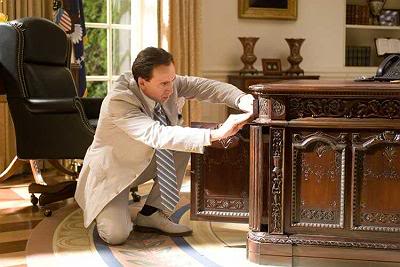
- After JFK was killed, Jackie Kennedy and others toured the country trying to raise money for a JFK museum. They traveled with exhibits about the late president to raise funds. Herb wrote to Jackie informing her that the flag that flew over the Capitol on the day of the President’s funeral was hers. She wrote him back thanking him for letting her know that. One item that went traveling to raise money was the famous Resolute desk from the Oval Office. Johnson didn’t want to use the desk as he found it too big. Those of you who have seen the movie, National Treasure 2: Book of Secrets, will know that the Resolute desk plays an important part of Nicholas Cage’s clue finding. In the movie he makes his way into Oval Office and, by pulling out drawers to the right length, unlocks a secret compartment in the desk:
 While you may all be shocked to learn this, there is no hidden compartment in the Resolute desk. Herb Collins has taken the Resolute desk apart, “a dozen times”. He told me it all comes apart fairly easily and he helped pack it up when it went on tour to raise money for the JFK museum. When it was done touring, Herb took control of it and placed it in the collection of the Smithsonian. It stayed, on display in the Smithsonian until Carter asked for it back. According to Herb, he was out to lunch one Wednesday and when he returned to the Smithsonian he had a message from Jimmy Carter asking for the Resolute desk to be placed back into the Oval Office by Friday, as he wanted to show it off to some foreign delegates. Herb said he took it apart, had it transported over to the White House, and reassembled it for Carter in the Oval Office right on time.
 - Herb had the chance to meet many Presidents but he spent more time with the First Ladies. He stated that his favorite first lady was Pat Nixon. According to him she was the most down to earth. In conversations with Herb, she never said, “The President” or “Mr. Nixon”, it was always just, “Dick” and she invited Herb to refer to him as the same.
- Herb has written over 25 books. During his time at the Smithsonian he created almost encyclopedic volumes about political flags and lanterns, as well as writing books about the transportation methods of the presidents. He was one of the first to call attention to a fall that Mary Todd Lincoln suffered in a carriage accident that caused her to suffer recurring dizzy spells that may have exasperated her mental decline.
- Herb has a credit in the Lincoln assassination book by Dorothy and Phillip Kunhardt entitled , Twenty Days. He recalled when they came to the Smithsonian and wanted to photograph the conspirators’ hoods and jail keys. At one point, they wanted a picture of what was thought to be Mary Surratt’s hood. Looking around, Herb couldn’t find a female bust to place the hood over. In a pinch he saw a bust of Henry Clay, Kentucky’s noted politician who served multiple times as Speaker of the House and was John Quincy Adams’ Secretary of State. According to Herb, Henry Clay had a small, feminine enough looking head to pass as Mary Surratt’s. So, Herb slipped the hood onto Henry Clay’s bust and the Kunhardts photographed it. Sadly, that particular shot did not make it into their Twenty Days book.
There were other stories and insights Herb shared with me from his time with the Smithsonian, but these are the main ones I can remember for now. Herb is an unending fountain of information and I am looking forward to the many conversations I will have with him in the future.
UPDATE:
Yesterday I once again spent the day with Herb. We visited the Caroline County library in Bowling Green, VA where Herb has his Herbert Collins Room. The room holds his massive collection of books about genealogy, Virginia history, and the history of Caroline county. It is a private research room accessible by appointment only. After that Herb and I traveled to nearby Essex County to visit an antique store in Tappahannock that he regularly purchases items from. Herb’s only purchase for the day was a copper kettle that he said would match one he already had at Green Falls. While at the antique store, Herb openly talked with other patrons and helped them pick out pieces. Through these conversations with strangers, I met the president of the Restore Port Tobacco organization. He was pleasantly surprised that I knew about the Chimney House in Port Tobacco, behind which George Atzerodt’s carriage shop was purported to be. Apparently the Chimney House is on the market now. After this we traveled back to Herb’s home and subsequently ended our day together. The following is some of the pictures I took yesterday:

The Herbert Collins room at the Caroline County Library

Herb Collins researching in his room
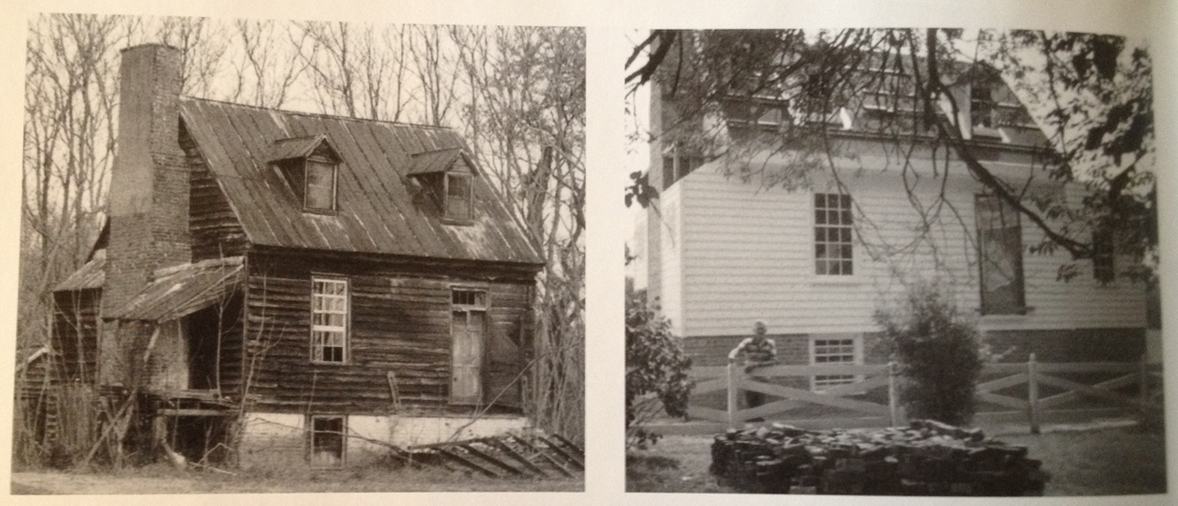
The left image is what the Overseer’s house (mentioned above) looked like before it was moved to Green Falls and restored. The right image is what the house looked like while renovations were underway. The house is a sight to see today.
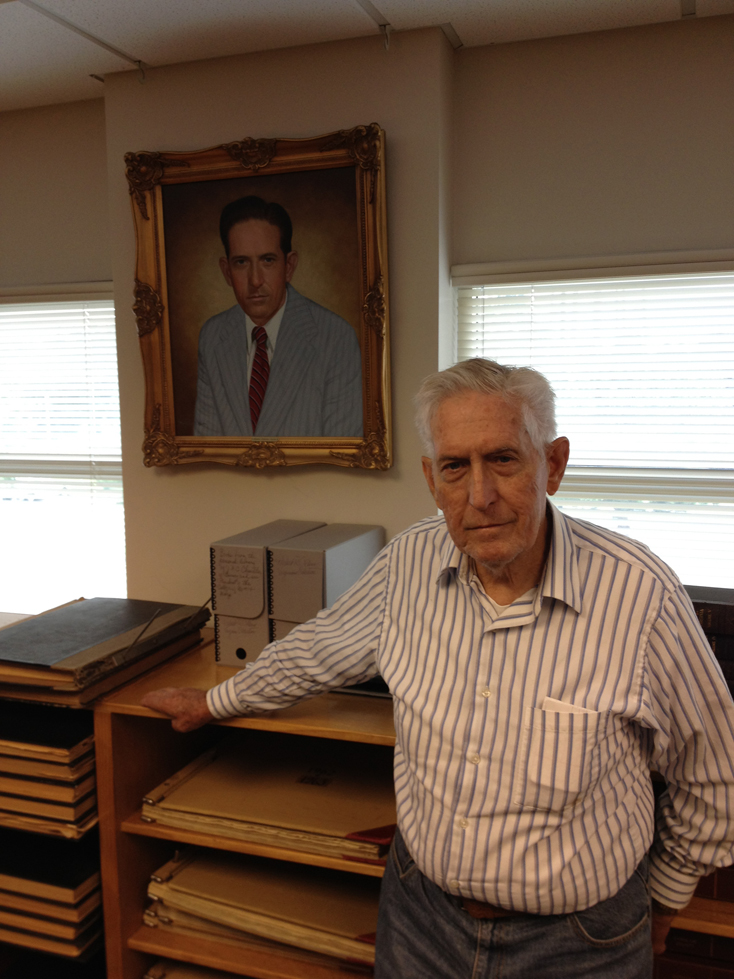
Herbert Ridgeway Collins and his portrait










 LincolnConspirators.com
Recent Comments