News

Manhunt Review: Episode 6 Useless

I am (still) conducting an ongoing review of the seven-part AppleTV+ miniseries Manhunt, named after the Lincoln assassination book by James L. Swanson. This is my historical review for the sixth episode of the series “Useless.”  This analysis of some of the fact vs. fiction in this episode contains spoilers. To read my reviews of other episodes, please visit the Manhunt Reviews page.


Episode 6: Useless

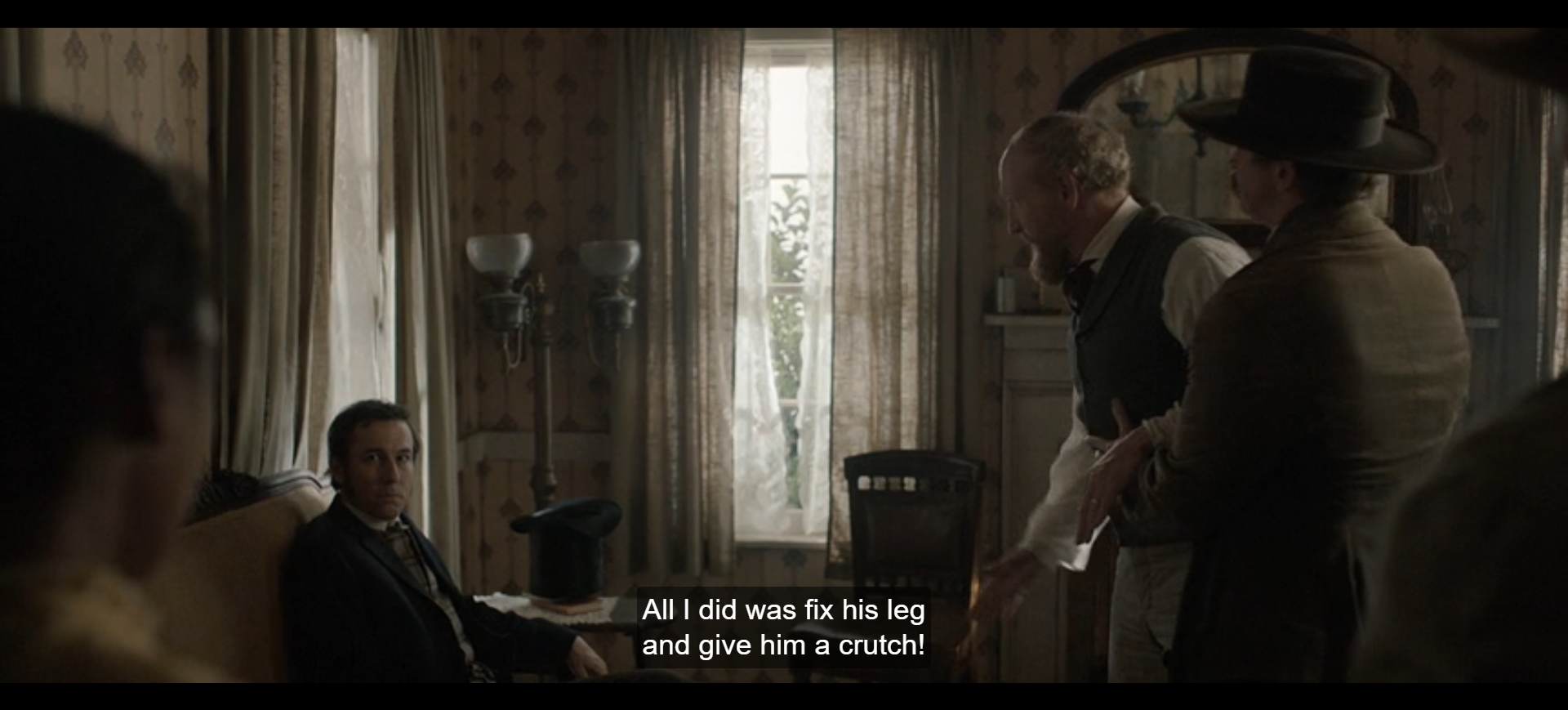
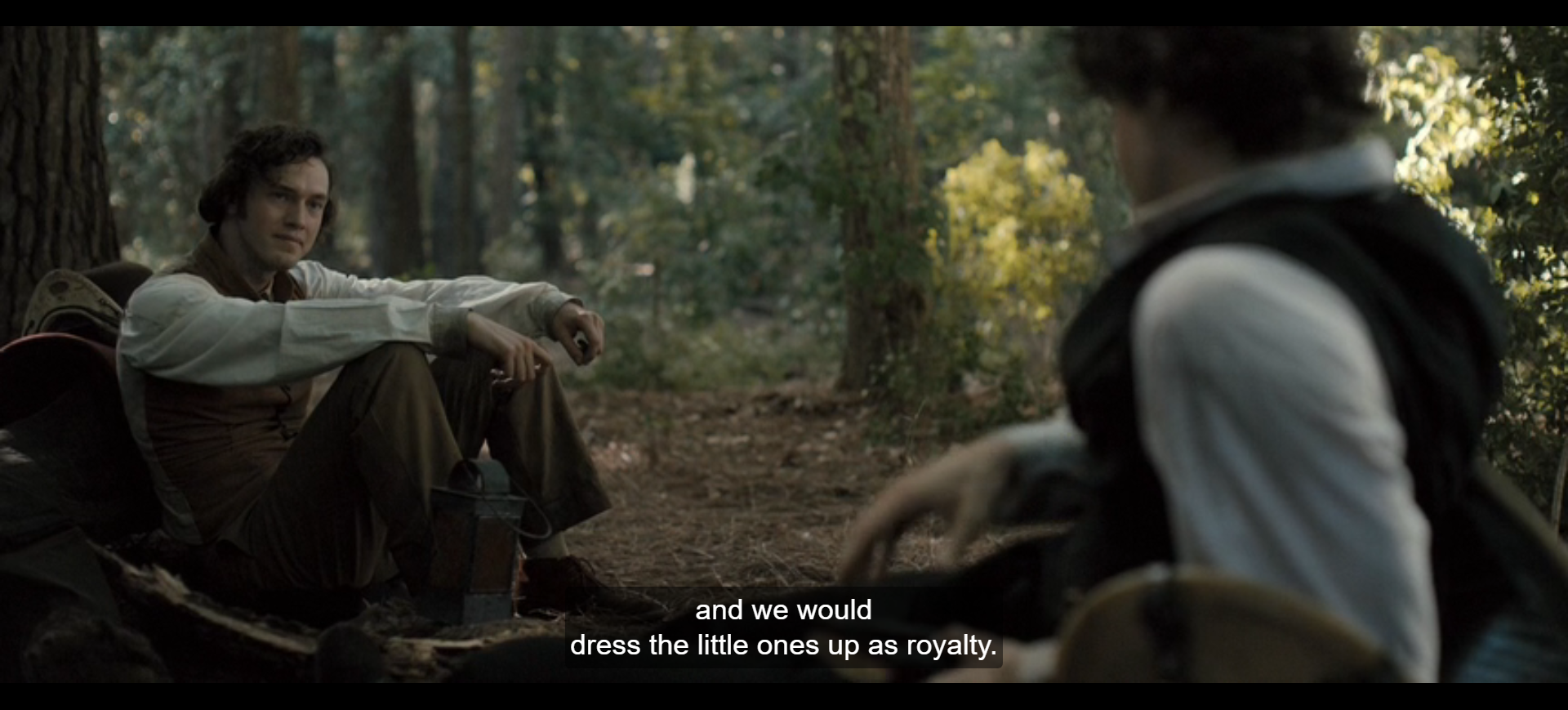
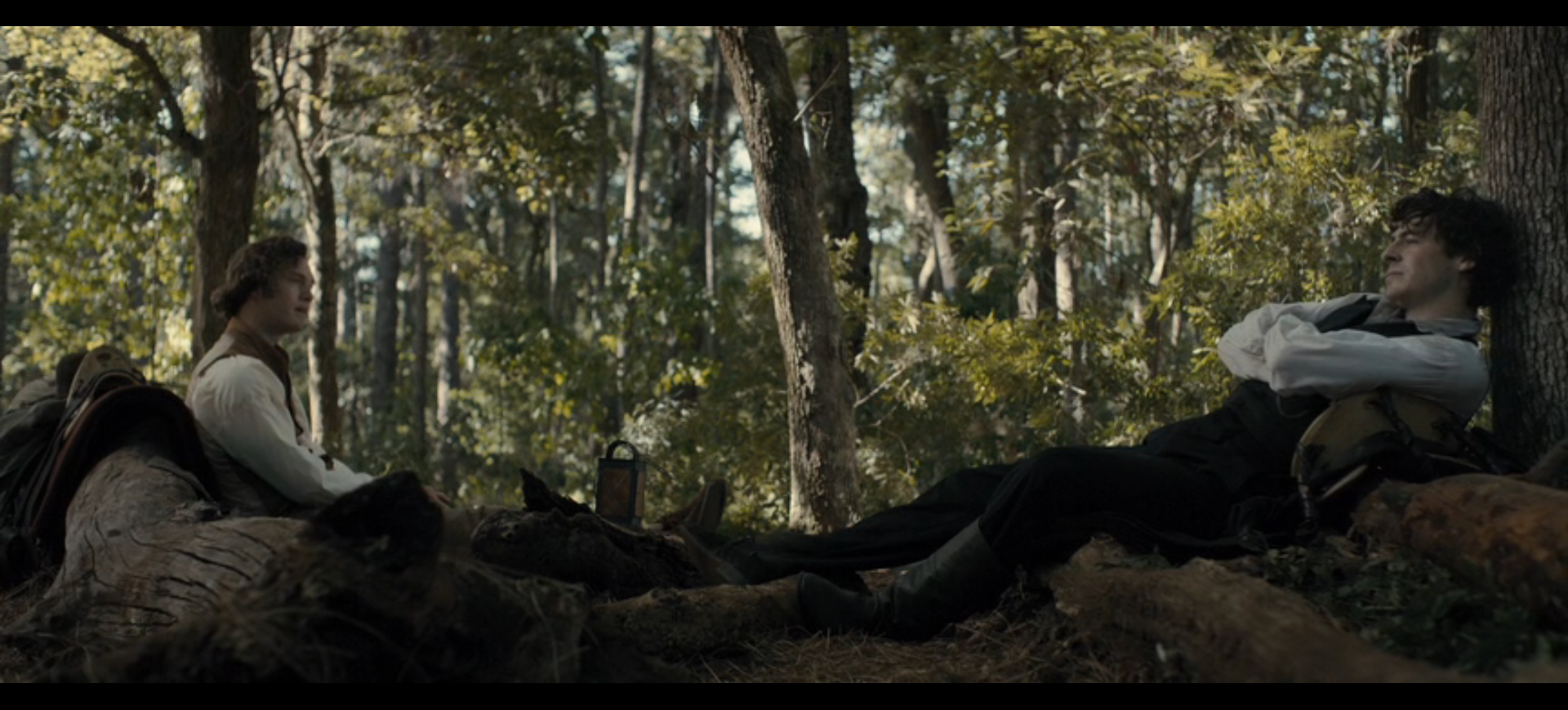
At the Garrett farm, Julia Garrett is concerned about her absent father finding her alone with Booth and Herold. She tells the men they have to spend the night in the tobacco barn, and no amount of flirting by Booth is able to shake her resolve. Once inside the barn, Julia locks the men in, leading Herold to immediately fear the worst. Booth, meanwhile, is unphased and tells stories to Herold in an attempt to convince him that he has been through worse scrapes than this.

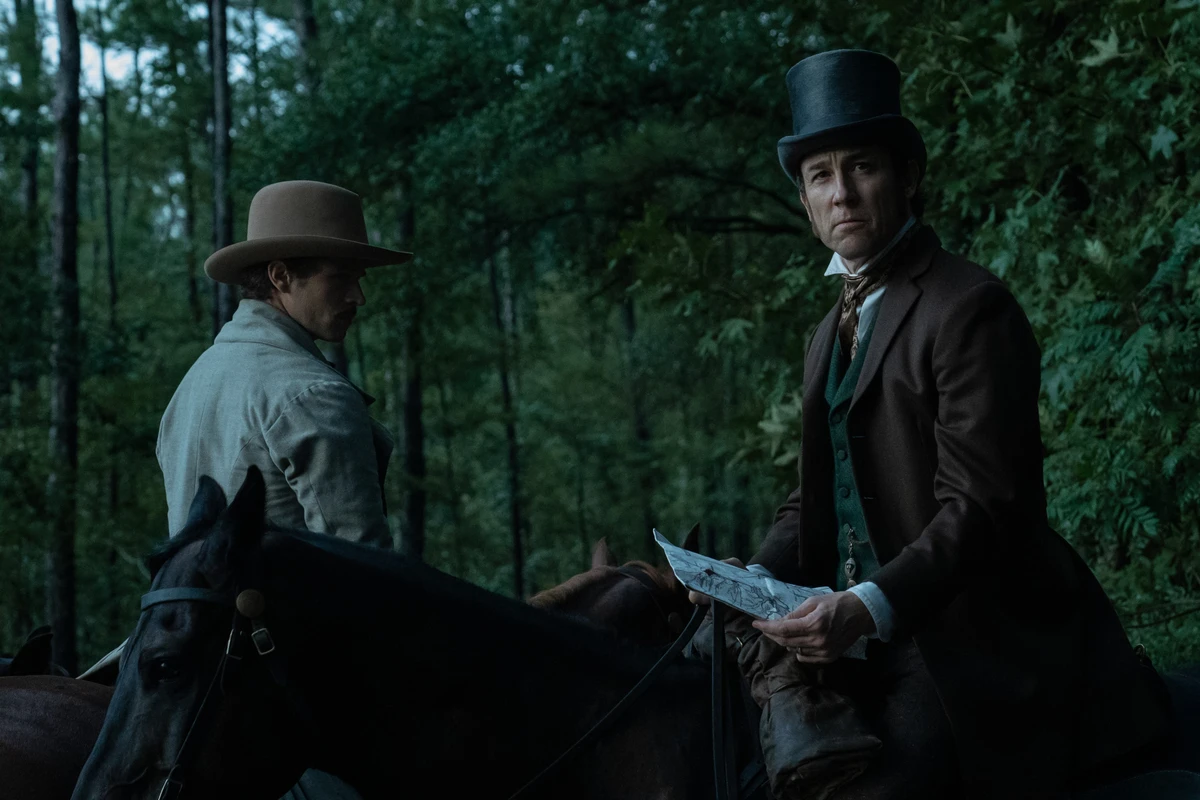
Back at the Star Hotel in Bowling Green, Secretary Stanton is being cared for by a doctor after the recent collapse that prevented him from riding off with the 16th New York Cavalry. Eddie Stanton and Thomas Eckert lament the toll the manhunt has taken on Stanton and worry about the Secretary’s health.

After another interlude between Booth and Herold in the barn, the 16th NY come riding up to the Garrett house. At the point of Boston Corbett’s gun, Julia Garrett admits that the fugitives are hiding in the tobacco barn and produces the key. Booth and Herold see some cavalrymen approaching the barn and debate opening fire when the barn door is opened. Everton Conger and Luther Baker step partly inside and order the men to surrender.

Booth refuses to surrender and instead offers to settle things with a duel. Baker tells the men that they have five minutes to come out or else he will force them out. The barn door is closed again. Booth fruitlessly attempts to break through the back wall, all while cursing at Herold for being useless to him.

Outside the barn, Corbett offers to attack the barn alone in order to draw Booth’s fire. Conger reminds Corbett that they have all survived the war and that he will not lose another man now. He then orders the other soldiers to lay brush around the barn. The barn is then lit on fire, much to the chagrin of Julia Garrett.

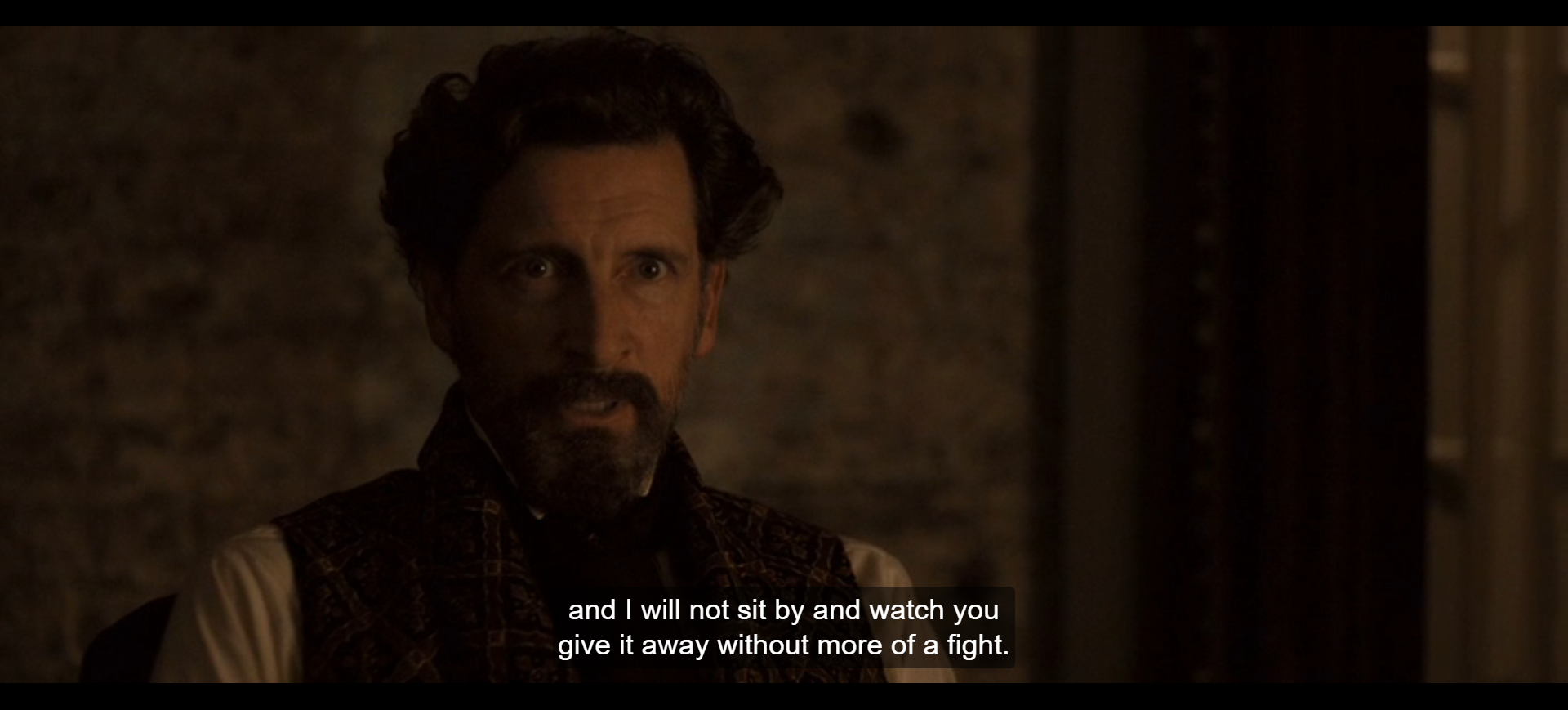
Inside the barn, Herold decides to give up. Booth opens the door and proclaims Davy innocent of the assassination saying that he alone planned it and made his escape. Herold exits the barn and is immediately tied to a tree, while Booth remains inside the smoke-filled barn.
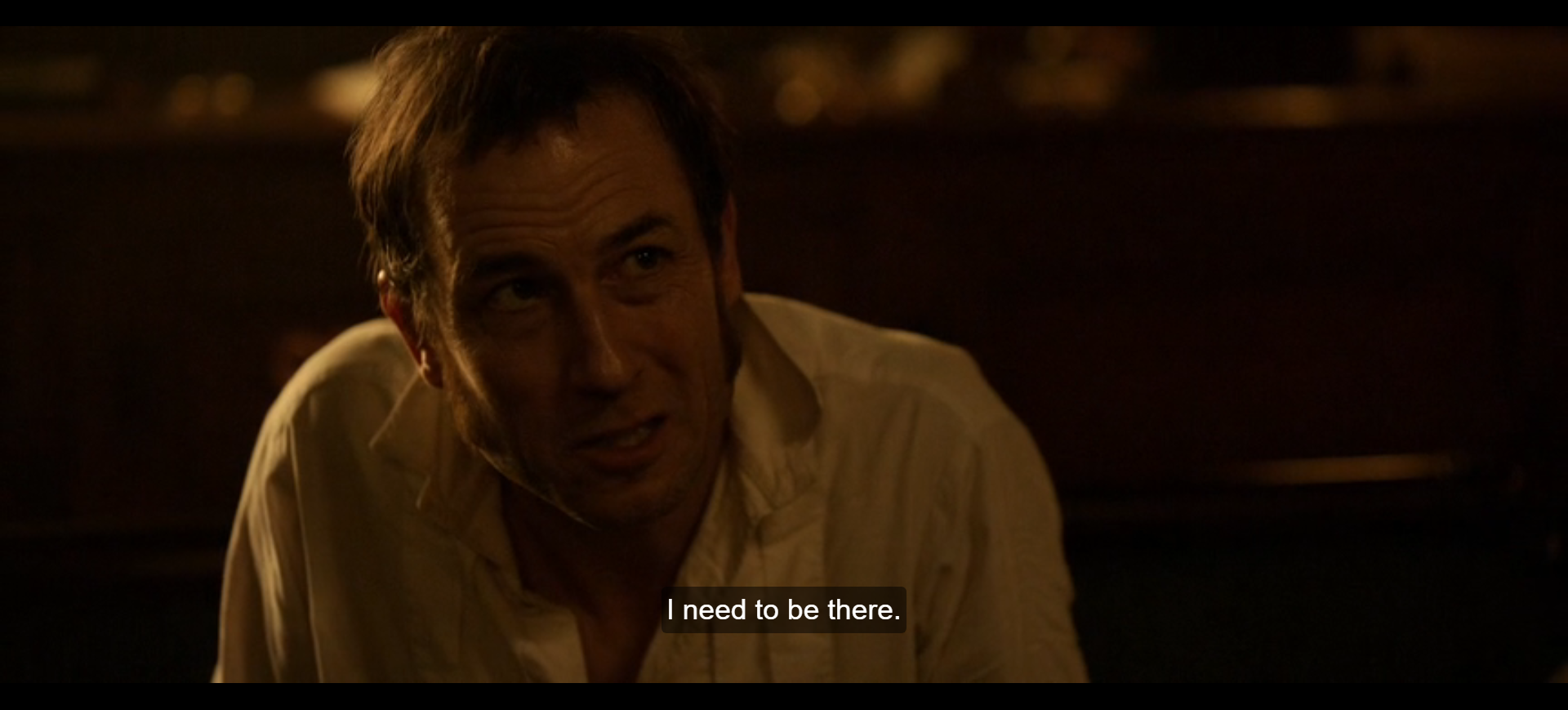
In Bowling Green, Eckert comes into Stanton’s room with the news that Booth will not surrender and that the cavalry is smoking him out. Despite his still weakened condition, Stanton insists on heading out to the Garrett farm to see that Booth’s capture is done right. Stanton, Eckert, and Eddie head out en route to the Garrett farm.

Even though the barn continues to burn, Booth refuses to come out. Conger approaches David Herold and asks him to go back into the barn and convince Booth to surrender. Davy finds a coughing and weakened Booth, who has seemingly accepted his fate to go out in a blaze. Davy pleads with Booth to live, even if it is only one more day. Booth appears to agree, and Davy helps lift him up.

On the outside of the barn, Boston Corbett discovers a small hole and peers through it at the men inside. Davy leads Booth towards the door of the barn when Corbett aims his pistol through the hole and fires, striking Booth and causing him to collapse. Davy turns to Booth and announces that he has been shot. Conger and Baker pull Booth from the barn as Booth deliriously states that Jefferson Davis will save him. Corbett appears, stating that Booth was about to shoot, so he fired first. Herold screams that this is a lie as Corbett looks to the heavens in amazement for having become God’s instrument.

Booth is moved further away from the flames and placed on the porch of the Garrett house. Though Julia Garrett does not want him inside, she still provides a pillow for his head and laments that a “great man deserves the hospital.” The soldiers state that Booth won’t survive the hour. Booth spits up blood, makes a few statements, and dies.
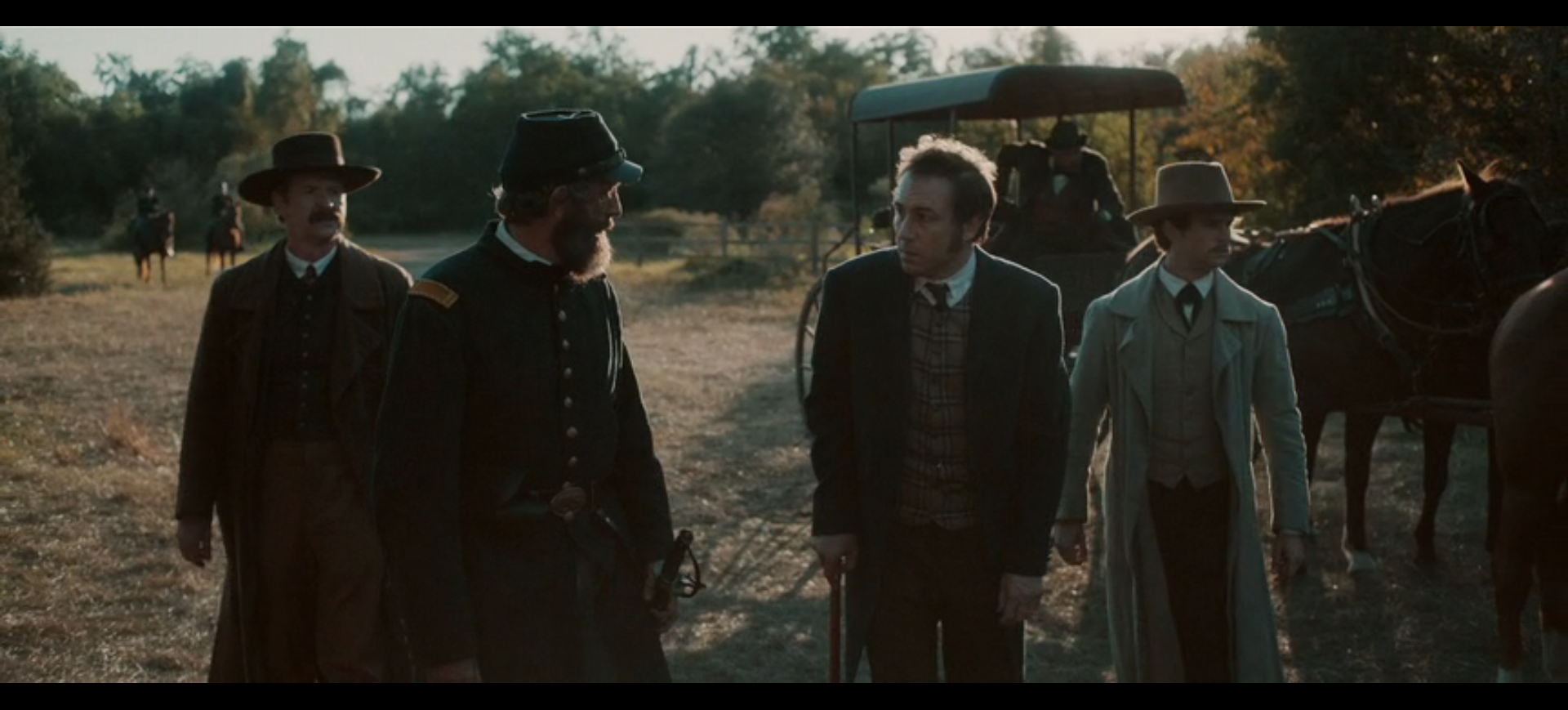
The next scene shows Stanton’s arrival at the Garrett farm after daybreak. Luther Baker apologizes to the Secretary for not taking Booth alive but repeats Corbett’s story that Booth was about to fire. Stanton is led to Booth’s body, which is wrapped in a blanket and lying on a cart. He pulls the blanket off of Booth’s face and sees his quarry face-to-face for the first time. Everton Conger appears and shows Stanton all of the items found on Booth, including his diary, which piques the Secretary’s interest. After Eddie covers Booth’s face back up, Stanton orders Eddie to have Booth’s body fully identified by a coroner and then disposed of in a place that even he doesn’t know.

We then cut to the White House, where Stanton and Judge Advocate Holt prepare to inform President Johnson of their plan to try the remaining assassination conspirators using a military tribunal rather than a civilian court. Johnson is in favor of the idea. Stanton also announces his intention to formally charge Confederate president Jefferson Davis with Lincoln’s death, drawing an uncomfortable look from Holt. President Johnson agrees but tells Stanton he better be able to prove it.
The hunt is then on for crucial witnesses to be used in the trial. In Bryantown, Oswell Swann refuses Luther Baker’s request to testify, countering with, “Talk to me when I’m considered more than three-fifths a man.” From Dr. Mudd’s cell, he pleads with his visiting neighbors to testify on his behalf and tell of his good deeds as a neighbor. Later, Edwin Stanton meets with Mary Simms at a freedmen’s camp in Arlington, telling her how important her testimony would be against Dr. Mudd.

At the War Department, Holt and Eckert express their doubts to Stanton about their ability to prove a grand conspiracy plot against Lincoln involving Jefferson Davis, George Sanders, and the Confederate government. They beg Stanton to reconsider, but he refuses, saying that the trial is his call. A visit to David Herold, looking for a connection to something bigger, proves fruitless. There is a scene showing the capture and arrest of Jefferson Davis and a discussion in the War Department about how to share it with the press.
Near the end of the episode, Eddie Stanton informs his father that the inquest over Booth’s body is finished. Before departing with Luther Baker, Eddie notices his father reading Booth’s diary and inquires about it. The Secretary tells his son not to worry about it and dismisses him to his task. Once alone in the room, Stanton tears pages from Booth’s diary and throws them into the fire.

The episode ends with the Secretary announcing his readiness to prepare the next witness, while Eddie Stanton and Luther Baker are shown disposing of three bodies.


Here are some of the things I enjoyed about this episode:

  • The Final Dream

This episode opens with a dream sequence that shows Edwin Stanton walking up to Booth’s horse as it grazes in a wood. The Secretary is moving slowly with a pistol drawn and cocked. As he approaches a large tree, Stanton puts his ear close to it before his mouth turns into a wide smile. As we rotate around the tree, we see Booth on the other side, with a revolver in his hand, but his face showing signs of concern. The scene ends with the dreamer, Booth, waking up in bed at the Garrett house. This is the third episode to begin with a dream sequence. Episode 2 started with Stanton dreaming of stopping Booth at Ford’s Theatre. While successful in the dream, the assassin reacted to Stanton’s punches by laughing in the Secretary’s face. In episode 3, Booth dreamed of his ascendance to the Presidency of the Confederacy. His swearing-in ceremony was interrupted by real-life Oswell Swann, who quickly brought Booth out of his fantasy. It’s interesting how the dream in this episode is so different than the ones that came before. Booth is no longer in control or wrapped up in his own glory. Here, near the end, Booth’s dream tells him how closely tracked he truly is. His unconscious mind is telling him the end is near, even if he doesn’t want to accept it. Just a scene later, he reassures Davy that their success is assured and that a night in a barn is nothing. But that is his ego talking. Booth’s subconscious appears to know the truth. I enjoyed all three dream sequence openings.

  • Booth and Henrietta

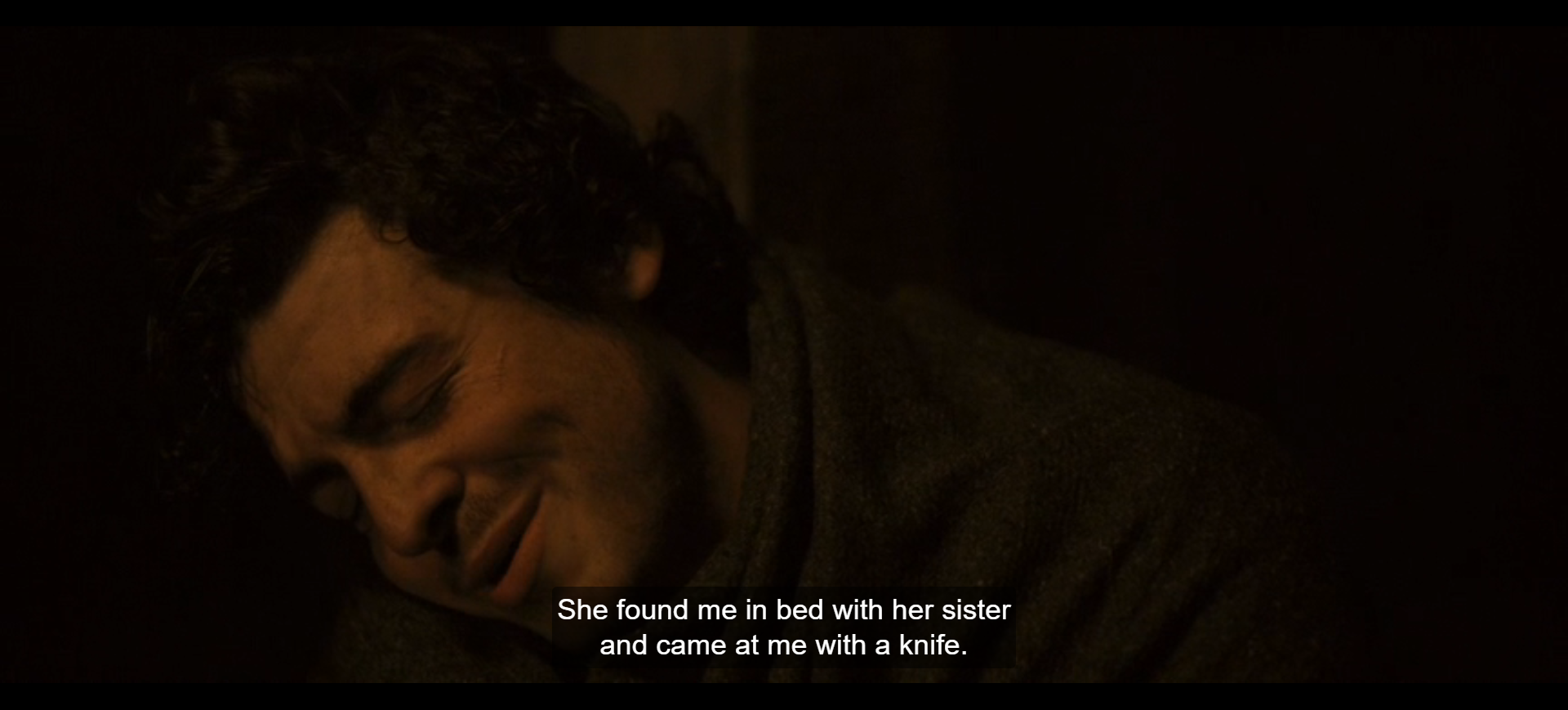
This episode pleasantly surprised me for a bit during Booth and Herold’s time locked in the Garrett barn. Immediately after the title sequence rolls, we see Davy banging on the locked barn door like a caged animal, convinced that the pair are done for. Booth, still ignoring his subconscious mind, assures Davy that he’s gotten out of worse scrapes. To prove his point, Booth shows off a scar on his left cheek. He tells Herold the wound was given to him by a “dancer by the name of Henrietta,” who attacked him with a knife after she found Booth in bed with her sister.

This is a true story of an event that occurred on April 26, 1861, exactly four years prior to the events in the Garrett barn. The 1860-61 theatrical season marked JWB’s first tour as a leading star actor. Theater manager Matthew Canning acted as Booth’s agent and started him in the Southern states before moving north to New York in January of 1861. After arriving in Rochester, Booth met his leading lady for the engagement, an actress by the name of Henrietta Irving.

Henrietta Irving in 1864

Five years older than Booth, Henrietta was a native of New York and said to be a niece of author Washington Irving of “The Legend of Sleepy Hollow” fame. I have tried to verify this with genealogical records but haven’t been able to prove it. Still, there may have been some family connection. Henrietta made her stage debut in 1855. Now six years into her career, Henrietta wasn’t a big household name but was still an accomplished working actress. Henrietta was most appreciated in smaller-sized cities across the country that were bereft of true “star” power. She played the leading parts well and wasn’t above playing supporting roles or sharing billing.

In 1859, Henrietta’s younger sister, Marie, made her debut on the stage. When the next season began, Henrietta and Marie joined forces and were advertised as the Irving sisters. While Henrietta’s career in the theater would last decades before her death in 1905, Marie’s foray only lasted a couple of seasons.

On January 21, 1861, John Wilkes Booth made his debut in Rochester, playing Romeo to Henrietta Irving’s Juliet. After the Shakespearean play was done, Marie Irving starred in the comedic afterpiece, the Rival Pages.
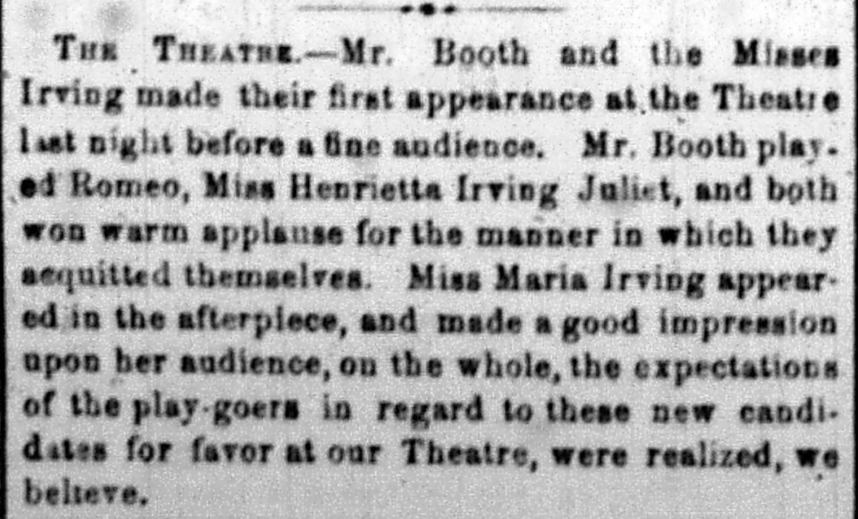
The engagement proceeded normally for two weeks, with Booth and the Irving sisters performing various plays together in different combinations while supported by the local theater company. Booth was very well received in Rochester, with the newspapers comparing him favorably to his revered father, Junius Brutus Booth. Booth’s time in Rochester ended on February 2, but his next engagement in Albany didn’t begin until February 11th. His whereabouts during this week are unknown, but he may have stayed in Rochester. It has been claimed that during this period in Rochester, Booth was engaged in a tryst with his leading Juliet, Henrietta Irving.

The details of Booth and Henrietta’s romance are difficult to know for certain. It is the stuff of gossip with conflicting sources. In the years after Lincoln’s assassination, columnist George Alfred Townsend (GATH)  dug up as much dirt about Booth’s life and career as he could. In his 1865 book, The Life, Crime, and Capture of John Wilkes Booth, GATH described Booth and Henrietta’s relationship thusly:

“They assumed a relation creditable only in La Bohéme, and were as tender as love without esteem can ever be.”

Years later, GATH interviewed Matthew Canning, Booth’s agent during this tour. Canning stated that Booth’s “chief passion was for women.” We must remember that Booth was a rising star during this period. Womanizing and sex followed naturally from his growing success. During the same period in Edwin Booth’s life, the elder brother had also lived the Bohemian lifestyle of casual sex. In 1858, Edwin wrote a letter to his brother, June, bragging about bedding a supporting actress at the theater, saying, “can’t brag on her acting so much as what we do in secret.” The fact that Dr. Ernest Abel was able to write an entire 400+ page book about John Wilkes Booth and the Women Who Loved Him demonstrates that JWB was also not short on female companionship during his brief 26 years of life.

Without naming names, Canning recalled to GATH that Henrietta was “Booth’s temporary mistress” during their time in Rochester. Eventually, Booth had to leave for Albany. He performed at the Gayety Theatre in Albany from February 11 through March 16, with one week off during the run. After this engagement ended, JWB headed to Portland, Maine, just as  Henrietta arrived in Albany for her own engagement at the Gayety Theatre. Even though Marie is not listed in the newspaper advertisements, she likely appeared alongside her sister in Albany.

Lucille and Helen Western

John Wilkes Booth was in Portland from March 18 through April 13. During the first week, he performed alongside another pair of acting sisters, Lucille and Helen Western. Booth had acted alongside the pair a year earlier when he was still a lowly stock actor in Richmond, Virginia. The “Star Sisters,” as the Westerns were known, made ample use of their good looks. They often put on more exotic shows with costumes that showed off their figures or even saw them dressed as men. Some of their regular plays were filled with sexual innuendo, and they thrived on courting controversy.  However, as successful as the “Star Sisters” had been, the duo was at the end of their time together. Their engagement with Booth marked the last time the Western sisters would appear on stage together. In his book, Dr. Abel writes that John Wilkes Booth likely made a “temporary mistress” out of seventeen-year-old Helen Western during their time in Portland together, but the evidence to support this claim is lacking.

After his time with the Western sisters in Portland was over, Booth returned to Albany for a repeat engagement at the Gayety Theatre starting on April 22. Henrietta Irving had just concluded her own run at the theater and had last appeared on April 19. Whether she performed supporting roles to Booth in April is unknown. The newspaper advertisements for this engagement only mention Booth sharing billing with “Signor Canito, the Man Monkey.” The “signor” was a New York actor by the name of Samuel Canty, who dressed as a monkey and performed in acrobatic plays he wrote himself.

Booth’s engagement with the monkey man was going well until April 26, 1861, when Henrietta Irving made her attack. The details are unclear, but the incident occurred at the Stanwix Hall hotel in Albany, where both Booth and Irving were staying. Irving stabbed at Booth with a dagger, aiming at his face – the stock and trade of any handsome actor. Booth managed to parry the blow, but not before receiving a bloody gash on his cheek. Having failed in her attack, Irving returned to her own hotel room at the Stanwix and stabbed herself. The attempt at suicide proved non-fatal, and both the victim and the attacker survived their knife wounds.
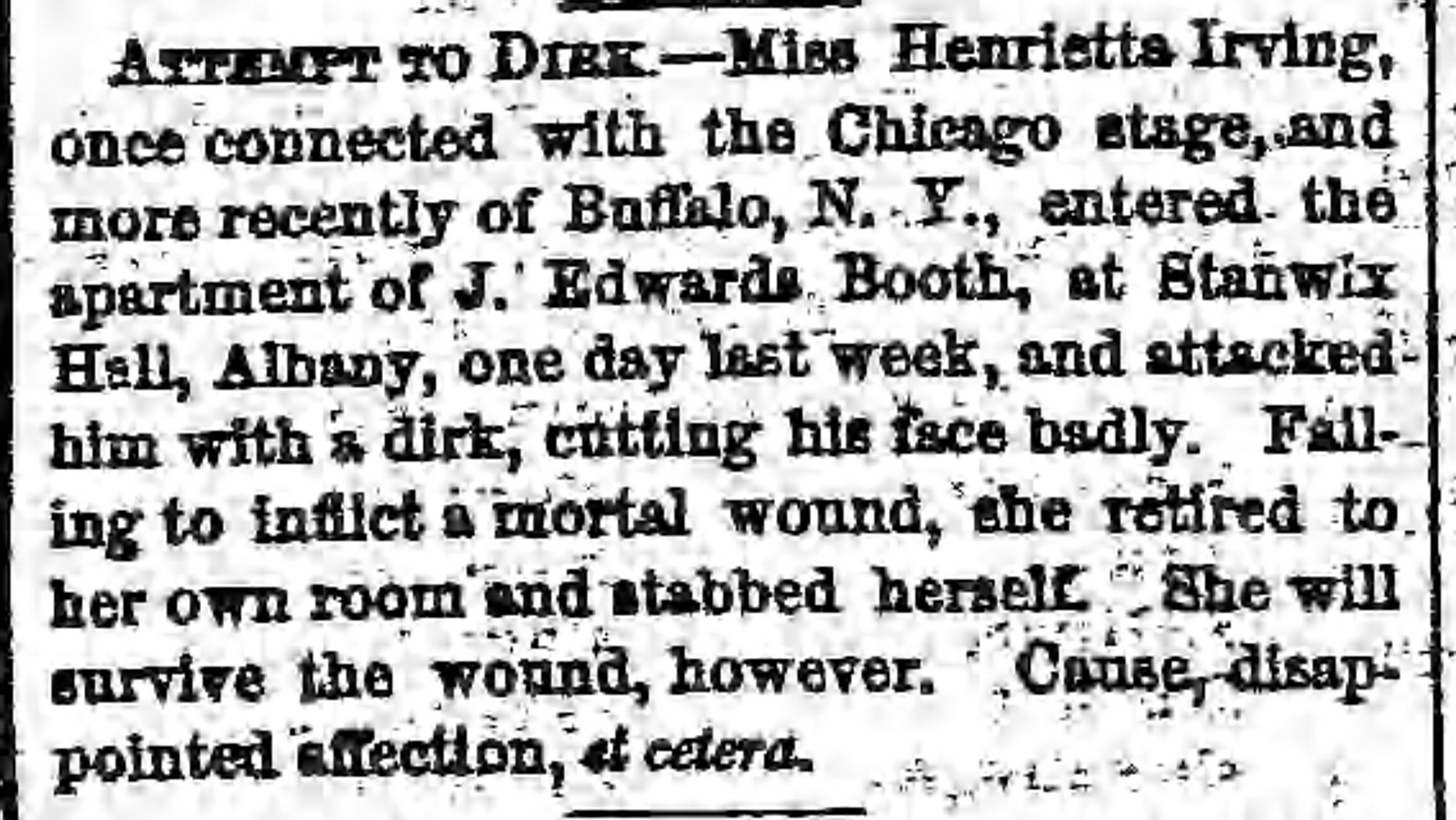
The newspaper articles that popped up about the incident were vague. Most seemed to believe that Henrietta Irving’s attack on Booth was due to a love affair gone wrong. The short blurbs that popped up in papers about the incident blamed the stabbing on “disappointed affection,” “misunderstanding,” “jealousy,” “or some little affair of that sort.”
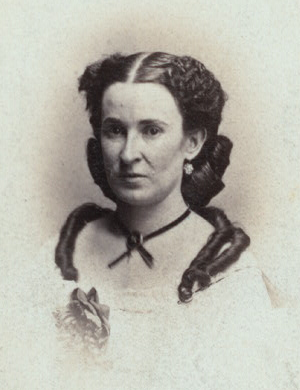
Henrietta Irving

The miniseries suggests that the stabbing may have been due to Booth taking an interest in Henrietta’s sister, Marie, during this time. There is some evidence to support this. In the same 1886 interview between GATH and Matthew Canning, Booth’s former agent recalled:

“There were two sisters in the company [in Albany], and neither of them very considerate. One of them was Booth’s temporary mistress, and he got a fancy for the other one, and the first sister kept watch on him, and as he was coming out of the other one’s room she jumped on him and stabbed him.”

This recollection from Canning implies that Booth had shifted his desires from Henrietta to her sister Marie and that Henrietta attacked him as a result. Whether this attack was from jealousy on Henrietta’s part or an attempt to protect her sister from a lothario she knew all too well is uncertain.

The incident marked the end of Booth’s debut touring season. The wound was not severe, but the latest of several misfortunes that had befallen the novice star, and Booth was ready for a break. From Albany, he returned home to Maryland and spent ten weeks at the family home of Tudor Hall memorizing and practicing plays for his next season.
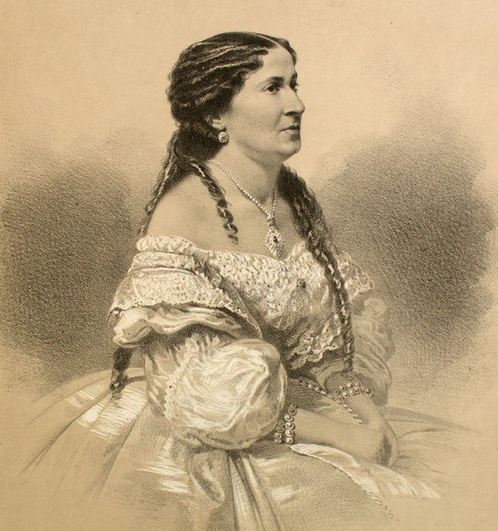
Henrietta Irving

Henrietta Irving’s career was not hampered by the bad press. She continued to act and married fellow actor Edward Eddy in 1867. We’ll probably never know her true motivation for stabbing Booth and then turning the knife on herself in 1861. In an autobiography she wrote before her death in 1905, Henrietta Irving makes no mention of John Wilkes Booth.

  • The Favorite

While in the barn talking with Davy before the authorities arrive, Booth goes into a monologue regarding his relationship with his mother and father. I’ll cover more of this in the sections that follow, but I did enjoy one part of it. During his monologue, Booth recounts that his mother “didn’t play favorites like my father.”

Despite Booth’s claim that Mary Ann Booth “didn’t play favorites,” it was well-known among the Booth children that she did and that Wilkes was the favorite. Granted, this had not always been the case. The original favorite had been Henry Bryon Booth, the fourth of the Booth children. He had been named after the famous poet Lord Byron, whose words helped Junius woo Mary Ann into leaving England with him. Henry Byron died of smallpox at the age of 11 in December of 1836, while the family was on an extended visit to England. The Booths were devastated by the loss of this boy, with Junius writing back to his father in America:

“We have at last cause and severe enough it is, to regret coming to England. I have delayed writing till time had somewhat softened the horror of the event. Our dear little Henry is dead! He caught the small pox and it proved fatal – he has been buried about three weeks since in the chapel ground close by. Guess what his loss has been to us – So proud as I was of him above all others.”

John Wilkes Booth was the first child born after the death of Henry Byron. When he came in May 1838, it helped put the light back into a still-mourning Booth household.

In addition to the timing of his birth, John Wilkes possessed a strong loyalty to his mother. He acted as the man of the house while his older brothers, June and Edwin, traveled west on their acting careers. After Junius, Sr. died in 1852, John Wilkes tried his best to work the family farm and provide for his mother and siblings. Eventually, a successful Edwin came home and saved the family from their poverty, but it had been Wilkes who had stuck by his mother’s side during these hard times.
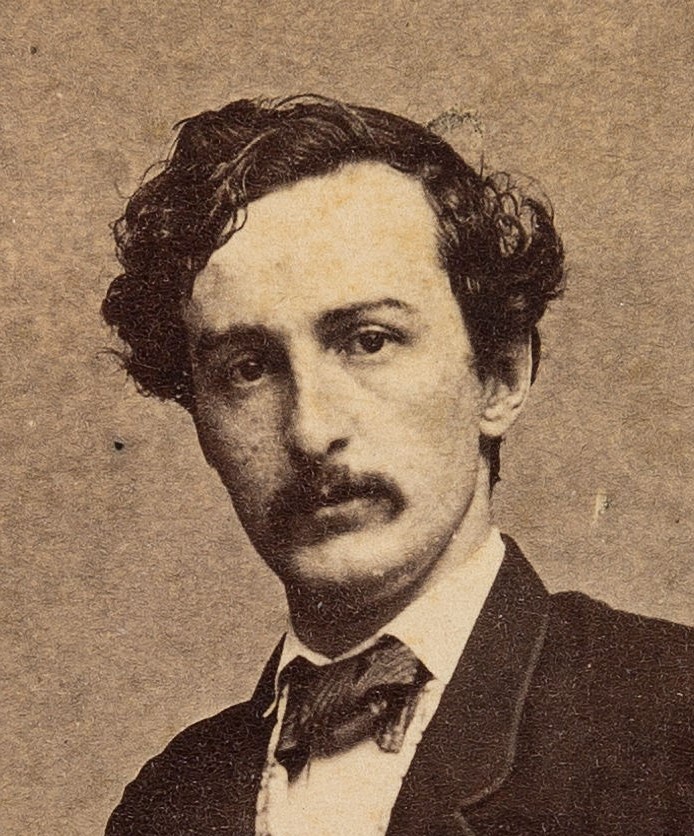
The fact that Mary Ann favored Wilkes over her other children was not resented by the other siblings, either. In her own book about her brother, Asia wrote that she was closer to John than any of her siblings. When Mary Devlin Booth, Edwin Booth’s wife, died in 1863, John Wilkes canceled his engagements to rush to his grieving brother’s side. He regularly corresponded with his eldest brother, June, and took a great interest in the lives of his nieces and nephews. Wilkes even tried his best to provide some guidance and structure to his youngest sibling, Joe, whose lack of purpose and melancholy greatly worried their mother. As historians William Edwards and Edward Steers, Jr. concluded: “John was everyone’s favorite.”

With all this being said, I actually enjoy this part of Booth’s monologue in which he relates that his father played favorites, but his mother did not. Wilkes is either purposefully misrepresenting or completely ignorant of the fact that he is his mother’s favorite child. The former would demonstrate Booth’s manipulative nature and ability to lie to make himself look better, while the latter would show how selfish and narcissistic Booth was. The entire family knew and acknowledged that Wilkes was his mother’s favorite child, but his own self-pity and hurt ego over the idea that he wasn’t also his father’s favorite blinds him to the truth of his elevated status. I like this line as it is yet another example of something the miniseries accidentally gets right when you know the true context.

  • His Mother’s Prophecy

In the same monologue mentioned above, Booth recalls being the victim of a cutting insult on the part of his father and that his mother then came to his aid. Mary Ann looked at the palms of Booth’s “beautiful hands” and predicted that one day, her son would do something important with those hands. To Booth, his shooting of Lincoln was the fulfillment of his mother’s words, and that prophecy, not the soothsayer’s prophecy from episode 3 predicting his early demise, gave him comfort now.

This little story of Mrs. Booth having a vision of her son’s future actually has some basis in fact, though it comes from well before Wilkes could speak. In Asia Booth’s book about her brother, she recalled a family story told to her by her mother. It revolved around a night, not long after the birth of John Wilkes, when the mother was trying to coax her newest child to sleep as they both sat in front of a fire. According to Mary Ann, while thinking about the future of her young boy, she witnessed a vision. The story of what she saw was repeated so often that, in 1854, Asia wrote the story as a poem and presented the piece as a present for her mother’s birthday. Asia’s poem of “The Mother’s Vision” is as follows:

THE MOTHER’S VISION

Written 1854, June 2nd, by A.B., Harford Co. Md.

‘Tween the passing night and the coming day
When all the house in slumber lay,
A patient mother sat low near the fire,
With that strength that even nature cannot tire,
Nursing her fretful babe to sleep –
Only the angels these records keep
Of mysterious Love!

One little confiding hand lay spread
Like a white-oped lily, on that soft fair bed,
The mother’s bosom, drawing strength and contentment warm –
The fleecy head rests on her circling arm.
In her eager worship, her fearful care,
Riseth to heaven a wild, mute prayer
Of foreboding Love!

Tiny, innocent white baby-hand,
What force, what power is at your command,
For evil, or good? Be slow or be sure,
Firm to resist, to pursue, to endure –
My God, let me see what this hand shall do
In the silent years we are tending to;
In my hungering Love,

I implore to know on this ghostly night
Whether ’twill labour for wrong or right,
For – or against Thee?
The flame up-leapt
Like a wave of blood, an avenging arm crept
Into shape; and Country shone out in the flame,
Which fading resolved to her boy’s own name!
God had answered Love-
Impatient Love!

The story of Mary Ann Booth seeing the flames of a fire spell out “Country” and then John Wilkes Booth’s name is a compelling one that would have been perfectly suited for a dramatic recreation. While I wish that the miniseries had been more exact in recounting the details of this vision, I appreciate their hint at the family story.

  • Explaining the Trial

In the second half of this episode, we see Secretary Stanton preparing for the trial of the Lincoln conspirators. The series actually does a good job of showing Stanton’s strong belief that Jefferson Davis and other leaders of the Confederate government were behind the actions of John Wilkes Booth. We’ll talk more about this belief and how Stanton’s devotion to this theory ended up compromising the government’s case in the review for the final episode of the series.

However, I did appreciate how well the series showed a fictitious yet conceptually accurate discussion between Sec. Stanton, Judge Advocate General Joseph Holt, and President Johnson regarding the way in which the trial of the conspirators was to be conducted. The participants aptly explained the “danger” of attempting to try the conspirators in a civilian court where a jury of their peers might rule in their favor. JAG Holt explained how a panel of military judges would be better suited to the task and, of course, explicitly chosen by the War Department for the task. The scene also had Johnson lay out a basic but historically correct argument for why the conspirators should be tried by a military court for their assassination of the commander-in-chief. The whole scene was well written and explained a controversial decision using very human and understandable terms.

I also appreciate how Both Stanton and President Johnson were shown to be united in this area. One of my critiques has been how the series has shown the two to be at odds far too often this early in their relationship. Johnson wanted vengeance for Lincoln just as much as Stanton did. It was only as Johnson’s presidency went on that his deviations from his predecessor’s actions and beliefs caused an irreconcilable fissure between the men.

  • Will Harrison as Davy Herold

Back in my review for episode 3, I recounted how much I was enjoying how the writers managed to make David Herold a complex figure and how impressed I was with Will Harrison’s performance of this often-overlooked conspirator. My admiration for both Harrison’s acting and the interpersonal writing of his character only increased with the stand-out performance in the penultimate episode of the series. Herold experiences a whole gamut of emotions in this episode. In the barn, he finally refuses to entertain Booth’s ego and delusion any longer, and he is the only one of the two who truly acknowledges the severity of their circumstances. Herold is then noticeably wounded when Booth turns on him and projects his own inadequacies onto the pharmacist’s clerk, who had been nothing but loyal to the assassin up to now. Even though Booth is not worthy of his devotion, he still begs the assassin to live and not give up his life unnecessarily. Then, from his lonely prison cell, Davy acknowledges the powerful influence Booth had on him, yet is still unable to completely free himself from it, begging to read Booth’s diary once more.

Both Herold and Sec. Stanton reflect on their friends Booth and Lincoln, and how they made each feel important. Yet Herold fails to realize that his relationship was one-directional and with a narcissist who could only take. Though Tobias Menzies’ Sec. Stanton was correct that David Herold can’t be forgiven for what he did, Will Harrison’s portrayal of the conspirator in this episode returns a much-needed humanity to this historical figure.

  • An Equivocal Code

I was pleasantly surprised by part of the scene in the War Department where both JAG Holt and Thomas Eckert expressed their concerns to Stanton about the strength of the evidence to support the idea of a grand conspiracy involving the Confederate government. Stanton manages to acknowledge these shortcomings but is still unwilling to change his mind. He relates how the other side has shown its willingness to bend the rules and suggests his team do the same (as if trying the conspirators in front of a military court wasn’t bending the rules enough already).

As part of their equivocal evidence connecting Booth to Jefferson Davis is a coded message from Davis to John Surratt stating, “Come Retribution,” and the discovery of a cipher table in Booth’s room. As Holt and Eckert note, they can’t prove that the coded message related to the assassination or that Booth ever even saw it. To this, Stanton responds, “Very few, if any, understand how code works,” before ordering Eckert to “make it sound more definitive than it is.”

While I was not a fan of the miniseries creating a fictional coded message from Jefferson Davis to John Surratt just for the sake of intrigue, I am very happy that they are explicitly showing that the existence of Booth’s cipher table has been greatly misconstrued as being evidence of a connection between Booth and the Confederacy. I wrote as much in a blog post here back in 2019 entitled Booth’s “Confederate” Cipher (which you should all read). Given how very few others have ever written about Booth’s cipher table, I’d like to think one of the writers of this series read my post. In summary, the cipher table found in Booth’s room is in no way evidence of connection to the Confederate secret service. If you want to learn more, read the post.


Let’s dig now into the fact vs. fiction of this episode and learn about the true history surrounding these fictional scenes.

1. Booth’s Other Wound

In addition to mentioning the stab wound he received from Henrietta Irving, Booth shows Davy another wound he survived in the past. He points to a scar on his right hip and tells Davy that it was caused by a crazed fan who shot him in Columbus, Georgia. Booth then goes on to state that if Davy were to visit Columbus, he might hear some gossip of, “Booth’s own pistol going off in his pocket.” But Booth denies this story and assures Davy it was a deranged fan who shot him “demanding an autograph while I was taking home an ingenue.”

I appreciated how the miniseries clearly shows that Booth is making up a story to protect his vanity. However, even the “true” story that we are supposed to infer from this exchange – that Booth accidentally shot himself with a gun – is not exactly accurate.

The event in question happened on October 12, 1860, during Booth’s ill-fated debut season that would end with him being stabbed by Henrietta Irving. A concise version of what occurred can be read in this newspaper article.
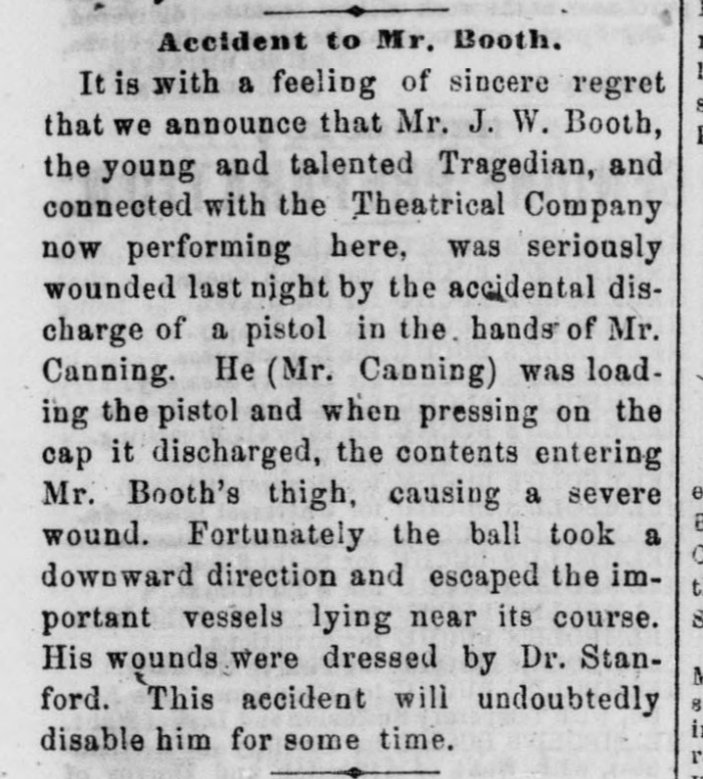
I’ve written at length about Matthew Canning accidentally shooting his lead actor in a 2012 blog post entitled “Shooting Booth,” which I encourage you to read if you want to know the full story. While Booth may have had a hand in his own shooting, it would not be accurate to say that his own pistol went off in his pocket.

2. “Boy, you are useless.”

In the part of Booth’s barn monologue where he talks about his relationship with his parents, he recounts a time when he approached his father and asked the elder tragedian to train him as an actor. According to Booth, Junius responded cuttingly with, “Boy, you are useless,” dashing his hopes.

In this way, the miniseries is once again returning to the idea that Booth’s choice to assassinate Lincoln was motivated by an intense inferiority complex. While I have no doubt that the Booth family dynamic had an impact on John Wilkes Booth, I still find the belief that Booth did what he did because his father and brother were better actors than he was to be too contrived and simplistic.

I would agree that Booth likely felt that his father played favorites and that his brother Edwin had been given chances he had not. Part of this, however, was due to the age difference between Edwin and Wilkes. Their father’s alcoholism increased greatly in his later years, deeply impacting the family’s income stream. In earlier years, Mary Ann traveled with Junius to keep him sober, but her household was far too big for this to continue. She assigned her eldest boy, June, to the role of his father’s guardian for a time, but soon, June had a family and life of his own. In 1848, Junius needed a new traveling companion. The options were limited. While daughter Rosalie was 25 years old, it would not have been deemed appropriate for a daughter to become her father’s keeper. The only remaining Booth boys were Edwin, Wilkes, and Joe.  Of these, Edwin was the oldest at 14, followed by Wilkes, who was 10. By necessity and by age, Edwin became his father’s assistant. Wilkes was no doubt jealous of the opportunity and theatrical education his brother received in watching their father perform in cities across the nation. However, he was also ignorant of the immense struggles Edwin endured trying to keep their father out of the bottle and on the stage night after night. For both brothers, the grass was greener on the other side. While Wilkes was jealous that Edwin got to travel with their father, Edwin lamented his lost childhood and his lack of a formal education.
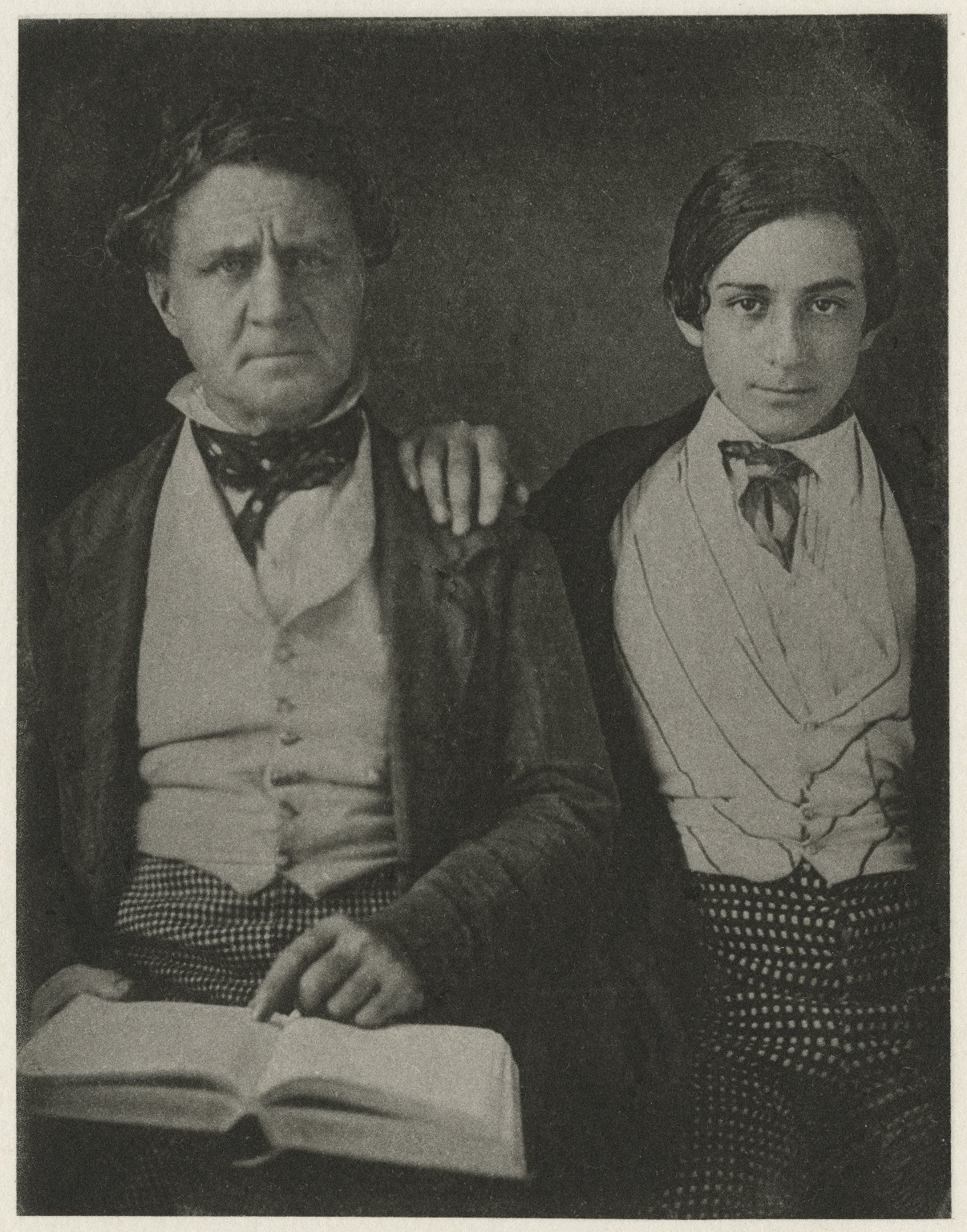
There is no evidence that Junius ever called Booth “useless.” The idea that Junius did not want to train Wilkes as an actor might be true, but likely not because of the old man playing favorites. In reality, Junius attempted to dissuade all of his sons from pursuing acting as a vocation. Junius knew firsthand the difficult lives actors lived. They were constantly away from their homes and families, and even the most successful of actors often struggled to make ends meet. Junius desperately desired for his children to go into respectable careers with stability. Actors were celebrated for their histrionic talents, but the applause was fleeting. It wouldn’t be until Edwin Booth established The Players Club in his later years that actors were welcomed as equals amongst men of power and influence.

In truth, had Junius been able to control his drinking and manic bouts, he may have been successful in preventing his sons from becoming actors. Without a need for a guardian, his two sons, June and Edwin, could have continued their studies and found other careers. Instead, they had to accompany their father, and their education and job training became that of the theater to which Junius was bound. While John Wilkes Booth was never tasked with being his father’s keeper in this way, his rose-colored interpretation of his brothers’s experiences led him to also want to be an actor.

3. The Garrett Family
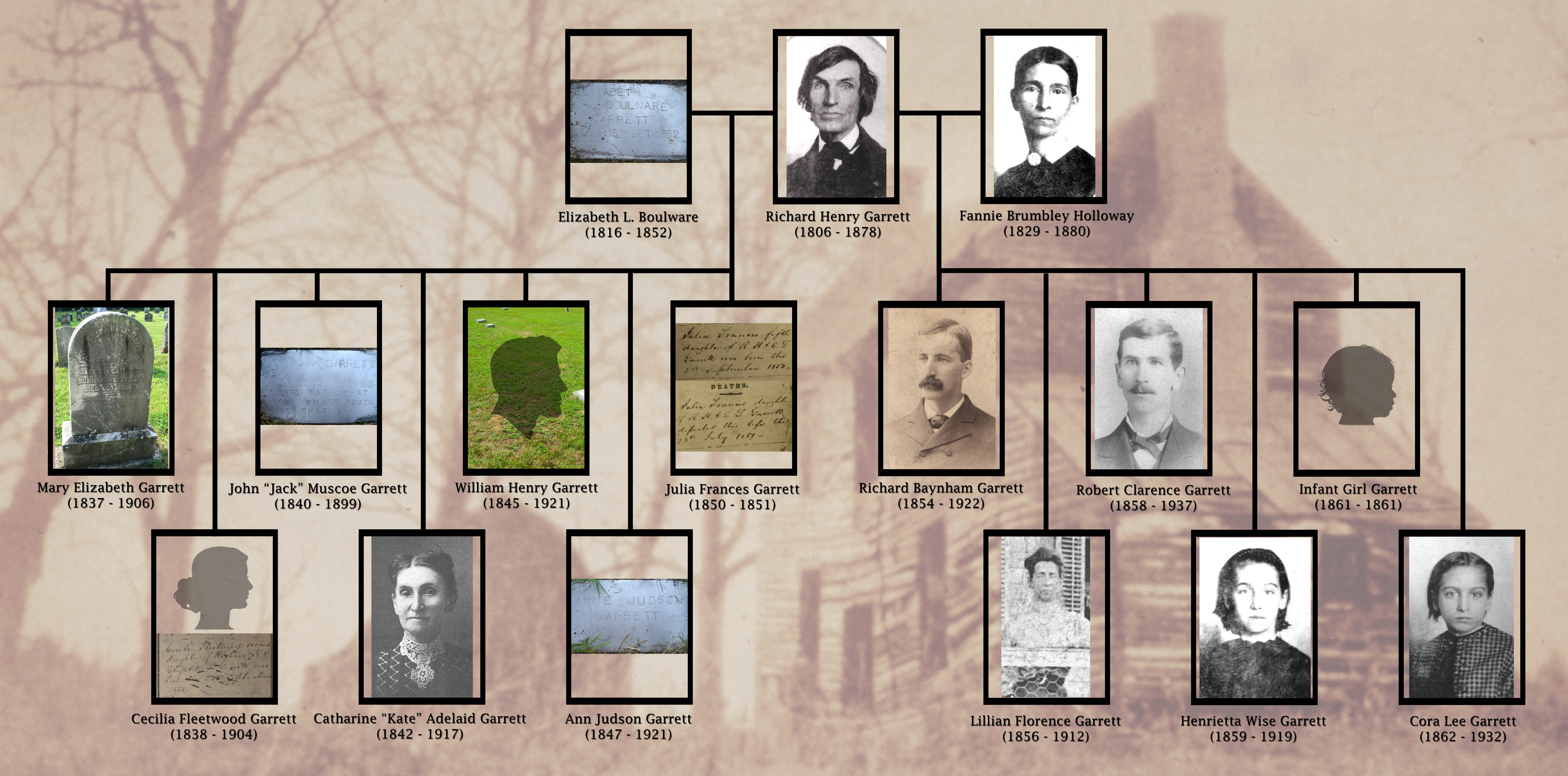
One of my particular interests in the Lincoln assassination story is John Wilkes Booth’s time at the Garrett farm right before his death. He interacted quite a bit with the Garrett family, who were ignorant of his identity and agreed to take him in under the belief that he was merely a wounded Confederate soldier in need of assistance. The assassin spent about 39 hours at the Garrett farm before meeting his demise. He spent the first of his two nights sleeping comfortably in a bed inside the Garrett home as the family did not yet have any reason to suspect their houseguest was anyone other than what he claimed to be. It was only after the re-arrival of Davy Herold on the second day and the two men’s subsequent reaction to members of the 16th NY Cavalry riding by the farm that gave the family pause and resulted in the men’s banishment to the tobacco barn for Booth’s second night. Practically all documentaries and dramatic series fail to accurately portray this timeline. They all make it appear as if Booth showed up at the Garrett farm and was almost immediately condemned to the barn, where the troops cornered him a few hours later.

In truth, I had high hopes for Manhunt to finally show an accurate representation of the Garrett farm, Booth’s interaction with the family, and his death. Unfortunately, most of what is shown in this episode regarding the events at the Garrett farm is fictitious and only loosely based on fact.
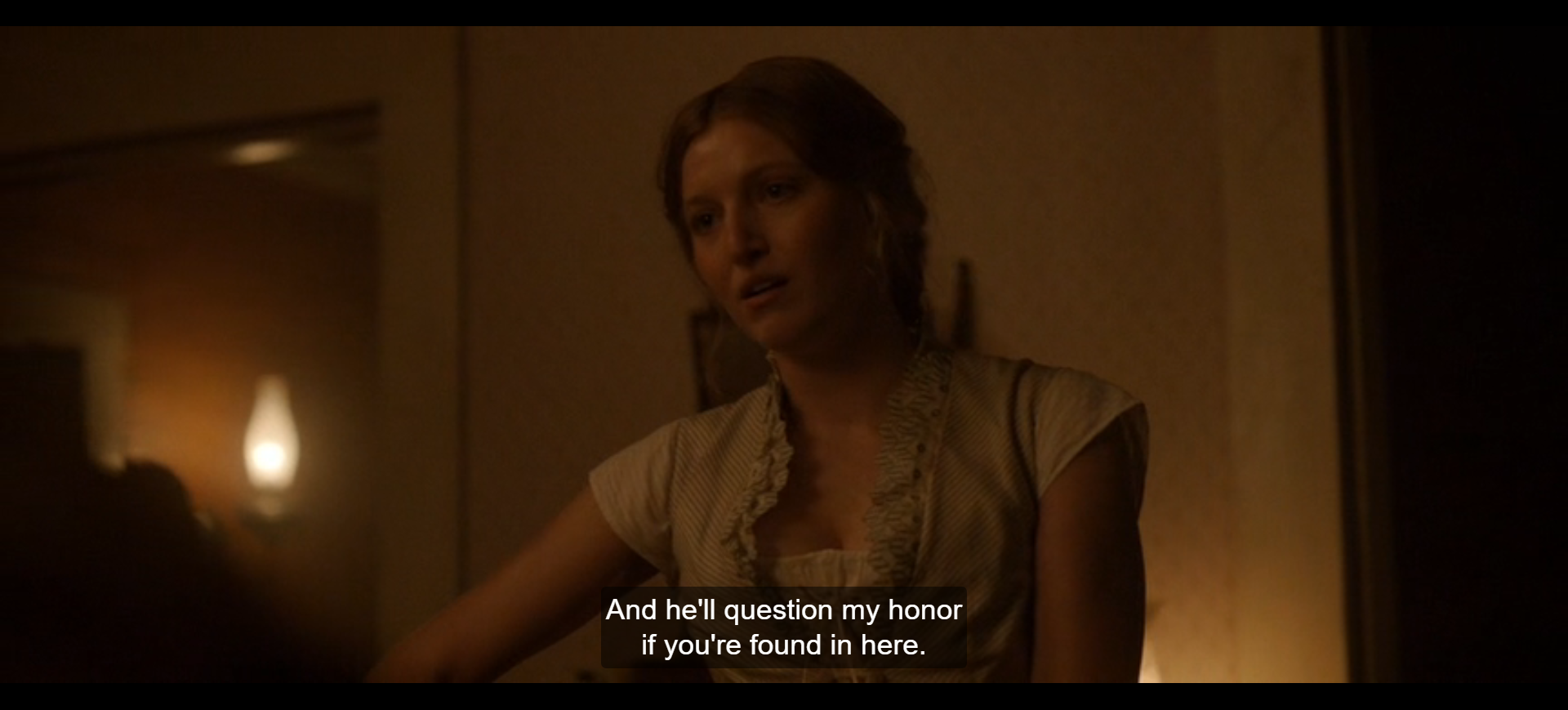
The episode opens with Julia Garrett, fresh off of her awkward “bathing Booth” duty from the prior show, telling the men that they can’t stay overnight as her daddy will question her honor if they are found in the house. After some wooing by Booth, Julia agrees to let Booth and Herold take their horses in the morning, but only if her daddy approves. Julia leads them to the barn, and Booth once again tries to work his awkward magic on her, but she rebuffs him and locks the men in the barn, leading to the barn discussions between Booth and Herold that were previously mentioned.

Apparently, Julia’s daddy never comes home, as she remains the only member of the Garrett household that we ever see. While one of the children born to Richard Henry Garrett was named Julia, the real Julia Frances Garrett died in 1851 when she was less than a year old. The miniseries never shows the many other Garrett family members who interacted with Booth during his time at the farm, nor does it cover the actual series of events that led to Booth and Herold being locked into the barn and guarded by Jack and Will Garrett. The Garrett family did not know the true identity of the man they had been entertaining until he was already shot and dying on their porch. Booth was locked into the barn because he and Herold told the Garretts that they had gotten into a scrape with the Union cavalry over some horses, and so the Garretts were fearful the men might be horse thieves. They were locked into the barn to protect the Garrett horses, not because the Garretts suspected they were involved in the assassination of Lincoln.

4. The Fire Is Started Too Quickly

As is common in these types of dramatic portrayals, the miniseries shows the troopers lighting the tobacco barn on fire seemingly within minutes of their arrival at the Garrett farm. In reality, quite a lot of time took place between the arrival of the 16th NY Cavalry and the act of actually setting the tobacco barn housing the fugitives on fire. The act of dismounting the horses in groups of two and situating the horses away from where the blaze was planned took over a half hour as the cavalry was careful to maintain an unbroken line around the tobacco barn. Even after the dry brush was placed next to the barn in preparation to smoke them out, another hour went by as the soldiers tried to convince Booth to give himself up. The whole affair was a relatively patient one, as the soldiers wanted to capture Booth alive and were not out to destroy the Garrett property if it could be avoided. In the end, though, the trooper’s patience wore thin, and Luther Baker told the men that the barn would be set on fire in five minutes if they did not surrender themselves.

It was after this final ultimatum, given over an hour and a half after the arrival of the troopers, that David Herold finally surrendered himself. He did so before the barn was set on fire, and he came out alone with Booth verbally downplaying Herold’s involvement to the troopers as a way to protect his trusted conspirator. It was only after Herold’s surrender and his being secured to a nearby tree that Everton Conger lit the barn on fire, and Booth was shot within a matter of a minute or two.

5. The Shooting and Death of Booth

In the miniseries, David Herold is sent back into the burning barn in order to convince Booth to live another day by giving himself up. After telling Booth that his only chance is a day in court, Booth rises and begins to walk out of the burning structure with Davy leading the way. At this moment, Corbett finds a hole in the side of the barn, aims his pistol through it, and fires. The bullet strikes Booth, causing him to collapse. From Davy’s entreaties for help, the soldiers pull him from the barn, and Corbett appears to take credit for his actions, noting “what a fearsome God we serve” when told he struck Booth in the back of the head, “just like Lincoln.” The delirious and partially paralyzed Booth asks about Jefferson Davis before being placed on the porch of the Garrett house. Julia Garrett places a pillow behind Booth’s head and says he needs a hospital, but a soldier notes that he won’t survive the hour. In reality, the assassin doesn’t survive the minute as he chokes and spits up blood while calling for Davy. Booth then turns to Julia, mistaking her for his mother, and tells her, “Don’t look at my hands.” After a few more gasps, Booth mutters, “Useless, Useless,” and dies.

From a global view, this portrayal of the shooting and death of Booth is fine. They have most of the highlights from the story: Booth is shot by Boston Corbett as he heads towards the barn door, the mortally wounded assassin is placed on the Garrett house porch, and Booth says, “Useless, useless” before he dies. All of these things happened, but not so quickly, and, of course, many other things also happened.

John Wilkes Booth was shot at around 4:00 am on April 26th and died a bit before 7:00 am. During the last three hours of his life, he regularly floated in and out of consciousness. While lying on the porch of the house, a mattress was placed under him, and the soldiers and Garrett family members took care of him as best they could. On more than one occasion, Booth asked the soldiers to kill him, but they refused, saying it was their hope he would recover. The detectives emptied Booth’s pockets and took stock of his valuables. A doctor was sent for and arrived from Port Royal to examine Booth and announced his wound as mortal. After making his prognosis, the doctor departed. Talking was difficult for the assassin as the bullet had passed through the back of his neck. Booth’s final conscious act was to ask the soldiers to raise his hands in front of his face so that he could see them. It was to his hands that he directed his final words of “Useless, useless.” After this exchange, he fell back into unconsciousness and died not long after.

6. The Disposition of Booth’s Body

At the Garrett farm, Edwin Stanton entrusts his son Eddie with the disposal of John Wilkes Booth’s body. He orders that a coroner fully document the body first and for Eddie to then dump it into a body of water. The Secretary states he doesn’t even want to know where the body is dumped. He insists that there should be no place where people could go to honor the assassin and tells Eddie to also dispose of decoy corpses in case he is followed. While mention is later made that an autopsy has been performed, we never see this on camera. However, we do witness Eddie following his father’s disposal instructions at the very end of the episode as he and Luther Baker dump a body in a river and then bury two others in random locations.

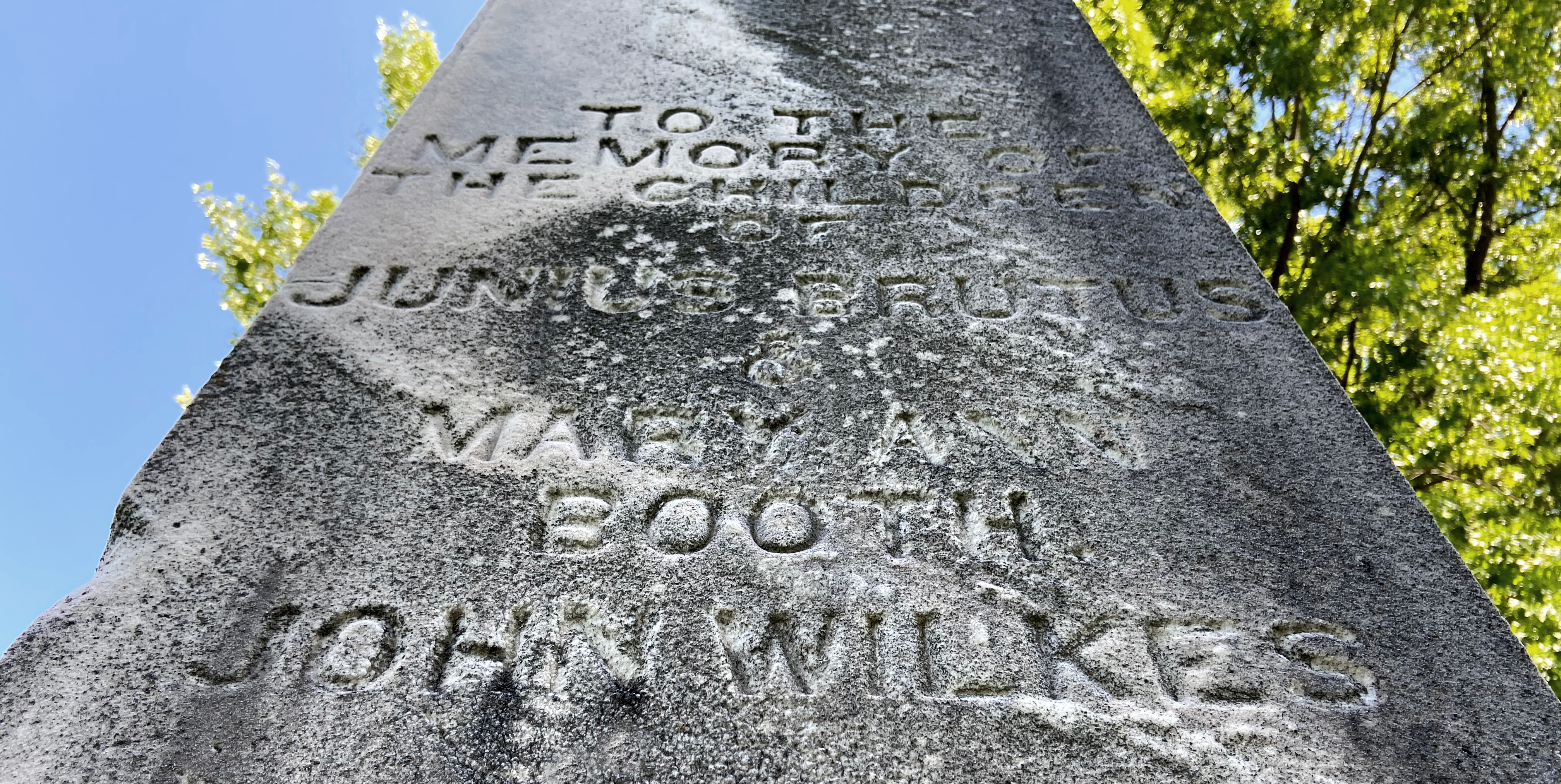
In reality, Booth’s body was never condemned to a watery grave. After an autopsy was performed, his body was placed in a boat and rowed to the grounds of the Old Arsenal Penitentiary, the same place where the conspirators would shortly be imprisoned and tried. Booth’s remains were buried under the floor of a storeroom. Edwin Stanton, himself, kept the key to this storeroom. In 1867, that part of the old building was slated to be demolished, so Stanton sent the key and men over to move Booth’s remains. Booth was buried in a different warehouse on the grounds, in a common grave in which David Herold, Mary Surratt, Lewis Powell, and George Atzerodt were also reburied. During the final days of Andrew Johnson’s presidency in 1869, the lame-duck president authorized the removal of the bodies and turned Booth over to his family. They transported him to Baltimore and buried him in the family plot at Green Mount Cemetery. While John Wilkes Booth does not have his own headstone in the plot, his name does appear on the back of the Booth obelisk, noting him as a child of Junius Brutus and Mary Ann Booth.
To be fair to the miniseries, there was a lot of misinformation out there about the final disposition of John Wilkes Booth. So many rumors swirled that Booth really was sunk into the Potomac that Frank Leslie’s Illustrated Newspaper devoted the cover of their May 20, 1865 edition to a supposedly “authentic sketch” of the deed. In the decades that followed, more than one former sailor/soldier claimed to newspapers that he was the last remaining member of the “sinking detail.” However, the actual whereabouts of Booth’s corpse have been well documented, and we can rest assured that he lies in Green Mount Cemetery, not at the bottom of the Anacostia or Potomac Rivers.

7. A Reluctant Baptist Washington

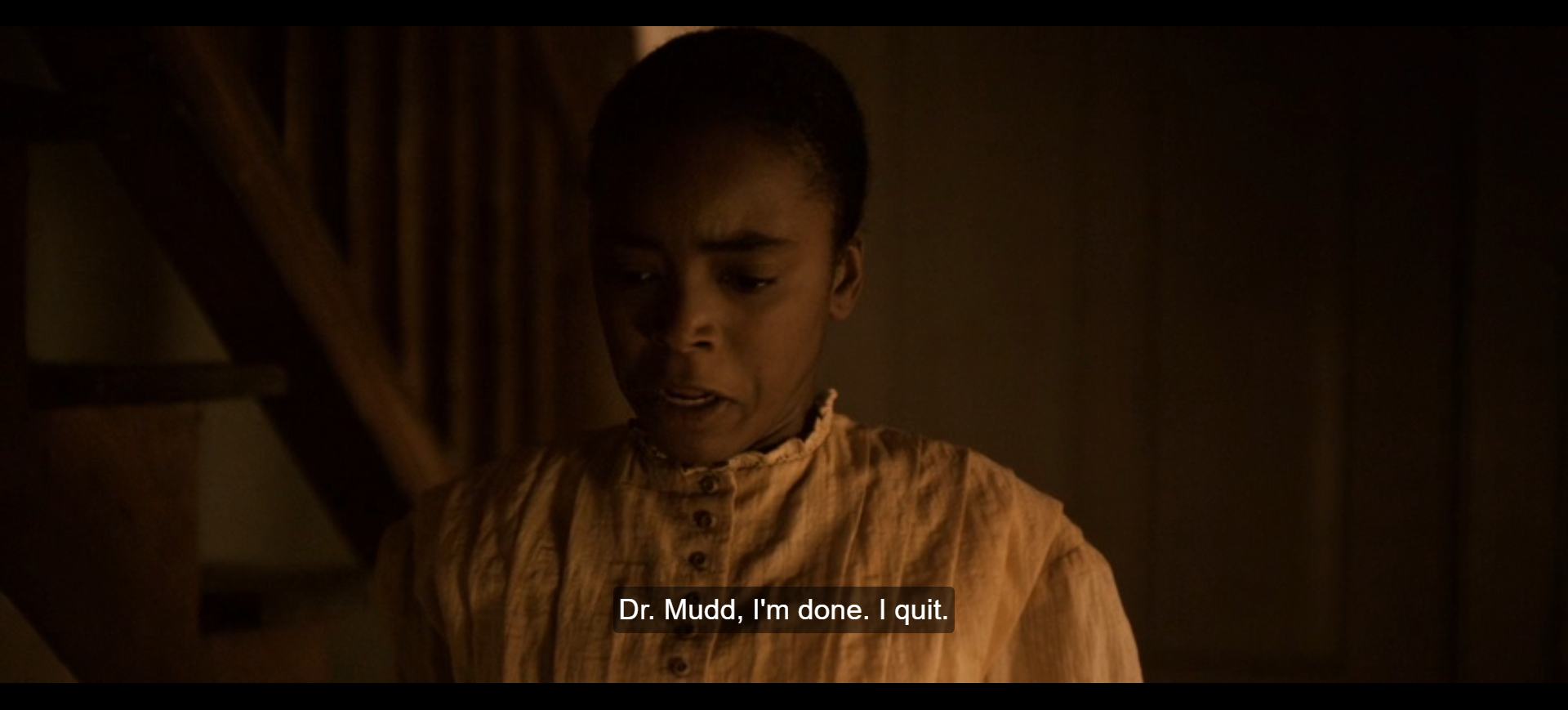
There is a brief scene in which Dr. Mudd is shown conversing with a group of his neighbors and his brother-in-law, Jeremiah Dyer, asking which of them would be willing to testify on his behalf at his trial. Dr. Mudd correctly recounts that he is not permitted to testify on his own and that he needs them to swear to his good character.

After making his appeal, each of the gathered crowd raised their hand in support of the doctor, save one. This lone holdout is Baptist Washington, the only Black man present among his white neighbors. Wordlessly, Dr. Mudd signals to Jeremiah, and the doctor’s brother-in-law slips Washington a collection of dollar bills. After pocketing the bribe, Washington raises his hand in support like the rest.

Baptist Washington was an actual person who testified at the trial of the Lincoln conspirators. Washington had been enslaved by Jeremiah Dyer before emancipation came to Maryland in November of 1864. While he was still enslaved to the Dyer family, Washington had been hired out to Dr. Mudd and worked at the Mudd farm during carpentry work between January and August of 1864. Washington was one of the few African Americans who testified on behalf of Dr. Mudd, mainly to counter the claims of the real Mary Simms, who stated that Dr. Mudd had harbored Confederate agents like John Surratt at the farm. There is no evidence that Baptist Washington was paid for his testimony.

However, as I wrote in my piece recounting the Formerly Enslaved Voices in the Lincoln Assassination Trial, there were reasons other than monetary why people like Baptist Washington may have felt pressured to testify in favor of an enslaver like Dr. Mudd. While many Black residents left the regions where they had been enslaved when emancipation came, many others did not have that option. Even when freedom came, people like Baptist Washington, his wife, and his children remained living among the people who had once enslaved them. Washington faced difficult choices in 1865 and beyond. Even if he didn’t want to testify on Dr. Mudd’s behalf, failing to abide by the wishes of his white neighbors in Charles County would have had lifelong negative repercussions for him. Many other formerly enslaved people who didn’t move away after freedom likewise chose appeasement rather than conflict. This appeasement became misconstrued by white authors as the “loyal slave” and “good master” narratives, contributing to the myth of the Lost Cause. But Dr. Mudd was far from the oxymoronic good enslaver, as evidenced by Elzee Eglent, who testified about Dr. Mudd shooting him in the leg for not working hard enough. It’s not surprising then that Baptist Washington and many others spent their whole lives appeasing the white folks around them and telling them what they wanted to hear. During Reconstruction and beyond, such appeasement was sometimes the only way to survive.

8. Burning the Diary Pages

Near the end of the episode, we see Edwin Stanton reading through the pages of Booth’s diary, which was recovered from his body at the Garrett farm. Eddie Stanton sees his father reading it and asks him, “Did Booth write down his motives?” followed by, “Is there anything in there that could stain your reputation?” The elder Stanton tells his son not to worry about it, and Eddie leaves. We then watch as Sec. Stanton approaches the room’s fireplace, kneels down in front of the flames, rips pages from the diary, and burns them to ash.

This scene was actually previewed in one of the teaser trailers for the series, so I knew it would come eventually. Still, it was my fervent hope that this series would not indulge this completely unsupported conspiracy theory that Stanton altered John Wilkes Booth’s diary. It is a truly baffling choice on the part of the writers of the series to include this completely fictional scene, especially since it has been their goal to show Edwin Stanton in a noble and heroic light.

The idea of Stanton destroying pages of Booth’s diary is based on the writing of chemist-turned-author Otto Eisenschiml. In 1937, Eisenschiml wrote his most famous work, Why Was Lincoln Murdered?, in which he claimed that Edwin Stanton was the chief architect of Lincoln’s assassination. According to Eisenschiml, Stanton worried that Lincoln was going to be too lenient with Confederate leaders after the war was over, so he had his boss killed as a result. Much of the “evidence” Eisenschmil provides to support his thesis is blatantly false or highly circumstantial. Still, the controversy over his claim grabbed the attention of the public, and there are still those today who falsely believe that Stanton had a hand in Lincoln’s murder and that he destroyed the pages of Booth’s diary that incriminated him.

In reality, there is no evidence that Booth’s diary was altered after it was recovered from him. Booth’s diary, as we know it, is actually a pocket date book for 1864. The pages that have been removed from the book correspond with the pages for January 1 – June 10, 1864. It is important to remember that, during the first half of 1864, John Wilkes Booth was still a working actor, traveling from city to city performing on stage. This book was likely used by the actor to keep track of his engagements, travel expenses, his percentage of the box office, and other assorted personal affairs. This diary was never intended to be his last manifesto. Booth had written his true motivations and given the papers in a sealed envelope to his friend John Mathews with instructions to turn the papers over to the newspapers the next day. After Mathews witnessed his friend assassinate the President, the Ford’s Theatre actor read the manifesto and then burned it out of fear it would incriminate him in Booth’s plot. While on the run, Booth was distraught to find that his words had not been published in the papers. He attempted again to make his thoughts known and was forced to make do with this otherwise forgotten 1864 datebook, which he still had tucked in his coat pocket. The most likely and logical reason for the missing pages in Booth’s diary is that the assassin ripped them out himself in order to remove the mundane details of a traveling actor in 1864 and ensure a clean slate for his last manifesto.

If you’re interested in reading the text of John Wilkes Booth’s diary, I transcribed it in a post here.

No reliable evidence supports the idea that Edwin Stanton, or anyone other than John Wilkes Booth, altered his 1864 datebook. This miniseries does a great disservice to history by portraying this completely fictitious scene, which only succeeds in spreading a long-debunked and baseless conspiracy theory to the masses. I’m still shocked that this otherwise pro-Edwin Stanton miniseries embraced the ugliest of conspiracy theories against him. I’m no Edwin Stanton fan, but he deserved better than this.


Quick(ish) Thoughts

  • While I really liked the opening dream sequence, the shots of Booth’s horse grazing in the woods reminded me that there was never any follow-up to Davy’s horse galloping away from the pair in episode 3. You’ll remember that Booth shot his horse in the pine thicket and ordered Davy to do the same to his. But Herold was unable to kill the animal, and it ran off. At the time, I was convinced that the horse would be found in a later episode. But this never came to be, likely because the following episode had nothing to do with the actual manhunt and dealt with the fictional George Sanders intrigue. I supposed it’s all for the best anyway since, in reality, both horses were shot and sunk in the Zekiah Swamp by Davy Herold and Franklin Robey.

  • When Booth shows Davy the scar from his 1860 Columbus gunshot wound in his right hip, Davy suggests that this wound was why Booth’s “leg broke on that side” when jumping from the box at Ford’s Theatre because the “bones were still fragile.” We’ve already discussed that the real Booth broke his left leg, not the right, as the miniseries portrays. But even overlooking this fact, a bullet in the hip would not make the bone in your lower leg just above the ankle “fragile.” I know Davy was not a doctor, just a pharmacy clerk, but this claim makes no sense. Even the miniseries Booth seems to think this suggestion is nonsense, dismissing Davy’s idea with a “yeah, possibly.”
  • Booth recounts to Davy that his “mother had many children. Four passed away. Three to cholera. One fell swoop.” It’s true that out of the ten children born to Mary Ann and Junius Brutus Booth, four died before reaching adulthood. They were Henry Bryon, Mary Ann, Frederick, and Elizabeth. But it was only two children who died of cholera at the Booth family farm in “one fell swoop.” These were Mary Ann and Elizabeth, who both died within days of each other in 1833 at about the ages of 5 and 2, respectively. Both sisters had been predeceased by their brother Frederick, who died in Boston in 1828 at the age of 16 months. In December of 1836, eleven-year-old Henry Byron Booth died of smallpox while the family was visiting England. With the exception of Henry Bryron, who was buried in England, the other three Booth siblings were buried at the family farm of Tudor Hall. In 1869, after the government agreed to release John Wilkes Booth’s body to his family, Mrs. Booth had the remains of her three young children disinterred and moved to Green Mount Cemetery, where Edwin had purchased a large plot. The remains of Frederick, Mary Ann, and Elizabeth were placed in a single coffin and buried on top of their younger brother, John Wilkes, in the family plot.

  • While I still enjoyed the portrayal of William Mark McCullough as Boston Corbett in this episode, I feel that the writers made him a bit too zealous in this, his big climatic episode. Corbett, the lowly sergeant, single-handedly leads the cavalry, busts down the Garrett House door, pulls a pistol on and then chokes Julia Garrett, and later offers to go on a suicide mission into the barn to draw Booth’s fire until the assassin is out of ammo. Corbett certainly was a zealous and eccentric man, but he did not have a death wish. Nor would he have overstepped his role as a sergeant. The miniseries never shows Captain Edward Doherty, the leader of this detachment of cavalrymen, but even without him, Everton Conger and Luther Baker were in charge. Corbett is just a bit too crazy in this episode.
  • After the barn is set on fire, Julia Garrett rushes towards it and tells the soldiers they have to get Booth out of there. Again, the Garretts never knew that Booth had been their guest until after he was shot. After this comment, Corbett tells Julia, “This is a federal investigation. You’re obstructing.” These words sound painfully modern and out of place in this historical context.
  • As quickly as the troopers in Manhunt are to set fire to the tobacco barn, the structure itself burns at an amazingly slow pace, and the fire never seems to catch on anything inside the barn. For a barn that was filled with dried tobacco leaves and hay, this is beyond belief. But I suppose an asbestos-lined barn was necessary so that the news of the barn being lit could reach Stanton back in Bowling Green and for him to think he could make it to the Garrett farm before it was over.
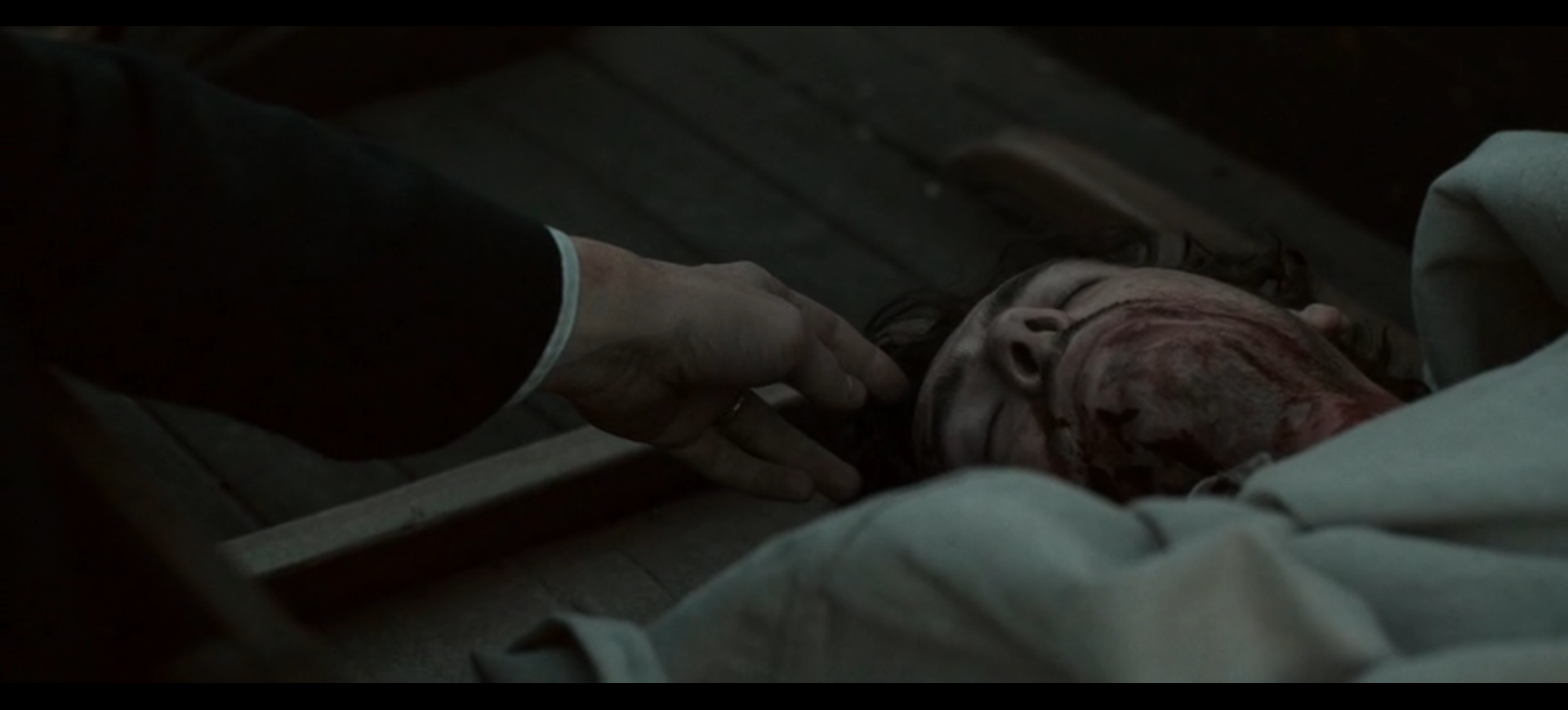
  • When looking over the corpse of John Wilkes Booth at the Garrett farm, Edwin Stanton touches Booth’s hair as he states, “You’re no one now.” This is reminiscent of the many locks of hair that were cut from the assassin’s head. While lying on the Garrett porch, one of the Garretts cut a lock of Booth’s hair, and part of that lock was later sent to Mary Ann Booth. When Booth’s body lay on board the USS Montauk during his autopsy, locks of hair were snipped by visitors who identified him. Just before his final burial in Green Mount Cemetery in 1869, more hair was cut from his head as a keepsake for his family. Keeping locks of hair of the deceased was a very common Victorian mourning custom.
  • Oswell Swann is partially redeemed in this episode. After Booth’s death, there is a scene in Bryantown between Swann and Luther Baker. Swann tells Baker that Booth and Herold had passed that way, with Baker replying, “Yeah, we got your tip,” implying that Swann had alerted the authorities at some point. However, Baker next complains that this tip did not come earlier, leading Swann to defend himself and the dangers posed to him living in an anti-Lincoln community. While this sentiment is fair enough, I still don’t feel this redemption is enough to undo the damage done to the real Swann in prior episodes in portraying him as an active agent for the Confederate underground.
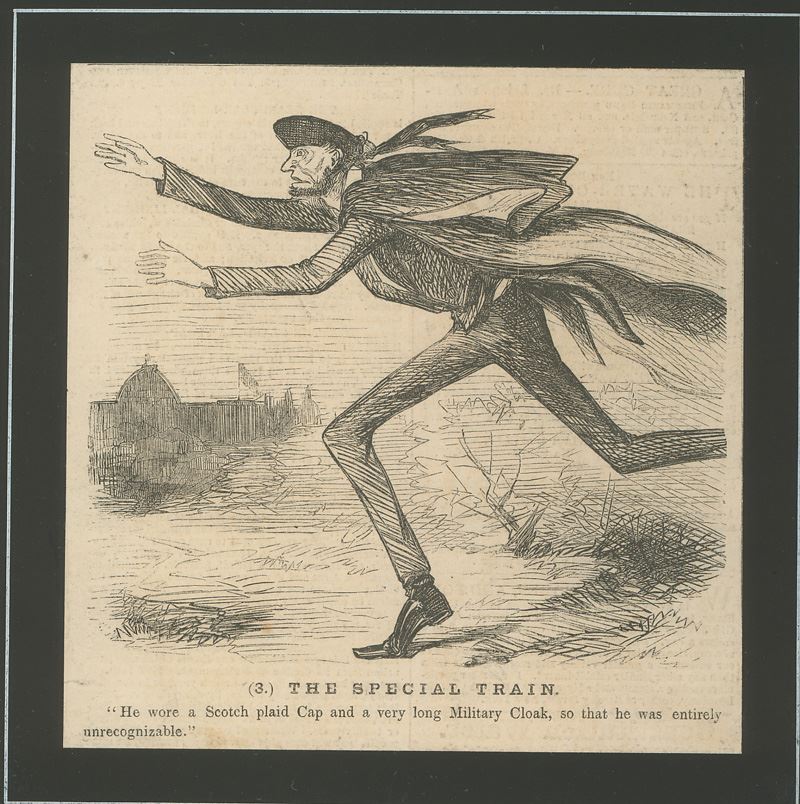
  • After this episode features the capture of Jefferson Davis, there is a scene between Eckert and Stanton in the War Department where Stanton orders that the press be told Jefferson Davis was captured while wearing his wife’s dress rather than just her shawl. According to Stanton, the reason for this is because, “they humiliated Abe when he wore women’s clothes to avoid death threats in Baltimore.” It’s a bit unclear who the “they” are in Stanton’s sentence. It could be a reference to Confederate plotters like Davis or perhaps even the press itself. Regardless, the point is moot, as Abraham Lincoln never dressed in women’s clothing, nor was he said to have dressed in women’s clothing to avoid assassination. The event references an event in 1861 to possibly assassinate President-elect Lincoln as he made his way by train to Washington for the first time. There were threats that an attempt might be made on Lincoln’s life in Baltimore, so he changed his plans at the last minute and essentially snuck through Baltimore ahead of schedule and arrived safely in D.C. After this was learned, Lincoln’s political enemies ridiculed him for cowardice. One reporter basely claimed that Lincoln moved through Baltimore wearing a scotch cap and a long cloak. While Lincoln was never disguised in such a way, this lie stuck, and many political cartoons were made of the new President slinking into or panic-strickenly dashing into Washington. The event did damage Lincoln’s ego a bit and may have contributed to his later distaste for guards and security.

I apologize for the six-month delay between my review of episode 5 and this one. In truth, my frustration with the series really zapped my motivation to continue with these in-depth reviews. Since Booth’s time at the Garrett farm and subsequent death is my favorite aspect of the story, seeing how much the miniseries botched this aspect really made the prospect of writing this review seem like an unwanted chore. However, I made a commitment to review all seven episodes of the series, and that is what I am going to do, even if I have to take lengthy breaks between each one. I will do my best to write my review of the final episode before another six months go by. I would really like to cross this project off my to-do list. Thanks for sticking with me.

Dave
Categories: History, News | Tags: , , , , , , , , , , , , , , , , , , , | 3 Comments

The Centenarian President

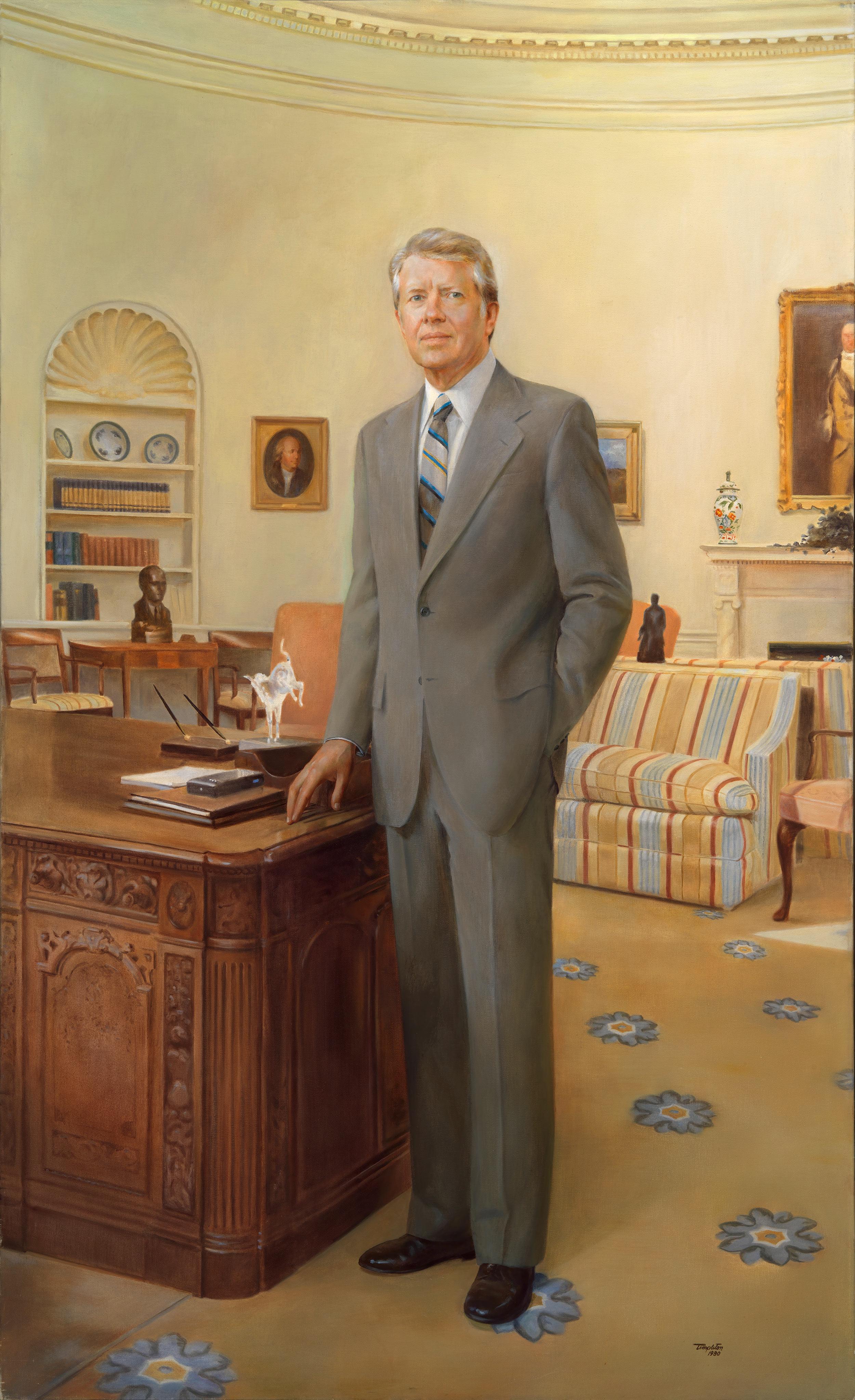
Like so many across our country and world, I wish a very Happy Birthday to President Jimmy Carter! On October 1, 2024, President Carter became the first U.S. President to live to the age of 100.

While President Carter’s time in office was limited to a single term, his positive influence on the world has been lifelong. Jimmy Carter is the definition of a humanitarian, advocating for peace, aid, and health for all people of the world. Carter’s post-presidency life has been filled with service, from negotiating treaties and using diplomatic channels to secure the release of American political prisoners held overseas to selflessly working well into his 90s to physically construct homes with Habitat for Humanity.

In a time when so many politicians denigrate immigrants, the poor, and the downtrodden, Jimmy Carter has worked to raise them up. In a time when religion has been fashioned into a weapon to justify atrocities and bigotry, Jimmy Carter has lived a life of faith and love for all. In a time when people advocate turning our back on the world and seek their own selfish wants at the cost of all others, Jimmy Carter has represented the noble good that can be done when we come together and embrace the global brotherhood of man.

Jimmy Carter reminds us that true leaders care about others. His life of service is the much-needed antidote to the venom that has infected our country of late. In a world of selfish Trumpism that cheers the worst impulses of humanity, Jimmy Carter represents the “better angels of our nature” that Abraham Lincoln once spoke about.


Jimmy Carter was born fifty-nine years after the assassination of President Lincoln. While I don’t feel that I need to justify a post about a man who has so justly earned the respect of his country, President Carter does have a few connections to the subject of this blog. One of them comes by way of another centenarian.

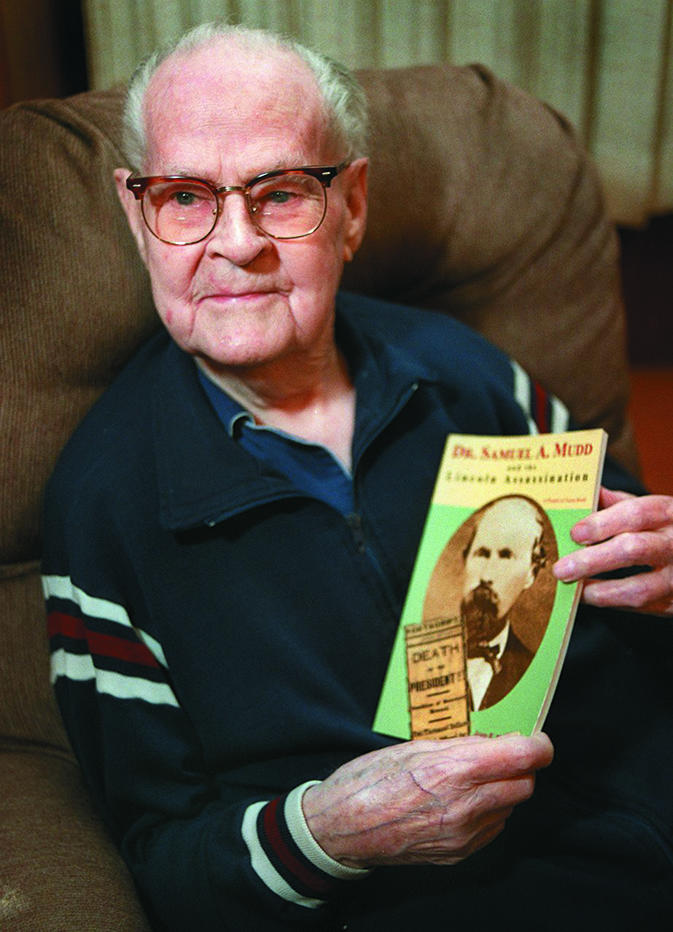
Dr. Richard D. Mudd was the grandson of Dr. Samuel Mudd. He was born in 1901 and died in 2002 at the age of 101. Richard spent his whole life advocating for the innocence of his grandfather. He was constantly writing letters to his Representatives and Senators, hoping for some measure that could overturn Dr. Samuel Mudd’s conviction. When those efforts stalled, Richard made inroads in other ways, like successfully getting a plaque installed at Fort Jefferson highlighting Dr. Mudd’s heroic activities during the 1867 yellow fever epidemic that, ultimately, helped grant him a pardon. While I firmly disagree with Richard’s interpretations of his ancestor’s actions and involvement in Lincoln’s assassination, I respect the way he tirelessly advocated for his beliefs. In addition to his Congressmen, Richard Mudd wrote to the chief executives themselves. Richard received responses from Nixon and Reagan, both telling him that nothing could be done to change history, especially since his grandfather had accepted a pardon (and the implied guilt that comes along with the acceptance).

Dr. Richard Mudd

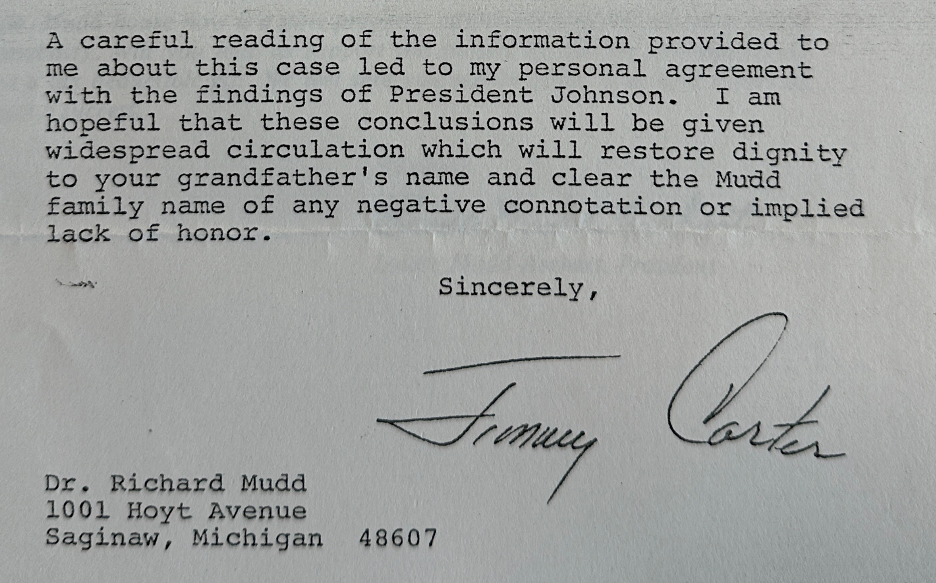
Jimmy Carter also sent Richard Mudd a letter. Like his predecessor and successor, President Carter informed Richard Mudd that nothing could be done to overturn his grandfather’s conviction. However, Jimmy Carter went a bit beyond what other Presidents had done. In his compassion, President Carter expressed his own personal belief that Dr. Mudd was only guilty of aiding and abetting John Wilkes Booth and David Herold after the assassination and not of being a party in the conspiracy that led to Lincoln’s death. In coming to this conclusion, President Carter cited Andrew Johnson’s own pardon of Dr. Mudd, in which Lincoln’s successor seemed to express some doubt as to Dr. Mudd’s proven culpability. What follows is a transcript of Jimmy Carter’s letter to Dr. Richard Mudd in answer to Richard’s many entreaties.

The White House
Washington
July 24, 1979

To Dr. Richard Mudd

I am aware of your efforts to clear the name of your grandfather, Dr. Samuel Alexander Mudd, who set the broken leg of President Lincoln’s assassin, John Wilkes Booth, and who was himself convicted as a conspirator in the assassination. Your persistence in these efforts, extending over more than half a century, is a tribute to your sense of familial love and dedication and is a credit to the great principles upon which our nation was founded.

Your petition and the petitions submitted to me on behalf of your grandfather by numerous members of Congress, several state legislatures, historians and private citizens have been exhaustively considered by my staff over the past two years. Regrettably, I am advised that the findings of guilt and the sentence of the military commission that tried Dr. Mudd in 1865 are binding and conclusive judgments, and that there is no authority under law by which I, as President, could set aside his conviction. All legal authority vested in the President to act in this case was exercised when President Andrew Johnson granted Dr. Mudd a full and unconditional pardon on February 8, 1869.

Nevertheless, I want to express my personal opinion that the declarations made by President Johnson in pardoning Dr. Mudd substantially discredit the validity of the military commission’s judgment.

While a pardon is considered a statement of forgiveness and not innocence, the Johnson pardon goes beyond a mere absolution of the crimes for which Dr. Mudd was convicted. The pardon states that Dr. Mudd’s guilt was limited to aiding the escape of President Lincoln’s assassins and did not involve any other participation or complicity in the assassination plot itself — the crime for which Dr. Mudd was actually convicted. But President Johnson went on to express his doubt concerning even Dr. Mudd’s criminal guilt of aiding Lincoln’s assassins in their escape by stating:

” … it is represented to me by intelligent and respectable members of the medical profession that the circumstances of the surgical aid to the escaping of the assassin and the imputed concealment of his flight are deserving of a lenient construction, as within the obligations of professional duty and, thus, inadequate evidence of a guilty sympathy with the crime or the criminal;

“And… in other respects the evidence, imputing such guilty sympathy or purpose of aid in defeat of justice, leaves room for uncertainty as to the true measure and nature of the complicity of the said Samuel A. Mudd in the attempted escape of said assassins…”

A careful reading of the information provided to me about this case led to my personal agreement with the findings of President Johnson. I am hopeful that these conclusions will be given widespread circulation which will restore dignity to your grandfather’s name and clear the Mudd family name of any negative connotation or implied lack of honor.

Sincerely,
Jimmy Carter

Despite a couple more decades of trying, this letter proved to be the best result Richard Mudd attained in his quest to exonerate his ancestor. Legally, this letter changed nothing about Dr. Mudd’s guilt, but it was a moral victory of sorts. A sitting President had expressed his belief that Dr. Mudd had been innocent of the crime he was convicted of. Even today, this letter from President Carter is something that certain members of the Mudd family point to to support their case.

Now, I very much disagree with President Carter regarding Dr. Mudd’s involvement in John Wilkes Booth’s plot, but I also recognize that Carter was not an assassination historian. He was the chief executive, taking time out of his busy schedule to respond to a man who had spent the last two years recruiting Representatives and sending petitions concerning a matter of family honor. Knowing that nothing could be done to provide Richard with the result he wanted, President Carter did his best to mitigate the disappointment by volunteering his own opinion on the matter. Even this letter demonstrates Jimmy Carter’s empathy and consideration for a fellow citizen.


A year and a half before writing his letter to Richard Mudd, Jimmy Carter attended a gala celebrating the 10th anniversary of the reopening of Ford’s Theatre as a working theater. While the old Ford’s Theatre building had housed a Lincoln museum since the 1930s, it wasn’t until the 1960s that the building was reconstructed to its 1865 appearance. The restored Ford’s Theatre had its debut performance on January 30, 1968, with Lady Bird Johnson in the audience without President Johnson. President Nixon never visited Ford’s Theatre during his Presidency. On April 17, 1975, President Gerald Ford attended James Whitmore’s one-man play “Give ’em Hell, Harry” about the life of President Harry Truman.

When President and Mrs. Carter attended the 10th-anniversary gala at Ford’s Theatre on January 29, 1978, he was only the second sitting President to see a show at Ford’s Theatre since Abraham Lincoln. More importantly, this event marked the start of a tradition. Starting with Jimmy Carter in 1978, every sitting president has attended a nonpartisan gala night of speeches and entertainment at Ford’s Theatre.

President and Mrs. Carter attend Ford’s Theatre on January 29, 1978.

Just before heading off to Ford’s Theatre for its 10th-anniversary gala, President Carter hosted a reception at the White House for the invited guests. As part of his remarks for the evening, President Carter thanked the crowd for their support of Ford’s Theatre and for their “generosity in keeping it a live tribute to the past and an opportunity for the future.” Despite the tragedy that had occurred at the site, Carter expressed his admiration that Ford’s Theatre had been reopened, noting that:

“It wasn’t the character of Lincoln to have a source of entertainment, tragedy, and humor kept closed and isolated from the people of our Nation. And so a unique occurrence has been recognized tonight that happened 10 years ago, when a national historical site was opened, not as a museum, a closed or a dead thing just to be looked at and admired, but an open and a live thing which is the source of both entertainment and inspiration for us all.”

After thanking select people for their efforts in bringing back live theater to Ford’s, Carter ended his remarks by saying:

“So, as a southerner, as a President, I would like to say that I’m very proud of all of you for helping to unite the consciousness of our Nation to remember the past, but also to prepare for the future with confidence and also with pleasure. That’s the way President Lincoln would have liked it. And you’ve honored him in performing as you have in keeping Ford Theatre alive.”


When President Carter entered home hospice care in February of 2023 at the age of 98, it seemed unlikely that he would make it to this milestone age. When his beloved wife of 77 years, Rosalynn, passed in November of 2023, it was also feared that grief might take its toll. Amazingly, however, Jimmy Carter continues to bless this earth with his presence.

In truth, 100 years is an arbitrary number. If Jimmy Carter had passed last year, five years, or even two decades ago, his good deeds would have still been a testament to his character. On his 100th birthday, we celebrate not just the impressive number of years President Carter has lived, but the positive impact he packed into each and every one of those years.

Happy Birthday, President Carter. In addition to the well-deserved praise you will receive today, I sincerely hope you get your birthday wish of making it to November 5 so that you can cast your vote for the next leader of this country.

Categories: History, News | Tags: , , , | 5 Comments

An Assassination Playbill Goes to Auction

Update: This playbill sold for $85,000. After adding the 25% Buyer’s Premium, the total cost of the playbill was $106,250. At the same auction, a John Wilkes Booth wanted poster sold for $105,000 ($131,250 with Buyer’s Premium).

This Saturday (9/28/2024), R.R. Auctions is set to sell an iconic and rare Lincoln assassination-related item: a Ford’s Theatre playbill from the night of Abraham Lincoln’s assassination.

While there are a plethora of period reprints and modern replicas of assassination playbills, genuine playbills are very elusive things, and examples rarely come up for auction. One of the most recent sales of a genuine Ford’s Theatre assassination playbill was by Christie’s auction house. In 2003, they sold a second issue playbill (those included an added section near the bottom advertising the planned singing of “Honor to Our Soldiers”) for $31,000.

Normally, I don’t post about all the interesting items that come up for auction, but this playbill is different. If you check out the auction listing for this playbill, you might notice a familiar name:

It turns out I have a little history with this specific playbill.

One of my earliest posts on this blog concerned the assassination playbills and how you can tell real playbills from fakes and replicas. In addition to regularly being asked my opinion on possible “new” John Wilkes Booth photographs, I have been sent pictures of a few playbills in the past. Each time I have had to break it to people that they have a reprint or a forgery. Last year, I received an email from a couple who had read my post and were hoping to get my thoughts on a Ford’s Theatre playbill that they owned. I happily agreed to take a look at it while mentally preparing to let down yet another disappointed replica owner.

As I looked at the pictures sent me, I was surprised to see that I was not able to instantly discount the playbill. I scoured over the small details of typography, spacing, and printing, and each seemed to align with genuine bills. I sent some follow-up questions to the owners, not tipping my hand that I was getting excited by what I was seeing. I asked about the provenance behind the piece and set to work investigating that. After a few days of research, I came to the astonished conclusion that this was a genuine first-issue playbill for Our American Cousin.

In my excitement, I went about writing up a research report for the owners explaining my conclusions. Never one for brevity, that report ended up being nine pages long. In advance of the sale on Saturday, I asked the owners if I could publish my report for them on this blog. They agreed, so I have published my report below. For the privacy of the current owners, I have redacted their names from the report and replaced them with John and Jane Doe.


Report on an April 14, 1865 “Our American Cousin” playbill owned by John and Jane Doe

By Dave Taylor
LincolnConspirators.com

Introduction: On April 25, 2023, I was contacted through my website, LincolnConspirators.com, by Jane Doe. Several years ago, I published an article on my site discussing the different playbills issued by Ford’s Theatre on the night of Lincoln’s assassination. Given my experience in analyzing authentic and fraudulent Lincoln assassination playbills, Jane asked me if I would look at a playbill owned by her and her husband, John, and give my opinion of it. I accepted and was provided with several images. The following is a report of my research process and ultimate conclusions regarding the playbill in question.

Background: Abraham Lincoln was shot by assassin John Wilkes Booth on the evening of April 14, 1865, while the President and his party were attending a performance at Ford’s Theatre in Washington, D.C. The play they were attending was a comedy entitled Our American Cousin, with actress Laura Keene as the lead star. After the shooting of Lincoln, the theater was shut down and would not see another performance for over 100 years. Very shortly after the tragedy, there was a demand for playbills of the last play Lincoln saw. This demand led to a secondary market of replica and forged playbills. Some of the fraudulent bills were so convincing that they even managed to fool those who were present at the assassination into swearing to their authenticity. In 1937, researcher Walter C. Brenner privately published a monograph entitled The Ford Theatre Lincoln Assassination Playbills: A Study. Brenner analyzed several variations of bills housed in different collections in an attempt to definitively determine which version or versions of playbills were actually printed and present on the night of Lincoln’s assassination. Through his research, Brenner was able to locate proven examples of legitimate assassination playbills in the Harvard Theatre Collection. He published his findings and included a chart noting the small details that can prove or disprove a suspected assassination playbill. In 1940, Brenner published a small supplement to his original research, reproducing an 1898 article that narrated the history of the playbills and why there were two different, but both equally legitimate, versions of playbills used at Ford’s Theatre on April 14, 1865. During my own analysis of the Doe playbill, I heavily referenced Brenner’s work.

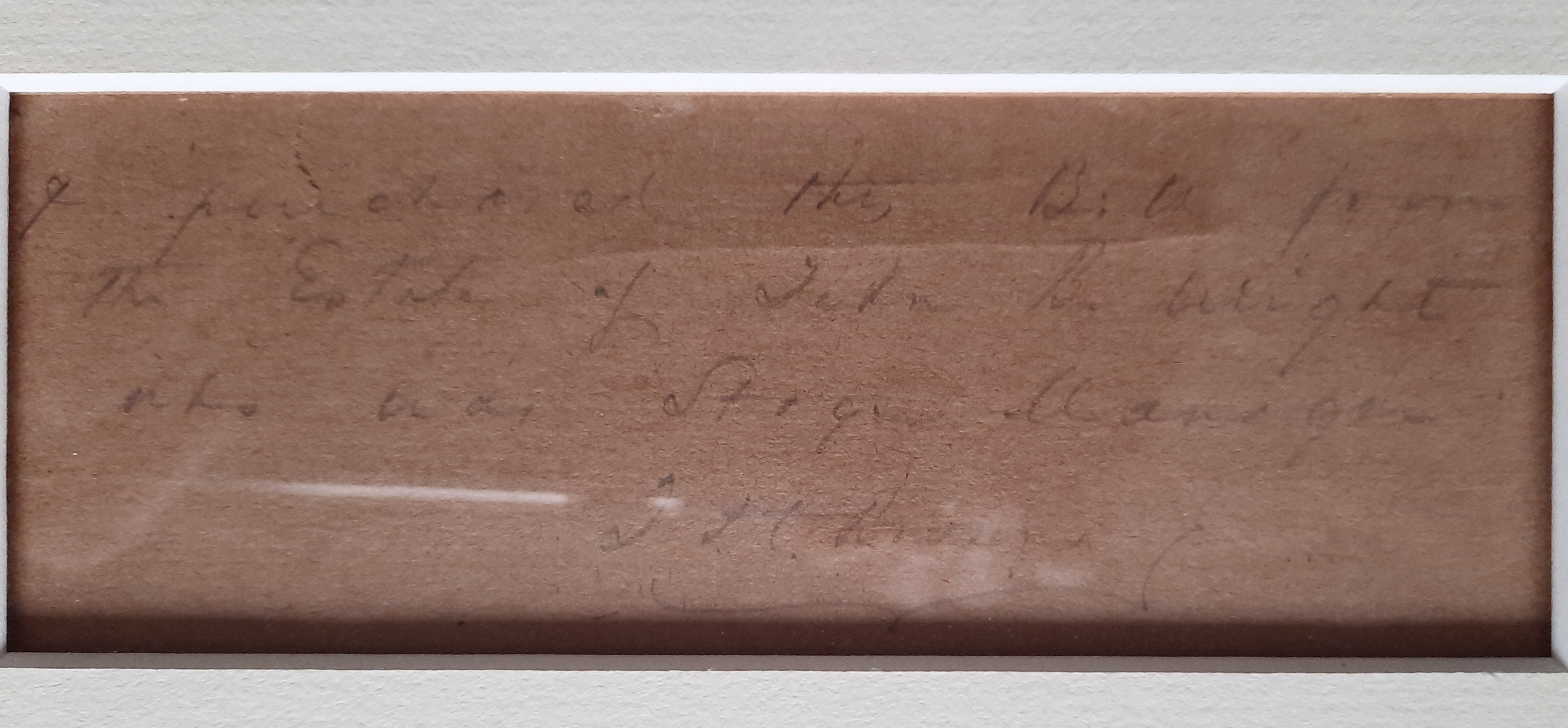
Visual Analysis: The Doe playbill measures approximately 18.5” long and 5.5” wide. It is currently matted inside of a frame with a handwritten piece of provenance below it (Fig. 1).

Figure 1: Framed playbill

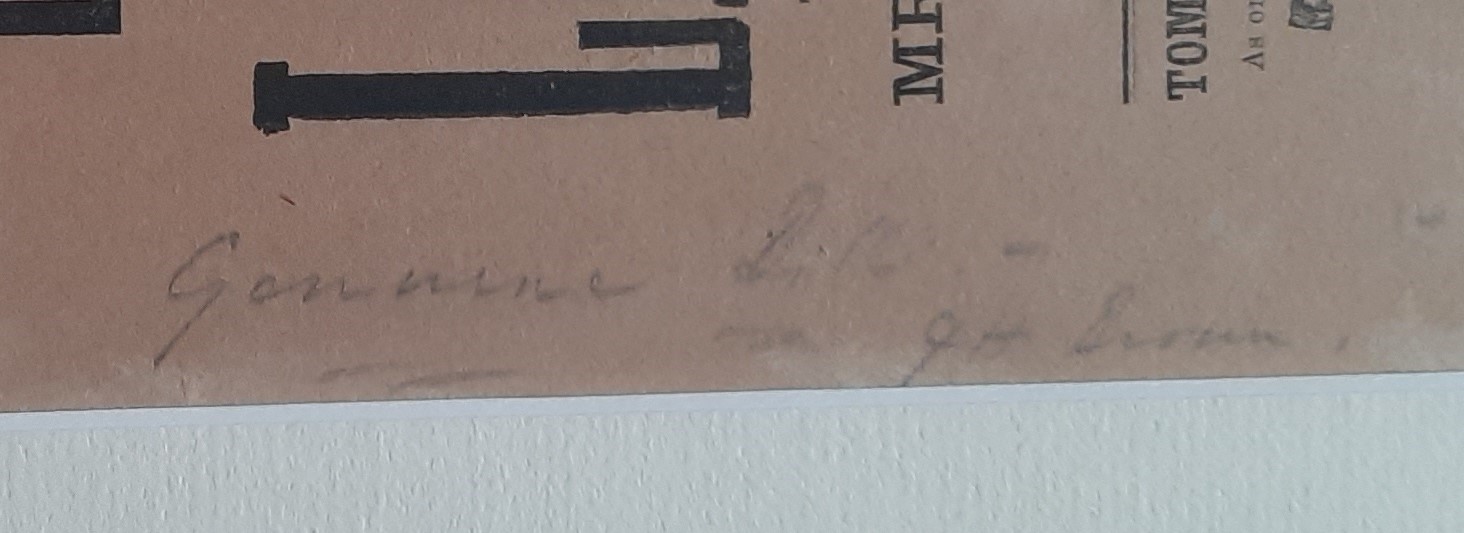
On the left edge of the bill near the name of Laura Keene is written in pencil the words “Genuine bill – [illegible] J H Brown” (Fig. 2).

Figure 2: Notation reading “Genuine Bill – [illegible] J H Brown”

The paper of the bill is browned. There are some discolorations and mild defects around the visible edges. A circular shaped defect about ¼” in size can be seen about 7 inches from the top near the name of John Dyott (Fig. 3).

Figure 3: Small defect near the name of John Dyott

There is evidence that the bill was previously folded with a light horizontal crease through the line containing the text “Buddicomb, a valet” (Fig. 4).

Figure 4: Faint horizontal crease through the entry for “Buddicomb, a valet”

Minor discoloration can be seen in other places. Still, overall, the bill is very clean, albeit browned from prior display. The bill was not examined out of the frame.

Compositional Analysis: At first glance, this bill represents an example of the first issue playbill for April 14, 1865. Bills of this sort were initially the only bills in production by printer H. Polkinhorn and Son in preparation for the evening’s show. After it was ascertained that President Lincoln was going to be attending the theater that night, it was decided that the singing of a patriotic song that was planned for the following evening was to be included. As a result of this change, the type of the printed bill was adjusted to include a paragraph about the now-planned singing of “Honor to Our Soldiers.” The Doe bill does not contain this paragraph, thus making it a possible first-issue playbill.

The Huntington Library in San Marino, CA, owns a genuine first-issue playbill for Our American Cousin. They have digitized this playbill at a high resolution, and it is available to view here: https://hdl.huntington.org/digital/collection/p16003coll6/id/5034/rec/1 Using this bill as an example, I then conducted a detailed comparison between it and the Doe playbill.

During my comparison, I looked for the different details documented by Brenner as those present on a genuine first-issue playbill, all of which are borne out on the Huntington playbill. Among those details are:

  • A space between the digits 9 and 5 in the text “NUMBER OF NIGHTS, 49 5”
  • The condition of the final E in the name of “LAURA KEENE”
  • The condition of the final R in the word “MANAGER”
  • The alignment of the letter H in the name “H. CLAY FORD”
  • The alignment of the letter S in the words “Supported by”
  • A small interior misprint on the letter C in “COUSIN”
  • A small circular defect on the letter N in “COUSIN”
  • The spelling of “Sensation”
  • The word “Chairs” after the word “Orchestra”
  • Several breaks in the horizontal lines separating different blocks of text

For each point of comparison, I found that the Doe playbill matched the details of the Huntington playbill. Everything was compositionally correct and in the right place to match a genuine first-issue bill.

I then looked for evidence of duplication. There have been other bills that I have examined in the past that have had the correct content, but they have distinct evidence that were merely copies of a legitimate bill. When copies of bills are made, there is a distinct drop in quality and detail. This is very noticeable in the font of “THE OCTOROON,” where the small details are lost. In addition, duplication removes the minor irregularities present during the original printing process. In addition to examining the font of “THE OCTOROON,” I requested and was provided with close-up images of the word “COUSIN” so that I could assess the natural deviations in this boldly printed word.

In my opinion, this bill does not show signs of being a duplicate. The fine details are present and consistent with an original printing, not a copy done by modern means.

Based on my visual and compositional analysis, I believe that the Doe playbill is a genuine first issue from April 14, 1865. It matches all points of comparison as laid out by Walter Brenner in his study of genuine assassination playbills, and there is no evidence of the bill being a period of modern reproduction.

Provenance Analysis: From my communications with Jane, I learned that this playbill has been in her husband’s family for over a hundred years. Mr. Doe’s great-grandfather was named Frederick S. Lang, the owner of a sizable Lincoln collection. According to Jane, this playbill and some other materials are what remains of the former Lang collection of Lincolniana.

In June of 1919, C. F. Libbie and Co. auctioned off what was advertised as a “Lincoln Collection formed by Frederick S. Lang, Boston.” Mr. and Mrs. Doe still retain two copies of this auction catalog. A digitized version of the catalog, housed on the Internet Archive, can be viewed here: https://archive.org/details/catalogueoflinco00libb. In examining the catalog, we find the following lot description:

“1129 Play Bill. Ford’s Theatre, April 14, 1864[sic]. One of the original play bills, first issue. Neatly matted in a narrow oak frame. Folio. This is one of the original play bills purchased from the Estate of John B. Wright, who was stage manager, by J. H. Brown.”

This lot appears to describe the playbill still in possession by the Does. Jane sent images of the original frame the playbill was housed in before it was reframed by her in-laws. One of these images is included below. This frame appears to match the description of “a narrow oak frame.”

Given the presence of the playbill with a descendant of Frederick Lang today, it would appear that this lot did not sell in 1919. Perhaps the misprint in the auction catalog of 1864 rather than 1865 caused it to fall under the radar.

In addition to the playbill’s entry in the 1919 auction catalog, the bill is framed alongside a small handwritten note. This note is faded and brown but is still legible. It states, “I purchased this Bill from the Estate of John B. Wright who was Stage Manager / J H Brown”

Further information about the bill is included in a transcript of a circa 1909 typewritten essay or article about Frederick Lang’s collection. This transcript is owned by Mr. Doe. Jane provided a picture of a page from this essay that mentions the playbill. The text is as follows:

“occupying[sic] a prominent place on the wall is the exceedingly rare, genuine play-bill of Ford’s Theatre, April 14th, 1865 the night of Lincoln’s assassination. The attraction was Laura Keene, in Our American Cousin, and in the cast were many players well known in Boston, among them being W. J. Ferguson, Harry Hawk, and Geo. G. Spear. This play-bill was obtained from the collection of the late J. H. Brown, one of the best known theatrical collectors in the country. It is accompanied by his affidavit that it was purchased from the estate of J. B. Wright, the stage manager of Ford’s Theatre at the time of the tragedy. Mr. Wright was well known in Boston, as he was for many years connected with the National Theatre of this city, as stage manager and lessee. Mr. Lang also has a copy of the fac-simile of the genuine bill, copyrighted 1891, with affidavit by R. O. Polkinhorn who was pressman at the time of the assassination, and certificate from J. F.[sic] Ford, proprietor of the threatre[sic]. Accompanying this is a copy of this bogus bill which had a wide sale before the fraud was disclosed. This bill contains the following announcement, ‘This evening the performance will be honored by the presence of President Lincoln.’ As it was not known at the time of printing the bills, that Lincoln would attend the threatre[sic], this alone stamps the bill as spurious, but as this fact was not widely known, many of them were disposed of at fancy prices. This bogus bill is seldom met with now, and the three items make a rare and interesting collection in themselves. The latter two are not framed but are in a Booth portfolio.”

Through research, I determined that the J. H. Brown mentioned in the provided provenance was James Hutchinson Brown, a Massachusetts theatrical collector who lived from 1827 to 1897. In 1898, C. F. Libbie and Co. sold off Brown’s extensive collection of dramatic books, autographs, and playbills over the course of three different auctions. The third and final of these auctions occurred on June 15 and 16, 1898. This auction contained a collection of around 180,000 American and English playbills, “formed by the late James H. Brown, Esq., of Malden, Mass.” A digitized version of this auction catalog, housed on the Internet Archive, can be viewed here: https://archive.org/details/cu31924031351533. In examining this catalog, we find the following lot description:

“999 Washington, D. C. Ford’s Theatre, 193 play-bills for the entire Season of 1864-5 (with the exception of two bills during one of Forrest’s engagements), commencing Aug. 29, 1864, and ending with TWO BILLS of April 14, 1865, the night of the ASSASSINATION OF PRESIDENT LINCOLN, including the one of March 18, 1865, of J. Wilkes Booth last appearance (as an actor) on any stage: as ‘Pescara,’ for the Benefit of John McCullough. Inserted are four a.l.s. of John T Ford, Manager and Proprietor, one a.l.s. of John B. Wright, Stage Manager, one a.l.s. of William Withers, Jr., Leader of the Orchestra, two a.l.s. of members of the company on the fatal night, and a large panel photograph of J. Wilkes Booth and numerous clippings. Narrow folio, half roan. This collection of Bills was made by Mr. John B. Wright, the stage manager, and is most interesting and rare, if not unique. ‘The fact that there were two variations of the play-bill of April 14, 1865, the night of the assassination of President Lincoln is not generally known, one with a stanza of a Song, ‘Honor to our Soldiers,’ and the other without it. ‘Mr. J. B. Wright, the stage manager at the time, and who witnessed the deed, wrote Mr. Brown the following facts: Early in the forenoon of that day, learning that the President intended visiting the Theatre that evening, Mr. Wright went personally to Polkinhorn, the printer, and ordered the insertion in the bills for that night of this stanza, intending to have the song sung that night, although it was originally intended to have it sung on the next night, which was to have been the Benefit of Miss Jennie Gourlay. Polkinhorn stopped the press which was printing bills, made the change in the form, and printed the remainder of the bills with the stanza inserted, and not desiring to lose those printed without the stanza, he included them in those he sent to the theatre, and both kinds were used that night.’ – J.H.B., 1893.”

Interestingly, while the assumption would be that Mr. Lang purchased this lot of Ford’s Theatre playbills at auction in 1898, we know that not to be the case. This lot was purchased by another collector named Evert Jansen Wendell (1830 – 1917). After Wendell’s death, this specific collection of Ford’s Theatre playbills was donated to Harvard University. It was this same collection of playbills that Walter Brenner consulted for his 1937 study. At the time of Brenner’s research, the collection still had the two April 14, 1865 bills mentioned in the Brown auction catalog, making it impossible for Lang to have purchased this lot of 193 playbills.

John B. Wright, former stage manager at Ford’s Theatre

However, this auction catalog does confirm that James H. Brown had dealings with the estate of John Burroughs Wright, the former stage manager of Ford’s Theatre. Wright was a Massachusetts native who maintained a home in the Boston area even when he was working for John T. Ford in Baltimore and D.C. during the Civil War years. After the shooting of Lincoln, Wright returned to Boston. After several seasons touring with star Edwin Forrest and managing theaters in New York, Wright retired from the theater business in 1880. He died in 1893. His wife Annie, who had been present in the audience on the night Lincoln was assassinated, outlived her husband and eventually died in 1924.

The catalogs for the Brown auctions contain several pieces associated to John B. Wright, showing that Brown’s purchases from the Wright estate were more than just the collection of Ford’s Theatre playbills from 1864 – 1865, which eventually went to Evert Wendell. It is, therefore, reasonable to assume that John B. Wright possessed more than one copy of the first issue playbill used on the night of Lincoln’s assassination and that James H. Brown purchased it along with the rest of the materials he acquired from the Wright estate. From there, this specific bill was purchased by Frederick Lang, a collector not of theater memorabilia but of Lincolniana.

The framed note, along with the Frederick Lang auction catalog, conclusively traces this playbill back to Ford’s Theatre stage manager John B. Wright. Two other genuine playbills from the Wright collection exist in the Harvard Theatre Collection, demonstrating that Wright retained genuine playbills after the assassination of Lincoln.

In my opinion, the provenance associated with the Doe playbill is strong.

Conclusions: The Doe playbill has all the marks of a first-issue Ford’s Theatre playbill from the night of Abraham Lincoln’s assassination. By looking at the minute details, it can be seen that the bill is not a period reproduction, nor is there any evidence of modern duplication. The provenance demonstrates an unbroken line of ownership from John B. Wright, stage manager of Ford’s Theatre, to the current owners, John and Jane Doe. The claims of provenance can be backed up with supplementary evidence in prior auction catalogs.

It is my opinion that the Doe playbill is a genuine playbill from the night of April 14, 1865. As such, it is a rare and unique piece of American history.

Dave Taylor
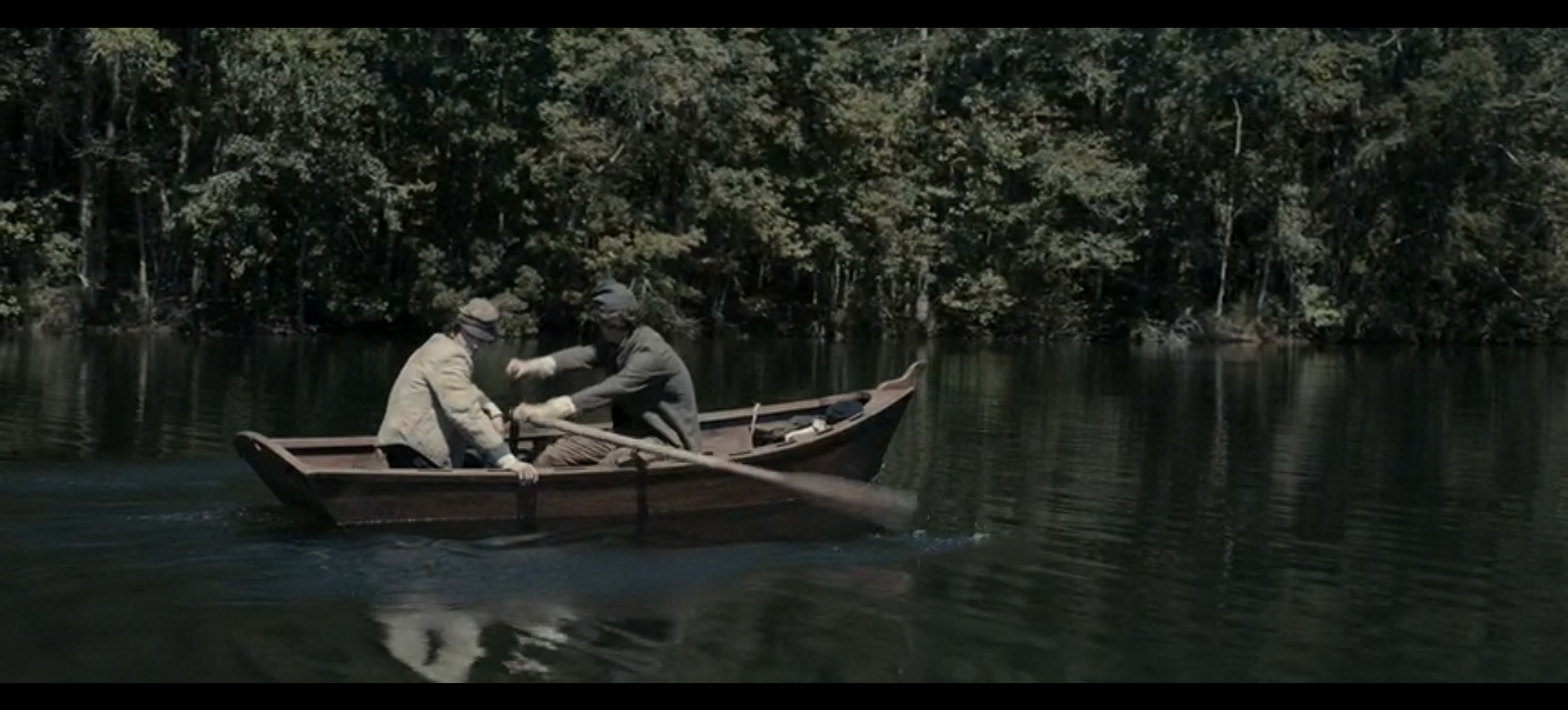
List of sources and references used in this research:

  • Bogar, Thomas A. Backstage at the Lincoln Assassination: The Untold Story of the Actors and Stagehands at Ford’s Theatre. Washington, D.C.: Regnery, 2013.
  • Brenner, Walter C. The Ford Theatre Lincoln Assassination Playbills: A Study. Philadelphia: Privately Printed, 1937.
  • Brenner, Walter C. Supplement for insertion in The Ford Theatre Lincoln Assassination Playbills: A Study. Philadelphia: Privately Printed, 1940.
  • Catalogue of a Lincoln collection formed by Frederick S. Lang, Boston. Boston: C. F. Libbie & Co., 1919.
  • Catalogue of the valuable collection of play-bills, portraits, photographs, engravings, etc., etc., formed by the late James H. Brown, Esq., of Malden, Mass. Boston: C. F. Libbie & Co, 1898.
  • The Huntington Library, Art Museum, and Botanical Gardens
  • Harvard Theatre Collection
  • Emails with Jane Doe

I hope you enjoyed a dive into the research and provenance behind the Ford’s Theatre playbill that will be sold by R.R. Auctions. If you’ve always wanted to own one of the rarest pieces of assassination history, you might want to keep on eye on Saturday’s auction. But be prepared to shell out quite a nest egg to add this to your collection. At the time of this writing, during the pre-auction bidding period, this playbill is already up to $55,000 and will likely go much higher before the gavel falls.

Even if you’re like me and will never have the scratch to own something like this, I hope you still enjoyed learning about the playbill and its history. And, if anyone else has any cool priceless artifacts you’d like me to look at, I’m happy to give my opinion. This genuine playbill just goes to show that there are still treasures to be found out there.

Categories: History, News | Tags: , , , , | 10 Comments

Finding Amelia

This Wednesday, August 7, 2024, the Discovery Channel will be airing a new documentary about one of the most famous vanishings in history: the disappearance of aviators Amelia Earhart and Fred Noonan on July 2, 1937. Earhart was attempting to become the first woman to fly around the world when she and her navigator disappeared, never to be seen or heard from again. For almost a century, searches and expeditions have attempted to determine what happened to the world-famous pilot. This Wednesday’s documentary, Finding Amelia, will look at the theory that Earhart and Noonan may have crashed in the jungle of Papua New Guinea during their transcontinental flight. The 2-hour long documentary will investigate the origins of the theory and show footage from a recent expedition to the site.

While this documentary has nothing to do with the assassination of Lincoln, I wanted to highlight it because my wife, Jen Taylor, will be featured in the documentary working to evaluate the Papua New Guinea theory. I first met Jen in 2020 when I was a guest on her podcast Vanished. At that time, she and her cohost, Chris, were investigating the John St. Helen/David E. George/”Booth mummy” story. The two co-hosts split up, with Chris working alongside Nate Orlowek to justify the escape theory, while Jen and I spoke at length about Booth’s death in 1865.  I provided the history and sources while Jen used her skills as a lawyer to effectively topple the house of cards that is the Finis Bates chicanery. After finishing the final episode of the podcast in 2021, Jen and I continued talking and married in Granbury, Texas, two months later.

But before I ever met Jen, she and Chris had spent a lot of time delving into the case of Amelia Earhart. Chris had his own prior podcast called Chasing Earhart and brought Jen in on the first series of Vanished, which was devoted, once again, to Earhart. Jen’s background as a lawyer made her well-suited to evaluate and judge the many theories of what may have happened to the aviators. The production company behind Finding Amelia listened to Chris and Jen’s Earhart material and asked Jen to take part in the documentary. While Jen never visited Papua New Guinea, she was flown out to L.A. and shot studio material talking about the theory and interviewing the leader of the expedition on camera.

I am very excited for Jen to make her TV debut. I’m even more excited that she will be more than just a traditional “talking head” in this documentary. If you are interested in the disappearance of Amelia Earhart, and want to see Jen on the small screen, watch Finding Amelia on the Discovery Channel this Wednesday (August 7, 2024) at 8:00 p.m. EDT. The program will also repeat at midnight (EDT).

For those of you who don’t have traditional cable or won’t be able to catch these airings, we expect the program to be on the Max streaming service (and likely Discovery+) soon after it debuts.

I hope you will tune in!

Dave
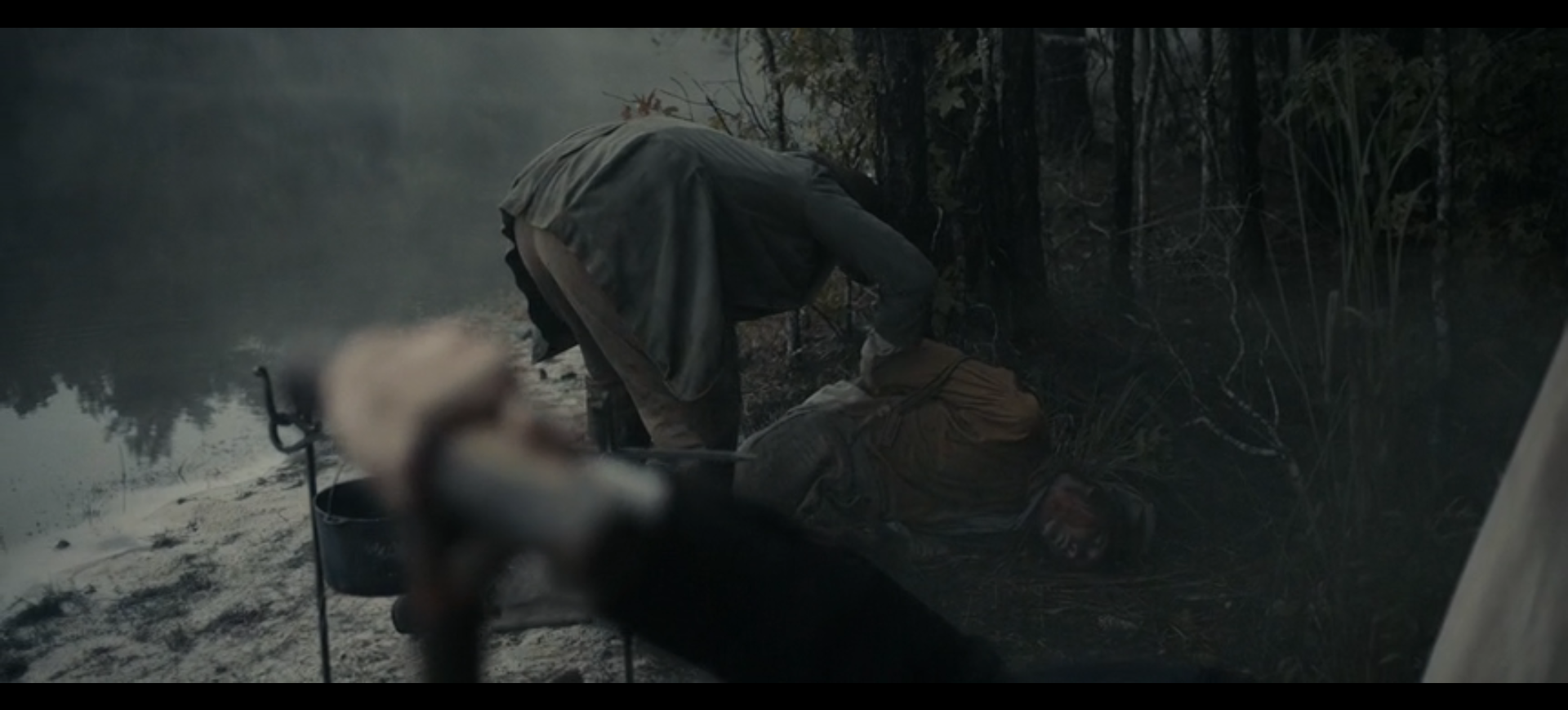
Categories: History, News | Tags: | 6 Comments

Manhunt Review: Episode 5 A Man of Destiny

I am conducting an ongoing review of the seven-part AppleTV+ miniseries Manhunt, named after the Lincoln assassination book by James L. Swanson. This is my historical review for the fifth episode of the series “A Man of Destiny.”  This analysis of some of the fact vs. fiction in this episode contains spoilers. To read my reviews of other episodes, please visit the Manhunt Reviews page.


Episode 5: A Man of Destiny

This episode opens with John Wilkes Booth and David Herold realizing that their night of rowing on the Potomac has not brought them to Virginia but that they have accidentally landed back on the Maryland shore. After changing into Confederate uniforms claimed from bodies on the riverbank, the pair head off into the water once again, hoping to make it to Virginia. Edwin Stanton, with his fictional map of the Confederate secret line in hand, comes across the members of the 16th NY Cavalry in the field at an undisclosed location. We meet the “man of destiny” pictured above, Sgt. Boston Corbett, whose salvation from past sins and tragedy is shown in a flashback. With the 16th in tow, Stanton and his group ride on, coming across a band of wounded Confederate soldiers. The war is over for them, and all they want is to get their oaths of allegiance and be allowed to go home. At that moment, a messenger arrives and informs Stanton that President Johnson is rolling back the land grant program to recently freed Black Americans. Stanton heads back to Washington, leaving the 16th to carry on with their search. In a flashback scene, we see Stanton and a delegation of Black leaders three months before the assassination discussing the land grant program with General Sherman in Georgia. After the appeal, Sherman agrees to the proposition. Back in D.C., Stanton confronts Johnson about abandoning the Freedmen. But the President has already been convinced by Southern statesmen to end the land grants. Back at the War Department, Thomas Eckert advises Stanton not to quit over this loss but to stay on and protect the rest of Lincoln’s reconstruction plans.

Back in Maryland, Mary Simms reads the announcement that all land grants are suspended and realizes her dream of starting a school on her new property is not to be. She returns to Dr. Mudd, who takes her back as his servant, but not before beating her offscreen as a lesson for “running off.” After landing in Virginia, Booth and Herold walk through the day before coming across an empty cabin. They bed down for the night but are awakened the next morning by the cabin’s owners, William and his teenage son Charley Lucas. At gunpoint, Booth and Herold force the Lucases to hide them in their wagon and transport them to the Rappahannock River ferry. The fugitives wait at the ferry crossing with the same band of wounded Confederates Stanton and the 16th NY stumbled across earlier. One of the wounded Confederates engages Booth in conversation after noticing his tattooed initials. Booth demurs at first, giving an alias for himself and Herold. However, after the wounded Confederate starts to question aspects of the pair’s service record, Booth drops the charade and announces his identity to the whole gathered group. He is surprised to see that the men do not see him as a hero but a coward who shot an unarmed man.

When the ferry arrives to take them across the river, only one Confederate talks with the men. He is Willie Jett, and he explains that he is going to marry a wealthy woman in Bowling Green, so he’s not afraid to talk to the assassins like the rest of the men. Jett advises the pair to go to the farm of Mr. Garrett on the other side of the river for he might give them a place to rest. Booth thanks Jett. When the Black ferry operator, Jim Thornton, gives Booth a look, the assassin yells that folks like him “don’t get rewards.” Back in Washington, Eddie Stanton returns and tells his father that the 16th NY is still looking for Booth around the Potomac River. Eddie then recalls that Dr. Mudd lives near the “secret line” stop of Bryantown. Sec. Stanton rides down to Dr. Mudd’s farm in Charles County and interrogates the doctor. The beleaguered Mary Simms silently directs Stanton to search the upstairs room where Booth had been treated. The Secretary finds the boot that Mary had put under the bed after the assassin departed. Inside the boot, Stanton finds the damning initials, “J.W.B.”

Back downstairs, Stanton accuses Mudd of having known Booth previously. Mudd denies he knew the men who came to his house or what they had done. Here, Mary Simms finally finds her voice and tells Stanton that Mudd was lying and that he knew both Booth and John Surratt. Under Mudd’s protestations, he is arrested and taken away. Stanton, admiring Mary’s bravery and knowing she was now out of a job, offers her a place in a Freedmen’s camp in Arlington. The Secretary also realizes that a broken-legged Booth would blend in well with a group of wounded Confederates making their way South. Stanton once again uses his teleporter to make his way down to the ferry landing on the Rappahannock accompanied by Eddie, Eckert, and the 16th NY Cavalry. Ferryman Jim Thornton tells the men that Booth crossed the river earlier that day and that he had conversed with a regular named Willie Jett, who stays at the Star Hotel in Bowling Green. Meanwhile, we cut to Booth and Herold at the Garrett farmhouse. Booth has a fever and is being given a bath by Julia Garrett, who calls him a hero to the cause. Stanton and the cavalry appear in Bowling Green, and Willie Jett is found at the Star Hotel. The man who claimed he wasn’t afraid of the law immediately folds and tells Stanton the fugitives were likely to be found at the Garrett farm. Excited to capture the men before daybreak, Stanton rushes to his horse when his ever-worsening asthma causes him to collapse. Unable to go on himself, Stanton sends the 16th NY on with Boston Corbett leading the charge back up the road to the Garrett farm.


Before I discuss some of my criticisms and my analysis of fact vs. fiction in this episode, I want to highlight things that I liked about it.

  • “I almost enlisted once.”

At the very beginning of the episode, when the pair land their rowboat in what proves to be Maryland, Booth observes the dead Confederate soldiers on the shoreline and relates how he “almost enlisted once.” He mentions the “low wages” and “terrible food” that “those poor bastards” had to endure. He also complains about the uniform and how he prefers to choose his own look. These are largely throwaway lines, as the real focus is on Davy, who is actively consulting the compass and apparently determining they are in Maryland. However, there is a grain of truth in Booth’s recounting of a soldier’s life. In reality, John Wilkes Booth did enlist once, but not during the Civil War. Instead, Booth spent a little bit over two weeks as a part of a local militia, the Richmond Grays, at the end of 1859. This was during the time when Booth was learning his craft as a lowly stock actor attached to a theater troupe in Virginia. He performed under the name “J. B. Wilkes” and played supporting roles to the visiting stars.

Booth was in Virginia when abolitionist John Brown enacted his famous raid on Harper’s Ferry. The slave uprising Brown hoped to inspire did not occur. Brown was captured alongside many of his fellow raiders and tried for treason against the state of Virginia. Brown was found guilty, and his sentencing took place on November 2. He was sentenced to death, with his execution being scheduled for December 2. During the interim between Brown’s sentencing and pending execution, rumors began to build that efforts were being made to free Brown from his prison cell in Charlestown, VA (now Charles Town, WV). As a result of these rumors, Virginia Governor Henry Wise called up state militia groups to report to Charlestown in order to guard Brown and prevent any plots to free him. During Booth’s time in Richmond, he had befriended several men who were part of the local militia group known as the Richmond Grays. Inspired by the call for guards, Booth left the theater troupe and joined up with the Grays as they loaded up onto a train bound for Charlestown. For two weeks, Booth played the role of a soldier. He was assigned duty as a sergeant with the regimental quartermaster’s department.

John Wilkes Booth’s signed pay claim for his time as a Richmond Gray.

For these two weeks, Booth acted as a clerk and occasional guard outside of Brown’s prison. This culminated with Booth seeing Brown in his cell on the eve of the abolitionist’s execution. Booth stood by and watched as Brown was hanged on December 2, becoming slightly queasy from the scene. A few days later, Booth was back in Richmond and managed to reacquire his position with the theater troupe due to the intervention of his fellow Grays.

While brief, Booth’s “gone a soldiering” period made an impact on the future assassin. When he was younger, Booth had written jealously of the noble fighting of soldiers in distant countries. His time with the Richmond Grays allowed Booth to see the reality of a soldier’s life. He experienced the drudgery, boredom, and lack of autonomy of being a lowly private in a military unit. I believe his experience of having to take orders and complete menial duties with the Grays is what caused Booth to avoid enlisting when the Civil War began. Booth’s sense of self-importance would not allow him to follow the orders of others. He wanted the glory of being a soldier, but he didn’t want to have to work for it. Instead, he wanted to be the one in charge. This is alluded to in the miniseries when, on the river bank, Anthony Boyle’s Booth wonders about the position he will be given by Confederate officials when they get to Richmond. He, of course, concludes that he will be made a general.

While this series never goes into Booth’s time as a soldier with the Richmond Grays, this brief scene does a good job of alluding to Booth’s experience as a quasi-enlisted man. It shows Booth’s distaste for following orders and why he could never bring himself to actually fight for the cause that he claimed to hold dear.

  • Boston Corbett

My list of favorite character performances increased with this episode. While I’m still a fan of Glenn Morshower’s depiction of the duplicitous Andrew Johnson and Damian O’Hare’s reliable Thomas Eckert, William Mark McCullough’s portrayal of Boston Corbett grabs your attention from the moment he turns up on screen. With a few lines from colonels Baker and Conger, we are given a modified backstory for the future avenger of Lincoln. Then, through monologue and a snowy flashback, more of this unique gentleman’s history is shown.

While William Mark McCullough is considerably larger than the actual Corbett, who was left even thinner after experiencing the worst of Andersonville prison, the actor expertly brings his own sense of divine madness to the character. After watching this episode for the first time, I discussed it with my good friend, Steven Miller, THE expert on Boston Corbett and the 16th NY. We both noted how impressed we were at McCullough’s performance. Later in this review, I’ve included Steve’s assessment of the facts in the Corbett scenes. I’m sure you won’t be surprised to learn that the writers took some creative liberties here, but this is one of the few times where I felt that the choices they made were actually done well.

  • This episode is about the manhunt

Out of all of the episodes, this one is my favorite because of one simple idea: this episode, more than any other, is actually about the escape of Booth and the manhunt to find him. We’re not wasting time with the fictional George Sanders intrigue anymore, and the secondary plotlines don’t take up as much time in this episode. For the first time, Booth’s escape and the efforts to find him are the main focus. With that being said, this episode is also the most frustrating one so far because very little of Booth’s escape during this period is accurate. Instead, it is significantly shortened, incorrectly represented, and the search by the 16th New York is dramatically altered. This is why this review, out of all of them, has taken me the longest to write. Still, this episode comes the closest to what I expected from a series called Manhunt.


Let’s dig now into the fact vs. fiction of this episode and learn about the true history surrounding these fictional scenes.

1. Crossing the Potomac

As much as I enjoy part of the initial scene where Booth reflects on not joining the Confederate army, several glaring errors occur here. The pair is supposed to be landing at Nanjemoy Creek in Charles County, Maryland. After failing to cross over into Virginia, the actual Booth and Herold stayed in this area called Indiantown Farm for about 48 hours. Local lore states that they remained hidden in an old slave cabin that still exists on the property. Then, on the night of April 22, they attempted to cross the river again under the cover of darkness, and this time, they were successful at making it to Virginia. The series shortens this part considerably. After Davy determines they have landed in Maryland by mistake, they immediately prepare to take the river again during the daylight hours.

The real fugitives would never have risked setting off on the Potomac during the daytime, where they would have been easily spotted by the different ships patrolling the river and the soldiers on either shore who were looking for them. But, for the sake of moving the story along and for the ease of filming during the day, I can understand why the miniseries chose to truncate this. The very wild curveball the series throws during this scene, however, is the numerous dead Confederate soldiers strewn near the riverbank in Maryland. There is no explanation for this camp of dead Confederates. It seems their existence in the story is merely to give Booth and Herold a convenient way to change their clothing.

Both Booth and Herold put on the dead Confederates’ uniforms and wear them for the rest of the escape. In reality, this never happened. At the Garrett farm, Booth did attempt to swap his suit with one of the Garrett son’s old Confederate uniforms, but Will Garrett declined this offer. Booth and Herold wore their civilian clothes throughout their escape, and Davy was photographed wearing the same clothing he was arrested in.

I can only assume that the writers decided to have Booth and Herold change their clothing in this scene as a setup for the later “reveal” at the Rappahannock Ferry landing, where one of the wounded Confederates calls the fugitives out for posing as soldiers. But, of course, that scene is also fictitious. We’ll get to that later.

2. Boston Corbett’s backstory

Here’s some of what Steve Miller, the expert on Boston Corbett and the 16th New York, had to say about the accuracy of the character of Boston Corbett in this episode:

“First off, the writers did a masterful job of introducing him as a new character. In a tightly written couple of scenes they managed to give his backstory succinctly and set him up as major impediment to Booth’s plans.

I have a couple of quibbles with their version of Corbett’s story. There is NO, I repeat ZERO evidence that he was an alcoholic. Yes, he was a widower; his “good Christian wife”, Susan Rebecca Corbett (not “Emily” like in the series) died of “disease of the liver” not from a troubled pregnancy. (These ideas were not created by the Manhunt writers, however. Many books have made both claims, but there is no substantiation for them. They just keep getting repeated.)

Corbett was shown sitting alone in the rain, engaged in a conversation with the Lord. He was described by a friend as being “the only man in our regiment who openly professed his religion.” This was not a big deal in the 16th NY Cavalry, but he had frequently been physically assaulted and suffered continual tormenting in the infantry unit he had belonged to before.

I would like to have had the writers tone down the “crazy eyes” portryal of Corbett a little. Many shows which bother to portray self-identified Christians at all, overplay them as totally consumed near jihadist zealots or hypocrites. Corbett was evangelical, of course, but he did not try to impose his beliefs on others. The tenants of his faith were to tell the truth, perform good works, and bear witness to God’s grace. As he usually did, he even prayed for Booth’s soul as he fired to keep Booth from harming others. That would have been a nice bit of dialog to add.

I’m not sure that Corbett personally led the charge back to Garrett’s farm. (BTW, the farm was roughly fifteen miles from Bowling Green. That’s where Stanton was being treated in the miniseries.) Corbett was very active during the last phase of the search/capture, but he was fourth in command of the 29-man posse. Doherty (who was left out of Manhunt altogether), Byron Baker and detective Conger were in command.”

I will add more of Steve’s thoughts when we get to the next episode. Even with these historical quibbles, we both agreed that Cobett was well portrayed.

3. The Missing Leader: Lt. Doherty

Edward P. Doherty of the 16th New York Cavalry

As Steve mentions at the end of his comments above, there is a noticeable absence within the men of the 16th New York Cavalry in this miniseries. For unknown reasons, this series decided to eliminate the leader of the Lincoln Avengers: Lt. Edward Doherty. While arguments over the payouts for reward money will forever impede our ability to know who was truly “in charge” of the group that hunted down and killed John Wilkes Booth, there’s no arguing that the leader of the soldiers themselves was Lt. Doherty. When the rewards were eventually paid out, Doherty received $5,250 – the largest share of any of the detectives and troopers. He played an important role in tracking down and capturing Booth but is nowhere to be seen in the series. With so many characters, it would be understandable for some to be cut out, but Doherty seems like an odd omission, given his importance. What makes it even more confusing is that they have a Doherty look-alike with the 16th New York.

Looking at this screenshot, you would think you were looking at Lt. Doherty and Luther Byron Baker (cousin to Patton Oswalt’s Lafayette Baker). However, while the actor on the left, Judd Lormand, is wearing Doherty’s signature mutton chops, he does not play Lt. Doherty but is credited as Everton Conger. Like Luther Byron Baker, Everton Conger was assigned to the 16th New York in a detective capacity. He and Baker also took key roles in the manhunt for Booth. Why the production chose to put Doherty’s facial hair on the actor playing Conger is unclear. The real Conger was bearded, much like Baker. He’s a picture of the real Conger and Baker that they posed for after successfully tracking down Booth.


It’s unfortunate that the production decided to omit Lt. Doherty from his rightful place, but even more baffling that they decided to make Everton Conger look just like the man they erased from the story.

4. Booth and Herold’s April 23rd is Much Altered

In the series, the uniformed Booth and Herold land in Virginia on their second attempt and immediately begin walking. We are led to believe that they walk through the day until they stumble across an empty cabin at night, where they make themselves at home. It is not until the morning that the cabin’s owners, a Black father and son by the name of William and Charley Lucas, return. While it is true that Booth and Herold did sleep the night of April 23 in a cabin belonging to the Lucases, the series has removed quite a bit of activity between their arrival in Virginia and their stay at the Lucas cabin.

Here’s a brief synopsis of what occurred for the real Booth and Herold on April 23, as told through screenshots from my digital map of Booth’s escape:

Click to enlarge

Click to enlarge

Click to enlarge

Click to enlarge

As can hopefully be seen from these screenshots, upon their arrival in Virginia, Booth and Herold received far less than a warm welcome. April 23rd is a key part of Booth’s escape. In Maryland, Booth was fairly well taken care of. Dr. Mudd set his leg and let him rest at his home. While Samuel Cox forbade him from staying at Rich Hill, he did arrange for Thomas Jones to care for the men in the pine thicket and eventually set them across the river. As the miniseries accurately shows, Booth truly thought he would be greeted as a hero in the South. The hardship of living in the pine thicket for over four days was made tolerable by his belief that he would be welcomed with open arms by the people of Virginia. Yet, the second he arrived on the Virginia shore, no one wanted anything to do with him. Even though Mrs. Quesenberry had helped with the Confederate mail line, she was nervous to have the fugitives near her house. She pawned the men off on Thomas Harbin and Joseph Baden. These fellow Confederate mail agents believed the fugitives to be too hot for them and quickly passed them to farmer William Bryant. He took the men as ordered to the home of Dr. Stuart. The wealthy doctor and Southern planter gave the men a meal but refused to render medical aid to Booth and would not lodge them for even a night. In the end, the racist Booth is forced to sleep in the home of a Black family. This series of events was a massive blow to Booth’s ego and severely deflated him. Rather than being treated as the savior of the South, these Virginians wanted nothing to do with him. It’s too bad the series couldn’t have shown the process of humbling Booth and how he came to realize how alone he truly was.

5. At the Rappahannock River

The series did not completely neglect knocking Booth down a peg or two. Rather than showing his treatment by several Virginian civilians, the series instead decided to create a fictional scene between the assassins and several wounded Confederates at the Rappahannock River. Here, we see Booth and Herold waiting on the ferry in Port Conway with the same group of homebound Confederates Sec. Stanton ran into a few scenes earlier. The lead unnamed Confederate bearing an eyepatch, notices Booth’s initials of JWB and makes the connection to Booth. Instead of revealing his identity, Booth gives his name as John Wilson Boyd and introduces Davy as his cousin Larry. Eyepatch asks Mr. Boyd where he got his “glory,” i.e., his noticeably broken leg. Booth responds with, “Bull Run” before asking Eyepatch where he earned the medal pinned to his chest. Eyepatch replies, “Bull Run,” before saying that Booth and Herold’s uniform don’t match “what we wore there.” Booth understandably replies that he has changed his clothes since the battle. But Eyepatch is unconvinced and calls the men cowards for falsely posing as veterans. This pushes Booth over the edge, and he removes his 1st Texas Infantry cap, runs his fingers through his hair, and vainly identifies himself as having been at Ford’s Theatre on April 14th. At first, Davy tries to pass this admission off as a joke, but Booth doubles down, announcing himself as the assassin of Lincoln. Booth tells of his glorious act and fully expects the soldiers to fawn over being in his presence.

The news, however, goes over like a lead balloon. Eyepatch calls his act despicable and spits at the ground before Booth’s feet. The other Confederates mostly nod in agreement with Eyepatch or are completely nonplussed by the whole thing, more focused on their injuries and desire to get home. Booth is only saved from more humbling by the ferry, which arrives from Port Royal. Eyepatch asks the ferry operator, Jim Thornton, how far it is from the ferry landing in Port Royal to the Union office. Thornton replies the Union office is just directly across the road.

As the men line up and prepare to get on the ferry, only one soldier is willing to talk to them. Though not identified at the time, we come to learn that this is Willie Jett. He asks Booth and Herold where they are going and Booth replies Richmond. Herold asks if Jett can help them. Jett recommends the men stop at the farm owned by a man named Garrett, who owns horses they might be able to use. He says that Garrett’s farm is the “first farm before town center” and that he might host them for a price. When Booth asks what is wrong with the rest of the soldiers, Jett explains that the last thing any of them want is to be arrested for helping the assassins of Lincoln. Booth then asks why Jett is so willing, and Jett replies that he’s going to marry the wealthiest girl around, so he doesn’t care about the law. Still, aside from suggesting the Garrett farm, Willie Jett does not provide any other assistance to the fugitives. The scene ends with the men about to board the ferry to Port Royal.

Let’s break down what we have just seen in this fictional scene and compare it to Booth and Herold’s actual time near the Rappahannock. Booth and Herold were the only two people waiting on the ferry after they arrived at Port Conway via Charley Lucas’ wagon. It wasn’t the busiest of crossings, and it appears that Booth and Herold were unaware that they were supposed to hail the ferry boat in order to get it to come across the river. Impatient to continue south, they found a local resident named William Rollins, who was preparing his boat and nets for some fishing in the river.

William Rollins

They asked Rollins if he knew of anyone in Port Royal who might furnish them with transportation to Orange Court House. Rollins said he did not know of anyone, so the pair asked if Rollins himself might guide them. As the series shows, Booth was claiming to be a wounded Confederate soldier at this time, though he was still wearing his civilian clothes, so Rollins had no reason to suspect the men. Orange, Virginia, was the home to a railroad hub that Booth and Herold intended to use in order to get further South. However, even using modern roads, Orange is about 60 miles from Port Royal, and William Rollins had never been there. His best offer was to take the strangers to Bowling Green, about fifteen miles to the southwest. Booth and Herold agreed to this and asked if Rollins would take them across in his boat. Rollins said he would, but not at this moment, as the tide was nearly ready, and he needed to put his nets in the river in order to catch some shad. Booth and Herold would have to wait.

While Rollins took his boat out into the river to set up his nets, three Confederate soldiers rode into Port Conway. They were Willie Jett, Absalom Bainbridge, and Mortimer Ruggles. Like the fictional Confederates in the miniseries, these men were making their way home now that the war was effectively over. The three men hailed the ferry boat at Port Royal and waited as the operator, Jim Thornton, started the slow process of preparing the ferry and pushing it across the water towards them. During this time, Davy Herold started up a conversation with the Confederates, trying to learn more about them and where they were going. According to Jett, Davy claimed his name was David E. Boyd and that his companion was his brother, James William Boyd, not John Wilson Boyd and cousin Larry, as the miniseries states. Davy said they were both Confederate veterans from Maryland and that they desired protection and help from these men, their fellow soldiers. Booth was fairly quiet during this period and let Davy talk. Remember that Booth had been quite humbled by this point due to the less-than-helpful treatment he had received from others in Virginia up to this point. Eventually, it was Herold who confessed to the Confederates their true identities as “the assassinators of the President.” The three Confederates agreed to provide some assistance to the fugitives.

Not long after, William Rollins returned from setting up his nets. He asked Booth and Herold if they still wanted a ride across the river and escort to Bowling Green. Davy replied that they had met up with some friends (Jett, Ruggles, and Bainbridge) and that they no longer needed Rollins’ services. However, before the ferry arrived, Davy did ask Rollins if he could borrow some ink. Rollins allowed Davy and Jett into his home, where he saw Davy write out a document of some kind. According to Jett, Davy was copying down a fake parole document that the pair could use in case they ran into trouble. It is also likely that it was during this time that both Booth and Herold composed the following document. It is two poems, the top written by Booth and the bottom written by Herold. My best attempt at a transcription of the poems follows the image:

He put aside the dainty bribe
The little proffered hand
Albeit he held it in his thought
The dearest in the land
Not sharply nor with sudden heart
But with regretful grace
Meanwhile the shadow of his pain
Fell white upon his face.

Dark daughter of the Sultry South
Thy dangerous eyes & lips
Essayed to win the prize and leave
Dear Honor in Eclipse
She shyly clung upon his arm
He stayed him at the door
“I could not love thee, dear, so much,
Loved I not Honor more”
“Adieu forever more, my dear,
Adieu forever more!”

In truth, we’re not exactly sure when and where Booth and Herold composed this poem during their escape, but it’s possible it occurred while waiting at the Rappahannock as an autograph of sorts for Willie Jett.

Eventually, Jim Thornton arrived with the ferry on the Port Conway side of the river. In those days, the ferry was essentially a flat-bottom barge. Thornton pushed the barge across the river using a long pole, not unlike Charon, the Greek mythological figure who was said to transport the souls of the dead over the River Styx in such a manner. This type of ferry continued to be used at this crossing until 1934 when a bridge finally connected the two port towns. Here’s a picture of the Port Conway/Port Royal ferry circa 1930, which was not all that different from when Booth and Herold crossed sixty years earlier.

6. In Port Royal

Rather than just leaving Booth and Herold with some advice, as the miniseries’ Willie Jett does, the real Jett and his companions actively looked to see if they could find someone in Port Royal to take in the fugitives for a day or two. This included knocking on the door of Sarah Jane Peyton, who originally agreed to take in a wounded Confederate soldier, only to change her mind once she saw Booth’s condition.

The Peyton House in Port Royal, VA.

After trying a couple of other houses in town with no success, the decision was made to ride about two and a half miles out of town to the farm of Richard Garrett, whom Jett knew by reputation. Mr. Garrett had a large farm and two sons who had recently returned from Confederate service. The hope was that he would be happy to take in a stranger or two for a few nights. The men then rode out of Port Royal to the Garrett farm, with Booth and Herold sharing a horse with Ruggles and Bainbridge.

All of the events that took place in Port Royal are cut out of this episode. The next time the miniseries shows Booth and Herold after the ferry landing scene, they are walking on a road in the woods near sunset. Booth is using his crutch and trying his best, but he is clearly in pain. After cursing for a bit, he tells Davy that he can’t make it to Richmond tonight. The pair veer off their path, and a convenient road sign states that it was 50 miles to Richmond. How Booth and Herold ever thought they were going to walk to Richmond is beyond me. Luckily for them, the sign says their new route is only 2 miles from Bowling Green.

This road sign indicates that the pair have walked right through Port Royal and many miles past the Garrett farm. Here’s a map to demonstrate what I’m talking about.

I have circled the towns of Port Conway on the north side of the Rappahannock River, Port Royal on the south side, and Bowling Green, which is about 13 miles away to the southwest. The green pin marks the location of the Garrett Farm. The red pin marks the approximate area where the fictional roadsign in the series would be, 2 miles away from Bowling Green. As we can see, if Booth really did find himself two miles away from Bowling Green, then he had drastically overshot his target.

These scenes just show how poorly the series understood the geography of Booth’s actual escape. This is further shown by the fictional Willie Jett’s description of the Garrett farm being the “first farm before town center.” This doesn’t make any sense. The Garrett farm was located after the Port Royal town center from the perspective of a traveler crossing the river from Port Conway. Based on the road sign and the fact that the next scene shows Booth and Herold at the Garret farmhouse, makes it clear that the writers confused Port Royal with Bowling Green. Rather than putting the Garretts on the outskirts of Port Royal, the farm has transported itself to just outside Bowling Green.

Poor Port Royal, which actually has a nice Museum of American History featuring artifacts connected to Booth’s escape, is completely left out of the narrative of this series.

7. The Garrett Farm

We only have a brief scene of Booth and Herold at the Garrett farm in this episode. It consists of Booth being bathed by Julia Garrett, one of the Garrett daughters, who calls him a hero. As it probably goes without saying, this scene is entirely fictional (and creepy). None of the Garretts knew Booth’s identity until after he had been shot by Boston Corbett. In addition, while Julia Frances Garrett was a member of the Garrett family, she died in 1851 at the age of 10 months.

I’ll have more to say about Booth’s final hours at the Garrett farm in the next episode review (whenever I get around to that), but in a nutshell, this episode left out the fact that Booth was dropped off at the Garrett farm on April 24 and Davy did not initially stay with him. Davy rode on with Jett, Ruggles, and Bainbridge towards Bowling Green. While Booth spent his first night in the Garrett house, sleeping in a bed and cared for as a wounded Confederate soldier, Davy spent the night outside of Bowling Green at a different home with Absalom Bainbridge. The next day, Davy returned to the Garrett farm with Bainbridge and Ruggles and asked to join Booth, which was granted. All in all, Booth spent about 40 hours at the Garrett farm before his death, while Davy was only there for about 15 hours.


Quick(ish) Thoughts:

  • While a compass is a helpful tool for telling you what direction to travel, it does not tell you where you are. Davy using the compass to determine they are still in Maryland rather than Virginia at the beginning of the episode doesn’t make logical sense.

  • Booth is still on about going to Richmond despite everyone and their mother having told him the Confederate capital has fallen and is occupied by the Union. Again, the real Booth knew Richmond was a no-go, and he was heading for the Deep South instead.
  • Andrew Johnson’s meeting with Southern representatives is interrupted by protestors calling him illegitimate. The President states the protesters have kept him up at night. This never happened. While Johnson was certainly criticized in places like the press, the White House was not the site of civil protests of this sort. That is a more modern practice.
  • When Stanton and his son come across the 16th New York Cavalry, he orders them to search all the places on the fictional “secret line” established in the prior episode. Eddie Stanton, Jr. is seen passing out small pieces of paper to some of the troopers, apparently of the addresses on the “secret line.”

The diminutive size of these notes, however, could easily be confused with period carte de visite photographs, which would actually be correct. In order to help identify Booth, the War Department cranked out hundreds of copies of Booth’s photograph and gave them to the many military units searching for Booth, including the 16th NY. After Booth was shot and carried to the porch of the Garrett house, Boston Corbett took out the copy of Booth’s photograph that was given to him during the manhunt and had the Garrett family conclusively identify the wounded man on the porch as the same man from the image. I originally thought the miniseries had gotten this detail right and that Eddie was passing out copies of Booth’s photo before I realized these small papers were supposed to be related to the “secret line.” So close.

This image of the assassin was duplicated and given out to numerous soldiers on the manhunt for Booth.

  • As mentioned above, the geography of this episode is very confusing. At the end of episode 4, Stanton, Eddie, and the random Union soldier are riding down the road toward Southern Maryland while perplexingly saying, “To Virginia.” Today, the Route 301 bridge connects Charles County, Maryland, to King George County, Virginia, but this bridge did not exist in 1865. The only way to get to Virginia from the route taken by Booth and Stanton at the end of episode 4 was to cross the Potomac River on your own using a rowboat or ship. We never see Stanton actually cross a single bridge or catch a ship across any rivers during this episode. As a result, it is unclear where Stanton meets up with the 16th NY and orders them to follow the “secret line.” Since some of the secret line sites include Bryantown and Samuel Cox’s Rich Hill, one would think the troopers are waiting somewhere in Maryland. In reality, the 16th NY was stationed in the Lincoln Barracks in D.C., quite close to Secretary of State William Seward’s home behind the White House, when they were ordered to a nearby wharf in order to be steamed downriver to Belle Plain, Virginia. It is equally uncertain where Stanton and the 16th NY come across the group of wounded Confederate soldiers bound for “Port Conway and Bowling Green,” both of which are in Virginia. So perhaps the 16th was meant to have been in Virginia the whole time, and Stanton just used his teleporting abilities to hop over the Potomac? It’s really a nightmare, geographically speaking.

  • I made an appearance on the Civil War Breakfast Club podcast not too long ago for a talk about the miniseries as a whole. During our almost 2 hour discussion of the series, Darin and Mary educated me about General Sherman and Special Order 15, which gave land grants to the formerly enslaved. The series portrays Mary Simms receiving a land grant in Charles County, Maryland. In this episode, Johnson rescinds the land grants, and Mary Simms is forced to give up her new home. She then returns to Dr. Mudd, who beats her for running off. Aside from the strange nature of Mary Simms returning to Dr. Mudd instead of trying to find employment elsewhere, Darin and Mary explained to me that the “40 acres and a mule” program described in the series did not take place in Maryland. Special Orders 15 only related to the formerly enslaved men and women who traveled with General Sherman’s army during his march to the sea. The only land granted by these orders were coastal properties in Georgia and the Carolinas. While there is a flashback scene showing Stanton trying to get Gen. Sherman to agree with the program, which is closer to being accurate, in reality, Special Order 15 would not have affected anyone in Maryland.

  • The series shows both William and Charley Lucas transporting Booth and Herold in a wagon down to the Rappahannock River. In reality, only Charley went with the fugitives, and this was to ensure that the men would not attempt to steal the horses and wagon. While I appreciate William and Charley commenting on the fates of traitors as they drive Booth south, there is no evidence that any of the Lucases knew who Booth and Herold were or what they had done.
  • At the ferry landing, Booth says he was wounded at Bull Run. At first, I assumed that Booth calling it Bull Run would be the dead giveaway to Eyepatch that he was an imposter. Bull Run was not the name the Confederates used for either of the two battles that occurred near the Prince William County, Virginia, city of Manassas. Since these two battles, the first in 1861 and the second in 1862, took place near the Confederate city of Manassas, the Confederacy referred to these as the Battle of First Manassas or the Battle of Second Manassas. The Union referred to these battles as the First Battle of Bull Run or the Second Battle of Bull Run after the name of a stream that passed through the battlefield. Thus, Booth calling the battle Bull Run should have exposed him as a Northerner. Unfortunately, Eyepatch the Confederate says he earned his medal at Bull Run. So either Eyepatch is also a Northerner posing as a Confederate, or the writers were unaware of the difference in names for this battle.

  • Eyepatch’s claim that Booth’s uniform “isn’t what we wore there [at Bull Run]” is confusing. I’m guessing he’s trying to say that the 1st Texas Infantry, the regiment shown on Booth and Herold’s caps, wasn’t at the Battle of Bull Run. If Eyepatch was talking about the First Battle of Bull Run in 1861, he would be correct. The 1st Texas Infantry hadn’t been formed when this battle was fought. However, the 1st Texas Infantry did exist by the time the Second Battle of Bull Run occurred in 1862 and was a part of that battle. So there’s no reason for Eyepatch to have questioned Booth and Herold’s service by their clothing alone.
  • This episode really tests the viewer’s suspension of disbelief by having Booth announce his identity to a giant group of people while a wanted poster offering $50,000 for his capture is a few feet away from him. It further establishes that a Union office is located across the road from the ferry landing in Port Royal. It even implies that Eyepatch is going to rat Booth out since he asks about the office immediately after spitting on Booth and condemning his actions. Worse yet, Booth reminds everyone at the ferry that there is a reward on his head when he yells to Jim Thornton, the Black ferry operator giving him a look, that folks like him “don’t get rewards.” In this scene, Booth is essentially begging one of these men to turn him in, and it’s beyond belief that none of them did.

  • This episode shows Dr. Mudd being arrested by Stanton himself after Mary Simms tells the Secretary about how Mudd knew the assassin and John Surratt. Since Mary Simms is a fictional version of a real person who was not there in 1865, it goes without saying that this scene is fictional. Dr. Mudd was first visited by troopers on April 18 and questioned about the two visitors he had during the early morning hours of April 15. On April 21, Dr. Mudd was taken to Bryantown for further questioning but allowed to return home on April 22. Then, on April 23, the doctor was arrested and taken up to Washington for more questioning and eventually put on trial as a conspirator.

  • Stanton and the 16th NY question ferryman Jim Thornton in Port Conway, who tells them about Booth and Herold crossing the river earlier that day. In reality, when the 16th NY (without Super Stanton, of course) arrived in Port Conway on April 25th, they learned from William Rollins that a wounded man matching Booth’s description crossed the Rappahannock the day before. William’s wife Bettie provided the vital information that Booth was accompanied by Willie Jett, who was likely to be found in Bowling Green. Since they cut William Rollins from the series, it makes sense for this information to come from Thornton. However, it is funny to note that after Thornton tells Stanton that Willie Jett can be found in Bowling Green, rather than crossing the river to actually go to Bowling Green after him, Stanton and the troopers head back north – the opposite direction. Never fear, however. Two scenes later, Stanton and the soldiers are magically in Bowling Green despite having never crossed the Rappahannock River.

This was truly a massive episode to cover in a historical review. I enjoyed that Booth and Herold were the central figures in this episode and that the manhunt for them was finally the main plotline. However, it was disappointing that the most Manhunt-esque episode of the whole series was essentially nonstop deviations from the actual facts. I’m once again filled with the opinion that this series would have been so much better suited if it had not been called Manhunt and thus hadn’t inherited an expectation for accuracy. Had this been a differently named Edwin Stanton miniseries, then it would be much easier to accept all the fiction like any other Hollywood take on reality. But Manhunt, the book, is nonfiction, and so the expectation is that Manhunt, the series, would try its best to be as well. But, sadly, this was not the case. Don’t get me wrong, I still enjoy the show for what it is, but this episode, more than the others, made me yearn for what it could have been.

I’ll see you back sometime in the future for a review of the penultimate episode, Useless.

Dave Taylor

Categories: History, News | Tags: , | 6 Comments

Manhunt Review: Episode 4 The Secret Line

I am conducting an ongoing review of the seven-part AppleTV+ miniseries Manhunt, named after the Lincoln assassination book by James L. Swanson. This is my historical review for the fourth episode of the series “The Secret Line.” I previously posted a prologue to this episode, which contained a summary of the episode and my overall thoughts regarding the historical accuracy of this series. For full context, I recommend you read that post first before continuing. To read my reviews of other episodes, please visit the Manhunt Reviews page.


Episode 4: The Secret Line

A summary of the events of this episode can be read in my Prologue post.

Before diving into the fact vs. fiction of this episode, I want to highlight things that I liked about this fourth episode of Manhunt.

  • Mary Simms quits

Chronologically, the real Mary Simms left Dr. Mudd’s farm about 5 months before the assassination. At the beginning of this episode, we finally get to see what this separation might have been like. I was happy to see Mary’s emancipation from Mudd’s finally come to fruition in the series. It was rewarding for us, as the audience, to see her essentially tell Dr. Mudd off before leaving to strike it out on her own. The series finally made it clear, after being pretty ambiguous up to this point, that Mary Simms was not being enslaved by Dr. Mudd at this time but was a hired servant. Slavery ended in Maryland in November of 1864, and it was during the same month that the Mary Simms left the Mudd farm. According to her testimony, Dr. Mudd had beaten her after emancipation came, and so she left rather than continue to endure such abuse. She left the Mudd family and never looked back. During the trial, one of the defense witnesses was Julia Ann Bloise. She had been a hired servant at Dr. Mudd’s during the year 1864. She testified that Dr. Mudd never beat Mary Simms during the time she was employed there. However, she did state that Mrs. Mudd (who is absent in the series along with Dr. Mudd’s children) “struck her about three licks with a little switch” for going out walking on Sunday evening without permission. So, it may be that this physical abuse was the last straw for Mary, who was no longer bound to tolerate such things. Watching Mary Simms finally finding her voice and breaking through the mental slavery she had endured is well shown in this episode.

  • “We’re Not Our Brothers”

In the New York City scene, we see Mary Lincoln conversing with Edwin Booth at a private wake for President Lincoln. This scene is entirely fictional, but I still really liked the conversation between this Booth and Mrs. Lincoln. Edwin recounts a line the President asked him to recite once, and Mrs. Lincoln recalled how much Abraham appreciated Booth’s performance of Hamlet and the theater in general. Edwin compliments the late President’s own oratory skills and then apologizes to Mrs. Lincoln personally for his brother’s crime. To this, the incredibly understanding Mrs. Lincoln states, “My brothers are Confederates, too. We’re not our brothers.” It is a very touching moment between two historical figures who suffered greatly due to the actions of John Wilkes Booth.

Of course, as I have noted before, Mrs. Lincoln did not take part in the funerary activities surrounding her husband. She did not travel with the funeral train and, as far as I know, did not attend any private wakes in New York City. Edwin Booth, likewise, would never have made an appearance at such a function, even if it did occur. After hearing of his brother’s crime, Edwin secluded himself and retired from the stage for nine months. Under no circumstances would propriety have allowed Edwin to attempt to converse with the widow Lincoln about her loss at the hands of his own blood. While the President and First Lady had seen Edwin Booth perform in February and March of 1864 when the tragedian played at Grover’s National Theatre in Washington, Lincoln and the actor never met in person.
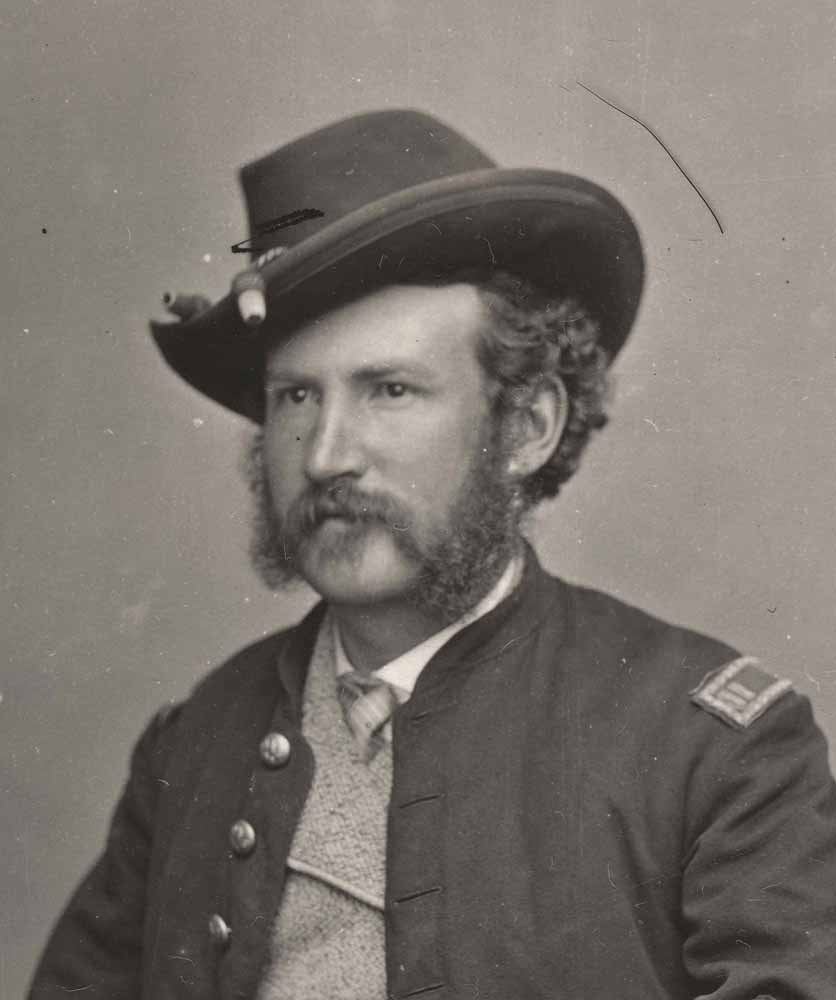
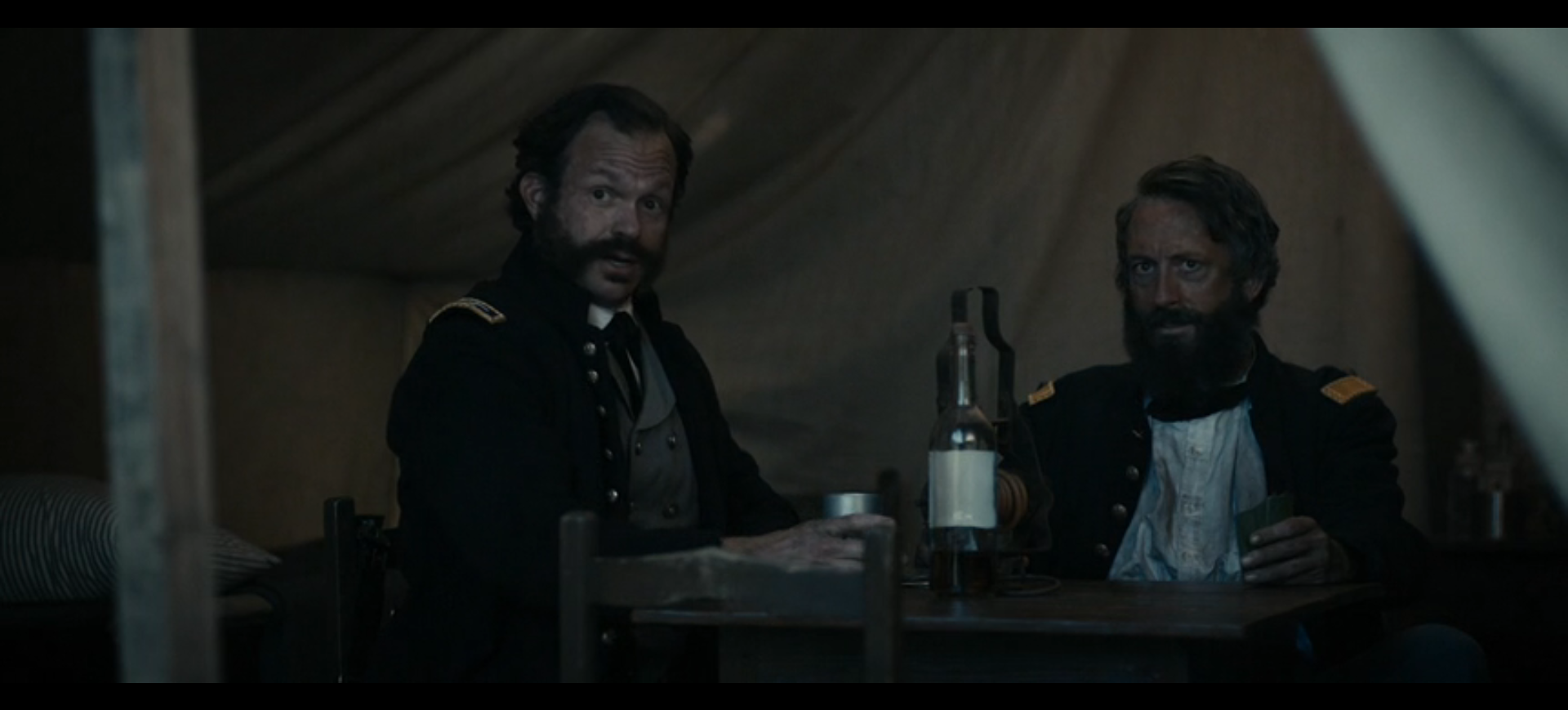
Still, I like the “What-if?” scenario played out in this scene. It was interesting to see these two historical figures bond somewhat over the tragedy that connected them.

  • Command Performances

Most of this episode’s action revolves around Edwin Stanton’s investigation into George Sanders’s fictional machinations, so the subject of the manhunt is quite secondary. This makes sense since this period is supposed to cover the four and a half days Booth and Herold were hiding out in the pine thicket. As someone who has personally reenacted this part of Booth’s escape, I can tell you that there is only so much content to be drawn out in the woods. Still, I believe credit is due for the main scene between Booth and Herold in the thicket. During this scene, Davy reads Booth’s diary (which, again, was never a book-length biography as implied but a few hastily scribbled pages done during the escape) and asks him about his childhood. Booth mentions having dressed up some of his father’s slaves as royalty, and he and his sister (likely Asia) would give them command dramatic performances. This is reminiscent of some of the stories in Asia’s biography of her misguided brother. She recounts instances where they practiced Shakespearian plays together, including reciting Romeo and Juliet from a balcony at Tudor Hall.

The balcony outside of John Wilkes Booth’s room at Tudor Hall, known as the Romeo and Juliet balcony.

Junius Brutus Booth, the elder, did not approve of slavery yet still participated in it. The bulk of the Black servants and fieldhands at the Booth farm were rented from other neighborhood enslavers. Joe and Ann Hall, two servants for the Booth family, had several children of the same age as the Booths, so JWB and Asia often found regular playmates among the Hall children.

Young John Wilkes Booth grew up in a racial hierarchy in which he was at the top. As he got older, the future assassin took on a paternalistic view toward those who were enslaved. This white supremacist view held that Black men and women were incapable of taking care of themselves and needed the white man’s guiding hand. In this way, Booth convinced himself that slavery was beneficial for Black Americans, whom he saw as children regardless of their age. This view was very common and perpetuated the “good master” myth amongst enslavers. Booth’s joking in this scene about dressing up enslaved children in fancy clothes demonstrates his view that they were little more than playthings for his amusement. It effectively demonstrates his learned version of racism.

  • “I am myself alone.”

In the same scene, Booth deigned to recite something for Herold’s amusement. Davy requests poetry and asks Booth to recite some verse from Edgar Allan Poe. It’s actually rather fitting that the series has Herold announce that he likes poetry because one of the last known writing samples we have for the fugitives is a page of poetry that they wrote while on the run. However, rather than poetry, Booth convinces Davy to let him recite a few lines from Richard III instead, noting that he was well acclaimed in the role. This is truthful, as Richard III was perhaps Booth’s best role. Booth then proceeds to recite lines that aren’t in the original version of Richard III but do appear in the Colley Cibber version, which was the version of Richard III that was known and enjoyed by theater patrons. The lines go:

"I have no brother, and am like no brother- Let this word love, which great-beards call divine, Be resident in men, like one another, And not in me;- I am, - myself alone."

These lines come from John Wilkes Booth’s personal promptbook for Richard III. This book is in the collection of the Harry Ransom Center and has been completely digitized. Click the image to flip through Booth’s promptbook and see the assassin’s own handwritten notes.

This was a great quote for the production to pull. Not only does it pair well with the preceding flashback of Booth with his brother (I break that down below), but it is also a line that Booth was well acquainted with. When Booth made his debut as a starring actor in his hometown of Baltimore, theater manager John T. Ford did all that he could to draw crowds to his Holliday Street Theatre. Part of that advertisement was to play up the Booth brother angle and get the populace excited to see this new son of the legendary Junius Brutus Booth. Thus, Ford advertised Booth’s Richard III performances with the lines “I am myself alone,” daring the audience to come out and judge whether this younger son of Booth would surpass his brothers and late father.

In better times, this line from Richard III was one that helped gain audiences and bring Booth success. Yet, in this scene, the line is nicely paired with the true loneliness Booth is feeling due to his own actions.


I noted in my prologue post for this review that I wouldn’t really be dealing much with the Stanton storyline in this episode since it is 99% fiction. The scene of Edwin Stanton and George Sanders pulling pistols on each other made for some engaging drama, but the circumstances leading to this moment (and the moment itself) are complete fantasy. There are general things that were true, such as the Dahlgren affair, the attempt to burn New York City, and the Yellow Fever plot against Northern cities, all of which were real events that happened. However, none of these happened as described or portrayed in this episode. Honestly, the easy guide for this episode is that if you see Stanton doing it, it’s most likely fictional.

Still, I wanted to address a few things in this episode related to the Lincoln assassination and Booth family history.

1. Edwin Booth’s character

As I stated above, I enjoyed the fictional scene between Edwin Booth and Mary Lincoln in this episode. Actress Lili Taylor does a great job portraying a far less manic Mary Lincoln, and actor Nick Westrate bears a good resemblance to the noted tragedian.

However, aside from their scene together, this series does not portray Edwin Booth very accurately. After chatting kindly with the widow Mary, Edwin Booth interrupts Stanton’s conversation with Robert Lincoln and aggressively asks the War Secretary, “How do I restore my name? A photograph with General Grant? A White House performance, perhaps?” In a few lines, Edwin has gone from a sincere and apologetic figure to a completely self-absorbed fake, more concerned with his name than with the tragedy of the nation. The real Edwin never acted so duplicitiously. He understood the importance of mourning and recused himself from the public eye. He swore off the stage for good, and it was only the clamoring of the public that convinced him that he was not blamed for what Wilkes had done. Still, out of respect for the fallen President and the knowledge that his kin had committed such an act, Edwin Booth never performed in Washington, D.C., after the assassination. He even turned down offers from Presidents and Congressmen to play the capital city in the decades to follow but always refused. In the days after the assassination, Edwin and the rest of the Booth family were filled with a unique form of grief as they mourned both the President and their own brother. The series’ decision to portray Edwin Booth as insensitive and two-faced is a great disservice to the real man who endured an unimaginable public and private grief.

2. Richmond Again

During his conversation with Sec. Stanton, Edwin Booth states that he and Wilkes had stopped speaking on account of “politics” and because “Wilkes always played a victim” to Edwin. The actor agreed with the Secretary’s assessment that Wilkes saw himself as a hero, and Edwin claimed that upon their last meeting, Wilkes had told him that he “had love only for the South.” According to Edwin, the last time they saw each other was the day Richmond was defeated, and his brother “mourned Richmond more than I’ve seen him mourn a person.”

This ending statement is notable because it completely goes against everything we’ve seen up to now. I’ve pointed out in my prior reviews how illogical this show has been in showing John Wilkes Booth incredibly eager to get to Richmond as the real assassin was well aware that there was nothing for him in the fallen Confederate capital. Yet the miniseries has continually pushed Richmond as Booth’s intended destination. In the prior episode, Samuel Cox tells the fugitive there’s nothing there anymore, yet Wilkes refuses to accept this truth. Through Edwin Booth’s words, the series has accidentally stumbled onto a truthful statement: that John Wilkes Booth was well aware of Richmond’s fall and never would have wanted to go to the Union-occupied city. And yet, two minutes after Edwin says these words, we have the scene of Herold and Wilkes in the pine thicket still talking about going to Richmond. It’s baffling.

In reality, the brothers had not stopped speaking. Edwin knew his brother was a secessionist and supported the Confederacy during the war, and Wilkes knew his brother had voted for Lincoln. These facts did cause friction in the family, but really not to a greater degree than could be found present in countless families with split sympathies. Still, the brothers had a fairly fierce argument about the war in August of 1864, which resulted in Wilkes storming out of Edwin’s home, but it did not cause a permanent fissure. For the sake of their mother, the Booth brothers decided that it was better not to discuss politics together, though conflicts over the war continued to pop up between them. Still, Wilkes visited his brother in New York and was likely present when Edwin completed a career highlight of 100 nights straight of Hamlet in March of 1865. They were different people who lived in different worlds, but they supported each other professionally.

3. The Show Must (and Did) Go On

Immediately following Edwin’s scene with Stanton, we are given a flashback to the night of the New York City arson plot, which occurred on November 25, 1864. This was the same night that the three acting Booth brothers, John Wilkes, Edwin, and Junius, Jr., shared the stage together for the first time. They performed the play Julius Caesar as a benefit performance to raise funds for a statue of William Shakespeare in Central Park.

This Booth benefit was the project of Edwin Booth, who had been trying to arrange it since early in the summer of 1864. However, John Wilkes’s travels to the Pennsylvania oil region (and secret early plotting to abduct President Lincoln) had delayed the performance by a few months. The series is correct that an attempt was made to burn down several hotels in New York City on this date, including the LaFarge Hotel adjacent to the Winter Garden Theatre, where the Booths were performing. However, the details of the fire plot are misrepresented, and George Sanders has nothing to do with it.

In the flashback, an erroneously mustachioed Wilkes and Edwin are seen outside of the theater, watching the burning hotel. The elder brother, June, must be off taking a smoke break, as he is nowhere to be seen. Wilkes comments that while “they had to evacuate tonight,” he’s “not leaving the play.” This implies that this one-time show was canceled on account of the fire, but this is not the case. During the second act, firemen rushed into the theater and interrupted the show with the news that the nearby hotel was on fire. In the chaos that followed, Edwin broke character and assured the audience they were not in danger. A bit later, a squad of police entered and also reassured the audience that the fire had not spread to the theater so the play could go on. The Booths completed their benefit, raising about $4,000 for the Shakespeare statue that was unveiled in Central Park in 1872.

4. JWB and Edwin’s Relationship

I truly do not understand why Edwin Booth was made to play the villain in the flashback scene outside of the Winter Garden Theatre. His interactions with his brother appear to justify why Wilkes “played the victim” to him. Edwin is incredibly dismissive and talks down to Wilkes. Perhaps we are supposed to side with Edwin due to his claims that Wilkes’s Confederate sympathies are staining the Booth reputation. However, the tone of this scene makes Wilkes come across as the sympathetic Booth, belittled and abused by his demeaning older brother. After watching this scene, one would come away with the idea that Edwin is partially to blame for what his brother did, he having mistreated Wilkes to such a degree as to drive him to such extremes to be recognized.

Needless to say, there is a lot wrong with this portrayal of the Booth brothers. While Edwin was well aware of his brother’s Confederate sympathies, this was not something that either brother broadcast widely. Part of the shock of the Lincoln assassination was that the perpetrator was John Wilkes Booth, a man very few knew harbored such strong anti-Union beliefs. While some actors and stagehands knew Wilkes was sympathetic to the South, he shared this in common with a great many others in the business, and he was not considered extreme on the subject until his attack on Lincoln.

One of the most commonly repeated myths that I come across regarding the Booth brothers and their theatrical careers is the idea that Edwin split up the country and told which brother where he could perform and where he couldn’t. This is usually followed by the claim that Edwin took the North, gave California to June (who resided there), and then left the South for Wilkes. In this flashback scene, such an arrangement is alluded to with Wilkes pushing back against Edwin telling him where he can and cannot act.

After another insult from Edwin, Wilkes defiantly says that he doesn’t need the northern cities of Boston, New York, or Philadelphia and that he will happily play Virginia and other Southern states that support the “cause.” And this is where the illogical nature of the “Edwin splitting up the country tale” shows up. During the Civil War, civilians like the Booth brothers had no access to the Southern states. While Wilkes would have undoubtedly liked to have been on the Southern stages, he was cut off. There was a war going on, and you couldn’t just travel to the South for fun. If Wilkes had risked it all and illegally crossed into the Confederacy, he would never have been welcomed on the Northern stages ever again. That act would have truly stained his reputation. Had Wilkes not committed his deed, I have no doubt he would have started performing in the South after the war was over when it was allowed. But the idea that Edwin ordered Wilkes to play exclusively in the South is ridiculous. Aside from an acting engagement to the Union-occupied city of New Orleans, John Wilkes Booth did not visit the Confederate states after the Civil War began. He made his home in the Union and stuck with it, much to his (and ultimately the nation’s) regret.

This scene also shows Edwin being very dismissive of his brother’s acting ability. As I wrote in my review for episode 1, this series has done a lot to negate the level of fame John Wilkes Booth had gained. In reality, after seeing Wilkes perform in 1863, Edwin Booth wrote to a friend, “I am happy to state that [Wilkes] is full of the true grit – he has stuff enough in him to make good suits for a dozen such player-folk as we are cursed with; and when time and study round his rough edges, he’ll bid them all “stand apart…” In the early days of 1858 and 1859, when Wilkes was still a lowly stock actor learning the stage, he performed alongside Edwin when the latter came to visit as the touring star. At the end of these performances, it was not unusual for Edwin to bring his younger brother to the footlights so that he might brag about him to the audience. Edwin wanted his brother to succeed and would never have insulted his acting in the manner shown in the series. By 1865, the two brothers were close to equal in their dramatic abilities, with Edwin being at his best in the brooding roles of Hamlet and Othello, while Wilkes was the better action star in Richard III and romantic Romeo. Despite their political differences, the real Edwin Booth was always very supportive of his brother’s histrionic talents, and Wilkes respected his brother’s skills as well.

At the end of their scene together, a woman walks up and asks for an autograph. Wilkes, assuming the remark is directed towards him, says yes, only to see the woman hand the playbill over to Edwin. In taking the playbill, Edwin gives his brother an extremely condescending look. Once again, I couldn’t help but think of the short-lived comedy show the History Channel attempted called The Crossroads of History and a very similar scene where Wilkes meets some “fans” while drinking in the Star Saloon next door to Ford’s Theatre. It has the same energy.

5. Oil Investment

This is the second episode in which Layfayette Baker mentions Booth’s oil investments. In episode 2, he informed Stanton that “Booth had four meetings with Wall Street bigwigs, wanted them to invest in a Pittsburgh oil rig with him.” In both episodes, these comments are followed by theories that “oil investment” was code for the assassination plot. There is a degree of truth in these lines, but they are couched in incorrect information. John Wilkes Booth was convinced by John A. Ellsler, the manager of the Academy of Music theater in Cleveland, to invest in the Pennsylvania oil region in December 1863. The pair recruited another man, Thomas Mears, to join them in the venture. Mears was a noted prize fighter and gambler. The three men dubbed their oil business The Dramatic Oil Company and started looking for land to acquire. In 1864, they purchased 3.5 acres near Franklin, PA, about 80 miles north of Pittsburgh. They purchased all of the equipment needed to dig an oil well and hired men to do the job. They christened their well the “Wilhelmina,” named after Thomas Mears’s wife.

Several years ago, I visited the oil region and shot some shaky videos of the area around Booth’s oil interests. Today, I realized that I had never done anything with that footage, so I just uploaded the series of videos to YouTube. If you’re interested, you can check out this playlist of videos to learn more about JWB’s attempt to become an oil tycoon.

So, it is well proven that John Wilkes Booth had legitimate oil investments. None of his oil meetings involved George Sanders or any “Wall Street bigwigs,” as the miniseries claims.

However, to be fair to the series, Booth did use the cover of having been successful in the oil business in order to explain away his retirement from the stage. When friends and fellow actors inquired of Booth why he was not acting during the 1864-1865 theatrical season, he lied and said that he had made a fortune in oil. In reality, the oil business had been a financial loss to the actor, and his real interest during this period was working on his plot to abduct President Lincoln. So, in a way, the oil business became a cover for Booth’s real plot, but not in the way the series implies.

6. Getting Booth to the River

Thomas Jones (aka The River Ghost) shows back up in this episode. Snacking on a stick, he approaches Booth and Herold and tells them the time is right to head for the Potomac River. The trio walks through the windy woods, and at the end of the episode, they are shown at the bank of the river. Booth and Herold enter a small rowboat and are pushed off into the water by Grizzly Adams, who states, “Virginia will welcome you with open arms.” As Herold starts to row, Booth finally acquiesces to Davy’s earlier request for a reading from the works of Edgar Allan Poe. The actor then recites lines from Poe’s famous poem, “The Raven,” and they slip out into the dark river for uncertain shores.

With the suspenseful music in the background and the cuts back to Stanton consulting a map of “the secret line” that he discovered (nonsense, of course), Booth’s recitation is effective and would have been the best ending for the episode in my opinion.

Of course, the series only gets this part of Booth’s escape right in the big picture and not in the details. After learning that a large detachment of troopers were heading from Charles County (where the fugitives were hiding) to St. Mary’s County to the south, Jones knew that the night of April 20th was his best bet to get the men to the river. He, of course, waited until after sundown and gathered the men up. Jones arrived on horseback, and it was decided that the injured Booth would ride atop the horse while Herold walked beside it. The trio proceeded with Jones walking about 50 yards ahead of the pair, checking to make sure the cost was clear and then whistling for them to come forward. Jones would then venture another 50 yards and repeat the process. Thus, it took hours for the men to travel the four miles from the pine thicket to the spot on the Potomac River where Jones had had his servant, Henry Woodland, hide a small boat.

Since I’m apparently highlighting my own videography in this review, here’s a part of my John Wilkes Booth in the Woods reenactment from a decade ago that covers this part of Booth’s escape:

The real Thomas Jones was less certain about the welcome Booth would receive in Virginia but did direct the men to the home of Elizbeth Quesenberry. He gave them a candle and showed Booth the direction on his compass that would get them to Mrs. Q’s home on Machodoc Creek. Booth thanked Jones for the care he had given them and even gave him some money for the loss of the boat. Jones watched as the men headed out onto the river with Herold rowing. Booth attempted to cover the light of the candle with his coat as he steered the boat using an oar and kept a close eye on the compass needle. In truth, a hunched-over Booth trying to hide a candle flame would not have been as powerful as the scene the series provided, so I do prefer the series’ artistic take on this.


Quick Thoughts:

Here are some more things that stood out to me while watching episode 4 that I just don’t have the time to go into deeply.

  • The first scene and one of the flashback scenes between Lincoln and Stanton revolve around the Dahlgren Affair. This was a real and still very mysterious incident in which supposed assassination orders against Jefferson Davis were found on the body of a Union colonel, Ulric Dahlgren. Such orders, if genuine, were seen as a violation of the traditional rules of war and, thus, justified similar instances of black flag warfare on the part of the Confederacy. The truth behind the Dahlgren orders and whether they were real or a Confederate forgery will never be known for certain.

  • Mary Simms is comfortable quitting Dr. Mudd’s because she has a land grant from the War Department. She said the land was taken from an enslaver and was compensation for all the work enslaved folks had done. I’m not an expert on land grants and don’t know the ins and outs of the Freedmen’s Bureau after the war, but I do not think they took land from enslavers and gave it to former slaves, at least not on a large scale. While some properties were seized during the war, like General Lee’s property in Arlington, I have never heard of swatches of land in Southern Maryland having been seized and then turned over to formerly enslaved individuals. Grants did occur in the West on land taken by the government from Native tribes, but I have a hard time believing that the War Department would seize much land in Maryland, a Union state that never seceded. I’m happy to be proven wrong on this, but I have never read or heard about land in Southern Maryland being given to those who were recently freed from slavery.
  • It’s a little thing, but George Sanders keeps talking about how New York City is “his city.” Dude, you’re from Kentucky. Just like KFC and Col. Sanders. Calm down.

  • The stabbing attempt on Stanton by a person in a Lincoln mask is never explained. We have no idea who it is or why they were targeting the Secretary of War. It’s a fight scene that serves no purpose.
  • After merely theorizing that Sanders was the source of the “$500” that Booth deposited in a bank in Montreal back in episode one, Stanton says this definitively to Sanders in this episode. We do not have any evidence that Sanders was the source of the $455 that Booth deposited. It could have easily been Booth’s own money, and since he never withdrew it, we don’t know his purpose for it.

  • My family had a pet cockatiel when I was growing up, so I was curious about George Sanders’s having one named Lady in this episode. I wasn’t sure if cockatiels had been exported from Australia or had even been domesticated by the 1860s. Some online sources state that the first cockatiels arrived in Europe in the 1830s, but these lack any sources. When I search newspaper archives for the word cockatiel (and its spelling variants), the first hits I get in the U.S. are from the 1880s. The most humorous result was this advertisement for an exotic bird exhibition in Harrisburg, PA that featured a pair of cockatiels amongst many other feather marvels:

Click for the full 1881 advertisement of exotic birds.

So, I think it unlikely that George Sanders, or anyone in America really, had a pet cockatiel in 1865. But, since we are supposed to believe that Sanders is the Elon Musk of his day, perhaps this exotic bird is to show us just how rich he truly is. Still, you would think he would get a decent-sized cage for his prized parrot. Poor Lady can’t even stretch out her wings without hitting the side of her prison. And, despite Sanders’s claim that he can leave the door open and Lady would never fly out, that bird is clearly itching to escape in the one shot where the door is open.

  • There’s a lot of unintentional humor in this episode, such as Stanton scolding Robert Lincoln and telling him to get it together, the random V for Vendetta masked assailant, and Stanton seeming to impersonate Clint Eastwood from Sudden Impact about to tell  Sanders to “Make my day” at gunpoint. The episode also ends with a bit of unintentional humor. In the last scene, we see Stanton, his son Eddie, and a single Union soldier all on horseback. The U.S. Capitol building is in the background on the other side of the Anacostia River, and Stanton has his fictional secret line map in hand. The men set off down the road away from Washington with the Union soldier saying, “To Virginia.

But, the thing is, they are not headed to Virginia. They are heading down the road into Southern Maryland. You can’t get into Virginia from that road unless you have your own boat (like Booth). There was no bridge connecting Southern Maryland to Virginia. If Virginia was their destination, then they should have gone back into D.C. and crossed directly into Virginia via the Long Bridge. I understand that not everyone is familiar with the geography of the area, but hearing the soldier say, “To Virginia!” and knowing that they cannot get to Virginia from there without a boat is humorous to me. Luckily, Stanton has already proven he can teleport himself around the country, so it won’t be much of a problem for him.


That’s my historical review for episode 4. While I have already seen the remainder of the series, I am going to refrain from commenting on episodes 5, 6, and 7 until I have time to write my reviews for those episodes individually. I can’t say when I’ll complete my next review, but I promise to get them all in time.

Until then,

Dave Taylor

Categories: History, News | Tags: , | 7 Comments

2024 Surratt Society Virtual Conference & Michael Kauffman Talk

On Saturday, April 13, 2024, from 2 to 4:30 p.m. EDT, the Surratt Society will hold its annual Lincoln assassination conference. As has been the case in recent years, this conference will be held virtually and is free to attend. This year, two speakers will be presenting. They are Timothy S. Good, a ranger with the National Park Service who will speak on his 1995 book We Saw Lincoln Shot: One Hundred Eyewitness Accounts, and me, Dave Taylor, who will speak about the different reactions to Lincoln’s death across the country.

To join us for this completely free afternoon of assassination information, all you have to do is register, and you will be emailed a Zoom link for the meeting. You can RSVP for the conference by clicking here or on the image below:

In addition to this free event, I wanted to advertise that historian Michael Kauffman will be presenting virtually for the Smithsonian Associates on Monday, April 15, from 7 to 8:30 pm EDT.

The author of American Brutus: John Wilkes Booth and the Lincoln Murder Conspiracies (the best book out there on the Lincoln assassination, in my opinion) will give a virtual talk on John Wilkes Booth’s escape route. Mike has given countless Booth escape route tours over the years and knows Booth’s route like the back of his hand. While nothing can replace the knowledge gained by going on the actual tour with Mike as your guide, I have no doubt that he will present a wonderful overview of Booth’s escape in this virtual setting. The cost of the Smithsonian talk is $30 ($25 for Smithsonian members). I have already purchased my ticket and can’t wait to take this virtual ride with Mike. You can purchase your tickets for Mike Kauffman’s virtual Booth Escape Route speech by clicking here or on the image below.

I hope you will be able to make it to one or both of these upcoming virtual events!

Categories: History, News | Tags: , , , | 11 Comments

Manhunt Review: Prologue to Episode 4 The Secret Line

I am conducting an ongoing review of the seven-part AppleTV+ miniseries Manhunt, named after the Lincoln assassination book by James L. Swanson. This is a prologue to my future historical review for the fourth episode of the series, “The Secret Line.” This post contains a description of the episode and some screengrabs that contain spoilers. To read my reviews of other episodes, please visit the Manhunt Reviews page.


Episode 4: The Secret Line

In this installment of Manhunt, practically all of the action is focused on Edwin Stanton’s intensifying conflict with Confederate agent George Sanders. In his newly purchased newspaper, Sanders spreads the story that the Secretary of War had authorized a failed attempt on the life of Confederate President Jefferson Davis earlier in the war. When a judge suggests that Sanders is too powerful for a warrant, Stanton goes after his support system of bankers. Stanton’s own father-in-law gets caught in the dragnet, the epitome of the 1% who cares about nothing but profits. Likely in retribution for the arrests of the bankers, Lafayette Baker’s office in New York is broken into and sacked. Files connected to Baker’s spy, Sandford Conover, are stolen, but Baker decides not to tell Stanton of this fact. Through his apparent direct line to President Johnson, Sanders has acquired a government contract to provide uniforms for the War Department. One of the first shipments is sent to a security team escorting the first family on the funeral train route. Soon after receiving their uniforms, the men fall ill from smallpox. Conover arranges a face-to-face meeting between Sanders, who has traveled from Montreal to NYC since the last episode, and Stanton himself. On the way to the meeting, Stanton is attacked by a knife-wielding figure wearing a Lincoln mask, Guy Fawkes style.

The assailant runs off before seriously harming Stanton. In his sit down with Sanders, Stanton is willing to make a “deal with the Devil.” He offers to approve Sanders’s arrangement with Johnson over the uniform contract, if Sanders will tell him where Booth is. Sanders appears to truthfully tell Stanton that, despite his wealth and connections, he is unable to tell the Secretary Booth’s exact whereabouts. Stanton then sweetens the pot, offering even more money than the uniform contract is worth if Sanders will provide a map of the Confederate agents helping Booth. Yet, to Sanders, this is a step too far. The money means nothing to him, and his real goal is to make sure the country continues to “belong to the white man” and to prevent Stanton from “giving it away.”

In true supervillain fashion, Sanders tells Stanton that there are countless men like himself who will work to prevent Stanton’s plans for Reconstruction as he pulls a gun on the Secretary. Then he brags, Trumpian-style, that he could shoot Stanton on Wall Street in broad daylight and get away with it. Looking down the barrel of Sanders’s gun, Stanton slowly draws his own and looks like he is going to take Sanders out. Instead, Stanton shoots a nearby window, sending a signal to Baker and his men to come storming in to arrest Sanders for dealing in smallpox-infected clothing. Sanders is unconcerned and is later shown bailing out and back to dealing on Wall Street. In searching Sanders’s office after his arrest, Baker finds paperwork related to Sandford Conover that clearly distresses him. Meanwhile, Stanton and his son rush to the shipments of smallpox clothing about to be destroyed. Stanton checks the “distributors list” and concludes that the names on the list are members of the “secret line” that he has been looking for.

The secondary storylines in this episode consist of Booth and Herold hanging out in the pine thicket before the River Ghost finally takes them to the Potomac River and sets them across. Mary Simms finally quits being Dr. Mudd’s servant and starts establishing a community school on the land she was deeded in the prior episode. Edwin Booth also makes his appearance in this episode as he attends a wake for the President in New York City and expresses his sympathy to Mrs. Lincoln. An unrealistic version of the relationship between John Wilkes and Edwin Booth is also shown in a flashback during an attempt to burn New York City in 1864. The whole show ends with Stanton, his son, and a single soldier outside of Washington, D.C., riding off into “to Virginia,” seemingly to catch Booth all on their own.


Prologue to a Review

A great sense of relief came over me when watching this episode of Manhunt, and that motivated me to write this prologue to my full review of episode 4, which will come later when I have more time. During the first few episodes, I tried my best to give the benefit of the doubt to the writers, understanding that I didn’t know the ins and outs of developing and pitching a historical miniseries. I attempted to justify certain decisions I disagreed with, such as the merging of real people into largely fictionalized caricatures or the use of poorly supported historical concepts, as all being done for the “greater good” of making a more cohesive and easy-to-follow narrative for a general audience. However, in my last review in particular, I struggled to bridge the ever-growing chasm between the actual history and what was presented on screen. In the beginning, I had disagreed with but accepted instances of dramatic and artistic license under the guise that they were meant to capture the spirit of the event, even if the truth of it was sacrificed. When enough actual history was combined with these instances of dramatic license, I was okay (but still not happy) with it.

Episode 4 has helped free me from my prior illusions that this series is trying to be historically accurate. All of the fantastical intrigue between Stanton and Sanders in this episode proves that there was never an intention to make an accurate retelling of the assassination and search for Booth. It is clearly meant to be a fictional drama inspired by the time period surrounding Lincoln’s death, with a heroic Edwin Stanton acting as the savior spy of the country. And that would all be perfectly fine if only it wasn’t called Manhunt.

Halfway through this episode, Jen turned to me and said, “I’ve read Manhunt. This show is not based on the book Manhunt.” And she’s right. The series may be called Manhunt, but it’s not Manhunt, which is the underlying problem. Had this series been called The War Secretary or something like that, I would be enjoying it immensely and probably celebrating the series for the few historical facts it has gotten right or close to right. There would have been no expectation for this historical drama to stay anywhere close to the true history. But when a series is titled and said to be based on a noted nonfiction book, there is a reasonable expectation that it would try its best to be accurate. The complete abandonment of historical realism or truth in this episode proves conclusively that this is not intended to be an adaptation of Manhunt but a completely new fictional drama.

None of this is to say that this episode or the series as a whole is “bad.” In fact, I found this episode particularly entertaining, if a bit silly at times. I will continue to watch this show and probably enjoy the spectacle of it. I still have nice things to say about this episode when I write my complete historical review later.

But I’m resetting my parameters for this series going forward. I am going to try to keep reminding myself that, despite the name, this series is not based on the book Manhunt, and its goal is not to be historically accurate but to tell a story of historical fantasya well-acted, superbly costumed, and thrilling historical fantasy with a few “bones” of truth. By removing my expectation for accuracy, I think I can finally enjoy this fictional series for what it is.

There are many pieces of media that are inspired by true events that bear little resemblance to them. As a kid, I had a VHS of the 1952 movie Hans Christian Andersen, starring Danny Kaye. It is a cute musical film about the famous Danish author. I distinctly remember how, after the opening credits, the movie started with a text card that said, “Once upon a time there lived in Denmark a great storyteller named Hans Christian Andersen. This is not the story of his life, but a fairy tale about this great spinner of fairy tales.” This is how I will approach Manhunt now. It is not the real story of the search for Booth but a fairy tale about the man who led the search. I can enjoy a compelling fairy tale as much as anyone, though I am saddened that my hopes of seeing an accurate representation of the escape and manhunt for John Wilkes Booth just wasn’t to be.

I promise to come back and give a historical review of this episode and attempt to cover the few kernels of truth that grew such a garden of imagination. The Stanton storyline here is 99% fantasy, and aside from some “quick thoughts,” I won’t have much to say there. But there’s a lot to correct about the evil “mirror universe” version of Edwin Booth shown in this episode. It was disappointing how Edwin comes off as the bad guy and JWB as the sympathetic one in their scenes together. But all that will have to wait until next time. I appreciate your understanding that the real review for this and the next episode may be awhile due to my other commitments.

Dave
Categories: History, News | Tags: , | 23 Comments

Blog at WordPress.com.