Posts Tagged With: News

“Killing Lincoln” TONIGHT!

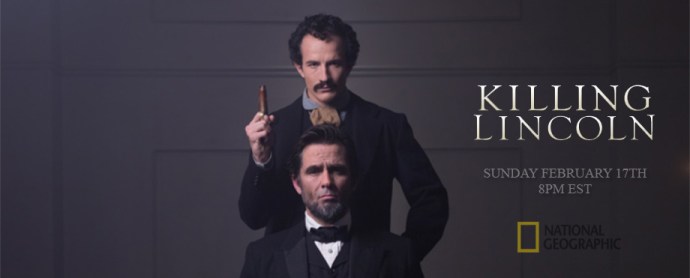
This post is just a friendly reminder to all the email followers of this blog that the much anticipated docudrama “Killing Lincoln” debuts tonight at 8pm EST on National Geographic Channel!  Make sure to watch it and post your thoughts and comments about it here or on Roger Norton’s Lincoln Discussion Symposium.

Killing Lincoln Header

While I’m waiting for the debut, I’m checking out the show’s official website which contains interviews with the cast, clips from the film, and production stills.  National Geographic has also created a phenomenal interactive timeline of Booth’s conspiracy and manhunt that you absolutely need to check out!

So remember, “Killing Lincoln” tonight at 8 pm EST on NatGeo.  Don’t miss it!

Categories: Uncategorized | Tags: , , , | 29 Comments

Enid News

There have been a few articles and opinion pieces published of late by the Enid, Oklahoma newspaper, Enid News & Eagle dealing with the subject of David E. George and the “Booth” mummy.  The initial article was entitled, “A deathbed claim” and was published on January 12.  It came on the anniversary of David E. George’s suicide by poison and did a good job of relating the tale.

David George's Grand Avenue Hotel Room

The hotel room in which David E. George committed suicide. Now part of the Garfield Furniture store.
Enid News & Eagle

In the end, the article relates escape theorist Nate Orlowek’s failed attempt to exhume John Wilkes Booth’s body from Green Mount Cemetery in the 1990’s to perform a DNA test, and his current quest to desecrate the grave of Edwin Booth to do the same.  While I do enjoy the Booth mummy story and find the mummy itself to be interesting, it is nothing more than an oddity.  It is on the same level as the Trigger Finger I posted about before, only the mummy has a much better back story.

I was very surprised by one quote from the article:

One of the most compelling facts, Orlowek said, is that George, as St. Helen, related to Bates details of a botched plan to kidnap Lincoln that would have been known by Booth, but which weren’t released from government records until 1935, after Bates’ death.

The kidnapping plot was far from a secret from the general public until 1935.  At the trial of the conspirators in 1865, the kidnapping plot was discussed in testimony relating to Samuel Arnold and Michael O’Laughlen in particular.  Anyone who read the daily newspaper accounts of the trial would have known about the “botched plan”.  Many books, penny dreadfuls, and newspapers of the time featured accounts of the conspirators’ attempt to abduct Lincoln and take him South.  To say that no one knew about it until 1935 is just untrue.

What’s more interesting to me is the fact that whenever articles like these come up, they never mention a big part of Bates’ book: that Andrew Johnson was behind the assassination plot.  John St. Helen told Bates that it was Johnson’s idea and command for Booth to kill Lincoln.  Escape theorists always seem to shy away from this point when discussing “Booth’s” escape and suicide.  Is it because they realize that, while the average person might entertain the idea the Booth could have escaped, they would never believe it if they knew the details of this purported theory?  It’s easier to find followers to a theory when its absurdity doesn’t seem to harm anyone.  To believe that Booth escaped based on Bates’ book is to also believe that Andrew Johnson was behind Lincoln’s death.  You cannot support the one without supporting the other.

Anyway, the initial article was followed up by a few opinion letters sent to the Enid News.  The first was a letter from a woman recounting her grandfather’s time in Enid when David E. George died.  The next one was an opinion piece, seemingly from the newspaper itself, supporting the idea of exhuming Edwin to test his DNA. The most recent one, is the first to denounce Bates’ book and the idea that Booth escaped his death at Garrett’s farm.  Here’s a funny excerpt from that one:

This entire mirage is based on a book written by Finis Bates. I have repeatedly proclaimed it is one of the worst pieces of literary rambling I have ever read. It provides no research and no documentation whatsoever. The main source of this meaningless book is the so-called words of a guy allegedly named John St. Helen. According to Bates, this exchange of information took place while he and St. Helen were sitting on a pile of rocks down in Texas.

I taught the Lincoln assassination for years, and I find that no honorable historian has recognized David George as John Wilkes Booth. According to Sunday’s article, Nate Orlowek said he is 85 percent sure the man shot in the Garrett Farm barn was not John Wilkes Booth. Wow! I am 100 percent certain that John Wilkes Booth died on the front porch of the Garrett Farm. I see no reason to glorify this wayward coward. Frankly, sports fans, it just ain’t so.

For those of you interesting in learning more about the facts and stories surrounding the John St. Helen/David E. George story, the absolutely best resource is the compendium of articles published by the Surratt Society entitled, The Body in the Barn: The Controversy Over the Death of John Wilkes Booth.

Body in the Barn

This publication contains articles by escape theorists and assassination researchers debating the death of John Wilkes Booth.  It is available for purchase from the Surratt House Museum Giftshop for $10.  To order a copy, call (301) 868-1121 or complete a mail order and send in a check.

In conclusion, the story of David E. George’s death in Enid, OK is an interesting, but fringe, aspect to the assassination story.  It will undoubtedly continue to be brought up and discussed, especially in the environs of Enid.  On its face it is an entertaining and harmless enough theory.  However, when it is used as a catalyst to desecrate the grave of Edwin Booth – a man whose whole life was marred by the actions of his misguided brother – or damage one of the few relics that remain above ground of the assassin, it is a very dangerous thing.

Orlowek states that, “No historian should fear the truth.” I wholeheartedly agree.  Historical truths are constantly being examined and re-evaluated.  Booth’s death at Garrett’s farm has been studied for almost 150 years by amatuer and experts alike.  While minor aspects may be up for debate and interpretation, the facts have been validated countless times.  John Wilkes Booth died on April 26, 1865 on the Garrett farm in Caroline County, VA.

“Body of Wilkes Booth Revival of Report that Assassin Effected Escape Desire For Investigation Transfer of Remains to the Family of Deceased Star Reporter Was Present Identification Was Complete – Opening of the Ordnance Chest That Contained the Corpse

By James Croggon, The Evening Star, January 5, 1907 [pt. 3, p. 1]

Since the assassination of President Lincoln by John Wilkes Booth at Ford’s Theater the night of April 14, 1865, there have been questions raised as to the identity of the assassin and of the body which, after interment for four years in the grounds of the Washington arsenal, in 1869 found a permanent resting place with his kindred in Greenmount cemetery Baltimore. And now, after nearly forty years, the story that Booth in some manner made his escape and under another name lived for many years is again revived. This time it appears in the form of a letter to Speaker Cannon asking a congressional investigation of the subject to determine whether the body of John D. Heley, who committed suicide at Enid, Okla., in 1903 is not the body of the assassin. The suggestion is made that if such is the case the body be placed on exhibition in a museum as an object lesson.

That this story has perhaps, no other foundation than that the party in question may have borne a striking resemblance to Booth and had woven an air of mystery around him by his reticence as to his antecedents is evident. From time to time such stories have been put forth, one from South America, another from Texas and still another from Georgia. Were they true, Booth resided in several far distant localities at the same time. It is said that in the Georgia case the people who associated with the party suspected as the assassin were so well satisfied that he (a school master) was the real Booth that to this day they repeat the assertion.

That Booth escaped from the theater after firing the shot and rode across the Navy Yard bridge, through Prince George and into Charles county, MD and later crossed the Potomac; that he was pursued and wounded during this attempt to capture him near Bowling Green, Va., are facts which cannot be controverted.

Identity of Assassin Mr. Lincoln was removed from the box in the theater a very short time after the shot had been fired to the Petersen house opposite, then 516 10th street, now known as the Lincoln Memorial Museum – and died there at an early hour in the morning, which fact was announced by the tolling of bells. The fact as to who the assassin was and the manner of his escape from the building and mounting a horse held waiting for him in the alley was soon learned and pursuit was given. It must be confessed that had it not been for the lack of horses by our police force until early in the morning his capture might have been effected within a few hours. Police headquarters was then in the square south of the theater and in less than an hour Maj. Richards and his men had secured information as to the direction taken by Booth. A request was made of the government for horses, but, as stated, several hours elapsed before they were furnished and other parties had obtained a start. That every exertion to capture the parties and hold them secure for trial was apparent in the movements and orders of the government officials and that prompt measures were taken for the confinement of such is seen in the order which reached Commodore Montgomery at the navy yard by 10 o’clock:
“If the authorities arrest the murderer of the President take him to the navy yard and place him on a monitor.”

The ironclads were the Montauk and the Saugus, then lying in the stream on which some of the workmen were employed, and they from April 18 to the 29th were used as prison ships.

Escaped Into Virginia It having been ascertained that Booth escaped into Virginia, Lieut. Col. Conger, with some of Baker’s force and a detachment of the 16th U. S. Cavalry, under the command of Lieut. E. P. Doherty, went in pursuit. He was tracked to Garrett’s farm near Port Royal, beyond the Rappahannock river. He then took refuge in a barn which was fired, and of the soldiers, Boston Corbett, taking aim at Booth, the ball pierced the latter’s neck. The party, with Booth in a wagon, started at once for Acquia creek to board a boat. Before reaching that point Booth died. Corbett’s shot passed through the spinal cord in his neck and the lower part of his body was paralyzed, but in the few hours he lived after receiving the wound he appeared conscious at times and was heard to say as he gazed on his hands – “Useless, useless.”

There were two or three others brought along by the party, and, with the body of Booth, came on the steamer from Acquia creek. It was shortly before 2 o’clock on the morning of April 27 that the members reached the navy yard, and the members of the party were transferred to the monitors. The prisoners were placed in confinement on a monitor and in the yard, and the body of Booth, wrapped in an army blanket, was placed on the Saugus.

That the news of the arrival of the body caused excitement is evident, and in the yard it was difficult for the many workmen to perform their tasks, and there were hundreds who endeavored from the wharf to secure a look at the body, while every one believed to possess information was held up.

Commodore Montgomery gave orders for the making of a box for the remains, and when it became known that such was the case there were men who expressed a wish to drive a nail in it.

Communication with the monitors was restricted to those bearing a pass signed by both Secretaries Stanton and Welles. Lieut Frank Munroe, with a guard of marines enforced the orders.

Surgeons Examine Body While Booth’s body reposed on the monitor men of Baker’s force, as well as cavalry, were about, and there were a few visitors. A girl who had known Booth well was taken aboard by one of Baker’s men, and on identifying him attempted to cut a lock of his hair, but was prevented. During the day Surg. Gen. Barnes, with one or two assistants, and Dr. J. F. May went aboard the monitor. The latter, having removed from the back of Booth’s neck during life a tumor, identified the body from the cut, as well as from his general knowledge. In the afternoon Gen. Barnes and others were seen around the body, and it was afterward learned that from the neck was taken a section or two of the vertebras with some of the spinal cord. This showed the course of Boston Corbett’s bullet, by which death was caused, and these now are among the anatomical specimens at the Army Medical Museum.

The government being satisfied with the identification of the body, its disposition claimed attention. It was left sewed up in the army blanket on the bench, and as Gen. Barnes and party departed some mysterious movements were observed. A report was prevalent in the yard and elsewhere that a vessel of war and the U. S. S. Wachusetts, then lying in the river, would take the body to sea and consign it to oblivion. There is no doubt that the story emanated from Gen. L. C. Baker’s force, as in his published history of his life such a disposition of the corpse is related and pictured. And although there were some movements calculated to bear out the story, The Star announced within a few days that the body had been buried at the arsenal.

It was about 2:30 o’clock when one of the small steamers of the quartermaster’s department moved up the Eastern branch and made fast to one of the monitors. Then a boat was rowed out from the yard and about the monitors and finally to the steamer. From the shore spectators were straining their eyes to decipher what was going on, and soon saw what had the appearance of a body carried to the steamer, and a few minutes later a similar looking object followed. The steamer immediately cast off and soon rounded Glesboro Point and steamed southward.

Proceeded to Arsenal The small boat in which were a naval officer, four sailors and two of Baker’s men pulled away about the same time and in anything but a direct course reached the arsenal front. There the party was landed on a wharf and a sentry was stationed to prevent intrusion. Some of Baker’s men and a War Department official were in consultation with Maj. J. G. Benton, the commandant, during the afternoon, some of the former remaining till after nightfall.

The old penitentiary building extending across 4½ street was then used by the ordnance department and it was determined that a grave be dug in one of the cells for the reception of the body. Two stalwart laborers with pick and shovel made the attempt, but in an hour or two reported the difficulty of the work and a new site was selected. It was in the old store room of the building, which, being paved only with brick, facilitated the digging of a grave. After nightfall the body was removed from the wharf, after being placed in an ordnance or musket box or case, and carried into the penitentiary inclosure to the place prepared and buried without ceremony. There were present a representative of the War Department, who took the key of the room when the door had been closed; Col. Benton, the commandant, some of Baker’s men and three or four of the arsenal workmen.

When in 1867 the central portion of the penitentiary was about to be razed the remains were exhumed and placed in the north end of No. 1 storehouse of the arsenal.

In February, 1869, as the administration of President Johnson was drawing to a close, Edwin Booth secured from him an order for the body that it might be interred in the family lot at Greenmount cemetery, Baltimore. That day a Star reporter was approached by Mr. R. F. Harvey of Harvey and Marr, undertakers, who remarked:
“Don’t ask any questions, but be at our place at 6 o’clock this evening, as one of my assistants, and you will get a good item.”

Promised to Be There “I’ll be there,” was the response, and as the hour struck the reporter passed through the office to the workroom on the alley and there joined the workmen.

Mr. W. R. Speare, then a boy, had just entered the service of the firm to learn the business. An hour or so before Mr. Edwin Booth and Mr. J. H. Weaver, a Baltimore undertaker, were there consulting with Mr. Harvey, and the latter told Mr. Speare to go to the avenue and hire a furniture wagon to go to the arsenal to get something and to meet them at the arsenal gate. Mr. Speare did so. Messrs. Weaver and Harvey going down in a carriage. They proceeded to the store house and workmen brought out the box. Then it dawned upon Mr. Speare’s mind that the fact that the undertaker’s wagon was not taken was to ward off suspicion. A receipt was given to an officer and in a little time the wagon with the corpse was in the alley from which Booth had rode four years before. The little company in the shop were in waiting and the rumble of wheels was hailed with the remark, “There they are,” simultaneously with Rich Harvey’s call: “Come, here, now!” as the wagon was backed to a stable.

The box was removed by the assistants, including the volunteer, and placed on trestles, as was also an ordinary coffin brought from the shop. The arms chest was quite light. When a lantern had been produced the scene was a weird, uncanny one. The box was somewhat decayed about the joints, but when with little difficulty the lid was removed the blanket with which the corpse had been covered showed but little evidence of decay.

Blanket Thrown Aside The blanket on being thrown aside revealed what remained of the body and clothing. The latter was in shreds from decay, and the body was almost denuded of flesh and skin, some of the bones being bare.

Mr. Weaver seemed anxious that the remains be identified and picked up the head, examining it carefully. Some blotches of flesh and skin adhered to the cheek and jawbones, and the fine suit of hair for which Booth was noted was still on the head. Except for the mildew and clamminess it was in fine order, and the remark was made by some who had known Booth that it was an instance of hair growing after death, for it was an inch or more longer than it had been his custom to wear. The head was resting on decayed shavings, and one of the party plucked what he thought to be a loose lock of hair, which afterward was found to be a shaving. The head was taken up by Mr. Weaver, who examined it with interest, and a dentist from Baltimore being called from the front office in which Edwin Booth was awaiting developments next examined it. After looking intently at the teeth, he said: “This is Wilkes Booth, for this is some of my work.”

Head Passed Around The head was passed from hand to hand by the others, and Messrs. Weaver and Harvey examined other portions of the body, or, rather, what remained of it. The boots were found, one with one leg missing and a slit converting it to a shoe; and it was recalled that some of the witnesses before the military commission had testified that Booth had had one of his boots so cut to relieve the pressure on the leg in which he had a broken bone.

Edwin Booth having secured the report of the dentist, as well as that of Messrs. Weaver and Harvey as to the identification, left with the dentist. The sides of the blanket in which were the remains were lifted gently to the coffin, a temporary affair, and in a few hours they were in Baltimore, where they were interred at Greenmount. Of the company who were present when the transfer was made from box to coffin only Mr. Speare and the writer survive.

This statement should be sufficient to dispel all remaining doubts. Booth was recognized at the time he fired the shot, traced to the place of his capture, was known personally by some of the captors, his body identified by several as it laid at the navy yard. And, though a mystery surrounded the disposition of the body – and the current rumor was that it was buried at sea – The Star, the Monday following, announced the place of burial; and when the body, thirty-seven years ago, was disinterred and delivered to the family, the identification was complete.”

Categories: Uncategorized | Tags: , , , | 7 Comments

New Section – Picture Galleries!

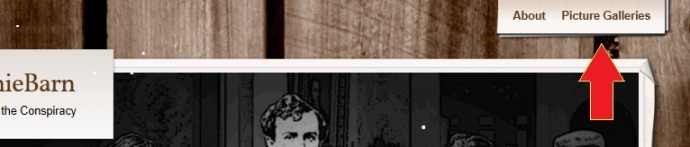
Some of you may have already noticed the new, fledging section to BoothieBarn.com: Picture Galleries! At the top of the page near the “About” tab is the link to this new feature:

Picture Galleries Menu

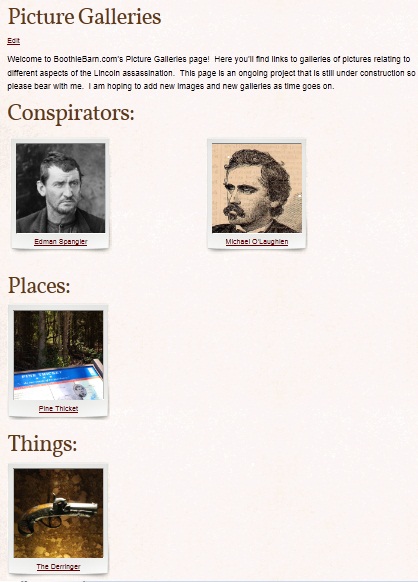
Clicking on the link will take you to the new Picture Galleries part of the website:

Picture Galleries Page

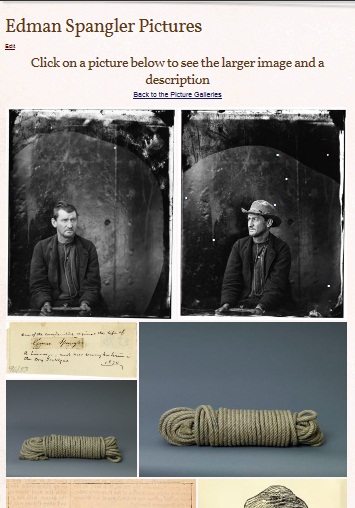
Here you will find different galleries of images relating to the Lincoln assassination field.  I’m hoping this section will become a great resource for those looking for images about the assassination. Currently, I only have four galleries up and running but I will be adding more as time goes on.  After you click a specific person, place or thing, you will be taken to its corresponding gallery:

Spangler Gallery Page

Clicking on a specific picture will open up a bigger version of the image, give you a short description of it, and source of the image if available.

As with many things in life, the Picture Galleries are works in progress.  My hope is for this to be a community project.  When I add a new gallery I will make a post announcing it.  My hope is that any of you with pictures of the same subject matter will contribute your personal pictures as well.  That way, together, we can create the best archive of Lincoln assassination imagery available.

So, I have four galleries up regarding Edman Spangler, Michael O’Laughlen, the Pine Thicket where Booth and Herold hid, and Booth’s Derringer.  If you have any more pictures relating to these subjects feel free to email them in .jpg format to me at boothiebarn (at) gmail (dot) com.  With any picture you send make sure to include a short description of it and its source.*

I’m excited about this new section to BoothieBarn and I hope it proves enjoyable and educational to you, too.

~ Dave Taylor

*By sending me your image, you are allowing your image to enter the public domain to be viewed and shared accordingly.  You understand that I may put your image on my website (BoothieBarn.com) for everyone to see and that I don’t have control over what happens to it after that.  I may not put up every picture sent to me, especially if it is low resolution or a duplicate.
Categories: Uncategorized | Tags: | 6 Comments

Associated Ads

The assassination of Abraham Lincoln manifested into countless front page headlines in newspapers across the country. From the details of the assassination, the hunt for Booth and his conspirators, and the trial that followed their arrests, nary a day went by between April 15th and July 7th, 1865, that aspects of Lincoln’s death were not “today’s top stories”. While significant and valuable text space was attributed to the big items of the assassination story, minor details had played out in the classified sections of various newspapers before the tragedy occurred. For a long time after the events as well, echos of the crime at Ford’s Theatre popped up in the most innocuous area of the newspaper – the advertisements. Here are a few examples of period advertisements associated with the death of Abraham Lincoln.

April 14th, 1865
Evening Star, Washington, D.C.
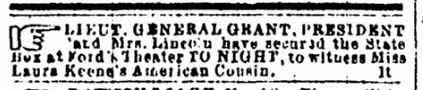
Advertisement for Lincoln at Our American Cousin 1 Advertisement for Lincoln at Our American Cousin 2

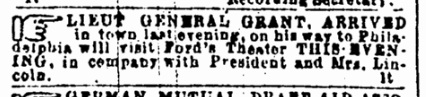
On page two of the Evening Star, the attendance of the Lincolns and General Grant is announced for that night’s performance of Our American Cousin at Ford’s Theatre.

November 25, 1864
New York Herald, New York City, NY
Booth Shakespeare Benefit 1864 advertisement

The New York Herald announces that night’s performance of the brother’s Booth in their benefit towards the construction of a statue of Shakespeare in Central Park.

August 18, 1869
Sun, Baltimore, MD
JJSellingTeas1869

After being released from prison for the final time, John Harrison Surratt, Jr. made his way down into South America for about six months. Upon his return to America he tried his hand at the mercantile life with his own business selling tobacco and other commodities like the “slightly damaged” tea above. This business did not last long and about 18 months later, John Surratt would be a teacher in Rockville, MD.

January 3, 1871
Richmond Whig, Richmond, VA
JJLecture1871

Attempting to cash in on his story and connection to John Wilkes Booth, John Surratt underwent a lecture tour. His lecturing was as short-lived as his mercantile business due to public outcry.

CHALLENGE
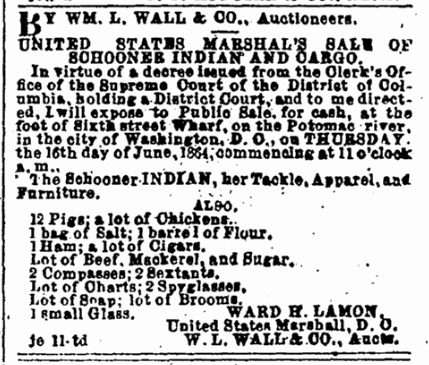
June 15, 1864
Evening Star, Washington, D.C.
SchoonerIndianAuction1864

Here’s a good challenge for you all. Can any of you tell me how this sale of a schooner by the federal government is involved in the story of Lincoln’s assassination. Show me your skills by replying in the comment section below.

References:
The Last Lincoln Conspirator by Andrew Jampoler

Categories: Uncategorized | Tags: , , , , | 7 Comments

The Port Royal Museum of American History

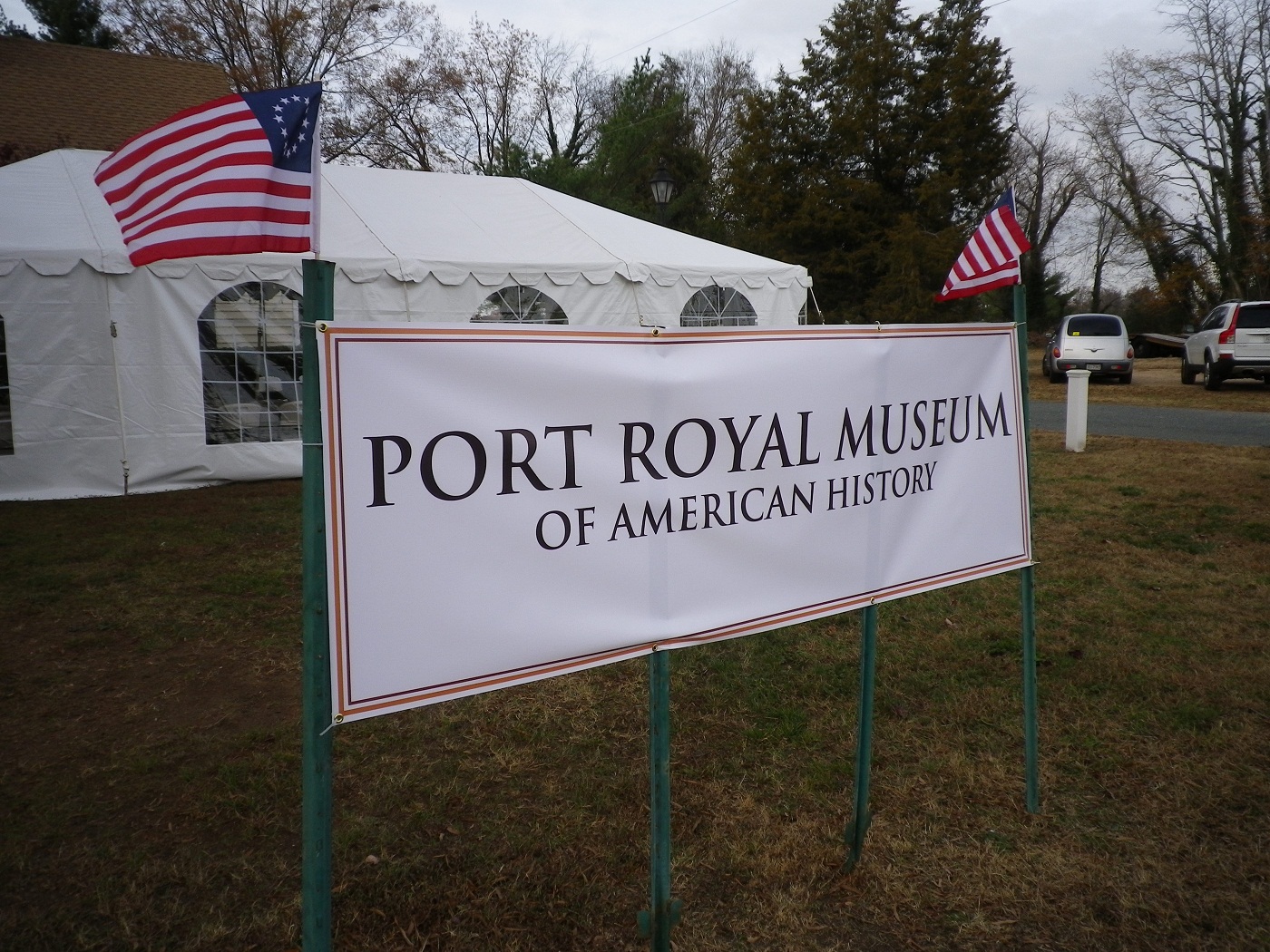
Today I attended a “soft opening” of a new museum in Caroline County, Virginia.  Called the Port Royal Museum of American History, it is located in the heart of Port Royal right off of Route 301 in the former Union First Market Bank building.

The museum contains the extensive collection of Herbert Collins, a former curator of the Smithsonian’s National Museum of American History, who I have highlighted on this blog before.  Herb’s collection of White House china takes up an entire room in the new museum as does his collection of toleware pieces.

The whole museum is decorated with many paintings by Sidney King who was the main painter for the National Parks Service for many years.  He created over 180 paintings for the nation’s parks with his most famous being his large Jamestown paintings.  Herb Collins was good friends with Sidney King and collected over 30 paintings by him.  Upon Mr. King’s death in 2002, Herb gave the eulogy at his funeral.

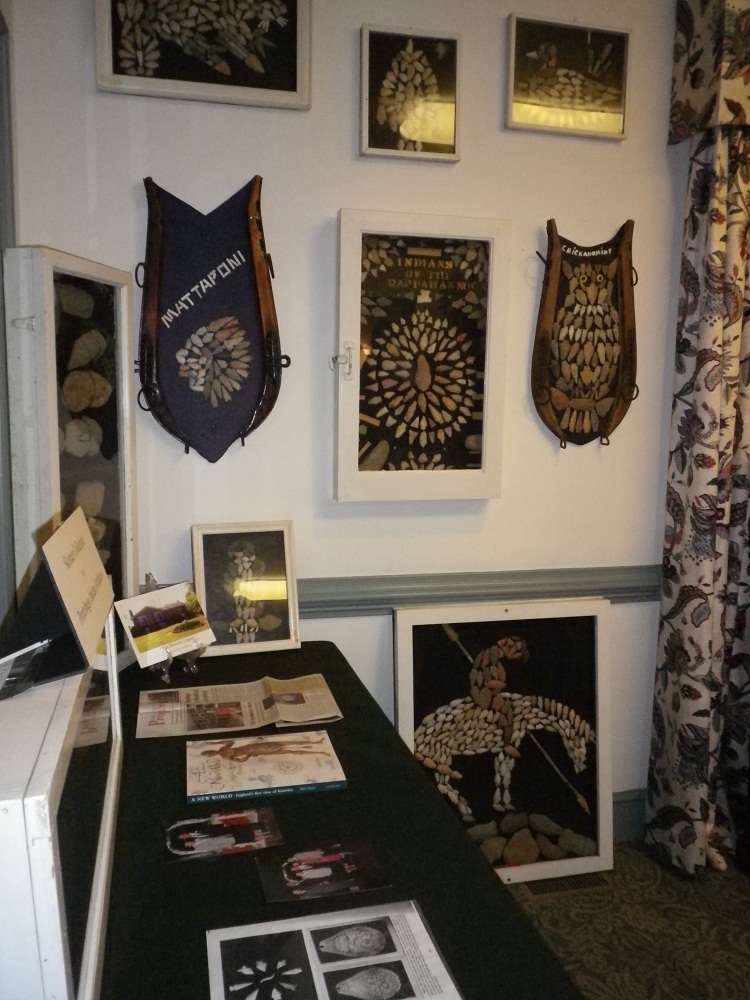
In addition to these many items from Herb’s collection, which he permanently donated to Historic Port Royal, the museum also holds a large number of Native American artifacts collected by the Skinner family of Caroline County.

The museum is not a large one, really only one main room and two small ones, but it’s collection is a wonderful mix of old and new.  Important to the history of Caroline County, the museum also has a few items relating to John Wilkes Booth and his death at the Garrett’s.

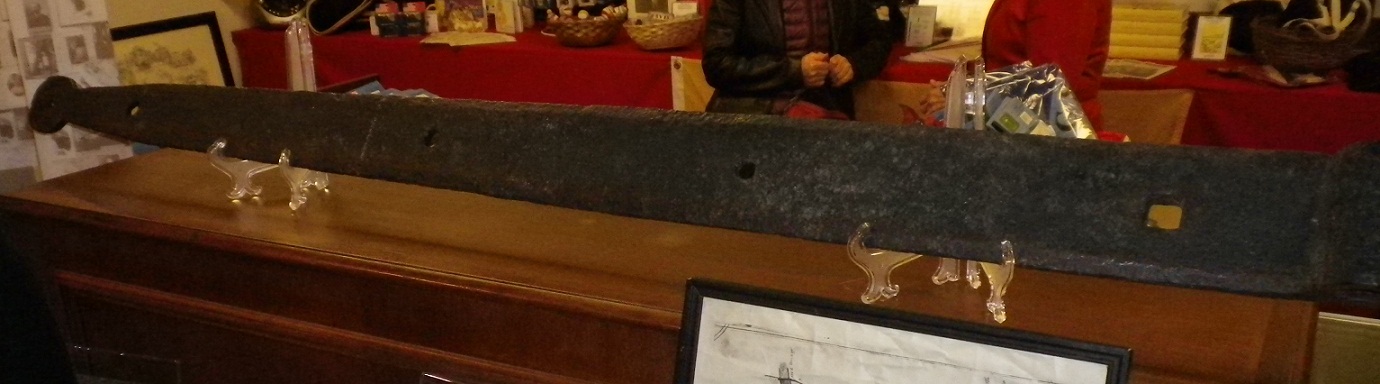
The most notable item is a hinge said to be from the barn in which Booth died.

The affidavit that accompanies it is from Sidney King and states the following:

“John Wilkes Booth, an actor and southern sympathizer, shot Lincoln while watching a play at the Ford Theater in Washington, D.C.  Twelve days later he was captured at the Richard H. Garrett estate barn near Bowling Green, VA.

In 1954, the National Park Historian Frances Welshun obtained permission to search the area where the barn once stood.  This large wrought iron hinge was found there.  The remaining hinges were never found.  This hinge was left in my charge and I present this hinge to the Caroline Historical Society as a loan, the 28th of Jan. 1990.

Sincerely,

Sidney E. King”

While there is no way to prove its authenticity, it’s still fun to hiope that this hinge could have come off the barn in which Booth died.

The Port Royal Museum of American History won’t have its true grand opening until the spring.  When it does open for good, I hope some of you in the area will stop by and show the museum your support.  Thanks to the generosity of Herb Collins and the selfless work by the members of Historic Port Royal, the history of Caroline County, Virginia, and the United States as a whole, will continue to be shared.

Categories: Uncategorized | Tags: , , , | 10 Comments

The Tauberts of St. Paul’s

Yesterday, I graciously received the cemetery records of St. Paul’s cemetery from Sandy Harper, church historian of Martini Lutheran Church.  Through the collaborative research of Sandy and the many others who particpate in this site, we have dissected the previously held belief that conspirator George Atzerodt was secretly buried in St. Paul’s cemetery.  Here are the facts we have managed to establish together:

1.  Gottlieb Taubert was the brother-in-law of Geroge Atzerodt.  He married George’s sister, Marion “Mary” Atzerodt.  Gottlieb was a member of Martini Lutheran Church and purchased a plot at St. Paul’s and buried two young children there prior to 1869.

2.  Victoria Atzerodt, George’s mother was buried in the Taubert plot in 1886.

Victoria Atzerodt’s death record from Martini Lutheran Church

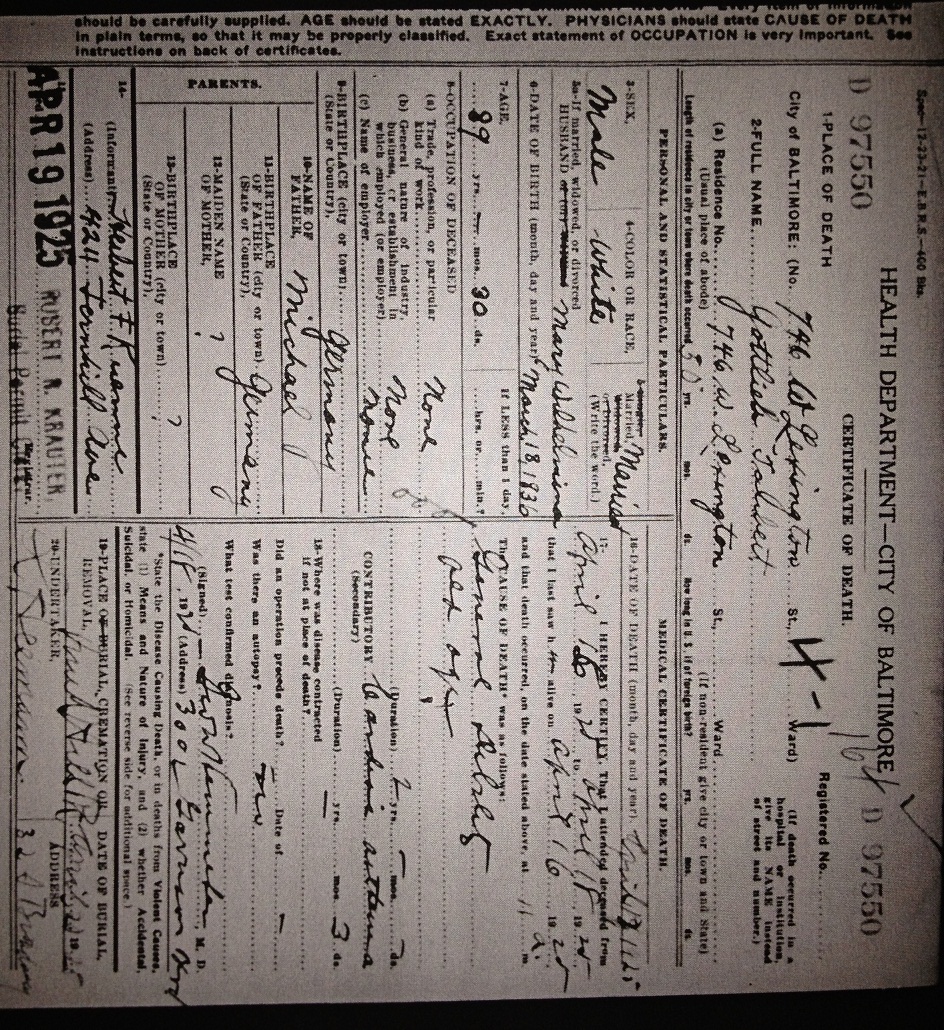
3.  Gottlieb Taubert died in 1925 and was buried in the lot.

Gottlieb Taubert’s death record from Martini Lutheran Church

Gottlieb Taubert’s death certificate

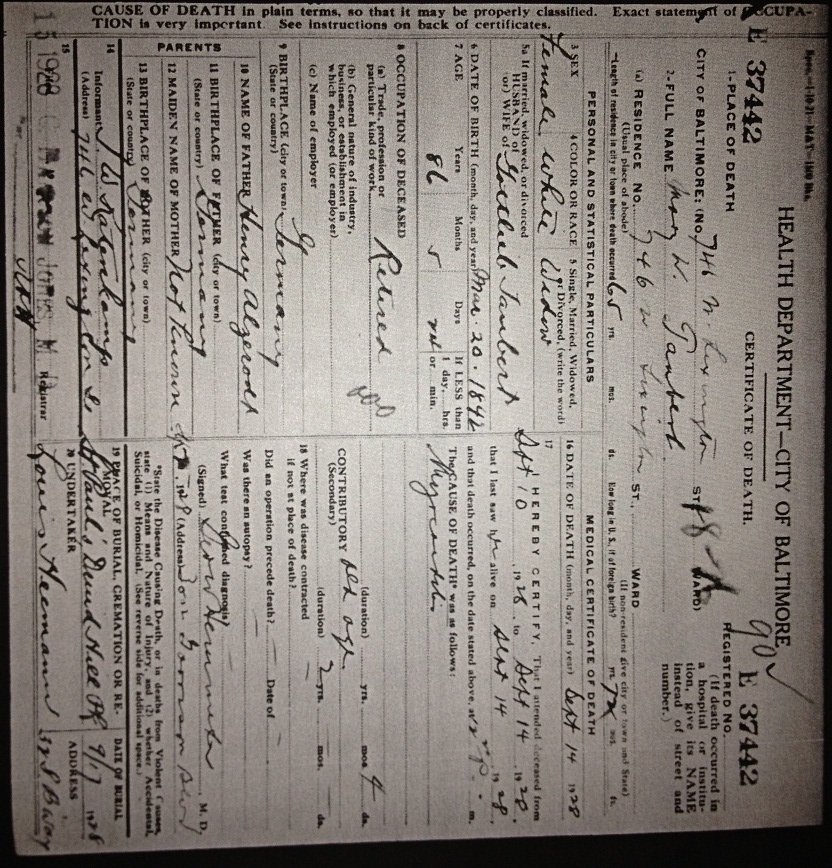
4.  Mary (Atzerodt) Taubert died in 1928 and was buried in the lot.

Mary (Atzerodt) Taubert death record from Martini Lutheran Church

Mary (Atzerodt) Taubert’s death certificate

The remaining burial in question was the one that occurred on February 19th, 1869.  It had been believed that George was secretly buried in the Taubert plot on this date.  However, through the insights of Ms. Harper and the church’s verifying records, we now know that the burial on this date was not of the 29 [30] year old brother-in-law of Gottlieb Taubert, but the 29 day old child of Gottlieb Taubert.  The dead child’s name was Freidrich Gottlieb Herman Taubert:

Friedrich Taubert’s death record from Martini Lutheran Church

From these records, I feel comfortable saying that there is no longer any credible evidence that George Atzerodt is buried in St. Paul’s Cemetery in Baltimore. While his mother and sister are buried there, the final resting place of George is still a mystery. The last records place him in a holding vault at Glenwood Cemetery. Hopefully continual research will be able to reveal his grave.

References:
We are all indebited to Sandy Harper for volunteering her knowledge and records about St. Paul’s.
Thank you to everyone who has participated in our conversations and added so many more details to George’s time at Glenwood.

Categories: Uncategorized | Tags: , , , , | 10 Comments

10,000 *Woot*

I’m doing a little happy dance today as this blog has just reached the 10,000th visitor mark.  While it is a relatively low number compared to the popularity of several Lincoln sites (Roger Norton’s Abraham Lincoln Research Site is approaching 15 MILLION visitors!), I’m still proud that this site has garnered as much attention as it has in its short, six month existence.  When I started, I was so excited when I got my first blog “follower” and when I started getting almost 20 views a day.  Now I’m ecstatic to have 40 followers and averaging 75 views a day! 

I’d like to thank you all for coming to this site, reading what I have written, and adding your wonderful comments.  I feel so fortunate to have the support of so many fantastic websites, organizations, and people. 

Well that seems like enough self-indulgence for one day.  Thank all 10,000 of you for visiting BoothieBarn.com!

Categories: Uncategorized | Tags: | 23 Comments

Herbert Ridgeway Collins – A Living Legend

As opposed to most of the people I talk about here on BoothieBarn, the subject of this post is a man with no historical connection to the Lincoln assassination.  Even further afield from my modus operandi, the subject of this post is also very much alive.  In fact, this week he celebrated his birthday.  My reasoning for departing from my ‘regularly scheduled assassination programming’ is to highlight a very unique man who has lived the most interesting life of anyone I have ever known.

To start this off, I have to admit that I only met Herb Collins for the first time less than a month ago.  Through our mutual friend and researcher Jim Garrett, I had the opportunity to make the acquaintance of Mr. Collins when a group of us went exploring in his home county of Caroline County, VA.  After this relatively brief introduction and tour of his historic house, I called him up and spent an entire Sunday attentively listening to this remarkable man.  This weekend, I will again be driving into Virginia to spend the day learning from him.  What follows is merely a small sampling of some of the unique experiences he has had and shared with me.  There may be some mistakes in my narrative, as I am going from memory.

Herbert Ridgeway Collins is a native born son of Caroline County, Virginia.  The house he grew up in, still owns, and has transformed into a personal museum is called Green Falls and was built in 1711.  It has been in the Collins family since the 1787 and is on the National Register of Historic Places.

Green Falls in Caroline County, VA

Herb has furnished the house with many beautiful antiques and he can give the origin of every single one.  From a mirror belonging to President James Madison to rare chairs with matching pairs in Mount Vernon, Green Falls is remarkable in its furnishings and history.  Some local historical societies schedule tours of his magnificent place, while Herb occasionally gives private tours to those he catches admiring the house from the road.

Herb Collins giving a tour of his beautiful Green Falls estate

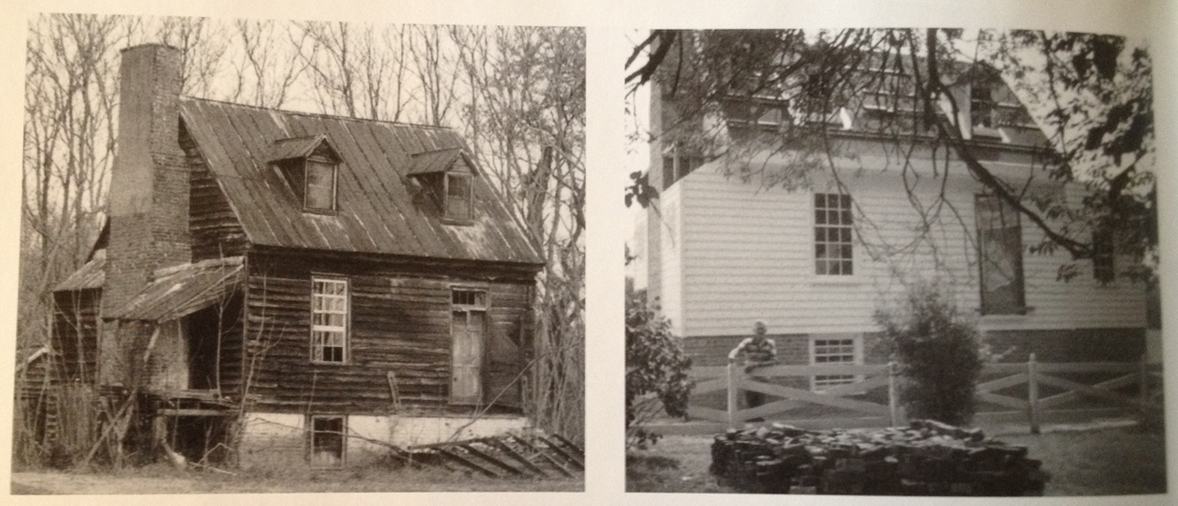
In addition to the main house, Herb also purchased a period plantation overseer’s house from a neighbor.  He had the structure physically moved a few miles down the road and placed next to his house.  He then painstakingly restored the very dilapidated building to its original glory and furnished it accordingly.  The most amazing part, however, is that this has been what Herb Collins has done, merely in his retirement.

As a young man, Herb was always interested in history.  When he joined the army as a young man, fate smiled on Herb.  A secretary of a Missouri congressman bought a house opposite of Herb’s Green Falls home.  Through her, Herb was able to secure a position assigned to the Pentagon.  Here he was responsible for preparing the top secret briefing charts for the Secretary of the Army.  He was also able to take a genealogy class through the National Archives that coincided with his love of history.  When he wasn’t on duty or in class, he was working on a book of his own family’s genealogy.  At the age of 22, he published it.  It would be the first of many books that he would write.  After six years in the army at the Pentagon, Herb was discharged.  The class he had taken in genealogy made him very desirable to three different institutions, the Library of Congress, the National Archives, and the Smithsonian.  In the end, Herb decided to join the Smithsonian where he became a junior researcher in the Smithsonian’s political history collection.  He eventually made his way to the top, retiring as the Executive of the American History Museum and division chief of the political history collection.  It is during this period that Herb Collins met, dined with, and acquired items from practically every President and First Lady from Harry Truman to George Bush, Sr.  Here are some of the stories, both long and short, that he told me about his time at the Smithsonian:

  • Herb recounted to me his first trip to meet Harry Truman.  The Smithsonian did not have a lot of items from Truman’s time as President.  Herb traveled to Truman’s home of Independence, Missouri and met with the former President and First Lady Bess Truman.  Herb’s genealogical education made him aware that he was distantly related to Bess Truman, and that both Bess and Harry Truman were related to families from Port Royal, VA (on a side note, Herb seems to know the genealogy of every old family in Virginia.  His memory of families and connections is uncanny).  According to Herb, Harry Truman was the kind of guy that enjoyed making a person feel uneasy.  Every sentence that Herb spoke, Harry Truman would battle a response right back to him, trying to throw him off.  When asked if he had any sports memorabilia to give the Smithsonian, Truman said he didn’t because he couldn’t see well to bat in baseball so they made him play umpire because you didn’t need to see to be umpire.  When Herb said he didn’t have anything from Truman in the Smithsonian, Truman just answered, “Well why don’t you get something?”  Eventually, Truman found that for everything he said, Herb was able to come up with an answer for him.  After that he stopped acting difficult and slapped Herb on the back and invited him to see some political cartoons he had framed out in the back office.  Truman enjoyed when people took punches at him like Herb had done and he had framed some of his favorite political cartoons that had mocked him when he was president.  Together Herb and Harry Truman laughed and joked about them, and Truman genially offered some of his items to Herb for the Smithsonian.
  • When President Dwight Eisenhower died, he wanted to be buried his complete uniform.  At the funeral home that was preparing the body, they found that they did not have a shirt or socks that matched his uniform.  The funeral home called the military history department of the Smithsonian and asked them if they had any extra matching shirts and socks that they could have to bury Eisenhower in.  As a matter of fact they did.  When Herb had left the army, he donated his uniforms to the Smithsonian for his period in history.  The shirt contained Herb’s laundry mark.  With his blessing, the Smithsonian sent over Herb’s old shirt and socks to the funeral home.  President Eisenhower was buried in Herb Collin’s issued shirt and socks.
  • Herb Collins became good friends with JFK’s secretary, Evelyn Lincoln.  Two books in his collection are autographed copies of hers with long messages of appreciation and friendship.  Evelyn Lincoln was married to a man named Harold Lincoln.  Herb was unaware that Harold’s nickname was ‘Abe’ Lincoln.  One day he received an invitation in the mail to attend a rally for Abe Lincoln, who was running for Congress.  He ignored the mailer.  Days after the event, Evelyn called Herb and asked him why he didn’t come to support her husband’s run for Congress.  Herb told her that he didn’t know Harold went by Abe, and that he thought “Abe Lincoln running for Congress” was just a joke.  The two had a good laugh about it.
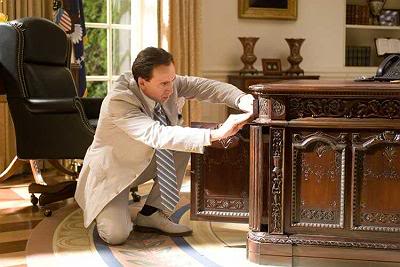
  • After JFK was killed, Jackie Kennedy and others toured the country trying to raise money for a JFK museum.  They traveled with exhibits about the late president to raise funds.  Herb wrote to Jackie informing her that the flag that flew over the Capitol on the day of the President’s funeral was hers.  She wrote him back thanking him for letting her know that.  One item that went traveling to raise money was the famous Resolute desk from the Oval Office.  Johnson didn’t want to use the desk as he found it too big.  Those of you who have seen the movie, National Treasure 2: Book of Secrets, will know that the Resolute desk plays an important part of Nicholas Cage’s clue finding.  In the movie he makes his way into Oval Office and, by pulling out drawers to the right length, unlocks a secret compartment in the desk: While you may all be shocked to learn this, there is no hidden compartment in the Resolute desk.  Herb Collins has taken the Resolute desk apart, “a dozen times”.  He told me it all comes apart fairly easily and he helped pack it up when it went on tour to raise money for the JFK museum.  When it was done touring, Herb took control of it and placed it in the collection of the Smithsonian.  It stayed, on display in the Smithsonian until Carter asked for it back.  According to Herb, he was out to lunch one Wednesday and when he returned to the Smithsonian he had a message from Jimmy Carter asking for the Resolute desk to be placed back into the Oval Office by Friday, as he wanted to show it off to some foreign delegates.  Herb said he took it apart, had it transported over to the White House, and reassembled it for Carter in the Oval Office right on time.
  • Herb had the chance to meet many Presidents but he spent more time with the First Ladies.  He stated that his favorite first lady was Pat Nixon.  According to him she was the most down to earth.  In conversations with Herb, she never said, “The President” or “Mr. Nixon”, it was always just, “Dick” and she invited Herb to refer to him as the same.
  • Herb has written over 25 books.  During his time at the Smithsonian he created almost encyclopedic volumes about political flags and lanterns, as well as writing books about the transportation methods of the presidents.  He was one of the first to call attention to a fall that Mary Todd Lincoln suffered in a carriage accident that caused her to suffer recurring dizzy spells that may have exasperated her mental decline.
  • Herb has a credit in the Lincoln assassination book by Dorothy and Phillip Kunhardt entitled , Twenty Days.  He recalled when they came to the Smithsonian and wanted to photograph the conspirators’ hoods and jail keys.  At one point, they wanted a picture of what was thought to be Mary Surratt’s hood.  Looking around, Herb couldn’t find a female bust to place the hood over.  In a pinch he saw a bust of Henry Clay, Kentucky’s noted politician who served multiple times as Speaker of the House and was John Quincy Adams’ Secretary of State.  According to Herb, Henry Clay had a small, feminine enough looking head to pass as Mary Surratt’s.  So, Herb slipped the hood onto Henry Clay’s bust and the Kunhardts photographed it.  Sadly, that particular shot did not make it into their Twenty Days book.

There were other stories and insights Herb shared with me from his time with the Smithsonian, but these are the main ones I can remember for now.  Herb is an unending fountain of information and I am looking forward to the many conversations I will have with him in the future.

UPDATE:

Yesterday I once again spent the day with Herb.  We visited the Caroline County library in Bowling Green, VA where Herb has his Herbert Collins Room.  The room holds his massive collection of books about genealogy, Virginia history, and the history of Caroline county.  It is a private research room accessible by appointment only.  After that Herb and I traveled to nearby Essex County to visit an antique store in Tappahannock that he regularly purchases items from.  Herb’s only purchase for the day was a copper kettle that he said would match one he already had at Green Falls.  While at the antique store, Herb openly talked with other patrons and helped them pick out pieces.  Through these conversations with strangers, I met the president of the Restore Port Tobacco organization.  He was pleasantly surprised that I knew about the Chimney House in Port Tobacco, behind which George Atzerodt’s carriage shop was purported to be. Apparently the Chimney House is on the market now.  After this we traveled back to Herb’s home and subsequently ended our day together.  The following is some of the pictures I took yesterday:


The Herbert Collins room at the Caroline County Library

Herb Collins researching in his room

The left image is what the Overseer’s house (mentioned above) looked like before it was moved to Green Falls and restored. The right image is what the house looked like while renovations were underway. The house is a sight to see today.


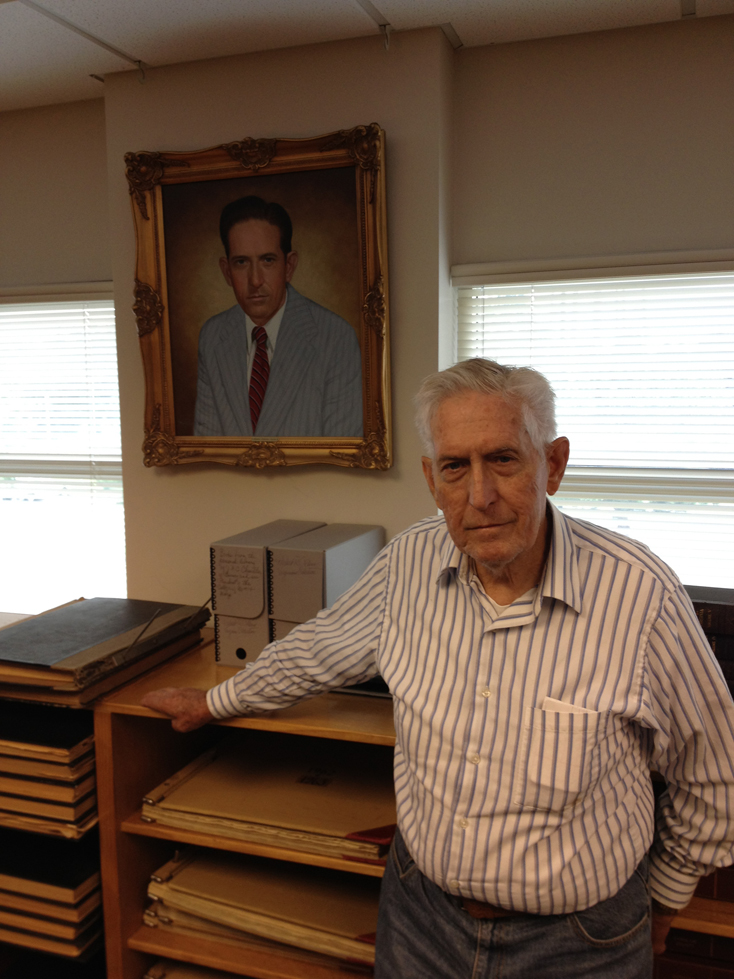
Herbert Ridgeway Collins and his portrait 

Categories: Uncategorized | Tags: , , | 26 Comments

Blog at WordPress.com.