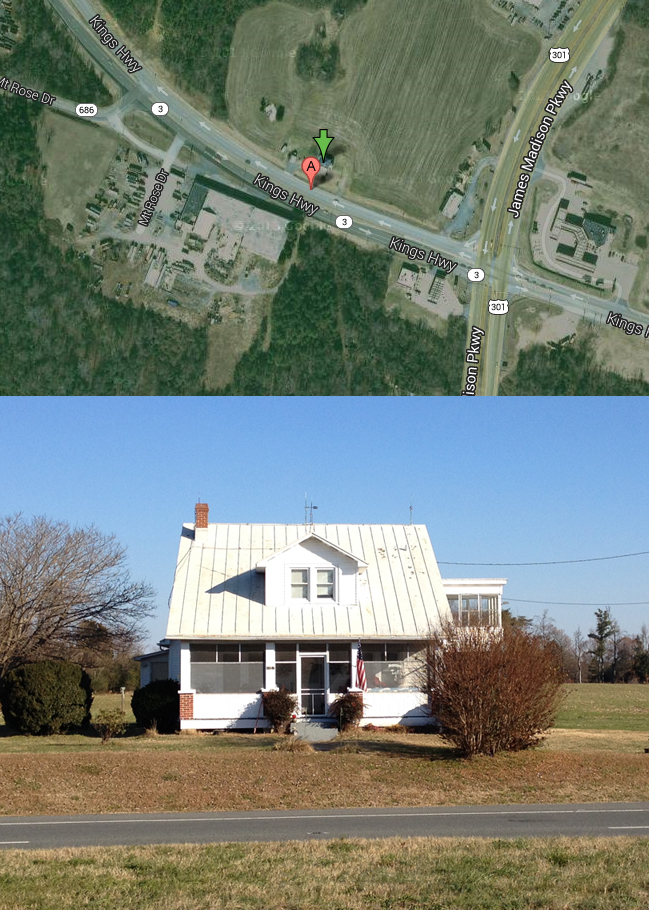
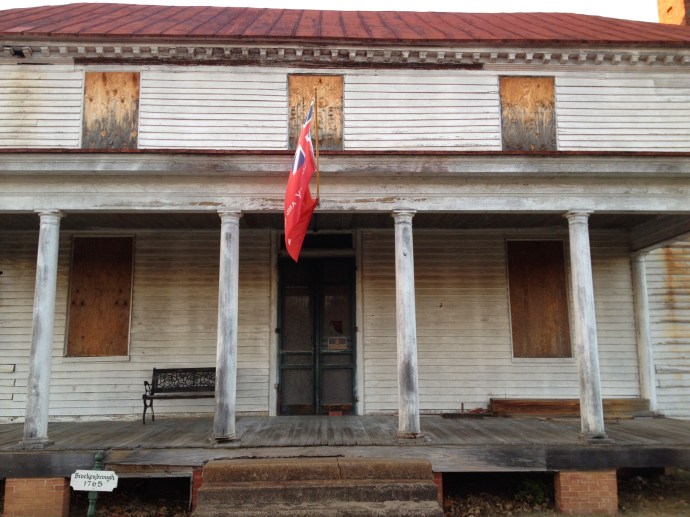
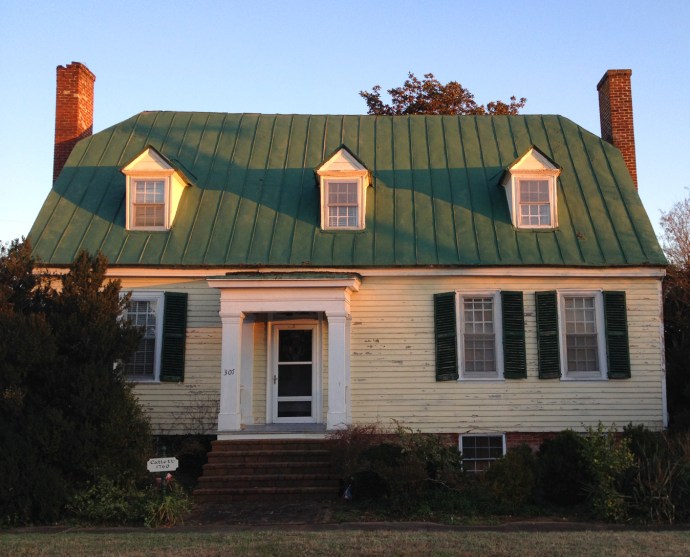
Posts Tagged With: Garretts

John Wilkes Booth’s “Mysterious Beauty”

“Some Photographs of Females”

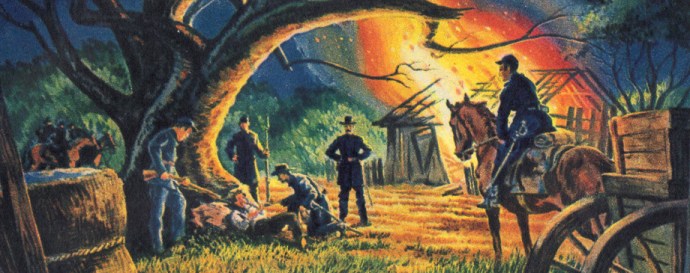
After John Wilkes Booth was shot and pulled from the Garretts’ burning tobacco barn, his body was subjected to a search. While the assassin of President Lincoln lay paralyzed and dying on the front porch of the Garrett farmhouse, the detectives rifled through his pockets, removing pieces of evidence. The items the detectives discovered worked to confirm his identity (which was never really in question), and give them the evidence they needed to prove back in Washington that Booth had, indeed, been taken. With reward money on their minds, such proof was of the utmost importance. Detective Everton Conger was so anxious to spread the news that Booth had been captured that he departed with some of Booth’s possessions before Booth had even died. One of the objects Conger brought back to Washington with him was Booth’s diary which contained the photographs of five ladies.

Historians Richard Sloan and Art Loux view the five photographs found on John Wilkes Booth's body when he was killed. The man in the middle is former Ford's Theatre curator Michael Harmon.

Historians Richard Sloan and Art Loux view the five photographs found on John Wilkes Booth’s body when he was killed. The man in the middle is former Ford’s Theatre curator Michael Harmon.

These images, like the diary itself, were turned over to the War Department where they languished for quite some time. Booth’s collection of ladies were deemed unimportant to the official investigation and were not used at the trial of the conspirators or at the 1867 trial of John Surratt. They eventually were boxed up along with some other evidence used at the trial and Booth’s other possessions. They were stored with the War Department files in the Judge Advocate General’s Office.

It was quite some time before the existence of these photographs became known to the general public. When the text of John Wilkes Booth’s diary was published for the first time in 1867, the affidavit attached to it from Secretary of War Edwin Stanton stated that only the quoted entries and “some photographs of females” comprised the contents of the diary. There appears to have been no follow up or inquiry about who these females were or why Booth had their photographs in his diary. It wasn’t until several years later, when the occasional newspaper reporter convinced the Judge Advocate General’s Office to let them take a peak at the relics of the assassination, that any discussion of the photographs began.

An inquisitive reporter with the Cleveland Herald visited the relics in the JAG office in 1884. Entranced with the more vivid relics such as Booth’s derringer and pieces of Lincoln’s skull, the reporter only made a passing mention of the ladies in Booth’s diary. He stated, “among the articles found in the ‘pocket’ of the book are five photographs of young women, presumably actresses.” It appears that the identities of the ladies in Booth’s pocket had not been researched much prior to this, seeing as this reporter was given no information about who they were.

Visitors to see the relics were relatively scarce and those who were able to view the artifacts could only do so with advance permission from either the Secretary of War or Judge Advocate General. The artifacts were viewed by “about three or four people a year,” considerably slowing down the process of identifying the ladies. It was essentially left to the few clerks who acted as custodians over the relics to attempt to identify them, which they did with varying degrees of success.

Effie Germon and Lucy Hale

It appears that the identity of two of the ladies contained in Booth’s diary were identified a bit earlier than the rest. A reporter who was given access to view the relics in 1891 was correctly told that two of the images in the set were of actress Effie Germon and of “a daughter of one distinguished Senator from a New England state.”

On the night of Lincoln’s assassination, Effie Germon was performing the lead of Aladdin at Grover’s Theatre in D.C. In the audience was young Tad Lincoln, who heard the news of his father’s assassination when the play at Grover’s was halted to announce the tragedy. The 1891 reporter was kind in describing the image Booth possessed of this easily recognizable star of the stage, “Miss Effie Germon, once leading lady at Wallack’s, is one. It is a fair young face, strikingly beautiful.” However the reporter is not so kind when he relates Ms. Germon’s current state, “Miss Germon, if living, is now an old woman, and they say she is fat.”

Lucy Hale was the daughter of U.S. Senator John Parker Hale of New Hampshire. She was also John Wilkes Booth’s secret fiancée. The main evidence for believing that Booth and Lucy were actually in love is not only the collections of the Booth family who supported the idea of an engagement but also from Booth’s own words. Some of Booth’s final thoughts were of Lucy and this is demonstrated in his diary.

It is largely forgotten or ignored that the very first words written in Booth’s diary are “Ti Amo.” “Ti Amo” is Italian but seems to be an understandable misspelling of the Spanish “Te Amo.” Regardless, both translate into English as “I love you”. This announcement of love, coded a bit, seems out of place in Booth’s diary. Before starting his manifesto about why he shot the President, John Wilkes Booth was compelled to write a brief note of love to someone. It seems likely that this message was meant for Lucy Hale.

Ti Amo

Prior to the assassination, Lucy’s father, Senator Hale, had been appointed as a minister to Spain.  All of the Hales were in earnest to learn some Spanish before heading abroad with their father. Lucy vowed to John Wilkes that she would return in a year, with or without her father’s permission, in order to marry him. Lucy lived in the same Washington hotel as Booth, and he would have almost assuredly witnessed his fiancée practicing Spanish.

It may be a romantic idea, but it’s possible that the Ti Amo in Booth’s diary was his final message to the woman he loved. It was a message Lucy would know was meant for her and for no one else. It was a way for him to announce his love for her, for the last time, without endangering her further.

What would have become of Booth and Lucy’s relationship had he not assassinated the President is unknown. Perhaps it was always doomed to fail due to Booth’s womanizing as evidenced by his diary’s collection of other beautiful women. Still, the presence of Lucy’s image and the coded “I love you” message in Booth’s diary could easily demonstrate that, in his final days on the run, John Wilkes Booth thought of, and loved, Lucy.

Mistakes and Misidentifications

Though it was correctly concluded that Effie Germon and Lucy Hale were among those represented in Booth’s photographs, this did not mean that they were always identified correctly. In 1891, a reporter was shown the relics by a clerk of the Judge Advocate General’s office named Mr. Saxton. You can read the reporter’s article about the visit by clicking this line. Unfortunately, Mr. Saxton appears to have been all mixed up when it came to which image was of which woman.  In addition, he provided incorrect identifications for the rest of the images and only seemed to show the reporter four out of the five images.

Mr. Saxton’s mistakes and misidentifications, which demonstrate the JAG office’s lingering uncertainty about who these women were, are as follows:

Actress Alice Grey was mistaken for fellow actress Effie Germon:

Lucy Hale was misidentified as a singer named Caroline Richings:

Actress Helen Western was mistaken for actress Olive Logan by the reporter before Mr. Saxton misidentified her as Lucy Hale:

And actress Effie Germon was mistaken for another actress named Rose Eytinge:

While we may laugh today about the numerous mistakes in Mr. Saxton’s 1891 identifications, it does demonstrate that there was somewhat of an attempt by someone in the JAG office to learn the identities of these women. This leads us to the last image in the set photographs and the case of John Wilkes Booth’s “Mysterious Beauty”.

“The Mysterious Beauty”
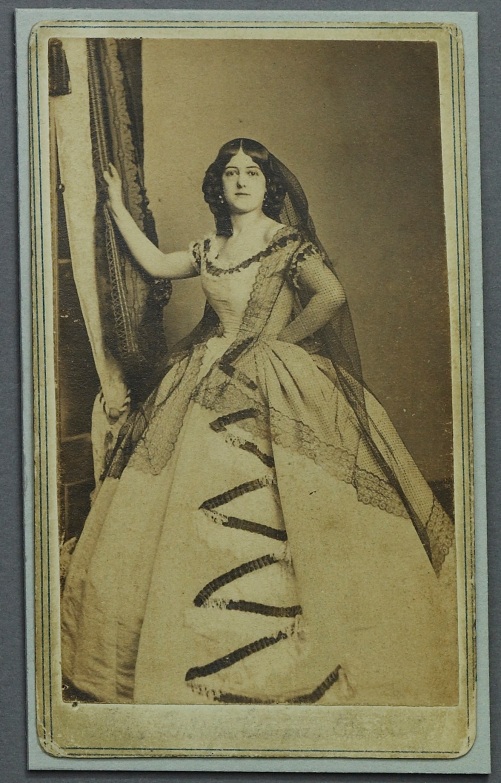
Fannie Brown CDV

We know that, eventually, the first four vignetted photographs were correctly identified as Alice Grey, Effie Germon, Helen Western and Lucy Hale. It is likely that the clerks of the JAG office consulted a few more visitors who possessed far better knowledge about the theatrical leading ladies of the 1860’s and that they helped fix the mistakes. However, even after four out of the five women were identified, the identity of the woman in the last image was still uncertain. This woman, her image different from the rest in that it showed her full body rather than just a vignette of her face, was still unknown. A more active search was undertaken to learn who she was.

As has been demonstrated by other images of artifacts in possession of the Judge Advocate General’s office (this one for example), the items relating to Lincoln’s assassination were not always treated with the same degree of preservation or care as they receive today. Some of the smaller pieces found on Booth’s body mysteriously disappeared over the years, such as a small horseshoe charm, a diamond stick pin, and a Catholic medallion. In addition to these losses, the clerks at the JAG office even burned some of the clothing collected as evidence when moths began to eat away at it. Modern museum curators would cringe at the way in which these artifacts were locked up in a box with no thought of temperature or humidity.

It is therefore unsurprising that the images of Booth’s ladies would also be subjected to neglect or ignorant mistreatment. Such was the case when one of the custodians of the artifacts decided he really wanted to know the identity of the woman in the standing photo. Until she was recognized, some unnamed clerk nicknamed her “The Mysterious Beauty” and went so far as to write that moniker on the bottom of the original image itself.
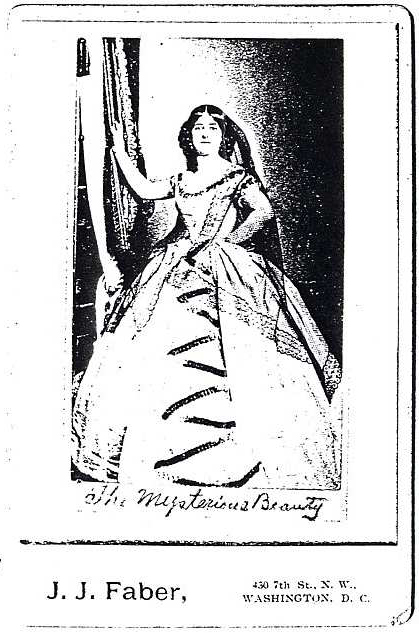
The Mysterious Beauty Cabinet card

One must remember that the entire collection of assassination related artifacts stored by the Judge Advocate General’s office was still considered to be official evidence and property of the U.S. government. In the years after the assassination, several organizations had tried, and failed, to gain ownership of the artifacts. There were even efforts by various Judge Advocate Generals to rid themselves of the pesky items that garnered such macabre interest. The items were almost transferred to the Smithsonian before the Judge Advocate General’s office declared that even if they were transferred to the Smithsonian, the government would still own them and the Smithsonian essentially couldn’t do anything with them other than store them. After that, the Smithsonian was no longer interested.

With this in mind, it is amazing to picture a clerk of the Judge Advocate General’s office causally taking this CDV, a piece of government owned evidence that even the Smithsonian couldn’t be trusted with, out of the JAG office and into the Washington streets. The clerk walked to the nearby photography studio of J.J. Faber and had the photographer duplicate the image with “The Mysterious Beauty” inscription onto larger format images known as cabinet cards. A photocopy of one of the cabinet cards is pictured above. How many copies were made of this image is unknown, but it is likely that the unnamed clerk made enough copies to pass around. The original, defaced, image was subsequently returned to its governmental prison.

How long it took to correctly identify this beauty after her image was duplicated and passed around, or who eventually made the correct identification, is not known, but eventually the unnamed clerk’s effort paid off. On the back of the photocopied cabinet card pictured above (which was sent to author Francis Wilson in the 1910’s – 1920’s as he was working on his book about John Wilkes Booth), the following statement was recorded:

“The original of this picture was found, after his death, in the diary of John Wilkes Booth, the assassin of President Lincoln. It was not known for a long time who the subject of the picture was and the custodian of the ‘Booth diary’ and other articles connected with the great tragedy, stored in the archives of the War Department, had some copies made of it for the purpose of identification. It was finally recognized as being the picture of Fanny Brow, an actress who died many years ago. Since that time the words “The Mysterious Beauty” have been effaced from the original in the War Department.

War Department
Office of the Judge Advocate General

John P. Simonton
Custodian”

Indeed, this final image was determined to be that of actress Fanny Brown.
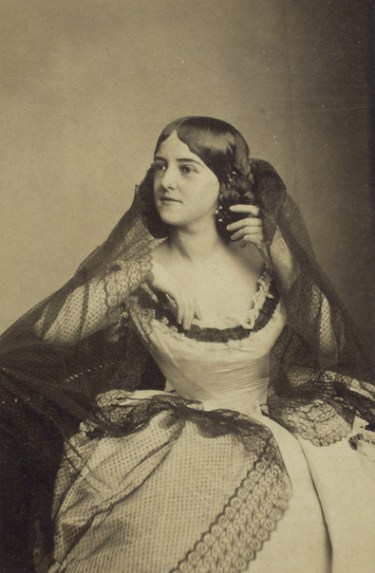
Revealed at last, John Wilkes Booth's "Mysterious Beauty" was Fanny Brown.

Revealed at last, John Wilkes Booth’s “Mysterious Beauty” was Fanny Brown.

Fanny Brown had known John Wilkes Booth since at least 1863 when they performed together throughout cities in New England. Gossip of the day even hinted at a romantic relationship between the pair, which would not be surprising given Booth’s established success in wooing women:

JWB and Fanny Brown Gossip

As clerk John Simonton* states, after Fanny Brown’s identity was established, the words “The Mysterious Beauty” were erased from the original image. However, as any museum curator will tell you, alterations to an artifact can never truly be erased. A close inspection of the bottom of Fanny Brown’s CDV shows the faint outline of the words that were once carelessly scribbled onto her gift to John Wilkes Booth:

The-Mysterious-Beauty-anima

A Fitting Repose

Eventually Alice Grey, Effie Germon, Helen Western, Lucy Hale, and Fanny Brown escaped their prison in the Judge Advocate General’s office. On February 5, 1940, the artifact evidence held by the JAG was officially transferred to the Lincoln Museum, also known as Ford’s Theatre. In the years since then, the ladies have spent some on display but still spent more time in a couple of National Park Service storage facilities. Today, however, all five of these beauties are on display in the assassination section of the Ford’s Theatre Museum.
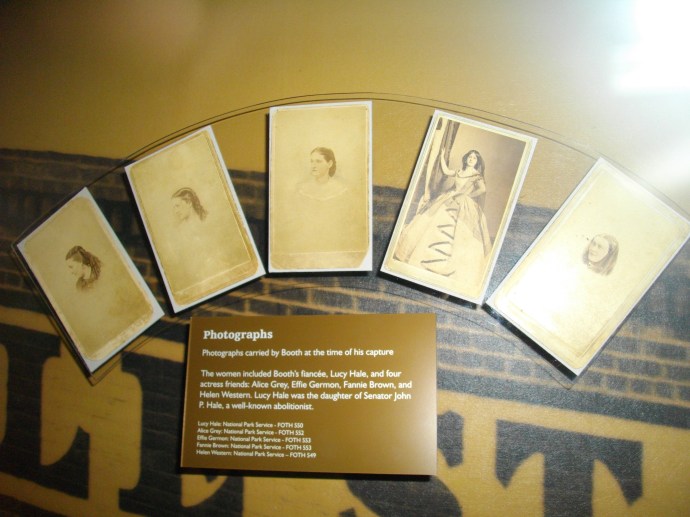
Booth's Ladies

After so many years of being confined to a box, ignored, misidentified, and forgotten, it’s great to see these ladies on display so prominently at Ford’s Theatre. Their innocent beauty is a much needed contrast to the dark tools of the assassination that surround them. These images of Lucy Hale, Alice Grey, Effie Germon, Fanny Brown, and Helen Western perfectly represent the beautiful life that John Wilkes Booth mysteriously threw away when he committed his violent act of hate on April 14, 1865.

References:
Denver Rocky Mountain News, January 13, 1884 (republishes the article from the Cleveland Herald)
“Relics of a Tragedy”, The World, April, 26, 1891
The Richard and Kellie Gutman Collection
The Art Loux Archive
Ford’s Theatre Museum
Library of Congress
New York Public Library

*John Paul Simonton, the clerk who wrote the note on the back of the cabinet card explaining the story of “The Mysterious Beauty” is occasionally referenced by those who believe John Wilkes Booth was not killed on April 26, 1865. Simonton worked as a law clerk in the JAG office from 1877 – 1920. After his retirement, he wrote an affidavit in 1925 stating, in part, “I studied the evidence in this case and examined all the exhibits as an expert and found no definite proof that John Wilkes Booth was ever captured. The fact that John Wilkes Booth was captured could not be established before any court in the United States on the evidence submitted at the time of the trial and now on file at the War Department.” Conspiracy theorists use this as “proof” that Booth escaped. Interestingly, they largely ignore an 1898 letter from Simonton to Finis Bates (of the Booth mummy story) in which Simonton stated, “While I have not what may be styled direct or positive evidence that the man killed was Booth, I have such circumstantial evidence as would seem to prove the fact beyond doubt.” In addition, Simonton clearly states on the back of this cabinet card that “this picture was found, after his death, in the diary of John Wilkes Booth,” solidifying that it was his firm opinion that it was John Wilkes Booth who was killed. When it comes to his 1925 statement, Simonton is very clearly pointing out the fact of Booth’s death was not definitely proven at the trial of the conspirators and in this he would be correct. The object of the trial of the conspirators was not to conclusively prove that Booth was dead, it was was to try the conspirators for their involvement in Lincoln’s death. The files and evidence of the conspiracy trial do not definitely or directly prove Booth’s death as this was not the objective of the trial. However, evidence from sources outside the conspiracy trial (i.e. autopsy reports, the numerous identification of Booth’s body by his friends and family, official statements from David Herold, the Garrett family, the troopers that captured him, etc.) along with the circumstantial evidence presented at the conspiracy trial (i.e. Booth’s possessions taken from him after he was shot) do conclusively prove that Booth was killed.

Categories: History | Tags: , , , , , , , , | 11 Comments

The Escape of John Wilkes Booth

I found this free interactive mapping program online today and decided to see if I could construct a nice little map of John Wilkes Booth’s escape route. Unfortunately, this particular map will not embed straight into my site, but you can click the image below to view it.

The Escape of John Wilkes Booth map image

Categories: History | Tags: , , , , , , | 13 Comments

BoothieBarn Live on Fox 5!

This morning at 7:30 am EST, I was interviewed along with Tim Morgan, the Chief of Tourism and Special Events for Charles County, MD, about the escape and death of John Wilkes Booth on Fox 5 in D.C. It was my first time on live television and definitely an exciting experience for me. Here’s a capture of the interview:

UPDATE: Fox 5 has put up a much better version of the interview on their website.  Watch it here: http://www.myfoxdc.com/clip/11429378/talking-john-wilkes-booth39s-escape-with-tim-morgan-and-dave-taylor

Admittedly, I made a couple slip ups during the interview. I caught myself after accidentally saying that Dr. Mudd broke John Wilkes Booth’s leg rather than setting Booth’s broken leg. I also gave the wrong weekend for the upcoming Symposium at Tudor Hall. That symposium is taking place on May 9th and you should all sign up for it today!

Well, I’m off to Port Royal now. At 2:00 pm we are having an unveiling ceremony at the Port Royal Museum of American History. We will be unveiling the new highway marker that has been placed near the site of John Wilkes Booth’s death, 150 years ago today. Keep an eye on my Twitter for details.

Categories: Uncategorized | Tags: , , , , , , , , | 9 Comments

Calendar: April 2015

This month will mark the 150th anniversary of the assassination of Abraham Lincoln.  This milestone will be accompanied by MANY events, exhibits, and talks.  I, for one, plan to be very busy during the next few weeks.  Below is just a sampling of some of the more notable Lincoln assassination events that are planned for this historic month.  Take a look at the events below and be sure to visit the Calendar section of this site for a full list of events.

April 2nd:

A Fiendish Assassination” opens at the Abraham Lincoln Presidential Library and Museum in Springfield, Illinois

  • In addition to their, “Undying Words” exhibit, the ALPLM in Springfield will debut a new exhibit on the assassination featuring items never before seen by the general public.  The exhibit runs until mid-July. For more information, click here.

April 7th:

Fortunes Fool tiny

Author Terry Alford will give talk on his book, Fortune’s Fool: The Life of John Wilkes Booth, at the National Archives in Washington, D.C.

  • As part of the Archives’ “Noon Book Lectures” series, Dr. Alford will discuss his biography of the assassin.  For more information and to make your free reservation for the event, click here.

April 9th:

The Mystery of Dr. Mudd & John Wilkes Booth” presented by Tom Mudd, a descendant of Dr. Mudd, in East Lansing, Michigan

  • While I don’t always agree with Tom Mudd regarding his descendant’s innocence, it is always a treat to hear him talk about his famous ancestor.  For more information, click here.

April 12th:

Tudor Hall Speech Dave Taylor

“A House Divided: Edwin and John Wilkes Booth” presented by Dave Taylor (Hey, that’s me!) at the Booth family home of Tudor Hall in Bel Air, Maryland

  • I’m honored to be speaking at the home of the Booths about the siblings Edwin and John Wilkes.  If you attend, please come up and say hi after.  For more information, click the image above.

James Swanson, author of the book, Manhunt: The Twelve Day Chase for Lincoln’s Killer, will speak at the Newseum in Washington, D.C.

  • James Swanson will discuss his own interest and study of Lincoln’s assassination.  For more information, click here.

April 13th:

“Lincoln’s Legacy: An Evening with Doris Kearns Goodwin” at The Henry Ford in Dearborn, Michigan.

  • Doris Kearns Goodwin, author of Team of Rivals, will discuss Lincoln’s enduring legacy.  In addition, the chair Lincoln was sitting in when he was assassinated, will be put on special display for this event and the following day. For more information, click here.

“Lincoln’s Last Days” debuts on the Smithsonian Channel.

  • At 8 pm EST, Smithsonian Channel will debut its newest documentary about the death of Lincoln.  For more information and additional showtimes, click here.

April 14th:

“Horror! Horror! Most Dreadful News!: The Assassination of Abraham Lincoln” presented by Scott Schroeder in Bloomington, Indiana

  • While they are many talks planned in Indiana on April 14th (check out the Calendar page for a full listing), if you are in the Midwest, I highly recommend you attend this one by Scott Schroeder.  This is the first of three lectures Scott will give on the subject of Lincoln’s assassination which shows his deep familiarity and knowledge on the subject. For more information, click here.

Lincoln’s Last Hours at the National Museum of Health and Medicine in Silver Spring, Maryland

  • The NMHM is planning an open house and several commemorative events for April 14th and 15th.  For more information, click here.

fords-150-remembering-lincoln

The Lincoln Tribute at Ford’s Theatre

The entire Ford’s Theatre campus will be bustling with activity for a 36 hour period between April 14th and 15th.  Reenactors in period garb will be out on 10th St. discussing the end of the Civil War and the hopes of reconciliation under President Lincoln. Those hopes will be shattered upon the “news” of Lincoln’s assassination and the night’s deathwatch.  In addition to this free and public reenactment, several ticketed events will occur that night:

“A Vigil for President Lincoln (An Evening of Readings)” at the Abraham Lincoln Presidential Library and Museum in Springfield, IL

  • In addition to the many wonderful exhibits the ALPLM in putting on in recognition of the Lincoln 150th, they will be presenting an evening’s vigil for the President.  For more information, click here.

April 15th:

7:22 am Wreath Laying Ceremony at the Petersen House in Washington, D.C.

  • Each year, the National Park Service honors Lincoln’s memory by laying a wreath at the Petersen House, when Lincoln died.  This year’s ceremony will be accompanied by the church bells of Washington ringing out in memory of our fallen leader.

April 16th:

Author Harold Holzer will give talk on his book, President Lincoln Assassinated!!: The Firsthand Story of the Murder, Manhunt, Trial, and Mourning, at the National Archives in Washington, D.C.

  • As part of the Archives’ “Noon Book Lectures” series, Harold Holzer will discuss his book.  For more information and to make your free reservation for the event, click here.

April 17th:

American Civil War Roundtable (UK) Conference featuring author, Michael Kauffman

  • Residents of the United Kingdom aren’t being left out of all the Lincoln assassination events.  Michael Kauffman, author of American Brutus: John Wilkes Booth and the Lincoln Conspiracies, will be giving two speeches at the ACWRT’s Conference in Ascot, Berkshire, England.  For more information on this three day conference, click here.

April 17th – 19th:

Charles County Lincoln 150

Lincoln 150: On the Trail of the Assassin in Charles County, Maryland

During this weekend long commemoration, Charles County will be having many events relating the story of John Wilkes Booth’s escape through Charles County.  The events include:

  • An Evening of Civil War Music and Words at the College of Southern Maryland in La Plata, MD
  • A Global View of The Escape at James E. Richmond Science Center in Waldorf, MD
  • Lincoln 150 – On the Trail of the Assassin at the Dr. Samuel A. Mudd House in Waldorf, MD
  • Villains, Rebels & Rogues at Rich Hill, the home of Samuel Cox, in Bel Alton, MD (I, Dave Taylor, will be giving tours and talks here)
  • Conspiracy – The Talk of Port Tobacco in Port Tobacco, MD

Here’s a commercial and an interview I did with the Charles County Government about the event and my interest in John Wilkes Booth:

https://www.youtube.com/watch?v=XXRoqXGLEgY

https://www.youtube.com/watch?v=NKdidi4vK_E

For more information about the Charles County Lincoln 150, click here.

April 20th:

“The President is Shot! The Assassination of Abraham Lincoln and the Hunt for his Assassin” presented by Geoff Elliot in Loudonville, Ohio

  • Geoff Elliot runs the Abraham Lincoln Blog and has a large following on Twittter as @Mr_Lincoln. For more information on his speech, click here.

April 23rd:

“Horror! Horror! Most Dreadful News!: The Assassination of Abraham Lincoln” presented by Scott Schroeder in Crawfordsville, Indiana

  • Couldn’t attend Scott Schroeder’s speech on the 14th? Here’s your second chance when he speaks at the home of the Lew Wallace, a member of the military commission that tried the Lincoln conspirators.  For more information, click here.

April 24th – 26th:

Caroline County event small

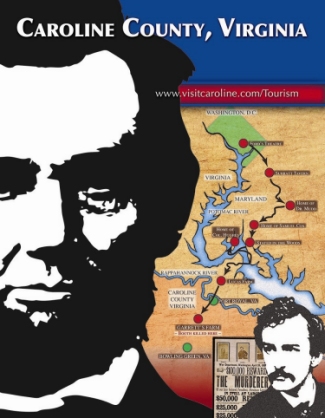
Sesquicentennial Commemoration of the Capture of Lincoln’s Assassin” in Caroline County, Virginia

  • Caroline County, Virginia will commemorate the death of John Wilkes Booth with a weekend long event including a bus tour of Booth’s route through Virginia, a speech by author Terry Alford, and a lunch with Mr. and Mrs Lincoln.  For more information about the three day event, including how to register, click here.

April 25th:

A Walking Tour of Lincoln’s New York Funeral Procession by Richard Sloan in New York City, New York

  • Richard Sloan will present a walking tour of some of the sites Lincoln’s hearse passed in NYC. Reserve your space by contacting the Lincoln Group of New York.

Luther Baker and the Capture of John Wilkes Booth” presented by Steve Miller in Lansing, Michigan

  • Learn about the manhunt and death of Booth by a leading expert on his capture, Steve Miller.  For more information, click here.

April 26th:

“John Wilkes Booth and Tudor Hall” presented by Jim Garrett at the Booth family home of Tudor Hall in Bel Air, Maryland

  • Jim Garrett will provide a wonderful history of Tudor Hall, the home of the illustrious Booth family, and the black sheep of the family, John Wilkes Booth.  For more information, click here.

Garrett Farm Historical Marker Unveiling in Port Royal, Virginia

  • The historic highway marker located at the site of the Garrett farmhouse where John Wilkes Booth died was stolen a few months back.  The Surratt Society raised funds to create a new sign with updated text.  Join us on April 26th at 2:00pm at the Port Royal Museum of American History in Port Royal, Virginia, for the unveiling of the new sign.

Ongoing Events/Exhibits:

Undying Words: Lincoln 1858 – 1865 at the Abraham Lincoln Presidential Library and Museum in Springfield, IL
A Fiendish Assassination at the Abraham Lincoln Presidential Library and Museum in Springfield, IL
Remembering Lincoln at the Illinois State Museum in Springfield, IL
Now He Belongs to the Ages at the Lincoln Heritage Museum in Lincoln, IL
A Nation in Tears: 150 Years after Lincoln’s Death at the University of Illinois’ Rare Book and Manuscript Library in Champaign-Urbana, IL
So Costly a Sacrifice: Lincoln and Loss at the Indiana State Museum in Indianapolis, IN
Autopsy for a Nation: The Death of Abraham Lincoln at the Fenimore Art Museum in Cooperstown, NY
The Attempted Assassination of William Seward at the Seward House in Auburn, NY
Shooting Lincoln at the Chrysler Museum of Art in Norfolk, VA
His Wound is Mortal: The Final Hours of President Abraham Lincoln at the National Museum of Health and Medicine in Silver Spring, Maryland
President Lincoln Is Dead: The New York Herald Reports the Assassination at the Newseum in Washington, D.C.
Silent Witnesses: Artifacts of the Lincoln Assassination at Ford’s Theatre in Washington, D.C.
The Full Story: Maryland, The Surratts, and the Crime of the Century at the Surratt House Museum in Clinton, MD
#Todayin1865 tweets from @fordstheatre and @BoothieBarn
Remembering Lincoln a digital archives project by Ford’s Theatre:
https://youtu.be/tl-1M-bTCDI

Categories: Uncategorized | Tags: , , , , , , , , , , , | 1 Comment

Jett, Ruggles, and Bainbridge

A few days ago, commenter Kees van den Berg posed the following question:

“I wonder, what happened with Jett, Ruggles and Bainbridge? I suppose they were arrested and confined in the Old Capitol Prison in Washington. Is it true that they never were tried, but came free after a couple of weeks after taking the oath of allegiance to the US? Have you dates of confinement and release? Thank you beforehand.”

His question refers to Willie Storke Jett, Mortimer Bainbridge Ruggles, and Absalom Ruggles Bainbridge. Ruggles and Bainbridge were cousins which explains the last names as middle names coincidence.  These three men were Confederate soldiers who ran into John Wilkes Booth and David E. Herold during their escape.

About midday on April 24th, the fugitives were at Port Conway, VA on the banks of the Rappahannock River. They were waiting for the ferry to come so they could get to Port Royal on the other side. As they waited, Jett, Ruggles, and Bainbridge came riding up.  The three men were heading towards Richmond, ultimately to get their paroles. At first, Herold lied to the men and told them that he and his wounded brother were also Confederate veterans. Thinking the three soldiers were on their way south to meet up with others in order to continue the fight, Herold pulled Jett aside and asked him if they could join them. Surprised by Herold’s desperation, especially when he and his comrades had accepted the defeat of their cause, Jett asked Herold straight away who they really were. Herold replied back, “We are the assassinators of the President”.

After more conversation, Jett, Ruggles, and Bainbridge agreed to help the men. The five men and their three horses crossed the Rappahannock on the ferry guided by ferryman Jim Thornton. When they arrived at Port Royal, Jett searched out a place for Booth to stay. He came to the home of Sarah Jane Peyton, who agreed, sight unseen, to care for a wounded solider.

The home of Sarah Jane Peyton in Port Royal, VA

The home of Sarah Jane Peyton in Port Royal, VA

When Booth hobbled into her parlor, however, her hospitality changed. She no longer thought it proper for her to entertain a guest while her brother, the man of the house, was absent. She suggested to Jett that he might find better lodging for the wounded man a couple of miles down the road, at the farm of Richard Garrett. The three men rode to the Garrett place, with Booth and Herold sharing horses with Ruggles and Bainbridge, respectively. When they arrived at the Garrett farm, Bainbridge and Herold stayed by the outer gate as Jett, Booth and Ruggles approached the house. The Garretts agreed to care for Booth, whom Jett said was a wounded soldier named Boyd, until Jett’s return in a couple of days. Jett, Ruggles, Bainbridge, and Herold rode further south. They stopped at the Trappe, a house of entertainment, before separating for the evening. Jett and Ruggles went to the Star Hotel in Bowling Green. Jett was courting Izora Gouldman, the hotel-keeper’s daughter.  Bainbridge and Herold traveled to the home of Virginia Clarke. Coincidentally, both Bainbridge and Herold knew Virginia’s son James and were welcomed into her home for the night.

The next day, Bainbridge and Herold met back up with Ruggles, likely in Bowling Green. The three men rode back to the Garrett house where Booth had comfortably spent the night in an upstairs bedroom. Bainbridge and Ruggles dropped Herold off and then continued on to Port Royal. When they arrived, they found a troop of Union cavalry crossing the ferry from Port Conway to Port Royal. They turned around and put spurs to their horses. They rushed back to Booth and Herold at the Garrett farm long enough to tell them of the approaching troops, then they continued quickly south.

The rest is well-known. The Union troops learned from one of the residents of Port Conway that Willie Jett was among the men who crossed with John Wilkes Booth. What’s more, they learned of Jett’s affinity for Izora Gouldman. Unknowingly, the troops rode right past the Garret farm where Booth was hiding on their way to Bowling Green. They captured Jett at the Star Hotel and he agreed to take them to the Garrett farm. When the troops arrived, they kept Jett under guard near the gate of the farm while the rest surrounded the house and barn. Eventually Herold surrendered himself and the barn was lit on fire to smoke Booth out. Boston Corbett fired at Booth inside of the burning barn, paralyzing him. Booth was dragged from the barn, first placed under a tree and then on to the front porch of the house.  He died around dawn on April 26th.

pulled-from-the-barn-header.jpg

During the lengthy crossing of the soldiers on their way back across the Rappahannock after killing Booth, Detective Luther Baker took possession of Booth’s body and the prisoner Jett. With two other soldiers, Baker departed Port Conway ahead of the rest of the troops. At some point during their travel to Belle Plain, where a steamboat would take them up to Washington, Baker let Willie Jett go. Jett had led the soldiers right to the assassin without a fight, and Baker did not believe there was any need to detain him further. When Baker got back to Washington, he was severely berated by Edwin Stanton for releasing Jett without authorization. An arrest order for Jett was quickly sent out:

An arrest order for Willie Jett dated April 28th.

An arrest order for Willie Jett dated April 28th.

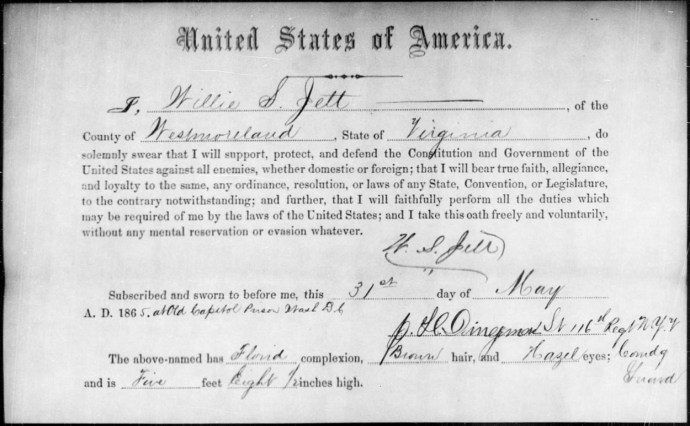
Jett was re-arrested in Westmoreland County, VA on May 1st. He was transferred to Washington and imprisoned at the Old Capitol Prison with the other Lincoln assassination related suspects. On May 6th, he gave a lengthy statement to the authorities about his interaction with Booth, ending it with the assurance, “I have tried to evade nothing. From the beginning I have told everything.”  Jett was also called to testify at the trial of the conspirators, giving his testimony on May 17th.  Willie Jett was imprisoned for a month and was released on May 31st when he took an oath of allegiance at the Old Capitol Prison:

Willie Jett's Oath of Allegiance NARA

Though Jett had been a major player in the escape of John Wilkes Booth, he was not tried as a conspirator since he had never met Booth prior to April 24th and Jett had also assisted in Booth’s capture.  The government was only concerned with prosecuting those they believed had real knowledge of the conspiracy before it was carried out.  Jett did not fit this criteria.

In January of 1890, an account written by Lieutenant Ruggles was published in The Century Magazine. Not all of the details in Ruggles’ recollections almost 25 years after the fact are correct, but he does give this account of what happened to him and Bainbridge:

“Learning that Jett was a prisoner, and that we were to be arrested, tried, and hanged, as aiders and abetters, Bainbridge and myself stood not on the order of going, but went at once. Making our way into Essex County and crossing to Westmoreland, we went to our home up in King George County. Some ten days after, I was arrested at night by a squad of United States cavalry. Bainbridge was also captured. We were taken to Washington and placed in the Old Capitol Prison. We were not alone in our misery, however, for Dr. Stewart, at whose house Booth had stopped, William Lucas, the negro who had driven him to the ferry, and a number of others, were there, among them being Jett, who had escaped from Captain Doherty, and had been recaptured at his home in Westmoreland County.”

Lieutenant Ruggles was arrested in King George County either on May 2nd or May 3rd (both dates are given on two different records).  Private Bainbridge was arrested in King George County on May 4th or 5th (again two different dates on two different records).  They were both transported to the Old Capitol Prison and were incarcerated there starting on May 5th.  For some unknown reason (Ruggles thought it was by mistake), the two men were transferred out of the Old Capitol and sent all the way to Johnson’s Island, a prisoner of war camp for Confederate prisoners located near Sandusky, Ohio.  They left the Old Capitol Prison on May 11th and arrived at Johnson’s Island on the 13th.

Johnson's Island 1865 LOC

It didn’t take very long for those in charge at Johnson’s Island to determine that these two men were much more than your average prisoners of war.  It certainly looks like their transfer to Johnson’s Island was a mistake because, on May 15th, Ruggles and Bainbridge were being transferred back to D.C.  They arrived at the Old Capitol Prison on May 17th and this time they stayed there.

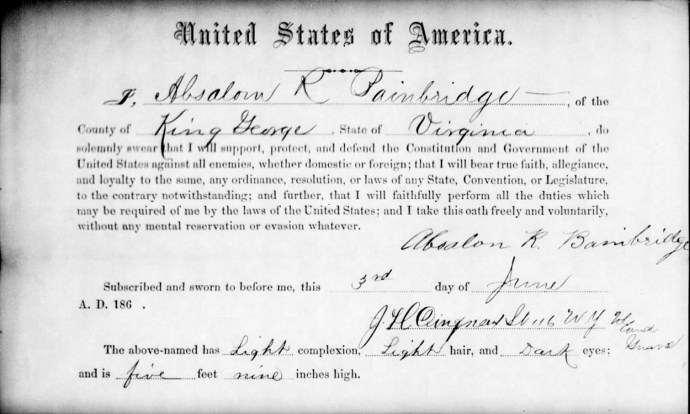
Neither Ruggles or Bainbridge were ever called to testify at the trial of the conspirators.  On June 3rd, both men were released from their confinement after taking the oath of allegiance:

Mortimer Ruggles Oath of Allegiance NARA

Absalom Bainbridge Oath of Allegiance NARA

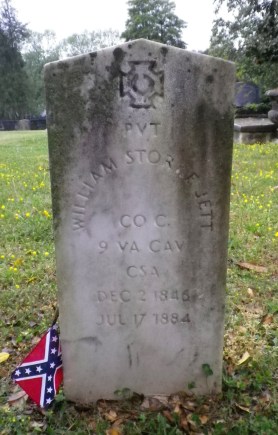
Willie Jett never ended up marrying Izora Gouldman of the Star Hotel.  Instead he moved to Baltimore, married, went insane (possibly because of untreated syphilis), and died in an insane asylum in Virginia.  His body is buried in Fredericksburg.

Willie Jett's grave

After the war, Mortimer Bainbridge Ruggles and Absalom Ruggles Bainbridge continued to imitate each other.  Both men married and had two children.  Both moved to New York.  Both found occupations that forced them to move around; Ruggles as a traveling salesman and Bainbridge as an interior decorator.  Finally, both men died not only in the same year, but in the same month.  These two Confederate veterans are buried in two different cemeteries in New York:

Mortimer Ruggles' grave

Grave of Absalom Ruggles Bainbridge


While Jett, Ruggles, and Bainbridge spent a bit more time imprisoned than some of the other suspects in Lincoln’s assassination, their incarceration could have been longer, especially since it was known that they had contact with Booth and assisted him during his escape.  Booth’s brother, Junius Brutus Booth, Jr., who knew nothing about the assassination, was imprisoned until June 22nd.  John Lloyd, the man who gave Booth and Herold a carbine, field glasses, and some whiskey at the Surratt Tavern, wasn’t released until June 30th.  One of the last people released from the Old Capitol Prison was Joao Celestino, the Portuguese ship captain whose ill-timed threats against William Seward made authorities believe he was a main conspirator.  Celestino was released from the Old Capitol Prison on July 8th and was ordered to leave the U.S. within 10 days, never to return.  And, of course, Dr. Mudd, Edman Spangler, Samuel Arnold, and Michael O’Laughlen were imprisoned at Fort Jefferson for three and a half years before the surviving three were pardoned in 1869.
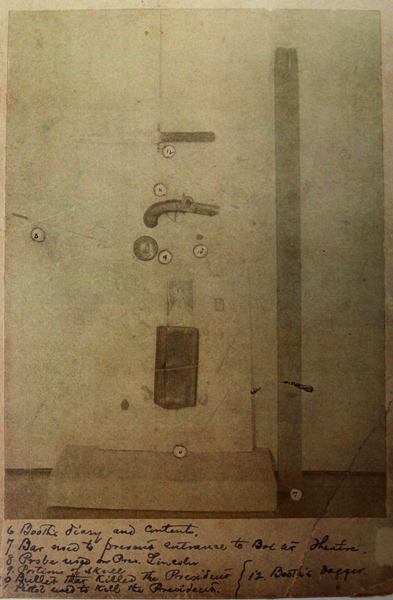
The imprisonment endured by Jett, Ruggles, and Bainbridge could have certainly been worse had the government truly wanted to punish all those who assisted John Wilkes Booth.

References:
American Brutus by Michael W. Kauffman
Brutus’ Judas: Willie Jett by Eric J. Mink
“Pursuit and Death of John Wilkes Booth” by Prentiss Ingraham, Century Magazine, Jan, 1890
Jett, Ruggles and Bainbridge’s prison records and oath of allegiances were accessed via Fold3.com
FindaGrave.com (Bainbridge, Ruggles)
Rich Smyth

Categories: Uncategorized | Tags: , , , , , , , | 18 Comments

A Boothie Black Friday

This morning I arose bright and early.  My reasoning for doing so was not the same as many others today.  I was not out hunting for an elusive deal or special discount sale.  Rather I woke early today to meet up with fellow Lincoln assassination researcher and author, Jim Garrett, for a day long Boothie “field trip”.  Together, Jim and I travelled down into Caroline County, Virginia to socialize with a couple of her noted residents and to investigate some Lincoln assassination sites in the area.

While driving down to Caroline County, Jim and I made a stop over in King George County to see the site of William McDaniel’s house.  William McDaniel is not featured in many assassination books as his connection to the story seems to be solely through family lore.  The book Come Retribution by authors Tidwell, Hall, and Gaddy contains a single sentence mentioning McDaniel, “At Office Hall, they [Booth, Herold and Charley Lucas] stopped for food at the home of William McDaniel.”  Though there does not seem to be any physical documentation for this visit, a phone conversation in the 1980’s between King George historian John Stanton and a McDaniel descendant also supported the family’s belief that someone, possibly the servants at the McDaniel house, fed Booth and Herold a meal on April 24th.
While we hardly have ironclad proof of the incident occurring, it is a harmless enough piece of oral tradition to pass on.  Jim showed me the spot on which the McDaniel house used to stand, the site having originally been shown to him by Elizabeth Lee, another King George County historian and head of the local historical society.  The house that is on the site today was built on the foundation of the former McDaniel house:

Site of the McDaniel House where is claimed John Wilkes Booth and David Herold were fed a meal while travelling through King George County on April 24th, 1865.

Site of the McDaniel House where is claimed John Wilkes Booth and David Herold were fed a meal while travelling through King George County on April 24th, 1865.

Our next stop was Green Falls, the home of Caroline County historian and former Smithsonian curator, Herb Collins.  I’ve highlighted Mr. Collins and his remarkable career on my site before and you can read about him here.  At Herb’s house, we were joined by Betty Ownsbey, the immensely delightful author and biographer of conspirator Lewis Powell.  Herb and Betty had never met before, but before too long, those two native Virginians were finishing each other’s sentences and having a grand time talking about the Old Dominion and its sites.

From Herb’s we travelled up to Port Royal and were met by Port Royal historian and long time resident Cleo Coleman.  Being as gracious as she is, Cleo was kind enough to open up the Port Royal Museum of American History for us.  Though I had visited the museum when it first opened up last year, neither Jim or Betty had ever been there.  Since my first visit they have increased their collection thanks, in part, to the continued generosity of Herb Collins, and acquired more display cases to showcase their treasures.  I took a couple pictures of their John Wilkes Booth in Caroline display:

Booth display Port Royal 2013

Hinge Port Royal 2013

The Port Royal Museum of American History is open on Saturdays from 10 am to 4 pm. Please find the time to visit and support this wonderful fledging museum.

From the museum, Cleo took us over to the Port Royal Portrait Gallery, which contains many paintings of notable citizens of Caroline County:

Port Royal Portrait Gallery

The only Lincoln assassination related face in the gallery is that of Richard Henry Garrett, the owner the farm on which Booth died:

Richard Henry Garrett Port Royal

After John Wilkes Booth, David Herold, and Confederate soldiers Bainbridge, Ruggles and Willie Jett, crossed the Rappahannock river ferry into Port Royal, Jett proceeded to the home of the Peyton family.  Jett not only wanted to visit the family, but was also looking for someone who would take in the wounded Booth for the night.  He asked, the lady of the house, Miss Sarah Jane Peyton, if she would not mind entertaining and lodging a wounded Confederate soldier.  At first she agreed and Booth was led inside and rested on a lounge.  Not long after this, Miss Peyton, changed her mind and asked Jett to find another place for “Mr. Boyd”.

Front porch of the Peyton house

Front porch of the Peyton house

Willie Jett asked Miss Peyton if she thought her neighbor, a Mr. Catlett, would take the men in. She said she did not know and so Willie Jett went across the street to check. He discovered that Mr. Catlett was not at home.

The Catlett house, across the street from the Peyton home.

The Catlett house, across the street from the Peyton home.

According to Willie Jett, Miss Peyton then said to the men, “You can get him in anywhere up the road; Mr. Garrett’s or anywhere else.” Then the men rode further up the road, eventually depositing Booth off at the Garretts.

While Jett’s attempts at dropping Booth off at the Peyton and Catlett homes are the only two supported by documentation by Jett, local lore in Port Royal states that Jett attempted at least two more houses before deciding that the Garrett’s would be the best bet. One of the house supposed to have been visited by Jett after the Peyton and Catlett homes is the Murray House, further down King Street.

3 Murray house

The last place Jett attempted to drop off Booth according to local tradition was the Dickerson house at the end of King’s street.

Dickerson House Port Royal

While we were all in the Portrait Gallery, Cleo was kind enough to recount her personal knowledge of the Dickerson house and the local lore around it:

Ultimately, here’s a map of the different stops (some documented, some not) that Jett made with Booth trying to find a temporary respite for him:

Stops in Port Royal

After enjoying the paintings at the Port Royal portrait gallery, our group of five had lunch at a local restaurant with a nice view of the river:

The Rappahannock river will Belle Grove visible on the Port Conway shore.

The Rappahannock river will Belle Grove visible on the Port Conway shore.

Following lunch we bade our goodbye to Cleo, our Port Royal hostess, and to Betty, who had to return home. One of the things on Jim’s wish list for this trip was to find the location of Mrs. Virginia Clarke’s home south of Bowling Green. After dropping Booth off at the Garrett’s, Willie Jett proceeded to the Star Hotel in Bowling Green where he spent the night. Herold, Bainbridge and Ruggles continued on further to Mrs. Clarke’s home and that is where they spent the night on April 24th. Virginia’s son had served in the Confederacy and Ruggles and Bainbridge knew the Clarkes from his service with them.

Herb Collins is a walking encyclopedia and his recent book, Caroline County Virginia Estates; Residences and Historic Sites, demonstrates his immense knowledge of the area and its history. With Herb as our navigator, we quickly came across the location of Mrs. Clarke’s house. The home, gone since at least the 1960’s, has been replaced now by a large pond.

The site of the former Clarke house in Caroline County, VA

The site of the former Clarke house in Caroline County, VA

The gate to the Clarke house once stood here.

The gate to the Clarke house once stood here.

After visiting the site of the Clarke home we went back to Green Falls and said goodbye to Herb. On our way back, utilizing yet another of Herb’s books and his personal guidance, we stopped at Greenlawn Cemetery and found Virginia Clarke’s grave:

Virginia Clarke's grave

As the sun was going down, Jim and I returned to Port Royal to take a few pictures before departing for Maryland shores.  Our journey today proved to be an enlightening and enjoyable one.  We got to learn from and chat with our immensely knowledgeable friends in Virginia.  For our next field trip, Jim and I are hoping to see if we can arrange passage onto Fort A. P. Hill in Caroline County to visit the site where the house of ill repute, “The Trappe” once stood.  Herold, Jett, Bainbridge, and Ruggles visited the Trappe after dropping Booth off at the Garretts and before they found lodging for the night.  We’ll keep you informed.

In the true spirit of Black Friday, however, why not purchase Jim and his co-author Rich Smyth’s grave book and the upcoming second edition of Betty’s Lewis Powell book.  They’d make wonderful Christmas gifts.

Categories: Uncategorized | Tags: , , | 14 Comments

The Oldest Photographs of the Escape Route

Photography as we know it was only about 40 years old when Abraham Lincoln was assassinated.  Though some photographers had risked life and limb taking battlefield shots of the Civil War, the bulk of a photographer’s business consisted of portraits in their studio.  In the aftermath of Lincoln’s assassination photographers like Matthew Brady and Alexander Gardner took photographs of Ford’s Theatre, the conspirators, and the hanging of the condemned.  When it came to the escape route, however, no cameras attempted to make the trip.  Granted, in those early days no one was completely sure of the route Booth took or of all the places he visited before his death at the Garrett farm.  Newspapermen travelled the route and drew sketches, many of which were later turned into engravings, but none of these can truly capture the detail of a location as well as a camera can.  However, the bulky nature of early photography equipment (such as the required glass plates) made photographing the escape route an undesirable endeavor.

So, what are the earliest photographs we have of the escape route?  The most readily available ones were done by Osborn Oldroyd in 1901, 36 years after Lincoln’s death.  Armed with the newly invented “Brownie” camera from Kodak, Oldroyd walked and photographed the route.  Oldroyd’s book, The Assassination of Abraham Lincoln, is still so popular and historically valuable thanks, in part, to his many photographs of the escape route.

Oldroyd walking the route

Osborn Oldroyd, most likely with his Brownie camera in his pack

But Oldroyd was not the first to photograph the sites of Booth’s escape.  In 1888, Kodak, and it’s founder George Eastman, had released the first box camera using the recently invented “roll” of film.  Like the Brownie that followed, these original Kodak cameras allowed individuals to take their pictures and then mail in their film to Kodak to be developed.  These first, mass market cameras produced a circular image while the later Brownie created a rectangular exposure.

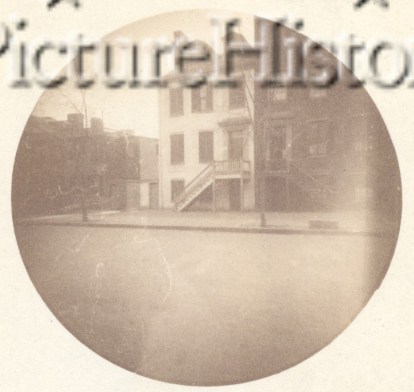
Sometime between 1893 and 1895, a writer for Century Magazine either commissioned someone or took a Kodak camera for a walk himself and photographed part of the escape route.  The writer’s name was Victor L. Mason, and here are some of his pictures:

Mrs. Surratt's boarding house circa 1895

Mrs. Surratt’s boarding house circa 1895

The Surratt Tavern circa 1895

The Surratt Tavern circa 1895

Dr. Mudd's house circa 1895

Dr. Mudd’s house circa 1895

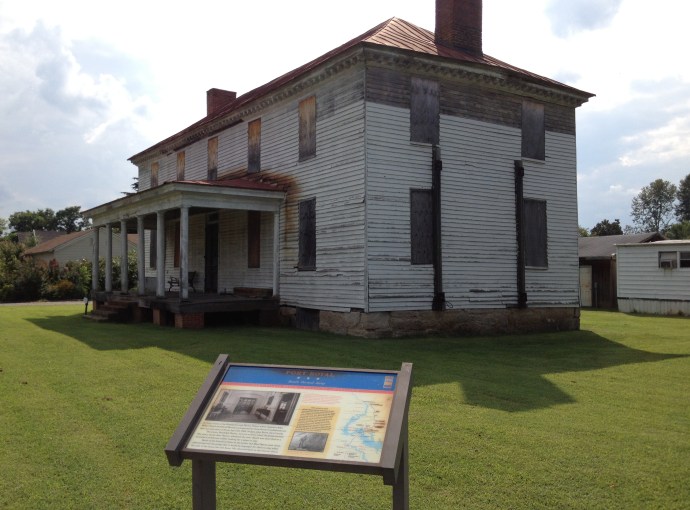
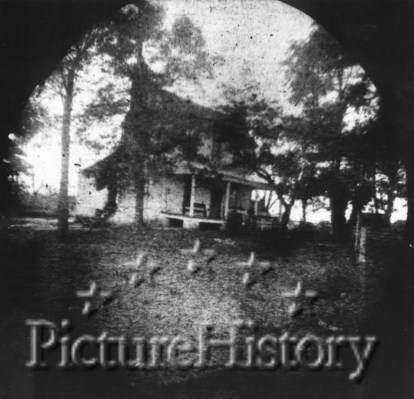
The Garrett house circa 1895

The Garrett house circa 1895

Victor Mason was working on an article about Lincoln’s assassination for Century Magazine.  In addition to these exterior shots of the escape route with a Kodak, Mason also used a more professional camera to take images of several of the trial exhibits in storage at the War Department such as this one:

Trial Exhibits circa 1895

In April of 1896, Victor Mason’s article, Four Lincoln Conspiracies, was published in Century Magazine.  Click here to view the article and look through the pages.  You will notice that while photographs of the conspirators and the relics of the assassination are replicated in the article, the photos of the escape route are not.  Instead, the article contains several drawings of each escape route location “Drawn by Harry Fenn” “From a Recent Photograph.”  Look at the drawings for the Surratt boarding house, the Surratt Tavern, Dr. Mudd’s House, and the Garrett house, and you will see that they are exact matches to the photos above.  It’s clear that Mason’s photographs were turned into these drawings.  Due to this, we can surmise that Mason also photographed Bryantown, Huckleberry, and Cleydael, since there are drawings of those places in the article too.

To my knowledge, these circa 1895 images are the earliest photographs of the escape route.  If any one knows otherwise, or has copies of these images (especially the “missing” ones of Bryantown, Huckleberry, and Cleydael), please comment below or shoot me a message at boothiebarn (at) gmail (dot) com.

References:
History of Kodak
PictureHistory.com
Four Lincoln Conspiracies by Victor L. Mason, Century Magazine, April 1896

Categories: Uncategorized | Tags: , , , | 8 Comments

New Gallery – Garrett House

As most readers of this blog know, I have a deep interest in the Garrett family of Caroline County.  It seems that everyone who studies the Lincoln assassination finds a specific facet of it that appeals to them more than others.  For me, that facet is the Garretts.  In March of this year, I presented at the Surratt Society’s annual conference about my ongoing research into the Garrett family.  I’ve come into contact with many Garrett descendants and a few have even bestowed upon me the title of “honorary Garrett”, much to my delight.  It’s hard to explain why I’m so caught up with this family and their interaction with John Wilkes Booth, but I am.

At the Surratt Conference, I went through a slideshow of pictures that I found of the Garrett house.  It showed the house from its days as the family’s home, to  its subsequent collapse around 1937/38.  As of this posting, I have accumulated 34 pictures of the Garrett house.  Some pictures are well known and seen in books on the assassination.  Others have come from universities, libraries, and private collections.  Since that presentation, I have been asked by a few people to put the pictures up here on my site.  I have been hesitant to do so, but today I am making a compromise.

In the Garrett House Gallery I have just made, I am displaying half of the pictures I have.  Additionally, I’ve done something I haven’t done before in my other galleries, and I’ve watermarked each image.  I’ve done this because I am working on a book about the Garretts and their run in with John Wilkes Booth and, while I love sharing new information and images here on BoothieBarn, I also want to protect these images in case I want to use them in my later publication.  That is also the reason why I have also failed to source where the different images came from.  Until I either use them, or fail to use them, in my future book, I want to keep their origins a mystery.  I hope you all understand.  I am doing this all to protect this Garrett project of mine as it means a great deal to me.

Now, without further ado, click HERE or on the picture above to visit the new Garrett House Picture Gallery.

Categories: Uncategorized | Tags: | 10 Comments

Blog at WordPress.com.