Grave Thursday: Jacob Rittersbach

Each week we are highlighting the final resting place of someone related to the Lincoln assassination story. It may be the grave of someone whose name looms large in assassination literature, like a conspirator, or the grave of one of the many minor characters who crossed paths with history. Welcome to Grave Thursday.


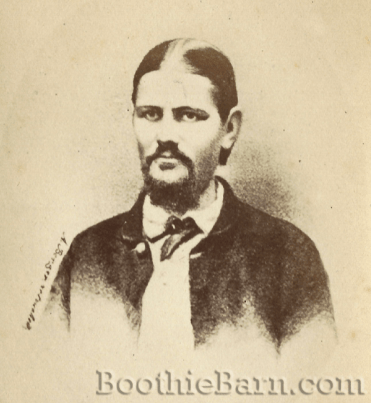
Jacob Rittersbach

jacob-rittersbach-grave-1

Burial Location: Hampton National Cemetery, Hampton, Virginia

Connection to the Lincoln assassination:

Jake Rittersbach was a French immigrant who came to the United States with his family when he was eight years old. His family settled in Pennsylvania and, after the Civil War broke out, 21 year-old Jake joined the 124th Pennsylvania Infantry. He served in the army for a period of 9 months before he was discharged. After leaving the service, Rittersbach found his way to Washington, D.C. where he sought out a way to make a living using his knowledge of carpentry. As he looked for a job, he took up residence at a boardinghouse owned by a Mrs. Scott on the corner of 7th and H streets in D.C. One of Rittersbach’s fellow boarders at Mrs. Scott’s home was another carpenter by the name of Edman Spangler.

Spangler made his living as a carpenter and a scene shifter at Ford’s Theatre. After about a year and a half in Washington, Jake Rittersbach found himself working side-by-side with Spangler when he too was hired by the Ford brothers to work as a carpenter in their theater in March of 1865.

It would have been impossible for Rittersbach, a Union veteran, not to have quickly picked up on the pro-Southern sentiments of his fellow coworkers at Ford’s Theatre. Many of the others engaged in backstage work supported the Confederacy and were mourning the recent events. Rittersbach often found himself quarreling with Spangler about their differing political views. Yet, they continued to do their work together, nonetheless.

Like the other employees of Ford’s Theatre, Jake Rittersbach was present backstage when John Wilkes Booth assassinated Abraham Lincoln on April 14, 1865. Rittersbach was situated right near Spangler on the stage left side (the side of the stage where the President’s box was located) when Booth fired the fatal shot. After Booth leapt to the stage and then made his way out the back door, both Spangler and Rittersbach followed in the direction of the commotion.

On the Stage 4 Frank Leslie's 5-20-1865

“That was John Booth!” declared Rittersbach. “Hush your mouth!” Spangler replied. “You don’t know whether it’s Booth or not.” In his reply, Spangler was speaking a likely truth. Rittersbach had been at Ford’s Theatre for such a short amount of time that he was not very familiar with John Wilkes Booth. It had only been earlier that day that Rittersbach had finally asked Spangler for the name of the actor he had seen around from time to time. Though Rittersbach ended up being correct in his identification of the assassin, in those hectic first moments, Spangler wanted only to protect a man he had known for years and worked alongside in the theater from being wrongfully accused. In the minutes after the assassination, Spangler grabbed his coat and exited out the same back door to search for John Wilkes Booth in hopes of proving this identification incorrect.

But, to Edman Spangler’s dismay, it was John Wilkes Booth who had shot Lincoln. This truth caused a lot of problems for the scene shifter who had known the Booth family since 1852 and who had done errands for John Wilkes, one of the few actors who treated stagehands with respect. Since the crime was committed at Ford’s Theatre and Spangler’s theatrical friendship was well known, Spangler was quickly identified as person of interest.

However, before Spangler found himself under arrest, Jake Rittersbach had already been laying the groundwork to incriminate him. Rittersbach spent the night of April 14-15 in the manager’s office of Ford’s Theatre. He was awakened in the morning by another stagehand named Louis Carland who was looking for Spangler. Rittersbach told his version of events to Carland but added that, upon claiming that it was John Booth who ran out the door, Spangler had slapped him in the mouth. Later, when back drop painter, James Lamb, reported to work, Rittersbach once again told him that Spangler had slapped him the night before. In the opinion of Tom Bogar, author of Backstage at the Lincoln Assassination, “Rittersbach appeared intent on making sure everyone knew what he had experienced, but was too new to Ford’s to perceive how each would receive the information.”

When Rittersbach left to take his breakfast at his boardinghouse on Saturday morning, he found Spangler there. After failing to find Booth, Spangler had spent the night at the home of two of the actors, John and Kate Evans. After a few minutes at breakfast, policemen arrived at Mrs. Scott’s and took both Spangler and Rittersbach in for questioning. Rittersbach was released quickly while Spangler had to endure almost four hours of questioning before he was released. After hearing rumors that Ford’s Theatre would be burned, Spangler, Rittersbach, Carland and some of the other employees decided to spend the night. On Sunday morning, Carland took Spangler to the home of the Gourlay family, a family of actors who had been in Our American Cousin on the 14th. Jeannie Gourlay was engaged to the Ford’s Theatre orchestra director, William Withers, and both had been near Booth’s path when he escaped. Carland asked Withers and Jeannie if either of them had seen Spangler slap Rittersbach as had been told to him. Though the couple had been nearby neither one claimed to have seen any sort of slap between the two men.

Spangler, however, seemed unaware that Rittersbach was making plans to implicate him. On Monday, Spangler took his supper at Mrs. Scott’s boardinghouse and found Rittersbach waiting in the doorway for him when he was leaving. He suggested the pair take a friendly walk. According to Bogar:

“[The walk] lasted about a half hour, the main topic of conversation being Rittersbach’s desire to get some of the reward money being offered. Did Spangler know of any information they could use? Rittersbach said that he, too, had given a statement at police headquarters on Saturday (although no evidence exists that he did). Spangler, as trusting as the animals he befriended seemed completely unaware that Rittersbach had already implicated him to others. Back at their boardinghouse around sunset, the two men parted ways (for good, as it turned out), and Spangler went upstairs to rest…”

Edman Spangler was arrested, for the final time, about two hours after his walk with Rittersbach. He was placed in irons and imprisoned in the Carroll annex of the Old Capitol Prison. Later, Spangler would be moved to the iron clad warships that housed Booth’s core group of conspirators.

spangler-manacled

If Rittersbach was hoping to get a piece of the reward money, it was in his best interest to continue to incriminate Spangler as an active party. Claiming that Spangler slapped him was a great way to cast suspicion. Perhaps Rittersbach hoped that, if Spangler was found to be an active conspirator in Booth’s plot, he would get some money out of his “assistance” to the authorities. It’s possible that Rittersbach had already laid the groundwork when he was briefly detained on Saturday. If this was Rittersbach’s plan, however, it seems that he changed his mind about it when he, himself was arrested. Jake Rittersbach was arrested one day after Spangler, Tuesday, April 18th. He was imprisoned in a communal room at the Old Capitol Prison and gave a brief statement. Despite the pains he had taken to inform others at Ford’s that he had identified Booth and that Spangler had apparently slapped him because of it, Rittersbach made no such claims in his statement. Rather, he told the prison superintendent that “he did not see [Booth’s] face and could not say who it was.”

So, we have this contradiction with Rittersbach. When the stakes were lower, Rittersbach told his fellow stagehands Carland and Lamb that he had identified Booth and that Spangler had slapped him. However, while under arrest, he denied having both recognized Booth and the slap. Perhaps protecting himself from any suspicion was worth more than trying to turn against Spangler. As the investigation continued and the authorities heard about Rittersbach’s prior statements to Carland and Lamb, they would take an active role to eliminate these contradictions.

A few years after the events, John T. Ford, who had also found himself locked up at the Old Capitol Prison, recounted an instance where significant pressure was put upon Rittersbach to re-implicate Spangler:

“Ritterspaugh [sic] – a witness- was brought before Colonel Lafayette C. Baker, at Baker’s office. Being questioned in regard to what happened on the stage, Ritterspaugh told that when Booth jumped from the box and ran across the stage, after firing the pistol, he (Ritterspaugh) said that that was Booth; and that Spangler turned and said: ‘Hush your mouth! You don’t know whether its Booth or not.’ Here Baker broke in on Ritterspaugh, saying: ‘By God, if you don’t testify to what you said to me before, I’ll put you among the rest, ‘ (meaning the prisoners.) ‘You said to me that Spangler, when you said ‘It’s Booth,’ said: ‘Don’t say which way he went.’

This bullying by Baker was perfectly calculated to shake Ritterspaugh’s nerves and cause him to think he believed he heard what he did not believe he heard.”

There may be some truth to Ford’s belief that Rittersbach was turned (perhaps rather easily based on his own actions before being arrested) against Spangler by the authorities. When Rittersbach was first put upon the stand by the prosecution at the trial of the conspirators on May 19th, he was not asked any questions about what happened at Ford’s Theatre on April 14th. Instead, the prosecution only used Rittersbach as witness regarding Spangler’s arrest and the government’s seizure of his belongings. It was not until May 30th that the prosecution recalled Rittersbach to the stand to testify about the events at Ford’s Theatre. In the trial transcript, right before Rittersbach is brought back, it gives the following statement:

“The Judge Advocate, stated that, since the examination of Jacob Ritterspaugh [sic] for the prosecution, facts had come to the knowledge of the Government not known at the time that witness was examined, and he proposed now to recall that witness for the purpose of examining him in relation to the accused, Edward [sic] Spangler; and he applied to the Commission for permission to re-examine that witness.”

In his new testimony, Rittersbach became the key witness against Spangler. He testified about Spangler having struck him after he identified Booth. Rittersbach also changed Spangler’s words, claiming that Spangler said, “Don’t say which way he went!” and “For God’s sake, shut up!” None of Rittersbach’s testimony was ever supported by Jeannie Gourlay who stood near Rittersbach and Spangler when the exchange was supposed to have occurred. In what may be the most telling piece of evidence of all, Rittersbach was released from prison on the very same day he gave his damning testimony.

While Spangler’s defense attorney, Thomas Ewing, did a noble job of poking holes in Rittersbach’s version of events, he could not completely undo the damage it had done to his client. Mainly due to Jacob Rittersbach, Edman Spangler was found guilty of aiding and abetting in John Wilkes Booth’s escape and was sentenced to 6 years of hard labor.

While Spangler was taken to Fort Jefferson in the Dry Tortugas to serve his prison sentence, Jake Rittersbach largely fell from view. John T. Ford invited most of his former workers to help him re-open Ford’s Theatre but that was prevented and the government purchased the building. Some of the stagehands found employment in Ford’s Holliday Street Theater in Baltimore but it is highly unlikely Rittersbach was ever offered a position given what he had done to Spangler.

Despite everything that had happened, Jacob Rittersbach stayed in D.C. for over 30 years working as a carpenter. After the death of his wife, Rittersbach moved to Ohio, where, in 1901, he finally tried to get some money from the government for the events of April 14, 1865. Rittersbach appealed to his Congressman, Representative Charles Grosvenor, not for any reward money for Spangler’s conviction, but for the loss of his tools that were stolen after the assassination:

rittersbachs-claim

Rep. Grosvenor was apparently unsuccessful in getting Rittersbach his reimbursement in 1901 as the Congressman introduced the same bill in 1903. It is unknown if the bill ever passed.

By 1913, Jake Rittersbach had returned to the east coast. On June 12th of that year, he was accepted into the National Home for Disabled Volunteer Soldiers located in Hampton, Virginia. He only stayed in the home for three months before asking to be discharged. He re-entered the home on April 5, 1914 and lived there for over four years before he was transferred to the National Home in Dayton, Ohio. He resided there until 1920 when he was transferred back to Hampton.

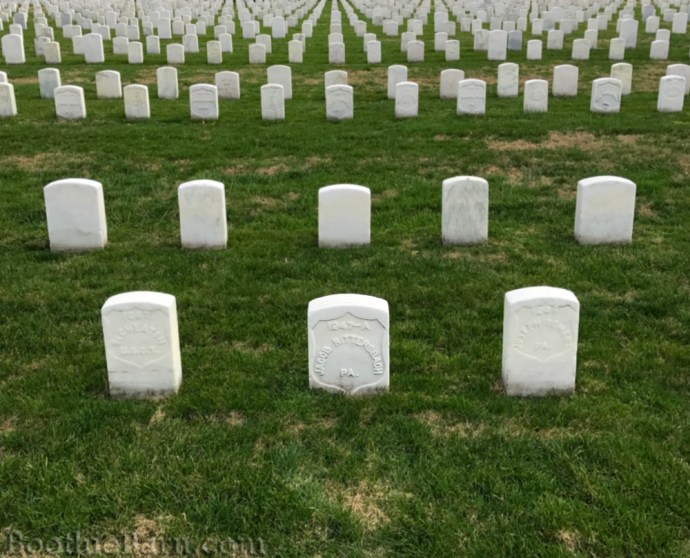
Jacob Rittersbach died at the Soldier’s Home in Hampton on June 28, 1926. While some of his former coworkers survived him, at 86, Rittersbach was the longest lived of those working at Ford’s Theatre on the night of Lincoln’s assassination. He was buried with a military stone in Hampton National Cemetery.

jacob-rittersbach-grave-2

GPS coordinates for Jacob Rittersbach’s grave: 37.018650, -76.334817

Most of the information in this post came from Thomas Bogar’s wonderful book, Backstage at the Lincoln Assassination: The Untold Story of the Actor’s and Stagehands at Ford’s Theatre. Please pick up a copy today to learn more about the many people who were working at Ford’s Theatre when their lives, and our history, changed forever.

backstage-at-the-lincoln-assassination-by-thomas-bogar

Categories: Grave Thursday, History | Tags: , , , , | 3 Comments

Grave Thursday: Cora Lee Garrett

Each week we are highlighting the final resting place of someone related to the Lincoln assassination story. It may be the grave of someone whose name looms large in assassination literature, like a conspirator, or the grave of one of the many minor characters who crossed paths with history. Welcome to Grave Thursday.


Cora Lee Garrett

cora-lee-garrett-boothiebarn

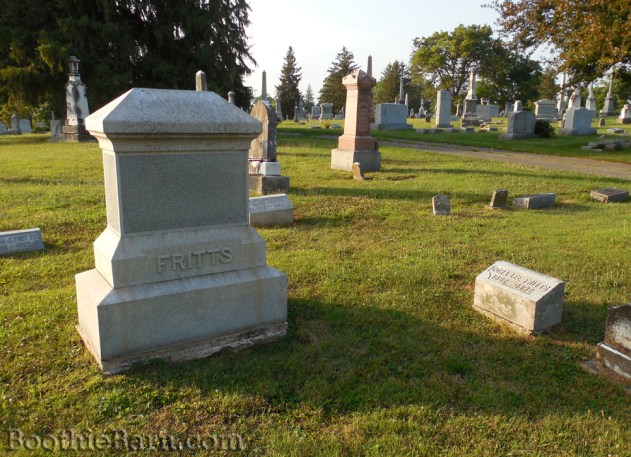
Burial Location: Carlisle Cemetery, Carlisle, Kentucky

cora-lee-garrett-grave-1

cora-lee-garrett-grave-2

Connection to the Lincoln assassination:

On Monday, April 24, 1865, at about 3 o’clock in the afternoon, three men rode up on horseback to the farmhouse of Richard Henry Garrett and his family. Mr. Garrett was asked by the leader of the trio, a solider named Jett, if he would be willing to take care of one of their compatriots who had been wounded in the leg. The other two men promised to come back for their infirm friend on Wednesday morning. This temporary refuge was agreed upon with little deliberation by Mr. Garrett. He would later recall, “As it has always been one of the principles of my religion to entertain strangers, especially any in distress, I at once consented and promised I would do the best I could for him.”  Little did Mr. Garrett know at the time that he had just invited into his home the assassin of President Abraham Lincoln, John Wilkes Booth.

Booth, portraying himself as Mr. Boyd, was kindly tended to by Mr. Garrett and his family. The occupants of the farm at that time numbered more than a dozen with Mr. Garrett, his wife, and ten children consisting of the bulk of the population. The children present on the farm were, in order: Mary Elizabeth, Jack, Kate, Will, Annie, Richard, Lillie, Robert, Nettie, and, the youngest, Cora Lee.

Though his broken leg pained him, John Wilkes Booth did make an effort to entertain the five youngest Garrett children, all of whom were 10 or younger. He mystified them by moving the needle of a compass around with his pocketknife and he even told them jokes and stories. However, it was to three year-old Cora Lee Garrett that Booth paid the greatest of attention.

Lillie Garrett, who was 8 years-old at the time of Booth’s visit would later give an account of Booth’s stay at the family farm to a newspaperman. In her account she detailed Booth’s fondness for Cora:

“We children were about him and with him nearly all of the time. Of course, we were full of romp and frolic, and sometimes he would attempt to be cheerful and encourage us in our play. Our little baby sister, then about 4 [sic] years old, he took a great fancy to, and used to pet her a great deal, but the rest of us he paid little attention to…

He talked more to my little sister than to any one else. He called her his little blue-eyed pet, and, at the last meal he took with us, she sat by his side in her high chair. We were all gathered around the table, when she began making a noise; mother spoke up quite sharply to her, and she burst into tears. Booth at once began soothing her, and said, “What, is that my little blue-eyes crying?”

Within twelve hours of drying his little blue-eyed pet’s tears, John Wilkes Booth was dead, shot in the tobacco barn belonging to her father. And while Cora may have made a distinct mark on John Wilkes Booth in his final hours, he might have been disappointed to learn that he did not make such a mark on her.

In 1881, a newspaper reporter named Col. Frank Burr visited the Garrett farm to talk with its inhabitants. Cora, then a young woman of 19, was still living with her sisters. Burr described his interaction with her:

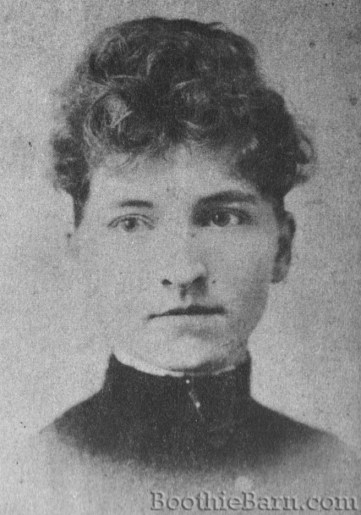
“In a minute a bright rather handsome young girl, just budding into womanhood, stepped into the room, dressed in her riding habit. She had a full, round face and pleasant countenance lit up by a pair of large, poetic, blue eyes, and a wealth of golden hair fell down her back in a graceful braid, reaching below her waist. A jaunty riding hat evidently of home construction, set upon her shapely head…”

cora-lee-garrett-boothiebarn-2

“‘I don’t remember anything about Booth,’ said the cheerful girl, ‘but they have told me a great deal about him since his death. How I wish I could remember him! I’m just going for a ride,’ and, after a few moments’ conversation, she stepped up and took her riding-whip from its place near the old fashioned fire-place, and a moment later had darted out the door to where her pony was hitched. She put the saddle upon the horse herself, and sprang into it without assistance, and in less time than it takes to tell the story her black pony was flying down the country road, bearing toward a neighboring farm house John Wilkes Booth’s last sweetheart.”

Cora, like the rest of her siblings, would move away from the old farmstead. When her brother, Richard Baynham Garrett, became a Baptist minister in 1882, she accompanied him when he accepted a pastorate located in Carlisle, Kentucky. While in Carlisle she likely made the acquaintance of a widower by the name of William Henry Fritts. Henry was 22 years older than Cora and had a son that was only six years younger than she was. It appears that any romantic feelings between the two took a while to develop as Cora left Kentucky in 1889 when her brother took up a new pastorate in Austin, Texas. Eventually, Henry Fritts followed her to Austin and the two were married by her brother Rev. Richard Baynham Garrett in 1892.

Cora moved back to Carlisle with Henry and the pair had two children together. Sadly, however, both of the children died in childhood. In 1899, Rev. Garrett accepted a pastorate at a Baptist church located in Portsmouth, Virginia. Whether Cora was homesick for her native state or wanted to be closer to her family, we don’t know, but, regardless, within a couple years of Rev. Garrett’s move to Portsmouth, Henry Fritts also accepted a job in Portsmouth, Virginia. He and Cora reunited with her brother. Cora and Henry had a nice life in Portsmouth with Henry working at the Navy Yard. However, in 1913 Henry Fritts died. Cora had his body transported back to Carlisle for burial next to his mother and father. She then returned to Portsmouth. Cora outlived her brother, the Rev. Garrett, who died in 1922 and was buried in Portsmouth.

Cora Lee Garrett Fritts died at the age of 70 on November 18, 1932. She was the penultimate witness to John Wilkes Booth’s death (albeit without any memory of the event), and left her brother, Robert Clarence Garrett, as the only remaining person alive who had witnessed the assassin’s end.

Since Cora had no children of her own (she also outlived her step-son), her final arrangements were tended to by her nephew. The original thought was to bury her back near the old farmstead in Caroline County, Virginia where she was born. There she would have joined her father, mother, and several of her siblings in the Enon Baptist Church Cemetery. But it was later decided that she should be transported to Kentucky and be laid next to her husband.

Cora Lee Garrett, John Wilkes Booth’s blue-eyed pet and last “sweetheart”, is buried in the Fritts family plot in Carlisle Cemetery.

GPS coordinates for Cora Lee Garrett’s grave: 38.314908, -84.034176

Categories: Grave Thursday, History | Tags: , , , | 6 Comments

Grave Thursday: John Somerset Leaman

Each week we are highlighting the final resting place of someone related to the Lincoln assassination story. It may be the grave of someone whose name looms large in assassination literature, like a conspirator, or the grave of one of the many minor characters who crossed paths with history. Welcome to Grave Thursday.


John Somerset Leaman

john-somerset-leaman-grave-1

john-somerset-leaman-grave-2

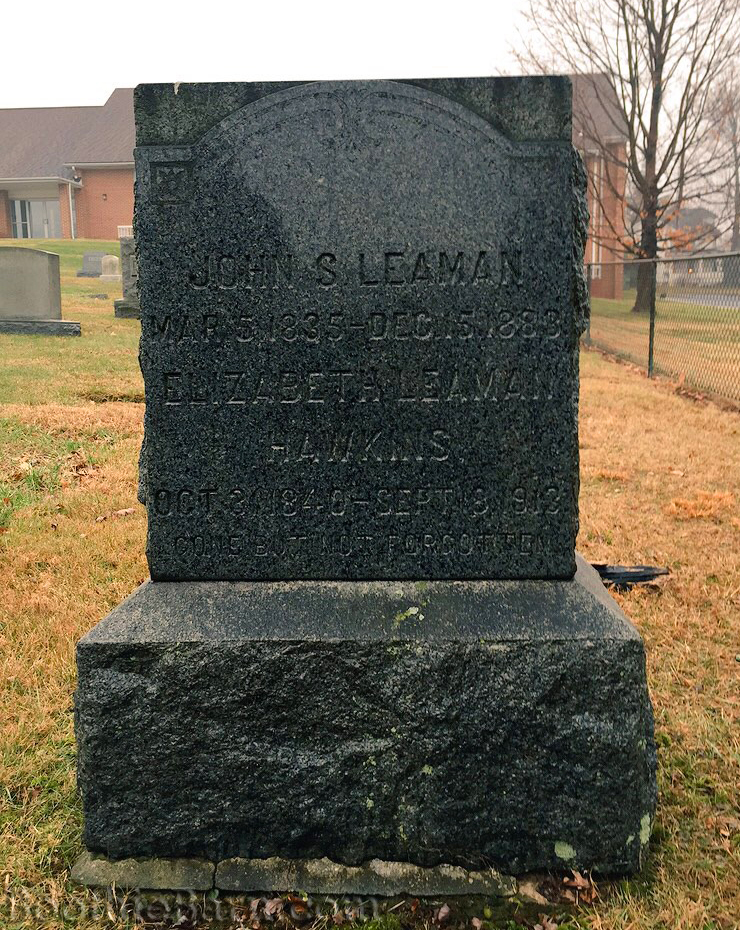
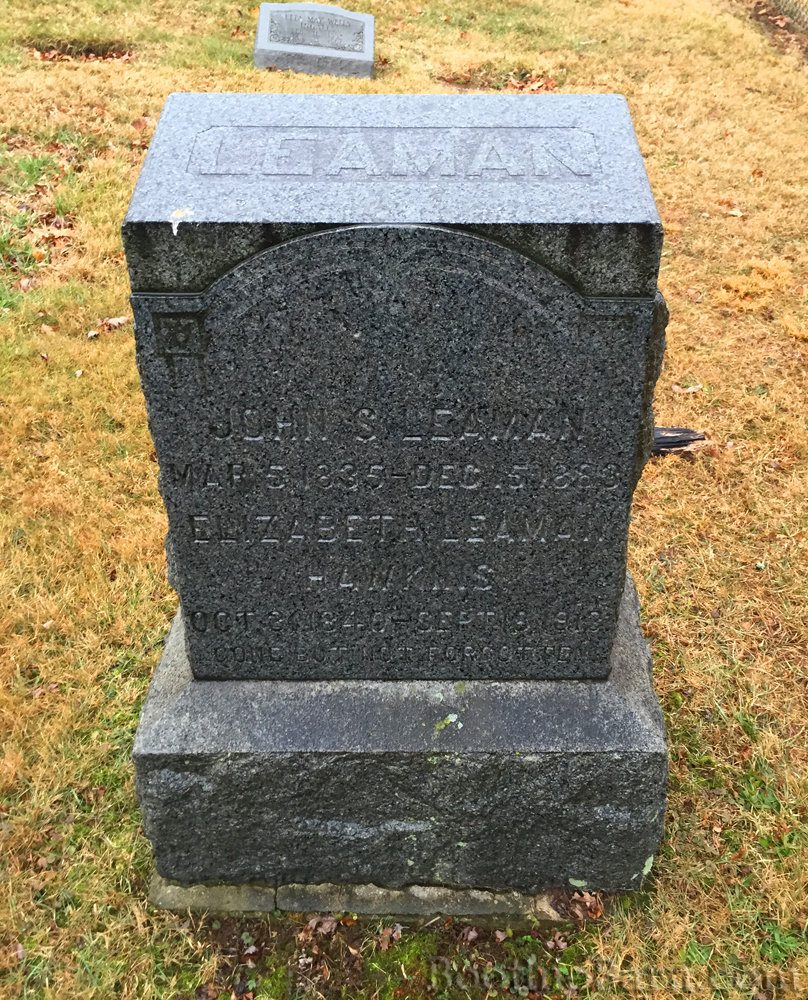
Burial Location: Upper Seneca Baptist Church Cemetery, Germantown, Maryland

Connection to the Lincoln assassination:

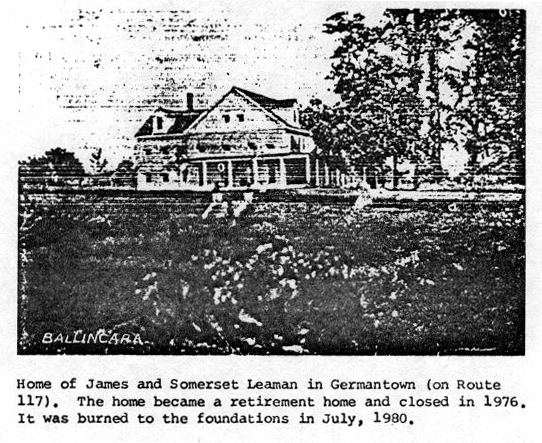
John Somerset Leaman was a resident of Germantown, a village in Montgomery County, Maryland northwest of Washington, D.C. Leaman, who went by both John and by Somerset, his middle name, was a thirty year old carpenter who had lived in Montgomery County his whole life. On April 16, 1865, Easter Sunday, John and his younger brother James were enjoying the hospitality of one of their neighbors named Hezekiah Metz. Metz had invited the Leaman brothers to join him and his family for Easter lunch. Shortly before the noontime meal was to begin, an old acquaintance of both the Leamans and the Metzes showed up at the door. He was known to everyone in the region as Andrew Atwood. His father had once owned a farm in Montgomery County but had moved some years back. Nevertheless Andrew and his brother regularly returned to the Germantown area to visit. Andrew told them that he had come from Washington and that he was heading to his cousin’s home which was only about two miles off. He was a likable enough man and was quickly invited in to join the group for their meal.

The fact that Andrew had come from Washington was of great interest to John Leaman and the other guests. The news of Lincoln’s assassination was everywhere and everyone clamored to hear the news directly. Before the meal began John Leaman asked Andrew in jest, “Are you the man that killed Abe Lincoln?” Andrew answered, “Yes” and then laughed. After the shared laughter ended, John Leaman asked Andrew for more details in order to confirm some of the things they had heard. Andrew told them that yes, Lincoln had been assassinated and that while Secretary Seward had been stabbed along with his sons, he had not been killed. Then Leaman asked Andrew about General Grant. “We had heard that General Grant was assassinated at the same time on the same night,” Leaman said. Andrew replied, “No: I do not know whether that is so or not. I do not suppose it is so. If it had been so, I would have heard it.”

A short time after everyone sat down for the Easter supper and Andrew found himself once again fielding questions from those present, most of which were the same questions Leaman had asked him earlier. Again the question about General Grant’s possible assassination came up. “No, I do not suppose he was,” Andrew replied. “If he was killed, he must have been killed by a man that got on the same train or the same car.”

The attention he was receiving must have given Andrew Atwood a little boost of confidence because he started to make slight flirtations with Hezekiah Metz’ 17 year-old daughter Martha. To John Leaman and his brother James, these attempts at paying his addresses to Ms. Metz made Atwood act confused but calm. These advances were subsequently rebuffed by Ms. Metz with Leaman later agreeing that Martha was “showing him the cold shoulder on that day”.

After dinner was over, Andrew began to depart and was joined for a bit in the yard by John’s brother James. James believed the cold treatment Andrew received from Ms. Metz was bothering Andrew. “Oh, my! What a trouble I see!” Andrew said to James before departing. “Why, what have you to trouble you?” James Leaman inquired. “More than I will ever get shut of,” Andrew replied. With that Andrew bade his goodbye and walked the remaining two miles to his cousins’ home.

The Leaman brothers enjoyed the remainder of their time with the Metzes before they also departed back to their shared home.

leaman-brothers-home

Life continued very much as it had before for the Leaman brothers for the next few days. Either they or Hezekiah Metz made causal mention of the news Andrew had brought regarding the false report of Grant’s assassination to another neighbor named Nathan Page, but they thought nothing else of it.

Then in the early morning of April 20th, the Leaman brothers saw a contingent of Union soldiers heading towards their home. When the soldiers got near the house, James put his head out of the window and called to the soldiers. The sergeant in charge asked James if he knew a man by the name of Atzerodt. James replied that he didn’t. That name was not familiar to him. Then the sergeant asked if he knew a man named Atwood. To this, James replied in the affirmative. The sergeant then went up to the door and John Leaman came out. The sergeant asked John if he knew a man named Atwood and John replied that he did. The sergeant made a motion to the soldiers who had stayed back a bit and John Leaman watched as Andrew Atwood was brought forward. Atwood kept his head down, but when he got in front of John, the two shook hands and Leaman identified the man as Andrew Atwood. John also seemed to recall something that his younger brother didn’t. He confirmed that Atwood’s family name was actually Atzerodt. Upon hearing this information, the sergeant thanked John and sent Atwood away with a detachment of the soldiers.

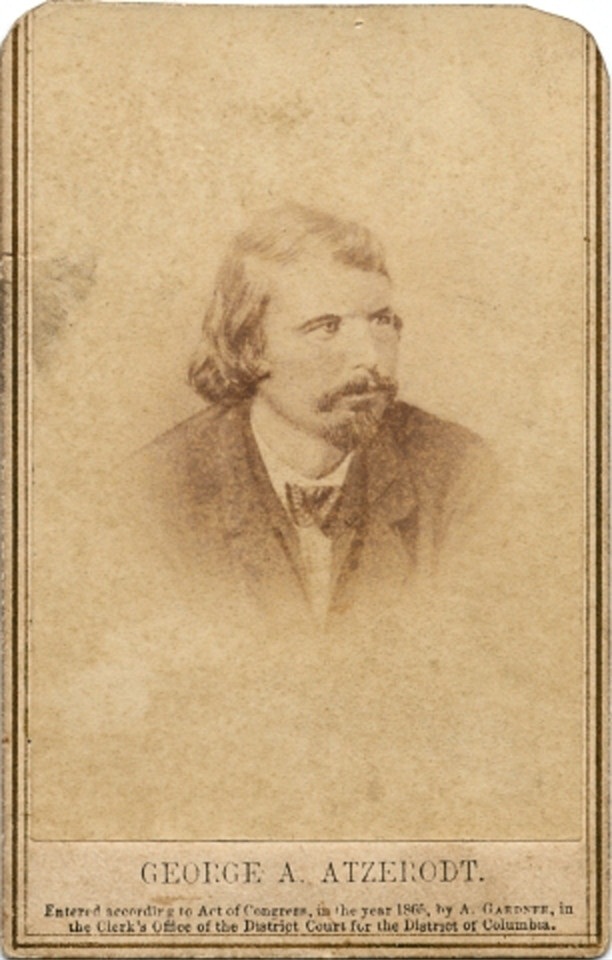
It was shortly thereafter that the Leaman brothers learned what was going on. It appears that their acquaintance Andrew Atwood was actually named George Andrew Atzerodt and that he was wanted in connection with the assassination of Abraham Lincoln.

Atzerodt CDV


A strange case of the game of telephone had occurred over the last few days. Remember how “Atwood” had calmly told the Leaman brothers and the Metzes at Easter dinner that the only way Grant was assassinated was “if a man had followed him onto his train”? That piece of news was told to neighbor Nathan Page who passed it on to another neighbor who was a Union detective named James Purdom. By the time Purdom passed the information on to a detachment of Union soldiers camped nearby, the story had been transformed into a man named “Lockwood” having stopped eating in the middle of the meal, thrown down his knife and shouted that “if the man on the train had followed Grant dutifully, he would have been assassinated too.” This latter statement is far more incendiary than George’s actual words. This is what sent Sergeant Zachariah Gemmill of the First Delaware regiment to the home of Hartman Richter looking for a man named “Lockwood”. While the name was wrong, the description he had been given was accurate enough for Gemmill to compel “Atwood” to come with him. Sgt. Gemmill took “Atwood” to the Leaman brothers’ home where he was unmasked as Atzerodt.

It is important to note that even if the game of telephone style of reporting hadn’t brought Gemmill to the door of Hartman Richter, George Atzerodt would still have been arrested on that day. Just a few hours after Gemmill made his arrest, a separate group of federal detectives arrived at Hartman Richter’s home to arrest George. They had been sent on a lead given to them by John Atzerodt, a detective for the Maryland provost marshal and George’s own brother. This group of detectives were too late to arrest George and also missed out on the reward money for his capture that went to Gemmill and his men.

At the trial of the conspirators, John Leaman, James Leaman, and Hezekiah Metz were all called to testify. The Leaman brothers were used more as defense witnesses, testifying that Atzerodt was calm during the supper and to his exact wording regarding Grant. Metz was a bit more unsure about Atzerodt’s wording regarding Grant, but reinforced the idea that he did not act in any unusual way and definitely did not throw down his knife and make a dramatic statement of any sort. Even Sgt. Gemmill would write in his report about the arrest that he, “could get no evidence around there to prove that [Atzerodt] did say” anything as dramatic as what was reported to him.

Life went back to normal for the Leaman brothers. John Somerset Leaman lived out the rest of his live in Montgomery County. He died on December 15, 1883 at the age of 48. His younger brother James outlived him by a number of years, dying in 1917 at the age of 80. James Leaman is buried in D.C.’s Rock Creek Cemetery.

GPS coordinates for John Somerset Leaman’s grave: 39.2408082, -77.2335394

Categories: Grave Thursday, History | Tags: , , , , | 6 Comments

A “Thomas Jones” Carol

With the holidays almost here, it’s time for another installment of Boothie Christmas caroling where we revise a classic Christmas Carol into a Lincoln assassination themed Boothie Carol. Today’s song is a revised version of, “Silver Bells”. I hope you all enjoy it in the humorous manner in which it is intended.

Thomas Jones Christmas Carol

“Thomas Jones”

As sung to, “Silver Bells”

Easter morning, without warning,
Sam Cox comes down my street.
In the air there’s a feeling of danger.
I start going, without knowing
Why his dad wants to meet,
But I get to Rich Hill and I hear:

Thomas Jones, (Thomas Jones)
I’ve hidden Booth in the thicket
Lend a hand (Lend a hand).
Help this man (Help this man).
Make sure he gets river bound.

When I find him, Herold’s with him,
So I say to them both,
“We must wait for the troopers to leave here.”
He wants papers. I say, “Later.”
Then I give him my oath
No amount could cause me to betray

John Wilkes Booth, (John Wilkes Booth)
It’s not quite time to go boating.
Hunker down (Hunker down).
Don’t be found (Don’t be found).
Soon it will be rowing day!

Previous years’ Boothie Carols can be read here:
“It’s the Most Wonderful Time of the Play” / It’s the Most Wonderful Time of the Year
“We Bruti” / We, Three Kings of Orient Are
“Wilkes Booth the Head Conspirator” / Rudolph the Red-Nosed Reindeer
“Lewis Powell is Coming For You” / Santa Claus is Coming to Town
“Little Doctor Mudd” / Little Drummer Boy
“Boothie Wonderland” / Winter Wonderland

Categories: History, Levity | Tags: , , , , , , , | 7 Comments

Grave Thursday: Eaton Horner

Each week we are highlighting the final resting place of someone related to the Lincoln assassination story. It may be the grave of someone whose name looms large in assassination literature, like a conspirator, or the grave of one of the many minor characters who crossed paths with history. Welcome to Grave Thursday.


Eaton Horner

eaton-horner-grave

Burial Location: Loudon Park Cemetery, Baltimore, Maryland

Connection to the Lincoln assassination:

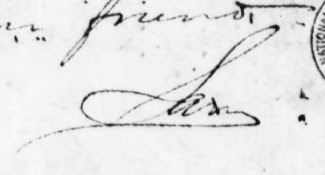
Eaton Horner was a detective working for Maryland Provost Marshal James L. McPhail in 1865. After the assassination of Abraham Lincoln, Horner, along with another detective named Voltaire Randall, were tasked with hunting down and finding conspirator Samuel Arnold. The authorities had searched John Wilkes Booth’s belongings at the National Hotel and had found a suspicious letter signed by a man named “Sam”.

Sam letter signature

The letter was sent from a small village outside of Baltimore called Hookstown. The contents of the letter spoke of secret plots with sentences like, “You know full well that the G—t suspicions something is going on there; therefore, the undertaking is becoming more complicated.” When the identify of “Sam” was found out to be Samuel Arnold, a party traveled to Hookstown to the home of Arnold’s brother in order to arrest Sam.

arnold-home-in-hookstown

The Arnold home in Hookstown

However, when they arrived at Hookstown the detectives found that Sam Arnold was not there. He had found a job in Fortress Monroe, Virginia a couple of weeks earlier. With this information Eaton Horner and Voltaire Randall hopped on a ship and made their way to Fort Monroe. They arrested Arnold as he was sleeping in the small room in the back of the store where he worked. He was the first of the Lincoln assassination conspirators to be arrested. Arnold spoke freely to Horner and Randall and, when they returned him to Baltimore, he was presented with a letter from his father encouraging him to write a full confession of his involvement with John Wilkes Booth’s abduction plot. Arnold did this in the presence of Horner, Randall and another detective, William McPhail. I have previously posted Arnold’s confession here. Arnold was shipped down to Washington and imprisoned shortly thereafter.

Eaton Horner and Voltaire Randall tried in vain to receive a share of the reward money for their arrest of a Lincoln conspirator. Their initial request for reward money and accompanying recommendation from Provost Marshal James McPhail was passed over. But Horner and Randall decided to try and get a recommendation from someone with a little more clot, regardless of whether they knew him or not. The pair enticed a newspaper editor friend of theirs named C. L. Sanders  who had lived in Illinois during the Civil War to write a letter on their behalf to the former Governor of Illinois who was then a U.S. Senator from Illinois, Richard Yates:

“Balto. April 25th 1866
Hon. Rich’d Yates,
Dr Sir,
During the Presidential & Gubernatorial campaign of /64, it was my pleasing duty to edit the “Macomb Journal” McDonough Co. Ill & in that capacity met you on several occasions. My object in addressing you is to secure your interest in the behalf of two detectives who contributed more to the arrest of the Conspirators than any other parties. Mr. Eaton G. Horner & Mr. Voltaire Randall of this city arrested Arnold & gave the information which led to the arrest of Payne, Herold, & Atzerodt, & fastened the assassination of our great & fond President upon Booth. Because the arrest was made & the information given before any reward was offered, these two men have been deprived of any portion of the reward.
I would earnestly solicit your interest in their behalf & would refer you for fuller particulars in the case to Hon. Jno. L. Thomas, H. R. member from this city.
Hoping Sir, for your influence in this matter, I have the honor to remain
Very Respectfully,
Your obt. Servt
C. L. Sanders
221 Balt. St.
Balt. Md.”

Amazingly, even though neither Horner or Randall were constituents of Sen. Yates, and the fact that the former Governor had no idea who they were, he did send a letter on their behalf to the War Department:

“Washington DC
May 2, 1866
Hon. E. M. Stanton
Secretary of War
Sir,
I have the honor to refer to you, for your consideration, the enclosed letter of Mr. Sanders, in relation to the distribution of the awards in the conspiracy case.
If the facts stated by Mr. S. are correct, it would seem that the claim is a just one.
Very respectfully,
Your obt Svnt
Rich. Yates
Senator”

It was a valiant effort on the part of Eaton Horner and Voltaire Randall, but it did not help. No reward money was ever given for the arrest of Samuel Arnold.

Eaton Horner is buried in Loudon Park Cemetery in Baltimore. There are many others buried in Loudon Park including John T. Ford and his brother James, Ford’s Theatre stagehand Henry James, and George Atzerodt’s brother John Atzerodt who also worked from Provost Marshal James McPhail.

GPS coordinates for Eaton Horner’s grave: 39.281038, -76.677574

Categories: Grave Thursday, History | Tags: , , | 2 Comments

Grave Thursday: Dr. William Queen

Each week we are highlighting the final resting place of someone related to the Lincoln assassination story. It may be the grave of someone whose name looms large in assassination literature, like a conspirator, or the grave of one of the many minor characters who crossed paths with history. Welcome to Grave Thursday.


Dr. William Queen

dr-william-queen-grave-1

Burial Location: St. Mary’s Cemetery, Bryantown, Maryland

Connection to the Lincoln assassination:

Dr. William Queen was a physician in Charles County, Maryland who lived about six miles south of Bryantown. On November 11, 1864, John Wilkes Booth rode the stage down from Washington, D.C. to Bryantown where he spent the night. In his possession, Booth carried a letter of introduction to Dr. Queen. Booth had acquired this letter while he was in Montreal, Canada in the middle of October from a Confederate smuggler named Patrick Martin. Martin was from St. Mary’s County and still had contacts with the underground network of Confederate sympathizers and operatives back in Southern Maryland. Booth was anxious to connect with these individuals for his planned abduction plot against Abraham Lincoln. When Booth arrived in Bryantown the first time, he was able to send word to Dr. Queen that he wanted to meet with him. The next day Dr. Queen’s son, Joseph, picked Booth up at the Bryantown Tavern and brought him to his father’s home. John Wilkes Booth spent the night of November 12, at Dr. Queen’s home.

Dr. Queen’s son-in-law, John Thompson, would later testify at the trial of the conspirators that Booth’s letter of introduction to the doctor only mentioned that the actor was looking to purchase some land in the area and asked Dr. Queen to furnish him with assistance in this regard. This, however, is likely just a cover story that Booth and the Queen family committed to using. Booth’s true purpose was to scout the lands and roads of Charles County while simultaneously looking for individuals who would assist him in his abduction plot.

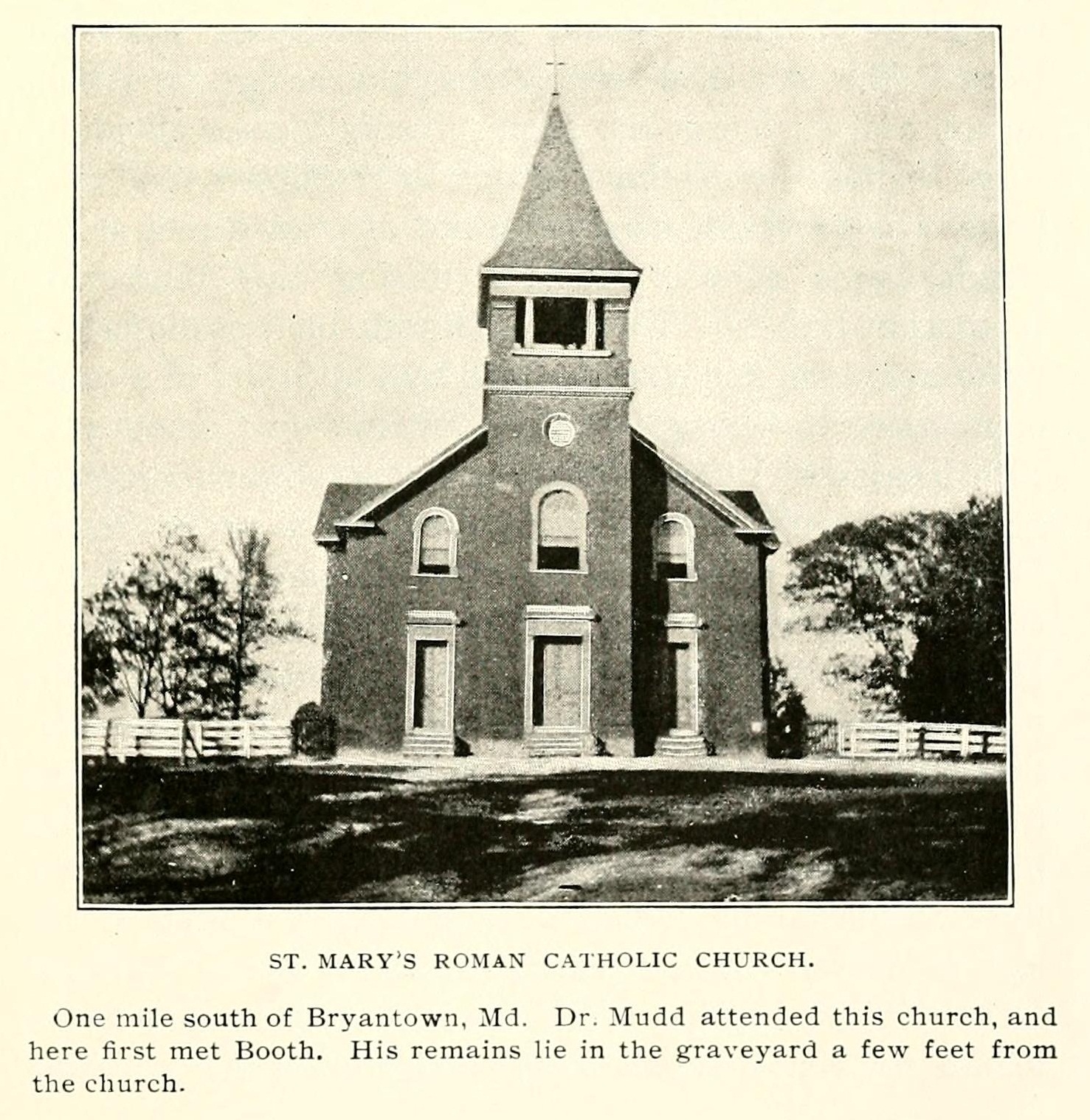
Dr. Queen was about 73 years old when Booth first arrived at his home. He was quite infirm and less than a year later he would become bedridden. So while Dr. Queen could not provide Booth with much in the way of physical assistance, his knowledge of the people and land was helpful. The next day, on November 13th, John Wilkes Booth joined Dr. Queen and his family in attending church at St. Mary’s Church in Bryantown. “Coincidentally” Dr. Samuel Mudd made the decision to attend St. Mary’s Church that Sunday rather than his home church of St. Peter’s. John Thompson introduced John Wilkes Booth to Dr. Mudd outside of the church before services commenced.

St. Mary's Church Oldroyd

John Wilkes Booth would return to Dr. Queen’s home after church was over and subsequently return back to Washington.

Booth was not absent from Charles County for very long, however. On December 17th, he returned to Bryantown and spent another night with Dr. Queen and his family. The next morning, a Sunday, Booth once again attended church at St. Mary’s before he met up with Dr. Mudd. For the next few days, Dr. Mudd, not Dr. Queen, would be Booth’s host. In this way, Dr. Mudd came to replace Dr. Queen as a more able bodied facilitator of Booth’s plot. Mudd introduced the actor to Thomas Harbin, a Confederate agent who signed on to help with the abduction plot. It was also during this trip that Dr. Mudd helped Booth to purchase a horse from the doctor’s next door neighbor, George Gardiner. Booth returned to Washington on December 22nd, and, the very next day, Dr. Mudd took a visit to Washington where he happened to introduce Booth to John Surratt, who would become another willing and helpful participant in Booth’s plot.

After the assassination of Lincoln and the subsequent investigation, Dr. Queen avoided arrest due to his declining health that had left him bedridden. His son-in-law, John Thompson, was taken up to Washington in his stead. Thompson would testify at the trial about Booth’s arrival in the county and his introduction to Dr. Mudd.

dr-queen-obit-1866

Dr. Queen’s health continued to deteriorate and, on March 1, 1866, he died at his home near Bryantown. He was buried next to his first wife and his son Joseph (the son who had transported Booth to the Queen home in November of 1864) who had died in November of 1865. The family plot is near the back of St. Mary’s Church cemetery, the same cemetery where Dr. Mudd would later be buried.

One of the artifacts in the collection of the Dr. Samuel A. Mudd House Museum is a newspaper clipping that was owned by one of Dr. Queen’s daughters, Molly Queen. The clipping contains a poem called “Then and Now” which was a piece of political propaganda related to the election of 1864. The poem laments the poor condition of the country due to the last four years of Lincoln’s presidency and encourages the reader to vote for the Democratic candidate, George McClellan. The poem ends with the line: “Three cheers for Mac and the good times coming; And a groan for Abraham!”

While this piece completely fits with the political point of view of the Queen family and so many others in Southern Maryland, what makes this artifact unique and worth saving is an ambiguous signature which is affixed in pencil to the side of the clipping:

queen-clipping-mudd-house

queen-clipping-booth-signature

John Wilkes Booth did visit the Queen family for the first time just a few days after the election of 1864 and so it is likely that Molly Queen had this clipping out and around during the actor’s visit. Even if this is not actually John Wilkes Booth’s signature, it still is a fascinating artifact connecting John Wilkes Booth and the family of Dr. William Queen.

GPS coordinates for Dr. William Queen’s grave: 38.539667, -76.836000

Categories: Grave Thursday, History | Tags: , , , | 16 Comments

Grave Thursday: Frederick Aiken

Each week we are highlighting the final resting place of someone related to the Lincoln assassination story. It may be the grave of someone whose name looms large in assassination literature, like a conspirator, or the grave of one of the many minor characters who crossed paths with history. Welcome to Grave Thursday.


Frederick Aiken

frederick-aiken-grave-1

Burial Location: Oak Hill Cemetery, Washington, D.C.

Connection to the Lincoln assassination:

Frederick Aiken was one of Mary Surratt’s defense counsels at the trial of the conspirators. A dramatic version of his exploits during the trial was the subject of the 2010 movie, The Conspirator, starring James McAvoy and Robin WrightDuring the course of researching for the film, it was discovered by researcher Christine Christensen that Aiken had been buried in an unmarked grave in D.C.’s Oak Hill Cemetery. The Surratt Society completed a fundraiser to mark Aiken’s grave. I briefly posted about the installment of the grave marker in 2012.

I highly recommend Christine Christensen’s article about Aiken’s life called, Finding Frederick.

Coincidentally, Frederick Aiken is buried within throwing distance of another attorney at the trial of the conspirators, William Smith Cox, the lawyer who represented Michael O’Laughlen. Later, Walter Cox would be involved in a trial for another assassinated president when he was the presiding judge at the trial of Charles Guiteau, the assassin of President James Garfield.

aiken-and-coxs-grave-oak-hill


GPS coordinates for Frederick Aiken’s grave: 38.914285, -77.058428

Categories: Grave Thursday, History | Tags: , , , , | 1 Comment

Edwin Booth and the “Big Hole in the Ground”

edwin-booth-circa-1876-harvard In 1876, eleven years after his brother assassinated Abraham Lincoln, Edwin Booth was still making his living as a touring actor. After a brief period of respectful grief and contemplation in the months following his brother’s crime, Edwin’s success and fame as an actor had only increased through the years. However, while Edwin was widely respected and praised for his talents, his business dealings over the past decade had hurt him considerably. The lavish theater he financed, constructed, and named after himself in New York had bankrupted him and he had been forced to sell ownership of it to help cover his debts. As much as he disliked the stress of touring, it was the only way he was able to recoup his losses and provide for his family. He had hoped the Booth Theatre would be his home for years, but its failure required him to retake the role as a touring star.

One man who knew the pain of losing a theater all too well was John T. Ford – he having lost his theater in Washington due to Edwin’s brother’s crime. John T. Ford approached Edwin Booth with an idea for a tour of the heart of the former Confederate states. Edwin Booth had not played in these areas since before the Civil War and John T. Ford assured Edwin that there would be a fortune to be made in his return. Edwin agreed and starting in January of 1876, he began a tour of cities in Virginia, North Carolina, South Carolina, Georgia, Alabama, Tennessee and Kentucky. Joining him on this tour was his second wife, Mary McVicker. As Ford had predicted, Edwin was widely acclaimed during his performances in the South. “It was an ordinary sight to behold the ladies standing in double lines throwing flowers in his path as [Edwin] walked from his hotel to the theatre,” the company manager John Barron later recalled.

While the tour was a financially successful one and Edwin was pleased by the reception of his audiences, he was often displeased with the newspaper articles that accompanied his tour. The articles often contained “disgraceful anecdotes” about his father, Junius Brutus Booth, “all in the main false or exaggerated.” Worse yet, Edwin could not escape the shadow of his brother’s crime. He would write to a friend that during his tour he was, “daily reminded of the disgrace and misery that can never be forgotten by me or any member of my family.” Edwin was no doubt aware that there was a strong desire by many Southerners to see not just “Booth, the great Tragedian” but also “Booth, the brother of the assassin.”

edwin-booth-in-georgia-1876-nytimes

The tour with Ford was a short one with Edwin completing his final performance in Bowling Green, Kentucky on March 3rd. The entire tour grossed almost $90,000. Edwin made his own arrangements to perform in Louisville, Kentucky starting on March 13th, leaving him with a few days of downtime. Edwin decided to take this opportunity to visit a local landmark, Mammoth Cave.

mammoth-cave-nps

Mammoth Cave is the longest known cave system in the world with over 405 miles worth of surveyed passageways. Edwin Booth was greatly impressed by his experience touring through just a small bit of the cave system and wrote about his experience to his daughter Edwina. Please be aware that in this letter Edwin writes the words of his black guide, William Garvin, in the form of “negro dialect” which is most widely known today due to the writings of Mark Twain. Edwin also demonstrates his racial views which, while not acceptable today, were common with white men of the period. Edwin Booth was likely unaware that his guide was a veteran of the Civil War and had done more to protect the country that they shared than the actor ever did.

“I must tell you of our ride from Mammoth Cave, that ” big hole in the ground.” I shall try to relate the wonders I heard in the cavern, and describe our jog over the stones through the forest. Our guide was a bright young colored chap, who produced by his imitations of dogs, cows, etc., some fine effects of ventriloquism on our way through the cave. In pointing out to us a huge stone shaped like a coffin he would remark: “Dis is de giant’s coff-in”; then, taking us to the other dilapidated side of it : ” Dis is what he coughed out.” Then we reached what they call down there “The Altar,” where some foolish folk were married once upon a time. “De young lady swore she nebber would marry any man on the face ob the earth, so she came down yer and got married under de face ob de earth. ‘Spec’ she wanted materomony inter de groun’.” Then he would cry out, ” Hi ! John ! ” and we could hear the echo, as we thought, far away; then he would strike the ground with his staff, and we could hear a loud, reverberating sound, as tho’ all beneath were hollow, though when any of us tried it, no sound would come. He had finally to own up that he was both cause and effect.

William Garvin, Edwin Booth's guide through the Mammoth Cave

William Garvin, Edwin Booth’s guide through the Mammoth Cave

Frequently we found in different chambers in the cave crystallizations hanging from the rocky ceilings called “stalactites,” and others rising from the ground directly beneath them, reaching up and often joining the ones from above, and forming a solid pillar from floor to roof; these latter are called ” stalagmites.” William, our guide (very serious all the time), remarked that ” De upper ones was called stalac-tite ’cause dey stuck tight to de roof, and de odder ones stalag-mite — cause dey might reach the upper ones, and den again dey might n’t.” A facetious and comical darky, truly! One of these columns, or pillars, had a sort of knob on it shaped like a fat dumpling face, which is named here “Lot’s Wife.” William said, “And she has n’t done poutin’ about it yet.” So we went laughing at his weak jokes; for it was funny to us actors to see this fellow throwing his wit at us, and our appreciation of his acting made him very happy. I think I have already written about the pretty little bats that hang about the walls and roof of the cave in clusters, with heads down and mouths wide open, as if laughing in childish glee at the fun they are having in playing “upside down.”

One of the geological formations pointed out by William Garvin was the “Giant’s Coffin”. This large slab of rock, about 40 feet long resembles a huge coffin when viewed from the right angle.

giants-coffin-engraving-mammoth-cave

giants-coffin-mammoth-cave

This and the other features of Mammoth Cave must have made a lasting impression on Edwin. Perhaps it was seeing these sights in person and then recounting them in his descriptions to Edwina that fueled Edwin’s desire to return. Over a year would pass, but as soon as it was convenient, Edwin made a return visit to Kentucky with both Edwina and Mary McVicker in tow.

In November of 1877, Edwin had a break of a little over a week after his engagement in Philadelphia ended and his new engagement in Cleveland was set to begin. Though it was certainly out of the way, Edwin rushed his family off to Cave City, Kentucky so that he could visit Mammoth Cave, once again. Whether Edwina was invited to join her father in exploring the cave on this trip is unknown, but I’d like to think that she was. It was, after all, a special day for the Booths. Edwin had scheduled his return visit to the cave to fall on November 13th, his 44th birthday.

Edwin revisited much of the same sites he saw in the year prior, possibly with William as his guide once again. This time, when the group of Edwin and his friends got to the “Giant’s Coffin”, Edwin enacted a plan he had thought up.

“While there Mr. Booth laid the first stone of what he hopes will become a monument to the memory of Shakespeare. The stone, weighing about two hundred pounds, was, with considerable exertion on the actor’s part, placed in position at the foot of the ‘Giant’s Coffin’ and the name of Shakespeare and the date painted on it in large white letters. Mr. Booth hopes that visitors to the cave, in the future, will each add a stone to the monument until it becomes one fitting the memory of the great author.”

Various searches have failed to come up with anything regarding a Shakespeare monument near the Giant’s Coffin, so I think it’s safe to say that Edwin’s dream never came to fruition. However, it would be an interesting piece of research to see if the cornerstone he laid and painted still exists somewhere near the coffin formation.

While Edwin Booth’s monument to Shakespeare may not stand today, he still managed to leave an indelible mark on Mammoth Cave just as the cave had left on him. According to local stories, during one of Edwin’s two trips to the cave he gave an impromptu recitation from Hamlet, his signature piece. He gave his recitation from high up on a ledge outcropping that was known as the Theater Gallery. To his few friends and the other souls who were lucky enough to be present, this was a truly unique performance by the greatest actor of the day in the most breathtaking of settings. Ever since that performance, the area in which he gave his recitation has been appropriately called “Booth’s Amphitheater” in honor of the great tragedian who enjoyed his visits to that “big hole in the ground” in Kentucky.

booths-amphitheater-postcard-1

edwin-booths-ampitheater-mammoth-cave

References:
American Tragedian: The Life of Edwin Booth by Daniel J. Watermeier
Edwin Booth: A Biography and Performance History by Arthur W. Bloom
Edwin Booth: Recollections by His Daughter, Edwina Booth Grossmann, and Letters to Her and to His Friends by Edwina Booth Grossman
“Edwin Booth’s Birthday” Cleveland Daily Plain Dealer, Saturday, November 17, 1877
Mammoth Cave National Park
Black Guides of Mammoth Cave
Pictorial Guide to the Mammoth Cave, Kentucky by Adam Binkerd

Categories: History | Tags: , , | 4 Comments

Blog at WordPress.com.