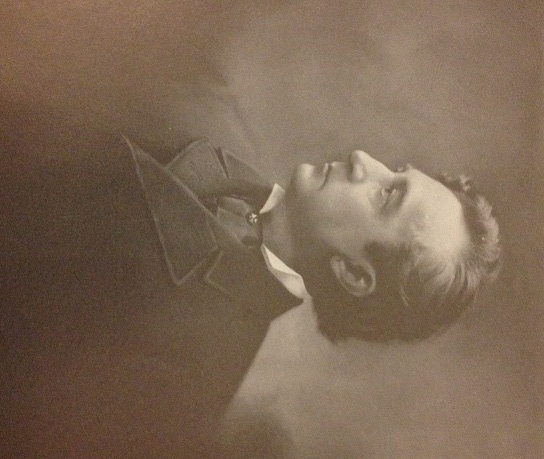
Posts Tagged With: Relics

JWB’s Note at the Archives

A new exhibition entitled, “Making Their Mark: Stories Through Signatures” is coming to the National Archives in Washington, D.C.  Here’s a blurb from the Archives describing the exhibit:

“Signatures are personal. The act of signing can be as simple as a routine mark on a form, or it can be a stroke that changes many lives. Signatures can be  an act of defiance, or a symbol of thanks and friendship. “Making Their Mark: Stories Through Signatures” will draw from the billions of government records at the National Archives to showcase a unique collection of signatures and tell the stories behind them.

illustrate the many ways people have placed their signature on history, from developing to signing Power The stories in these records, of famous and infamous, known and unknown individuals, are part of our s history, all having made their marks on the American narrative.”

The exhibit contains the signed documents of many notable (Thomas Jefferson, George Washington, Franklin Roosevelt, etc.) and famous (Jackie Robinson, Katharine Hepburn, Michael Jackson, etc.) individuals.  It also contains documents from unknown people who wrote of the world around them such as a Japanese American in an interment camp signing a loyalty oath during WWII.

The collection also contains the signatures of infamous individuals like Adolf Hitler, Saddam Hussein, and presidential assassin, John Wilkes Booth.

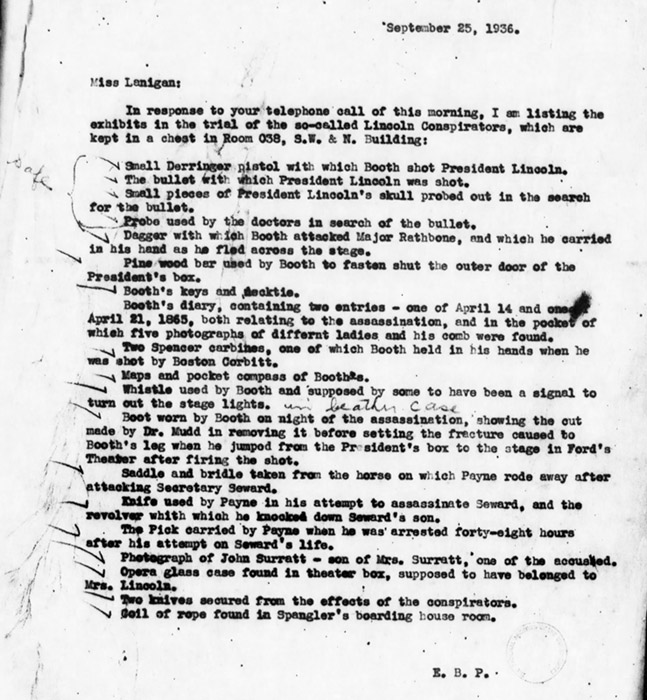
The National Archives houses the paper evidence collected by the government during the investigation into Lincoln’s assassination.  Therefore, they have a multitude of documents written by or owned by Booth to display.  For this exhibit, the Archives is displaying one of the most intriguing notes that John Wilkes Booth ever signed: his note to Vice President Andrew Johnson.

Booth's note to Johnson

John Wilkes Booth left this note for the Vice President in the hours leading up to the assassination.  His short message, “Don’t wish to disturb you Are you at home? J Wilkes Booth” has been the subject of inquiry ever since.  Conspiracy theorists attempt to use this note as evidence of the Vice President’s complicity in Lincoln’s murder, but most historians seem to believe that, in the moments leading up the tragic events, Booth was making sure all his targets were accounted for in order to topple the entire head of the government: Lincoln, Johnson, and Secretary of State William Seward.

I am not personally aware if this note has ever been on public display before this exhibit.  The “Making Their Mark: Stories Through Signatures” exhibit runs from March 21st, 2014 until January 5th, 2015.  After that, it is likely this fascinating artifact, and all the others, will be returned to the vaults of the National Archives.  Don’t miss the opportunity to see John Wilkes Booth’s note to Vice President Johnson on display at the National Archives.

References:

“Making Their Mark: Stories Through Signatures” Exhibit eGuide.  Download the guide HERE and turn to page 22 for a back view of Booth’s note. I’ve also tweeted the page on Booth so check out my Twitter account @BoothieBarn.

Categories: Uncategorized | Tags: , , , | 5 Comments

“A Sure Defense: The Bowie Knife in America”

Earlier this year, I had the pleasure of writing a piece for Knife World magazine in which I discussed the bowie knives used by John Wilkes Booth and his conspirators.  The article, entitled, “Cloak and Daggers: Cutting Through the Confusion of the Lincoln Assassination Knives“, highlighted my conclusion that the knife currently on display at Ford’s Theatre as “Booth’s knife” is not the one taken from John Wilkes Booth’s body at the Garrett farm.  I am still working on convincing and motivating those in charge of the Ford’s Theatre museum to correct this mistake.

Cloak and Daggers Knife World April 2013

Since the article was published in April, I have kept in touch with the wonderfully nice editor of Knife World, Mark Zalesky.  Mark has been working exceedingly hard recently having been asked to guest curate an upcoming exhibit on the history of the bowie knife in America.  The exhibit, which is called “A Sure Defense: The Bowie Knife in America“, opens this Friday at the Historic Arkansas Museum in Little Rock.  I received this mailer today, advertising some of the events that will be occurring on Friday and Saturday to celebrate the opening of the exhibit:

Bowie Knife Exhibit Events

I’m personally excited for this exhibition for two reasons. First of all, the press release for the exhibit, which can be read here, includes the following paragraph:

“Visitors to the public exhibit will have the opportunity to see knife designs associated with Alamo martyr James Bowie and his less famous brother Rezin, and to examine bowie knives once owned by such historic figures as Davy Crockett, Theodore Roosevelt, General Winfield Scott and John Fox “Bowie Knife” Potter. The role of the bowie knife in the Antebellum era is explored along with the Civil War and the opening of the west, and there’s a special focus on the role bowie knives played in the events surrounding the assassination of Abraham Lincoln.“

Using resources such as my article for Knife World, Mark has created a nice display about the knives used by the conspirators. In it, he has been kind enough to give my conclusion regarding Booth’s knife further press and attention.

The knives in the Lincoln display for the bowie knife exhibit are period knives, identical to the ones used by the conspirators. They are the same, “make and model” as it were, as the ones on display at Ford’s Theatre and in storage at the NPS or Huntington Library. Here is a picture of “Lincoln knives” in the upcoming exhibit at the Historic Arkansas Museum:

Bowie Knives Exhibit Assassination knves

The rightmost knife above is identical to the “Liberty knife” currently on display at Ford’s Theatre as Booth’s knife. From my research I do not believe this knife was retrieved from Booth’s body as it claimed to have been by the display at Ford’s. Though I am not 100% certain of its origin, my hypothesis is that it came from Mary Surratt’s boarding house in D.C.

The middle knife is identical to the knife found in George Atzerodt’s rented room at the Kirkwood House hotel. David Herold was seen carrying this long knife in his boot during the day of the assassination and probably removed it when visiting in George’s room on that day.  It’s counterpart is on display at Ford’s Theatre.

The leftmost knife is identical to the knife Lewis Powell used to stab Secretary Seward and the knife retrieved from John Wilkes Booth when he was shot at the Garret farm.  Powell’s knife is in the Huntington Library in California.  Booth’s knife is in storage at the NPS’ Museum Resource Ceneter in Landover, Maryland.  I’m working on getting this knife out of storage and properly displayed at the Ford’s Theatre Museum.

It is also with a deal of pride that I state that the leftmost knife and sheath in the above picture, belong to me.  I bought the knife a few years ago, wanting a duplicate of the knife Booth used to stab Major Rathbone.  According to Mark, these “smaller” Rio Grand Camp knives are harder to find as most people want the big ones like the one in the middle.  During the course of our collaboration on the Knife World article, I told him I had an identical knife to Booth’s and he asked if I would consider lending it to the Historic Arkansas Museum for the exhibition.  Though I’m not sure if I will be able to, I’m hoping to find the time to make the journey to Arkansas to see my knife along with over 200 other bowie knives.

For anyone who may live around, or are planning a trip near Little Rock, the exhibit, “A Sure Defense: The Bowie Knife in America” runs from December 13th, 2013 until June 22nd, 2014 at the Historic Arkansas Museum. The Historic Arkansas Museum is open 9 a.m. – 5 p.m. Monday through Saturday, 1 – 5 p.m. on Sunday and admission to the galleries and parking are free.

For those who can’t make it to the museum, a full color catalog documenting this historic exhibit is planned, and will be available from the museum’s gift shop and online store some time in the near future.

I hope those of you in the area will check out the exhibit at the Historic Arkansas Museum. You can learn all about the fascinating history of the bowie knife and say “hi” to my knife and sheath while you are there.

References:
Historic Arkansas Museum
Mark Zalesky, guest curator of “A Sure Defense: The Bowie Knife in America“

Categories: Uncategorized | Tags: , | 1 Comment

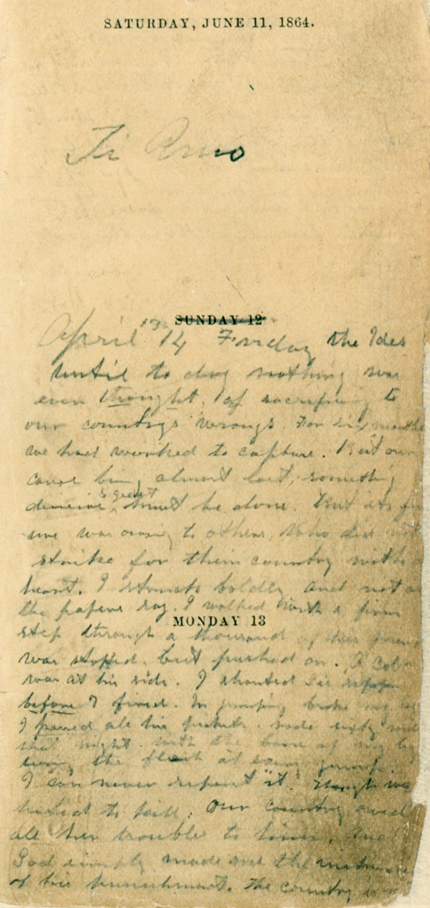
The Text of John Wilkes Booth’s Diary

Booth's Handwriting Page 1

Ti Amo

April 13 – 14 Friday the Ides
Until to day nothing was
ever thought of sacrificing to
our country’s wrongs. For six months
we had worked to capture. But our
cause being almost lost, something
decisive ^& great must be done. But its fail
ure was owing to others, who did not
strike for their country with a
heart. I struck boldly and not as
the papers say. I walked with a firm
step through a thousand of his friends
was stopped, but pushed on. A Col
was at his side. I shouted Sic semper
before I fired. In jumping broke my leg.
I passed all his pickets, rode sixty miles
that night with the bone of my leg
tearing the flesh at every jump.
I can never repent it, though we
hated to kill, Our Country owed
all her troubles to him, and
God simply made me the instrument
of his punishment. The country is not

Booth's Handwriting Page 2

April 1865
what it was. This forced union is not
what I have loved.. I care not what
becomes of me” I have no desire
to out-live my country. This night
(before the deed), I wrote a long
article in which and left it for one of the
Editors of the national Intelligencer
In which I fully set forth our reasons
for our proceedings. He or the Govmt
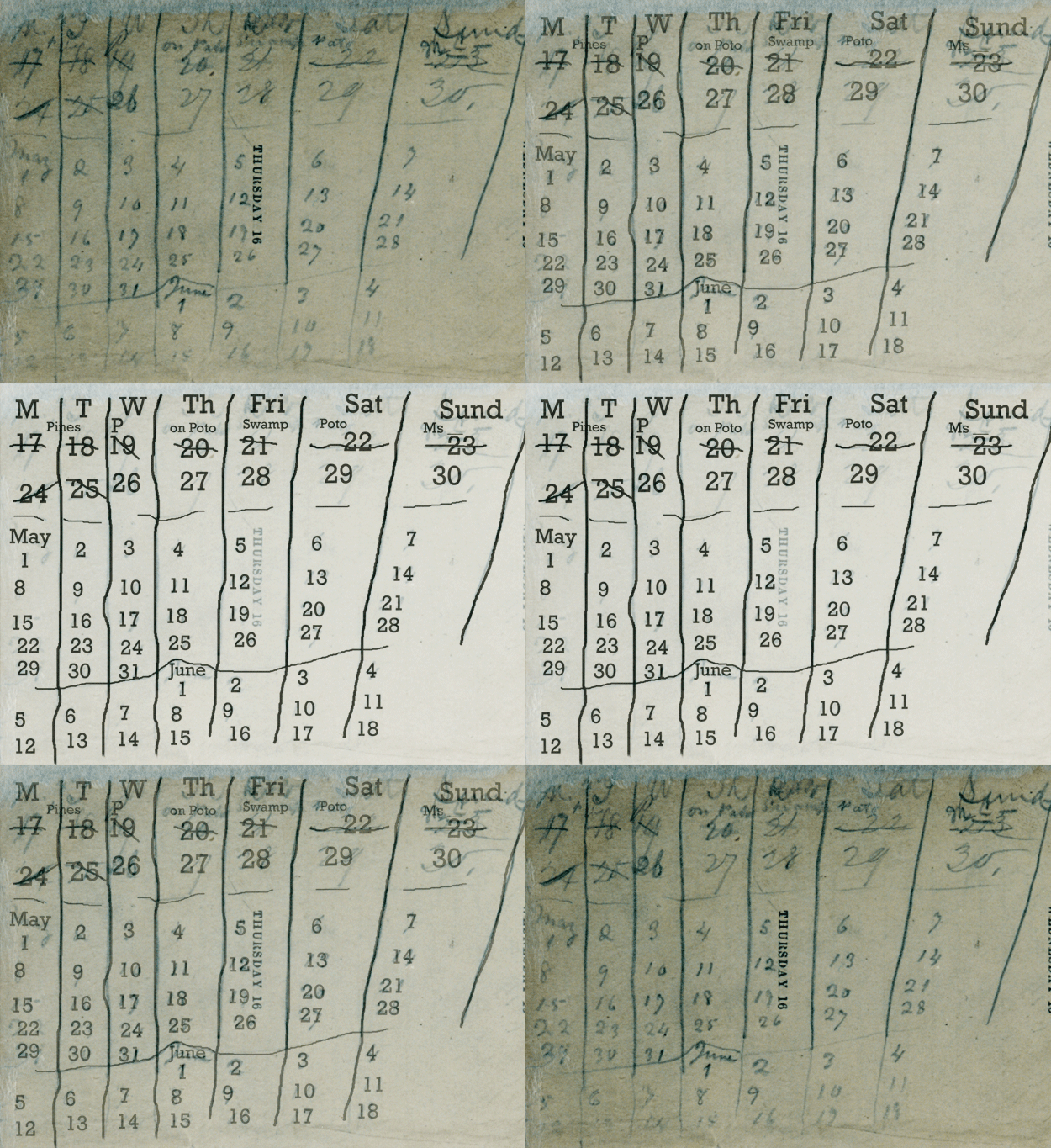
Booth's-Calendar-Animation

EDIT: On the animation above I incorrectly transcribed the letters underneath Sunday as “Ms” when it should be “M__ C__”. This likely stands for Machodoc Creek, the place where Mrs. Quesenberry’s house stood. The pair thought they entered Machodoc Creek as directed by Jones, but were actually in Gambo Creek.
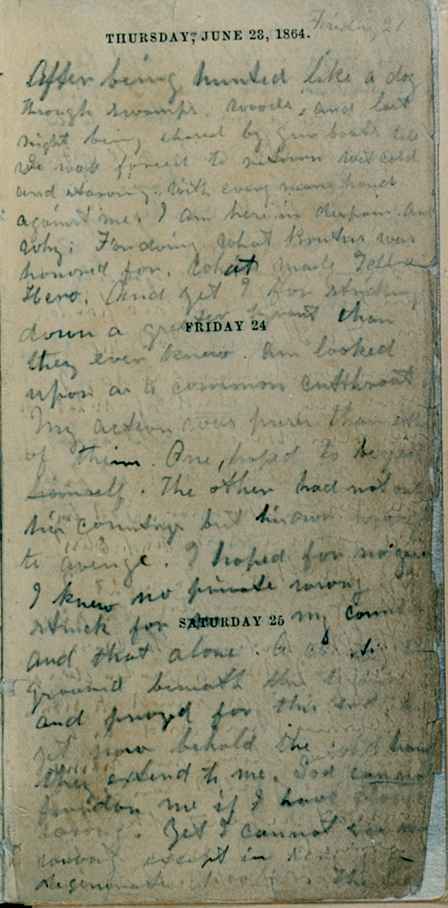
Booth's Handwriting Page 3

Friday 21
After being hunted like a dog
through swamps, woods, and last
night being chased by gun boats till
we I was forced to return wet cold
and starving. With every man’s hand
against me. I am here in despair. And
why. For doing what Brutus was
honored for. What made Tell a
Hero. And yet I for striking
down a greater tyrant than
they ever knew I’m looked
upon as a common cutthroat.
My action was purer than either
of theirs. One hoped to be great
himself. The other had not only
his country’s but his own wrongs
to avenge. I hoped for no gain.
I knew no private wrong. I
struck for * my country
and that alone. A country that
groaned beneath this tyranny
and prayed for this end and
yet now behold the cold hand
they extend to me. God cannot
pardon me if I have done
wrong. Yet I cannot see my
wrong except in serving a
degenerate people. The little
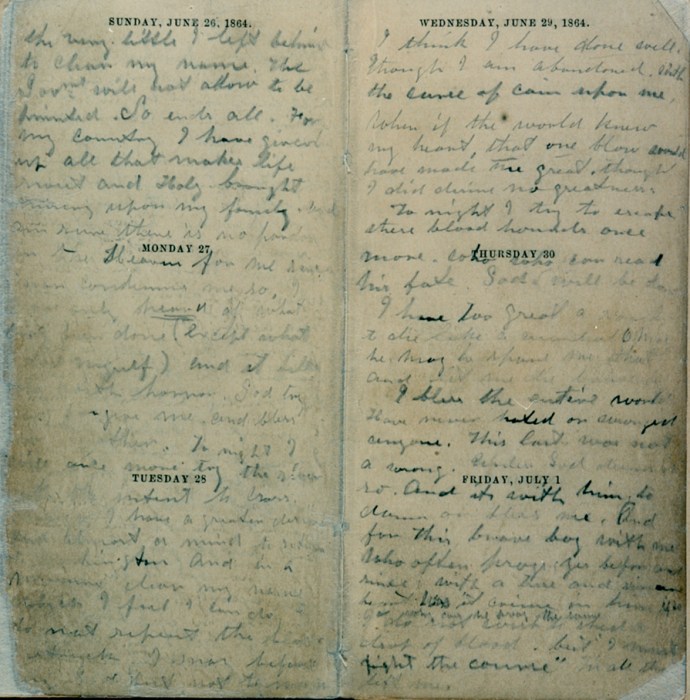
Booth's Handwriting Page 4

the very little I left behind
to clear my name the
Govmt will not allow to be
printed. So ends all. For
my country I have given
up all that makes life
sweet and Holy brought
misery upon my family and
am sure there is no pardon
in the Heaven for me since
man condemns me so. I
have only heard of what
has been done (except what
I did myself) and it fills
me with horror. God try
and forgive me and bless
my mother. To night I
will once more try the river
with the intent to cross.
Though I have a greater desire
and almost a mind to return
to Washington And in a
measure clear my name
which I feel I can do. I
do not repent the blow
I struck. I may before
my God but not to man.

I think I have done well.
Though I am abandoned with
the curse of Cain upon me,
When if the world knew
my heart, that one blow would
have made me great. though
I did desire no greatness.
To night I try to escape
these blood hounds once
more. Who who can read
his fate. God’s will be done.
I have too great a soul
to die like a criminal. O May
he, May he spare me that
and let me die bravely.
I bless the entire world.
Have never hated or wronged
anyone. This last was not
a wrong. Unless God deems it
so. And its with him to
damn or bless me. And
for this brave boy with me
who often prays (yes before and
since) with a true and sincere
heart was it crime in him. if so
why can he pray the same
I do not wish to shed a
drop of blood but “I must
fight the course” Tis all that’s
left me.

Categories: Uncategorized | Tags: , | 8 Comments

“An Interesting Flag”

The following article was written by The Rambler and appeared in February 9th, 1913 edition of the Evening Star.  The Rambler, whose real name was John Harry Shannon, wrote for the Star from 1912 until 1927, telling stories about his travels in and around Washington.  Many of his “rambles” involved trips into Maryland’s “assassination country” as I like to call it.  This article however, deals with his knowledge of one particular artifact relating to Lincoln’s assassination: the Treasury Guard flag.

Treasury Guard flag on display at the Ford's Theatre Museum

Treasury Guard flag on display at the Ford’s Theatre Museum

“An Interesting Flag

The flag which led indirectly but none the less certainly to the capture of John Wilkes Booth is now one of the main objects of interest in the Treasury building. For many years this famous flag occupied a place on the wall of the northeast corridor of the Treasury and divided honors with the money vaults as an object of popular interest. It was for many years about the first thing guides pointed out to visitors. Then the flag was loaned to Capt. O H. Oldroyd and for a long time had a prominent place in the museum of Lincoln relies. Not long ago it was reclaimed by the Treasury and hangs once more in that grim and classic building.

It was in the knotted fringe of this old flag that one of Booth’s spurs caught when he leaped from Lincoln’s box at Ford’s Theater on the night of April 14, 1863, after having mortally wounded the President and stabbed Maj. Rathbone. Had not the spur caught, Booth’s leg would in all probability not have been fractured or injured and his capture would perhaps have been very much more difficult.

When the advisability of a Home Guard for Washington was suggested the Treasury Department took an early interest if not the initiative in the movement. In In that department there was soon organized a full regiment. It was called the Treasury Guard, and Treasurer E. E. Spinner was made its colonel. Every afternoon after the department closed the regiment was drilled on the White Lot. Large crowds witnessed the drills of the Treasury Guards and the ladies of the department and the wives and daughters of the clerks naturally took a fond interest in the organization. These ladies at a meeting determined to present to the regiment a stand of colors. The regimental flag of the guard in the office of the captain of the watch of the Treasury, but it is the national flag with which this account deals.

On the night of April 12, 1865, the Treasury Guard gave a ball at Ford’s Theater. The theater was transformed into a large ballroom by the erection of a temporary flooring over the tops of the scats in the lower part of the house. The decorations were elaborate, and the flags of the guard were draped on the boxes. The guest of honor at that ball was Commodore Winslow of the Kearsarge. It was the first visit of that officer to Washington after the sinking of the Alabama.

It is narrated that after the ball John T. Ford requested the officer of the Treasury Guard to allow the flags to remain on the boxes as the President was expected to attend a performance at the theater the night of April 14. How Booth shot the President how he leaped from the box, how his spur caught, how his leg was broken or fractured by the fall, and how his injury proved an impediment in his flight are matters of common knowledge.

The day after Lincoln’s death, when the whole city was practically under martial law and Andrew Johnson had taken the oath of office as President in that room of the Treasury building long occupied as the office of the director of the mint, but which was then the office of the Secretary of the Treasury, the guard flag was brought up from the theater and taken into this room. The rent made in it by the assassin’s spur was exhibited to all those present. The Treasury Guard soon after disbanded, the flag was stored away and forgotten, and it was not brought to light again until 1872, when Capt. Cobaugh of the Treasury watch found it in the machinists’ shop in the basement of the building. The flag was loaned to the Lincoln Museum by Secretary Gage, but it was recalled not so long ago.

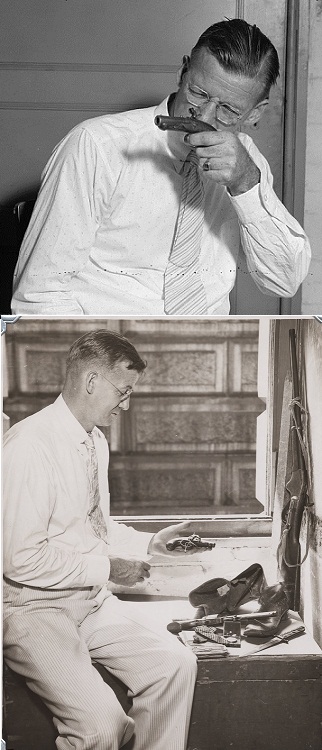
The pistol used by Booth in the assassination of Lincoln is in a safe in the office of the judge advocate general of the army, having been in the custody of that officer since the trial of the conspirators. This fact was brought out a few years ago by the sale in Philadelphia of a pistol with which the crime was said to have been committed. The purchaser wrote to the War Department and learned that he had been victimized.

Booth’s spur, the one which tripped him, and which was removed from his injured leg by Dr. Mudd, is in possession of Capt. Oldroyd.”

Torn Treasury Guard Flag

Categories: Uncategorized | Tags: , | 5 Comments

The Boothbay Theatre Auction

Thanks to the recent offering of books from authors Richard and Kellie Gutman, I purchased the auction catalog from the June 1990 auction of the Boothbay Theatre Museum collection.  The private museum was located in Boothbay, Maine and contained the collection of Franklyn Lenthall, a theatrical producer, director, and teacher.  Here are a couple of excerpts from Lenthall’s introduction in the catalog:

“Since the age of twelve I have had a passion for theatre, and I have always been a scavenger.  When I read Eleanor Ruggles’ “Price of Players,” my acquisitive instinct focused on the collecting of theatre memorabilia and more especially memorabilia relating to the Booth family…

In 1975 [James] Wilmot and I sold the Boothbay Playhouse and moved the collection to the perfect location, a beautiful 18th century house and barn.  When we learned that John K. Corey was born in this house, and that while he was a soldier, was present at Ford’s Theatre in Washington, D.C., April 14, 1865, when actor John Wilkes Booth assassinated President Lincoln during a performance of “Our American Cousin,” we felt that instinctively we had chosen the right building for the Boothbay Theatre Museum.  Previously we learned Edwin Booth , America’s greatest actor, had sailed into Boothbay Harbor July 27, 1887, on the steam yacht, “Oneida,” as guest of financier E. E. Benedict.  It was on that cruise that the idea of a club for actors was conceived; thus the existence of “The Players” in Gramercy Park in New York City…”

What follows is just a sampling of some of the Booth related items that were sold at the Boothbay auction.

2.  Painting of Edwin Booth, 1833-1893, by N. Clark, ’88.

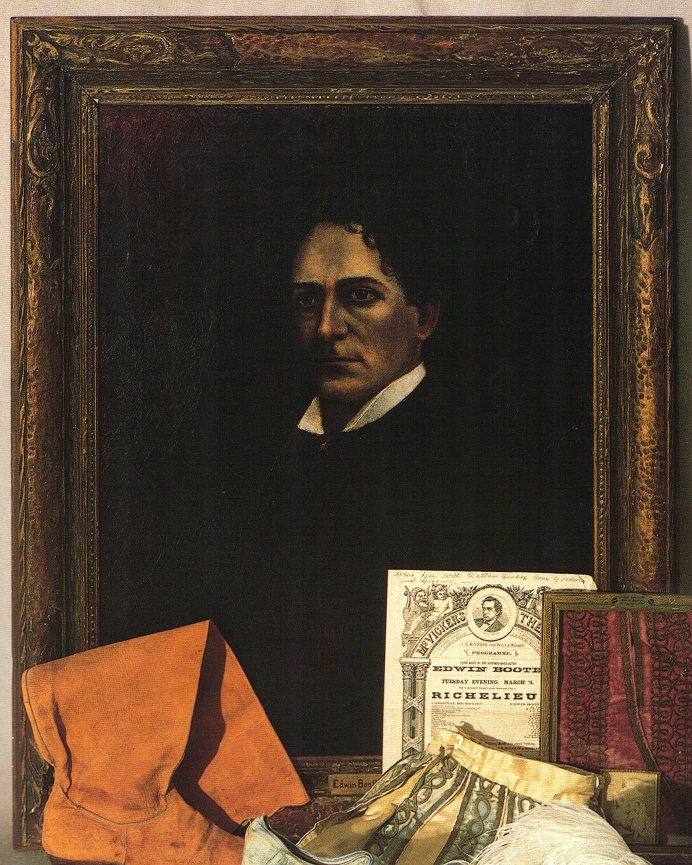
2 Edwin Booth painting

Pastel on linen.  Signed “N. Clark, ‘88” lower left corner.  Framed, 27-3/4” x 24” s.s., in excellent condition

Provenance: Professional Women’s League, New York City.

($10,000 – 15,000)

4.  Painting of Edwin Booth, American actor, 1833 – 1893, just after 100th performance of “Hamlet” by Hugo Svenson

4 Edwin Booth Painting

Oil (bitumen) on canvas.  Signed “Hugo Svenson” lower right corner (very faint), and marked by label on center bottom of frame “Edwin Booth.” Framed, 24 ½” x 22 ½” s.s., in good condition.

Provenance: Minnesota Historical Society, Blanche DeBar Booth (Ophelia to Hamlet)

($8,000 – 10,000)

Hugo Svenson has a studio in New York City.  Blanche DeBar Booth, niece to Edwin, played Ophelia in the 100th performance of “Hamlet”.  Edwin presented her with the portrait, and she in turn presented it to the Minnesota Historical Society

5.  Painting of Edwin Booth, American actor, 1833 – 1893, performing “Hamlet” at the age of 30, by Gabriel Harrison, along with cabinet photo of him.

Booth painting

Oil on canvas, full length portrait.  Signed “Gabriel Harrison” and dated 1894 in lower left corner.  (Harrison as an actor himself, though not considered greatly good.) Framed, 29 ¾” x 19 ¾” s.s. General crackling of surface, otherwise good condition.

Provenance: Sankey Lemley, New York City, estate of Gabriel Harrison.

($7,000 – 10,000)

308.  John Wilkes Booth, actor, brother of Edwin Booth, and assassin of President Lincoln, 1839 – 1865 case with two canes.

Booth's cane

One cane given to Booth by Laura Keene, 1826 – 1873, marked on a silver band, “John Wilkes Booth from Laura Keen [sic], 1865.” Ivory handle, 3 ½” x 1”, 32 ¾” long overall.

Provenance: Mrs. E. Harrison Eudy and her mother

($5,000 – 10,000)

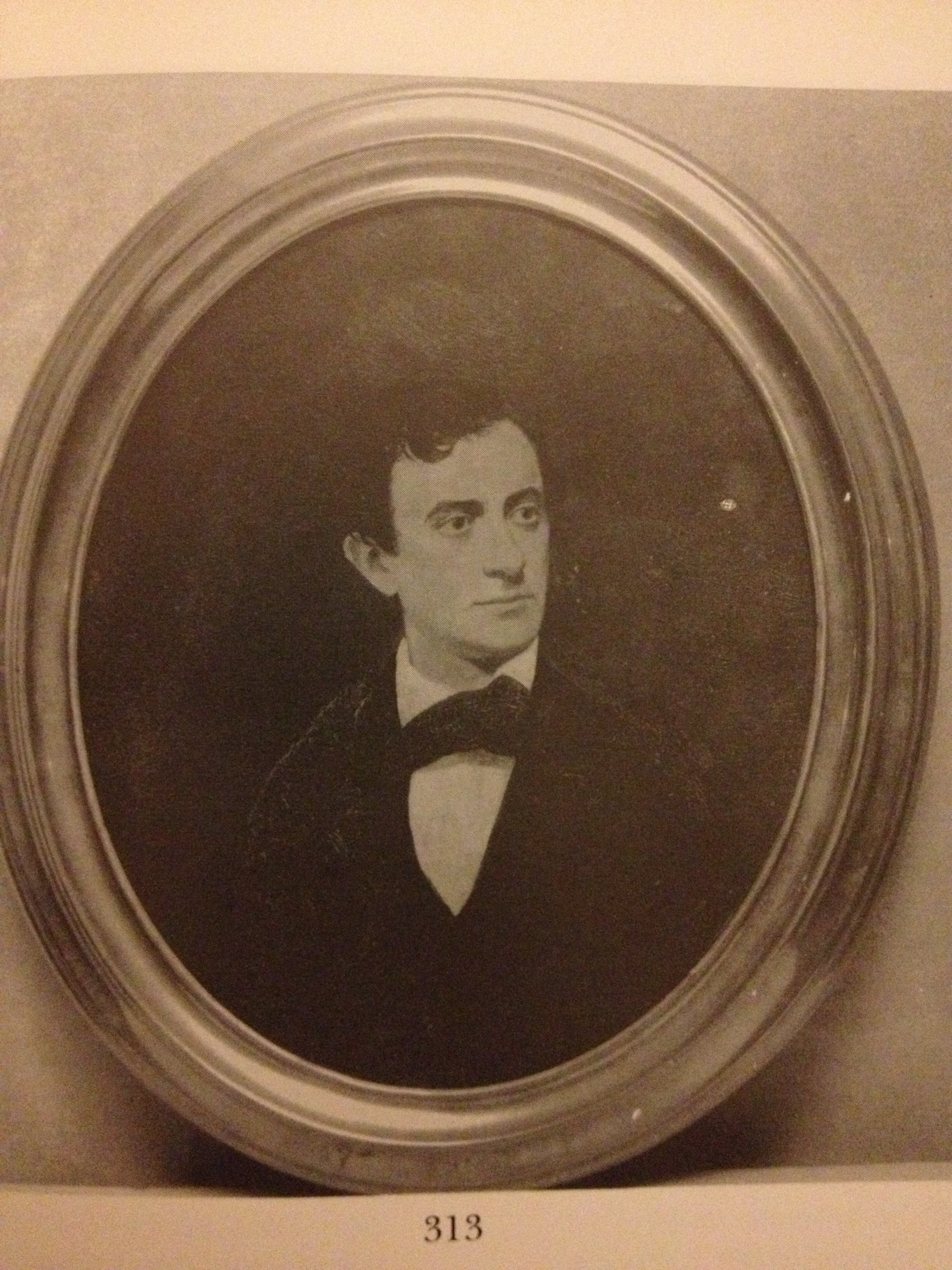
313. Edwin Booth, 1833 – 1893, original oval oil portrait by John R. Johnston, one of Baltimore’s most famous portrait artists.

Photo May 02, 8 28 46 PM

Mark on back, “Sitting From Life, Baltimore, 1851,” and signed.  This handwriting has been documented as that of Johnston, who also painted Andrew Jackson and Franklin Pierce, to name a few.  This portrait is believed to be a preliminary oil for a later portrait that was never done.  Two letters of provenance accompany work.  Framed in brass and glass, 13 ½” x 12”.

($2,000 – 3,000)

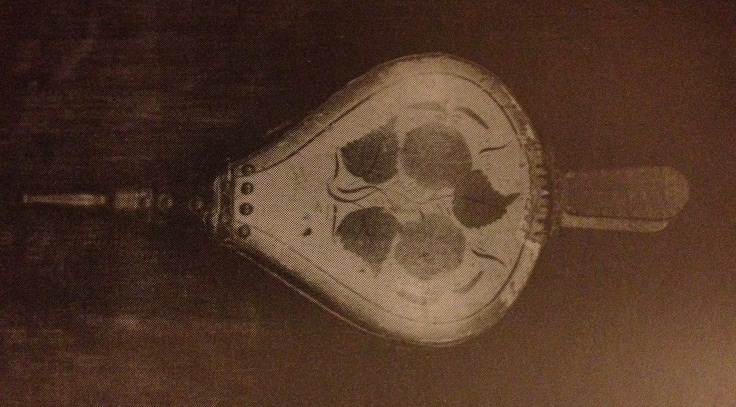
315.  Fireplace bellows from “Tudor Hall” and used in the original homestead of the Booth family in Belair, Maryland.

Tudor Hall Bellows

Wood, leather and metal, with a painted flower design on one side.  17 ½” high, 7 ½” wide, 2 ½” unextended depth.  In good, well used condition.

Provenance: Florence Williams, American actress, from member of family Elijah Rogers.

($1,800 – 2,000)

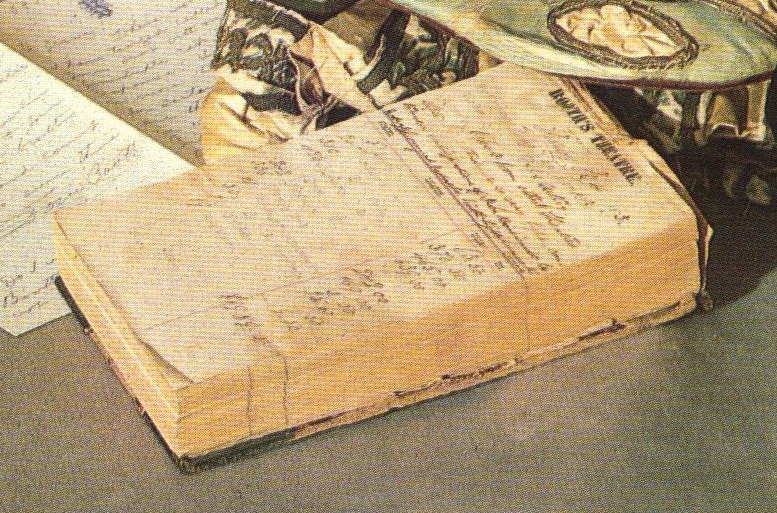
316. Five cash books from Edwin Booth’s “Booth Theatre,” and one account pad.

Booth's theatre pad

Contains names of plays and dates, net receipts and expenditures (such as the cost of a carriage for Mr. Booth), and net profits for the years 1869, 1871 – 1874, 1876 and 1877.  Every entry is initialed “J.H.M.,” by J. H. Magonigle, a theatre representative, or “J.A.B.,” by Joseph A. Booth, the youngest child.  Conditions of bindings vary, but interiors are excellent.  Minor child’s scribbling on a few blank pages, not affecting business contents.  Pad of forms marked “Booth’s Theatre” contains date, performance, weather and fascinating remarks about actors and plays, such as “’Black Crook’ at Niblo’s good, Grand Opera House bad, opening night Bryant’s Opera House all the critics present.” The dates begin Sept. 4,1873 and end May 30, 1874, with hundreds of entries.  The pad has some loose front pages, and a few of the last back pages are damp stained.

Provenance: J. A. Booth

($1,500 – 2,000)

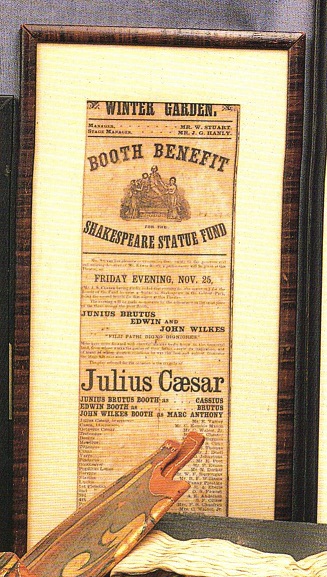
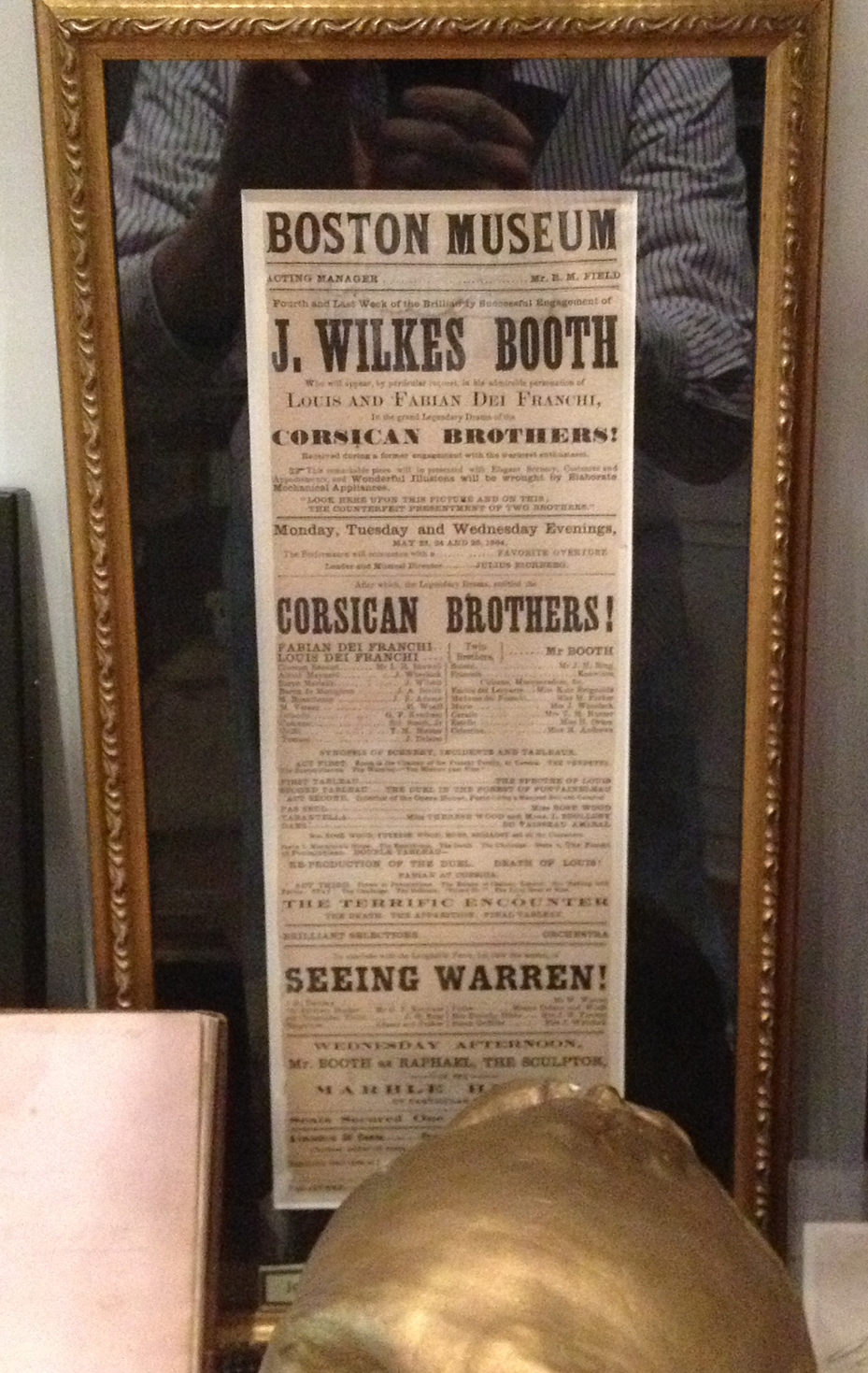
320. Edwin Booth, John Wilkes Booth, J. B. Booth, Jr., playbill from the Booth benefit for the Shakespeare Statue Fund, Winter Garden Theatre, NYC.JWB playbill 2

This one-performance-only playbill is probably the rarest of all American playbills.  The statue still stands in Central Park.  The dedication program for the statue is also offered in this sale.  Framed and matted under glass, 20 ¾” x 8 ¾”.

($1,000 – 1,500)

325. Sydney Booth make-up box, marked across front in red, “Sydney Booth,” and “Theatre.”

Sydney Booth box

Contains crepe hair, prepared mustaches, beards and sideburns, 5 shoe lifts, face powder, dry and moist rouge, rosin, rabbit’s foot, two pair scissors, collapsible drinking cup in a leather carrier, a brush, a collapsible coat hanger, a curling iron, hair color, corkscrew, and an 11-pocketed apron with additional make-up in compartments.  Make-up box is plain black leather with intact handle, and attached to inside lid are his only child’s pink leather, lace trimmed baby slippers, 3 ½” x 2 ½”.  Case measures 12” x 15 ½” x 7”. Very good condition.

Provenance: Elizabeth Barton Booth, wearer of the baby boots.

($800 – 1,200)

326. John Wilkes Booth playbill from “Macbeth,” Willard’s Howard Atheneum, Oct. 7, 1863.

JWB playbill 1

Framed under glass, 19 ¼” x 7”. Excellent condition.

($750 – 1,000)

330. John Wilkes Booth playbill from “Richard III,” Willard’s Howard Antheneum, Boston, Oct. 10, 1863.

JWB playbill 3

Mounted in two portions and marked “Positively the last appearance of the popular young tragedian.” Above playbill is an 8-sided picture of John Wilkes Booth with his name mounted underneath.  A faded assassination reward poster with Lincoln’s photo is mounted on reverse. Framed, 25 ¾” x 8 ¾”.

($650 – 850)

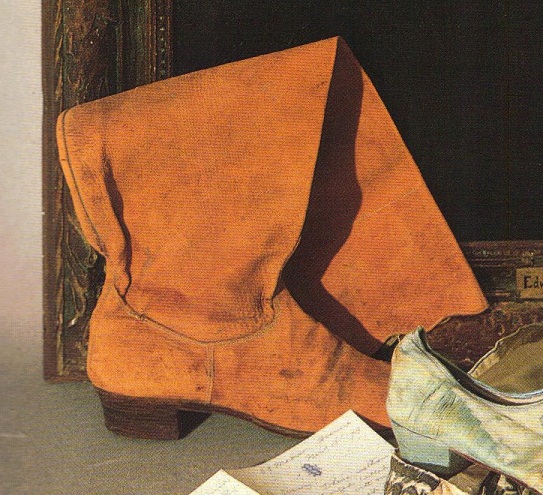
603. Costume knee length, leather boots worn by Edwin Booth.

Edwin's boot

Very good condition.

Provenance: Sydney Booth

($750 – 1,000)

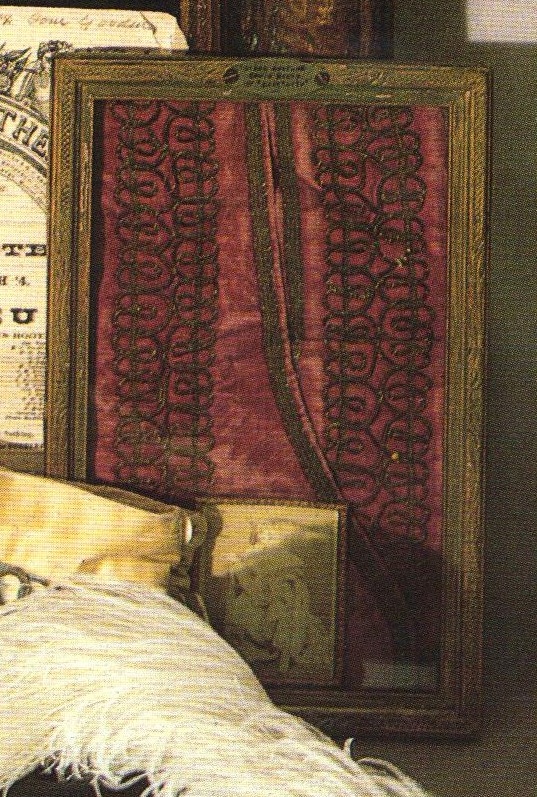
604.  Portion of velvet braid stole worn by Edwin Booth as “Richelieu,” with a carte de visite of Booth as “Cardinal Richelieu.”

Booth as Richelieu

In a wooden case with glass cover, 11 ½” x 8”. Excellent condition.

Provenance: Conway Barker, Charles Dominge.

($700 – 1,000)

Categories: Uncategorized | Tags: , | 10 Comments

I have a Booth diary!

When I arrived home yesterday, I found a card in my mailbox stating that the mailman tried to deliver a package but, seeing as no one was home, he held on to it.  I knew exactly what the package was.  It was something that I had been anticipating since the first day I saw it online – my replica John Wilkes Booth diary!  I filled out the postal service card to give them permission to leave it on my stoop, and I rushed home today.  I knew from all the emails, pictures, and collaboration between Pasquale and I, that I was going to really like the diary.  Even though I had seen pictures of the diary throughout the entire process and helped Pasquale replicate the inside of the diary page by page, with the actual product in my hand, I am still completely amazed at the craftsmanship and detail in every stitch and every page. I’m extremely excited and it’s time to show off my John Wilkes Booth diary:

So, I’m on cloud nine right now. If you would like to join me, you can order your own diary for $400 + $25 shipping. I know it’s a sizeable amount of money, but trust me, it is absolutely worth it. Pasquale has made a very unique and very detailed replica that is second to none. I’d be happy to photograph any other part of the diary and post it here if it will help you make your decision. For those of you ready to take the plunge, email me at boothiebarn (at) gmail (dot) com and I’ll send you information on how to send money to Pasquale. Update: Pasquale is all out of John Wilkes Booth diaries and will not be making anymore.  Thank you to all who supported his hard work.

I have a Booth diary!!!!!!!!!

Categories: Uncategorized | Tags: | 42 Comments

A Trip to Gettysburg with Boothie Results

Today, I drove up to Gettysburg, PA.  While in Gettysburg, I spent some time looking at a few antique stores and a museum.

At one antique store, I found and purchased these two newspapers:

Harper's Weekly - Edwin Booth Sam and Mike - Philadelphia Inquirer

Another antique store had this stereoview card of the room in which Lincoln died, but it was a bit out of my price range:

Lincoln Deathroom

I then went to the Gettysburg Museum of History. Those of you who watch the History channel show, American Pickers, might remember one episode in which the pickers, Mike and Frank, are commissioned by the curator of the Gettysburg Museum of History to find some items for him. The museum is quite remarkable with a large and varied collection of items. In particular interest to me was this shelf of Lincoln and Lincoln assassination related materials:

Gettysburg Museum of History

John Wilkes Booth playbill

John Wilkes Booth playbill


Bells and Songbook - Gettysburg

Bells and songbook from Ford’s Theatre


Piece of towel that was placed around Lincoln's head to stop the bleeding next to one of the few authentic locks of Lincoln's hair.

Piece of towel that was placed around Lincoln’s head to stop the bleeding next to one of the few authentic locks of Lincoln’s hair.


A piece of Booth's splint

A piece of Booth’s splint

There are many other items in the collection worth seeing, including an entire room devoted to JFK and his assassination.  So, next time you’re in Gettysburg, check out the Gettysburg Museum of History.

Categories: Uncategorized | Tags: | 10 Comments

Petersen House Damages

Aftermath Petersen House

There are several blood relics associated with Abraham Lincoln’s assassination: swatches of Laura Keene’s bloodied dress, playbills and misc papers dipped in Lincoln’s blood as he was carried from Ford’s, and the remnants of the physicians’ cuffs and clothing at Lincoln’s death-bed.  The most intact blood relics, however, come from the Petersen House itself.  From pillows, to sheets, to towels, the Petersens sacrificed a great deal of their household furnishings for the dying President.  In the aftermath, they experienced more loss as relic hunters seized upon their boarding house.  As William Clark, the man who was renting the room in which Lincoln died but was absent the nightof the 14th, wrote to his sister on April 19, 1865:

“Everybody has a great desire to obtain some momento from my room so that whoever comes in has to be closely watched for fear they will steal something.”

The number of items we have today regarding Lincoln’s last moments demonstrates that there was considerable loss on the part of the Petersens. After a few months had passed for national grieving, the Petersens appealed to the government:
Petersen's claim Pacific Commerical Advertiser 9-16-1865
Adjusted for inflation, $550 in 1865 is equal to about $8,000 today. Michael Kauffman, author of American Brutus, states in his book that he could find no record that the Petersens were ever awarded compensation for their claim.   Part of me feels sorry that the Petersens gave so much for the dying President and got nothing in return, while the other part of me feels that the eternal preservation of their former home and name as a part of a national park may be compensation enough.

References:
American Brutus by Michael Kauffman
Pacific Commerical Advertiser 9-16-1865

Categories: Uncategorized | Tags: , | 10 Comments

Blog at WordPress.com.