OTD: Boston Corbett is Released

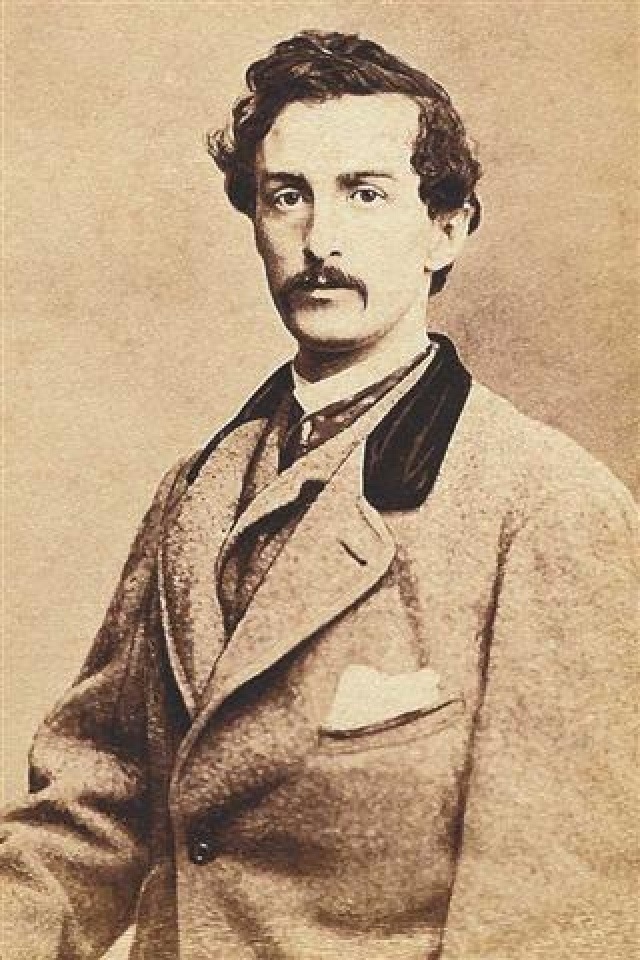
On this date (OTD), November 19th, in 1864, Private Boston Corbett was released from Andersonville prison.

Captured in June, Corbett spent five months under the tortuous conditions of Andersonville.  Corbett was seen as a godsend by many in the prison population by preaching the Bible during such rough and terrible times.  Of the fourteen men in Corbett’s company, only himself and one other survived their imprisonment there.

Upon returning to the 16th New York Cavalry, Corbett was promoted to Sergeant and would later join the hunt for Lincoln’s assassin, John Wilkes Booth.  At Garrett’s farm, Corbett fired the fatal shot that ended Booth life.  Corbett would testify at the conspiracy trial detailing his actions with the 16th in the capture of Davy Herold and the slaying of Booth.  He would also testify at the trial of Andersonville commander Henry Wirz.  Both Davy Herold and Henry Wirz would share the same temporary grave in the yard of the Old Arsenal prison until their bodies were released to their families.

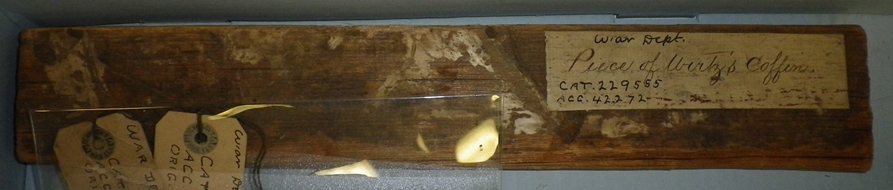
Piece of Henry Wirz’ Old Arsenal coffin in the collection of the Smithsonian’s American History Museum.

References:
Abraham Lincoln and Boston Corbett: With Personal Recollections of Each by Byron Berkeley Johnson (1914) Page 50

Categories: Uncategorized | Tags: | 7 Comments

The Port Royal Museum of American History

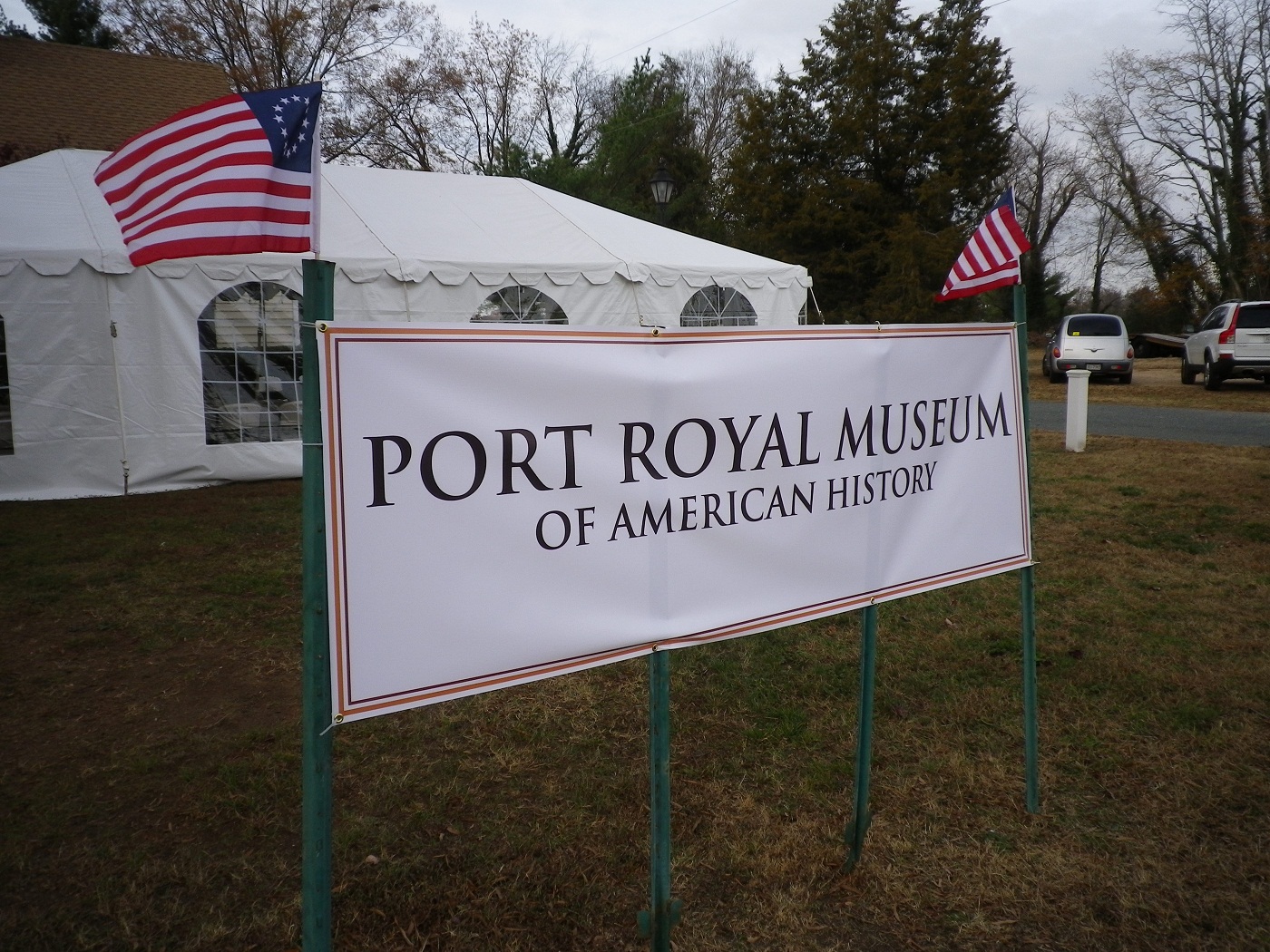
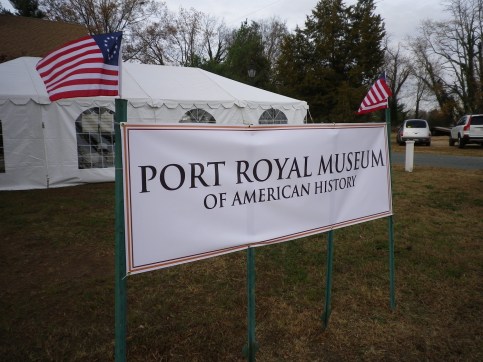
Today I attended a “soft opening” of a new museum in Caroline County, Virginia.  Called the Port Royal Museum of American History, it is located in the heart of Port Royal right off of Route 301 in the former Union First Market Bank building.
The museum contains the extensive collection of Herbert Collins, a former curator of the Smithsonian’s National Museum of American History, who I have highlighted on this blog before.  Herb’s collection of White House china takes up an entire room in the new museum as does his collection of toleware pieces.

The whole museum is decorated with many paintings by Sidney King who was the main painter for the National Parks Service for many years.  He created over 180 paintings for the nation’s parks with his most famous being his large Jamestown paintings.  Herb Collins was good friends with Sidney King and collected over 30 paintings by him.  Upon Mr. King’s death in 2002, Herb gave the eulogy at his funeral.

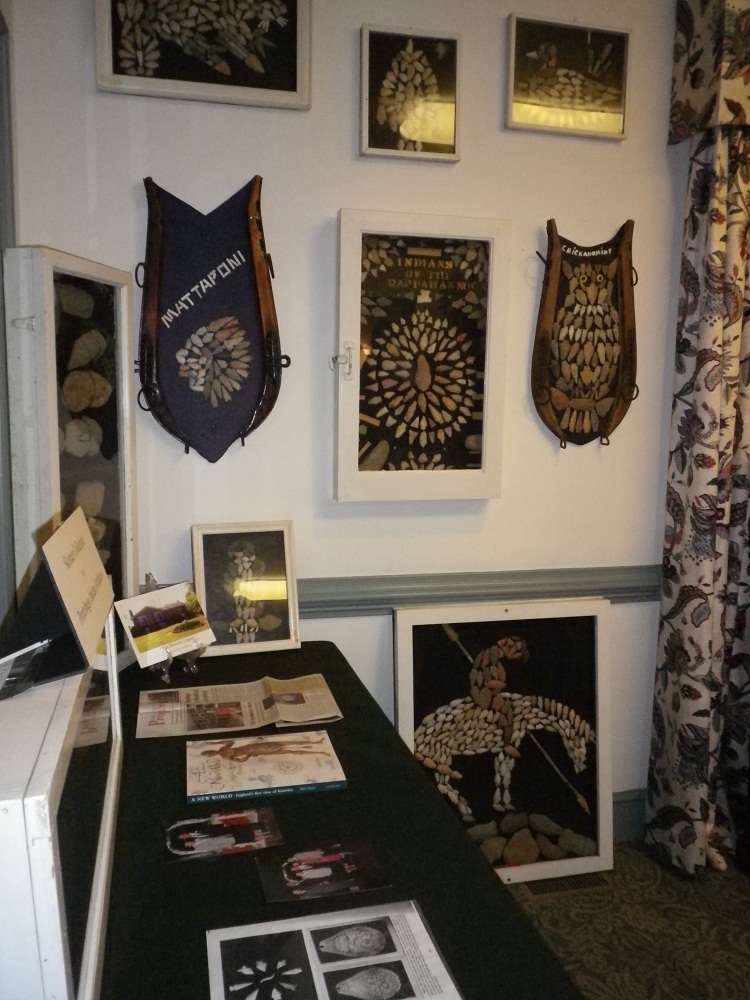
In addition to these many items from Herb’s collection, which he permanently donated to Historic Port Royal, the museum also holds a large number of Native American artifacts collected by the Skinner family of Caroline County.
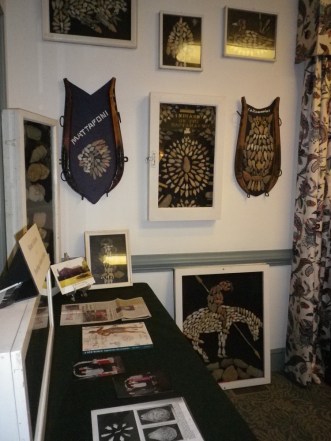
The museum is not a large one, really only one main room and two small ones, but it’s collection is a wonderful mix of old and new.  Important to the history of Caroline County, the museum also has a few items relating to John Wilkes Booth and his death at the Garrett’s.
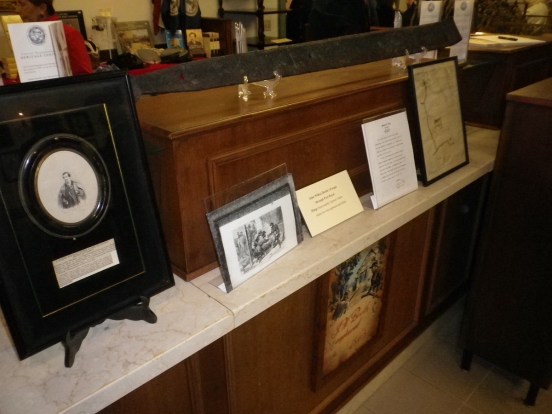
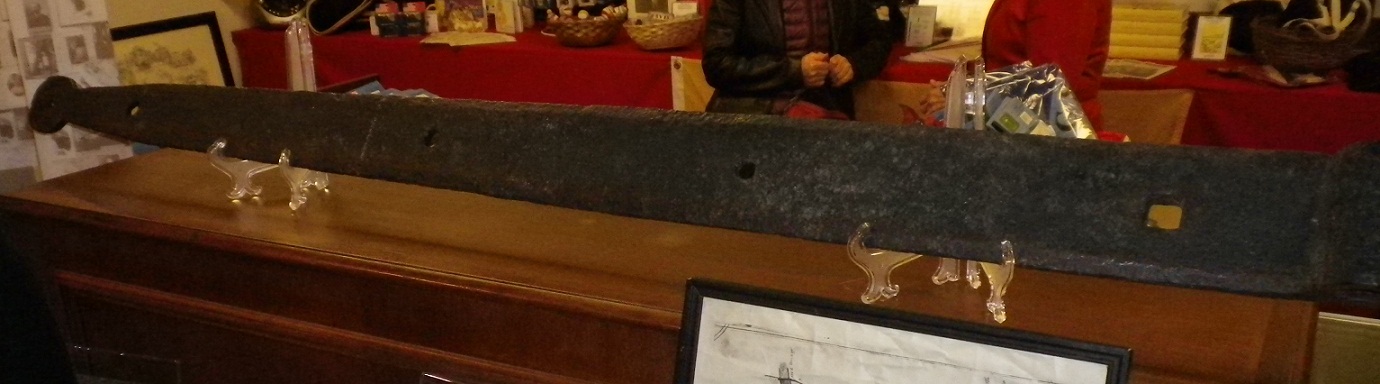
The most notable item is a hinge said to be from the barn in which Booth died.
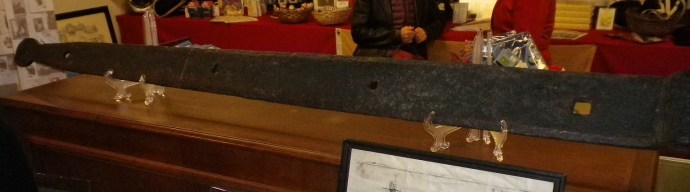
The affidavit that accompanies it is from Sidney King and states the following:

“John Wilkes Booth, an actor and southern sympathizer, shot Lincoln while watching a play at the Ford Theater in Washington, D.C.  Twelve days later he was captured at the Richard H. Garrett estate barn near Bowling Green, VA.

In 1954, the National Park Historian Frances Welshun obtained permission to search the area where the barn once stood.  This large wrought iron hinge was found there.  The remaining hinges were never found.  This hinge was left in my charge and I present this hinge to the Caroline Historical Society as a loan, the 28th of Jan. 1990.

Sincerely,

Sidney E. King”

While there is no way to prove its authenticity, it’s still fun to hiope that this hinge could have come off the barn in which Booth died.

The Port Royal Museum of American History won’t have its true grand opening until the spring.  When it does open for good, I hope some of you in the area will stop by and show the museum your support.  Thanks to the generosity of Herb Collins and the selfless work by the members of Historic Port Royal, the history of Caroline County, Virginia, and the United States as a whole, will continue to be shared.

Categories: Uncategorized | Tags: , , , | 10 Comments

Happy Birthday, Edwin Booth

“When Mary Ann’s labor pangs started November 13, 1833, the birth did not progress as expected. More concerned than usual after the bereavements of the past year, her midwives may have advised sending for a doctor. June, Mary Ann’s oldest boy, was the chosen messenger. As he headed out on the back of a mule hours before daybreak with Joe Hall as his companion, June recalled that in the darkness above, thousands of meteors started raining downward. Baltimore’s papers reported the next morning that many people believed the world was coming to an end. Others were certain the meteors ‘prognosticated some dreadful war.’ Only astronomers seemed unafraid, ‘viewing the phenomenon wonderful.’ The Shower lasted for a full hour. One meteor exploded with a bang over northwest Baltimore, lighting the clouds like a sunrise and leaving a fiery, thirty foot trail.” – My Thoughts Be Bloody by Nora Titone

Edwin Booth entered the world on this day to the fanfare of a great celestial event. It seems only fitting then that on this, the 179th anniversary of his birth, another spacial phenomenon occurred:

On this day, I’d also like to give a continued congratulations to Carolyn Mitchell of The Spirits of Tudor Hall and the Edwin Booth Society for her wonderful work on these websites.  Carolyn is a wealth of knowledge about the Booth family and I check her sites everyday to see what’s new with Edwin and the rest of the Booths.  I certainly wish I could have been in New York today to visit The Players during the celebration of their Founder.

Categories: Uncategorized | Tags: | 7 Comments

A Mudd-y Vacation

Thanks to Veterans’ Day, I have managed to take a long weekend trip away from Southern Maryland. I’m currently in Berkeley Springs, West Virginia. I’ve enjoyed the historic and ever constant 74 degree spring that George Washington and many other Virginia notables visited for its healing properties.

Even when on vacation though, I’m always on the lookout for anything assassination related. At a local antique mall I looked through every single CDV and cabinet card they had looking for a familiar face but to no avail. I did find and flip through the 1938 issue of Life magazine which contains pictures of the Booth mummy, but decided against purchasing it.

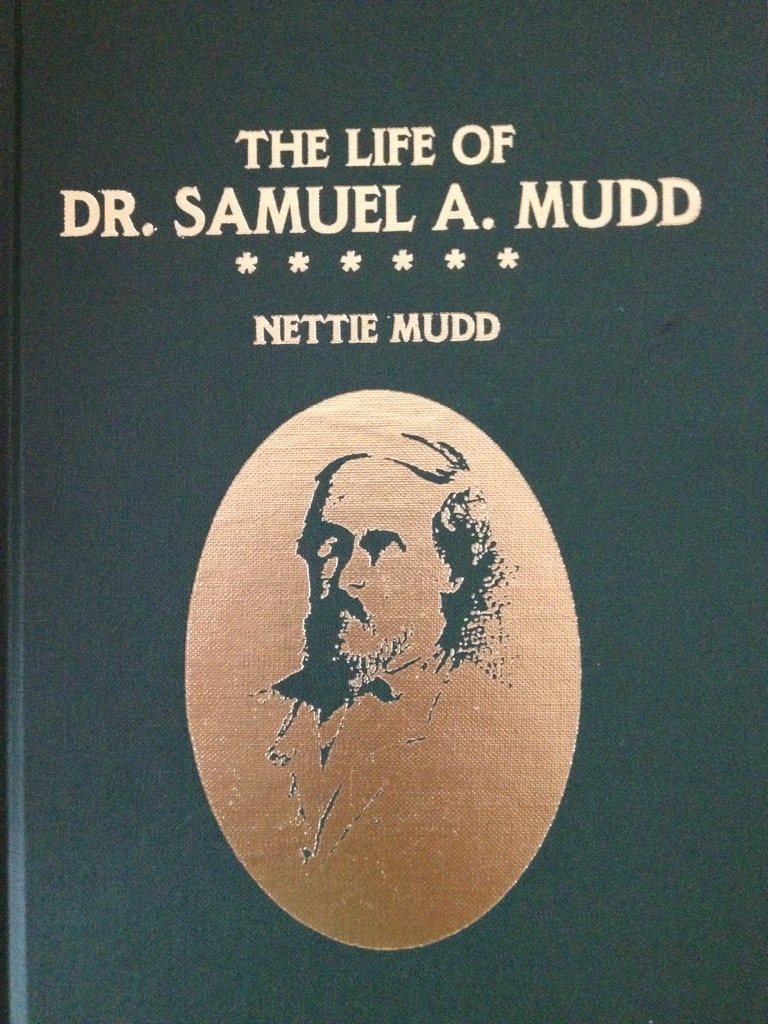
Instead I spent my hard earned money on a book that I already have a copy of, The Life of Dr. Samuel A. Mudd by Nettie Mudd:

20121111-163108.jpg

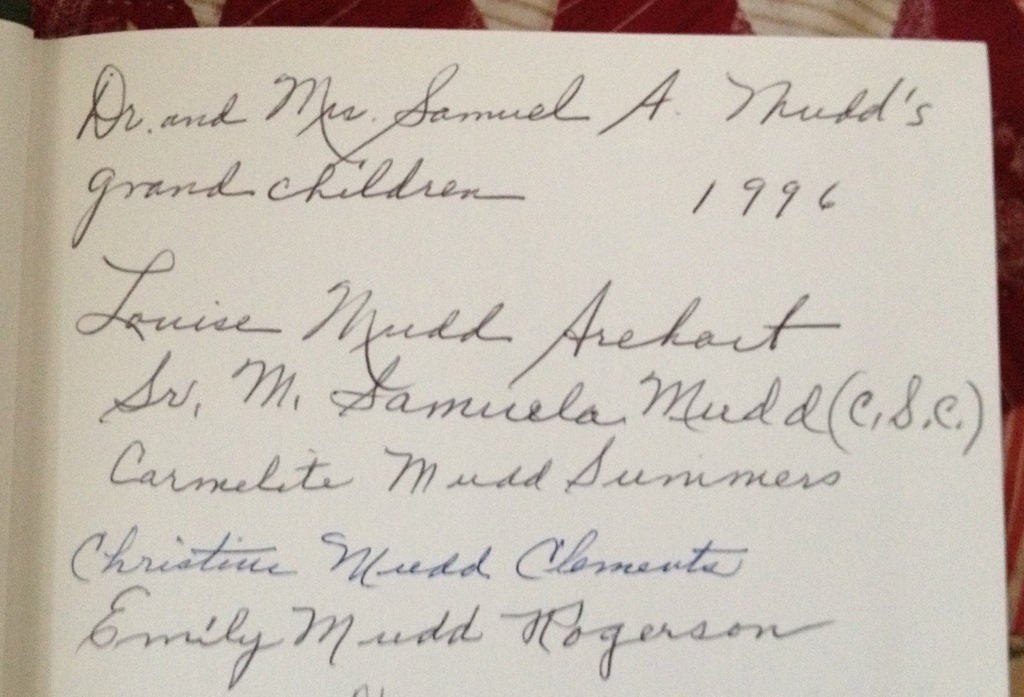
The reason I decided to purchase this copy is due to the fact that this copy is signed by some of the grandchildren of Dr. Mudd:

20121111-163243.jpg

Sadly, all of those who signed this book back in 1996 have all died, with the last granddaughter, Marie Mudd Summers, having passed away in January of this year. While not quite a collector’s item (I believe the Mudd House still sells autographed copies too) I feel the personal connection that comes with this book is worth purchasing an extra copy of it. Moreover, I was impressed to find a little piece of my local Maryland home 130 miles away.

Categories: Uncategorized | Tags: | 10 Comments

Arriving at Fort Jefferson

The Richmond Whig newspaper carried this article on August 4, 1865 covering the arrival of the Lincoln assassination conspirators to their prison of Fort Jefferson, Dry Tortugas:

What surprised me the most about this article is the claim that, upon reaching the island, the prisoners were relieved at finding it, “not so bad a place as they had supposed,” as it had a “fine sea breeze” and was a “very healthy” place.  Nothing could be further from the truth.

Early in his memoirs, Sam Arnold accurately describes the Fort thusly:

“Without exception, it was the most horrible place the eye of man ever rested upon, where day after day, the miserable existence was being dragged out, intermixed with sickness, bodily suffering, want and pinching hunger…”

It would have been a fallacy to think that Fort Jefferson was “healthy”  in any sense of the word.  Scurvy, malnutrition, diarrhea, and diseases like yellow fever ran rampant.  The sick were oftentimes quarantined and only aided by a handful of doctors and nurses.  No one enjoyed life on Fort Jefferson.  Especially not Dr. Mudd, Edman Spangler, Samuel Arnold, or Michael O’Laughlen.

Soldiers in quarantine on Fort Jefferson 1899

References:
Richmond Whig, 8/4/1865
Memoirs of the Lincoln Conspirators by Michael Kauffman
Fort Jefferson Historical Structures Report

Categories: Uncategorized | Tags: , , , , | 2 Comments

Got a light?

Just a quick photo post tonight as I’m watching the presidential election coverage.

May you feel like having a celebratory cigar too by the time the election results come in. And if not, remember smoking is bad for you anyway.

Categories: Uncategorized | Tags: | 12 Comments

Michael Kauffman plays Hollywood

Yesterday, I attended a “sold out” speaking engagement at the Sotterley Plantation in Hollywood…Maryland.  The speaker was Michael W. Kauffman, renowned Lincoln assassination researcher and author.  He gave an hour-long talk and half hour-long Q&A about the Lincoln assassination and his experiences doing research.  The crowd was not one of historians but Mr. Kauffman did a wonderful job giving an overview of John Wilkes Booth and his plot.  The audience’s response to the talk was very enthusiastic with many asking Mr. Kauffman for his autograph after it was all over.  I, of course, was one of those people.  I brought along his books, American Brutus, Memoirs of a Lincoln Conspirator, and his new escape route book, In the Footsteps of An Assassin.  He graciously signed them all and we talked briefly about one of my particular interests in the whole story, the Garrett family.  A good sport, he even indulged my fandom by allowing me to photograph him with John Wilkes Booth using the iPhone app developed with his latest book:

Needless to say, I must have come across like a Trekkie meeting Mr. Spock at Comic Con, but Mr. Kauffman put up with me nevertheless.  The evening was a very exciting experience for me.  It was an honor to listen to and meet the man who has contributed so much to our understanding of Lincoln’s assassination.

Categories: Uncategorized | 8 Comments

Conspirator Canes

Prison life at Fort Jefferson, Dry Tortugas was a miserable affair.  From the food, to the weather, to the living conditions, it’s hard to imagine that anyone stationed there, guard or prisoner, found the now tropical paradise hospitable.  All those that sailed to the island fort became prisoners.  It appears that when the lives of the inhabitants were not in danger from disease or malnutrition, extreme boredom prevailed. The Lincoln assassination conspirators Dr. Mudd, Edman Spangler, Samuel Arnold, and Michael O’Laughlen fought against this boredom.  The assigned duties given to the men helped in some ways.  Dr. Mudd, while a trained surgeon who would be a nurse in the hospital and an emergency replacement during the Yellow Fever epidemic, spent a considerable amount of time with Edman Spangler in the carpentry shop on the island.  Through three and a half years, he honed his carpentry skills and created several beautiful items that are currently on display at the Dr. Samuel A. Mudd House Museum in Waldorf, MD.  One set of items that Dr. Mudd became effective at creating were canes.

In addition to these two canes on display at the Mudd house, the good doctor also created a cane for his cousin, Henry A. Clarke. When Dr. Mudd was struggling to find an attorney willing to take his case during the conspiracy trial, he reached out to Clarke who owned a Washington coal company. On May 10th, Col. Henry Burnett sent a letter to Clarke asking if he would be Mudd’s counsel. Clarke responded back truthfully that he was not an attorney but would be happy to help Dr. Mudd in securing counsel. By the time Clarke had responded, Dr. Mudd had already secured Thomas Ewing and Frederick Stone for his defense.

Clarke would later make an appearance at the trial testifying on Dr. Mudd’s behalf. Even though he couldn’t keep his cousin out of prison, the family story is that Clarke continued to advocate for Dr. Mudd’s release. As a result, Dr. Mudd presented a cane to Henry Clarke. A few years ago, the cane made an appearance on Antique Roadshow:

Dr. Mudd was not the only conspirator to make canes for family and friends.  His own mentor in the carpentry world, Edman Spangler, also created canes from the wood at Fort Jefferson:

The canes, cribbage boards, shell decorated boxes, and other feats of craftsmanship were all therapeutic ways for Dr. Mudd to feel productive. Had it not been for these minor, but important, outlets of purposefulness, the Lincoln assassination conspirators could easily have succumbed to insanity.

References:
The Dr. Samuel A. Mudd Research site by Robert Summers
The Evidence by Steers and Edwards
Genealogybank.com

Categories: History | Tags: , , , | 6 Comments

Blog at WordPress.com.