

Click here to visit the newest BoothieBarn Picture Gallery:
Mary E. Surratt


On May 6th, 1865, the British magazine, London Punch, published the following poem which expressed the international sense of shock and sympathy over the unprecedented assassination of the 16th President of the United States of America:
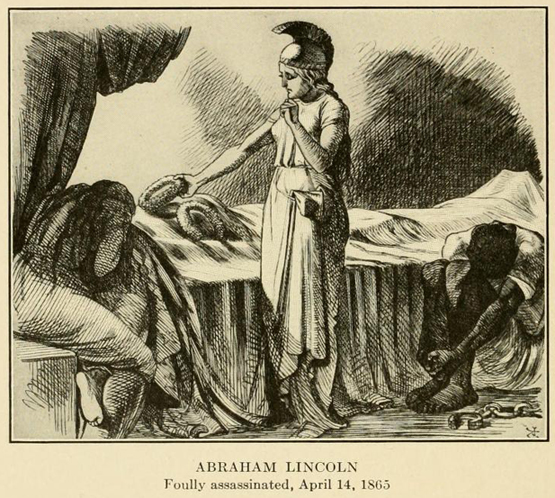
Abraham Lincoln, Foully Assassinated
You lay a wreath on murdered Lincoln’s bier,
You, who with mocking pencil wont to trace,
Broad for self-complacent British sneer,
His length of shambling limb, his furrowed face,His gaunt, gnarled hands, his unkempt, bristling hair,
His garb uncouth, his bearing ill at ease,
His lack of all we prize as debonair,
Of power or will to shine, or art to please,You, whose smart pen backed up the pencil’s laugh,
Judging each step, as though the way were plain:
Reckless, so it could point its paragraph,
Of chief’s perplexity, or people’s pain.Beside this corpse, that bears for winding-sheet
The Stars and Stripes, he lived to rear anew,
Between the mourners at his head and feet
Say, scurrile-jester, is there room for you?Yes, he had lived to shame me from my sneer,
To lame my pencil, and confute my pen —
To make me own this kind of princes peer,
This rail-splitter a true-born king of men.My shallow judgment I had learnt to rue,
Noting how to occasion’s height he rose,
How his quaint wit made home-truth seem more true,
How, iron-like, his temper grew by blows.How humble, yet how hopeful, he could be;
How in good fortune and in ill the same;
Nor bitter in success, nor boastful he,
Thirsty for gold, nor feverish for fame.He went about his work — such work as few
Ever had laid on head and heart and hand —
As one who knows, where there’s a task to do,
Man’s honest will must Heaven’s good grace command.Who trusts the strength will with the burden grow,
That God makes instruments to work His will,
If but that will we can arrive to know,
Nor tamper with the weights of good and ill.So he went forth to battle, on the side
That he felt clear was Liberty’s and Right’s,
As in his peasant boyhood he had plied
His warfare with rude Nature’s thwarting mights –The uncleared forest, the unbroken soil,
The iron bark that turns the lumberer’s axe,
The rapid, that o’erbears the boatman’s toil,
The prairie, hiding the mazed wanderer’s tracks,The ambushed Indian, and the prowling bear —
Such were the needs that helped his youth to train:
Rough culture — but such trees large fruit may bear,
If but their stocks be of right girth and grain.So he grew up, a destined work to do,
And lived to do it – four long-suffering years;
Ill-fate, ill-feeling, ill-report, lived through,
And then he heard the hisses changed to cheers,The taunts to tribute, the abuse to praise,
And took both with the same unwavering mood;
Till, as he came on light from darkling days,
And seemed to touch the goal from where he stood,A felon hand, between the goal and him,
Reached from behind his back, a trigger prest, —
And those perplexed and patient eyes were dim,
Those gaunt, long-laboring limbs were laid to rest!The words of mercy were upon his lips,
Forgiveness in his heart and on his pen,
When this vile murderer brought swift eclipse
To thoughts of peace on earth, good-will to men.The Old World and the New, from sea to sea,
Utter one voice of sympathy and shame!
Sore heart, so stopped when it at last beat high;
Sad life, cut short just as its triumph came.A deed accurst! Strokes have been struck before
By the assassin’s hand, whereof men doubt
If more of horror or disgrace they bore;
But thy foul crime, like CAIN’S stands darkly out.Vile hand, that brandest murder on a strife,
Whate’er its grounds, stoutly and nobly striven;
And with the martyr’s crown crownest a life
With much to praise, little to be forgiven!
What makes this poem unique is its author. This specific poem was written by British playwright, Tom Taylor. It was Tom Taylor’s play, Our American Cousin, that Lincoln was watching when he was assassinated. While Laura Keene had made improvements to Tom Taylor’s original version of the play, you can’t help but wonder if Mr. Taylor was motivated to write this poem over his perceived guilt at writing a play so appealing, that it lured Lincoln to his death.
References:
The poets’ Lincoln by Osborn Oldroyd
“John Harrison Surratt was born April 13, 1844 in Prince George’s County, MD. He attended Saint Charles College, a Roman Catholic preparatory seminary located then at Ellicott City, MD, from the fall of 1859 to the summer of 1862. His father died in 1862 and John succeeded him as the postmaster of Surrattsville and he also became involved in the work of the Confederate Secret Service. Doctor Samuel Mudd introduced Surratt to John Wilkes Booth at a Washington hotel in December, 1864 and he became a member of Booth’s band of conspirators. Their intent was to kidnap Abraham Lincoln, bring him South and hold him as ransom to end the war. Their one attempt had to be aborted because of the non-appearance of Lincoln. When Booth turned from kidnapping to assassination, John Surratt was not available but was on a mission for the Confederacy. With this, our story begins….”
– from the preface of The Travels, Arrest and Trial of John H. Surratt by Alfred Isacsson
Check out the newest Picture Gallery to see more images relating to that elusive conspirator, John Harrison Surratt, Jr.
For those out there who believe that John Wilkes Booth did not die at Garrett’s farm on April 26th, 1865, the following will surely validate your long-held beliefs. After reading my post about his birthday, a Texas lawyer who has written a book on the subject of Booth’s escape sent me a picture he received just this day from a man he knows as “John David St. E. Helen George”. Apparently this gentleman is also celebrating his 175th birthday today:

Coincidence? I think not!
Today, May 10th, 2013, marks the 175th anniversary of John Wilkes Booth’s birth. Before becoming the cause of such a great national tragedy, John Wilkes was merely an infant who entered the world in the presence of his father Junius Brutus Booth, a rare occasion for the traveling theatrical star. Like the man he would later assassinate, Booth was born into a log cabin on the family’s farm near Bel Air, MD in 1838. At the age of six months, Mary Ann Holmes, holding young John Wilkes in her arms, prayed to know what future lay in store for her then youngest child. An answer to her prayer appeared before her in the form of a vision. Years later, Asia Booth would translate the experience into a poem as a birthday gift to her mother:
“The Mother’s Vision
Written 1854, June 2nd, by A[sia] B[ooth], Harford Co., Md‘Tween the passing night and the coming day
When all the house in slumber lay,
A patient mother sat low near the fire,
With that strength even nature cannot tire,
Nursing her fretful babe to sleep –
Only the angels these records keep
Of mysterious Love!One little confiding hand lay spread
Like a white-oped lily, on that soft far bed,
The mother’s bosom, drawing strength
And contentment warm –
The fleecy head rests on her circling arm.
In her eager worship, her fearful care, Riseth to heaven a wild, mute prayer
Of Foreboding Love!Tiny, innocent white baby-hand,
What force, what power is at your command,
For evil, or good? Be slow or be sure,
Firm to resist, to pursue, to endure –
My God, let me see what this hand shall do
In the silent years we are tending to;
In my hungering Love,I implore to know on this ghostly night
Whether ‘twill labour for wrong, or right,
For – or against Thee?
The flame up-leapt
Like a wave of blood, an avenging arm crept
Into shape; and Country shown out in the flame,
Which fading resolved to her boy’s own name!
God had answered Love –
Impatient Love!”
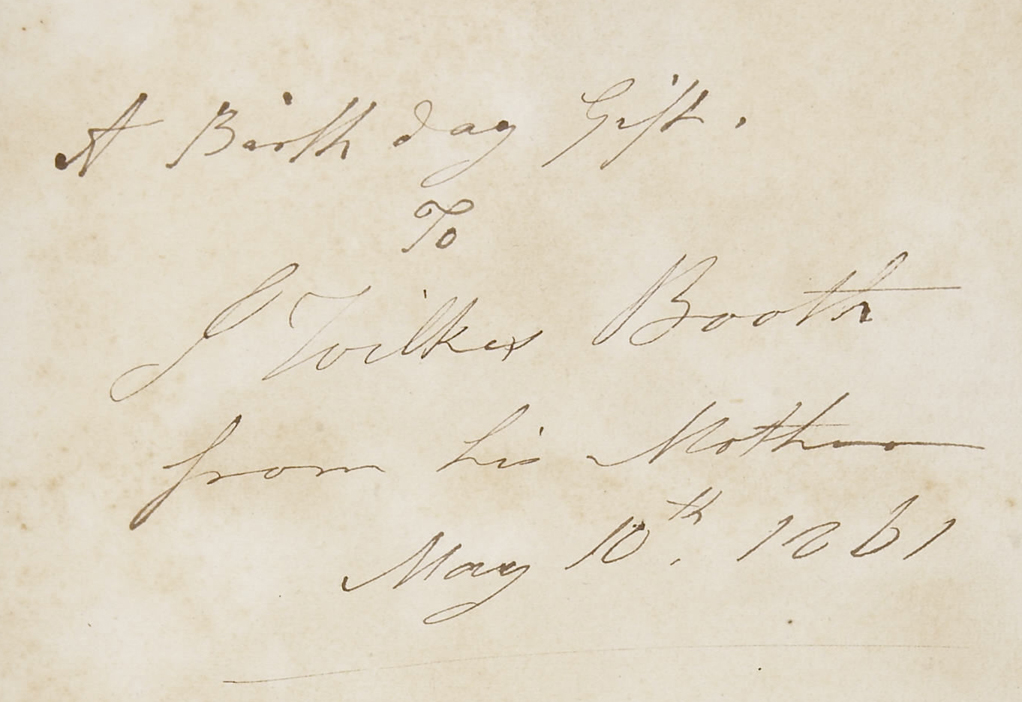
The inscription inside of a book given to John Wilkes Booth by his mother, Mary Ann Holmes Booth, on his birthday in 1861.
175 years ago, a boy named John Wilkes Booth was born. And, as noted by his mother’s vision, our Country feels the ramifications of his existence even today.
References:
John Wilkes Booth: A Sister’s Memoir by Asia Booth Clarke

“[Edman Spangler] was the subject frequently of practical jokes by his companions behind the scenes, and in this connection an incident is mentioned that in the eyes of the superstitious might be deemed to have an ominous meaning. During the winter of 1864-65, when some new scenery was being prepared, the scene painters were in the habit of displaying the names of different employees of the establishment upon the backs of the various slips. Spangler remarked that his name had been neglected, when one of the painters, as a joke at his expense, hauled out a piece of scenery designed to figure in connection with a prison yard, and which bore a representation of a gallows. Upon this scene he dashes with a few broad strokes of his brush the name of Edward Spangler.” – Boston Herald, May 17th, 1865
Luckily for Edman Spangler, the bleak future foretold by a Ford’s Theatre scene painter did not come to fruition. Rather than the gallows, Spangler received 6 years imprisonment, the lightest sentence of all the conspirators tried by the military commission. He would serve a little over 3 1/2 years at Fort Jefferson, Dry Tortugas before being pardoned by President Andrew Johnson in February of 1869.
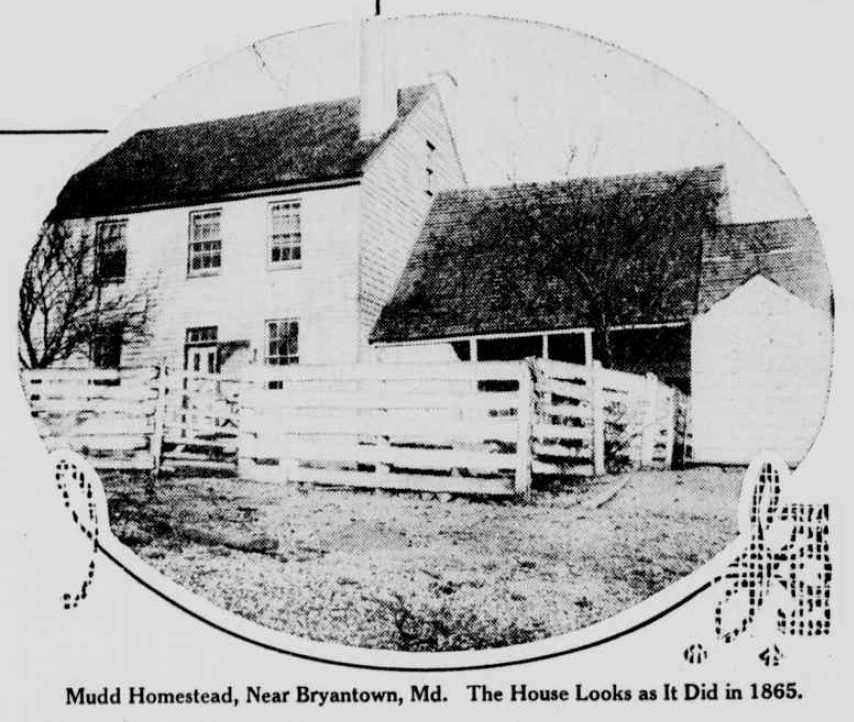
The Mudd home in 1915
“Dr. Samuel A. Mudd, who, not knowing that the President had been shot, reduced the fracture of Booth’s ankle, which the murderer sustained in catching a spur in the flag which draped the President’s private box as he, Booth leaped from the murder box to the stage, was a physician known by everybody in the three rural counties below Washington City. He was a member of one of the most numerous families in that part of Maryland, and it is within reason to say that to-day thousands of his kin are living in the territory through which Booth and Herold fled. The name is a very common one in the southern counties of Maryland, and Sidney Mudd the elder, who long represented that district in Congress was a kinsman, and so of course is Sidney Mudd the younger, who was elected to Congress from that district last fall.
Dr. Mudd for his part in the tragedy was sentenced by military court to Dry Tortugas for life, but in 1869 was pardoned by President Andrew Johnson. Returning to his home, he practiced medicine till his death in 1882 [1883]. His widow died four years ago and the family house, in which Booth’s ankle was set, is dwelt in to-day by Dr. Mudd’s son and his wife and children.” – New York Tribune, April 4, 1915
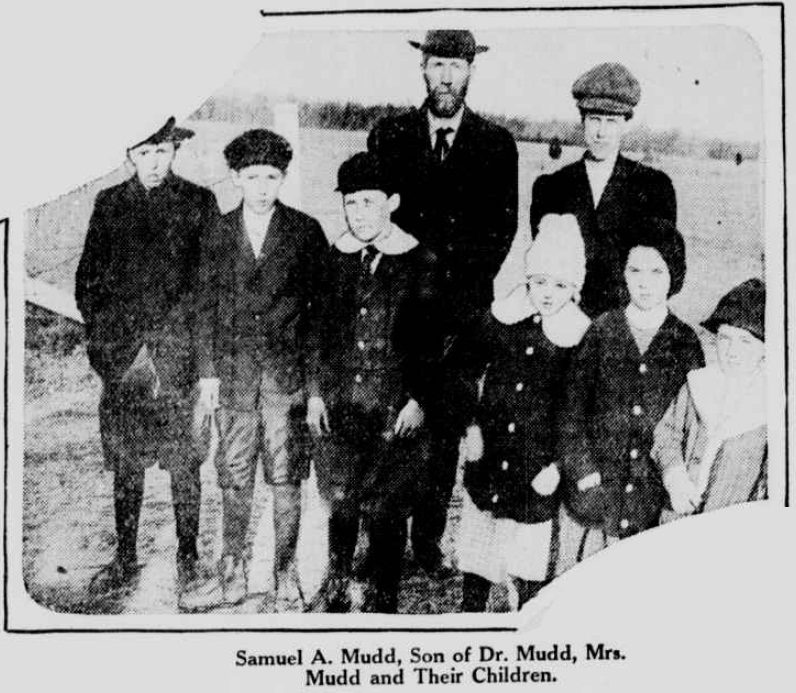
Samuel Alexander Mudd, Jr. was the fourth child of Dr. Mudd and his wife, Sarah Frances Dyer Mudd. He was born on January 30th, 1864 and, in addition to the Mudd family home, he also inherited his father’s looks:

References:
“Following Trial To-day of Lincoln’s Assassin” – New York Tribune, April 4, 1915
Last Sunday’s The Washington Post devoted an entire section to the Civil War:

Inside the 16 page section there were several interesting articles relating to Civil War events that happened 150 years ago. While exploring it my attention was drawn to a couple of advertisements regarding the assassination:
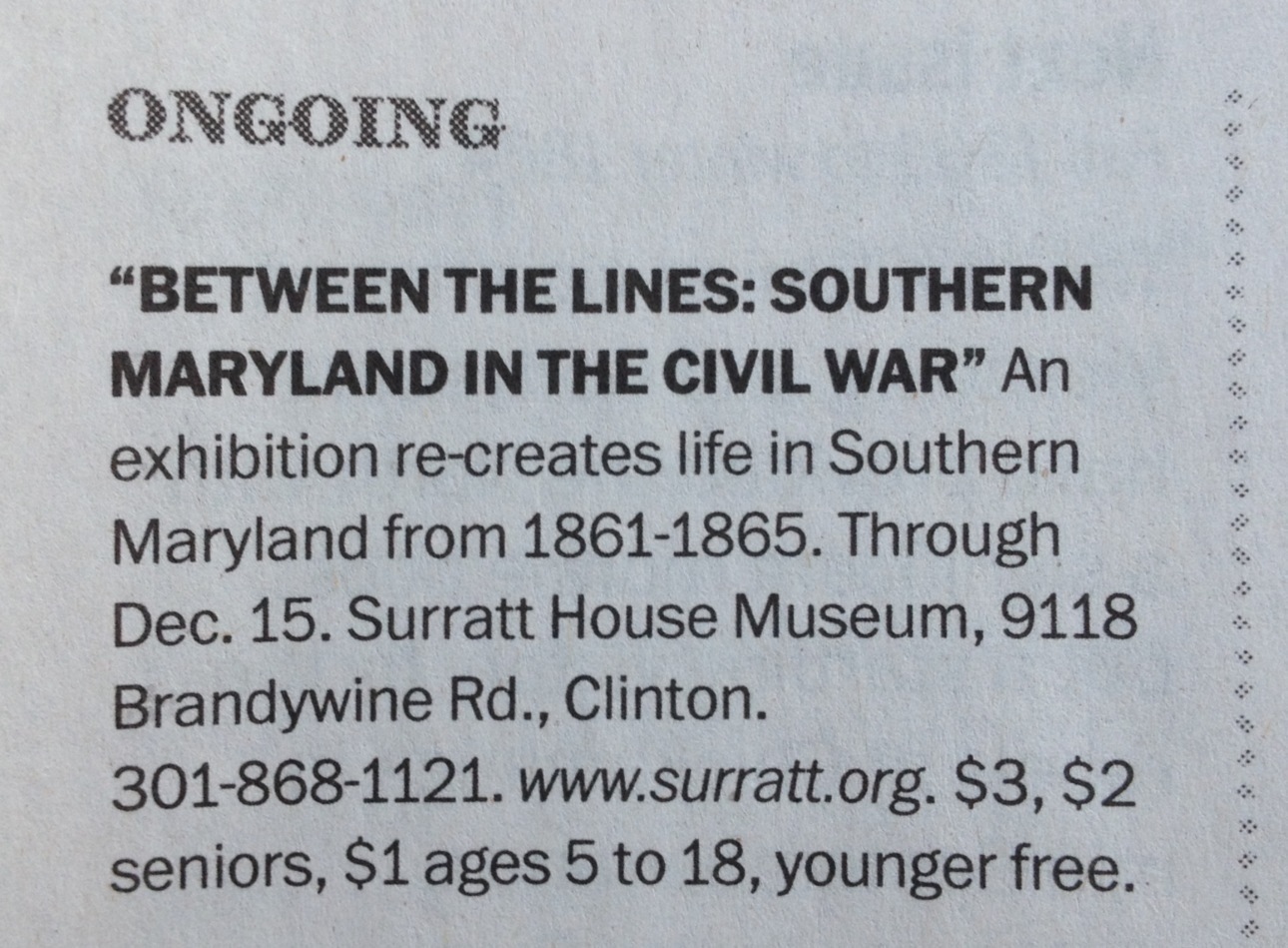
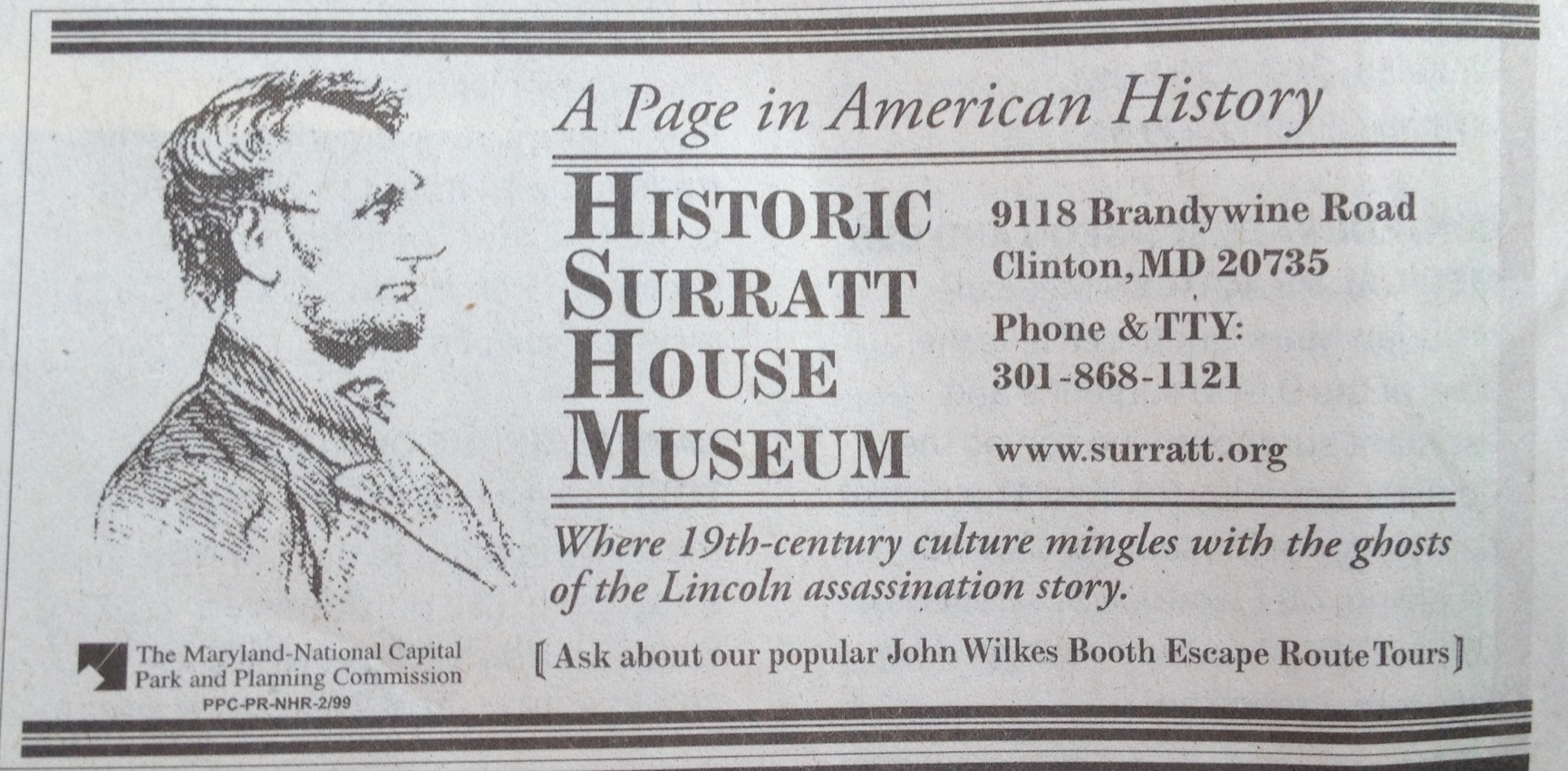
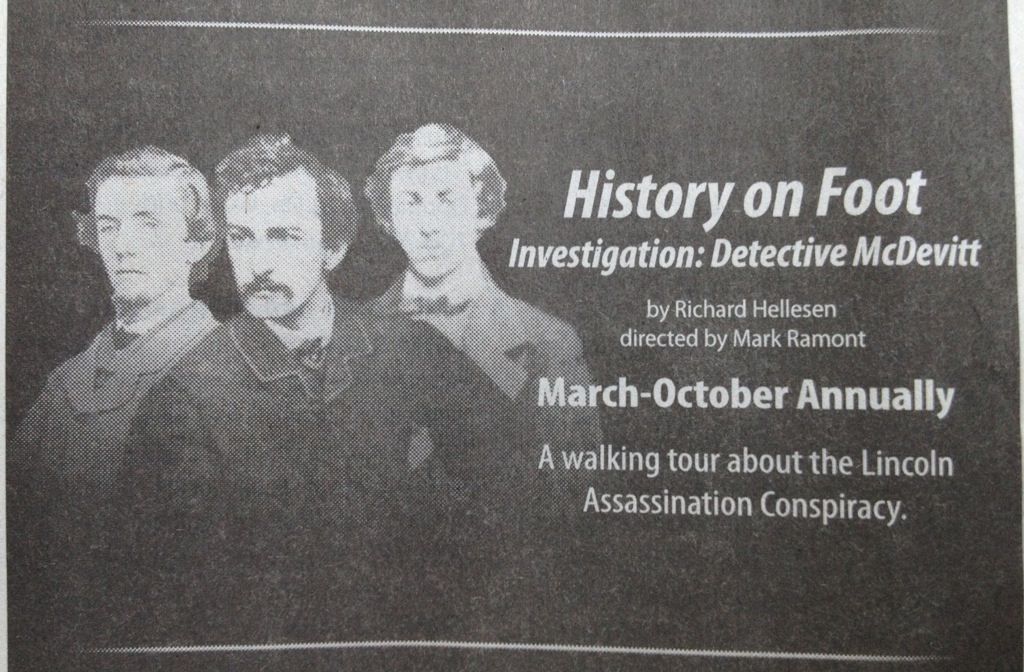
I like seeing the rarely used wanted poster image of David Herold in the advertisement for Ford’s Theatre walking tour and the small note on the bottom of the Surratt House, “Ask about our popular John Wilkes Booth Escape Route Tours”. They are quite popular, indeed.
In addition to these ads, there was also a Visit Maryland ad that highlighted their Civil War Trails program:
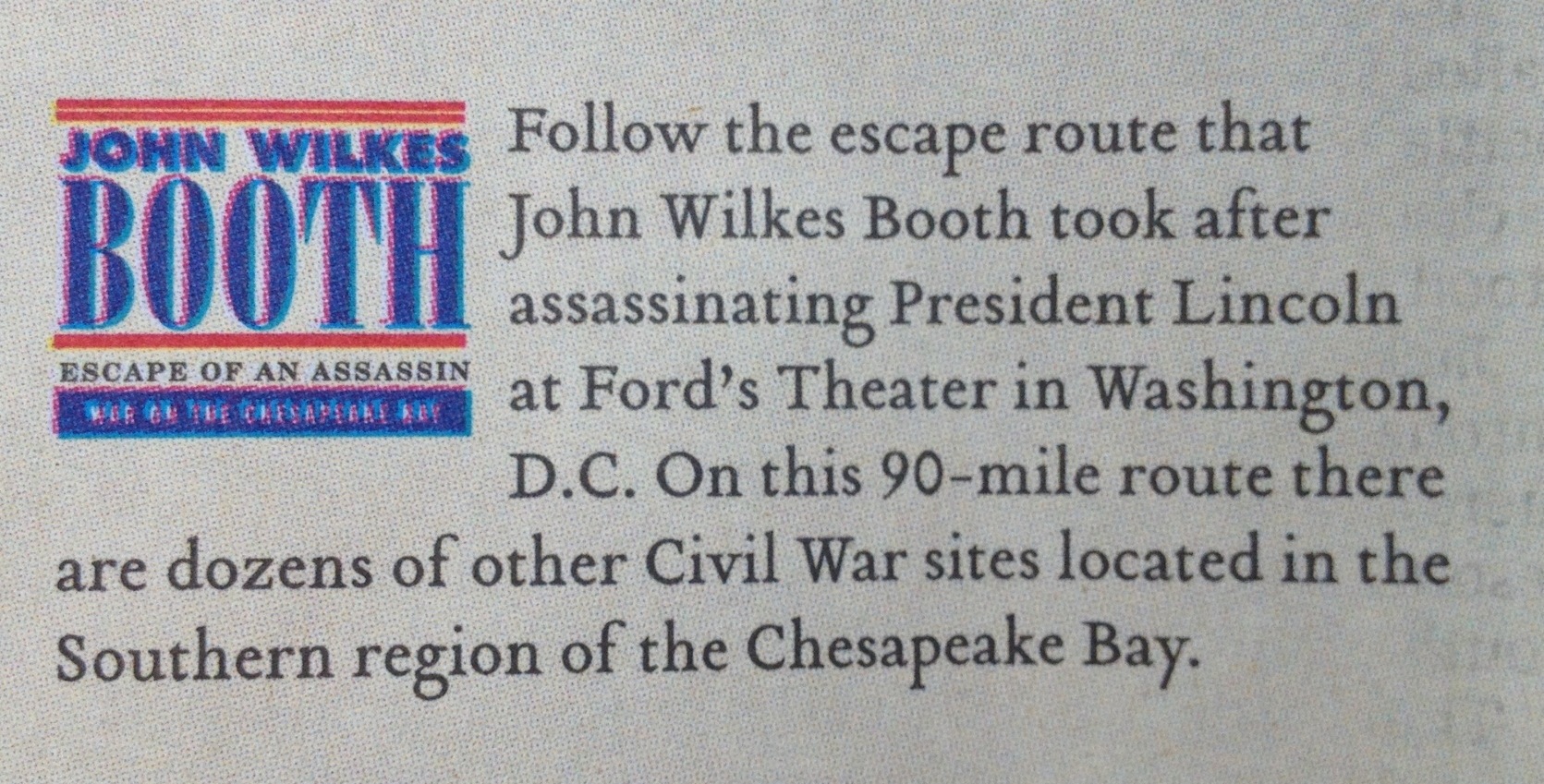
It also mentioned their new mobile app and so I decide to download it:
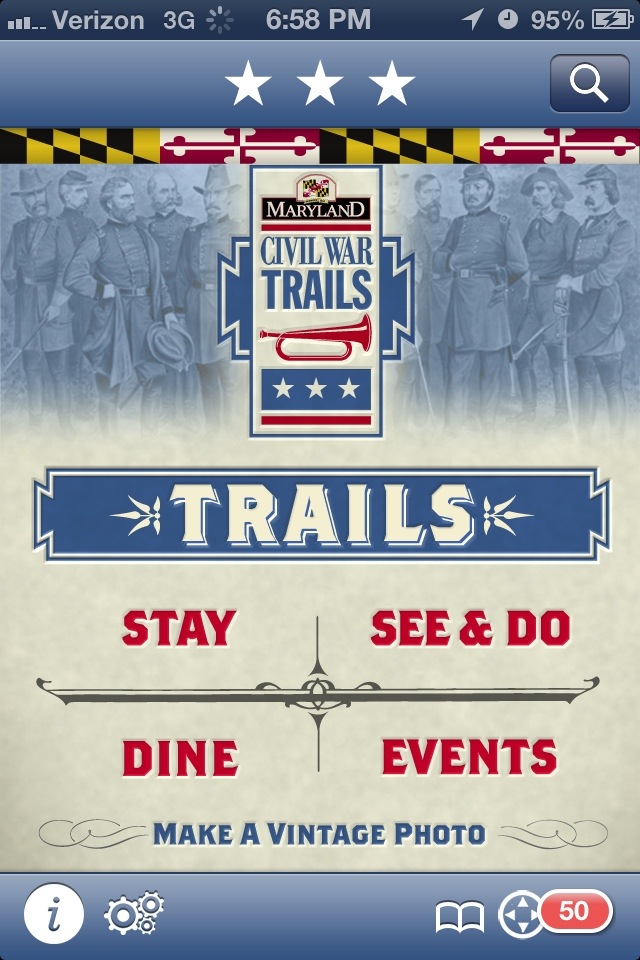
I wanted to see how their tour app of the assassination route compared to the app created in conjunction with Michael Kauffman’s new book, In the Footsteps of an Assassin:

Sadly, the Booth escape route portion of the Civil War Trails app is, “coming soon”.

So, as of now, Michael Kauffman’s app is still the only mobile app out there for the assassination route. The app itself is free and called, “MyTourGuide” and then it costs $9.99 to purchase the escape route tour. There are a few mistakes in it, (the Herndon House narration doesn’t work, the locations of some of the sites are a bit off) but it’s a nice start for those who want/have to experience Booth’s escape on their own. Once the Civil War Trails app is updated, I’ll review that one further.



 LincolnConspirators.com
Recent Comments