The Rathbones – Lost and Found

One of the most tragic stories connected to the assassination of Abraham Lincoln is that of the Rathbones.  As guests of the Lincoln’s that fateful night, Major Henry Rathbone and his fiancée, Clara Harris, had front row seats to the crime of the century.  The aftermath of that encounter shaped the pair and ultimately culminated in Henry Rathbone’s mental break and subsequent murder of Clara while living abroad  in Germany.

Major Henry Rathbone and Clara Harris (composite by the author)

Major Henry Rathbone and Clara Harris (composite by the author)

After Clara was buried, Henry lived out the rest of his days in a German insane asylum before he, too, joined her in the ground.  The story held that, after a lack of attention and payment to the cemetery for upkeep, the graves of Henry and Clara Rathbone were dug up and the bodies were disposed of to free the plot up for new burials.  However, recent work by researcher Eva Elisabeth Lennartz of Germany has found some exciting new information about the fate of the Rathbones’ remains.

The information was first shared on Roger Norton’s impeccable Lincoln Discussion Symposium.  Please visit both of the following links below to learn more about the Rathbones in Germany:

Major Rathbone’s accommodation in Hannover – Lincoln Discussion Symposium

Rathbone Uncovered – Lincoln Discussion Symposium

Categories: Uncategorized | Tags: | 7 Comments

The King’Pin’ and his Gang

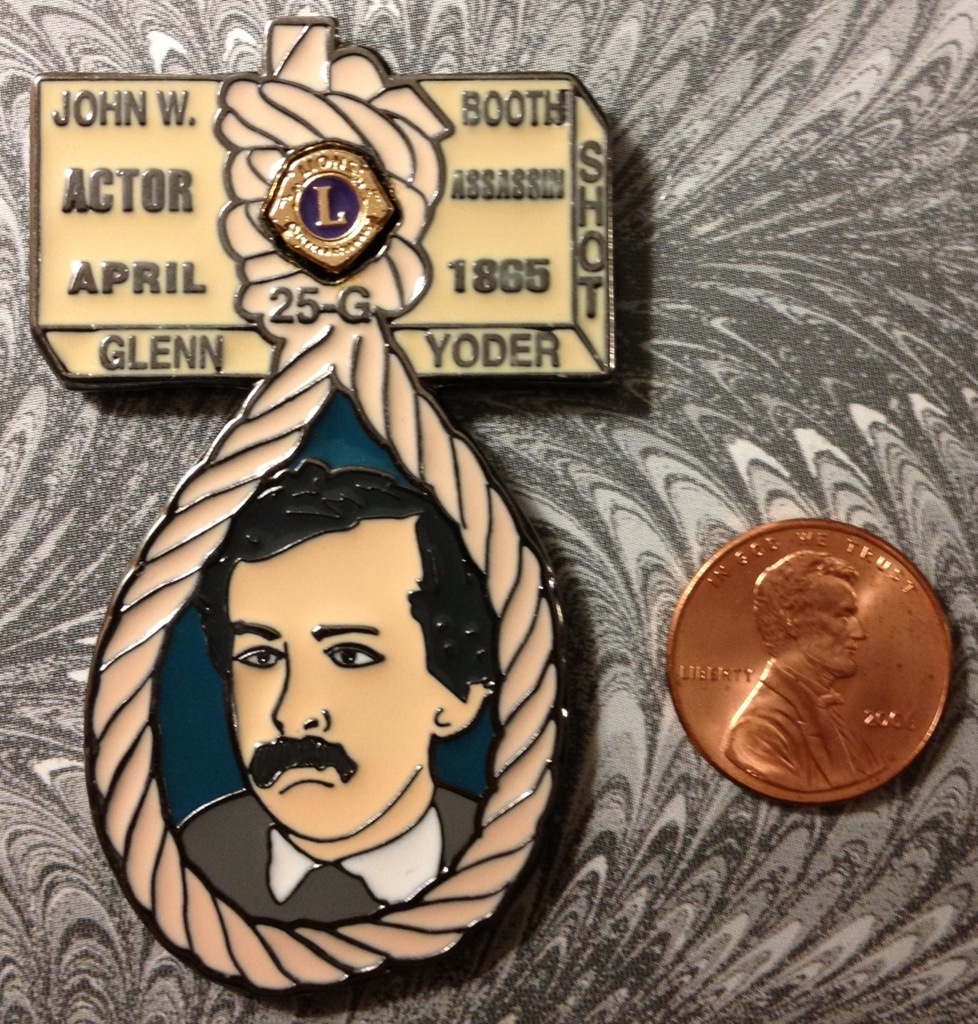
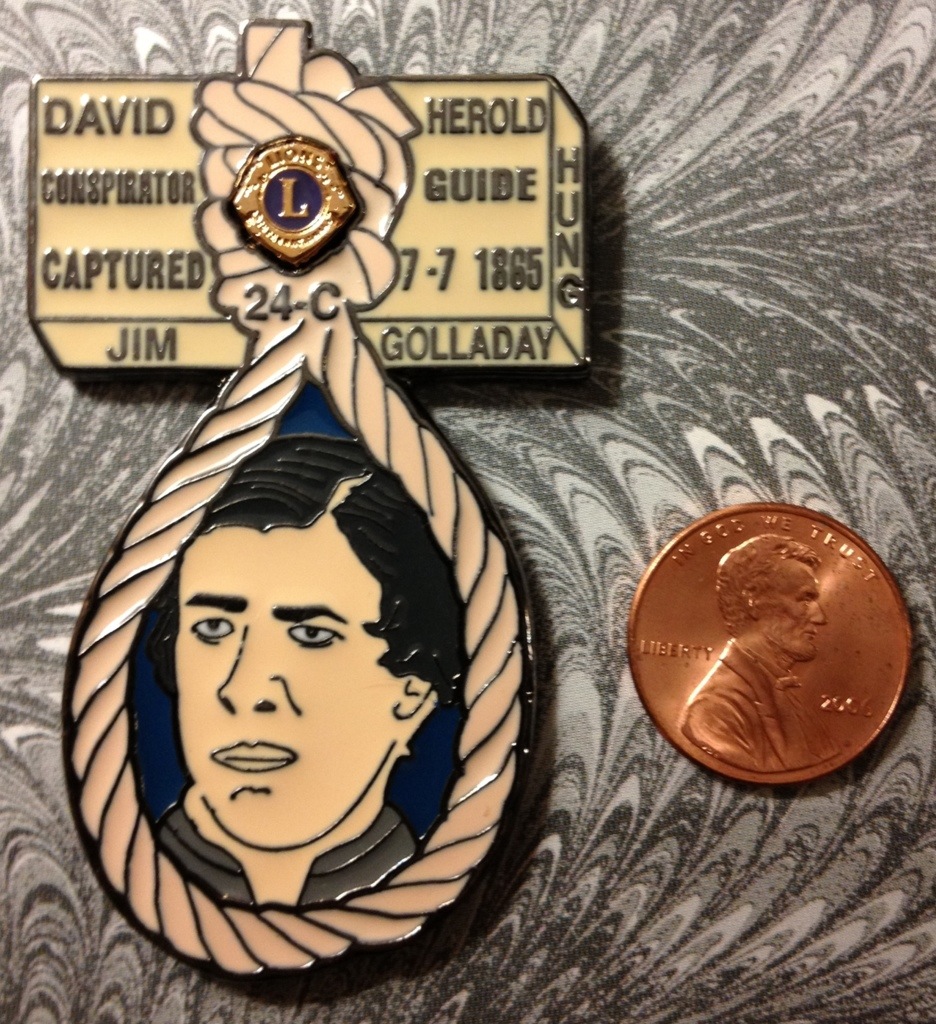
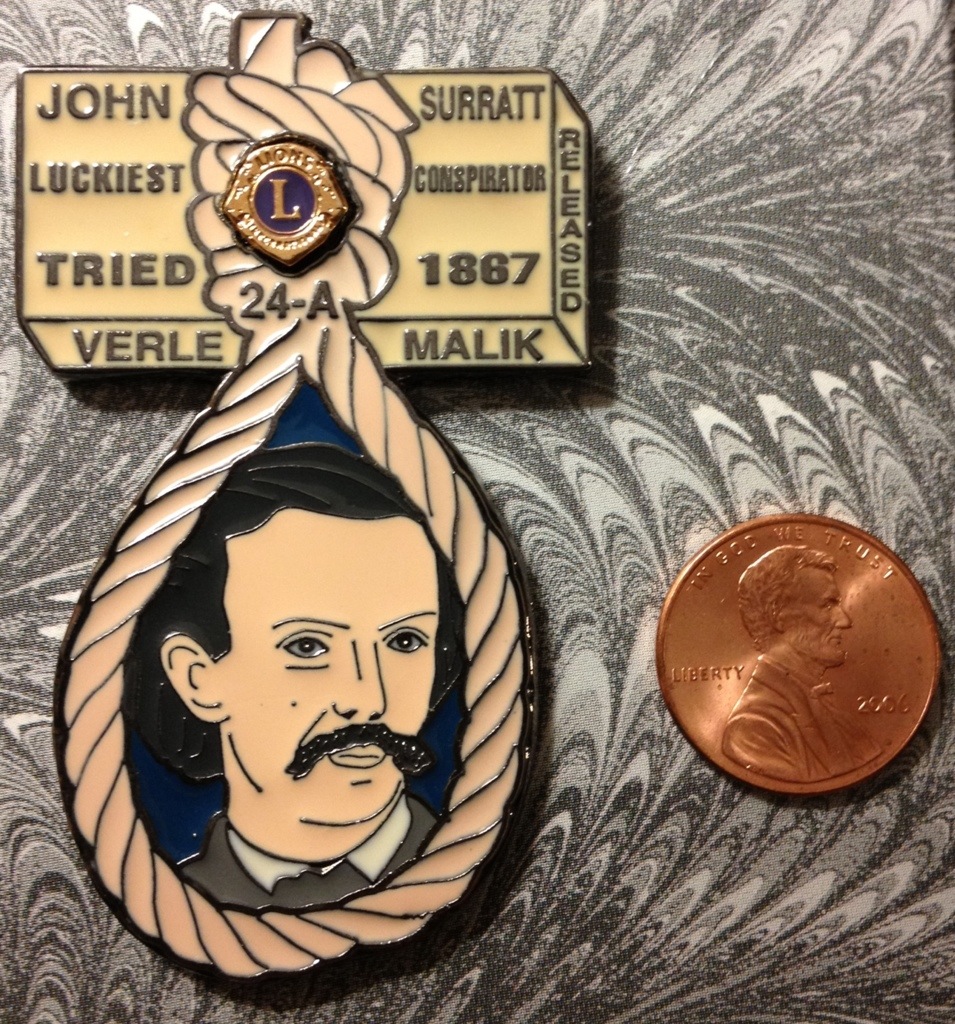
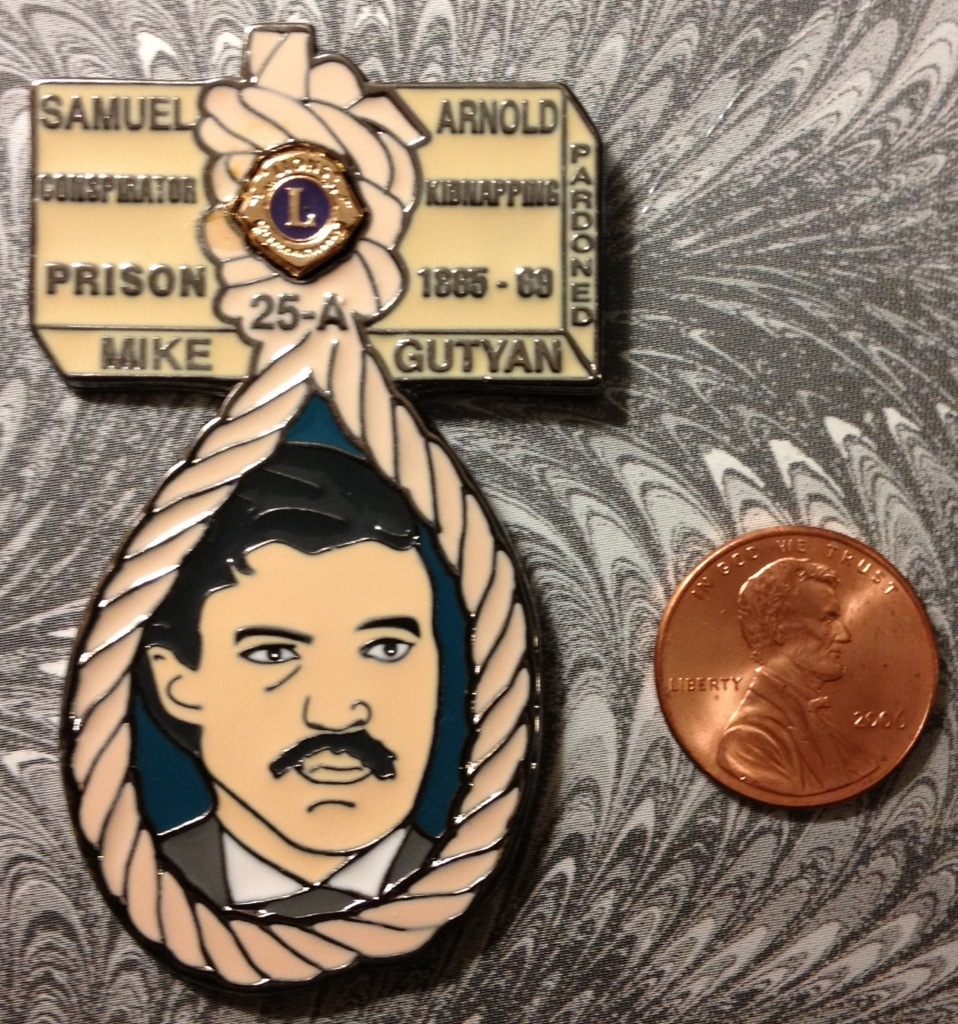
eBay, that wonderful online auction house for the everyman, is full of unique objects up for sale. When not searching for a new, “Inflatable Unicorn Horn” for my cat, I tend to do searches for Lincoln assassination related things. Most of the time it’s the same old books and prints. Yawn… Last week, however, I found myself bidding on, and winning, some truly one-of-a-kind Lincoln assassination tchotchkes: conspirator pins!

20130603-193432.jpg

Though little description came with the pins, it appears as though some history minded Lions Club members decided to make pins for themselves based on the different conspirators. Each pin contains an image and name of a conspirator, a description of their involvement in a couple words, and, on the side, their ultimate fate. The pins also contain the name of the Lions Club person for whom the pin was presumedly made for.

20130603-192103.jpg

20130603-192115.jpg

20130603-192126.jpg

20130603-192142.jpg

20130603-192155.jpg

20130603-192208.jpg

20130603-192219.jpg

20130603-192252.jpg

20130603-192324.jpg

20130603-192348.jpg

You’ll notice they made the understandable error of confusing Hartman Richter’s mug shot for Dr. Mudd. It also appears that Michael O’Laughlen and Edman Spangler got a bit more facial hair. I’ll also leave it up to you to decide how accurate their descriptions of each conspirator is.

There were impulse buys, but not ones that I regret…yet. It just goes to show you that, no matter what you’re looking for, eBay can surprise you sometimes. Now I’m going back to searching for more practical things like the most affordable can of unicorn meat.

Categories: Uncategorized | Tags: | 11 Comments

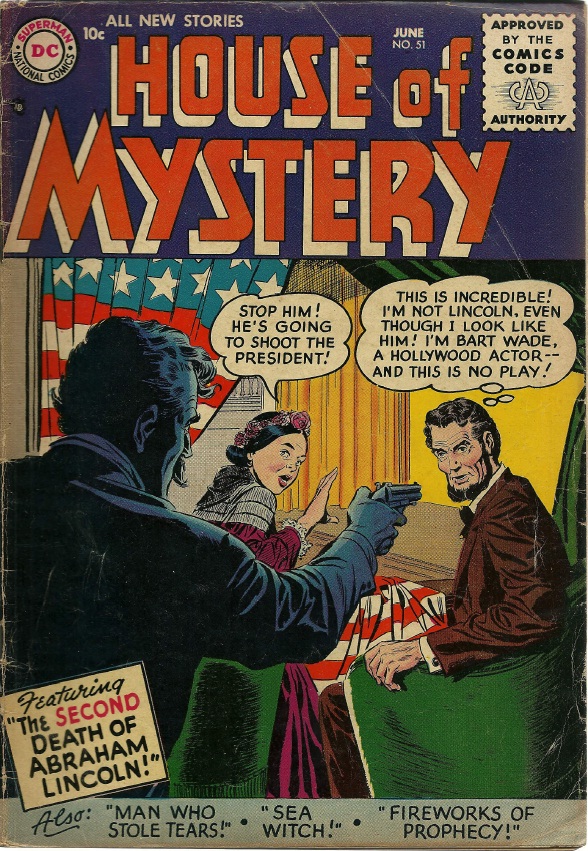
The Second Death of Abraham Lincoln

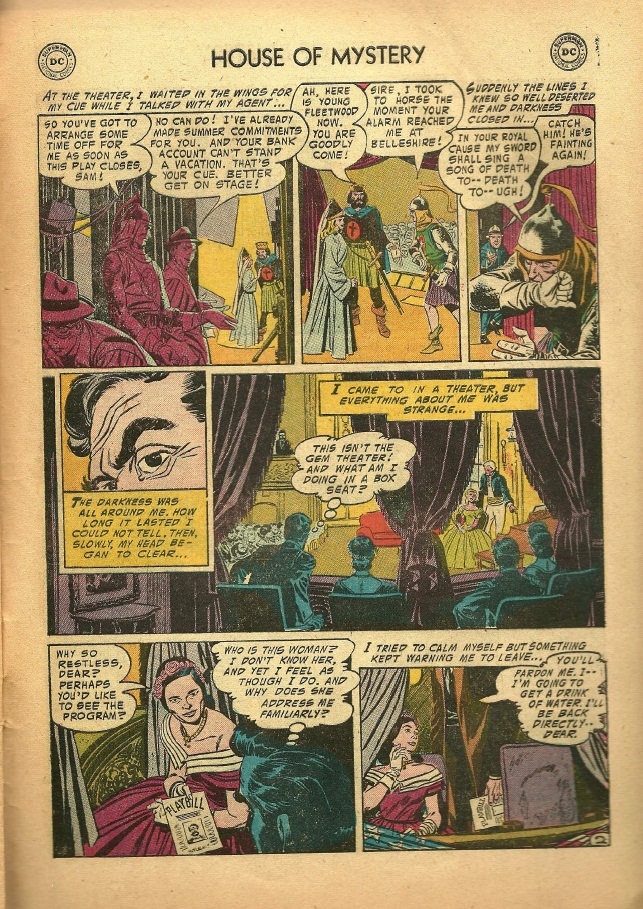
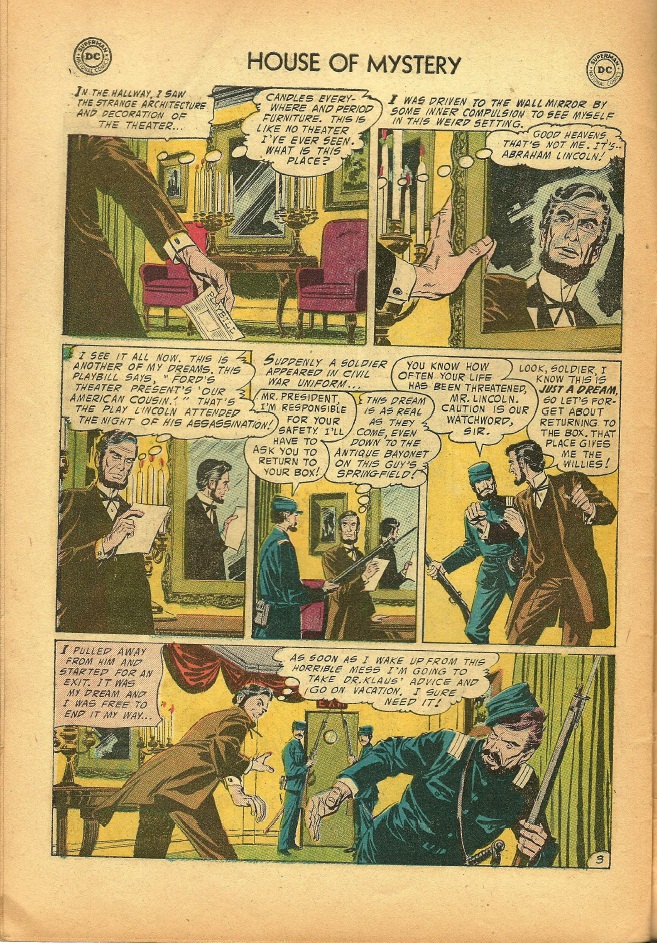
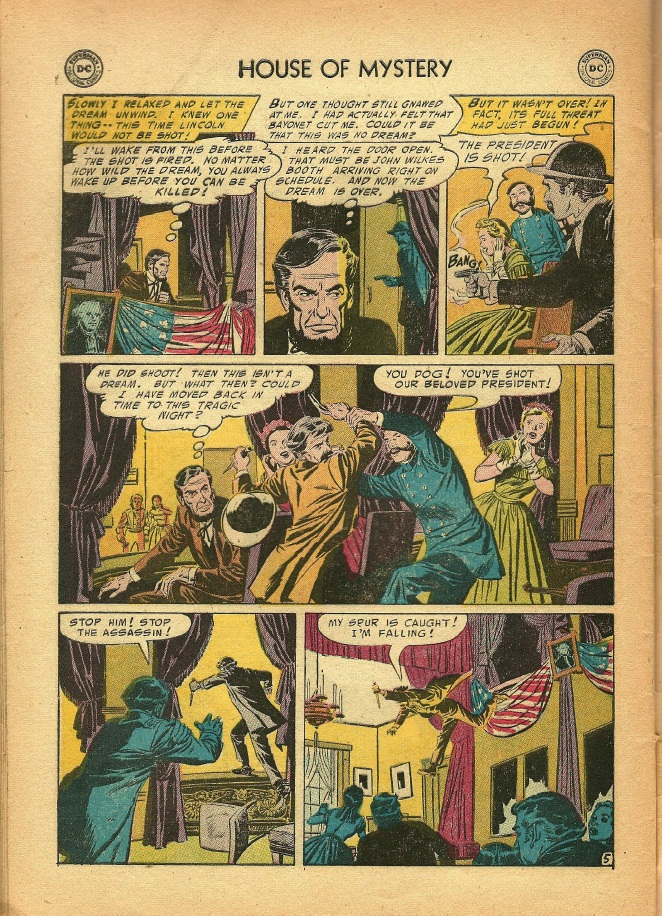
Thank you to Richard Sloan for sending this unique, albeit strange, comic book from his collection. You can see excerpts of other Lincoln assassination comic books here.

Second Death of Lincoln 1 Second Death of Lincoln 2 Second Death of Lincoln 3 Second Death of Lincoln 4 Second Death of Lincoln 5 Second Death of Lincoln 6 Second Death of Lincoln 7

Categories: Uncategorized | Tags: , | 3 Comments

When Junius Took the Stage – Part 1

I’m in the midst of reading the book, Junius Brutus Booth: Theatrical Prometheus by Stephen M. Archer. Though I’m only about 40 pages into it, I already have the book brimming with Post-It notes marking items of interest requiring further investigation. The most fascinating things I’ve come across thus far, is the drama that occurred when Junius Brutus Booth made his star debut in the theaters of London.  In preparation for a post about the matter, I found myself with a wealth of material on the early theatrical life of Junius Brutus Booth.  Instead of summarizing key points of Junius’ initial acting career, I decided to write a series of posts examining the humble acting beginnings of the man who would later father a theatrical dynasty, including the assassin of President Lincoln. What follows is the first part of a series of posts entitled, “When Junius Took the Stage”
Young Drawing of Junius Brutus Booth

Undated drawing of a young Junius Brutus Booth.

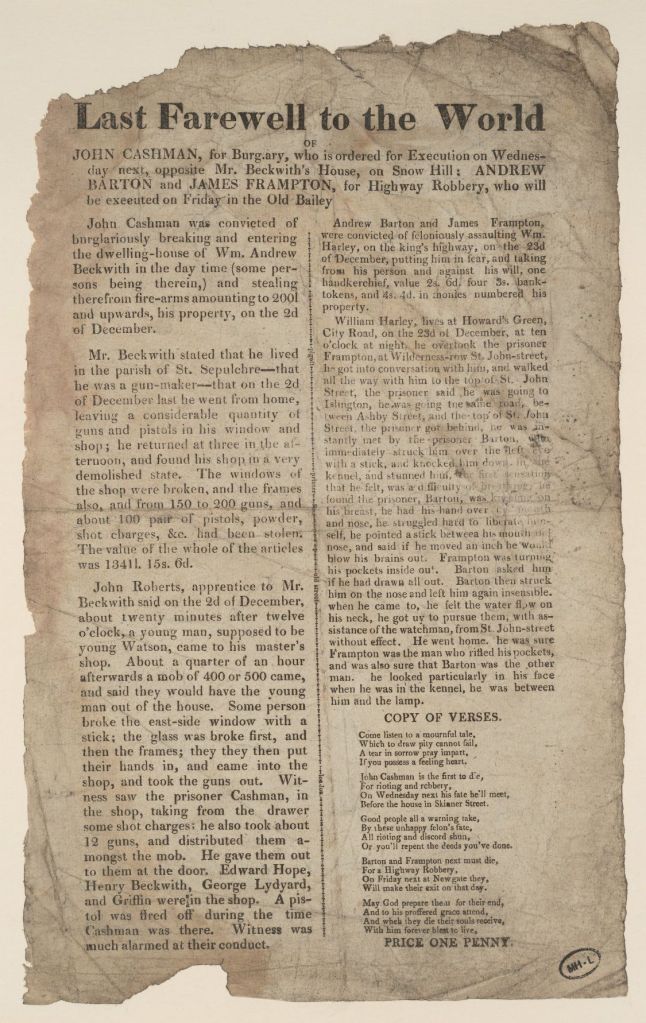
The year is 1813 and Junius Brutus Booth is 17 years old.  He is an energetic and passionate young man, rebelling at the desires of his widowed father, Richard Booth, at every turn.  Junius loathed the printing apprenticeship Richard had secured for him.  He worked under the apprenticeship of a printer by the name of George Piggot at 60 Old Street, London.  According to Junius he aided in the printing of items like “ballads, tales of wonder, and stories of fairies and goblins.”  In addition, Piggott printed the “dying speeches” of soon to be executed criminals.  These were single sided broadsides, sold in the streets of an execution to the gathered masses.  They usually contained a description of the condemned man’s last hours and a confession, often in the style of a cautionary poem:

One of George Piggot’s “dying speeches” broadsides.  Junius would have assisted in the printing of these.  Source: Harvard Law School Library

One of George Piggot’s “dying speeches” broadsides. Junius would have assisted in the printing of these. Source: Harvard Law School Library

Junius, in a move that eerily duplicated the actions of his father at his age, sought to sail away from his apprenticeship and life in England.  Had the winds been more favorable to his quest, Junius would have sailed away as a cabin boy bound for Rio de Janeiro before his father ever knew he was gone, however, Richard did find out about his plan and retrieved the boy before his ship set sail.  This was not the first time Richard had to save this misguided youth.  Not once, but twice, Richard, the lawyer, had to defend his son against paternity tests.  Though official court records of these suits against Junius have not been found, early Booth biographers state that Richard lost both suits and was forced to pay for his son’s carnal transgressions.

So what was this rebellious young man to do with his life?  Printing and the law had no appeal to him.  Then, on either October 7th or 13th, 1813, Junius Brutus Booth went to see Othello at London’s Covent Garden Theatre.  That experience would set the path that Junius would follow for the rest of his life.  Invigorated with the allure of the stage and the possibility of fame and fortune, Junius sought to make himself an actor.  It is likely that the opposition to the venture brought forth by his father only further fueled Junius’ desire to attempt the stage.

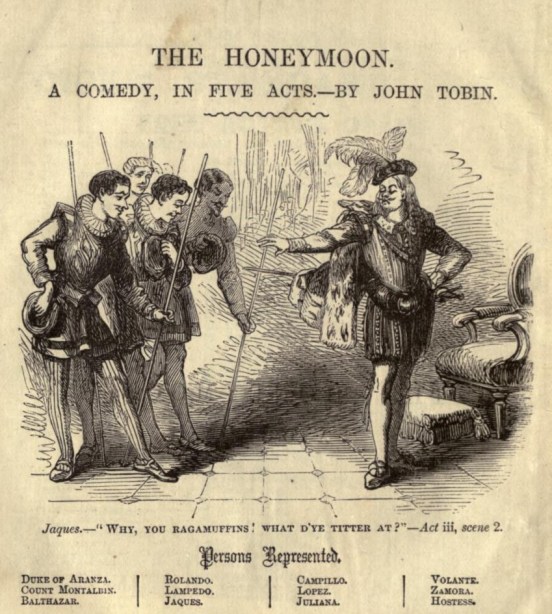
He started, as practically all aspiring actors did, in a nursery theater.  Akin to modern community theaters, these playhouses were little more than barns or lofts, where milkmen and laborers who dreamed of stardom performed for the local crowd.  From this, Junius was able to secure himself his first professional engagement when he signed on as a member of an acting troupe and toured around the dock towns and river villages of England.  This afforded him the minuscule salary of one pound sterling a week.  As a paid actor in this troupe he made his theatrical career debut on December 13th, 1813 in the comedy, The Honeymoon by John Tobin.  From my quick scanning of some of the text, I can ascertain that the main character, a Duke, has married a very beautiful, yet proud and feisty woman.  In order to “train” her to be gentler, the Duke decides, as a honey moon, to take his wife to a peasant’s hut and make to act that he is actually a commoner who has been impersonating a duke.  When his new wife goes to the duke’s castle to inform against him and request a divorce, the duke has one of his servants, Jaques, play the part of himself, hilarity ensues.  Again, this was just a cursory glance of the text and may be inaccurate.  Nevertheless, Junius Brutus Booth played the part of Campino in this professional stage debut.  Campino is an extraordinarily minor role, with only a handful of speaking lines.  Essentially, Campino is just a named servant who gets to read the words of the Duke ordering the servants to treat the simpleton, Jaques, as if he was the true Duke.  He is present when Jaques enters for the first time in royal clothing to the laughter of all the other servants, as depicted in this engraving:

Honeymoon engraving

When asked by another servant how Jaques was fairing with his newly bestowed nobility, Junius, as Campillo replied, “Like most men in whom sudden fortune combats against long-established habit.”

Junius would continue traveling with this troupe through the various dock villages, making a pittance.  His meager salary forced him to rely on only one meal a day and, by March of 1814, illness and poverty forced him back home to his father.  For a while, it appeared as if Junius’ acting days were done.

Stay tuned for future posts in this series regarding Junius Brutus Booth’s early life on the stage.

References:
Junius Brutus Booth: Theatrical Prometheus by Stephen M. Archer
The Honeymoon by John Tobin

Categories: Uncategorized | Tags: | 5 Comments

The Booth Log Cabin

As I noted in one of my previous posts, Tudor Hall was not the original Booth family home in Bel Air, Maryland.  At first, Junius Brutus Booth, Mary Ann Holmes and little Junius Brutus Booth, Jr. lived in a rented log cabin belonging to a Bel Air family by the name of Rodgers.  As Ella Mahoney, the owner of Tudor Hall from when the Booth’s gave it up in 1878 to her death in 1948, wrote:

“The little house in which they were living had been occupied by the Rogers’, who some years before, having rented the farm and gone to live in town, becoming discontented and the lease not having expired, built this for a temporary home until they could regain possession of their house.”

When Junius Brutus Booth leased the 150 acres he and his family would live on in May of 1822 (he could not buy it outright because he was not a citizen of the United States), he purchased the cabin from the Rodgers and had it moved away from their house:

“The house was strongly built, and Mr. Booth bought and moved it. It caused quite an excitement in the neighborhood, people coming to witness the novel sight of a house being rolled across the fields, and many lent a helping hand.

Mr. Booth chose a location for his home near a fine spring. In front of the house stood a large cherry tree, and at the back a sycamore, which has grown to immense size, being now eighteen feet in circumference. In that house they lived until later they built this substantial brick house [Tudor Hall]…”

With the exception of the oldest and youngest children,  Junius Jr. and Joseph Adrian Booth, all of the Booths were born in this log cabin by the spring.

Ella Mahoney goes on to describe this log cabin home even further:

“The old house still stood on the front lawn when I first knew the place. I remember it well. The main part of the house — the part that was moved — had had added at the east end a kitchen built of logs, a big stone chimney on the outside, and a wide fireplace within. At the west end also a log addition, which had never been finished, no floors laid above or below. As a child I used to play in that old house, and walk on some boards laid on the sleepers of the upper story.

The main part of the house consisted of one large room, with hall running through at one end. A door opened out at either end, and at one side a well preserved stairway and railing; a landing well up; a large closet under the stairway, and also a closet in the big room above, in which room as well as in the room below, was a fireplace, with shelves in the wall on either side. I remember these closets so well, on account of having seen a cross goose sitting in the room below, and another walk deliberately past us when we were playing in the room above, and go to her nest in the closet there.

The old house was so unattractive, standing as it did in front of this house, and in such a state of decay, that my husband had it removed when he began improvements about the place, as I suppose the Booths had intended doing. There were the remains of another building near the back of the house, a room perhaps for the servants. There was a log springhouse near the spring, through which the overflow from the spring ran; also the remains of an old cider press.”

The Booth log cabin was still in existence when Ella Mahoney’s husband bought the place from Mary Ann Booth in 1878.  As stated above he, “had it removed”.  But removed to where?

Reader Steve Lohrmann, who visited Tudor Hall when it was the private home of Dorothy and Howard Fox, recalls this story:

“I’ve been to Tudor Hall twice when it was a private residence, and met the owner of that time, Mr. Fox. He was very nice and showed me around the place. The little tour he gave me was very interesting, but there is one thing Mr. Fox told me that I forgot until I read about the cabin. He told me Tudor Hall’s kitchen is built around the old cabin. Is that true?”

After doing some research, I don’t believe this to be the case.  If the log cabin was transformed into the kitchen when Tudor Hall was built in 1851/52, then Ella Mahoney would had never even seen the log cabin since she wasn’t born until 1858.  In addition, in the Maryland Inventory of Historic Properties report about Tudor Hall, no special mention is given to the kitchen in regards to it being the original cabin but, instead, implies the kitchen on Tudor Hall was created at about the same time as Tudor Hall and then later connected to the house:

“The separate kitchen house is a very late example of an earlier custom.  Although it does not appear in the published plan, it is suggested in the published lithograph perspective…

Changes: In the late 19th century, the kitchen house was joined to the main house by infilling construction.  The space thus enclosed was incorporated into the dining room.  The kitchen chimney was reduced to a single stove flue and the kitchen stair was removed…”

So the Tudor Hall kitchen is not the original cabin.  However, this Historic Property report for Tudor Hall does provide some valuable information on what did happen to the Booth log cabin.

Before getting to that though, I have to thank another reader of the blog, Elsie Picyk.  Elsie is a resident of Port Tobacco, MD and volunteered during the archaeology project that occurred there.  Back in October, she sent me the Fall 2012 edition of the Maryland State and Highway Administration’s Cultural Resources Bulletin.  On page 8 of that bulletin appeared an article about the Booth Log Cabin:

Booth Log House article

Before reading this, I never even thought that the original home of the Booths near Bel Air could have survived into the present day.  After reading it, I made sure this was a house I visited when I went to Tudor Hall.  This article linked to the Historic Properties report for the “Booth Log House” and, despite a couple errors with dates, it explains how the house came to stand today.

As stated by Ella Mahoney in her book, her first husband Samuel Kyle, had the Booth log cabin moved away from Tudor Hall sometime after he bought the property in 1878.  It was moved to its current location, at the intersection of Churchville Road and Prospect Mill Road in Harford County:
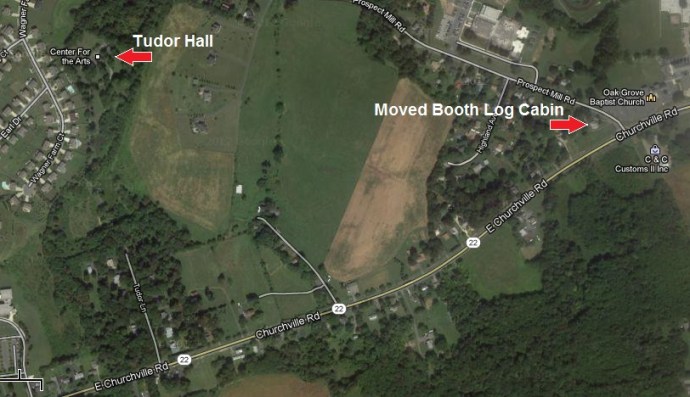
Tudor Hall - Cabin map

At that time, that land was still part of the Tudor Hall property.  Over the years, the “Booth Log House” has been extensively changed.  As described in the Cultural Resources Bulletin:

“As currently configured, the dwelling is an irregular amalgamation built in four different sections: the original side-gable log house is sandwiched between a circa 1900 single story hipped-roof kitchen addition and circa 1950 two-story shed-roof addition to the north and the circa 1925, two-story, gable-front Classical Revival addition to the south.   The original log section is hard to discern from the other sections, only notable by its steep, gable ends incorporated into the east and west elevations shown by the arrow on the above picture.”

Though added to and changed over the years the middle portion of this house, noted by the gables on the ends, is the Booth family’s log cabin.  This is the dwelling that Rosalie, Henry Byron, Mary Ann, Frederick, Elizabeth, Edwin, Asia, and John Wilkes Booth were all born into.

Booth Cabin Aerial

Here are some pictures I took of the house during our visit:

Booth cabin 1
Booth cabin 2
Booth cabin 3
Booth cabin 4

So, when you go and visit historic Tudor Hall, include a slight detour down the road to see what remains of the original Booth family log cabin – the birthplace of the Booths.

Update: As always, make sure to read the comments from others. It appears that there is some doubt as to the authenticity of this being the Booth’s log cabin.

References:
Sketches of Tudor Hall and the Booth family by Ella Mahoney
Maryland State and Highway Administration’s Cultural Resources Bulletin, Fall 2012
Maryland Historical Trust Inventory of Historic Properties Report for Tudor Hall
Maryland Historical Trust Inventory of Historic Properties Report for the Booth Log House

Categories: Uncategorized | Tags: | 16 Comments

Kieran McAuliffe’s Booth Escape Route Map

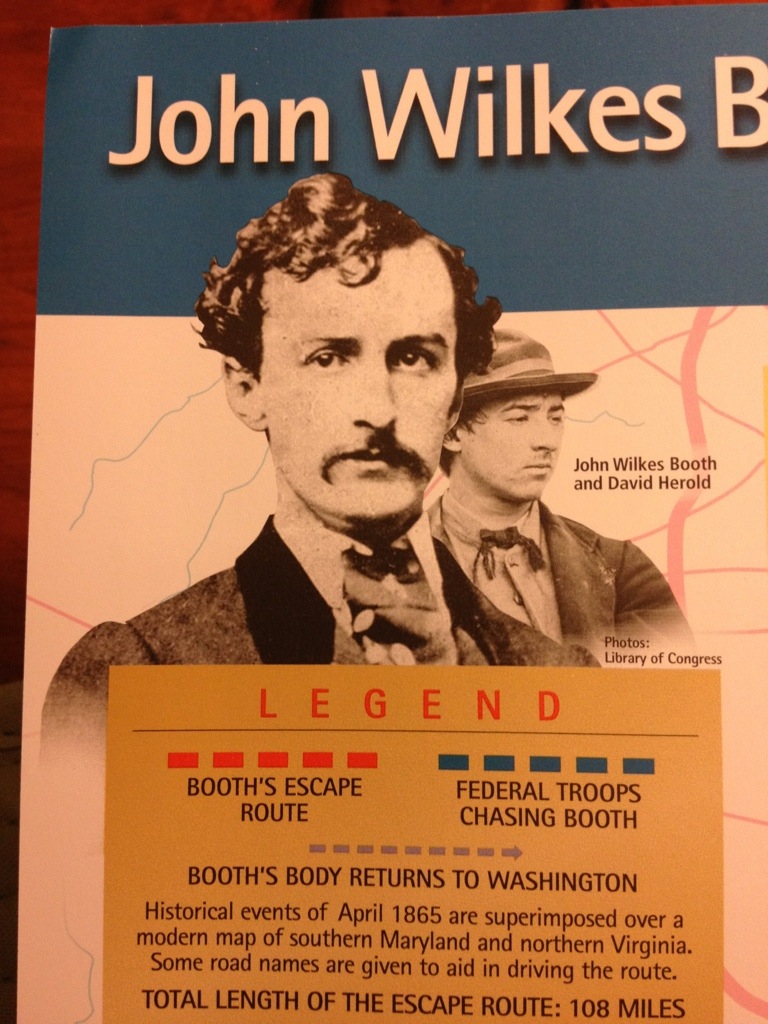
Earlier this week, I received a generous offer from Kieran McAuliffe. He has recently revised and reissued his John Wilkes Booth Escape Route map. Today I came home from our trip to D.C. to find a copy of his new map in my mailbox.

20130525-194621.jpg

Mr. McAuliffe has nicely improved on his original map, adding more images and fine tuning the specific routes taken by Booth and the soldiers tracking him down.

20130525-195222.jpg

20130525-195618.jpg

Excerpt from Kieran McAuliffe’s original John Wilkes Booth Escape Route map.

20130525-195700.jpg

Excerpt from the revised version of Mr. McAuliffe’s map. Notice the greater detail showing the routes taken.

His map is a must have for any one interested in the assassination. It provides a nice, concise account and beneficial visual of the escape route. You can purchase Mr. McAuliffe’s new map from the Surratt House Museum or from Amazon.

I’m looking forward to Mr. McAuliffe’s future maps.

20130525-200808.jpg

Read more about Kieran McAuliffe and his work here: http://historymapsetc.com/kierans-bio/

Categories: Uncategorized | Tags: | 6 Comments

At the National Hotel

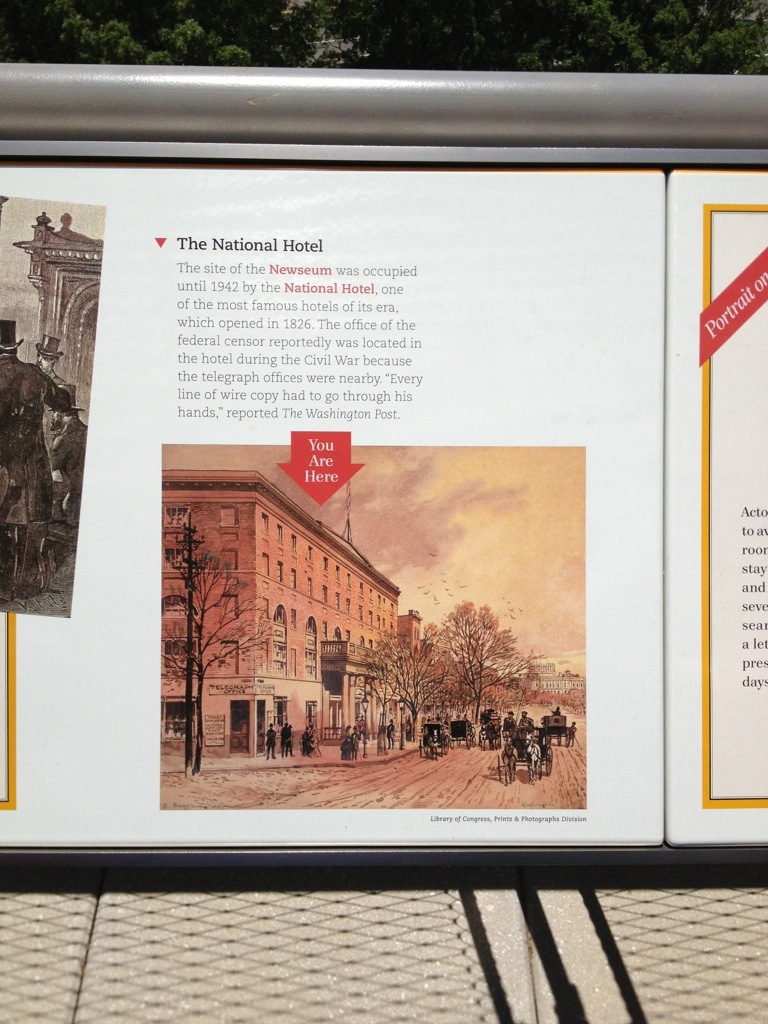
I am currently eating at Mary Surratt’s former H street boardinghouse, now Wok & Roll restaurant, in D.C.’s Chinatown. My reason for coming into the city today, was to visit the Newseum. I had previously visited the Newseum a few years ago when they had an exhibit going on about James Swanson’s book, Manhunt. Today, I came to view their current exhibit, JFK: Three Shots Were Fired, which contains artifacts relating to JFK’s assassination.

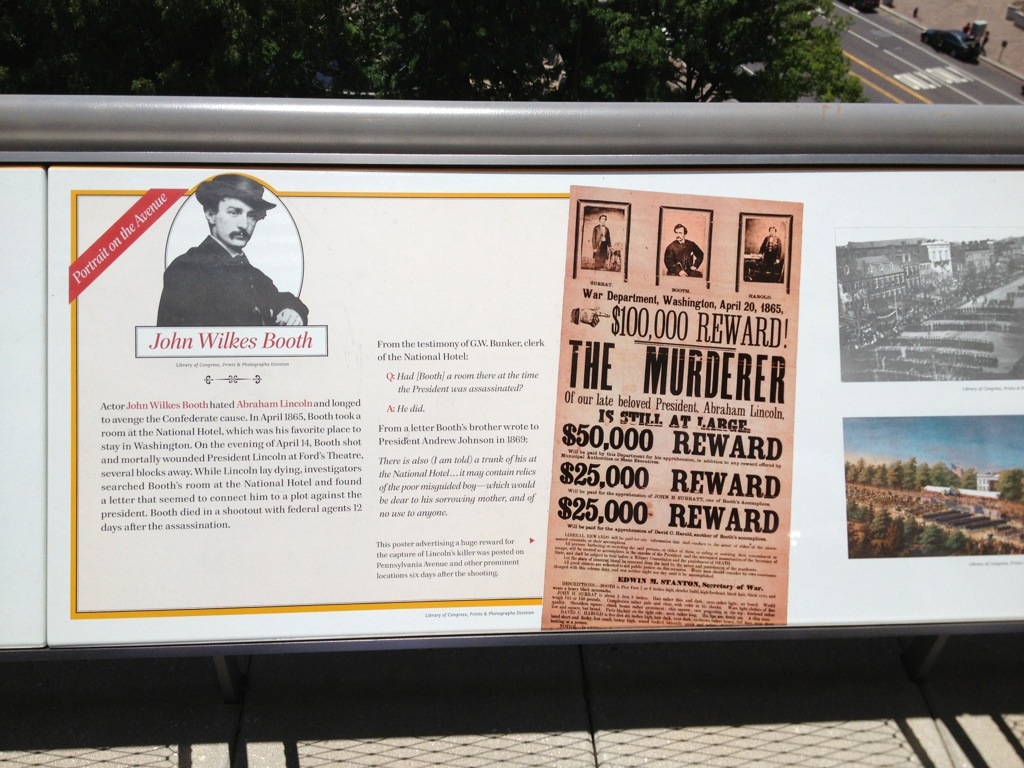
The Newseum is built on the former site of the Naional Hotel, Booth’s hotel of choice when in the city. After the assassination, detectives raided his room at the National and retrieved his trunk and papers left in his room. One of the papers found, signed Sam, would implicate Samuel Arnold in the conspiracy.

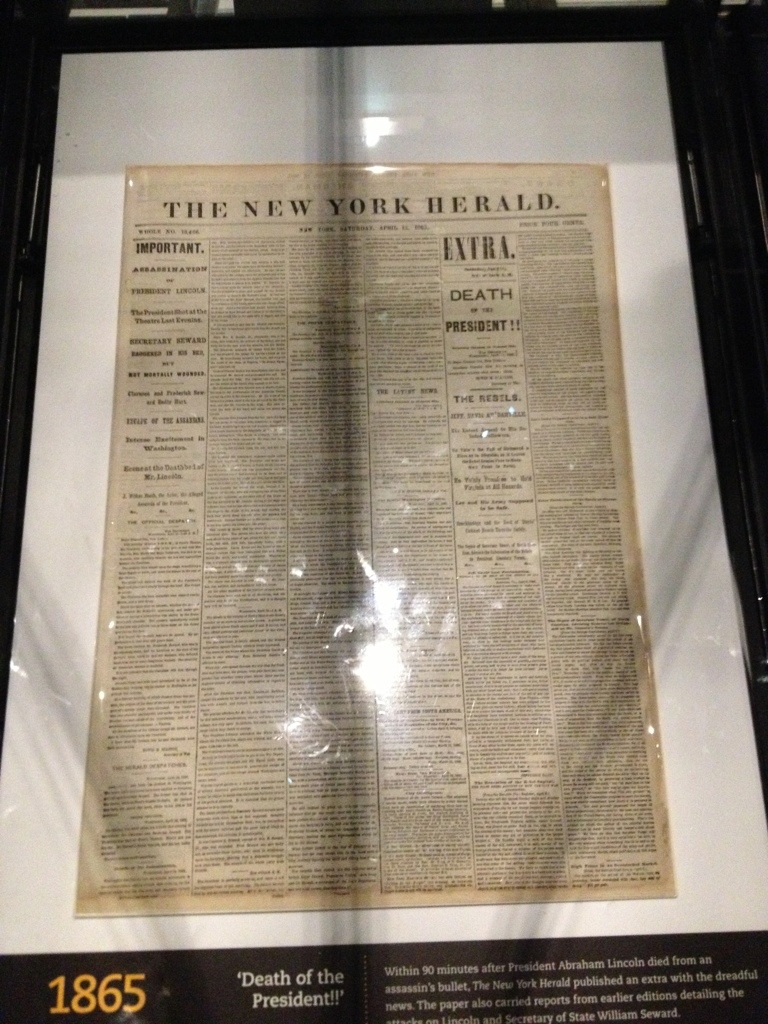
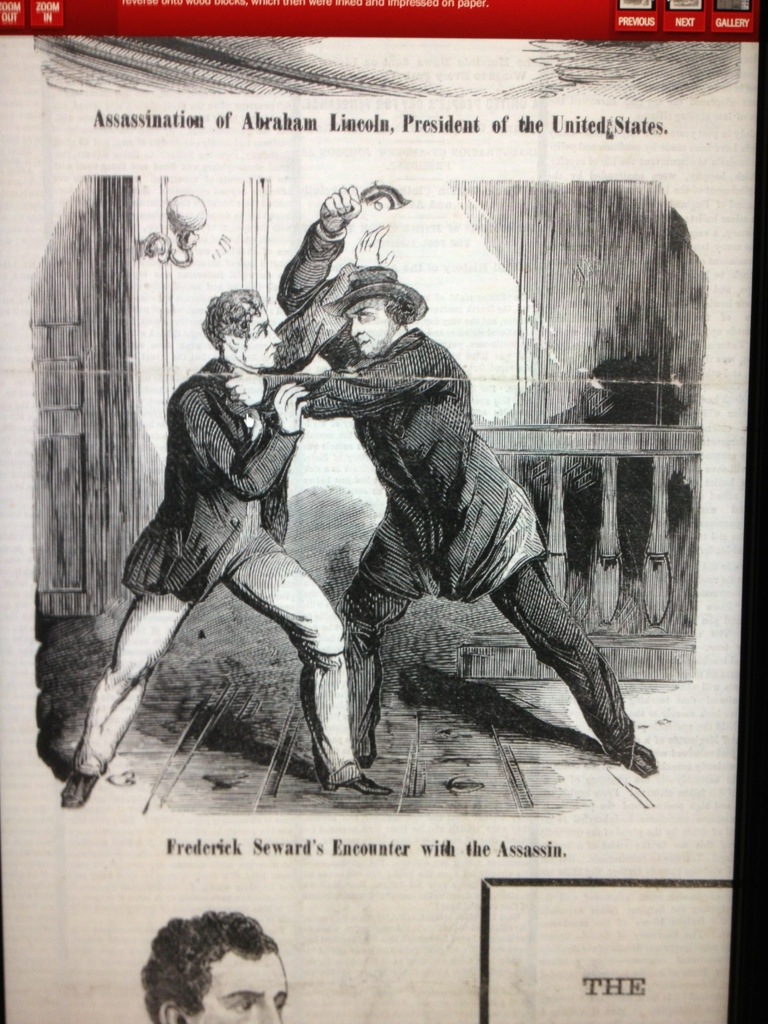
As with any museum I visit, here are a few pictures of Lincoln assassination related things found in the Newseum, oddly enough mainly just a couple newspapers:

20130525-150020.jpg

20130525-150537.jpg

20130525-150905.jpg

20130525-150936.jpg

20130525-150951.jpg

Categories: Uncategorized | Tags: | 9 Comments

A shameless request…

Technology is amazing. The internet has opened up so many areas of research that were unheard of just a short time ago. What’s more, the way we are interacting with technology is constantly changing and improving, too. Five years ago I had one desktop, or “tower”, computer, and one plain, old, no contract, flip cell phone that only made phone calls. Today, I have a new desktop computer, an “air book” laptop, and an iPhone. Technology has made it so easy for me to research the Lincoln assassination from practically any venue and in any situation. For example, in the middle of Tudor Hall last weekend, I whipped out my iPhone, brought up this site, and explained to one of the volunteers why one of the pictures they had up was not of Joseph Adrian Booth, but was of a friend of John Wilkes’ named Richard Johnson. I can now research and discover new things from my desktop computer in my office, my laptop while watching TV on the couch, and when I’m on the go from my iPhone. All of this is thanks to the increasing advances with technology.

There is one downside to having so many different avenues for research: organization. When I find something interesting on, say, my laptop, I save it to my laptop. When I stumble across something while on my iPhone, I save it to my phone. When typing up posts and attaching pictures on my desktop, I save things on my desktop. The result, three different “Booth” folders and files on three different devices. I can’t tell you the number of times I’ve remembered something that I’d read, and I had to dig through three different computers to find where I saved it. Worse, when my desktop required repair for a long time and I was stuck using only my laptop, I filled that poor little thing’s memory very quickly. So what is the solution?

For me, it is Dropbox. Dropbox is a cloud based program that allows you to sync multiple devices together and save things to all of them simultaneously. When I take a picture with my iPhone, I can seamlessly upload it to Dropbox and find it on my desktop computer when I get home. No cords, no flash drives between computers, no transferring files. It has really helped me in getting my material organized and accessible.

So, why am I bothering you all with this infomercial for Dropbox? Honestly, it’s because I am trying to get more storage space. You see, Dropbox is free (which is awesome) but they only give you so much free space. After using up so many gigabytes of free space, you need to upgrade (pay) to get more. However, Dropbox also has a very generous referral process. For every person you refer and get to install the Dropbox program, both you and the person you referred are rewarded with 500 MB of free space. So, that’s why I’m being shameless right now. I know Dropbox is incredibly helpful for me. I have Dropbox installed on my iPhone, my desktop computer, my laptop, and my work computer. This allows me to access my files anywhere I go. If you think Dropbox might be a good thing for you, please consider using this referral link from me, Dave Taylor, when signing up and installing the software. By doing so, both you and I will be rewarded with an extra 500 MB of free space.
So many of the pictures I put up here on BoothieBarn are here due to the seamless way I can sync my phone with my computers. The more space I can get (no matter how shamelessly I may act in doing so) the more images and resources I can have with me no matter where I go. Read about Dropbox and decide if you think it’s something that might benefit you in your life. If you do decide to use Dropbox and do so by using my referral link, I would be truly grateful.

Ok, enough of that commercial. Now back to your regularly scheduled Lincoln assassination programming…

Trial CDV

Categories: Uncategorized | Tags: | 17 Comments

Blog at WordPress.com.