Sam Arnold’s Home near Friendship, MD

Samuel Bland Arnold, a conspirator in the kidnapping plot against Abraham Lincoln, was pardoned and released from his imprisonment at Fort Jefferson, Dry Tortugas in February of 1869. After his release, Sam attempted to return to the life he had known by going home to Baltimore. The transition, predictably, wasn’t easy. Sam had difficulty finding employment in the city due to his connection with Lincoln’s assassination. He worked in his father’s bakery for a time, but the business itself had never recovered from the cost of Sam’s legal fees. By 1883, Sam became his own employer by entering the occupation of a butcher. From 1883 to 1896, Sam Arnold the butcher lived at various residences in Baltimore, selling his meats from a market stall in the Fell’s Point neighborhood. Then, in 1896, he up and moved out of Baltimore and found a home in southern Anne Arundel County near Friendship, Maryland.

Sam Arnold 1902

The farm that Sam Arnold moved to belonged to a family by the name of Garner. As a young boy, Arnold was educated at St. Timothy’s. This is the same school where he met John Wilkes Booth for the first time and their friendship began. In addition to young Booth, Sam had befriended another student named Robert Garner. Sam became very fond of the Garners and even went so far as to call Robert Garner’s mother, Anne Garner, “a second mother to me.” Mrs. Garner died in Baltimore in 1894, and it is likely that Sam reconnected with the Garners after her death. When he moved to the Garner farm in 1896, he was employed by Mrs. Garner’s daughter as the farm manager. Here, he found the seclusion and isolation he had probably desired for years. Sam wrote his memoirs, but claimed they would not be published until he was dead. He lived a hermit’s life, tending to his favored friends, the animals.

Arnold and his dog in 1902

Arnold and his Feathered Friends 1902

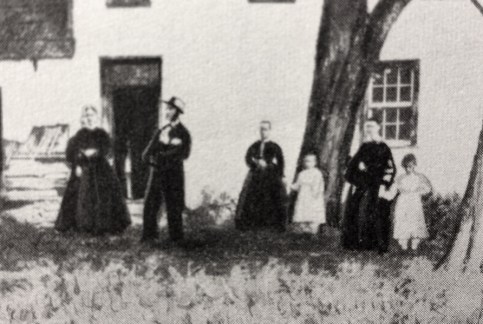
As I’ve written previously, Arnold was motivated to release his memoirs ahead of schedule after reading of his own death and reactions to it in the newspapers. Though it took some prodding and a lot of correspondence on the Baltimore American newspaper’s part, Sam finally consented to let them run his memoirs in December of 1902. In preparation for the serial, the Baltimore American sent out a person to interview and photograph Sam Arnold at his residence. These pictures of Sam, his house, his dog, and his feathered friends appeared alongside his story.

Arnold's House in 1902

Sam’s account was serialized and published in the American and other newspapers across the country garnering great interest. Still, Sam Arnold remained on his secluded farm leaving only to visit his brother in Baltimore from time to time, and when he required medical assistance at Johns Hopkins after fracturing his hip in a fall in 1904. Sam stayed on the farm until the end was in sight, finally traveling to the home of his sister-in-law when consumption had all but finished him. It was at her house in Baltimore that he died on September 21st, 1906.

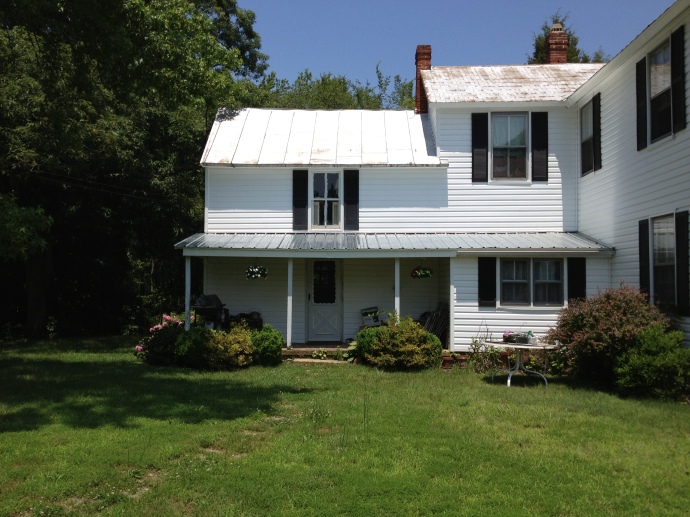
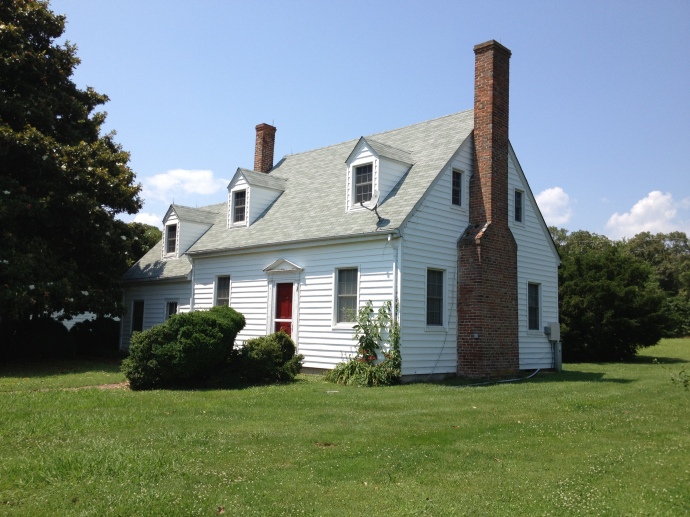
Practically all of the above comes from the research of Percy “Pep” Martin who has done a tremendous amount of research of Samuel Arnold, Michael O’Laughlen, and other Baltimore connections to the assassination. His research was shared with me thanks to Art Loux. While going through Art’s file on Arnold, I found that, in 1980, Mr. Martin had found and traveled to the farmhouse where Sam Arnold resided near Friendship, MD. Address in hand, today I tracked down and visited Sam Arnold’s residence off of Fairhaven Road in Tracys Landing, MD. Here is a video and some pictures we took of the house:

Arnold's House 2013 1

IMG_2498

Arnold's House 2013 3

Arnold's House 2013 5

As mentioned in the video, the house is currently up for sale (though under contract, I believe), and so here are some more pictures of the house from the real estate website:

This slideshow requires JavaScript.

It is amazing to me how relatively unchanged the house appears from the image of it in the Baltimore American taken over 110 years ago:

Arnold's-House-Then-and-Now

References:
Memoirs of a Lincoln Conspirator by Samuel Bland Arnold edited by Michael Kauffman
Baltimorean in Big Trouble: Samuel Arnold, A Lincoln Conspirator by Percy E. Martin, History Trails, Autumn 1990 – Spring 1991
Art Loux Archive

Categories: Uncategorized | Tags: | 14 Comments

John T. Ford after the Collapse

John T Ford

A young John Thompson Ford

The collapse of Ford’s Theatre in 1893 was a major news story. Even before the official investigation began, letters to the editors of various D.C. newspapers laid the blame of the collapse on the feet of a plethora of people. In the early days, the greatest scapegoat was Congress and the government for allowing workers to remain housed in knowingly dangerous or condemned buildings. Many called for inspections of all federal buildings in Washington to prevent the tragedy from happening elsewhere. Perhaps it was a latent sense of pride in his building, or a desire to distance his reputation from yet another tragedy, that led 64 year-old John T. Ford to pen this letter to the Evening Star:
John Ford about the collapsed theatre

John Ford would end of being very much correct in his claims. It was not any flaw in the building that led to its collapse, but rather the incompetence of the workers excavating the basement who did not adequately support the foundation during their dig. As Tudor Hall stands today, architect James Gifford had built a sturdy building with Ford’s Theatre that could have lasted for much longer, had it not been for human error and negligence.

References:
Evening Star – June 12, 1893

Categories: Uncategorized | Tags: | 13 Comments

For the Kids

I’m always looking for ways to branch out here on BoothieBarn.  My goal is to educate and interact with people about the Lincoln assassination.  However, there is one particular demographic that remains elusive: kids.  It’s ironic, really.  In real life I’m an elementary school teacher and yet the part of history that interest me the most is one that would be particularly difficult to relate to children.  How can I teach, in a developmentally appropriate way, the complexity of the death of Abraham Lincoln?  Well, luckily I’ve found a new resource to make it much, much easier.  How do you teach kids about such a sensitive topic such as Lincoln’s death or the Civil War?  With that time tested tool, the coloring book.

Civil War Coloring Book

I picked up this resource for a mere dollar and flipped to the back hoping to find a page that I could use to teach kids about the Lincoln assassination. Fate was one my side, and I now have this wonderful teaching tool:

Assassination Coloring Book page

Feel free to click and print this picture full size for you to use with your own kids. Drop off copies at your local library. Hand them out to neighborhood kids at play during the summer. Help get kids interested in history.

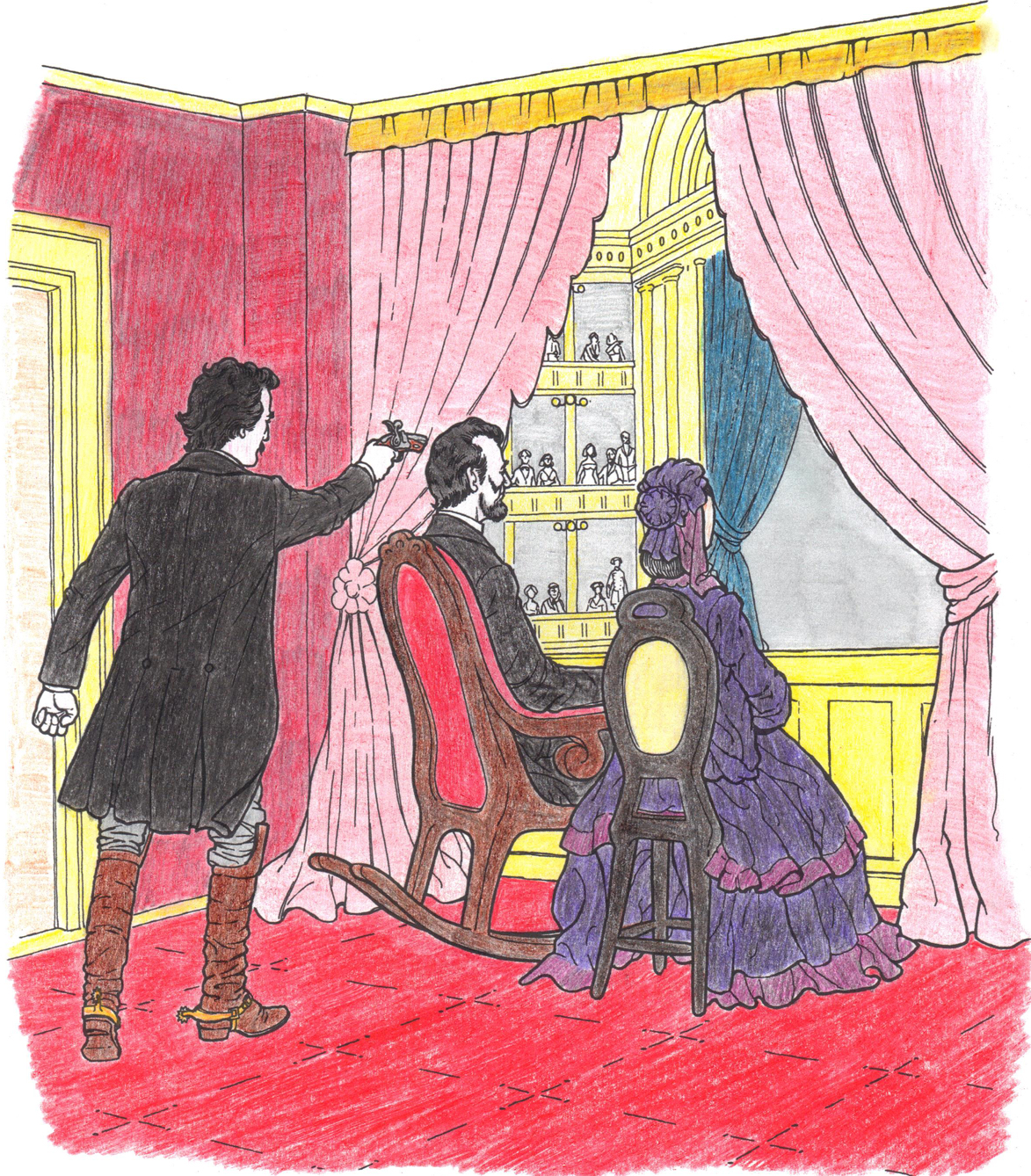
The real wonderful thing about coloring book pages is that they appeal to everyone, even adults. Why, with only a box of twelve colored pencils and a couple hours, I turned the above blank canvas into this piece of historical art:

Colored in Assassination page

Who ever said history couldn’t be fun?

Categories: Uncategorized | Tags: | 11 Comments

“An Interesting Flag”

The following article was written by The Rambler and appeared in February 9th, 1913 edition of the Evening Star.  The Rambler, whose real name was John Harry Shannon, wrote for the Star from 1912 until 1927, telling stories about his travels in and around Washington.  Many of his “rambles” involved trips into Maryland’s “assassination country” as I like to call it.  This article however, deals with his knowledge of one particular artifact relating to Lincoln’s assassination: the Treasury Guard flag.

Treasury Guard flag on display at the Ford's Theatre Museum

Treasury Guard flag on display at the Ford’s Theatre Museum

“An Interesting Flag

The flag which led indirectly but none the less certainly to the capture of John Wilkes Booth is now one of the main objects of interest in the Treasury building. For many years this famous flag occupied a place on the wall of the northeast corridor of the Treasury and divided honors with the money vaults as an object of popular interest. It was for many years about the first thing guides pointed out to visitors. Then the flag was loaned to Capt. O H. Oldroyd and for a long time had a prominent place in the museum of Lincoln relies. Not long ago it was reclaimed by the Treasury and hangs once more in that grim and classic building.

It was in the knotted fringe of this old flag that one of Booth’s spurs caught when he leaped from Lincoln’s box at Ford’s Theater on the night of April 14, 1863, after having mortally wounded the President and stabbed Maj. Rathbone. Had not the spur caught, Booth’s leg would in all probability not have been fractured or injured and his capture would perhaps have been very much more difficult.

When the advisability of a Home Guard for Washington was suggested the Treasury Department took an early interest if not the initiative in the movement. In In that department there was soon organized a full regiment. It was called the Treasury Guard, and Treasurer E. E. Spinner was made its colonel. Every afternoon after the department closed the regiment was drilled on the White Lot. Large crowds witnessed the drills of the Treasury Guards and the ladies of the department and the wives and daughters of the clerks naturally took a fond interest in the organization. These ladies at a meeting determined to present to the regiment a stand of colors. The regimental flag of the guard in the office of the captain of the watch of the Treasury, but it is the national flag with which this account deals.

On the night of April 12, 1865, the Treasury Guard gave a ball at Ford’s Theater. The theater was transformed into a large ballroom by the erection of a temporary flooring over the tops of the scats in the lower part of the house. The decorations were elaborate, and the flags of the guard were draped on the boxes. The guest of honor at that ball was Commodore Winslow of the Kearsarge. It was the first visit of that officer to Washington after the sinking of the Alabama.

It is narrated that after the ball John T. Ford requested the officer of the Treasury Guard to allow the flags to remain on the boxes as the President was expected to attend a performance at the theater the night of April 14. How Booth shot the President how he leaped from the box, how his spur caught, how his leg was broken or fractured by the fall, and how his injury proved an impediment in his flight are matters of common knowledge.

The day after Lincoln’s death, when the whole city was practically under martial law and Andrew Johnson had taken the oath of office as President in that room of the Treasury building long occupied as the office of the director of the mint, but which was then the office of the Secretary of the Treasury, the guard flag was brought up from the theater and taken into this room. The rent made in it by the assassin’s spur was exhibited to all those present. The Treasury Guard soon after disbanded, the flag was stored away and forgotten, and it was not brought to light again until 1872, when Capt. Cobaugh of the Treasury watch found it in the machinists’ shop in the basement of the building. The flag was loaned to the Lincoln Museum by Secretary Gage, but it was recalled not so long ago.

The pistol used by Booth in the assassination of Lincoln is in a safe in the office of the judge advocate general of the army, having been in the custody of that officer since the trial of the conspirators. This fact was brought out a few years ago by the sale in Philadelphia of a pistol with which the crime was said to have been committed. The purchaser wrote to the War Department and learned that he had been victimized.

Booth’s spur, the one which tripped him, and which was removed from his injured leg by Dr. Mudd, is in possession of Capt. Oldroyd.”

Torn Treasury Guard Flag

Categories: Uncategorized | Tags: , | 5 Comments

New Gallery – Port Tobacco

“Tuesday morning, after my visit to the pine thicket, I rode up to Port Tobacco.

Tuesday was then, as it is now, the day for the transaction of public business in our county. I was therefore likely to meet a good many people in the county-town that day, and bear whatever was going on.

I found the men gathered about in little groups on the square, as men in villages will al ways be found when anything of more than usual interest is engaging public attention. Upon this occasion, of course, they were discussing the assassination, and the probable whereabouts of the assassin. The general impression seemed to be that Booth had not crossed the river.

I mingled with the people and listened till I was satisfied that nothing was positively known. Every expression was merely surmise.

It was while in Port Tobacco that day I made the acquaintance of Captain Williams. He was standing in the bar-room of the old Brawner Hotel (now St. Charles Hotel) in the act of drinking with several gentlemen who were gathered around him, when I entered. Some one introduced me to him and he politely invited me to drink with him. Just as we were about to take the drink, standing with our glasses in our hands, he turned to me and said, ‘I will give one hundred thousand dollars to any one who will give me the information that will lead to Booth’s capture.’

I replied, ‘That is a large sum of money and ought to get him if money can do it.’

In Mr. George Alfred Townsend’s article, ‘How Wilkes Booth Crossed the Potomac’ published in the Century magazine of April, 1884, the author comments upon this offer made in my presence and partly to me, in the following terms: ‘When we consider that the end of the war had come and all the Confederate hopes were blasted and every man’s slave set free, we may reflect upon the fidelity of this poor man whose land was not his own and with inevitable poverty before him perhaps for the rest of bit days,’ etc. It appears from this that Mr. Townsend thinks I deserve some need of praise for not being bribed to betray what I considered a sacred trust. But it seems to me that, had I, for money, betrayed the man whose hand I had taken, whose confidence I had won, and to whom I had promised succor, I would have been, of all traitors, the most abject and despicable. Money won by such vile means would have been accursed and the pale face of the man whose life I had sold, would have haunted me to my grave. True, the hopes of the Confederacy were like autumn leaves when the blast has swept by. True, the little I had accumulated through twenty years of unremitting toil was irrevocably lost. But, thank God, there was something I still possessed — something I still could call my own, and its name was Honor.

In 1889, soon after I was dismissed from the humble position I had held under the Federal Government in the Navy Yard at Washington, I met, for the first time since those memorable and eventful days of which I have been writing. Captain Williams. He was then a detective in Washington City. In the interview I then had with him (a not very accurate account of which was published in the newspapers at the time) Captain Williams told me that that day in Port Tobacco he very strongly suspected I knew more than I was willing to tell. But there was certainly nothing in his manner from which I could have inferred that he was any more suspicious of me than he was of any one else in southern Maryland.” – Thomas Jones from J. Wilkes Booth

Visit the newest Picture Gallery here on BoothieBarn:

Port Tobacco

Port Tobacco weaves in and out of the assassination story.  In the days of the kidnapping plot, John Surratt and Thomas Harbin convinced Port Tobacco-ite Richard Smoot to sell them a boat with which to ferry the abducted President across the Potomac river.  Conspirator George Atzerodt lived, worked, and “married” in Port Tobacco before joining Booth in his plot.  As seen above, Thomas Jones, while hiding Booth and Herold in the pine thicket after the assassination, could have made a fortune in Port Tobacco had he betrayed the pair.  Conspiracy was ripe in Port Tobacco.

You can read more about Port Tobacco’s history as the former county seat of Charles County and it’s involvement in the Lincoln assassination story by visiting these sites:

The Port Tobacco Trail
Port Tobacco Archaeological Project
Society for the Restoration of Port Tobacco

Categories: Uncategorized | Tags: , , | Leave a comment

New Gallery – Dr. Mudd House

In November of 1857, Dr. Samuel A. Mudd married his childhood sweetheart Sarah Frances Dyer. Shortly after their union, Dr. Mudd and his new wife were given 218 acres of prime farmland called St. Catherine’s by Dr. Mudd’s father, Henry Lowe Mudd.  Henry Mudd went on to commission the building of a house on the property for the new couple to live in.  It took two years to construct the house but by 1859 the Mudds arrived in their new home.  From that time up to the present, the Mudd family has maintained possession of the house.  Today, the Mudd house is a private museum dedicated to Dr. Mudd and his descendants.  The Dr. Samuel A. Mudd House Museum is open seasonally from early spring to late fall.  Go here to visit the museum’s new website for more information.

The newest Picture Gallery here on BoothieBarn revolves around this historic house.  Click the picture to visit the new Dr. Mudd House Picture Gallery!

Categories: Uncategorized | Tags: | 10 Comments

The Assassination in “The Birth of a Nation”

In 1915, D. W. Griffith released his film, The Birth of a Nation. The silent movie told the story of two families, one Northern and one Southern, during the Civil War and Reconstruction periods. The second half of the film, which revolves around Reconstruction, depicts the hugely inaccurate formation and glorified rise of the Klu Klux Klan. Though considered an influential and important piece due to its groundbreaking cinematic techniques for the time, the racist content of the film makes it very uncomfortable to watch.

While not the first film to depict the assassination of Abraham Lincoln, The Birth of a Nation brought the event to the widest audience due to its commercial success. The scene itself was even used on some of the movie posters for the film:

Birth of a Nation Assassination Poster

The depiction of Lincoln’s assassination comes at the end of the first half of the film. What follows are some stills from that part of the film. Also, since the film is in the public domain, you can watch the assassination scene here, just start it at the 1 hour and 21 minute mark.

This slideshow requires JavaScript.

The man who played Booth was Raoul Walsh. Walsh served as Griffith’s assistant director and editor for the film. He would go on to become a legendary director in Hollywood directing films until 1964. Walsh died in 1980 at the age of 93.

Categories: Uncategorized | Tags: | 6 Comments

OTD: The Padded Hoods are Removed

On this date, June 10th, in 1865, the Lincoln assassination conspirators received relief from their dreadful padded hoods.

Padded hoods

From the early days of their incarceration, the bulk of the assassination conspirators were forced to wear hoods. Originally, the hoods were of made of canvas. All the main conspirators as we know them, excepting Dr. Mudd and Mary Surratt, had to wear these hoods. The hoods were placed on their heads in order to prevent communication among the conspirators while aboard the monitors and then continued while they were imprisoned in the Arsenal Penitentiary. On May 1st, Dr. George Porter, who was under the command of the prison’s superintendent, General Hartranft, made an examination of the prisoners and suggested that, “the hoods be paded.” Though it has been written that this recommendation was caused by the so called “suicide attempt” on the part of Lewis Powell, it is also possible that Dr. Porter was hoping a padded hood might be of better comfort to the prisoners. As it turns out, Dr. Porter’s order caused even more grief to the Lincoln assassination conspirators.

On May 8th, the padded hoods had been made and were placed on the conspirators. Sam Arnold remembered these hoods with distinct displeasure:

It fitted the head tightly, containing cotton pads, which were placed directly over the eyes and ears, having the tendency to push the eyeballs back in the sockets. One small aperture allowed about the nose through which to breathe, and one by which food could be served to the mouth, thence extending also from the crown of the head backwards to the neck. The cords were drawn as tight as the jailor in charge could pull them, causing the most excruciating pain and suffering, and then tied in such a manner around the neck that it was impossible to remove them.

A padded hood on display at the Quincy and Adams County Historical Society in Quincy, IL. A padded hood on display at the Quincy and Adams County Historical Society in Quincy, IL

When the conspirators were brought into the court room for the first time on May 9th, even the members of the military commission were taken aback at their torturous appearance. After observing the disgust of the commission, General Hartranft made sure, from that day forward, that the padded hoods were removed before the conspirators were brought into the trial room. Nevertheless, they were still required to wear the padded hoods when not in court.

As time passed, General Hartranft began to take pity on the suffering conspirators due to their padded hoods. On June 6th, Hartranft formally requested the padded hoods be removed from all the conspirators excepting Lewis Powell. This request was finally carried out on June 10th.

Padded hood in he collection of the Chicago Historical Society attributed to Lewis Powell

Padded hood in the collection of the Chicago Historical Society attributed to Lewis Powell CHS 1920.1271

The removal of the hoods was a godsend to the conspirators and greatly benefited their quality of life. Less than a month later however, four of the conspirators would receive a new hood. The insides of these July 7th execution hoods would be the last view Mary Surratt, Lewis Powell, David Herold, and George Atzerodt would ever see.

References:
A Peek Inside the Walls – 13 Days Aboard the Monitors by John “Jeff” Elliott and Barry Cauchon

Categories: Uncategorized | 13 Comments

Blog at WordPress.com.