What’s Missing?

Sometimes, no matter how hard I try, I just can’t think of something to write about.  I usually correct this by going through my Boothie files and looking for a picture or an article that motivates me.  However, there are still instances where, even after consulting various sources, nothing inspires me.  When that happens,  I usually resort to making posts like the following, which are purely just for fun.

It’s time to test your knowledge, resourcefulness, and observational skills with a game I’d like to call, What’s Missing?

What's Missing Icon

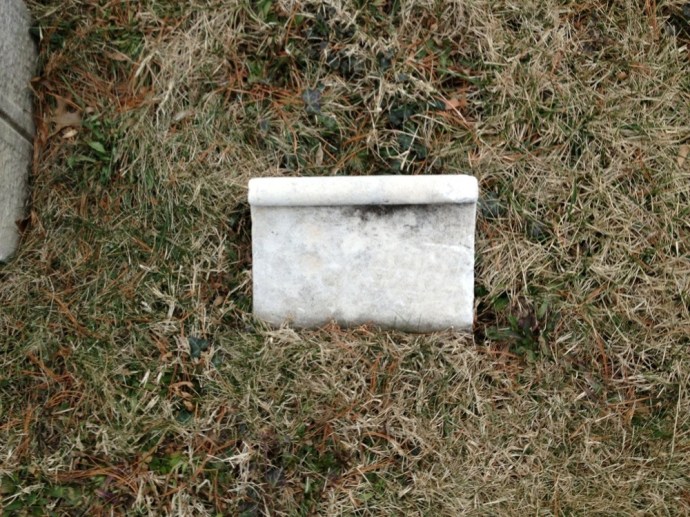
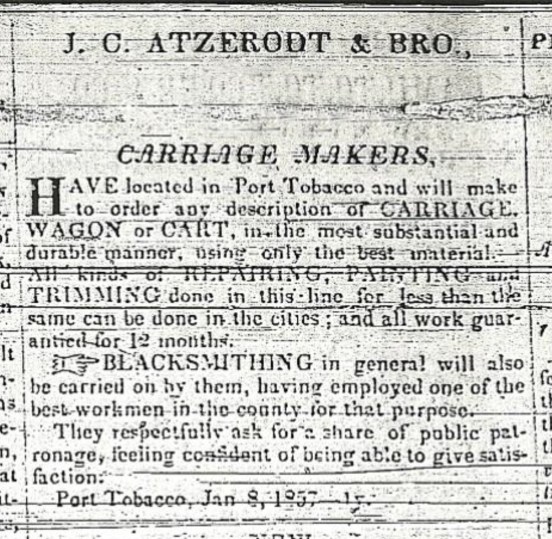
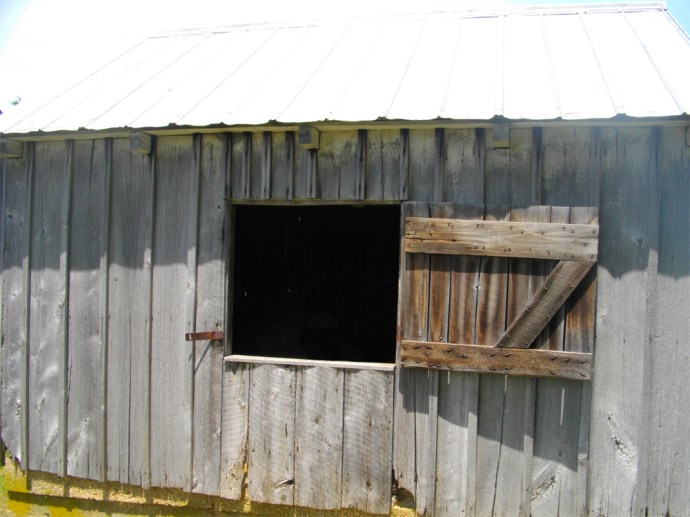
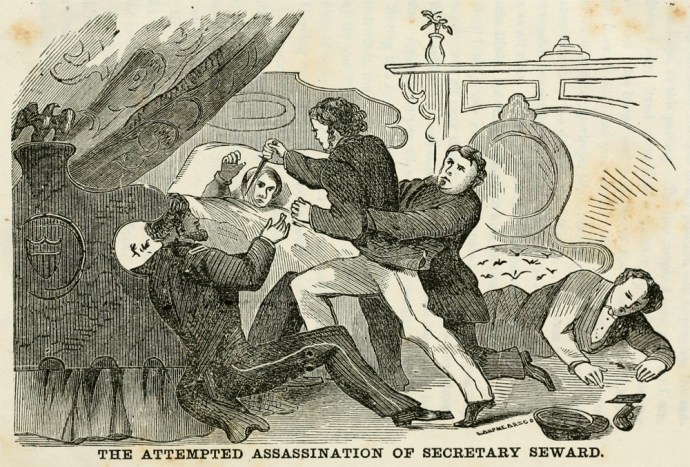
Below you will find 18 different pictures of people, places, and things relating to the assassination of Abraham Lincoln.  All of the pictures below are present here on BoothieBarn in their corresponding Picture Gallery.  However, in the pictures that follow, I have altered each image and removed a detail.  Some of the details I have removed are large, noticeable things that you might figure out just from your own familiarity with the image.  This would demonstrate your knowledge of the subject matter of the picture.  Other missing pieces are very minor details that will probably require you to find the original image in the Picture Galleries, demonstrating your resourcefulness.  Lastly, these minor details may require you to compare the altered and original images closely, testing your observational skills.

Therefore here is an arbitrary scoring guide for you to test your mettle by:

You get 3 points if you can identify the missing detail just from the picture below, without looking for or consulting the original image.
You get 2 points if you can identify the missing detail after finding the original image in the Picture Gallery without clicking it to see a larger version of it.
You get 1 point if you can identify the missing detail after finding the original image in the Picture Gallery and clicking it to view the larger version or downloading it to compare.
You get 0 points if you cannot or incorrectly identify the missing detail.

Without further ado, let’s see how knowledgeable, resourceful, and observant you all are with images relating to the Lincoln assassination:

What’s Missing Image #1:

What's Missing 1

What’s Missing Image #2:

What's Missing 2

What’s Missing Image #3:

What's Missing 3

What’s Missing Image #4:

What's Missing 4

What’s Missing Image #5:

What's Missing 5

What’s Missing Image #6:

What's Missing 6

What’s Missing Image #7:

What's Missing 7

What’s Missing Image #8:

What's Missing 8

What’s Missing Image #9:

What's Missing 9

What’s Missing Image #10:

What's Missing 10

What’s Missing Image #11:

What's Missing 11

What’s Missing Image #12:

What's Missing 12

What’s Missing Image #13:

What's Missing 13

What’s Missing Image #14:

What's Missing 14

What’s Missing Image #15:

What's Missing 15

What’s Missing Image #16:

What's Missing 16

What’s Missing Image #17:

What's Missing 17

What’s Missing Image #18:

What's Missing 18

Figured them all out one way or another?

Click here to see the What’s Missing Answer Key

So, how did you do? Comment below to let us all know.

Categories: Uncategorized | Tags: | 10 Comments

New Galleries: Port Conway & Port Royal

On the morning of April 24th, 1865, John Wilkes Booth and David E. Herold were being escorted through King George County, Virginia by Charley Lucas.  The night before, the pair had essentially evicted the free black family of the Lucases from their own cabin after being denied lodging at the home of Dr. Stuart’s, Cleydael.  Despite, or perhaps due to, the aggressive nature of these “guests”, William Lucas, the patriarch of the family allowed Booth and Herold to hire his son Charley to take carry them by wagon to the town of Port Conway. 

Port Conway was a small village on the northern side of the Rappahannock River that separated King George County from Caroline County.  It got its name from the Conway family of which President James Madison was descended  Not only was Madison’s mother’s maiden name Conway, but the fourth President of the United States was born there on the family plantation, Belle Grove.  Aside from Fredericksburg much further north, Port Conway was one of the few places one could cross the Rappahannock River via public ferry.  The ferry ran between Port Conway on the north, to Port Royal to the south.  When Booth and Herold were dropped off by Charley Lucas at Port Conway, they found the ferry was on the other side of the river and that they had to wait for it to return before they could cross.  While the pair waited at Port Conway, anxious to get across as quickly as possible, the came across William Rollins.  Rollins lived at Port Conway with his wife Bettie where he fished and ran a small store.  Herold tried to arrange for Rollins to take them over the Rappahannock River and offered him $10 to ferry them over and then take them to Bowling Green.  Rollins said he would consider it, but he had to go out and tend to his nets first as the shad were running.  Rollins stated that, if the ferry had not returned by the time he came back, he would take the two men across.  While Rollins was away fishing, three recently paroled Confederate soldiers rode up to Port Conway.  They were Willie Jett, Absalom Bainbridge, and Mortimer Ruggles.  Herold and Booth quickly made friends with these soldiers and ended up confiding their identities as the assassins of the President to them.  The trio, with defacto leader Jett, agreed to help the two men.  When Rollins returned, he saw that the ferry was making its way to Port Conway and David Herold told him his services were not going to be needed.  Jim Thornton, the ferry operator, ferried the five men, two fugitives and three soldiers, across the Rappahannock river to Port Royal.

In Port Royal, Jett called on the home of Miss Sarah Jane Peyton, looking for a home in which to lodge to two men.  At first, Miss Peyton agreed to let the “wounded Confederate soldiers” and his “brother”, stay and invited them into the house.  For some reason, perhaps after seeing the rough condition the two men were in, Sarah Jane Peyton changed her mind.  She told Jett that she could no longer house them because her brother, Randolph Peyton was not going to be at home for a couple days, and it would not be proper for two men to stay without the man of the house present.  Willie Jett went across the street and knocked on the door of Mr. Catlett, once again trying to find lodging for the two men.  Mr. Catlett was not at home.  According to Willie Jett, it was Sarah Jane Peyton who suggested they might try Mr. Garrett’s place up the road from Port Royal.  With that, all five men headed out of Port Royal and towards the Garrett farm.  In the end, it was due to the gossipy nature of Mrs. Bettie Rollins back over at Port Conway that led to John Wilkes Booth’s demise.  When the troops came to Port Conway and asked around, Mrs. Rollins told them that they might be able to find Willie Jett at a hotel in Bowling Green owned by his girlfriend’s parents.  It was at this hotel that Jett was found, just like Bettie Rollins thought he would be, and from there he led the troops back to the Garrett farm.

Today, nothing remains of Port Conway other than Belle Grove and a church.  The colonial town of Port Royal has fared far better with an active historical society and, as I posted here, a recently opened museum.

Click to see the newest galleries here on BoothieBarn:

Port Conway & Port Royal

Categories: Uncategorized | Tags: , | 9 Comments

The Engravings of The Philadelphia Inquirer

During the months of April, May, June, and early July 1865, the front pages of the nation’s newspapers contained headlining information about the assassination, search, trial, and fate of the conspirators. Newspapers from across the nation sent correspondents to Washington to attend the trial of the conspirators in order to take down testimony and comment on the accused. With so many newspapers covering the same material, the big city newspapers found it necessary to differentiate their coverage to attract more readers. The Philadelphia Inquirer sought to set themselves apart by including engravings in their coverage of the events.

While newsworthy events had been photographed as early as the invention of the camera, it was impossible to reproduce the photographs in a newspaper until the 1880’s. Instead, photographs or drawings of events would have to be turned into engravings, a laborious and time consuming process, before they could then be printed alongside text. There were special illustrated magazines like Harper’s Weekly and Frank Leslie’s Illustrated Magazine that had pages filled with such historic engravings, but these were only published on a weekly basis. Additionally, the amount of time it took to create and complete a quality engraving of an event was about a week and a half, causing a measurable delay between an event and a published engraving of it.   Harper’s Weekly, for example, didn’t report on the assassination of Abraham Lincoln until their April 29th, issue because that is how long it took them to produce engravings of the characters and events.

The first engraving of John Wilkes Booth that appeared in the April 29th, 1865 issue of Harper's Weekly.

The first engraving of John Wilkes Booth that appeared in the April 29th, 1865 issue of Harper’s Weekly.

The more detailed the engraving was, the longer it took to make. As a daily newspaper, The Philadelphia Inquirer could not afford the time or money it would take to create incredibly detailed engravings to supplement their coverage of the trial. Instead they produced and published the following very basic engravings:

Philadelphia Inquirer page

April 17th, 1865: Booth Map Philly

April 28th, 1865:

Escape Map Philly

May 5th, 1865:

Corbett Philly

May 13th, 1865:

Arsenal Philly

May 19th, 1865:

Herold Philly

May 20th, 1865:

Powell Arnold Philly

May 22nd, 1865:

Courtroom Philly

June 26th, 1865:

Spangler Atzerodt Philly

June 27th, 1865:

Arnold O'Laughlen Philly

There are a few more engravings of people like Jefferson Davis and Lafayette Baker that I haven’t put up here in the interest of space and focus. I’m sure several of you are thinking, “I don’t have those newspapers, but I’ve seen those before.” For one, I have most of the above conspirators’ engravings in their respective Picture Galleries. However, practically all of these pictures were also published in a book that was advertised in The Philadelphia Inquirer on July 10th, 1865:

T.B. Peterson Transcript Advertisement Philly 2
Once the trial of the conspirators was over, there was a race to see who would be the first to publish the transcript of the trial in book form. The nation had been following the trial daily in the papers and there was money to be made by the first publisher who could provide a permanent book version of it. The publisher T. B. Peterson and Brothers was the first to bring a trial transcript book to the market debuting it only three days after the execution of four of the conspirators. Peterson’s edition is called, The Trial of the [alleged] Assassins and Conspirators at Washington City, D.C., May and June, 1865, for the murder of President Abraham Lincoln.  The swiftness of this publication was due to the cooperation Peterson received from The Philadelphia Inquirer. Essentially, the Peterson copy of the trial is a direct copy of The Philadelphia Inquirer‘s coverage of the trial in book form. They acknowledge this on the first page of the book stating that, “The whole being complete and unabridged in this volume, being prepared on the spot by the Special Correspondents and Reporters of the Philadelphia Daily Inquirer, expressly for this edition.” Along with the text, Peterson included the Inquirer’s engravings above.

Though not a verbatim account as it was advertised, the Peterson version of the trial provides unique details not found in the other two editions of the trial. Peterson copied over the Inquirer reporters’ accounts of the courtroom and the little asides and actions of the conspirators during the proceedings. Though Peterson’s edition is the low man on the totem pole when it comes to use in research, those courtroom gems and the engravings still make it worth reading and consulting from time to time.

There is, however, one engraving from the Inquirer that I posted above that did not make its way into Peterson’s book. It is this engraving of “Samuel C. Arnold”:
Samuel C Arnold Philly

I can understand why Peterson did not include this engraving. It looks nothing like the real Samuel B. Arnold. At first, I just assumed it was a bad engraving from a poor artist (not unlike another questionable image of Sam we’ve discussed previously). However, when compared with the engraving of John Surratt from the wanted poster, it appears that was supposed to be the subject all along:
John Surratt Wanted Poster and Samuel C Arnold engraving Philly
It seems clear that the engraver used this image of John Surratt as his guide. Though flipped, the hair, features, and clothes match perfectly. Whether this misidentification occurred during the printing of the newspapers or before then, I cannot say. Regardless, it appears that Peterson noticed the discrepancy before publishing his edition of the trial and scratched the engraving entirely.

Photojournalism is something we take for granted today. Back in 1865, however, it took an immense amount of time and effort to provide readers with visuals to complement the written word.

References:
The Philadelphia Inquirer Online Civil War Collection
The Trial of the [alleged] Assassins and Conspirators at Washington City, D.C., May and June, 1865, for the murder of President Abraham Lincoln by T. B. Peterson and Brothers

Categories: Uncategorized | Tags: , , | 7 Comments

More about Oswell Swann

My recent walking tour from Dr. Mudd’s house forced me to do some research on the man who was hired by John Wilkes Booth and David E. Herold to guide them across the swamp, Oswell S. Swann. As I mentioned in one of the videos, his name varies greatly in different texts and records: Oswell, Oswald, Ausy, Aussie, Oscar, Osborn, Ozzy, etc. He was born in Maryland in about 1835 and was a Wesort. A Wesort is a member of a group of people with tri-racial ancestry; Native American, Caucasian, and African American. Director of the Surratt House Museum, Laurie Verge, gives a good history of the Wesorts here.

According to Oswell Swann’s statement, he had heard about the murder of the President when Booth and Herold arrived at his house.  However, he had no way of knowing that the two strangers before him were the parties responsible. It was around 9:00 pm on April 15th when Booth and Herold came up to Swann who was on foot. They asked him the way to Mr. [William] Burtles place, “Hogan’s Folly”. Burtles was a known Confederate sympathizer and his farm was used on occasion to shelter Confederate agents. Burtles’ home was only about two miles from Swann’s and the pair offered Swann $2 to guide them there. Before leaving Swann’s house, the pair asked Swann if he had any whiskey. As corroborated by David Herold in his account, Swann gave them whiskey and bread before mounting his own horse to leave. On route to Burtles’, the pair changed their minds. “They asked me if I could take them to Capt. Cox, if so they would give me $5 more.” Swann agreed to this and proceeded to take them, via Centerville Rd. (modern Route 6), across the swamp to Samuel Cox’s home of Rich Hill.

Swann to Rich Hill

While en route, the small man, David Herold, did the talking. Noticing the crutch with the other man (Booth), “The small man said that the other man broke his leg.” Unlike the bragging the pair had done about their deed to John Lloyd at Surrattsville, it is extremely unlikely that Booth and Herold told Swann, a descendent of slaves, that the former had assassinated the Great Emancipator. If they had, the best case would have been that Swann would flee, leaving them again lost and without a necessary guide. For their own benefit, they would keep quiet to Swann about what Booth had done.

Just before reaching Cox’s house, however, Davy Herold made a threatening remark to Swann, perhaps hoping to keep him from telling anyone about this little nighttime sojourn. “Don’t you say anything. If you tell that you saw anybody you will not live long.” This was probably Swann’s first hint that there was something nefarious about these men. But Swann was a modest tobacco farmer with a wife and eight children. With so many mouths to feed he needed the money that these two men offered him for the simple job of taking them from one place to another, even if they did threaten him.

Booth, Herold, and Swann got to Rich Hill around midnight and Swann states the pair were welcomed in by Samuel Cox and stayed inside for 3 or 4 hours. Swann waited patiently by the horses during this time, not because of any devotion to the men, but because he had yet to be paid! When Booth and Herold emerged from the house hours later, they put on a masterful charade for Swann’s benefit. The pair acted disgruntled as if they had been turned away. One of the men said, “I thought Cox was a man of Southern feeling.” Swann helped Booth mount his horse again and then managed to get the money owed to him. Perhaps hoping to undo their earlier threat and eliminate Swann’s suspicion of them, Booth and Herold paid Swann $12 for his help, $5 more than what they had agreed to on route. Once he had his money, Swann departed, leaving Booth and Herold mounted but still in Cox’s yard. Booth and Herold were subsequently escorted by the overseer of Cox’s farm, Franklin Robey, to the nearby pine thicket, where they awaited Thomas Jones. Swann returned home, seemingly unaware that he had just aided the assassins of the President.

Such unawareness could not have lasted long, however. As troops poured into Bryantown over the next few days, Swann must have thought about the two suspicious men who called upon him. But still, one of the men had a broken leg and neither of the suspects to that point were described as lame. It wasn’t until the 18th that detectives first looked into the report of two suspicious men had called upon Dr. Mudd to treat a broken leg. They returned to further question Mudd on the 21st and during this visit found the boot Mudd had removed from the injured man and noticed the name J. Wilkes inscribed on it. This was the first direct piece of proof that the man with the broken leg at Dr. Mudd’s was the assassin, John Wilkes Booth.
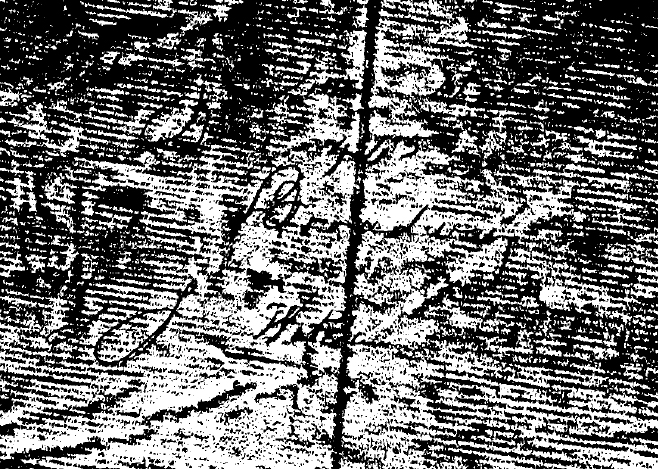
The inside of Booth's boot. it is inscribed, "Henry Luz, Maker, 445 Broadway, J. Wilkes"

The inside of Booth’s boot. It is inscribed, “Henry Luz, Maker, 445 Broadway, J. Wilkes”

The news undoubtedly spread like wildfire and increased their patrols around Bryantown and the surrounding area looking for the fugitives. It was in the evening of April 23rd that Oswell Swann, now fully aware of the identity of the men he aided, went to a friend in Bryantown by the name of Joseph Padgett, so that he may help him alert the authorities of the information he possessed. No threat of retribution on Herold’s part or an extra $5 from Booth would keep him silent. He went to Colonel Wells in Bryantown and told him how he unknowingly led the fugitives to Samuel Cox’s house. At about midnight on the 23rd, the troops, led by Oswell Swann, departed Bryantown for Rich Hill. They arrived there at about daybreak and arrested Samuel Cox. Cox and his servant girl Mary Swann (no relation to Oswell) denied that Booth and Herold were ever permitted entry into the house. History would prove that they both lied and that Oswell told the truth. Nevertheless, like several others who unknowingly aided the conspirators, Swann was arrested and held in Bryantown until the 27th when he was forwarded up to Washington and held in the Old Capitol Prison. He was finally released on May 18th and returned home.

After the trial was over, and the government opened up applications for those feeling they deserved a portion of generous reward money, an anonymous letter was sent to the War Department suggesting that Oswell Swann was deserving of some compensation:

“Bryantown, Md.
Sept. 1865

Respected Sir,

In awarding & making provision of the reward offered for the providing and giving information relative to the assassins of the late beloved President Lincoln Is not Oswell Swann entitled to a portion; the moment he was aware that Booth & Herold past his house and pressed him in there service he gave information to the proper authorities that they had past the neighborhood of there place and crossed the Potomac which accelerated & hasten there arrest. Oswell Swann is an honest, correct man and deserves well.”

Perhaps this letter was commissioned by Swann himself to get a share of the reward money. Or maybe his friend Joseph Padgett, who had helped Swann give his information to the authorities, felt compelled to write on his behalf after seeing the misfortune and imprisonment that befell the, “honest, correct man.” Swann did not receive any reward money, but it is nice to think that some anonymous neighbor in Bryantown thought him deserving of some.
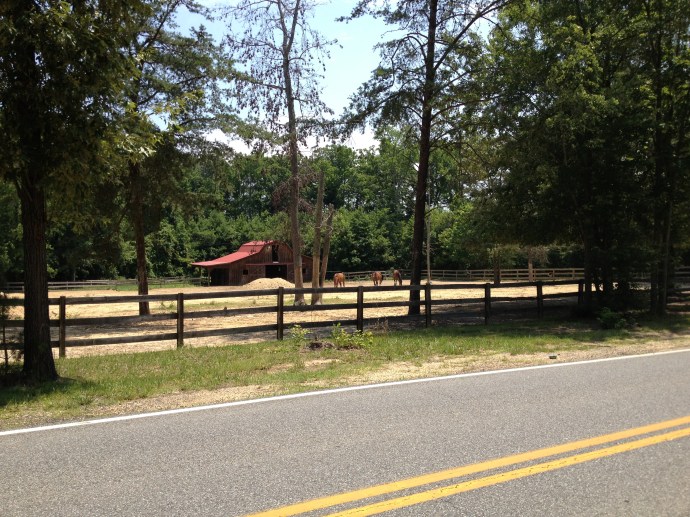
The location of Oswell Swann's house at the corner of Cracklingtown Road and Burnt Store Road near Hughesville, MD

The location of Oswell Swann’s house at the corner of Cracklingtown Road and Burnt Store Road near Hughesville, MD

Oswell Swann died on May 2nd, 1890 at the age of 55. According to the death certificate he had been living in D.C. for the past ten years, residing off of Pomeroy Rd. in Anacostia. It took me forever to decipher the cause of death which ended up being the Greek word for tuberculosis. In a bit of serendipitous luck for me, as I was working on all of this, I got a call from Jim Garrett. Jim Garrett and his co-author Rich Smyth (both of whom are big supporters and commenters here on BoothieBarn) wrote the book, The Lincoln Assassination: Where Are They Now?, which documents the burial places of people associated with Lincoln’s death. Jim was out and about in DC when he called me, and I told him that I was looking at the death certificate for Oswell Swann which stated he was buried at Mt. Olivet cemetery. Mt. Olivet is the final resting place of Mary Surratt and John Lloyd among others. Jim was kind enough to stop by Mt. Olivet to check out the lead that Oswell Swann may be there. Jim and a cemetery employee had to go into the old, old books but, with the date of burial I provided him, they managed to find that Oswell is indeed buried in Mt. Olivet.  It will take further digging to find out which specific section of the cemetery he is in.  Oswell must have been close to destitute when he died as his grave is marked as a “free grave site” in the record books.  Due to this, Oswell Swann’s grave will have no marker or headstone on it.

In 1869, a correspondent to the Cincinnati Commercial newspaper visited the country that I walked through a few days ago.  There he spoke with, “an intelligent gentleman, living in the neighborhood of Doctor Mudd.”  This correspondent’s unnamed informant recounted,  with only limited accuracy, the story of Oswell Swann.  Part of his narrative, however, correctly summarizes Swann and his role in Booth and Heorld’s escape.  Of the terrain the fugitives found themselves in, the man stated, “Any one who has seen the country and appreciated its wild network of roads, can understand the demand [for a guide].”  Booth and Herold had become lost, disorientated and needed help from anyone they could find to get them across the Zekiah Swamp.  It was this need and sheer bad luck that brought Booth and Herold to Oswell Swann’s door.  Enticed by an easy way to make some money, Oswell Swann agreed to take the two strangers where they wanted to go, “not knowing, of course, the sort of work he was contracting for.”  Oswell Swann made an anonymous deal with the Devil, as it were, and though Swann tried his best afterwards to help the soldiers track him down, he still spent about a month in prison for it.

References:
The Lincoln Assassination: The Evidence by William Edwards and Ed Steers
The Lincoln Assassination: The Reward Files by William Edwards
“Odd Letter” Cincinnati Commercial, May 3rd, 1869
James O. Hall Research Center
Jim Garrett
I’m sure Jim and Rich will add Oswell Swann to the next edition of their book, but why wait for that when you can just buy it now: http://www.amazon.com/The-Lincoln-Assassination-Individuals-Washington/dp/0983721386

Categories: Uncategorized | Tags: , , | 13 Comments

“Our dear little Henry is dead!”

John Wilkes Booth’s father, Junius Brutus Booth, was a productive progenitor. With his two wives, Adelaide Delannoy and Mary Ann Holmes, Junius fathered a total of twelve children. Of these twelve children, seven survived into adulthood, five married, and four had children of their own that survived into adulthood. This post is about two of the Booth children, both of whom died young. They are Amelia Portia and Henry Byron Booth.

Amelia Portia Adelaide Booth

I discussed Amelia briefly in my last post on the Booth family, “The Son of John Wilkes Booth“. Alas I have little more to add about young Amelia because her life was short lived and there is little documentation about her. Amelia Portia Adelaide was born on October 5th, 1815. She was baptized in the Parish of St. George Bloomsbury in London on January 7th, 1816. St. George was the same church in which Junius and Adelaide were married on May 8th, 1815. In the baptism record book, which is attached below, Junius gives his occupation as a “Solicitor” instead of an actor. Amelia’s baptism took place while Junius was still making a name for himself and so perhaps the man who suddenly had a family to support was questioning his future.

Amelia's baptism

Thus far, no death date or burial record for Amelia Booth has been found. However, a book published in 1817 called, “Memoirs of Junius Brutus Booth” gives the following footnote to the marriage of Junius and Adelaide: “Mr. Booth has had one child by his marriage, which died in its infancy”. This would place Amelia’s death in 1816 or early 1817.

Henry Byron Booth

In April of 1824, Lord Byron, the renowned British poet, died at the age of 36. It was with the romantic words of Lord Byron that Junius Brutus Booth had lured the young flower girl, Mary Ann Holmes, away from her family and life in England to abscond with him to America. The poet held a special place in the hearts of the couple. It was for this reason that Junius and Mary’s third child, the first to be born after the poet’s death, received the middle name of Byron. The exact date of Henry Byron Booth’s birth is unknown. From sources, however, I have been able to deduce that he was born between April 4th and December 28th, 1825. I attempted to deduce Henry Byron’s birthdate even further by looking at the dates in which Junius Brutus Booth was home from tour with Mary Ann and the pair could have conceived Henry. Unfortunately, Junius was home from mid June, 1824 until mid March, 1825, which, 9 months later, would leave me with the same basic spread for a birthdate. If Henry Byron was born between April and about mid August, then he would have been born on the family farm near Bel Air, Maryland, the same location where seven of his brothers and sisters were born. If he was born between mid August and the end of December, 1825, however, then Henry Byron Booth’s place of birth was the same as his half siblings: England. You see about August 22nd, 1825, Junius Brutus Booth took Mary Ann, his children, and one of his servants back to London with him. This was Junius’ first return to England since he ran off with Mary Ann in 1821. The man who had formerly trumped Junius on the London stage, Edmund Kean, had recently fled to America himself after his own adulterous relationship with a married woman became public knowledge. Hoping to usurp Kean’s title yet again, Junius brought the family to England. Alas, despite the personal distaste theatergoers had for Kean and his recent adultery, Junius was still treated and reviewed as professionally inadequate to Kean’s talents. The Booth family stayed in England for about a year before returning to Baltimore on August 15, 1826. So, whether Henry Byron Booth was born in Maryland or England, he did spend the first several months of his life on foreign shores.

Junius had high hopes for this boy and he appears to have been the favorite of his father’s. While still young, Junius wrote home asking if four year old Henry could read yet, hoping to ignite the spark of creativity and genius he saw in the young boy. Ten years had passed since Junius’ last tour of England. In the fall of 1836, having witnessed his fame grow even greater in America (and the death of Kean having occurred 3 years previous), Junius decided to try his luck again in his native land. Again he was lured with offers from London managers as to the money he (and subsequently they) could earn. Across the sea he brought along the family; Mary Ann, Junius Jr., Rosalie, Henry Byron, Edwin, four-month-old Asia, and the family’s long-time servant Hagar. Junius would later write that the tour was hardly the money making endeavor promised him, “…theatricals in England are gone to sleep – with all their puffing of full houses, I don’t believe that more than two Managers in London got even enough to pay for what they individually eat.” But Junius’ time in England in 1836/1837 would be far worse than unsatisfying house numbers. On December 28th, 1836, disaster struck the Booth family while in London. The following letter, written by Junius to his father Richard back in Maryland, explains the extreme misfortune that found the Booth’s abroad:

“We have at last cause and severe enough it is, to regret coming to England. I have delayed writing till time had somewhat softened the horror of the event. Our dear little Henry is dead! He caught the small pox and it proved fatal – he has been buried about three weeks since in the chapel ground close by. Guess what his loss has been to us – So proud as I was of him above all others. The infernal disease has placed Hagar in the hospital, but she is recovering and the two youngest who were inoculated are also getting well. Junius and Rosalie have been vaccinated – so had Henry – but on him the vaccine had not taken effect and his general health being so excellent caused us to forget the danger he was liable to.”

The death of his favorite son caused a great melancholy in Junius and, “unhinged the requisite energies for coping with the Tricksters of London.” Junius made his last appearance in England on March 17th, 1837 and shortly thereafter the family returned to America. Junius would never again return to his native land and he left poor Henry buried beneath its shores.

Henry Byron Booth was buried in the burying ground of St. James of Clerkenwell near Pentonville Chapel. According to Asia Booth Clarke’s book, “The Elder and Younger Booth“, Henry’s stone bore the following epitaph:

“Oh, even in spite of death, yet still my choice,
Oft with the inward, all-beholding eye,
I think I see thee, and I hear thy voice.”

The burial took place on January 9th, 1837 as this burial record shows:

Henry Byron's Burial

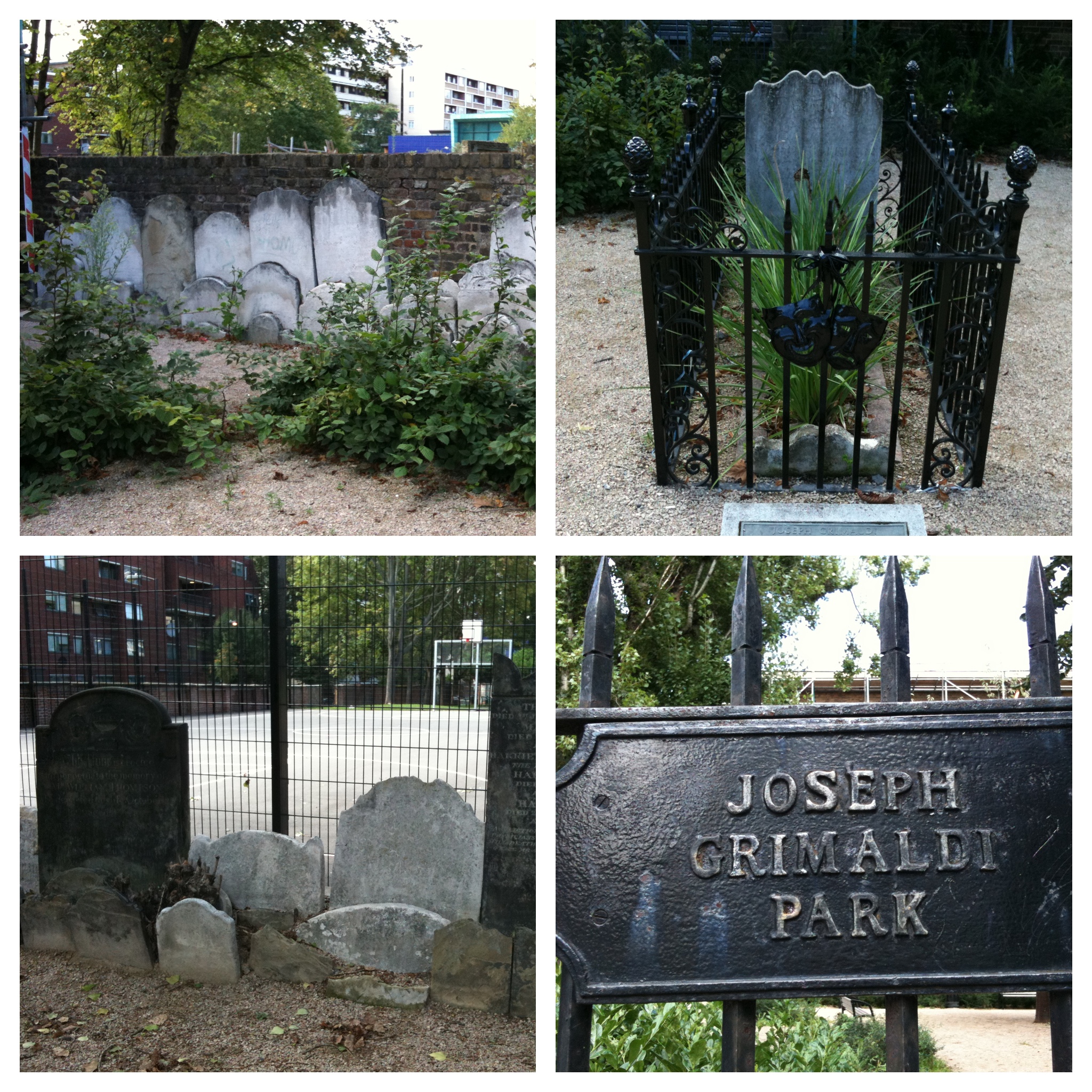
Like the London cemetery holding the body of Henry Wilkes Booth, Henry Byron Booth’s graveyard was also turned into a park around the turn of the century. As one author wrote of the burial ground in 1896, “It is nearly an acre in extent, full of tombstones and very untidy, but the Metropolitan Public Gardens Association has undertaken to convert it into a public garden.”

The cemetery in which Henry Byron Booth was buried.  This image was taken circa 1896, just before the cemetery was transformed into a park.

The cemetery in which Henry Byron Booth was buried. This image was taken just before the cemetery was transformed into a park.

Today, Henry Byron Booth’s burial place is called Joseph Grimaldi Park. Grimaldi was a famous English clown who was buried in the cemetery before its transformation. Grimaldi’s stone is the only one to have remained untouched when the cemetery was turned into a park and today it has a small gate around it. Some of the other stones that once filled the cemetery now border the walls of the park, but it is unlikely that Henry Byron Booth’s is one of them:

Grimaldi Park collage

Junius Brutus Booth would be very distraught over the loss of Henry Byron Booth for months. It wasn’t until the birth of his next child in May of 1838, that his dark cloud would lift. In the eyes of this newborn son Junius saw again the spark of one who would change the world. This child’s name was John Wilkes Booth.

References:
London Metropolitan Archives
Junius Brutus Booth: Theatrical Prometheus by Stephen M. Archer
The Elder and Younger Booth by Asia Booth Clarke
Memoirs of Junius Brutus Booth
My Thoughts Be Bloody by Nora Titone
The London Burial Grounds by Mrs Basil Holmes

Categories: Uncategorized | Tags: | 17 Comments

Following the Escape Route: Dr Mudd’s to Oswell Swann’s

John Wilkes Booth and David E. Herold left the home of Dr. Samuel A. Mudd between 4:00 and 5:00 pm on the evening of April 15th, 1865.  At about 9:00 pm they arrived at the home of Oswell Swann.  The pair hired Swann to take them across the Zekiah Swamp to Rich Hill, and home of Confederate sympathizer, Samuel Cox.  Today, I attempted to walk the route that Booth and Herold took after departing Mudd’s until they showed up at Oswell Swann’s.  What followers are videos and pictures of that trip.  I hope you all enjoy following me as I walk in the footsteps of the assassin.

There are a total of 17 videos that I made to document my walk.

Part 1: Dr. Mudd’s House

Mudd House from the Path

Part 2: The Path Behind the Mudd House

The Path from the Mudd House

Part 3: Walking the Path

Part 4: The Path goes into the Swamp

Down into the Swamp

Part 5: Back tracking on the Path

The Path to the Mudd House

Part 6: Walking Away from the Mudd House

Mudd House Road Sign

Part 7: A Possible Oak Hill

Barn a Distance from Mudd House

Part 8: The Probable Oak Hill

Part 9: Electus Thomas’ Account

Part 10: The Road to Bryantown

Bryantown Road

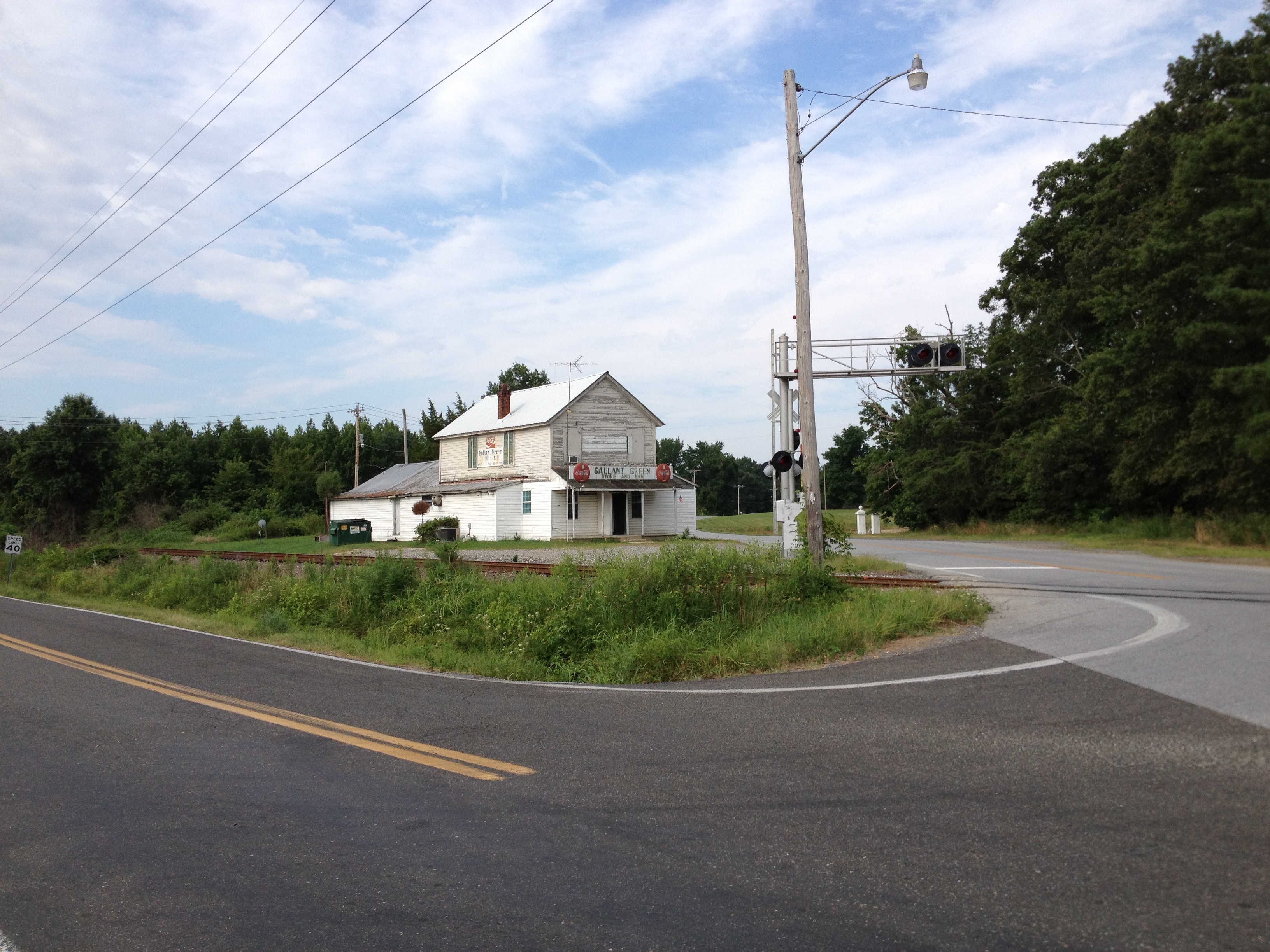
Part 11: Gallant Green Road

Gallant Green and Aquasco Road

Part 12: Joseph Cantor’s Place

Joseph Cantor's lot

Part 13: Cracklingtown Road

Cracklingtown Road

Part 14: Oswell Swann’s Place

Oswell Swann's lot

Part 15: With Swann as their Guide

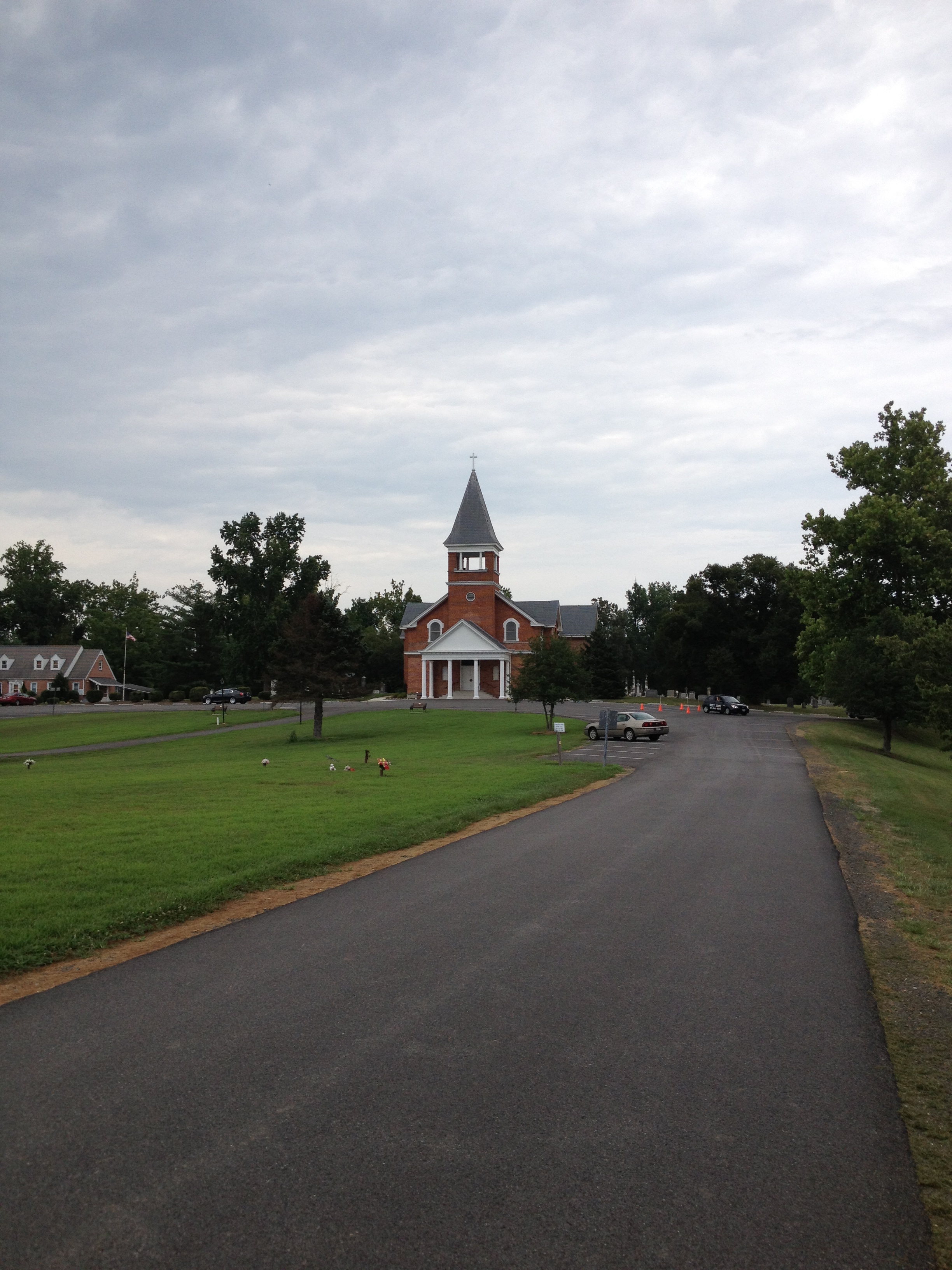
Part 16: The Road to Rich Hill

St. Mary's Church

Part 17: The End

Epilogue:
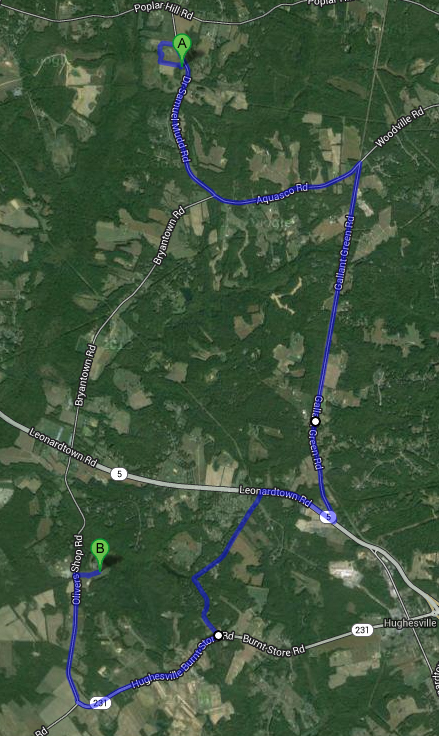
So, two bottles of water, two granola bars, and two extra socks later, I completed the journey. In the end, my planned walk of 11.5 miles turned out to be about 13 miles or so. The following is a map showing my route with Point A being Dr. Mudd’s House, and Point B being St. Mary’s Church where I left my car.

Route 7-24-2013

The walk was fun but I have several giant blisters on my feet. I’m hobbling around the house now like an infirmed old man and I predict that may remain for a day or so. Next time, I’ll be sure to buy better shoes preferably with gel insoles.

As I said in the last video, I’m open to viewer ideas regarding my next trek. In the comment section below, feel free to give me your ideas for parts of the escape route I could recreate. Thank you all for your support and encouragement on my little walks. It really helps keep me motivated.

Dave Taylor
7/24/2013

Categories: Uncategorized | Tags: , , | 26 Comments

Teaser – Another Escape Route Trek

Due to the success of my first attempt at walking part of the escape route a month ago, tomorrow (7/24) I will be undergoing another journey to walk in the footsteps of the assassin.  Tomorrow’s walk will be far longer than my last one but with more water and milder weather I’m confident I can make it.  My walk tomorrow will recreate John Wilkes Booth and David Herold’s movements from the time period of about 5:00 pm to 9:00 pm on Saturday, April 15th, 1865.  I will start, like the assassins, by leaving the home of Dr. Samuel A. Mudd who had set Booth’s broken leg and allowed him to rest in his home during the day.  From Mudd’s I will follow the approximate route that Booth and Herold took until they showed up at the home of Oswell Swann, whom they subsequently hired as their guide to take them to Rich Hill.  Here’s an 1866 map with a modern map fading up and down on it showing the sites I will visit tomorrow:

From-Mudd-to-Swann

(If the image above isn’t animated, click it)

The 1866 map isn’t completely scaled with the modern map, but the sites I highlighted are in the correct places on the 1866 map.  I already have different texts and accounts packed up in my backpack to read along the way as I document the walk with video.  I’ll be getting an early start so I’m hoping to have everything posted up on here around evening time, but we will see how tired I am.  Here’s hoping there’s no surprise rain tomorrow.

Categories: Uncategorized | Tags: | 7 Comments

The Surratts – Society Members

While looking through the illustrated souvenir book, Maryland Line Confederate Soldiers’ Home, Pikesville, Maryland complied by Capt. George W. Booth, I came across a few names I recognized.  The book contains not only a history of the Pikesville Soldiers’ Home, but also the muster rolls for the various Confederate Maryland companies during the Civil War.  It gives the names of conspirators Samuel Arnold and Michael O’Laughlen, who served in the 1st Maryland Infantry, companies C and D respectively.  At the end of the souvenir booklet is a roster of those veterans who became members of the Society of the Army and Navy of the Confederate States in the state of Maryland:

Roster Confederate Marylanders

Here we see the Arnold brothers, Sam and Charles, who both served in Company C of the 1st Maryland Infantry.  Conspirator George Atzerodt’s brother Henry, who went by Harry, became a member as well.  Thomas A. Jones, the man who hid Booth and Herold in the pine thicket and sent them across the Potomac river, was also a member of the society due to the endorsement of his superior Colonel William Norris.  On Thomas Jones’ application for membership into the society Norris wrote:

“I certify, on honor, that I know of my own personal knowledge, that the above applicant served honorably in the Army or Navy of the Confederate States as Chief Agent of the Secret Service Bureau in Maryland where his unpaid services were of incalculable value to the Confederate States in keeping open the most thoroughly reliable path of communication through the Yankee line for 2 1/2 years…during which time the man lived under Yankee fire…”

Finishing up those familiar members are the Surratts, John and Issac. Isaac wasn’t paroled until September of 1865, assumingly having learned about his mother’s fate long after she had been executed. John, of course, was the longest lived of all the Lincoln assassination conspirators as his trial ended in a hung jury.  Though he lived to 1916, he was not the last surviving member on this list.  That honor goes to Harry Atzerodt who died in 1936 at the age of 91.

References:
Maryland Line Confederate Soldiers’ Home, Pikesville, Maryland complied by Capt. George W. Booth
Thomas A. Jones – Chief Agent of the Confederate Secret Service in Maryland by John and Roberta Wearmouth

Categories: Uncategorized | Tags: , , , | 5 Comments

Blog at WordPress.com.