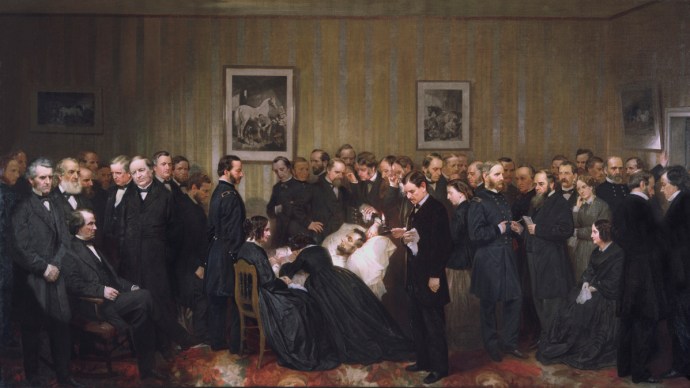
Alonzo Chappel’s The Last Hours of Abraham Lincoln

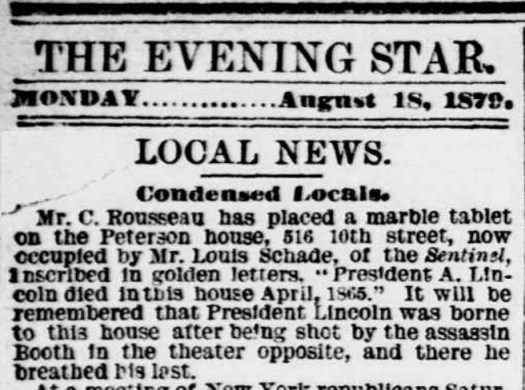
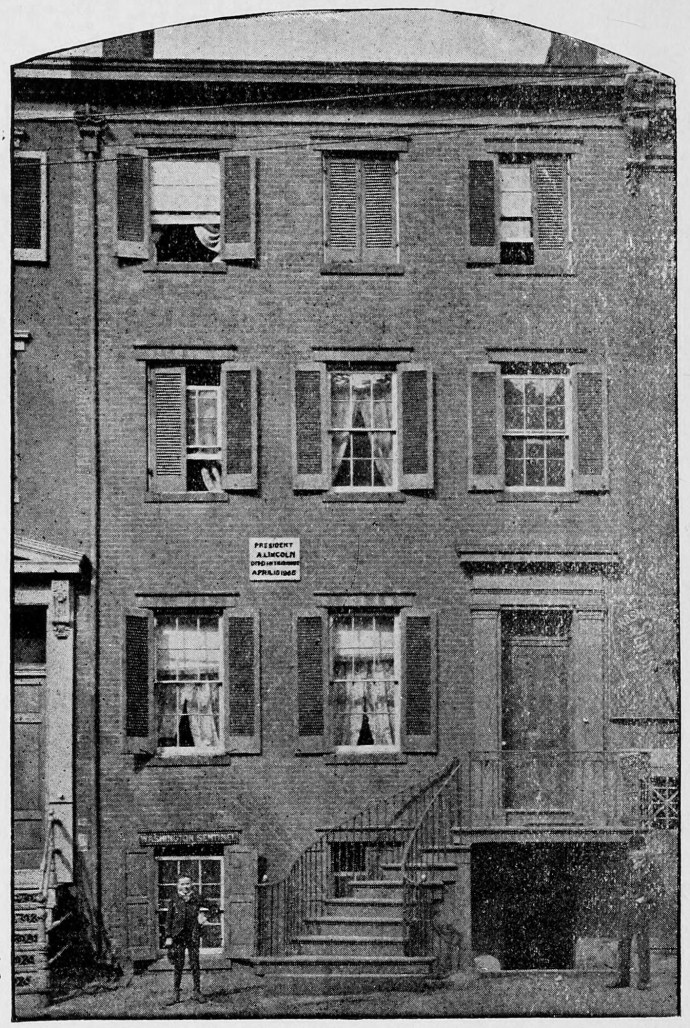
After being fatally shot at Ford’s Theatre, the unconscious body of our 16th President was carefully carried across the street to the home of William Petersen.  He was brought into the bedroom of boarder William Clark, who was out of town for the night, and laid diagonally across the bed.  It would be in this room that Abraham Lincoln would pass away at 7:22 am the next morning.  During the almost nine hours that Lincoln spent in the Petersen boardinghouse, dozens of Washington’s elite made an appearance at his death chamber to pay their last respects.

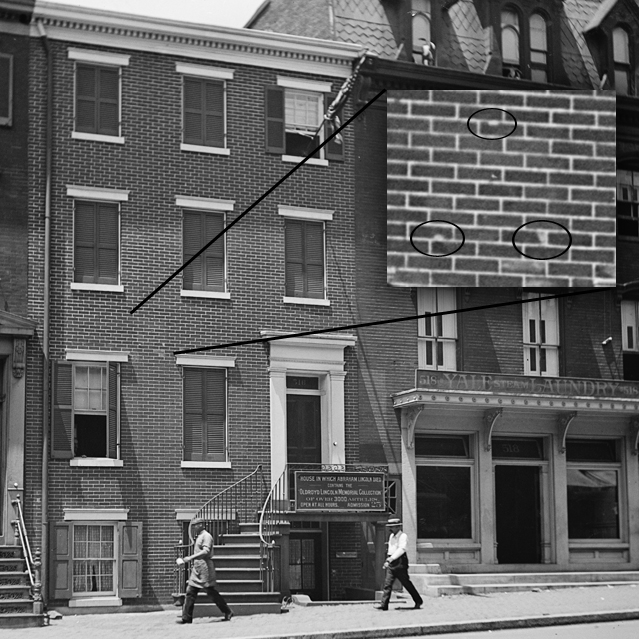
Room In Which Lincoln Died

 Those who have visited the restored Petersen House across from Ford’s know that the room the President died in is small.  It measures 9′ 11″ wide by 17′ 11″ long.  Despite its small size, the room in which Lincoln died has gained the moniker of the “Rubber Room”.  This is due to the way in which the small room stretched to unrecognizable proportions in the various engravings, lithographs, and prints that were made following Lincoln’s death.  There’s a wonderful chapter in the edited book, The Lincoln Assassination: Crime & Punishment, Myth & Memory by Lincoln authors Harold Holzer and Frank Williams that explores the “Rubber Room” phenomenon in detail.  In summation, the various artists of deathbed illustrations were forced to make the room appear larger and larger in order to cram more and more dignitaries  into one, defining scene.  Here are just a few depictions of how the small bedroom photographed above became a massive hall for the mourners.

Death of Abraham Lincoln Kellogg

Death bed of Lincoiln Brett

Death of Lincoln Ritchie

As fancifully large as these depictions are, they all pale in comparison with the magnitude of a painting by Alonzo Chappel.  His piece was a collaboration with another man by the name of John B. Bachelder, who served as the massive painting’s designer.  Entitled, The Last Hours of Abraham Lincoln, Chappel and Bachelder wanted to depict all of the notable people who visited Lincoln that night at the same time and, in doing so, stretched the rubber room into unparalleled proportions:

The Last House of Abraham Lincoln by Alonzo Chappel (Click to enlarge)

The Last House of Abraham Lincoln by Alonzo Chappel (Click to see an enlarged view)

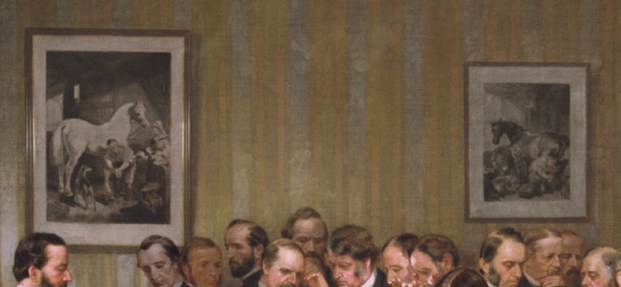
In all, the painting contains the images of 47 people in the back bedroom of the Petersen House.  The room has grown so much to accommodate all of these souls, that the walls started duplicating themselves.  It appears that the known lithograph that hung in the room “The Village Blacksmith” gave birth to a smaller, mirrored version of itself as the walls stretched out:

The Village Blacksmith & son Chappel

Just for fun, let’s say that all of the individuals pictured in Chappel’s painting were present in Lincoln’s death room at the same time.  Using modern measurements, William Clark’s room has an area of 177 square feet.  We’ll subtract 20 square feet for the bed on which Lincoln died since that is the only piece of furniture that we know had to remain in the room.  That leaves us with 157 square feet.  We’ll divide that by the 46 visitors in Chappel’s painting (we’re not including Lincoln since he was laying on the bed).  That gives everyone in the room a cozy 3.4 square feet all to themselves.  To give you some perspective, in a well ventilated, outdoor setting like a crowded rock concert, the accepted bare minimum amount of space per person is 7 square feet. For many interior settings the common rule of thumb is at least 9 square feet per person.  If everyone in this painting tried to get into William Clark’s room at the same time, they would be literally crammed together like sardines in a can.   What’s more, this imaginary calculation does not include the other furniture in the room, the large amount of space that the women’s hoop skirts would require, and the measurements by Osborn Oldroyd which, if correct, would lower the room’s original square footage from 177 sq. ft. to 161.5 sq. ft.

Despite the laughable morphing power of the small bedroom, Chappel’s painting was considered one of the best depictions of the death chamber of Abraham Lincoln.  The details for each person were exquisitely done and so life like.  Of course, there was a very good reason why Chappel was able to paint such realistic versions of the many people who visited Lincoln that night.  The designer of the piece, John Bachelder, had convinced many of the people in the painting to sit for photographs in the poses that Chappel wanted to paint.  Notable figures like Andrew Johnson, Edwin Stanton and even Robert Todd Lincoln posed in Mathew Brady’s studio in ways that the painting would later recreate.

Robert Todd Lincoln Alonzo Chappel

In addition to the cabinet members and politicians who posed for Bachelder and Chappel, there were also two individuals whose presence at the Petersen House was never questioned but, for some reason, they did not appear in other depictions of the President’s death.  These two neglected people were Mr. and Mrs. Lincoln’s guests for the evening, Major Henry Rathbone and Clara Harris.

Major Henry Rathbone and Clara Harris (composite by the author)

Major Henry Rathbone and Clara Harris (composite by the author)

Both Henry and Clara posed for their own photographs and were worked into the painting.  Clara is given a degree of prominence in the painting standing just behind the grieving Robert Todd Lincoln:

Clara Harris in Chappel's Last Hours

Henry, on the other hand, is removed from the chair he posed in and is literally sidelined to the far left of the painting.  He is almost obscured by the dark edge and frame, perhaps an ironic foreshadowing of the darkness that would later compel him to murder Clara and try to take his own life.

Major Rathbone in Chappel's Last Hours

Alonzo Chappel’s work, The Last Hours of Abraham Lincoln, is a work of contradiction.  The painting simultaneously contains the most detailed and accurate depictions of the individuals who visited the dying President while also demonstrating extreme hyperbole and imprecision with the seemingly ever expanding walls of William Clark’s bedroom.  It’s a beautiful yet unbelievable painting and it exemplifies the “Rubber Room” phenomenon in a truly unsurpassed way.

References:
Civil War Art Entry for The Last Hours of Abraham Lincoln
Library of Congress print of The Last Hours of Abraham Lincoln (slight differences)
Looking For Lincoln: The Making of an American Icon by the Kunhardts
The Lincoln Assassination: Crime & Punishment, Myth & Memory edited by Harold Holzer, Craig Symonds, and Frank Williams

Categories: Uncategorized | Tags: , , | 5 Comments

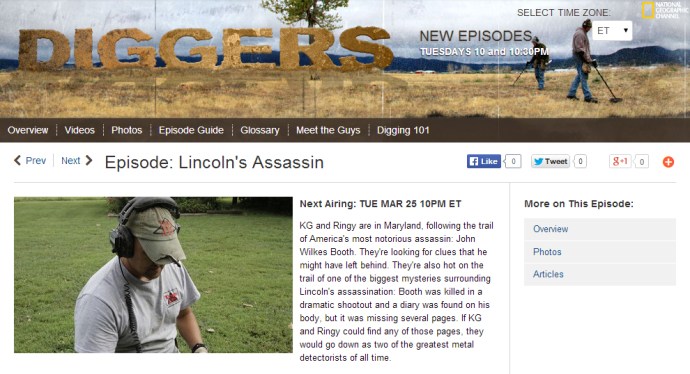
“Lincoln’s Assassin” on NatGeo’s “Diggers”

Those of you who get the National Geographic channel will want to be tuning in next Tuesday, March 25th at 10 pm EST.  On that date and time a new episode of the metal detecting show “Diggers” will be premiering.  The name of the episode is called “Lincoln’s Assassin” and the show will highlight the exploits of metal detecting duo “King” George Wyant and Tim “Ringy” Saylor as they search for long lost artifacts in places related to John Wilkes Booth.

Lincoln's Assassin Diggers

Over the course of the production, the Diggers dug for Booth relics at his childhood home of Tudor Hall, Bryantown Tavern, Thomas Jones’ Huckleberry, down by the edge of the Potomac, and at Mrs. Quesenberry’s house in Virginia.  “KG” and “Ringy” are unique treasure hunters, making jokes all along the way and making bets over who can uncover the best “nectar” (find).  At the end of the episode the pair will show their “nectar” to an archaeologist and assassination author Michael Kauffman to see if they found a Booth artifact that will change our understanding of history.

This episode will not only be an entertaining look at metal detecting, but also highlight several sites related to the life and escape of John Wilkes Booth.

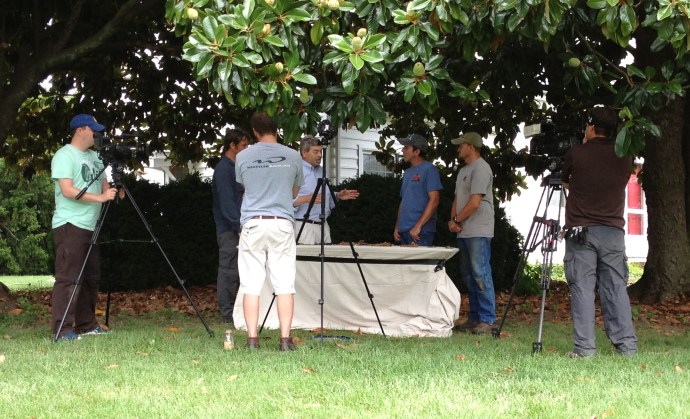
On a personal note, I had the good fortune of being present at Huckleberry back in August on the day that the crew was shooting there.  I had unknowingly shown up at the Loyola Retreat House to take some pictures of the water’s edge, when I saw a large number of vehicles outside of Huckleberry.  After approaching the Diggers group and learning that they were shooting an episode about Booth, I was graciously invited to remain and watch the production.  It was an entertaining afternoon to say the least.  “KG” and “Ringy” are quite funny and Michael Kauffman was an excellent foil to their exuberant declarations of finding Booth’s “this” or “that”.  Here are a few pictures I took while the guys were shooting their scenes:

Diggers set 1

Diggers set 2

Diggers set 4

Here’s a shot of Michael Kauffman providing some background information about the different places the Diggers visited and Booth’s escape route:

Diggers set 5


I was also allowed inside of Huckleberry where some of the production assistants were working.  Huckleberry is used to house visiting priests to Loyola and is therefore furnished like a typical house today.  Nevertheless here is a short video I shot from inside the house.  Michael Kauffman makes a brief appearance to answer a couple of my questions:

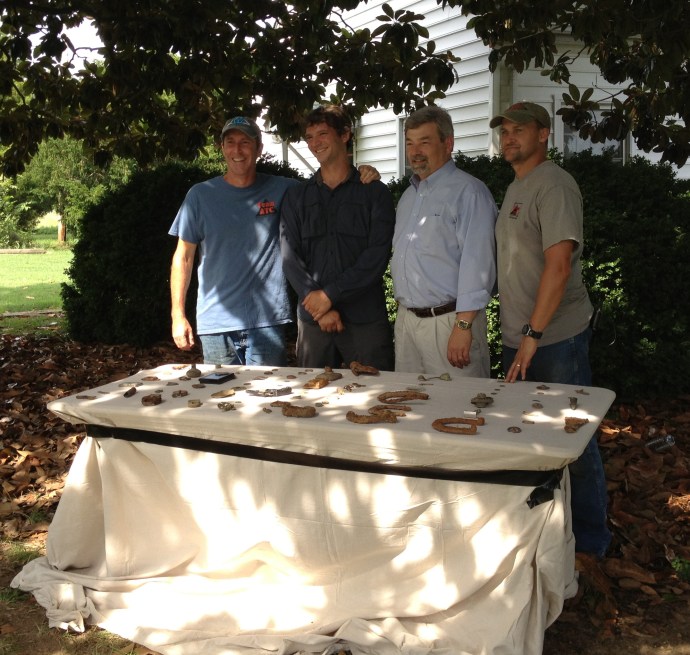
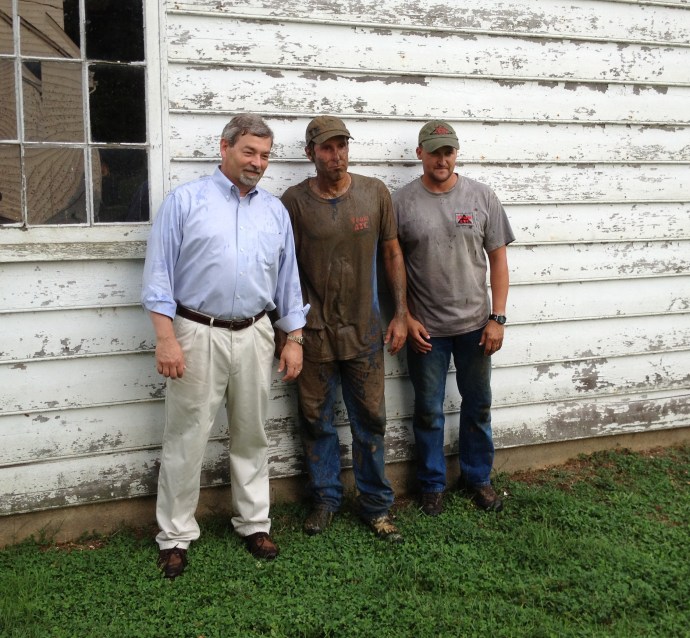
In the midst of shooting there was a huge down pouring of rain and so there was a mad dash to protect the cameras and other equipment.  I helped the best I could by grabbing hold of the tent awning they had set up to prevent it from blowing away in the strong winds.  Michael Kauffman made the wiser choice of rushing into Huckleberry with his camera and microphone.  Within a half an hour the rain had stopped and there was only one more scene to shoot.  After they shot the scene I took this picture of Mike Kauffman and the guys:

Diggers set 6

Why is “Ringy” covered in mud?  You’ll just have to watch Diggers on Tuesday, March 25th at 10 pm EST to find out!


Categories: Uncategorized | Tags: , , , | 10 Comments

Surratt Conference 2014

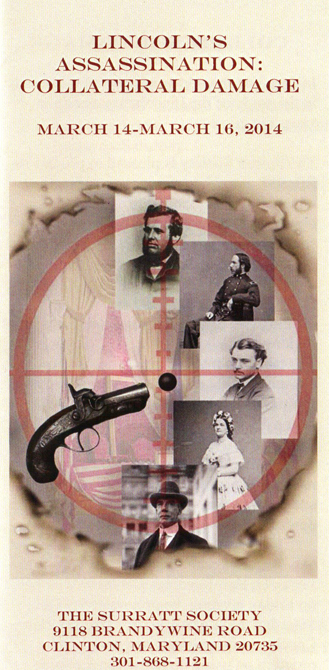
This is the weekend of the annual Lincoln Assassination Conference put on by the Surratt House Museum and the Surratt Society.  It is a time when all of us crazy Boothies descend onto Southern Maryland and discuss the fascinating minutiae regarding Abraham Lincoln’s assassination.  The core of the conference is on Saturday with six speakers presenting on a range of topics.

Surratt2014Brochure

It’s going to be another recording breaking year for attendance with about 140 people signed up.  However, knowing that many of our friends and colleagues are not able to make the trip this year, I’ve decided to put my newly created @BoothieBarn Twitter account to good use.  Over the next couple of days, I will be tweeting pictures and updates from the conference keeping you all informed about our activities.  I’ll be using the hash tag #Surratt2014 to identify those relating to the conference.  In this way, even long after the conference is over, you can still search Twitter for that hash tag to see what it was like.

While the Surratt House always schedules wonderful bus tours for the Friday and Sunday around the conference, today I will be foregoing that in order to take a few colleagues around to the assassination sites around Charles County, Maryland.  My guests are Heath Atkinson and his brother Josh, along with my long time friend and accomplice, Jim Garrett.  Heath runs the @ALassassination Twitter account and Jim is a registered speaker for this year’s conference along with his co-author, Rich Smyth.  Even though our trip isn’t really connected with the conference, I’ll still be using the hash tag #Surratt 2014 to document our adventure today.

Well that’s all for now. Be sure to follow @ALassassination and @BoothieBarn on Twitter to see how #Surratt2014 plays out.

Categories: Uncategorized | Tags: , | 5 Comments

JWB’s Note at the Archives

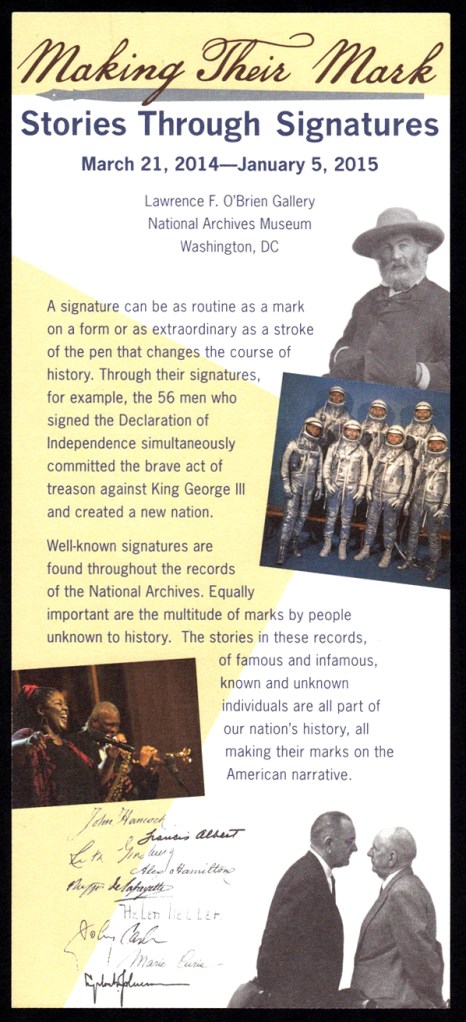
A new exhibition entitled, “Making Their Mark: Stories Through Signatures” is coming to the National Archives in Washington, D.C.  Here’s a blurb from the Archives describing the exhibit:

“Signatures are personal. The act of signing can be as simple as a routine mark on a form, or it can be a stroke that changes many lives. Signatures can be  an act of defiance, or a symbol of thanks and friendship. “Making Their Mark: Stories Through Signatures” will draw from the billions of government records at the National Archives to showcase a unique collection of signatures and tell the stories behind them.

illustrate the many ways people have placed their signature on history, from developing to signing Power The stories in these records, of famous and infamous, known and unknown individuals, are part of our s history, all having made their marks on the American narrative.”

The exhibit contains the signed documents of many notable (Thomas Jefferson, George Washington, Franklin Roosevelt, etc.) and famous (Jackie Robinson, Katharine Hepburn, Michael Jackson, etc.) individuals.  It also contains documents from unknown people who wrote of the world around them such as a Japanese American in an interment camp signing a loyalty oath during WWII.

The collection also contains the signatures of infamous individuals like Adolf Hitler, Saddam Hussein, and presidential assassin, John Wilkes Booth.

The National Archives houses the paper evidence collected by the government during the investigation into Lincoln’s assassination.  Therefore, they have a multitude of documents written by or owned by Booth to display.  For this exhibit, the Archives is displaying one of the most intriguing notes that John Wilkes Booth ever signed: his note to Vice President Andrew Johnson.

Booth's note to Johnson

John Wilkes Booth left this note for the Vice President in the hours leading up to the assassination.  His short message, “Don’t wish to disturb you Are you at home? J Wilkes Booth” has been the subject of inquiry ever since.  Conspiracy theorists attempt to use this note as evidence of the Vice President’s complicity in Lincoln’s murder, but most historians seem to believe that, in the moments leading up the tragic events, Booth was making sure all his targets were accounted for in order to topple the entire head of the government: Lincoln, Johnson, and Secretary of State William Seward.

I am not personally aware if this note has ever been on public display before this exhibit.  The “Making Their Mark: Stories Through Signatures” exhibit runs from March 21st, 2014 until January 5th, 2015.  After that, it is likely this fascinating artifact, and all the others, will be returned to the vaults of the National Archives.  Don’t miss the opportunity to see John Wilkes Booth’s note to Vice President Johnson on display at the National Archives.

References:

Making Their Mark: Stories Through Signatures” Exhibit eGuide.  Download the guide HERE and turn to page 22 for a back view of Booth’s note. I’ve also tweeted the page on Booth so check out my Twitter account @BoothieBarn.

Categories: Uncategorized | Tags: , , , | 5 Comments

BoothieBarn is now on Twitter!

Yesterday, fellow Lincoln buff, Heath Atkinson, announced via Roger Norton’s Abraham Lincoln Discussion Symposium that he had started a Lincoln assassination Twitter account.  Usually I’m a bit reticent when it comes to social media, which might sound strange seeing as I write a blog.  However, since Heath’s new Twitter account, @ALassassination, is essentially tailor made for my interests, I decided to look into creating my own Twitter account so I could “follow” his tweets.  I found that setting up a Twitter account was very easy to do.  Soon I was not only following Heath’s tweets, but also Spirits of Tudor Hall, Ford’s Theatre NPS, Ford’s Theatre Society, and Lewis Powell’s biographer, Betty Ownsbey.  At first I thought I was just going to follow people but, after replying to one of Heath’s tweets, I branched out and wrote my own.  Strangely enough, it appears that this thing that millions of people like to do is actually quite enjoyable. Though the 140 character limit is a rather difficult limit for a verbose individual like myself, I feel this is a fun way to put up little assassination tidbits between postings.  So, rather than just follow others from the shadows, I’m pleased to announce that BoothieBarn is now on Twitter!

BoothieBarn on Twitter

There are three ways you can follow me and my tweets.

1. Join Twitter and Follow @BoothieBarn

This is the best way to go.  Even if you don’t want to make tweets, having an account allows you to get notifications every time I tweet a tweet.  Setting up an account is quick, easy, and free.  Sign up at Twitter.com

2.  Bookmark my Twitter page

You can bookmark my Twitter profile page on your computer and check it every once and awhile for new tweets.  My profile page is:

https://twitter.com/BoothieBarn

3. Check my Twitter feed on the side of this page

If signing up for an account or bookmarking another site seems like too much work, you can always catch up on my tweets when you’re visiting this site.  I just added a new Twitter widget to the main page.  My most recent tweets should show up on the right underneath the most recent comments here on BoothieBarn.

Twitter Widget

I hope you’ll check out @BoothieBarn on Twitter and be sure to also follow Heath Atkinson’s @ALassassination and @SpiritsTH as well.

Categories: Uncategorized | Tags: , | 3 Comments

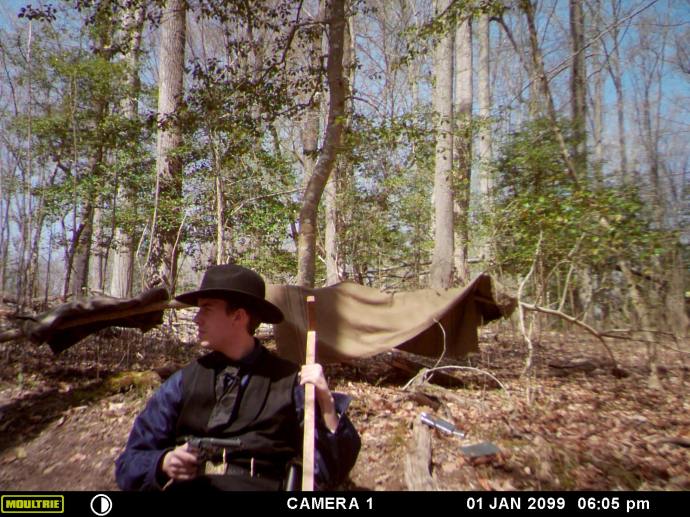
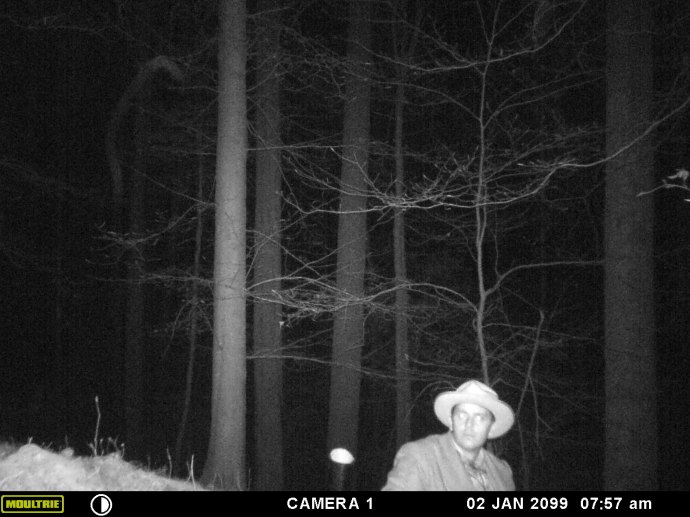
Preparing for a Boothie “Camping Trip”

Categories: Uncategorized | Tags: , | 14 Comments

John Wilkes Booth and his Conspirators

Here’s my own addition to the conspirator collage family.


John Wilkes Booth and his Conspirators

There are two well known compilation images of the conspirators. One is the “Ring of Conspirators” which is featured in the Benn Pitman version of the trial transcript.

Ring of Conspirators

The other is a CDV image entitled, “Booth & his Associates”

Booth and His Associates

I took my inspiration from this latter image but made sure to add all of those tried for conspiracy in Lincoln’s assassination, including Dr. Mudd.

Categories: Uncategorized | Tags: , | 8 Comments

New Gallery – John Wilkes Booth Photographs

“…Would you be kind enough to ask Case to send me without a moment’s delay one dozen of my card photghs. The ones I want are those seated, with cane & black cravat He knows the ones I liked the best…This is very important As there are several parties whom I would like to give one.”
– Letter from John Wilkes Booth to Orlando Tompkins dated February 9th, 1865

Before assassinating President Lincoln, John Wilkes Booth was already a famous man. He was a leading actor of the American stage and his face was well known to a generation of theater goers. He was a handsome man, even being called the “handsomest man in Washington” in the hours leading up to the assassination. Women swooned over his looks and photographs of him were sought after. Booth not only gave photographs of himself as gifts and remembrances, but photographers and gallery owners sold his image to the public. After Booth assassinated Lincoln, demand for his picture increased by a factor of ten. Newspapers were full of advertisements offering the sale of his picture:

This slideshow requires JavaScript.

Secretary of War Edwin Stanton and others in the government likely found this clamoring for the assassin’s picture shameful and so, on May 2nd, the Middle Department of the Army issued a general order essentially banning the sale of Booth’s image in Washington and Maryland:

“The sale of portraits of any rebel officer or soldier, or of J. Wilkes Booth, the murderer of President Lincoln, is forbidden hereafter in this department. All commanding officers and provost-marshals are hereby ordered to take possession of such picture wherever found exposed for sale, and report the names of the parties so offending, who will be liable to arrest and imprisonment if again guilty of a violation of this order.”

Gutman 21 KillerSale of Booth’s photographs outside of this department’s jurisdiction continued and, by May 26th, this order was rescinded and images of Booth were allowed to be sold in Washington again.  Soon, carte-de-visites, or small card photographs, of Lincoln’s assassin filled album books nationwide.  Some were appropriately defaced like the one at right while others were kept by silent sympathizers.

In 1979, authors Richard and Kellie Gutman published the book, John Wilkes Booth Himself.  By working with many private collectors and institutions, the Gutmans had identified and collected all the known images of John Wilkes Booth and published them together in a volume.  The book contained 44 images. Four of them are of illustrations or paintings based on a photo and one image, Gutman 1, has been proven not to be of Booth but rather of a friend of his, Richard M. Johnson.  This leaves the book with 39 photographs of John Wilkes Booth.  The Gutmans’ book is rare and highly sought after today as only 1,000 copies were printed in 1979.  Since the release of their book, other photographs have been discovered of John Wilkes Booth.  There are also small variations on the known photographs that can be found due to the type of camera used (stereoscopic) and small movements Booth made during a particular sitting of certain pose.  The numeration given by the Gutmans in their book is the most common way to organize and differentiate between Booth’s many photographs.

The newest Picture Gallery here on BoothieBarn contains the photographs of John Wilkes Booth organized by Gutman number.

The images come from a variety of sources with the bulk of them stemming from online auctions.  While sites like eBay can provide a nice showcase of original Booth images, they are also ripe with laughable images of mustachioed, curly haired gentlemen “proven” to be Booth.  Most of these fakes are ignored but, occasionally, they attract far sighted fools and bring their crafty sellers a payday.  The images in the John Wilkes Booth Photographs Picture Gallery are established and universally agreed upon images of Booth.

Click here to visit the new John Wilkes Booth Photographs Picture Gallery.

References:
John Wilkes Booth Himself by Richard and Kellie Gutman
“Right or Wrong, God Judge Me” The Writings of John Wilkes Booth edited by John Rhodehamel and Louise Taper

Categories: Uncategorized | Tags: | Leave a comment

Blog at WordPress.com.