The Trial Today: May 11

Here’s a sample of what occurred on this day in the Lincoln conspiracy trial:

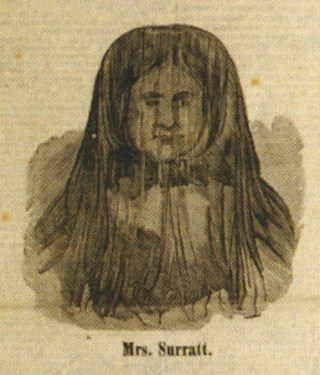
  • The first defense attorneys were admitted for Dr. Mudd and Mrs. Surratt

The May 11, 1865 entry for the trial of the Lincoln assassination conspirators is now released and has more information. Please click here to access it. You can also access it through The Trial homepage.


Throughout May and June of 2020, I am publishing a day by day chronology of the trial of the Lincoln assassination conspirators. This includes almost daily posts announcing the release of what happened at the conspiracy trial 155 years ago. For more information about the creation of this project please click here.

Categories: History | Tags: | Leave a comment

The Trial Today: May 10

Here’s a sample of what occurred on this day in the Lincoln conspiracy trial:

  • Two of the military commissioners, one of whom was very vocal in his criticism of the commission, were replaced
  • The first court reporters were sworn in
  • The conspirators were officially arraigned on the charge and specification against them
  • The rules of the court were established

This date also marks the first appearance of artwork by historical illustrator and cartoonist, Jackie Roche. I’ve been a fan of Jackie’s work since we first “met” in 2014, following the publication of one of her comics that highlighted the experiences of the Petersen House boarder who lived in the room where Lincoln died, Willie Clark. Jackie is not only a talented artist but also a devoted historian. She thoroughly researches every topic she creates art for and includes footnotes in her comics. Jackie was kind enough to create six different images for this project demonstrating the six different seating arrangements the conspirators went through during the trial. Please visit her website to see more of her amazing work. Her comic on the forgotten people who lived at Arlington House, in what is now Arlington National Cemetery, is one of my favorite pieces.

The May 10, 1865 entry for the trial of the Lincoln assassination conspirators is now released and has more information. Please click here to access it. You can also access it through The Trial homepage.


Throughout May and June of 2020, I am publishing a day by day chronology of the trial of the Lincoln assassination conspirators. This includes almost daily posts announcing the release of what happened at the conspiracy trial 155 years ago. For more information about the creation of this project please click here.

Categories: History | Tags: | 8 Comments

The Trial Today: May 9

Here’s a sample of what occurred on this day in the Lincoln conspiracy trial:

  • The trial officially convened for the first time
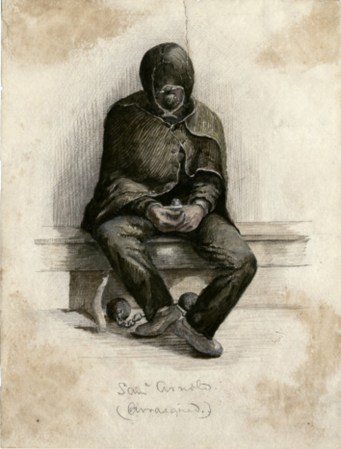
  • The conspirators were brought into the court room wearing the hoods they were forced to wear while imprisoned, much to the distaste of the commissioners

The May 9, 1865 entry for the trial of the Lincoln assassination conspirators is now released and has more information. Please click here to access it. You can also access it through The Trial homepage.


Throughout May and June of 2020, I am publishing a day by day chronology of the trial of the Lincoln assassination conspirators. This includes almost daily posts announcing the release of what happened at the conspiracy trial 155 years ago. For more information about the creation of this project please click here.
Categories: History | Tags: | 2 Comments

The Trial Today: May 8

Here’s a sample of what occurred on this day in the Lincoln conspiracy trial:

  • Some of the military officers met in the courtroom for the first time
  • The conspirators first heard the charge and specification against them in their cells at the Old Arsenal Penitentiary

The May 8, 1865 entry for the trial of the Lincoln assassination conspirators is now released and has more information. Please click here to access it. You can also access it through The Trial homepage.


Throughout May and June of 2020, I am publishing a day by day chronology of the trial of the Lincoln assassination conspirators. This includes almost daily posts announcing the release of what happened at the conspiracy trial 155 years ago. For more information about the creation of this project please click here.
Categories: History | Tags: | Leave a comment

The Trial Today: May 6

Here’s a sample of what occurred on this day in the Lincoln conspiracy trial:

  • The nine military officers who would serve as the judges and jurors in the conspirators’ case were selected

The May 6, 1865 entry for the trial of the Lincoln assassination conspirators is now released and has more information. Please click here to access it. You can also access it through The Trial homepage.


Throughout May and June of 2020, I am publishing a day by day chronology of the trial of the Lincoln assassination conspirators. This includes almost daily posts announcing the release of what happened at the conspiracy trial 155 years ago. For more information about the creation of this project please click here.

Categories: History | Tags: | 2 Comments

Prelude to a Project

Over two years ago, I came up with an idea for a project. I wanted to expand my knowledge of the trial of the Lincoln assassination conspirators. While I was very familiar with the outcome of the trial and the big revelations that the different testimonies brought to light, my knowledge of the trial, as an event, had been lacking. The trial was such a large and inaccessible part of the assassination story to a person without any legal background. Even with my knowledge of the history of Lincoln’s assassination, attempting to read the trial transcript, and make sense of it all, was an intimidating prospect.

The original incarnation of this project still shied away from the transcript itself with my interest being drawn to learning more about the experiences of the individual conspirators while the trial was going on. While we have practically nothing from the 8 conspirators regarding their day to day thoughts on the proceedings, the daily newspapers of the time often contained descriptions of the conspirators’ appearances and little mentions of their actions on the prisoners’ dock. The first draft of this project was little more than a list of the witnesses who testified on each date, followed by these descriptions from the newspapers.

However, as I went on, I found that I needed to provide at least some summation, if only for myself, regarding what each witness was testifying about. Some of the witnesses, especially the important ones, were easy as I was already familiar with the relevance of their words. However the trial consisted of 347 unique witnesses and most of them gave testimony that is only comprehensible if you know the testimonies that preceded it.

With this in mind, the project expanded. I started reading the trial transcript, word for word. I am greatly indebted to the work of author William Edwards, who published the most detailed and accurate version of the trial transcript that exists. At over 1400 pages in length, I knew the task ahead of me was going to be long but I wanted to create a more interactive and, most importantly, accessible version of the trial. I took on the role of Benn Pitman, the court’s chief recorder who later published a one volume transcript of the trial using summarized testimonies. I wanted to do the same as Pitman but update it using the technology available to us. Over time, what started as a cheat sheet for myself, became an interactive resource for understanding and referencing the trial of the conspirators.

The end project, as you will soon see, consists of a day by day chronology of the trial of the Lincoln conspirators. For each day of the trial, I have documented the proceedings, summarized the testimony of each witness, and included the descriptions and recollections of the individuals who took part in or visited the trial on each day. I have painstakingly researched the 347 witnesses, rectifying misspelled names from the transcript and doing my best to find visuals that represent them and their lives. I have been assisted in this by many of my friends and colleagues whose names appear in the acknowledgement section at the bottom of the trial home page.

Each day of the trial exists as its own page here on LincolnConspirators.com and they will be released on their corresponding anniversary here in 2020. In this way you will be able to experience the trial, day by day, in the same way those in 1865 did. This post was published on May 1, 2020 and so the page for May 1, 1865 is now available to read. It contains the announcement that, 155 years ago today, President Andrew Johnson released the orders to create a military commission to try the Lincoln assassination conspirators. The decision to try the conspirators in a military court rather than a civilian trial was, and continues to be, a controversial decision with many arguments to be made about its constitutionality. However, my purpose in this project is not to debate the legality of the trial. I am more concerned about the testimony that was given at the trial and the ramifications it had on the conspirators.

Using my own limited computer abilities, I have worked to make this project as interactive as possible. Starting with May 9th, the day in which the proceedings of the trial actually began, each individual page contains a Table of Contents at the top. Using this you can click to jump down to a specific witness or conspirator. Clicking entries on the Table of Contents will also provide you with direct links to those places in the page, making it helpful if you want bookmark or share a specific testimony rather than the whole page. When reading my summarized version of a witness’s testimony, the full name of the witness is always hyperlinked. Clicking on their name will take you to their full testimony in the historical transcripts so that you can read them for yourself. In addition, when witnesses are recalled or make direct reference to the prior testimony of others, I have included hyperlinks to the corresponding testimony in question. In this way you can quickly review and/or cross reference the sometimes contrary statements being made.

A sample Table of Contents for a day of the trial.

At the beginning of the trial, the court was held in closed session. Public and private uproar over the secrecy of the court caused the doors to be opened up to outside press and visitors starting on May 13th. Starting on this date, the Table of Contents grows to include the newspaper descriptions of the conspirators and known visitors to the court room. As the trial goes on and interest in the individual conspirators’ appearances wanes, there are less descriptions available. Near the latter part of the trial an attempt has been made to supplement these areas with general descriptions of the conspirators from undated sources.

For each day of the trial, I will be publishing a corresponding post here on LincolnConspirators.com containing a teaser of what occurred on this date 155 years ago. The posts will also contain a link to newly released trial page. I apologize in advance for blowing up your inbox with nearly daily posts for the next two months. The home page for the trial project, which contains links to the individual days, will always be accessible and available, though the links will not work until that specific day has arrived. By the end of June 2020 every day of the trial project will be accessible and will remain so.

I’m very much looking forward to sharing with you this project that has occupied too much of my time over the past two years. My hope is that this project will be a helpful resource for all who seek to learn more about the trial of the conspirators.

So, while we are still about a week away before the trial of the Lincoln conspirators officially began, I invite you to visit the Home Page of the project and take a look at the Witness List for the days to come. If you’re so inclined you can even take a look at the project’s Bibliography and read through the Introduction (which is pretty much just this post again).

In the end, I hope you will come back as regularly as you can during May and June to see how the conspiracy trial plays out, day by day.

Sincerely,

Dave Taylor

Categories: History, News | Tags: | 70 Comments

2020 Surratt Conference Cancelled

Following the recommendation from the Centers for Disease Control to limit group gatherings, the Surratt House Museum has decide to cancel this year’s Surratt Society Lincoln Assassination Conference. The conference was originally scheduled for April 3 – 5, 2020, but is now cancelled in order to lessen the spread and impact of COVID-19 (coronavirus).

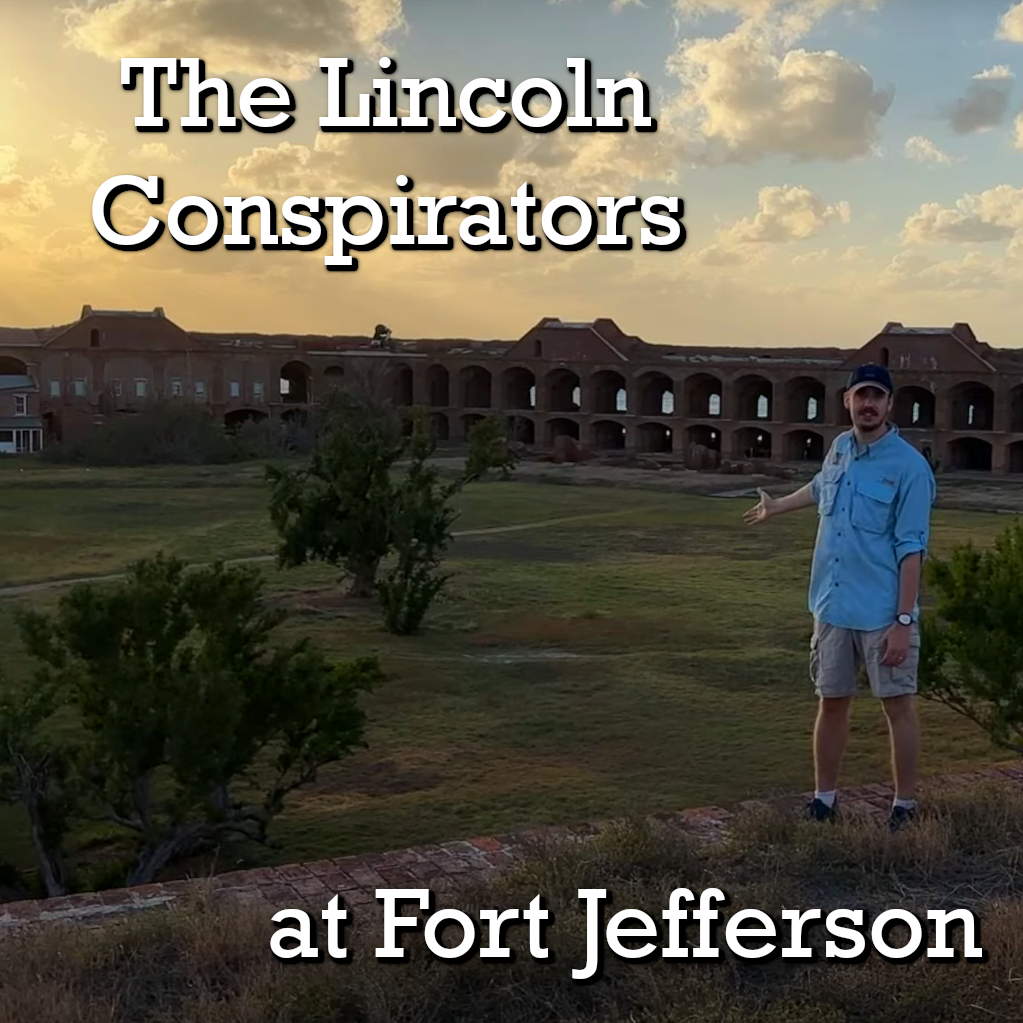
I was scheduled to speak at this year’s conference on the imprisonment of Dr. Mudd and the other conspirators at Fort Jefferson. As disappointing as the cancellation is, I wholeheartedly agree with the Surratt Society’s decision to put the welfare of its attendees first.

Those who have already registered and paid for the conference will receive a refund of their registration fees, as well as the fees for the Friday and Sunday bus tours if applicable. The Surratt House Museum will be sending out more information in the following weeks about the refund process. You can also contact them directly with any questions. Their phone number is (301) 868-1121.

The decision to cancel the conference was not an easy one, but was done in solidarity with the hundreds of other historical institutions and organizations who are canceling events in order to decrease the spread of this virus. As an annual conference, the Surratt Society looks forward to 2021 when we may all, once again, come together to share in our love of history.

Categories: News | Tags: , | Leave a comment

Who’s to Blame?

In the collection of the The Gilder Lehrman Institute of American History there is an 1865 diary written by Cyrena Hammond. At the time of Lincoln’s assassination, Cyrena was a 17 year-old resident of North Bergen, a small hamlet located about 20 miles west of Rochester in western New York. While there are many diaries that contain entries regarding the death of Lincoln, Cyrena’s actually speaks very little about the event in her day to day entries. The only mention of it is in her entry for April 19 which including the line, “The whole union is dressed in mourning today.” However, at the end of the diary, on the pages designed for keeping track of one’s money flow, Cyrena included a description of a Sunday school lesson she attended on April 29th. One of her neighbors, a man by the name of Loren Hill, addressed the Sunday school students and made particular comments regarding who was really to blame for Lincoln’s death. The following is an image of the diary pages and a transcription of what it says:

“The 29 of this month, Loren Hill, was trying to entertain the sabbath school with his talk which runs as follows

Every Girl should be brought up in sunday school. I have got four girls. They expect to become wives and in order to make them good wives they must be brought up in the sunday school. Most young girls that are ruined, are the cause of it all. They do more to ruin young men than young men do themselves. Had Mrs Booth been a real genuine woman Wilkes Booth would never have commited the deed he did. as long as I have any controll over my children they will attend the sunday school.

thus run his speech untill every body was disgusted.”

According to Loren Hill, the crime John Wilkes Booth committed was essentially the fault of his mother, Mary Ann Booth.

In Hill’s view, if Mrs. Booth had been a more “genuine” woman, John Wilkes would never had killed Lincoln. Hill preached that most of the ruin suffered in the world is the result of the moral failings of women and that they deserve the blame for whatever crimes their sons and husbands commit. As Cyrena points out at the end of her entry, everybody was disgusted by the overt misogyny of Hill’s preaching.

While I have seen many attempt to put the blame for Lincoln’s assassination on the shoulders of someone other than John Wilkes Booth, this was the first time I had ever read of someone being so callous as to blame poor Mrs. Booth for the crime of her misguided son. But even worse than blaming an innocent parent for the sins of her child was the way in which Hill attempted to use Lincoln’s death to preach that religious failings of women were the cause of men committing criminal acts. Such a sexist attack wrapped in doctrine reminded me of the ways in which enslavers used the Bible in order to justify the continued practice of slavery. Both are examples of the powerful using dogma to subjugate others to their will.

According to the 1870 census, Loren Hill, the women blaming lecturer, did indeed have 4 young daughters as he had stated. Their names were Emma, Francis, Mary, and Nora. Hill was a wealthy farmer in nearby Clarendon, NY with his real estate holdings valued at $12,000 and his personal estate at around $3,300. In the 1860s, he had been appointed as both Clarendon’s Assessor and Commissioner of Highways. He also served as the justice of the peace. Despite such social successes, when Hill died in 1883 he was allegedly completely broke. An 1889 book called the History of Clarendon by David Copeland stated that, “Hill was not worth one penny when he died, although he owned this farm when crops were good and prices high. When justice of the peace he said, in the presence of the author, ‘that he did not know whether his head was on his shoulders or on his feet,’ a lawsuit having turned him upside down in his own estimation.” Unfortunately the text does not give any more information and so we are left to only speculate as to which specific woman Loren Hill undoubtedly blamed for his own financial ruin.

I was introduced to Cyrena’s diary through my current Master’s class on Historiography and used it to discuss social history. As an example of social history, the lives of Cyrena Hammond and Loren Hill demonstrate a story of gender and power in the Civil War era. Mr. Hill, the powerful and influential landowner, sought dominion over his daughters and other women by blaming the moral failings of women for the crimes of men. Cyrena (and apparently others) expressed disgust over these remarks but it appears the rebuke may have only been safe within the pages of a diary. Even the interactions of two neighbors in a rural area of New York at the time of Lincoln’s assassination can be valuable to social historians when viewed through the lens of gender roles and gender norms.

Categories: History | Tags: , , , | 12 Comments

Blog at WordPress.com.