News

Manhunt Review: Episode 1 Pilot

The first two episodes of the miniseries Manhunt, based on the book by James L. Swanson, were released on AppleTV+ on March 15, 2024. This is a historical review of the first episode, “Pilot.” If you want to avoid spoilers, I suggest you wait to read this review until after you have had a chance to watch the premiere. To read my reviews of other episodes, please visit the Manhunt Reviews page.


Episode 1: Pilot

The series opens on April 14, 1865, with the citizens of Washington, D.C., continuing to celebrate the effective end of the Civil War. While the Grand Illumination ceremony was the night before, we are shown residents of the nation’s capital from all walks of life marching, singing, and celebrating. The noise from their revelry causes an unseen man to shut his window forcefully, silencing their voices. Upon his hand, in the webbing between his thumb and forefinger, we see the tattooed initials “JWB.”

In my opinion, this was an incredible way to introduce the audience to the villain of this drama. For the next minute, we follow the assassin’s hands as he readies himself for the events to come. He gathers his weapons and supplies before heading out. He meets up with his fellow conspirator, David Herold, and pays for their rental of two horses. It is then that the first real lines of the show are uttered. Booth tells Davy to, “Round up everybody. It’s a go!”

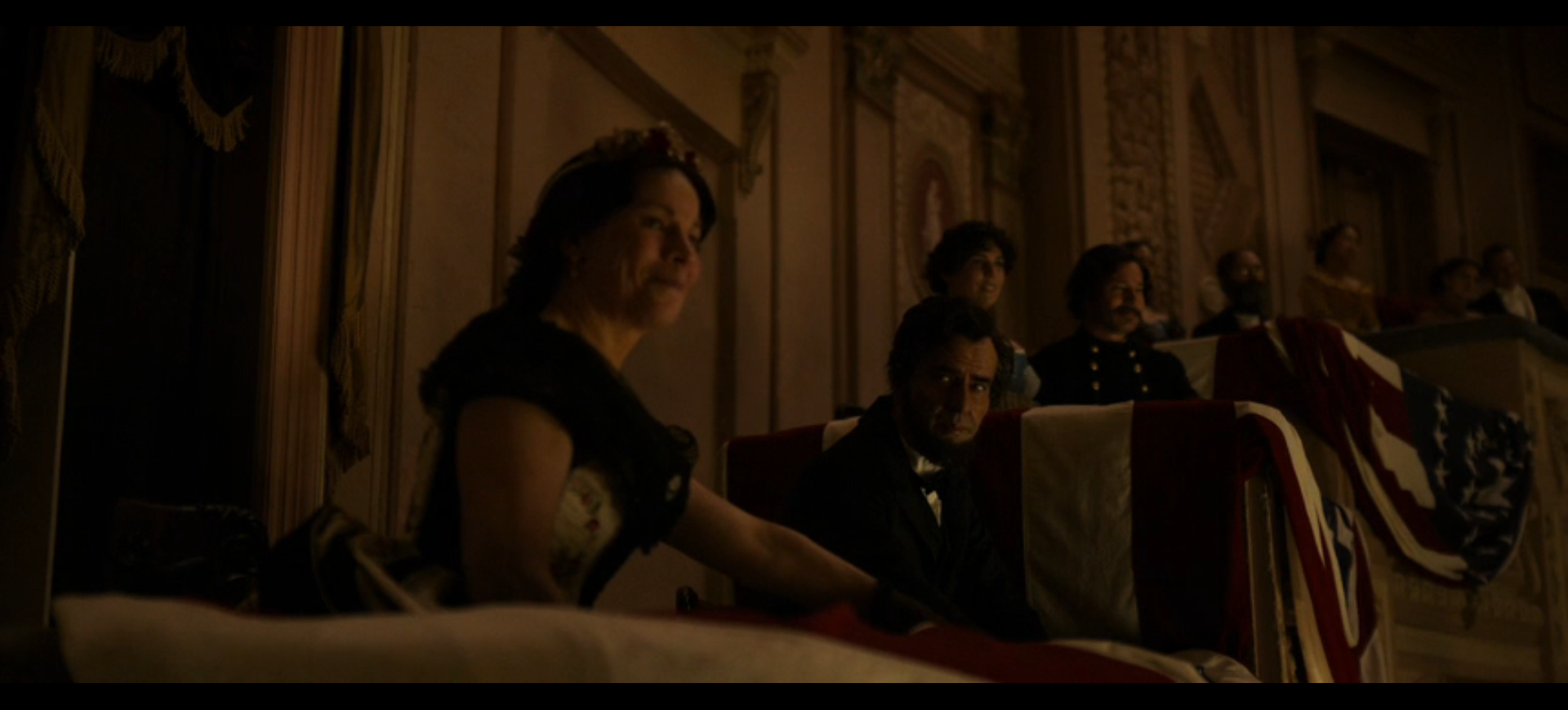
And with that, the long-awaited Manhunt miniseries begins. Before the title card comes up, we’re put straight into the action. We witness Lewis Powell’s attack on the Seward household before cutting back to Booth eyeing the President and First Lady as they arrive at Ford’s Theatre. We aren’t introduced to our leading man, Secretary of War Edwin Stanton, until after the title card fades, and he is alerted to a “break-in” at the Seward home. Then Booth arrives at the backstage door of Ford’s Theatre, where willing stagehand Ned Spangler accepts his duty to hold Booth’s horse even though he has some scene shifting to do inside. Meanwhile, Stanton arrives at the Seward home and sees the vast amount of bloodshed caused by the unknown assailant.

I won’t continue to give an entire play-by-play of the episode here. My ability to describe the events on screen pales in comparison to actually seeing the high production values of the show itself. For the rest of the 54-minute episode, we witness events take place through a combination of tracking events and flashbacks, a style we are likely to see throughout the series. Suffice it to say, this episode covers many different events, including:

  • The War Department and President Lincoln receiving word of General Lee’s surrender on April 9
  • Booth getting his mail at Ford’s Theatre and learning of Lincoln’s attendance on April 14
  • Lincoln inviting Stanton to Ford’s Theatre that night, and the Secretary of War declining
  • Booth drinking at the Star Saloon before the shooting
  • The assassination of Lincoln and Booth’s leap to the stage
  • Booth crossing the Navy Yard bridge out of Washington
  • Stanton arriving on the scene outside Ford’s Theatre and making his way into the Petersen House
  • Booth meeting up with Herold near Sopher’s Hill
  • The death of Lincoln at 7:22 am on April 15
  • Booth and Herold’s arrival at the Mudd farm and the doctor’s setting of Booth’s leg
  • The removal of Lincoln’s body from the Petersen House
  • The search of Booth’s room at the National Hotel

Most of the events not involving Booth have been altered in some form in order to make Stanton the central figure in the drama. Some of the more fictitious scenes are Stanton talking to Peanut John and a meddling newspaper reporter in the lobby of Ford’s Theatre. We also see the Secretary searching the Presidential box himself and finding Booth’s murder weapon. These Stanton-centric scenes, while imaginary, make sense in the context of the show. This is a Stanton series, after all, so he has to be the one calling all the shots and making the big discoveries. Stanton likewise takes part in searching Booth’s hotel room and finds an enigmatic cipher partially burned in the fireplace. The discovery leads Stanton’s number two, Thomas Eckert, to pose the question, “What if the Confederacy is behind the assassination?” This leads Stanton to reply with the episode-ending line, “I’d have to start another war.”

Before getting into the details regarding some of the more fanciful and historically inaccurate moments in the episode. I have a few big takeaways from seeing this first episode.


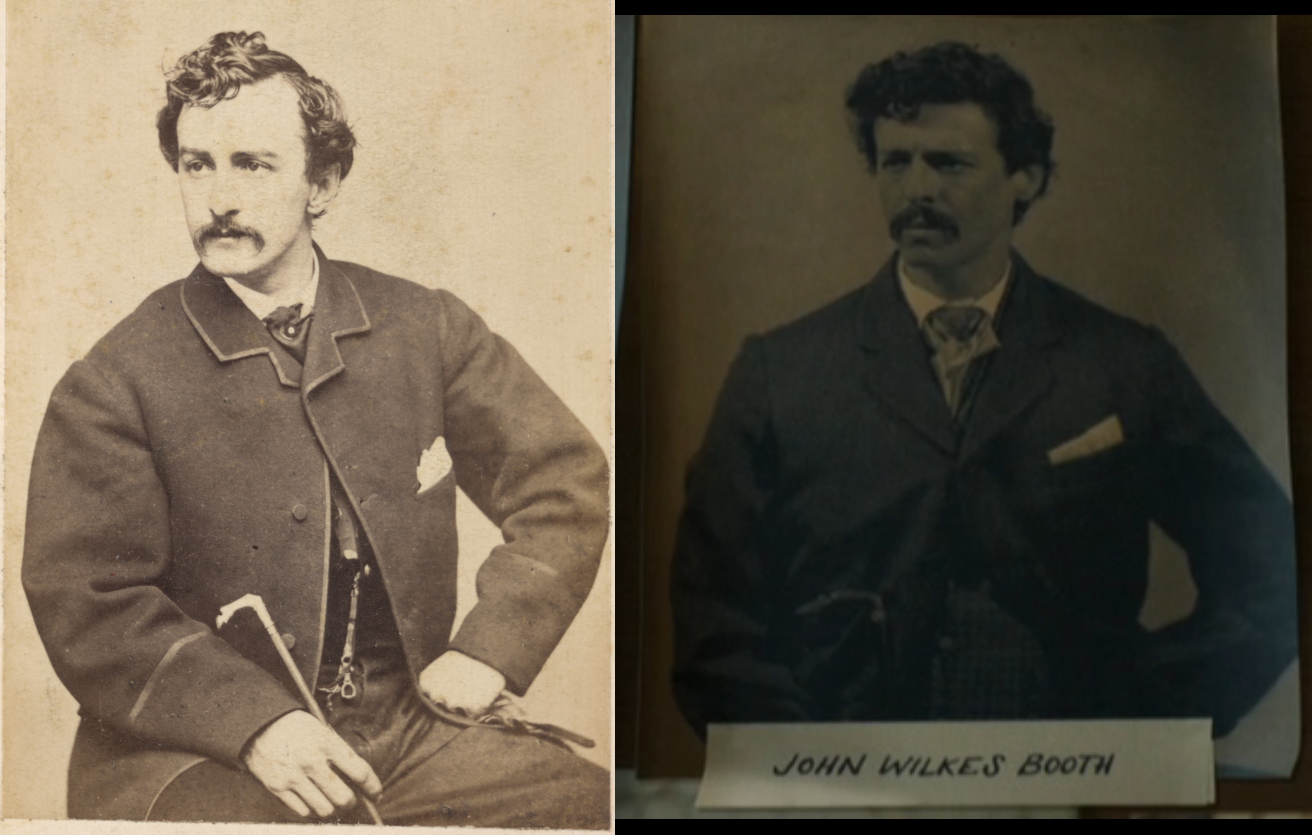
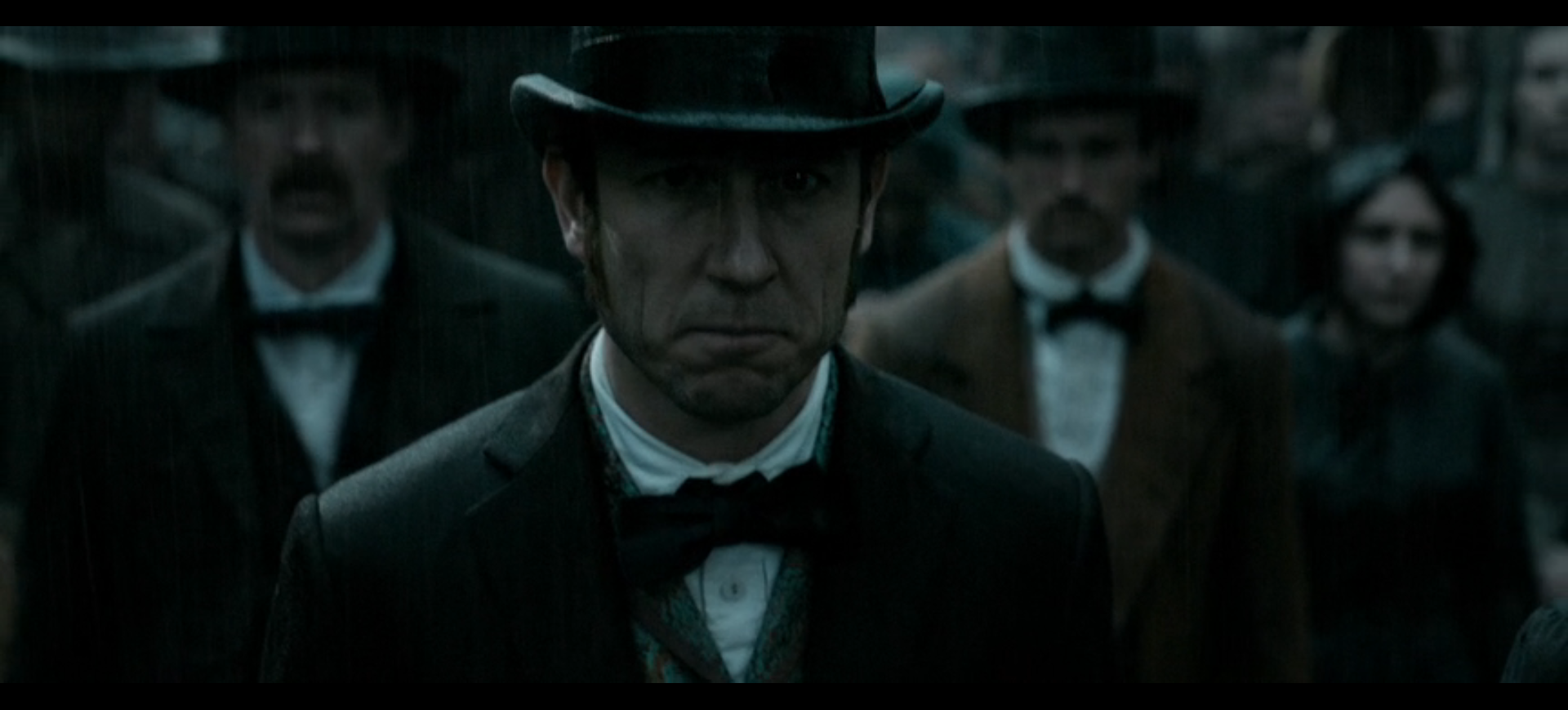
First, the show looks absolutely fantastic. This was already pretty evident from the trailers, but I was still struck by how amazing the costumes and sets were for this show. Aside from some limitations they had with the interior of Ford’s Theatre, everything in the show looks period. Even some of the outdoor shots, where it’s clear computer-generated imagery was used to create the background of wartime Washington, look well composed. In addition, the editors did a great job when it comes to color-grading the show. The tonal quality of both the indoor and outdoor shots perfectly evokes the time period. There is great attention to detail on the part of the costuming. I was delighted to see Booth’s hand was not only appropriately tattooed, but he wore a pinky ring as he was often photographed with. The fabrics and types of outfits all fit the period and show the variation of styles that existed.

Second, the acting is very good. While I still say that lead Tobias Menzies should have been adorned with Stanton’s signature skunk beard, by the end of the episode, his charisma in the role caused me to forget about it. Menzies plays Stanton in a very sympathetic way in this episode. He’s quite different than practically all other portrayals of the gruff Mars, Lincoln’s own “God of War.” There is logic to this, for while a more cantankerous Stanton might be more accurate, it’s hard to believe an audience would support such a portrayal as their leading man. Over the course of seven hour-long episodes, I’ll take a softer, beardless Stanton that’s easier to empathize with. Anthony Boyle still looks great as Booth and plays the role well. At the moment my only criticism of Booth is more with the writing than the performance. The writing isn’t bad, but it punches down a bit at Booth, removing some of the complexity of his character. He’s referred to as an actor who plays “supporting roles” and one who is “smaller in person.” So far, the only motivation given for Booth’s actions seems to be a professional and personal rivalry between himself and his father/brother. He’s portrayed as a racist, as he should be, but in this first installment, we don’t get a good grasp of why he decided to kill Lincoln. Given the series’ love of flashbacks, I’m hopeful we’ll learn more about Booth’s background in future episodes. My favorite acting performance so far is that of Damian O’Hare in the role of Thomas Eckert. The man looks a lot like Eckert to begin with and, as a sidekick of sorts, he has a lot of great interactions with Menzies’ Stanton. I’m looking forward to seeing more of Eckert going forward.

Third, the music is great. The specially written theme song for the series only shows up at the end as the credits roll. However, the song, written and performed by Danielle Ponder, is incredibly catchy and fits the series well. The underlying score is composed by Bryce Dessner and is a great tonal match for the action on screen. The soundtrack for the series is already available on platforms like Apple Music and Spotify. I’ve been listening to the score while composing this post. There’s some great music to look forward to in future episodes.


Let’s dive now into some of the more, shall we say, “creative” aspects of the show. No single miniseries or movie is going to get things 100% correct, and Manhunt is no exception. As I stated in my post before the series debuted, my purpose in pointing out historical errors is meant to be educational. The benefit of a series like this is that it can generate a lot of questions about what is real and what is dramatized. From what I’ve seen in this first episode, this series will certainly generate a lot of these questions. I’ll be honest and state that there are many errors of fact in this first episode. Some errors are really small, nitpicky things, such as Booth’s diary erroneously having the word DIARY stamped on the front. I will try my best to avoid bringing up too many of these types of mistakes, though some are harmless enough to point out. However, there are also errors or instances of dramatic license that are more significant and can contribute to misinformation about the event if not addressed. Talking about these instances is not meant to detract from the piece as a form of entertainment but to merely make sure there is a record of historical fact to help avoid confusion.

1. Edman Spangler

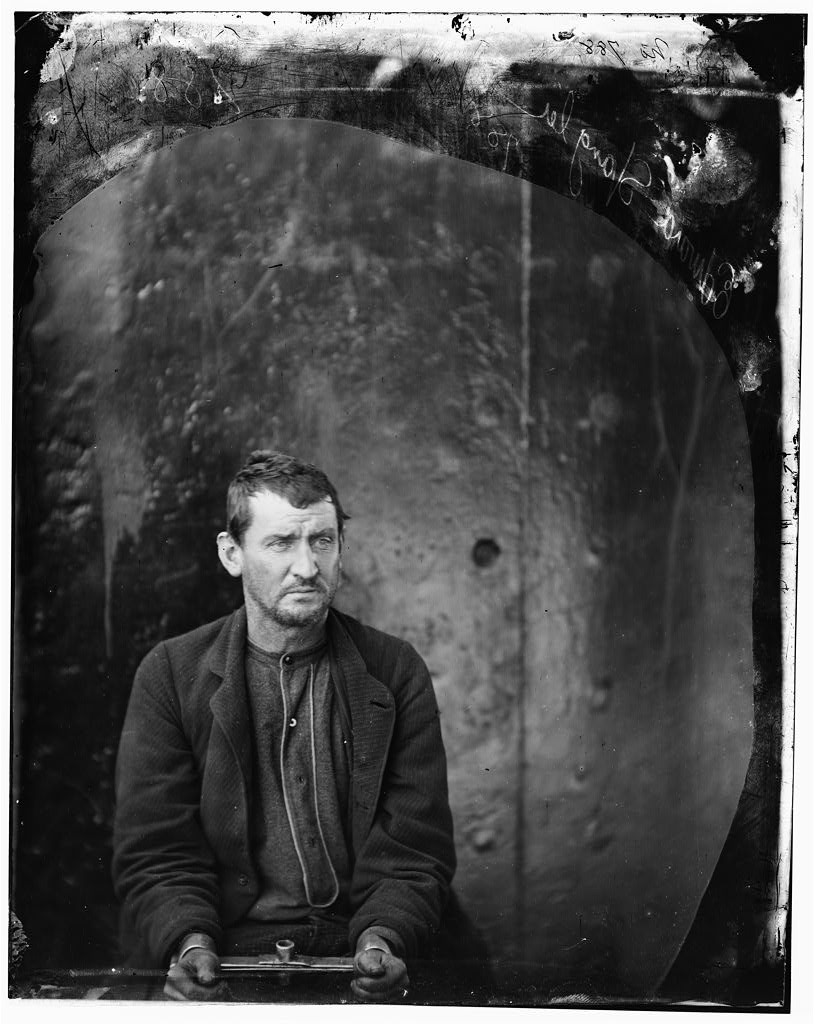
There was a considerable amount of dramatic license taken in regards to Edman “Ned” Spangler, and his involvement with John Wilkes Booth. Spangler is shown at the start of this episode already behind Ford’s Theatre, waiting for Booth’s arrival before the assassination. Booth’s words to Spangler imply that Spangler is well-versed in what is about to go down. After the shot occurs, Spangler opens the back door of Ford’s for the escaping Booth. He then slams it shut and attempts to block Major Joseph Stewart from getting through and chasing Booth further. When Stanton identifies himself to Spangler the next day, the stage carpenter immediately attempts to bolt, before being apprehended by sidekick Eckert and thrown into a caged wagon.

Practically everything shown in this episode relating to Edman Spangler is fictitious. While Spangler did briefly hold Booth’s horse before passing the job over to Peanut John, there is no evidence that he was aware of the plot against Lincoln. Spangler was friendly with Booth, as many of the stagehands at the theater were (including Peanut John, a white boy who shared a drink with Booth on occasion in the Star Saloon). Spangler was on stage preparing for a scene change when the assassination happened. After the event, he was dumbstruck at what occurred and could not fathom the idea that Booth had committed such a deed. He was “arrested,” interviewed, and released by authorities a few times before he was officially declared a possible conspirator. The main reason Spangler was charged as a conspirator was because the authorities felt that Both had to have had an accomplice inside the theater. However, as the trial went on, it became apparent there really wasn’t much evidence to support this claim. Compared to the sentences of death and life imprisonment that the other conspirators received, Spangler got essentially a slap on the wrist for having been friends with Booth and was sentenced to 6 years. Most historians, myself included, consider Spangler a largely innocent victim of Booth’s machinations. The way he is depicted in this episode erroneously implies that Ned Spangler was far more despicable and culpable than he really was.

2. The Attack on William Seward

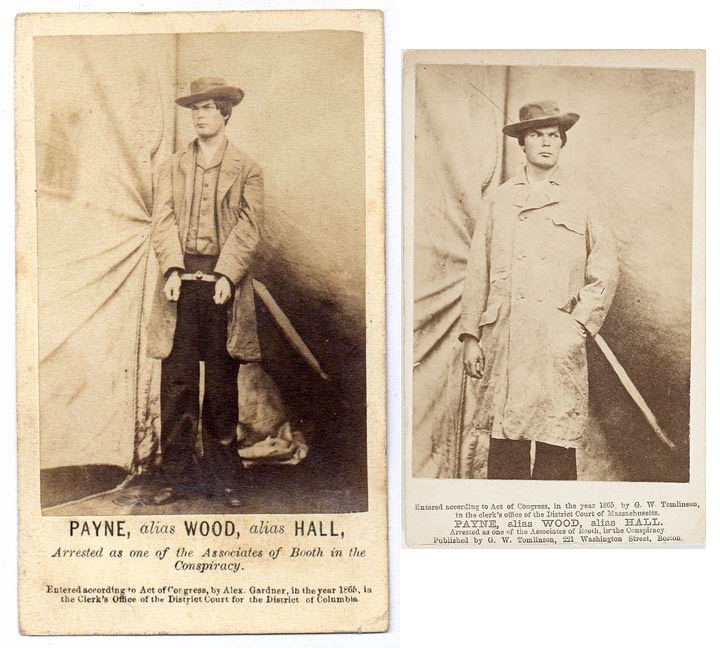
Let’s look at how this episode deals with the attack on Secretary of State William Seward by conspirator Lewis Powell. This whole scene is an example of dramatic license winning out over historical accuracy. For reasons unknown, Powell and Davy Herold arrive at the Seward home sharing a single horse. In reality, each man rode their own, with Powell’s ride being a one-eyed horse that Booth had purchased from Dr. Mudd’s next-door neighbor in 1864. This horse connection would prove damaging to Dr. Mudd at the trial. But that detail aside, the scene plays out with a somewhat dim-witted Powell asking why he is attacking the Secretary of State and what state he is in charge of. Now, Powell may not have been the smartest fellow to ever live, but I’m unsure why the writers dumbed this son of a Baptist minister down so much. Powell approaches the front door to the Seward house and the door is answered by William Bell, one of Seward’s servants. After giving Bell a “genuine pharmacy box,” Powell proceeds to pistol whip Bell out of the doorway. This draws the attention of Frederick Seward, who is also pistol-whipped. When Bell screams for help, Powell aims the gun at the servant and pulls the trigger, but the gun fails to fire. So Powell then attempts to throw the nonfunctional gun at Bell before stabbing him with the large knife Herold gave him. For the rest of the scene of the attack, we remain outside with Davy’s character as he watches silhouettes tussle on the second floor. At one point, two grappling figures break through a window. It’s never clear who Powell is fighting with and what happens to them. Then we see through the broken window Fanny Seward struggling with Powell as she screams for help, crying, “Murder!” This is all too much to bear for Davy, who climbs atop the solo horse and rides away. A few moments later, a blood-covered Powell walks out of the Seward home, realizes Davy has abandoned him, and walks off-screen.

It was an interesting choice to only show this scene from Davy’s perspective. Violence is shown in Powell’s treatment of Bell, Frederick Seward, and Fanny, but the wounds inflicted on the Secretary of State are not shown until Stanton arrives later to take in the scene. The oft-repeated but erroneous claim that Seward’s neck brace saved his life is mentioned by Fanny Seward. In truth, William Seward did not have any sort of neck brace as a result of his carriage accident. While I enjoyed the flashback scene to April 9th in which Stanton and a collared Seward discussed whether this was truly the end of the Confederacy, the large “cone of shame” Seward is shown wearing is just not accurate.

In much the same way, many of the details of Powell’s attack in this episode are incorrect. William Bell did answer the door and allowed Powell entry, but he was never attacked by Powell. It wasn’t until Powell and Bell made it up the stairs and were stopped by Frederick Seward that the scene turned violent. Rebuffed by Frederick for trying to see the Secretary at a late hour, Powell turned as if to leave before brandishing his pistol and aiming at Frederick. It was only after the gun failed to fire that he brought the barrel of the weapon down on Frederick’s head, breaking the weapon and Frederick’s skull. From there, Powell stormed into Seward’s bedroom and frantically stabbed at the Secretary. While he managed two deep stabs into Seward’s face, the quick thinking of army nurse George Robinson prevented Powell from fatally wounding his target. Robinson pulled the assailant off of the Secretary and grappled with him. Augustus Seward, roused by the chaos, arrived in his father’s bedroom and separated the fighting pair. He, like Robinson, received a slashing wound from Powell’s knife as the would-be-assassin ran back down the stairs. On the way down, Powell overcame State Department messenger Emerick Hansell, who he stabbed deeply in the back. Making his way out of the house, Powell mounted his waiting one-eyed horse and rode away while the unharmed William Bell screamed for help from the guards in and around Lafayette Square.

I give credit to the episode for preserving the violence of Powell’s attack. When the assassin emerges, he is covered in blood. When Stanton arrives, he touches blood on the staircase railing in horror. This all fits Dr. Verdi’s assertion that, upon his arrival after the attack, he found the household “weltering in their own gore.” While the tone of the attack is preserved in this episode, a lot of dramatic license has been taken when it comes to the specifics.

3. John Wilkes Booth’s fame

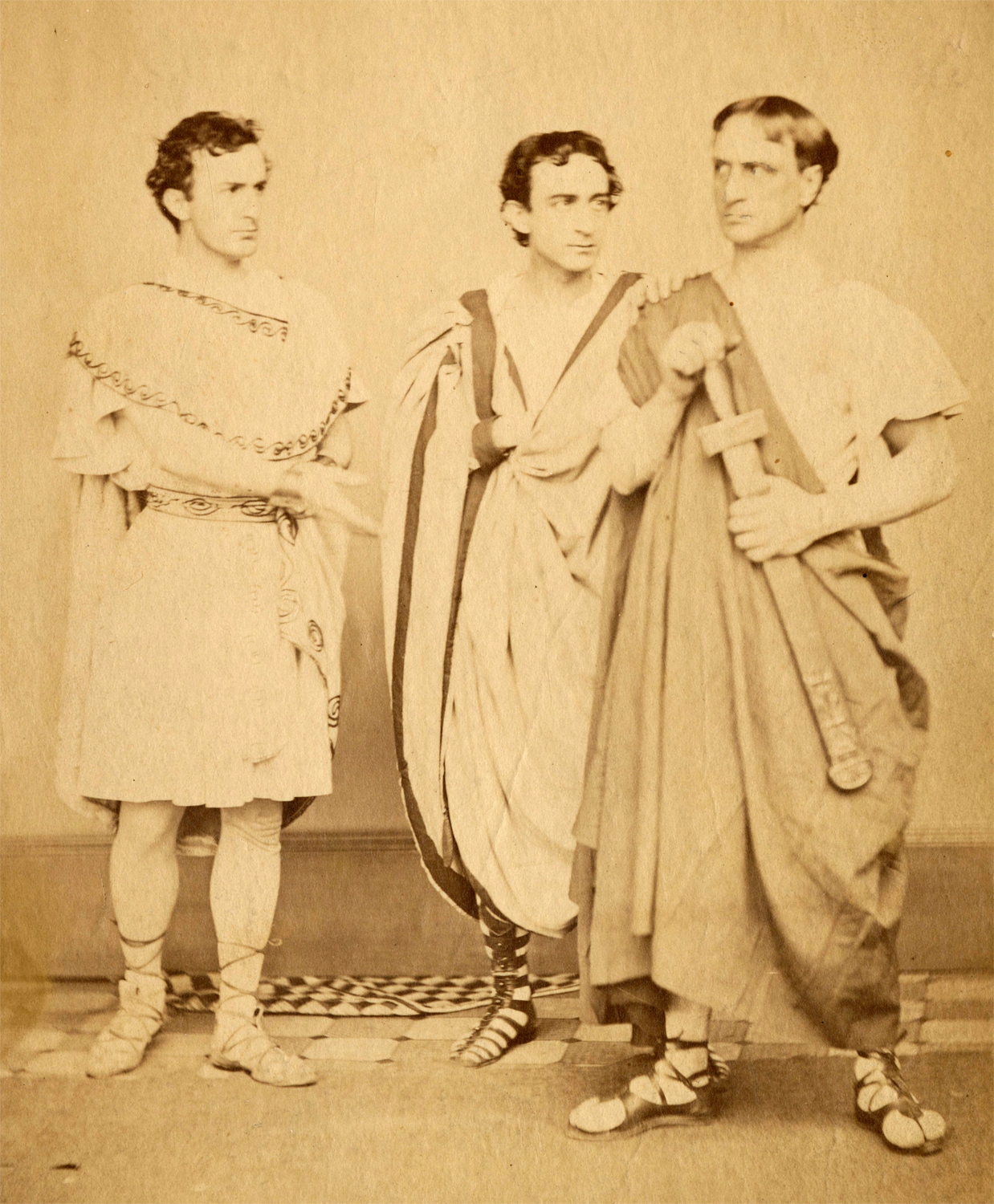
I think the episode does a great disservice to our understanding of Lincoln’s assassination by negating Booth’s fame and popularity at the time of his crime. The day before the series was released, I saw a clip of this interview that Hamish Linklater, the actor who portrays Lincoln in this series, did for the Associated Press. In the interview, he equated the assassination of Lincoln to what it would be like today if “Leonardo Dicaprio’s brother” killed the President. This, I feel, is a gross misinterpretation of the dynamic that existed between the Booth brothers, and this misconception is heavily portrayed in this premiere episode. It is true that Junius Brutus Booth, the father, and Edwin Booth, the brother, were both very successful theater actors in their day. The elder Booth had died in 1852, making it strange that his photograph is shown adorning the walls of Ford’s Theatre, a playhouse that didn’t exist until a decade later. Edwin Booth was alive at the time of the assassination but never performed at Ford’s Theatre, making it odd that he was also shown on the theater wall.

It is true that Edwin was a point of great success in his career at the time of the assassination. Edwin had just completed 100 nights of Hamlet in New York. The elder brother would go on to be one of the greatest actors of his generation and is appropriately revered in theatrical circles to this day. But, it’s important to remember that John Wilkes Booth was also a star like his brother. This episode continually degrades Wilkes’ fame. He is called a “stuntman” who performs “supporting roles.” During the scene at the Star Saloon, he is encouraged to play the heroes in order to become great like his brother and father. All of this negates that John Wilkes Booth was a truly talented and famous actor who did play the starring roles. John Wilkes had already surpassed his eldest brother Junius, Jr. in terms of acting ability and was well on his way towards achieving the same greatness that Edwin was later known for. Edwin saw the potential in his younger brother, too, supporting his efforts and even writing, “I am delighted with him & feel the name of Booth to be more of a hydra than snakes and things ever was.” While it makes sense to degrade Booth because of his actions, when we discount his abilities or talents, we take away from the shocking nature of his crime. The assassination wasn’t like if “Leonardo Dicaprio’s brother” shot the President. It was as if Leonardo Dicaprio himself killed the President. Booth was near the very top of this game when he chose to abandon the stage and focus on his plot against Lincoln. He wasn’t an anonymous D-list celebrity desperate for attention. He was a man who had everything in the world yet still gave it all up. By simplifying Booth’s actions as intense sibling rivalry gone wrong, we too easily ignore the real lessons that can be learned from analyzing his radicalization from celebrated actor to condemned assassin.

4. John F. Parker

One of the scenes where Booth is compared to his family members occurs in the Star Saloon in the minutes leading up to the shooting. Booth finds himself chatting with a fellow who states that he is the President’s guard for the evening. Booth is elated to find the man responsible for Lincoln’s safety is away from his post and orders a drink for him. This man’s name is John Parker, and after failing to prevent Lincoln’s assassination, he finds himself in a heap of trouble. Both Stanton and Mary Lincoln admonish Parker in this episode for failing to perform his duty.

John F. Parker has gone down in the minds of the general public as the scapegoat for Lincoln’s death, but I believe this is due to our inability to truly fathom a time when Presidents were not constantly guarded and protected. Despite what is shown in this episode, Stanton did not order Parker, or any other guard, to watch over the President at Ford’s Theatre. Lincoln disliked any attempt at protection, even visiting the fallen capital of the Confederacy with little more than a small entourage. There was nothing like our modern understanding of the Secret Service back then. John F. Parker was a D.C. policeman turned White House guard. His job was not to protect the President but the White House itself and its furnishings. He had been hired for the position by Mary Lincoln, who was tired of visitors barging into the White House at late hours or folks attempting to make off with souvenirs from the President’s house. In addition to his role as a White House guard, Parker also acted as a hired night security guard of sorts for different places around Washington. Ford’s Theatre hired off-duty policemen for this role just in case a theater patron was drunk and disorderly during a show. Men like Parker would be there to escort out the riff-raff and keep order. It was usually a fairly cushy gig that allowed one to take in free shows. From the records, it’s unclear in what capacity Parker was acting on April 14. He may have been there as nothing more than an escort for the President and First Lady as they traveled from the White House to Ford’s Theatre. Or he may have been moonlighting as a security guard for the theater. Regardless of his role, Parker had no responsibility to the Lincolns while the show was going on. He was not a bodyguard and did not need to stay close to the President or his party. We know that Parker did get a drink during the performance and even sat and watched the show for awhile. The idea that he shared a conversation with Booth at the Star Saloon is not backed up by any known evidence, and you won’t find the scene anywhere in Swanson’s book.

A lot of the undue hate towards Parker should be rendered moot when you remember that there was a man seated in front of the entry door into the Presidential box. This man was Charles Forbes, the footman who transported the Presidential party to the theater. Forbes and his interaction with Booth were not shown in this episode. My guess is that this is due to the theater set that was used. According to an interview with the lead writer and showrunner, the production had difficulties in finding a “period-correct” stand-in to use as Ford’s Theatre. While most of the miniseries was filmed in Savannah, the interior Ford’s Theatre scenes were shot at the Miller Theater in Philadelphia. The set dressers did a good job of making the stage appear as it did for Our American Cousin, but the rest of the 1918 theater just doesn’t look much like Ford’s. There are no theater boxes, just little mini balconies, and the seats are far too modern-looking. It’s unfortunate that with the money that went into this production, more couldn’t have been allocated to get Ford’s right. I’m okay with other places like Dr. Mudd’s house looking nothing like the real deal, but I think it was a misstep to not recreate the correct setup for the scene of the assassination.

Since the 1918 theater did not have the correct box setup, the series couldn’t show us how Booth was stopped by Charles Forbes. We didn’t see how Booth produced a calling card and presented it to Forbes. We never observe Forbes looking at the card and allowing the very popular actor, John Wilkes Booth, to gain entry to the President’s box in order to pay his respects to the President. Going back to my earlier point, it was Booth’s fame that gave him access to the President. If he was any Tom, Dick, or Harry off the street, I highly doubt Forbes would have let him pass. But for John Wilkes Booth, the accomplished and well-known actor, by all means. Celebrity has its perks.

The reason I relate all this is because, even if John Parker had, for some reason, been seated in front of the President’s box like Charles Forbes was, there is no reason why Parker would have prevented Booth from entering. There was no reason to suspect Booth of anything nefarious. While John F. Parker was far from a perfect person (he was suspended for drunkenness on duty), he is not to blame for Lincoln’s death.

Edit: While watching the scenes of Booth drinking with Parker at the saloon, I couldn’t help but recall a comedy sketch series called The Crossroads of History that the History Channel aired a few years ago. One episode depicted the same fictional scene for laughs with Brian Baumgartner (most famously known as Kevin from The Office) as John F. Parker. There’s a reason the show never had a second season, but there are a couple good laughs in it. Check it out.

5. The Most Famous Man

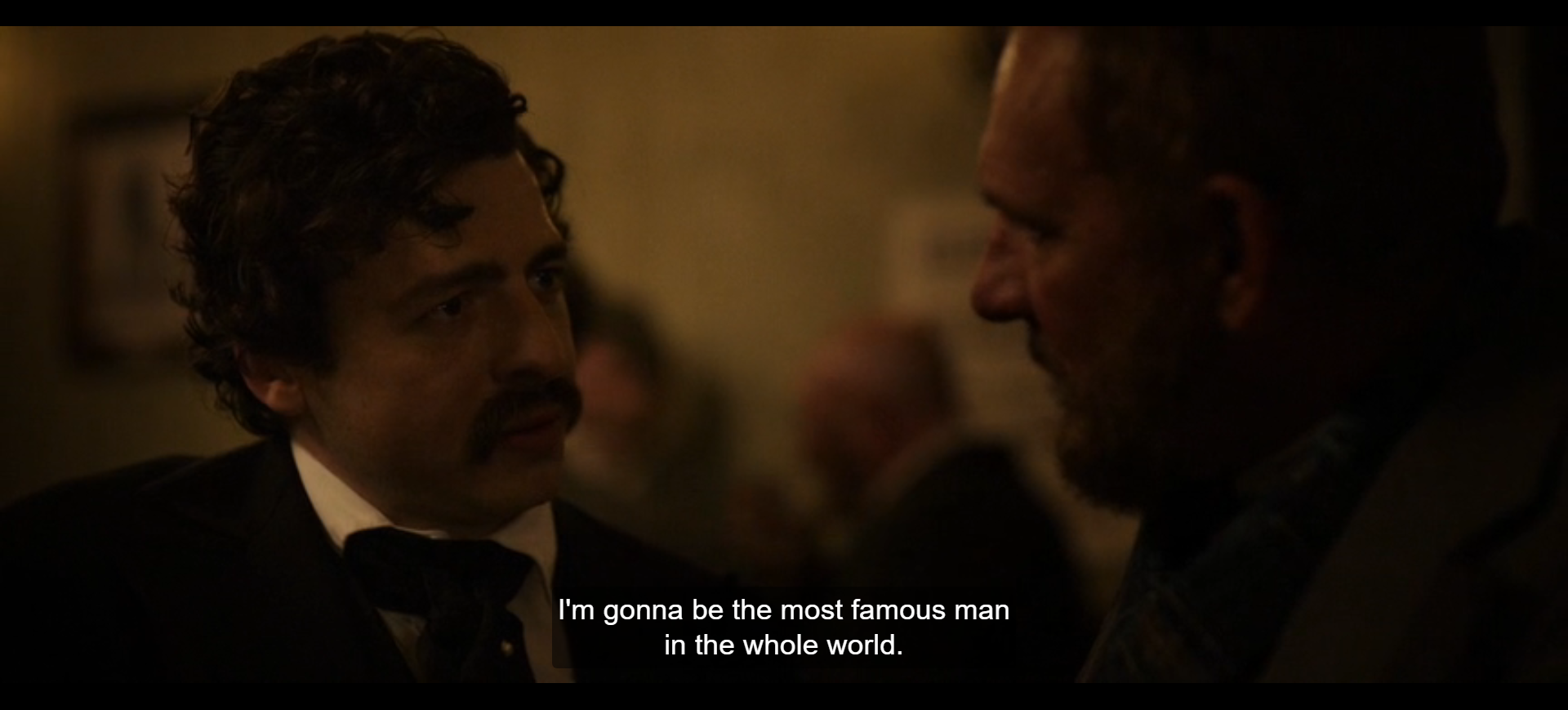
During the drinking scene with John Parker, Anthony Boyle’s Booth pushes back at Parker’s statements about his place in the Booth pecking order by saying, “You know tomorrow, I’m gonna be more famous than anyone in my family.” When Parker presses for more, Booth expands a bit and says, “I’m gonna be the most famous man in the whole world.” This is a good quote and was even included in the trailer for the series. You probably have heard the more common iteration of it: “When I leave the stage, I’ll be the most famous man in America.”

It’s an ominous remark that foreshadows the great drama Booth is about to inflict on the country. But you won’t find this quote in James Swanson’s book. Nor is it in Michael Kauffman’s book, American Brutus, or Ed Steers’ Blood on the Moon. The reason you won’t really find this quote in modern books on the subject of Lincoln’s assassination is because it just isn’t reliable. It’s an example of a quote that comes long after the event and is just too good to be true. 

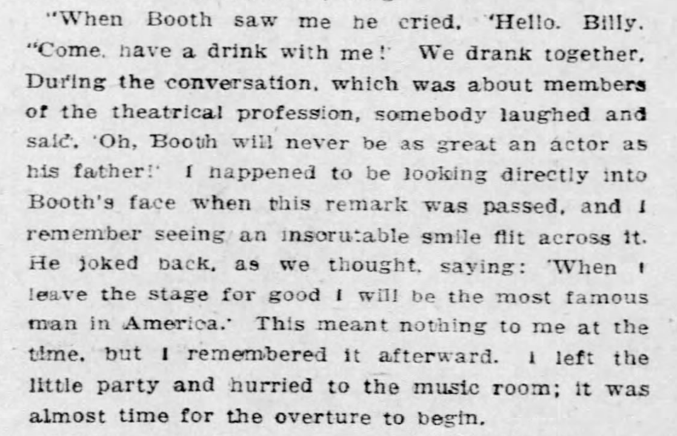
The source for this story is not John Parker, but William Withers, the Ford’s Theatre orchestra leader who got slashed by Booth’s knife as the assassin was rushing backstage after committing the deed. While Withers was an eyewitness to the assassination, his stories regarding the event evolved considerably with each retelling over the years. The way in which Booth slashed at him increased in ferocity, and the wounds that he received grew in size and severity as each decade passed. And it wasn’t until forty years after the assassination that he even mentioned having shared a drink with Booth on that fateful night. The first time this detail appeared was in an interview Withers did in 1905 when he was about 70 years old. The orchestra leader recalled to a newspaper reporter that he shared a drink with Booth just before the overture of the show. However, he made no mention of Booth’s ominous remark about “leaving the stage.” He merely noted that Booth was even more “fidgety and excitable” than usual. By 1911, Withers had altered his story and stated that during their drink at the Star Saloon, someone else at the bar stated that Booth would never be as great an actor as his father. It is in this telling that the “famous” quote appears in print for the first time. 

Before his death in 1916, Withers donated the jacket he was wearing when Booth slashed him to the U.S. government. It can currently be seen in the basement museum of Ford’s Theatre. As part of his donation, Withers composed an affidavit recalling his experiences. In this statement, Withers stated that he saw Booth at the saloon, and the actor invited the orchestra leader to share a drink with him. In his version of the tale, it is Withers who “laughingly remarked” that Booth would never be as good an actor as his father. To this, Booth supposedly replied, “When I leave the stage, I will be the most talked of man in America.”

Even after Withers died, the story continued to circulate through his sister, Louisa Withers Beck. She was interviewed on occasion and even appeared on a radio program in February 1939, telling her brother’s story to a national audience. Her versions of Booth’s famous quote differed at times as well. 

Likely due to all of the press Withers and his sister were able to garner, the story found its way into books on the assassination. In 1940, newspaperman-turned-author Stanley Kimmel included the “most famous man in America” quote in his book, The Mad Booths of Maryland. It was also picked up by Eleanor Ruggles in her 1953 biography about Edwin Booth, The Prince of Players, and in Jim Bishop’s book, The Day Lincoln Was Shot, from 1955. Bishop’s book was the Manhunt of its day and was incredibly popular. While compellingly written like Manhunt, The Day Lincoln Was Shot does not quite hold up when it comes to accurate history. The concepts of interrogating sources and judging the reliability of stories that changed over time were not as established in these older books of popular history.

Having Booth saying he’ll be the “most famous man in America” just before shooting the President is a good, dramatic quote and fits the style of the vainglorious actor. I don’t fault the miniseries for choosing to include it for dramatic license purposes. And, at the very least, there is a source to back it up. However, as historians, we have to analyze and evaluate sources in order to judge their reliability and validity. As appropriate as I may think it would be for Booth to have uttered these words just before changing the country forever, the source for this quote comes from too long after the event and changes too much to be reliable. That is why modern researchers like Swanson, Kauffman, Steers, and Thomas Bogar (who wrote THE book about the backstage folks at Ford’s Theatre, including Withers) all consider this “famous” quote to be famously apocryphal.  

6. The Navy Yard Bridge Crossing 

As Anthony Boyle’s Booth attempts to make his escape in this first episode, he comes across the Navy Yard Bridge, where he is stopped by Sgt. Silas Cobb, the officer on duty. Booth demands passage over the closed bridge, but Cobb denies him multiple times, even as Booth claims he desires to see his fiancee on the other side. Cobb then comes close to Booth and asks his name. Booth, apparently fearful to give his name and risk capture, demurs. But Cobb recognizes the actor and releases the tension by singing his praises on the stage. He is ignorant of the crime Booth has committed in the city. After yet another remark about his small stature, Cobb allows the actor to pass, praising his Hamlet as he rides on.

While this is a colorful exchange, the event shown strays pretty far from the known facts. Due to the statement and testimony of Silas Cobb, we actually know quite a bit of the conversation that passed between the men before Cobb relented and allowed the fugitive to pass over the bridge. We know that Booth was halted by Cobb and other guards who informed him the bridge was closed after 9:00 pm to all those without a military pass. However, neither Cobb nor Booth were as aggressive in their dealings with one another as is portrayed in the show. When Cobb asked the man to identify himself, he gave his name as Booth willingly and stated he did not know the rule about the bridge closing after 9:00. He stated he was coming from the city and was heading back home to Charles County, Maryland. When Cobb inquired where his home was in Charles County, Booth replied that he lived near Beantown, a community not far from Dr. Mudd’s farm. Booth also gave his excuse that he waited to depart until after the moon rose so that he would have its light to ride by. Cobb was satisfied with Booth’s answers and told him he would permit the passage but warned the man that he would not be allowed to return to the city until daybreak. Booth, having absolutely no intention of returning to Washington, had no problem with this directive and crossed the bridge.

The Navy Yard Bridge in 1862

I debated including this scene in my review because, on the face of it, it doesn’t really detract from the history to create this more humorous exchange between Booth and Silas Cobb. However, the bigger issue is that the show also fails to include the crossing of Davy Herold a few minutes later and, more importantly, the arrival of stableman John Fletcher a few minutes after that. At the very beginning of the episode, Booth and Herold are shown picking up horses from Pumphrey’s stables. While Booth did rent his bay mare from Pumphrey, David Herold did not. His horse came from Naylor’s Stables, where John Fletcher acted as stableman. This seemingly minor detail is important because Davy did not return his rented horse on time angering Fletcher. George Atzerodt, an acquaintance of Herold’s, came to Naylor’s Stable that evening just before the assassination and invited the stableman for a drink. During their drink together, Fletcher complained to Atzerodt that his friend had not returned his horse yet. Atzerodt tried to smooth things over before he departed towards the Kirkwood House, where he failed to carry out his assigned role. Not long after this, John Fletcher saw Davy Herold riding the overdue horse down the street and halloed for him to return it. Rather than dealing with Fletcher, Davy galloped away and headed towards the Navy Yard bridge. Fletcher returned to his stable, mounted up a horse, and gave chase. When Fletcher arrived at the Navy Yard Bridge, he learned from Cobb that he had just missed Davy, who had been allowed to cross over. Cobb offered to let Fletcher cross in order to chase the suspected horse thief further, but Fletcher did not want to be stuck outside the city until daybreak. As a result, Fletcher turned around and reported his missing horse to the Metropolitan Police. He connected Herold to George Atzerodt and John Wilkes Booth, all of whom had used each other’s horses and tack over the past few months. Fletcher’s report helped the authorities connect Booth with two of his fellow conspirators far more quickly than they might have discovered on their own.

The series has removed John Fletcher entirely. Herold is later shown in Southern Maryland waiting for Booth with no explanation of how he got past Cobb at the bridge. Rather than having Fletcher help connect the dots for the authorities, the series commits its next major faux pa.

7. George Atzerodt Just Gives Up

I’ll admit that I guffawed a bit when George Atzerodt made his not-so-subtle appearance in this episode. While we are left to deduce the identity of Lewis Powell (who, for some reason, is at Mary Surratt’s boardinghouse rather than his hotel on April 14), the creators decided to give Atzerodt a big goofy sign the first time we meet him. Atzerodt has the appearance of a beggar and I’m amazed any hotel employee would allow him to solicit in such a manner in their nice hotel. Not to mention that Atzerodt’s carriage business was down in Port Tobacco, Maryland, and had shut down several years before. But if you want to make Atzerodt a laughable caricature, that’s fine.

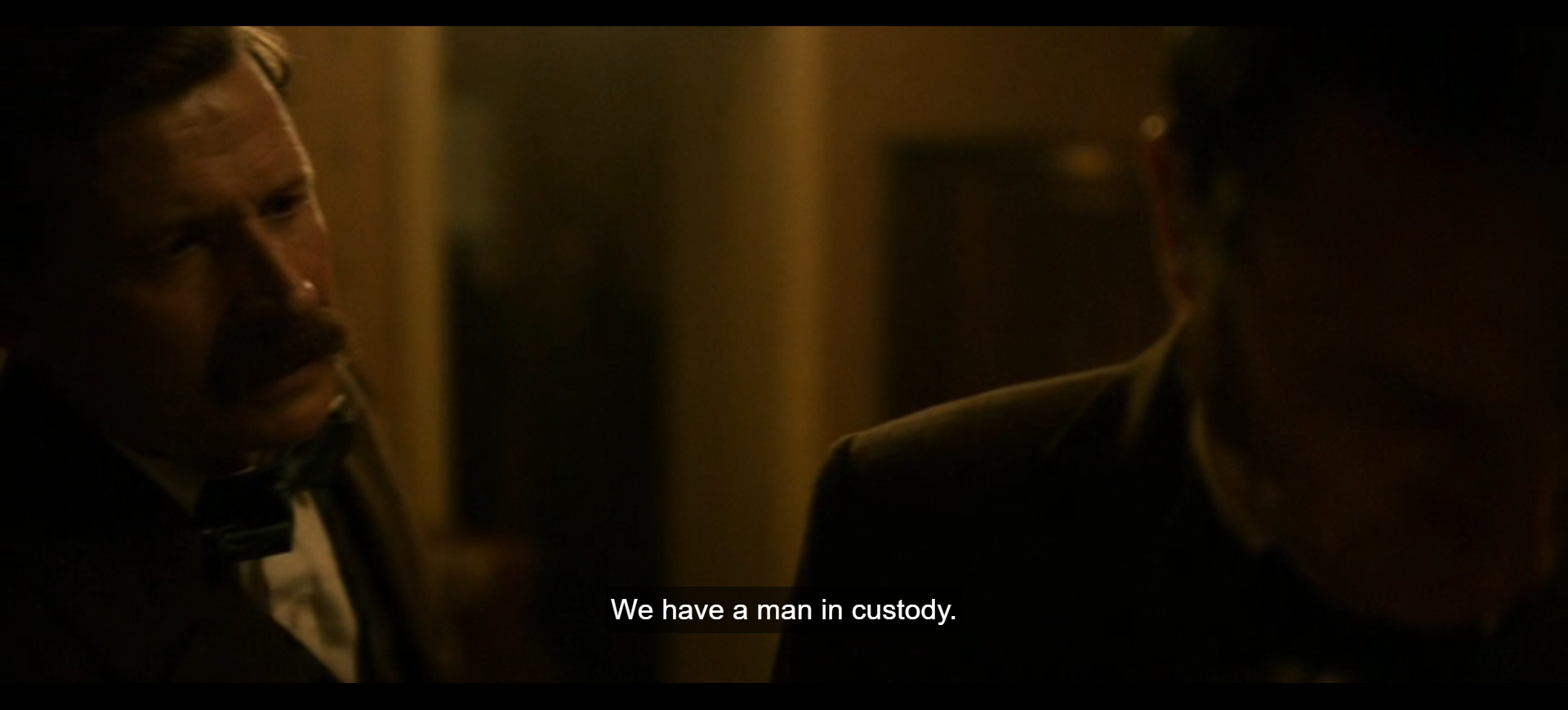
The real issue is how this series claims that Atzerodt is arrested almost immediately. Just a few minutes after Stanton arrives at the Petersen House and sees the fatally wounded President, he’s told that Atzerodt is in custody and that he admitted Booth told him to kill Vice President Andrew Johnson. In reality, of course, George Atzerodt spent the night of April 14 drinking, riding the horse-drawn trolley, and then crashing at the Pennsylvania House Hotel. The next morning, he woke early, skipped out on paying his room bill, and caught a stagecoach out of Georgetown heading northwest. By this time, the military had shut down D.C., so he was prevented from crossing out of the city. Eventually, new orders came in on the afternoon of the 15th, opening some traffic back up, and Atzerodt conned his way into a ride out of Washington. He made his way up to Montgomery County, Maryland, and went to his cousin’s farm near Germantown. He was eventually tracked down there (due to the initial hint by John Fletcher) and arrested on April 20th.

It is regrettable that Atzerodt’s whole story had to be dispensed with, seemingly for convenient exposition purposes. But, with only 7 hours to tell a compelling Stanton story, I suppose cuts had to be made somewhere. Sorry, George.

8. Now He Belongs to the ____

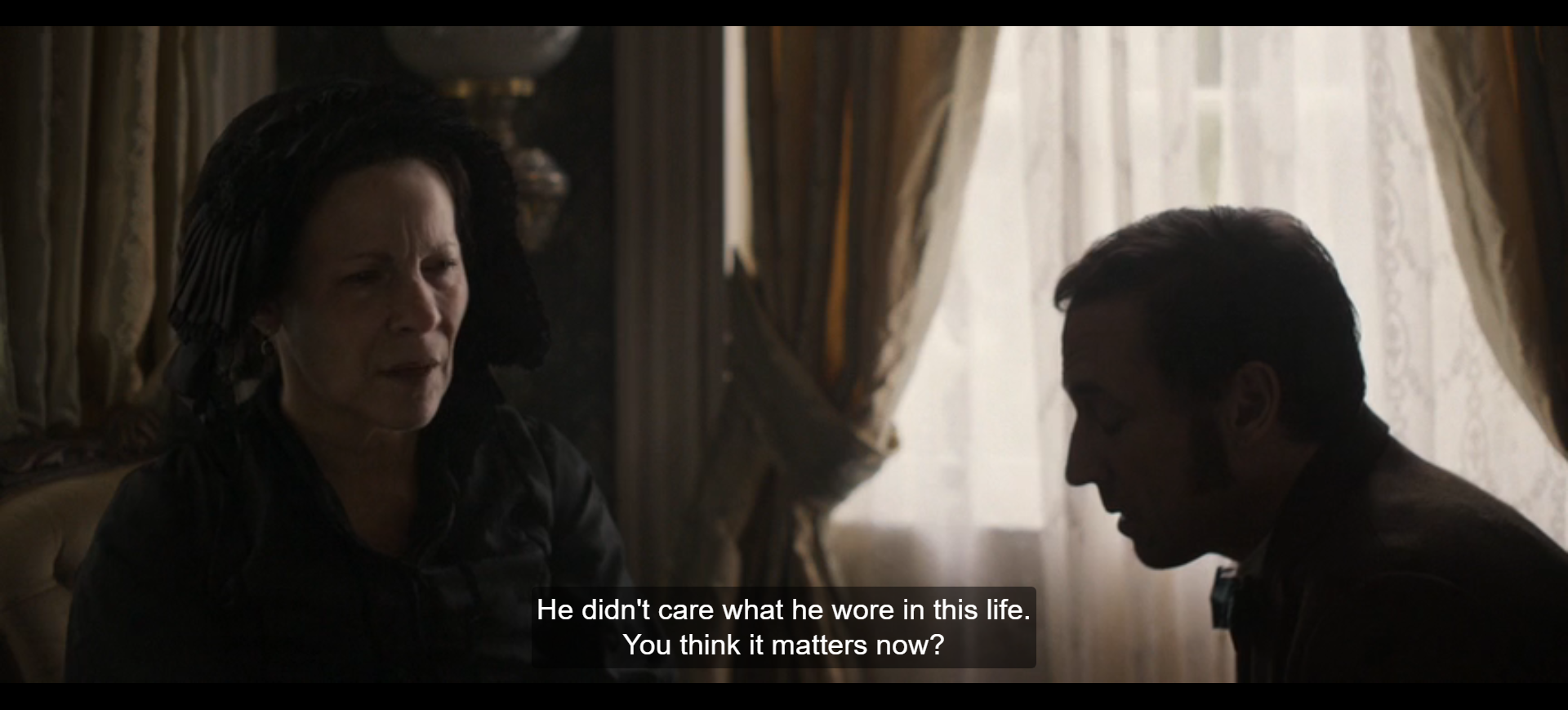
I want to start off and say that I largely liked the scenes at the Petersen House. I was especially moved by Stanton’s first appearance in the death chamber. No words are spoken, and the emotional weight of the dying President comes across very well. Stanton’s well-known reaction to Mary Lincoln’s understandable hysteria is shown in a more sympathetic way in this episode. While it may not be the most accurate, I actually prefer how their exchange occurs here. However, it is strange that Mary Lincoln was not just removed from the death chamber but apparently sent all the way back to the White House. I’m not sure that is accurate. Later, when Lincoln’s casket is brought out of the Petersen House, Stanton’s comment about the old Rail Splitter and the overhead shot of the coffin going down the stairs are both quite moving.

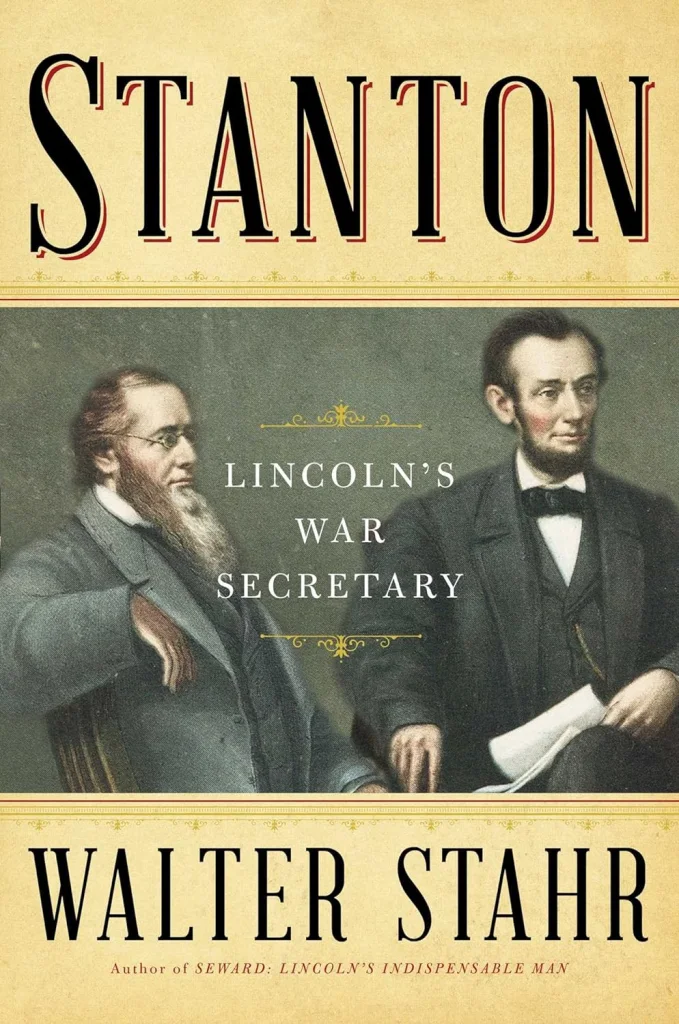
I do feel that the show missed an opportunity to actually show Stanton doing his job while at the Petersen House. While it appears that Tobias Menzie’s Stanton is destined to be the Forest Gump of the manhunt, showing up everywhere and making all the important finds, in reality, Stanton was only slightly involved in the manhunt. He was first and foremost the Secretary of War during a time when the Civil War was very much still going on. Despite the claim this Stanton makes at Ford’s Theatre when he tells the box office manager that he doesn’t know how to delegate, the real Stanton knew the importance of finding creating a team and delegating tasks to them. He set up many special commissioners and investigators to help track down Booth while he acted as an overall manager of the manhunt. Truthfully, the area in which Edwin Stanton really seemed to take on the most individual action himself was in the hours at the Petersen House while the President lay dying. From the front parlor, Stanton communicated and coordinated with the generals in the field and started the collection of witness statements. It has often been said that as the President lay dying, Stanton was the effective head of the United States. While I suppose it’s possible we may see some of this as a flashback in a later episode, I was disappointed that Stanton’s true heroic time to shine was not portrayed.

However, my main criticism of the Petersen House scenes is the moment of Lincoln’s death. When it comes to Edwin Stanton, he really has one big line that everybody knows, even if they don’t know who its from. It’s the phrase that is carved in gold letters in the burial chamber of the Lincoln Tomb in Springfield. Say it with me now: “Now he belong so the ages.”

It’s such an iconic phrase that I don’t even mind that it is far more likely that Stanton didn’t say anything at all. In truth, the phrase doesn’t appear in print until 1890, making it as suspect as Booth’s “most famous man in America” line. But the “Ages” quote seemingly transcends questions of reliability, and I’m pretty fine with that.

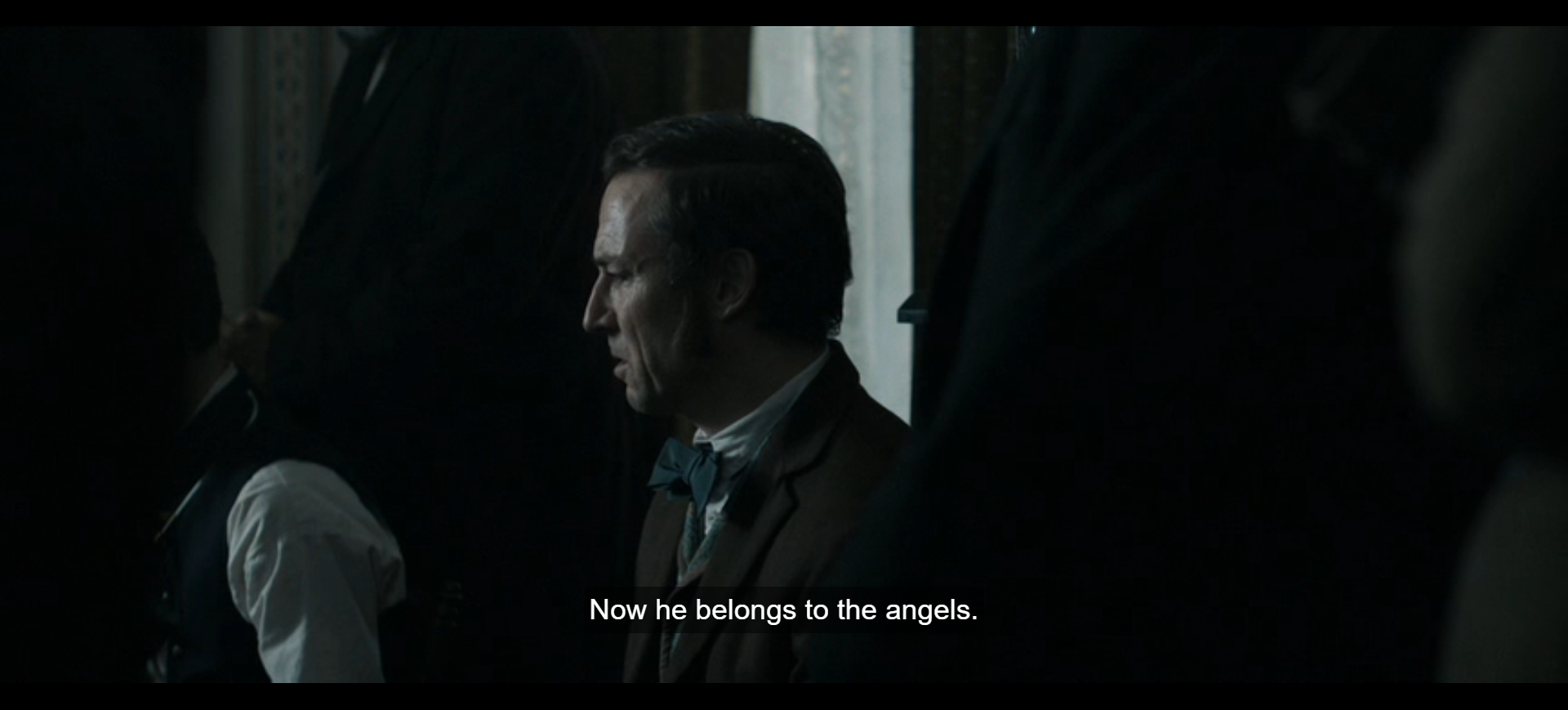
But what I’m not fine with is, “Now he belongs to the angels.” My friend and fellow researcher Scott Schroeder has done a great amount of research into Stanton’s famous deathbed quote. He acknowledges that the provenance of “Ages” is a little suspect but that at least three people who eventually included this quote in their writings were present at the Petersen House while Lincoln was dying. How many primary sources quote Stanton as saying “Angels”, you ask? None. Zip. Nada. Zero. All of the sources that attempt to argue that Stanton said “Angels” are from secondary sources, the first of which doesn’t appear until 1922. The argument is usually along the lines that, as a religious man, Stanton surely would have said angels instead of ages.

I can’t fault the series for putting “angels” into Stanton’s mouth because James Swanson is one of the few authors who inexplicably supports “Angels” over “Ages.” So, in my opinion, this is a flaw in the source material.

The most likely scenario is that Stanton, overcome by grief, had nothing poignant to say at the moment of Lincoln’s passing. This is how Michael Kauffman recounts the scene in his more scholarly book, American Brutus. But, if we give some of the later accounts a greater degree of leeway than we probably should, then the iconic line of “Now He Belongs to the Ages” is what Stanton should have said.

9. Visiting “The Crime Scene”

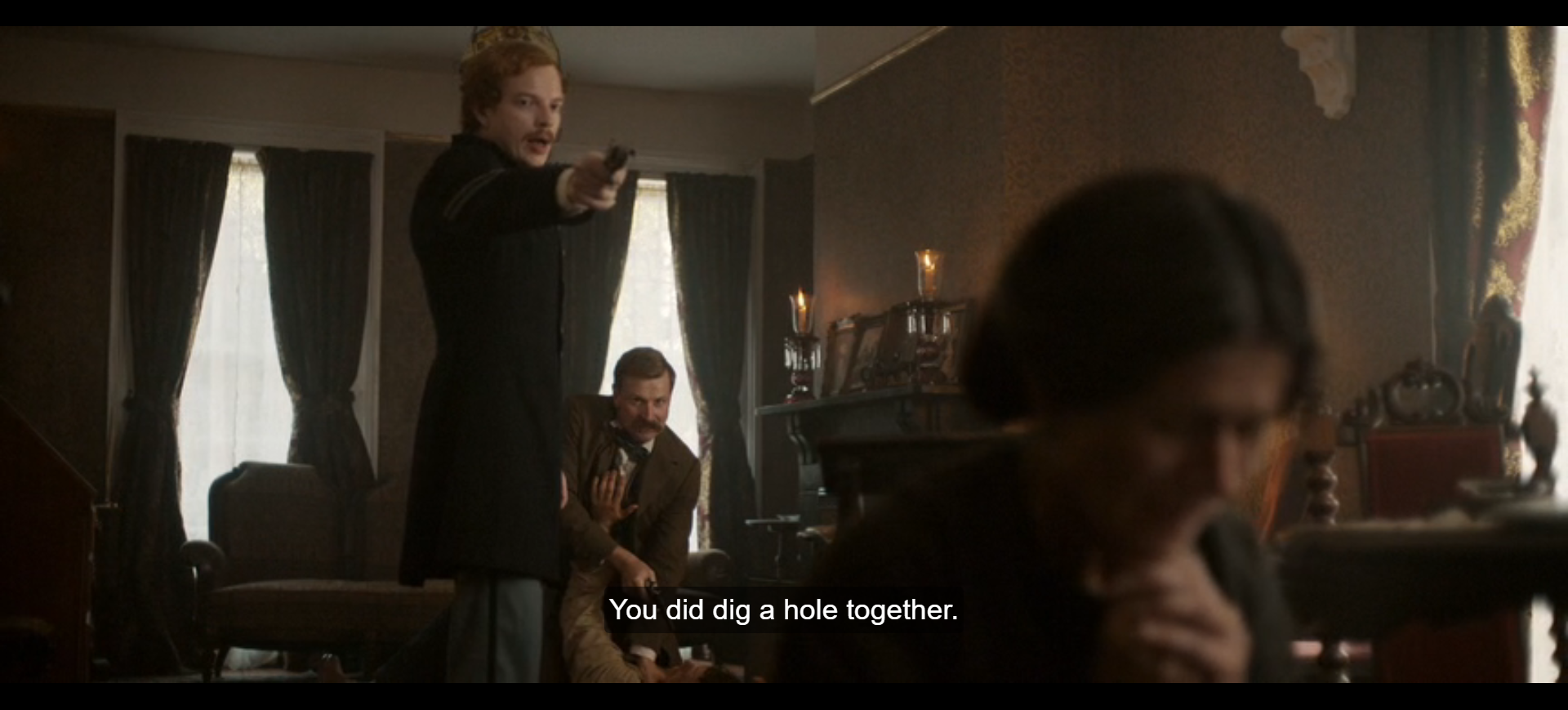
In this episode, Edwin Stanton makes many important discoveries when he visits Ford’s Theatre himself for a little investigating. From “Jessie,” the box office manager who had told Booth about Lincoln’s planned attendance, Stanton acquires a large imperial photograph of Booth, apparently from a run of shows he did at Ford’s a few weeks prior. There’s a great shot of Booth’s derringer on the floor of the President’s box, which Stanton finds and picks up. Eckert arrives and suggests they talk to more of the staff. The duo then chats with Joseph “Peanut John” Burroughs, who hesitatingly recounts his involvement in holding Booth’s horse. Peanuts is full of helpful information, such as the appearance of Booth’s horse, the way in which the assassin rode, and that he was on a rented city horse that would need food soon. Peanuts also rats on Spangler leading to the stagehand’s arrest.

Most of what is depicted in these scenes is fictional. As far as I know, Ford’s Theatre did not have a photographic wall of fame, as it were. I find it hard to believe that a theater would pay to photograph each of its performers, particularly a “supporting” actor, as they claim JWB to be in this series. The “Jessie” who talks with Stanton is not a real person but is probably meant to personify Harry Clay Ford, one of the three Ford brothers and the daily manager of the theater. Harry is the one who talked to Booth when the assassin got his mail on April 14.

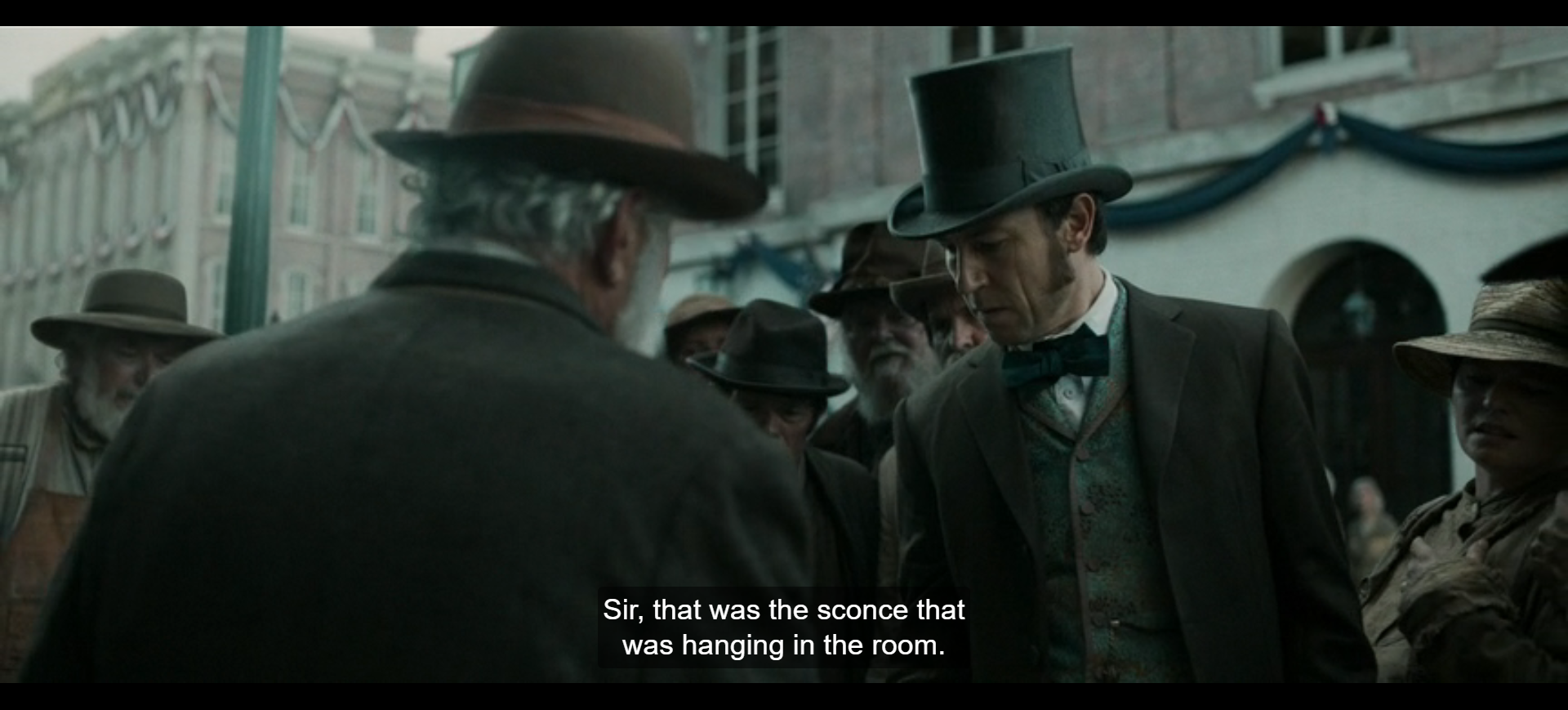
The person who found Booth’s derringer on the floor of the box was not Stanton but a man by the name of William Kent. This theater patron had made his way into the box after the shot and offered his penknife to Dr. Leale who used it to slice Lincoln’s shirt. After the unconscious President was removed to the Petersen House, Kent realized he had lost his house key during the chaos. He returned to Ford’s and searched the box for his key. Instead, he found the murder weapon. Lawrence Gobright, a member of the Associated Press, was in the theater at the time as well, and he took possession of the weapon from Kent. Gobright later gave the gun to the War Department. Despite Stanton’s claim in this episode that “This is a crime scene,” such a phrase would have been meaningless back then, and there was no real effort to secure the box. Another theater patron walked off with the wooden bar that Booth had used to wedge the outer door of the theater box shut. He took it home with him and even cut a piece off of it to give as a souvenir to a friend before authorities heard about it and sent men out to reclaim this piece of evidence. This practice of collecting and selling relics of the assassination is actually well demonstrated in the scene where Stanton chastizes a street vendor hawking Lincoln masks, playbills, and a sconce he swiped off a wall.

The Peanut John in this series must have superhuman and X-ray vision. From his spot in the alley behind Ford’s Theatre, which exits onto F Street, Peanuts was apparently able to see Booth riding two blocks to the north “Down H Street” all the way “To Anacostia,” which is about four miles to the southeast. While the real Booth did ride towards Anacostia, there is no reason why he would have gone out of his way to head north first to H Street before turning and heading southeast. Either this was just a mistake from a lack of understanding of the geography of D.C., or the series is setting up for a future flashback in which the escaping Booth stops at Mary Surratt’s D.C. boardinghouse for some reason. We’ll have to wait and see.

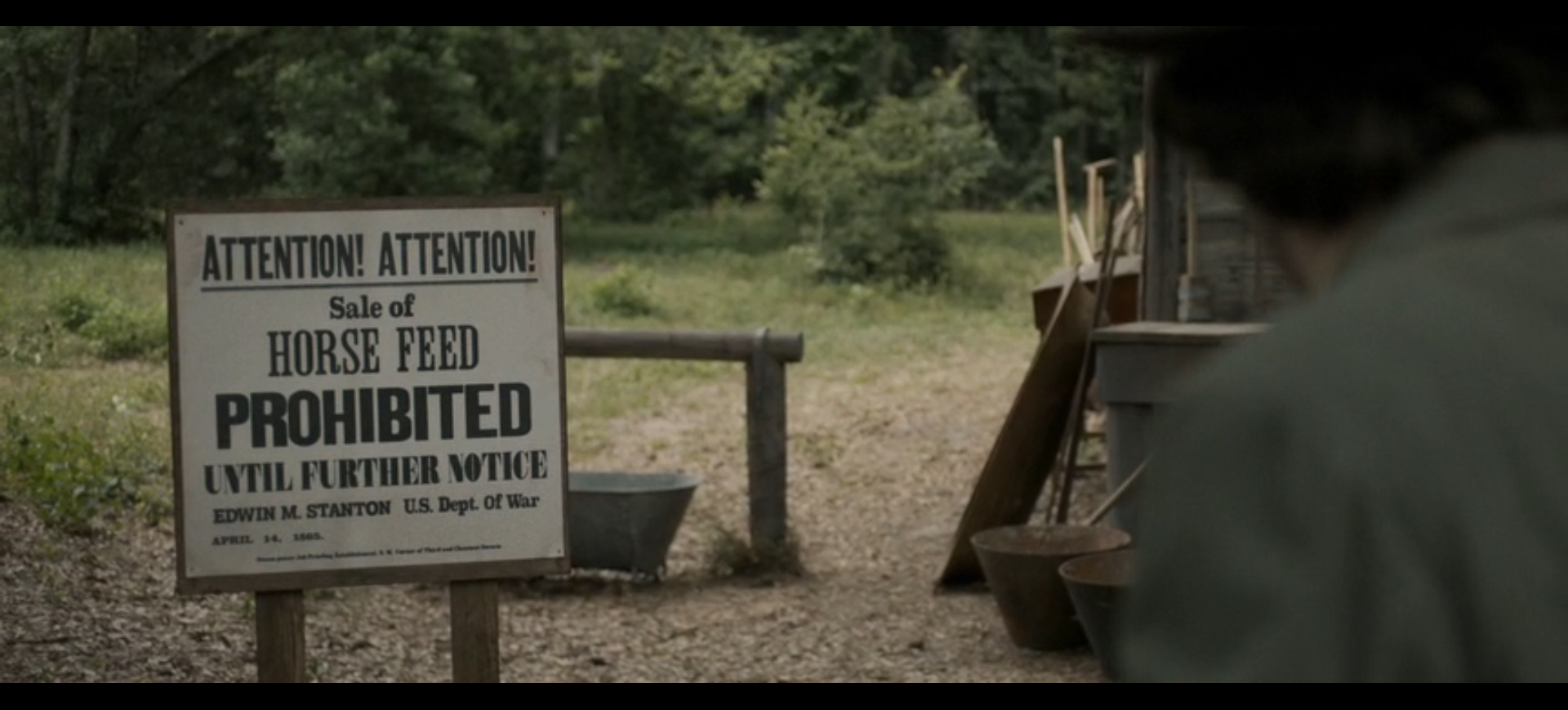
Did anyone else openly laugh at the idea that Stanton could single-handedly ban the sale of horse feed in the state of Maryland? Apparently, all horses in Maryland have to starve now because Booth escaped into that state on a city horse. It’s such a ludicrous and silly concept.

10. Sandford Conover

While Stanton is investigating at Ford’s Theatre, we are introduced to a new character that I didn’t expect to see at all, and definitely not in the first episode. Actor Josh Stewart appears with mutton chops and introduces himself to Stanton as Sandford Conover, a reporter with the New York Tribune. Conover somewhat aggressively interrogates Stanton, but the Secretary of War allows it by putting Conover to work in getting a photographer to come and photograph the “crime scenes.” The words between Conover and Stanton were clearly written to echo our modern-day events, with Stanton’s line, “This is America. We replace our presidents with elections, not with coups,” being a pointed reference to the January 6th insurrection.

I had seen Josh Stewart’s face in the trailers, but IMDB had only identified him as “Wallace.” At the time, I predicted that this was a mistake and that he might be playing the role of John M. Lloyd, the renter of Mary Surratt’s tavern. Now that I know he is playing Conover, the “Wallace” name makes sense. Here’s some background on Mr. Conover from my Lincoln Conspiracy Trial project:

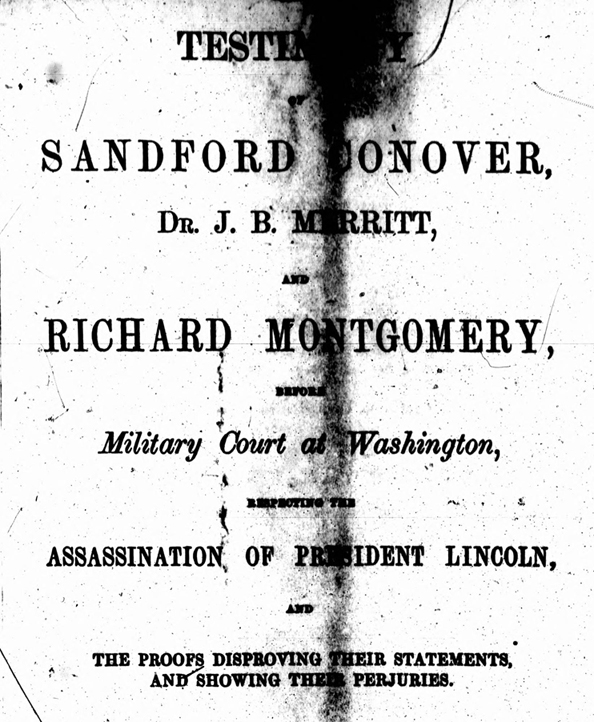
Sandford Conover was a key witness for the government’s case regarding the involvement of Confederate officials in Lincoln’s assassination. At the trial of the conspirators, he testified at length about meeting with important members of the Confederate Secret Service in Montreal, Canada. According to Conover, he was born in New York but was in South Carolina when the Civil War broke out. He was drafted into the Confederate army, where he worked as a clerk in Richmond. Conover stated that in December of 1863, he deserted from the Confederacy. In October of 1864, he made his way to Canada, where he used the alias James Watson Wallace. During his time in Canada, Conover gained the trust of notable Confederate agents like Jacob Thompson, George N. Sanders, Beverly Tucker, William C. Cleary, and others. Conover stated he saw Booth in Montreal in October of 1864 and that John Surratt was there four or five days before the assassination of Lincoln. According to Conover, the assassination of Lincoln was discussed openly with him by Jacob Thompson in early February of 1865, and Thompson even encouraged Conover to join Booth in the plot. Conover described seeing blank commissions for the Confederate army signed by the Confederate Secretary of War. These commissions were to be filled in by agents in Canada with the names of anyone who committed acts of guerilla warfare on the Confederacy’s behalf. Conover stated that a commission had been made out for Booth so that, in the event he was captured in Canada after assassinating the President, he would be considered a Confederate officer and not liable for extradition. As a witness, Conover linked the Confederate agents in Canada to every act of black flag warfare, including Lincoln’s assassination. Unfortunately, all of Conover’s testimony was later discovered to be false.

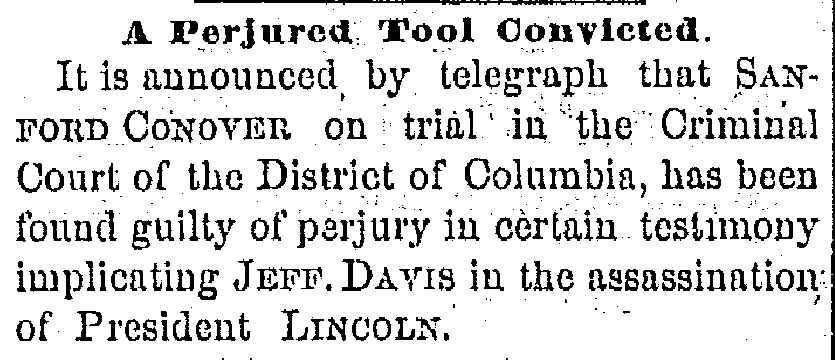
In June of 1865, Sandford Conover’s previously secret testimony was leaked to the press, and it quickly unraveled. Conover claimed that, during his time in Canada, he was acting as a secret correspondent for the New York Tribune. He testified that he had written to the New York Tribune in February and March of 1865 about the plots against Lincoln. These claims were later denounced as false by the editors of the New York Tribune. The Toronto Globe investigated some of Conover’s claims and found that not all of the men Conover testified about meeting with were present in Montreal during the time periods Conover swore to. Worried about the damage Conover’s perceived perjury would do to their case against Confederate leaders, Judge Advocate General Joseph Holt ordered that all of the suppressed testimony be published, including the prior testimonies of Dr. James Merritt and Richard Montgomery. Both Merritt and Montgomery testified about conversations with Confederate officials about the proposed assassination of Lincoln, thus supporting Conover’s claims. All three men would later be recalled to the witness stand in the closing days of the trial in order to counter claims of perjury in the press and help salvage the government’s case against the Confederacy. But the press continued to investigate and poke holes in the claims made by these men. On the day of the four conspirators’ execution, the Toronto Globe published a letter from Sandford Conover to Confederate Secret Service agent Jacob Thompson dated March 20, 1865, in which Conover introduced himself to Thompson. This showed that, contrary to Conover’s claim to have been intimate with Thompson since the fall of 1864, Thompson had never heard of Conover prior to that date. In the end, the perjury of Conover and the others was conclusively determined in 1866 when James Merritt testified before a congressional committee. Merritt admitted that both he and Richard Montgomery had committed perjury in their testimony against Confederate leaders. According to Merritt, Conover had secured both men to lie, and they had been paid for their services. Later, in November 1866, Sandford Conover, whose real name was Charles A. Dunham, was indicted for perjury. He was found guilty and sentenced to ten years in prison.

After reading this, you’ll understand my surprise at Conover making an appearance in this first episode. If he was going to show up at all, I figured it would be later when the trial of the conspirators was shown. Conover was a grifter and a liar who only wanted to milk the government for whatever funds by telling them exactly what they wanted to hear.  At the time of the assassination, Conover/Wallace/Dunham was in Canada, not in Washington. He showed up sometime in the weeks after the murder with his valuable information to sell. Desperate for a smoking gun connecting Booth’s plot with Confederate leaders, Conover duped the Judge Advocate General into giving him funds to continue his own “investigations” in Canada. From what I can see on IMDB, it looks like Conover is going to continue to play a role in this series, at least in the first four episodes. So I guess we’ll see how this storyline plays out differently from the real Conover.

11. Ummm… We missed a stop

Oddly, the series fails to show a key moment in Booth’s escape: his first stop. After crossing the Navy Yard Bridge and meeting up with David Herold, the real John Wilkes Booth stopped first at Mary Surratt’s Tavern in Prince George’s County. While there, the pair wakes up the tavern keeper, John M. Lloyd, and orders him to “make haste and get those things.” They are referencing a pair of Spencer repeating carbines that had been hidden at the tavern during the abduction plot as well as a pair of field glasses that Mary Surratt had dropped off at the tavern earlier that day. Lloyd brings these items out while Booth, suffering from a broken leg, stays on horseback. The pair are only at the tavern for a few minutes and ride off after telling Lloyd the news of Lincoln’s assassination.

None of this is shown in the series. After seeing Booth and Herold meet up in Maryland, the next time we see the fugitives is as they are riding up to Dr. Mudd’s house. I know that this is the Stanton show, so some aspects of Booth’s escape are going to need to be shortened. But I figured they would sort of gloss over Booth’s time hiding in the woods to keep the narrative moving, not cut out the assassin’s first stop and the character of John M. Lloyd altogether. It’s going to be hard to really get into Mary Surratt’s character and suspected culpability without showing this first stop and her contribution to it. But, as I’ve said before, the series loves flashbacks. So perhaps, in a later episode, we’ll see Booth and Herold at the tavern. In the meantime, though, I am very disappointed that a key part of Booth’s escape has seemingly been cut out.

12. Dr. Mudd’s

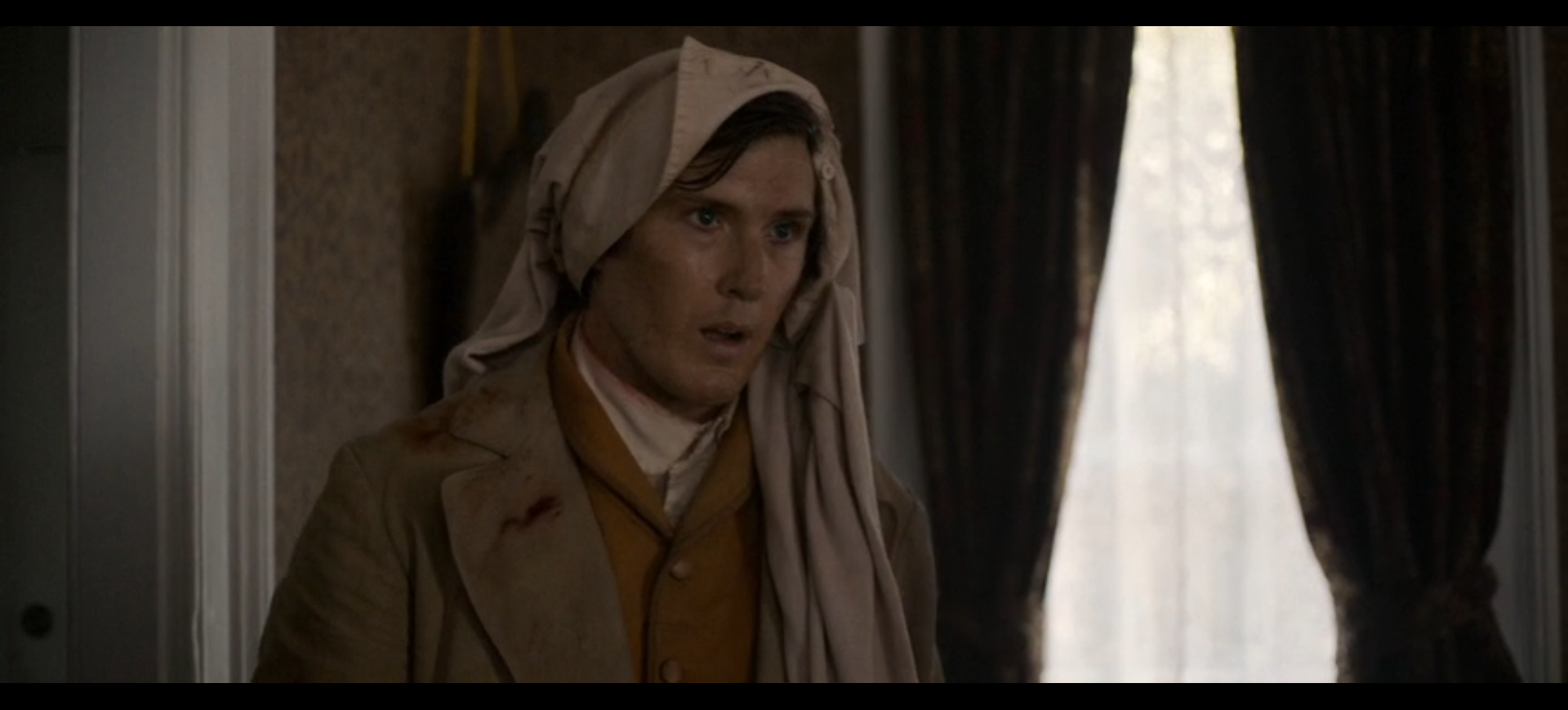
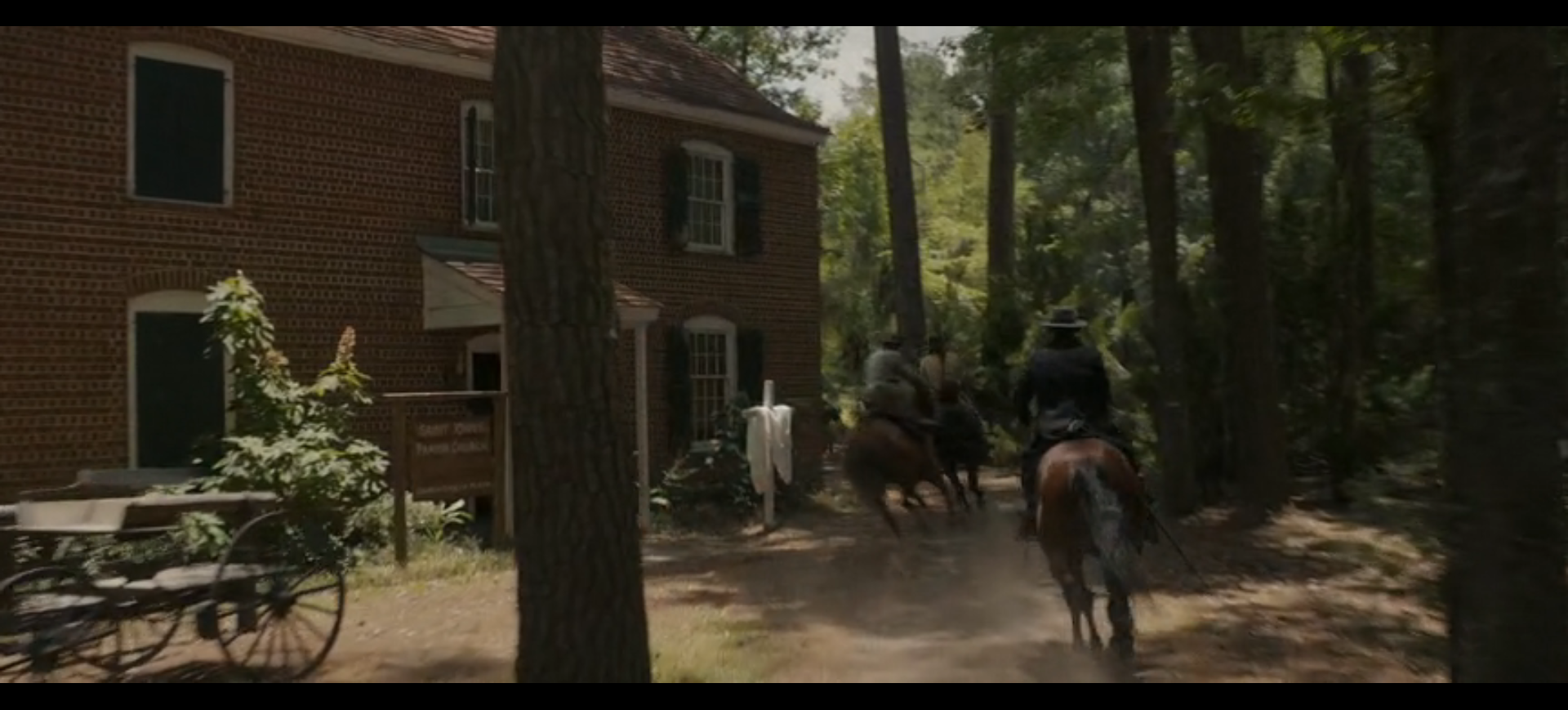
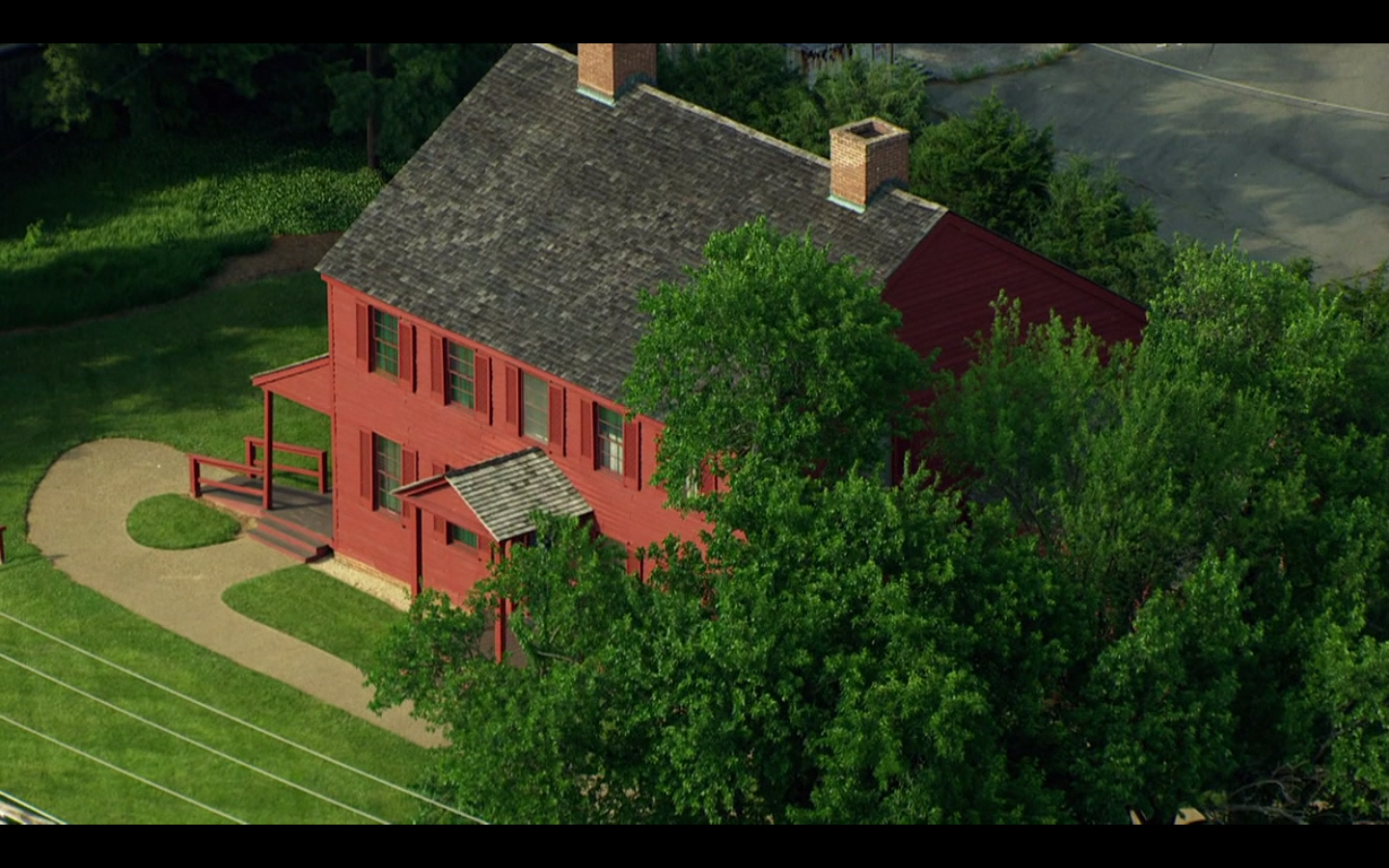
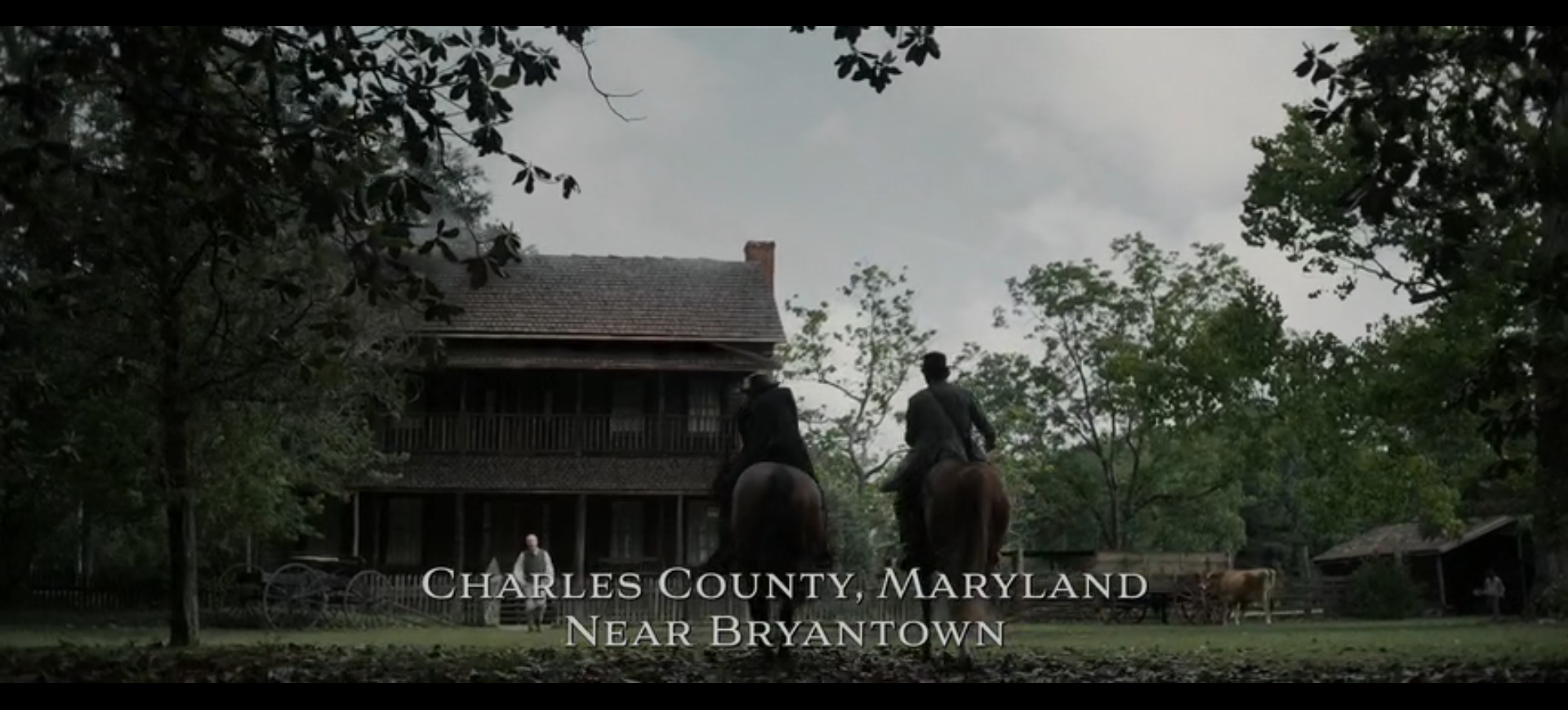
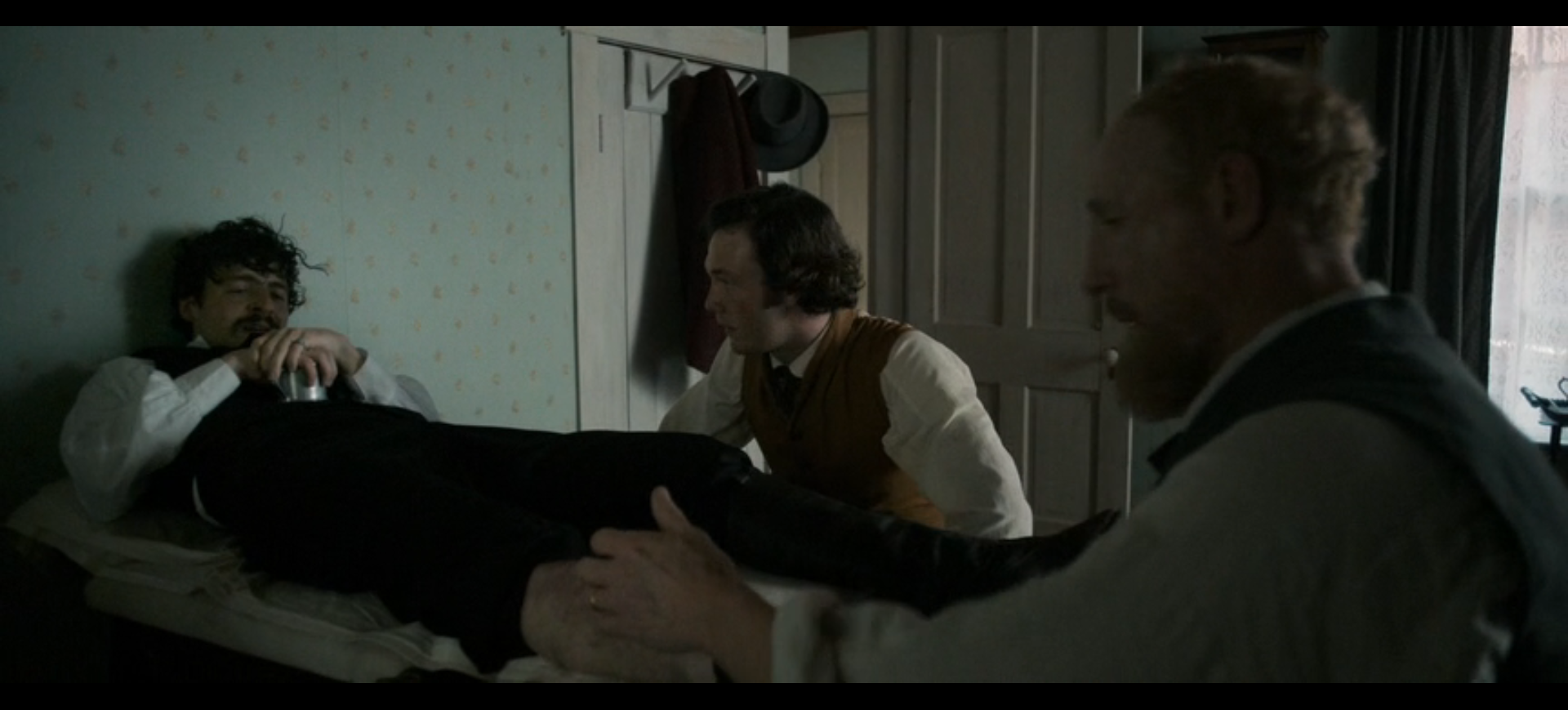
In this first episode, we see Booth and Herold riding up to the Mudd farm during daylight with the doctor seemingly expecting them. Mudd helps Booth off his horse as the assassin winces in pain. Inside the house, Dr. Mudd is shown cutting Booth’s boot and pulling it off, revealing a badly broken leg. David Herold then enters the room with the morning’s paper saying that Booth is front page news. Before Booth can read it, Dr. Mudd grabs the paper from Herold’s hands and sees the headline announcing Lincoln’s assassination. He seems shocked by what is written before Booth grabs the paper from him eager to “read his reviews.” Mudd leaves the room, having been ordered by Booth to fetch more whiskey. Booth reads the paper ignoring the mournful cries for Lincoln until he reads something about him being a symbol for the cause, which brings him joy. As Booth and Herold are celebrating, Mary Simms, one of Dr. Mudd’s servants, enters the room with coffee for the men. Booth only gives his name as “Sir” and makes a disparaging and sexist remark to Mary. Dr. Mudd reenters the room with whiskey and orders Mary to “have her brother make a splint.” When she reminds Mudd that her brother had just finished working on a latrine, the doctor scolds her and says he’ll work as long as he says. The doctor also says that he “taught him a lesson last year” and threatens to do the same to Mary. When Mary exits, Mudd prepares to set Booth’s leg. He suggests Booth hold Herold’s hand for the pain, but Booth declines. After a count of three, Mudd presses down hard on Booth’s leg, which is accompanied by loud cracking noises and Booth screaming in pain.

The scene at Mudd’s in this episode lasts less than three minutes. Yet almost everything shown in this scene is historically wrong. Here’s a breakdown:

  • Booth and Herold arrived at the Mudd farm in the dark at around 4:00 am. No one was expecting them, and it took quite a while for Dr. Mudd to stir.
  • The series has given Booth a broken right leg. The real Booth broke his left leg.
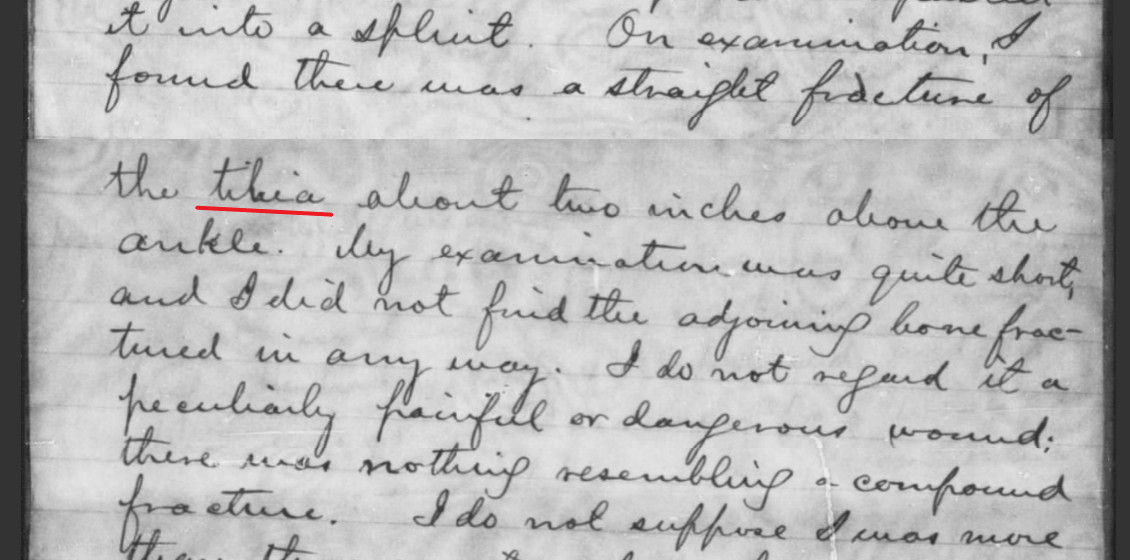
  • This Dr. Mudd states that Booth’s tibia bone is broken. The real Booth broke his fibula.
  • The break is shown to be near his knee. The real break was down near Booth’s ankle.
  • There was no newspaper delivery to the Mudd farm, and even if there was, there was no way that a local Bryantowon paper would have the news of Lincoln’s assassination that quickly.
  • The paper even reports that Lincoln was dead, but at the time Booth and Herold got there and Booth was receiving treatment, Lincoln was still alive.
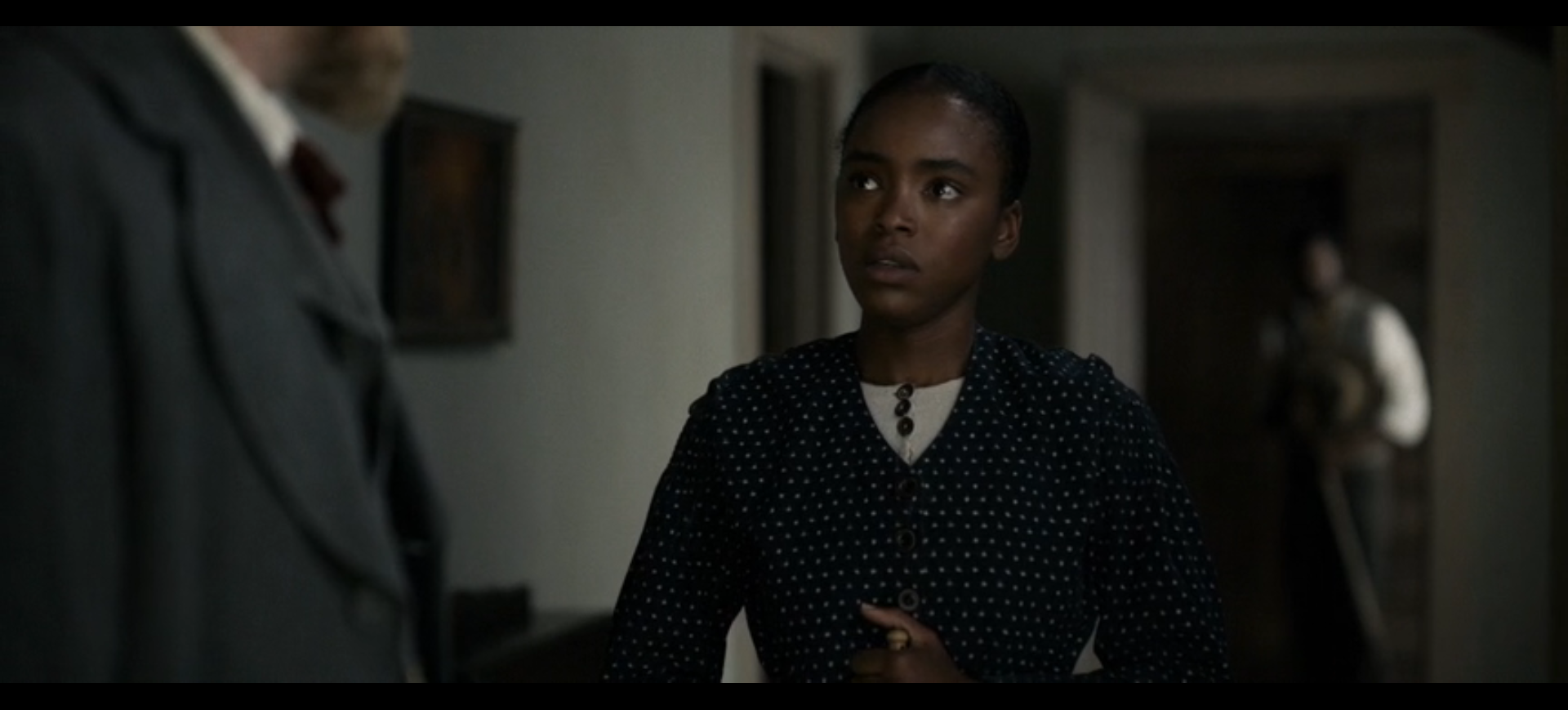
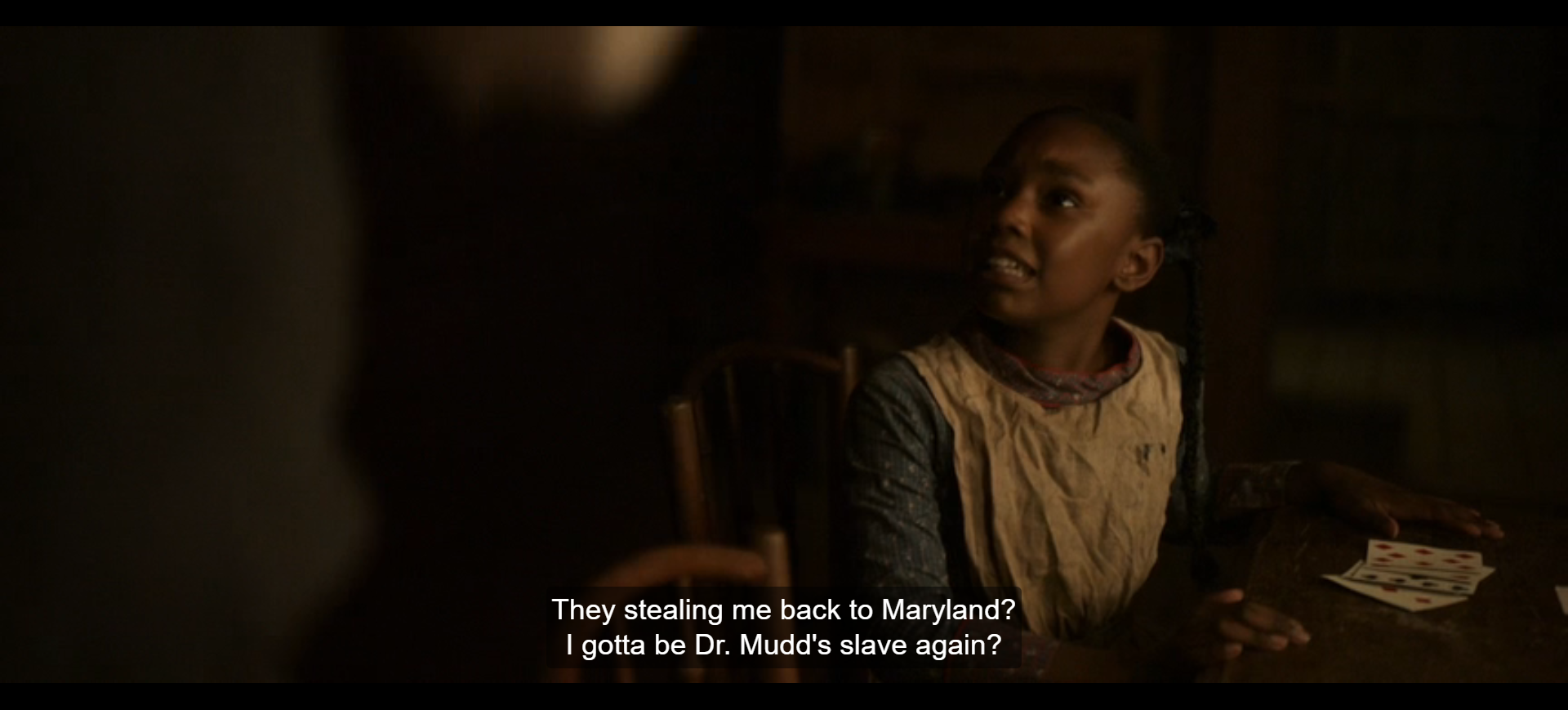
  • As I’ve noted before and will again in the future, Mary Simms did not live at the Mudd house in 1865. After the new Maryland state constitution prohibiting slavery took effect in 1864, Mary Simms was freed and left the Mudd farm for good.
  • There were two formerly enslaved girls who stayed with the Mudd family after emancipation, worked for them as paid servants, and cooked and served John Wilkes Booth his breakfast on the morning of April 15. They were Lettie Hall and Lousia Cristie. It’s a shame the series excluded them.
  • The real Mary Simms had two brothers who had been enslaved by Dr. Mudd: Milo Simms and Elzee Eglent. Neither of these men were still at the Mudd house when Booth was there. The older brother, Elzee Eglent, had been shot in the leg by Dr. Mudd in June of 1863, which seems to be what the character of Mudd is referencing in this scene, but his timeline is off. Elzee then escaped to freedom in August of 1863, never to return. Milo Simms was Mary’s little brother and he left the farm when slavery was abolished in 1864. So, like Mary, there was no brother of Mary Simms living at the Mudd house in 1865.
  • The real Dr. Mudd made Booth’s splint himself out of an old hatbox.
  • Dr. Mudds’ knowledge of the identity of his visitors is disputed. I won’t go too far into this because I personally feel that Dr. Mudd was well acquainted with who he was treating from the moment Booth arrived. However, I will state, for fairness’s sake, that the statements from Dr. Mudd and his wife claim that the wounded man wore fake whiskers and kept his face fairly well concealed during his time at the farm. I’m of the opinion that they said this to protect themselves and give themselves some plausible deniability for when it was discovered that Booth had visited the Mudd farm in the past. I’m actually okay with Mudd clearly recognizing Booth as is shown in this series. But the manner in which this Mudd learns of Lincoln’s assassination from the seemingly clairvoyant local paper is beyond belief. It would have been better for the series to either show Booth openly bragging to Mudd about the shooting or for it to wait and have Dr. Mudd learn the news of Lincoln’s death, as he himself claimed, during this trip into Bryantown with Davy Herold later that afternoon.

It’s pretty clear that this series is going to take a lot of liberties when it comes to the story of Dr. Mudd.

13. Searching Booth’s Hotel Room

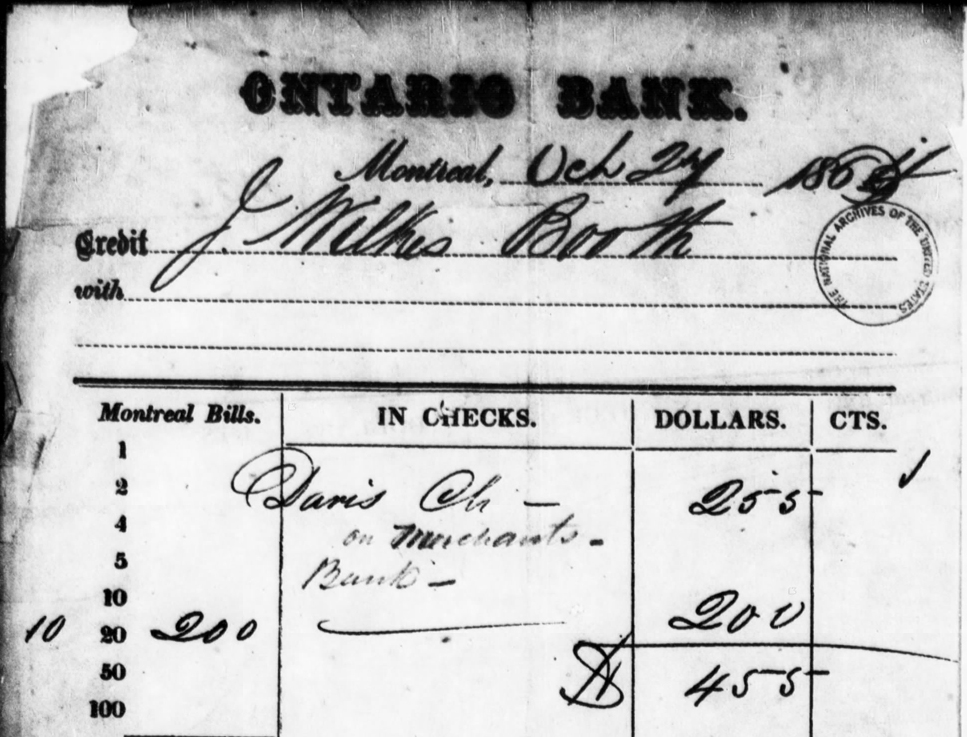
Once again, Edwin Stanton is the prime mover, searching Booth’s room at the National Hotel himself with only his sidekick, Thomas Eckert, for company. Among the ashes of burned papers, Stanton finds a slightly singed coded table which he brings to Eckert’s attention. Eckert doesn’t recognize the pattern but suggests that the code could come from Richmond, Montreal, or just be Booth, “playing spy games.” Spoiler: It’s the latter option, but that doesn’t make for good TV. They continue searching the room, and Eckert finds a bank book from Montreal. Eckert notes that Montreal is a known hotspot for the Confederate Secret Service. With this circumstantial evidence in their hands, the episode closes with Stanton pondering the repercussions of Confederate involvement in Lincoln’s death.

Overall, I like this scene and the relationship shown between Stanton and Eckert. It’s also a great way to end the first episode and definitely makes me want to see more. Did Stanton or Eckert take part in the searching of Booth’s hotel room? No. Other, real detectives did that. Was a code table and a Montreal bank book found among Booth’s papers? Yes. They were among several items and papers seized from the National Hotel. Would Eckert have been uncertain about the coded table that was found? No. Vigenère tables were very common in Eckert’s line of work and the head of the military telegraph and accomplished codemaker would have recognized it immediately.

John Wilkes Booth did deposit $455 into a Montreal branch of the Ontario Bank on October 27, 1864. At the same time, he purchased a bill of exchange for a little over 61£. Copies of this bill of exchange were found on Booth’s person upon his death at the Garrett farm. The purpose of the money in Booth’s Canadian bank account is unknown. He never withdrew or used the money. I’m not surprised this series has decided to use this enigmatic deposit to tease possible Confederate involvement. Many authors and researchers have attempted to connect the same dots, though, in my opinion, none have done so convincingly. We’ll have to wait and see how this series presents its case.


Well, that was long. If you’ve made it to this point, then I commend you for sticking with me. As you can see, there are many historical inaccuracies in the series. I’ll admit that my initial reaction after finishing the first episode was one of disappointment. I had hyped myself up so much and had such high expectations for the series that seeing silly errors like Booth breaking the wrong leg angered me. But, at the same time, I know that historians are the hardest audiences to please. We want everything to be correct, but that is, at its core, an impossible task for any piece of entertainment. This series was not intended to tell the absolutely true story of Lincoln’s assassination. It’s intended, like all drama, to tell a compelling story.

When I turn off my historian brain and allow myself to watch the series as a period drama with familiar characters, I find that I enjoy it. To quote from one of my favorite TV shows of all time, “Just repeat to yourself, ‘It’s just a show. I should really just relax.'”

Do I wish that more attention had been paid to the source material that this series is supposed to be based on? Of course. But I’m not going to angrily trash the series as a whole for going “off-script” with its portrayal of history. I will continue to watch the show and produce reviews like this that point out errors and instances of dramatic license. These historical reviews are not meant as a dig against the creatives behind the show, but as a way to show that even flawed representations of history can be used as educational tools for helping folks learn more about this important event.

So, come back and read my historical reviews for the rest of the episodes of Manhunt as they are released. I’m confident that you’ll learn something from them.

Dave Taylor
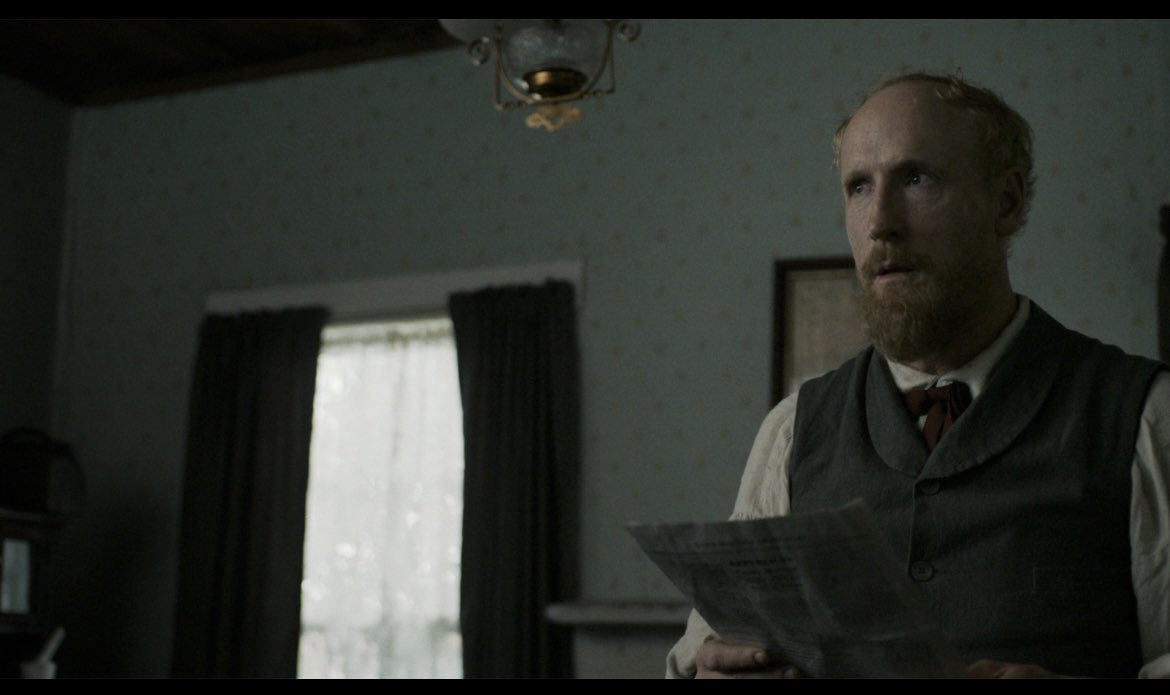
(Note: I’ll need a few days before I can put up the review for episode 2. This one took me several hours to research, write, and illustrate.)

Categories: History, News | Tags: , | 31 Comments

Manhunt is Coming!

Anthony Boyle and Will Harrison as John Wilkes Booth and David Herold in Manhunt

The first two episodes of Manhunt will premiere on the streaming platform AppleTV+ this Friday, March 15, 2024! After that, new episodes will be released each Friday until April 19, when the series concludes its seven-episode run. Over the past week, the actors and the showrunner have been doing press junkets while several sites have published reviews of the series. The overall consensus from the critics has been very favorable to the series. It’s clear we are going to be treated to a well-written and expertly acted adaptation of James Swanson’s popular book. I’m very much looking forward to seeing it finally come to fruition.
Once the series begins its run, it is my intention to publish my own review of each episode as it is released. I don’t know how complex my reviews will be, but my goal will be to give some historical context to the events portrayed on the screen. This will undoubtedly involve a great deal of historical nitpicking, as I have already done when breaking down the trailers that have been released. However, my intention in pointing out possible areas of conflict between what is shown on screen and how we think an event actually went is not intended to take away from the hard work done by the producers, directors, and actors. I am well aware that this program has been created for entertainment and not for true historical accuracy. This is not a documentary. It is a dramatic interpretation of the death of Lincoln and the search for his assassin.

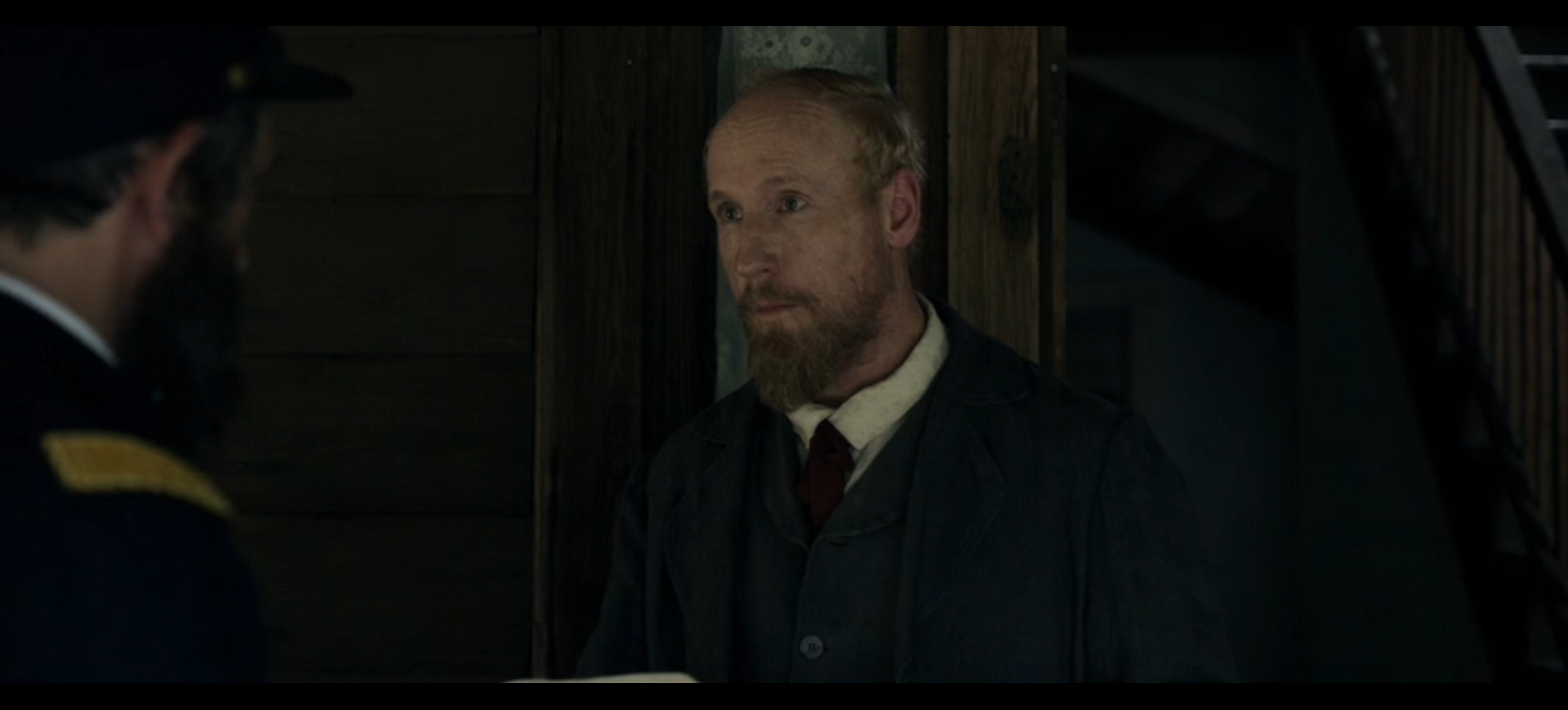
Matt Walsh as Dr. Samuel Mudd in Manhunt

Even with this in mind, I still feel that, as an educator, there is value in pointing out the differences between fact and historical fiction. The series has the potential to bring new individuals into the Lincoln assassination story. I want to create a space where folks can find answers to questions they have about what they see in the series. I’m reminded of how I saw the musical Hamilton and immediately spent my train ride back home reading about the “ten-dollar founding father” and the differences between what I saw on stage and the real man. I know there are other people like me who like to know how “based on a true story” a film or show really is. My hope is that my reviews might provide some of the historical context an inquisitive mind is looking for.

I’m putting all this out there early because I don’t want to be too much of a spoiler for you all. For those of you who want to see the episode for yourself before reading my review, you may want to wait to read my next few blog posts until you’ve seen the corresponding episode.

Remember the only way to watch it is on the AppleTV+ streaming service. I signed up for my account today. It’s $10 a month after a one-week free trial. There’s an app that will allow me to watch it on my devices, and I even got it as a widget for my Amazon Fire Cube so I can watch it on my TV. While I know not everyone is thrilled about yet another streaming service, I’m willing to shell out a Hamilton for the ability to watch this series. If you’re a follower of this blog, I have a feeling you might be willing to spend $10 to watch this show, too.

Coincidentally, Manhunt is not the only Lincoln assassination-related media being released this week. Today is the release date for a new Blu-Ray version of the 1977 film The Lincoln Conspiracy. I had preordered this off of Amazon and it was just dropped off while I was composing this blog post.

For those who aren’t familiar with it, The Lincoln Conspiracy is one stinker of a film based on an even worse stinker of a book. The book claims that Edwin Stanton, along with other high-level politicians and bankers, conspired to have Abraham Lincoln kidnapped and removed from office. The group used Booth as their agent in the kidnapping plot which proved unsuccessful. Taking matters into his own hands, Booth proceeded to kill the President. Worried that their treachery would be found out, Stanton and Lafayette Baker orchestrated a cover-up, which included having a different man killed in Booth’s place at the Garrett farm. The book is really all the conspiracy theorists’ greatest hits rolled into one romance novel-sized paperback. The movie adaptation stars Bradford Dillman as Booth wearing perhaps the worst mustache I’ve ever seen.

It’s ironic that The Lincoln Conspiracy has a Blu-ray release the same week AppleTV+’s Manhunt is set to air. They are on opposite ends of the spectrum in terms of quality and scholarship. For too long, Edwin Stanton has been demonized by conspiracy theorists and forced into the role of a villain. It will be refreshing to see him in a more sympathetic and heroic light in the series to come.

Tobias Menzies as Edwin Stanton in Manhunt

Categories: History, News | 9 Comments

A Second Manhunt Trailer

Today, February 12, 2024, is Abraham Lincoln’s 215th birthday. Likely in celebration of this day, the folks over at AppleTV+ have released a second trailer for their upcoming miniseries Manhunt, based on the book by James L. Swanson. Unlike the trailer released last week, this one is in the form of a featurette and contains clips of the actors and producer of the series discussing their work. It’s still on the sort side of around two minutes in length, but this new trailer does show us a bit more of what the show will have to offer. Give the new trailer a watch:

Here are some of my thoughts after watching this new trailer:

  • The trailer opens with President Lincoln and United States Colored Troop soldiers walking through a severely damaged city. My guess is that this is referencing the visit Lincoln made to the fallen Confederate capital of Richmond not long before the assassination. However, the special effects of the scene could also lead one to believe this may be a dream-like sequence for the president. We’ll just have to wait and see.
  • We get our first glimpses of Lewis Powell’s attack on Secretary Seward and his household here. The clip quickly shows Powell’s entry at the Seward home, his bludgeoning of Frederick Seward with his gun, and his grappling with someone in the Seward house (enough to break a window). This trailer also clears up the question as to where Stanton went first. We see Stanton witnessing the bloodshed at Seward before asking if the President was still at the theater. This is in line with what actually occurred. Stanton had been informed by a messenger that Lincoln and Seward had been attacked and he had traveled to Seward’s house to dispel the rumor. When he witnessed the bloody scene at the Seward house, he then proposed to Gideon Welles, the Secretary of the Navy who had arrived at the Seward home at the same time, that he would go to Ford’s Theatre. As he was getting ready to depart Major Thomas Eckert rode up on horseback, he having just come from the scene outside of Ford’s Theatre. Major Eckert advised Stanton against going to 10th Street for fear there might still be assassins amongst the throng of people. As we know, Stanton decided to go anyway. In the trailer, the man to whom Stanton asks about the President and his whereabouts is Major Eckert.
  • Mary Lincoln is shown mournfully climbing the steps to the Lincoln funeral car in her black mourning attire while a steady rain falls. This is an example of understandable dramatic license on the part of the series. In reality, the bereft Mary Lincoln was too overcome with grief to participate in the public funerary events for her husband. She did not escort Lincoln’s coffin on the funeral train and, as far as I know, never set foot on the train where her husband and son’s remains were transported. The scene does make for a touching visual, though.
  • There are a few character collages that pop up during this trailer. The first is titled “The Hunters,” and shows the actors playing the figures of Edwin Stanton, Col. Lafayette Baker, Thomas Eckert, and Boston Corbett.
  • At the 40-second mark, a voice is heard saying, “It’s a code” and then a cipher cylinder is shown. It will be interesting to see how this is worked into the series. As I’ve written about previously, there’s a lot of confusion and misinformation out there about John Wilkes Booth’s so-called “Confederate” cipher. During the investigation, a paper Vigenère table in Booth’s handwriting was found in his trunk at the National Hotel. It was admitted into evidence during the trial of the conspirators. A Vigenère cipher cylinder like the one shown in the trailer was also entered into evidence. This cylinder had been captured from the Confederate offices in Richmond along with coded letters. However, there is no connection between Booth’s Vigenère table and the seized Confederate cipher aside from the format being the same. A Vigenère table is merely a tool for encoding or decoding information. We know of no coded letters written by Booth or his conspirators. The Vigenère table was likely Booth’s attempt at playing “spy,” as he would like to boast to his sister, Asia. While the Confederacy used their ciphers to send coded messages, there is no evidence that Booth ever participated in this. No coded notes from the Confederacy have ever been found mentioning Booth or his plot. The purpose of admitting the cipher cylinder as evidence at the trial was due to the fact that Confederate officials were also being tried, in absentia, for Lincoln’s murder. The fact that Booth owned a Vigenère table was the government’s weak attempt to connect Booth to the Confederate government. While having a Vigenère table may seem damning, it’s more akin to trying to connect Botoh to Jefferson Davis because they both had crossword puzzles on their desks. The government was desperate to put the blame for Lincoln’s death on Confederate officials, which is why they threw everything they could against the wall, hoping something would stick.
  • The second character collage grouping is called “The Conspirators” and shows John Wilkes Booth, David Herold, Mary Surratt, and John Surratt. I look forward to seeing where the miniseries places John Surratt on the night of the assassination. Will they depict him as being in D.C. that night or up in Elmira, New York, as he always stated?
  • While the actor playing David Herold is talking, there a brief scene is shown of a man emerging from a brick alleyway near Ford’s Theatre, likely meant to be the alley between Ford’s Theatre and the Star Saloon next door. He catches sight of Edwin Stanton and then attempts to run when he is stopped by Thomas Eckert. It all happens so fast it’s hard to tell who that character is meant to be. My best guess is that it is supposed to be Edman Spangler. I hope I’m mistaken, as that scene would be pretty unfair to ol’ Ned. Spangler never attempted to flee from the authorities who interviewed him multiple times before officially arresting him. As one of the few conspirators that most historians agree was innocent of any involvement in Booth’s plot, it’s hard to see him acting as if he had a reason to flee. But I could be wrong about my identification here.
  • Stanton is shown holding a Lincoln mask, complete with strings presumably for attaching to one’s face. I can’t say if masks like these ever existed. This mask is based on a genuine Abraham Lincoln face mold that the President sat for with sculptor Clark Mills in February of 1865. Plaster and bronze copies of this mold can be found in many museums and Lincoln sites around the country. Many folks confuse this mold to be a “death mask” of Lincoln made after his assassination, but it was a life mask made when the President was alive.

Clark Mills’ plaster life mask of Abraham Lincoln. 1865

  • The special effects department did a good job of photoshopping their Booth actor into the famous images of Lincoln’s second inauguration. We know that Booth was present on that day, and in 1956, photography historian Frederick Hill Meserve pointed out a somewhat familiar mustachioed face in the crowd to readers of Life Magazine.
  •  The collage of “The Informants” shows the characters of Mary Simms, “Wallace,” Joseph “Peanut John” Burroughs, and Louis Weichmann. I don’t know who “Wallace” is, but that is the character name actor Josh Stewart plays, according to IMDB. My guess is that this identification is a mistake. My money is that he is supposed to be Mary Surratt’s tavern renter, John M. Lloyd.
  • I’m not trying to harp on it as I’m sure the actress will give a great performance, but I feel it’s important to reiterate that Mary Simms was not at the Mudd farm during John Wilkes Booth’s escape. Mary and her family had been enslaved by Dr. Mudd, but they left the Mudd farm in 1864 when they were freed after the new Maryland state constitution prohibited slavery. Mary Simms did testify at the trial of the conspirators, but her testimony had nothing to do with John Wilkes Booth. She was a prosecution witness against Dr. Mudd, testifying about his Confederate sympathies and disloyalty during the Civil War. Mary Simms did not interact with John Wilkes Booth during the escape. All of the scenes where they appear together or of her at the Mudd house in 1865 are completely fictitious.
  • Since the actual layout of the box at Ford’s Theatre has not been replicated, the assassination scene has been understandably altered. In the trailer, we see Major Rathbone apparently jump down to the President’s box after the shot. Booth slashes at him a couple of times, knocking him back. Rathbone does not appear to make a last-second grab at the assassin’s clothing as he testified. Instead, the miniseries appears to show that Booth gets tripped up by the decorative flags, a common enough version of the events. The portrait of Washington that was affixed to the front of the actual box does not appear to be present in this recreation (or if it is, it does not get knocked to the stage when Booth makes his jump).
  • I do like how one audience member is seen to climb onto the stage and give chase to Booth after the shot. That’s a nice nod to Major Joseph Stewart, “one of the tallest men in Washington,” who was the only audience member to quickly run after the assailant.
  • There’s a scene of a mustache-less Booth riding fast through a village of some sort during the daytime. This is likely another case of dramatic license. After shaving his mustache off at Dr. Mudd’s, Booth made his way under the cover of darkness to Samuel Cox’s home and was then secreted in a nearby pine thicket. Once in the thicket, Booth and Herold’s horses were disposed of. After this, the only times Booth rode on a horse was when sharing it with another person and never at breakneck speed. It certainly helps with the action, though.
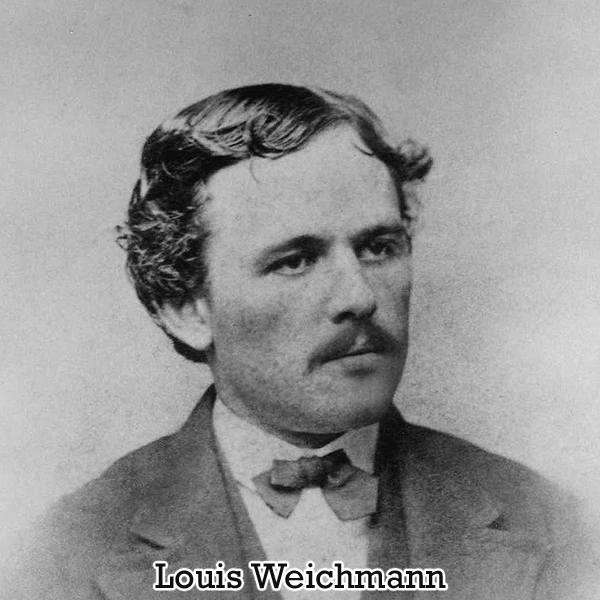
  • Mary Simms is shown in conversation with Louis Weichmann, apparently motivating him to disclose all that he knows. As far as I know, Mary Simms and Louis Weichmann never interacted with each other. While Weichmann was arrested and pressed to divulge what he knew about the conspirators, Mary Simms was never arrested. She was only brought forward to testify at the trial a month after the assassination.
  • As we expect with trailers, the last bit is full of quick edits that build up the action. The scenes fly by so fast that it’s too difficult to break them all down. But I am curious as to what urban-looking building is on fire at the 1:45 mark, the identity of the pretty lady apparently tending to Booth at 1:46, and is Stanton holding a baseball in his hand when he embraces Lincoln at 1:34?
  • I enjoyed hearing the cast speak about the series. Patton Oswalt, in particular, seems like he enjoyed his role, which is wonderful to hear.
  • The costuming for all the characters is really well done. Everything looks the period as far as I can see, and the details are exceptional.

I’m not sure if they will tease us with another trailer between now and the miniseries’ debut on March 15, but if they do, I’ll be sure to let you all know. I’m really looking forward to seeing the whole thing in about a month’s time.

In the meantime, Happy Birthday, Abe!

Categories: History, News | Tags: , , , , , | 6 Comments

Forensic Analysis of the Abraham Lincoln Assassination

An interesting article has been published in The American Journal of Forensic Medicine and Pathology by Drs. Theodore N. Pappas, Sven Swanson, and Michael M. Baden from the Department of Surgery at Duke University School of Medicine. The authors attempted to come to a conclusion about an oddly debated detail of Lincoln’s assassination: the path the bullet took inside Abraham Lincoln’s skull.

In the journal article, the doctors discussed the contradictory evidence that exists regarding the path Booth’s bullet took as it was fired into Lincoln’s brain. This debate is not a new one, as fellow MDs and late Lincoln researchers John K. Lattimer (whose diagram is shown above), Blaine Houmes, and E. Lawrence Abel each wrote about this topic.

What makes this new journal article unique is the way in which Drs. Pappas, Swanson, and Baden, were granted access to the Presidential Box to re-stage the assassination based on eyewitness accounts. They attempted to simulate the circumstances surrounding the assassination to get a better idea of the path the bullet may have taken. I’m happy to see Ford’s Theatre allowing this scientific exploration, even though the process involved a somewhat eerie floating skull over the reproduction Lincoln Rocker.

I won’t spoil the doctors’ findings here. Instead, I encourage you all to read the article for yourself. As far as scientific journal articles go, this one is very easy to digest. Click here or on the following title to read their article on The American Journal of Forensic Medicine and Pathology‘s website:

I’m grateful to these doctors and the ones who came before them for using their expertise to help further our understanding of this key event in American history.

Categories: History, News | Tags: , , , , | 16 Comments

Manhunt Miniseries Trailer

AppleTV+ released its first trailer today for its upcoming miniseries based on the Lincoln assassination book, Manhunt: The 12-Day Chase for Lincoln’s Killer by James L. Swanson. I have previously written about this new series that is set to debut on the streaming service on March 15. This trailer gives us our first real look into the series, which will focus on the efforts of Secretary of War Edwin Stanton to track down Lincoln’s assassins. Give the trailer a watch:

I had a few initial thoughts while watching this trailer.

  • Anthony Boyle, the actor playing John Wilkes Booth, looks pretty good in the role. He has a decent resemblance to the assassin, much more so than some of the reenactment Booths used in some TV documentaries about the assassination.
  • Booth yells “Freedom for the South” from the theater box. While a limited number of eyewitness accounts claimed Booth might have yelled, “Freedom!”, “Revenge for the South!” or “The South is avenged!” I don’t recall reading “Freedom for the South!” before. It’s certainly not in Swanson’s book. The overwhelming evidence is that Booth said, “Sic Semper Tyrannis!” after shooting Lincoln, though whether this was in the box or on the stage is debated.
  • Stanton is shown learning of Lincoln’s assassination while riding a carriage during a fireworks display. Fireworks are also shown as Booth is riding out of Baptist Alley behind Ford’s. While visually appealing, the Grand Illumination in D.C. featuring fireworks was technically on the night of April 13, not the night of Lincoln’s assassination. Also, Stanton learned of the attack on Secretary Seward first. It was when Stanton arrived at the Seward house to check on the Secretary of State at about the same time as Secretary of the Navy Gideon Welles that he was informed that Lincoln had also been targeted. However, this trailer may be depicting that event as it’s unclear from the clip where Stanton is supposed to be.
  • Booth is shown interacting with and seemingly threatening actress Lovie Simone, who plays the part of Mary Simms. As I previously noted, Mary Simms and her siblings left the Mudd farm in 1864 and were not around in 1865. Booth did not interact with Mary Simms during his escape.
  • The interior of Ford’s Theatre replicates the stage set of Our American Cousin well, but the theater box looks nothing like the real thing. It appears that Major Rathbone and Clara Harris are seated in their own box a few feet above the President and Mrs. Lincoln. It’s too bad the actual box appearance and layout couldn’t be recreated.
  • The overhead shot of Lincoln’s plain coffin being carried down the circular stairs of the Petersen House is an effective one.
  • At the 1:06 mark, you’ll see the actor playing Booth’s slayer, Boston Corbett. The actor’s name is William Mark McCullough. Coincidentally, he played John Wilkes Booth in 2015 Smithsonian Channel documentary, Lincoln’s Last Days.

  • There’s just a flash of the conspirators seated in their courtroom at the 1:13 mark. I can easily make out a hunched and bearded George Atzerodt, but I’m not sure about the other two men visible. Mary Surratt is erroneously shown placed amongst the men.
  • A man is shown in daylight pulling guns on the fugitives and stating, “I know who you are Mr. Booth.” I was uncertain who this figure was supposed to represent, but looking through the cast list on IMDB, it seems this is actor Roger Payano in the role of Oswell Swan. Swan guided Booth and Herold across the Zekiah Swamp to Samuel Cox’s home of Rich Hill. However, this occurred at nighttime, and Swan didn’t know the identities of the men he took over the swamp. He certainly didn’t pull a gun on them.
  • At 1:30, blink and you’ll miss actor Matt Walsh as Dr. Samuel Mudd handing something to Herold and Booth while a servant (likely the anachronistic Mary Simms) watches in the background. From this quick shot, Walsh looks good as Dr. Mudd.
  • The music in this trailer is quite good. I hope the actual show utilizes some of the songs included here.

From this trailer, it’s clear there will be a lot to talk about when the miniseries airs. What are your thoughts on this first look?

Categories: History, News | Tags: , , , , , , , , | 22 Comments

Manhunt: A New Miniseries

After almost two decades in developmental hell, a miniseries based on James L. Swanson’s 2006 book Manhunt: The Twelve-Day Chase for Lincoln’s Killer is finally going to become a reality. While reports said that filming on the project had been completed in 2022, nothing about the series’ possible premiere date was forthcoming until an article was published on December 13, 2023, in Vanity Fair. The article, titled “Manhunt: First Look at the Long-Awaited Show About Hunting Lincoln’s Killer” can be read in full here.

This article announced that the miniseries will premiere on March 15, 2024, on the streaming platform Apple TV+. Two episodes will be released on that day, followed by weekly releases of new episodes until the finale on Friday, April 19, 2024. This makes seven episodes of the series in all.

The Vanity Fair article provided an overview of the series, highlighting the efforts of those involved in bringing this project to life. I applaud Monica Beletsky, the showrunner and writer, for her dedication to shedding light on the unknown aspects of the assassination. The focus of the miniseries will be on Edwin Stanton, the Secretary of War, and his role as a catalyst for justice. It is refreshing to see Stanton portrayed in a heroic light, especially given the numerous conspiracy theories that have attempted to implicate him in Lincoln’s death.

The role of Secretary Stanton is played by British actor Tobias Menzies. Images provided by Apple TV+ give us our first official look at the protagonist. While I do not believe that actors have to look very much like the historical figures they emulate, I have to state that I am disappointed to see that Menzies was not given a beard for the role. Edwin Stanton wore a very recognizable beard. I understand not wanting to cover up Menzies’ handsome face, but, in my opinion, portraying Stanton without his long skunk beard is like depicting Abraham Lincoln without his iconic stovepipe hat. I suppose it’s a good thing the miniseries won’t be debuting for another three months as that will give me time to slowly come to accept this clean-shaven man as Edwin Stanton.

In addition to covering the process of creating the series, the Vanity Fair article hints at several characters and scenes we can expect in the series. I was excited to read how the character of Mary Lincoln will be portrayed. Showrunner Beletsky states in the article that Mrs. Lincoln “was owed a different portrayal” than prior characterizations of her as merely being crazy, or a burden to President Lincoln. I believe that prior media interpretations (and many historians, for that matter) have been unnecessarily hard on Mrs. Lincoln. Beletsky seems to agree, relating how the loss of her children occurred, “pre-psychology, pre-therapy, pre-understanding of trauma. I asked the question of, ‘How would you behave had you suffered so much loss?’” It will be interesting to see how actress Lili Taylor takes on the role of the First Lady during one of the most traumatizing times in her life.

The article also shows us other interesting visuals, such as comedian Patton Oswalt in the role of Col. Lafayette Baker. The leader of the National Detective Poice was a key ally to Stanton during the hunt for Booth, but his methods and character were considered extreme even to jaded politicians. I’m excited to see how Oswalt is able to capture this scoundrel of a man.

There are also a few historical inaccuracies to be found in the article (aside from Stanton’s beard). Some are small nitpicks, such as an image of Stanton and his son, Edwin Lamson Stanton, apparently on horseback on the hunt for John Wilkes Booth. While Stanton was instrumental in helping to organize the manhunt for the conspirators, he did not take part in the search himself. As the Secretary of War during wartime, he had many other duties to perform as the search was going on. While Stanton occasionally interviewed prospective witnesses, his schedule of cabinet meetings, preparing Lincoln’s funeral arrangements, and sending off telegrams to various generals in the field about the remaining Confederate forces kept him confined to Washington during the manhunt. It’s possible that the caption for the image is merely mistaken and does not actually show Edwin and his son hunting for Booth but merely riding somewhere together. Time will tell.

Another critique I have is the characterization that John Wilkes Booth’s actions may have been motivated by a sense of professional rivalry between himself and his brother, Edwin (or his deceased father, Junius Brutus Booth). This belief comes up often enough, with many others playing on the idea that Lincoln’s death was the result of some intense sibling rivalry between John Wilkes and Edwin. I think many people fail to realize that, in 1865, John Wilkes and Edwin were pretty much on equal footing in terms of fame. Granted, Edwin had some advantage over his brother because he had started his career earlier and he had ingratiated himself into New York City society. In addition, just prior to the assassination, Edwin had finished his historic run of 100 nights of Hamlet. In time, Edwin would be known as one of the greatest actors of his day and is still considered by many as the greatest Hamlet who ever lived, but his legacy was still many years in the making in 1865.

John Wilkes Booth was also a very successful actor, and it was mostly due to his own choice to stop acting in 1864 and 1865, that caused him to cede so much ground, as it were, to his older brother. There was undoubtedly some rivalry between the siblings who were engaged in the same profession, but both brothers enthusiastically supported each other. They performed together on many occasions and celebrated each other’s histrionic achievements. While the two brothers were very far apart politically, I don’t believe that John Wilkes Booth felt too overshadowed by Edwin’s success. Nor do I believe that sibling rivalry had any real influence on Wilkes’ decision to kill Lincoln. However, I accept that this is a valid interpretation for someone to have.

There is also some shakiness regarding the layout of Ford’s Theatre in the article. It states that “Lincoln’s killer could have been lost to history if Booth had quietly slipped away, backed into the corridors of Ford’s Theatre, and escaped anonymously out into the streets of Washington, DC” rather than jumping to the stage in full view of the audience as he did. Anyone familiar with Ford’s Theatre knows there was nowhere else for Booth to go after barricading himself into the corridor leading to the President’s box. A jump from the box to the stage was his only option. Even if he had removed the wooden bar he had placed to prevent entry into the box, he would still have been surrounded by angry audience members until he could get to the back of the house. There was no scenario in which Booth could have “quietly slipped away” after shooting the President as he did. Retracing his steps out of the box would have meant his instant capture.

When I first read the article, the names of the owners of the house across the street where Lincoln died were the “Petersons.” I’m glad to see that someone has since fixed the spelling of their name and the house to Petersen.

Minor issues aside, the article does include one substantive bit of historical inaccuracy that could result in some misinformation. This is associated with the fugitives’ time at the home of Dr. Samuel A. Mudd. The article provides the following image of actors Lovie Simone and Antonio Bell as Mary Simms and her brother Milo.

A good deal of the article discusses the figure of Mary Simms, a young woman who had been enslaved by Dr. Mudd and testified against him at the trial of the conspirators. Mary Simms’ testimony connected Dr. Mudd to Confederate activities during the war and was a key part of establishing his disloyal sympathies. The inclusion of Black witnesses in a criminal trial against white defendants was a historic case, and Stanton worked hard to ensure this would happen. Mary Simms was a brave woman who risked a lot to give her testimony. Her brother Milo (who believed he was only about 14 or so in 1865) also testified about conditions on the Mudd farm.

Both Mary and Milo Simms have a role in the Lincoln assassination story, and I’m happy to see them in the Manhunt miniseries. However, the caption under the images states that the two “grapple with their orders to provide aid and comfort to the fugitive assassin.” In the main article text just below the caption, it states the following:

During Mudd’s treatment, Booth crosses paths with Mary Simms (played by Greenleaf’s Lovie Simone), who was enslaved by Mudd and later testified in the investigation into Lincoln’s killing. “Mary Simms is someone that I came across in the transcript of the conspirators trial,” says Beletsky. “I found her extremely compelling. I knew that she kept house for Dr. Mudd and that her brother was considered Dr. Mudd’s carpenter. So with that in mind, when Booth needs a crutch, I have Milo, her brother, making the crutch.”

The big issue with the caption and the quote above is that Mary and Milo Simms were not at the Mudd farm in 1865. Both Mary and Milo are clear in their testimony that they left the Mudd property in November of 1864, just after the new Maryland state constitution abolished slavery, freeing them. Mary and Milo had no interaction with John Wilkes Booth during his escape, and none of their testimony at the trial had to do with the assassin himself. While the showrunner may have decided to have Milo Simms make Booth’s crutch in the miniseries, in reality, Dr. Mudd stated that the crutch was made by himself and an English handyman who resided on the farm named John Best.

Based on the descriptions in the article, we will have to see how truthful the scenes involving Mary and Milo Simms turn out to be. Any interaction between Mary Simms and John Wilkes Booth would be completely fictitious since she was no longer residing at the Mudd farm when Booth shot Lincoln.

I want to clarify that my intention is not to minimize the effort and creativity of those involved in Manhunt. I understand that historical dramas often take creative liberties to enhance the narrative. Even so-called “documentaries” are often fast and loose with the truth nowadays. However, when these liberties stray too far from the established historical record, they can have a negative impact on the viewer’s understanding of the past and cause more harm than good. It is frustrating as a historian when this happens since there are often just as creative ways of telling the story in ways that are accurate. For example, while Mary Simms was far from the Mudd farm at the time of the assassination, other men and women who were formerly enslaved by Dr. Mudd were there when the fugitives arrived. Thirteen-year-old Lettie Hall and her eleven-year-old sister Louisa Cristie had been enslaved by the Mudds, stayed with them after emancipation, and were at the home when Booth showed up. The two girls cooked and served breakfast to Booth at the Mudd home on April 15. Frank Washington had likewise been enslaved by the Mudds and was still at the farm working as a plowman in 1865. Washington was there when Booth and Herold arrived, and he personally put their horses in the doctor’s stables. When he testified at the conspirators’ trial, Washington was very nervous and was clearly conflicted about how he was supposed to testify. His desire to tell the truth was undoubtedly being challenged by his fear of retribution by his white neighbors if he spoke against the Mudds. These figures and the internal conflicts they had regarding their activities on April 15 would have been very interesting to see represented on screen. But, perhaps they still will be, and I’m getting all concerned about Mary Simms for nothing. We’ll just have to wait and see.

Despite Stanton’s missing skunk beard and the unknown accuracy of the Mary and Milo Simms portions, I remain excited about the series’ potential to reach a new audience and contribute to increased interest in this pivotal event. Though it will mean shelling out for yet another streaming service, I’m willing to throw a few bucks to Apple TV+ to watch a miniseries that I truly thought would never come. Come March 15, 2024, I’ll settle in to watch Manhunt for what I hope will be an engaging and thought-provoking viewing experience that stays true to the spirit of history.

Categories: History, News | Tags: , , , , , , , | 19 Comments

New Section: On This Day

As a kid, I remember visiting the “calendar store” that popped up in our local mall near the end of every year. While not as popular as the similarly seasonal Spirit Halloween or Santa Markplace-type stores, the calendar store was nonetheless a fun place to browse the wide variety of calendars designed to suit all tastes. 12 months of beach scenes? Check. Themed kitty cat photos? Check. Outhouses from around the world? Check. Almost any type of animal or location was represented in the calendar store. While the traditional 12 monthly calendars were no doubt the store’s bread and butter, this was not the limit of calendar technology. They had 16-month calendars for those who liked to plan far ahead, weekly calendars one could use as a planner with areas for notes, and small calendars that fit onto bookmarks. My favorite calendars were always the Day-to-Day calendars that had a tear-away page for each day. They were attached to plastic stands so that they stood up like a frame on your desk. As the year went by, you’d rip off one page a day, and your calendar would get thinner and thinner. Each year, I would select my day-to-day calendar for the upcoming year, regularly choosing between my favorite comic strips, Peanuts, Garfield, The Far Side, Foxtrot, etc. In addition to the daily fix of a comic strip, the best day-to-day calendars had word puzzles, riddles, or fun trivia on the back of each sheet. As I got older, I noticed that Saturday and Sunday started to share a single page and comic, which I always thought was a bit of a rip-off.

Whenever I would open my brand new day-to-day calendar, it took all my available willpower not to flip through it and read every page on that very first day. These were early lessons in self-control that I generally did pretty well with, although I would always jump ahead to my birthday and some holidays just to see what those days would have in store. These day-to-day calendars gave me something small to look forward to every day.

Several years ago, I had the idea to create my own day-to-day calendar relating not to my favorite comic strips but to my favorite historical subject: the assassination of Lincoln. An odd subject for a calendar, I admit, but not any stranger than others I’ve seen, like Museum Bums 2024. I thought how interesting it would be to assemble one event relating to Lincoln’s assassination or the Booth family for each day of the year. Maybe it could be something that I could even publish. I started the process of trying to find relevant facts. I soon discovered, however, how difficult such a project like this would be. After struggling to find a dozen or so facts and inputting them into a spreadsheet, I shelved the idea.

In the intervening years, two big changes occurred. First was the publication of Art Loux’s book John Wilkes Booth: Day By Day. Art spent his lifetime meticulously tracking and documenting Booth’s whereabouts. While it was impossible to say where Booth was every day of his life, his career as an actor made it possible to fill out most of his movements from 1860 onward. In many ways, Art’s book is like a day-to-day calendar themed around John Wilkes Booth, which is probably why I enjoy it so immensely.

The other big change was my move to upload my digital research files from just being on my one computer to a backup on the cloud. For years, I had been terrified a hard drive failure would cause me to lose every file I’d ever saved. As a result, I started uploading my files to the cloud. This also gave me the ability to access my files from my phone, no matter where I was. This greatly improved my ability to conduct research in the field. An unexpected side effect of uploading my files to the cloud was that they suddenly became searchable. The all-seeing cloud could decipher and read the text from many of the pictures I had uploaded. When I searched my cloud drive for a phrase or word, I found that I was no longer limited to only files I had given that name to. All the documents that the cloud could read and bore that word or phrase popped up in my search. The functionality of my research had increased immeasurably.

In August of 2021, I found myself tweeting about when John Wilkes Booth recruited his childhood friends Samuel Arnold and Michael O’Laughlen into his plot. It happened to be just around that day, so I used the common enough Twitter hashtag #OTD, which stands for On This Day or On This Date. The tweet got some good engagement, so the next day, I searched my cloud for that day and found a corresponding event among my files. I tweeted another #OTD tweet for that day. I followed suit on the third day as well. Soon, I discovered I had unintentionally reignited my project from years ago to create a day-to-day calendar of the Lincoln assassination. And now I was doing it on the fly, not spending months researching and preparing.

Each day, before bed, I would try to find an event that would work for the next day. When my own files failed to produce anything, I would fall back on Art’s book to locate a Booth-related event I could use. Some days were easy and provided many options. Other days were frustratingly difficult, and I struggled mightily to find something better than John Wilkes Booth performed in such a-such play. As a visual learner, it was also important to me that each event be supplemented with images of some kind. Often, I would work late into the night, finding an event and assembling relevant images to accompany it. On weekends, I would try to get ahead and prep multiple days if I could.

An example of one of my On This Day tweets

I had previously highlighted my daily tweets as weekly stand-alone posts here on the blog. However, since that time, Twitter has been bought, renamed, and had its accessibility severely curtailed. My tweets no longer load properly in my prior posts. In addition, Twitter has become increasingly toxic since the takeover by Lex Luther. I’ve decreased my activity on that platform as it gives way to increased bigotry and right-wing conspiracy-mongering. It is becoming completely unrecognizable from what it was, and I am not confident my years’ worth of content on that site will survive.

However, I did not want my day-to-day project to all be for naught. I made a mistake in assuming my work would be preserved long-term on Twitter. Therefore, I have painstakingly copied the text and pictures from each of my On This Day tweets and reproduced them as regular text and image slideshows. To house this project, I have created a new section here on LincolnConspirators.com. Twitter can continue to X itself into oblivion without me fearing the loss of over a year’s worth of work.

The On This Day section is the culmination of over a year of work researching and highlighting different events relating to the assassination of Abraham Lincoln and the Boooh family for every day of the year. It is my own Lincoln Assassination Day-to-Day Calendar in a digital form.

In order to prevent an overload of 365+ mini-posts, I have attempted to hide each day under a collapsible list. Clicking a month on the list will reveal each day of the month. Clicking a specific day will reveal an event (or occasionally two) that occurred on that day in a certain year. Underneath the text is a slideshow of relevant images. I know it’s not the prettiest of lists, but I assure you that there are diamonds hidden beneath the surface if you don’t mind doing a little digging.

While each entry is hidden underneath the list, the page still attempts to load each entry’s slideshow when the page is first opened. As a result, some of the slideshows take longer to load completely, especially those in the latter part of the year. If you click on an entry and the slideshow is just a black screen, give it some time, and it should eventually load. I appreciate your patience.

It’s up to you how you want to use this calendar. You could come back and visit each day to read about an event on its anniversary or binge them all at once. I won’t judge. This list is static for now, but I have the idea of adding more events and facts in time. When that happens, I’ll make an announcement.

Click the Lincoln calendar image above or on this link to visit the On This Day page. There is also a new link on the top menu of the website to find the OTD page easily in the future.

I hope you enjoy delving into a whole year of Lincoln assassination and Booth family-related events.

Categories: History, News, OTD | Tags: , , , , | 4 Comments

Some Upcoming Events 2023

A few interesting Lincoln assassination related events have popped up on the radar over the next couple of months that I wanted to share. I wish I lived near some of these so that I could attend them.


August 25, 2023

Boston, Massachusetts

Lincoln and Booth: Live Music Played to Film

“The West End Museum presents an unforgettable theatrical experience when members of the New England Film Orchestra combine the magic of film with the power of music as they perform live music in-sync to two films highlighting the lives of Abraham Lincoln and John Wilkes Booth.

Odie Henderson, Boston Globe Film Critic and author of ‘Black Caesars and Foxy Cleopatras: A History of Blaxploitation Cinema’ (out in January 2024), will join us to provide context for the films.

John Wilke’s Booth was in Boston in April of 1865, eight days before the assassination of President Abraham Lincoln. What the well-known actor was doing during those last fateful days is not altogether clear, but during that time was purportedly seen practicing his aim at a local shooting gallery.

The first firm is an early silent short by Thomas Edison from 1915 entitled “The Life of Abraham Lincoln,” which spans the famous president’s life from his marriage to his assassination by Booth. The second, “The Man in the Barn,” is a speculative docu-drama from 1937 that asks if John Wilkes Booth didn’t die by gunshot while trapped in a burning barn just days after Lincoln’s assassination, but rather escaped to live another 38 years.

Don’t miss this one-of-a-kind “surround-sound” movie event at Boston’s landmark Hub Hall, adjacent to TD Garden and North Station and boasting 18 diverse food and drink options for a before or after-movie snack.”

Cost: $15

Event page: https://www.eventbrite.com/e/lincoln-and-booth-live-music-played-to-film


September 23, 2023

Washington, D.C.

Smithsonian Booth Escape Route Bus Tour  [led by American Brutus author, Michael Kauffman!]

“Fleeing Ford’s Theatre on the night of April 14, 1865, John Wilkes Booth traveled through Maryland into Virginia, where, a few days later, he was found and fatally shot. Historian Michael Kauffman retraces Booth’s escape route and reveals the personalities and intrigues surrounding the Lincoln assassination.

Stops include Ford’s Theatre; the house near Clinton, Maryland, belonging to Mary Surratt, who was hanged for her involvement in the plot; and the house of Dr. Samuel A. Mudd, who set Booth’s broken leg.

Enjoy a seafood lunch at Captain Billy’s Crab House at Popes Creek Landing, near where Booth and co-conspirator David Edgar Herold crossed the Potomac. In Virginia, visit sites where they contacted local sympathizers and where Booth was captured and died.”

Cost: $170 for members, $220 for non members

Event page: https://smithsonianassociates.org/ticketing/tickets/booths-escape-route


October 15, 2023

Albany, New York

The Rathbones of Albany The Tragic Story of John Wilkes Booth’s Last Victim

Presented by the Friends of Albany Rural Cemetery

“Clara Harris and Henry Reed Rathbone were from prominent families in Albany. Each had wealth, education, and a bright future. Mark will reveal the sad, gruesome, yet true story of two local people who witnessed the assassination of President Abraham Lincoln first-hand, and the Cottage in Loudonville where ghostly apparitions have been reported.”

[Note from Dave: While Henry and Clara Rathbone are not buried at the Albany Rural Cemetery, their parents are. In addition, this cemetery is the final resting place of Absalom Bainbridge, one of the Confederate soldiers who met up with John Wilkes Booth and David Herold at Port Conway on April 24, 1865. Bainbridge assisted his cousin Mortimer Ruggles and a third Confederate, Willie Jett, in transporting Booth to the Garrett farm. Herold went with Bainbridge to spend the night at the home of Mrs. Clarke outside of Bowling Green. On the morning of April 25th, Bainbridge and Ruggles brought Herold back to the Garretts where they dropped him off. After seeing the Union soldiers crossing the ferry between Port Conway and Port Royal, Bainbridge and Ruggles raced back to alert Booth and Herold before fleeing themselves. If you attend this event, be sure to hunt down Bainbridge’s grave (and send me a photo of it). President Chester Arthur is buried here, too.]

Cost: Tickets don’t go on sale until September 24th

Event page: https://www.eventbrite.com/e/the-rathbones-of-albany-the-tragic-story-of-john-wilkes-booths-last-victim


October 21, 2023

Bel Air, Maryland

The Lincolns, the Booths, and the Spirits & The Forgotten Women of the Lincoln Assassination

“The Junius B. Booth Society (JBBS) and the Historical Society of Harford County, Inc. (HSHC) are holding an intriguing, one-of-a kind fundraising event titled  The Lincolns, the Booths, and the Spirits & The Forgotten Women of the Lincoln Assassination featuring author/historians Terry Alford and Kathryn Canavan on Saturday, October 21 at the Historical Society of Harford County.  This is a fundraiser and the proceeds will be split between JBBS and HSHC. All proceeds to JBBS will be used for the Tudor Hall museum. Seating is limited to 95 people, so reserve your seats now. Drinks and snacks will be provided. Following the closing remarks, the first floor of Tudor Hall, the childhood home of John Wilkes Booth will be open to attendees till 5:30 PM.

Terry Alford will present The Lincolns, the Booths, and the Spirits. Terry’s latest book, In the Houses of Their Dead, is the first book of the many thousands written about Lincoln to focus on the president’s fascination with Spiritualism (very popular in the Civil War era). Terry will demonstrate how it linked Lincoln, uncannily, to the man who would kill him. Abraham Lincoln is usually seen as a rational, empirically-minded man, yet as acclaimed scholar and biographer Terry Alford reveals, he was also deeply superstitious and drawn to the irrational. Like millions of other Americans, including the Booths, Lincoln and his wife, Mary, suffered repeated personal tragedies, and turned for solace to Spiritualism, a new practice sweeping the nation that held that the dead were nearby and could be contacted by the living. Remarkably, the Lincolns and the Booths even used the same mediums, including Charles Colchester, a specialist in “blood writing” whom Mary first brought to her husband, and who warned the president after listening to the ravings of another of his clients, John Wilkes Booth.

Kathryn Canavan is an independent researcher and the author of Lincoln’s Final Hours: Conspiracy, Terror, and the Assassination of America’s Greatest President. Kathryn will present The Forgotten Women of the Lincoln Assassination digging deep and uncovering surprising secrets and stories about some of the fascinating women connected to Lincoln’s assassination.”

Cost: $30

Event page: https://www.harfordhistory.org/event/the-booths-of-bel-air/

Categories: History, News | Tags: , , , , , , , , , | 8 Comments

Blog at WordPress.com.