Author Archives: Dave Taylor

John Wilkes Booth’s “Mysterious Beauty”

“Some Photographs of Females”

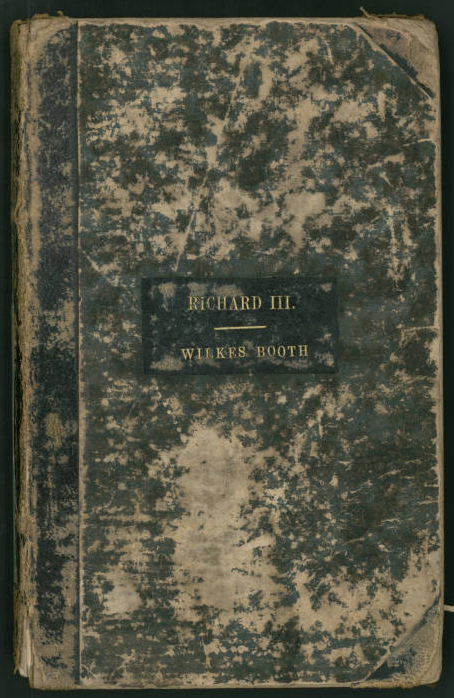
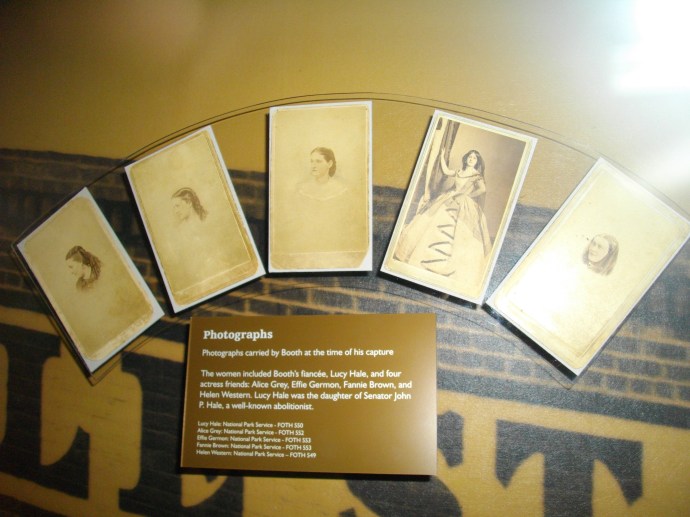
After John Wilkes Booth was shot and pulled from the Garretts’ burning tobacco barn, his body was subjected to a search. While the assassin of President Lincoln lay paralyzed and dying on the front porch of the Garrett farmhouse, the detectives rifled through his pockets, removing pieces of evidence. The items the detectives discovered worked to confirm his identity (which was never really in question), and give them the evidence they needed to prove back in Washington that Booth had, indeed, been taken. With reward money on their minds, such proof was of the utmost importance. Detective Everton Conger was so anxious to spread the news that Booth had been captured that he departed with some of Booth’s possessions before Booth had even died. One of the objects Conger brought back to Washington with him was Booth’s diary which contained the photographs of five ladies.

Historians Richard Sloan and Art Loux view the five photographs found on John Wilkes Booth's body when he was killed. The man in the middle is former Ford's Theatre curator Michael Harmon.

Historians Richard Sloan and Art Loux view the five photographs found on John Wilkes Booth’s body when he was killed. The man in the middle is former Ford’s Theatre curator Michael Harmon.

These images, like the diary itself, were turned over to the War Department where they languished for quite some time. Booth’s collection of ladies were deemed unimportant to the official investigation and were not used at the trial of the conspirators or at the 1867 trial of John Surratt. They eventually were boxed up along with some other evidence used at the trial and Booth’s other possessions. They were stored with the War Department files in the Judge Advocate General’s Office.

It was quite some time before the existence of these photographs became known to the general public. When the text of John Wilkes Booth’s diary was published for the first time in 1867, the affidavit attached to it from Secretary of War Edwin Stanton stated that only the quoted entries and “some photographs of females” comprised the contents of the diary. There appears to have been no follow up or inquiry about who these females were or why Booth had their photographs in his diary. It wasn’t until several years later, when the occasional newspaper reporter convinced the Judge Advocate General’s Office to let them take a peak at the relics of the assassination, that any discussion of the photographs began.

An inquisitive reporter with the Cleveland Herald visited the relics in the JAG office in 1884. Entranced with the more vivid relics such as Booth’s derringer and pieces of Lincoln’s skull, the reporter only made a passing mention of the ladies in Booth’s diary. He stated, “among the articles found in the ‘pocket’ of the book are five photographs of young women, presumably actresses.” It appears that the identities of the ladies in Booth’s pocket had not been researched much prior to this, seeing as this reporter was given no information about who they were.

Visitors to see the relics were relatively scarce and those who were able to view the artifacts could only do so with advance permission from either the Secretary of War or Judge Advocate General. The artifacts were viewed by “about three or four people a year,” considerably slowing down the process of identifying the ladies. It was essentially left to the few clerks who acted as custodians over the relics to attempt to identify them, which they did with varying degrees of success.

Effie Germon and Lucy Hale

It appears that the identity of two of the ladies contained in Booth’s diary were identified a bit earlier than the rest. A reporter who was given access to view the relics in 1891 was correctly told that two of the images in the set were of actress Effie Germon and of “a daughter of one distinguished Senator from a New England state.”

On the night of Lincoln’s assassination, Effie Germon was performing the lead of Aladdin at Grover’s Theatre in D.C. In the audience was young Tad Lincoln, who heard the news of his father’s assassination when the play at Grover’s was halted to announce the tragedy. The 1891 reporter was kind in describing the image Booth possessed of this easily recognizable star of the stage, “Miss Effie Germon, once leading lady at Wallack’s, is one. It is a fair young face, strikingly beautiful.” However the reporter is not so kind when he relates Ms. Germon’s current state, “Miss Germon, if living, is now an old woman, and they say she is fat.”

Lucy Hale was the daughter of U.S. Senator John Parker Hale of New Hampshire. She was also John Wilkes Booth’s secret fiancée. The main evidence for believing that Booth and Lucy were actually in love is not only the collections of the Booth family who supported the idea of an engagement but also from Booth’s own words. Some of Booth’s final thoughts were of Lucy and this is demonstrated in his diary.

It is largely forgotten or ignored that the very first words written in Booth’s diary are “Ti Amo.” “Ti Amo” is Italian but seems to be an understandable misspelling of the Spanish “Te Amo.” Regardless, both translate into English as “I love you”. This announcement of love, coded a bit, seems out of place in Booth’s diary. Before starting his manifesto about why he shot the President, John Wilkes Booth was compelled to write a brief note of love to someone. It seems likely that this message was meant for Lucy Hale.

Ti Amo

Prior to the assassination, Lucy’s father, Senator Hale, had been appointed as a minister to Spain.  All of the Hales were in earnest to learn some Spanish before heading abroad with their father. Lucy vowed to John Wilkes that she would return in a year, with or without her father’s permission, in order to marry him. Lucy lived in the same Washington hotel as Booth, and he would have almost assuredly witnessed his fiancée practicing Spanish.

It may be a romantic idea, but it’s possible that the Ti Amo in Booth’s diary was his final message to the woman he loved. It was a message Lucy would know was meant for her and for no one else. It was a way for him to announce his love for her, for the last time, without endangering her further.

What would have become of Booth and Lucy’s relationship had he not assassinated the President is unknown. Perhaps it was always doomed to fail due to Booth’s womanizing as evidenced by his diary’s collection of other beautiful women. Still, the presence of Lucy’s image and the coded “I love you” message in Booth’s diary could easily demonstrate that, in his final days on the run, John Wilkes Booth thought of, and loved, Lucy.

Mistakes and Misidentifications

Though it was correctly concluded that Effie Germon and Lucy Hale were among those represented in Booth’s photographs, this did not mean that they were always identified correctly. In 1891, a reporter was shown the relics by a clerk of the Judge Advocate General’s office named Mr. Saxton. You can read the reporter’s article about the visit by clicking this line. Unfortunately, Mr. Saxton appears to have been all mixed up when it came to which image was of which woman.  In addition, he provided incorrect identifications for the rest of the images and only seemed to show the reporter four out of the five images.

Mr. Saxton’s mistakes and misidentifications, which demonstrate the JAG office’s lingering uncertainty about who these women were, are as follows:

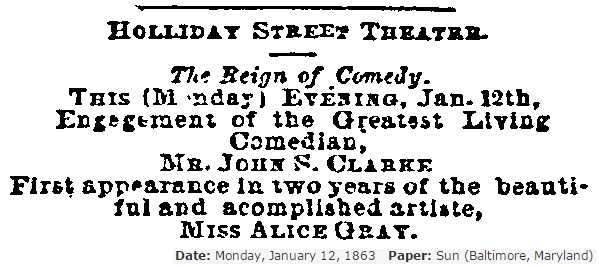
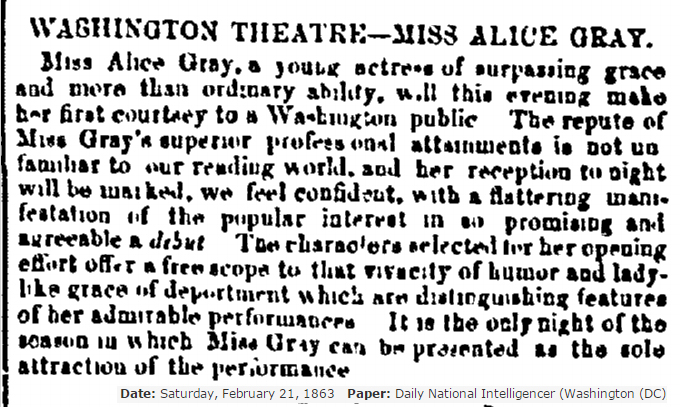
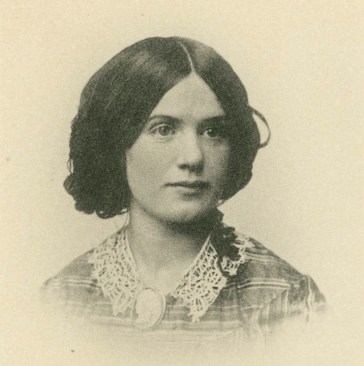
Actress Alice Grey was mistaken for fellow actress Effie Germon:

Lucy Hale was misidentified as a singer named Caroline Richings:

Actress Helen Western was mistaken for actress Olive Logan by the reporter before Mr. Saxton misidentified her as Lucy Hale:

And actress Effie Germon was mistaken for another actress named Rose Eytinge:

While we may laugh today about the numerous mistakes in Mr. Saxton’s 1891 identifications, it does demonstrate that there was somewhat of an attempt by someone in the JAG office to learn the identities of these women. This leads us to the last image in the set photographs and the case of John Wilkes Booth’s “Mysterious Beauty”.

“The Mysterious Beauty”

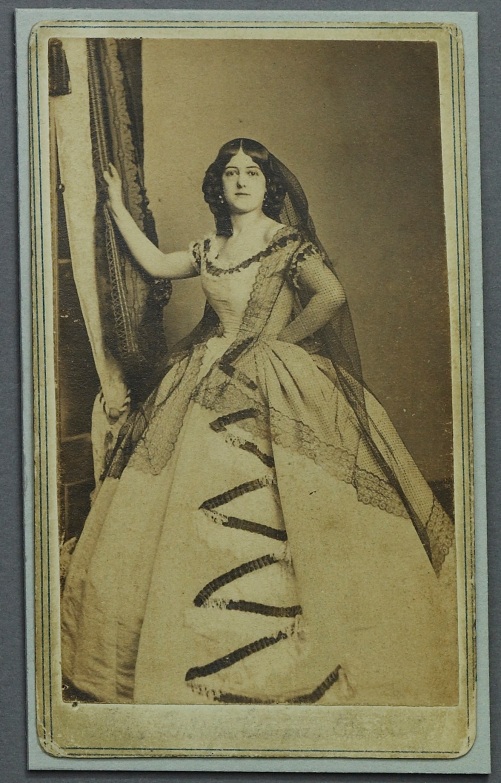
Fannie Brown CDV

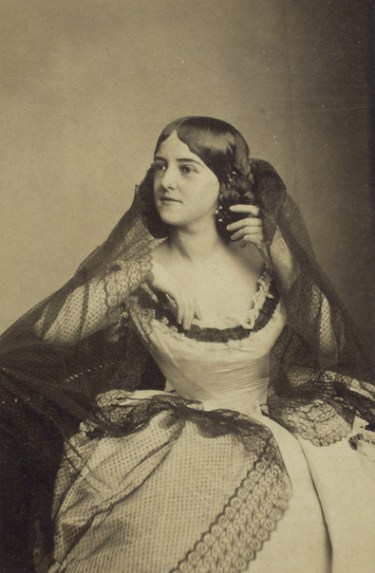
We know that, eventually, the first four vignetted photographs were correctly identified as Alice Grey, Effie Germon, Helen Western and Lucy Hale. It is likely that the clerks of the JAG office consulted a few more visitors who possessed far better knowledge about the theatrical leading ladies of the 1860’s and that they helped fix the mistakes. However, even after four out of the five women were identified, the identity of the woman in the last image was still uncertain. This woman, her image different from the rest in that it showed her full body rather than just a vignette of her face, was still unknown. A more active search was undertaken to learn who she was.

As has been demonstrated by other images of artifacts in possession of the Judge Advocate General’s office (this one for example), the items relating to Lincoln’s assassination were not always treated with the same degree of preservation or care as they receive today. Some of the smaller pieces found on Booth’s body mysteriously disappeared over the years, such as a small horseshoe charm, a diamond stick pin, and a Catholic medallion. In addition to these losses, the clerks at the JAG office even burned some of the clothing collected as evidence when moths began to eat away at it. Modern museum curators would cringe at the way in which these artifacts were locked up in a box with no thought of temperature or humidity.

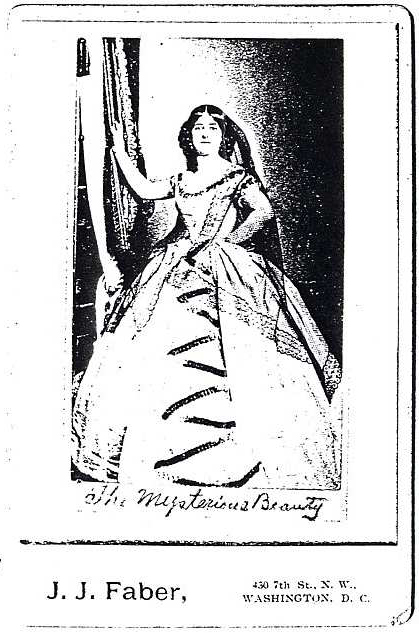
It is therefore unsurprising that the images of Booth’s ladies would also be subjected to neglect or ignorant mistreatment. Such was the case when one of the custodians of the artifacts decided he really wanted to know the identity of the woman in the standing photo. Until she was recognized, some unnamed clerk nicknamed her “The Mysterious Beauty” and went so far as to write that moniker on the bottom of the original image itself.

The Mysterious Beauty Cabinet card

One must remember that the entire collection of assassination related artifacts stored by the Judge Advocate General’s office was still considered to be official evidence and property of the U.S. government. In the years after the assassination, several organizations had tried, and failed, to gain ownership of the artifacts. There were even efforts by various Judge Advocate Generals to rid themselves of the pesky items that garnered such macabre interest. The items were almost transferred to the Smithsonian before the Judge Advocate General’s office declared that even if they were transferred to the Smithsonian, the government would still own them and the Smithsonian essentially couldn’t do anything with them other than store them. After that, the Smithsonian was no longer interested.

With this in mind, it is amazing to picture a clerk of the Judge Advocate General’s office causally taking this CDV, a piece of government owned evidence that even the Smithsonian couldn’t be trusted with, out of the JAG office and into the Washington streets. The clerk walked to the nearby photography studio of J.J. Faber and had the photographer duplicate the image with “The Mysterious Beauty” inscription onto larger format images known as cabinet cards. A photocopy of one of the cabinet cards is pictured above. How many copies were made of this image is unknown, but it is likely that the unnamed clerk made enough copies to pass around. The original, defaced, image was subsequently returned to its governmental prison.

How long it took to correctly identify this beauty after her image was duplicated and passed around, or who eventually made the correct identification, is not known, but eventually the unnamed clerk’s effort paid off. On the back of the photocopied cabinet card pictured above (which was sent to author Francis Wilson in the 1910’s – 1920’s as he was working on his book about John Wilkes Booth), the following statement was recorded:

“The original of this picture was found, after his death, in the diary of John Wilkes Booth, the assassin of President Lincoln. It was not known for a long time who the subject of the picture was and the custodian of the ‘Booth diary’ and other articles connected with the great tragedy, stored in the archives of the War Department, had some copies made of it for the purpose of identification. It was finally recognized as being the picture of Fanny Brow, an actress who died many years ago. Since that time the words “The Mysterious Beauty” have been effaced from the original in the War Department.

War Department
Office of the Judge Advocate General

John P. Simonton
Custodian”

Indeed, this final image was determined to be that of actress Fanny Brown.

Revealed at last, John Wilkes Booth's "Mysterious Beauty" was Fanny Brown.

Revealed at last, John Wilkes Booth’s “Mysterious Beauty” was Fanny Brown.

Fanny Brown had known John Wilkes Booth since at least 1863 when they performed together throughout cities in New England. Gossip of the day even hinted at a romantic relationship between the pair, which would not be surprising given Booth’s established success in wooing women:

JWB and Fanny Brown Gossip

As clerk John Simonton* states, after Fanny Brown’s identity was established, the words “The Mysterious Beauty” were erased from the original image. However, as any museum curator will tell you, alterations to an artifact can never truly be erased. A close inspection of the bottom of Fanny Brown’s CDV shows the faint outline of the words that were once carelessly scribbled onto her gift to John Wilkes Booth:

The-Mysterious-Beauty-anima

A Fitting Repose

Eventually Alice Grey, Effie Germon, Helen Western, Lucy Hale, and Fanny Brown escaped their prison in the Judge Advocate General’s office. On February 5, 1940, the artifact evidence held by the JAG was officially transferred to the Lincoln Museum, also known as Ford’s Theatre. In the years since then, the ladies have spent some on display but still spent more time in a couple of National Park Service storage facilities. Today, however, all five of these beauties are on display in the assassination section of the Ford’s Theatre Museum.

Booth's Ladies

After so many years of being confined to a box, ignored, misidentified, and forgotten, it’s great to see these ladies on display so prominently at Ford’s Theatre. Their innocent beauty is a much needed contrast to the dark tools of the assassination that surround them. These images of Lucy Hale, Alice Grey, Effie Germon, Fanny Brown, and Helen Western perfectly represent the beautiful life that John Wilkes Booth mysteriously threw away when he committed his violent act of hate on April 14, 1865.

References:
Denver Rocky Mountain News, January 13, 1884 (republishes the article from the Cleveland Herald)
“Relics of a Tragedy”, The World, April, 26, 1891
The Richard and Kellie Gutman Collection
The Art Loux Archive
Ford’s Theatre Museum
Library of Congress
New York Public Library

*John Paul Simonton, the clerk who wrote the note on the back of the cabinet card explaining the story of “The Mysterious Beauty” is occasionally referenced by those who believe John Wilkes Booth was not killed on April 26, 1865. Simonton worked as a law clerk in the JAG office from 1877 – 1920. After his retirement, he wrote an affidavit in 1925 stating, in part, “I studied the evidence in this case and examined all the exhibits as an expert and found no definite proof that John Wilkes Booth was ever captured. The fact that John Wilkes Booth was captured could not be established before any court in the United States on the evidence submitted at the time of the trial and now on file at the War Department.” Conspiracy theorists use this as “proof” that Booth escaped. Interestingly, they largely ignore an 1898 letter from Simonton to Finis Bates (of the Booth mummy story) in which Simonton stated, “While I have not what may be styled direct or positive evidence that the man killed was Booth, I have such circumstantial evidence as would seem to prove the fact beyond doubt.” In addition, Simonton clearly states on the back of this cabinet card that “this picture was found, after his death, in the diary of John Wilkes Booth,” solidifying that it was his firm opinion that it was John Wilkes Booth who was killed. When it comes to his 1925 statement, Simonton is very clearly pointing out the fact of Booth’s death was not definitely proven at the trial of the conspirators and in this he would be correct. The object of the trial of the conspirators was not to conclusively prove that Booth was dead, it was was to try the conspirators for their involvement in Lincoln’s death. The files and evidence of the conspiracy trial do not definitely or directly prove Booth’s death as this was not the objective of the trial. However, evidence from sources outside the conspiracy trial (i.e. autopsy reports, the numerous identification of Booth’s body by his friends and family, official statements from David Herold, the Garrett family, the troopers that captured him, etc.) along with the circumstantial evidence presented at the conspiracy trial (i.e. Booth’s possessions taken from him after he was shot) do conclusively prove that Booth was killed.

Categories: History | Tags: , , , , , , , , | 11 Comments

Boothie Wonderland

With the holidays upon us, it’s time once again for our annual tradition of revising a classic Christmas Carol into a Lincoln assassination themed Boothie Carol. This year’s song is a remixed version of the classic, “Winter Wonderland”. I hope you all enjoy it in the humorous manner in which it is intended.

Boothiewonderland

Boothie Wonderland

As sung to, “Winter Wonderland”

A gun shot rings, are you listenin’?
In the lane, an assassin’s blitzin’
A terrible sight,
He slips through the night.
Fleeing in a Boothie Wonderland.

Far away, is his young guide,
“Old King Lincoln, has now died.”
They reflect on his deeds,
While exhausting their steeds.
Fleeing in a Boothie Wonderland.

At Surratt House they can get some whiskey,
From a man who’s had too much, himself.

Then they’ll find a doc who’ll fix him for free,
And later say he was dressed like an elf.

Later on, they’ll get tired,
As they wait, without a fire.
They’ll be dirty and bleak,
Waiting almost a week,
To go Boating in a Boothie Wonderland.

In Port Conway, they will meet three draftees,
Of the cause that Booth hoped to revive.
They lead them to the Garretts’ who were quite pleased,
To aid Booth, a wounded soldier in disguise.

But they’re found, ain’t it thrillin’?
With smoke and fire, the barn is fillin’.
The guide will bail out,
His master will pout.
Shot in a Boothie Wonderland

Previous years’ Boothie Carols can be read here:
“It’s the Most Wonderful Time of the Play” / It’s the Most Wonderful Time of the Year
“We Bruti” / We, Three Kings of Orient Are
“Wilkes Booth the Head Conspirator” / Rudolph the Red-Nosed Reindeer
“Lewis Powell is Coming For You” / Santa Claus is Coming to Town
“Little Doctor Mudd” / Little Drummer Boy

Categories: Levity | Tags: , | 6 Comments

The Fake “Mrs Surat”

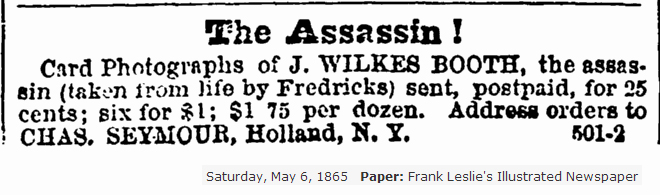
In the aftermath of Lincoln’s assassination, photographs of the assassin were highly sought after. Newspaper classifieds of the day often contained advertisements for Lincoln memorial ribbons right beside advertisements offering photographs of John Wilkes Booth.

JWB photos ad 1

The lucrative business of assassination related imagery extended not only to photographs of the assassin, but also to his conspirators. As a result, photographer Alexander Gardner was quick to reproduce his mugshot photographs of the accused conspirators into carte de visites for the masses to purchase:

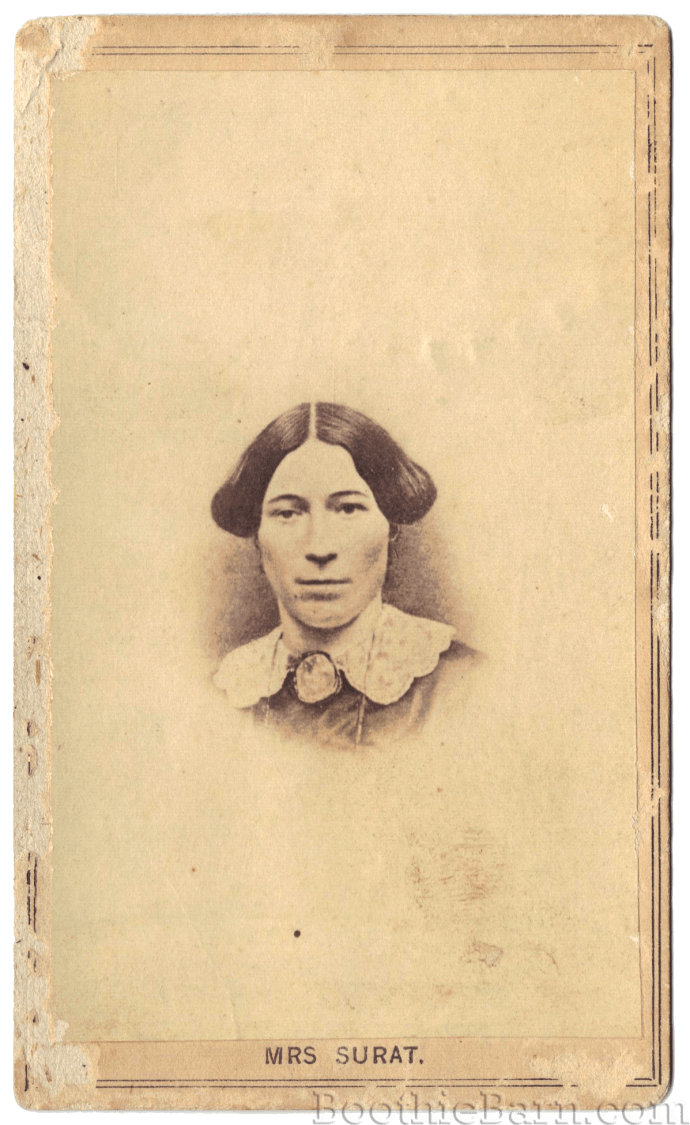
However, two of the conspirators who were put on trial, Dr. Samuel Mudd and Mary Surratt, never had their photographs taken with the rest of the conspirators.  While the public could easily do without a picture of Dr. Mudd (himself little more than another male face in Booth’s crew) the desire to see and own a picture of the solitary woman accused of helping plot the death of the President was something worth attaining. One would think that the lack of a legitimate mugshot photograph of Mary Surratt would hinder the creation of a massively produced CDV like the ones pictured above. However, such trivialities did not stop some unknown photographer from creating and selling the following CDVs of Mary Surratt:
Fake Mary Surratt CDV BoothieBarn

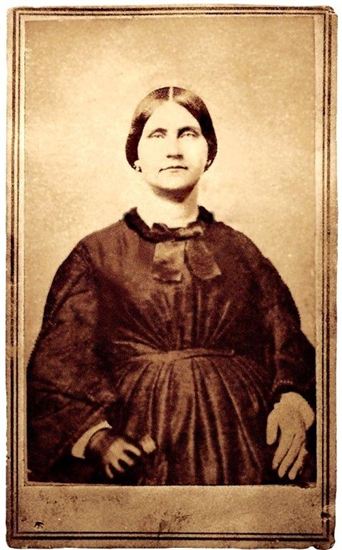
The small details of spelling Mary Surratt’s name correctly or attempting to find an actual likeness of the conspirator were not important to the photographer who created these fabricated CDVS. The public purchased and filled their albums with these fraudulent “Mrs Surat” images, with most having no idea that the woman pictured was not the assassin’s accomplice. The identity of this “Mrs Surat” has not been determined, but she bears very little resemblance to the true Mrs. Surratt:

Mary Surratt's CDV 1

Despite being fake, these period “Mrs Surat” CDVS are still sought after by collectors and can often sell for more money than legitimate images of John Wilkes Booth himself.

At the end of the day,  “Mrs Surat” is a perfect example of America’s unwavering devotion to the entrepreneurial spirit and the old adage, “Caveat emptor” – Buyer beware!

For more pictures of Mary Surratt, check out the Mary Surratt Picture Gallery.

Categories: History, Uncategorized | Tags: | 7 Comments

Picture This: A New Image of Michael O’Laughlen

At around 9:00 p.m. on April 17, 1865, a young, mustachioed man in handcuffs was brought to Washington, D.C.’s Navy Yard and placed aboard a ship named the U.S.S. Saugus. The Saugus was lying at anchor in the middle of the water in preparation for its role of becoming an island fortress to hold those arrested as conspirators in Lincoln’s assassination. This 24 year old man, whose presence on board christened the Saugus as a prison ship, was named Michael O’Laughlen.

O'Laughlen from Harper's Weekly

O’Laughlen was a long time friend of John Wilkes Booth. The two grew up as boys together on Exeter St. in Baltimore, where the Booth’s lived across the street from the O’Laughlen family. Though Booth had a more personal relationship with Samuel Williams O’Laughlen, Michael’s older brother, Booth still had fond memories of Michael. As both Booth and O’Laughlen grew up, their lives went in different directions. Booth became a noted Shakespearean star, following in the footsteps of his father and brothers, while O’Laughlen ended up joining a Maryland regiment which fought on the side of the Confederacy. Much of O’Laughlen’s time in the Confederacy was plagued with illness and by 1862 he was back home in Maryland assisting his brother in the hay and feed business.

In the fall of 1864, Booth reconnected with his old friend and the charismatic actor easily convinced O’Laughlen to join his plot to abduct President Lincoln for the benefit of the Confederacy. Delays and inaction continued for several months and O’Laughlen eventually lost interest in the plot and returned to work with his brother. On April 13, 1865, O’Laughlen traveled from Baltimore down to D.C. in order to take in the Grand Illumination celebration with friends. He allegedly made a couple of attempts to meet with Booth on this date, but failed to connect with the actor. When the assassination occurred on April 14th, O’Laughlen was terrified due to his intimate connection with the assassin. O’Laughlen returned to Baltimore but, after a few days, realized that his arrest would be unavoidable and imminent. O’Laughlen was the only conspirator to have turned himself in, arranging his surrender at the home of his sister.

And so it was that Michael O’Laughlen was the first of John Wilkes Booth’s conspirators to be placed aboard the Saugus, confined for his own protection away from mob violence that might do him harm but also in a condition that would prevent him from communicating with anyone. As other conspirators were arrested, they would be place aboard the Saugus as well, until the ship no longer had enough space to adequately isolate them all and the U.S.S. Montauk was brought alongside for additional space. O’Laughlen was kept aboard the Saugus during this time, confined to the ship’s head.

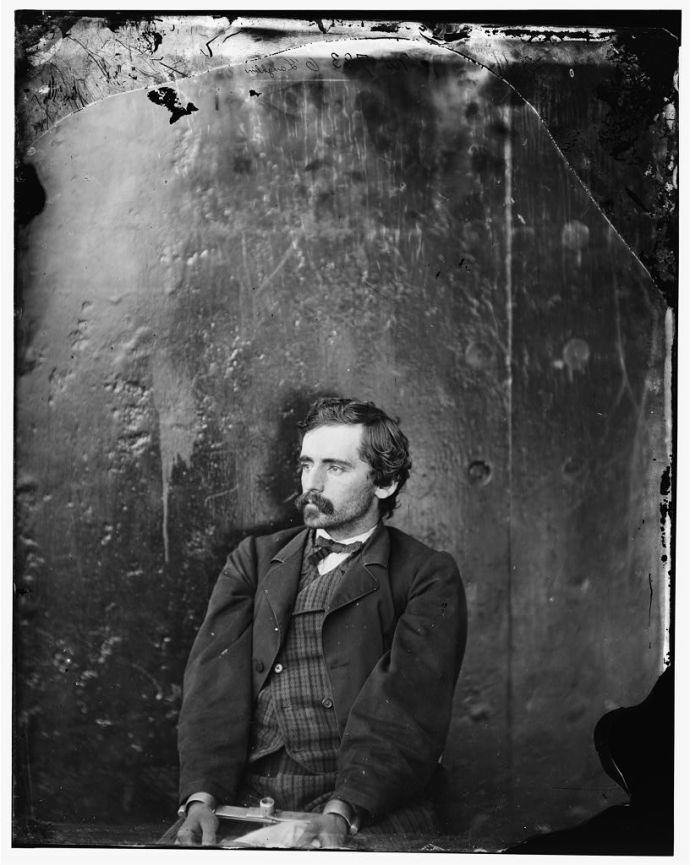
O’Laughlen was on the Saugus from April 17th until April 29th when all the accused aboard the ironclads were transferred to the Arsenal Penitentiary. The research of authors Barry Cauchon and John Elliott has shown pretty conclusively that during this period of confinement, photographer Alexander Gardner made four visits to the ships to photograph the conspirators. O’Laughlen’s mugshots were taken with the bulk of the other conspirators’ images on April 25th. The following are the two images previously known of Michael O’Laughlen:

Michael O'Laughlen Mug Shot Front

Michael O'Laughlen Mug Shot Profile

Until now, these two images were the only images we have ever found of Michael O’Laughlen. Mugshots such as these were used by artists to create engravings for the illustrated newspapers of the day. However as a low interest conspirator and one who was not involved in the actual assassination plot, few took the time to make an engraving of the mild mannered O’Laughlen. The public was far more interested in getting a look at Lewis Powell, the scoundrel who viciously attacked the Secretary of State, so far more impressive engravings were made of him.  One of the lesser known illustrated newspapers, the Washington Weekly Chronicle, contained engravings of most of the conspirators when they published their July 15, 1865 issue:

Washington Weekly Chronicle 7-15-1865

Though Lewis Powell took center stage, the Chronicle also provided this engraving of Michael O’Laughlen:

O'Laughlen Washington Weekly Chronicle

A detailed look will demonstrate that this particular engraving does not actually match either one of the two known mugshot photos of Michael O’Laughlen. It is somewhat similar to the hat-less photo of O’Laughlen, but this engraving shows more of his face than the original source image.

The easiest conclusion to draw is that the engraver added a little bit of their own artistic license when creating the drawing of Michael O’Laughlen. This is not unheard of. As a matter of fact, the large image of Lewis Powell in this edition does not match a known image of Lewis Powell. Despite the tagline that this engraving was based on a photograph taken especially for the Washington Weekly Chronicle, according to author Betty Ownsbey, this engraving of Lewis Powell appears to be a sort of composite between two images of Powell, instead.

Composite Powell Engraving Washington Weekly Chronicle

So it seemed reasonable that the engraving of Michael O’Laughlen in this issue was also not based on an actual photograph, but instead on an artist’s extrapolation of O’Laughlen’s mugshot photographs.

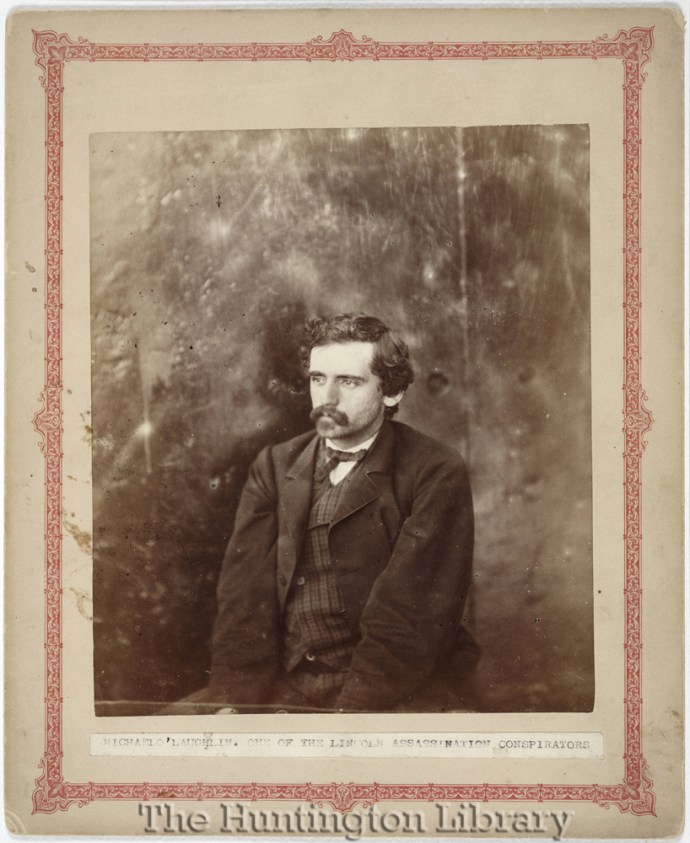
It turns out, however, that this engraving actually isn’t an extrapolation or artistic license. Today, while searching through the online digital collections of the Huntington Library in California, I decided to click on a thumbnail that I assumed was one of the two common mugshot photographs of Michael O’Laughlen.

O'Laughlen Thumbnail Huntington

Immediately I was struck with the suspicion that something was wrong. It was a strange feeling to have. Before me was obviously the hat-less mugshot photo of Michael O’Laughlen, and yet, at the same time, it wasn’t right. As a longtime researcher and reader on the Lincoln assassination I have become so accustomed to seeing the same images over and over again. My accustomed brain was saying, “Yep, this is the same picture of O’Laughlen you always see,” but, at the same time, I couldn’t shake the idea that something was different. Suddenly, I had to see Michael O’Laughlen’s mugshot photographs, I needed to silence the voice saying something was wrong. I opened up my O’Laughlen Picture Gallery and stared at the mugshots. Then it hit me, this image was not the same as the traditional hat-less mugshot. I was surprised and ecstatic to see that this was the photograph that the Washington Weekly Chronicle engraving was based on. Here, at long last, was O’Laughlen’s missing mugshot photograph:

New Michael O'Laughlen Mugshot Huntington Library

New Michael O'Laughlen Mugshot 2 Huntington Library

Unlike the original hat-less photo, O’Laughlen’s face is angled more towards the viewer in this image. The fact that O’Laughlen’s chin is slightly blurry here also hints that he was moving, possibly turning, when the photo was taken.

While Michael O’Laughlen escaped formal execution at the conclusion the trial of the conspirators, his ultimate fate would be equal to it. While serving his life sentence at Fort Jefferson in the Dry Tortugas, O’Laughlen was one of the many souls who contracted Yellow Fever in the fall of 1867. Despite the attentive care provided to him by his fellow prisoners, Dr. Mudd, Edman Spangler, and Samuel Arnold, Michael O’Laughlen perished from Yellow Fever on September 23, 1867. Dr. Mudd lamented that O’Laughlen had become a dear friend to him and that he would miss his, “warm friendly disposition” and, “fine comprehensive intellect.”

This newly discovered mugshot of conspirator Michael O’Laughlen gives us another, much needed angle on a man whose life was tragically cut short due to his involvement in John Wilkes Booth’s plot against Lincoln. It gives us an additional chance to look into the eyes of a young man who has realized that he allowed a charismatic friend to lead him down the path of his own destruction.

New Michael O'Laughlen Mugshot 3 Huntington Library

This image should also remind us that there are still new discoveries to be made. The book of the Lincoln assassination will never be completely written, and, as demonstrated here, it will never be completely illustrated either.

References:
The Huntington Library Digital Collections
A Peek Inside the Walls: 13 Days Aboard the Monitors by John Elliott and Barry Cauchon
Betty Ownsbey
The Assassin’s Doctor by Robert K. Summers
LOC

Categories: History | Tags: , , , , | 31 Comments

Behind the Walls of Rich Hill

Friends of Rich Hill's avatarFriends of Rich Hill

On Sunday, November 1, 2015, the Friends of Rich Hill will be hosting a special event called, “Behind the Walls of Rich Hill”.

Behind the Walls of Rich Hill Click to enlarge

This special “behind the scenes” look at the ongoing restoration of Rich Hill is for Friends of Rich Hill members only, however you can become a member on the day of the event by donating at least $10.

This is a unique chance to see the architectural “guts” of Rich Hill before they are covered up again during the restoration process.

We hope to see many of you on November 1, 2015 between 2:00 – 4:00 pm at Rich Hill which is located at Rich Hill Farm Rd., Bel Alton, MD 20611

View original post

Categories: Uncategorized | Leave a comment

What’s Missing? Episode 2

Once again it’s time to test your Boothie knowledge, resourcefulness, and observational skills with a game called, What’s Missing?

What's Missing Icon

Below you will find 20 images all related in some way to the Lincoln assassination story. Most of them have previously appeared on this website, either in the Picture Galleries or in one of the many posts. Your job is to look at the images carefully to see if you can determine “What’s Missing?” from the image. You can click on each image to enlarge it a bit and get a better look. When you’re stumped, or ready to check your answer, click on the “Answer” button below each image. Good luck!

What’s Missing A:

What's Missing A

What's Missing Answer Icon

What’s Missing B:

What's Missing Answer Icon

What’s Missing C:

What's Missing C

What's Missing Answer Icon

What’s Missing D:

What's Missing D

What's Missing Answer Icon

What’s Missing E:

What's Missing E

What's Missing Answer Icon

What’s Missing F:

What's Missing F

What's Missing Answer Icon

What’s Missing G:

What's Missing G

What's Missing Answer Icon

What’s Missing H:

What's Missing H

What's Missing Answer Icon

What’s Missing I:

What's Missing I

What's Missing Answer Icon

What’s Missing J:

What's Missing J

What's Missing Answer Icon

What’s Missing K:

What's Missing K

What's Missing Answer Icon

What’s Missing L:

What's Missing L

What's Missing Answer Icon

What’s Missing M:

What's Missing M

What's Missing Answer Icon

What’s Missing N:

What's Missing N

What's Missing Answer Icon


What’s Missing O:

What's Missing O

What's Missing Answer Icon

What’s Missing P:

What's Missing P

What's Missing Answer Icon

What’s Missing Q:

What's Missing Q

What's Missing Answer Icon

What’s Missing R:

What's Missing R

What's Missing Answer Icon

What’s Missing S:

What's Missing S

What's Missing Answer Icon

What’s Missing T:

What's Missing T

What's Missing Answer Icon

So how did you do? Let us know in the comments section below.

Categories: Levity | Tags: , , , , , , , , , , , , , , , | 9 Comments

A Prison Letter from Col. Samuel Cox

Friends of Rich Hill's avatarFriends of Rich Hill

Col. Samuel Cox of Rich Hill Col. Samuel Cox of Rich Hill

When Abraham Lincoln’s assassin, John Wilkes Booth, arrived at Rich Hill during the wee hours of April 16, 1865, he sent in motion of series of events that would have long reaching consequences for the occupants of the home. The reputation of Col. Samuel Cox, the owner of Rich Hill, as an ardent Southern sympathizer led Booth to his door. We don’t know what thoughts were racing through Cox’s head when he was face to face with the assassin on his doorstep, but, in the end, he decided he would assist the wounded man in some way. Cox allowed John Wilkes Booth and David Herold to enter his home for a meal but then sent them off into a nearby pine thicket, to be cared for by his foster brother, Thomas Jones.

Perhaps Cox hoped that his brief interaction and assistance to Booth would…

View original post 740 more words

Categories: Uncategorized | 1 Comment

The Lincoln Assassination on Aerial America

Aerial America Logo

Aerial America is a stunningly beautiful television show on the Smithsonian Channel. The premise of the show is simple: use awe inspiring aerial photography to tell compelling stories of a state’s varied history. The series, which premiered in 2010, has featured each of the 50 states, the District of Columbia, and has also expanded into other destinations. The hour long episodes feature exquisite fly overs of historic sites and vistas, along with a compelling retelling of their significance.

On April 26, 2015, the episode devoted to Washington, D.C. aired for the first time.  It was ironic date for the show to debut because not only is April 26 the same day John Wilkes Booth was cornered and killed, but the episode itself featured a five minute segment about Lincoln’s assassination and Booth’s escape. The episode provided beautiful shots of Ford’s Theatre, Baptist Alley behind Ford’s, the Surratt Tavern, Dr. Mudd’s House, Rich Hill, and Grant Hall where the trial of the conspirators occurred. Here are some screen grabs of the episode:

Ford's Theatre 1 Aerial America

Ford's Theatre 2 Aerial America

Baptist Alley Aerial America

Surratt House 1 Aerial America

Surratt House 2 Aerial America

Mudd House 1 Aerial America

Mudd House 2 Aerial America

To see the episode images of Col. Samuel Cox’s home of Rich Hill, please visit the Friends of Rich Hill blog post entitled, Rich Hill on Aerial America. and please consider following the Friends of Rich Hill blog to stay up to date with our rehabilitation of the home.

Grant Hall Aerial America

The episode also contained some generic shots of woods, swamps, and farms to represent other areas of the escape route but were clearly not the real places they were describing. Still, the five minute segment gave a wonderful look at part of the escape of John Wilkes Booth, from the unique aerial perspective.

You can visit the Aerial America page of the Smithsonian Channel’s website to check for future airings of the Washington, D.C. episode (next one appears to be November 28th at 5:00 pm EST).  You can also purchase the episode through video streaming websites like Amazon Video.

Categories: News | Tags: , , , , , , , | 15 Comments

Blog at WordPress.com.