Monthly Archives: December 2016

A “Thomas Jones” Carol

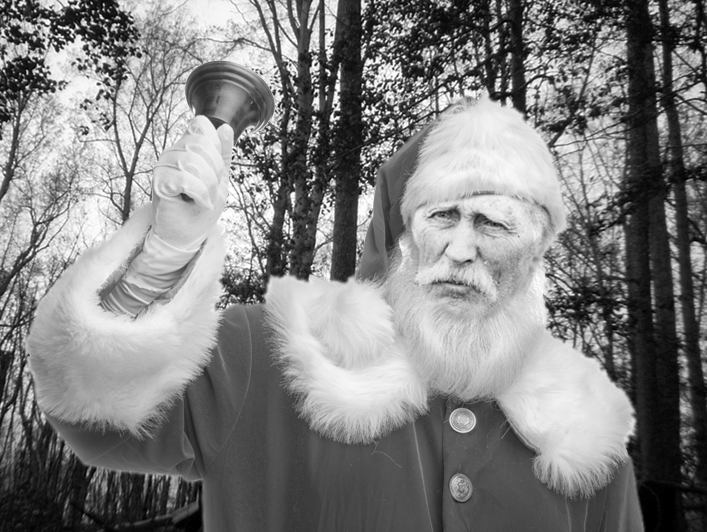
With the holidays almost here, it’s time for another installment of Boothie Christmas caroling where we revise a classic Christmas Carol into a Lincoln assassination themed Boothie Carol. Today’s song is a revised version of, “Silver Bells”. I hope you all enjoy it in the humorous manner in which it is intended.

Thomas Jones Christmas Carol

“Thomas Jones”

As sung to, “Silver Bells”

Easter morning, without warning,
Sam Cox comes down my street.
In the air there’s a feeling of danger.
I start going, without knowing
Why his dad wants to meet,
But I get to Rich Hill and I hear:

Thomas Jones, (Thomas Jones)
I’ve hidden Booth in the thicket
Lend a hand (Lend a hand).
Help this man (Help this man).
Make sure he gets river bound.

When I find him, Herold’s with him,
So I say to them both,
“We must wait for the troopers to leave here.”
He wants papers. I say, “Later.”
Then I give him my oath
No amount could cause me to betray

John Wilkes Booth, (John Wilkes Booth)
It’s not quite time to go boating.
Hunker down (Hunker down).
Don’t be found (Don’t be found).
Soon it will be rowing day!

Previous years’ Boothie Carols can be read here:
“It’s the Most Wonderful Time of the Play” / It’s the Most Wonderful Time of the Year
“We Bruti” / We, Three Kings of Orient Are
“Wilkes Booth the Head Conspirator” / Rudolph the Red-Nosed Reindeer
“Lewis Powell is Coming For You” / Santa Claus is Coming to Town
“Little Doctor Mudd” / Little Drummer Boy
“Boothie Wonderland” / Winter Wonderland

Categories: History, Levity | Tags: , , , , , , , | 7 Comments

Grave Thursday: Eaton Horner

Each week we are highlighting the final resting place of someone related to the Lincoln assassination story. It may be the grave of someone whose name looms large in assassination literature, like a conspirator, or the grave of one of the many minor characters who crossed paths with history. Welcome to Grave Thursday.


Eaton Horner

eaton-horner-grave

Burial Location: Loudon Park Cemetery, Baltimore, Maryland

Connection to the Lincoln assassination:

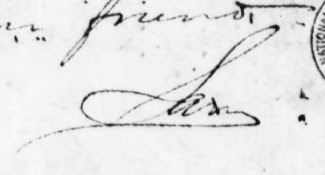
Eaton Horner was a detective working for Maryland Provost Marshal James L. McPhail in 1865. After the assassination of Abraham Lincoln, Horner, along with another detective named Voltaire Randall, were tasked with hunting down and finding conspirator Samuel Arnold. The authorities had searched John Wilkes Booth’s belongings at the National Hotel and had found a suspicious letter signed by a man named “Sam”.

Sam letter signature

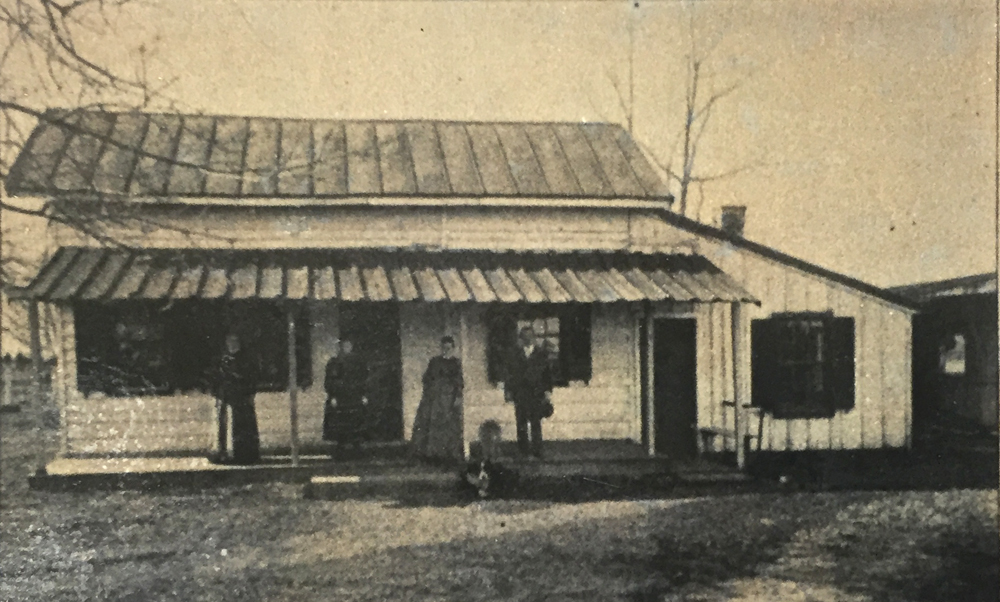
The letter was sent from a small village outside of Baltimore called Hookstown. The contents of the letter spoke of secret plots with sentences like, “You know full well that the G—t suspicions something is going on there; therefore, the undertaking is becoming more complicated.” When the identify of “Sam” was found out to be Samuel Arnold, a party traveled to Hookstown to the home of Arnold’s brother in order to arrest Sam.

arnold-home-in-hookstown

The Arnold home in Hookstown

However, when they arrived at Hookstown the detectives found that Sam Arnold was not there. He had found a job in Fortress Monroe, Virginia a couple of weeks earlier. With this information Eaton Horner and Voltaire Randall hopped on a ship and made their way to Fort Monroe. They arrested Arnold as he was sleeping in the small room in the back of the store where he worked. He was the first of the Lincoln assassination conspirators to be arrested. Arnold spoke freely to Horner and Randall and, when they returned him to Baltimore, he was presented with a letter from his father encouraging him to write a full confession of his involvement with John Wilkes Booth’s abduction plot. Arnold did this in the presence of Horner, Randall and another detective, William McPhail. I have previously posted Arnold’s confession here. Arnold was shipped down to Washington and imprisoned shortly thereafter.

Eaton Horner and Voltaire Randall tried in vain to receive a share of the reward money for their arrest of a Lincoln conspirator. Their initial request for reward money and accompanying recommendation from Provost Marshal James McPhail was passed over. But Horner and Randall decided to try and get a recommendation from someone with a little more clot, regardless of whether they knew him or not. The pair enticed a newspaper editor friend of theirs named C. L. Sanders  who had lived in Illinois during the Civil War to write a letter on their behalf to the former Governor of Illinois who was then a U.S. Senator from Illinois, Richard Yates:

“Balto. April 25th 1866
Hon. Rich’d Yates,
Dr Sir,
During the Presidential & Gubernatorial campaign of /64, it was my pleasing duty to edit the “Macomb Journal” McDonough Co. Ill & in that capacity met you on several occasions. My object in addressing you is to secure your interest in the behalf of two detectives who contributed more to the arrest of the Conspirators than any other parties. Mr. Eaton G. Horner & Mr. Voltaire Randall of this city arrested Arnold & gave the information which led to the arrest of Payne, Herold, & Atzerodt, & fastened the assassination of our great & fond President upon Booth. Because the arrest was made & the information given before any reward was offered, these two men have been deprived of any portion of the reward.
I would earnestly solicit your interest in their behalf & would refer you for fuller particulars in the case to Hon. Jno. L. Thomas, H. R. member from this city.
Hoping Sir, for your influence in this matter, I have the honor to remain
Very Respectfully,
Your obt. Servt
C. L. Sanders
221 Balt. St.
Balt. Md.”

Amazingly, even though neither Horner or Randall were constituents of Sen. Yates, and the fact that the former Governor had no idea who they were, he did send a letter on their behalf to the War Department:

“Washington DC
May 2, 1866
Hon. E. M. Stanton
Secretary of War
Sir,
I have the honor to refer to you, for your consideration, the enclosed letter of Mr. Sanders, in relation to the distribution of the awards in the conspiracy case.
If the facts stated by Mr. S. are correct, it would seem that the claim is a just one.
Very respectfully,
Your obt Svnt
Rich. Yates
Senator”

It was a valiant effort on the part of Eaton Horner and Voltaire Randall, but it did not help. No reward money was ever given for the arrest of Samuel Arnold.

Eaton Horner is buried in Loudon Park Cemetery in Baltimore. There are many others buried in Loudon Park including John T. Ford and his brother James, Ford’s Theatre stagehand Henry James, and George Atzerodt’s brother John Atzerodt who also worked from Provost Marshal James McPhail.

GPS coordinates for Eaton Horner’s grave: 39.281038, -76.677574

Categories: Grave Thursday, History | Tags: , , | 2 Comments

Grave Thursday: Dr. William Queen

Each week we are highlighting the final resting place of someone related to the Lincoln assassination story. It may be the grave of someone whose name looms large in assassination literature, like a conspirator, or the grave of one of the many minor characters who crossed paths with history. Welcome to Grave Thursday.


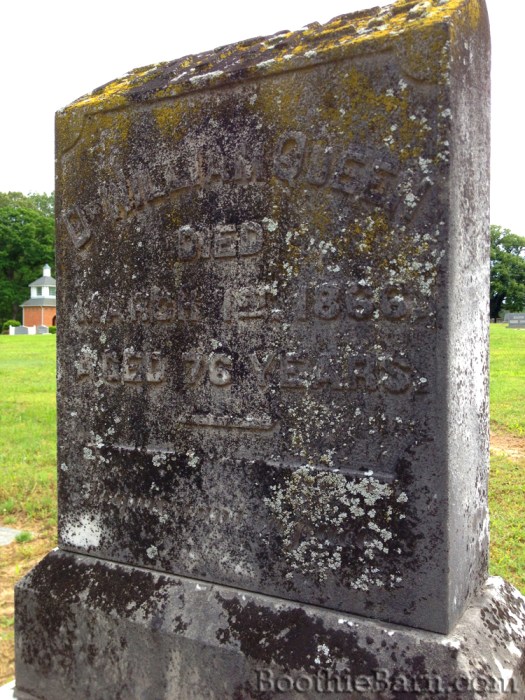
Dr. William Queen
dr-william-queen-grave-1

Burial Location: St. Mary’s Cemetery, Bryantown, Maryland

Connection to the Lincoln assassination:

Dr. William Queen was a physician in Charles County, Maryland who lived about six miles south of Bryantown. On November 11, 1864, John Wilkes Booth rode the stage down from Washington, D.C. to Bryantown where he spent the night. In his possession, Booth carried a letter of introduction to Dr. Queen. Booth had acquired this letter while he was in Montreal, Canada in the middle of October from a Confederate smuggler named Patrick Martin. Martin was from St. Mary’s County and still had contacts with the underground network of Confederate sympathizers and operatives back in Southern Maryland. Booth was anxious to connect with these individuals for his planned abduction plot against Abraham Lincoln. When Booth arrived in Bryantown the first time, he was able to send word to Dr. Queen that he wanted to meet with him. The next day Dr. Queen’s son, Joseph, picked Booth up at the Bryantown Tavern and brought him to his father’s home. John Wilkes Booth spent the night of November 12, at Dr. Queen’s home.

Dr. Queen’s son-in-law, John Thompson, would later testify at the trial of the conspirators that Booth’s letter of introduction to the doctor only mentioned that the actor was looking to purchase some land in the area and asked Dr. Queen to furnish him with assistance in this regard. This, however, is likely just a cover story that Booth and the Queen family committed to using. Booth’s true purpose was to scout the lands and roads of Charles County while simultaneously looking for individuals who would assist him in his abduction plot.

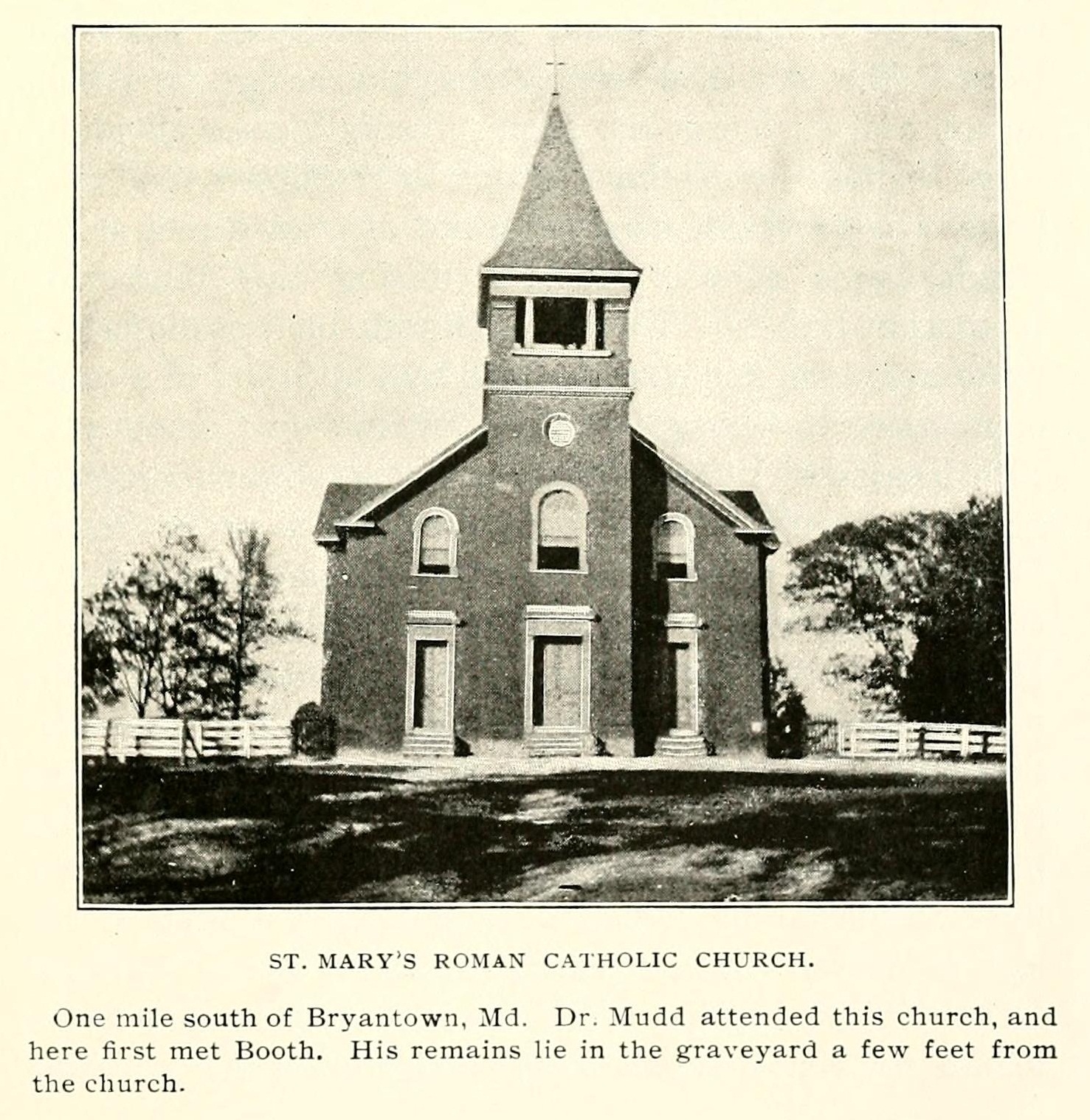
Dr. Queen was about 73 years old when Booth first arrived at his home. He was quite infirm and less than a year later he would become bedridden. So while Dr. Queen could not provide Booth with much in the way of physical assistance, his knowledge of the people and land was helpful. The next day, on November 13th, John Wilkes Booth joined Dr. Queen and his family in attending church at St. Mary’s Church in Bryantown. “Coincidentally” Dr. Samuel Mudd made the decision to attend St. Mary’s Church that Sunday rather than his home church of St. Peter’s. John Thompson introduced John Wilkes Booth to Dr. Mudd outside of the church before services commenced.

St. Mary's Church Oldroyd

John Wilkes Booth would return to Dr. Queen’s home after church was over and subsequently return back to Washington.

Booth was not absent from Charles County for very long, however. On December 17th, he returned to Bryantown and spent another night with Dr. Queen and his family. The next morning, a Sunday, Booth once again attended church at St. Mary’s before he met up with Dr. Mudd. For the next few days, Dr. Mudd, not Dr. Queen, would be Booth’s host. In this way, Dr. Mudd came to replace Dr. Queen as a more able bodied facilitator of Booth’s plot. Mudd introduced the actor to Thomas Harbin, a Confederate agent who signed on to help with the abduction plot. It was also during this trip that Dr. Mudd helped Booth to purchase a horse from the doctor’s next door neighbor, George Gardiner. Booth returned to Washington on December 22nd, and, the very next day, Dr. Mudd took a visit to Washington where he happened to introduce Booth to John Surratt, who would become another willing and helpful participant in Booth’s plot.

After the assassination of Lincoln and the subsequent investigation, Dr. Queen avoided arrest due to his declining health that had left him bedridden. His son-in-law, John Thompson, was taken up to Washington in his stead. Thompson would testify at the trial about Booth’s arrival in the county and his introduction to Dr. Mudd.

dr-queen-obit-1866

Dr. Queen’s health continued to deteriorate and, on March 1, 1866, he died at his home near Bryantown. He was buried next to his first wife and his son Joseph (the son who had transported Booth to the Queen home in November of 1864) who had died in November of 1865. The family plot is near the back of St. Mary’s Church cemetery, the same cemetery where Dr. Mudd would later be buried.

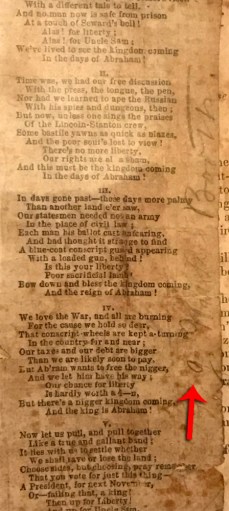
One of the artifacts in the collection of the Dr. Samuel A. Mudd House Museum is a newspaper clipping that was owned by one of Dr. Queen’s daughters, Molly Queen. The clipping contains a poem called “Then and Now” which was a piece of political propaganda related to the election of 1864. The poem laments the poor condition of the country due to the last four years of Lincoln’s presidency and encourages the reader to vote for the Democratic candidate, George McClellan. The poem ends with the line: “Three cheers for Mac and the good times coming; And a groan for Abraham!”

While this piece completely fits with the political point of view of the Queen family and so many others in Southern Maryland, what makes this artifact unique and worth saving is an ambiguous signature which is affixed in pencil to the side of the clipping:
queen-clipping-mudd-house

queen-clipping-booth-signature

John Wilkes Booth did visit the Queen family for the first time just a few days after the election of 1864 and so it is likely that Molly Queen had this clipping out and around during the actor’s visit. Even if this is not actually John Wilkes Booth’s signature, it still is a fascinating artifact connecting John Wilkes Booth and the family of Dr. William Queen.

GPS coordinates for Dr. William Queen’s grave: 38.539667, -76.836000

Categories: Grave Thursday, History | Tags: , , , | 16 Comments

Grave Thursday: Frederick Aiken

Each week we are highlighting the final resting place of someone related to the Lincoln assassination story. It may be the grave of someone whose name looms large in assassination literature, like a conspirator, or the grave of one of the many minor characters who crossed paths with history. Welcome to Grave Thursday.


Frederick Aiken

frederick-aiken-grave-1

Burial Location: Oak Hill Cemetery, Washington, D.C.

Connection to the Lincoln assassination:

Frederick Aiken was one of Mary Surratt’s defense counsels at the trial of the conspirators. A dramatic version of his exploits during the trial was the subject of the 2010 movie, The Conspirator, starring James McAvoy and Robin WrightDuring the course of researching for the film, it was discovered by researcher Christine Christensen that Aiken had been buried in an unmarked grave in D.C.’s Oak Hill Cemetery. The Surratt Society completed a fundraiser to mark Aiken’s grave. I briefly posted about the installment of the grave marker in 2012.

I highly recommend Christine Christensen’s article about Aiken’s life called, Finding Frederick.

Coincidentally, Frederick Aiken is buried within throwing distance of another attorney at the trial of the conspirators, William Smith Cox, the lawyer who represented Michael O’Laughlen. Later, Walter Cox would be involved in a trial for another assassinated president when he was the presiding judge at the trial of Charles Guiteau, the assassin of President James Garfield.

aiken-and-coxs-grave-oak-hill


GPS coordinates for Frederick Aiken’s grave: 38.914285, -77.058428

Categories: Grave Thursday, History | Tags: , , , , | 1 Comment

Blog at WordPress.com.