Posts Tagged With: Ruggles

A Genuine Garrett Farm Relic? Patrick Tighe and the Patrols of the 16th NY

My friend Carolyn Mitchell alerted me to this lot currently up for bid from Raynor’s Historical Collectible Auctions. It is a collection of materials from a Civil War veteran by the name of Patrick Tighe.

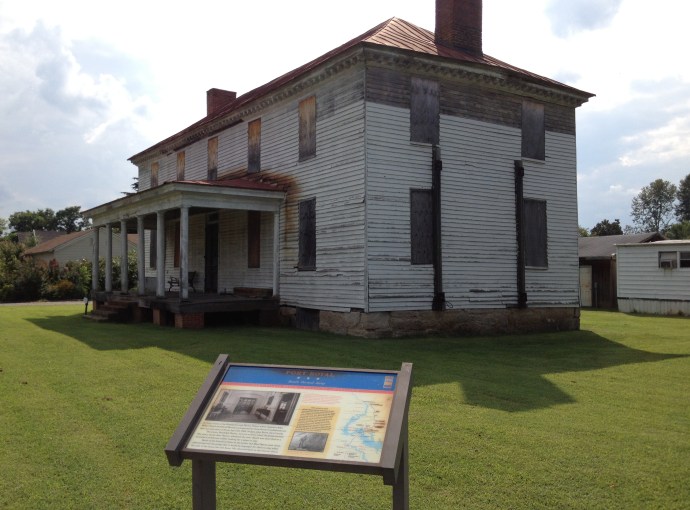
The lot includes some of Tighe’s possessions including his Grand Army of the Republic medals and badges, his pocket watch, a memorial ribbons for President Lincoln, and also some CDVs and books which are not pictured. The most interesting part of the lot, and the likely reason that the starting price is $3,500, is the large piece of wood that has a replica wanted poster affixed to it. According to the lot description the piece of wood is from the Garrett house, on the porch of which John Wilkes Booth died on the morning of April 26, 1865.

The lot description states, in part:

“Patrick Tighe, (The CW Date Base spells it TIGH) at age 38, enlisted September 3, 1864 at Avon New York, mustering into Company H, 16th NY Cavalry and mustered out May 29, 1865. Tighe was a member of of the detachment of the 16th New York that had the distinction of killing Lincoln assassin John Wilkes Booth and apprehending accomplice David Herold. Post war, Tighe joined GAR post #235, Avon New York. The impressive 13″ x 18” barn wood has two period labels, “GAR Post 235, H.C. Cutler, Avon New York” where Tighe was a member and the donor of the piece. The second label “This barn siding was from the Garnett House where John W. Booth was killed”. When the Post closed, c1930, the siding was returned to the Tighe family. The siding has a reproduction April 20, 1865 Reward Poster for the Assassins, 11″ x 15″…”

Carolyn knew this lot would pique my curiosity due to my interest in the death of Booth at the Garrett farm. But the name of Patrick Tighe did not ring a bell. With some research I confirmed that Pvt. Tighe was a member of the 16th NY Cavalry. As we know, a detachment of the 16th NY were the ones who tracked down John Wilkes Booth. However, when I consulted a list of the soldiers of the 16th NY present at the Garrett farm when Booth was shot and killed, Tighe’s name is not included. Nor did Tighe receive any reward money for the capture of Booth. Tighe wouldn’t be the first member of the 16th NY Cavalry to later claim to have been at Booth’s death even though he wasn’t. Several others who were part of the 16th NY but not at the Garrett farm embellished and lied about their role in hunting down Booth in the decades that followed. I was ready to chock up Patrick Tighe’s piece of Garrett farmhouse wood as yet another fake, just like the replica wanted poster attached to it.

But I decided to dig a little bit more on Mr. Tighe. Though Tighe never received any money for Booth’s capture, I was surprised to find that he did make an application to the government for a share of the reward. Here are the microfilm scans of Tighe’s official application for reward money followed by a transcription:

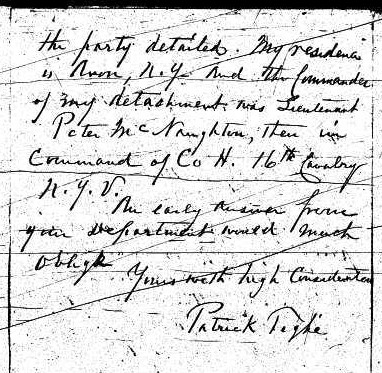
“Avon, Dec. 8th 1865
To/ The Adjutant General of the Armies of the U.S.

Your petitioner, Patrick Tighe private in Co. H. 16th Cavalry N.Y.V humbly represents that he was one of the Cavalry detailed to arrest, seize, and if necessary kill the Assassin of Abraham Lincoln, and his accomplices.
As the Government has set apart a sum to reward those engaged to secure such arrest, I hereby put in my claim for such part of the reward as I may be entitled to – being myself, Patrick Tighe aforesaid, one of party detailed. My residence is Avon, N.Y. and the Commander of my detachment was Lieutenant Peter McNaughton, then in command of Co. H. 16th Cavalry N.Y.V.
An early answer from your department would much oblige.

Yours with high Consideration
Patrick Tighe”

I was a bit perplexed by this reward application. It is carefully worded to imply that Tighe was with the group that arrested Booth and Herold, but it doesn’t explicitly state that. It just states that Tighe was detailed with attempting to find the assassins. Hundreds of men were put in the field to search for Booth and his accomplices and many of them filed reward claims only to be denied, as Tighe was. But his ongoing connection to the 16th NY was intriguing.

I contacted Steve Miller who is THE expert on Boston Corbett and the 16th NY. He stated Tighe’s name didn’t ring any bells but the commander Tighe mentioned, Lt. Peter McNaughton, did. Steve reminded me about how different detachments of men from the 16th NY Cavalry were all over the place during the manhunt. John M. Lloyd, the renter of Mary Surratt’s tavern who became a key prosecution witness against her, was arrested by men of the 16th NY. On April 21st, Dr. Mudd was arrested by Lt. Alexander Lovett of the Veteran Reserve Corps. accompanied by Lt. William Farrell (and men) of the 16th. At the same time Booth was shot and killed a separate detachment of men from the 16th NY claimed to have been on his trail and only four miles from the Garrett farm. Lt. Peter McNaughton, in his own reward application, claimed to have been one of the men present at Dr. Mudd’s arrest.

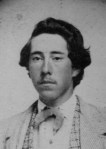
Lt. Peter McNaughton
Courtesy of Steven G. Miller

McNaughton was also one of the leaders of what Steve calls the second Garret farm patrol. The first Garrett farm patrol is the one we are familiar with. Those were the 26 guys led by Lt. Edward Doherty, along detectives Everton Conger and Luther Baker, who tracked and killed Booth at the Garrett farm. All of those participants received a share of the reward money. After Booth’s body was transported by these men up to Washington, it was determined that a second patrol was needed to return to the northern neck of Virginia in order to retrace and determine Booth’s route through the region. This second Garrett farm patrol consisted of 20 Cavalry men of the 16th NY guided by detective Luther Baker, who had been present at Booth’s death. The soldiers were commanded by Lt. McNaughton.

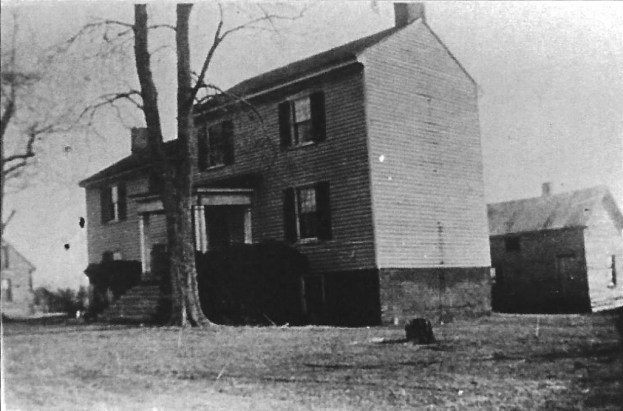
The group was also accompanied by a reporter for the New York Herald, a man by the name of William N. Walton. How Walton managed to gain access to this detachment is unknown. Late on April 29th, the group set out from D.C., steamed south, and then headed overland to the Garrett farm. They arrived back at the Garrett farm just before sundown on April 30th. Several members of the detachment remained at the Garrett house overnight as did William Walton. During this time, Walton sketched the Garrett house and the remains of the burned down barn. These sketches would later be turned into woodcuts and published in the May 20 edition of Harper’s Weekly.

As the bulk of the second Garrett farm patrol rested at the farm, some men were ordered out in search of Willie Jett, the Confederate private who had dropped John Wilkes Booth off at the Garrett farm in the first place. Jett had originally been arrested by the first Garrett farm patrol. He was the one who led the soldiers from Bowling Green back to the Garrett farm where Booth was hiding out in the barn. Jett witnessed Booth’s death and then traveled northward with Luther Baker, a couple soldiers, and Booth’s body. However, during the trek north through Virginia, Luther Baker released Jett and allowed him to go home. When the party arrived in D.C., the Secretary of War was angry at Baker for releasing Jett and immediately ordered his arrest.
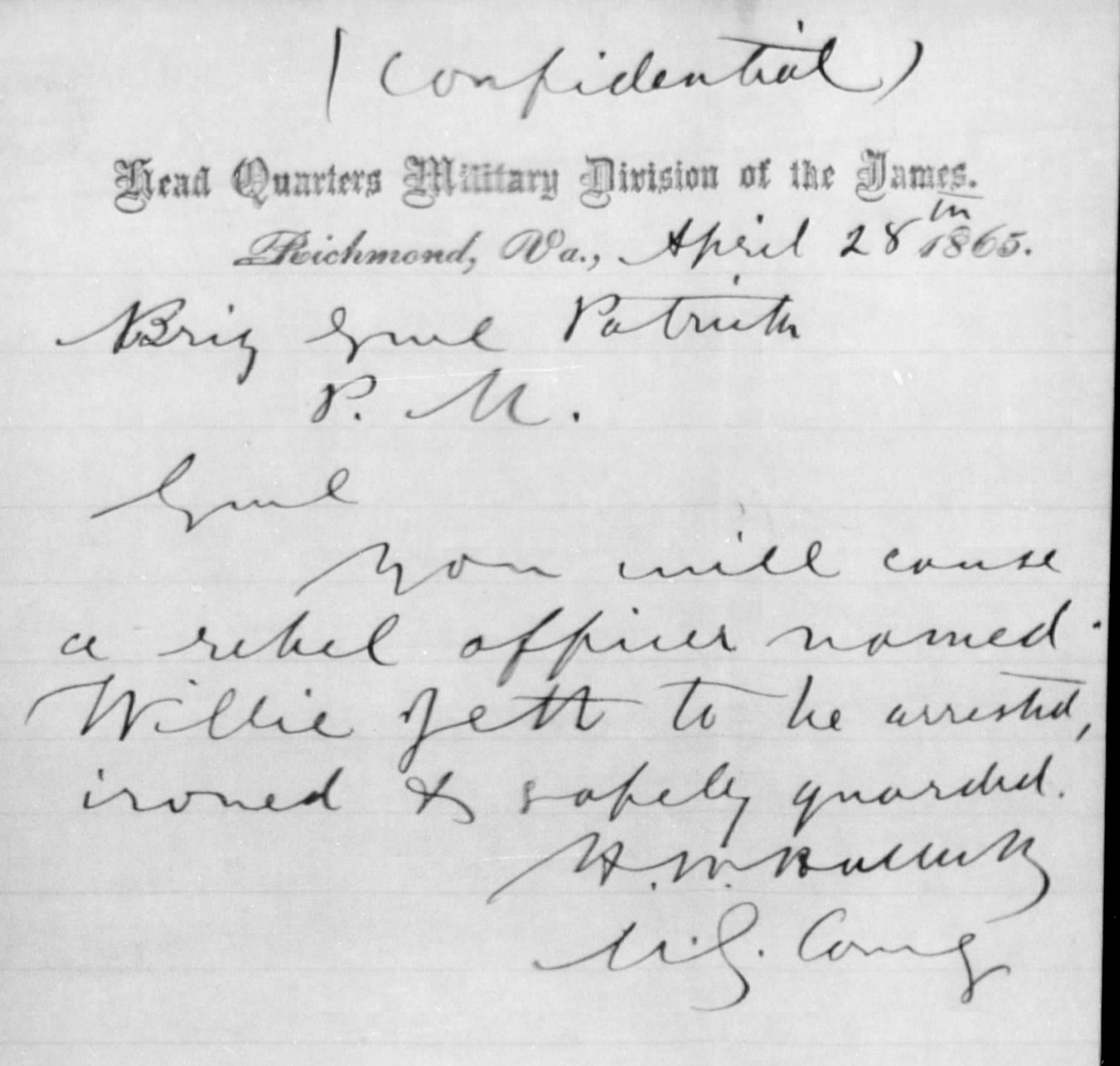
An arrest order for Willie Jett dated April 28th.

Recapturing Jett was a key part of the second Garrett farm patrol’s mission. Earlier on April 30th, Mr. Garrett had visited Willie Jett in Bowling Green and attempted to get Jett to sign a statement attesting that he had brought Booth to the farm under an assumed name. Jett had decline to sign the statement. When the troopers attempted to find Jett in Bowling Green, they discovered he had departed. Eventually they hunted him down to the home of his father in Westmoreland County and placed him under arrest.
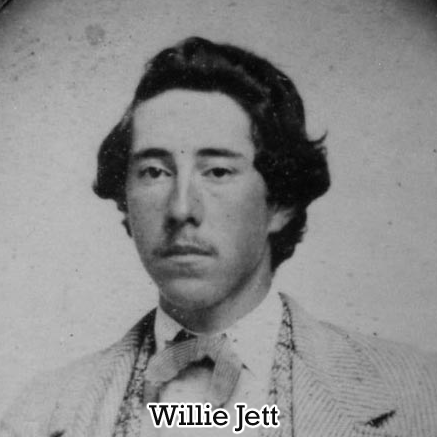
Over the course of the next couple of days, the second Garrett farm patrol retraced Booth and Herold’s movements backwards. They spoke with several people who interacted with the fugitives during their escape and arrested several of them. They seemed to be especially keen on arresting folks with the first name of William. In addition to Willie Jett, the patrol rounded up William Rollins, the fisherman in Port Conway who had agreed to take Booth and Herold across the Rappahannock River before Jett and the other two Confederates arrived, William Lucas, the free Black man that Booth essentially evicted from his home after being turned away by Dr. Stuart, and William Bryant, the man who transported the fugitives from Mrs. Quesenberry’s to Dr. Stuart’s home of Cleydael. The group also interviewed Mrs. Quesenberry and her daughter who had spoken with David Herold after the pair made landfall in Virginia.

On May 3rd, the second Garrett farm patrol arrived back in D.C. and deposited their detainees in the Old Capitol Prison. They also passed along the information they had gained from their Virginia sojourn. The next day, William Walton published a lengthy article in the New York Herald documenting what he had learned about the escape route of John Wilkes Booth as a result of his trip with the second Garrett farm patrol.

From Walton’s article, it appears that the second Garrett farm patrol was very successful in establishing JWB’s escape route through Virginia. However, it was decided by the authorities in Washington that the second patrol had not done an adequate job in acquiring all of the witnesses that were needed. As a result, a third patrol of men from the 16th NY was quickly assembled in order to make a return trip. Detective Baker did not join this group and it was, instead, solely led by Lt. McNaughton who was now familiar with the territory. Reporter William Walton later wrote about this third trip but it’s difficult to tell if he was speaking from his own firsthand experiences with this third patrol or if he was relating things that were told to him by Lt. McNaughton, whom he appears to have befriended.

The third group of men from the 16th NY Cavalry departed D.C. late on May 4th. Rather than going to the Garrett farm, however, this detachment was tasked with finding and arresting Absalom Bainbridge and Mortimer Ruggles, the Confederate soldiers who ran into Booth with Willie Jett at the Rappahannock River. The posse traveled to Friedland, the home of Confederate General Daniel Ruggles, in King George County, Virginia. There they found and arrested Mortimer Ruggles, who was Gen. Ruggles’ son. Friedland plantation was also the home of Absalom Bainbridge as his mother and Mortimer Ruggles’ mother were sisters. Bainbridge was not at the home when Lt. McNaughton and his men got there but, according to Walton’s account arrived back about a half hour later. The two cousins were transported and placed on a waiting steamer while the group then traveled to Dr. Stuart’s home of Cleydael. While the second Garrett farm patrol had interviewed Dr. Stuart a few days earlier, they had not taken him into custody. This time, however, he was compelled to come with the men. On May 6, the whole detachment, with their three prisoners in tow, arrived back in D.C.

As stated, William Walton wrote about this third expedition for the New York Herald. You can read that article here.

Now that we have a handle of the different patrols of 16th NY Cavalry that visited Virginia, let’s return to the subject of Patrick Tighe and his alleged piece of wood from the Garrett house. As we have established, Pvt. Tighe was not one of the soldiers of the 16th NY Cavalry present in the first Garrett farm patrol that cornered and killed John Wilkes Booth on April 26, 1865. The third patrol which traveled into Virginia on May 4th did not stop at the Garrett farm but stayed in King George County the whole time. Therefore, the only way for this relic to be genuine and to have been  personally acquired by Pvt. Tighe is if he was a member of the second Garrett farm patrol that arrived at the farm on April 30th.

The problem is, there’s no way to prove that Tighe was part of that patrol. The only reason the specific members of the original Garrett farm patrol are known is because of the fight for the reward money. Lt. Doherty made a list of the men under his command in order to ensure each one received their fair share. There are no rosters of the second or third group of 16th New Yorkers who traveled into Virginia during the subsequent visits. Patrick Tighe’s application for reward money is vague. He might have been with Lt. McNaughton and the second Garrett’s farm patrol, or he might have been with him at the arrest of Dr. Mudd or another part of the manhunt. Without more information, we can never be sure.

Patrick Tighe’s grave in Avon, NY.
The stone is incorrect. Patrick Tighe died on April 3, 1907.

While the relic being genuine is an intriguing possibility, I’ll admit that the size of the wood piece and the corresponding lot description gave me some pause. Why would the Garretts allow a solider to take such a sizable piece (13″ x 18″) of wood from their house, which was their main residence and undamaged from the fire that consumed their barn? The Garretts continued to reside in the farmhouse for decades after Booth’s death and while a sneaky soldier might be able to break off a small relic, it seems improbable that Tighe could have walked off with a large piece of the house without any of the Garretts noticing and objecting. The phrasing of the lot description is also confusing as it is refers to the relic as “barn wood” from the “Garnett [sic] house”. Why would the siding of the house be called barn wood?

It appears that there are some quality control issues over at this auction house. I zoomed into the small label affixed to the wood. It’s a bit pixelated as the original image isn’t all that big. Still, in my opinion, this label reads, “This barn siding was from the Garrett barn where John W. Booth was killed.”
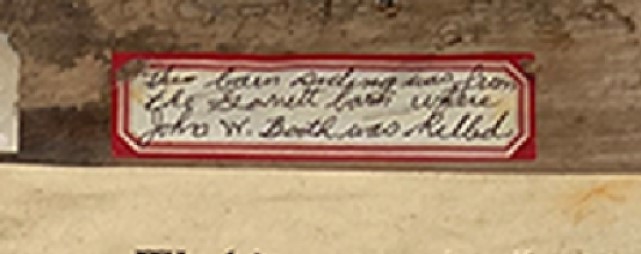
The wood relic coming from the remains of the burned down barn makes more sense than a piece pried off of the Garrett house. I wish the auction house had more images of the wood piece. It would be interesting to see if it bears any evidence of having been charred or blackened.

At the end of the day, however, this lot is far too pricey for a centerpiece item whose authenticity is only a “maybe”. Two of the claims in the lot description, that Tighe was there when Booth was killed and that the wood came from the Garrett “house” have been disproven. While it’s still possible that the piece is genuine and something that Pvt. Tighe acquired as a member of the second Garrett farm patrol, without further evidence, such claims would be impossible to prove. Still, this relic served as an illuminating jumping off point to learn more about the different patrols of the 16th New York Cavalry that were sent into Virginia in order to retrace the steps of John Wilkes Booth. And, hey, if anyone wants to purchase the lot before it ends on August 27th, I certainly wouldn’t say no to a gift.

Many thanks to Carolyn Mitchell for making me aware of this auction item and to Steve Miller for sharing his picture of Lt. McNaughton and his expertise with the 16th NY Cavalry with me. 
Categories: History, News | Tags: , , , , , , , , , , | 23 Comments

The Lincoln Assassination on this Day (December 5 – December 11)

Taking inspiration from one of my favorite books, John Wilkes Booth: Day by Day by Art Loux, I’m documenting a different Lincoln assassination or Booth family event each day on my Twitter account. In addition to my daily #OTD (On This Day) tweets, each Sunday I’ll be posting them here for the past week. If you click on any of the pictures in the tweet, it will take you to its individual tweet page on Twitter where you can click to make the images larger and easier to see. Since Twitter limits the number of characters you can type in a tweet, I often include text boxes as pictures to provide more information. I hope you enjoy reading about the different events that happened over the last week.

NOTE: After weeks of creating posts with multiple embedded tweets, this site’s homepage now tends to crash from trying to load all the different posts with all the different tweets at once. So, to help fix this, I’ve made it so that those viewing this post on the main page have to click the “Continue Reading” button below to load the full post with tweets. Even after you open the post in a separate page, it may still take awhile for the tweets to load completely. Using the Chrome browser seems to be the best way to view the tweets, but may still take a second to switch from just text to the whole tweet with pictures.

Continue reading

Categories: History, OTD | Tags: , , , , , , , , , , , , , | Leave a comment

Grave Thursday: Virginia Clarke

Each week we are highlighting the final resting place of someone related to the Lincoln assassination story. It may be the grave of someone whose name looms large in assassination literature, like a conspirator, or the grave of one of the many minor characters who crossed paths with history. Welcome to Grave Thursday.


Virginia Clarke

The home of Virginia Clarke outside of Bowling Green, Virginia.

The home of Virginia Clarke outside of Bowling Green, Virginia.

Burial Location: Greenlawn Cemetery, Bowling Green, Virginia

virginia-clarkes-grave

Connection to the Lincoln assassination:

One of the most forgotten and overlooked parts of the escape of the assassins of Abraham Lincoln involves the home of Mrs. Virginia Clarke. This is probably due to the fact that Mrs. Clarke’s home is technically not a part of John Wilkes Booth’s escape route. The lead assassin never got as far south as Mrs. Clarke’s home and, therefore, never saw the home pictured above. However, Booth’s accomplice and fellow fugitive, David Herold, not only saw this house but spent the night at Mrs. Clarke’s during the brief period of time where he separated from the assassin. On the afternoon of April 24, 1865, John Wilkes Booth and David Herold were waiting at the ferry crossing of Port Conway, Virginia, waiting to cross over to Port Royal on the other side of the Rappahannock River. As they waited, three Confederate soldiers rode up to the ferry landing. After some parlay, the fugitives announced their identities to the men. The soldiers, Willie Jett, Absalom Bainbridge and Mortimer Ruggles vowed to give Booth and Herold assistance on their escape. After crossing the ferry Jett attempted to find Booth refuge at the home of Sarah Jane Peyton, but she rebuffed him after seeing the condition Booth was in. The group of five then rode about two miles south of Port Royal where Jett dropped Booth off with the Garrett family. It was at this time that Herold separated from John Wilkes Booth for the first time since the pair had met up at Soper’s Hill outside of Washington on April 14th. While Booth enjoyed the hospitality of the unsuspecting Garrett family on the night of April 24th, Herold made his way with Absalom Bainbridge to Mrs. Clarke’s home.

David Herold briefly mentions this visit to Mrs. Clarke’s in his interrogation:

“One of the soldiers named Bennington [Bainbridge], was going to see a gentleman named Clark[e] whom I met some three or four years ago, & of whom I had heard people in Maryland speak. I do not know Clark’s christian name. Both Bennington & Clark had belonged to Mosby’s command. We went there and Bennington introduced me…We staid there all night.”

James Clarke, Herold and Bainbridge’s mutual acquaintance, was not at home when the pair arrived. Therefore Bainbridge had to introduce Herold to James’ mother, Virginia Clarke. Bainbridge introduced  Herold to Mrs. Clarke using the pseudonym of Mr. Boyd, the same name Jett had used to pass Booth off on the Garrett family.

Practically nothing is known about Herold’s stay with Mrs. Clarke and the next morning he was riding back with Bainbridge to Bowling Green to meet back up with Ruggles and Jett who had spent the night at the Star Hotel. Ruggles, Bainbridge, and Herold rode back up to the Garrett farm where Herold joined back up with Booth. The rest is history.

Mrs. Clarke’s home no longer stands. The area where it was once located has been transformed into a man-made lake.

Site of the Clarke house Caroline

When Virginia Clarke died in 1877, she was originally buried in a family cemetery belonging to her son-in-law’s family. However, when Fort A. P . Hill was created in Caroline County in the 1940’s, that family cemetery, along with many others, had to be removed. Greenlawn Cemetery in Bowling Green was created specifically to receive the transplanted graves of those originally interred on land now owned by Fort A. P. Hill.

Check out the Maps page for more details. For more information about the actions of Willie Jett, Absalom Bainbridge and Mortimer Ruggles click this link.

GPS coordinates for Virginia Clarke’s grave: 38.070225, -77.338979

Categories: Grave Thursday, History | Tags: , , , , , , | 12 Comments

A Visit to “The Trap”

On April 24, 1865, John Wilkes Booth, the fugitive assassin of President Abraham Lincoln, was dropped off at the Garrett farm just outside of Port Royal, Virginia. Over the prior ten days, Booth and his accomplice David Herold had successfully eluded the massive manhunt searching for them in Maryland and had made their way into Virginia. By portraying himself as a wounded Confederate soldier named James Boyd, John Wilkes Booth was welcomed in by the Garrett family and given the hospitality of their home and farm. David Herold, on the other hand, decided for the first time to depart from Booth’s company. Whether this was his own choice or whether Booth sent him away on purpose, perhaps to scout the route ahead, is unknown. Regardless, Herold did not stay at the Garrett farm on April 24th and, instead, continued on towards Bowling Green with the three Confederate soldiers that he and Booth had met in Port Conway. When the sun went down on April 24th,  Herold and one of the soldiers, Absalom Bainbridge, would spend the night outside of Bowling Green, Virginia at the home of a Mrs. Virginia Clarke. Before that would occur, however, David Herold and the three Confederate soldiers would all make a pit stop on the road between Port Royal and Bowling Green at a tavern known as “The Trap.”

The Trap was built around 1752 and initially operated as a private home. Its location of being about half way between Port Royal and Bowling Green earned it the nickname of the “Halfway House.” In 1777, a wealthy man by the name of Peyton Stern (whose land holdings in Caroline County at that time stretched over 2,000 acres and included what would become the Garrett family farm) started operating the building as a tavern. In the 1830’s the tavern was acquired by a man named George Washington Carter, whose family owned an adjacent land tract of 452 acres. George Washington Carter died in 1853 leaving his widow, Martha, to care for their large family of children. Similar to the Surratt Tavern in Prince George’s County, Maryland, Mrs. Carter would continue to operate the tavern as a means of income and offer lodging for visitors passing by on the road. The Trap also operated as the local post office in the same way the Surratt Tavern did.

In 1865, Mrs. Carter was running The Trap with the help of her four daughters. The daughters were twins Martha and Mary (27), Sarah (23), and Agnes (20). On April 5, The Trap briefly received a fairly distinguished guest by the name of Thomas Conolly.

Thomas Conolly

Thomas Conolly

Conolly was an Irish member of British parliament who had crossed the Atlantic to visit the Confederacy. He was well connected, wealthy, and was able to meet many of the Confederacy’s elite. Conolly was lavishly wined and dined during his trip, likely in the hopes that impressing him would motivate him to convince his countrymen to support the Confederacy. Conolly had departed Richmond just before the Union troops seized it and was making his way north. He mentions his stop at The Trap in his diary which has been published as An Irishman in Dixie: Thomas Conolly’s Diary of the Fall of the Confederacy.

“Stopped again from the exhausted state of our horse at the Trap 1/2 way to Port Royal where we find Mrs Carter & her 4 pretty daughters. The house was full of Virginia Cavalry going to join their Regts & the girls & mother serving them all round with all they had. Got some dinner bacon & greens & pickled peaches & corn bread & milk. Matty [Martha] & I had a pleasant chat & I gave her the other gold stud wh[ich] pleased her much.”

Conolly’s diary paints The Trap as a bustling and busy tavern with soldiers anxious to get food and drink. It was, therefore, not out of the ordinary when, on April 24th, David Herold, Willie Jett, Mortimer Ruggles and Absalom Bainbridge stopped by The Trap after dropping John Wilkes Booth off at the Garrett farm.

The men all took drinks while at The Trap and apparently discussed, within earshot of Mrs. Carter or her daughters, their plan to split up at Bowling Green and for Herold and Bainbridge to find lodging at Mrs. Clarke’s while Jett and Ruggles stayed at the Star Hotel. After their rest stop at The Trap, the man saddled back up and rode on to Bowling Green.

About 12 hours later, on April 25th, David Herold, Absalom Bainbridge and Mortimer Ruggles returned to The Trap this time headed in the opposite direction. They had followed through on their plan to spend the night in and outside of Bowling Green and now Herold was heading back towards Booth with Ruggles and Bainbridge as his guides. Once again, Herold, Bainbridge and Ruggles took drinks at The Trap. Sadly we do not really know any of the conversation or even the amount of time the men stayed at The Trap before they bade the Carter ladies goodbye.

Herold 1

David Herold was dropped off at the Garrett farm on April 25th and rejoined John Wilkes Booth who had been treated with much generosity and kindness by the unsuspecting Garretts. Bainbridge and Ruggles continued on the road until they reached Port Royal and witnessed a detachment of Union troops crossing the Rappahannock river. This was the 16th New York Cavalry and they had finally found John Wilkes Booth trail. The troops had learned from William Rollins in Port Conway that Booth had been seen in the company of Confederate soldiers, one of whom was Willie Jett. Mrs. Rollins knew that Willie Jett was dating a girl in Bowling Green and that they would likely be heading there. Bainbridge and Ruggles turned around and rode back to the Garretts to warn Booth and Herold before heading out of the area themselves.

The 16th NY Cavalry, with William Rollins in tow, successfully crossed the Rappahannock and then began riding down the same road Booth and Herold had been on the day before. They unknowingly passed John Wilkes Booth and David Herold as they rode by the Garrett farm on their way to Bowling Green. By 9:00 pm, the band of soldiers found themselves at that old half way house, The Trap.

When the Union soldiers entered The Trap and began searching the premises, Mrs. Carter and her daughters were understandably excited and distraught at the intrusion by Yankee soldiers. The soldiers found no men in the large, log house as the Carter ladies “raised and kept up such a clamor.” In order to try to get some needed information from the Carters, two of the detectives with the 16th NY, Everton Conger and Luther Baker, told them that they were in pursuit of “a party that had committed an outrage on a girl.”

Everton Conger and Luther Baker

Everton Conger and Luther Baker

This claim softened the Carter ladies’ dispositions and made them inclined to tell the soldiers all they could. They verified that a group of men had stopped by the day before on their way to Bowling Green and that three of them had come back a few hours before the troopers arrival. The Carters also mentioned having overheard the conversation about the men splitting up with some lodging at Mrs. Clarke’s home. The detectives contemplated splitting up the detachment in order to send some men to Mrs. Clarke’s and the rest on to Bowling Green, but decided to move, as a whole group, on to Bowling Green. The 16th NY was at The Trap for about a half hour to forty-five minutes before carrying on.

In Bowling Green, the troopers found Willie Jett asleep in the Star Hotel. He immediately surrendered and informed the men that Booth was at the Garrett farm and that they had unwittingly gone right past him. They placed Jett under arrest and then hightailed it back up the road, passing right by The Trap again without stopping.

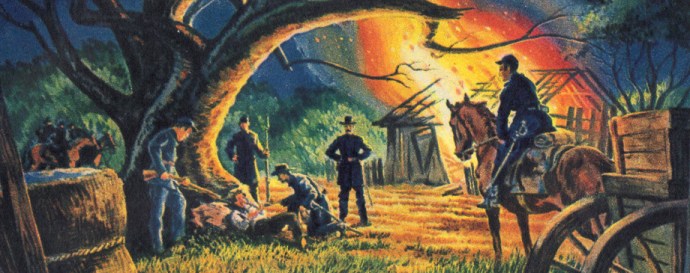
The rest, as they say, is history. The 16th NY successfully corner John Wilkes Booth in the Garretts’ tobacco barn, light the barn on fire to smoke him out, and then Sergeant Boston Corbett paralyzes Booth with a gunshot wound to the neck. John Wilkes Booth dies around dawn on April 26, 1865. David Herold, two of the Garrett sons, William Rollins, and Booth’s body are all taken back up to Washington for trial, imprisonment and questioning, and burial, respectively.

Mrs. Carter and her daughters likely heard later that the men the troopers were looking for at their tavern were not wanted for an outrage on a girl but, rather, for the assassination of Abraham Lincoln.

After the Civil War, Mrs. Carter and her daughters continued to run The Trap as tavern. Out of the four daughters, only Agnes would marry but would be widowed soon after the birth of her own daughter. Unfortunately, times continued to be tough for the Carters and in 1870’s Mrs. Carter had defaulted on her loans. She sold off some of her land to try to stay afloat but in 1888 the land containing the tavern was auctioned off to pay for her debts. The tavern property was purchased by a man named George Lonesome who, in 1913, sold it to man named J. Harvey Whittaker. Sometime between 1900 and 1924, The Trap tavern was demolished. A subsequent owner named J. D. Smithers built and ran a store on the site from 1924 until 1941.

During World War II, the United States government, in need of suitable training and maneuvering ground, seized and purchased over 77,000 acres of Caroline County, Virginia. Residents in the area were given between two weeks and two days to move out of their homes, taking all of their belongings with them, never to return. For many, the land seized by the government had been their homesteads for generations. It was a difficult time for many families in the area who had to leave the farms that had been in their families for years. Yet, the land provided to create the training grounds of Fort A.P. Hill was essential for the war effort. Today, Fort A.P.Hill is split in half by a highway, Route 301. The southern half, which contains the area of The Trap, is the home of various live weapons ranges and is practically always off limits to the public, even to those whose ancestors lived, died, and were buried there.

That being said, today, June 11, 2016, was the 75th anniversary of the establishment of Fort A. P. Hill and as such they had various history exhibits and activities planned for the day that were open to the public. The activities included a one time tour of the Delos area where The Trap was located. What follows are some pictures of The Trap site that David Herold and the members of the 16th New York Cavalry visited.

Trap Tour Map

This map was provided in a booklet tour participants received and shows a modern aerial photo of the sites with former land tracts superimposed over the image. The Trap tavern where Herold et al stopped is actually labelled here as #2 Smithers’ Store, as a man named Smithers ran a store on the former site of The Trap from 1924 – 1941. As stated above, the farm owned by George Washington Carter and inherited by Martha Carter was 452 acres which is why #1 is labeled as the Trap farm but is actually the location of a later home built on the property around the 1890’s.

Trap Ice House 1

Trap Ice House 2

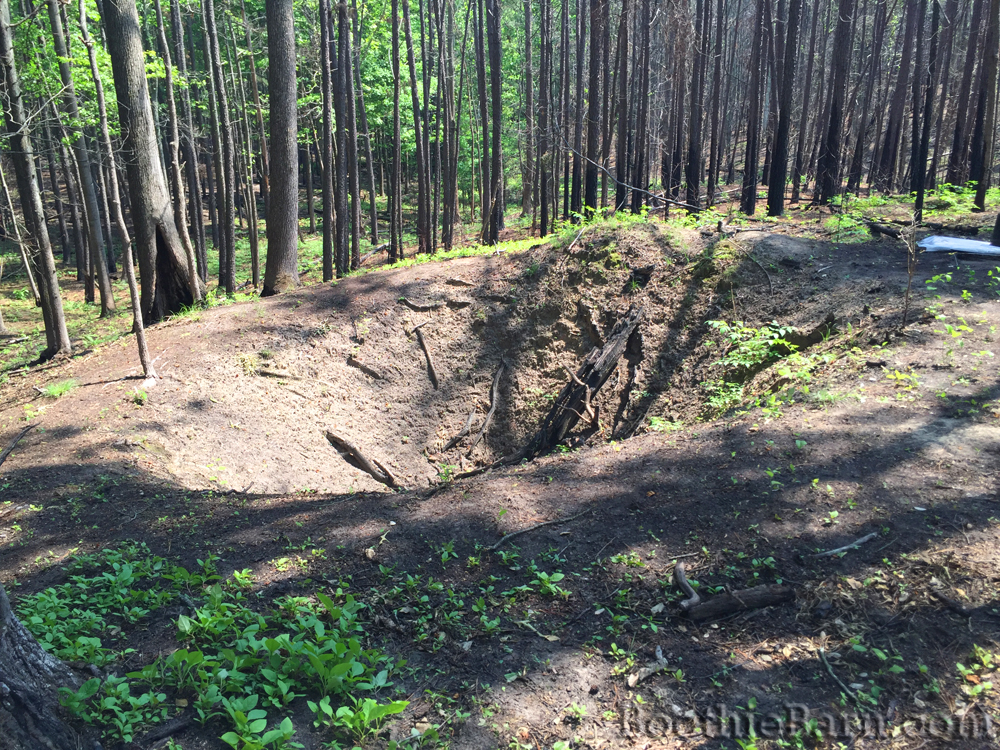
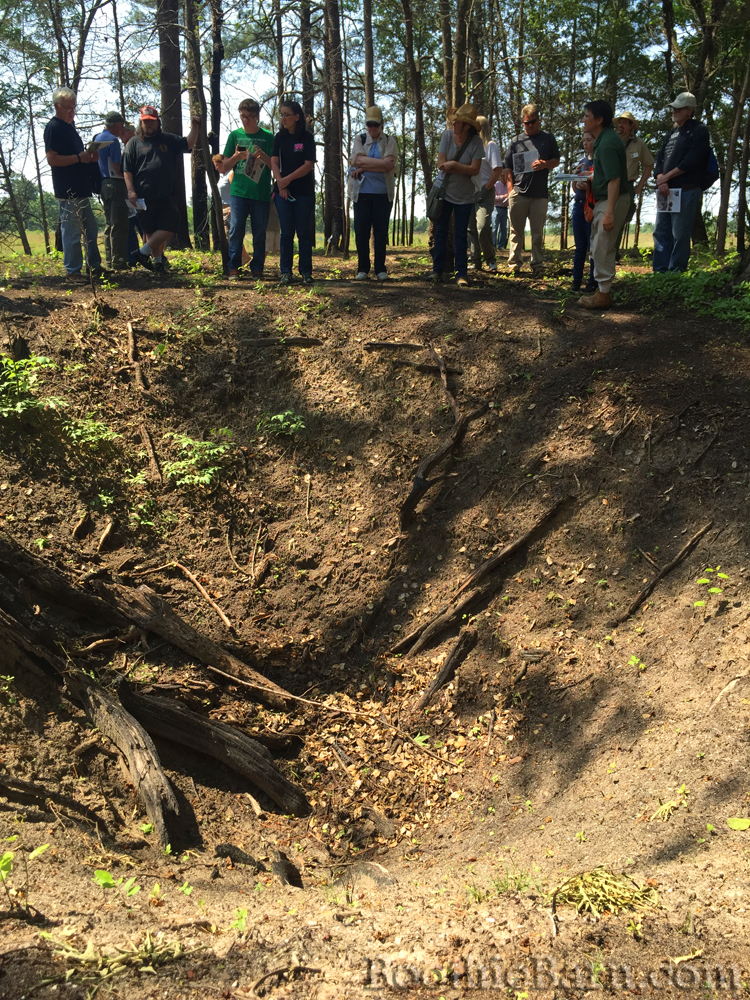
While the main residence that occupied #1 “Trap Farm” was built in the 1890’s, there are some remnants of a much earlier outbuilding in the area that was likely connected to the tavern. These pictures show what is left of an old, sizable ice house. In the days before refrigeration, families would essentially dig a large hole in the ground. The deeper you dig the cooler the earth is and at a certain point it can get close to 50 degrees Fahrenheit. You would place your ice in these deep pits and then cover it  with saw dust or another insulator to slow down melting, allowing you to have ice even in the summer months. The whole thing would then be covered with a primitive roof of some sort. The size and depth of this ice house and its relative proximity to The Trap tavern has led the archaeologists to conclude that this ice house was used by the tavern to provide them with their ice.

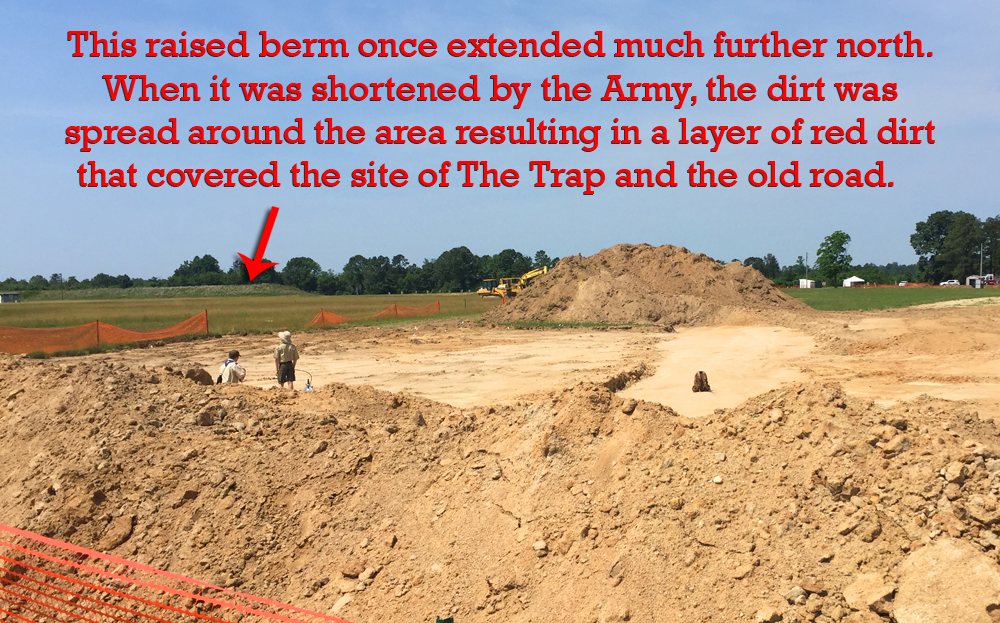
Trap dirt explanation

This image is a preface for the ones that follow and explains why much of The Trap site and the old road that ran right in front of it look like a construction site today. The entire site around The Trap is covered in this layer of “foreign dirt” that had to be removed before excavations could be done.

Trap Rolling Road

In this image you can see very clearly the traces of the old “Rolling Road” that connected Bowling Green to Port Royal. This image is taken looking southwest in the direction of Bowling Green.

Trap Rolling Road 2

This image shows the remains of the Rolling Road in the opposite direction. You can just make out at the end how the road is beginning to turn towards the left. Following that turn takes you north towards Port Royal. David Herold, Bainbridge, Ruggles, and the 16th New York Cavalry all traveled this road twice on their way to and from Bowling Green.

The Trap Site 6-11-16

The Trap site 2 6-11-16

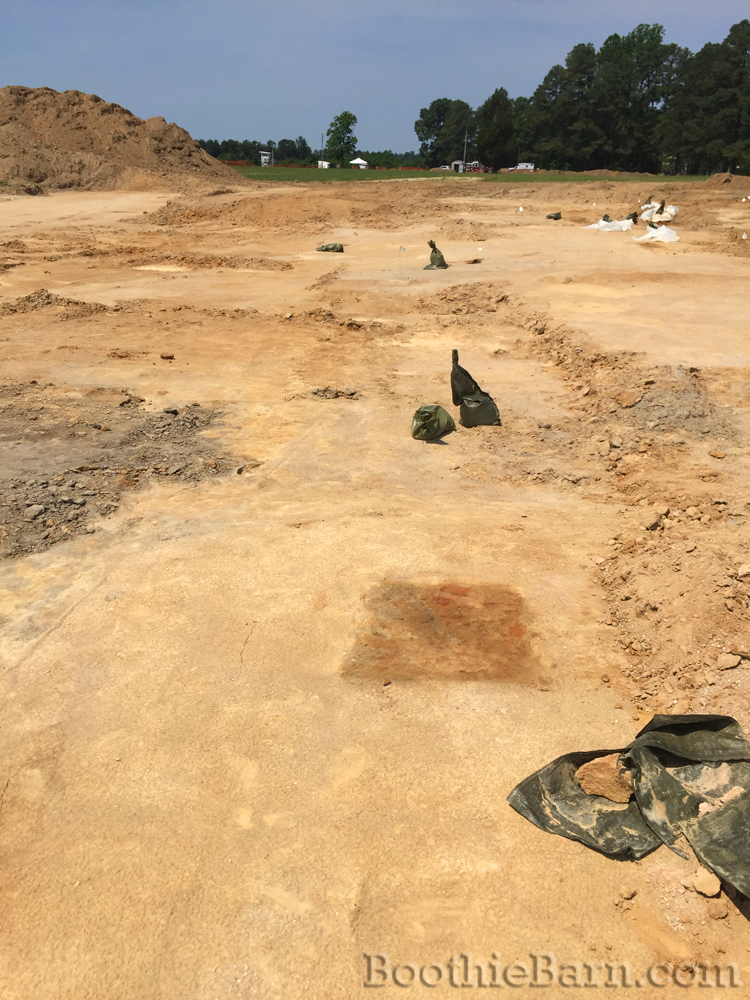
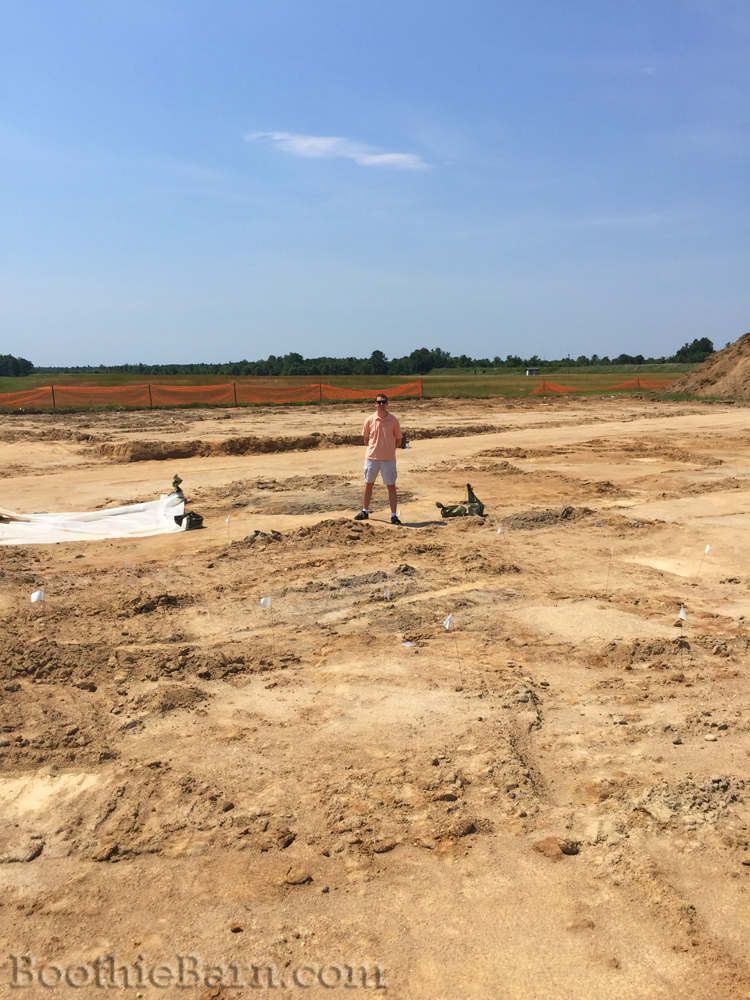
These pictures show the site of The Trap tavern itself. In the top picture you can see a dark square in the foreground. That is one of the brick piers that the tavern sat on. It was highlighted by spraying it with water to make the color more noticeable. In the bottom image you can no longer see the square as the water has evaporated but it is located between the green bags in the middle. The bottom image is taken from the Rolling Road to give you an idea of how close to the road the tavern stood. It was located on this perfect spot where the road curved north making its own intersection.

Dave in The Trap

This is an images of me standing “in” The Trap. You can see the Rolling Road behind me.

The tour of The Trap site was a wonderful experience and one that I felt lucky to take part in. The location of The Trap inside the boundaries of the live range area of Fort A. P. Hill insures that it will rarely be open to the public. At the same time, Fort A. P. Hill seem to be the perfect stewards of the site and their archaeology efforts demonstrate their commitment to preserving the cultural heritage of the land they occupy.

In closing, I would be remiss if I did not address the two “elephants in the room” when it comes to The Trap. One issue is the correct spelling of the tavern. I, like many others, have always spelled it as The Trappe. You can find this spelling in other texts and articles about the assassination. According to one of our guides for the day, John Mullins, the site was originally spelled Trap and not Trappe. John says that this spelling did not come about until the 1890’s or so and was likely started after the area became known as Delos. The spelling of The Trap with the extra “pe” was likely people’s inadvertent way of referring to the old name and making it seem ever older by giving it the old English spelling.

The second item that I failed to address was the reputation of The Trap and the Carter ladies. Some texts and authors state that The Trap was a thinly disguised brothel run by Mrs. Carter and her daughters. When I first began researching the Lincoln assassination I heard from several knowledgeable individuals that The Trap had a slightly scandalous reputation. However, in researching the topic I have yet to come across anything that truly supports this idea. The origin of this misconception appears to be an April 27, 1865 statement from Luther Baker. In recounting the hunt for Booth, Baker shares the detachment’s stop at the Trap thusly: “About halfway to Bowling Green, which is 15 miles from the ferry, we stopped at a log house called the halfway house. We found there four or five ladies, who keep a house of entertainment.” Baker then proceeds to recount how no men were found in the house and how the ladies eventually gave them the information they needed. This wording that the Carter ladies kept a “house of entertainment” seems to be the fairly innocuous wellspring from which all unseemly rumors have flowed. However, in its early days, The Trap was a house of entertainment. Horse races and card games took place there. According to one of our guides for the tour, the name of The Trap was an old reference to how the tavern was a money trap for those who went there to play cards. Whether Mrs. Carter and her daughters still allowed card playing when they owned the tavern is unclear, but even if they did, a little card playing doesn’t equate to a house of sin. Unless better evidence can be found to support the idea that they were improper in anyway, I think Mrs. Carter and her daughters deserve to have their reputations vindicated.

References:
Former Community of Delos (The Trap) Tour Itinerary booklet
“The Trappe” by James O. Hall published in the Surratt Courier June 1987
John Mullins, Kerri Holland, Rich Davis – Archaeologists
The Lincoln Assassination – The Reward Files edited by William Edwards
An Irishman in Dixie: Thomas Conolly’s Diary of the Fall of the Confederacy edited by Nelson D. Lankford

Categories: History | Tags: , , , , , , , | 19 Comments

Jett, Ruggles, and Bainbridge

A few days ago, commenter Kees van den Berg posed the following question:

“I wonder, what happened with Jett, Ruggles and Bainbridge? I suppose they were arrested and confined in the Old Capitol Prison in Washington. Is it true that they never were tried, but came free after a couple of weeks after taking the oath of allegiance to the US? Have you dates of confinement and release? Thank you beforehand.”

His question refers to Willie Storke Jett, Mortimer Bainbridge Ruggles, and Absalom Ruggles Bainbridge. Ruggles and Bainbridge were cousins which explains the last names as middle names coincidence.  These three men were Confederate soldiers who ran into John Wilkes Booth and David E. Herold during their escape.

About midday on April 24th, the fugitives were at Port Conway, VA on the banks of the Rappahannock River. They were waiting for the ferry to come so they could get to Port Royal on the other side. As they waited, Jett, Ruggles, and Bainbridge came riding up.  The three men were heading towards Richmond, ultimately to get their paroles. At first, Herold lied to the men and told them that he and his wounded brother were also Confederate veterans. Thinking the three soldiers were on their way south to meet up with others in order to continue the fight, Herold pulled Jett aside and asked him if they could join them. Surprised by Herold’s desperation, especially when he and his comrades had accepted the defeat of their cause, Jett asked Herold straight away who they really were. Herold replied back, “We are the assassinators of the President”.

After more conversation, Jett, Ruggles, and Bainbridge agreed to help the men. The five men and their three horses crossed the Rappahannock on the ferry guided by ferryman Jim Thornton. When they arrived at Port Royal, Jett searched out a place for Booth to stay. He came to the home of Sarah Jane Peyton, who agreed, sight unseen, to care for a wounded solider.

The home of Sarah Jane Peyton in Port Royal, VA

The home of Sarah Jane Peyton in Port Royal, VA

When Booth hobbled into her parlor, however, her hospitality changed. She no longer thought it proper for her to entertain a guest while her brother, the man of the house, was absent. She suggested to Jett that he might find better lodging for the wounded man a couple of miles down the road, at the farm of Richard Garrett. The three men rode to the Garrett place, with Booth and Herold sharing horses with Ruggles and Bainbridge, respectively. When they arrived at the Garrett farm, Bainbridge and Herold stayed by the outer gate as Jett, Booth and Ruggles approached the house. The Garretts agreed to care for Booth, whom Jett said was a wounded soldier named Boyd, until Jett’s return in a couple of days. Jett, Ruggles, Bainbridge, and Herold rode further south. They stopped at the Trappe, a house of entertainment, before separating for the evening. Jett and Ruggles went to the Star Hotel in Bowling Green. Jett was courting Izora Gouldman, the hotel-keeper’s daughter.  Bainbridge and Herold traveled to the home of Virginia Clarke. Coincidentally, both Bainbridge and Herold knew Virginia’s son James and were welcomed into her home for the night.

The next day, Bainbridge and Herold met back up with Ruggles, likely in Bowling Green. The three men rode back to the Garrett house where Booth had comfortably spent the night in an upstairs bedroom. Bainbridge and Ruggles dropped Herold off and then continued on to Port Royal. When they arrived, they found a troop of Union cavalry crossing the ferry from Port Conway to Port Royal. They turned around and put spurs to their horses. They rushed back to Booth and Herold at the Garrett farm long enough to tell them of the approaching troops, then they continued quickly south.

The rest is well-known. The Union troops learned from one of the residents of Port Conway that Willie Jett was among the men who crossed with John Wilkes Booth. What’s more, they learned of Jett’s affinity for Izora Gouldman. Unknowingly, the troops rode right past the Garret farm where Booth was hiding on their way to Bowling Green. They captured Jett at the Star Hotel and he agreed to take them to the Garrett farm. When the troops arrived, they kept Jett under guard near the gate of the farm while the rest surrounded the house and barn. Eventually Herold surrendered himself and the barn was lit on fire to smoke Booth out. Boston Corbett fired at Booth inside of the burning barn, paralyzing him. Booth was dragged from the barn, first placed under a tree and then on to the front porch of the house.  He died around dawn on April 26th.

pulled-from-the-barn-header.jpg

During the lengthy crossing of the soldiers on their way back across the Rappahannock after killing Booth, Detective Luther Baker took possession of Booth’s body and the prisoner Jett. With two other soldiers, Baker departed Port Conway ahead of the rest of the troops. At some point during their travel to Belle Plain, where a steamboat would take them up to Washington, Baker let Willie Jett go. Jett had led the soldiers right to the assassin without a fight, and Baker did not believe there was any need to detain him further. When Baker got back to Washington, he was severely berated by Edwin Stanton for releasing Jett without authorization. An arrest order for Jett was quickly sent out:

An arrest order for Willie Jett dated April 28th.

An arrest order for Willie Jett dated April 28th.

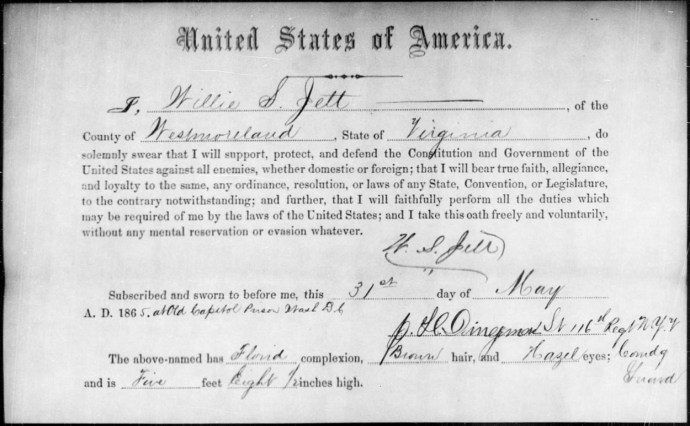
Jett was re-arrested in Westmoreland County, VA on May 1st. He was transferred to Washington and imprisoned at the Old Capitol Prison with the other Lincoln assassination related suspects. On May 6th, he gave a lengthy statement to the authorities about his interaction with Booth, ending it with the assurance, “I have tried to evade nothing. From the beginning I have told everything.”  Jett was also called to testify at the trial of the conspirators, giving his testimony on May 17th.  Willie Jett was imprisoned for a month and was released on May 31st when he took an oath of allegiance at the Old Capitol Prison:

Willie Jett's Oath of Allegiance NARA

Though Jett had been a major player in the escape of John Wilkes Booth, he was not tried as a conspirator since he had never met Booth prior to April 24th and Jett had also assisted in Booth’s capture.  The government was only concerned with prosecuting those they believed had real knowledge of the conspiracy before it was carried out.  Jett did not fit this criteria.

In January of 1890, an account written by Lieutenant Ruggles was published in The Century Magazine. Not all of the details in Ruggles’ recollections almost 25 years after the fact are correct, but he does give this account of what happened to him and Bainbridge:

“Learning that Jett was a prisoner, and that we were to be arrested, tried, and hanged, as aiders and abetters, Bainbridge and myself stood not on the order of going, but went at once. Making our way into Essex County and crossing to Westmoreland, we went to our home up in King George County. Some ten days after, I was arrested at night by a squad of United States cavalry. Bainbridge was also captured. We were taken to Washington and placed in the Old Capitol Prison. We were not alone in our misery, however, for Dr. Stewart, at whose house Booth had stopped, William Lucas, the negro who had driven him to the ferry, and a number of others, were there, among them being Jett, who had escaped from Captain Doherty, and had been recaptured at his home in Westmoreland County.”

Lieutenant Ruggles was arrested in King George County either on May 2nd or May 3rd (both dates are given on two different records).  Private Bainbridge was arrested in King George County on May 4th or 5th (again two different dates on two different records).  They were both transported to the Old Capitol Prison and were incarcerated there starting on May 5th.  For some unknown reason (Ruggles thought it was by mistake), the two men were transferred out of the Old Capitol and sent all the way to Johnson’s Island, a prisoner of war camp for Confederate prisoners located near Sandusky, Ohio.  They left the Old Capitol Prison on May 11th and arrived at Johnson’s Island on the 13th.

Johnson's Island 1865 LOC

It didn’t take very long for those in charge at Johnson’s Island to determine that these two men were much more than your average prisoners of war.  It certainly looks like their transfer to Johnson’s Island was a mistake because, on May 15th, Ruggles and Bainbridge were being transferred back to D.C.  They arrived at the Old Capitol Prison on May 17th and this time they stayed there.

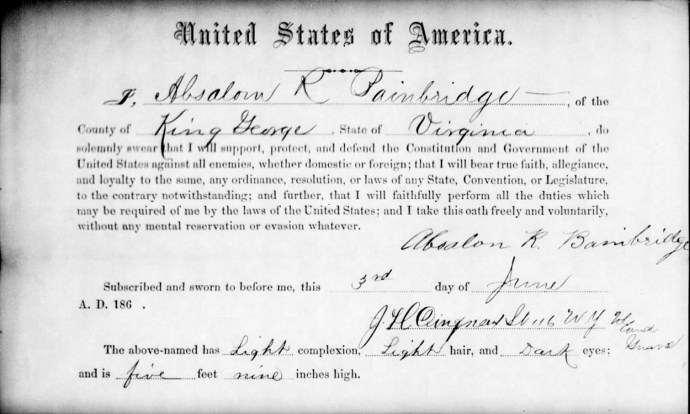
Neither Ruggles or Bainbridge were ever called to testify at the trial of the conspirators.  On June 3rd, both men were released from their confinement after taking the oath of allegiance:

Mortimer Ruggles Oath of Allegiance NARA

Absalom Bainbridge Oath of Allegiance NARA

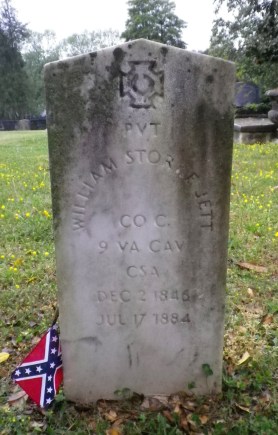
Willie Jett never ended up marrying Izora Gouldman of the Star Hotel.  Instead he moved to Baltimore, married, went insane (possibly because of untreated syphilis), and died in an insane asylum in Virginia.  His body is buried in Fredericksburg.

Willie Jett's grave

After the war, Mortimer Bainbridge Ruggles and Absalom Ruggles Bainbridge continued to imitate each other.  Both men married and had two children.  Both moved to New York.  Both found occupations that forced them to move around; Ruggles as a traveling salesman and Bainbridge as an interior decorator.  Finally, both men died not only in the same year, but in the same month.  These two Confederate veterans are buried in two different cemeteries in New York:

Mortimer Ruggles' grave

Grave of Absalom Ruggles Bainbridge


While Jett, Ruggles, and Bainbridge spent a bit more time imprisoned than some of the other suspects in Lincoln’s assassination, their incarceration could have been longer, especially since it was known that they had contact with Booth and assisted him during his escape.  Booth’s brother, Junius Brutus Booth, Jr., who knew nothing about the assassination, was imprisoned until June 22nd.  John Lloyd, the man who gave Booth and Herold a carbine, field glasses, and some whiskey at the Surratt Tavern, wasn’t released until June 30th.  One of the last people released from the Old Capitol Prison was Joao Celestino, the Portuguese ship captain whose ill-timed threats against William Seward made authorities believe he was a main conspirator.  Celestino was released from the Old Capitol Prison on July 8th and was ordered to leave the U.S. within 10 days, never to return.  And, of course, Dr. Mudd, Edman Spangler, Samuel Arnold, and Michael O’Laughlen were imprisoned at Fort Jefferson for three and a half years before the surviving three were pardoned in 1869.

The imprisonment endured by Jett, Ruggles, and Bainbridge could have certainly been worse had the government truly wanted to punish all those who assisted John Wilkes Booth.

References:
American Brutus by Michael W. Kauffman
Brutus’ Judas: Willie Jett by Eric J. Mink
“Pursuit and Death of John Wilkes Booth” by Prentiss Ingraham, Century Magazine, Jan, 1890
Jett, Ruggles and Bainbridge’s prison records and oath of allegiances were accessed via Fold3.com
FindaGrave.com (Bainbridge, Ruggles)
Rich Smyth

Categories: Uncategorized | Tags: , , , , , , , | 18 Comments

Blog at WordPress.com.