Posts Tagged With: Relics

The Lincoln Assassination On This Day (September 27 – October 3)

Taking inspiration from one of my favorite books, John Wilkes Booth: Day by Day by Art Loux, I’m documenting a different Lincoln assassination or Booth family event each day on my Twitter account. In addition to my daily #OTD (On This Day) tweets, each Sunday I’ll be posting them here for the past week. If you click on any of the pictures in the tweet, it will take you to its individual tweet page on Twitter where you can click to make the images larger and easier to see. Since Twitter limits the number of characters you can type in a tweet, I often include text boxes as pictures to provide more information. I hope you enjoy reading about the different events that happened over the last week.

NOTE: After weeks of creating posts with multiple embedded tweets, this site’s homepage now tends to crash from trying to load all the different posts with all the different tweets at once. So, to help fix this, I’ve made it so that those viewing this post on the main page have to click the “Continue Reading” button below to load the full post with tweets. Even after you open the post in a separate page, it may still take awhile for the tweets to load completely. Using the Chrome browser seems to be the best way to view the tweets, but may still take a second to switch from just text to the whole tweet with pictures.

Continue reading

Categories: History, OTD | Tags: , , , , , , , , , , , , , , | 2 Comments

The Lincoln Assassination On This Day (September 13 – September 19)

Taking inspiration from one of my favorite books, John Wilkes Booth: Day by Day by Art Loux, I’m documenting a different Lincoln assassination or Booth family event each day on my Twitter account. In addition to my daily #OTD (On This Day) tweets, each Sunday I’ll be posting them here for the past week. If you click on any of the pictures in the tweet, it will take you to its individual tweet page on Twitter where you can click to make the images larger and easier to see. Since Twitter limits the number of characters you can type in a tweet, I often include text boxes as pictures to provide more information. I hope you enjoy reading about the different events that happened over the last week.

NOTE: After weeks of creating posts with multiple embedded tweets, this site’s homepage now tends to crash from trying to load all the different posts with all the different tweets at once. So, to help fix this, I’ve made it so that those viewing this post on the main page have to click the “Continue Reading” button below to load the full post with tweets. Even after you open the post in a separate page, it may still take awhile for the tweets to load completely. Using the Chrome browser seems to be the best way to view the tweets, but may still take a second to switch from just text to the whole tweet with pictures.

Continue reading

Categories: History, OTD | Tags: , , , , , , , , , , , , | 1 Comment

Tracing the Letters from John Wilkes Booth to Samuel Williams O’Laughlen

The earliest known writings of John Wilkes Booth consist of a series of letters he wrote in 1854 and 1855 when he was 16 and 17 years old. The recipient of these letters was Samuel Williams “Billy” O’Laughlen. Billy O’Laughlen was the elder brother of Michael O’Laughlen who would later join Booth in his plot to abduct President Lincoln. John Wilkes Booth had met the O’Laughlen brothers after his father, Junius Brutus Booth, bought a house on Exeter Street in Baltimore in 1845. The purchase of this house was to appease Junius’ wife, Mary Ann Booth, who felt increasingly isolated at their Harford County farm year after year. Since 1840, the family had rented different homes in Baltimore during the cooler months and Mary Ann also found the schools in the bustling metropolis a better place to educate her growing children. The family still travelled back to their farm, especially during the warm summers and it was during these visits to Tudor Hall that a teenage John Wilkes Booth would write to his companion back in Baltimore. A total of eight letters from Booth to Billy O’Laughlen have survived through the years with a few of them having resurfaced in recent auctions.

In preparation for one of my upcoming daily tweets, I decided to devote September 14 to one of the letters Booth wrote to Billy O’Laughlen on that date in 1855. I am much indebted to the 1997 book by John Rhodehamel and Louise Taper called, “Right or Wrong, God Judge Me” The Writings of John Wilkes Booth. In this edited volume, Rhodehamel and Taper transcribed a large percentage of John Wilkes Booth’s letters to friends and family, including the known O’Laughlen letters. From their work we know the text of Booth’s letter:

Tudor Hall. Sept: 14th: 1855.

My Dear Friend,

I received you letter the other day. I thought you did not intend to write to me, by your delaying it so long. I should have written long ago but I was waitting till I heard from you. I tried to see you on the night of my debut. I saw Welch (I believe you know him) he said he would tell you to come out, but I expect he never did it. I am doing very well up here, but I am getting very tired of the country. I am thinking of moveing to Sebasterpol you know there is some excitement there. and yet the country has been lively lately and next week there are two pick-nicks going on. and on the 25 there is a very large ball to be held in Bel-Air, and there are Plenty of Pigeons, Patriges and Sqrirrels for shooting. we are thinking of moveing to Baltimore in the winter but are not certain. I will be in Baltimore anyhow in October if nothing happens. you must excuse this dull letter, but I feel very low spirited to day. Answer soon and try to write me a long letter. Give my respects to all who ask after me your Ever Affectionate Friend,

J. W. Booth

In this letter, Booth refers to his debut, which was the first time he took the stage in a professional manner. This occurred on August 14, 1855 where he played the role of Richmond from Richard III at Baltimore’s St. Charles Theatre. The performance was a benefit for his childhood acquaintance (and future brother-in-law) John Sleeper Clarke, who knew the Booth name would help draw in curious theatregoers and increase his box office proceeds. The mention of moving to the excitement in “Sebasterpol” is a reference to Siege of Sevastopol, a yearlong conflict in the Crimean War. Just a few days before Booth wrote this letter, Russian defenses had abandoned Sevastopol after heavy bombardment and massive casualties were inflicted on them by the Allies. The fall of Sevastopol essentially marked the beginning of the end of the Crimean War for the Russians. Booth’s desire to be part of something exciting and historic would be realized four years later when he left his acting career in Richmond to go and serve as a guard at John Brown’s execution.

Always hoping to see the original, handwritten copies of John Wilkes Booth correspondences, I did a little searching to see if this September 14, 1855 letter had been sold at auction lately. While some of the other letters to O’Laughlen have been sold, it does not appear that this one has resurfaced publicly in the last couple decades so I could not find the handwritten version. Still, I was curious where these O’Laughlen letters came from in the first place.

In Rhodehamel and Taper’s book, they state that, “Around 1965, a Baltimore woman cleaning out a desk in her basement suddenly realized that the old letters she was burning were signed, ‘J. Wilkes Booth.’” Digging a bit future we find a newspaper article from the New York Post dated November 2, 1966 entitled “Lincoln & Booth Letters: Evil Will Outsell the Good” which describes an auction set for the next day by auctioneer Charles Hamilton.

Among the many treasures Hamilton was set to auction was a letter Lincoln wrote after this third Lincoln-Douglas debate in 1858 and three of the letters Booth wrote to O’Laughlen, including the September 14, 1855 one. As the name of the article implies, Hamilton gave his opinion that the Booth letters would sell for more than the Lincoln letter. “Evil is unfortunately always fascinating,” the auctioneer noted. “If you go to a zoo, you’re fascinated by cobras and rattlesnakes. If you have a choice of two books to read, you’d probably prefer ‘The Life and Cruel Deeds of Jesse James’ to a volume of sermons…I dislike the thought of a Presidential murderer’s letters being worth more than those of the President himself, but that’s what happens.” At the conclusion of the article, there is a brief mention of where Hamilton acquired the Booth material proving a little more context than Rhodehamel and Taper provided:

“The John Wilkes Booth letter came to Hamilton from Mrs. Agatha McCarthy, an elderly widow who discovered an old desk in the basement of her Baltimore home, which she said was ‘just full of Booth.’ She burned many of the old letters she found, before she recognized the bold signature: ‘ J. Wilkes Booth.’ Her home was owned previously by Thomas Jones, a co-conspirator with Booth in the Lincoln assassination, and somehow Booth’s old writing desk had resided for years in McCarthy’s basement.”

Now this entire explanation perplexed me. These are letters written by Booth to Billy O’Laughlen when he was a teenager. According to this article they were found by a woman in the basement of her home that used to be owned by Thomas Jones, the Southern Marylander who took care of Booth and Herold when they were hiding in a pine thicket during their escape. The mixture of these disparate figures into one story felt off to me. In addition, the article suggests that the desk in which the letters were found in Mrs. McCarthy’s basement was Booth’s writing desk. We are to believe that letters a young Booth mailed to Billy O’Laughlen somehow made their way back to Booth’s own writing desk and then into the hands of Thomas Jones in Baltimore.

To be fair, Thomas Jones did live in Baltimore after the Civil War. He can be found living there in the 1870 and 1880 censuses with his family. Jones was still living there in 1883/1884 when he was visited by journalist George Alfred Townsend (GATH) who interviewed him about his involvement in Booth’s escape. That interview resulted in the article “How Wilkes Booth Crossed the Potomac”, filling in the missing timeline in Booth’s escape.

So I decided to try and track down where, exactly, Thomas Jones resided while living in Baltimore. I used census records, Baltimore directories, and even the addresses on GATH’s telegrams to Jones, to plot the different places Thomas Jones lived during his decade and a half in Baltimore. After adjusting for the street numbering change that occurred in Baltimore in 1886, I determined all the modern addresses I could find for Jones’ whereabouts.

I then decided to try and track down Mrs. Agatha McCarthy and see where she lived. The first hiccup in my search for her was her name. Agatha’s last name was McCarty not McCarthy as the auction article stated. I know that’s a minor mistake, but it doesn’t help with overall veracity of the story when you can’t get the name of your provenance source right. With some digging I found that Agatha McCarty’s maiden name was Shipley, she was born on December 5, 1870 in Baltimore County. In 1899, she married Frank P. McCarty and moved to Baltimore where she would spend the rest of her life. In the 1900 census the newlyweds are living at 2709 Boone St. In 1905, the two moved just a bit south to 2409 Greenmount Ave. In 1913 they moved a block south on Greenmount Ave. By 1920, the couple had moved into their forever home at 636 Cokesbury Ave. Agatha McCarty would live here for the rest of her life (save for her final hospital stay) until her death in 1968 at the age of 97.

And so, here is my map of all the places I could find where Thomas Jones and Agatha McCarty lived in Baltimore. Jones’ residences are in yellow and McCarty’s are in red. At no point does it appear that Agatha McCarty lived in a home formerly occupied by Thomas Jones. The two never even lived in the same neighborhood of Baltimore. Now I suppose it’s possible that at some point after Jones moved back down to Southern Maryland a desk he owned might have been sold away or given to a neighbor and from there it somehow made its way to Mrs. McCarty. Furniture does have a habit of moving around. But even in that unlikely scenario, the question remains, “Why would Thomas Jones have Booth’s childhood letters?”

For the most part, Jones largely stayed quiet about his involvement with John Wilkes Booth in the aftermath of the assassination. He was arrested on suspicion and held at the Old Capitol Prison in Washington for a time but was eventually released. It really wasn’t until he consented to be interviewed by GATH in 1883 that he opened up about his role helping the assassin on the run. Eventually, Jones saw his claim to fame (infamy?) as an opportunity. In 1893, Jones published his own book entitled, J. Wilkes Booth: An Account of His Sojourn in Southern Maryland after the Assassination of Abraham Lincoln, his Passage Across the Potomac, and his Death in Virginia. It told of Jones’ work with the Confederate mail line during the Civil War and how Booth came to be under his care during the escape. Jones took his book to the 1893 Chicago World’s Fair hoping to sell a bunch of copies, but the Yankees in the Land of Lincoln weren’t very good customers. The book was a financial flop for Jones who died two years later in 1895. Though the book doesn’t go into the history of John Wilkes Booth, is it possible Jones somehow acquired Booth’s childhood letters during his work on it? Possibly, but I think even this to be very, very unlikely. After a bit more research, I think I’ve come up with a more believable explanation.

Let’s take a look at the map of the Jones and McCarty residences again.

I’ve zoomed in a little bit and added a purple pin. That purple pin marks 419 E 20th Street. From 1890 through 1913, that was the home of a grocer turned carpenter who had always resided in Baltimore. The carpenter who resided here had gone through a lot, including the death of his younger brother. The reason for his brother’s death could be traced back to when a new family moved in across the street from his childhood home at 57 N Exeter in 1845.

Yes, I’m talking about John Wilkes Booth’s childhood friend, Samuel Williams “Billy” O’Laughlen. Even at the time of the assassination, the elder O’Laughlen was in the grocery business and was trying his best to get his younger brother, Michael, involved. Part of the reason Michael O’Laughlen was able to meet with Booth so often in D.C. was because he was doing work for his brother’s business there. The elder O’Laughlen transitioned to carpentry work after the Civil War and remained in Baltimore where he married and had children of his own. He died in 1915 at the age of 76 and is buried next to his brother and other family members at Green Mount Cemetery.

Looking at the map we can see that the home Samuel Williams O’Laughlen had for 23 years was in the same vicinity of where Agatha McCarty resided just off of Greenmount Ave. They’re not next-door neighbors, but definitely closer to each other than Thomas Jones ever was. Also, unlike Jones who resided in Baltimore years before Agatha McCarty moved to town, O’Laughlen was there at the same time as the later owner of the letters. For 13 years O’Laughlen and McCarty lived in the same area of Baltimore, just blocks apart.

I’m inclined to believe that Agatha McCarty got the Booth letters from Samuel Williams O’Laughlen not Thomas Jones. The letters had been written to O’Laughlen after all, and he likely retained them. How McCarty ended up with them is anyone’s guess. Maybe she knew the O’Laughlens from the neighborhood and received them directly or, as the original story goes, she found them in an old desk that had once belonged to them and somehow ended up in her possession. Regardless of how she came across them, we know that she did have them as of 1942. In that year an article was published about a Shipley family reunion, which Agatha McCarty nee Shipley attended. McCarty was a bit of a family genealogist and was mentioned in the article as having brought with her a file of 1,900 births and deaths in the family. The article also included the line that, “She also had a framed copy of a letter written by J. Wilkes Booth bearing his autograph eleven years before the death of Lincoln.”

I haven’t been able to find any other mentions of Mrs. McCarty and the Booth letters aside from this and the auction article from 1966. Whether there is any truth to her having burned several other letters before noticing the signature, we’ll never know.

In the end, this is an example of the inherit difficulties in tracing provenance of an item. For these specific Booth letters, their still uncertain line doesn’t really change much. The handwriting and contents of the letters from Booth and Billy O’Laughlen establish that they were, indeed, written by the future assassin of Lincoln. But for countless other artifacts, where the question of authenticity is less self-evident, establishing the provenance of the item and how it got from historical person or place to now is often filled with holes. Sometimes the best we can do is to lay out the evidence we have and acknowledge that it could be wrong or mixed up a bit as I think is the case here. In truth, far fewer things you see on display in museums are as iron-clad authentic as you might expect. This is not because museums are actively lying to you or trying to trick you, but because humans often leave poor or almost nonexistent records behind sometimes. Institutions do their best to engage in exercises like this to trace provenance, but as you can see, the process often raises more questions than it answers.

Finally, with all due respect to Mrs. McCarty knowing that the whole story of her flaming discovery may have been just a clever ploy by the auctioneer, please don’t go around burning old letters and documents you might find without looking at them first. You never know what valuable piece of history you might uncover.


P.S. I would be remiss if I didn’t take this opportunity to promote an upcoming book on John Wilkes Booth and the Lincoln assassination from a familiar name. Coming twenty-four years after the publication of his edited volume of Booth letters, “Right or Wrong, God Judge Me” The Writings of John Wilkes Booth, John Rhodehamel is set to release a new book on September 7, 2021 called America’s Original Sin: White Supremacy, John Wilkes Booth, and the Lincoln Assassination.

I am very much looking forward to reading Rhodehamel’s work which explores Lincoln assassination through the lens of the white supremacist act it was. Here’s the publisher’s description:

“In this riveting new book, John Rhodehamel argues that Booth’s primary motivation for his heinous crime was a growing commitment to white supremacy. In alternating chapters, Original Sin shows how, as Lincoln’s commitment to emancipation and racial equality grew, so too did Booth’s rage and hatred for Lincoln, whom he referred to as “King Abraham Africanus the First.” Examining Booth’s early life in Maryland, Rhodehamel traces the evolution of his racial hatred from his youthful embrace of white supremacy through to his final act of murder. Along the way, he considers and discards other potential motivations for Booth’s act, such as mental illness or persistent drunkenness, which are all, Rhodehamel writes, either insufficient to explain Booth’s actions or were excuses made after the fact by those who sympathized with him.”

Terry Alford, the author of Fortune’s Fool: The Life of John Wilkes Booth, has already positively reviewed the book writing:

“This unique book combines Rhodehamel’s intriguing insights with the excellent characterizations and top-tier research that have always distinguished his work.”

With Alford’s endorsement, I’m confident Rhodehamel’s book will be a valuable addition to any Lincoln library and encourage any one interested in the Lincoln assassination to pre-order it from your favorite bookseller.

Categories: History | Tags: , , , , , , | 11 Comments

The Confession of David Herold

On occasion I have been asked by folks what artifact or relic related to the Lincoln assassination I wish would just “turn up” someday. There are many, many missing things in the saga of Lincoln’s death and the manhunt for John Wilkes Booth.

  • What exactly was the “calling card” that Booth presented to Charles Forbes that helped gain him entrance to the Presidential box at Ford’s Theatre? Was it just one of Booth’s CDVS or, like some historians have theorized, did it have something to do with his secret fiancée, Lucy Hale?
  • Whatever happened to the field glasses that Mary Surratt transported down to her tavern for Booth on April 14, 1865? Booth picked them up during his flight south and they were later recovered and even used at John Surratt’s trial but have disappeared since.
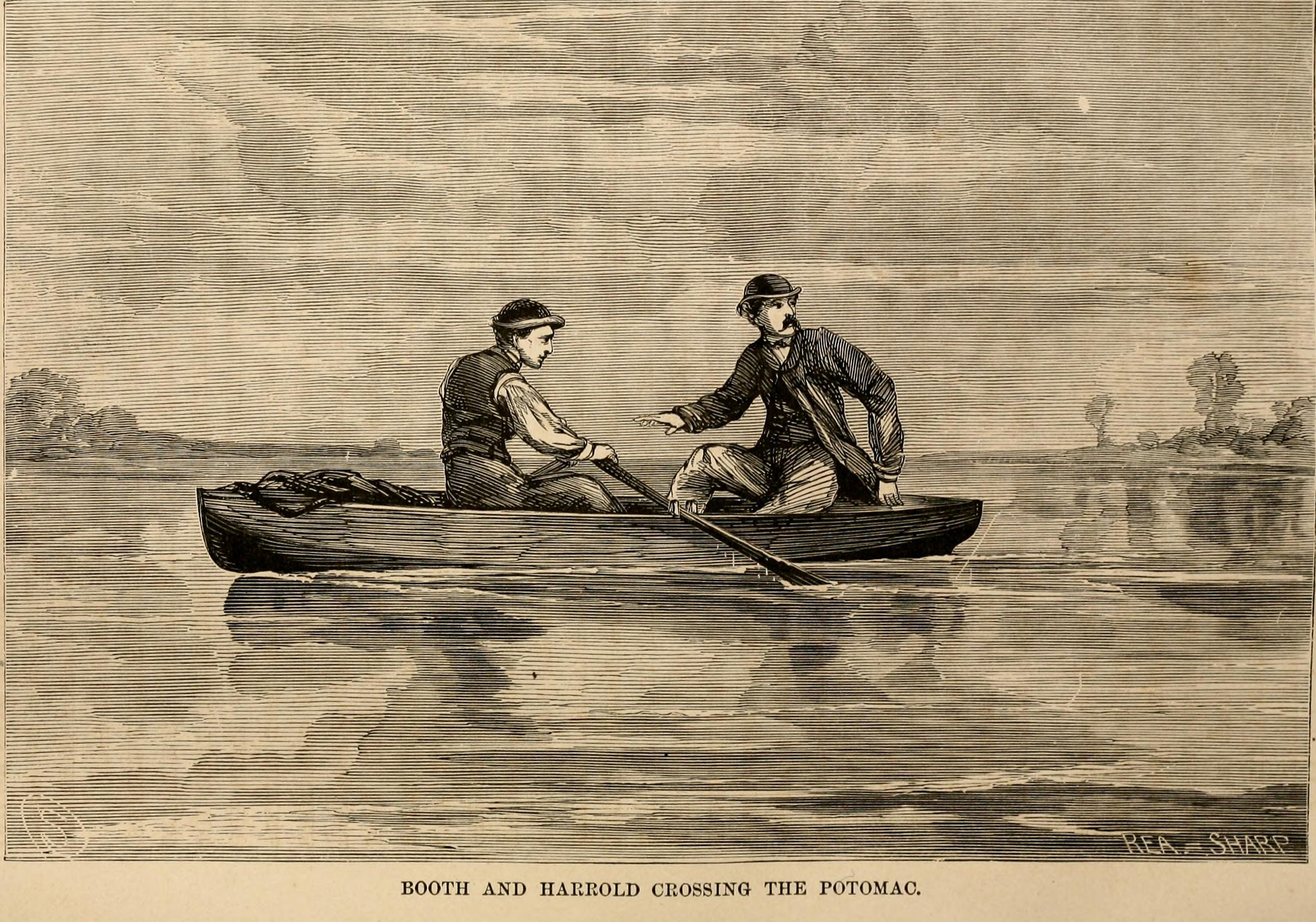
  • What about the boat Booth and Herold used to cross the Potomac during their escape? It was recovered by the government and while one newspaper account claimed it was chopped to bits, a former curator of the Smithsonian is convinced he saw it on a collection list in the 1960s but subsequent searches have come up empty.
  • The gun that Boston Corbett used to shoot Booth at the Garrett Farm was stolen from him shortly after he returned to Washington as a hero. Is it sitting on some Civil War collector’s shelf somewhere, with them being completely unaware how special their gun is?

I could go on and on.

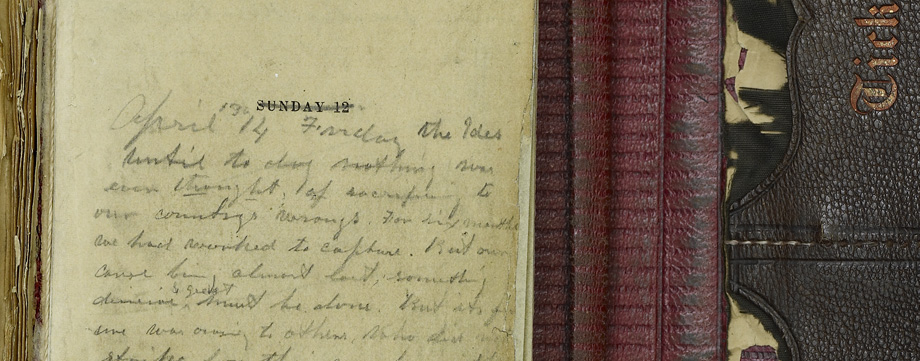
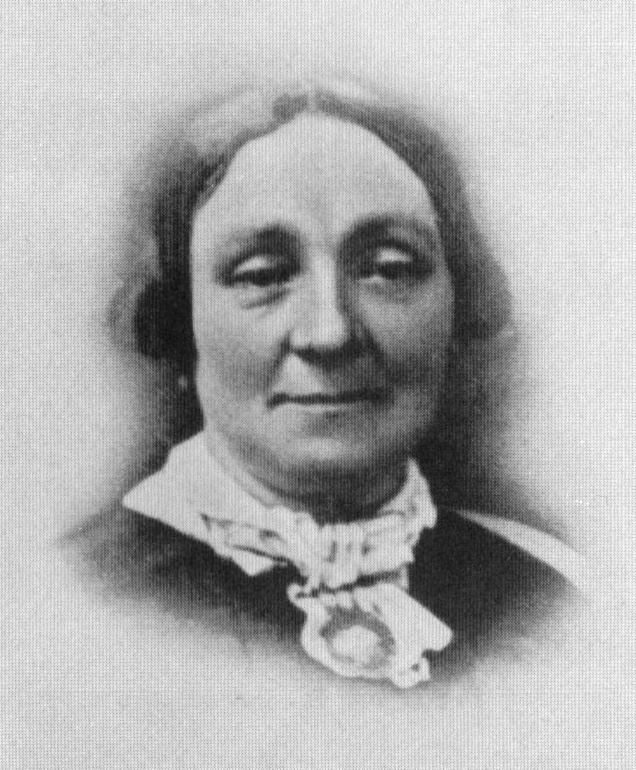
As wonderful as it would be to have any of these (or numerous other) artifacts pop up, I think it would be hard to top the appearance of a newly discovered piece of writing by one of the conspirators regarding the assassination plot itself. That sort of first-person source is the real treasure for historians. In the Lincoln assassination we are glad to have the memoir of Samuel Arnold who described in his later years how the kidnapping plot against Lincoln was formed. In 1977, Joan Chaconas discovered a lost George Atzerodt confession among the papers of his lawyer, William Doster. It was one of several confessions Atzerodt gave hoping to become state’s witness (rather than defendant) at the conspiracy trial. Even the ringleader himself composed a few lines in his diary (pictured above) while on the run, helping to give us a small glimpse into his mindset.

As grateful as historians are for these sources, like the Greek myth of Tantalus, we will always be teased by the things seemingly in sight but out of our reach. One of these tantalizing, yet elusive, sources is the truly lost confession of David Edgar Herold.

Not to be confused with the available “voluntary statement” David Herold gave to authorities on April 27, 1865 shortly after his arrest, the missing Herold confession is one that Davy wrote while he was imprisoned and on trial. During their confinement, the conspirators were under the charge of General John F. Hartranft at the Old Arsenal Penitentiary. Each morning, General Hartranft wrote a report to his commander, Gen. Winfield Scott Hancock, keeping him apprised of the events of the previous day. Gen. Hartranft kept a letterbook of his reports to Gen. Hancock, which was donated to Gettysburg College by his descendants in the 1960s. In 1983, Lincoln assassination author and researcher Betty Ownsbey, was made aware of this letterbook by the Special Collections curator at Gettysburg College. Like Joan Chaconas’ discovery of the Atzerodt confession six years prior, the discovery of brand-new, first-person material about the imprisonment and trial of the conspirators was a boon to historians. In 2009, an edited volume of the letterbook was published by Edward Steers and Harold Holzer making it even more accessible.

From Gen. Hartranft’s letterbook we learn that on May 18, at the conclusion of the trial for that day, David Herold was allowed to remain, “in the court a few moments in conversation with Judge Holt and his Counsel Mr. Stone.” Hartranft then informs Gen. Hancock that, “This prisoner desires to write out a confession. I would respectfully ask, if permission can be granted to take off his handcuffs and allow him this privilege between the sessions of Court.” After receiving this report on May 19, Gen. Hancock sent a response back to Hartranft granting permission:

“Genl,

The handcuffs of Herold can be removed till anytime sufficiently long for him to write a confession provided he is well guarded in the mean time. He should have quill pens and should be well searched before hand to see if he has anything on his person by which he might injure himself which might have been given to him by his friends.”

The next morning, before the court assembled, Davy Herold was taken into the courtroom and provided time to write. According to Hartranft’s report, “This morning Herold was taken into the Court room and his handcuffs removed, furnished him with quill pen, ink and paper. He continued writing until the Court began to assemble, – about 10.30 a.m. when his irons were replaced, and he seated in the prisoners dock.”

As Herold had not yet completed his writing, on Sunday, May 21, an off day for the trial of the conspirators, he was allowed to once again go into the court room to finish. Hartranft wrote, “At 2.30 p.m. the prisoner Herold was taken into the Court room and furnished with writing material as before. He continued writing until 4.30 p.m. when he was returned to his cell and confined as usual.”

Aside from these references between Generals Hartranft and Hancock, we have no other sources of information regarding David Herold’s so-called confession, least of which is where it ended up. This is quite a shame because an honest perspective of the assassination and flight from justice from such a key participant like David Herold would be quite a benefit to historians. But, alas, the final fate of this conspirator’s confession is contrarily concealed.

In truth, because of the hard work done by authors like Betty Ownsbey in researching Lewis Powell’s background and Kate Clifford-Larson who explored the life of Mary Surratt, David Herold has become one of the conspirators that we know the least about. Despite playing such a vital role for the wounded Booth during his escape, history has largely written him off as little more than a “trifling boy” easily led off by Booth. This conclusion is based on the manner of defense that was used in his trial in an attempt to save his life and while there is some truth to these generalizations, they do not truly define the 22 year-old. It is hard to imagine that David Herold was “slow witted” as he was the most educated of the conspirators besides Dr. Mudd. Herold attended Georgetown College studying pharmacology and finished up his studies at the Rittenhouse Academy. He was even accepted to Gonzaga College but appears not to have attended. Yet, with a lack of sources, it can be difficult to flesh out Davy as a full person. Author Gore Vidal summarized the struggle when he admitted in the afterword of his novel Lincoln that, “As David’s life is largely unknown until Booth’s conspiracy, I have invented a low-life for him.”

While many people would spend the years after 1865 telling stories of their unique interactions with John Wilkes Booth, the famous actor turned assassin, very few have saved for posterity their thoughts on the D.C. pharmacist clerk who escaped with him.

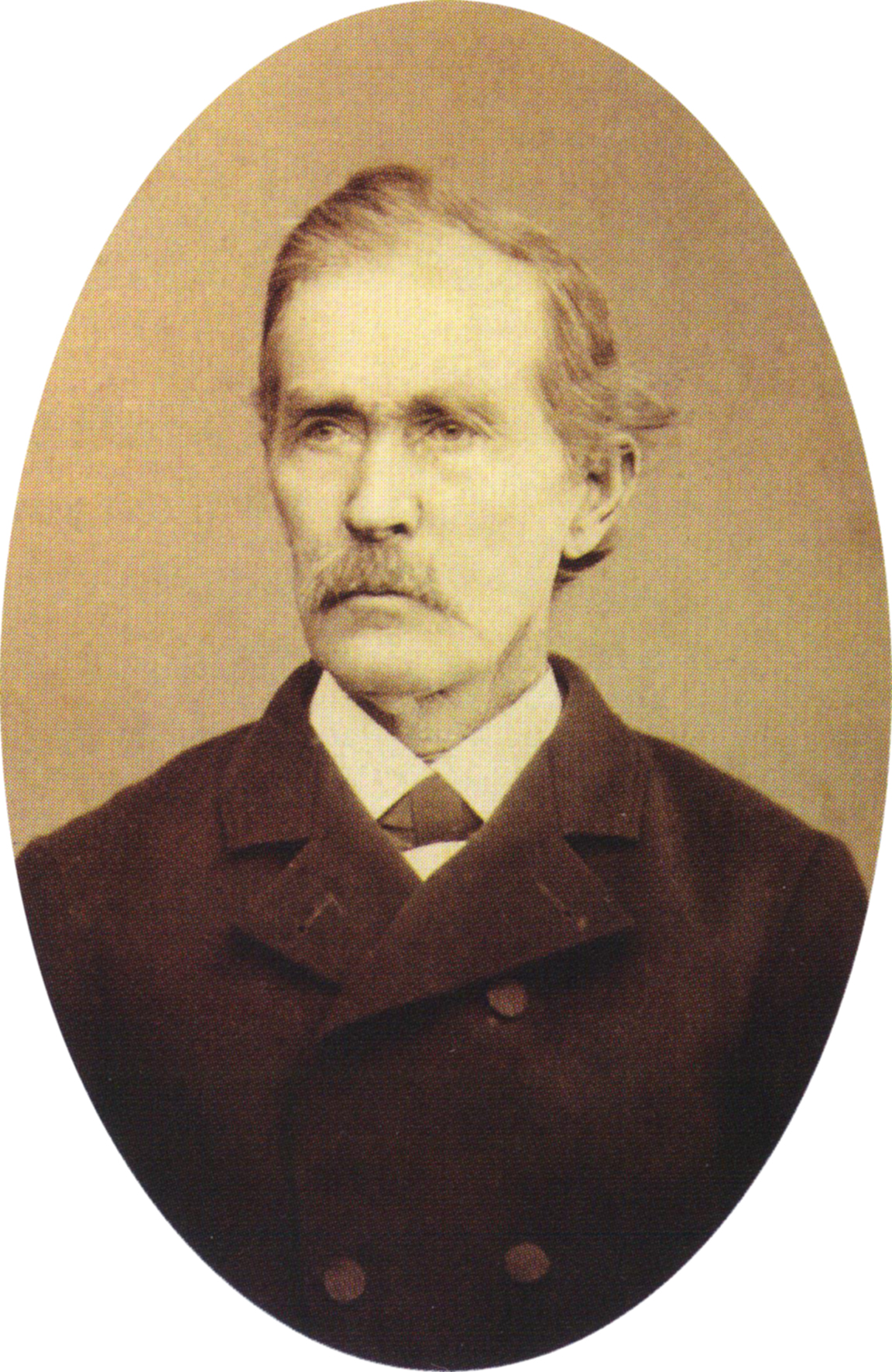
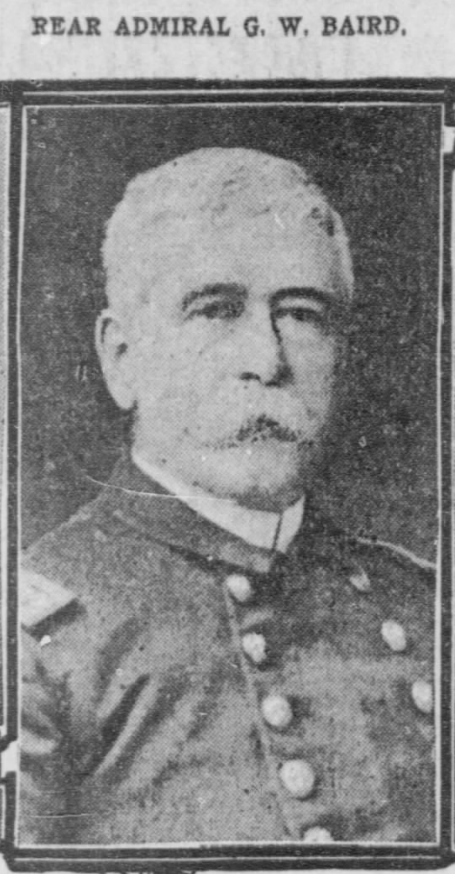
One of the few who provided insights to David Herold’s early life was George Washington Baird, who was a year younger than Davy and went to school with him. In a letter Baird wrote in 1921 (after he had retired as a rear admiral in the Navy), he reflected on his childhood acquaintance:

“In 1850 when I was seven years of age, I went to school in Washington to two reverend gentlemen Cox and Marlot, who taught in the lower story of the Masonic Hall, Virginia Avenue and Fourth Street East. The boy who sat by me about my own age was David Herold, a little round headed, round eyed, round bodied boy, whose general rotundity was completed by a voice that rolled his R’s. I envied David his disposition in that he got along with the big boys so well. When a big boy imposed on David, he would escape with a funny remark which was called witty, which generally got a laugh, and David was called popular. When a big boy imposed on me, I hated him; I hate him yet. David’s father, Mr. [Adam] George Herold, and my father were members of Naval Lodge of Masons. The Herolds were members of Christ Church Episcopal. MY people were members of the Baptist Church. When I left that school about a year later, I lost sight of David. I heard he became a drug clerk.”

Another former schoolmate of David Herold was William Miller Clarke. Just three days younger than Davy, Clarke lived in the same neighborhood as the Herolds near the Washington Navy Yard. Clarke’s father ran a carpentry business making coffins and furniture but died when Clarke was only 6 years old. At 10 years old, Clarke started working for the ordinance department of the Navy Yard making gunpowder and percussion caps. This job no doubt put him into contact with Davy’s father, A. G. Herold who was the Chief Clerk of the Navy Yard.

In 1923, an elder Clarke typed a one page manuscript recounting his friendship with Herold. Unfortunately, the only copy of that manuscript that I have been able to locate are a few excerpts contained in a Civil War dealer’s January, 1987 catalog. At that point the manuscript was in the possession of dealer John Heflin in Brentwood, TN where he asked $150 for the manuscript. In his description of the lot, Heflin excerpted these lines from Clarke:

“Herrold and I were schoolmates in the primary school…I found him to be a boy of more than average intelligence…greatly surprised at his connection with Booth…Mr. Herrold, Sr. was a great hunter…when he went hunting he usually took David with him, so David became fully acquainted with lower Maryland…Booth evidently learned this through the Surratts and it was at Mrs. Surratt’s house that Dave first met Booth…”

Here Heflin breaks the excerpts, explaining how Herold was sentenced to be hanged on July 7, 1865. Heflin then states, “At the time of his execution and in response to a question by Reverend Olds, Rector of Christ Church at the Navy Yard, David replied,” and here continues with what appears to be excerpted material. What follows is a bit confusing as it appears to be Davy’s words as recalled by Rev. Olds and perhaps related to Clarke. The continued line states:

“Tell my mother and my sister that I did not know until John came out from the theater and got on his horse, exclaiming, ‘Dave, I’ve done it,’, Done what? I asked. ‘I’ve killed the tyrant,’ Booth replied…Recognizing that I would be torn to pieces if I remained, I went with Booth…across the Anacostia River…proceeded down towards Port Tobacco. Booth’s ankle…caused him great pain and I took him to a friend of mine, Dr. Mudd…the rest is history, we were cornered in a barn, Booth shot, and I surrendered…”

Once again we are tormented like Tantalus with what appears to be a partial confession of David Herold as recalled by a former childhood friend. And yet, without the full document and the valuable material signified by the ellipses we can’t really be sure where Clarke got his information. It may have come, as implied by Heflin’s description, from Dr. Mark Olds, the reverend who tended to Herold on the scaffold. But even if that is the case, this David Herold confession is third hand and comes 58 years after the event. Stories change a lot under those conditions. If only we had the actual document David Herold was seen writing in May of 1865. Even if that confession was just as elusive and crafty as Davy’s response to his interrogation on April 27, it would still add more to our understanding of this elusive conspirator.

So, if any of you folks happen to stumble across an old document, perhaps dated May 20 or 21, 1865, written in quill pen, and it just so happens to talk a little bit about escaping with John Wilkes Booth, please shoot me an email. I’d love to add you to the list of celebrated rediscoverers like Joan Chaconas, Betty Ownsbey, and Michael Kauffman who found the lost CDV of an older Mary Surratt. But even if all you find is a 1923 manuscript from a guy named William Clarke talking about an old childhood friend of his, I’d certainly be interested in that, too. Whatever you do, don’t keep it to yourself locked away so nobody knows. Because you know what they say, confession is good for the soul…and for history.


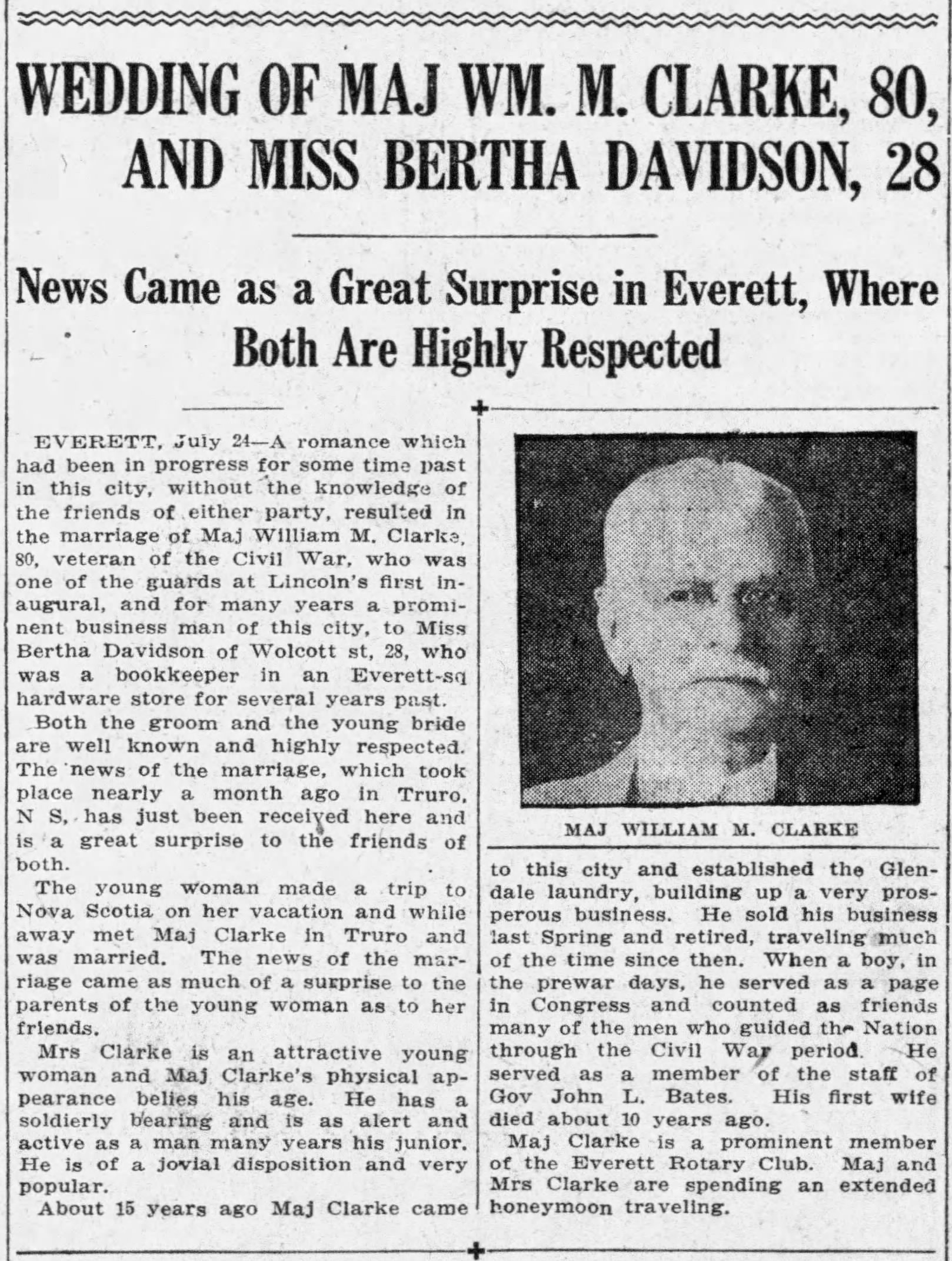
“Fun” fact: It took quite a bit of sleuthing to determine the author of the 1923 letter about David Herold. The only clue I had to go on was Mr. Heflin’s catalog which listed the author as Wm M Clarke. It was only after a few hours of searching through D.C. records, assembling a family tree, and scouring newspaper articles that I felt confident that William Miller Clarke was our man. He lived an interesting life beyond his friendship with Herold. Clarke claimed to have been offered a position in the Confederate army at the start of the war but turned it down later joining the Union. He stated he was a “bodyguard” at Lincoln’s first inaugural and that he was in Washington, D.C. at the time of the assassination. After leaving D.C. with his family, he moved to New York before settling in Boston. He was on the staff of Massachusetts Governor John L. Bates from 1903 – 1905 and, in the last decade of his life, was a popular speaker at different club meetings. An article from 1919, noted he presented a speech entitled, “Life of Lincoln,” which may have touched on his infamous schoolmate. In 1913 Clarke’s wife of 46 years, Ella, died. One would think that would be the end of romance for a 71-year-old and, for a time, it was. However, just shy of his 81st birthday, William Clarke got married again…to a 28-year-old bookkeeper name Bertha Davidson.

This marriage occurred in 1923, just a couple months before he wrote his manuscript about Herold so perhaps we have Bertha to thank for convincing him to write his memories of the conspirator down. Less than three years later, on April 11, 1926, William Clarke died and was buried in Forest Hills Cemetery in Boston. Bertha Davidson Clarke never remarried and died in 1980. She was not buried with Clarke and is, instead, with her parents in Glenwood Cemetery in Everett, MA.

Categories: History | Tags: , , , , | 16 Comments

The Lincoln Assassination On This Day (August 9 – 22)

A couple of weeks ago on my Twitter account I did a “On This Day” or “OTD” tweet regarding one of the possible days where John Wilkes Booth recruited his childhood friends Samuel Arnold and Michael O’Laughlen into his plan to abduct President Lincoln. While Arnold later wrote his belief that this initial meeting, “was in the latter part of August or about the first of September A. D. 1864,” Art Loux, author of John Wilkes Booth: Day by Day, concluded that Booth couldn’t have been in Baltimore during that time and that the most likely day for this meeting to have occurred was on August 8 or 9. Having just been looking at Art’s book for another matter, I decided to mark the possible anniversary of this event on August 9th:

Since the 9th, I’ve proceeded to find other events to mark for each subsequent day. In this way, I’ve apparently started a daily #OTD post for events related to the Lincoln assassination, John Wilkes Booth, and the Booth family. I know only a limited number of my blog readers are on Twitter and so I’ve decided that each week, I will repost my tweets from the past week here on my blog so that everyone can see what anniversaries have occurred over the past week. This first post will have two weeks worth of material as I didn’t think of reposting them until today. If you click on any of the pictures in the tweet, it will take you to the page on Twitter where you can click to make them bigger and easier to see. Since Twitter limits the number of characters you can type in a tweet, I often include text boxes as pictures to provide more information. I hope you enjoy reading about the different events that happened over the last two weeks.

NOTE: After weeks of creating posts with multiple embedded tweets, this site’s homepage now tends to crash from trying to load all the different posts with all the different tweets at once. So, to help fix this, I’ve made it so that those viewing this post on the main page have to click the “Continue Reading” button below to load the full post with tweets. Even after you open the post in a separate page, it may still take awhile for the tweets to load completely. Using the Chrome browser seems to be the best way to view the tweets, but may still take a second to switch from just text to the whole tweet with pictures.

Continue reading

Categories: History, OTD | Tags: , , , , , , , , , , , , , , , , , | 4 Comments

Lincoln Assassination Ephemera

When you first start researching and “doing history”, there are several new vocabulary words that you have to learn. In the same way that doctors have a long list of subject-specific jargon, so too, do historians. When dealing with artifacts, it’s key to know the items provenance, or personal history. How do we know this thing is what it claims to be? What evidence do we have of its journey from there to here? Historiography is the study of how history has been written. How has the study of a specific event or period changed over subsequent years or decades? How have the ideals and beliefs of historians during different time periods influenced their presentation and understanding of history? What does it mean to study history? One must be careful not to include anachronisms in their writing of history. These are items, places, phrases or customs that would not exist in the time period being discussed. One would not speak of President Lincoln in the Oval Office since the Oval Office did not exist in Lincoln’s day. The list goes on and on.

One of my favorite history jargon words is ephemera. It relates to items that were made to exist for a short period of time and not expected to be preserved or retained. An advertisement for a sale at a grocery store is an example of ephemera. Within a matter of days, the advertisement is no longer accurate and thus disposed. Ephemeral things are meant to be temporary and fleeting. This idea has evolved into digital platforms as well with apps like SnapChat being based around the idea that the pictures and videos sent over the app only exist for a short time before they cease to exist. Today marks the beginning of a brand new year and many of us may be eagerly disposing of our old 2020 calendars, they having served their purposes. While the vast majority of ephemeral things are disposed or destroyed in this way, examples of ephemera that have survived through the years can give us a unique look into the past.

Here are some examples of ephemera related to the Lincoln assassination story.


Newspaper classifieds for the Surratt boardinghouse

In 1853, John H. Surratt Sr. acquired a ten-room house located at 541 H Street in Washington, D.C. The elder Surratt never lived in this house and the family spent the next 11 years renting it out. By 1864, Mary Surratt struggled to keep up the family’s tavern in Prince George’s County, Maryland. The widowed Mary made the decision to move her family to this D.C. home and operate it as a boardinghouse. In addition to her often absent son John Jr. and her daughter Anna, several other boarders came to take up residence in the H street boardinghouse. On October 6, an 18 year old named Honora Fitzpatrick moved in and shared a room with Anna. On November 1, Louis J. Weichmann, a friend of John Jr.’s, moved in. Weichmann would come to be one of the key witnesses against Mary Surratt at the trial of the Lincoln conspirators. Anxious for more boarders to help pay off some of her deceased husband’s many debts, Mary Surratt decided to advertise in the Evening Star newspaper. The excerpts above show some of the advertisements she ran in November and December of 1864 looking for additional gentlemen tenants. While John Wilkes Booth was never a lodger at the Surratt boardinghouse, his introduction to John Surratt in December of 1864 through the assistance of Dr. Mudd, made Booth a regularly visitor to the house on H street. For a short period, Mary did house conspirator Lewis Powell, though he was not living there at the time of the assassination. Like the many countless classifieds that appear and then disappear from newspapers each day, these ads would have been completely forgotten if not for their connection to the story of Lincoln’s assassination.


John Wilkes Booth’s check to himself

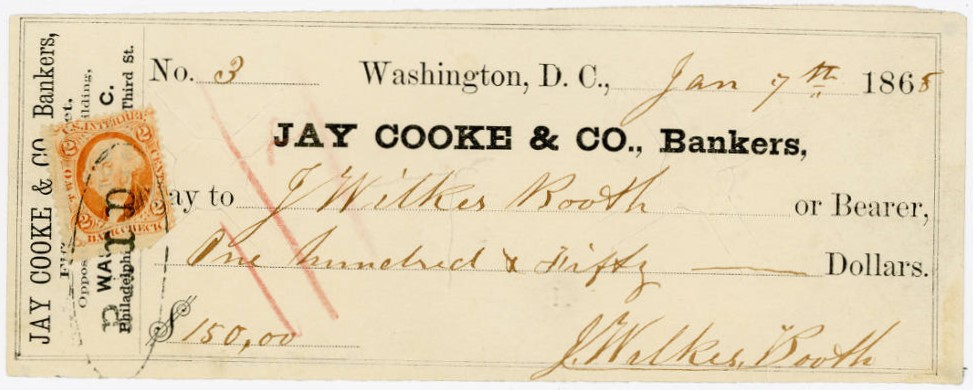
Talk about ephemeral! With online banking and online money transfer services, writing checks are a thing of the past. But even those of us who still write checks every once and awhile, have to admit that they are not things we generally hold on to once we cash or deposit it. But perhaps if you were a bank and had a check signed by a Presidential assassin just a few months before he committed his deed, you might hold onto it. John Wilkes Booth opened his account with Jay Cooke & Company on November 16, 1864 with an initial deposit of $1,500. This deposit occurred just a few days after Booth had returned from visiting Southern Maryland (and Dr. Mudd) for the first time. Over the next few months, he made different withdrawals on the account withdrawing the final balance of $25 on March 16, 1865, just a day after his meeting at Gautier’s Restaurant in which he laid out his abduction plot to all of his conspirators. The check above was a withdrawal of $150 made out to Booth himself on January 7, 1865. Two days later, Booth would make another deposit of $750. Part of this larger sum would be used to pay for part of the boat that was intended to be used to ferry the kidnapped Lincoln across the Potomac. In short, John Wilkes Booth’s account with Jay Cooke & Co. was where he kept the money he was using to finance his plot against Lincoln. This ephemeral check that Booth wrote to himself likely paid out some very real blood money. This check come from the collection of the Allen County Public Library in Fort Wayne, Indiana.


Telegram from the Ford brothers

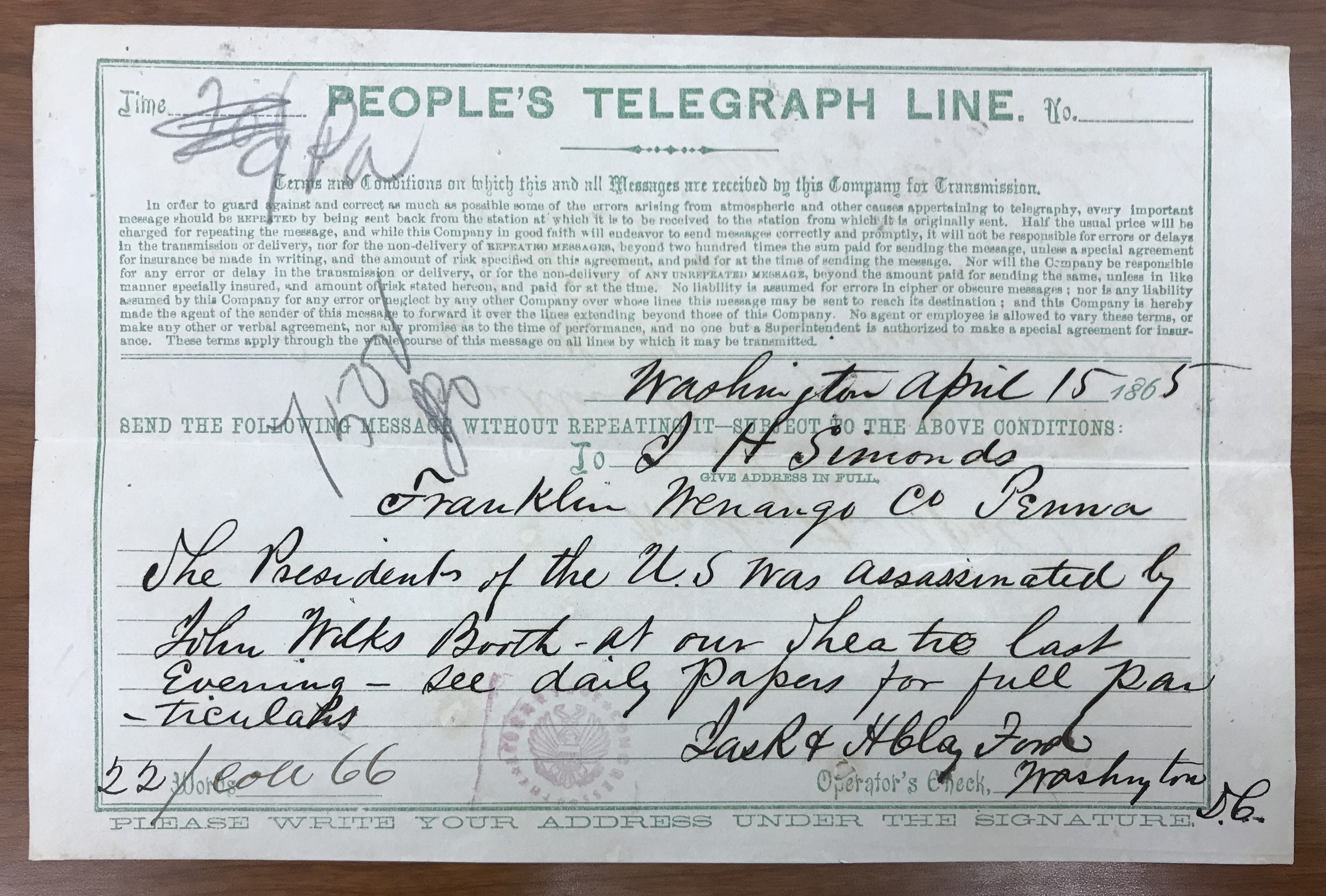
There are many telegrams that are a part of the story of Lincoln’s death. As the main method of rapid communication across distances in the 1860s, John Wilkes Booth and his conspirators often communicated with each other via telegram. However, the telegram above does not come from Booth or any of his conspirators. Rather it was a note sent by two of the Ford brothers from Ford’s Theatre. Harry Clay Ford had been present at his theatre when Booth shot Lincoln. His brother, James Reed “Dick” Ford, had been present earlier in the day and evening, but was away at the moment of the assassination. At some point on April 15, Harry and Dick sent off this telegram stating that, “The President of the U.S. was assassinated by John Wilks [sic] Booth at our theatre last evening – see daily papers for full particulars.” Interestingly, the recipient of this telegram was Joseph Simonds, a friend of John Wilkes Booth’s who acted as his agent in the Pennsylvania oil region. Booth had recruited Simonds, a former banker from Boston, to help him in the oil business in 1864 and even though most of Booth’s investments had ended Simonds had stayed in the oil business. Simonds often sent mail to Booth care of Ford’s Theatre and so the Ford brothers may have felt compelled to alert Simonds of what had occurred as soon as possible. At the trial of the Lincoln conspirators all three men, Dick Ford, Harry Ford, and Joseph Simonds, would be called to testify about their relationship with Booth. This telegram is in the collection of the Library of Congress.


Pressed flowers from Dr. Mudd’s island prison

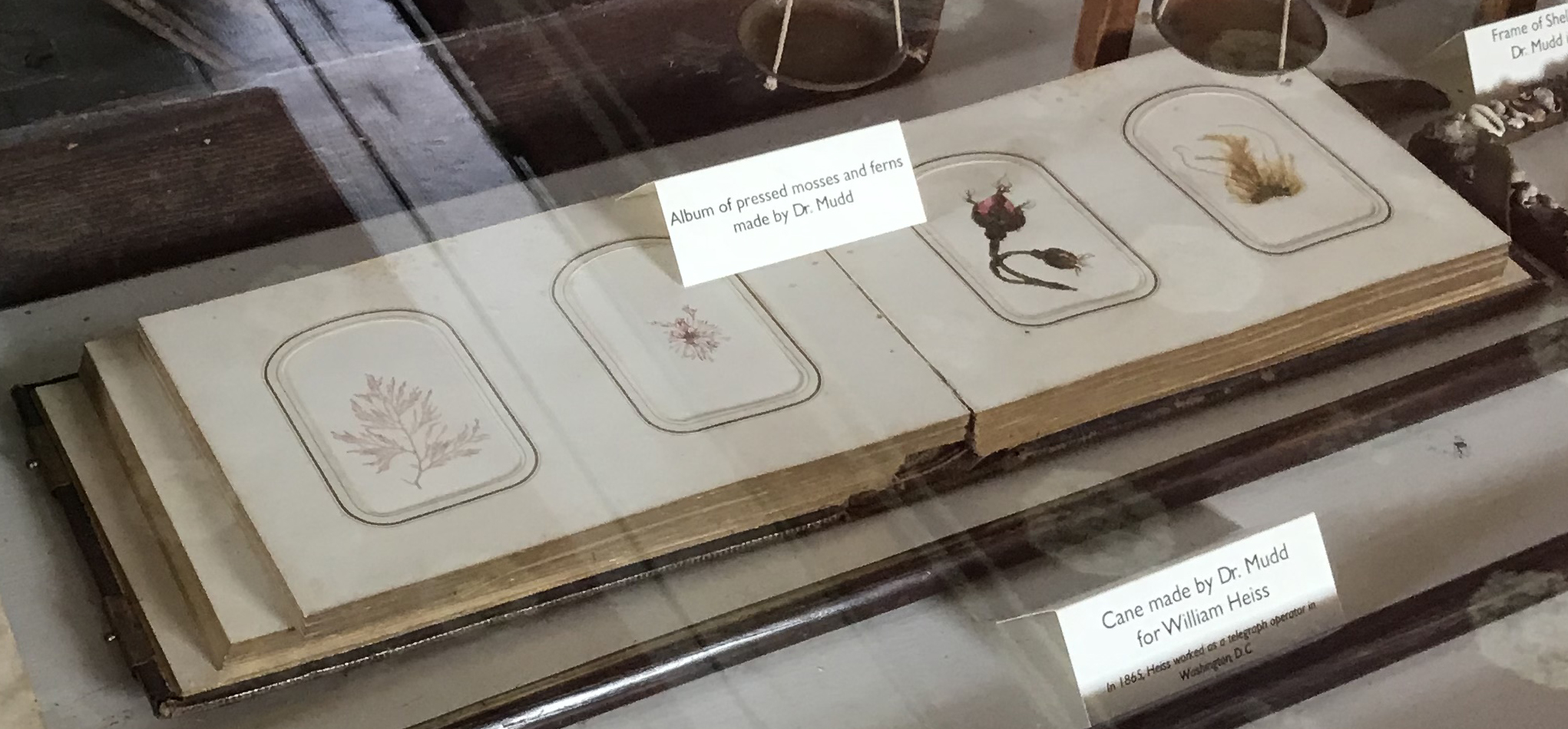
Ephemeral objects go far beyond humanmade creations. Nature is the largest producer of ephemera as everything living must inevitably die. We treasure the sweet blossoms that appear in springtime because we know that their existence is short lived. So much of the beauty behind a flower is because it is fragile and temporary. As the saying goes, “To every thing there is a season.” Dr. Mudd spent some time during his many seasons at Fort Jefferson attempting to preserve some of the naturally fleeting floral specimens in his tropical island prison. He collected several examples of mosses, ferns, and flowers from around the Dry Tortugas and pressed them into an album that generally housed photographs. The album can be found at the Dr. Samuel A. Mudd House Museum alongside some of Dr. Mudd’s other creations from his imprisonment.


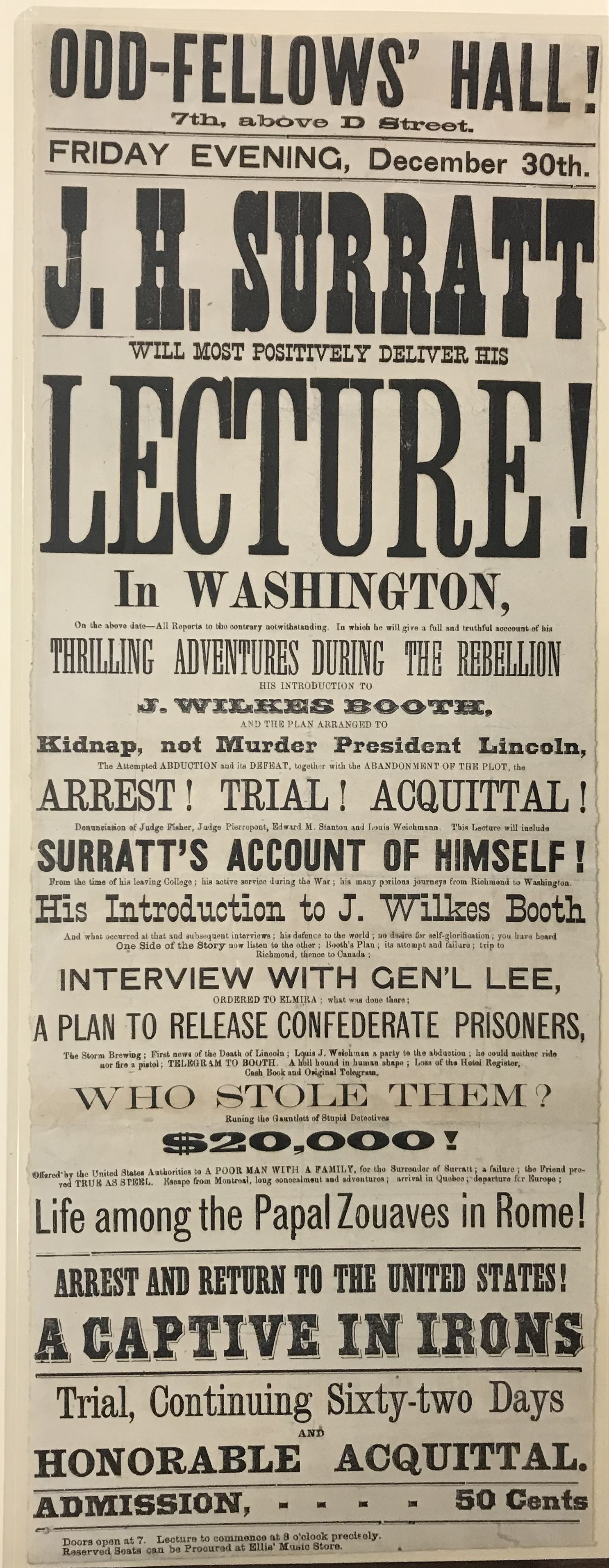
Broadside advertising John Surratt’s lecture

Rather than today’s practice of putting on the same play or musical for a prolonged engagement lasting several weeks, in the Victorian era theater specific shows generally changed each night. The main draw of the stage was the celebrated touring actor or actress who was gracing the boards at that time. The audience came out to see a certain performer who chose which shows they wanted to perform in as the lead role. Each theater’s playbills were. therefore, extremely ephemeral items, meant to capture a single performance only. Instead of using a copy of one of the most sought after playbills in the world, an authentic copy of Ford’s Theatre’s Our American Cousin playbill from April 14, 1865, I decided to show off another rarity. This playbill of sorts advertises a lecture by John Surratt, the sole Lincoln conspirator to avoid conviction for his role in the President’s death. At the time of Lincoln’s assassination, John Surratt was in Elmira, New York. When he heard the news of what Booth had done and that he was wanted in connection with the crime, Surratt flew to Canada. He hid out in Montreal for most of the trial of his mother and other conspirators and was eventually safely transported to Europe. He was eventually discovered hiding out in the Vatican as a Papal Guard. He fled the Papal States but was eventually cornered and arrested in Alexandria, Egypt and extradited to the U.S. in 1867. John Surratt was put on trial but was given a civilian trial rater than a military commission like the one that adjudicated his mother and co-conspirators. The civilian jury of majority Southerners could not come to a decision and resulted in a hung jury. Surratt was then released from custody and returned to civilian life. In 1870, hoping to parlay his notable story into a lucrative speaking career, Surratt embarked on the lecture circuit. He told the story of how he had conspired with John Wilkes Booth to abduct President Lincoln, but denied having any knowledge of Booth’s plan to kill the President. He gave his compelling lecture in Rockville and Baltimore, Maryland, and even at the Cooper Union in New York City where Lincoln had given his 1860 speech that had propelled him to national prominence. The above broadside was for speech John Surratt planned to give on December 30, 1870 in Washington, D.C. This specific lecture never happened, however. A group of locals were outraged that Surratt would be allowed to give a speech detailing his involvement in the plot against Lincoln in the same town were the President was martyred. It is believed that someone in authority contacted Surratt before the speech could start and warned him that though he had been released by the government, he had not been formally acquitted. If he continued to make waves, the government would be happy to use his words against him and re-charge him for complicity in Lincoln’s death. As a result, John Surratt never made another lecture. This broadside for the lecture that never happened is from the collection of the University of Iowa.


Paperwork of Edwin Booth’s 1886 – 1887 tour

Not every financial record need be as doom and gloom as an assassin’s check. For example, here is a look at the inner workings of a far more celebrated touring star. This is the statement showing all of Edwin Booth’s expenses and income during the week of April 25, 1887. During this period of time, Booth was taking part in what is known as the Booth-Barrett Tours. From 1886 – 1890, Edwin and fellow actor Lawrence Barrett traveled around the country. The pair traveled over 14,000 miles and gave 233 performances. It’s fun to see the details of what the accounting for tours like this looked like. For this week of the tour, we can see what shows were produced and where, the total box office gross, and the amount Booth and Barrett received from their efforts. On the other side we see their expenses which included railroad tickets, the printing of playbills and advertisements, the purchase of calcium lights, telegrams, the expenses of their prop and wardrobe keepers, and even miscellaneous expenses like the repairing of a picture frame for $2. These bookkeeping records rarely survived long past their authors but demonstrate the importance of proper records in order to be successful as a traveling actor. This financial record comes from the Harry Ransom Center in Austin, Texas.


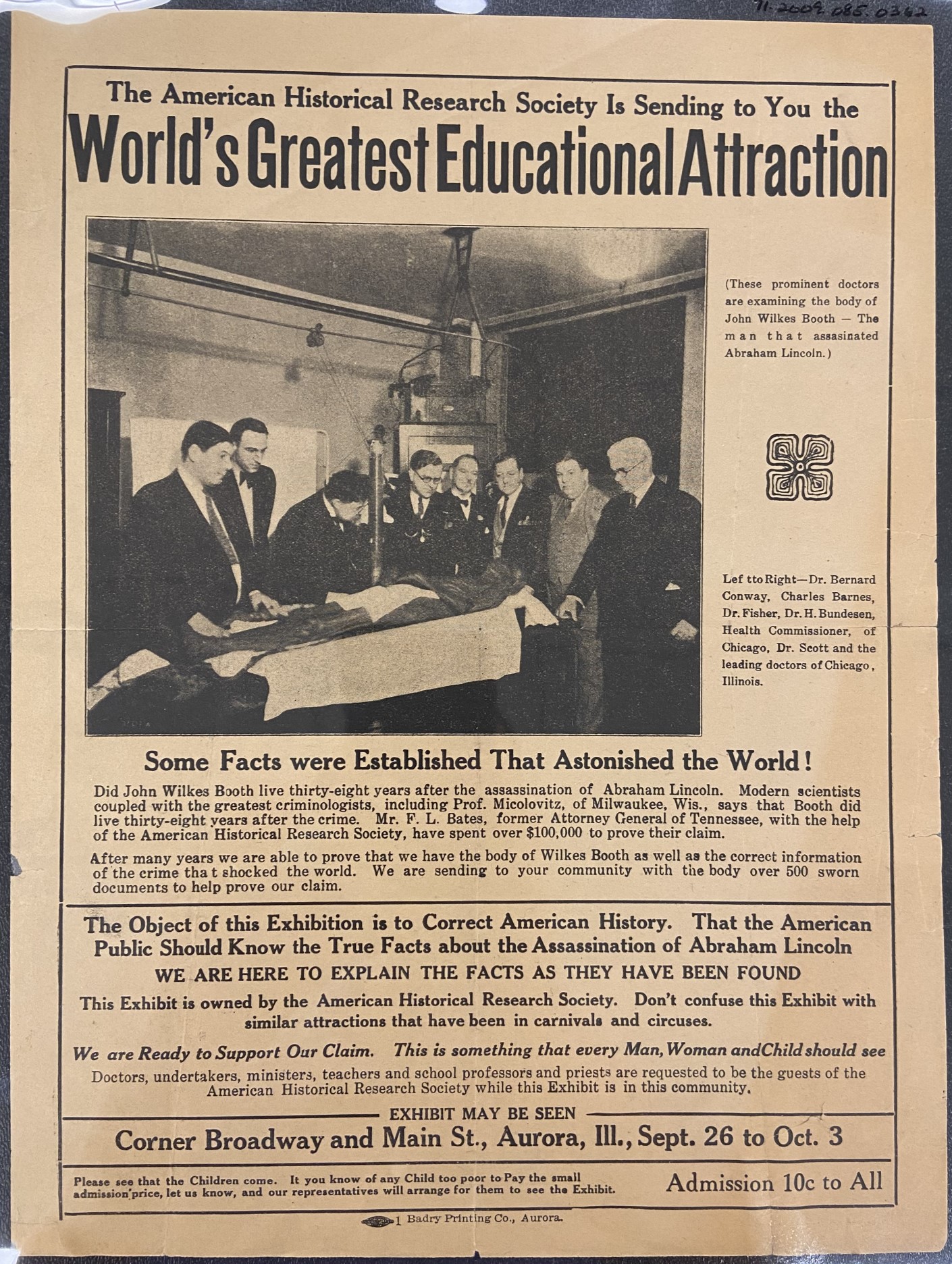
Advertisement for the “Booth” mummy

The post-mortem career of drifter David E. George has been the subject of many programs on the so called History Channel and others, but is hardly a new piece of pseudo history. As obliquely referred to on this broadside from the 1930s, it has been claimed that John Wilkes Booth escaped justice in 1865 only to take his own life 38 years later in Enid, Oklahoma. This ad portrays itself as a traveling exhibit of immense educational value that hopes to “correct American history” by showing that Booth had lived. With a name like the American Historical Research Society, I’m sure several people were convinced that they had been presented with the actual mummified remains of the assassin of President Lincoln. However, this advertisement is little more than an ad for snake oil. Despite its claim that one should not, “confuse this Exhibit with similar attractions that have been in carnivals and circuses,” that is exactly was this was. The “Booth” mummy had been traveling with carnivals since the the early 1920s and while it was now a solo attraction that visited towns and cities off the main thoroughfares, it was still little more than a sideshow hustle. The American Historical Research Society was nothing but an imaginary name incorporated by two hucksters of the mummy. They hoped the title would provide some legitimacy to their little sideshow attraction. But a pig is a pig, no matter how much lipstick you put on it! This advertisement for the “Booth” mummy exhibit comes from the collection of the Allen County Public Library in Fort Wayne, Indiana.


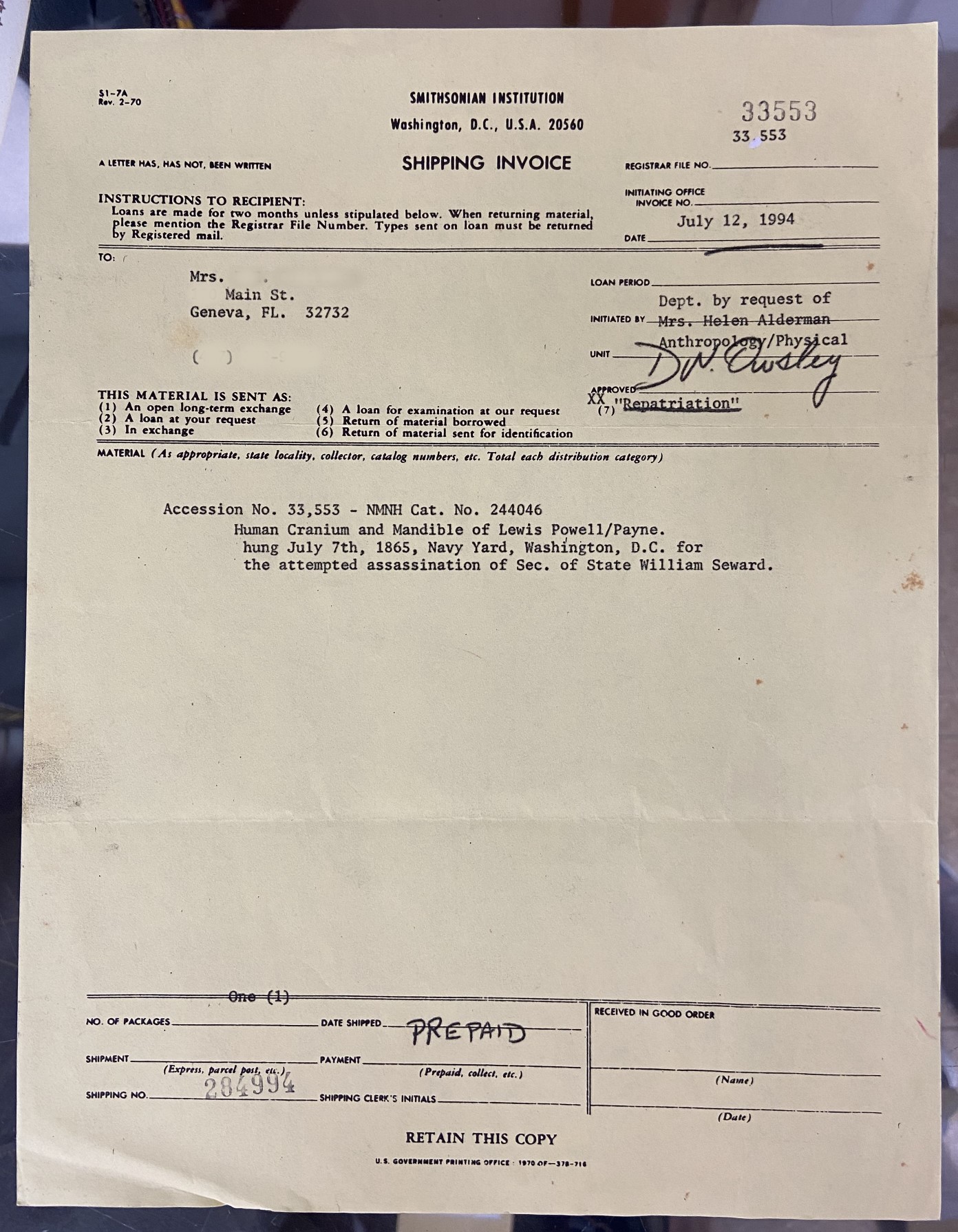
Shipping Invoice for Lewis Powell’s head

Most of us can’t wait to toss the shipping invoices that accompany our delivered online purchases. Like all receipts, shipping invoices are largely ephemeral, designed to survive the trip to their destinations. But in some cases, especially when it comes to historical artifacts, receipts can be used as a form of provenance to help prove where a specific item came from. In these cases, shipping invoices may become part of a formal record of an item. It’s perhaps not so surprising then that this shipping invoice from the Smithsonian Institution in Washington, D.C. was retained when it accompanied a very unique relic in 1994. As stated on the paperwork, this invoice accompanied the transfer of the, “Human Cranium and Mandible of Lewis Powell/Payne” from the Smithsonian to a descendant of the Powell family living in Geneva, Florida. Noted as a matter of “repatriation”, this document represents the final trip that Secretary of State William Seward’s would-be assassin, Lewis Powell, took after his skull had been rediscovered among the Smithsonian’s anthropology collection in the 1990s. Through the help of historians Michael Kauffman and Betty Ownsbey, descendants of the Powell family took ownership of their ancestor’s remains and laid his skull to rest next to his mother in Geneva Cemetery. For more about Lewis Powell’s post-mortem travels click here. For a video I shot at Geneva Cemetery in 2020, check out this post. This shipping invoice comes from the collection of the Geneva History Museum in Geneva, Florida.

Categories: History | Tags: , , , , , , , , , | 15 Comments

Who’s to Blame?

In the collection of the The Gilder Lehrman Institute of American History there is an 1865 diary written by Cyrena Hammond. At the time of Lincoln’s assassination, Cyrena was a 17 year-old resident of North Bergen, a small hamlet located about 20 miles west of Rochester in western New York. While there are many diaries that contain entries regarding the death of Lincoln, Cyrena’s actually speaks very little about the event in her day to day entries. The only mention of it is in her entry for April 19 which including the line, “The whole union is dressed in mourning today.” However, at the end of the diary, on the pages designed for keeping track of one’s money flow, Cyrena included a description of a Sunday school lesson she attended on April 29th. One of her neighbors, a man by the name of Loren Hill, addressed the Sunday school students and made particular comments regarding who was really to blame for Lincoln’s death. The following is an image of the diary pages and a transcription of what it says:

“The 29 of this month, Loren Hill, was trying to entertain the sabbath school with his talk which runs as follows

Every Girl should be brought up in sunday school. I have got four girls. They expect to become wives and in order to make them good wives they must be brought up in the sunday school. Most young girls that are ruined, are the cause of it all. They do more to ruin young men than young men do themselves. Had Mrs Booth been a real genuine woman Wilkes Booth would never have commited the deed he did. as long as I have any controll over my children they will attend the sunday school.

thus run his speech untill every body was disgusted.”

According to Loren Hill, the crime John Wilkes Booth committed was essentially the fault of his mother, Mary Ann Booth.

In Hill’s view, if Mrs. Booth had been a more “genuine” woman, John Wilkes would never had killed Lincoln. Hill preached that most of the ruin suffered in the world is the result of the moral failings of women and that they deserve the blame for whatever crimes their sons and husbands commit. As Cyrena points out at the end of her entry, everybody was disgusted by the overt misogyny of Hill’s preaching.

While I have seen many attempt to put the blame for Lincoln’s assassination on the shoulders of someone other than John Wilkes Booth, this was the first time I had ever read of someone being so callous as to blame poor Mrs. Booth for the crime of her misguided son. But even worse than blaming an innocent parent for the sins of her child was the way in which Hill attempted to use Lincoln’s death to preach that religious failings of women were the cause of men committing criminal acts. Such a sexist attack wrapped in doctrine reminded me of the ways in which enslavers used the Bible in order to justify the continued practice of slavery. Both are examples of the powerful using dogma to subjugate others to their will.

According to the 1870 census, Loren Hill, the women blaming lecturer, did indeed have 4 young daughters as he had stated. Their names were Emma, Francis, Mary, and Nora. Hill was a wealthy farmer in nearby Clarendon, NY with his real estate holdings valued at $12,000 and his personal estate at around $3,300. In the 1860s, he had been appointed as both Clarendon’s Assessor and Commissioner of Highways. He also served as the justice of the peace. Despite such social successes, when Hill died in 1883 he was allegedly completely broke. An 1889 book called the History of Clarendon by David Copeland stated that, “Hill was not worth one penny when he died, although he owned this farm when crops were good and prices high. When justice of the peace he said, in the presence of the author, ‘that he did not know whether his head was on his shoulders or on his feet,’ a lawsuit having turned him upside down in his own estimation.” Unfortunately the text does not give any more information and so we are left to only speculate as to which specific woman Loren Hill undoubtedly blamed for his own financial ruin.

I was introduced to Cyrena’s diary through my current Master’s class on Historiography and used it to discuss social history. As an example of social history, the lives of Cyrena Hammond and Loren Hill demonstrate a story of gender and power in the Civil War era. Mr. Hill, the powerful and influential landowner, sought dominion over his daughters and other women by blaming the moral failings of women for the crimes of men. Cyrena (and apparently others) expressed disgust over these remarks but it appears the rebuke may have only been safe within the pages of a diary. Even the interactions of two neighbors in a rural area of New York at the time of Lincoln’s assassination can be valuable to social historians when viewed through the lens of gender roles and gender norms.

Categories: History | Tags: , , , | 12 Comments

John Wilkes Booth’s “Confederate” Cipher

From the prosecution’s point of view, the trial of the Lincoln assassination conspirators had essentially two main goals. The first goal was to prove the guilt of the 7 men and 1 woman put on trial for complicity in the death of the President. The second goal of the trial was to put forth evidence to show that the assassination was sanctioned and supported by the leaders of the Confederate States of America. Establishing the Confederacy’s involvement proved a far harder task than the trying of the conspirators. In the end, the prosecution was hampered by unreliable and perjured testimony ultimately leaving the question of Confederate involvement in Lincoln’s death to be a much debated topic even 150 years later.
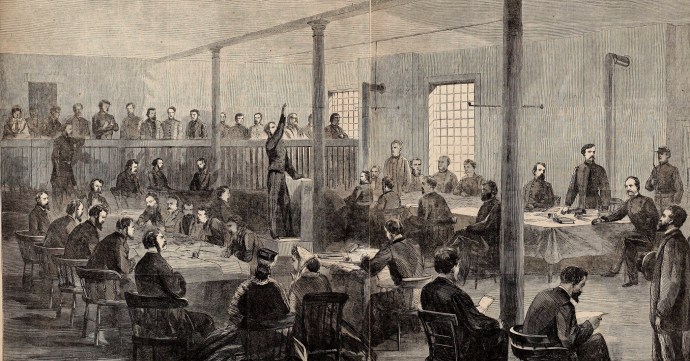
The prosecution’s method of connecting the Confederacy to Lincoln’s assassination can be best described as “quantity over quality”. They brought out a multitude of witnesses and evidence to make damning claims about John Wilkes Booth’s Confederate involvement but very little of it holds up under scrutiny. For example, the very first witness called the stand was a former Confederate soldier named Henry Von Steinaecker. He testified about having met John Wilkes Booth in Virginia in 1863 and that, at that time, Booth was in communication with high ranking Confederate officials plotting the assassination of Lincoln. As the first witness on the first day of the trial, the prosecution was setting the tone for the entire proceeding. At the time of Steinaecker’s testimony, not all of the conspirators had defense attorneys and the lawyers that were present did not believe such testimony had much to do with their clients. There was no cross examination done on Steinaecker.

When, later in the trial, the defense tried to recall Steinaecker, they were told by Judge Advocate General Joseph Holt that Steinaecker could not be located. In the end the defense called Steinaecker’s superiors in the Confederacy and both men testified that very little of what Steinaecker had testified to was true. Steinaecker had actually been a deserter from both the Union and Confederate armies and was serving a three year prison sentence in Fort Delaware when Lincoln was assassinated. Despite having written letters to both Lincoln and the Judge Advocate General asking to be released and offering his services, it was only after Lincoln’s death that Steinaecker wrote to the Judge Advocate General with his vital information about Booth and Confederate officials. After testifying Steinaecker was released from prison and disappeared. Steinaecker was the first of many prosecution witnesses who made grandiose claims about John Wilkes Booth and the Confederacy only to have his testimony questioned or disproven later.

In addition to using unreliable witnesses, the prosecution also presented material evidence in hopes of proving Confederate involvement in Lincoln’s death. Perhaps one of the most misunderstood pieces of material evidence the prosecution brought forth to tie Booth to the Confederacy was the assassin’s so-called “Confederate” cipher.

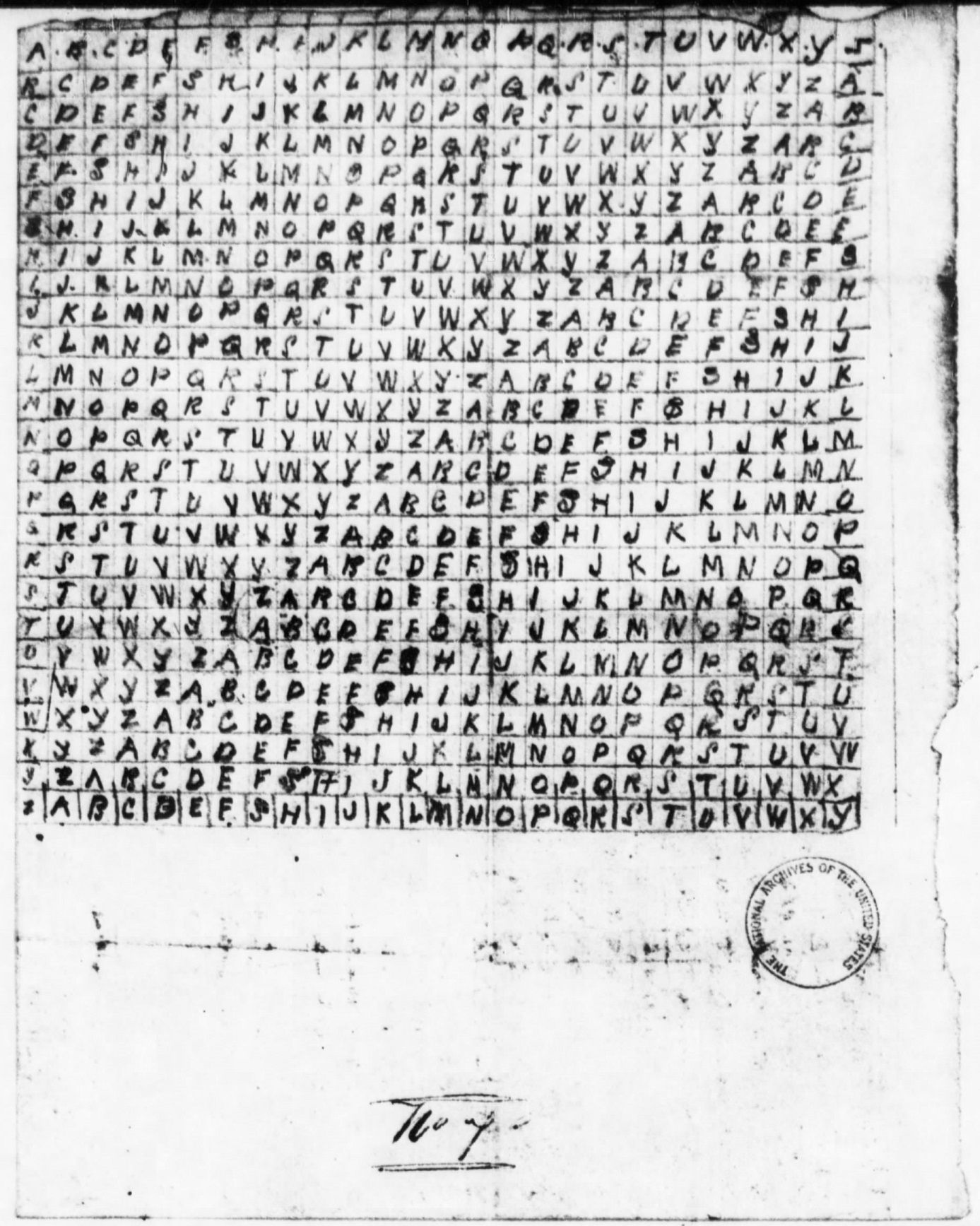
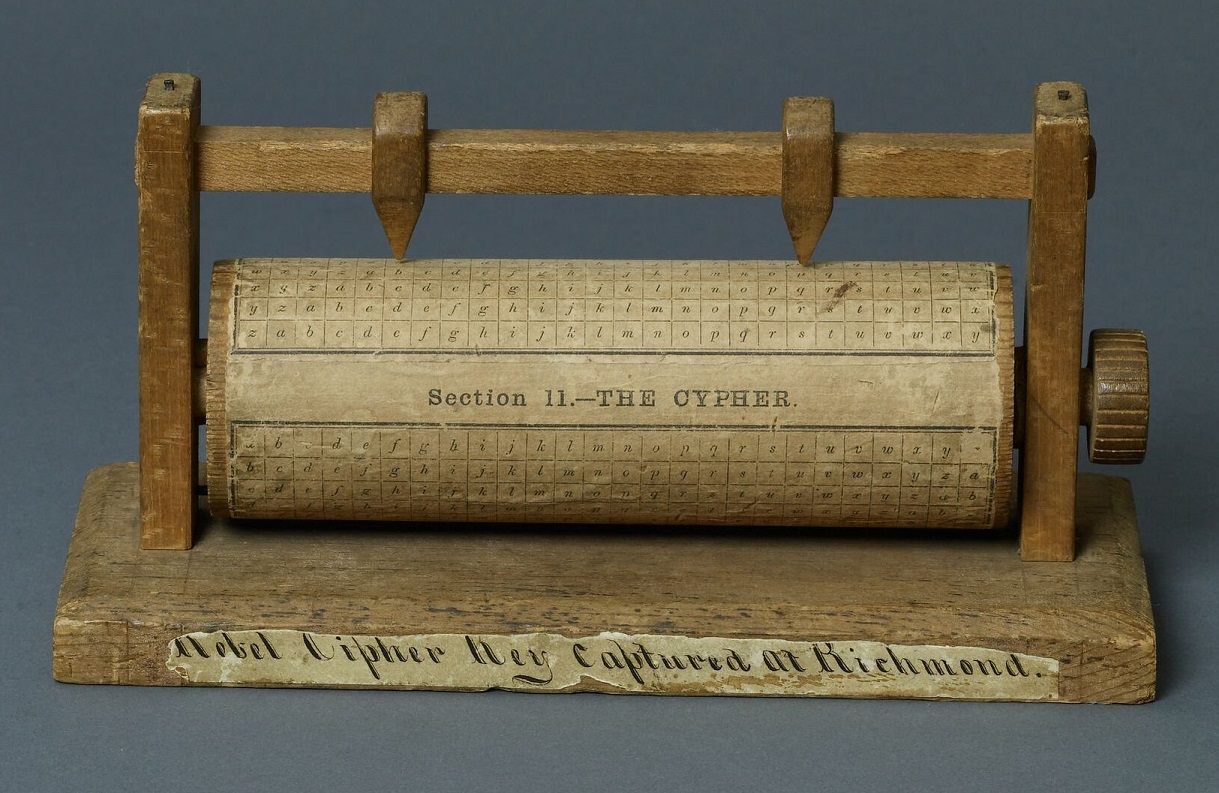
After the assassination of Lincoln, John Wilkes Booth’s rented room at the National Hotel was searched. Among his papers, most of which were mundane letters and memorandum, was this cipher which was written in Booth’s own hand. At the trial of the conspirators, this cipher was entered into evidence as Exhibit 7 and was portrayed as a physical link between John Wilkes Booth and the Confederate secret service. In addition to this paper cipher, the prosecution also entered into evidence a large cipher cylinder seized from the office of Confederate Secretary of State Judah P. Benjamin in Richmond.
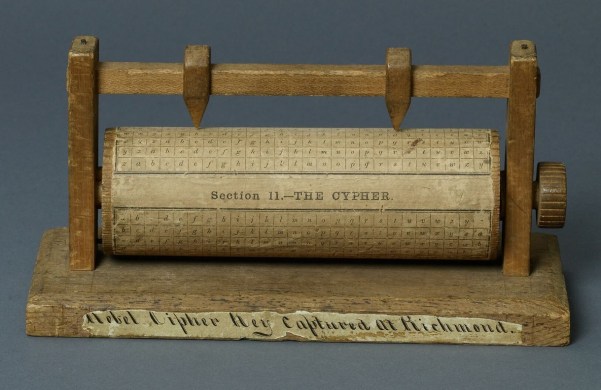
Thomas Eckert, the assistant Secretary of War under Edwin Stanton, was called to testify about these two ciphers. He stated that both the paper cipher found in Booth’s belongings and the cylinder found in Richmond were the same. Eckert then presented copies of Confederate letters that the War Department had intercepted during the war that had been written using the same cipher.

Taken at face value, this cipher found among John Wilkes Booth’s papers seems like a very damning piece of evidence. Eckert, the Union’s chief codemaker, testified that Booth’s cipher was the very same as the one used by the Confederacy, which seems to definitely prove that John Wilkes Booth must have had a strong connection to the Confederate States. In the years since the trial, John Wilkes Booth’s “Confederate” cipher has been used by different authors in their arguments that the Confederacy sanctioned Lincoln’s murder.

However, just like the testimony of Henry Von Steinaecker, the conclusiveness of Booth’s cipher connecting him to the Confederacy doesn’t really hold up under scrutiny.

First off, the handwritten, alphabetic note found in John Wilkes Booth’s room is called a Vigenère table. The table is a tool used in order to encrypt and decrypt a message using a Vigenère cipher. It is true that the Confederacy did use a Vigenère cipher to encrypt secret messages during the war and that, fundamentally, Booth’s table is the same as the cylinder found in Richmond. But before making any conclusions it is important to understand how a Vigenère cipher works.

If you were to receive an encrypted note that had been written with a Vigenère cipher, you would be faced with something like this:

ISATFIOJXSFOFGLEOQBWISDUBUXCAUXWZDLTPCHAIKOLUPXOFLTPCGK

To anyone who intercepted your note, this message would appear to be lines of complete gibberish. Even if the person intercepting your note realized it was written in a code of some kind, they would almost certainly fail at decoding it.

In order to decrypt the note a person needs two things. The first thing would be a Vigenère table, much like the one found in Booth’s room. A Vigenère table is little more than the alphabet, written on 26 lines, with each new line being offset by one letter from the previous line. The Vigenère table is a tool used to help decrypt the message. The second requirement for decrypting a Vigenère cipher is knowing the keyword or phrase that was used to create the message. Let’s look at an example of how a message written in a Vigenère cipher could be decrypted using a table and keyword.

Let’s say that I wrote this coded message to you:

O W A V U Z G Z N B T R D G S M N V F P N M M

In order to decrypt this message you would already need to be aware of the keyword or phrase that was used in making it. This was generally a word or phrase that had been agreed upon ahead of time or had been sent separately. It wouldn’t be very secure for the writer of the message to include the keyword with the encrypted message. For this message let’s say that our previously agreed upon keyword is: LINCOLN

Your first step towards decrypting this message would be to write the keyword LINCOLN, one letter at a time, above the ciphered text. When done, it would look like this:

Notice that you might run out of message before the whole keyword is completely used again, this is not a problem.

Each letter of the encrypted message now has two corresponding letters: the keyword letter and the original letter. Now all you need in order to decipher the message is your Vigenère table. Here is a more legible version of a Vigenère table, identical to the one Booth wrote.

For deciphering, you first use the keyword letter to find the right column on your Vigenère table. Then you move down the column until you find the corresponding message letter. This will give you the correct row. You move across that row to its beginning to find the first letter of the decrypted message.

So, in the example above, you would find the column that starts with L since our keyword, LINCOLN, starts with L. Then you move down the L column until you get to the letter O, which is the first letter in the message. Once you find O in the L column, you follow that row back to the beginning which shows you that it is in the D row. This tells you that the first letter in our message should be D.

To find the second letter in our message you would need to start in the I column since the second letter in LINCOLN is I. Then you would travel down the I column until you reach W, the letter in the original message. From there you follow the row back and discover the second letter in our message should be O.

This process of finding the keyword letter column, locating the encrypted letter in the column, then tracing the row back to learn the correct decrypted letter, is repeated for the remaining characters in the message. If you want to, grab a piece of paper and try to decipher the rest of the message yourself. When you’re ready to check your work, highlight the black text box below to reveal the decrypted message or scroll down to the first comment of this post.

DONT GO TO FORDS THEATRE ABE

Creating a message using a Vigenère cipher is very much the same as decrypting one. First you would write out the text you want to encrypt and place the keyword or phrase above it, letter by letter. Then, using the Vigenère table, you would located the correct column based on the keyword letter and the correct row based on the message letter. Where the corresponding column and row intersect gives you the encrypted letter for your coded message.

As far as creating secret messages go, a Vigenère cipher is a strong method of encoding as it really requires knowledge of the keyword in order to decode the message. In our example only the word LINCOLN as the keyword would result in the correct decryption. Deciphering a message without the keyword is technically possible, but very difficult to do. Ciphers with shorter keywords are more prone to codebreaking techniques that look for patterns and use math. But longer keywords or phrases strengthen the already strong encryption. The Confederacy utilized several key phrases for their Vigenère ciphers including OUR DESTINY IS ONE and COMPLETE VICTORY. COME RETRIBUTION was the key phrase used in Confederate ciphers in the final months of the war. It is important to point out that Vigenère ciphers were not a Confederate invention. This method of cryptography dates back to the 1500s and had long been prized as a code immune to being broken. This is why the Confederates used Vigenère ciphers in their secretive correspondences.

Going back to John Wilkes Booth, we find that it is accurate to say that the Vigenère table found among Booth’s papers matches the Vigenère cylinder found in Richmond. However the reason they are the same is because both the table and the cylinder utilize the same method of encryption. While every Vigenère cipher uses the Vigenère table to encrypt and decrypt a message, it is nothing more than a translation table. You can use the Vigenère table to encrypt a message using an infinite number of keywords. Claiming that Booth’s possession of a Vigenère table is iron clad evidence of his complicity with the Confederacy is akin to claiming that a specified individual is in cahoots with members of the Mafia because they both have the same numbers to choose from when they enter their PIN numbers at the ATM. They are using the same tool to encrypt information, but that alone does not prove anything.

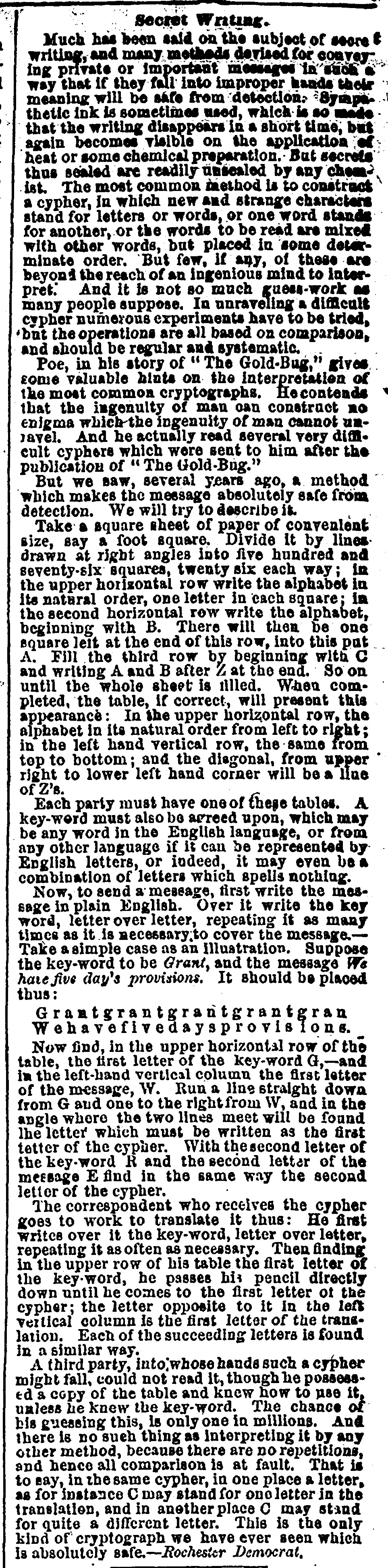
“Still,” you might be thinking to yourself, “how does John Wilkes Booth even have knowledge of this secret agent stuff if he’s not working with Confederacy?” As pointed out above, the Confederacy did not invent the Vigenère cipher. Nor was knowledge of this cipher in any way a state secret. In fact, as the Civil War went on, the general public became more and more interested in the topic of codes and cryptography. In the same way that schoolchildren enjoy writing secret messages to their friends, writing in code became a fun activity with the Vigenère cipher described openly in this regard. Below is the beginning of 1864 article from the Newark Daily Advertiser explaining the exact process of creating a table and how to go about composing a message using the Vigenère cipher. Click the sample below for the full article.

As this article demonstrates, the Vigenère cipher was not an obscure method of cryptography known only to the Confederacy. It was an old but still relatively well-known method of composing encrypted messages.

We don’t know how John Wilkes Booth learned about the Vigenère cipher but it is clear that it appealed to his delusions of grandeur. After learning the Vigenère cipher, Booth reacted not like a trusted Confederate agent, but like an excited schoolboy. In Asia Booth’s book about her brother, she described how, in November of 1864, John Wilkes wanted to teach her the cipher but she did not like the propriety of it:

“He sat late with me on one of these nights – the last – and said to me, ‘Let me show you the cipher.’

When I understood what he meant, I said, ‘No, I shall not consent to any knowledge of that kind.’

But he added, ‘I might possibly need to communicate with you about my money affairs, and there is no need to let everyone know what I am worth.'”

Asia still did not consent to learning the cipher and the subject was dropped. This interchange, in which Booth is trying to brag to his sister about something that appears clandestine, seems to fit the self-aggrandizing that John Wilkes Booth demonstrated. It seems perfectly appropriate to his character for him to have learned something in the realm of cryptography in order to brag about it and show it off later. How could Booth have been trusted by Confederate officials with genuine Confederate keywords and phrases if he was so willing to teach the process to his own sister? In my opinion, Booth’s Vigenère table was just another prop he used to help him play the part of a secret agent because he had no such role in real life.

There is no evidence that John Wilkes Booth used his Vigenère table to encrypt or decrypt messages from the Confederacy or its leaders. There is no evidence that Booth was ever in possession of official Confederate keywords or phrases.  The government did not find anything in Booth’s papers that was written in any code that would have used the Vigenère table. Nor have any historians, to my knowledge, ever found anything in the papers of the Confederacy that could be considered an encrypted message from Booth.

Like a lot of the evidence dealing with the Confederacy at the trial of the conspirators, John Wilkes Booth’s “Confederate” cipher is far less definitive than what was testified to. Rather than proving a direct, physical link between Booth and high ranking Confederate officials in Richmond, Booth’s Vigenère table only proves that the assassin at one point dabbled in a fairly common method of encryption. The prosecution failed to address that Booth did not possess any official Confederate keywords or messages and sought, instead, to incriminate the Confederacy by pointing out that Booth had the same ability to write in cipher as they did. However, possessing the same tool does not prove conspiracy. Unlike the prosecutors of the trial of the conspirators, we have the benefit of time and objectivity to thoroughly investigate pieces of evidence. John Wilkes Booth’s Vigenère table is an interesting document, but it is conclusive of nothing other than the assassin’s own enigmatic nature.


If, like BOOTH, you want to play around a bit more with a Vigenère cipher, feel free to decrypt the first example of ciphered text that I included in this post. The keyword for it isn’t hard to find.

Categories: History | Tags: , , , , , | 10 Comments

Blog at WordPress.com.