
Prison life at Fort Jefferson, Dry Tortugas was a miserable affair. From the food, to the weather, to the living conditions, it’s hard to imagine that anyone stationed there, guard or prisoner, found the now tropical paradise hospitable. All those that sailed to the island fort became prisoners. It appears that when the lives of the inhabitants were not in danger from disease or malnutrition, extreme boredom prevailed. The Lincoln assassination conspirators Dr. Mudd, Edman Spangler, Samuel Arnold, and Michael O’Laughlen fought against this boredom. The assigned duties given to the men helped in some ways. Dr. Mudd, while a trained surgeon who would be a nurse in the hospital and an emergency replacement during the Yellow Fever epidemic, spent a considerable amount of time with Edman Spangler in the carpentry shop on the island. Through three and a half years, he honed his carpentry skills and created several beautiful items that are currently on display at the Dr. Samuel A. Mudd House Museum in Waldorf, MD. One set of items that Dr. Mudd became effective at creating were canes.


In addition to these two canes on display at the Mudd house, the good doctor also created a cane for his cousin, Henry A. Clarke. When Dr. Mudd was struggling to find an attorney willing to take his case during the conspiracy trial, he reached out to Clarke who owned a Washington coal company. On May 10th, Col. Henry Burnett sent a letter to Clarke asking if he would be Mudd’s counsel. Clarke responded back truthfully that he was not an attorney but would be happy to help Dr. Mudd in securing counsel. By the time Clarke had responded, Dr. Mudd had already secured Thomas Ewing and Frederick Stone for his defense.
Clarke would later make an appearance at the trial testifying on Dr. Mudd’s behalf. Even though he couldn’t keep his cousin out of prison, the family story is that Clarke continued to advocate for Dr. Mudd’s release. As a result, Dr. Mudd presented a cane to Henry Clarke. A few years ago, the cane made an appearance on Antique Roadshow:
Dr. Mudd was not the only conspirator to make canes for family and friends. His own mentor in the carpentry world, Edman Spangler, also created canes from the wood at Fort Jefferson:

The canes, cribbage boards, shell decorated boxes, and other feats of craftsmanship were all therapeutic ways for Dr. Mudd to feel productive. Had it not been for these minor, but important, outlets of purposefulness, the Lincoln assassination conspirators could easily have succumbed to insanity.
References:
The Dr. Samuel A. Mudd Research site by Robert Summers
The Evidence by Steers and Edwards
Genealogybank.com





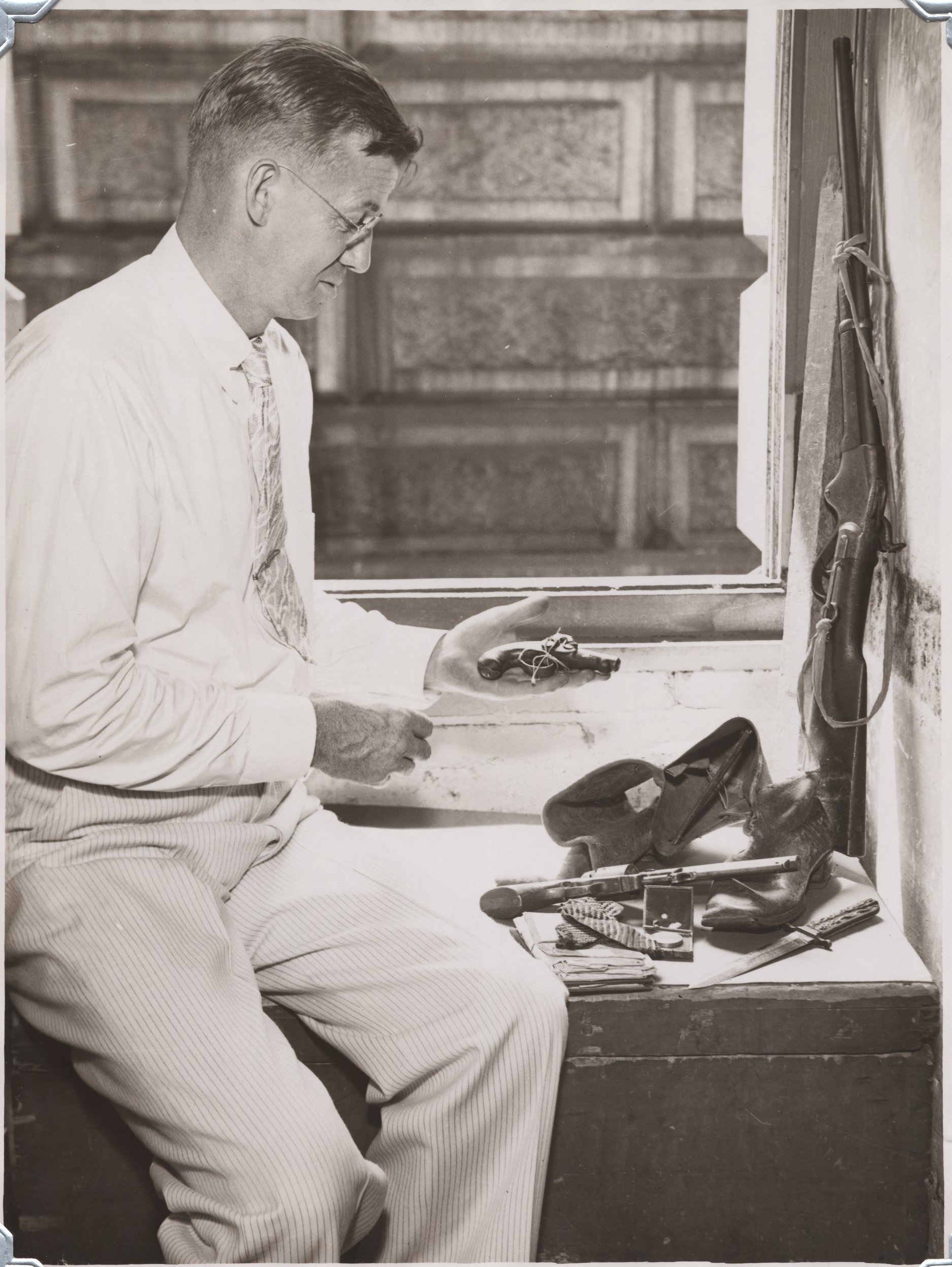


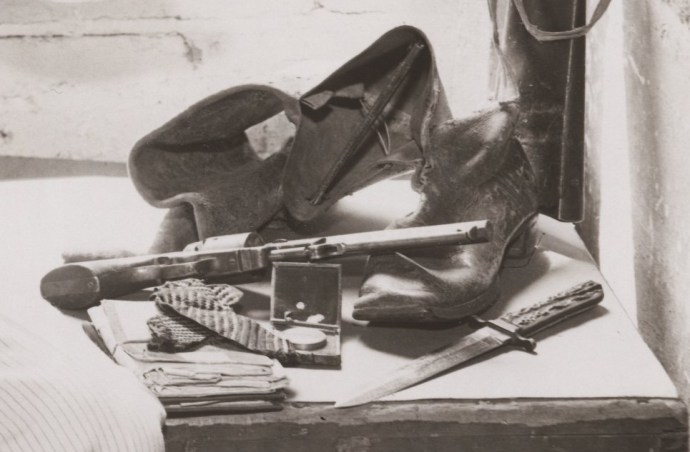 Among the items shown above are Booth’s boot and compass. There is also the tie attributed to George Atzerodt and a pack of papers that looks like it could be Booth’s diary. I’m not sure which pistol that is, but it could be one of Booth’s. The knife shown is the etched “Liberty” knife that, while currently on display at Ford’s Theatre as Booth’s knife, was not recovered from his body at Garrett’s farm.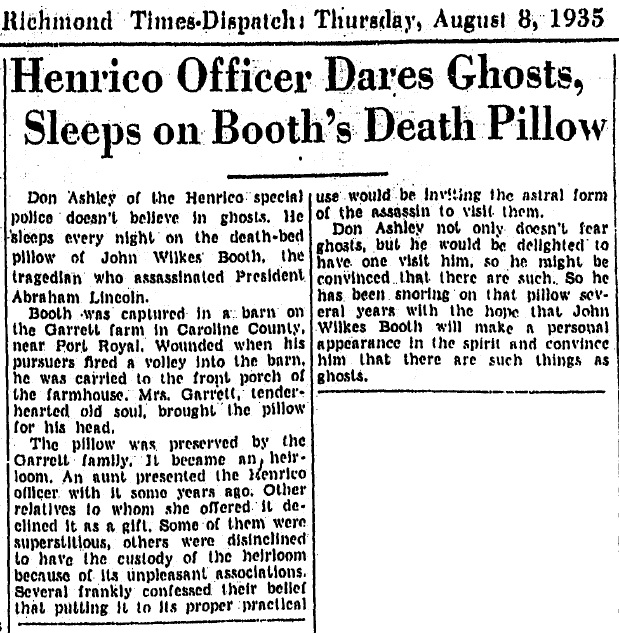







 LincolnConspirators.com
Recent Comments