Following Orders: The Arrest and Case of John McCall, Assassination Sympathizer

Recently, there was a comment posted by Gary Goodenow in the Grave Thursday entry for General Dodd relating a story about a possible relative of Gen. Dodd’s who participated in the execution of King Charles I of England, and was later executed himself for treason by the restored King Charles II. Gary mentions that the colonel in question attempted to use the defense that he was following the command of his superior when he participated the Charles I’s trial and death. This defense did not succeed for Col. Axtell. However, the idea of a “following orders” defense reminded me of another legal case related to the Lincoln assassination. It was a case brought forward by a man named John McCall who lived in Mendocino County, California.
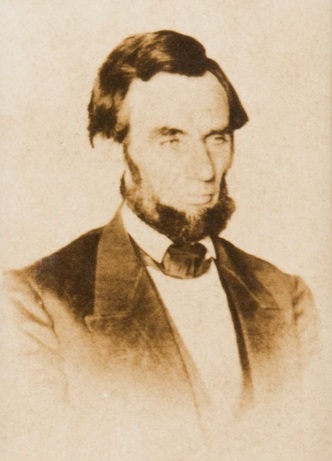
Abraham Lincoln Bierstadt

Abraham Lincoln in September of 1861

Before getting to Mr. McCall, however, some background knowledge on a specific legal aspect of the Civil War is necessary. During the Civil War, President Abraham Lincoln suspended the writ of habeas corpus. Habeas corpus, which is Latin for “you may have the body”, is the right for an individual detained by an authority to appear before a court in order to contest the reasons for their continued detainment. In its simplest sense, habeas corpus prevents authorities from locking people away for indefinite periods of time without charge or trial. According to the U.S. Constitution the only time habeas corpus can be suspended is “when in Cases of Rebellion or Invasion the public Safety may require it.” So, when Lincoln suspended the writ in 1861, it could be argued that he was in his legal right, due to the open rebellion of the Confederacy. However, the above quote about when one can suspend the writ is detailed in the Constitution under the section describing the powers of Congress, not the executive branch.

Chief Justice of the Supreme Court Roger Taney

Chief Justice of the Supreme Court Roger Taney

The debate over who had the power to suspend the writ of habeas corpus loomed large in the early Civil War years. Lincoln’s actions were challenged by those who had been imprisoned for their southern sympathies and continually held. Chief Justice of the Supreme Court Roger Taney staunchly believed that the executive branch had no legal right to suspend the writ, while Lincoln argued that since the rebellion began when Congress was in recess he had the right to suspend the writ in their absence. Eventually, on March 3, 1863, Congress passed the Habeas Corpus Suspension Act, which retroactively gave the President the authority to suspend habeas corpus for the duration of the rebellion and protected the President and his subordinates from any liability for their previous actions:

“SEC. 4. And be it further enacted, That any order of the President, or under his authority, made at any time during the existence of the present rebellion, shall be a defence in all Courts to any action or prosecution, civil or criminal, pending or to be commenced, for any search, seizure, arrest, or imprisonment, made, done, or committed, or acts omitted to be done, under and by virtue of such order, or under color of any law of Congress; and such defence may be made by special plea, or under the general issue.”

Lincoln then paired this act with a proclamation of his own on September 15, 1863, declaring the classes of people who could be arrested and held under the suspension of habeas corpus:

“Whereas, in the judgment of the President, the public safety does require that the privilege of the said writ shall now be suspended throughout the United States in the cases where, by the authority of the President of the United States, military, naval, and civil officers of the United States, or any of them, hold persons under their command or in their custody, either as prisoners of war, spies, or aiders or abettors of the enemy, or officers, soldiers, or seamen enrolled or drafted or mustered or enlisted in or belonging to the land or naval forces of the United States, or as deserters therefrom, or otherwise amenable to military law or the rules and articles of war or the rules or regulations prescribed for the military or naval services by authority of the President of the United States. or for resisting a draft, or for any other offense against the military or naval service”

In short, Lincoln’s proclamation gave military officers the authority to hold without charge or trial those they believed were prisoners of war, spies, deserters, draft dodgers, and aiders or abettors, even if the belief could not be proven. The act of March of 1863, subsequently protected the officers from liability in enacting this authority.

Lincoln assassinated headline San Fran

When Lincoln was assassinated on April 14, 1865, the news spread around the country. In some of the western states and territories the reactions to Lincoln’s death were mixed, especially due to the unique blend of Northerners and Southerners who had moved there. It was not uncommon to find ardent Unionists and Confederates living in the same small area.

This was the case in an area of northern California called Potter Valley in Mendocino County. The valley was split in its sympathies with those with Southern sympathies settling in the upper part of the valley and those with Union sympathies in the lower part. The original school in Potter Valley had been built in the Southern leaning upper part and, during the Civil War, a second school was built in the Unionist lower part to ensure that the different students in the area received the appropriate political education.

When the news of Lincoln’s death arrived in Potter Valley there were those who mourned the fallen leader with intense grief, and those who greeted the news with great joy. One of those joyful men was an older resident of the valley named John McCall.

McCall was about 60 years old and originally from Tennessee. At least twice in April of 1865, McCall made statements while on the public road in Potter Valley about his satisfaction with Lincoln’s death. According to Unionist witnesses who later reported on him, McCall stated that, “Lincoln was shot, and that the damned old son of a bitch should have been shot long ago, and that some more of his kind would go the same way shortly.” A few days later, McCall followed up on this line of thinking and stated, “That he did not believe that General Lee had surrendered, and believed that General Lee was still carrying on the war; and that he did not believe for a long time after hearing of the president’s assassination that it was true; and said, I am only afraid that it is not so – if three or four more of the leaders of the abolition party were killed it would be a good thing, as it would be the downfall of that party.”

These words would be John McCall’s downfall. Others around the country were learning the danger of speaking positively about Lincoln’s death. The backlash against those who celebrated Lincoln’s death was intense. Mob justice was prevalent with some supporters of Lincoln’s death being swiftly lynched. Even those in isolated towns would band together to punish those gloating rebels.
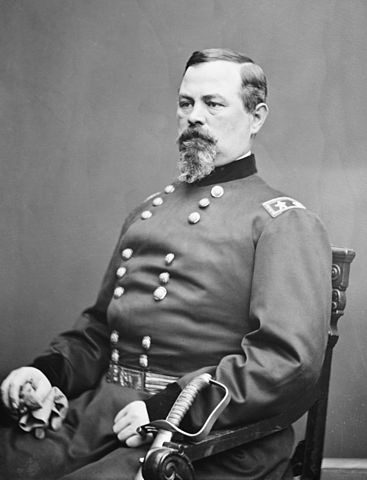
Maj. Gen. Irvin McDowell

Maj. Gen. Irvin McDowell

On April 17, 1865, a general order was sent out by Union Major General Irvin McDowell who was the commander of the Department of the Pacific stationed in San Francisco. General Order 27 stated the following:

“It has come to the knowledge of the major-general commanding that there have been found within the department persons so utterly infamous as to exult over the assassination of the President. Such persons become virtually accessories after the fact, and will at once be arrested by any officer or provost-marshal or member of the police having knowledge of the case. Any paper so offending or expressing any sympathy in anyway whatever with the act will be at once seized and suppressed.”

With this order, Gen. McDowell was essentially authorizing the arrest of any person in his district who was demonstrating joy in Lincoln’s death.  Whether he knew of this order or not, John McCall made himself susceptible to its consequences with his words on April 20th and April 29th. On June 1, 1865, John McCall saw Union troops riding up to his farm and found himself under arrest. The arresting officer was Captain Charles D. Douglas who was the commander of Fort Wright, located almost 60 miles north of Potter Valley.

McCall was not the only seditious citizen arrested that day. Captain Douglas also arrested men by the names of Andrew J. LaFever, Simon Wurtenberg and Thaddeus Dashiell, all of whom had spoken positively of Lincoln’s death with Dashiell having given a celebratory Rebel Yell at the news. Also arrested was the teacher of the Confederate leaning upper school, a Miss Harriet Buster, who allegedly stomped on the American flag after hearing of Lee’s surrender to Grant. Miss Buster was released shortly after her arrest and the men were marched three miles to an adobe hut where they spent the night under confinement.

Thaddeus Dashiell and Andrew LaFever, two of John McCall's fellow prisoners, in their later years.

Thaddeus Dashiell and Andrew LaFever, two of John McCall’s fellow prisoners, in their later years.

The next day the soldiers and their prisoners made the trek of almost 60 miles north to Fort Wright. There were not enough animals for all of the men to ride and so John McCall and the other prisoners had to walk for most of the way. They passed through the mountains which were high and cold, and had to endure a hail storm as they went. They finally arrived at Fort Wright at between 10 o’clock and 11 o’clock at night. At Fort Wright the men met another prisoner, named James Patrick, in identical circumstances. They slept that night, cold and wet, on the floor of the guard house. The gang stayed at Fort Wright for three days, during which time one of the men, Andrew LaFever took the oath of allegiance and was released. Whether the oath was offered to the others is unknown.

From Fort Wright the prisoners were taken by mule to Fort Bragg, a coastal town some 75 miles away. Traveling over mountains meant it took two days to make the trip, but by the evening of June 7th, they arrived in Fort Bragg. McCall would later describe each leg of the journey as being “pulled, dragged and hauled” across the roughest of terrain.

The men were placed on a lumber schooner called the Albion at nearby Noyo Harbor but, due to rough waters, the schooner failed to depart as planned on June 9th. The next day it successfully began its sail to San Francisco. Fellow prisoner Thad Dashiell described the trip: “The schooner barreled down the coast, one time out of sight of land, most of the time in sight of the coast.” Upon arriving in San Francisco on June 11th, Dashiell and the other prisoners were surprised to find that, for the first time, their guards held their revolvers on them with “pistols cocked, fingers on the trigger.”

McCall, Dashiell, Wurtenberg, and Patrick were marched at gunpoint through the streets of San Francisco to the provost marshal’s office. They were placed in a 10 x 12 ft guardhouse which was “a very filthy place,” Dashiell recalled. The men were handcuffed for the first time and spent two days in the provost marshal’s guardhouse. Captain Douglas, who had escorted the prisoners the entire distance, relinquished his custody of the men to the provost marshal and would make his was back to Fort Wright.

Alcatraz Island circa 1869

Alcatraz Island circa 1869

On June 13th, the four men were put in a small boat and transferred to Fort Alcatraz. At Alcatraz they were given hard labor. According to Dashiell, they were, “put to work breaking rocks into small pieces” alongside military prisoners and endured many hardships. McCall would later state that, “My arm was rubbed raw in one place. I asked for a change of irons. They would not get me any.”

The disloyal men from Mendocino County spent six days doing hard labor at Alcatraz. They managed to acquire the services of a lawyer and, despite the suspension of habeas corpus that could have kept them there indefinitely, the lawyer managed to persuade the provost marshal to release them. They were removed from Alcatraz and had to spend one final night at the provost marshal’s guardhouse with drunken soldiers before they were allowed to take the oath of allegiance. Upon taking the oath, John McCall, Thad Dashiell, Simon Wurtenberg, and James Patrick were released and began the long journey back to their homes in Potter Valley about 140 miles away.

One would think that the story would end there and that the disloyal secessionists got what they deserved for celebrating at a time of national tragedy. But John McCall was very angry about the treatment he had endured and did not believe that his arrest was justified. By October of 1865, John McCall announced that he was bringing a suit against Captain Douglas and General McDowell seeking damages of $100,000.

Alcatraz suit 10-12-1865

The announcement of the case received wide press with some newspapers announcing that, rather than suing, McCall should, “consider himself very fortunate that he escaped a justly deserved hanging.”

Immediately though, John McCall’s case against Gen. McDowell and Cap. Douglas hit a snag. According to Section 5 of the Habeas Corpus Suspension Act passed by Congress in March of 1863, any suit brought against authorities in regards to habeas corpus was to be taken up by the Circuit Court and not by the state courts. McCall, likely hoping to receive a jury trial which would be more sympathetic to his cause, petitioned heavily that his case not be taken to the Circuit Court level where only a judge would decide his case. McCall’s lawyer challenged Congress’ authority to circumvent the lower state courts. On September 17, 1866, McCall’s motion to keep the trial at the state level with a jury was denied.

While McCall was waiting to hear about his motion to keep his case at the state level, an act was passed by Congress to further clarify the legal protections granted to authorities during the suspension of habeas corpus. The act, passed on May 11, 1866, granted protection to those who had carried out an order, “written or verbal, general or special, issued by the President or Secretary of War, or by any military officer of the United States holding command of the department, district, or place within which such acts . . . were done or omitted to be done.” This act, meant to help and clarify the defense of military officers, would actually cause trouble for one of the defendants in McCall’s case.

In March of 1867, all of the evidence and testimony for the case was taken. Captain Douglas testified about his role in arresting and transporting McCall stating that no deliberate malice was done to the prisoners while he was in charge of them. General McDowell also testified, acknowledging that he gave the order to arrest those celebrating Lincoln’s demise. “I issued this order,” McDowell said, “and I think it quieted the country. And there would have been bloodshed. I think this order saved the lives if not the property of prominent citizens of the city.” Thaddeus Dashiell testified on John McCall’s behalf about the circumstances surrounding their arrest and imprisonment.

Judge Matthew Deady

Judge Matthew Deady

On Friday, April 5, 1867, the case McCall v McDowell et al was argued before Judge Matthew Deady of the U.S. Circuit Court in San Francisco. McCall’s attorney, Henry Irving, made the case that his client’s utterances were not enough evidence to suspect him of being an “aider and abettor” of the Confederacy and thus he did not fall under President Lincoln’s September of 1863 proclamation as a class of citizen eligible for arrest without the benefit of habeas corpus. Irving also argued that Gen. McDowell had not been authorized by the President or Secretary of War to issue the order to arrest assassination sympathizers, a condition seemingly necessary in order to protect him from legal action according the act of May 11, 1866. At the end of the day, Judge Deady announced that a decision would come at the end of the month because the, “points involved were of paramount importance.”

On April 26, 1867, Judge Deady announced his decision on McCall’s case. Judge Deady threw out McCall’s case against Captain Douglas due to the March 3, 1863 Congressional Act and act of May 11, 1866 which protected subordinates following the orders of their superiors. It was not proven that Douglas had acted with malice towards his prisoners and thus he was completely free from any liability. The acts from Congress protected Captain Douglas for having “only followed orders”.
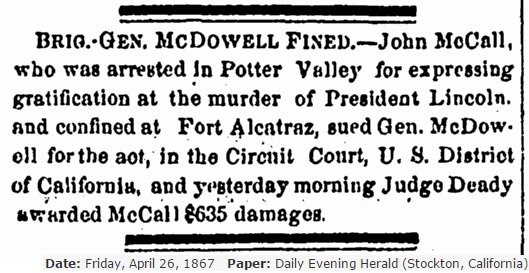
Gen McDowell Fined

Surprisingly, however, Deady found that General McDowell was liable for the false imprisonment of John McCall. He agreed with McCall’s attorney that the act of May 11, 1866 did not protect McDowell from liability since McDowell was not given any orders by either the President or the Secretary of War to issue the arrest of assassination sympathizers in his district. So while Captain Douglas was protected for following the order, Gen. McDowell was not protected for issuing it.

Deady did acknowledge that McDowell was acting for the safety of the public when issuing the order and not out of malice, but contended that he was still subject to legal action due to that order. Deady reassessed the possible damages owed to McCall and decided that he deserved compensation for the money he spent during his time of confinement and an additional $500 for his pain and suffering. In the end, it was the judgement of the court that General Irvin McDowell was to pay $635 to the plaintiff, John McCall.

The judgement rocked California. No one had expected John McCall to win his suit against the military authorities who had once imprisoned him. Newspapers reported the names of other former imprisoned rebels who were preparing their own suits against General McDowell and commanders in other districts. Editorial letters denouncing Deady’s decision and poking holes in his logic filled the news. To military leaders out west, the decision of McCall v McDowell was a terrifying one.

More suits against McDowell to come

Though not the $100,000 he wanted, John McCall was no doubt happy about his success against the military might of the abolition party. This last rebel victory, however, would be extremely short lived. For even as Judge Deady was deciding in John McCall’s favor in the west, back east an act had already passed Congress which would overrule it.

On March 2, 1867, Congress passed an act establishing the validity and conclusivity of all acts and proclamations of the President regarding martial law and the suspension of habeas corpus from March of 1861 to July of 1866. In addition, the act specifically fills in the gap of protection that Judge Deady observed, by declaring that, “all officers and other persons in the service of the United States, or who acted in aid thereof, acting in the premises shall be held prima facie to have been authorized by the President”. In other words, this act maintained General McDowell’s authority to issue orders as he saw fit and that all such orders had the implied approval of the President.

The awareness of this act of Congress did not reach California until early May. When the news did arrive, it was immediately picked up by the newspapers. It was reported that, “under this law, which has only been received within a day, Judge Deady himself would have decided for the defendant.”

In the end, General McDowell’s attorneys appealed Deady’s ruling based on this newly passed act of Congress, and the decision was overruled. John McCall never received a cent from General McDowell and any planned suits against him by other formerly imprisoned rebels were ended.

Unfortunately, John McCall sort of drifted back into obscurity after that. I have been unable to find any record of his later life and death. General Irvin McDowell died in 1885 and is buried at the San Francisco National Cemetery. His subordinate, Captain Charles Douglas, died in 1913 and is buried in Monterey, California. McCall’s neighbor and fellow prisoner, Thaddeus Dashiell, is buried right back in Potter Valley where it all started. Dashiell was elected twice as a county supervisor for Mendocino County and in his later years started to vote Republican. Asked by his friends why he would begin voting for the party of Lincoln, the elder Dashiell would say that he had, “packed sand at Alcatraz for the privilege of expressing any political opinion,” he wanted.
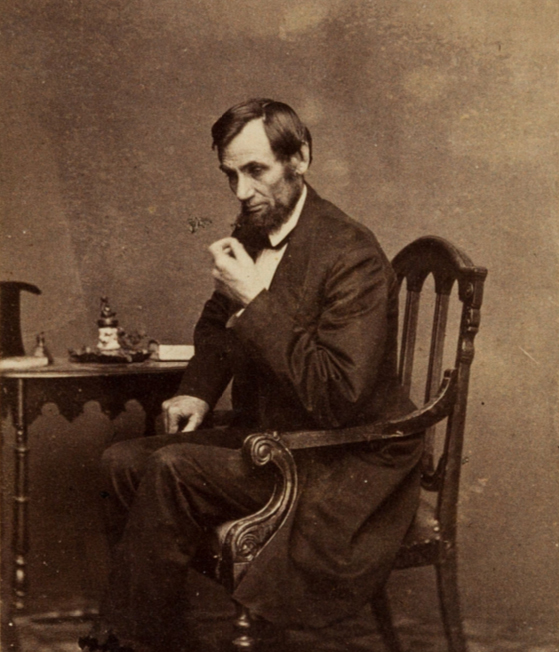
Abraham Lincoln Thinking

Lincoln’s suspension of the writ of habeas corpus continues to be one of the most debated parts of his legacy. Though he had reason for suspending one of the most important personal liberties, it was not an easy decision to make. In addition to stripping away a crucial right of every citizen, suspending habeas corpus also removed one of our national protections against the creation of a despotism. That is why our Constitution only allows for its suspension during times of rebellion and invasion. Even in those cases, however, stripping personal freedoms can be a slippery slope. The not so distant past of the world demonstrates the damage that can occur when those in authority are allowed to imprison individuals without charge or trial. While Captain Douglas may have not have committed a crime when he arrested John McCall, we all know the tragedies of history that can occur in countries where personal liberties are suspended by those “only following orders”.

References:
McCall v. McDowell et al – Judge Deady’s full decision on the case is a fascinating read
The Privilege of Expressing My Opinion: Regionalism and Free Speech in Civil War California by Ronald Cannon
An ‘Un-Lincoln’ story for Abe’s birthday weekend by Gaye LeBaron
An Act relating to Habeas Corpus, and regulating Judicial Proceedings in Certain Cases, March 3, 1863
Proclamation 104 – Suspending the Writ of Habeas Corpus Throughout the United States, September 15, 1863
The Act of May 11, 1866
The Act of March 2, 1867
NPS – Alcatraz Island
Library of Congress Prints and Photographs Division
Heritage Auctions
GenealogyBank.com
FindaGrave.com
Thank you, Gary, for inspiring this post with your comment

Categories: History | Tags: , , | 2 Comments

The Boston Corbett Supper Club

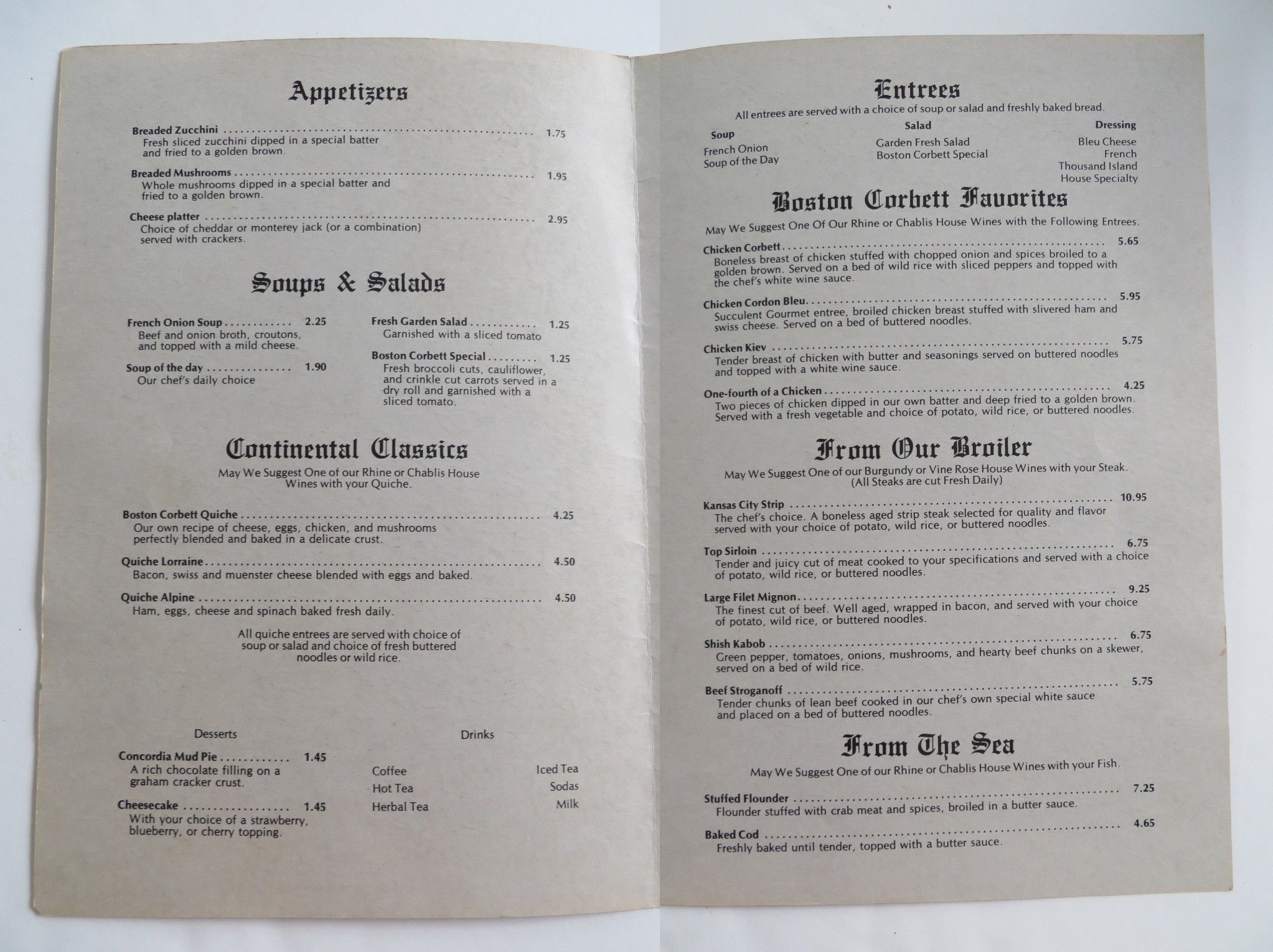
I stumbled across this oddity on eBay tonight. It is a menu from a restaurant called the Boston Corbett Supper Club.

Boston Corbett Supper Club Menu 1

Boston Corbett Supper Club Menu 2

The menu features a drawing of the avenger of Lincoln on the front and, on the inside, a few of the menu items are named after the famous sergeant from the 16th NY Cavalry. Corbett’s honorary dishes include a salad called the Boston Corbett Special containing a variety of cut vegetables, perhaps alluding to Corbett’s expertise with sharp blades. The Boston Corbett Quiche is “baked in a delicate crust” not unlike Corbett’s delicate mind. And under the heading of “Boston Corbett Favorites” is what must be the sergeant’s signature dish, Chicken Corbett, which is “broiled to a golden brown” not unlike John Wilkes Booth in the Garrett barn.

The rear of the menu contains a short biography of Boston Corbett’s life.

Boston Corbett Supper Club Menu 3Noticeably missing from this brief biography is any mention of Corbett’s paranoia induced nervous breakdown in 1887 in which he made threats and waved a gun at representatives in the Kansas state house. For this mania he was committed to an asylum before managing to escape into oblivion.

After a little searching, I found that the Boston Corbett Supper Club had been located in Concordia, Kansas. Starting in 1878, Boston Corbett resided just north of Concordia in a dugout structure built into a hill. I drove out to Corbett’s dugout home, visiting other sites along the way, last summer. You can see my images and videos from that trip here.

The Boston Corbett Supper Club was used as a venue for wedding rehearsal dinners and receptions in the Concordia area and even supported Concordia’s annual 4th of July fireworks display. Unfortunately, a supper club based around the brave avenger of Lincoln who was also a partially crazed eunuch couldn’t make ends meet and so “Providence directed” it to close in the early 1990’s.

Though we missed out on our chance to dine at the Boston Corbett Supper Club, its menu has me thinking about opening my own Lincoln assassination restaurant in the future. For possible dishes I’ve thought of: Our American Couscous, Sic Semper Tilapia, Seward Skewers, George’s Beer-Battered Yellow Croaker, Physician’s Pie a la Mudd, and John Wilkes Bologna Sandwich.

Let me know your ideas for menu items in the comments below.

Categories: History, Levity | Tags: , , | 10 Comments

Grave Thursday: General Levi Dodd

In an effort to get back to posting on a more regular schedule, I’ve decided to attempt a weekly post entitled, Grave Thursday. Each week I will highlight the final resting place of someone related to the Lincoln assassination story. It may be the grave of someone whose name looms large in assassination literature, like a conspirator, or the grave of one of the many minor characters who crossed paths with history. They won’t be lengthy posts, but they will be something to look forward to between my increasingly irregular research intensive pieces.


Bvt. Brig. Gen. Levi Axtell Dodd

Gen Levi Dodd

Burial Location: Green Mount Cemetery, Baltimore, Maryland

Levi Dodd's Grave Green Mount

Connection to the Lincoln assassination:

On May 2, 1865, Col. Levi Axtell Dodd of the 211th Pennsylvania Volunteers was assigned duty under the command of Maj. Gen. John Hartranft. At that time, General Hartranft had been assigned as the commander of the Old Arsenal Penitentiary in Washington, D.C. and was charged with the imprisonment and care of the Lincoln assassination conspirators as they underwent trial. Col. Dodd joined Hartranft’s staff and would serve under him. Dodd’s major duties were to supervise the prisoners. Reports show that he supervised George Atzerodt as the latter bathed. After the day’s trial proceedings were over, Dodd would also stay in the court room with some of the prisoners when their lawyers wished to counsel with them. Dodd also supervised visits between the conspirators and their guests, sitting in on a meeting between Mary Surratt and her friend Mr. Kirby. After the execution of four of the conspirators, Dodd, who was subsequently brevetted as a brigadier general due to the recommendation of General Hartranft, was given the task of escorting the four remaining conspirators to their distant prison of Fort Jefferson off of the coast of Florida. This task he completed, earning the appreciation of Dr. Mudd who stated that Gen. Dodd allowed the lily iron handcuffs to be removed from the conspirators during part of the voyage. Dr. Mudd’s appreciation of Gen. Dodd would not last, however. Upon returning back from Fort Jefferson, Dodd, along with two others who accompanied the conspirators, would state that on the journey to the island prison Dr. Mudd confessed that he had known the identity of John Wilkes Booth the moment the assassin showed up at his door. According to Dodd and the others, Dr. Mudd lied about not knowing Booth due to his own fear of punishment.

It is also interesting to note that Levi Dodd was born in Franklin, a small town in Venango County, Pennsylvania. In 1864, John Wilkes Booth traveled to Franklin and invested a great deal of his wealth in the oil fields nearby. Booth and some of his pals sunk quite a lot of money into a well in Franklin called the Wilhelmina, but the enterprise was a failure.

Gen. Dodd is buried in Green Mount Cemetery in Baltimore, the very same cemetery as John Wilkes Booth and many others connected to the assassination of Lincoln. Check out the Maps page for more details.

GPS coordinates for Gen. Levi Dodd’s grave: 39.306333, -76.604881

Categories: Grave Thursday, History | Tags: , , , , | 24 Comments

Mudd and a Broken Leg

In the “Weird Coincidence” file of Lincoln assassination trivia, we find this little gem.

In 1868, a horse fell on, and broke, the leg of James Mudd, the brother of Dr. Samuel Mudd:

James Mudd suffers a broken leg 1868

Since his brother was serving a life sentence at Fort Jefferson at the time for the assistance he gave to another man with a broken leg, James Mudd had to seek medical help from a different local doctor, Dr. William Boarman (misspelled as “Bowman” in the article).

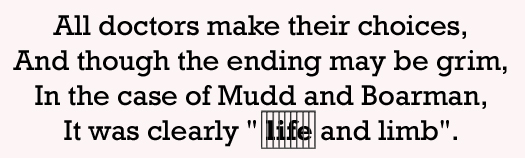
Setting James’ broken leg was the second piece of assistance that Dr. Boarman provided to the Mudd family. In 1865, he had testified on Dr. Mudd’s behalf at the trial of the conspirators. Dr. Boarman testified about meeting John Wilkes Booth at St. Mary’s Church in November of 1864 and that the actor told him he was in the area looking for land to purchase. We know now that Booth’s true purpose was to scout the escape route for his abduction plan and to recruit conspirators in Southern Maryland. Perhaps if Dr. Mudd had turned John Wilkes Booth down, the actor might have confided his plans to Dr. Boarman instead. All of this is to say that Dr. Boarman probably had no qualms about treating James Mudd while the latter’s brother was in prison. Considering the trouble Boarman might have been in had Dr. Mudd not welcomed John Wilkes Booth into his home, setting Mudd’s leg was a far favorable alternative. Or, to say it another way:

Mudd and Boarman

Categories: History, Levity | Tags: , , , | 1 Comment
“The Murderer: John Wilkes Booth and the Plot Against Lincoln” at the ALPLM

Almost a year ago, I was contacted by representatives from the Abraham Lincoln Presidential Library and Museum in Springfield, Illinois. Though I was right in the middle of setting up my classroom for a new school year (at a brand new school, and grade, actually), I dropped everything to take the call from employees of such an esteemed institution. As part of their volunteer educational programming, the ALPLM asked me if I would be willing to come to Springfield in the upcoming year and give a talk about the assassin of President Lincoln. I suppose it is not difficult to ascertain what my response was. After a few victory laps around my minefield of classroom, I settled in for the long wait until summer.

Dave Taylor at the ALPLM 6-29-2016

Less than a month ago, on June 29, I was humbled to present my speech, “The Murderer: John Wilkes Booth and the Plot Against Lincoln” for the wonderful folks at the ALPLM. The museum was kind enough to record my presentation and put it on YouTube, and so I have embedded the video below. It misses some of the fancy animations I included in my PowerPoint but is of far better quality than I could have ever done. The video below includes the lively question and answer session that followed the speech where we cover several other Lincoln assassination topics beyond John Wilkes Booth.

In addition to the speech, I spent my time in Springfield visiting the Lincoln sites and viewing several of the ALPLM’s assassination related letters and artifacts. Altogether, the speech and visit to the ALPLM are among the highlights of my “career” as a “historian.” I would like to thank Jeremy Carrell, Barbara McKean, Samuel Wheeler, Dr. James Cornelius, David Grimm, and Chuck Hand for setting everything up and for their hospitality in, and around, the ALPLM.

It was truly an honor to speak at the ALPLM and, if you have the time, I hope you enjoy the speech below.

Categories: History, News | Tags: , , , , | 20 Comments

A Visit to “The Trap”

On April 24, 1865, John Wilkes Booth, the fugitive assassin of President Abraham Lincoln, was dropped off at the Garrett farm just outside of Port Royal, Virginia. Over the prior ten days, Booth and his accomplice David Herold had successfully eluded the massive manhunt searching for them in Maryland and had made their way into Virginia. By portraying himself as a wounded Confederate soldier named James Boyd, John Wilkes Booth was welcomed in by the Garrett family and given the hospitality of their home and farm. David Herold, on the other hand, decided for the first time to depart from Booth’s company. Whether this was his own choice or whether Booth sent him away on purpose, perhaps to scout the route ahead, is unknown. Regardless, Herold did not stay at the Garrett farm on April 24th and, instead, continued on towards Bowling Green with the three Confederate soldiers that he and Booth had met in Port Conway. When the sun went down on April 24th,  Herold and one of the soldiers, Absalom Bainbridge, would spend the night outside of Bowling Green, Virginia at the home of a Mrs. Virginia Clarke. Before that would occur, however, David Herold and the three Confederate soldiers would all make a pit stop on the road between Port Royal and Bowling Green at a tavern known as “The Trap.”

The Trap was built around 1752 and initially operated as a private home. Its location of being about half way between Port Royal and Bowling Green earned it the nickname of the “Halfway House.” In 1777, a wealthy man by the name of Peyton Stern (whose land holdings in Caroline County at that time stretched over 2,000 acres and included what would become the Garrett family farm) started operating the building as a tavern. In the 1830’s the tavern was acquired by a man named George Washington Carter, whose family owned an adjacent land tract of 452 acres. George Washington Carter died in 1853 leaving his widow, Martha, to care for their large family of children. Similar to the Surratt Tavern in Prince George’s County, Maryland, Mrs. Carter would continue to operate the tavern as a means of income and offer lodging for visitors passing by on the road. The Trap also operated as the local post office in the same way the Surratt Tavern did.

In 1865, Mrs. Carter was running The Trap with the help of her four daughters. The daughters were twins Martha and Mary (27), Sarah (23), and Agnes (20). On April 5, The Trap briefly received a fairly distinguished guest by the name of Thomas Conolly.

Thomas Conolly

Thomas Conolly

Conolly was an Irish member of British parliament who had crossed the Atlantic to visit the Confederacy. He was well connected, wealthy, and was able to meet many of the Confederacy’s elite. Conolly was lavishly wined and dined during his trip, likely in the hopes that impressing him would motivate him to convince his countrymen to support the Confederacy. Conolly had departed Richmond just before the Union troops seized it and was making his way north. He mentions his stop at The Trap in his diary which has been published as An Irishman in Dixie: Thomas Conolly’s Diary of the Fall of the Confederacy.

“Stopped again from the exhausted state of our horse at the Trap 1/2 way to Port Royal where we find Mrs Carter & her 4 pretty daughters. The house was full of Virginia Cavalry going to join their Regts & the girls & mother serving them all round with all they had. Got some dinner bacon & greens & pickled peaches & corn bread & milk. Matty [Martha] & I had a pleasant chat & I gave her the other gold stud wh[ich] pleased her much.”

Conolly’s diary paints The Trap as a bustling and busy tavern with soldiers anxious to get food and drink. It was, therefore, not out of the ordinary when, on April 24th, David Herold, Willie Jett, Mortimer Ruggles and Absalom Bainbridge stopped by The Trap after dropping John Wilkes Booth off at the Garrett farm.

The men all took drinks while at The Trap and apparently discussed, within earshot of Mrs. Carter or her daughters, their plan to split up at Bowling Green and for Herold and Bainbridge to find lodging at Mrs. Clarke’s while Jett and Ruggles stayed at the Star Hotel. After their rest stop at The Trap, the man saddled back up and rode on to Bowling Green.

About 12 hours later, on April 25th, David Herold, Absalom Bainbridge and Mortimer Ruggles returned to The Trap this time headed in the opposite direction. They had followed through on their plan to spend the night in and outside of Bowling Green and now Herold was heading back towards Booth with Ruggles and Bainbridge as his guides. Once again, Herold, Bainbridge and Ruggles took drinks at The Trap. Sadly we do not really know any of the conversation or even the amount of time the men stayed at The Trap before they bade the Carter ladies goodbye.

Herold 1

David Herold was dropped off at the Garrett farm on April 25th and rejoined John Wilkes Booth who had been treated with much generosity and kindness by the unsuspecting Garretts. Bainbridge and Ruggles continued on the road until they reached Port Royal and witnessed a detachment of Union troops crossing the Rappahannock river. This was the 16th New York Cavalry and they had finally found John Wilkes Booth trail. The troops had learned from William Rollins in Port Conway that Booth had been seen in the company of Confederate soldiers, one of whom was Willie Jett. Mrs. Rollins knew that Willie Jett was dating a girl in Bowling Green and that they would likely be heading there. Bainbridge and Ruggles turned around and rode back to the Garretts to warn Booth and Herold before heading out of the area themselves.

The 16th NY Cavalry, with William Rollins in tow, successfully crossed the Rappahannock and then began riding down the same road Booth and Herold had been on the day before. They unknowingly passed John Wilkes Booth and David Herold as they rode by the Garrett farm on their way to Bowling Green. By 9:00 pm, the band of soldiers found themselves at that old half way house, The Trap.

When the Union soldiers entered The Trap and began searching the premises, Mrs. Carter and her daughters were understandably excited and distraught at the intrusion by Yankee soldiers. The soldiers found no men in the large, log house as the Carter ladies “raised and kept up such a clamor.” In order to try to get some needed information from the Carters, two of the detectives with the 16th NY, Everton Conger and Luther Baker, told them that they were in pursuit of “a party that had committed an outrage on a girl.”

Everton Conger and Luther Baker

Everton Conger and Luther Baker

This claim softened the Carter ladies’ dispositions and made them inclined to tell the soldiers all they could. They verified that a group of men had stopped by the day before on their way to Bowling Green and that three of them had come back a few hours before the troopers arrival. The Carters also mentioned having overheard the conversation about the men splitting up with some lodging at Mrs. Clarke’s home. The detectives contemplated splitting up the detachment in order to send some men to Mrs. Clarke’s and the rest on to Bowling Green, but decided to move, as a whole group, on to Bowling Green. The 16th NY was at The Trap for about a half hour to forty-five minutes before carrying on.

In Bowling Green, the troopers found Willie Jett asleep in the Star Hotel. He immediately surrendered and informed the men that Booth was at the Garrett farm and that they had unwittingly gone right past him. They placed Jett under arrest and then hightailed it back up the road, passing right by The Trap again without stopping.

The rest, as they say, is history. The 16th NY successfully corner John Wilkes Booth in the Garretts’ tobacco barn, light the barn on fire to smoke him out, and then Sergeant Boston Corbett paralyzes Booth with a gunshot wound to the neck. John Wilkes Booth dies around dawn on April 26, 1865. David Herold, two of the Garrett sons, William Rollins, and Booth’s body are all taken back up to Washington for trial, imprisonment and questioning, and burial, respectively.

Mrs. Carter and her daughters likely heard later that the men the troopers were looking for at their tavern were not wanted for an outrage on a girl but, rather, for the assassination of Abraham Lincoln.

After the Civil War, Mrs. Carter and her daughters continued to run The Trap as tavern. Out of the four daughters, only Agnes would marry but would be widowed soon after the birth of her own daughter. Unfortunately, times continued to be tough for the Carters and in 1870’s Mrs. Carter had defaulted on her loans. She sold off some of her land to try to stay afloat but in 1888 the land containing the tavern was auctioned off to pay for her debts. The tavern property was purchased by a man named George Lonesome who, in 1913, sold it to man named J. Harvey Whittaker. Sometime between 1900 and 1924, The Trap tavern was demolished. A subsequent owner named J. D. Smithers built and ran a store on the site from 1924 until 1941.

During World War II, the United States government, in need of suitable training and maneuvering ground, seized and purchased over 77,000 acres of Caroline County, Virginia. Residents in the area were given between two weeks and two days to move out of their homes, taking all of their belongings with them, never to return. For many, the land seized by the government had been their homesteads for generations. It was a difficult time for many families in the area who had to leave the farms that had been in their families for years. Yet, the land provided to create the training grounds of Fort A.P. Hill was essential for the war effort. Today, Fort A.P.Hill is split in half by a highway, Route 301. The southern half, which contains the area of The Trap, is the home of various live weapons ranges and is practically always off limits to the public, even to those whose ancestors lived, died, and were buried there.

That being said, today, June 11, 2016, was the 75th anniversary of the establishment of Fort A. P. Hill and as such they had various history exhibits and activities planned for the day that were open to the public. The activities included a one time tour of the Delos area where The Trap was located. What follows are some pictures of The Trap site that David Herold and the members of the 16th New York Cavalry visited.

Trap Tour Map

This map was provided in a booklet tour participants received and shows a modern aerial photo of the sites with former land tracts superimposed over the image. The Trap tavern where Herold et al stopped is actually labelled here as #2 Smithers’ Store, as a man named Smithers ran a store on the former site of The Trap from 1924 – 1941. As stated above, the farm owned by George Washington Carter and inherited by Martha Carter was 452 acres which is why #1 is labeled as the Trap farm but is actually the location of a later home built on the property around the 1890’s.

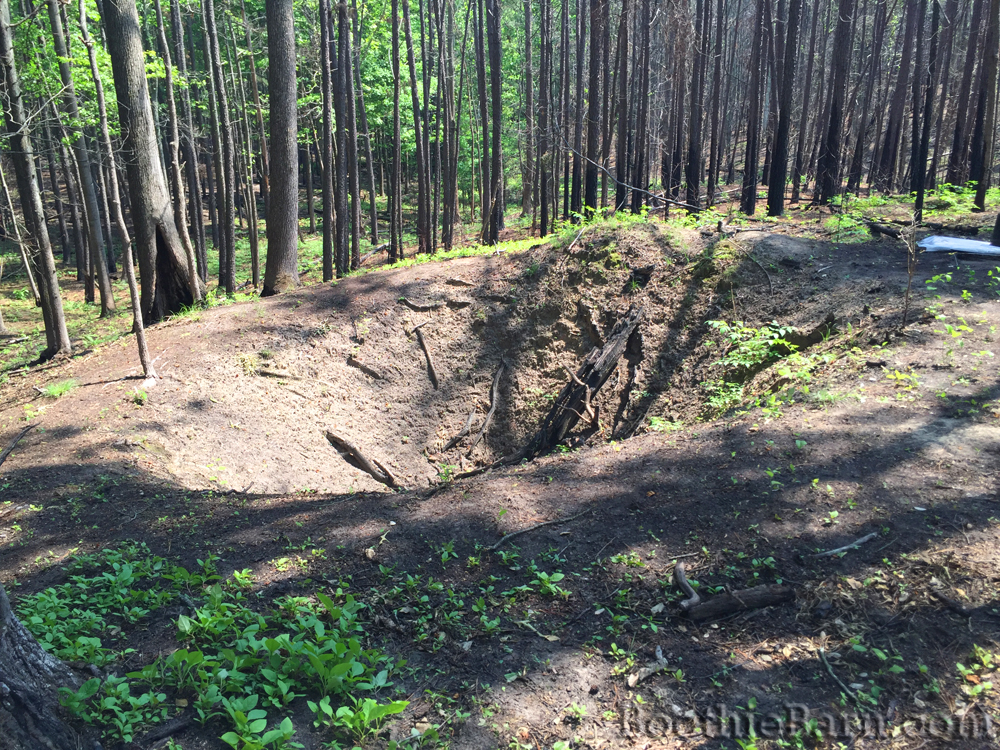
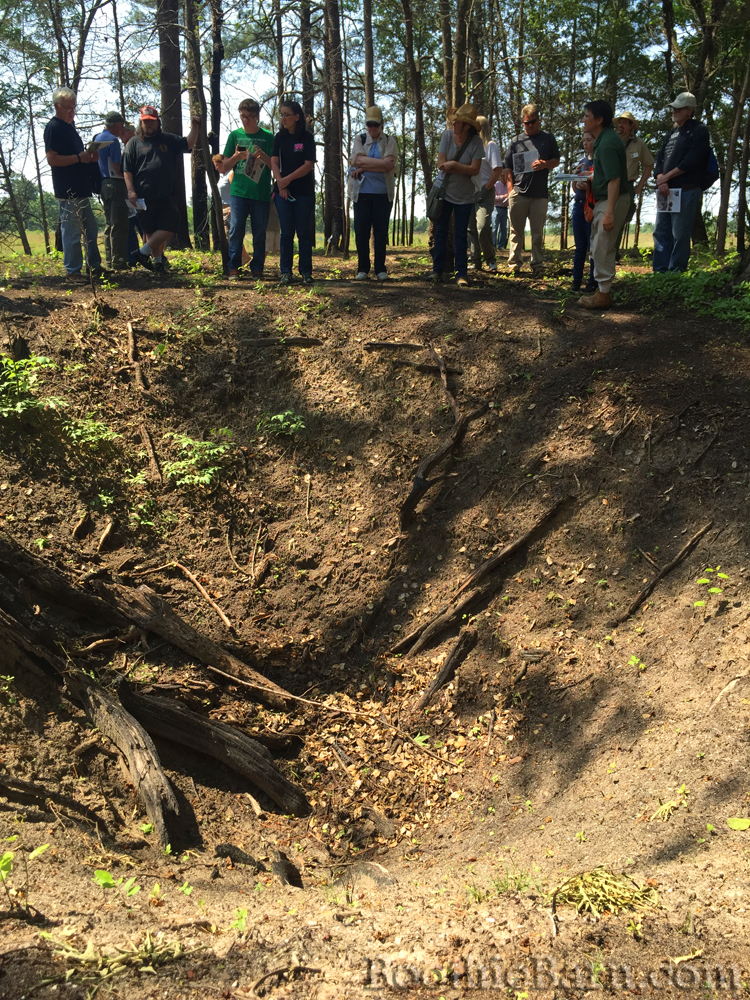
Trap Ice House 1

Trap Ice House 2

While the main residence that occupied #1 “Trap Farm” was built in the 1890’s, there are some remnants of a much earlier outbuilding in the area that was likely connected to the tavern. These pictures show what is left of an old, sizable ice house. In the days before refrigeration, families would essentially dig a large hole in the ground. The deeper you dig the cooler the earth is and at a certain point it can get close to 50 degrees Fahrenheit. You would place your ice in these deep pits and then cover it  with saw dust or another insulator to slow down melting, allowing you to have ice even in the summer months. The whole thing would then be covered with a primitive roof of some sort. The size and depth of this ice house and its relative proximity to The Trap tavern has led the archaeologists to conclude that this ice house was used by the tavern to provide them with their ice.

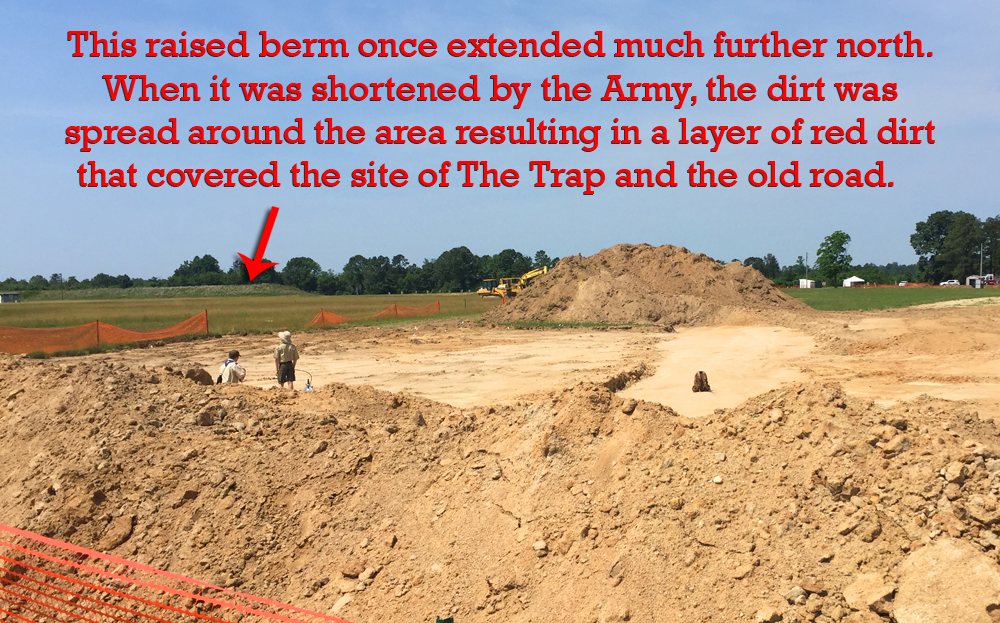
Trap dirt explanation

This image is a preface for the ones that follow and explains why much of The Trap site and the old road that ran right in front of it look like a construction site today. The entire site around The Trap is covered in this layer of “foreign dirt” that had to be removed before excavations could be done.

Trap Rolling Road

In this image you can see very clearly the traces of the old “Rolling Road” that connected Bowling Green to Port Royal. This image is taken looking southwest in the direction of Bowling Green.

Trap Rolling Road 2

This image shows the remains of the Rolling Road in the opposite direction. You can just make out at the end how the road is beginning to turn towards the left. Following that turn takes you north towards Port Royal. David Herold, Bainbridge, Ruggles, and the 16th New York Cavalry all traveled this road twice on their way to and from Bowling Green.

The Trap Site 6-11-16

The Trap site 2 6-11-16

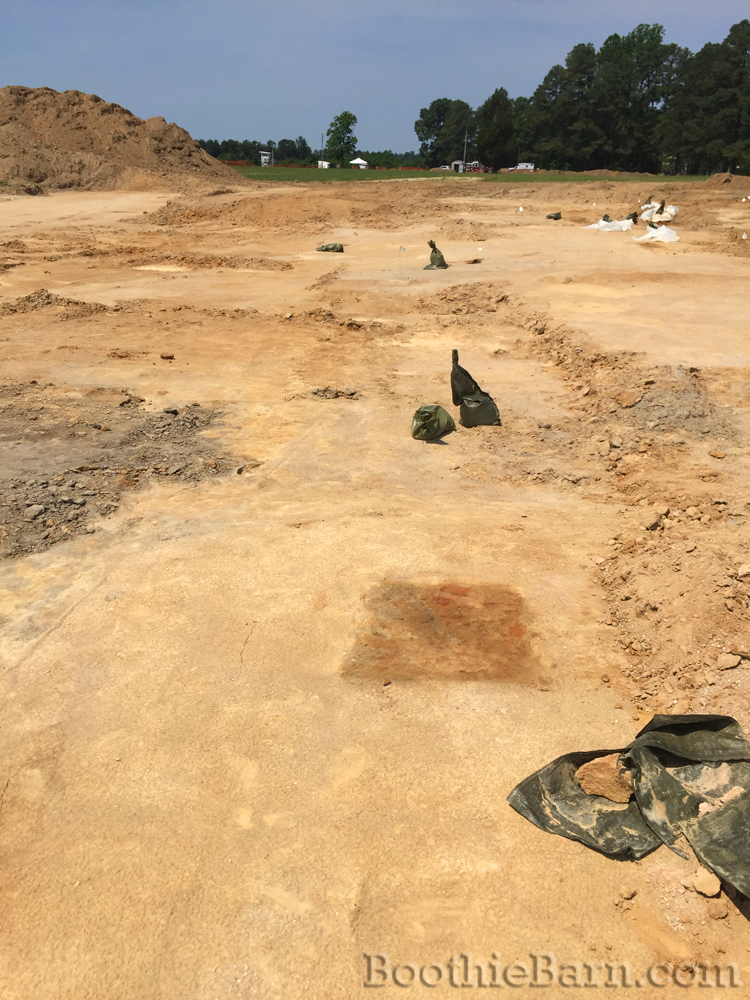
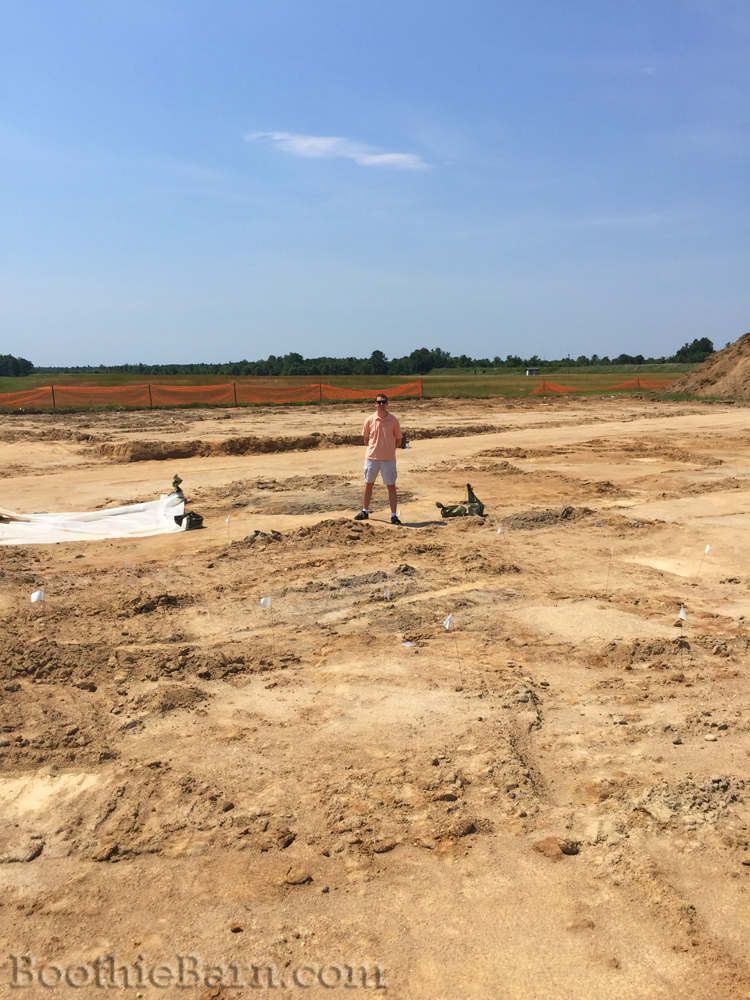
These pictures show the site of The Trap tavern itself. In the top picture you can see a dark square in the foreground. That is one of the brick piers that the tavern sat on. It was highlighted by spraying it with water to make the color more noticeable. In the bottom image you can no longer see the square as the water has evaporated but it is located between the green bags in the middle. The bottom image is taken from the Rolling Road to give you an idea of how close to the road the tavern stood. It was located on this perfect spot where the road curved north making its own intersection.

Dave in The Trap

This is an images of me standing “in” The Trap. You can see the Rolling Road behind me.

The tour of The Trap site was a wonderful experience and one that I felt lucky to take part in. The location of The Trap inside the boundaries of the live range area of Fort A. P. Hill insures that it will rarely be open to the public. At the same time, Fort A. P. Hill seem to be the perfect stewards of the site and their archaeology efforts demonstrate their commitment to preserving the cultural heritage of the land they occupy.

In closing, I would be remiss if I did not address the two “elephants in the room” when it comes to The Trap. One issue is the correct spelling of the tavern. I, like many others, have always spelled it as The Trappe. You can find this spelling in other texts and articles about the assassination. According to one of our guides for the day, John Mullins, the site was originally spelled Trap and not Trappe. John says that this spelling did not come about until the 1890’s or so and was likely started after the area became known as Delos. The spelling of The Trap with the extra “pe” was likely people’s inadvertent way of referring to the old name and making it seem ever older by giving it the old English spelling.

The second item that I failed to address was the reputation of The Trap and the Carter ladies. Some texts and authors state that The Trap was a thinly disguised brothel run by Mrs. Carter and her daughters. When I first began researching the Lincoln assassination I heard from several knowledgeable individuals that The Trap had a slightly scandalous reputation. However, in researching the topic I have yet to come across anything that truly supports this idea. The origin of this misconception appears to be an April 27, 1865 statement from Luther Baker. In recounting the hunt for Booth, Baker shares the detachment’s stop at the Trap thusly: “About halfway to Bowling Green, which is 15 miles from the ferry, we stopped at a log house called the halfway house. We found there four or five ladies, who keep a house of entertainment.” Baker then proceeds to recount how no men were found in the house and how the ladies eventually gave them the information they needed. This wording that the Carter ladies kept a “house of entertainment” seems to be the fairly innocuous wellspring from which all unseemly rumors have flowed. However, in its early days, The Trap was a house of entertainment. Horse races and card games took place there. According to one of our guides for the tour, the name of The Trap was an old reference to how the tavern was a money trap for those who went there to play cards. Whether Mrs. Carter and her daughters still allowed card playing when they owned the tavern is unclear, but even if they did, a little card playing doesn’t equate to a house of sin. Unless better evidence can be found to support the idea that they were improper in anyway, I think Mrs. Carter and her daughters deserve to have their reputations vindicated.

References:
Former Community of Delos (The Trap) Tour Itinerary booklet
“The Trappe” by James O. Hall published in the Surratt Courier June 1987
John Mullins, Kerri Holland, Rich Davis – Archaeologists
The Lincoln Assassination – The Reward Files edited by William Edwards
An Irishman in Dixie: Thomas Conolly’s Diary of the Fall of the Confederacy edited by Nelson D. Lankford

Categories: History | Tags: , , , , , , , | 19 Comments

Inside Thomas Jones’ Huckleberry

Thomas Austin Jones has gone down in history for the assistance he gave assassin John Wilkes Booth and his accomplice David Herold. Jones not only cared for the two fugitives as they hid out in a pine thicket in Charles County, but he also transported Booth and Herold from the thicket to the shores of the Potomac from which they got into a boat and attempted to row across to Virginia.

Thomas Jones 1

Thomas Jones, who was born in the Port Tobacco area in 1820, owned two houses in Charles County during the Civil War. It was from his larger home on the Potomac River called Ravenscliff that Jones began his career as a mail agent for the Confederacy, but by 1865, his financial situation and death of his wife had caused him to downsize his estate to the more modest Huckleberry farm. Jones was living at Huckleberry with his nine children when Samuel Cox, Jr. showed up on the morning of April 16th and beckoned Jones to return with him to his father’s farm of Rich Hill. At Rich Hill, Jones would learn about Cox’s nighttime visitors and be given the task of caring for the fugitives while looking for an opportunity to get them across the Potomac.

Huckleberry-Animation

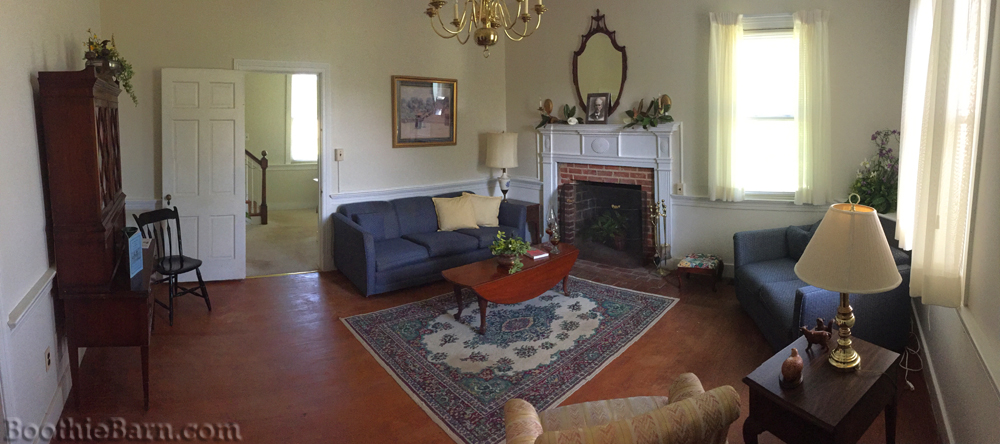
Today, as part of the Maryland House and Garden Pilgrimage in Charles County, Thomas Jones’ home of Huckleberry was open to the general public for the first time in 56 years when it was featured in the 1960 Maryland House and Garden Pilgrimage. The house has been remodeled and updated since Thomas Jones’ days but still maintains much of its same 1865 character.

Huckleberry exterior

Huckleberry door

Huckleberry Parlor

Huckleberry stairs

Huckleberry meeting room

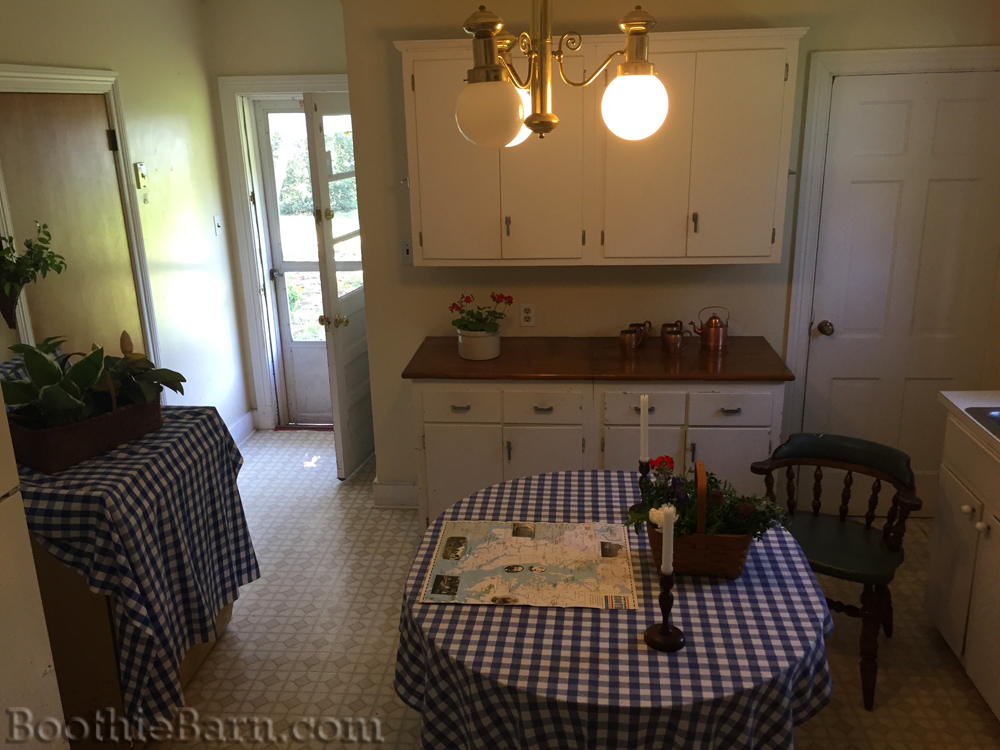
Huckleberry kitchen

Jones Mantle

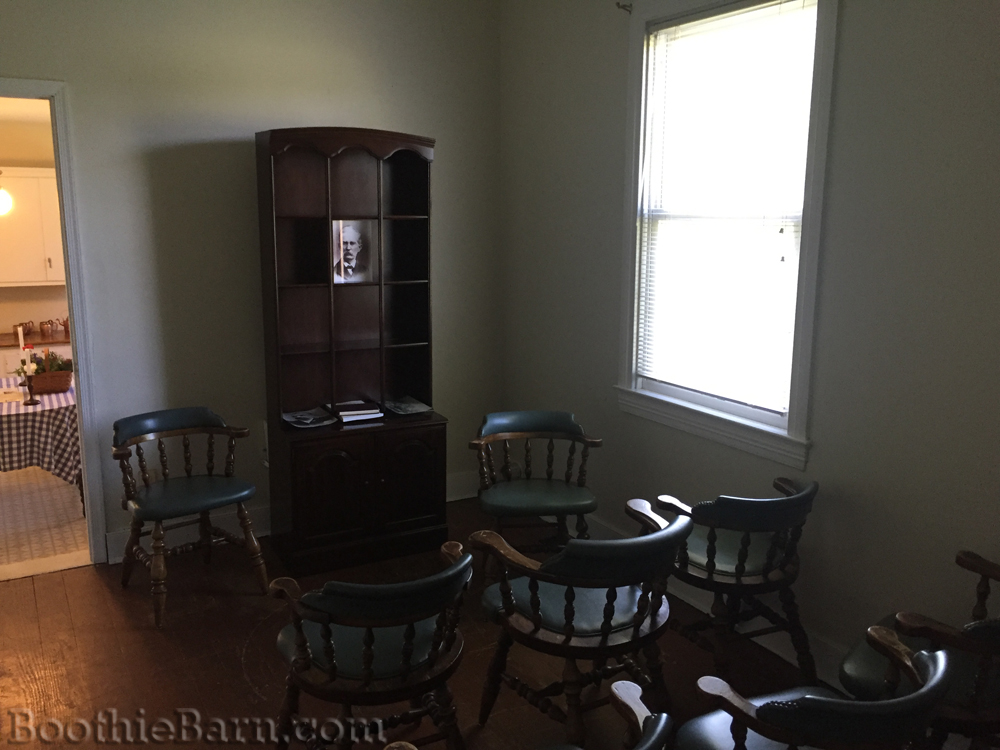
These images, along with the watchable yet somewhat motion sickness inducing video that follows, were all taken today after the garden tour was completed. About 450 people showed up and toured through Huckleberry while I stood in the room with chairs giving visitors a brief overview of Thomas Jones and his life before, during, and after John Wilkes Booth.

The visitors truly seemed to enjoy learning more about this unique man and his role in the Lincoln assassination story. Probably the most interesting little known fact about Thomas Jones is that, in 1893 when he traveled to the World’s Fair in Chicago in order to try to tell his book about helping Booth, Jones actually borrowed and brought with him two artifacts from Dr. Mudd’s house. The Mudd family allowed Jones to borrow the bed that Booth slept in at the Mudd house along with the parlor sofa on which John Wilkes Booth laid on while Dr. Mudd had inspected his leg. Having these artifacts did not help Jones much, however. His book sold very poorly in the Land of Lincoln and he came back to Charles County with many copies of the book and a great deal of debt from the venture.

Though it is impossible to say the next time that Huckleberry will be open to public tours again, the Loyola on the Potomac Retreat House has done a wonderful job as stewards of the house and property since they acquired it in the 1950’s. So even if Huckleberry waits another 56 years before being on the garden tour again, I think, in the meantime, it will stay in very good hands.

Categories: History | Tags: , , , , , | 18 Comments

BoothieBarn Live on NBC 4!

If any of you in the D.C. metropolitan area happened to be watching NBC’s News4 Midday today, you might have seen a familiar face and outfit. I was asked to appear on the live news show along with Melissa Willett of the Charles County Garden Club in order to promote this Saturday’s Maryland House and Garden Pilgrimage in Charles County. Every three years the pilgrimage takes place in Charles County and this year it will be featuring two properties connected to the Lincoln assassination story. Participants in the tour will have the opportunity to visit and go inside Thomas Jones’ house of Huckleberry as well as walk the property of the Loyola on the Potomac Catholic Retreat which contains the exact site of where John Wilkes Booth and David Herold got into a boat and tried to cross the Potomac. Melissa and I were interviewed about the event by NBC anchor Barbara Harrison:

UPDATE: NBC 4 has put up a much better version of this interview on their website. Watch it here: http://www.nbcwashington.com/news/local/Historic-Homes-Tour_Washington-DC-380991271.html

As stated in the interview I will be at Huckleberry from 10:00 – 5:00pm on Saturday, showing people the inside of the house and discussing Thomas Jones’ role in assisting John Wilkes Booth. Tickets for the tour, which contains a total of eight homes, are $35 and they can be purchased at any of the sites during the tour on Saturday, May 28, 2016. The proceeds from the event will be benefiting the Maryland Veterans Museum.

I enjoyed the interview with Ms. Harrison and was happy to see that, in the footage that rolled as we spoke, the highway marker for the Garrett site made an appearance. I wrote the text for that marker and it was on the day that we unveiled it that I made my first live television appearance. I always have fun sharing my interest in the Lincoln assassination story with others, even if it is for a brief time during a busy news show.

Categories: News | Tags: , , , , | 7 Comments

Blog at WordPress.com.