
Inspired by the work of Art Loux and his book John Wilkes Booth: Day By Day and my own love of day-to-day calendars, this page highlights at least one event relating to the assassination of Abraham Lincoln or the Booth family for each day of the year.
In order to prevent an overload of 365+ mini-posts, I have attempted to hide each day under a collapsible list. Clicking a month on the list below will reveal each day of the month. Clicking a specific day will reveal an event (or occasionally two) that occurred on that day in a certain year. Under the entry is a slideshow of images that go along with the text. You can click the days/months again to hide the entry again.
I know it’s not the prettiest of lists, but I assure you that there are diamonds hidden beneath the surface if you don’t mind doing a little digging.
I hope you enjoy delving into a whole year of Lincoln assassination and Booth family-related events.
Dave Taylor
Nov. 2023
Note: While each entry is hidden underneath the list, the page still attempts to load each entry’s slideshow when the page is first opened. As a result, some of the slideshows take longer to load completely, especially those in the latter part of the year. If you click on an entry and the slideshow is just a black screen, give it some time and it should eventually load. I appreciate your patience.
On This Day
January
January 1
1843: Elizabeth Susanna “Anna” Surratt was born to Mary Surratt and John Surratt, Sr. Anna testified at her mother’s trial about John Wilkes Booth’s comings & goings to their boarding house. Author Susan Higginbotham wrote this great piece about Anna.
January 2
1864: John Wilkes Booth found himself trapped by snow in St. Joseph, Missouri. A great blizzard known as The Big Snow had trapped several trains in drifts as tall as 30 ft., preventing travel east. In St. Joseph, JWB wrote this letter to his friend Moses Kimball in Boston.
January 3
1866: Edwin Booth returned to the stage for the first time since his brother, John Wilkes Booth, assassinated Lincoln 9 months earlier. His performance as Hamlet at the Winter Garden was applauded heartily, a sign that no one blamed him for his brother’s crime.
January 4
1907: Isaac Jaquette died. Jaquette was at Ford’s Theatre on April 14, 1865, and entered the Presidential box after Lincoln was carried out. In it, he found the piece of wooden stand that John Wilkes Booth had used to bar the door shut. He took the blood-stained bar home, but detectives later confiscated it.
January 5
1864: John Wilkes Booth, still trapped in St. Joseph, Missouri due to snow, gave a dramatic reading of poems at Corby’s Hall. The impromptu performance gained him $150. Note the political endorsement for Lincoln (who twice visited St. Joseph) that preceded the announcement.
January 6
2021: A radicalized authoritarian mob attacked Washington, D.C., in an attempt to overturn the results of a fair election that their candidate lost. John Wilkes Booth’s 1865 insurrectionist attack on Lincoln was partially motivated by similarly false claims of voter fraud during the election of 1864.
January 7
1864: John Wilkes Booth was still trapped by snow in St. Joseph. An account claimed that JWB participated in snowball fights with some kids in Missouri during his layover, but it likely didn’t happen on this date as the temperature at 9 a.m. was 21 degrees below zero.
January 8
1878: Richard Garrett died at the age of 71. For three days, Garrett had unwittingly harbored John Wilkes Booth on his farm near Port Royal, Virginia. It wasn’t until Garrett’s tobacco barn was burning down & his fatally wounded guest had been laid on his porch that he finally learned it was Lincoln’s assassin.
January 9
1837: Henry Byron Booth, a sibling of John Wilkes Booth, was buried in England. Junius Brutus Booth was performing in London when Henry caught smallpox & died. It devastated Junius & Mary Ann Booth, who never again returned to England after burying their boy.
January 10
1883: Dr. Mudd died at the age of 49 from pneumonia. The man who introduced John Wilkes Booth to John Surratt, set the assassin’s broken leg, & had survived yellow fever at the Dry Tortugas was buried at St. Mary’s Bryantown under a gravestone with the wrong age.
January 11
1853: Junius Brutus Booth, who had died on Nov. 30, 1852, was interred in Baltimore Cemetery after spending a month in the cemetery’s holding vault. In 1858, Edwin Booth erected the first monument to his father on the grave before moving him to Green Mount in 1869.
January 12
1864: John Wilkes Booth finally made it to St. Louis and opened an engagement there after almost two weeks of travel in record snowfall. To read more about the “Big Snow” and JWB’s exploits trying to make it to St. Louis, read this: https://lincolnconspirators.com/2015/01/27/john-wilkes-booth-snowbound/
January 13
1885: The Army Medical Museum housed on the top floor of the remodeled Ford’s Theatre received a donation of a skull for their collection. It was the skull of conspirator Lewis Powell. Learn the story: https://youtu.be/yii1kEn2Fag
January 14
1865: John Surratt traveled down to Port Tobacco, Maryland & recruited George Atzerodt into John Wilkes Booth’s original conspiracy to abduct Lincoln. Atzerodt was to ferry a kidnapped Lincoln across the Potomac in a boat Surratt arranged to buy on this date.
January 15
1889: Rosalie Booth, the eldest sister of John Wilkes Booth, died at 65. Rose spent her life out of the public eye, especially after her bro’s crime, but still became the victim of a swindler who got $10k from her by claiming to be JWB’s widow: https://lincolnconspirators.com/2013/11/25/the-forgotten-daughter-rosalie-ann-booth/
January 16
1839: Daniel F. Shoup was born. Shoup was one of the “prop knockers” at the Lincoln conspirators’ execution. He can be seen underneath the gallows, waiting to knock out the beam supporting the drop. He worked alongside William Coxshall, who recalled rehearsing the event.
January 17
1866: John T. Ford of Ford’s Theatre wrote to General Thomas Ewing promising to pay the bill for Ewing’s defense of his stagehand Edman Spangler. Ford also reported on how Dr. Mudd was doing at Fort Jefferson, noting that, “his hair is nearly all out”.
January 18
1869: The Baltimore American published two confessions from conspirators Samuel Arnold & George Atzerodt. This was the first time these two confessions saw publication. An addendum to Arnold’s reiterated that John Wilkes Booth had been in communication with Dr. Mudd.
January 19
1934: Newspapers reported the burial of Nathan Simms, who claimed to have held John Wilkes Booth’s horse when he arrived at the Surratt Tavern after the assassination. Some details don’t add up but he may have. Here’s an article about Simms: https://lincolnconspirators.com/wp-content/uploads/2022/01/nathan-simms-article.pdf
January 20
1865: John Wilkes Booth came out of “retirement” (he was actively plotting against Lincoln at this time & not acting) to perform as Romeo in a benefit for fellow actress Avonia Jones at D.C.’s National Theatre. This was his 16th (and last) performance of the part.
January 21
1863: John Wilkes Booth performed in Boston. Edwin Booth & his wife, Mary Devlin, attended the show. Though the bros had performed together in 1858/59 this was Edwin’s first time seeing JWB as a star & he was proud. Mary thought JWB still had more “to learn & unlearn.”
January 22
1865: John Surratt was introduced to Lewis Powell at a china shop in Baltimore. Powell had been a Confederate soldier & represented some needed muscle for JWB’s abduction plot against Lincoln. Surratt, flashing cash, laid the groundwork for Powell’s recruitment.
January 23
1853: John Wilkes Booth (14) & his brother Joseph (12) were baptized at St. Timothy’s Church in Catonsville, MD where they were attending school. This was just after their father’s death. The same baptismal fount Rev. Onderdonk used is still used at the church today.
January 24
1869: Dr. Mudd, imprisoned at Fort Jefferson, received word of the death of his mother, Sarah Ann Reeves Mudd, back home in Maryland. Mudd wrote sorrowfully to his wife about the loss & his hope to be reunited with his family soon.
January 25
1854: A 15-year-old John Wilkes Booth wrote a letter to his friend Samuel Williams O’Laughlen, the elder brother of future conspirator Michael O’Laughlen. This is JWB’s earliest known letter & contains misspellings, poor punctuation, & inside jokes between the boys.
January 26
1900: Union veteran Henry M. Day died. In January 1862, then Col. Day took a series of photographs in St. Louis with John Wilkes Booth & another man. They struck numerous poses, essentially acting out a scene together. How Day came to befriend JWB is unclear.
January 27
1982: A fire caused massive damage to the former home of Ernest Hartman Richter in Germantown, MD. Richter was the cousin of conspirator George Atzerodt & it was at this home that Atzerodt was arrested on April 19, 1865. The home was demolished after the fire.
January 28
1865: David Herold failed to show up for a civilian clerkship with Capt. A. J. McGonnigle of the U.S. Quartermaster’s Department. Herold’s mother was concerned that Davy had “fallen into bad company” (ie, John Wilkes Booth) & desired a position for him away from D.C.
January 29
1821: Henry Ulke was born. Ulke was a portrait artist who painted many noted politicians. He also dabbled in photography. In 1865, Ulke & his brother Julius were living at the Petersen House & photographed the room where Lincoln died after the President was removed.
January 30
1841: Journalist George Alfred Townsend was born. He was a young correspondent in Washington when Lincoln was assassinated. His press dispatches of the manhunt & trial were later turned into a book. GATH spent a lifetime digging into details about John Wilkes Booth.
January 31
1865: Boston Corbett was promoted to Sergeant. From June to November of 1864, Pvt. Corbett had been a Prisoner of War, living through the horrors of Andersonville. His promotion was retroactive to his time there. In 3 months, Corbett would kill John Wilkes Booth.
February
February 1
1854: A 15-year-old John Wilkes Booth doodled in his arithmetic book. Exactly what school JWB was attending in Bel Air at the time is unknown as he essentially finished his education the prior summer & was now tasked with helping his widowed mother farm Tudor Hall.
February 2
1822: John Zadoc Jenkins, the brother of Mary Surratt, was born. At the trial of the conspirators, Jenkins testified on his sister’s behalf & why she visited her tavern on April 14, 1865. However, Jenkins’ own loyalty was called into question: https://lincolnconspirators.com/the-trial/june-7-1865/#jenkins
February 3
1863: John Wilkes Booth performed in The Marble Heart at the Boston Museum. The play was one of JWB’s favorites & he performed the lead roles over 35 times during his career. Here’s a nice synopsis of The Marble Heart, which is the same play Lincoln saw John Wilkes Booth perform in at Ford’s Theatre on November 9, 1863.
February 4
1861: George Atzerodt & his brother John dissolved their shared carriage business in Port Tobacco, MD. The secession crisis had split the family. John & a brother-in-law became Union detectives while George smuggled (& another brother, Henry, fought) for the Confederacy.
February 5
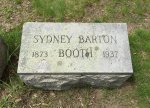
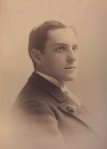
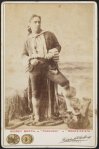
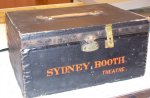
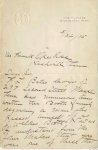
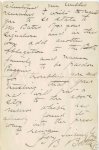
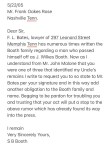
1937: Actor Sydney Barton Booth, the son of Junius Brutus Booth, Jr., died at the age of 64. Sydney appeared on stage, in vaudeville, & early silent movies. His death marked the end of the Booth acting dynasty, which had begun with his grandfather’s debut in 1813. Most of the Booth family found claims that John Wilkes Booth escaped his death at the Garrett farm to be ridiculous. Sydney Barton Booth fought back against the charlatan Finis Bates & his lies.
February 6
1996: Assassination researcher John C. Brennan died. John was a dedicated sharer of all things Booth. He was a solo correspondence service, bringing researchers together. Fellow assassination researcher Mike Kauffman wrote a touching memorial to Mr. Brennan, concluding with, “And with his help, we all grew in our knowledge”
February 7
1875: Former Ford’s Theatre carpenter Edman Spangler died at the age of 49 at the Dr. Mudd House. Though convicted & sentenced to 6 years, most historians consider Ned to have been innocent.
February 8
1869: President Andrew Johnson signed a pardon for Dr. Mudd. The pardon affirmed that Mudd was guilty of “receiving, entertaining, harboring, & concealing” JWB, but that Mudd’s conduct caring for yellow fever victims warranted his release: https://lincolnconspirators.com/2013/02/08/otd-dr-mudd-receives-a-pardon/
February 9
1865: John Wilkes Booth wrote a letter to his friend Orlando Tompkins in Boston, asking the man to visit the photography studio of Silsbee, Case and Company in that city for him. He wanted the proprietor, John G. Case, to “send me without a moments delay one dozen of my card photghs… as there are several parties whom I would like to give one.” This same photograph was later used on the wanted posters for Booth and his conspirators.
February 10
1869: Edwin Booth wrote to President Andrew Johnson asking if the time was now right for the family to retrieve the body of his brother, John Wilkes Booth. This was the final month of Johnson’s presidency & he finally assented to the release.
February 11
1863: Mary Devlin Booth went & saw her brother-in-law, John Wilkes Booth, perform at the Boston Museum. The next day, she wrote to Edwin about it, unimpressed at JWB’s portrayal of the lead. This is the last known letter written by Mary Devlin: https://ebooth-myhamlet.livejournal.com/16057.html
February 12
1861: While performing in Albany, John Wilkes Booth fell on his own dagger, stabbing himself under his right armpit. The injury laid him up for a few days. A What If? type issue of a Superman comic had a similar incident of JWB falling on his dagger at Ford’s Theatre.
February 13
1865: John Wilkes Booth, visiting with his family in New York, stayed up all night writing a Valentine for Lucy Hale. The Senator’s daughter & the actor both resided at the National Hotel in D.C. & secretly engaged, but their romance would be cut short by JWB’s deed.
February 14
1864: Edwin Booth saved the life of Robert Todd Lincoln when the President’s son fell between a train and the platform. It was one of fate’s great ironies that a Booth saved a Lincoln a little over a year before a Booth killed a Lincoln.
February 15
1887: Boston Corbett, the man who killed John Wilkes Booth in 1865, suffered a mental break & threatened to shoot his coworkers in the Kansas House of Representatives. He was arrested & committed, only to escape the asylum a few months later & vanish into history.
February 16
1893: Emerick Hansell was buried at Congressional Cemetery. In 1865, Hansell was a State Department messenger who was present at Sec. Seward’s house when Lewis Powell attacked the household. Hansell was stabbed deeply in the back but survived. You can read about Hansell here: https://lincolnconspirators.com/2015/09/04/emerick-hansell-the-forgotten-casualty/
February 17
1869: John Wilkes Booth’s remains were identified by his brother Joseph Booth in the presence of his mother Mary Ann Booth, sister Rosalie Booth, & many others in Weaver’s undertaker’s shop in Baltimore.
February 18
1861: President-elect Lincoln & John Wilkes Booth were both in Albany, NY. This marked JWB’s return to the stage after his accidental dagger wound of Feb 12. It’s possible that JWB was among the crowd who saw Lincoln, but Abe was not among JWB’s theater audience that evening.
February 19
1867: John Surratt set foot on American soil for the first time in almost two years. The escaped conspirator, having been captured in Alexandria, Egypt in November, was sailed back to Washington D.C. to stand trial for his involvement in John Wilkes Booth’s plot. You might notice a couple of Native Americans in the engraving of Surratt’s return. This was not artistic license. Several tribes, including the Sioux, sent representatives to D.C. to meet with Pres. Johnson in Feb. 1867 & some witnessed Surratt disembark his transport ship.
February 20
1865: David Herold was at home in D.C. Testimony to this mundane fact helped to discredit a perjurer at the conspiracy trial who claimed to have seen Davy in Canada plotting the assassination with Confederate agents: https://lincolnconspirators.com/the-trial/may-27-1865/#edmunds2
February 21
1863: Mary Devlin Booth died at the age of 22 in Dorchester, MA leaving behind a grief-stricken Edwin Booth and 15-month-old daughter, Edwina. Edwin had been acting in NY, received mixed messages as to Mary’s health, & just missed being at his wife’s deathbed.
February 22
1732: George Washington was born. In the Capitol rotunda’s mural, The Apotheosis of Washington, the figure of Liberty at his right hand is modeled after actress Effie Germon, whose photograph was found on John Wilkes Booth’s body. Effie’s place of prominence next to Washington in this mural was because her cousin Lola had been involved with Constantino Brumidi, the Capitol’s artist. Brumidi used Lola as his model for Freedom, who is vanquishing some familiar Confederate faces.
February 23
1863: John Wilkes Booth failed to appear in his scheduled performance at Philadelphia’s Arch Street Theatre. His absence was on account of the recent death of his sister-in-law, Mary Devlin Booth. After hearing the news of her death, JWB broke his acting engagement in order to travel to Boston to comfort his grieving brother, Edwin.
February 24
1919: Dr. George L. Porter died. In 1865, Dr. Porter was assigned to the Old Arsenal Penitentiary & daily inspected the conspirators during their trial. He made the suggestion to remove the hoods they were forced to wear and later escorted four to the Dry Tortugas.
February 25
1878: Maryland Congressman Eli Henkle submitted HR 3418, a “Bill for the Relief of Dr. Mudd”. Henkle tried to get $3,000 (equivalent to about $60k today) for Mudd’s services during the 1867 Yellow Fever epidemic at Fort Jefferson. The bill died in committee.
February 26
1902: Joseph Booth, the youngest & last of the Booth siblings, died at the age of 62. Before John Wilkes Booth assassinated Lincoln, Joe was the black sheep of the Booth family – he had run off to Europe, Australia, & California. Eventually, Joe became a doctor.
February 27
1865: John Wilkes Booth sent a telegram from D.C. to Michael O’Laughlen which stated, “As you could not stay here to see me, I will be in Baltimore tomorrow. See me there Both. Sure. J Wilkes Booth”. JWB was arranging to meet with Mike & Samuel Arnold for his plot.
February 28
1867: Thomas Eckert resigned from his role as Assistant Secretary of War. In 1865, Eckert was in charge of the War Department’s telegraph office & was at Lincoln’s bedside when he died. Eckert also had many conversations with conspirator Lewis Powell in prison.
February 29
1864: John Wilkes Booth traveled to New Orleans for an acting engagement. On board the ship, Booth befriended a man named Richard M. Johnson. Johnson sent Booth this photo, which was found in Booth’s papers after Lincoln’s death. It has been misattributed as Booth.
March
March 1
1869: Andrew Johnson issued pardons for Samuel Arnold & Edman Spangler imprisoned at the Dry Tortugas. Dr. Mudd had been pardoned on Feb. 8, but the order to release him was still en route. The pardons of Arnold & Spangler were among the last acts of Johnson’s presidency.
March 2
1860: Each of the male Booth siblings performed on stage… but not all together. John Wilkes Booth was Richmond & performed in Evadne. According to Rosalie Booth, her novice actor brother was given a 6-minute applause for his efforts as the villain, Ludovico. Meanwhile, Junius Brutus Booth, Jr. was still living in California & working as one of the acting managers at San Francisco’s Lyceum Theatre. June regularly played supporting roles to the visiting actors & likely took the stage in Lady of Lyons alongside star Harry Perry. Coincidentally, in February of 1861, Harry Perry married fellow actress Agnes Land. Less than a year later, in January 1862, Perry died of tuberculosis at the age of 35. In 1867, the widowed Agnes Perry married Junius Brutus Booth, Jr. & became known as Agnes Booth. Finally, Edwin Booth was performing in Memphis & was joined by his youngest brother, Joseph Booth, in a rare stage appearance. Despite Edwin’s efforts to mold his little brother into an actor, Joe never attempted to pursue the family profession.
March 3
1865: John Wilkes Booth, accompanied by John Surratt & Louis Weichmann, visited the Capitol in the evening & watched the House of Representatives in session. Mary Lincoln was also watching the House & Senate at the time while Mr. Lincoln signed newly passed bills.
March 4
1865: John Wilkes Booth attended Abraham Lincoln’s second inauguration. It is possible JWB is visible in some of the photographs of the event, he having acquired a special ticket from his fiancée, Lucy Hale, daughter of Senator John P. Hale.
March 5
1865: John Wilkes Booth & Lucy Hale each wrote a farewell poem on the back of an envelope. Most authors have written that this marked the end of their secret engagement, but I disagree. Here’s my piece about who this envelope was intended for: https://lincolnconspirators.com/2015/03/05/john-wilkes-booths-poetic-envelope/
March 6
1865: Lewis Powell violently beat a Black servant named Annie Ward while staying at the Branson boarding house in Baltimore. He was arrested for the assault and held as a spy for several days.
March 7
1865: Ford’s Theatre employee Tom Raybold broke the lock of the Presidential box in order to seat some late arriving patrons. This was established by Edman Spangler’s defense at the trial after it was implied that Ned may have damaged the lock to aid John Wilkes Booth. Coincidentally, one of the other witnesses who testified about the locks on the Presidential box at Ford’s actually died on this date as well. D.C. cabinet maker Joseph Plant, who examined the locks & gave his opinion in 1865, died in 1881. He’s buried in Congressional Cemetery.
March 8
1869: Dr. Mudd was officially released from custody at Fort Jefferson. Mudd remained on the island as a free man until a ship arrived to take him to Key West on March 11. It’s possible that during this interim period, Mudd has his photo taken in front of the fort.
March 9
1858: Adelaide Delannoy Booth, the first “wife of Junius Brutus Booth,” died in Baltimore. In 1821, Adelaide stayed in London when Junius ran off with Mary Ann Holmes. They didn’t divorce until 1851 after Adelaide called out the American-born Booth children as bastards.
March 10
1931: Charles F. Byrne, the last surviving cast member of Our American Cousin, died at the age of 86. Byrne was 20 and playing the role of Capt. DeBoots when he witnessed Lincoln’s assassination. He never acted on stage again after that night.
March 11
1864: Edwin Booth was a dinner guest at the home of Sec. of State William Seward. The Lincolns & Sewards saw Edwin perform multiple times during this month-long run at Grover’s National Theatre. Fanny Seward recorded her father’s advice to the 30-year-old star.
March 12
1864: Richard M. Johnson sent a picture of himself to John Wilkes Booth. A clerk on Gen. Grant’s staff, Johnson had been befriended by JWB in 1863. This picture of Johnson was found among JWB’s items & confused for an early photo of Booth: https://lincolnconspirators.com/2013/01/30/the-debate-over-gutman-1/
March 13
1865: Col. Horace Porter, aide-de-camp to General Grant, was brevetted brigadier-general. Two months later, Porter was assigned to the trial of the conspirators but was replaced after sitting through the first session.
March 14
1865: Lewis Powell was released from custody as a spy after signing an oath of allegiance under the pseudonym “L. Paine.” On his copy of the oath, Powell erased the order to “go north of Philadelphia & remain during the war”. John Surratt telegrammed Confederate sympathizer David Preston Parr in Baltimore, asking if his friend was “disengaged.” Parr replied that “she” would be on the 6 o’clock train. Lewis Powell arrived at the Mary Surratt’s boarding house in D.C. that evening.
March 15
1865: John Wilkes Booth assembled his conspirators together for the first time & laid out his plan to abduct President Lincoln from Ford’s Theatre. Most of our knowledge of what was discussed at this meeting came from the confession and memoirs of Samuel Arnold.
March 16
1858: Robert Clarence Garrett was born. Seven-year-old Robert witnessed the death of John Wilkes Booth on his father’s farm – the family was unaware of his identity until his shooting. In 2012, I visited with Robert’s 100-year-old granddaughter, Mary Louise Hughes.
March 17
1865: John Wilkes Booth assembled his conspirators, telling them that Lincoln was going to ride to Campbell Hospital to see a play. The men waited on Seventh St. to abduct the President, but he never appeared. Instead, Lincoln gave a speech at JWB’s hotel.
March 18
1865: The day after his failed attempt to abduct Lincoln, John Wilkes Booth performed for the last time. In his audience at Ford’s Theatre were fellow conspirators John Surratt, George Atzerodt, & David Herold.
March 19
1890: Edwin Booth recorded Othello on a wax cylinder as a gift for his daughter. In 1939, the cylinder was transferred onto just 50 records. You can listen to the voice of the famous actor & brother of John Wilkes Booth at the Internet Archive: https://archive.org/details/OthelloByEdwinBooth1890
March 20
1903: William Wood died at the age of 83. In 1865, Wood was in charge of D.C.’s Old Capitol Prison & took part in the manhunt for John Wilkes Booth. Wood was at the Dr. Mudd House when Dr. Mudd was arrested & sent to his prison. Wood is buried at Congressional Cemetery in D.C.
March 21
1862: John Wilkes Booth was performing as Richard III in Mary Provost’s Theatre in NYC. During the fight scene between Richard & Richmond, the actor playing Richmond fell into the orchestra pit & was injured, possibly due to the passionate swordplay of JWB.
March 22
1865: Edwin Booth completed his historic 100-night run of Hamlet at the Winter Garden. John Wilkes Booth was in NYC & likely witnessed his brother’s success. Later, Edwin was presented with a commemorative medal to mark his achievement.
March 23
1867: The Winter Garden Theatre in NYC burned. Edwin Booth had managed the theater since 1863 & it had held the Booth brothers’ Shakespeare statue benefit of 1864, Edwin’s 100 nights of Hamlet in 1865, & his 1866 return to the stage after his brother’s crime. Edwin acquired some of his brother’s acting trunks after the assassination. While there is a famous story of Edwin feeding John Wilkes Booth’s costumes into a furnace, the truth is that they, like much of Edwin’s wardrobe, were lost in the Winter Garden fire on this date.
March 24
1825: Junius Brutus Booth wrote his father from Charleston, SC, about the fine climate & people of the Southern state with the exception of slavery: “Were it not for the unnecessary and wicked treatment of the colored people the Carolinians would have few blemishes.”
March 25
1980: The Ordeal of Dr. Mudd debuted on CBS. Essentially a retelling of 1936’s The Prisoner of Shark Island, the TV movie gave a largely fictional account of Mudd’s arrest, trial, & imprisonment at the Dry Tortugas.
March 26
1865: John Wilkes Booth’s roommate at the National Hotel, John McCullough, departed D.C. JWB’s final acting job had been in a Ford’s Theatre benefit for McCullough. His departure was brought up at the conspiracy trial in an attempt to discredit Louis Weichmann.
March 27
1865: Samuel Arnold wrote to John Wilkes Booth expressing his frustration & doubt that the abduction plot against Lincoln was still feasible without help from Confederate officials. This incriminating letter was found in JWB’s hotel room after the assassination.
March 28
1865: Mary Ann Booth wrote a letter to John Wilkes Booth, lamenting recent political fights between him & Edwin Booth. Mary Ann was worried about her favorite son’s growing extremism towards the waning Confederacy but was ignorant of his secret plans against Lincoln.
March 29
1862: John Wilkes Booth closed his engagement at Mary Provost’s Theatre in New York City. Despite claims from certain documentaries, JWB was not banned from acting in the North by Edwin Booth. After the Civil War started, JWB acted only in the North (of course).
March 30
1867: Secretary of State William Seward signed a Treaty with Russia, sealing the purchase of Alaska for the United States. Had conspirator Lewis Powell been successful in his murderous attempt on Seward in 1865, the 49th state may not exist today.
March 31
1865: Samuel Arnold, along with Michael O’Laughlen, traveled to D.C. to meet with John Wilkes Booth. According to Sam, JWB told them the plot against Lincoln was over. JWB promised he would destroy Sam’s incriminating letter from the 27th. But he didn’t.
April
April 1
1888: William T. Clark died. In 1865, the room where Lincoln died in the Petersen House was being rented by Clark, but he did not arrive at his bedroom until after Lincoln had been removed. Clark found Lincoln’s boots left behind in the room & kept them for himself.
April 2
1841: Blanche DeBar Booth was born. Blanche was the daughter of Clementina DeBar and Junius Brutus Booth, Jr. June abandoned Clem in 1851, & Blanche was raised by her uncle Ben DeBar. She became an actress & was supported by her uncles, John Wilkes Booth & Edwin Booth.
April 3
1909: Lucinda Holloway died. In 1865, Lucinda was acting as a live-in tutor for her nieces & nephews at the Garrett farm. She witnessed John Wilkes Booth’s shooting & cared for him as he lay dying. She either cut it herself or was presented with a lock of JWB’s hair.
April 4
1864: John Wilkes Booth wrote a letter to a female fan providing her with a requested picture of himself. JWB had just finished an engagement in Ben Debar’s St. Charles Theatre in Union-occupied New Orleans & would leave for Boston on April 9.
April 5
1865: Secretary of State William Seward broke his arm & jaw in a carriage accident. The event immobilized him & motivated Lincoln to return early from his trip to Richmond & City Point. Seward’s bedridden nature made him a target for Lewis Powell on April 14th.
April 6
1865: John Wilkes Booth was in Boston visiting his brother Edwin Booth. JWB also sought out his friend Orlando Tompkins & bought a jeweled ring for him, stating, “Keep this. I may never see you again.” He never did see Tompkins or his brother Edwin again.
April 7
1971: President Nixon replied to a request to have Dr. Mudd declared innocent. While later presidents like Carter & Reagan would write of their personal belief in Mudd’s innocence, Nixon merely pointed out that Mudd had been pardoned (forgiven) & that should suffice.
April 8
1865: John Wilkes Booth returned to Washington, D.C., and checked back into the National Hotel after a visit to New York. He wrote to his friend, Samuel Knapp Chester, whom he had seen the day before. JWB had bragged to Chester that he had the perfect opportunity to assassinate Lincoln on the day of his second inauguration the month before.
April 9
1863: John Wilkes Booth purchased a lot at 115 Commonwealth Ave in Boston for $8,192.10. The lot was registered in the name of his mother, Mary Ann Booth. The family sold the undeveloped land in 1876 & a house was made that year. https://backbayhouses.org/115-commonwealth/
April 10
1865: John Wilkes Booth asked Edman Spangler for help in selling the horse & buggy he kept in his stables behind Ford’s Theatre. These had been intended for JWB’s now abandoned kidnapping plot. It would take a few days, but Spangler eventually sold them for $260.
April 11
1865: Abraham Lincoln gave a speech from the White House. His future assassin, John Wilkes Booth, was there to listen. While discussing the proposed state constitution for Louisiana in order to allow it back into the Union, Lincoln spoke in favor of Black suffrage, stating, “It is also satisfactory to some that the elective franchise is not given to the colored man. I would myself prefer that it were now conferred on the very intelligent and on those who serve our cause as soldiers.” What JWB might have said after Lincoln made those remarks is largely apocryphal. In George Alfred Townsend’s novel Katy of Catocin, he gives an account of JWB’s words that includes explicit racist language. While GATH’s account is commonly repeated, it is a third-hand account, published in 1887, in a piece of historical fiction. A more reliable (but still a secondhand) account of Booth’s words comes from Thomas Eckert at the trial of John Surratt in 1867. The problem is, we don’t know for sure who was actually with Booth (if he even truly was there) at Lincoln’s speech. Some authors give both quotes attributed to JWB and state that both David Herold & Lewis Powell were there with him. I trust part of Eckert’s account more than GATH, who was known to exaggerate. While John Wilkes Booth was more than capable of saying the quote GATH provides, I still think that JWB’s likely response to Lincoln’s words was merely, “That is the last speech he will ever make.”
April 12
1865: John Surratt arrived in Elmira, New York, to gain intel on a camp of Confederate prisoners of war for a proposed jailbreak. Surratt was still in Elmira when Lincoln’s assassination occurred & he escaped to Canada due to his connections to John Wilkes Booth.
April 13
1865: John Wilkes Booth visited Ford’s Theatre & Grover’s National Theatre, learning that both theaters planned to invite Lincoln the next day. As D.C. celebrated the end of the war with a Grand Illumination, JWB betrayed nothing of his plans in a letter to his mother.
April 14
1860: John Wilkes Booth applied to be paid for his two weeks as a Richmond Gray guarding John Brown before the abolitionist’s execution. He received $64.58 in pay. I, for one, see a possible resemblance to JWB in this picture of the Grays during their duty.
1912: The Titanic hit an iceberg. In the 1997 movie Titanic, old Rose is played by Gloria Stuart, who, in 1936, played Dr. Mudd’s wife in The Prisoner of Shark Island.
April 15
1865: 20-year-old Lt. John J. Toffey captured a galloping, riderless horse. It was the one-eyed horse John Wilkes Booth bought from Dr. Mudd’s neighbor & was used by Lewis Powell on the night of the assassination. Toffey had just come from Ford’s Theatre, where he witnessed Lincoln’s assassination.
April 16
1865: John Wilkes Booth & David Herold left the home of Samuel Cox & secreted themselves in a nearby pine thicket. They would remain hidden there for 4.5 days. A few years ago, I reenacted (on camera) what this period of JWB’s escape was like: https://lincolnconspirators.com/john-wilkes-booth-in-the-woods/
April 17
1865: Samuel Arnold was taken into custody at Fortress Monroe, Virginia. Michael O’Laughlen surrendered himself in Baltimore. Edman Spangler was arrested in D.C. As Mary Surratt was being taken in for questioning, Lewis Powell showed up posing as a laborer & was arrested too.
1865: A photographer from Mathew Brady’s studio arrived at Ford’s Theatre to photograph the scene of Lincoln’s assassination. The stage and Presidential box were reset to their appearance 3 days earlier, & multiple photos were taken.
April 18
1865: Lewis Powell was placed aboard the USS Saugus lying at anchor in the Anacostia River. A photographer from Alexander Gardner’s studio came aboard & took 6 photos of Powell in the clothes he was wearing when he attacked William Seward’s household. Looking closely, you can see stains of blood on the right sleeve of Lewis Powell’s coat. He shed this coat after the assassination, but it was found by an Army baker in the woods between Fort Bunker Hill and Fort Saratoga in D.C.
April 19
1865: George B. Love committed suicide in D.C. Newspapers called the circumstances of his suicide “mysterious” & perhaps related to Lincoln’s assassination. Love actually did have a connection to John Wilkes Booth as author Susan Higginbotham relates: https://susanhigginbotham.com/posts/the-strange-sad-case-of-george-b-love/
1865: John Wilkes Booth’s “To Whom It May Concern” letter was published. JWB had written this manifesto in 1864 as a justification for his proposed abduction plot against Lincoln. You can read the letter & the story of its publication here: https://lincolnconspirators.com/2016/04/19/to-whom-it-may-concern/
April 20
1865: George Atzerodt was arrested at the home of his cousin. To learn the story of how he came to be caught after escaping D.C. on April 15th, read this post I did about a Montgomery County neighbor who identified Atzerodt, alias Atwood: https://lincolnconspirators.com/2017/01/19/grave-thursday-john-somerset-leaman/
April 21
1865: Lt. Lovett & detectives returned to the Dr. Mudd House with orders to bring Dr. Mudd to Bryantown for questioning. It’s during this visit they are given the boot Mudd cut from John Wilkes Booth’s broken leg. They find the name “J. Wilkes” written in it.
April 22
1865: Lewis Powell turned 21 years old. He spent his birthday imprisoned aboard the USS Saugus in sailor’s garb, as his bloodstained clothing had been removed as evidence. In a few days, Powell & the other conspirators would be forced to wear hoods.
April 23
1865: John Wilkes Booth & David Herold successfully crossed the Potomac into King George County, Virginia. They were escorted to Cleydael, the home of Dr. Richard Stuart, who let the pair eat a meal, then evicted them. Stuart did not want to know their identities.
April 24
1865: John Wilkes Booth & David Herold crossed the Rappahannock River into Caroline County, Virginia. JWB was dropped off at the farm of Richard Garrett under an alias & a story that his leg was injured in combat at Petersburg. JWB slept that night in an upstairs bedroom.
April 25
1865: After a long night in King George County coming up empty in their search for John Wilkes Booth, the 16th NY Cavalry, led by Lt. Edward Doherty, finally caught a lucky break at the Rappahannock ferry landing in Port Conway. They were now on the assassin’s trail.
April 26
1865: Twelve days after assassinating Lincoln at Ford’s Theatre, John Wilkes Booth was cornered & fatally shot by Boston Corbett in Richard Garrett’s burning tobacco barn. This is a piece of the Garrett house porch on which the paralyzed Booth died at around sunrise.
April 27
1865: John Wilkes Booth’s body was positively identified by numerous acquaintances & by a doctor who had removed a tumor from JWB’s neck. Despite stories, there’s no credible evidence that any photos of JWB’s body were taken. David Herold was photographed, however. A post-mortem of Booth’s body occurred on the Montauk. His broken leg was investigated, the vertebrae Corbett’s bullet passed through were removed, & his chest was opened. JWB’s vertebrae & spinal cord are in the National Museum of Health and Medicine, while the Mutter Museum has a piece of thoracic tissue.
April 28
1865: Pvt. Emory Parady, one of the soldiers from the 16th NY Cavalry that cornered John Wilkes Booth at the Garrett farm, wrote a letter home to his parents. He narrated the actions of the patrol and the death of the assassin.
April 29
1924: Actress Helen Wynkoop died at the age of 78. In 1864, Helen begged President Abraham Lincoln personally for a pardon for her brother, who had been charged with running the Union blockade. Lincoln pardoned the man, and Helen stayed in D.C. where she found employment as a member of the Ford’s Theatre stock company of actors, under the name of Helen Truman. She performed in Our American Cousin and witnessed Lincoln’s assassination firsthand.
April 30
1865: Mary Surratt was transferred from the Carrol Annex of the Old Capitol Prison, where she had been held since April 17, to the Old Arsenal Penitentiary. The transfer demonstrated the government’s belief that Mrs. Surratt had been elevated from that of a witness to Booth’s plotting to an active conspirator in it.
May
May 1
1796: The patriarch of the Booth family, Junius Brutus Booth, was born in England. A celebrated tragedian, Junius moved to America with Mary Ann Holmes in 1821. The couple would have ten children, three of whom followed in their father’s acting footsteps.
May 2
1850: St. Ignatius Church in Oxon Hill, Maryland was dedicated. Local resident Mary Surratt took an active role in helping to establish this new church. In 1878, Mary Surratt’s mother, Elizabeth Jenkins, was buried in the churchyard.
May 3
1838: The Baltimore Sun had enough of Junius Brutus Booth & his reputation as the “mad tragedian” after he failed to appear on stage. Though his absence was not explained, it may have been due to Mary Ann Booth’s pregnancy. John Wilkes Booth was born a week later.
May 4
1864: John Wilkes Booth performed the play Damon and Pythias in Boston. His scene in the Senate was met “with thunderous applause.” Happy May The Fourth!
1865: Dr. Mudd was transferred from the Old Capitol Prison to the Old Arsenal Penitentiary. Mudd’s “promotion” from witness to conspirator was due to the statements of Mary Surratt’s boarder Louis Weichmann, who described being introduced to John Wilkes Booth by Mudd.
May 5
1906: Samuel Cox, Jr. died at Rich Hill. In 1877, Cox & Dr. Mudd ran for Maryland delegate. Mudd admitted to Cox on the campaign trail that he knew John Wilkes Booth’s identity when the assassin showed up in 1865, but when he learned what JWB had done, Mudd kicked him out.
May 6
1865: Edwin Booth wrote to a friend, noting the arrest of brother Junius Brutus Booth, Jr. & brother-in-law John Sleeper Clarke. He also mentions “one great heart” in Philadelphia – which was his fiancée Blanche Hanel, whose father later ended their engagement because of JWB.
May 7
1898: The Army Medical Museum transferred numerous skeletal specimens to the Smithsonian’s anthropology department. The skull of conspirator Lewis Powell was among them. It wasn’t until 1993 that Powell’s skull was rediscovered & later buried: https://lincolnconspirators.com/2014/06/01/the-national-museum-of-health-and-medicine-and-the-lincoln-assassination/
May 8
1865: The military trial of the conspirators was supposed to have begun, but two of the commissioners didn’t know where to report. Within the prison walls, Gen. Hartranft entered each of the conspirators’ cells & read the charges against them. https://lincolnconspirators.com/the-trial/may-8-1865/
May 9
1865: The trial officially began. When the male conspirators were brought in, they were in the hoods they wore while incarcerated. This bothered some of the commissioners &, after that, the hoods were removed before entering the courtroom: https://lincolnconspirators.com/the-trial/may-9-1865/
May 10
1838: John Wilkes Booth, the future assassin of Abraham Lincoln, was born in a log cabin near Bel Air, Maryland.
“All of our acts of life are pre-ordained,
And each pre-acted in their several spheres by ghostly duplicates.
They sway our deeds by their performance.”
These words are at the start of Asia Booth’s memoir about her brother, written after his crime but not published until 1938. They come from a dramatic sketch by English poet Thomas Hood in his piece Guido and Marina: https://dvpp.uvic.ca/poems/forget/1846/pom_15472_guido_and_marina_a_dramatic.html
May 11
1865: Joseph Booth arrived in New York. Joe had departed San Francisco on April 13, the day before his brother’s crime. He heard the news of Lincoln’s assassination while trekking across Panama. In NY, Joe was arrested & interrogated before being released on May 16.
May 12
1865: The first witnesses took the stand at the trial of the conspirators. Today’s session was done behind closed doors and only Mary Surratt, Dr. Mudd, & David Herold had legal representation. Read more here: https://lincolnconspirators.com/the-trial/may-12-1865/
May 13
1865: The trial of the conspirators was opened up to the press & outside visitors. This was likely due to pressure from Gen. Grant (who testified the day before) & Gen. Comstock, who vocalized his opposition to the secrecy & had been replaced. Louis Weichmann & John M. Lloyd both took the stand, testifying against Mary Surratt & Dr. Mudd. It was also a big day for famous visitors, including several military officers & generals who signed an autograph book: https://digital.lib.uiowa.edu/islandora/object/ui%3Atestcwd_21893_2_2 Today was also the day Maryland Senator Reverdy Johnson was admitted as a defense attorney for Mary Surratt. However, his application was not without controversy, as one of the commissioners originally moved to bar him. https://lincolnconspirators.com/the-trial/may-13-1865/
May 14
1867: Everton Conger testified at the House impeachment investigation against Andrew Johnson. He was specifically asked about the condition of John Wilkes Booth’s diary when he turned it over to Sec. Stanton. Conger confirmed that the diary was missing pages in 1865.
May 15
1865: Several prosecution witnesses took the stand against the conspirators at their trial. Louis Weichmann and John M. Lloyd both took the stand again against Mary Surratt. During Lloyd’s testimony, the carbine JWB & David Herold picked up at the Surratt Tavern was entered into evidence. Edwin Stanton’s nephew testified about seeing Michael O’Laughlen around his uncle’s house on April 13 during the grand illumination. The prosecution was trying to prove O’Laughlen was assigned to attack Stanton, but Mike’s friends later testified they were never near Stanton’s home. Several witnesses testified about the specific events at Ford’s Theatre on April 14th. Ticket taker Buck described JWB’s movements, Rathbone narrated the shot & his scuffle with JWB, orchestra leader Withers & stagehand Joe Simms testified about JWB’s escape out the back door. https://lincolnconspirators.com/the-trial/may-15-1865/
May 16
1865: The commissioners & prosecutors at the trial of the conspirators took a field trip to Ford’s Theatre, where they familiarized themselves with the scene of the crime. Modifications had been made in the courtroom to allow for all of the conspirators to be seated together, with a guard between each. Mary Surratt was no longer granted the special place of sitting with the defense but joined the men on the prisoner’s dock. Several key pieces of evidence were admitted today, including John WilkesbBooth’s note to Andrew Johnson, the derringer & bullet that took the President’s life, & the boot Dr. Mudd cut off JWB’s foot at the Dr. Mudd House. https://lincolnconspirators.com/the-trial/may-16-1865/
May 17
1865: Testimony related to the arrests of David Herold, George Atzerodt, & Dr. Mudd was heard. Boston Corbett had related the death of John Wilkes Booth & capture of Herold so often that he “went through his testimony as a boy reciting his lesson which he knew by heart.” Detective William Williams threw Dr. Mudd under the bus by stating Mudd completely denied anyone had come to his place when interviewed on April 18th. This was a lie. While Mudd denied, at first, that 2 men had come, when pressed further, he did admit JWB & Herold’s visit. Lt. John Toffey testified about his capture of the riderless one-eyed horse that appeared near Campbell Hospital on the night of April 14th. This horse, purchased from Dr. Mudd’s neighbor by John Wilkes Booth in 1864, had been used by Lewis Powell to flee Seward’s. I’m also pretty certain that John Wilkes Booth’s diary made an appearance in the courtroom on this date & was read, but it was not entered into evidence. For this tidbit and a lot more, check out today’s trial entry: https://lincolnconspirators.com/the-trial/may-17-1865/
May 18
1865: Testimony was heard regarding George Atzerodt’s movements immediately after Lincoln’s shooting. He rode the horse-drawn cars late into the night, threw his knife into a gutter, & then took a room at the Pennsylvania House hotel (skipping out early w/o paying). Major Rathbone took the stand again, testifying about how John Wilkes Booth had wedged the outer door to the box at Ford’s Theatre shut with a piece of a music stand. The bar was later picked up & taken home as a souvenir by a different witness, who was forced to return it. Through an intermediary witness, a confession of Samuel Arnold’s was heard relating JWB’s original plot to kidnap Lincoln & how he acquired a letter of introduction to Dr. Mudd for help in this endeavor. This testimony was not appreciated by Dr. Mudd’s defense team. Two of the visitors who watched the court proceedings on this date were Harper’s Weekly artist Andrew McCullum, who drew the scene, and Tad Lincoln, the 12-year-old son of the slain President. Read more here: https://lincolnconspirators.com/the-trial/may-18-1865/
May 19
1865: Most of the testimony at the trial of the conspirators revolved around Lewis Powell’s attack on Secretary William Seward’s household & Powell’s later arrest at Mary Surratt’s boardinghouse. Pvt. George Robinson & Augustus Seward testified about grappling with Lewis Powell in Seward’s bedroom. Both men were stabbed by Powell’s knife as the would-be assassin had broken his gun on the skull of Frederick Seward (who was still not up to testify by this date). In the courtroom, Lewis Powell was briefly freed from his lily iron handcuffs and dressed up in the clothes he wore when he attacked the Seward home. He was identified in this garb by William Bell, the Black servant who had answered the door that night. https://lincolnconspirators.com/the-trial/may-19-1865/
May 20
1865: Testimony was heard attempting to link Confederate officials in Canada to John Wilkes Booth & his plot. The key witness was Sandford Conover, who claimed to have seen JWB conversing about assassination with high-level Confederate operatives in Montreal. However, when Conover’s secret testimony from today was released, the press investigated his claims & found the people he claimed to have seen with JWB were not in Canada at the time. Later, it was determined Conover & 2 other key witnesses connecting JWB with Confederate agents, had repeatedly lied on the stand. The government was so eager to lay the assassination at Jefferson Davis’ feet they continually paid Conover & the rest for their testimony, essentially eliciting perjury. In 1866, Conover was convicted for his perjury. https://lincolnconspirators.com/the-trial/may-20-1865/
May 21
1862: The Army Medical Museum was established. After the government acquired Ford’s Theatre in 1866, the Army Medical Museum occupied the top floor of the remodeled building until 1887. Read more: https://lincolnconspirators.com/2014/06/01/the-national-museum-of-health-and-medicine-and-the-lincoln-assassination/ Interestingly, the now named National Museum of Health and Medicine has specimens from two presidents & their assassins. They have pieces of Lincoln’s skull & John Wilkes Booth’s vertebrae. They also have President Garfield’s vertebrae along with the skeleton & brain of Charles Guiteau (minus his skull).
May 22
1865: Prosecution testimony was heard regarding Edman Spangler helping to set up a stable for John Wilkes Booth behind Ford’s Theatre. Also, among the visitors to the courtroom today were Gen. George Custer & his wife, Elizabeth. https://lincolnconspirators.com/the-trial/may-22-1865/
May 23
1865: The Grand Review of the Armies in DC prevented any witnesses from making it to the trial of the conspirators, so it adjourned early. David Herold was allowed to stay in the courtroom to write a statement that has never been found: https://lincolnconspirators.com/the-trial/may-23-1865/
May 24
1896: Luther B. Baker, one of the detectives who captured John Wilkes Booth, died in Lansing, MI. In his later years, Baker gave many lectures telling the tale of JWB’s demise. You can purchase a booklet of his lecture from Lansing History: http://lansinghistory.blogspot.com/p/lt-luther-baker-speech-booklets-now.html?m=1 The best part of Baker’s tale has got to be his horse, Buckskin, who also witnessed JWB’s death, and had a “narrative” in Baker’s early lectures. After Buckskin died in 1888 at 30 years of age, he was stuffed & for many years displayed at Michigan State’s Agricultural College.
May 25
1865: It was one of the busiest days in the trial of the Lincoln conspirators today as the first defense witnesses were called. One defense witness called by Mary Surratt’s lawyer, Frederick Aiken, did a 180 on the stand, betraying Aiken. https://lincolnconspirators.com/the-trial/may-25-1865/
May 26
1865: Defense witnesses testified that Mary Surratt had traveled to her Maryland tavern on April 14 due to a debt she owed to a neighbor (instead of to tell John M. Lloyd to have the “shooting irons” ready that night). In his earlier testimony, Louis Weichmann had stated that Dr. Mudd introduced him & John Surratt to John Wilkes Booth on Jan. 15. While the event did occur, it happened on Dec. 23. The first witnesses for Mudd’s defense poked holes in this timeline today trying to discredit Louis. Also, today, everyone got sick and tired of assistant Judge Advocate John Bingham, the prosecution’s attack dog, objecting to practically every defense question. Thomas Ewing eventually called him on it & even Bingham’s boss, JAG Joseph Holt, signaled him to chill out. https://lincolnconspirators.com/the-trial/may-26-1865/
May 27
1865: Ten out of the fourteen witnesses called at the conspiracy trial were defense witnesses for Dr. Mudd. Most of them were rebutting testimony that Mudd hid Confederates on his farm in 1864. Instead, witnesses said this happened in 1861 (which still seems disloyal in my opinion). Mary Surratt’s lawyer, Frederick Aiken, made another colossal error by calling Confederate spy Augustus Howell as a defense witness. While he was trying to cast aspersions on Louis Weichmann, he instead showed that Mary’s house was a safe haven for clandestine agents. https://lincolnconspirators.com/the-trial/may-27-1865/
May 28
1864: John Wilkes Booth ended his last full theatrical season by playing in The Corsican Brothers in Boston. After this date, he only made three more appearances on the stage. While other newspapers cheered JWB’s efforts, the Commercial Bulletin gave a scathing review.
May 29
1865: Thomas Ewing continued to fight for Dr. Mudd, attempting to have his cousin, George Mudd, relate the conversation the cousins had on April 16 about the “strangers” to the Dr. Mudd House. While George couldn’t testify to Mudd’s exact words, he got the story across. One of the visitors to the courtroom on this date was Ella Starr, a woman of the night that John Wilkes Booth had a relationship with. After the assassination, Ella had attempted suicide out of grief. It was thought she might be called to testify, but this never occurred. While unrelated to the conspirators on trial, testimony was also heard about a Confederate attempt at germ warfare. Dr. Luke Blackburn tried to spread Yellow Fever to major cities in the North by distributing “infected” clothing. Read more: https://lincolnconspirators.com/the-trial/may-29-1865/
May 30
1865: It was a very emotional day at the trial of the Lincoln conspirators. Mary Surratt’s daughter, Anna, broke down on the stand while giving testimony for her mother. Tears also came to the eyes of David Herold when his sister testified: https://lincolnconspirators.com/the-trial/may-30-1865/
May 31
1865: It was a day of brothers at the trial. John T. Ford & his brothers took the stand on behalf of their Ford’s Theatre employee, Edman Spangler. Collectively, they helped disprove several of the prosecution’s claims about Ned’s supposed involvement in Booth’s plot. Two brothers and a neighbor of Samuel Arnold testified about Sam’s absence from D.C. in the weeks prior to the assassination. While Sam had signed up for the kidnapping plot, he was no longer in JWB’s inner circle in April. Edwin Booth made an appearance in the courtroom on this date. According to attorney William Doster, Edwin was supposed to speak to his brother’s personal magnetism & ability to manipulate people. However, Edwin demurred, claiming (falsely IMO) that he didn’t know JWB well, & so he never testified.
June
June 1
1888: Asia Booth Clarke was buried at Green Mount Cemetery in Baltimore. The chronicler of the Booth family had died in England on May 16, where she had lived since 1868. Her final return home was attended by her surviving siblings, Edwin, Joseph, & Rosalie Booth.
June 2
1865: The “Lon” letter was entered into evidence at the conspirators’ trial by the prosecution. Dated April 6th, the suspicious letter was from Lon to “Friend Wilkes”. It referred to JWB’s “oil speculations”, & named other conspirators “French”, “Brady”, & “Tom”. While seemingly connected to JWB’s plot, it was later found to be a forgery written by a man named Robert Purdy in an attempt to frame some of his neighbors who had reported him for assaulting a woman. While dated April 6, the letter wasn’t postmarked to JWB until May 8th. The worst part is that even after this letter was disproven (by the press & military authorities), the prosecution & Judge Advocate General Joseph Holt continued to stand by it, even having Robert Purdy take the stand on June 16th to claim he didn’t write it (he did). Bonus fact: The forged Lon letter implies that JWB could escape through “Thornton’s Gap” in Virginia’s Blue Ridge Mountains. There’s a Civil War Trails sign at Thornton Gap that actually mentions this very obscure letter from the assassination trial.
June 3
1865: Michael O’Laughlen turned 25. He “celebrated” his birthday by attending his own trial, where a prosecution witness testified about seeing him with John Wilkes Booth several times while a defense witness stated he was nowhere near Sec. Stanton’s home on April 13.
William Doster revealed that “Payne’s” real name was Lewis Powell. Doster asked the court not to close the defense until his father, Rev. George C. Powell, could be summoned from Florida., Rev. Powell would not make it to D.C. in time, learning of his son’s execution en route.
Dr. Mudd’s brother-in-law, Joseph Blandford, took the stand on this date & marked on a map some locations in Southern Maryland for the court. Ford’s Theatre displays this map in their Aftermath exhibit but erroneously claims this map was found on John Wilkes Booth when he died.
June 4
1861: John Wilkes Booth was at the Eagle Hotel in Bel Air on a 10-week stay. Innkeeper Robert Hanna recalled the novice actor used this time to memorize plays. JWB also took an interest in the fledgling Confederacy, gifting a small Confederate flag to Mrs. Hanna when he left.
June 5
1865: Prosecution witness Rev. William Evans claimed he had seen Dr. Mudd ride into D.C. & visit Mary Surratt’s boardinghouse in early March. Thomas Ewing brought many defense witnesses forward to prove Rev. Evans was lying for reasons unknown. Rev. Evans had originally been called to speak on the reputation of John Zadoc Jenkins, Mary Surratt’s brother, who testified on her behalf. A couple of other prosecution witnesses testified on this date about him being disloyal to the government as the Civil War progressed. https://lincolnconspirators.com/the-trial/june-5-1865/
June 6
1865: Dr. Mary Walker visited the trial of the conspirators, causing a bit of a stir: “The prisoners appeared considerably interested and amused by the appearance of the Bloomer. Payne grinned, Atzerodt grinned, Spangler grinned, and Herold ‘snickered right out.’” Dr. Walker was the first female U.S. Army surgeon and the only woman to receive the Medal of Honor. She bucked conventional female fashion by wearing hybrid dresses & pants called bloomers, or just trousers. Her efforts to reform women’s dress were met with criticism & derision. In the case of the conspirators, Dr. Walker gets the last laugh. As part of the effort to rename military bases named after Confederate traitors, the formerly named Fort A. P. Hill, located where JWB was killed & David Herold surrendered, was renamed Fort Walker in honor of the doctor.
June 7
1865: An intense debate was had between the defense & prosecution over a cipher letter snatched from a river in NC. The relevancy of the letter to the conspirators was challenged & over the course of debate, a lady in the courtroom fainted: https://lincolnconspirators.com/the-trial/june-7-1865/#cipherdebate1865
Police detective James McDevitt took the stand on this date to talk about his search of Mary Surratt’s boardinghouse in the early morning hours of April 15th & his subsequent trip to Canada looking for her son, John Surratt. Ford’s Theatre walking tour guides impersonate Det. McDevitt.
Commission member (and future author of Ben-Hur) Gen. Lew Wallace spent time during the trial sketching the Lincoln conspirators. While most of his sketches are undated, we do know that this drawing of George Atzerodt was done on this date.
1893: Edwin Booth passed away at the age of 59 years old in his room at the The Players Club in New York City. He was considered the greatest tragedian of the American stage in the 19th century. He is buried on the Booth plot in Mount Auburn Cemetery.
June 8
1865: Two witnesses testified that on his way back from Bryantown on April 15, Dr. Mudd visited them, told them the news of Lincoln’s assassination, & that a man named Booth did it. This shot holes in the defense’s claim that the assassin’s identity was unknown to Mudd. General William Doster, lawyer to Lewis Powell and George Atzerodt, recalled in his later memoirs the difficulty he had with the format of the military commission.
June 9
1865: The nine-member military commission presiding over the trial of the Lincoln conspirators & the three prosecutors sat for this portrait at Alexander Gardner’s studio. After the photo was taken, they returned to the courtroom for today’s session: https://lincolnconspirators.com/the-trial/june-9-1865/
June 10
1865: The padded hoods that most of the male conspirators had to wear while in their prison cells were finally removed. Dr. Mudd never had to wear a hood & Lewis Powell still had to wear his after this date for fears he was suicidal.
June 11
1840: Junius Brutus Booth had the coffin of his father, Richard Booth, opened in order to clip a lock of hair. Richard had died six months earlier, on December 29, 1839, while Junius was on tour. Asia Booth recalled talking to the undertaker about the unusual visit.
June 12
1865: George Atzerodt turned 30 years old. He spent most of his birthday in his cell & in the courtroom where he was on trial for his involvement in Lincoln’s assassination. Within a month, he would be executed. So not really a “happy” birthday for him.
June 13
1865: The penultimate set of defense witnesses took the stand at the conspirators’ trial. Much of the testimony related to Mary Surratt. Ford’s Theatre actor John DeBonay assisted in Edman Spangler’s case, and Samuel Arnold’s father cried while visiting his son. https://lincolnconspirators.com/the-trial/june-13-1865/
June 14
1865: Four doctors examined Lewis Powell to assess his sanity. After their examination, Lewis’ lawyer, William Doster, closed his case without calling them. JAG Holt called them instead, where they stated Powell was legally sane – effectively trashing an insanity defense. Mary Surratt’s lawyer, Frederick Aiken, related that Reverdy Johnson had written an argument against the jurisdiction of the court that was to be read but that, owing to Johnson’s atrocious handwriting, it was hoped he would read it himself in the days to come.
June 15
1884: The Masconomo House in Manchester, Massachusetts, reopened for its first season without Junius Brutus Booth, Jr., who died the year before. June & Agnes Booth expanded their 1869 seaside home into a big hotel in 1877. Gone by 1920, the original Booth cottage part still stands.
June 16
1865: David Herold turned 23. The man who escaped with John Wilkes Booth spent his birthday in court & 2 of his sisters sat near him. Davy’s defense stated he was easily manipulated by JWB, but this was not enough to save him from the gallows less than a month later. “When the defense of Mary Surratt appeared to be making out a tolerable case in her behalf, by showing the real character of the witnesses against her, [Herold] appeared jealous of her good luck and said: ‘That old lady is as deep in as any of us.’”
June 17
1864: Comedian John Sleeper Clarke, husband of Asia Booth and brother-in-law of Edwin Booth & John Wilkes Booth, continued an engagement at Ford’s Theatre. He performed two of his main roles of Maj. DeBoots & Toodles. Truthfully, there isn’t much significance to Clarke’s acting on this date, but since I own a playbill of this particular performance at Ford’s Theatre, I decided to highlight it.
June 18
1865: After guards noticed that Edman Spangler’s mind seemed to be wandering, the conspirators were examined by doctors Porter & Gray, who recommended they all be given outdoor time & reading material. Most of the conspirators got an hour of time in the prison yard.
June 19
1865: The first closing arguments by the conspirators’ defense were heard, starting with an argument against the jurisdiction of the military court to try them. While still debated today, the defense acknowledged the futility of their argument to the commission. While four of David Herold’s sisters were present, his lawyer, Frederick Stone, was absent from the court & so his written argument was read by a court reporter. During the reading, Mary Surratt became ill & was eventually permitted to sit in an open doorway to help cool her down. Walter Cox, lawyer for Michael O’Laughlen, presented a closing argument for Mike & Samuel Arnold. Both men had joined the conspiracy to kidnap Lincoln but had left John Wilkes Booth’s inner circle by April. You can read all of today’s arguments here: https://lincolnconspirators.com/the-trial/june-19-1865/
June 20
1865: Thomas Ewing presented his closing argument in defense of Edman Spangler. Ewing expertly discredited each part of the government’s flimsy case against the Ford’s Theatre carpenter whose only crime was having a poor choice of friends. https://lincolnconspirators.com/the-trial/june-20-1865/
June 21
1865: William Doster presented his closing argument in defense of Lewis Powell. He did not dispute any of the charges regarding Powell’s attack on William Seward & focused solely on trying to mitigate Powell’s punishment in an attempt to save him from the gallows. Doster also presented his closing argument for George Atzerodt, first reading a confession where Atzerodt acknowledged his participation in the kidnapping plot. However, Doster denied the government’s claim that Atzerodt had laid in wait to kill VP Johnson. Frederick Aiken gave closing arguments for Mary Surratt. In 2012, part of his speech was put on his new gravestone. Aiken trashed the government’s witnesses of Louis Weichmann & John Lloyd & warned the commission of the repercussions of executing a woman. https://lincolnconspirators.com/the-trial/june-21-1865/
June 22
1863: John Wilkes Booth agreed to take a day off from acting…for a price. A novice named R. J. Morgan bought a day out of JWB’s St. Louis engagement in hopes of becoming a star. You can read about Morgan’s deal with John Wilkes Booth here: https://lincolnconspirators.com/2018/09/02/the-novice-and-john-wilkes-booth/
June 23
1865: Thomas Ewing argued against the jurisdiction of the military court that tried the Lincoln conspirators. He also gave his closing arguments in defense of Samuel Arnold & Dr. Mudd. I’ve summarized Ewing’s impressive work here: https://lincolnconspirators.com/the-trial/june-23-1865/
June 24
1869: Recently pardoned “conspirator” Edman Spangler had an article published relating to his arrest, trial, & imprisonment at the Dry Tortugas. You can read the Ford’s Theatre carpenter’s lengthy statement here: https://lincolnconspirators.com/2022/06/24/edman-spangler-i-am-entirely-innocent/
June 25
1989: Maude Motley died at the age of 87. In the early days of the John Wilkes Booth escape route bus tours, Ms. Motley would greet tours in Bowling Green, VA & show off her piece of JWB’s crutch. You can listen to Ms. Motley’s narration here: https://lincolnconspirators.com/2018/08/01/a-piece-of-crutch/
June 26
1865: Lew Wallace wrote a letter to his wife about the coming end of the trial of the conspirators. Before hearing the prosecution’s closing arguments, Wallace predicted 3 or 4 out of the eight conspirators would be acquitted. In the end, however, none were. Wallace sketched the male conspirators as they appeared in the courtroom. Years later, he made a painting featuring them, John Wilkes Booth, & John Surratt, which hangs at the Lew Wallace Study. The sketches are at the Indiana History Museum.
June 27
1865: The final witnesses testified at the trial of the conspirators. Two described a December 1864 classified ad from Alabama that offered to kill Lincoln, Seward, & Johnson for $1,000,000. The prosecution also defended the court’s jurisdiction: https://lincolnconspirators.com/the-trial/june-27-1865/
June 28
1865: John Bingham presented closing arguments against the conspirators. He reiterated that the accused were liable for John Wilkes Booth’s act under the law of conspiracy. Bingham also doubled down that the Confederacy was behind the murder. https://lincolnconspirators.com/the-trial/june-28-1865/
June 29
1865: The commissioners (& prosecutors) completed their first day of deliberations regarding the findings and sentencing of the Lincoln conspirators. They worked through each case except for the sentencing of Dr. Mudd, which they saved for tomorrow. I actually highly recommend reading my summary of today’s events in order to gain an understanding of how the military commission was different from a civil court when it came to deliberations. The differences are staggering: https://lincolnconspirators.com/the-trial/june-29-1865/
June 30
1865: The commissioners completed deliberations, sentencing Dr. Mudd to life. Mary Surratt had been found guilty & sentenced to death, but due to her “sex and age,” five out of the nine commissioners signed a clemency plea recommending life in prison. https://lincolnconspirators.com/the-trial/june-30-1865/
July
July 1
1837: Henry Rathbone was born. Major Rathbone & his fiancée/stepsister Clara Harris were with the Lincolns in the box at Ford’s Theatre when the assassination occurred. Plagued with PTSD at not saving Lincoln, Rathbone suffered a mental break in 1883 and killed Clara.
July 2
1919: William Doster died at the age of 82. As a Lt. Col. with the 4th PA Cavalry, Doster fought at Chancellorsville & Gettysburg. In 1865, Doster was hired to defend George Atzerodt & was voluntold to defend Lewis Powell at the trial of the conspirators.
July 3
1863: Lewis Powell was captured by the Union army at the Battle of Gettysburg. The future Lincoln conspirator was a private with the 2nd Florida Infantry & had taken a bullet to the right wrist during the prior day’s fighting. He was sent to a field hospital.
July 4
1864: David Herold left the employ of druggist William S. Thompson. During his time with Thompson, Herold actually wrote up an order of castor oil for President Lincoln, though it’s unclear if he mixed & delivered the medicine himself.
July 5
1865: President Andrew Johnson approved the sentences for the Lincoln conspirators, including the execution of Lewis Powell, David Herold, George Atzerodt, and Mary Surratt which he scheduled for July 7. Johnson later claimed he never saw the clemency plea for Surratt.
July 6
1865: Gen. Hartranft visited the cells of the four conspirators sentenced to death & informed them of their execution scheduled for the next day. Preachers & family were then sent for. Outside the cells, the sounds of a gallows being constructed could be heard.
July 7
1865: “Sic Semper Sicarii” “Thus Always to Assassins” https://lincolnconspirators.com/2021/01/29/treason-chokers-and-wooden-overcoats-an-eyewitness-account-of-the-conspirators-execution/
July 8
1865: An anonymous man wrote a threatening letter to President Johnson. The execution of the conspirators had “cost your life,” wrote “KWR”. The end of the manifesto contained poor drawings of a gun & knife (which, IMO, really weakened the seriousness of the threat).
July 9
1865: Mary Surratt was executed with her final words being “Unto God I would commit my cause”… at least that’s what this wildly incorrect plaque placed by the United Daughters of the Confederacy in 1917 would have you believe: https://lincolnconspirators.com/2018/07/17/a-plaque-for-mary-surratt/
July 10
1865: John T. Ford attempted to reopen Ford’s Theatre. However, due to threats of rioting and arson, the War Department sent soldiers to shut it down. By the end of the month, Ford would make a deal with Sec. Stanton for the government to purchase the site for $100,000.
July 11
1865: Benn Pitman, hard at work editing his transcript of the conspirators’ trial, wrote to Thomas Ewing asking for any corrections to his closing arguments for Dr. Mudd & Edman Spangler. Pitman was trying to “make a symmetrical thing out of a great heap of rubbish”.
July 12
1918: Everton Conger died at the age of 84. In 1865, Conger was a federal detective who tracked down John Wilkes Booth with the 16th NY Cavalry. It was Conger who set the Garrett barn on fire in hopes of smoking Booth out. Conger received $15,000 in reward money. At the time of his death, Conger was residing in Honolulu, Hawaii, where his son-in-law was a federal judge. His body was shipped back stateside and buried in Dillon, Montana, where Conger had been a judge himself in the 1880s.
July 13
1863: Draft riots rocked New York City. Capt. Adam Badeau was recovering in the city & sought shelter with his friend, Edwin Booth. Years later, Badeau recalled how Edwin’s brother, John Wilkes Booth, helped protect him & his Black servant from the murderous mobs.
July 14
1864: John Wilkes Booth wrote to Isabel Sumner in Boston. The 26-year-old Booth had become infatuated with the 17-year-old over the summer of 1864. The Taper Collection has 6 letters he wrote & an engraved pearl ring he gave Isabel in their collection: https://presidentlincoln.illinois.gov/Blog/Posts/1/Uncategorized/2020/3/The-Assassins-Ring/blog-post/
July 15
1865: President Johnson modified the sentences for the four surviving Lincoln conspirators, changing their future place of confinement from Albany, NY to Fort Jefferson, in the Dry Tortugas. The conspirators were not aware of the change & would sail south in 2 days.
July 16
1858: Boston Corbett, the future slayer of John Wilkes Booth, was admitted to Massachusetts General Hospital. The deeply religious and eccentric hatter had castrated himself with a pair of scissors and, unsurprisingly, required medical attention.
July 17
1884: Willie Jett died at the age of 37. In 1865, Pvt. Jett, along with two fellow Confederate soldiers, ran into the escaping John Wilkes Booth at Port Conway, VA. Jett assisted JWB, dropping him off at the Garretts’, but immediately informed on him when questioned.
July 18
1857: John Wilkes Booth offered up the Booth family home of Tudor Hall for rent. Edwin Booth’s return from the west as a famous actor allowed the Booths to leave their Maryland farm for a more prosperous lifestyle. JWB became a stock actor in Philadelphia.
July 19
1893: The Galveston News published a letter by Rev. Richard B. Garrett regarding the theories that John Wilkes Booth wasn’t killed. As usual, Rev. Garrett, who witnessed JWB’s death firsthand, didn’t hold back when addressing such theories. https://texashistory.unt.edu/ark:/67531/metapth468153/m1/6/zoom/?resolution=1.2688778927114412&lat=3350.5797539650157&lon=2493.291344068612
July 20
1865: Michael Henry, a bartender at the Kirkwood House hotel, wrote a letter inquiring about possible reward money. When Detective John Lee was sent to the Kirkwood House on April 15 to protect Vice President Johnson, Henry told him about a scoliosis* guest named George Atzerodt. Detective John Lee then searched Atzerodt’s room, finding items connecting him to John Wilkes Booth. Despite his tip, Michael Henry did not get any reward money. Recently, efforts by a researcher helped to get Lee’s grave finally marked at Oak Hill Cemetery in D.C.: https://rogerjnorton.com/LincolnDiscussionSymposium/thread-4548-post-85517.html#pid85517
*suspicious guest. Not “scoliosis” guest.
Though, now that I think about it, George Atzerodt was noted for his crouched appearance and when his body was disinterred in 1869, his spine was noted to be “considerably curved.” So that auto-correct isn’t that far off.
July 21
1861: Pink Parker joined the Confederate army. The epitome of a sore loser, in the decades after the war, Pink celebrated the anniversary of Lincoln’s death by wearing a paper badge. He even erected a monument to John Wilkes Booth in his front yard in Troy, AL. Years ago, I visited Pink Parker’s former John Wilkes Booth monument in Troy, which was transformed into Pink’s gravestone by his son after his death in 1921.
July 22
1865: As Dr. Mudd was being transported by ship down to Fort Jefferson, he allegedly told Captain George Dutton & others onboard that he knew who John Wilkes Booth was when JWB showed up at his door, but, due to his family, he was fearful to tell the authorities.
July 23
1865: Dr. George Porter, accompanying the conspirators on the ship to the Dry Tortugas, wrote that they were “very despondent.” In particular, he noted that Edman Spangler’s “goodness seems to have vanished.” The next day, they arrived at Fort Jefferson.
July 24
1864: John Wilkes Booth wrote again to Isabel Sumner, apologizing if his prior letters had offended her. JWB had expressed his amorous feelings for Isabel, & likely worried he scared off the 17-year-old. “Remember, dear friend not to let anyone see my letters,” he wrote.
July 25
1862: John Wilkes Booth wrote a letter to E. F. Keach of the Boston Museum agreeing to a future engagement at the venue. JWB was always well-received in Boston. This letter is missing JWB’s signature, it having been clipped by some autograph collector.
July 26
1900: Dr. Samuel A. H. McKim died at the age of 74. In 1865, McKim testified on behalf of David Herold, describing the 22-year-old as a “light, trivial, unreliable boy – in mind about 11 years of age.” Portraying Davy as immature was a defense gambit to save his life. In reality, aside from Dr. Mudd, Davy was the most educated of all the conspirators.
July 27
1867: Dr. Mudd wrote a letter to his wife from the Dry Tortugas. He had sent her a cribbage board from his work in Fort Jefferson’s carpentry shop. He also stated he passed up a chance to have his photo taken. At a later date, Dr. Mudd did have his photo taken there.
July 28
1881: Edwin Booth responded to a note asking for information about his brother, John Wilkes Booth. While Edwin tried to play it off that he never knew his brother very well, I think historian Arthur Bloom aptly counters this myth.
July 29
1858: Future Fords Theatre stagehand Edman Spangler married Mary Brasheare. Their marriage was a short one, however, as Mary died at the age of 49 just six years later. Bob Bowser at the Dr. Mudd House found Mary Spangler’s unmarked grave at Baltimore Cemetery a few years ago.
July 30
1864: Junius Brutus Booth, Jr. noted in his diary the arrival of John Wilkes Booth to New London, Connecticut. The Booth family, including Edwin & Asia, were all vacationing together at the beach home of theater owner William Stuart. They spent days sailing & fishing.
July 31
1854: An arrest warrant was issued for 16 y/o John Wilkes Booth. A farm overseer had spoken disrespectfully to his mother & sisters, so JWB clubbed him & “made him bleed like a butcher.” A trial of sorts occurred at Tudor Hall, where JWB was told to keep the peace.
August
August 1
1829: Eaton Horner was born. On April 17, 1865, Detective Horner arrested Samuel Arnold at Fort Monroe in VA. Arnold openly confessed to Horner about his involvement with John Wilkes Booth’s kidnapping plan & that JWB may have had a letter of introduction to Dr. Mudd.
August 2
1851: Seventeen-year-old Edwin Booth & his future bro-in-law, John Sleeper Clarke, gave a series of dramatic readings at the Bel Air courthouse, not far from Tudor Hall. Edwin had acted in small roles while caring for his father, Junius Brutus Booth, but this was on his own. Bel Air resident Elizabeth Rogers recounted how Joe Hall, a hired hand of the Booths at Tudor Hall, was tasked with posting all the playbills for Edwin’s performance. Unfortunately, Joe couldn’t read & accidentally posted them all upside down, much to the amusement of the locals. Today, in the Bel Air post office, is a mural painted in the 1930s of this very performance by a young Edwin Booth to “a local audience.” Bel Air is rightfully proud of their honored son, who became one of the greatest actors of the 19th century.
August 3
1862: John Wilkes Booth wrote to Valentine Butsch of Indianapolis’s Metropolitan Hall, arranging his engagements for the next theatrical season. JWB received the weeks in Nov. & Jan. he wanted in Indianapolis, completely booking himself up through March of 1863.
August 4
1865: Louis Weichmann wrote to Sec of War Edwin Stanton asking for financial help. Since the trial & execution of Mary Surratt, he had been unable to continue his theological studies or gain employment. Stanton got Weichmann a position in Philadelphia’s custom house.
August 5
1901: Gen. Levi Dodd died. In 1865, Dodd guarded the conspirators at the Old Arsenal Penitentiary. He also escorted four of them to the Dry Tortugas, with Dr. Mudd confessing he knew John Wilkes Booth’s identity on the trip. Dodd is also buried at Green Mount Cemetery.
August 6
1840: Mary E. Jenkins and John Surratt, Sr. obtained a marriage license in D.C. The 17 y/o became Mary Surratt around the end of the month. Her husband, John, was ten years older & had actually fathered an illegitimate son two years before.
August 7
1858: Adam Badeau published an article called “A Night with the Booths” where he recounted a visit he took with Edwin Booth to his birthplace of Tudor Hall. The two looked through relics & playbills of Junius Brutus Booth’s career: https://archive.org/details/cu31924022113694/page/n352/mode/1up
Badeau described how he & Edwin slept on sofas covered with Junius’s old costumes. Badeau, who was likely in love with Edwin, fell asleep listening to the actor and nestled on his arm.
August 8
1864 (or hereabouts): John Wilkes Booth recruited the first two conspirators into his plot. They were his old childhood friends, Samuel Arnold & Michael O’Laughlen. He introduced them to each other at Barnum’s Hotel in Baltimore & laid out his idea to abduct President Lincoln.
August 9
1866: The U.S. Treasury issued checks paying out reward money for the capture of John Wilkes Booth/David Herold, Lewis Powell, & George Atzerodt. The gov. paid $105,000 in reward money (+ other discretionary funds). Below is Lt. Doherty’s $5,250 check for JWB’s capture.
August 10
1825: Edman Spangler was born in York, PA. As a carpenter, Ned helped to construct the Booth home of Tudor Hall & then worked for John T. Ford in Baltimore & Ford’s Theatre. While within the orbit of John Wilkes Booth, most consider Ned to have been innocent.
1867: The jurors in the trial of John Surratt announced that they could not agree on a verdict. After this trial ended in a hung jury, the Lincoln conspirator remained in jail for many more months as the government tried, and failed, to bring new indictments against him.
August 11
1865: Louis Weichmann, one of the key witnesses against Mary Surratt, wrote an affidavit recalling additional facts against Mary, “which have come to my recollection since” the conspiracy trial. This affidavit was later included in the trial’s official publication.
1990: Lincoln assassination experts Michael Kauffman & James O. Hall presented at Ford’s Theatre about the escape of John Wilkes Booth. While the Education Center now permanently covers this part of the story, I still wish Ford’s did more programs like this today.
August 12
1857: The Arch Street Theatre in Philadelphia advertised its new supporting cast for the season, including “Mr. J. B. Wilks” from the NY theaters. In reality, this was an incognito John Wilkes Booth at the beginning of his acting career. He played small roles for $8 a week. The 1857 season at the Arch Street Theatre also marked the acting debut of John McCullough, who became a lifelong friend of John Wilkes Booth. Booth’s last time acting on the stage was at Ford’s Theatre on March 18, 1865, as a benefit performance for McCullough.
1867: Dr. Mudd, imprisoned at Fort Jefferson, wrote home remarking on the trial of John Surratt (which he didn’t know ended with a hung jury) & talked about the disposition of John Best, a gardener at the Dr. Mudd house who had helped fashion JWB’s crutches in 1865.
August 13
1864: Abe Lincoln did NOT die “by the effects of poison,” contrary to this etched windowpane from the McHenry House in Meadville, PA. After the assassination, it was alleged that John Wilkes Booth etched this when he stayed at the hotel in June, but it’s very unlikely.
August 14
1855: John Wilkes Booth made his professional acting debut. The 17 y/o played Richmond in Richard III in a benefit for his future bro-in-law, John Sleeper Clarke. It would be another 2 years before JWB would join a stock company in Philly & start acting in earnest.
1911: Major Henry Rathbone died in an asylum in Germany. The man who grappled with John Wilkes Booth in the box at Ford’s Theatre had been committed in Hanover since he murdered his wife, Clara Harris, & tried to commit suicide there in 1883 after a mental break. Henry was buried next to Clara. It had been believed their bodies were disposed of after 40 years as it is common practice in Germany to recycle gravesites. But researcher Eva Lennartz discovered that they were merely buried deeper in their lot with new “renters” on top.
August 15
1857: The theatrical season at Philadelphia’s Arch Street Theatre commenced. One of the stock actors, earning $8 a week, was a novice (and incognito) John Wilkes Booth. “Mr. Wilks” did a year of minor roles in Philly, learning the art of acting.
1861: Samuel Arnold was discharged from the Confederate Army due to illness. The future Lincoln conspirator only served about 3 months with the 1st Maryland Regiment but did fight in the First Battle of Bull Run. He was paid $47.25 after deducting $6.75 for his uniform.
August 16
1907: George F. Robinson, the army nurse who saved William Seward from Lewis Powell’s knife, died at the age of 75. Robinson had been honored with a Congressional Gold Medal & $5,000 for his heroics. In 1965, a mountain in Seward’s Folly of Alaska was named after him.
1918: Dr. William Merrill, a dentist, died in Gorham, Maine. Dr. Merrill had been John Wilkes Booth’s dentist & identified JWB’s corpse in 1865 (& possibly again in 1869) by two gold fillings he had installed just prior to the assassination.
August 17
1884: Dr. Joseph J. Woodward died at the age of 50. In 1865, Dr. Woodward was an assistant surgeon in the Surgeon General’s office. In this capacity, Woodward performed the autopsies of Abraham Lincoln & John Wilkes Booth. In 1881, he also performed President Garfield’s autopsy.
1903: The Enid Daily Wave published the greatest piece of journalism to come out of the whole fake John Wilkes Booth mummy story: https://lincolnconspirators.com/2021/08/17/j-wilkes-booth-he-will-be-jarred/
August 18
1839: A nun “escaped” a convent in Baltimore nearly leading to riots fanned by anti-Catholic sentiment. In reality, the nun had suffered a mental break: https://baltimoresun.com/news/bs-xpm-1991-02-19-1991050112-story.html Years later, Asia Booth had her father Junius Brutus Booth dress as an escaped nun as a prank.
1867: The first case of Yellow Fever occurred, signaling the start of an epidemic on Fort Jefferson, in the Dry Tortugas. A soldier with a mild fever arrived on Aug. 1 and was bitten by mosquitoes. After a 2 week incubation period, those mosquitoes became carriers. #PagingDrMudd
August 19
1822: Junius Brutus Booth made his first payment on 150 acres of land in Harford County, MD. Most of his children, including Edwin, Asia & John Wilkes, were born in a log cabin before the construction of Tudor Hall on this property.
August 20
1865: Asia Booth Clarke gave birth to twins Lillian & Creston Clarke. Though John Wilkes Booth had desired that his sister’s next son be named after him, due to his crime, Asia couldn’t. Lilly died within a year, but Creston became an actor like his dad & uncles.
August 21
1860: Asia Booth wrote to a friend commenting about Edwin Booth’s wife, Mary Devlin, whom she hated. Mary Ann Booth, Joseph Booth, & the newlyweds all visited Niagara Falls. Asia wrote she wished Mary Devlin would “go under the falls or try to swim in the whirlpool.”
1865: Rev. George Powell, the father of executed conspirator Lewis Powell, wrote to Rev. Abram Gillette, who administered to his son upon the scaffold. Rev. Powell asked Gillette to relay his son’s final confession & inquired about his spiritual preparedness at death.
August 22
1817: Edward D. Townsend was born. As Adjutant General, Townsend escorted Lincoln’s body & is shown in the only surviving photo of Lincoln in his casket. He also testified at the conspiracy trial.
1865: George Dutton, a guard who escorted Dr. Mudd to the Dry Tortugas, wrote that Mudd admitted during the voyage he had recognized John Wilkes Booth when he came to his house on April 15. Mudd publicly denied this confession, but it was included in the trial publication. On the same exact day that Dutton wrote about Dr. Mudd’s confession to him, Thomas Ewing, Jr., who had acted as Mudd’s lawyer at the trial of the conspirators wrote about how close the court came to hanging Dr. Mudd.
August 23
1865: The military trial of Andersonville prison commander Henry Wirz began. In November, Wirz would be executed & buried alongside the assassination conspirators. In 1869, their bodies were released, and Wirz was buried at Mt. Olivet, the same cemetery as Mary Surratt.
1903: Newspapers reported the recent death of John Ellsler. A pillar of Cleveland’s theatrical scene for decades, Ellsler had befriended John Wilkes Booth in the 1860s & invested in an oil well with him called the Theatrical Oil Company, which went bust.
August 24
1865: Over a month after his execution, the U.S. government sent an Army captain to Florida to verify Lewis Powell’s identity. Capt. Adam Nutt visited the Powells, talked with them, & acquired a leaf of the family Bible showing that “Lewis Payne” was Lewis Powell.
1884: Edwin Booth replied to a letter from Walt Whitman. The noted poet wanted a picture of Edwin’s father, Junius Brutus Booth, to illustrate an article he wrote about seeing the great actor in his prime. Edwin replied he would try to find a nice portrait for him to use. A few days later, Edwin replied to Whitman that he was unable to find a good portrait & instead sent the poet a copy of Asia Booth’s book on their father with illustrations. When Whitman eventually published his essay on Junius Brutus Booth in 1885, there were no pictures.
August 25
1862: John Surratt Sr., husband of Mary Surratt & father of John Surratt, died at the age of 50. Though the elder Surratt had acquired two pieces of property during his lifetime – a D.C. boardinghouse on H St & a tavern in Maryland – his alcoholism left his widow in debt.
August 26
1863: Ford’s New Theatre was supposed to have reopened. The Ford brothers rebuilt & expanded the theater after a fire in Dec. 1862. “The Naiad Queen” was to debut in their new & improved theater on this date, but incomplete stage machinery postponed it by a day. Samuel Knapp Chester played Amphibio the Demon in the Grand Reopening of the new Ford’s Theatre. Chester had performed in kiddie theatricals with John Wilkes Booth, Edwin Booth, & John Sleeper Clarke in Baltimore. Their stages had been backyards, cellars & stables.
1864: John Wilkes Booth wrote one of his final notes to Isabel Sumner, the young girl he had become infatuated with during the summer of 1864. He thanked Isabel for her gift of flowers and lamented that his recent illness prevented him from seeing her.
August 27
1858: John Wilkes Booth performed alongside his brother Edwin Booth for the first time as professional actors. JWB played Richmond to Edwin’s Richard III. This was a rare time during JWB’s early career where he went by his real name instead of J. B. Wilkes.
1863: The remodeled Ford’s Theatre opened for the first time since a fire gutted the building on Dec. 30, 1862. The first words heard on stage was a poem written for the occasion which, fatefully, referenced John Wilkes Booth in its verse: https://lincolnconspirators.com/2022/08/27/farewell-to-fords-and-welcome-fords-again/
August 28
1859: Actress Harriet Mace died at the age of 24. In 1851, Junius Brutus Booth, Jr. & Harriet had run off to California posing as man & wife (leaving June’s legitimate wife behind). The two had a daughter, Marion, who later became an actress like her mother.
1864: John Wilkes Booth was recovering from erysipelas (a serious infection) in his right arm. Booth wrote to Isabel Sumner that he, “had a gash cut in my arm about two inches long” by a doctor. His brother June noted in his diary that Wilkes had been ill for about “3 weeks”.
August 29
1858: Just over a month after castrating himself with a pair of scissors, Thomas Corbett was baptized by Rev. Richard Pope in Boston’s Back Bay. The future avenger of Lincoln then changed his name to Boston Corbett in honor of the city where he was saved.
1863: Forty enslaved people ran away from the farms of Dr. Mudd, his father, & his brother-in-law Jeremiah Dyer. According to the trial testimony of some of the formerly enslaved, Dr. Mudd had threatened to send them to Richmond to build fortifications for the Confederacy.
August 30
1862: Corporal James Tanner suffered a shrapnel injury at the Second Battle of Bull Run, resulting in both of his legs being amputated below the knee. After returning home, Tanner learned stenography. At the time of Lincoln’s assassination, Tanner lived next door to the Petersen House and was called to take down witness statements.
1890: Theatrical manager Matthew Canning died at the age of 60. In 1860, Canning took a fledgling John Wilkes Booth on tour in Georgia & Alabama. While given lead roles, JWB was still paid as a stock actor. This was JWB’s prelude to fame but not without incident *foreshadowing*
August 31
1819: James A. Ekin was born. In 1865, Gen. Ekin was one of the nine commissioners assigned to the trial of the conspirators. In the end, Ekin was one of the five commissioners who signed a clemency plea on behalf of Mary Surratt.
1959: The House of Representatives passed a resolution to erect a memorial tablet at Fort Jefferson for Dr. Mudd. Initially worded as a declaration of Mudd’s “innocence,” it was modified in committee to focus on Mudd’s work battling Yellow Fever only. The plaque was unveiled in 1961.
September
September 1
1862: John Surratt became the postmaster of Surrattsville, MD after the death of his father. Surratt proceeded to ignore his oath to the Union and ran Confederate mail out of his mother’s tavern until he was caught & removed as postmaster in Nov. of 1863.
1894: The Great Hinckley Fire occurred in Minnesota killing over 400 people. One of the fatalities was Tom Corbett from Boston, who might have been Thomas “Boston” Corbett, the slayer of John Wilkes Booth. Our Corbett disappeared in 1888 after escaping from an asylum.
September 2
1859: John Surratt enrolled at St. Charles College, a seminary in Ellicott City, MD. Here, he met fellow student Aloysius [Louis] Weichmann. Both men left in 1862, not completing the priesthood. Weichmann later recalled his former schoolmates attending Surratt’s 1867 trial.
September 3
1832: John Sleeper Clarke was born in Baltimore. A childhood friend of Edwin Booth, Clarke became a popular comedian and married Asia Booth. A few years after the assassination, Clarke moved his family to England, where he lived until his death in 1899.
1856: Edwin Booth performed King Lear for the first time in his career at a farewell benefit in San Francisco. The 22 year-old had been in California for 4 years honing his art & achieving stardom but was now heading back East. It would be 20 years before Edwin returned to California
.
September 4
1895: Gen. August Kautz died at the age of 67. Kautz was one of the members of the military commission who tried the Lincoln assassination conspirators. Kautz maintained a diary during the trial, regularly touching on the proceedings. He is buried at Arlington National Cemetery.
September 5
1848: Emma Herold, one of David Herold’s sisters, was born. At 16, Emma testified on her brother’s behalf at his trial, causing him to visibly tear up. Emma died less than ten years later & was buried next to her executed brother at Congressional Cemetery.
1868: The AG sent a telegram to the Secretary of War, announcing that Judge Thomas Boynton in the Southern District of Florida had rejected Dr. Mudd’s appeal against the military commission that tried him. The clerk who copied down the telegram was Walt Whitman.
September 6
1834: Samuel Arnold was born. The son of the regrettably named Benedict Arnold & Mary Jane Bland, Sam met John Wilkes Booth in 1852 when they both attended St. Timothy’s Hall. In 1864, they renewed their friendship & Arnold became one of JWB’s first recruits into his abduction plan against Lincoln, much to Arnold’s everlasting regret.
September 7
1863: Lewis Powell “escaped” from Wests Buildings Hospital in Baltimore. Powell had been working as a hospital steward ever since his wounding & capture at the Battle of Gettysburg. Powell received help in escaping from one of the Branson sisters of Baltimore.
1948: Ella Mahoney, the caretaker of the Booth home of Tudor Hall for almost 70 years, died. Ella’s first husband bought Tudor Hall from Mary Ann Booth in 1878. Ella welcomed countless visitors, telling them about the great Booth family. She also wrote a book.
September 8
1867: Dr. Joseph Smith, the army physician stationed at Fort Jefferson, Dry Tortugas, died of Yellow Fever. For about a day, the imprisoned Dr. Mudd was the only doctor tending to patients. Later, the soldiers erected a cenotaph to Dr. Smith on the fort’s grounds.
1874: Henri Beaumont de Sainte Marie died. Henri had met John Surratt in Maryland in 1863. By 1866, Henri was in the Vatican when he recognized a fellow Papal Zouave as the escaped conspirator. Henri tipped off the US authorities, leading to Surratt’s arrest. The $25,000 reward offered on wanted posters for John Surratt’s capture had been revoked in 1866, but Congress still awarded Henri $10k. He sued for the remaining $15k but died during the appeal (which was lost in the Supreme Court). Somehow destitute, Henri was buried in a free grave.
September 9
1864 (or just about this date): Samuel Arnold received a letter from John Wilkes Booth, enclosing $20 & asking Sam to find a horse. This was their first conspiratorial communique since Sam’s recruitment in August. JWB would eventually find a horse with the help of Dr. Mudd.
1975: The Surratt Society was born. Formed as a volunteer group to provide tours of the restored Mary Surratt House Museum, the Society has spent decades years teaching about Lincoln’s assassination through bus tours, the Surratt Conference, & newsletters. https://surrattmuseum.org
September 10
1849: Edwin Booth made his professional stage debut. At the Boston Museum, 15-year-old Edwin played the small role of Tressel to Junius Brutus Booth’s Richard III. The attached playbill comes from the collection of Carolyn Mitchell who runs the social media for Tudor Hall. Asia Booth recounted the event – with some exaggeration as to how Edwin got the role that night. According to a person who saw this performance, Edwin Booth “was almost inaudible.” “Good judges of acting did not assuredly augur future greatness” from the performance. But Edwin did show potential & kept working on his craft. It’s possible that Edwin Booth’s actual debut had been on Nov. 24, 1848, when he played a main role at the Holliday St. Theatre. The theater owner’s son recalled THAT debut performance had been “a most painful sight” with Edwin experiencing “a genuine case of stage fright”.
1858: John Wilkes Booth wrote to his brother Edwin Booth from Richmond, where he was in a stock acting company. JWB related the good parts he had played but lamented that, despite using the name J. B. Wilkes, “every one knows me already…on account of my likeness.”
September 11
1851 – Early Morning
Nelson Ford departs the house he shares with others in Christiana, Pennsylvania. Even with heavy fog this morning, Ford is in a good mood. It’s been 2 years since he escaped slavery on a Maryland plantation. He’s on his way to work, now being able to keep the proceeds of his labors for himself rather than surrendering them to an enslaver. Ford has made a nice life for himself here in Christiana. His housemates include a couple named William and Eliza Parker – both of whom had also escaped from bondage to start a new life in Pennsylvania. William sometimes tells stories of how he met the noted Black abolitionist Frederick Douglass when they were both still enslaved in Maryland. William is also in charge of their local protection society. Though in a free state, the newly strengthened Fugitive Slave Law had wreaked havoc on the Black population in PA. Several of Ford’s neighbors had been abducted by kidnappers hoping to collect a bounty on fugitive slaves. Even those who were born free & had never been enslaved found themselves captured & “returned.” When the abducted person tried to plead their case to the federal commissioners, their words fell on deaf ears. The government paid the commissioners $10 if they sided with the white enslaver who claimed ownership but only $5 if they determined the person was actually free. With the increase of these kidnappings, Parker, Ford, and countless other Black residents, both born free and previously enslaved, had created a protection society. They kept an eye out for Federal Marshals attempting to serve warrants & tried to ascertain the targets of the posses of manhunters who came to their region. There was an understanding that all would come to the defense of another. Parker, their leader, had once taken a bullet in the ankle when he freed a man about to be kidnapped. Some called William Parker their “Lion”. The white owner of the home they rented, Levi Pownall, was a Quaker, like most of the white neighbors around Christiana. They disagreed with slavery but were largely pacifists. The only real protection Ford, the Parkers, and the rest of the Black citizens had was themselves. Despite all the recent unpleasantness, Nelson Ford couldn’t help but whistle as he walked down the lane away from the house. His life was good. He glanced up and saw sunlight creeping through the slowly rising fog. Then, he looked back at the path ahead of him, he noticed a group of men at the end of the path. It was a group of about seven men, all white. Ford stopped in his tracks. He looked at the man in the front of the pack. They locked eyes. Ford immediately recognized the countenance of his former enslaver, Edward Gorsuch from Maryland. In a split second, a flood of thoughts entered Ford’s mind. “How did he find me?” “Why is he here now, after two years?” “Why couldn’t he just let me go?” Ford fought against the sense of doom & fear that was creeping over him. Despite everything, he held strong to one thought – “I will never be your slave again.
Ford turned around & ran back up the lane towards the house. He could hear the sound of the men behind him coming in pursuit but at a more leisurely pace. When Ford got to the farmhouse, he threw open the door & yelled to all the occupants, “Kidnappers! Kidnappers!”
The entire household, seven in total, ran upstairs. Shortly thereafter, the enslaver, Gorsuch, and a federal marshal entered the house. The manhunters heard the noise of weapons being gathered above them. They had no idea that they had now entered the Lion’s den. The actions of William Parker and his Lioness, Eliza, would result in the largest treason trial in American history, change the fate of the Fugitive Slave Law, & radicalize a future assassin.
Learn the story of the Christiana Resistance
1867: Edwin Booth wrote a letter to Gen. Grant asking for John Wilkes Booth’s remains in order to give his brother a proper burial. Grant had been made acting Secretary of War & his secretary, Adam Badeau, was Edwin’s friend who had known the Booths well. Despite this level of advocacy, Grant still denied the request.
September 12
1830: Col. Charles Tompkins was born. Tompkins received the Medal of Honor for killing the first Confederate soldier in the Civil War at the Battle of Fairfax Court House in 1861. In 1865, Tompkins was one of the judges for the trial of the Lincoln conspirators.
1923: William Clarke wrote a short manuscript about his former schoolmate, David Herold. I posted about Clarke’s excerpted memories and the missing confession of Herold’s that I wish would turn up. Click here to read that post.
September 13
1867: Dr. Mudd wrote wearily from Fort Jefferson, Dry Tortugas. Since Dr. Smith’s death on the 8th, Mudd & the elderly Dr. Whitehurst from Key West had been working nonstop treating the sick. “The epidemic seems to increase with unabated fury,” Mudd wrote.
September 14
1855: John Wilkes Booth wrote to a friend joking about moving to “Sebasterpol” for the “excitement”. This was in reference to the recently ended Siege of Sevastopol, where the Russians were defeated, ending the Crimean War in modern-day Ukraine. Let’s hope a similar event plays out again.
September 15
1881: Edwin Booth wrotea note to his friend, painter Jervis McEntee. Edwin updated Jervy about family matters, including a plan to visit his mother, Mary Ann Booth, whom he hadn’t seen in a while. He also mentions the health of his wife, Mary McVicker, who had been away recuperating for the past six weeks, which helped bring him and his daughter, Edwina, closer together. Mary McVicker’s ill health and temperament were regular points of contention in the family. Edwin also noted that Edwina had gotten a note from Downing Vaux. Vaux was a landscape architect and Jervis McEntee’s nephew. Vaux and Edwina had started courting and would eventually be engaged. Then, while Edwina was away in Europe with Edwin, Vaux almost died from inhaling gas. Whether accidental or a suicide attempt, Vaux’s mind was unbalanced from then on. Edwina eventually decided to end her engagement with Vaux, who had become partly deranged. Vaux did not take the break up well, writing a threatening letter to Edwin. Edwin was well prepared to defend his daughter, but Jervy eventually managed to get his nephew to move on. All the unpleasantness still soured the relationship between Edwin and Jervy, and they never had the same correspondence after that. Vaux would eventually marry someone else and have a child who died after a few hours. But his demons continued to pursue him. In 1926, at the age of 69, Downing Vaux walked off the roof of a YMCA building in NYC, dying instantly.
1901: In the aftermath of President McKinley’s death, an article was published about a derringer in private hands claimed to be the one John Wilkes Booth used against Lincoln. This claim was quickly debunked by noting that the JAG Office held the real murder weapon. The fake derringer has a “J. Wilkes Booth” engraved plate & was alleged to have been found at Ford’s Theatre in 1865. After the 1901 debunking, it resurfaced in the 1970s with claims it was JWB’s “backup” gun at Ford’s. 🤨 In 1994, Ripleys: Believe It or Not bought the gun at auction for $40,000.
September 16
1865: John Surratt departed Quebec on the Peruvian bound for England. Since the assassination, Surratt had been hiding in Canada, aided by Confederate agents & Catholic clergymen who gave him sanctuary. For the trip, Surratt wore glasses & dyed his hair in disguise.
September 17
1883: Junius Brutus Booth, Jr. died at the age of 61. The older brother of John Wilkes Booth & Edwin Booth had also been an actor in his prime but transitioned to the business side of theater. With his third wife, Agnes Booth, June opened a hotel in Manchester-by-the-Sea, Massachusetts. Mary Ann Booth was still alive at the passing of her eldest child but was unable to go to his funeral due to ill health. Edwin & Joseph Booth attended the burial in Manchester. June’s gravestone contains two errors. He was born in 1821, not 1822, & he did not die on the 15th.
September 18
1833: William Rollins was born. On April 24, 1865, Rollins was at his Port Conway, VA store when John Wilkes Booth & David Herold arrived at the Rappahannock River looking to cross & find a conveyance. Rollins had to tend to his fishing nets & couldn’t immediately assist. Soon thereafter, three Confederate soldiers rode up & took charge of the pair, crossing the river with them. Rollins recognized one of the soldiers as Willie Jett. When interrogated by Union cavalry 24 hours later, Rollins’ wife Bettie set them on Jett’s track & therefore, Booth’s.
1883: Journalist George Alfred Townsend (aka GATH) wrote his first letter to Thomas Jones. Their correspondence led Jones to reveal a secret he had kept for almost two decades – that he aided John Wilkes Booth’s escape & helped the assassin get across the Potomac River.
September 19
1865: Dr. Mudd wrote a farewell letter to William Prentice, the exiting commander of Fort Jefferson. He thanked Prentice for a copy of Les Miserables. The 82nd US Colored Infantry replaced Prentice’s men, which led Mudd, a former enslaver, to prepare an escape attempt.
September 20
1851: Adelaide Delannoy Booth remarried. In 1815, Adelaide had married Junius Brutus Booth & had 2 children. In 1821, Junius came to the U.S., leaving Adelaide behind & passing off Mary Ann Holmes as his wife. It was years before Adelaide learned of Junius’s bastard family and sued for divorce.
1975: Floyd Risvold published the manuscript Louis Weichmann, one of the main witnesses against the Lincoln conspirators. In the years after Mary Surratt’s execution, Louis found himself vilified & so sought to show he had testified truthfully during the trial.
September 21
1906: Conspirator Samuel Arnold died at the age of 72. Arnold spent 3.5 years imprisoned at Fort Jefferson for his part in John Wilkes Booth’s plot. Arnold’s memoirs, edited by Mike Kauffman, is an essential read.
September 22
1862: Mary Devlin Booth, the wife of Edwin Booth, wrote a letter to a friend of hers commenting on Lincoln’s Emancipation Proclamation which was issued this day. Mary also shared updates on her 9-month-old daughter, Edwina, who she said resembles Junius Brutus Booth.
September 23
1867: Michael O’Laughlen died of Yellow Fever at Fort Jefferson. A boyhood friend of John Wilkes Booth in Baltimore, Mike was recruited into JWB’s abduction plan against Lincoln. His death was lamented deeply by Dr. Mudd, who cared for Mike in his final sickness. His last words were, “Good-by, Ned” directed to his cellmate, Edman Spangler.
September 24
1862: Abraham Lincoln suspended the writ of habeas corpus & declared martial law until the end of the Civil War. His proclamation authorized the use of military commissions to try “rebels and insurgents” & was later used to justify the trial of the conspirators.
1899: John Sleeper Clarke died at 66. A childhood friend of the Booths, he married Asia Booth & became a popular comedic actor, often working with his brother-in-law, Edwin Booth. After Lincoln’s murder, Clarke moved to England with Asia, where their marriage deteriorated. I feel that Clarke got really petty in the years to come and came to hate that he was associated with the Booth name. The fact that Edwinwasn’t imprisoned really stuck in his craw.
September 25
1865: Dr. Mudd attempted to escape from Fort Jefferson, Dry Tortugas. He slipped aboard a supply ship & hid below deck but was found before the ship departed. The next day, he wrote an apology letter to the fort commander, which is in the collection of the ALPLM.
September 26
1836: William Withers, the orchestra leader for Ford’s Theatre, was born. The 28-year-old was backstage preparing the special song he had written for Lincoln that night when the escaping John Wilkes Booth pushed his way past, slashing Withers’ coat with his knife.
1901: The face of Abraham Lincoln was seen for the last time. Following a repair of the Lincoln Tomb, Robert Lincoln decided to encase his father’s sarcophagus in concrete. Those tasked with the job couldn’t help but take a last look in the 16th President’s coffin.
September 27
1864: John Wilkes Booth was getting ready to leave Franklin, Pennsylvania for the last time & began the process of closing out his investments in the oil region. JWB had lost about $6,000 in failed oil ventures, as was later testified to by his agent, Joseph Simonds.
September 28
1858: Mary Surratt wrote a letter to Father Joseph Finotti seeking his help to find a school to send her son, John Surratt. Mary’s husband had grown increasingly alcoholic & abusive, which motivated her to get her children away from their home in Surrattsville.
1886: Edwin Booth, on tour in Minnesota, took a sight-seeing visit to Minnehaha Falls with members of his acting troupe. Edwin bought his companions souvenir canoes and baskets as mementos of the visit.
1919: J. Harry Shannon, aka the Rambler, published an article in the Washington Star about John Surratt’s brief career as a teacher in the 1870s. I wrote a blog post many years agoabout this time in the conspirator’s life.
September 29
1842: Louis Weichmann was born in Baltimore. As a seminary student, Louis met John Surratt, but neither completed their priestly studies. In Nov. of 1864, Louis, then a War Dept. clerk, started lodging with Mary Surratt at her D.C. boardinghouse.
1914: D. Eldridge Monroe died at 69. He testified for Dr. Mudd’s defense that he heard on April 15 that it was Edwin Booth, not John Wilkes Booth, who assassinated Lincoln. Years later, Monroe, a 61-year-old widower, married Mudd’s daughter Nettie Mudd, who was 28.
September 30
1865: Rev. George Powell, the father of executed conspirator Lewis Powell, wrote to his son’s attorney, William Doster. Lewis had been so tight-lipped about his past that by the time he opened up to Doster & his father was summoned to D.C., Lewis was already dead.
1895: The Lafayette Square Opera House opened. Built on the former site where Lewis Powell attempted to assassinate Sec. of State William Seward, the building was razed in 1964 to erect the U.S. Court of Claims. The theater’s memorial plaque mentioning Seward is still there.
October
October 1
1860: John Wilkes Booth, performing under the alias John Wilkes, opened his first starring tour. In Columbus, Georgia, he played Romeo for the first time in his career. His Juliet was Maggie Mitchell, a groundbreaking actress and friend.
1867: The bodies of John Wilkes Booth, David Herold, George Atzerodt, Lewis Powell, Mary Surratt & Henry Wirz were disinterred, moved, and reburied at Warehouse No. 1 at the Old Arsenal Penitentiary. Their bodies would not be released to their families until 1869.
October 2
1858: Edwin Booth sat for sculptor Edward Valentine in Richmond, VA. Later that day, Edwin performed Macbeth alongside his brother, John Wilkes Booth, who was working as a stock actor at the Richmond Theatre. The Valentine Museum in Richmond museum has copies of the completed Edwin bust.
October 3
1941: Mary Swann Kelly died at around 90 y/o. In 1865, she lived at Rich Hill, the home of her former enslaver, Samuel Cox. She was present when John Wilkes Booth & David Herold were guided to her home after they had left the Dr. Mudd house during their escape. Mary was arrested along with Cox & taken to D.C. during the manhunt. She gave two statements stating that the men never entered the house. Cox swore to the same. They were both eventually released. The statements of Cox & Mary were contrary to the testimony of Oswell Swann – the guide who, ignorant of their identities, innocently took the fugitives to Rich Hill. Oswell Swann (no relation to Mary) stated that JWB & Davy spent lots of time inside Rich Hill & were fed a meal. Mary Swann continued to live at Rich Hill after 1865, working as a servant for the Coxes. She was found there in the 1870 & 1880 censuses. By 1882, she had married Oscar Kelly, a fellow servant. That same year, Sam Cox, Jr. sold the Kellys a plot of land to make a home. When Booth historian Stanley Kimmel visited the region in the late 1930s, he met “Aunt” Mary Kelly. She still claimed that she had told the truth in 1865 – while also acknowledging that her statement helped saved Samuel Cox’s life. While publicly & to white interviewers like Kimmel, Mary Kelly always swore she told the truth in 1865, amongst the Black residents of Charles County, it was understood that she had lied to protect the Coxes from danger. Mary Swann had a difficult choice in 1865 & beyond. Angering a wealthy white landowner like Cox would have had lifelong repercussions for her, so she chose to be his lifelong ally. Many other formerly enslaved people who didn’t move away after freedom likewise chose appeasement. This appeasement became misconstrued by white authors as the “loyal slave” & “good master” narratives, contributing to the myth of the Lost Cause. But Cox was far from the oxymoronic good enslaver. In fact, in 1862, Cox beat one of his enslaved men to death for reporting on him. It’s not surprising then that Mary Swann Kelly and so many others spent their whole lives appeasing the white folks around them & telling them what they wanted to hear. During Reconstruction and beyond, such appeasement was sometimes the only way to survive.
1977: The FBI Laboratory transmitted their report on John Wilkes Booth’s diary to the NPS. After examining & photographing the diary under different settings, the FBI found no “invisible writings, unusual obliterations or alterations.” The reason the FBI examined JWB’s diary was due to spurious claims being made by a 1977 book & movie, The Lincoln Conspiracy. The producers claimed (falsely) to have found the diary’s missing pages & that hidden writing in the diary implicated Edwin Stanton & others.
October 4
1855: Thirteen year old David Herold entered Georgetown College. For the next three years, the future conspirator would take classes equivalent to modern high school classes before moving on to the Rittenhouse Academy on his way to become a pharmacy clerk.
1867: One and a half months into the Yellow Fever epidemic on Fort Jefferson, Dr. Mudd contracted the disease. With the Fort now down to a single doctor, Mudd was left to fend for himself. He was taken care of by his surviving cell mates, Edman Spangler & Samuel Arnold.
October 5
1858: Edwin Booth performed Hamlet at the Richmond Theatre where his brother, #JohnWilkesBooth, was part of the stock company. After the performance, Edwin brought JWB to the footlights & said, “I think he has done well. Don’t you?”
October 6
1864: Adam Herold, the father of conspirator David Herold, died at age 61. Adam put in his will that “in no case shall the duty of managing my estate fall upon my son David,” lending evidence to the idea that Davy was immature for his age.
1864: Honora Fitzpatrick started living at Mary Surratt’s D.C. boardinghouse. Nora was just shy of 20 y/o & shared a room with Mrs. Surratt & her daughter Anna, whom she befriended. Author Susan Higginbothamhas done some great research on Nora’s life. Nora later made the acquaintance of actor John Wilkes Booth, who often visited. On March 15, 1865, she innocently attended Ford’s Theatre with John Surratt & Lewis Powell, sitting in one of the boxes. The tickets had been secured by JWB, who wanted to show his conspirators the venue.
October 7
1863: John Wilkes Booth performed MacBeth in Boston. JWB was acting alongside Mrs. Julia Bennett Barrow. The two leads formed an impromptu troupe, performing for a few weeks across New England together before JWB traveled to D.C. for his next solo engagement. During this period, John Wilkes Booth was supported by another actress, Fanny Brown. Rumors circulated during this time that JWB & Brown were romantically involved, and they shared adjacent hotel rooms. When JWB was killed in 1865, one of the photographs found on his body was of Brown.
2011: Cleydael, the former home of Dr. Richard Stuart & a stop on the escape route of John Wilkes Booth in King George County, VA, was “sold” at auction. The winning bid was later rejected by the bank, allowing the Parker family to acquire the home & lovingly restore it.
October 8
1354: Cola di Rienzi, a Roman tribune turned dictator, died at the hands of an angry mob. As a child, John Wilkes Booth had a horse that he named after the politician & Asia Booth recalled her brother’s affinity for the animal in her memoir.
1851: Laura Keene made her acting debut. The 25-year-old played Juliet at the Theatre Royal in Richmond, London. Within a year, she accepted an offer to be a leading lady in New York City, starting her career as a groundbreaking actress & theater manager in the USA.
October 9
1820: Junius Brutus Booth performed King Lear in Reading, England. In the audience was Mary Ann Holmes. According to a family note, this was the first time Mary Ann saw the man she would run off to America with just a few months later.
1861: John Wilkes Booth wrote to Joseph Simonds about his negotiations with E. L. Davenport of Howard’s Athenaeum, “He thinks me a novice, crazy to play in Boston and that he will get me for nothing (which to tell you the truth is nearly as much as he has offered me.”
October 10
1872: Former Secretary of State William Seward died at the age of 71. After surviving the 1865 assassination attempt on his life at the hands of Lewis Powell (which left his face scarred), Seward later facilitated the purchase of Alaska from Russia for $7.2 million.
October 11
1895: Charles Forbes, President Lincoln’s footman, died. In 1865, Forbes was seated in front of the presidential box at Ford’s Theatre & let John Wilkes Booth enter after a brief word. In 1983, the Lincoln Group of D.C. marked Forbes’ grave at Congressional Cemetery.
October 12
1860: John Wilkes Booth was shot by his theater manager, Matthew Canning, while on tour in Columbus, Georgia. Read about this near miss. here.
1870: The Norwich Aurora newspaper reported that the spirit of John Wilkes Booth had made peace with Abraham Lincoln. The two had squashed their beef and took daily ghost walks together.
October 13
1870: Helen Muzzy, one of the actresses who played in Our American Cousin at Ford’s Theatre, died at age 59. Muzzy walked off stage after chastising Harry Hawk’s character for not knowing, “the manners of good society” just seconds before Lincoln’s shooting. Helen Muzzy partially retired after the assassination, only appearing on stage occasionally. Instead, she taught elocution & acting lessons from her D.C. home. She is buried unmarked in D.C.’s Glenwood Cemetery. Read more about the Ford’s Theatre cast in Thomas Bogar’s book, Backstage at the Lincoln Assassination.
1904: Samuel Arnold wrote to author David Miller DeWitt recounting his recruitment and involvement in John Wilkes Booth’s plot. DeWitt included the letter in his book The Assassination of Lincoln and Its Expiation. I find Arnold’s words about Edman Spangler & Dr. Mudd interesting. Arnold recalls that both men denied any connection to JWB. He then states his own belief that Spangler had nothing to do with it. But when it came to Mudd, Arnold was more like 🤷♂️. In my opinion, it’s telling that Arnold didn’t really defend Mudd like he did Spangler.
October 14
1864: The Baltimore American published a critique of Junius Brutus Booth, Jr.’s recent portrayal as Hamlet. They noted that the older brother of Edwin Booth & John Wilkes Booth slurred over passages, whispered others, and was poorly supported by the rest of the cast. June wrote to the newspaper editors the same day, “thanking” them for their notes & explaining that it had been his first time as Hamlet. Not allowing the haters to get him down, June closed his Baltimore engagement the next night with Hamlet.
1914: Dr. John K. Lattimer was born. The noted urologist wrote about the Lincoln & Kennedy assassinations. He was a prolific collector of unique relics (including Napoleon’s penis). After WWII, he served as a medical officer at the Nuremberg Trials. He died in 2007. The bulk of Dr. Lattimer’s impressive collection was sold at auction after his death. Here’s the link to that auction catalog showing his unique treasures.
October 15
1915: Lucy Hale, John Wilkes Booth’s former fiancée, died at the age of 74. After Lincoln’s death, Lucy was consumed with grief, even writing to Edwin Booth to share in the family’s sorrow. In 1874, she married William E. Chandler & supported his political career.
October 16
1884: Actor David C. Anderson died. Junius Brutus Booth left Edwin Booth with Anderson when he departed California in 1852 & the two developed a lifelong friendship. Anderson helped care for the aged Mary Ann Booth. When Davy died, Edwin paid for his friend’s gravestone.
1944: Assassination author Arthur Loux was born. Art spent decades crafting his magnum opus, John Wilkes Booth: Day by Day, which is the basis of many of my daily tweets. He was a very generous researcher and shared a lot with me. He is missed. https://lincolnconspirators.com/art-loux/
October 17
1899: Frederick Stone, the attorney who represented David Herold & co-counsel for Dr. Mudd at the trial of the conspirators, died at the age of 79. Stone served as a US Representative & judge in Southern Maryland. He also reflected on the difficulty he had representing Dr. Mudd.
October 18
1864: John Wilkes Booth checked into the St. Lawrence Hall in Montreal, Canada. JWB would spend the next 10 days in Montreal hoping to make inroads with Confederate agents regarding his kidnapping plot, but how much official support he found is unknown.
1865: The conspirators imprisoned at Fort Jefferson were all moved into “the dungeon” – a secure first-floor casemate room that overlooked the odorous moat. The door of the dungeon stated: “Who enter here, leave hope behind.” According to Samuel Arnold, the men were moved into the dungeon due to a rumor that an outside party was planning on breaking them out of prison. There was no such conspiracy, but the men still spent almost 4 months in the worst place in the Fort.
October 19
1817: British playwright Tom Taylor, author of Our American Cousin, was born. Taylor had spent the war years satirizing Lincoln in Punch magazine, but the U.S. President’s murder (while watching his play, no less) filled him with remorse, leading to this tribute.
1820: Dr. Charles Nichols was born. In 1865, Nichols was superintendent of the Government Hospital for the Insane. He was called as a witness for conspirator Lewis Powell as part of Wm. Doster’s attempt at an insanity defense for his client. Dr. Nichols was the first to testify about insanity. He was supposed to examine Lewis Powell & testify again, but his wife died ten days after his trial appearance. Doster had to request other doctors to examine Powell. Those doctors didn’t think Powell was insane, wrecking the case.
October 20
1862: Junius Brutus Booth, Jr. wrote from California to Edwin Booth about their wayward brother, Joseph Booth. Before John Wilkes Booth’s crime, Joe was the black sheep of the family. June notes a “crack” in Joe’s sanity that the “male portion” of the Booths suffered.
1910: Thomas Eckert, former assistant Secretary of War & chief telegraph operator, died at 85. In 1865, Eckert had interviewed conspirator Lewis Powell on many occasions. Late, the president of Western Union, Eckert is entombed underneath St. Patrick’s Old Cathedral in NYC.
October 21
1865: Dr. Mudd wrote a letter to his brother-in-law Jeremiah Dyer from Fort Jefferson, Dry Tortugas. Almost a month since his escape attempt, Mudd demonstrated his racism by reiterating that his attempt was caused by “being guarded” by “ignorant” “negro soldiery”. Dr. Mudd also related that he, along with Samuel Arnold, Michael O’Laughlen, & Edman Spangler had recently been moved to a new, locked cell at the Fort. While hopeful they would be released shortly from “the dungeon,” as it was known, the men were confined here until February, 1866.
1873: John Atzerodt, the brother of executed conspirator George Atzerodt, stole $7. Perhaps John was raising funds for George’s plot at Glenwood Cemetery. John made a down payment but never fully paid it off, which is why we don’t know where George is buried today.
October 22
1885: Mary Ann Booth, the mother of the Maryland Booths including actors Junius Brutus Booth, Jr. & Edwin Booth, died at the age of 83. Widowed in 1852, Mary Ann Booth outlived 6 of her 10 children, including her favorite son, John Wilkes Booth.
October 23
1823: Elizabeth “Rose” Quesenberry was born in D.C. In 1865, she was residing in King George County, VA, when David Herold knocked on her door after having crossed the Potomac with John Wilkes Booth. The Civil War Trails Program recently marked Mrs. Quesenberry’s former cottage.
1939: The ashes of Edwina Booth were interred next to her husband Ignatius Grossman & her parents at Mount Auburn Cemetery. The only child of Mary Devlin & Edwin Booth had died on Dec. 26, 1938. Her gravestone with Ignatius says “Okokre” which is Hungarian for “Forever.”
October 24
1904: Anna Surratt Tonry, the daughter of Mary Surratt, died at the age of 61. As a 22-year-old, Anna had testified on her mother’s behalf & stayed with her in prison during part of the trial. Anna was buried unmarked next to her mother at Mount Olivet Cemetery in D.C.
1907: Rev. Richard B. Garrett wrote a letter destroying the theory that John Wilkes Booth escaped death at his father’s farm in 1865. Rev. Garrett was 10 years old & witnessed Booth’s death firsthand. He had no patience for the charlatan Finis Bates. Rev. Garrett recalls how John Wilkes Booth was thoroughly identified as he lay dying and chastised Bates for thinking the Garrett family wouldn’t have noticed if a different man had been substituted during the assassins’ stay.
October 25
1864: Junius Brutus Booth, Jr. appeared at Ford’s Theatre. Coincidentally, the play performed was written by Tom Taylor (who also penned Our American Cousin) & William Withers played a special song, as he planned to do on April 14, 1865, when John Wilkes Booth interrupted.
1998: The TV show Touched by an Angel aired an episode called “Beautiful Dreamer” which dealt with the Lincoln assassination. Shot in Magna, Utah, they impressively recreated the facade of Ford’s Theatre & the Presidential box.Here’s the episode
October 26
1834: Junius Brutus Booth wrote a letter to his father, Richard Booth, from Boston, asking about the Bel Air farm. The letter ends with the only known writing of Henry Byron Booth who died in 1836 at the age of 11 from smallpox.
1958: A memorial marker at the site of Boston Corbett’s dugout home near Concordia, KS was dedicated. Created by a local group of Boy Scouts to memorialize the slayer of John Wilkes Booth, the replica guns embedded in the monument have since been stolen (multiple times).
October 27
1864: John Wilkes Booth departed Montreal after ten days of attempting to make inroads with Confederate agents. Before leaving, he deposited $455 & bought a bill of exchange at the Ontario Bank. The money was never withdrawn & the bill was found on his body in 1865.
October 28
1860: Asia Booth Clarke wrote a letter commenting on a “break up” of sorts she had had with her brother Edwin Booth. The two had become estranged because, as Asia put it, “I can’t adore Miss Devlin” – Edwin’s wife since July. Asia disliked that Mary Devlin had been an actress & loathed her for it. After Edwin & Mary Devlin got married and honeymooned at Niagara Falls, Asia wrote, “Why don’t she go under the Falls or try to swim in the whirlpool.” So Edwin’s sharp words to his sister about her unladylike demeanor seem warranted.
1888: Joseph Simonds died at 49. The Boston bank teller was recruited by John Wilkes Booth to manage his oil interests in PA. Many letters exist between JWB & Simonds, who established himself as a successful oil agent, even though JWB’s investments were a bust.
October 29
1860: John Wilkes Booth made his debut at the Montgomery Theatre (as John Wilkes). 17 days earlier, JWB had been accidentally shot by his manager & had been recuperating. This marked his first return to the stage after the incident.
1983: The Surratt House Museum, the former tavern home of Mary Surratt, dedicated its kitchen wing. It cost $80,000 to recreate the kitchen (which had been accidentally removed during the house’s restoration because it was mistakenly believed it wasn’t original).
October 30
1863: President Lincoln & family attended Ford’s Theatre to see actress Maggie Mitchell perform. The advertisements mentioned that the next star to appear at Ford’s would be John Wilkes Booth. Lincoln would return to see Booth perform on November 9th.
October 31
1834: Eli Watson was born. In 1865, Watson testified on Dr. Mudd’s behalf. He stated that one of the prosecution’s witnesses, Daniel Thomas, had a poor reputation & was vying for reward money for his testimony against Mudd. Several neighbors came out against Thomas.
November
November 1
1821: Junius Brutus Booth made his first appearance in Baltimore. The British tragedian had arrived in the US in June with a pregnant Mary Ann Booth posing as his wife. Within a year, the Booths made Maryland their home by setting themselves up at a farm in Bel Air.
1864: Louis Weichmann moved into Mary Surratt’s D.C. boarding house for $35 a month. At the time, Mary was still residing in Maryland, trying to find a renter for her tavern. After renting the tavern to John M. Lloyd, Mary finally moved to D.C. herself on December 1st.
November 2
1863: John Wilkes Booth made his debut at Ford’s Theatre in Washington, D.C. He opened his engagement with Richard II, one of his favorite and most successful parts.
1865: Joao Celestino, a Portuguese ship captain who had been arrested, photographed, & held as an assassination conspirator, had his lawyer send a letter to President Johnson asking for compensation for his imprisonment. His request for $100,000 was ignored. Celestino’s arrest was due to really bad timing. A few hours before the assassination, the smuggler had publicly threatened the life of Sec. William Seward. A year earlier, his ship had been seized & sold by the State Department. Celestino blamed Seward for his financial ruin. P.S. Lincoln assassination expert Michael Kauffman shared with me that Ancestry actually used Celestino’s picture in some of their online ads. They probably had no idea who he was when they were looking for an old photo.
November 3
1882: Mark Gray Lyons petitioned to be released from an asylum. Gray had been committed since 1879 after attempting to assassinate Edwin Booth in Chicago. Gray admitted that, at the time, he thought Edwin was his father & was mocking him. On November 6th, he was released. Here’s the full story on Mark Gray Lyons.
1907: Isaac Surratt, the eldest child of Mary Surratt & brother to John Surratt, died at 66. Isaac was a Confederate soldier who served in Texas. After hearing of his mother’s death, he told his comrades he would kill President Johnson, but it was an empty threat.
November 4
1873: Groundbreaking theater manager and actress Laura Keene died at the age of 47. The assassination of Lincoln during her starring performance of Our American Cousin at Ford’s Theatre marked the beginning of her decline, as aptly noted in Thomas Bogar’s book Backstage at the Lincoln Assassination.
November 5
1777: John Booth wrote to John Wilkes, a member of Parliament sympathetic to American independence, apologizing for his brash son, Richard, who had contacted him about getting to America to join the revolution. Richard Booth later named his grandson John Wilkes Booth.
1812: Theater owner & actor Ben DeBar was born. In 1840, Junius Brutus Booth, Jr. married DeBar’s sister, Clementina, making the Booths family. Even after June ran off, leaving his wife and daughter behind, DeBar stayed friendly with and continued to book Edwin & JWB.
November 6
1865: Edwin Booth penned a letter to Sec. of War Edwin Stanton asking if he could gain possession of the body of his brother, John Wilkes Booth. He was unsuccessful, and it wasn’t until 1869 that a lame-duck President Johnson allowed the family to claim & bury JWB.
1868: The government’s case against John Surratt was dismissed. Surratt’s first trial in Aug. of 1867 resulted in a hung jury & he remained in custody. In June of 1868, Surratt was finally released on bail, but it wasn’t until today that he was a free man.
November 7
1865: Lewis Powell’s father once again wrote to Rev. Gillette about his executed son: “Please write to me as early as possible as I am anxious at all times to hear from you being assured that everything in reference to my son is very interesting to us.”
1876: Members of a counterfeiting ring used these tools (housed at the ALPLM) in an attempt to steal Abraham Lincoln’s body. Lincoln’s sarcophagus was opened & the coffin partially moved before the Secret Service rushed in, preventing the grave robbery.
November 8
1866: John Surratt, who was being held by the Papal States for extradition to the U.S., successfully escaped his captors by leaping from a barracks in Veroli, Italy. I wrote aboutJumping John Surratt & this part of his escape a few years ago.
November 9
1863: Abraham Lincoln attended Ford’s Theatre and saw John Wilkes Booth perform in The Marble Heart. There is a fanciful story that JWB looked “pretty sharp” at Lincoln during the play, but that account has no credibility. John Hay described the show as “rather tame.”
November 10
1861: John Wilkes Booth spent the day traveling from Buffalo, NY to his next engagement in Detroit, MI. He likely took the Great Western Railway through Canada, his first visit to the country. This rare photo of JWB, taken in London, Ontario, may have been taken on this date.
November 11
1864: With Lincoln’s reelection 3 days earlier, John Wilkes Booth revived his kidnapping plot & traveled down Southern Maryland for the first time. He was scouting the area for escape routes & people to help him. He spent this night at the Bryantown Tavern.
November 12
1864: John Wilkes Booth met with Dr. William Queen at his home near Bryantown. JWB had received a letter of introduction to Dr. Queen from Patrick Martin in Montreal. Though Queen’s family claimed JWB only talked of buying land, he likely divulged his abduction plot.
November 13
1833: Edwin Booth was born at the family farm of Tudor Hall. The future star’s birth was heralded by the greatest Leonid meteor shower ever seen. On that particular night, around 50,000 to 150,000 shooting stars were seen per hour.
1864: John Wilkes Booth celebrated his brother’s birthday by meeting Dr. Mudd for the first time. JWB went with Dr. Queen’s family to church at St. Mary’s Bryantown, where Mudd happened to visit that Sunday, despite it not being his home church. Conspirator Samuel Arnold would later state to authorities that John Wilkes Booth received two letters for introduction from Patrick Martin in Canada. One was for Dr. Queen, while the other was for Dr. Mudd. Mudd was involved in underground Confederate activities.
November 14
1863: John Wilkes Booth closed out his engagement at Ford’s Theatre.
1864: JWB returned to D.C. after his sojourn to Bryantown. He wrote to the tavern keeper about his missing pistol.
1867: The last case of the Yellow Fever epidemic was recorded at Fort Jefferson, much to the relief of Dr. Mudd and the other imprisoned conspirators.
November 15
1878: The Supreme Court dismissed an appeal to secure the $30,000 reward that D.C. had offered in 1865 for the capture of Lincoln’s assassin. While the War Department paid out their $100k reward to the 16th NY & others, the city of Washington refused to pay the separate reward they had offered, leading to years of litigation.
November 16
1863: John Wilkes Booth signed a rent receipt from the tenant of the Booth home of Tudor Hall. Mary Ann Booth had first rented out the family farm in 1857, after Edwin Booth found success as a star & started paying for his mother’s lodging in Baltimore & elsewhere.
November 17
1863: John Surratt was removed from his position as postmaster in Surrattsville due to his suspected disloyalty. He was replaced by Andrew Robey, who was a strong Union supporter and veteran. In 1865, Robey testified against Mary Surratt by speaking against her brother’s loyalty.
November 18
1885: Thomas Harbin died at 52. Harbin was a Confederate mail agent in Southern Maryland & was introduced to John Wilkes Booth by Dr. Mudd at the Bryantown Tavern. Harbin agreed to help with JWB’s abduction plot if Lincoln was brought to him. In 1865, Harbin helped JWB when he escaped into Virginia.
November 19
1835: Asia Booth was born on the family farm of Tudor Hall. The chronicler of the Booth family, Asia wrote books about her father & brothers. After JWB’s crime, Asia & her children moved to England, where she spent the rest of her life.
November 20
1859: John Wilkes Booth arrived in Charlestown, (now West) Virginia with the Richmond Grays. JWB was a stock actor in Richmond when the call went out for militia to help guard abolitionist John Brown’s prison before his execution. JWB left his theater & joined the Grays.
November 21
1864: John Wilkes Booth visited his sister Asia Booth Clarke in Philadelphia. JWB left a package of papers in Asia’s safe, which included his “To Whom It May Concern” manifesto & a letter to his mother. You canread the manifesto here.
Here’s a monologue of actor Montgomery Sutton reading John Wilkes Booth’s letter to his mother, Mary Ann Booth, which was also included in the package of papers.
November 22
1819: Samuel Cox was born. After departing the Dr. Mudd house, John Wilkes Booth & David Herold were guided to Cox’s home of Rich Hill. A well-known Confederate sympathizer, Cox fed the men before directing them to a nearby pine thicket where they were cared for by his foster brother, Thomas Jones.
November 23
1866: John Surratt arrived by ship to Alexandria, Egypt. He had recently escaped custody in the Papal States and was on the run. Due to a cholera outbreak in Malta, he became trapped in quarantine at the Port of Alexandria upon his arrival. The U.S. authorities managed to catch up & arrest him in quarantine on November 27.
November 24
1865: The War Department announced that parties had until January 1 to file their claims for reward money. After that cut-off, no further applications would be accepted for reward money relating to the arrest of the Lincoln conspirators.
November 25
1864: The three acting Booth brothers, John Wilkes Booth, Edwin Booth, and Junius Brutus Booth, Jr., performed altogether for the first and last time. They acted in Julius Caesar and raised money for a statue of Shakespeare in Central Park.
November 26
1857: Dr. Samuel A. Mudd married his childhood sweetheart, Sarah Francis Dyer. The couple would go on to have nine children, four before Dr. Mudd went to prison and five after his return from Fort Jefferson.
1864: A day after performing Julius Caesar with his brothers, Edwin Booth began his run of Hamlet at the Winter Garden Theatre in NYC which would last for a record 100 nights. While John Wilkes Booth saw a different play on this day, he did see Edwin’s 100th show in March of 1865.
November 27
1864: John Wilkes Booth, Edwin Booth, and Junius Brutus Booth, Jr. posed for photographs in the costumes they wore for their recent Julius Caesar performance. Artist Rufus Wright used the photos for a sketch, which was intended for a full painting that never materialized.
November 28
1859: Mary Devlin wrote to her future husband, Edwin Booth, about his wayward brother John Wilkes Booth. Mary gave her thoughts on JWB’s impulsive departure from the theater to join up with the Richmond Grays in order to guard John Brown.
November 29
1923: Finis Bates died in Memphis. The grandfather of actress Kathy Bates spent years claiming John Wilkes Booth escaped his death at the Garrett farm, lived in Texas in the 1870s, and eventually took his own life in Oklahoma in 1903. None of Bates’ claims are true.
November 30
1852: Junius Brutus Booth, the patriarch of the Booth family, died on a steamboat on the Ohio River. The famous tragedian was 56 years old and making his way back east from a California engagement when he became ill and died. His last words were, “Pray, pray, pray.”
December
December 1
1859: On the eve of John Brown’s execution, John Wilkes Booth visited him in his cell. We don’t know what they talked about, but JWB was forever impressed by Brown’s willingness to die for his cause. “John Brown was a man inspired, the grandest character of this century!” he said. The next day, he witnessed Brown’s hanging firsthand.
December 2
1846: Willie Storke Jett was born. Jett met John Wilkes Booth and David Herold as they waited to cross the Rappahannock River. Awestruck at meeting Lincoln’s assassins, Jett aided JWB by dropping him off at the Garrett farm. When arrested by the pursuing 16th NY Cavalry, Jett quickly informed on JWB.
December 3
1867: Dr. Mudd, Samuel Arnold, and Edman Spangler, still imprisoned at Fort Jefferson, were interviewed regarding their involvement in Lincoln’s assassination. A congressional committee angry with President Johnson’s amnesty measures hoped the conspirators had dirt on Johnson or Confederate leaders. They did not.
December 4
1870: The body of conspirator Michael O’Laughlen was disinterred from the Dry Tortugas. Mike had died of Yellow Fever during the 1867 epidemic and had been buried on Bird Key. His body was shipped back to Baltimore and buried in the family plot at Green Mount Cemetery.
December 5
1865: Lt. John Toffey wrote a letter requesting a portion of reward money. Early on April 15th, Toffey overtook a riderless horse, which turned out to be the one-eyed horse JWB purchased from Dr. Mudd’s neighbor, which was used by Lewis Powell. Toffey was denied reward money.
December 6
1870: John Surratt gave his very first lecture regarding his involvement in John Wilkes Booth’s plot. His debut lecture was in Rockville, Maryland, where he was employed as a teacher. Among these sympathetic friends, his first lecture was successful.
December 7
1865: Newspapers announced the death of actor Johnny Evans. Evans was the first member of the Our American Cousin cast from the night of Lincoln’s assassination to die. Coincidentally, Evans died in Pithole, Pennsylvania, the oil boom town that John Wilkes Booth visited and invested in during 1864.
December 8
1862: John Wilkes Booth wrote to E. F. Keach of the Boston Museum discussing a future acting engagement and describing his recent successes. He boasted of making $650 a week this season, with his first week in Chicago earning him almost $900.
December 9
1870: John Surratt continued his lecture tour about his involvement in John Wilkes Booth’s plot. A smaller audience than he had in Rockville, Maryland, heard him speak at the Cooper Union in NYC. Surratt used the same lectern that Lincoln used for his famous speech in 1860.
December 10
1881: Edwin Booth Clarke, the eldest son of Asia Booth and John Sleeper Clarke, was lost at sea while with the British merchant navy. This was yet another heartbreak for Asia, who had already experienced so much suffering in her life.
December 11
1844: Mortimer Bainbridge Ruggles was born. In 1865, Ruggles, his cousin Absalom Ruggles Bainbridge, and Willie Jett came upon John Wilkes Booth and David Herold in Port Conway. JWB was seated on Ruggles’s horse as the group crossed the Rappahannock River ferry.
December 12
1907: Our American Cousin was performed at the Belasco Theater in D.C. The lead star was Edward H. Sothern, who played Lord Dundreary. Sothern’s father had originated the character of Dundreary, the comedic stand-out of the play, with Laura Keene in 1858. Coincidentally, the Belasco Theater, where Our American Cousin was performed, was built on the former site of the Seward home in Lafayette Square. This was where Sec. William Seward was attacked by Lewis Powell on the night of Lincoln’s assassination. If all this wasn’t eerie enough, a box at the Belasco was reserved for the President to attend this performance of Our American Cousin! However, President Theodore Roosevelt did not attend, supposedly due to the illness of his daughter Alice Roosevelt Longworth.
December 13
1813: Seventeen-year-old Junius Brutus Booth started his acting career. A member of a traveling acting troupe, Junius debuted as the walk-on role of Campillo in the comedy The Honeymoon. His meager salary of one pound sterling a week required Junius to survive on only 1 meal per day.
December 14
1799: George Washington died. One of the doctors who tended him at his deathbed was Dr. Gustavus Brown, who was born & raised at Rich Hill in Charles County, Maryland. In 1865, assassin John Wilkes Booth stopped at Rich Hill looking for help after leaving the Dr. Mudd farm.
December 15
1894: Luther Baker, one of the detectives who tracked down John Wilkes Booth, used his lecture stationary to respond to a request for photos. Baker sent his composite image explaining the sources of each photo. Apparently, JWB’s photo had belonged to Laura Keene.
December 16
1860: Asia Booth Clarke wrote a letter to her friend Jean Anderson. She noted that John Wilkes Booth was recuperating from his recent starring engagement in the South, during which he was accidentally shot by his manager.
1868: Richard Junius Booth died. He was the only legitimate son of Junius Brutus Booth. In 1821, his dad ran off to America with Mary Ann Holmes, leaving Richard & his mom behind. It was only after a grown Richard came to America that he learned of his half-siblings. Richard worked as a teacher to support his mother, Adelaide, as she waited to file for a divorce. Adelaide died in 1858. During the Civil War, Richard moved back to England. He & his wife died within a month from typhus. They are buried unmarked in Highgate Cemetery in London.
December 17
1864: John Wilkes Booth traveled down to Southern Maryland. This was his second scouting trip to the area he would escape through after assassinating Lincoln. He would spend five nights in the region. On this first night, he stayed at the home of Dr. William Queen.
December 18
1864: John Wilkes Booth met Dr. Mudd at the Bryantown Tavern. There, Mudd introduced JWB to Confederate agent Thomas Harbin. JWB attempted to recruit Harbin into his plot to kidnap Lincoln. That night, JWB spent the night at Dr. Mudd’s home.
December 19
1864: John Wilkes Booth, who had spent the night at Dr. Mudd’s, purchased a one-eyed horse from George Gardiner who lived next door to the Dr. Mudd home. On the night of Lincoln’s assassination, this horse was ridden by Lewis Powell.
December 20
1864: Dr. Samuel A. Mudd celebrated his 31st birthday by riding into Bryantown with John Wilkes Booth. The pair went to Peter Trotter’s blacksmith shop so JWB could get horseshoes for his newly purchased horse (that Mudd helped him acquire). Mudd likely had JWB as a birthday sleepover guest on this day as well.
December 21
1892: Newspapers reported on the recent death of John M. Lloyd who was a key witness against Mary Surratt at the trial of the conspirators. Lloyd’s great-niece recalled him fondly and described how he was fatally injured in a construction accident.
December 22
1821: Junius Brutus Booth, Jr. was born in Charleston, South Carolina. Mary Ann Booth considered June the most handsome of her children because he so closely resembled his father. A decent actor, June found success in California & later as a theater & hotel manager in Massachusetts.You can learn more about the eldest Booth sibling from a speech I gave about him for Tudor Hall a few years ago.
December 23
1864: Dr. Samuel Mudd traveled to D.C. & met up with John Wilkes Booth. Mudd introduced JWB to John Surratt, who was walking down Pennsylvania Ave. with Louis Weichmann. The four men retired to JWB’s hotel room, where JWB recruited Surratt into his plot to kidnap Lincoln.
1883: Henry Rathbone shot & stabbed his wife Clara, killing her. He then failed to take his own life. “I don’t think that he ever recovered from the shock of the night in President Lincoln’s box at Ford’s Theatre. The scene always haunted his mind,” stated his lawyer.
December 24
1869: Former Secretary of War Edwin Stanton died at the age of 55. After arriving at the deathbed of Lincoln at the Petersen House, Stanton took control of the government and started the manhunt for the assassins from the house’s front parlor. Stanton is buried at Oak Hill Cemetery in DC.
December 25
1864: Theater owner James McVicker wrote to John Wilkes Booth asking him to fulfill an engagement. While popular in Chicago, Booth stopped acting in May & was focusing on his plot against Lincoln. Years later, Edwin Booth married McVicker’s daughter, Mary.
1880: Mary Ann Booth wrote to her granddaughter Edwina Booth informing her of family news & wishing her a happy new year. It was a rare Christmas where Edwina didn’t see her Grandma as she was in England where her father, Edwin Booth, was on tour.
December 26
1878: Frederick Aiken, one of Mary Surratt’s attorneys at the trial of the conspirators, was buried at Oak Hill Cemetery in Washington, DC. In the 2010 film The Conspirator, Aiken was played by James McAvoy. After the film was released, the Surratt Society erected a gravestone for Aiken, who was previously unmarked.
December 27
1839: Ned Emerson was born. A part of the Ford’s Theatre company, Ned played the comedic role of Lord Dundreary in Our American Cousin when Lincoln was shot. He had been friends with John Wilkes Booth & bore such a resemblance to the assassin that he was confused for him in the aftermath.
December 28
1836: Henry Byron Booth died at 11 years old. He was the 3rd & favorite child of Junius Brutus Booth & Mary Ann Holmes. Henry died of smallpox while the family was visiting England. He was buried in England in a cemetery that was later turned into a park.
December 29
1839: Richard Booth, the father of Junius Brutus Booth & the man who named John Wilkes Booth, died in Baltimore. As a young man in England, Richard was enthralled with American Liberty. He tried to fight in the Revolutionary War & kept a portrait of Washington in his flat, which he made visitors bow to when they entered..
December 30
1862: A fire completely gutted the interior of Ford’s Theatre. John T. Ford sold stock certificates to raise funds to rebuild. When he reopened Ford’s New Theatre on August 27, 1863, a poem was read on stage that obliquely referenced John Wilkes Booth. A few days after the fire, Leonard Grover hosted a benefit performance for the Ford’s cast at his D.C. theater. While a noble gesture, Grover’s advertisement for the show seems to retain a bit of their rivalry.
December 31
1892: The Players Club celebrated their annual Founders night with Edwin Booth. The guest speaker was former President/then-current President-elect Grover Cleveland who toasted the ailing tragedian. Edwin aptly predicted, “A year from tonight you will drink to my memory.”

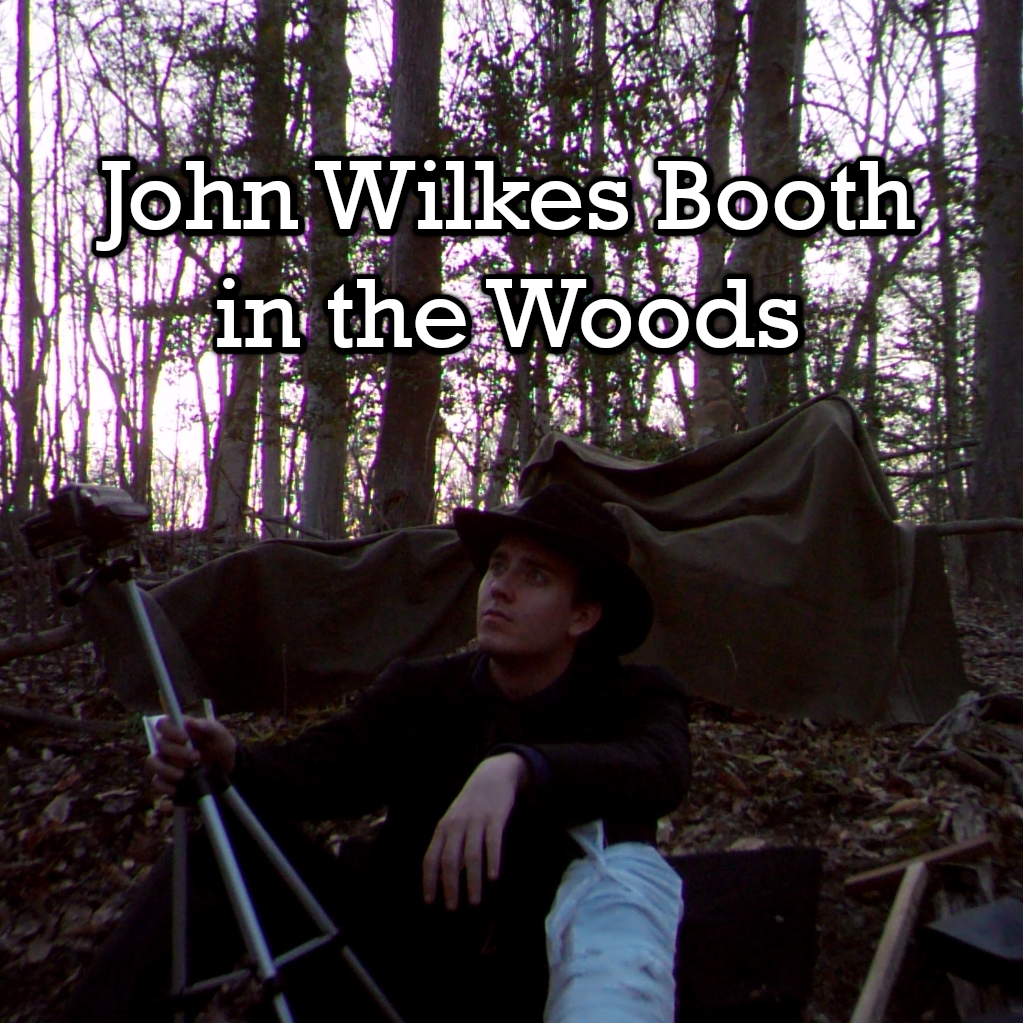


 LincolnConspirators.com
Recent Comments