Posts Tagged With: Research

In the Peanut Gallery

I’m very grateful to Joe Barry and his piece “Will Research for Peanuts,” which he recently contributed to this website. Through his research, Joe put together the known facts about Peanut John and documented some of the theories that exist about the identification of this young man who innocently held John Wilkes Booth’s horse behind Ford’s Theatre.

Inspired by Joe’s work, I decided to do a little bit of digging into Peanuts on my own, and I have come up with my own possible theory. While I originally received Joe’s approval to add my speculation to the end of his piece, I didn’t want to detract from his writing with my own, lengthy conjecture. Instead, consider this post to be my own addition to the Peanut John discourse.

The main issue with trying to research this young man who held Booth’s horse is a lack of a consistent name. He was nicknamed variations of “Peanut John” and “John Peanuts” by the stagehands and employees at Ford’s Theatre. Harry Clay Ford, one of the managing operators of Ford’s Theatre, admitted to not knowing his employee’s full name, stating, “We have a doorkeeper at the back door, John. I don’t know his last name. The boys call him ‘Peanut.’ He is expected to keep the back door, and he works around the theater.” To Ford’s credit, he did not have much in the way of interactions with Peanuts, as the boy usually acted under the direction of James Gifford, the chief carpenter of the theater.

In one of his statements to the authorities, Peanuts notes that “They generally call me John Peanuts around [the theater] because I used to peddle peanuts.” It was not uncommon for individuals to sell small treats and concessions such as peanuts and candy to theater guests. In fact, Peanuts was actually one of several boys who engaged in this practice.

For much of the Civil War years, Dr. Ithamer S. Drake had been employed as a clerk in the Census Bureau in Washington, D.C. During the latter part of his employment, Dr. Drake resided with his family on 9th Street. Just about a week before the assassination, the Drake family had moved back to the doctor’s home in Richmond, Indiana. After hearing of the national calamity in Washington, Dr. Drake wrote a letter to an acquaintance of his who still resided in the city. The recipient was William A. Cook, a clerk in the General Land Office in the Department of the Interior. Dr. Drake noted to Cook that, “My youngest boy was in the habit of going through the theater with other boys.” The doctor then recounted how this son, Frank, informed him that during his time around Ford’s Theatre, he had heard disloyal talk from the scene painter at the theater, James Lamb, at the time of the fall of Richmond, Virginia. Dr. Drake alluded to possible conversations between Lamb and John Wilkes Booth that he felt should be investigated. In the letter, Dr. Drake informed Cook that one of the boys his son hung out with at the theater was David Finney and that he should be questioned on the matter. 

With the permission of Col. John Foster, one of the special commissioners engaged in investigating the assassination, William Cook interviewed David Finney at his father’s home on the corner of 9th and H Streets. Finney, who was about 15 years old at the time, described to Cook that while he did not recall any disloyal statements from Lamb when the Confederate capital fell, he did recall Lamb chastizing some revelers on the night of the Grand Illumination to celebrate the Union’s victory on April 13th. David Finney pointed out that Frank Drake was more acquainted with the people in the theater since the doctor’s son was “allowed to sell ‘gumdrops’ etc. in the building.”

In this way, we know that Frank Drake acted as a sort of gumdrop and peanut boy at Ford’s Theatre. But he had left D.C. with his father shortly before the assassination, so we know he’s not our Peanut John. While in his statement to Cook, David Finney makes it seem like only Frank Drake was involved in the gumdrop trade, when Finney died in 1925, his obituaries noted that he also sold “candy and peanuts in Ford’s Theatre.” Moreover, these obituaries state that Finney was selling concessions the night Lincoln was killed and witnessed the events. In addition, one of Dr. Drake’s other sons, Albert, also told his father about the goings on at the theater, making it likely that there was a small cadre of boys who hung around the theater and made extra money selling gumdrops and peanuts.
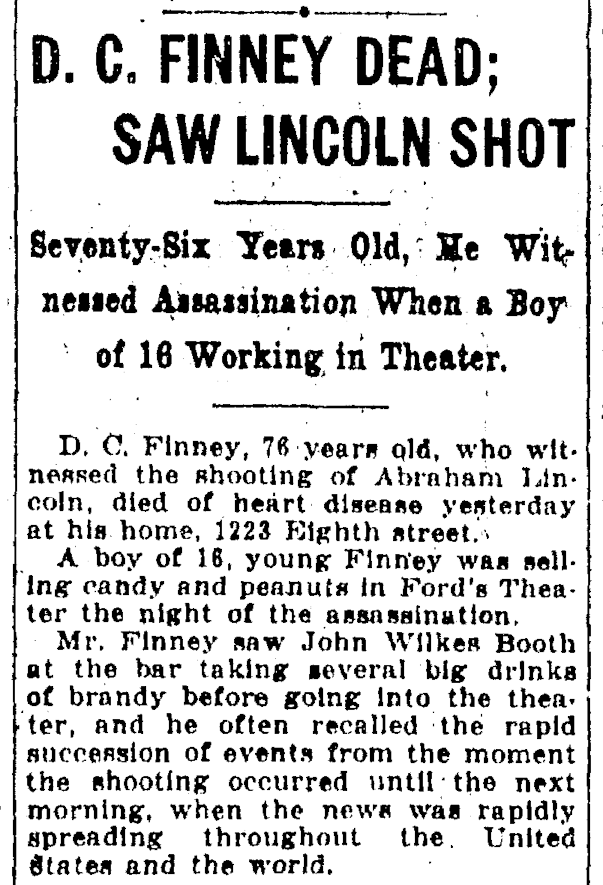
While Peanut John had received his nickname from selling peanuts around the theater, he had clearly advanced beyond this role at the time of the assassination, leaving the job to boys like David Finney and the Drake brothers. As noted by Harry Clay Ford, Peanut was tasked with guarding the stage door: “He is to keep all strangers out, everybody…His instructions are not to let strangers on the stage.” In his own testimony, Peanut described his role thusly: “I used to stand at the stage-door, and then carry bills in the daytime.” During the day of April 14, Peanuts also assisted in the decorating of the Presidential box. In short, Peanut John was a gofer of sorts, fulfilling any small task given to him by James Gifford or anyone at the theater. 

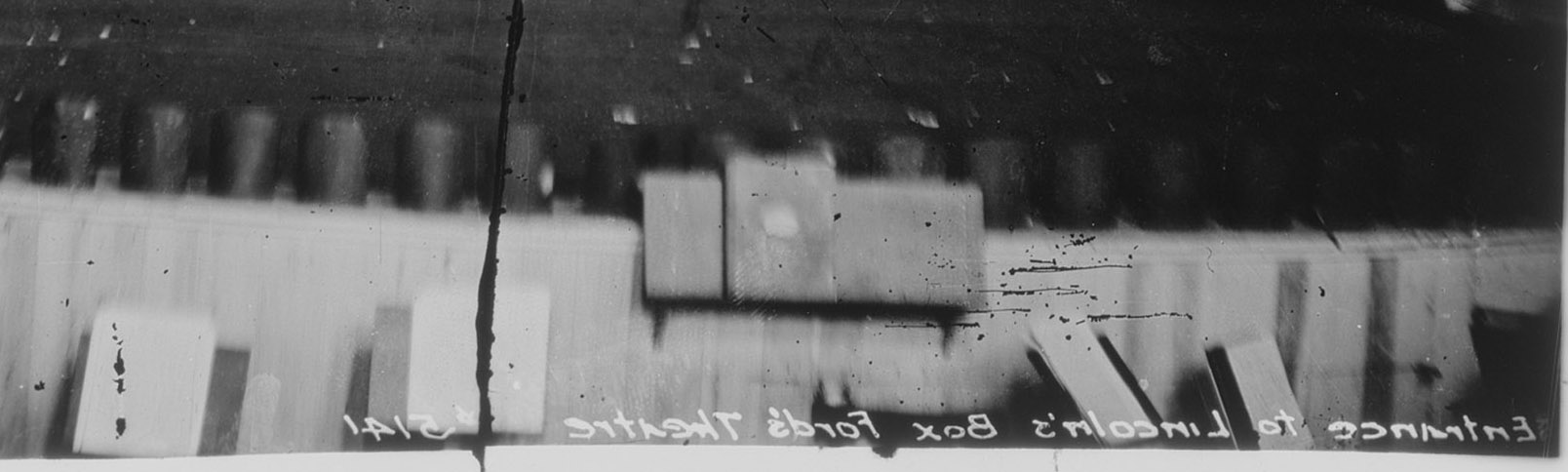
It’s worth pointing out that the stage door that Peanuts was tasked with guarding during performances is not the back door through which John Wilkes Booth entered. Rather, his place was located stage left on the south side of the building. A covered alleyway of sorts ran from Tenth Street all the way to the rear of Ford’s Theatre into Baptist Alley. This walkway separated Ford’s Theatre proper from the Star Saloon located just to the south. A side door of the Star Saloon led directly into this passageway, and it appears the Fords may have had an issue with bar patrons mistakenly opening the door directly onto the stage during performances. Therefore, Peanut John guarded this door, preventing anyone from accidentally interrupting a performance. When Peanuts was called by Edman Spangler, he abandoned his normal post to hold Booth’s horse directly behind Ford’s Theatre.
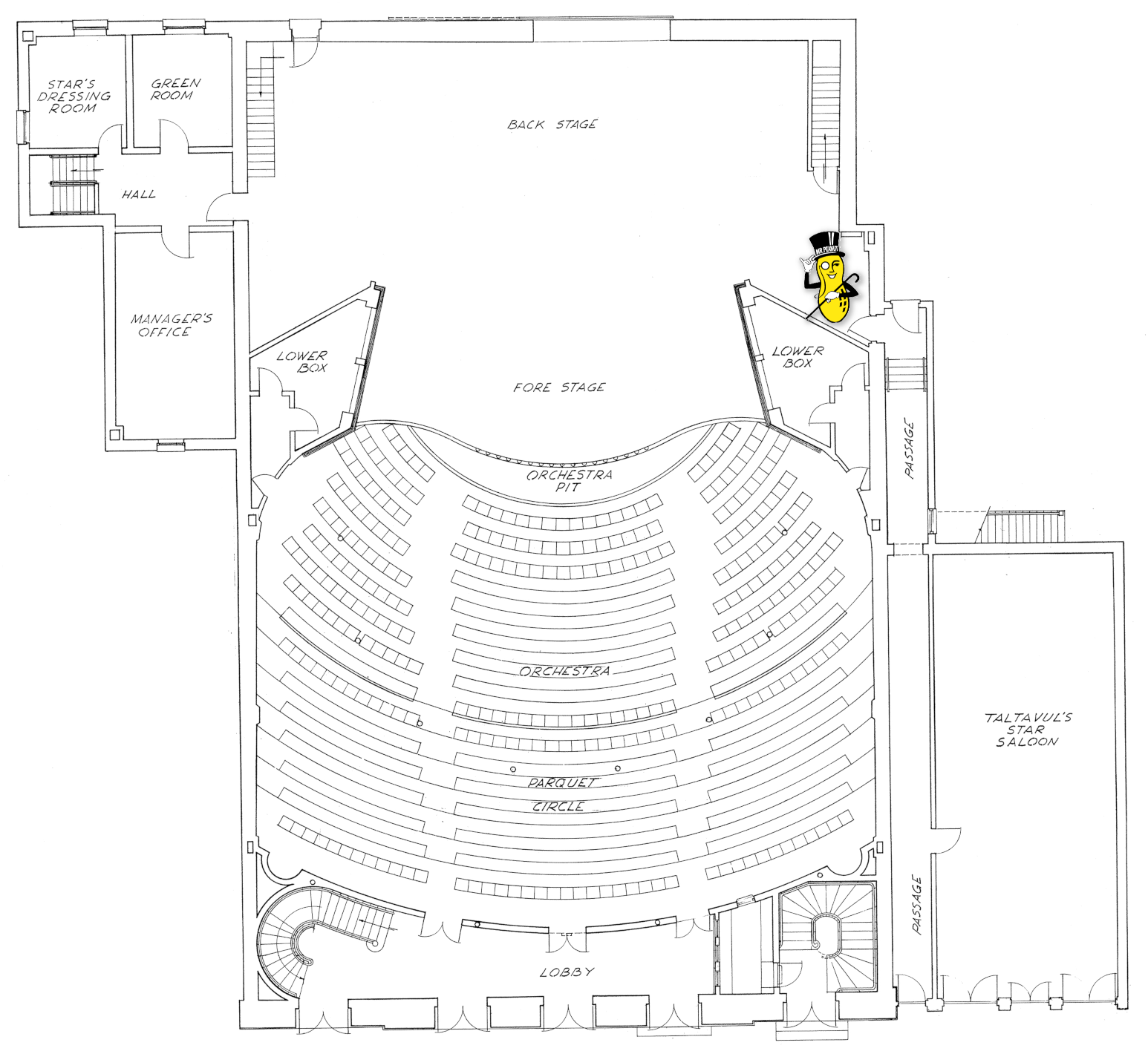
Location of Peanut John’s normal station, guarding the stage door at Ford’s Theatre

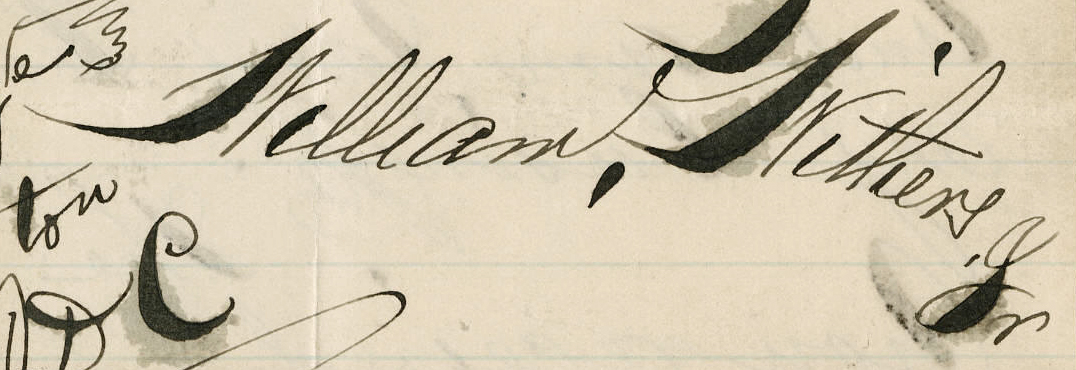
Prior to taking the stand at the trial of the conspirators, Peanut John gave two statements to the authorities. The first was on the morning of Lincoln’s death, April 15th. Edman Spangler was arrested around 6:00 am that day and taken to the police station on E Street between 9th and 10th. He had been brought in by Sergeant C. M. Skippon. As Spangler later recalled, “The sergeant, after questioning me closely, went with two policemen to search for Peanut John (the name of the boy who held Booth’s horse the night before) and made to accompany us to the headquarters of the police on Tenth street, where John and I were locked up…” After a period of time in confinement, both Spangler and Peanut were brought before Abram B. Olin, a Justice of the Supreme Court of D.C., who examined them individually and took down their accounts. Peanut John dictated two pages to Justice Olin. In this document, his name is given as Joseph Burrough. As noted by Joe in his article, he does not sign this name, however. Instead, he merely puts an “X” as his mark. Generally speaking, making an X implies that the person could not write their own name and that they may be illiterate. 

Due to Peanut not signing his name, Justice Olin needed a witness to swear to the fact that Peanut had, in fact, made the X himself. For this, Olin recruited the assistance of another witness who was awaiting examination. William T. Kent had been present at Ford’s Theatre and witnessed the shooting. After the call went up for help, Kent made his way into the Presidential box to render aid. When Dr. Charles Leale required a blade of some sort to cut open Lincoln’s shirt, Kent provided his penknife. After leaving the theater, Kent realized that he had lost his keys in the confusion. He was granted access back into the theater and searched the box. During his search, Kent came across the derringer used to shoot Lincoln. It was dropped in the box and kicked into a corner during the work to save the President. Kent took the gun and turned it over to the police, and he was now waiting his turn to tell his story to Justice Olin. The Justice thus had William Kent act as a witness to Peanut’s “signature” on this statement. Then it appears that Peanut John was released. 

Nine days later, Peanut was interviewed again about the circumstances and people at Ford’s Theatre. This conversation on April 24th was transcribed onto six pages. The name given for this interview is John C. Bohrar, though there is no signature section at the end (X or otherwise). In this interview, Peanut gives more details about his caring for Booth’s stable behind Ford’s Theatre, and the circumstances of how he ended up holding Booth’s horse on the night of the assassination. While the name John Bohrar is different from Joseph Burrough, it’s clear that the same person was interviewed in both statements.

In his article, Joe explored the different Joseph Burroughs/Borrowses that have been suggested as possibly being “our” Peanut. Michael Kauffman theorized in American Brutus that Peanut might have been a son of Dr. Joseph Borrows, who lived right on E Street near Ford’s Theatre. But, thus far, we can’t seem to prove that Dr. Borrows had a surviving son at the time of the assassination. Fellow researcher Steve Williams tracked a Joseph A. Burroughs, who lived in Tenleytown (a neighborhood in the far northwest quadrant of D.C.) and later moved to Baltimore. He would have been about the right age for the teenage Peanuts, but this Burroughs is shown to be literate. 

While these possibilities are interesting, I would like to suggest that they may be based on a wrong assumption. The names we’ve explored have largely just been variations of Burroughs, Burrows, and Borrows. But when we look at the documents of Peanut’s two statements, neither of them put an “S” at the end of his name. He’s Joseph Burrough in the first one, and John Bohrar is the second. So, where is the ending S coming from? The answer, I think, is the trial transcript.

It was quite an undertaking to document the trial of the Lincoln conspirators. It was the duty of several court reporters to take down every word spoken in the courtroom by the commissioners, lawyers, and 347 unique witnesses. The court reporters listened to the words spoken in the trial room and took them down in shorthand. Between each session, the group would then painstakingly translate their notes into longhand and provide a transcript to the commissioners and lawyers the next day. They also provided copies to the newspapers for them to publish the trial, usually a day or two behind. As impressive as this system was, it wasn’t perfect. The shorthand process was done phonetically. Rather than taking down complete words or ideas, the different phonemes, or sounds, of words were taken down and then later transcribed. While this system worked well for much of the trial, one area where it caused mistakes was the spelling of names. When I completed my Trial Project a few years ago, completely documenting and summarizing the conspiracy trial into an easy-to-digest annotated form, the biggest bumps in the road were trying to determine the actual names and spelling of several witnesses. 
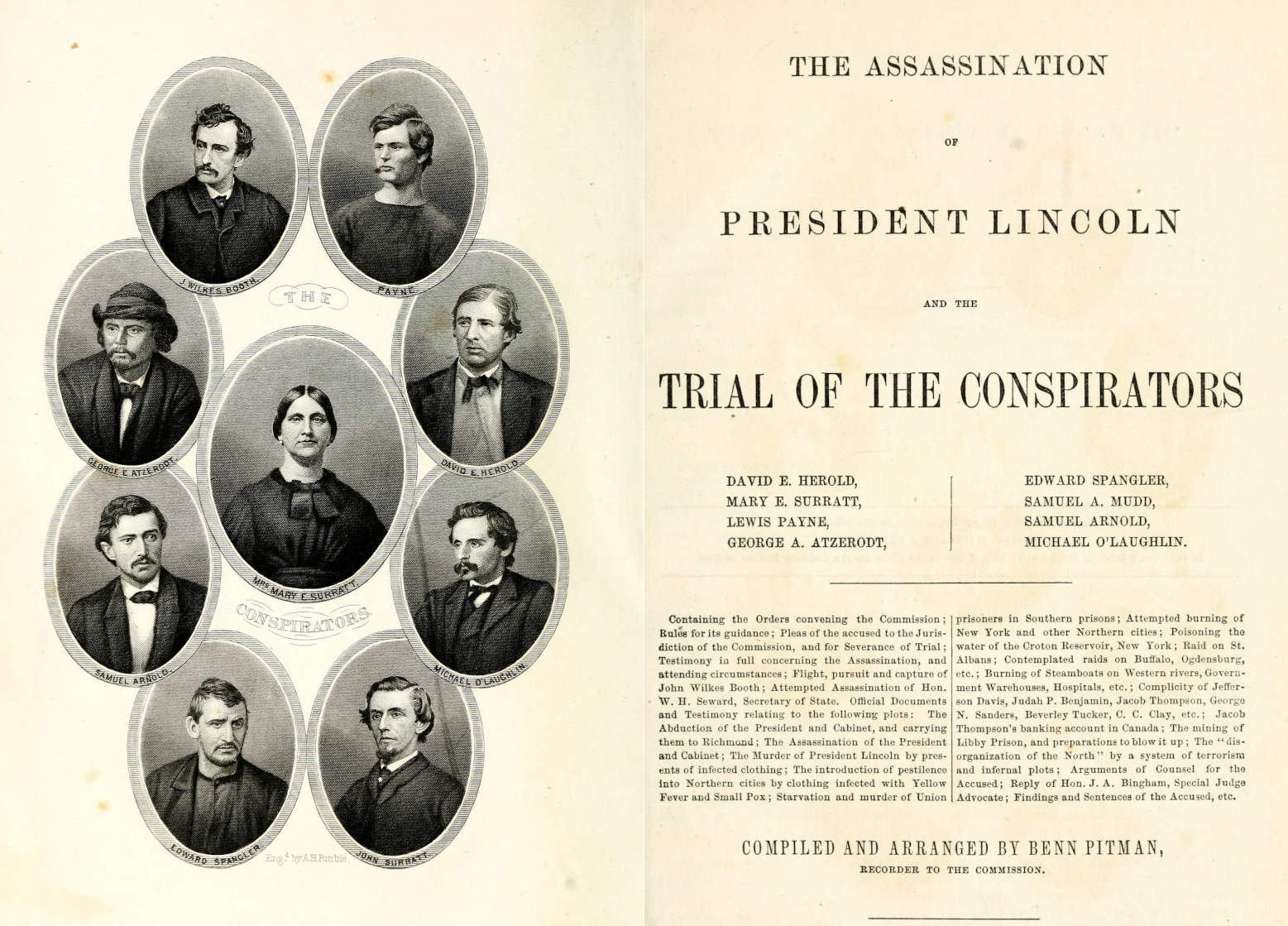
For example, two of the Ford’s Theatre employees, Jake Rittersbach and John Selecman, are given the names of Ritterspaugh and Sleichmann in the trial transcript. Dr. William Boarman is Dr. William “Bowman,” John Cantley is John “Cantlin,” and William Keilholtz is William “Keilotz,” just to name a few more.

Different versions of the trial transcript exist. Benn Pitman published the “official” version of the trial as a single-volume book. He did this by essentially rewriting witness testimony into long paragraphs of text rather than the actual question-and-answer format that occurred when the lawyers were asking their questions to each witness. Because so much of the original content was taken out to reduce the trial to a single volume, the Pitman version is the least reliable trial transcript. But it is also the most well-known and widely available version. In the Pitman version, Peanut John’s name is given as Joseph Burroughs (with an S). The prevalence of Pitman’s transcript is probably why we have come to accept Peanut’s name to be Joseph Burroughs. However, given the numerous naming mistakes that occurred during the trial, we should be cautious about trusting this spelling, especially given the fact that neither of Peanut’s two statements put an S at the end of his name.

You may be thinking, “So what? Burrough or Burroughs, how does that help us?” Well, the reason I’m going into this is that I think the S has thrown us off. We’ve been looking for a Burrough/Borrow-like name that ends with an S, actively discounting any options without it. But if we free ourselves from the assumption that Peanut’s name has to end with an S, then there is an option that we have overlooked. It’s a small variation of the name given on the second interview Peanut did with the authorities. Let’s explore the possibility that Peanut John’s last name was actually Bohrer.

Aside from Peanut’s second interview with authorities on April 24, another piece of evidence that contributes to the speculation that Peanut’s last name might have been Bohrer is an article that was published in the D.C. Evening Star newspaper in 1928. The article recounted how a 1865 police report book had recently been unearthed from “a mass of debris in the subbasement of the Municipal Building.” The book contained handwritten logs from the Metropolitan Police Force from the time of Lincoln’s assassination. It describes some of the items that the police force took possession of after the assassination, as well as a list of those who came into the station to make reports in the hours after Lincoln was shot. This logbook also documented the aforementioned arrest of Edman Spangler and the bringing in of “John Borer (or Burrough) known around the opera house as ‘Peanut John.’” While the name isn’t a perfect match, it is another period document showing a last name without an S that is tantalizingly close to Bohrer.

Bohrer is a German name and, phonetically speaking, is not that far removed from a reasonable pronunciation of Burrough. Given that the Bohrar and Burrough spellings were both used in recording Peanut’s statements, we know that the way he pronounced his name had elements of each. Bohrer is a unique last name, but not an unheard-of one in the Washington, D.C. area. Various Bohrers had lived in the region for many years. 

One of the Bohrers who lived in the area was named Benjamin Schenckmyer Bohrer. He was born in Montgomery County, Maryland, in 1788, but moved to the then-independent city of Georgetown (now a neighborhood of D.C.), where he attended school and became a doctor. Except for a few years when he acted as a medical professor at Ohio Medical College in Cincinnati, Dr. Bohrer spent most of his life caring for the residents of Georgetown. In 1835, Dr. Bohrer was called to examine Richard Lawrence, the house painter who had attempted to assassinate President Andrew Jackson. Dr. Bohrer testified that he felt that Lawrence was “totally deranged” on the subject of President Jackson. Partly due to testimony from Dr. Bohrer and other medical professionals, Lawrence was found not guilty by reason of insanity for his attempted attack on President Jackson. Lawrence was committed to various institutions, eventually making his way to the Government Hospital for the Insane, later renamed to St. Elizabeth’s Hospital. Dr. Bohrer had helped establish this hospital. Dr. Bohrer died in 1862 and his death was greatly lamented in Georgetown, where he had been celebrated for ministering to “three generations in many families in the ancient town.”

Dr. Bohrer and his wife, Eliza Virginia Loughborough, had six children. One of the Bohrer sons was Benjamin Rush Bohrer, born about 1823. In order to avoid confusion with his physician father, Benjamin Jr. often went by his middle name of Rush or by his initials B. R. Bohrer. For a few years, this younger Bohrer ran a livery in Georgetown, renting out horses, buggies, and carriages to his neighbors. In 1848, Rush married Margaret Loretta Sullivan, a Maryland native. The couple had three children together, two of whom were born in D.C. The youngest child was born in Ottumwa, Iowa, where the couple had relocated for unknown reasons. It appears that it was in Iowa that Rush and Margaret’s marriage ended. In 1856, Margaret remarried a widower named Rudolph Bollinger and not long after moved to Brown County, Kansas. In the 1860 Federal Census, Margaret and her three children by Rush are shown living with their mom and stepfather in Claytonville, Kansas. Rush Bohrer had returned to Georgetown and was residing with his father, the doctor, who died two years later.

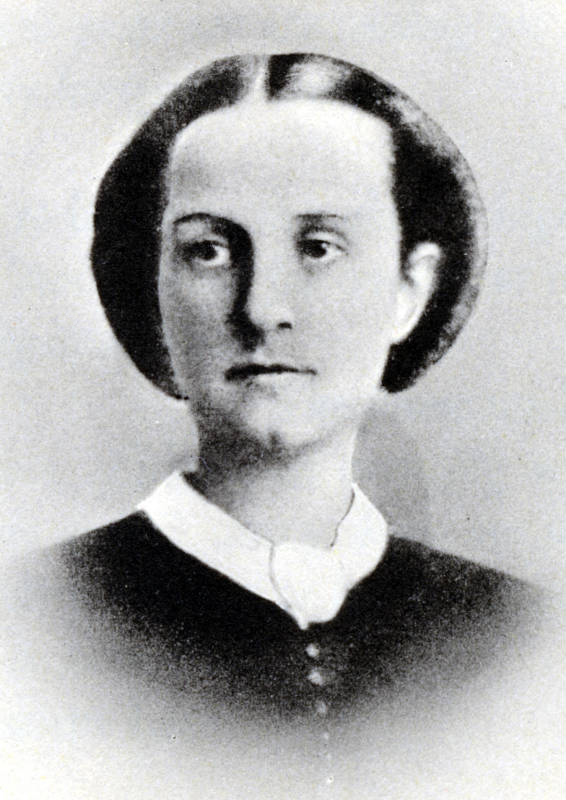
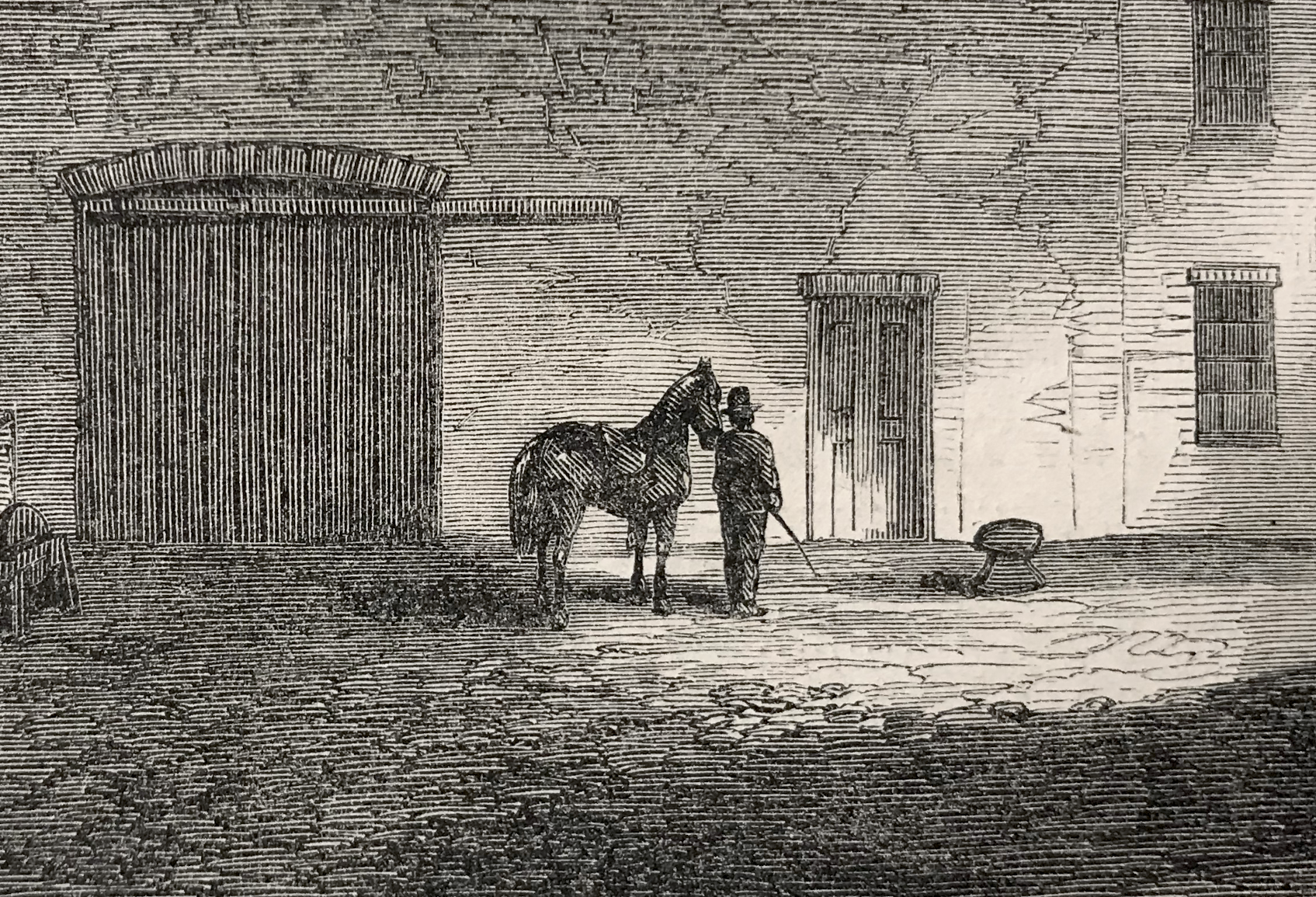
You may wonder why I’ve chosen to share all of these details about these particular Bohrers. Well, it’s because of my own theory that Peanut John might actually be the middle child of Benjamin Rush Bohrer and Margaret Loretta Sullivan. His name was John Jeremiah Bohrer, and this is a picture of him as he would have appeared at about the time of Lincoln’s death.

John Jeremiah Bohrer was the middle child of Rush and Margaret Bohrer. He was born on October 17, 1849, in Washington, D.C. As noted, John’s parents split up when he was young, and he seemingly resided with his mother and stepfather in the years after his parents’ divorce. In September of 1865, John’s name can be found in the Kansas state census, residing with his mother, stepfather, younger brother, and stepsiblings in Brown County, Kansas. In 1875, John married Susan Blackburn in Eufaula, Indian Territory (now Oklahoma). Susan was a member of the Choctaw Nation, being 1/16 Choctaw according to records. John Bohrer had likely made his way from Kansas to Indian Territory via the newly consolidated Missouri, Kansas and Texas Railway. He and Susan made their residence in the Choctaw Nation. They had six children together. At some point, John changed the spelling of his last name to Bohreer. All of John and Susan’s children were given the last name of Bohreer. Susan died in 1903, leaving John a widower. Oklahoma became a state in 1907, and the former Choctaw land on which John Bohreer had lived since about 1874 became part of Pittsburg County. In 1909, John married Mary Lynch, a widow 25 years his junior. John and Mary had two children together.

For the vast majority of his adult life, John Jeremiah Bohreer worked as a farmer, residing within a mile and a half of the same tract of land in Pittsburg County, Oklahoma. When he died on May 8, 1922, at the age of 72, he was remembered as one of the pioneers in the region, “beloved and respected by all.”
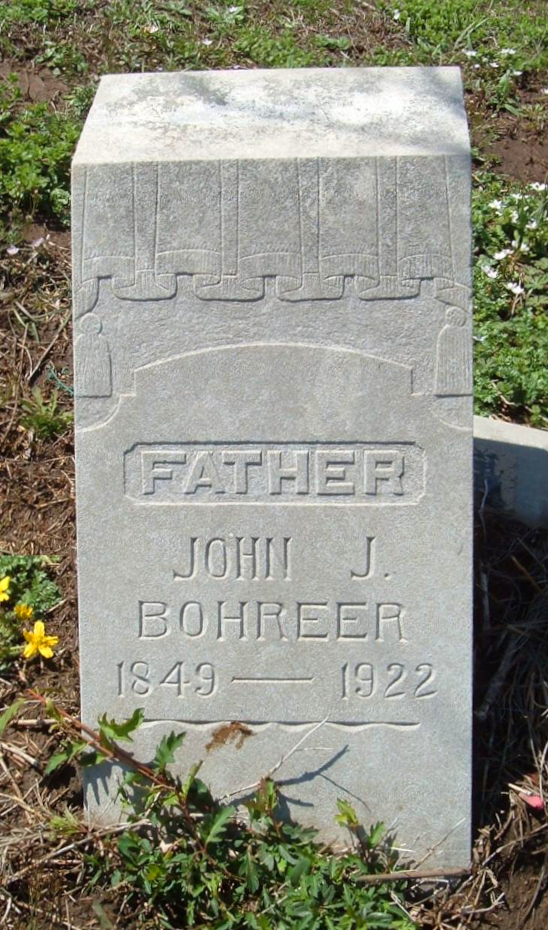
Now, I want to reiterate that I’m merely speculating that John J. Bohre[e]r might have been Peanut John. Much like Michael Kauffman’s theory about Peanut John being the son of Dr. Joseph Borrows, or Steve Williams’ exploration of the Joseph A. Burroughs who lived in Tenlytown, I can’t prove it. And, like those other examples, my theory also has issues. Still, here’s my speculative case.

1. He’s around the right age

John Jeremiah Bohrer was born in October of 1849. This would have made him 15 years old at the time of Lincoln’s assassination. William Kent, the witness who swore to Peanut’s X on his first statement, later estimated that Peanut was about 17 years old when he interacted with him. Bohrer’s age puts him right in the sweet spot and would have made other boys like David Finney and Frank Drake his peers.

2. His parents were not together

On the statement where Peanut’s name is given as “John C. Bohrar” it states that he is “living with his father.” At the time of Lincoln’s assassination, John Bohrer’s parents were divorced and living in different states. His mother, Margaret Bollinger, resided in Kansas while his father, Benjamin Rush Bohrer, was living in Georgetown.

3. John Bohrer changed his last name

As noted, John changed the spelling of his last name from Bohrer to Bohreer (which changed the pronunciation from Buh-rur to Buh-rear). During my research, I had a conversation with John’s granddaughter. She and the rest of the family are not sure why John changed his last name. Could it have been to distance himself from the history associated with his prior last name?

4. John Bohreer was barely literate

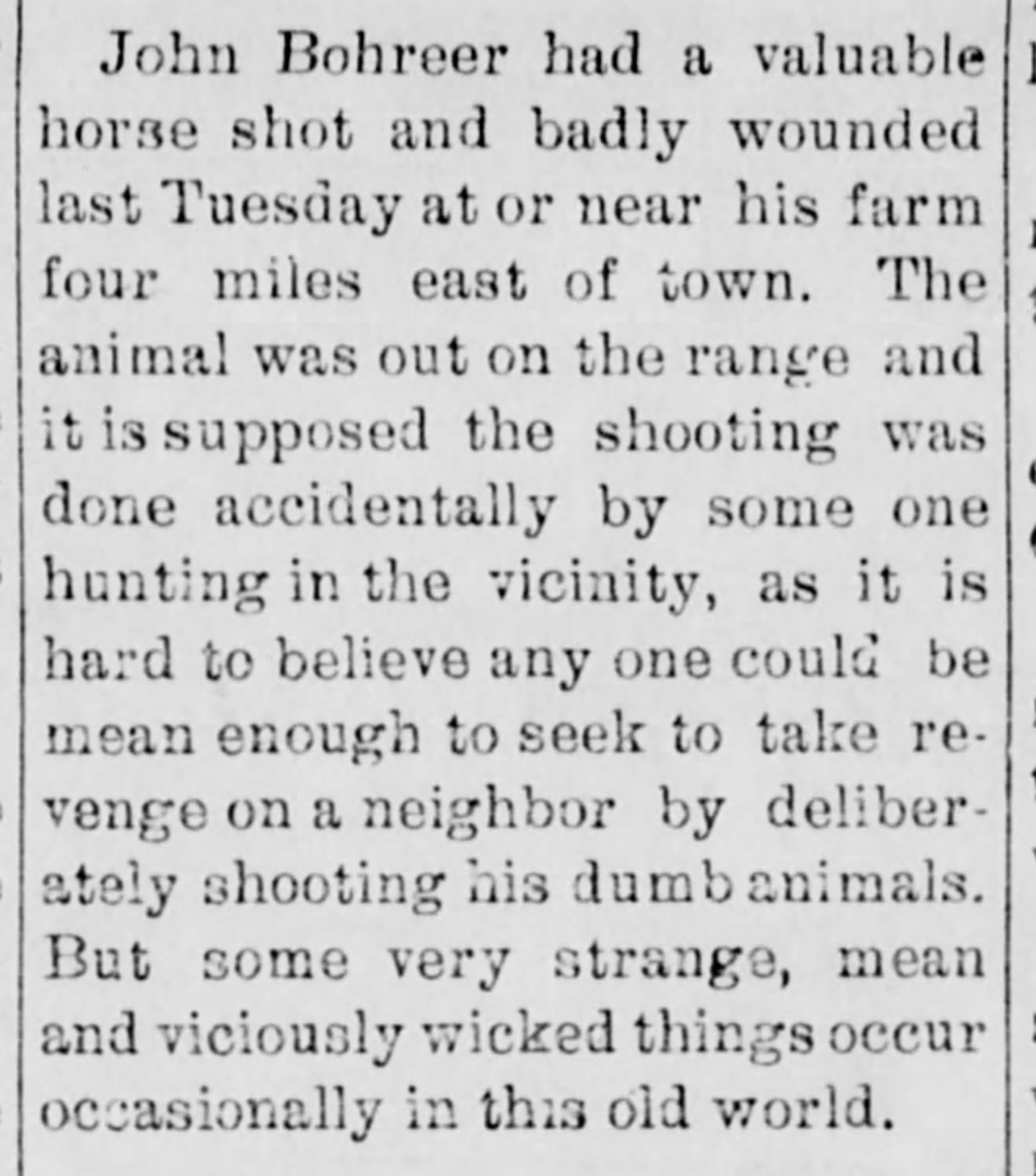
In the first statement Peanut gave, he signed the document with an X, implying that the boy was unable to sign his own name. We took this as evidence that Peanuts was likely illiterate. In the years just before his wife Susan’s death, John Bohreer applied to become a member of the Choctaw Nation through marriage. He did this to ensure land rights for himself and his children. He was granted acceptance into the Choctaw Nation and received several land grants to increase his holdings. Several of the documents associated with his application and land grants are available to view on Ancestry. In these records, it’s clear that someone other than John Bohreer is filling out the paperwork. But Bohreer was required to sign the documents. Here are some examples of his signature:

Bohreer was only in his 50s at the time these documents were signed. The shaky and inconsistent lettering across the signatures implies that he struggled to write his own name. If Bohreer was Peanuts and had spent part of his teenage years working at a theater rather than getting an education, it would make sense that that was the best signature he could give in later life.

5. The real Peanut John vanished after the assassination

Thomas Bogar writes in his book Backstage at the Lincoln Assassination that, after finishing his testimony at the trial of the conspirators, Peanut John, “stepped out of the witness box and out of the pages of history.” The whole reason we are having this discussion is that whoever Peanut John was, he seemingly failed to ever discuss his brush with history after leaving the witness stand. One would think that, in the 160+ years since the death of Lincoln, someone somewhere would have come across a newspaper article in which the real Peanut John told his story. The lack of any such document or account implies that the real Peanut John didn’t want to talk about this event. While Peanut was innocent of knowing what John Wilkes Booth was planning, he still held the assassin’s horse, unknowingly assisting in his escape. According to William Kent’s recollection, when those around Ford’s Theatre learned what Peanuts had done, “the infuriated crowd pounced on the boy, and but for the fact that a police station was a block away he would have been lynched. There were many cries of ‘Hang him.’” Thus, the assassination was an exceedingly traumatic experience for this young man. If I were Peanuts, I would want to get as far away from the scene of the crime as possible, as soon as I could. How much farther away from the event could you get than later moving to the frontier, residing in Indian Territory, and changing your name?

It’s worth mentioning that one of the actors in “Our American Cousin” later commented on the fate of Peanut John. Actress Kate Evans had the small role of Sharpe, the maid, in the last production Lincoln saw. She later moved to Chicago and was interviewed about the tragic events of April 14, 1865, several decades later. In her dated memory, Evans erroneously claimed that “Both Spangler and Peanut John, following the trial of the conspirators, were sent to Dry Tortugas, but [were] subsequently pardoned.” Peanut John was never sent to Fort Jefferson like Edman Spangler.

Of course, there are still a few flaws in my speculation. As noted before, John Bohrer is documented as living in Kansas with his mother in the 1860 Federal Census and the September 1865 state census. This doesn’t preclude the idea that, during the Civil War years, John travelled back to D.C. to live with his father, but I don’t have any records to support this. Another issue is that the statement that says Peanuts was living with his father at the time of the assassination gives the address as “511 Tenth Street.” I have not been able to find a record that places Rush Bohrer at this address. In 1866, he was in the D.C. directory, still living in Georgetown. In 1865, 511 Tenth Street was the home of a woman named Louisa Brent, the widow of Thomas. What connection she may have, if any, with Peanuts or the Bohrers is unknown. In addition, we have the other records that give Peanut’s first name as Joseph, rather than John. I can’t explain that repeated discrepancy if John Jeremiah Bohrer is the real McCoy.

Still, I speculate that John Bohrer could have been Peanut John. Perhaps during the Civil War years, John went to live with his father, Rush Bohrer. Even if they started off in Georgetown, young John would have wanted to explore the capital city. There were horse-drawn buses that made transportation between the two adjacent communities easy and fast. Somehow, during his visits, John became involved in selling peanuts and other concessions at Ford’s Theatre. This eventually led to him taking on more significant roles around the theater, such as carrying playbills around the city and guarding the stage door during performances. Perhaps because of this new job, he lived away from Georgetown and found lodging further down Tenth Street. John eventually became acquainted with the actor John Wilkes Booth and helped care for the stable Edman Spangler had helped construct for him in the alley behind the theater. Then April 14, 1865, came, and John’s life changed forever. After nearly being lynched for holding the assassin’s horse, John provided two statements to the authorities. In May, he testified twice at the trial of the conspirators, answering questions about his former coworker, Edman Spangler. Once his testimony was given and he was free to go, John decided to leave town. He made his way back to his mother and stepfather in Kansas and was enumerated with them in the state census in September. In the 1870s, the now-adult John took the train south from Brown County to Indian Territory. He met a girl, married her, and set up a new life with a new last name on the frontier. He spent the rest of his life as a respected pioneer and settler in what would become Oklahoma, dying in 1922.
Even if John Jeremiah Bohreer isn’t our guy, I think researchers need to start branching beyond the traditional Burroughs/Borrows name when looking for Peanuts. The assumption that his last name must end with an ‘S’ comes from the unreliable trial transcript, whereas the two best sources we have omit an ‘S’ altogether. If we free ourselves from this constraint, who knows how many other folks with similar-sounding names we might be able to find and add to the old Peanut gallery.
Categories: History | Tags: , , , | 5 Comments

Will Research for Peanuts by Joe Barry

I’m so pleased to welcome another guest contributor to LincolnConspirators.com. The following piece was written by Joe Barry, a historical researcher currently working on a book about Joseph B. Stewart. On April 14, 1865, Stewart was seated in the front row of Ford’s Theatre, taking in the play. Stewart heard the sound of a gunshot and witnessed a man jump from the Presidential box to the stage below. While the rest of the audience remained frozen in their seats in confusion, Stewart was the first to take action. The D.C. lawyer, noted as one of the tallest men in Washington, climbed over the orchestra pit, onto the stage, and gave chase to the assassin. Joe Barry has spent the last few years uncovering many more interesting stories in the life of Joseph Stewart, a man he describes as the Forrest Gump of the 19th century. Having already previewed one of Joe’s chapters about the assassination, I’m very much looking forward to seeing the final product in the near future. You can learn more about Joe and his upcoming book by checking out his website JoeBarryAuthor.com


Will Research for Peanuts!

By Joe Barry

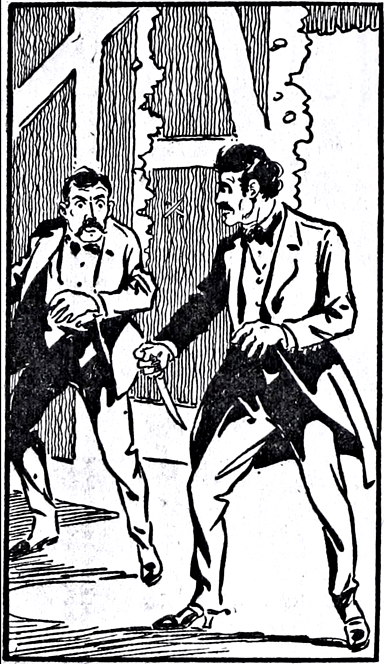
Joseph Burroughs holding John Wilkes Booth’s horse, from the May 13, 1865, Frank Leslie’s Illustrated

One of the more enigmatic figures of the Lincoln assassination is Joseph “John Peanuts” Burroughs, the young errand boy at Ford’s Theatre who held John Wilkes Booth’s horse prior to the assassin’s escape. Burroughs’s age is unknown, although estimates vary between fourteen to seventeen years old. In his statement to Justice Abram Olin on April 15, 1865, his name was dictated as Joseph Burrough. However, the conspiracy trial records also list Borroughs, Burrow, and John C. Bohraw—which are likely phonetic transcription errors. At the theater, he soon earned the nickname “John Peanuts” because he peddled peanuts in between acts. Some newspapers after the assassination even misreported “John Peanuts” as “Japanese.”[1]

Burroughs’s experience in the assassination was brief and traumatic. After Booth asked for the stagehand Edman “Ned” Spangler to hold his horse, Spangler begged off owing to his scene shifting duties, and the task fell to Burroughs. After approximately fifteen minutes, Booth burst through the back door into Baptist Alley and rewarded Burroughs’s loyalty by hitting him on the head with the butt of his knife and kicking him away from his horse. Across Peanut’s multiple pieces of testimony, he described handling horse-related duties for Booth over the previous few months, of working with Spangler in fixing the president’s box at Ford’s Theatre, and of Spangler cursing the president over the war.[2]

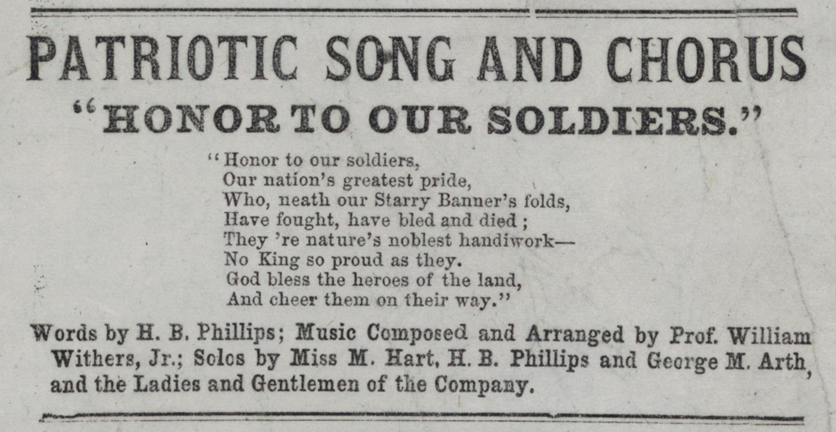
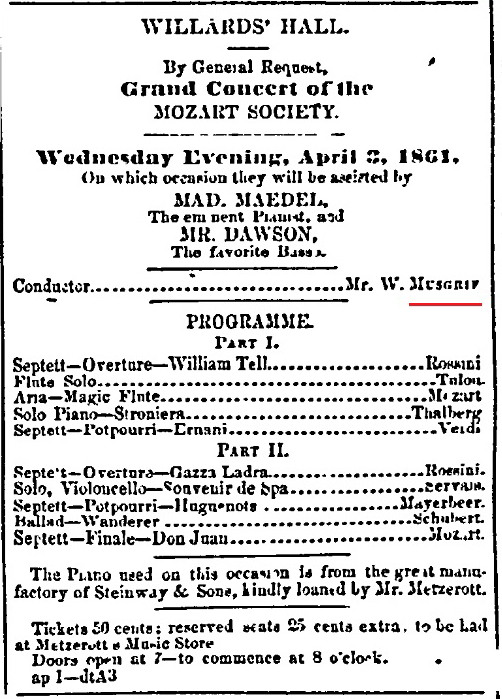
Throughout the years, a consensus emerged that Burroughs was Black and dull-witted. The best evidence indicates he was neither. Burroughs signed his second statement on April 24th with an “X”, which could suggest he was illiterate, but his testimony reveals he was intelligent, articulate, and well-versed with horses. The orchestra director, William Withers, and former police superintendent, Almarin C. Richards, both described him as Black, but these accounts were decades old. More conclusively, the trial transcripts for Burroughs lack the “(Colored)” description preceding his name in keeping with the discriminatory practice of the period. John F. Sleichmann, the assistant property manager at Ford’s Theatre, testified that Booth, Burroughs, and a few others shared drinks at the nearby saloon on the day of the assassination. Yet, Blacks were not allowed to sit down in such restaurants at this time, and an inveterate racist like Booth would not associate with a Black person. Nevertheless, contemporary newspaper illustrations depicted Burroughs as Black.[3]

Burroughs watching Joseph B. Stewart chase Booth, from the April 29, 1865 National Police Gazette

In American Brutus, Michael Kauffman theorizes Burroughs was the son of Doctor Joseph Borrows, III, a prominent physician in Washington, D.C. In his April 24th statement, Burroughs stated he was living with his father at 511 Tenth Street. Although this corresponds to the Ford’s Theatre address since at least 1948, prior to 1869, this address was south of Pennsylvania Avenue near the present-day block of 317-337 Tenth Street NW. The address for the Army Medical Museum in 1868 (housed within the theater building) was 454 Tenth Street. Notably, the city directory listed Dr. Borrows’s address as 396 E Street north, which abutted Baptist Alley behind Ford’s Theatre. The Borrows name and his close proximity to the theater make for a compelling connection—even if it does not illuminate Burroughs’s subsequent actions and movements.[4]

However, the Dr. Borrows theory has shortcomings. The reference to Peanuts living with his father implies the mother was absent. Yet, Dr. Borrows had a wife, Catherine, who outlived him. Further, the 1860 census for the Borrows household includes four females, but no son. Tragically, Catherine delivered a stillborn boy, Joseph, in 1850—a year after their five year-old daughter died. As author Susan Higginbotham has noted, a doctor’s son would be in school and not selling peanuts and running errands at a theater.[5]

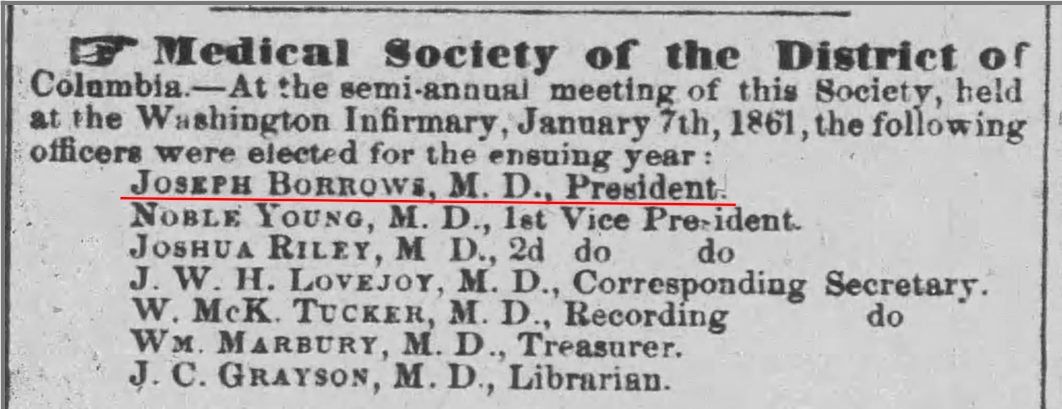
Even still, Dr. Borrows’s obituary in 1889 provides a clue that may explain a potential connection with Peanuts. The doctor was an eminent physician who served for several years as president of the Medical Society of the District of Columbia. His obituary in the Evening Star notes: “There was probably no more popular physician or man in the District than Dr. Borrows, and hundreds of children were named for him in families he attended through, in some instances, four generations.” It is possible Burroughs received assistance from Dr. Borrows and perhaps even stayed at his residence in the same itinerant manner as at Ford’s Theatre. Similarly, Ned Spangler kept a boarding house for supper but mostly slept inside Ford’s Theatre.[6]

Dr. Joseph Borrows was a leading Washington, D.C physician, Daily National Intelligencer, January 9, 1861

Along similar lines of a father-figure role, Thomas Bogar, author of Backstage at the Lincoln Assassination, posited in Roger Norton’s Lincoln Discussion Symposium that Ford’s Theatre stage manager John Burroughs Wright might have semi-adopted Joseph Burroughs and gave his middle name as Peanut’s surname. In 1915, Wright’s wife, Annie, referred to Peanuts as “a simple minded but good natured street waif who worked all day and half the night about the stage.” The Wrights lived at the Herndon House on the corner of F and Ninth streets, only one block to the rear of the theater. (This is the same building Lewis Powell stayed at, and where Mary Surratt called on him.) If the Wrights did play the role of surrogate parents, it was not enough to keep Peanuts from roaming.[7]

Ford’s Theatre stage manager John Burroughs Wright and his wife, Annie

After the assassination, Burroughs was deterred from providing a statement to the police due to the mob accusing anyone entering or departing the police station of being a conspirator. Burroughs had to be especially cautious once it became known he had held Booth’s horse, and one eyewitness recalled a policeman escorting Peanuts into the station. No parental figure appeared on his behalf.[8]

More proof of Burroughs’s independent wanderings is found in Judge Advocate Henry L. Burnett’s May 9, 1865, letter to Colonel Lafayette C. Baker relaying Secretary of War Edwin Stanton’s order “that the boy Peanuts be placed in confinement in some comfortable place that he may be forthcoming when wanted.” Again, if Burroughs had the protection of his parents and a permanent roof over his head, he would have been readily available for questioning and not require government quarters. Regardless, Burroughs avoided any further statements or publicity after his conspiracy trial testimony.[9]

The key question in tracking down Peanuts is whether he stayed in Washington, D.C. or left the capital. To this end, researcher Steve Williams has found an intriguing lead on a Joseph Alexander Burroughs from the Tenleytown D.C. suburb and of the correct age to be Peanuts. This Joseph Burroughs was listed as a farmer, married Mary Elizabeth Burroughs in Washington, D.C. in 1873, and moved to Baltimore shortly thereafter. After settling in Baltimore, this Joseph is listed as a laborer —thereafter a produce seller—and favored the Burrows surname. Joseph and Mary had three daughters and two sons. Of note, he was definitely literate, and his son, Joseph Cornelius, readopted the Burroughs surname. Joseph Burrows died in Baltimore in 1931.[10]

Joseph Burrows of Baltimore from the 1880 Census. Could this be Peanuts?

If Peanuts is not this Joseph Burroughs from Tenleytown, then he likely departed Washington, D.C. before the 1870 census. Bogar correctly notes Burroughs and the other backstage employees had highly transferable skills to find jobs in any city. In the frequently shortened lifespans of the nineteenth century, it is also possible he died early. If Burroughs had a family, he bucked the trend of those associated with the assassination to have their (often highly exaggerated) exploits published in their obituaries. Given the trauma of being an unwitting accomplice to President Lincoln’s assassination, it is understandable if, for the remainder of his life, Burroughs simply wanted to be left alone.[11]

In the decades following the assassination, “Peanuts” resurfaced in random locations, including Washington, D.C., New York, and Massachusetts—but these sightings seem spurious. In 1887, a Louisiana newspaper mentioned Peanut John was living in Shreveport and was known as “Mixie.” In 1930, an elderly Black man appeared at a Washington, D.C. fire station and showed a scar on his head supposedly from Booth’s knife. A formerly enslaved man named Nathan Simms told a tall tale of being John Peanuts and actually helping Booth dismount outside of Surratt’s Tavern later that night. In 1960—twenty six years after Simms’s death—the Boy Scout Troop of Marshallton, Pennsylvania, raised money for a gravestone that told his story. In 1980, A. C. Richards’s biographer, Gary Planck, cited the naturalist John Burroughs as Peanuts.[12]

The most colorful Peanuts imposter was an unwilling participant: a diminutive street person of Italian descent named Joe “Coughdrop” Ratto who sold cough drops near Ford’s Theatre. Local residents taunted him mercilessly, asking if he had held Booth’s horse—which would throw him into a violent rage. Stories of Ratto emerged as early as 1909, and likely fed follow on narratives that John Peanuts was Italian. An imaginative account from 1923 claimed the Italian ambassador helped free him from prison after the assassination, in which Peanuts returned the favor by serving in the Italian Army.[13]

Joe “Coughdrop” Ratto, forever taunted as “John Peanuts”

It need not be highlighted each theory relating to Joseph “John Peanuts” Burroughs relies upon healthy doses of speculation. With multiple names, a single address, and a publicity-shy witness who faded into history, we have limited material to work with. Indeed, the renowned researcher James O. Hall assembled a file on Peanuts, and on the outside cover summarized his findings: “I was never able to trace the boy.” In the end, we are left with the same plea from the Surratt Courier in 1989: “Will the Real ‘Peanuts’ Burroughs Please Rise?!”[14]

Only ghosts remain: Baptist Alley in the years after the assassination


[1] The official record of the commission compiled by Benn Pitman lists the name as Joseph Burroughs. The conspiracy trial transcripts show multiple references to Peanut(s), John Peanut(s), and Peanut(s) John. Michael Kauffman also cites Bohrar and Burrus in American Brutus. “The Assassination,” Daily Illinois State Journal, April 22, 1865, p. 1.
[2] Peanuts stated he held the horse for fifteen minutes at the conspiracy trial, although this is different from his provided statements. Burroughs’s testimony at the conspiracy trial is found at Edward Steers, Jr., ed., The Trial: The Assassination of President Lincoln and the Trial of the Conspirators (Lexington, Kentucky, 2003), 187-95, 465-66; William C. Edwards and Edward Steers, eds., The Lincoln Assassination: The Evidence, (Champaign, Illinois, 2009), 238;
[3] William J. Ferguson’s 1930 memoir I Saw Booth Shoot Lincoln refers to Peanuts as “dull-witted.” Joan L. Chaconas, “Will the Real ‘Peanuts’ Burroughs Please Rise?!” Surratt Courier (June, 1989), 1, 3-7; “Wilkes Booth Again,” Critic (Washington, D.C.), April 17, 1885, p. 1.
[4] Washington, D.C. addresses changed to a new format in 1869. William H. Boyd, Boyd’s Washington and Georgetown Directory, 1868 (Washington, D.C., 1868), 40; Edwards, Steers, The Lincoln Assassination, 463; Andrew Boyd, Boyd’s Washington and Georgetown Directory, 1865 (Washington, D.C., 1865), 142.
[5] “More on the Elusive Peanuts,” Surratt Courier (September, 2014), 11; 1870 US Census, Washington, D.C., Ward 3, family 220; “Dr. Joseph Borrows,” Find A Grave, https://www.findagrave.com/memorial/140486080/joseph-borrows.
[6] Emphasis added. The Ned Spangler information is from Jacob Ritterspaugh’s testimony. “Dr. Joseph Borrows Dead,” Evening Star, May 31, 1889, p. 3; Steers, The Trial, 394.
[7] The thread for this theory is found at: https://rogerjnorton.com/LincolnDiscussionSymposium/thread-1802.html. “She Saw Lincoln Shot,” Boston Globe, April 11, 1915, p. 66; Thomas A. Bogar, Backstage at the Lincoln Assassination: The Untold Story of the Actors and Stagehands at Ford’s Theatre (Washington, D.C., 2013), 88; Trial of John H. Surratt in the Criminal Court for District of Columbia, Hon. George P. Fisher Presiding, (2 vols., Washington, D.C., 1867) I, 235; Louis J. Weichmann, A True History of the Assassination of Abraham Lincoln and the Conspiracy of 1865 (New York, 1977), 121-22.
[8] “Lincoln’s Assassination,” St. Louis Globe-Democrat, Dec. 3, 1891, p. 12.
[9] Edwards, Steers, The Lincoln Assassination, 259-60.
[10] Substantial documentation for this potential Burroughs is in the same above Lincoln Discussion Symposium link.
[11] Bogar, Backstage at the Lincoln Assassination, 276.
[12] Chaconas, “Will the Real ‘Peanuts’ Burroughs Please Rise?!” Opelousas Courier (Opelousas, Louisiana), April 2, 1887, p. 1; Peanuts Folder, James O. Hall Research Center, Clinton, Maryland; Edward Steers, Jr., Lincoln Legends: Myths, Hoaxes, and Confabulations Associated with our Greatest President (Lexington, Kentucky, 2007), 319-22; Gary R. Planck, “The Lincoln Assassination: The ‘Forgotten’ Investigation, A. C. Richards, Superintendent of the Metropolitan Police,” Lincoln Herald, 82 (Winter 1980), 526.
[13] A. C. Richards later referred to Burroughs as Italian in 1906, likely stemming from the Joe Ratto lore. “Did ‘Coughdrop Joe’ Ratto Hold Booth’s Horse?” Lincoln Lore, 1571 (January, 1969), 2-3; “People Met in Hotel Lobbies,” Washington Post, Jul. 14, 1909, p. 6; C. W. S. Wilgus, “The Lincoln Tragedy,” Ravena Republican (Ravena, Ohio), April 19, 1906; “Brooklyn Man was in Theater Night Lincoln Was Shot,” Brooklyn Eagle, Feb. 11, 1923, p. 36.
[14] “Peanuts” folder, James O. Hall Research Center; Chaconas, “Will the Real ‘Peanuts’ Burroughs Please Rise?!”

Categories: History, Joe Barry | Tags: , , , | 4 Comments

Become a Patron!

When this blog first started in March of 2012, it was little more than a shelf where I could show off small research oddities and tidbits of information I came across during my own exploration into the subject of Abraham Lincoln’s assassination. I was still very new to the history field and unsure whether this hobby would turn into anything constructive. Since then, the community around this site has grown far beyond what I ever expected. As my followers have grown, I have worked hard to provide new and varied content, all with the aim of educating others about the events surrounding Lincoln’s assassination. I am very proud of what I have accomplished here on LincolnConspirators.com and, particularly, of the growing scholarship behind the posts and videos I have produced.

LincolnConspirators.com is not a commercial entity. I make no money to write or produce content for this site. I do not make any money from advertisements. In fact, I actually pay to keep ads off of this site. This website is a hobby and truly a labor of love for me, but there are real costs associated with owning, maintaining, and producing content for LincolnConspirators. In webhosting fees and research subscriptions alone, I spend $850 a year. This does not include the costs of new (and old) books or research and duplication fees from historic sites and museums. In addition, some of my special projects, especially my recent documentary series about the life of the Lincoln assassination conspirators at Fort Jefferson, have been quite costly to put together.

As many of you know, my background is that of an elementary school teacher. This is why LincolnConspirators.com is, and always will be, an educational resource open to all. Knowledge is power and even our uncomfortable past should be accessible to all. As I told my students when I was teaching, everyone has the capacity to enrich the world around them by sharing their unique knowledge, abilities, and stories with others. Over my career, I taught first, second, and third grades in Illinois and Maryland and worked as a reading interventionist here in Texas. Unfortunately, my teaching career ended when I was fired from the private school I worked at here in Texas because I spoke out against the banning of LGBTQ+ books at our local public library during a library board meeting. Since then, I have become a stay-at-home dad while trying to make some money on the side to help support our family.

To help offset the cost of running this website and to financially support my goal to write a book about the Lincoln assassination, I have launched a Patreon page for LincolnConspirators.com. Patreon is an online system that allows followers to provide financial support for the work being done by their favorite creators. The website operates a bit like TV  infomercials where you pledge to donate a certain amount each month. Patrons choose whatever amount they would like to give, and once a month, Patreon will charge that amount to your credit card and give it to your chosen creator. In essence, Patreon is a subscription service where your chosen monthly payment goes to a specific creator whose work you enjoy.

By becoming a patron of LincolnConspirators.com you will provide financial support for the work that I do. A pledge of any amount would help lift some of the financial burden of creating content for this site and help provide me with some financial breathing room as I actively work on my book. I am not expecting that I will ever be able to break even regarding the costs of my work, but every little bit would make it easier to continue sharing with you all the history that we find fascinating.

“But what’s in it for me?”

The great thing about Patreon is that it is more than just charity. The platform allows creators to provide exclusive, patron-only content for those who make a recurring monthly donation. By becoming a patron, you will receive access to content you won’t find anywhere else. This is a way for creators to thank the people financially supporting them and ensure they receive something in return for their support.

Patreon allows for a tiered system of support. Creators can provide more exclusive content based on how much a patron gives monthly. For my Patreon, I have created three tiers of support at different price points. Note that the tiers are cumulative, meaning that if you give at the highest priced tier, you not only receive its unique benefit, but all the benefits from the tiers below it. Here is a breakdown of the different tiers and the benefits patrons receive in each:


Tier 1: Family Circle

For $3 a month, you are a member of the Family Circle level of support. Patrons in the Family Circle will gain access to a weekly post on Patreon called, The Telegraph Office, in which I curate and share recent news stories relating to the Lincoln assassination from the past week and beyond. You’ll be well-informed of different talks, articles, auction items, and other connections being made out in the world to the death of Lincoln and the hunt for John Wilkes Booth. This post will be different each week as I comb through the news to find interesting stories to share and recount some upcoming anniversaries for the week ahead. For a free dispatch example from The Telegraph Office, click here.

Tier 2: Dress Circle

For $7 a month, you are a member of the Dress Circle level of support. In addition to the weekly offering from Telegraph Office, you will receive access to The Vault, a fortnightly post that highlights an artifact relating to the Lincoln assassination story. Objects in the vault are often more than they appear to be, so learn the history behind some of the hidden objects locked away in museums, private collections, or even those lost to time. Every so often, you will find yourself visiting a different kind of vault altogether, as the curator takes you on a field trip to the grave of a person connected to Lincoln’s death. The Vault is open to all for just the price of admission.

Tier 3: Orchestra Chairs

For a recurring donation of $15+ a month, you are a member of the Orchestra Chair level – the top tier of supporters to LincolnConspirators.com. Not only will you receive weekly dispatches from The Telegraph Office and fortnightly tours of The Vault, but you will also gain exclusive access to monthly videos from me, Dave Taylor, as I discuss my ongoing research for my book and other projects. You will receive exclusive early access to information and new historical discoveries well before anyone else. In addition, you can submit your own questions about the Lincoln assassination, which I will answer as a sort of community Q&A. At this tier of support, you will be an invaluable member of my history team.


Now, some of you longtime followers might be thinking this seems a bit familiar. That is because back in 2018, I started a Patreon when this website was still called BoothieBarn. Shortly after starting that Patreon, I was accepted into a Master’s degree program. The combination of my own classes on top of my job as an elementary school teacher significantly curtailed my ability to provide content to my patrons. I started to feel guilty for accepting donations when I just didn’t have the time to provide much in return. So, after only nine months, I shut that Patreon down.

It is now six years later, and I am in a much better position to provide consistent and valuable content to those who choose to support me financially. In these preliminary stages of my book research and writing, I’ve already come across many interesting side characters and stories I would love to share, especially since I don’t know when (or even if) my book will come to fruition. Having some financial support will help me and my family greatly as I devote so much of my time to a book project with so much uncertainty.

Thank you for considering becoming a patron of LincolnConspirators.com. To learn more, please click the “Become a Patron” button below to be taken to my Patreon page to read my story. There you will find information on how the Patreon system works and how to sign up to become a patron.

Even if you don’t have the means to contribute, I appreciate your continued support of my efforts exploring the history of the Lincoln assassination.

Sincerely,

Dave Taylor

Categories: History, News | Tags: , , , , , | 9 Comments

An Interview with Alan E. Hunter: Keeper of the Oldroyd Flame

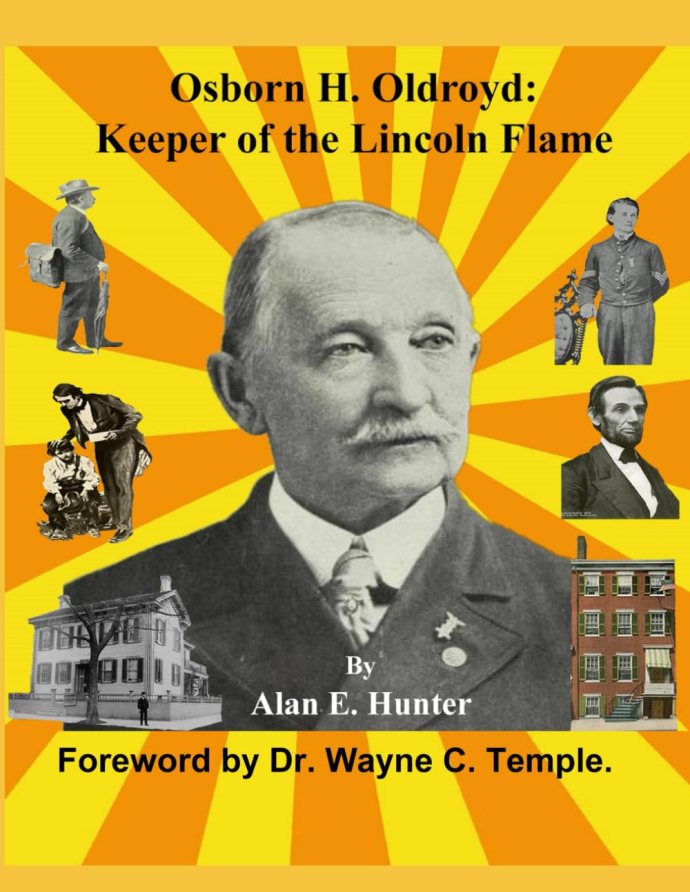
Alan E. Hunter is a newspaperman and former educator from Indianapolis, Indiana. He is the author of several history books on subjects ranging from local Indiana to the infamous multi-murderer H. H. Holmes. In December of 2024, Al published two new books related to the subject of Abraham Lincoln. One is a biography of Dr. Wayne “Doc” Temple, a noted Lincoln historian who will be celebrating his 101st birthday in February. His other book is a detailed biography of the famous Lincoln collector and author Osborn H. Oldroyd. This latter subject is best known to Lincoln assassination buffs as the man who operated his own museum out of the Lincoln home in Springfield, Illinois, and then from the Petersen House where Lincoln died in Washington. In 1901, Oldroyd also published a book on the assassination of Lincoln, during the writing of which he walked John Wilkes Booth’s escape route, talking to survivors who interacted with the assassins 35 years before.

I invited Al to a virtual interview to discuss his new books and a book he published in 2020 about the House Where Lincoln Died. Al is a wealth of information about one of the more interesting side characters in the Lincoln story, and his enthusiasm for his friend and mentor, Dr. Wayne Temple, shines throughout our talk together. I learned many new things about both Osborn Oldroyd and Dr. Temple from my talk with Al. I hope you’ll give it a watch or listen:

If you are in the central Illinois area, you can join Al for the official launch of his new books on February 16, 2025, at 10:00am at Books on the Square in Springfield. Al will be speaking about both Doc Temple and Oldroyd while signing copies of his books.

For those of us who, sadly, live far from Springfield, you can still purchase Al’s books through Amazon. You can click on the names or cover images below to purchase the three books discussed in the interview.

Osborn H. Oldroyd: Keeper of the Lincoln Flame (2024)

The Petersen House, The Oldroyd Museum and the House Where Lincoln Died (2020)

Thursdays with Doc: Recollections on Springfield & Lincoln (2024)

You can also keep an eye on Al and his interesting history columns by following him on his blog, AlanEHunter.com.

I’m grateful to Al for taking the time to talk to me about his research and books. If you enjoyed this interview, let me know. If there is enough interest, I’d be open to doing more interviews with other authors and researchers in the Lincoln assassination field.

Categories: History | Tags: , , , , | 3 Comments

Breakfast with Booth: Carrie Bean

On the night of April 13, 1865, Washington, D.C. was a city of jubilation. The nation’s capital was decked out in beautiful displays of celebration and light. Described as the Grand Illumination, countless businesses and private homes burned candles and were lavishly decorated in order to mark the essential end of the Civil War due to Confederate General Robert E. Lee’s surrender to Union General Ulysses S. Grant on April 9th. The event brought many visitors to D.C. and the streets were filled with revelers until late into the night.

Among the throng of people who viewed the Grand Illumination in all its grandeur was a solemn and dejected John Wilkes Booth. The cheering and good humor of the citizens of Washington was nothing but a reminder to Booth that his prior months’ plan to abduct President Lincoln and surrender him to the Confederacy had come to naught. With the war being celebrated as practically over, Booth had to admit to himself that he had done nothing substantive on behalf of his cause.

At around 2:00 a.m., Booth returned to his rented room at the National Hotel. He composed a quick note to his mother stating of the illumination, “Everything was bright and splendid. More so in my eyes if it had been a display in a nobler cause. But so goes the world. Might makes right.” With that, Booth retired.

Booth’s whereabouts in the subsequent hours leading up to the assassination of Abraham Lincoln have long been the subject of study. We know several of the places he visited during this time – such as Ford’s Theatre to get his mail and the Surratt boarding house to ask Mrs. Surratt to take a package to her tavern for him. However, creating a minute-by-minute timeline of his movements is difficult as witnesses sometimes place him in contradictory places at the same time. Arthur Loux has done the best job of trying to establish Booth’s routine on assassination day with his book John Wilkes Booth: Day By Day. Still, plenty of uncertainties remain.

One example that demonstrates the unknowns regarding Booth and his movements on assassination day is in regard to his earliest of tasks: eating breakfast.


The first source that attempts to explain Booth’s breakfast on April 14, 1865, is journalist George Alfred Townsend. GATH, as he was known, was a correspondent for The World newspaper out of New York City. On the night of Lincoln’s assassination, GATH was actually in Richmond, having arrived shortly after the Confederate capital fell. After the news of Lincoln’s assassination reached Richmond, GATH quickly returned to Washington. From there, he wrote several dispatches to The World, detailing the crime, manhunt, capture of Booth, and the eventual trial of the conspirators. GATH had good relationships with civilians, government leaders, and military officers alike. As a result, he was able to compose fairly detailed reports back to his readers.

On April 28, 1865, The World published a biographical article about John Wilkes Booth written by GATH. The lengthy biography ended with a paragraph titled “Closing Scenes” which stated:

“On the morning of the murder, Booth breakfasted with Miss Carrie Bean, the daughter of a merchant and a very respectable young lady, at the National Hall. He arose from the table at, say eleven o’clock. During this breakfast, those who watched him say that he was very lively, piquant and self-possessed as ever in his life.”

While GATH does not provide the source for his knowing that Booth dined with “Miss Carrie Bean”, the entire article about Booth was supposedly “complied for The World from the statements of his personal friends and companions”. GATH’s knack for sniffing out details had always served him well. In this instance, I’m willing to believe that GATH visited the National Hotel himself and heard the story from some people there.

So who was this Carrie Bean that GATH wrote about? Well, for the longest time, I believed that Carrie Bean was this woman buried in D.C.’s Congressional Cemetery. I’ve visited her grave in the past and even had her marked on my Lincoln assassination maps as the woman who might have shared breakfast with the assassin of Lincoln.

However, as I was researching for this piece, I became less and less convinced that the Carrie Bean buried in Congressional Cemetery is the correct woman. GATH described Carrie Bean as a “Miss”, “young”, and the “daughter of a merchant”. Congressional Carrie doesn’t really fit any of these descriptors. Her father, Thomas Copeland, had been dead since 1856. He was never a merchant but spent most of his career as a “master machinist and engineer of the U.S. Navy Yard.” Next, Congressional Carrie wouldn’t have been considered all that “young” by Victorian standards. At the time of Lincoln’s assassination, she was 34 years old and the mother of three children. Her first husband, William Bean, had died ten years previously. Lastly, in 1862, Carrie remarried a man named John Russell. Thus, in 1865, Congressional Carrie was technically Mrs. Carrie Russell. While she did have a similar name as the person referred to by GATH, it no longer seems possible for her to have been the one he was writing about.

Trying to track down the identity of GATH’s “Miss Carrie Bean” has been quite a struggle as his description provided so little to go on. However, after following up on many false leads over the course of two weeks, I think I have actually found the person he was referencing. If you’ll indulge me, I’d like to walk you through my research process on this. I did not take the most linear path, but I still believe I managed to find the most likely candidate.


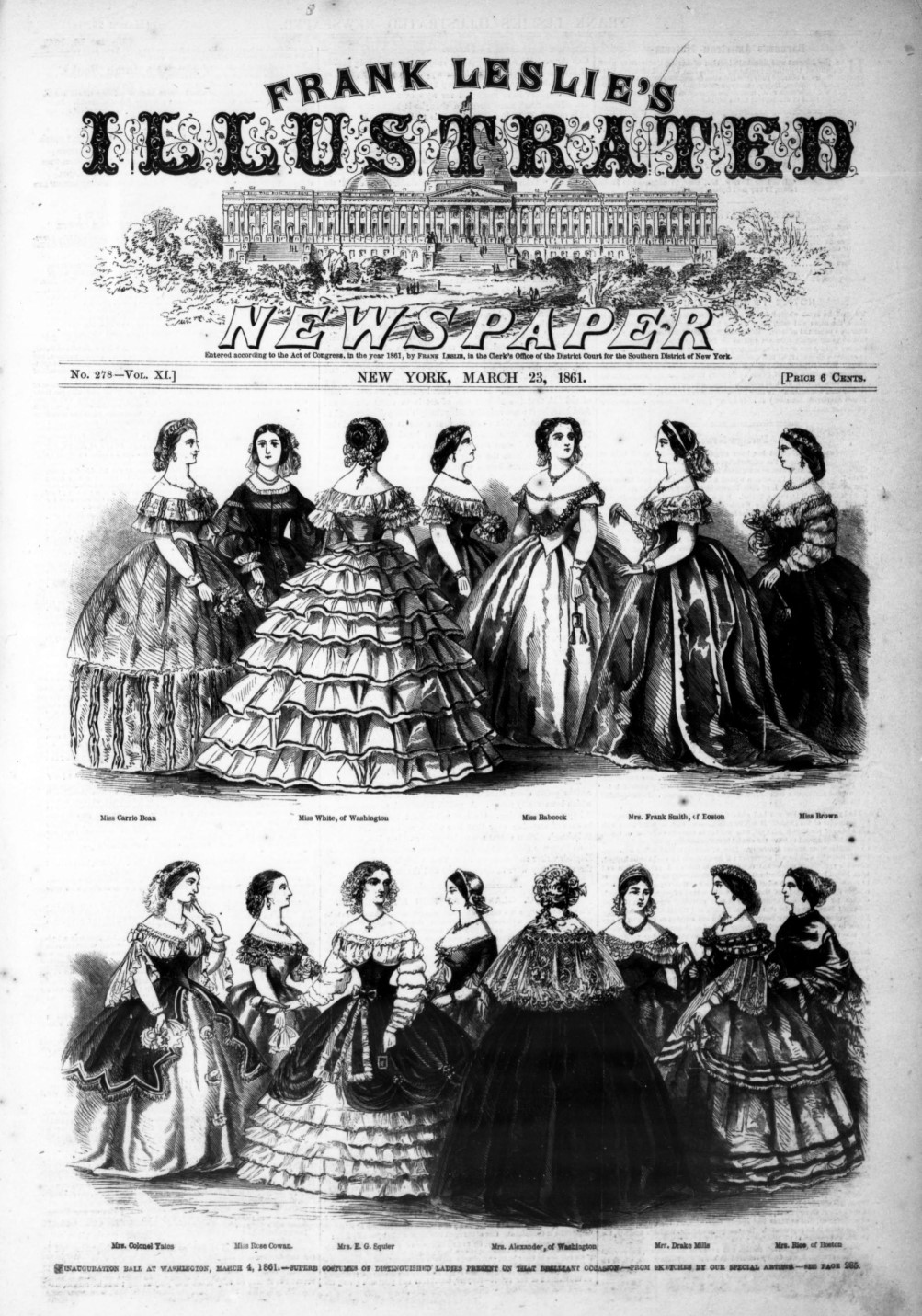
My investigation started when I saw a version of the following image attached to the FindaGrave page for Carrie Bean Russell buried at Congressional Cemetery:

This drawing comes from the cover of the March 23, 1861 edition of Frank Leslie’s Illustrated Newspaper. On this cover several of the ladies who attended President Lincoln’s first inaugural ball are shown, wearing their beautiful gowns.

Now, this labeled image seems to be proof that Congressional Carrie was quite the socialite and had attended Lincoln’s inauguration in 1861, thus making it more likely she could have later rubbed elbows with John Wilkes Booth at the National Hotel. However, attributing this image to Carrie Bean Russell is yet another case of mistaken identity.

What bothered me about Carrie’s drawing was how some of the other ladies present on the cover had their home cities listed, while Carrie Bean did not. For example, the lady right next to Carrie is “Miss White, of Washington” and two ladies down from her is “Mrs. Frank Smith, of Boston”. Yet Carrie and others on the page are not attributed to a certain city. I found a digitized copy of the whole issue on the Internet Archive and flipped through the pages. Near the end of the issue is the article about the inaugural ball and its attendees. The dresses of the different ladies on the cover are described, some more than others. The description for Carrie Bean is short but provides one key piece of information. It states: “Miss Bean, of New York, in white tarletan.”

Suddenly things made sense. Frank Leslie’s was a New York City paper. Thus, Carrie Bean and the other New York ladies present on the cover did not need any introduction to the paper’s New York audience. Only the ladies from outside of New York got special treatment.

I decided to try and track down this Carrie Bean of New York. While Frank Leslie’s only placed her in D.C. in March of 1861, I was hoping that she might have had enough clout to get another invitation to Lincoln’s second inauguration in March of 1865, just one month before his assassination. Plus, since GATH was writing for the New York World, it would make sense for him to include this detail about Booth’s breakfast since it involved a New Yorker.

Doing different searches for “Carrie Bean” and “New York” provided several newspaper articles that appeared to be the subject in question, but none of them really provided more information on who she was. However, they all helped establish that Miss Bean was a well-known socialite who hobnobbed with important figures of the day, many of whom had connections to the National Hotel. For example, in February of 1864, “Miss Bean, of New York” attended a ball in Washington, D.C. put on by General Gouverneur Warren in honor of the II Corps of the Union Army. The exclusive event was attended by Vice President Hanibal Hamlin, General George Meade, Senator John P. Hale “and daughter” (Lucy Hale, perhaps?), along with other senators and generals. Steve Williams, a fellow researcher on Roger Norton’s Lincoln Discussion Symposium, found the following article describing “Mrs. Bean and Miss Bean” attending a reception at the home of Ohio Senator John Sherman in February of 1865. The guest list was the very elite of Washington society:

In February of 1865, Senators James Harlan of Iowa and John P. Hale of New Hampshire were both living at the National Hotel. The fact that these Senators were connected to Miss Bean and her mother enough to include them in their party or escort one of them made it seem like I was on the right track. This reception took place just two months before the assassination of Lincoln.

It must be remembered that Washington became a bustling city as a result of the Civil War and the hotel industry there boomed. It was common for people to engage in long hotel stays in those days. Politicians especially lived out of hotels and boarding houses while Congress was in session, only to return to their home states when in recess. The Vice President didn’t have an official residence in D.C. until the 1970s, which is why Andrew Johnson was living at the Kirkwood House hotel at the time of Lincoln’s death. But long hotel stays were not limited to politicians. John Wilkes Booth had been residing at the National Hotel for months before the assassination. Correspondents from all the nation’s papers lived full-time in D.C. hotels. Lawyers with business in the federal courts spent weeks or months living out of hotels waiting for their cases to come up. Countless lobbyists, salespeople, and contract-type employees in connection with the federal government took up residence in hotels rather than purchasing property. If you had the money, then staying long-term at a hotel was the way to go.

Despite these and other finds showing that Miss Bean of New York was a known social figure in Washington during the Civil War years, I still lacked any additional identifying information. A big break came from a couple of articles that were published by GATH in June of 1865. These articles had nothing to do with the assassination but covered the annual examinations at the United States Military Academy in West Point, NY. The West Point examinations were a celebrated public event in which members of the public watched as the cadets were drilled and tested. In the first article, GATH included the name of “Miss Carrie Bean” among the ladies who had helped to make the examinations a successful social affair.

However, the big break came in the second article about the West Point examinations. It focused on the attendance of Generals Winfield Scott and Ulysses S. Grant at the trials. When GATH wrote out the list of visitors who watched as the cadets were tested in the academy’s library, he included the following:

“The ladies list included Mr. F. B. Conkling, Mrs. Sherwood, Mrs. Bigelow, the Misses Fish, Mrs. Strong, Mrs. Lavery, and many of equal social prominence, Mrs. Carrie Bean, Miss Roe and other bright faces represented the Highlands.”

Ignoring the change in salutation for the moment, it was the note that this Carrie Bean and others “represented the Highlands” that finally gave me a lead.

The Highlands is the area right around West Point on either side of the Hudson River. The land here is technically part of the Appalachian Mountains, though most of the mountains here are quite low in comparison with other parts of the range. Still, along the Hudson River in this area, the land is quite hilly earning the name the Hudson Highlands. If GATH was writing truthfully, then Carrie Bean was a resident of this particular area of New York, which greatly narrowed down the search.

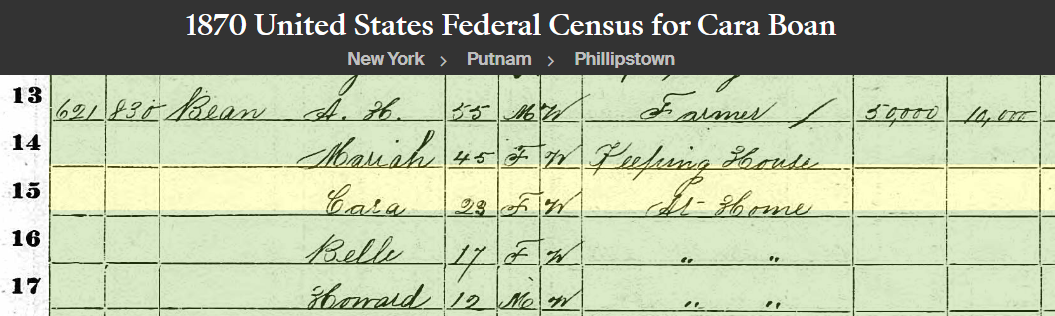
Armed with this information, I quickly found my most promising lead yet in the 1870 census. I found a 23-year-old named Cara Bean living in Phillipstown, NY which was located just across the Hudson River from West Point.

After spending over a week researching her and painstakingly creating her family tree, I’m very confident that this is the Carrie Bean referenced by GATH. Allow me to introduce you to her.


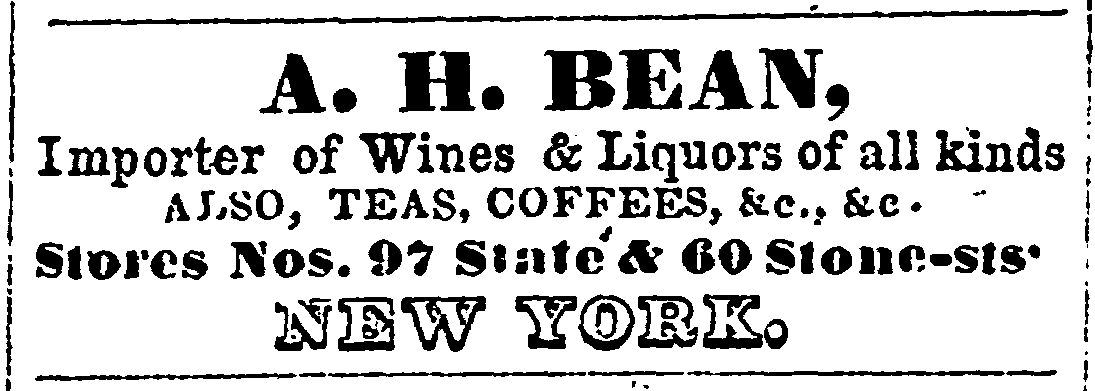
Cara Bean was the daughter of Aaron Hook Bean and Maria Louise Remer. Aaron was a New Hampshire native who moved to New York City with his brother, Moses Dudley Bean. The two men entered into the liquor business and quickly became successful merchants. After a few years, Dudley left the partnership, leaving Aaron with a successful solo business.

Aaron married Maria Remer in New York City in October of 1841. On December 22, 1842, the couple announced the birth of a daughter named Cara Louise. Two other children followed, Anabel in 1853, and Howard Dudley in 1857. In addition to his thriving liquor business, Aaron Bean got involved in other ventures. In 1844, Aaron’s sister Susan Bean Marston, a widow with two children, married Thomas “Peg Leg” Ward of Austin, Texas. Ward was a celebrated figure in Texas as a result of his having lost a leg in the fight for Texas independence. While the marriage between Ward and Susan Bean would later prove to be acrimonious and abusive, in the first few years Ward was a celebrated member of the family. Aaron used his brother-in-law’s fame and reputation to jump-start more business ventures. As a merchant, Aaron provided patent documents and clerical supplies to Ward when the latter was engaged as a Texas Land Commissioner. Aaron also invested in the Galveston, Houston, and Henderson Railroad bringing him further financial success. In the 1860 census, Aaron Bean’s real estate holdings were valued at $300,000 and his personal estate was valued at around $50,000. It was in this way that Cara Bean, her siblings, and her cousins, all lived a life without want.

When Cara Bean began living the life of a young socialite is unclear. Her family certainly had the money to support such a lifestyle. While they were New York residents, the Bean family were no strangers to the nation’s capital. Aaron Bean’s name can be found on the arrival lists of various D.C. hotels starting as early as 1853. On the last day of February 1861, Aaron Bean checked into Clay’s Hotel in Washington. Cara Bean joined her father in the city as preparations for Lincoln’s inauguration were underway.

In support of this claim is a letter written by Blanche Butler, the daughter of future Union General Benjamin Butler. In 1861, 14-year-old Blanche was attending boarding school in Washington. She regularly corresponded with her father and mother back home in Massachusetts. On March 11, 1861, Blanche wrote a letter to her mother about the events surrounding Lincoln’s inauguration and her attendance at the inaugural ball. In the letter, she mentions Carrie Bean and Clay’s Hotel specifically:

“[Uncle] came over quite early in the morning, and we had breakfast at Clay’s Hotel, with the Misses Bean, and we stood on the balcony all the morning and saw the procession go by; then Uncle took me up to Mr. Baker’s and there he decided that I had better go to the Ball; although I was not anxious to do so. Carrie Bean lent me a white muslin dress, which with a cherry sash, white gloves, a cherry and white fan, a pair of white kid slippers with little rosettes on the top, completed my outfit. We went about half past nine and returned at half past three. As I refused to dance every set but one, ate a very light supper, I did not experience any ill effects from it excepting a slight cold, which you know was impossible to avoid.”

Blanche Butler was the beneficiary of Carrie Bean’s kindness in lending the young girl a dress and the two joined the other celebrants at the ball on March 4. But it was Carrie, not Blanche, who got her dress memorialized in the pages of Frank Leslie’s.

When the Civil War broke out, Aaron Bean sold many of his business assets, including his lucrative liquor business. With the funds, he purchased the 252-acre piece of property near West Point, NY where the family is found in the 1870 census. However, Aaron Bean was not completely divested of all his businesses. In the middle of the war, Aaron partnered with a cousin of his named Moses Hook Bean to lease the former Clay’s Hotel in D.C. and run it as the United States Hotel. Aaron was also active in pushing for an expansion of the D.C. street car system. His name was on a list of incorporators for a line that would connect the Navy Yard to Georgetown. Aaron’s business interests in D.C. meant that the family had plenty of reasons to return to Washington. The various mentions of “Miss Bean” at different social gatherings in D.C. make it clear that Cara was easily able to ingratiate herself with important members of Washington society during the Civil War years.

Elizabeth “Libbie” Custer

In the spring of 1864, a new woman came to reside in Washington. Her name was Elizabeth “Libbie” Custer, and she was the wife of Major General George Armstrong Custer. The Custers had just married in February of ’64, but George’s duties to the Union army had cut their honeymoon short. Libbie, a Michigan native, was brand new to the capital city but her husband’s service at the Battle of Gettysburg had made him famous. Thus, she was quickly welcomed by the political elite of the city.

Given that both ladies ran in the same social circles, it was only inevitable that Libbie Custer and Cara Bean would meet. When this happened exactly is unclear but soon the pair had formed a friendship. In addition, Libbie became friends with Cara’s cousin, Fanny. Blanche Butler mentioned the “Misses Bean” in the plural when writing her letter in 1861. Cara Bean was 18 years old at the time of Lincoln’s first inauguration while her younger sister, Anabel, was only about 8. It’s possible that Anabel joined her sister for that trip to Washington, but I posit that there is also a chance that Blanche was referring to Cara’s cousin, Fanny.

Fanny Ellen Bean was the daughter of Moses Dudley Bean and his wife Mary Curtis. The two cousins, practically identical in age, grew up together. Aaron and Dudley’s families are shown all living together under the same roof in the 1850 and 1860 censuses. Fanny was close to Cara their whole lives and when Fanny died in 1899, she left Cara part of her estate.

Cara Bean appears to have become quite close with the Custers. It is because of them that we actually have a picture of Cara Bean. According to photography expert D. Mark Katz, on October 23, 1864, Libbie, Custer, and “Cora” Bean posed together for this photograph in Mathew Brady’s studio in Washington:

Here’s a close-up of Cara Bean from a different copy of this image:

If the date this photograph is attributed to is correct, then this is Cara Bean as she appeared just a couple months shy of her 22nd birthday.

I found this image fairly early on in my research. However, the name attributed to this image is “Miss Cora Bean”. During my initial searches, I found a couple mentions of Cora Bean but I had no way of knowing if this was the same person as the Carrie Bean mentioned by GATH and featured on the cover of Frank Leslie’s. For a time, I had actually dismissed all the references to Cora Bean entirely as I found that there was a Cora L. Bean from New York who was alive during the Civil War.

However, when I discovered Cara L. Bean and saw how easily her unique name could be confused for Cora (and how it often was when she was older), I delved more into the other Cora Bean. It ends up that Cora and Cara were second cousins. Cora was the daughter of Cotton Ward Bean, a cousin of Aaron H. Bean. But beyond the family connection, the important thing I learned is that Cora Bean wasn’t born until 1858. That means she would have only been about 6 when this picture with the Custers was taken. But it’s clear that the person in this photograph is not 6 years old. This photograph cannot be of the actual Cora L. Bean. It must be of Cara L. Bean. This helped establish the fact that, in addition to Carrie and Cara, I had another name I would have to search for in order to flesh out her life story.

The shared photograph is not the only connection between the Custers and Cara Bean. In March of 1866, George Custer was in New York without Libbie. On March 29th, George wrote a letter to Libbie recounting his activities. Libbie’s biographer, Shirley Leckie, summarized the contents of the letter in her book:

“[George] took Cora [sic] and Fannie Bean, two of Libbie’s friends, to dinner and shopping. Later the three attended Maggie Mitchell’s performance in Little Barefoot. The blond actress had become one of the most popular figures on stage, following her role in Fanchon, the Cricket, a play she now owned. During curtain calls, Custer and the two young women threw a bouquet with a card: ‘from an admiring trio.'”

Leckie continues, describing how a few days later on April 5th, Custer and the Bean cousins attended a Bal d’Opera at the Academy of Music. This was a masquerade ball in which Custer dressed up as the devil. Later, he wrote to Libbie noting Thomas Nast had drawn the scene of the ball and that a caricature of his costume was published in Harper’s Weekly. While the drawing doesn’t seem to capture either Cara or Fanny Bean, here apparently is George Armstong Custer as the devil.
General Custer was famously killed at the Battle of the Little Bighorn in 1876. A year later, his body was shipped to New York for burial at West Point Cemetery. According to newspaper articles, Libbie was attended at the funeral by her friend, Cora [sic] Bean.

The Custers were not the only individuals with whom Cara Bean established a friendship during the Civil War years. As mentioned before Senator James Harlan of Iowa had resided at the National Hotel in 1864 and 1865 and was connected to the Beans. In the early years of the war, he had lived at Clay’s Hotel, another usual haunt of the Beans. Senator Harlan’s eldest child was Mary Eunice Harlan. She was born in 1846 and was educated both in Iowa and in Washington due to her father’s position as Senator. At some point during her months in Washington, Mary Harlan met Cara Bean, likely because they ran in the same circles and often boarded at the same hotels. In 1864, a courtship began between Mary Harlan and Robert Todd Lincoln. At his father’s second inaugural ball, Robert Lincoln escorted Mary Harlan as his date. The two were planning a wedding when Abraham Lincoln’s assassination occurred. For a time, it looked like their courtship was over as a result. Eventually, however, the two renewed their courtship and on September 24, 1868, Robert Lincoln and Mary Harlan were married.

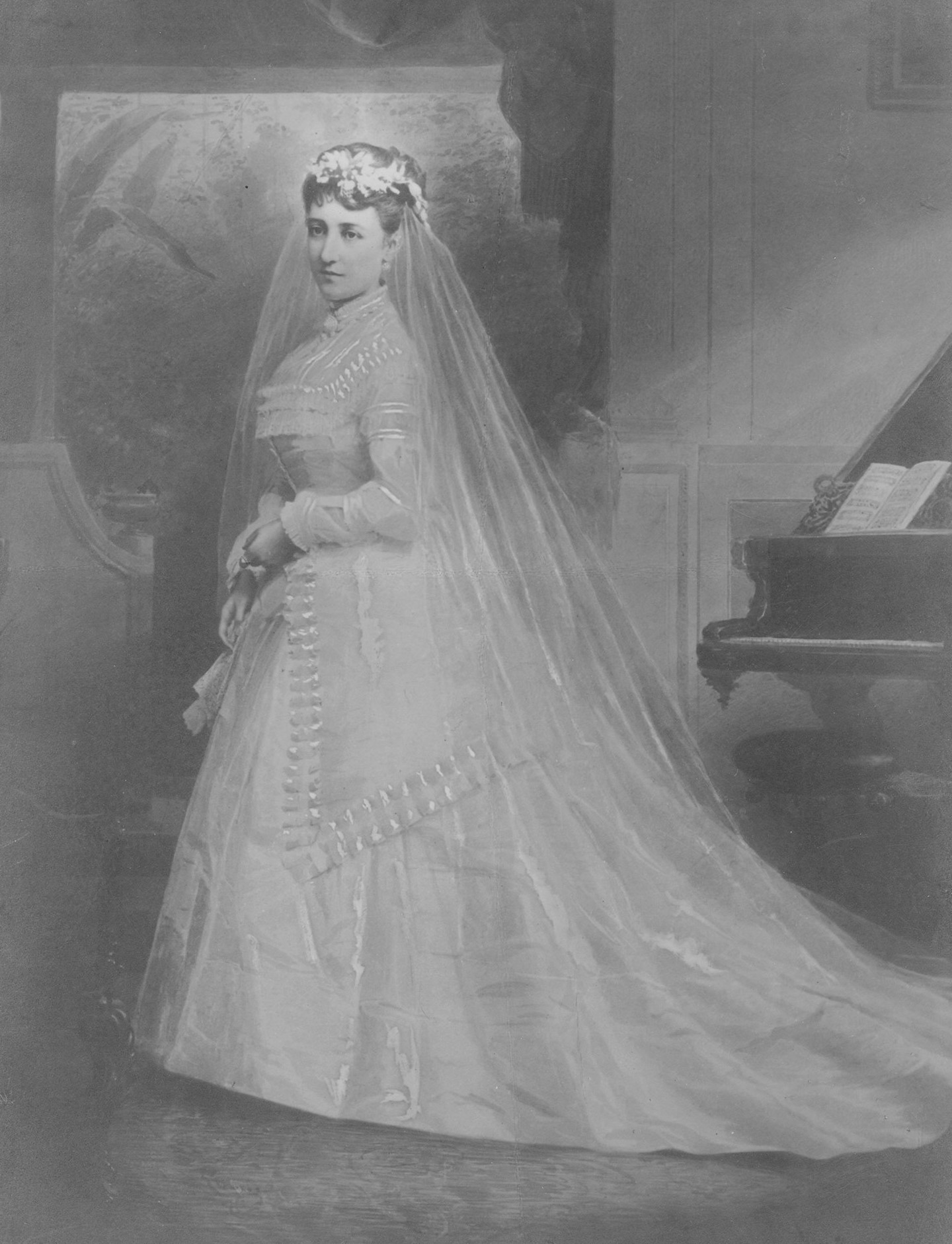
Mary Harlan in her wedding dress

By this time the Harlans had ceased living out of hotels and so the wedding was held at their home on H Street in Washington. While the wedding of Lincoln’s eldest child would have been the most celebrated event in Washington, the couple decided to keep it very small. They only invited about thirty of their closest friends. It was a very exclusive event but one person who made the cut was Cara Bean. Her outfit for the wedding was described in the D.C. papers:

“Miss Cora [sic] Bean, of New York, was dressed in white French mouslin, elegantly embroidered over a purple silk, with amethyst necklace, earrings and bracelets. Her dress was made in the latest and most fashinable [sic] style.”

From these examples, it’s clear that Cara Bean was an active participant in the social circles of Washington, D.C. during the Civil War years.

After the Civil War ended, it appears that Cara Bean returned home to New York to live at the family’s estate near West Point. References to her in the D.C. papers end with Robert Lincoln’s marriage in 1868. In 1879, the Beans sold their estate and moved back into New York City. In the 1880 census, Cara, her parents, and her brother are all living in a hotel. Also boarding in the same hotel is Cara’s cousin Fanny. Aaron Bean died in 1883 and was buried in Woodlawn Cemetery in the Bronx.

Cara Bean never married. In the 1890s she lived with her widowed mother and fellow spinster cousin Fanny at The Albany, an apartment complex on Broadway and 51st streets in New York City. Yet she was still engaged in social activities. She was a patron of the music scene and contributed her time and money to worthwhile causes, especially those catering to needy children.

1899 – 1900 was a period of great loss to Cara Bean. Her cousin Fanny died in November of 1899. A month later, her mother Maria also passed. Six months after that her brother Howard Dudley died. By 1901, she was alone at The Albany. Cara sought company with the only close relative she had left, her sister Anabel. The younger middle Bean sibling was the only one who had children. Anabel lived with her husband Edward Leavitt in Stamford, Connecticut. Cara Bean departed New York City to live with her sister and her five nieces and nephews.

On November 16, 1902, Cara Louise Bean died at the home of her sister in Stamford. She was 59 years old. Her obituary in the New York Times was short but did recount how Cara and her cousin Fanny (misidentifed as Blanche) were, “well known in New York society”.

Cara Bean’s body was transported back to New York and she was interred in Woodlawn Cemetery with her parents.


I believe that the “Miss Carrie Bean” described by George Alfred Townsend in his article about John Wilkes Booth was Cara Louse Bean of New York. The pieces of Cara Bean’s life and influence in D.C. society all seem to fit GATH’s description of that, “daughter of a merchant and a very respectable young lady”. Cara Bean knew and interacted with so many important figures in D.C. society. She resided for long periods of time at the National Hotel. She went to parties and balls with the daughters of Senators like Mary Harlan and Lucy Hale. She was escorted to events by the like of Lincoln’s private secretary John Hay and was well known to Robert Todd Lincoln. I have no doubt in my mind that Cara Bean also knew the famous actor, John Wilkes Booth.

With that being said, nothing in my research can definitively prove GATH’s claim that Cara Bean ate breakfast with John Wilkes Booth on the morning of April 14, 1865. I think it’s certainly possible that she did, but without another witness or something from Cara herself attesting to the shared meal, we can never be sure.

I never intended to do this deep dive on Cara Bean. Remember, I originally thought the Carrie Bean mentioned in GATH’s article was the woman buried in Congressional Cemetery. Talking about Carrie Bean was supposed to be the quick and easy part of a completely different blog post. I was just going to mention Carrie Bean in order to give context to an interesting article I had stumbled across. You see, Carrie Bean is not the only person who was connected with John Wilkes Booth’s breakfast on April 14, 1865. In my next post, I’ll discuss the two other ladies who have been linked to the assassin’s breakfast. One of them has a doozy of a story:


References:
The family history of Cara Bean was assembled through documents accessible through Ancestry.com and newspaper articles accessed through GenealogyBank, Newspapers.com, and the Internet Archive.
“Right or Wrong, God Judge Me”: The Writings of John Wilkes Booth edited by John Rhodehamel and Louise Taper (1997)
“John Wilkes Booth and George Alfred Townsend: A Marriage Made in Hell?” by Terry Alford (1992)
Peg Leg: The Improbable Life of a Texas Hero, Thomas William Ward, 1807 – 1872 by David C. Humphrey (2009)
Chronicles from the Nineteenth Century: Family letters of Blanche Butler and Adelbert Ames, married July 21st, 1870 by Blanche Butler Ames (1957)
Custer in Photographs by D. Mark Katz (1985)
Elizabeth Bacon Custer and the Making of a Myth by Shirley Leckie (1993)
NYPL Digital Collections
Wikimedia Commons
Giant in the Shadows: The Life of Robert T. Lincoln by Jason Emerson (2012)
Proceedings of the John Bean (1660) Association at its Annual Reunion at Boston, September 5, 1900
Burial records from Woodlawn Cemetery
My thanks to Steve Williams and others at Roger Norton’s Lincoln Discussion Symposium for helping in my initial searches for Carrie Bean.

Categories: History | Tags: , , , , , , | 14 Comments

John Wilkes Booth and the real Billy Bowlegs

As I have mentioned before, I am currently in a graduate program working on a Master’s degree in American history. This is why updates here on BoothieBarn have been few and far between for the last year and will likely continue to be for a year or two more. This summer semester I took a class on American Indian History with Dr. Ned Blackhawk from Yale University. It was a very illuminating class and helped me develop a greater understanding of what American history truly is. For the final paper, each student was allowed to pick a subject of their choice. As always, I wanted to make a connection, even a small one, to John Wilkes Booth or the Lincoln assassination story. With the help of a Native friend on Twitter, we assembled a short list of some of the minor connections John Wilkes Booth had to Native Americans:

  • As a young child growing up at Tudor Hall, John Wilkes Booth and his siblings often invoked the imagery of Indians in their play. Asia Booth recalled her brother digging a large hole, the size of a trench, in the wooded area around Tudor Hall in search of Indian bones. Also, when riding his horse Cola di Rienzi around, Booth was known to spur him on with shouts of, “The Choctaws are after you, ride for your life!”

  • Located not far from Tudor Hall is The Rocks at Deer Creek. This natural rock formation was a common picnic and riding destination for the Booth children including John Wilkes Booth. Local legends stated that, in earlier years, the Susquehannock Indians occupied the area and performed ceremonies on the King and Queen Seat. In 1854, John Wilkes Booth wrote to his friend Samuel Williams O’Laughlen that, “the Indian’s where up here the other day with their great Bear.” A modern archeological study, however, was unable to find any significant evidence of Native American residency in the area.

  • While learning the acting profession in Richmond, John Wilkes Booth performed the role of Uncas, a Native American, in the play The Wept of the Wish-Ton-Wish which starred Maggie Mitchell. Researcher Angela Smythe has done a compelling amount of research into the story that a photograph of Booth in his Uncas costume once existed..

While interesting pieces of trivia, none of these connections really lent themselves to a research paper where Native Americans were the primary subject. However, there was one additional connection that had always piqued my curiosity. According to Asia Booth’s book on her brother,

“There was a celebrated Indian Chief named Billy Bowlegs, and Wilkes went by this name among his companions at [St. Timothy’s Hall in] Catonsville.”

John Wilkes Booth was even known to have used this boyish nickname in a letter he wrote to Samuel Williams O’Laughlen on April 30, 1854. In closing the letter signed it as “J.W.B alias. Billy. Bow. Legs”

Several books, including Art Loux’s John Wilkes Booth: Day by Day, provide the brief context that Billy Bowlegs was a leader of the Seminole tribe in Florida. The assumption is that John Wilkes Booth was given this nickname because he was bow legged himself. But I wanted to know more about the real Billy Bowlegs even if only to understand how a group of teenage boys in Maryland had heard of a Seminole chief way down in Florida. So, in the end, I decided to wrote my final paper on the real Billy Bowlegs who I discovered was actually called Holata Micco by his people. I looked at his life before and during the time when John Wilkes Booth became his namesake. What follows is that final paper.

I must warn you that the paper is a bit long, there are no pictures, and there is no mention about John Wilkes Booth in the text. While the nickname inspired the research, the paper itself is an analysis of Holata Micco’s actions between the Second and Third Seminole Wars, the latter of which would ultimately come to bear his name. I am not an expert on the Seminole and had never even read about the Seminole Wars before starting this class. However, I did a great deal of research on Holata Micco for this paper and am proud of the finished product. While I’m sure there are inevitable errors in what is written below, they are unintentional. I present my final paper on Holata Micco, the real Billy Bowlegs, for anyone interested in learning more about a fascinating figure in American history whose name happened to become the childhood nickname of a Presidential assassin.


Holata Micco: Peacemaker for his People

By Dave Taylor

The Third Seminole War during the 1850s was the final major conflict between the United States and Native tribes in Florida. At the time, the conflict was often referred to as The Billy Bowlegs War, named for a leader of the Seminole who was known colloquially as Billy Bowlegs. Billy Bowlegs’ true name was Holata Micco, and he was a well-known leader of the Seminole people in the years prior to the conflict. When the war – largely characterized by hit and run guerilla warfare – broke out in 1855, Holata was seen as the main aggressor and tactician behind the Seminole’s last stand. The bloody events of 1855 through 1858, impressed upon the name of Holata Micco a legacy of conflict and warfare. However, a close examination of the events that preceded the outbreak of hostilities in the Third Seminole War demonstrates that Holata’s reputation for violence is not supported by his documented actions. Rather than playing the aggressor, Holata Micco was committed to the peaceful coexistence of the Seminole and the United States and made many sacrifices in his attempt to protect his people.

The Third Seminole War, like the one that preceded it, was a natural extension of the 1830 Indian Removal Act, ordering the relocation of Native tribes to areas west of the Mississippi. The act opened up vast quantities of previously held Indian land in areas of the eastern United States to white settlers. President Andrew Jackson, a strong proponent of the Act, knew that not all tribes would willingly move from their native lands and therefore backed up the act with the use of military force. Jackson viewed the act as one of compassion combined with an ultimatum. “I was satisfied that the Indians could not possibly live under the laws of the States,” Jackson wrote shortly after the passage of the act. “If now they shall refuse to accept the liberal terms offered, they only must be liable for whatever evils and dificulties [sic] may arise.”[1] The difficulties that stemmed from the Indian Removal Act were numerous and many tribes refused to leave the lands they had occupied for generations. In the territory of Florida, the Seminole fought a war against then General Jackson who had allied the United States Army with the Seminole’s rival tribe, the Lower Creek. That war, known later as the First Seminole war, stripped the Seminole of much of their land holdings in the panhandle and northern parts of Florida. The Seminole retreated to a reservation created by the United States government in the central part of the Florida peninsula despite the fact that the signatory Indian chiefs believed that the allocated land, “did not contain a sufficient quantity of good land to subsist them.”[2] A subsequent war, stemming from the Seminole’s resistance to the 1830 Indian Removal Act, decreased the tribe’s numbers and forced them to seek refuge in the Everglades and Big Cypress swamps, areas even less hospitable than the reservation they had been assigned years before.

It was at the end of the Second Seminole War that Holata Micco rose to prominence. As noted by the research of Kenneth Porter, a historian who specialized in African American frontiersman and the relationship between African Americans and the Seminole people, the age and lineage of Holata Micco are unknown for certainty. He was likely born between the years of 1808 and 1812 and was of some close relation, possible a nephew, to Micanopy, the leader of the Seminoles during the Second Seminole War.[3] Holata’s ascension from warrior to a leadership position in the Seminole tribe came about due to Micanopy’s capture (under a flag of truce) in 1838 and the leader’s subsequent removal to the West. The Second Seminole War was a war of attrition that, through death, capture, and surrender, decimated the remaining population of Seminoles in Florida. General William Worth, the final U.S. commander during the Second Seminole War believed that 5,000 Seminole had been removed over the course of the seven years conflict.[4] Holata negotiated with General Worth at the end of the Second Seminole War, but he was not the sole leader of the around 400 remaining Seminoles. The war had broken the Seminole into different bands and different leaders had emerged within those groups. The idea that Holata Micco was the sole chief of the Seminoles and that he was responsible for all of the Seminole’s activities from this point forward was an erroneous assumption that was regularly repeated in the press in the years, and conflict, to follow. The lack of understanding regarding the complex interplay of powerful leaders among the remaining Seminole and the biased nature of the white press against the Native occupants of Florida caused Holata Micco to emerge in the eyes of the general populace as the main aggressor of the Third Seminole War.

The Second Seminole War did not end with the complete surrender of the Seminole. Despite the heavy losses in population, the bulk of the Seminole still in Florida were just as committed to staying there as they had been in the beginning of the conflict. What Holata Micco negotiated with General Worth in 1842 was more of a truce than a surrender and this was only possible because the United States government had grown tired of the financial and human expense of attempting to hunt down the remaining scattered Seminoles in the Everglades. In an initial peace meeting with one of Holata’s representatives, General Worth made it clear that he wished to end hostilities with the Seminole and that would mean his army would no longer force the removal of Indians in the region. Worth told Holata’s representative that the President, “is willing his red children should remain in Florida or go to Arkansas as they may prefer,”[5] showing President Tyler’s willingness to ignore the Indian Removal Act in order to bring about a modicum of peace. While the negotiations were filled with inducements to motivate the Seminole to depart Florida, the ending agreement established that the Seminole and the few other scattered tribes were, “permitted for a while to plant and hunt on the lands” and, more importantly, that any white settlers who encroached on the, “Indians and their places of residence” would be, “subjected to removal.”[6] From the perspective of Holata Micco and his group, the Second Seminole War ended much in the same way as the first, with the Seminole being allocated a piece of land and being told they were allowed to remain despite outside desires for them to relocate. These terms were largely agreed to by the other remaining scattered groups of Indians. With hostilities ended, Holata Micco set to work on creating a home for his people among the swamps of the Everglades and the Big Cypress.

Perhaps the greatest impediment to the study of Holata Micco and the Third Seminole War is the lack of perspective from the Seminole themselves. Like too much of Native history, the material is overwhelmingly one sided. We lack any writings on the day to day life of the Seminoles after the Second Seminole War. However the conclusion that Holata sought to uphold the peace for as long as possible is supported as much by his non-actions as by his confirmed actions. Almost a year after the final peace negotiations were agreed to, General Worth wrote, “For eleven months, indeed since my announcement of August 14th, 1842, became known to the straggling bands, not an outrage or offensive act has been committed by Indians.”[7] After such heavy losses in the prior wars, the commitment to maintain peace was strongly held by the Seminole and, in peace, the organization of the tribe had coalesced around Holata Micco. General Worth wrote in November of 1843 that Micco was, “the acknowledged chief,” among the Seminole and that, “these people have observed perfect good faith, and strictly fulfilled their engagements.”[8] The peace between the Indians and the whites continued to hold which caused newspapers across the nation to announce that, “We hesitate not to say, that ‘the Florida war’ is not only ended, but that it will ‘stay ended.’ Emigrants may now seek a residence here with as much safety as in any part of the country.”[9] Peace brought an influx a new settlers to Florida and also caused older settlers to make their way into the sparsely inhabited interior of the state. As settlers encroached closer and closer to Indian land, federal authorities took steps to prevent further conflict from arising. Capt. John T. Sprague, the Indian Agent assigned to the region, aptly noted that any conflicts that might occur were likely to be the fault of white settlers failing to heed the boundary of the Seminole’s reservation. Sprague wrote in 1845 that, “there is a class of men destitute of property and employment, who for excitement and gain, would recklessly provoke the Indians to aggression,” and that, “the advice and example of the chiefs and subchiefs…has been salutatory, and will continue so, if unprovoked.”[10] It was Sprague’s belief that the influence of Holata Micco helped to keep the more aggressive Seminole warriors in line and committed to peace.

Even when occasional clashes did break out between usually young Seminoles and white settlers, Holata and his subchiefs took great pains to cool things down. In late 1846, news came to Capt. Sprague about an Indian raid on a farm. Sprague requested, and received, a meeting with the Seminole leadership including Holata Micco. In his report back to Washington, Sprague recounted that,

“these chiefs and their followers express the strongest friendship and have adopted vigorous laws to punish those who violate the relation existing between the whites and red men…They came into my camp prepared to receive kindness and extend it, evidently determined to avenge on the spot any manifestation of a contrary feeling.”[11]

Preserving the peace, which in turn meant continued freedom for his people, was of the utmost importance to Holata. In his report, Sprague also gave his personal impressions of Holata Micco and his influence over his people:

“This chief has been since the commencement of the Florida War a bold, resolute and unyielding leader. [He is] ambitious, and cunning, remarkably intelligent, speaking English with facility… With these peculiar qualifications and undisputed authority exercised in Florida with an auxiliary force or alone, this Indian would be a most formidable foe.”[12]

Despite Sprague’s assertions that Holata possessed “undisputed authority” over the Seminole, there were interior conflicts and politics within the remaining bands of Indians residing in Florida. When discussing the assembled chiefs, Sprague makes note of the absence of the Seminole leader Abiaka, known to non-Natives as Sam Jones. Abiaka had been elected “Grand War Chief” among the Seminoles in 1837 during the Second Seminole War. Sprague was disappointed that Abiaka, who was perpetually portrayed as a truly ancient leader of the Seminole, was unable to attend the meeting due to the weather. Sprague reported that his, “insisting upon seeing [Abiaka] tended to disparage the position and power of Holatter Micco, who in all respects, is qualified for supreme command which he exercises with skill and judgement.”[13] While Sprague goes on to express that Abiaka was, “without warriors, authority or influence,”[14] subsequent historians believe that Abiaka still held a degree of control over the Seminoles despite Holata having become the public face of tribe. James W. Covington, a historian who focused on the Seminoles, wrote that, “Persons like Sprague did not understand that though Billy Bowlegs had the largest band of warriors (fifty-four), and considerable political power, he lacked the religious influence of Sam Jones who had a following of only thirty-two warriors.”[15] In fact, much of the political power that Holata Micco was able to attain largely came from his continued interactions with the U.S. government and its representatives. Men like Gen. Worth and Capt. Sprague appreciated the ease in which they could communicate with Holata and sought to foster their relationship with him. It was Holata, not Abiaka, who had negotiated the end of the Second Seminole War and it was Holata who regularly met with federal authorities when asked. Though Holata had fought in the Second Seminole War he did not have quite the same “savage” reputation as the Grand War Chief Abiaka. Holata Micco became the desired point of contact between the U.S. and the Indians, and so they did all in their power to improve his standing. At the end of his 1847 report, Sprague recommended continued inducements to Holata not only out of hope that he would convince the rest of his tribe to emigrate, but because a relationship with Holata could prove useful to the U.S. in case of attack from without: “As a friend cherished by that which would contribute to his vanity, power, and independence, he could be relied upon to expel the intruders of whatever nation and become a faithful ally to those who secure his confidence and regard.”[16] For a time, at least, the government saw that it was better to have Holata Micco as a friend rather than an enemy.

Despite the machinations of settlers in attempting to bring about the forceful removal of the Seminole, the peace between the two groups held for almost seven years with any major conflicts. Then in July of 1849, three subsequent acts of bloodshed against white settlers shook the region. On July 12, 17, and 19th a rogue band of five Indians looted and burned three different groups of isolated homes, killing three men in the process. In two of the events, the band of Indians had first visited and traded in stores in the community before coming back with weapons. This tactic of scouting the scene before committing the crime put all settlers who came into contact with the Seminoles on guard and added to the hysteria of the times. While the loss of life deservedly escalated the response on the part of the U.S. government who sent extra troops down into Florida, it was far from the all-out war that the press of the day portrayed it to be. The newspapers seized on any and all news they could get about the “Indian depredations” even when such news was little more than hysterical gossip. On August 7th, the Springfield Republican erroneously reported that, “the Indians are preparing for a general war, and that during the past year they have provided themselves with large quantities of powder and lead…Billy Bowlegs is the master spirit and Chief of the hostile red-skins.”[17] This was not the first time, nor would it be the last time, that Holata Micco’s name would be used in conjunction with fears of a mass Seminole uprising in Florida.

Rather than preparing his people for war, Holata Micco’s response to the rogue raids of July, 1849 was perfectly in character with his behavior over the last seven years. Holata sought to cool tensions despite the hysteria. He was joined in this quest by Capt. John Casey, a veteran of the Second Seminole War and a man who had become the United States’ unofficial ambassador to the Indians in Florida. As increased troops mounted in Florida, Casey reached out to Holata hoping to make contact. It had been a month since the attacks and so Casey was fairly certain that these events had not been a prelude to all-out war. After some diplomatic arrangements Casey and Holata met, each flanked by their men, on September 18. Major General David Twiggs, who joined Capt. Casey at the meeting, wrote in his later report that:

“Bowlegs came on board my vessel, with a party of four or five warriors, repeated the statement made some time previous by his runner, that the outrages were perpetrated by a few outlaws, who would be given up to justice; that the nation had nothing to complain of on the part of the whites – were desirous of peace, and determined not to allow peaceable relations to be disturbed by the acts of individuals.”[18]

Twiggs’ assertion that Holata expressed the Seminole had “nothing to complain” about in terms of their treatment by the white settlers demonstrates Holata diplomatic sense. In truth, the Seminole had a lot to complain about, including the fact that the government had not upheld their end of the 1842 truce which called for the U.S. to enforce the Seminoles’ territory rights. Despite the U.S. creating a 20 mile buffer zone between the Seminole territory and the rest of Florida where no people could reside, white settlers had still moved into the area. One of the homes that was attacked during the July raids had been built within that zone.[19] In addition, even before the recent troubles, local laws and regulations had been passed restricting the Indians movements and access to trading centers. Holata had many grievances he could have aired with the Capt. Casey and Maj. Gen. Twiggs but he chose not to, placing the priority on quelling their apprehensions and fears.

The proposed surrender of the five rogue warriors who carried out these attacks was also a political move on the part of Holata Micco. Those responsible for the attacks were a band of warriors who were, ostensibly, under the control of Kapiktsootsee, a sub-chief of Abiaka, the Seminole’s Grand War Chief and Holata’s rival. Kapiktsootsee sought to replace Abiaka after the elder’s death but Abiaka favored another warrior causing Kapiktsootsee and a small band to leave Abiaka’s camp. Kapiktsootsee gave his men permission to hunt outside of the assigned territory and it was a small group of these rogue Indians that subsequently attacked the farms.[20] In agreeing to surrender those responsible, Holata was putting himself at odds with Abiaka. To ease repercussions from any internal conflicts, Holata brought Kapiktsootsee into the meetings with Capt. Casey and it was in this way that Holata got Kapiktsootsee to also agree to turn over his men. The date for the transfer of the prisoners was set for a month later, giving Holata and Kapiktsootsee time to capture and transport the rogue band.

Surrendering the men was not merely an act of justice for the Seminole but was considered an act of sacrifice. Gen Twiggs and Capt. Casey had made it clear that the warriors would be executed for their crimes, and it took all of Holata’s influence to convince Abiaka and the others that this was an acceptable cost to pay for continuing the peace. On the agreed upon day of transfer, Holata and some sixty warriors met with Gen. Twiggs and Capt. Casey. According to Gen. Twiggs’ report, Holata, “delivered the prisoners; said he had made severe laws to prevent the whites from being molested, and had now brought his young men that they might see how sternly he executed them.”[21] Holata was proving to his warriors that peace was of the utmost importance to the tribe’s well-being and that, in order to maintain it, he would willingly sacrifice anyone who would threaten that peace. This act of sacrifice was shown in the fact that three of the five murderers were turned over. The fourth had managed to escape during his capture. Holata presented the bloodstained rifle that the escaped warrior had been holding and dropped after being shot in the hand as he fled as evidence of the attempt. The fifth warrior had been outright killed during the attempt at his capture. As evidence of this, Holata presented Gen. Twiggs with a grisly reminder of his devotion to their continued peace: the dead warrior’s severed hand.[22]

The usually elusive Abiaka made the journey with Holata on the day of the prisoner transfer, but he refused to go aboard the army ship for the final exchange. Abiaka stayed on shore with Capt. Casey while Holata dealt with the General. Like Holata, Abiaka had seen many of his friends captured under flags of peace and he was not going to fall victim to the same fate. His presence was no doubt a message to Holata that while the younger man held favor with the whites, there was still power behind the elder. Such important decisions like sacrificing their own to the whites was not a move Abiaka would let Holata make unilaterally. In fact, according to historians Joe Knetsch, John and Mary Lou Missall, Abiaka had influence over who was given over to their deaths. In their book on the Third Seminole War, Knetsch et al. state that the third, “surrendered man hadn’t even been mentioned in the attacks. Instead of Panukee, one of the accused killers, the army was being handed a substitute, Pahay Hajo. Abiaki and other hard-liners had helped choose who would be turned over, and Panukee was probably someone’s favorite. Pahay Hajo, unfortunately, was not.”[23] Abaika’s presence and influence over the surrender of the prisoners again demonstrates that despite press reports citing that Holata Micco, “heretofore has exercised complete control,”[24] over the Seminole, the internal workings of the tribe were far more complex. Yet the desire on the part of the United States to make Holata Micco the face of the Seminole and subsequently their ally in emigration, caused Abaika’s influence to be commented on less in the ensuing years.

For a time after the surrender of the prisoners, relative peace returned to Florida. The government was impressed by Holata’s commitment to remain peaceful but the events increased the calls for the Seminole’s emigration to Indian Territory. Even during the surrender meeting, Gen. Twiggs’ pressed upon Holata and his men to emigrate, portraying it as the only long-term solution. Holata, always the diplomat, expressed his desire to remain but said that he would consider the proposal. Over the next two years, various offers would be presented to Holata, many of which contained generous financial inducements if he could convince his people to emigrate. At times, Holata would make it seem like he was willing to emigrate but that he did not believe others in his tribe would. How much of this was Holata’s true feelings or merely a way to stall for time is uncertain. This strategy of publicly contemplating emigration was effective. From 1849 – 1852, newspapers regularly contained articles about the Seminoles’ imminent departure from Florida. Throughout this period, however, very few Indians made the choice to emigrate. Holata was aided in the year after the July 1849 raids by the presidency of Zachary Taylor. Taylor had actually fought against Holata and Abiaka in 1837 during the Second Seminole War and had an affinity for their bravery. In June of 1850, President Taylor met with Gen. Twiggs saying, “tell Bowlegs whenever you see him, from me, that if his people remain within their limits – & behave themselves, they shall never be disturbed while I remain in office.”[25] Sadly, President Taylor died less than three weeks after making that remark and his successor, Millard Fillmore, was less accommodating. The bulk of the Seminoles were content to stay in their Florida homes, much to the increased dismay of white settlers who feared them or coveted their land. New technology had been developed that could drain parts of the Everglades in order to create more farmland. Even the previously undesirable land held by the Seminole was now of value to settlers. As a result, the state legislature of Florida, unhappy that the federal government had failed in its duty to remove the Indians, passed laws to resupply and repopulate previously abandoned forts from the Second Seminole War. Florida was trying to force the hand of the federal government to fulfill its 1832 promise to remove all Indians from the region. In light of this, Holata Micco finally agreed to a proposal that Capt. Casey and the newly appointed Indian Agent for the region, Luther Blake, had presented to him repeatedly. Holata agreed to travel to Washington, D.C. in order to meet with the President.

Bringing Native American delegations to urban areas of the United States like New York City or Washington, D.C. was not a new phenomenon. It was practice used to intimidate native peoples and demonstrate the sheer power and resources of the United States. In his 1847 report regarding how to secure Holata’s friendship, Capt. Sprague had recommended such a journey stating, “he should see our numbers and the power of the country.”[26] As the cherry picked leader of the Seminoles, if the government could impress or intimidate Holata into motivating his people to emigrate, the expense would be far less than a return to warfare. At the end of August, 1852, Holata and his delegation of subchiefs, interpreters, and federal officials departed Florida, making their way by ship to D.C. Notably absent from the journey was Abiaka. When meeting with Luke Lea, the Commissioner of Indian Affairs in D.C., Holata was asked about Abiaka’s absence. The following interchange was documented in the The Republic newspaper the day after the meeting:

The Commissioner. I should have been glad if you had brought Sam [Abiaka] along with you.
Abraham [an interpreter]. He wouldn’t come.
Billy Bowlegs interposed, saying he could not expect Sam Jones to come with them unless he had killed him and brought a piece of his flesh. [Laughter.]”[27]

While, as Holata jokingly points out, it would have been unlikely for Abiaka to have made the trip into enemy territory given his established fear of forced capture and emigration, it unlikely that Commissioner Lea was too upset at Abiaka’s absence. Holata was the key to solving the “Seminole problem” and Abiaka would only make their goal harder to attain.

While the government’s goal was to convince Holata to emigrate, Holata had a different purpose for making the journey. To the Seminole, the treaty they had arranged with General Worth in 1842, allowing them to continue to reside and hunt on their lands, was binding. It was this treaty that Holata had agreed to and it was the one that had brought them the subsequent years of peace. Holata told Lea that, “the old people who made the treaty in Florida [i.e. General Worth] are dead,”[28] and that he wanted to learn the truth about it. For years, Holata had been told by many officials, Captains Sprague and Casey included, that he and his people had no rights to their land, despite the treaty with Worth. To Holata, this trip to Washington was a fact finding mission and a test to see if the white men would uphold this prior agreement. All the inducements to emigrate west meant little if the government could not be trusted to keep its word to leave them alone once they got there.

On the next day, September 17, Holata and his delegation were granted an audience with President Fillmore, Commissioner Lea, Gen. Blake, and the Secretaries of War and Navy. Holata told the President that, “he came not to pay a mere visit of compliment, but to seek for justice.”[29] Holata reiterated the circumstances of his negotiations with General Worth in 1842 and of how Worth had told him that he had, “the authority of the President,” to make, “a treaty of peace with the Seminoles.”[30] This treaty, Holata pressed, told the Seminole to, “gather together, draw a line, and live within it… raise their children and keep hold of the country.”[31] President Fillmore listened to Holata respectfully, but when it was his turn to reply, Fillmore echoed the words Holata had been told before. What General Worth had arranged with the Seminole was a truce, not a treaty. Worth allowed the Seminole to return to the land temporarily but an earlier treaty, one signed in 1832, was still in effect. That earlier treaty stated that all Seminole were to be removed from Florida and that they no longer had any claim on the lands of Florida. In the paternalistic tone regularly used with Native groups, Fillmore stated that he was, “anxious only to do what is for the Indian’s good,” and that, “the inhabitants of Florida are increasing and will crowd on the settlements where the Indians live.”[32] According to Fillmore, the white settlers of Florida had a right to ask him to see the 1832 treaty upheld and that he would do so. The meeting was brief and allotted to little more than a polite ultimatum on the part of the President. After shaking hands with the President and withdrawing, it was observed that, judging by their expressions, two or three in the delegation took, “the remarks of the President rather hard.”[33]

At this point, it became clear to Holata Micco that any diplomatic solution for ending the U.S. government’s insistence on his people’s removal was not possible, at least not under the current President. Perhaps it was with the knowledge that Fillmore had been passed over for his own party’s nomination and that an election was scheduled in a two months that gave Holata hope that his successor might be more reasonable. If he continued to bide his time and not make trouble, perhaps he could make the peace last. So, Holata played the part the government desired of him. On September 20th, three days after his meeting with Fillmore, Holata signed an agreement made up by Commissioner Lea. The agreement stated that the delegation acknowledged that, “all the Seminoles in Florida are under obligations to remove,” and that the undersigned, “faithfully promise to give the said agent all the assistance in their power, so that the removal of all the Indians in Florida may be effected with the least possible delay.”[34] With no affixed deadline, the “least possible delay” must have seemed as meaningless to Holata as General Worth’s agreement now seemed to the Unitied States government. After signing the agreement Holata’s delegation was taken to New York City where they were welcomed as honored guests. They met the mayor of New York City and enjoyed the city’s celebrated theaters before returning home to Florida. According to Knetsch et al., after Holata’s visit to D.C. and New York, “Billy Bowlegs was the most famous Indian in America.”[35]

Upon his return to Florida, Holata and his people retreated further into the Everglades, rarely agreeing to talks with government authorities. It was Holata’s fame and prestige that allowed him to continually push back against inducements to leave. When he did agree to meet with Indian agents like Capt. Casey, he would reiterate his peoples’ desire to stay in their homes and his own refusal to leave without them. The presidency of Franklin Pierce did not bring any desired change of opinion in regards to the Seminole. Intermittent contact with Indian agents and a strict adherence to staying on their proscribed lands allowed Holata to slow the efforts of the government towards his people’s removal, but he could not stem the tide completely. By May of 1854, Secretary of War Jefferson Davis wrote the Capt. Casey informing him that, “the time for negotiating with the Florida Indians is past, and that coercive measures only will induce them to emigrate.”[36] Davis ordered the end of all trade with the Indians and began the surveying and sale of the Seminole territory to white settlers. The U.S. government instituted a strangle hold on the Seminole, increasing troops to the region, reactivating old forts near their lands, cutting new roads, and patrolling for Indians outside of their territory. Despite the increased numbers of soldiers, Holata and his people tried their best to prevent any situation that would lead to open hostilities. When surveyors came into Holata’s village, effectively to determine how the land would later be parceled out to white settlers, Holata greeted them in friendly terms. Lt. John T. Greble, a soldier who encountered Holata during this period of time, wrote to his parents that, “the Indians are perfectly peaceable, and are the best inhabitants of the State, according to my way of thinking…A group of politicians have represented that the country occupied by the Indians is the most fruitful in the world…and the Indians, accordingly, have to vacate, unless they change their minds in Washington when they learn the true nature of the country.”[37] Greble was not the only solider sent to Florida who felt that the forced removal of the Seminole was not worth the effort. Lieutenant Alexander Webb wrote in his journal of the terrible conditions in the Florida Everglades and his mystification at the government’s insistence the Seminole be removed, “Mosquitos awful! Fleas! Indescribable! Heat!! Don’t speak of it. This country should be preserved for the Indians of all the territories, and if the fleas and other vermin do not destroy them they might be left to live. I could not wish them all in a worst place.”[38] Yet, to the Seminole, the vermin infested place that Lt. Webb complained of was home. Holata Micco had spent the majority of the last thirteen years working to preserve this place for his people. Despite having retreated even further into the swamps of Big Cypress and the Everglades, the Seminole found that the United States still would not leave them alone. As was warned by one of Holata’s subchiefs in 1855, “if you pull a little dog by the tail back & forth – to & fro – he will finally get mad & bite you.”[39]

In the end, the Seminole finally bit back at the United States on December 20, 1855. After years of mounting pressure and encroachments into their territory a detachment of federal soldiers was attached by a band of Seminoles armed with rifles. Four army privates were killed in the skirmish that started what was to become known as the Billy Bowlegs War. For the next three years the public was transfixed as the vastly outnumbered Seminole enacted raids on detachments of soldiers in Florida. Yet, as much as Holata Micco’s name was spoken and written during that three year period, there is little evidence to support that he even took part in any of the raids committed by the Seminoles. Even the planning of attacks, if they were truly products of a centralized chain of command, would likely have come from the advice of Abiaka, the Seminole’s Grand War Chief. In truth, we don’t really know how the Billy Bowlegs War was enacted on the part of the Seminoles nor how much influence Holata Micco had in the carrying out of attacks. The name of the war is attributed to the fact that Holata was the publicly recognized leader of the Seminoles and that the first conflict of the war occurred just outside of Holata’s abandoned camp. As Knetsch et. al, point out, “Most whites assumed that because the attack took place near ‘Billy Bowlegs’s Camp’ that Holata must have led the attack, but it may be an erroneous assumption. Seminole bands had more than one camp, this one was deserted, and there is no record that Holata led the attack or was even in the immediate area.”[40]

In many ways, the name of the Billy Bowlegs War does not accurately represent the course of actions that resulted in the outbreak of hostilities. For over a decade, Holata Micco worked and sacrificed to maintain peace between his small group of Seminoles and the vast power of the United States. He curtailed his warriors’ freedom to keep them within an assigned territory. He surrendered, and even executed, his own people who were guilty of crimes against white settlers in the region. He appealed to the highest power of the United States personally, seeking justice and recognition of the rights of his group. And when all temptations were given him to betray his people, Holata held fast to the needs of his tribe. Even when the war drums were sounding in everyone else’s ears, Holata retreated his band further away from the conflict, hoping to wait out the true aggressors in inhospitable terrain. The conflict that Holata Micco’s people finally enacted was not the product of aggression, but reaction. Fighting back was the Seminole’s last resort in an attempt to thwart an invading force determined to remove them from their homes. Holata Micco had been a peacemaker for his people. He had been determined to maintain peaceful relations between the Seminole and the United States and it was the U.S. that betrayed that effort. The United States was the aggressor of the Billy Bowlegs War, yet, in the end, it was Holata Micco who sacrificed his name and reputation to the conflict.


[1] Andrew Jackson, Andrew Jackson to John Pitchlynn, August 5, 1830 (Letter: Library of Congress, Andrew Jackson papers, 1775-1874).
[2] “Treaty with the Florida Tribes of Indians, 1823” in Indian Treaties, 1778 – 1883, ed. Charles Joseph Kappler (New York: Interland Publishers, 1972), 204.
[3] Kenneth Porter, “Billy Bowlegs (Holata Micco) in the Seminole Wars (Part 1),” Florida Historical Quarterly 45, no. 3 (1967): 220 – 221.
[4] Weekly Globe (Washington, D.C.), April 9, 1842, 25.
[5] “Minutes of a Talk Held at Fort Brooke, July 22, 1842” in The Territorial Papers of the United States, Vol. 26, ed. Clarence Edwin Carter (Washington, D.C.: U.S. Government Printing Office, 1962), 517.
[6] “Order No. 27, August 11, 1842” in The Territorial Papers of the United States, Vol. 26, ed. Clarence Edwin Carter (Washington, D.C.: U.S. Government Printing Office, 1962), 519.
[7] “William J. Worth to the Adjutant General, June 19, 1843” in The Territorial Papers of the United States, Vol. 26, ed. Clarence Edwin Carter (Washington, D.C.: U.S. Government Printing Office, 1962), 666.
[8] John Sprague, The Origin, Progress, and Conclusion of the Florida War (New York: D. Appleton & Co., 1847), 507.
[9] Daily National Intelligencer (Washington, D.C.), August 8, 1843, 3.
[10] Sprague, Florida War, 509 – 510.
[11] James W. Covington, ed., “The Florida Seminoles in 1847,” Tequesta: The Journal of the Historical Association of Southern Florida 24, no. 1 (1964): 51.
[12] Covington, “Seminoles”, 56.
[13] Ibid., 51.
[14] Ibid.
[15] James W. Covington, “Billy Bowlegs, Sam Jones, and the Crisis of 1849,” The Florida Historical Quarterly 68, no. 3 (1990): 301.
[16] Covington, “Seminoles”, 56 – 57.
[17] Springfield Republican (Springfield, MA), August 7, 1849, 2.
[18] United States Senate, Executive Document No. 1, 31st Cong., 1st sess., (1849), “Message from the President of the United States,” 125.
[19] Joe Knetsch, John Missall, Mary Lou Missall, History of the Third Seminole War 1849 – 1858 (Philadelphia: Casemate, 2018), 34.
[20] Knetsch et al., Third Seminole, 39.
[21] United States Senate, Executive Document No. 1, 134.
[22] Covington, “Crisis”, 307.
[23] Knetsch et al., Third Seminole, 44.
[24] Florida Republican (Jacksonville, FL), August 30, 1849, 1.
[25]Canter Brown, Jr., Florida’s Peace River Frontier (Orlando: University of Central Florida Press, 1991), 90.
[26] Covington, “Seminoles”, 57.
[27] The Republic (Washington, D.C.), September 17, 1852, 3.
[28] Ibid.
[29] Daily National Intelligencer (Washington, D.C.), September 18, 1852, 3.
[30] Ibid.
[31] Ibid.
[32] Ibid.
[33] Ibid.
[34] United States House of Representatives, Executive Document No. 19, 32nd Cong., 2nd sess., (1853), “Message from the President of the United States,” 5 – 6.
[35] Knetsch et al., Third Seminole, 67.
[36] Lynda L Crist, ed., The Papers of Jefferson Davis, Vol. 5, 1853 – 1855 (Baton Rouge: Louisiana State University Press, 1985), 66.
[37] Benson J. Lossing, Memoir of Lieut.-Col. John T. Greble of the United States Army (Philadelphia: G. T. Stockdale, 1870), 38 – 39.
[38] Alexander S. Webb, “Campaigning in Florida in 1855” Journal of the Military Service Institution of the United States 45, no. 160 (1909): 423.
[39] Knetsch et al., Third Seminole, 82.
[40] Ibid., 100.

Categories: History | Tags: , , , | 2 Comments

One Million!

On August 13, 2018 at around 10:15 pm, BoothieBarn officially reached over one million views!

I announced similar milestone moments when this blog made it to 10,000 and 100,000 views. I was happy then and I’m ecstatic now that this blog continues to grow at such an amazing pace.

While the vast majority of the visitors to this site come from the United States, this blog has been able to make a splash internationally as well. Here’s a map showing all the places that have visited BoothieBarn.com since its founding in 2012.

Granted, the map isn’t completely filled up. Clearly I have to do more outreach in places like Chad, Greenland, Lesotho, Tajikistan, Svalbard, the Solomon Islands, Djibouti, and others. Still, I’m very pleased this site has found such a global audience especially since it deals with a uniquely American story.

Here are some more numbers to mark this milestone:

453 = total number of posts on this blog (so far)

629 = average words per post in 2012

756 = total number of blog followers

2,354 = age of the blog in days

3,119 = average words per post in 2018

6,072 = highest number of views in a single day. It occurred on April 14, 2015, the 150th anniversary of Lincoln’s assassination

15,633 = average views per month in 2017

401,904 = total number of words contained in all the blog posts here on BoothieBarn

I’d just like to thank you, the readers, for all of your support and community over these past six years. I have been blown away by the level of generosity and am so very appreciative of it. With this level of continued support, I’m hoping to bring even more exciting things to BoothieBarn in the future. With one million views there’s no stopping us.

Thank you all for reading, commenting, and giving to BoothieBarn.

Sincerely,

Dave Taylor

Categories: News | Tags: , , | 13 Comments

The Ford’s Theatre Orchestra

“More is probably known about the people who were at work in Ford’s Theatre on the night of April 14, 1865, and about the topography of the theatre itself than of any other house in the world. We know the names, habits, and duties of every actor, stagehand, ticket-taker, box-office man, and usher*, and we know who many of the audience were.”

This quote comes from the doctoral dissertation of John Ford Sollers, the grandson of Ford’s Theatre owner, John T. Ford. While Sollers’ claim wasn’t quite true when he wrote it in 1962, thanks to modern scholarship, we now really do know a lot about the actors and stagehands of Ford’s Theatre on the night of Lincoln’s assassination. However, despite the wealth of information historians have discovered, we still have one blind spot in our knowledge of the inner workings of the theater that night. This blind spot was even acknowledged by Sollers in his day, forcing him to add a footnote after the word “usher” in the quote above. The footnote attached to it admitted that:

“Unless further information has been found, we do not know the names or even the number of the orchestra”

Music was a crucial part of the theater experience in the Civil War era. Even during non-musical performances (like the comedic play Our American Cousin), an overture and entr’acte music were expected by audiences. Theaters were houses of entertainment, and an orchestra was part of what you paid for when you bought your ticket. We know that Ford’s Theatre had an orchestra. We know that President Lincoln’s party, arriving late to the theater, was greeted by that orchestra. But how much do we really know about the musicians who played that fateful night?

The big challenge when it comes to determining the identities of the orchestra members at Ford’s Theatre is that we lack any sort of list from the period. When John Ford Sollers was writing his dissertation about his grandfather, he had access to documents that had belonged to John T. Ford, and even he could not come up with the names of any members of the orchestra aside from its director. Over the past week, with the assistance of fellow researcher Rich Smyth, I have assembled a partial list of those who were said to have been in the orchestra the night Lincoln was killed. The evidence supporting their attendance is, overall, extremely weak and varies greatly from man to man. Every name must be taken with a grain of salt, and aside from William Withers, we cannot guarantee that any of these men were actually present. With that being said, what follows is the list of the possible Ford’s Theatre orchestra members on April 14, 1865:

William Withers – orchestra director
George M. Arth – double bass
Scipione Grillo – baritone horn
Louis Weber – bass
William Musgrif – cello
Christopher Arth, Sr. – violin
Henry Donch – clarinet
Reuben Withers – drums
Henry Steckelberg – cello
Isaac S. Bradley – violin
Salvadore Petrola – cornet
Joseph A. Arth – drums
Paul S. Schnieder – possibly violin or trumpet
Samuel Crossley – violin
Luke Hubbard – triangle and bells

Below you will find little biographies of each man and the evidence we have about their presence at Ford’s Theatre. I’ve placed them in an order that arranges them from more likely to have been at Ford’s to less likely to have been at Ford’s. Judge the evidence for yourself as we explore the boys in the band.


William “Billy” Withers, Jr. – orchestra director

In 1862, when John T. Ford first remodeled the Tenth Street Baptist Church and opened it up as Ford’s Atheneum, he hired a musician named Eugene Fenelon to be his orchestra director. As director, Fenelon not only conducted the orchestra on a nightly basis, but was also tasked with the duty of recruiting and hiring musicians to ensure that Ford would have an ample-sized band each night. In this capacity, Fenelon recruited local D.C. musicians. Fenelon remained as Ford’s orchestra director until a fire struck Ford’s Atheneum in December of 1862. The loss was a hefty one for John Ford at about $20,000. Consumed in the fire was a bulk of the orchestra’s instruments and music. While Fenelon stayed in D.C. during the process of rebuilding that followed, when the new theatrical season opened in the fall of 1863, Fenelon took a job as the orchestra leader of the recently opened New York Theatre in NYC. Ford was then tasked with finding a new orchestra leader for his new theater. He chose to put his faith in a 27-year-old violinist and Union veteran, William “Billy” Withers, Jr.

Withers was from a musical family, and at the beginning of the war, he, his father, and his brothers had joined the Union army and served as members of a regimental band. The bands provided music during marching and aided with the morale of the men. In the late summer of 1862, however, Congress passed a law abolishing regimental bands, feeling that the service had been abused by non-musical men trying to avoid regular duty and that the bands were not worth the cost during wartime. Though Withers stayed on for some time after the dissolution of his band and acted as a medic, he was eventually discharged. Withers excitedly took up John T. Ford’s offer to be his new band leader. When the new Ford’s Theatre opened in August of 1863, Withers’ orchestra and his experience playing patriotic music were complemented.

“The music under the leadership of Prof. Wm. Withers was highly pleasing, and the execution of the national airs gave a spice to the entertainment, which was fully appreciated.”

Ford’s Theatre had always had a healthy competition with its Washington rival, Leonard Grover’s National Theatre. As the two leading theaters in the city, the press abounded in making comparisons between the two houses. One way the theaters rivaled each other was with their orchestras. While a normal theater orchestra at the time would contain about ten musicians on a nightly basis, both Ford’s and Grover’s began advertising that their orchestras had been “augmented” to include more musicians. It appears that Withers continued to augment the orchestra during his tenure and found his growing of the band to be a point of pride. “Our orchestra under the Brilliant Leader Prof. William Withers, Jr., is considered second to no theatre South of New York,” proclaimed one Ford’s Theatre advertisement. Another highlighted the fact that the orchestra, “has lately been increased and numbers now nearly a Quarter of a Hundred first class Instruments,” and that it had been, “lately largely augmented and is now unsurpassed in numerical and artistic strength.” Billy Withers was a great asset to Ford during his first theatrical season. In addition to his duties as conductor of the orchestra, Withers would occasionally volunteer his services as a solo violinist for special occasions.

Theatrical seasons ended during the hot months, which left many musicians without jobs during the summer. Without the steady (albeit small) income from the theaters, musicians had to make their own arrangements. During this time, many teamed up with other musicians to play small concerts in music halls. With his connections, Withers was able to rent out bigger venues. During the summer of 1864, Withers and his orchestra played concerts at both Grover’s and Ford’s theaters. On July 10, 1864, Withers presented a “Concert of Sacred Music” at Ford’s, for which he brought in two vocalists and “forty musicians of the best talent in the city, forming an array of talent such as has never before appeared jointly in Washington.” The concert was well received, and the proceeds helped the D.C. music scene make it through the lean summer.

When the 1864-65 theatrical season opened in the fall, Withers was rehired by Ford to be his orchestra director. The season started without a hitch, but in January of 1865, Withers experienced some unaccustomed criticism of his orchestra in the press. In comparing the two main D.C. theaters, a reviewer from the National Intelligencer stated that, “In some respects, Mr. Ford has done better. His theater has been uniformly dignified, and he has succeeded in procuring a different class of stars from those played by his competitor…but his stock company has not by any means been all that it should be, and his orchestra needs improvement.” It appears that, perhaps due to this critique, Withers began the process of augmenting the Ford’s Theatre orchestra again. His attention on the theater orchestra was a bit distracted, however, as Withers was chosen to provide some of the music for President Abraham Lincoln’s second inauguration ball. He entered into a contract in which he would be paid $1,000 for forty pieces of music. Withers not only used the local talent at his disposal but also brought in musicians from New York. After the inauguration was over, it’s likely that a few of these musicians from New York were hired by Withers to augment the Ford’s Theatre band.

As much as John T. Ford liked being the best, he and Leonard Grover had realized the costly arms race that dueling orchestras would cause them. It appears that sometime over the last two years, the two theater owners had come to a mutual understanding regarding the size of their orchestras. Rather than continuing to attempt to one-up each other, they had put an unknown limit on each other in order to keep the houses equal. When Withers began increasing the size of the orchestra in early 1865, Ford objected, fearing it would break the truce with Grover. On April 2, 1865, Ford wrote a letter to his stage manager, John B. Wright:

“Respecting the orchestra I have promised and wish to keep my word to make my orchestra the same number that Grover has in his – will you notify Withers that for the rest of the season, I wish it reduced. The necessity of this I will explain and stisfy you – If Grover wants Withers – he can go – O can easily supply his place. Let us have the same Instruments that Grover has – my honor is pledged to this.”

Rather than run off to Grover’s National Theatre, as Ford thought might occur, William Withers stayed at Ford’s Theatre and likely reduced his orchestra as ordered.

In addition to being a band leader and talented violinist, Withers also composed music. He wrote several polkas and instrumental pieces, which were sold by local music shops. Another piece that he composed that he had not published was a song called “Honor to Our Soldiers”.

With the Civil War coming to an end in April of 1865, Withers was looking for a chance to perform his own patriotic air, which featured vocalists. He had arranged for a quartet of vocalists to perform the song on the evening of April 15th. However, during the morning rehearsal for Our American Cousin on April 14th, Withers heard the news that the Lincolns, possibly joined by the Grants, were coming to the show that night. Performing his song in front of the President and General Grant would make for a much better debut, and so he decided to perform the piece that night instead. Not having time to arrange for formal vocalists for that night, Withers was forced to rely on the talent around him. Withers tapped three of his coworkers to sing solos in the song: May Hart, Henry B. Phillips, and George M. Arth. May Hart was a new member of the Ford’s Theatre stock company, having been recently transferred from the Holliday Street Theatre in Baltimore. She was performing the minor role of Georgina that night. H. B. Phillips was the acting manager at Ford’s, and it was his job to improve the quality of the stock actors. Phillips is credited as having written the lyrics for “Honor to Our Soldiers”. George Arth was actually a member of the Ford’s Theatre orchestra, who is discussed later. In addition to these soloists, lead actress Laura Keene said she and other members of her company would be happy to sing along as backup.

As we know, the Lincoln party did not arrive at the theater on time. Knowing they were on their way, Withers was given instructions to play a longer-than-average overture in hopes they would appear. After 15 minutes had elapsed without the Presidential party, the play began without them. When the Lincolns, Major Rathbone, and Clara Harris did make their appearance, the play was halted, and Withers and his orchestra began playing “Hail to the Chief”. This was followed by a rendition of “See, the Conquering Hero Comes” as the Lincolns and their guests took their seats in the Presidential box. With that, the play went on.

Withers was initially promised that the performance of his song would occur during the intermission between the first and second acts. However, when the intermission came, he was told by stage manager John Wright that Laura Keene was not prepared to perform during this break and that the orchestra should play his normal intermission music instead. Though slightly annoyed, Withers was assured the song would be performed during the next act break. When the second act break came, however, Withers was once again informed that Laura Keene was not ready. When the third act began, Withers made his way out of the orchestra pit by means of the passageway that led under the stage. He was miffed that his song had been delayed twice. He made his way up one of the two trapdoors on either side of the stage and went to converse with John Wright backstage. Wright said that Withers should plan to perform the song at the conclusion of the play and that Laura Keene had already sent word to the Presidential party to please remain after the curtain fell. Angry at Wright, Withers spied Ford’s stock actress Jeannie Gourlay also backstage and went over to talk with her. It was while Withers was conversing quietly with Jeannie Gourlay about his troubles that the shot rang out.

What occurred next has been well documented. After shooting the President and slashing away Major Rathbone with his knife, John Wilkes Booth jumped from the Presidential box onto the stage. The only actor on stage at the time, Harry Hawk, turned and ran out of Booth’s path. Upon reaching the backstage, it was William Withers and Jeannie Gourlay who stood in the way of Booth’s exit.

“Let me pass!” Booth yelled as he slashed at Withers with his knife, cutting his coat in two places. Booth pushed past Withers and Gourlay, made his exit out the back door, and escaped on horseback into the Washington streets. Withers’ backstage encounter with Booth became a well-known part of the assassination story, and up until his death in 1916, the orchestra leader never passed up an opportunity to tell his tale. As far as evidence goes, William Withers’ attendance at Ford’s Theatre that night is airtight, and even his slashed coat is on display in the Ford’s Theatre museum.

To read more on William Withers, pick up Tom Bogar’s book, Backstage at the Lincoln Assassination, or check out the following articles by Richard Sloan and Norman Gasbarro.


George M. Arth – double bass

Like William Withers, George Arth came from a musical family. At least two of his brothers and his cousin were active in the D.C. music scene. In August of 1861, George Arth joined the U.S. Marine Band, known as The President’s Own band. Arth could play many instruments, but his role in the Marine Band was that of a bass drummer. With the Marine Band, Arth would perform at important events around Washington, often for the President or other dignitaries. The job wasn’t full-time, however, and many members of the Marine Band had other jobs in the city as music teachers or as theater orchestra members. In 1864, while Laura Keene was renting out and appearing at the Washington Theatre in D.C., she hired George Arth to be her orchestra director for the engagement. The job was temporary, however, and when she left the city, George Arth went back to being just an ordinary orchestra member at Ford’s Theatre.

Arth must have had a good singing voice since, as pointed out earlier, he was one of the Ford’s employees that Withers pegged to help him in the singing of his song, “Honor to Our Soldiers”. While we do not have any record of Arth’s whereabouts during the assassination, we can safely assume he was somewhere on the premises preparing for the song when the shot rang out.

An additional piece of evidence we have that places George Arth at Ford’s that night is a letter he wrote in the days following the assassination. After Lincoln was shot, the theater was shut down and subsequently guarded. Members of the Ford’s Theatre staff were brought in for questions, and some were arrested. On a normal night, it was typical for the musicians to leave their instruments in the theater, especially when they were engaged to play the next day. While Arth likely assumed that the next night’s performance at Ford’s Theatre wasn’t going to occur, in the chaos that ensued after Lincoln was shot he was apparently unable to retrieve his own instrument. Unlike some of the other musicians who may have carried their instruments out of Ford’s with them, Arth played the largest bowed instrument in the orchestra, a double bass. After the government locked down Ford’s and started guarding it, no one was able to take anything out of the premises.

On April 21st, Arth wrote a letter to the general in charge of the guard detail asking for permission to retrieve his trapped instrument.

“Respected Sir,

I beg of you to grant me a permit to enter Fords Theatre & bring from it mu double bass viol & bow belonging to me & used by me as one of the orchestra at said theatre – as it is very necessary to me in my profession & I am suffering for its use.

I am humbly your servant

George M. Arth”

Arth’s request was approved, and he was allowed to retrieve his double bass. Arth remained in D.C. after the war and continued working asa  musician. He died in 1886 at the age of 48 from consumption and was buried in Congressional Cemetery.


Scipione Grillo – baritone horn

A native of Italy, Scipione Grillo became a naturalized citizen in 1860. He originally made his home in Brooklyn, New York, where he offered his services as a music teacher. By 1861, however, he had relocated his wife and kids to Washington, and in July, he joined the Marine Band. In addition to being a musician, Grillo was a bit of a businessman. When John T. Ford rebuilt his theater after the 1862 fire, he devoted space on the first floor just south of the theater lobby to the creation of a tavern. As part of his property, Ford could lease it out for a profit and provide an easily accessible place for patrons to get drinks between acts. The tavern space was eventually leased by two Marine Band members, Peter Taltavul and Scipione Grillo, who co-owned the venture. They called their establishment the Star Saloon after the theatrical stars who would patronize it. On the night of Lincoln’s assassination, it was Taltavul’s time on duty, and he acted as barkeep to the thirsty theater-goers. Taltavul has become famous for pouring John Wilkes Booth his last drink before the actor assassinated Lincoln.

Scipione Grillo’s partnership in the Star Saloon is often overlooked because he was spending that night in the orchestra instead of serving Booth. While Grillo was required to attend the trial of the conspirators during the entire month of May in 1865, he was never called to testify about his acquaintanceship with John Wilkes Booth and David Herold. It wasn’t until two years later, at the trial of John Surratt, that Grillo took the stand to state what he knew. During his routine questioning, Grillo was asked whether he saw anyone out on the pavement of Ford’s during the show. He replied:

“No, sir. I was not out of the place myself. I was in the orchestra between the first and second acts; but in the third act we had nothing to do, (being always dismissed after the curtain is down,) and so I went out and went inside of my place.”

Grillo also stated that he was still inside the Star Saloon when the assassination occurred. So, while he did not witness the assassination firsthand, he was among the members of the orchestra that night. Since it was part of the Ford’s Theatre building, the Star Saloon was also closed by the government, which ended Taltavul and Grillo’s business together.

Scipione Grillo appears to fall off the map after his 1867 testimony. I have not been able to find any trace of him after that, but it is possible that he, his wife, and children traveled back to Italy to live.


Louis Weber – bass

Louis Weber was born in Baltimore in 1834, but his family moved to D.C. when he was four years old. He became a member of the U.S. Marine Band and played at the inauguration ceremonies for Presidents Buchanan and Lincoln. He was an active member of the Marine Band for 25 years.

In the same manner as George Arth, the evidence pointing to Weber being a part of the Ford’s Theatre orchestra was the return of his instrument by the government. While Weber’s original request does not seem to have survived, on April 28th, Col Henry Burnett (later one of the prosecutors at the trial of the conspirators) sent a telegram off to the general in charge of the Ford’s Theatre guards ordering him to “send to this office, one bass violin the property of Louis Weber”. This order was fulfilled, and later that same day, Louis Weber signed a receipt for his bass.

Weber lived out the remainder of his life in Washington. He died in 1910 from a stroke and was buried in Congressional Cemetery.


William Musgrif – cello

William Musgrif was born in England in 1812. After immigrating to America, he settled in New York. As a musician, Musgrif was skilled in both the violin and the cello, but seemed to have preferred the cello best. In 1842, Musgrif and his cello became founding members of the newly established New York Philharmonic. As part of the Philharmonic, Musgrif mentored younger players in the cello. By 1860, he, along with his wife and son, had moved to D.C., where he offered his skills as a music teacher. Musgrif was also the conductor for his own group in D.C. called the Mozart Society.

The evidence that William Musgrif also moonlighted as a member of the Ford’s Theatre orchestra comes from yet another letter written in the days after Lincoln’s assassination. William Withers had already written once and received a portion of his instruments that had been left at Ford’s that night, but he had not received all of them. In May of 1865, Withers penned another letter asking for permission to get the “balance of my things,” which included “sleigh bells, triangle, harmonica”. He also requested, “one instrument, violocella, for Mr. Musgrive [sic]”

These items were inspected and then delivered to Withers. On May 7th, Withers signed a form stating he had received, “a lot of sleigh bells, a triangle, harmonica, and violincella being properties left at Fords Theatre on the night of the Assassination of President Lincoln.” Withers signed for both himself “and Mr. Musgive [sic]”.

William Musgrif continued to live in D.C. in the few years following the assassination. In 1868, an unfortunate incident caused Musgrif to make the acquaintance of another person who had been at Ford’s on April 14th. On February 19th, Musgrif was in the billiard room of the National Hotel observing a man named William Rogers, who was drunk. When Musgrif attempted to take the billiard balls away from the drunkard, Rogers “hit him over one of the eyes.” A police officer was summoned, arrested Rogers, and proceeded to take down the 56-year-old musician’s sworn statement. That responding police officer was none other than Officer John F. Parker, the man history has condemned for allegedly leaving Abraham Lincoln unguarded on the night of his assassination.

By the mid-1870s, William Musgrif had moved out to Colorado with his son. It is likely he died and was buried there.


Christopher Arth, Sr. – violin

Chris Arth was the cousin of George M. Arth, the would-be soloist for “Honor to Our Soldiers”. His 1901 obituary, which is also one of the pieces of evidence for his presence at Ford’s Theatre, gives a good description of his life.

In addition to this obituary’s claim that Chris Arth was a member of the Ford’s Theatre orchestra, there is also a 1925 article from a D.C. correspondent known as the Rambler that supports the idea. I’ve briefly touched on the Rambler before. His real name was John Harry Shannon, and he wrote for the Evening Star newspaper from 1912 to 1927. His stories involved local interest pieces and often involved him travelling around Washington, talking to old timers. In an article he wrote about the history of D.C.’s music scene, the Rambler included a letter that was written to him by John Birdsell, the secretary of the Musicians’ Protective Union. You’ll notice that in the obituary above, it states that Chris Arth was a member of the same union during his lifetime. Birdsell compliments the Rambler’s work and then poses a challenge to him:

“In this connection it may be possible that, during the course of your researches for the preparation of these writings, you may acquire a complete roster of the orchestra which played at Ford’s Theater the night President Lincoln was shot. I have had inquiry for this from several sources. The first came from somewhere in California. I communicated with the Oldroyd Museum, and while they did not possess this information, they expressed a desire to acquire it.”

After this, Birdsell proceeds to give the list of names he has been able to determine.

“To date the partial roster, which I have is as follows: Leader, William Withers; violin, Chris Arth, sr.; bass, George Arth; clarinet, Henry Donch; cornet, Salvatore Petrola.”

After this list, Birdsell makes the final statement that since average orchestras at the time consisted of 10 instruments, he believes he is only half complete. Birdsell was likely unaware of Ford’s and Grover’s mutually agreed-upon augmented orchestras, which were no doubt larger than ten musicians.

If we trust his obituary and Birdsell’s list, then Chris Arth, cousin of George Arth, was in the orchestra at Lincoln’s assassination.


Henry Donch – clarinet

Henry Donch was a native of Germany who moved to the United States in 1854. He lived in Baltimore and was also a member of the Annapolis Naval Academy Band before he moved to Washington. Donch joined the U.S. Marine Band in August of 1864.

The evidence for Donch’s presence at Ford’s Theatre the night Lincoln was shot is the same as Chris Arth’s: the Birdsell list and his obituary.

A second obituary for Donch provided an additional detail regarding his alleged presence at Ford’s:

“Mr. Donch was a member of the orchestra at Ford’s Theater on the night Lincoln was shot. Mr. Donch, who was facing the assassin as he leaped from the box, always declared that Booth never uttered the phrase, ‘Sic Semper Tyrannis,’ which is attributed to him.”

While the general consensus is that Booth did, in fact, utter the phrase “Sic Semper Tyrannis” after shooting the President, Donch’s contrary claim does not, by itself, prove him to be a liar. The eyewitness accounts from Ford’s vary widely, and it’s possible that, in the confusion, Donch truly did not hear or remember Booth stating these words.

Coincidentally, Henry Donch would observe another Presidential assassin, though this time during the period after his crime. After Charles Guiteau shot President James Garfield, Henry Donch was selected as one of the grand jury members in his trial.


Reuben Withers – drums

Reuben Withers was the younger brother of Ford’s Theatre orchestra director, William Withers. Reuben had joined the same regimental band as his brothers and father at the start of the Civil War, but similarly was sent back home when such bands were disbanded. He joined the ranks of his brother’s brass band and, it appears, the Ford’s Theatre orchestra.

In his older years, William Withers suffered from paralysis and was cared for by Reuben. The two elderly men shared a home and business together in the Bronx. Even in his paralysis, reporters came to hear the story of William Withers being stabbed by Booth on the night of Lincoln’s assassination. In at least one interview, Reuben recounted his own remembrances of the night of April 14th:

“The President was a little late coming in. We had played the overture and the curtain was just going up when we saw him enter the stage box. Brother William immediately started us playing ‘Hail to the Cheif,’ then ‘Star-Spangled Banner,’ and there was a lot of cheering. Everybody was feeling good and happy…

After we had played the overture I left the theatre to catch the 9.20 train for Zanesville, O., and so I missed the actual scene of the great tragedy. I had been offered a better position to play in the band of Bailey’s circus, and I had fixed that night of April 14, 1865, as the time of my leaving Washington…”

Was Reuben Withers truly in the orchestra that night? After years of hearing his brother tell his tale, perhaps he just wanted to include himself in the narrative. Or perhaps he did tell the truth and left the theater before the crime occurred. We may never really know. Reuben Withers preceded his brother in death, dying in 1913. The house and business the Withers brothers owned still stands, albeit a bit modified, at 4433 White Plains Road in the Bronx.


Henry Steckelberg – cello

Henry Steckelberg was born in 1834 in Germany. He immigrated to the United States in 1858, residing at first in New York. When the Civil War broke out, he, like the Witherses, joined a regimental band in New York. After returning to civilian life, Steckelberg made his way to Washington and can be found in the 1864 D.C. directory listed as “musician”.

When Steckelberg died in 1917, his obituary stated that, “On the night of Abraham Lincoln’s assassination he was playing at Ford’s Theater. The orchestra was having an intermission when the tragedy occurred.”

An additional piece of evidence comes from the Steckelberg family. The genesis for this entire post was an email from Steckelberg’s great-granddaughter asking if a list of the orchestra members existed. She told me about her family’s belief that her great-grandfather played that night and that the family still owns Steckelberg’s treasured cello that he, presumably, used. In addition, she was kind enough to send along a letter, written by Henry Steckelberg’s sister-in-law, which supplemented his obituary. The relevant part of the letter states:

“On the night of Lincoln’s assassination, he [Steckelberg] was playing in the regular orchestra in Ford’s Theater. The assassin was a regular hanger on around the theater and he (Booth) often played cards with the orchestra members in the rehearsal room below the orchestra pit. His presence in the theater caused no notice. Booth was unemployed at the time, very jealous of his successful brother. He had no personal animosity toward Lincoln but wished to do something to draw attention to himself.”

It’s hard to tell if the writer of this letter was using knowledge she had obtained from Steckelberg or merely adding her own embellishments and beliefs about the Lincoln assassination story to the basic Steckelberg obituary. The latter part of the paragraph is entirely opinion, and the former contains one factual error: there was no rehearsal room “below the orchestra pit” at Ford’s Theatre, as the pit was the lowest you could get.

While there isn’t much to go on regarding Henry Steckelberg, his obituary does recount that the orchestra was on break during (and therefore didn’t witness) Lincoln’s assassination, which is in line with what Scipione Grillo testified to in 1867. It’s possible that Henry Steckelberg was there after all.


Isaac S. Bradley – violin

Isaac S. Bradley was born in 1840 in New York. During the Civil War, Bradley joined the Union army, where he served as a bugler in the 10th New York Cavalry. Bradley was discharged from the service on November 20, 1865. By 1868, he had moved to Dayton, Ohio, where he married and started a family. He lived in Dayton for the remainder of his days, becoming a photographer. Bradley died on July 10, 1904.

While I have yet to find any period documentation of Bradley’s presence at Ford’s Theatre during his lifetime, in 1960, his elderly daughter Clara Forster was interviewed by a newspaper in her home of Anderson, Indiana. She stated that during her father’s military service, he “fell victim to a rheumatic ailment that hospitalized him for some time in Washington,” and that he, “was ready to accept the offer to play in the orchestra at Ford’s Theater in Washington because he had with him his own Amati violin…”

With her father’s antique violin in her hand, Mrs. Forster then recounted the story her father had told her of that night:

“We were playing very softly when suddenly a messenger came and told us to play louder. We had heard a shot and someone running across the stage above, but we thought nothing of it.

So we played louder, not knowing of the tragedy that had occurred overhead; not knowing that our beloved Abe Lincoln had been shot.”

The article went on to state that “the order to play more loudly was given in an effort to offset commotion caused by the shooting and to avert panic in the audience.” It’s important to note that Mrs. Forster’s account is in contradiction to the testimony of Scipione Grillo, who made it clear that the orchestra was not on duty during the assassination.

Mrs. Forster was very proud of her father’s heirloom violin and described it in detail:

“Mr. Bradley was second violinist in the orchestra, playing with four other young soldiers who had served in the Civil War…

[The violin] had been given to him when he was about 10 or 11 years old. It had been acquired by his grandfather from the Cremonesis family in Italy, reported to have taught the famed Antonius Stradivarius the art of producing priceless violins.

Mr. Bradley was told that the instrument purchased by his grandfather, who served in the Revolutionary War, was made in 1637. A certificate inside the violin bears that date and the name of the maker.

Mrs. Forster reports that her brother, the late Frank Bradley, had the violin in his possession for some time and about 1914 refused an offer of $20,000 for it. During the past few years, Mrs. Forster made her home in Milwaukee, where a concert violinist and teacher became interested in the Amati violin and wrote an article about it for a national music publication. One of the amazing facts was that its owner had carried it with him through much of the Civil War and that it had not been damaged.”

Mrs. Forster appears to be the only source that her father was in Washington and a member of the Ford’s Theatre orchestra that night. She was apparently quite convincing, though, especially with her father’s violin as a witness. In the 1960s, when the National Park Service was preparing a historic structures report about Ford’s Theatre, Mrs. Forster wrote a letter to George Olszewski, the National Capital Region’s chief historian. Olszewski was convinced enough by Mrs. Forster’s letter that he included Isaac S. Bradley’s name in his partial list of orchestra members.


Salvadore Petrola – cornet

Salvadore Petrola, a native of Italy, came to the United States in 1855 when he was 20 years old. A talented cornet player, Petrola joined the U.S. Marine Band in September of 1861 and remained a member for the maximum time allowed, 30 years. As a band member in the 1880s, Petrola was the assistant conductor of the band, second only to its leader, John Philip Sousa. Petrola assisted Sousa in arranging music for the band and served as its primary cornet soloist for many years.

Despite a lengthy search, the only concrete evidence that I have been able to find to support the idea that Petrola was in the orchestra at Ford’s is the list of names John Birdsell, the secretary of the Musicians’ Protective Union, provided to the Rambler in 1925.

One additional fact could be taken as, perhaps, circumstantial evidence in favor of Petrola’s presence, however. The only instrumental solos contained on William Withers’ handwritten copy of his song, “Honor to Our Soldiers”, is for a cornet. In fact, the cornet gets three solos over the course of the song.

Is it possible that William Withers wrote so many solos for his cornet player because he was working with the very talented, Salvadore Petrola? We’ll never know.


Joseph A. Arth – drums

Joseph Arth was the younger brother of Ford’s double bass player, George M. Arth. Like his brother and cousin, Chris Arth, Joseph was a member of the U.S. Marine Band. Like Salvadore Petrola, Joseph stayed in the Marine Band for 30 years.

Our only evidence for Joseph Arth’s presence at Ford’s Theatre comes from his wife’s obituary from 1940. Joseph married Henrietta Scala, the daughter of the one-time Marine Band leader, Francis Scala. Upon Henrietta’s death at 90 years of age, the newspapers highlighted that she was both the daughter and wife of noted Marine Band musicians. In referencing her husband, the obituary stated:

“She was the widow of Joseph A. Arth, drummer with the band during the same period. Files of The [Evening] Star report that Joseph Arth was the drummer in the pit at Ford’s Theater the night President Lincoln was assassinated.”

It’s not much to go on, but perhaps Joseph was playing alongside his older brother George in the Ford’s Theatre orchestra that fateful night.

A pair of drumsticks in the Ford’s Theatre collection. These are said to have been present on the night of Lincoln’s assassination. Could they have been used by Reuben Withers or Joseph Arth?


Paul S. Schneider – possibly violin or trumpet

Paul Schneider was born in Germany in 1844 and immigrated to the United States in 1861. During the Civil War, he joined the Union army under the alias Ernst Gravenhorst. He served as a bugler for the 5th U.S. Artillery from January 1863 until December 1865. In the 1870s, Schneider moved to Memphis, Tennessee, initially working as a musician in the New Memphis Theatre before becoming a music teacher. In 1882/3, Schneider became the second director of the Christian Brothers Band, the oldest high school band still in existence. As director of the band, Schneider and his students performed at important events, including playing for President Grover Cleveland in 1887 when he visited Tennessee. In 1892, Schneider was succeeded as director by one of his former students, but remained in Memphis and was involved in the musical life of the city. He died in 1912.

I have been unable to determine the source of the claim that Paul Schneider was a part of the Ford’s Theatre orchestra on the night of Lincoln’s assassination. It appears to have come after his lifetime but is not well-documented. In 2011, Patrick Bolton, the current leader of the Christian Brothers Band, published his doctoral thesis about the history of the band. The dissertation contains a large amount of information about each band leader and the growth of the band over time. While it gives a great biography of Paul Schneider, the information about his connection to Ford’s Theatre is limited:

“Schneider was also known for his skills as a violinist and performed in touring orchestras around the country, including one that performed in Ford’s Theatre in Washington, D.C. On the evening of April 14, 1865 he has been placed in this historic theatre performing Hail to the Chief for President Abraham Lincoln before the fateful performance of the play, ‘Our American Cousin.'”

Bolton was a good researcher, but it appears that even he had difficulty in finding evidence for this claim. His phrasing of “he has been placed” demonstrates a degree of uncertainty. Likewise, the best reference Bolton could find to support this idea was from a 1993 newspaper article about the Christian Brothers Band, which merely mentioned that Schneider had been a member of the Ford’s Theatre orchestra without any supporting evidence.

Without additional period evidence, I have some serious doubts that Paul Schneider was present at Ford’s. However, the idea that one of their band leaders was a part of such a historic event is a point of pride to the Christian Brothers Band. When the band traveled to Washington, D.C. in 2014, they even presented a picture of Professor Schneider to Ford’s Theatre.

Update: Patrick Bolton has continued his research into Paul Schneider and, in 2025, shared the following obituary for Schneider, which mentions his supposed presence at Ford’s Theatre:

Of course, the idea that Paul Schneider narrowly escaped a bullet from John Wilkes Booth’s gun does not fit the known facts of the assassination. Booth only shot one bullet that evening, and that was nearly point-blank at President Lincoln.


Samuel Crossley – violin

Unfortunately, despite my best efforts, I have been unable to find any verifiable information about Samuel Crossley aside from the story I am going to recount. In 1991, the National Park Service received a donation to the Ford’s Theatre collection in the form of this violin.

The violin was said to have been played at Ford’s Theatre on the night of Lincoln’s assassination. A label inside the violin identified its previous owner, a Union soldier by the name of Samuel Crossley.

On February 11, 2009, at the grand re-opening ceremony for the newly remodeled Ford’s Theatre museum, noted violinist Joshua Bell played the song, “My Lord, What a Morning” on the Crossley violin. In the audience were President Obama and First Lady Michelle Obama. Though I haven’t been able to find a recording of that performance, in videos of the President’s remarks, Bell can be seen in the background holding the Crossley violin.

More information about Samuel Crossley (and the provenance behind his violin) is needed.


Luke Hubbard – triangle and bells

Luke Hubbard was born in 1848 in Onondaga County, New York. In 1863, Hubbard attempted to join the Union army but was rejected on account of being under the age limit (he was only 15 at the time). Not one to be deterred, Hubbard waited a year and then enlisted again, this time claiming he was 18 years old. Records verify that Hubbard served as a private in Company B of the 22nd New York Cavalry from July 1864 until he was discharged from service on October 18, 1865. Years later, Luke Hubbard claimed that an unexpected series of events during his tour of service caused him to not only be present at Ford’s Theatre on the night of Lincoln’s assassination, but also to be an acting member of the orchestra.

The following comes from two sources: an account that Hubbard gave during his lifetime and his subsequent obituary.

“That fall [1864] I was taken ill with fever and removed to Carver hospital in Washington. After I recovered, instead of being returned to my regiment and probably largely because of my youth as well as being in a weakened state, I was given a position in the Carver hospital band. In the army I had been a bugler. This hospital band furnished the music at Ford’s theater on the memorable night. I was playing the triangles and sat at the end of the orchestra under the box occupied by the presidential party…”

“The actor, John Wilkes Booth, was well known by the president, and when he was not in the piece being presented or when Booth was off the stage for a time, or between acts, he would often call on President Lincoln in his box, when both would witness the performance together, or sit and chat in the most friendly manner, so that he had no trouble gaining access to the box on the night of the conspiracy.”

“Many people have claimed that Booth said this or that when he jumped to the stage from the box, but with thirteen pieces playing at the time. I don’t think he could have been heard had he uttered any remark…

In a moment Mrs. Lincoln appeared at the edge of the box, waved her handkerchief to the leader of the orchestra, who raised his bow, a signal for the music to cease. Mrs. Lincoln was then heard to say, ‘The president has been shot.’

The members of the orchestra meanwhile not understanding the scene before them, saw Booth drag himself across the stage holding in one hand the revolver which had done its fatal work, and in the other grasped a knife for use in case the other weapon failed. As the door at the rear of the stage opened, the orchestra members who sprang to the stage saw two pair of arms sieze [sic] the injured man, the last that was seen of him. When the door was reached it was found to be locked on the outside, and by the time they reached the street through another exit the theater was surrounded by a cordon of soldier, and they were obliged to give their names and business at the theater that night.”

“Mr. Hubbard was the third man to climb over the footlights and rush to the back of the stage, but the door was locked on the outside.”

Ironically, one of the most detailed accounts we have from a person who claimed to have been in the orchestra at Ford’s Theatre is also the least factual and least reliable. Very little of what Hubbard recounted is accurate. The orchestra was not playing when the shot rang out. Booth dropped the derringer pistol he used on Lincoln in the box and therefore did not have it on the stage with him. No one grabbed the injured Booth and pulled him out the rear door of Ford’s. The back door of Ford’s was not found to be locked from the outside after Booth passed through it. And perhaps the most egregious (and somewhat laughable) error of them all: John Wilkes Booth was not a friend of Lincoln’s, nor did he often join the President in his theater box to “chat”.

As entertaining as it is, it’s probably safe to dismiss Hubbard’s account entirely. Still, it’s interesting that the instruments Hubbard claimed to have played that night, the triangle and bells, were two of the instruments William Withers asked permission to retrieve after the assassination.


The stage of Ford’s Theatre taken in the days after Lincoln’s assassination. The orchestra pit with music stands and sheet music still in place can be seen at the bottom of the image.

Compared with the stars who graced the stages of Victorian era theaters, the lives of theater orchestra members were without glamour or fame. While equally talented in their own specific roles, many of the men who provided crucial musical accompaniment led quiet and largely uncelebrated lives.

The names listed above are only possible members of the Ford’s Theatre orchestra, with some having much better evidence than others. We only know them because either they chose during their lifetime or their friends and family chose after death, to connect their names with one of the most notable events in our history. This desire to be remembered and connected to such important events leads some people to exaggerate or outright lie. On the reverse, however, it is possible that there were members who did not wish to have their whole musical careers boiled down to a single, traumatic night. How many orchestra members witnessed Lincoln’s assassination, but never talked about it publicly?

As time goes on, additional people who are claimed to have been in the Ford’s Theatre orchestra will no doubt be found. When that happens, we must judge the reliability of their evidence just like the names above. If you stumble across a new name, I encourage you to add a comment to this post so that others may evaluate the evidence.

The exact identities of those playing at Ford’s Theatre on April 14, 1865, will never be known with certainty. Just like in 1925 and 1962, we still do not have a reliable count of how many musicians were even there, and we likely never will.

Known and unknown, the orchestra members of Ford’s Theatre, under the direction of William Withers, have the distinction of having played the last music President Abraham Lincoln ever heard.

References:
The Theatrical Career of John T. Ford by John Ford Sollers (1962)
Backstage at the Lincoln Assassination by Tom Bogar
The Lincoln Financial Foundation Collection
The Lincoln Assassination: The Evidence edited by William Edwards and Edward Steers
The Trial of John H. Surratt, Vol 1
Catherine Adams – great-granddaughter of Henry Steckelberg
Restoration of Ford’s Theatre – Historic Structures Report by George J. Olszewski
“The Oldest High School Band in America”: The Christian Brothers Band of Memphis, 1872-1947 by Patrick Joseph Bolton
Rich Smyth
The Art Loux Archive
Newspaper articles discovered via GenealogyBank
Most of the biographical information was compiled through the resources available on Ancestry and Fold3
Library of Congress, Prints and Photographs Division

Categories: History | Tags: , , , , , , , | 27 Comments

Blog at WordPress.com.