Posts Tagged With: Museums

“A Sure Defense: The Bowie Knife in America”

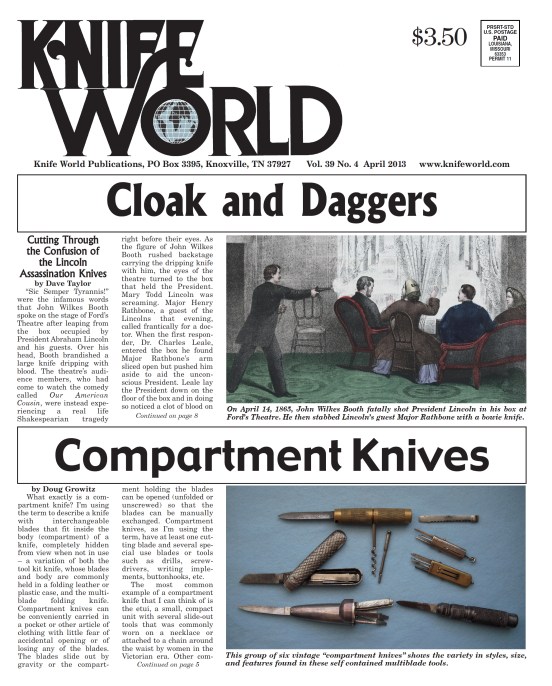
Earlier this year, I had the pleasure of writing a piece for Knife World magazine in which I discussed the bowie knives used by John Wilkes Booth and his conspirators.  The article, entitled, “Cloak and Daggers: Cutting Through the Confusion of the Lincoln Assassination Knives“, highlighted my conclusion that the knife currently on display at Ford’s Theatre as “Booth’s knife” is not the one taken from John Wilkes Booth’s body at the Garrett farm.  I am still working on convincing and motivating those in charge of the Ford’s Theatre museum to correct this mistake.

Cloak and Daggers Knife World April 2013

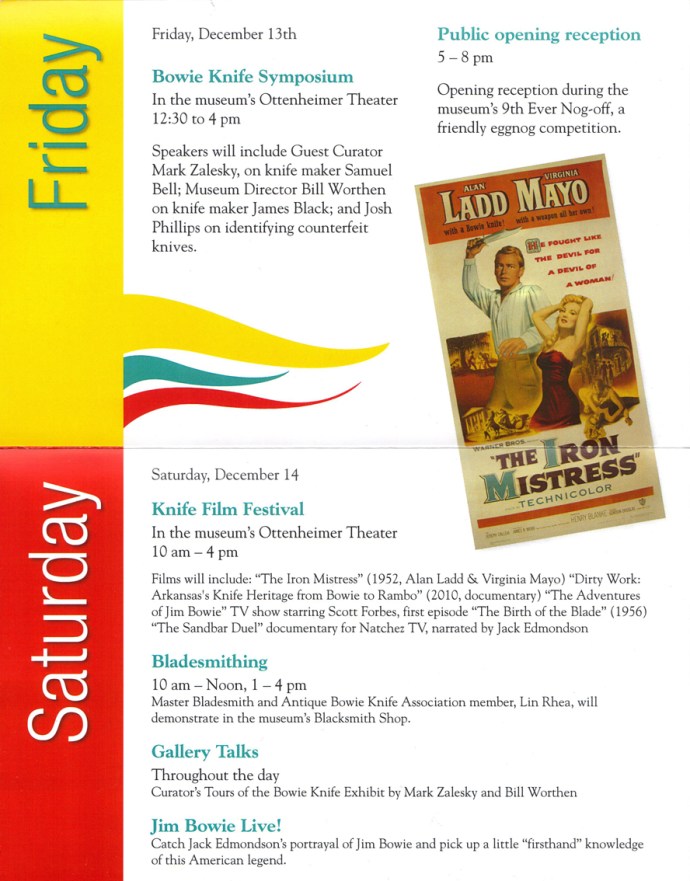
Since the article was published in April, I have kept in touch with the wonderfully nice editor of Knife World, Mark Zalesky.  Mark has been working exceedingly hard recently having been asked to guest curate an upcoming exhibit on the history of the bowie knife in America.  The exhibit, which is called “A Sure Defense: The Bowie Knife in America“, opens this Friday at the Historic Arkansas Museum in Little Rock.  I received this mailer today, advertising some of the events that will be occurring on Friday and Saturday to celebrate the opening of the exhibit:

Bowie Knife Exhibit Events

I’m personally excited for this exhibition for two reasons. First of all, the press release for the exhibit, which can be read here, includes the following paragraph:

“Visitors to the public exhibit will have the opportunity to see knife designs associated with Alamo martyr James Bowie and his less famous brother Rezin, and to examine bowie knives once owned by such historic figures as Davy Crockett, Theodore Roosevelt, General Winfield Scott and John Fox “Bowie Knife” Potter. The role of the bowie knife in the Antebellum era is explored along with the Civil War and the opening of the west, and there’s a special focus on the role bowie knives played in the events surrounding the assassination of Abraham Lincoln.

Using resources such as my article for Knife World, Mark has created a nice display about the knives used by the conspirators. In it, he has been kind enough to give my conclusion regarding Booth’s knife further press and attention.

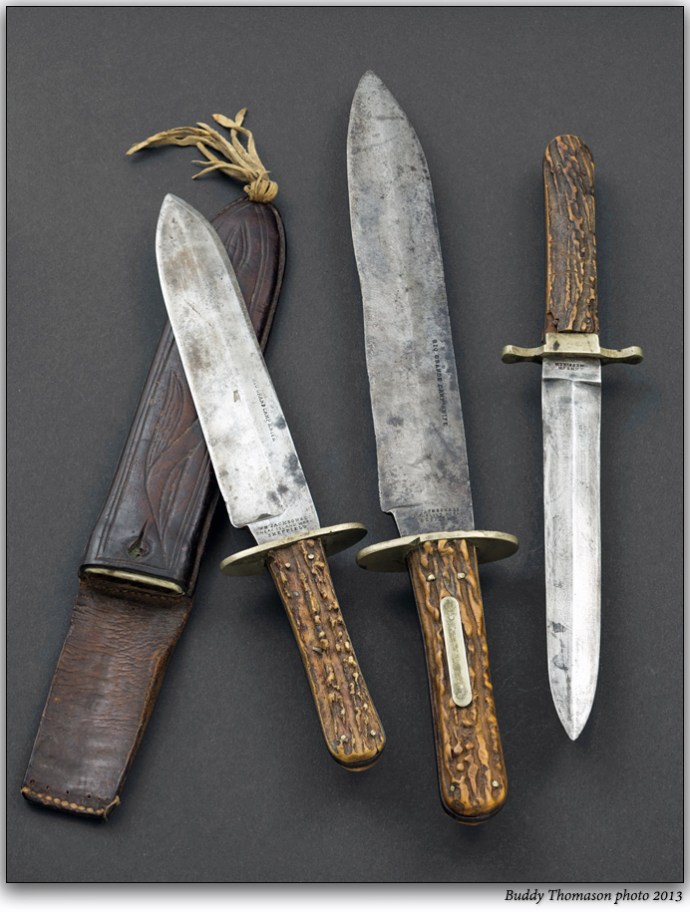
The knives in the Lincoln display for the bowie knife exhibit are period knives, identical to the ones used by the conspirators. They are the same, “make and model” as it were, as the ones on display at Ford’s Theatre and in storage at the NPS or Huntington Library. Here is a picture of “Lincoln knives” in the upcoming exhibit at the Historic Arkansas Museum:

Bowie Knives Exhibit Assassination knves

The rightmost knife above is identical to the “Liberty knife” currently on display at Ford’s Theatre as Booth’s knife. From my research I do not believe this knife was retrieved from Booth’s body as it claimed to have been by the display at Ford’s. Though I am not 100% certain of its origin, my hypothesis is that it came from Mary Surratt’s boarding house in D.C.

The middle knife is identical to the knife found in George Atzerodt’s rented room at the Kirkwood House hotel. David Herold was seen carrying this long knife in his boot during the day of the assassination and probably removed it when visiting in George’s room on that day.  It’s counterpart is on display at Ford’s Theatre.

The leftmost knife is identical to the knife Lewis Powell used to stab Secretary Seward and the knife retrieved from John Wilkes Booth when he was shot at the Garret farm.  Powell’s knife is in the Huntington Library in California.  Booth’s knife is in storage at the NPS’ Museum Resource Ceneter in Landover, Maryland.  I’m working on getting this knife out of storage and properly displayed at the Ford’s Theatre Museum.

It is also with a deal of pride that I state that the leftmost knife and sheath in the above picture, belong to me.  I bought the knife a few years ago, wanting a duplicate of the knife Booth used to stab Major Rathbone.  According to Mark, these “smaller” Rio Grand Camp knives are harder to find as most people want the big ones like the one in the middle.  During the course of our collaboration on the Knife World article, I told him I had an identical knife to Booth’s and he asked if I would consider lending it to the Historic Arkansas Museum for the exhibition.  Though I’m not sure if I will be able to, I’m hoping to find the time to make the journey to Arkansas to see my knife along with over 200 other bowie knives.

For anyone who may live around, or are planning a trip near Little Rock, the exhibit, “A Sure Defense: The Bowie Knife in America” runs from December 13th, 2013 until June 22nd, 2014 at the Historic Arkansas Museum. The Historic Arkansas Museum is open 9 a.m. – 5 p.m. Monday through Saturday, 1 – 5 p.m. on Sunday and admission to the galleries and parking are free.

For those who can’t make it to the museum, a full color catalog documenting this historic exhibit is planned, and will be available from the museum’s gift shop and online store some time in the near future.

I hope those of you in the area will check out the exhibit at the Historic Arkansas Museum. You can learn all about the fascinating history of the bowie knife and say “hi” to my knife and sheath while you are there.

References:
Historic Arkansas Museum
Mark Zalesky, guest curator of “A Sure Defense: The Bowie Knife in America

Categories: Uncategorized | Tags: , | 1 Comment

Osborn Oldroyd and his Lincoln Museums

The Abraham Lincoln Home in Springfield, IL and the Petersen House in Washington, D.C. have shared similar histories.

Lincoln Petersen Home

  • Both homes witnessed the death of a Lincoln:

On February 1st, 1850, Eddie Lincoln, the second son of Abraham and Mary Todd, died at the age of 3 at the Lincoln Home in Springfield.

On April 15th, 1865 at 7:22 am, President Abraham Lincoln died at the age of 56 at the Petersen House in Washington, D.C.

  • Both homes had few owners:

The Lincoln Home was built in 1839 for the Reverend Charles Dresser.  The Lincolns bought it from him in 1844.  Robert Todd Lincoln inherited the property from his parents and he subsequently gave it to the government in 1887.  This gives the Lincoln home two owners, Rev. Dresser and the Lincoln family, before it was purchased by the government.

The Petersen House was commissioned by William and Anna Petersen in 1849 and built that same year.  When they died in 1871, the house was inherited by their children.  They sold the house to Louis Schade in 1878.  By 1896, Louis Schade sold the house to the government for $30,000.  This gives the Petersen House two owners, the Petersens and Louis Schade, before it was purchased by the government.

  • Both homes had considerable remodeling done when their namesakes lived there:

The Lincoln Home had about 5 renovations while the Lincolns lived there.  Most drastically was the alteration of the home from a 1 ½ story structure to a full 2 story home, as it still is today.

The room that would later be known as the room where Lincoln died, was not even part of the Petersen House when it was originally built.  That addition was put on in 1858.  Fire gutted it in 1863 and William Petersen rebuilt it that same year.

  • Both homes had renters:

When Abraham Lincoln was elected President and moved into the White House, he rented out his Springfield home.  When Robert Todd gained ownership of the place, he continued the practice of renting the house out until he gave it to the government.

The Petersens ran their home as a boarding house for many years.  From Congressmen to soldiers, to actors, they rented out rooms to  many needy Washingtonians.

  • Lastly, both homes shared a long-term occupant, Osborn Hamilton Ingham Oldroyd:

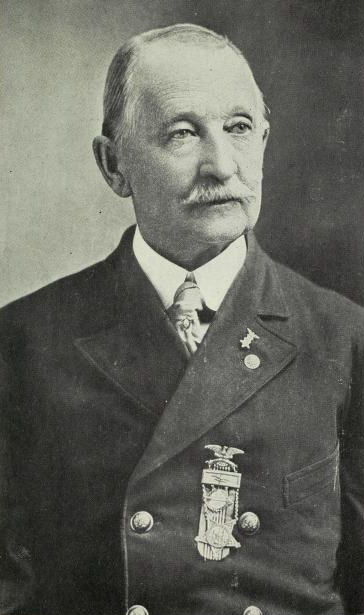
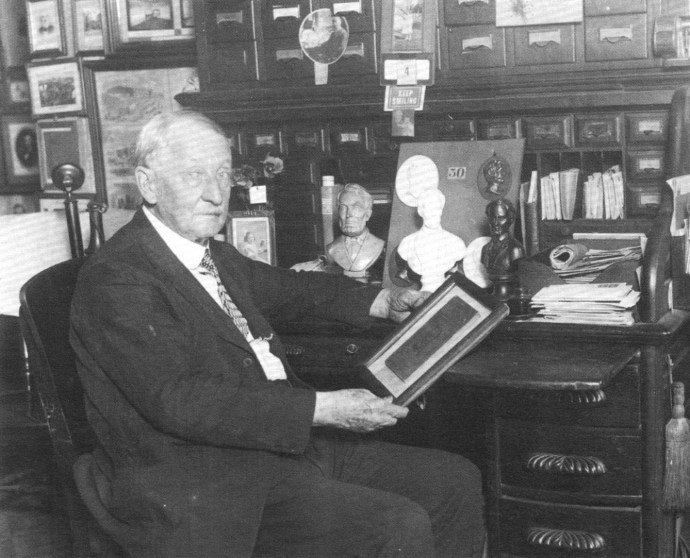
Osborn Oldroyd

Osborn Oldroyd was a Civil War veteran and a devoted collector of Lincoln memorabilia.  In 1883, 41 year-old Oldroyd succeeded in fulfilling the dream of any man who idols another.  Robert Todd Lincoln made Oldroyd the fifth renter of the Lincoln Home in Springfield since his father left the city to claim the Presidency.  Into this historic house, Oldroyd brought his vast collection of nearly 2,000 Lincoln items.  As had been commonplace since the death of Lincoln, many visitors came to call on the Lincoln Home, seeking to visit the home of the great martyr.  Oldroyd let them in like all of his predecessors had, but was the first to charge them admission.  He turned his collection and rented space in a Lincoln Museum.  Robert Todd accepted this exploitation as long as Oldroyd paid his rent, however, by 1885, Oldroyd was starting to fall behind his payments.  Despite not paying him, Robert Todd did not want to bring a lawsuit against Oldroyd as he feared it, “may easily cause me more personal annoyance than the loss of ten times the money.”  Rumors spread that Oldroyd was also cutting off parts of the curtains, wallpaper, and flooring, selling them as souvenirs.  Robert Todd was getting angry with his tenant whom he referred to as a “dead beat” and “rascal”, when an Illinois legislative committee approached him in 1887 to purchase the Lincoln Home.  A similar offer had been given to him in 1883, but at that time he had declined.  Even though, Robert Todd was fairly certain Oldroyd had been the catalyst for this offer, he decided to donate the property to the state of Illinois.  His donation contained two caveats, however.  “…Said homestead shall be, forever, kept in good repair and free of access to the public.”  This latter requirement was probably meant as a final jab towards his “rascal” of a tenant and his entrepreneurial exploits.  Regardless, Osborn Oldroyd was hired by the state of Illinois to be the first custodian of the house and gave him a salary of $1,000 per year.  Oldroyd undoubtedly used this salary to increase his collection at every turn.

Oldroyd’s tenure at the Lincoln Home came to an end in 1893 when he was fired by recently elected Gov. John Peter Altgeld.  Altgeld replaced him with a political friend named Herman Hofferkamp.  Out of a cushy job and a free place to live, Oldroyd was in trouble.  Meanwhile, in Washington, D.C., the Schade family had moved out of the Petersen House apparently fed up with the number of visitors constantly asking to see the death room of the President.  They leased the building to the Memorial Association of the District of Columbia, a group formed by Congress the year before.   When and how Oldroyd managed to convinced this group to make him custodian of the Petersen House is unknown.  According to a biography about Oldroyd written when he was alive, in 1893 Oldroyd moved his collection to the Petersen House, “at the request” of the association.  The earliest account the NPS has managed to find of Oldroyd residing at the Petersen House is June of 1898.  This was after the government purchased the house outright from the Schades in 1896.  So, whether Oldroyd went straight from the Lincoln Home to the Petersen House, or whether he had five years in between, he ultimately found a new location to show off his collection.

While he lived rent free at the Petersen House, Oldroyd did not receive a salary there.  Instead, he got back to his roots and was allowed to charge admission to his museum.  He made the whole first floor of the house his exhibit floor and he and his family lived upstairs.  The first floor of the Petersen House contained considerably less real estate than what he had previously used to showcase his collection at the Lincoln Home.  He covered practically every surface of the Peterson House with material to make up for it.  Oldroyd also had a lot of changes made to the building while he lived there.  Most noticeably, he had the back wall of the room where Lincoln died, removed.

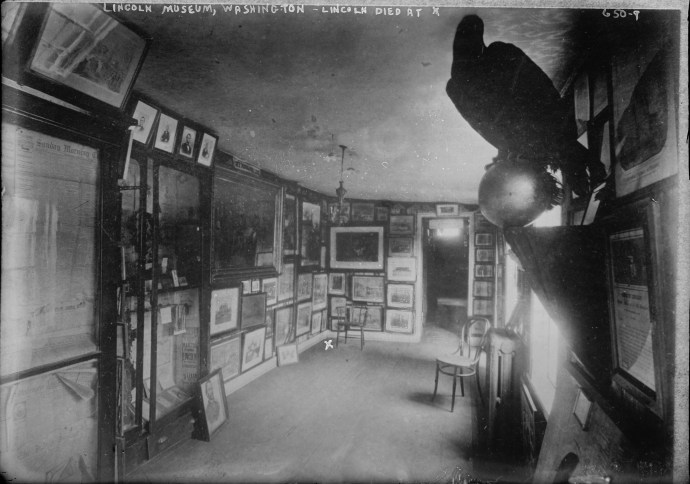
The following are some pictures of the interior of the Petersen House when it housed Osborn Oldroyd’s Lincoln Museum:

Petersen Museum 1922

This picture was taken from within the front parlor of the Petersen House facing towards the rear parlor.  The door to the right leads into the hallway with the room where Lincoln died at one end and the entrance to the Petersen House at the other.

Oldroyd Museum 1

This photo was taken from within the rear parlor of the Petersen House in the direction of the front parlor.  This photo shows only the front parlor.

Oldroyd Museum 2

This photo was taken from the entrance of the room where Lincoln died. The bed Lincoln died in would have been located in the bottom right hand corner of this photo.

The white X marks the spot where the bed Lincoln died in was.

This photo was taken from the rear of the room where Lincoln died in the direction of hallway and Petersen House entrance. The X marks the location of Lincoln’s deathbed.

Oldroyd in his museum

During his tenure at the Petersen House, Oldroyd continued to collect and correspond with many individuals associated with Lincoln’s life and death.  In 1901, after walking the escape route of Lincoln’s assassin on foot with a camera, he published his book, “The Assassination of Abraham Lincoln”.  This volume contains many of the earliest photographs we have of different parts of the escape route.

Oldroyd walking the route

By 1926, after about 30 years curating his collection at Petersen House, Oldroyd sought the help of Congressman Henry Rathbone of Illinois, to insure its preservation.  The son of Henry Rathbone and Clara Harris, the ill fated pair who joined Mr. and Mrs. Lincoln at Ford’s Theatre that night, managed to pass a bill in Congress authorizing the purchasing of Oldroyd’s collection.  Experts at the Smithsonian noted that the collection “was of little practical value”.  Despite this, Oldroyd was paid $50,000.  Oldroyd later stated that he had been offered far greater amounts for the collection by private individuals but that he wanted the collection to be in the hands of the government so that it would be preserved and enjoyed by the public for years to come.  When offered continued curatorship over the collection Oldroyd replied, “the responsibility would be too much for me to assume at my age of eighty-four years.”  Oldroyd was then given the key to the Petersen House and told that he was free to come and go as he pleased and that his accustom chair would always be there for him.

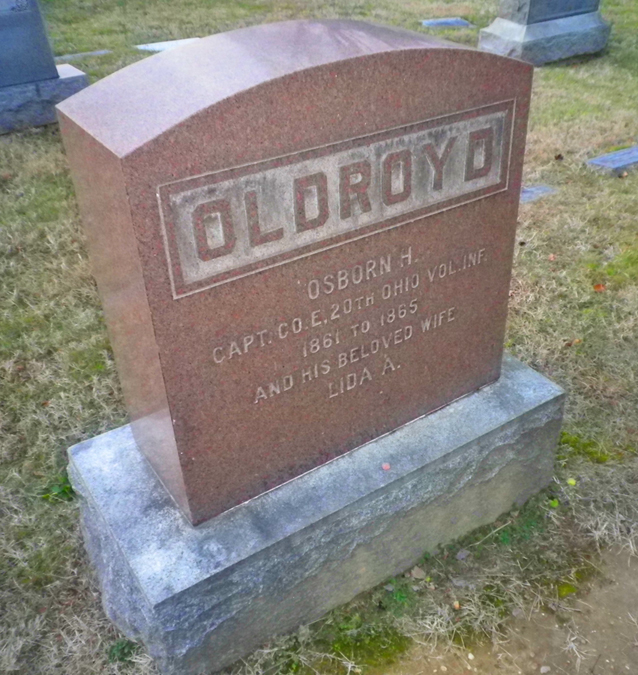
Osborn Hamilton Ingham Oldroyd died four years later in 1930.  He  is buried next to his wife of over 54 years, Lida, at Rock Creek Cemetery in Washington, D.C.

Oldroyd's grave

He may have been a “rascal” as Robert Todd Lincoln called him, but Osborn Oldroyd was also the epitome of a collector.  He devoted his whole life to acquiring everything relating to Abraham Lincoln.  For nearly half of his life, Osborn Oldroyd made his home in houses relating to the 16th President.  To the collection and study of Lincoln, Osborn Oldroyd’s name is unavoidable, particularly in the study of his assassination.  I find it entirely appropriate then, that in this picture of Rep. Henry Rathbone in front of the Petersen House Lincoln Museum, the presence of Osborn Oldroyd in his favored setting is enshrined forever:

Rathbone in front of Oldroyd's Petersen

Oldroyd in the window

References:
House Where Lincoln Died Historic Structures Report by the National Parks Service
Life of Osborn H. Oldroyd by William Burton Benham
Giant in the Shadows: The Life of Robert Todd Lincoln by Jason Emerson
Lincoln Home National Historic Site
The Lincoln Assassination: Where Are They Now? by Jim Garrett and Rich Smyth

Categories: Uncategorized | Tags: , , , | 14 Comments

Assassination Ads and Apps

Last Sunday’s The Washington Post devoted an entire section to the Civil War:

20130504-190925.jpg

Inside the 16 page section there were several interesting articles relating to Civil War events that happened 150 years ago. While exploring it my attention was drawn to a couple of advertisements regarding the assassination:

20130504-191816.jpg

20130504-191837.jpg

20130504-191937.jpg

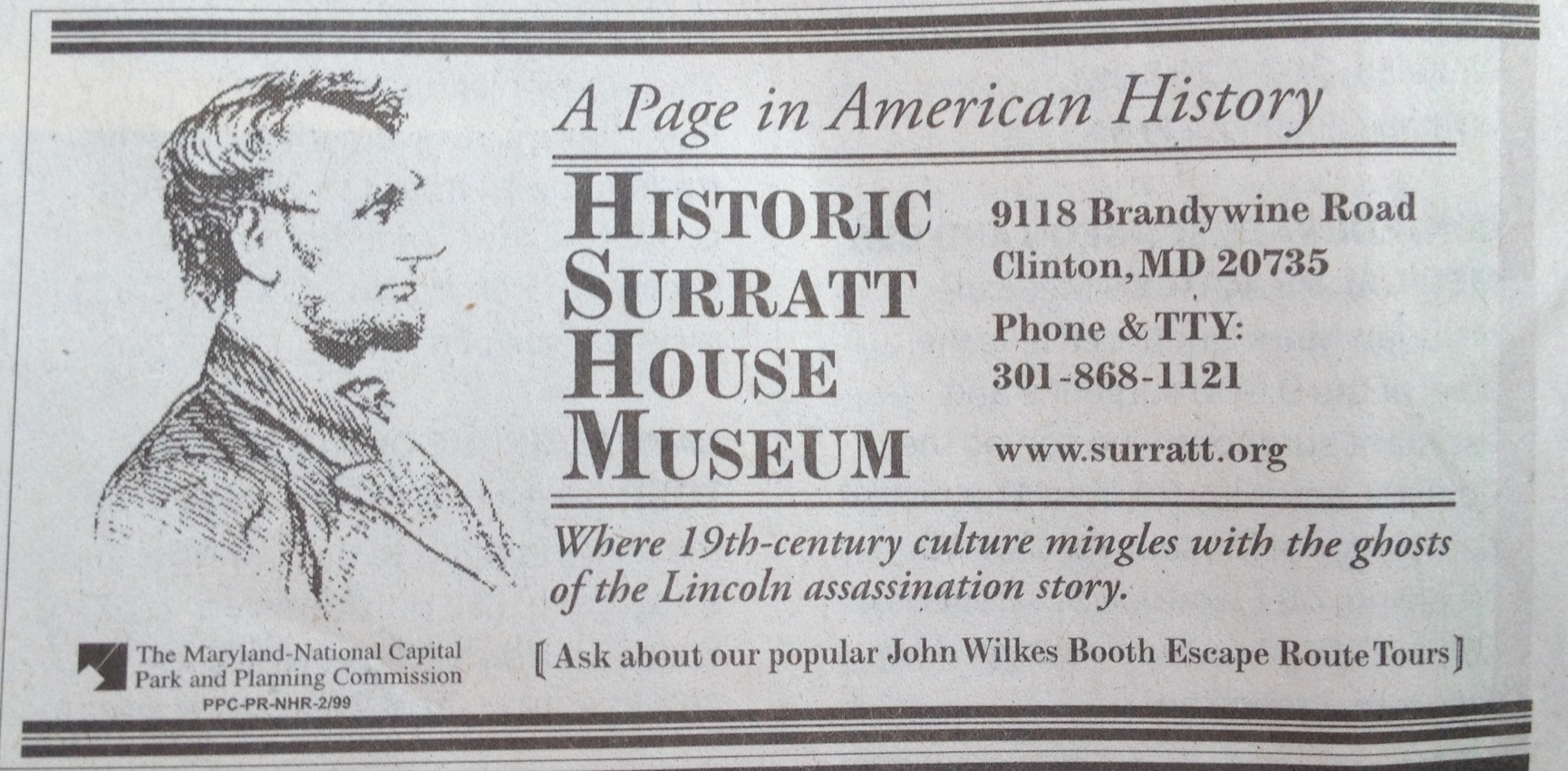
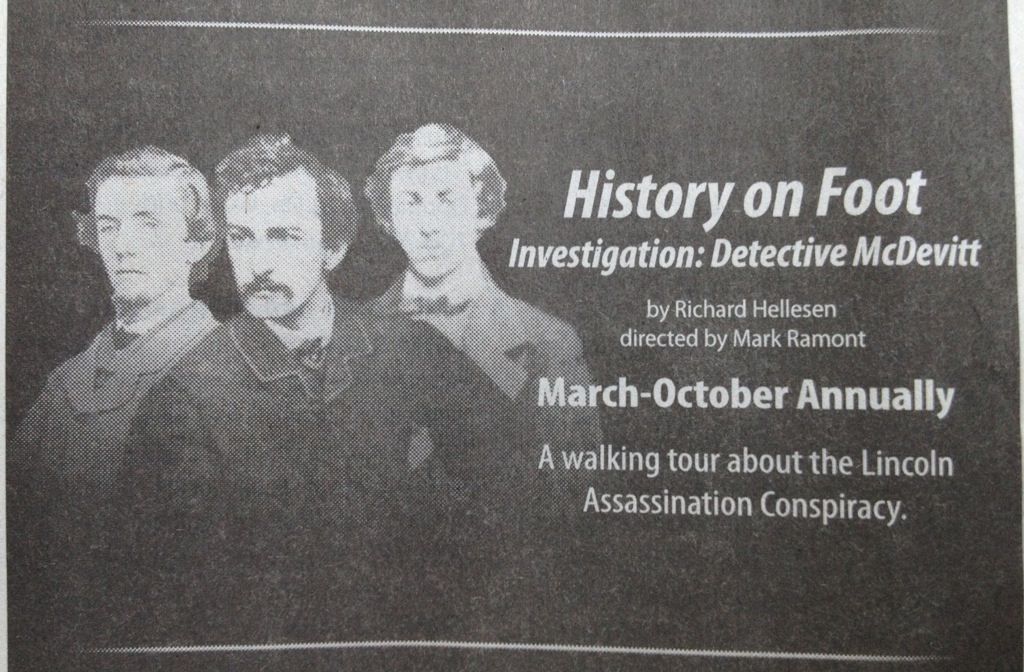
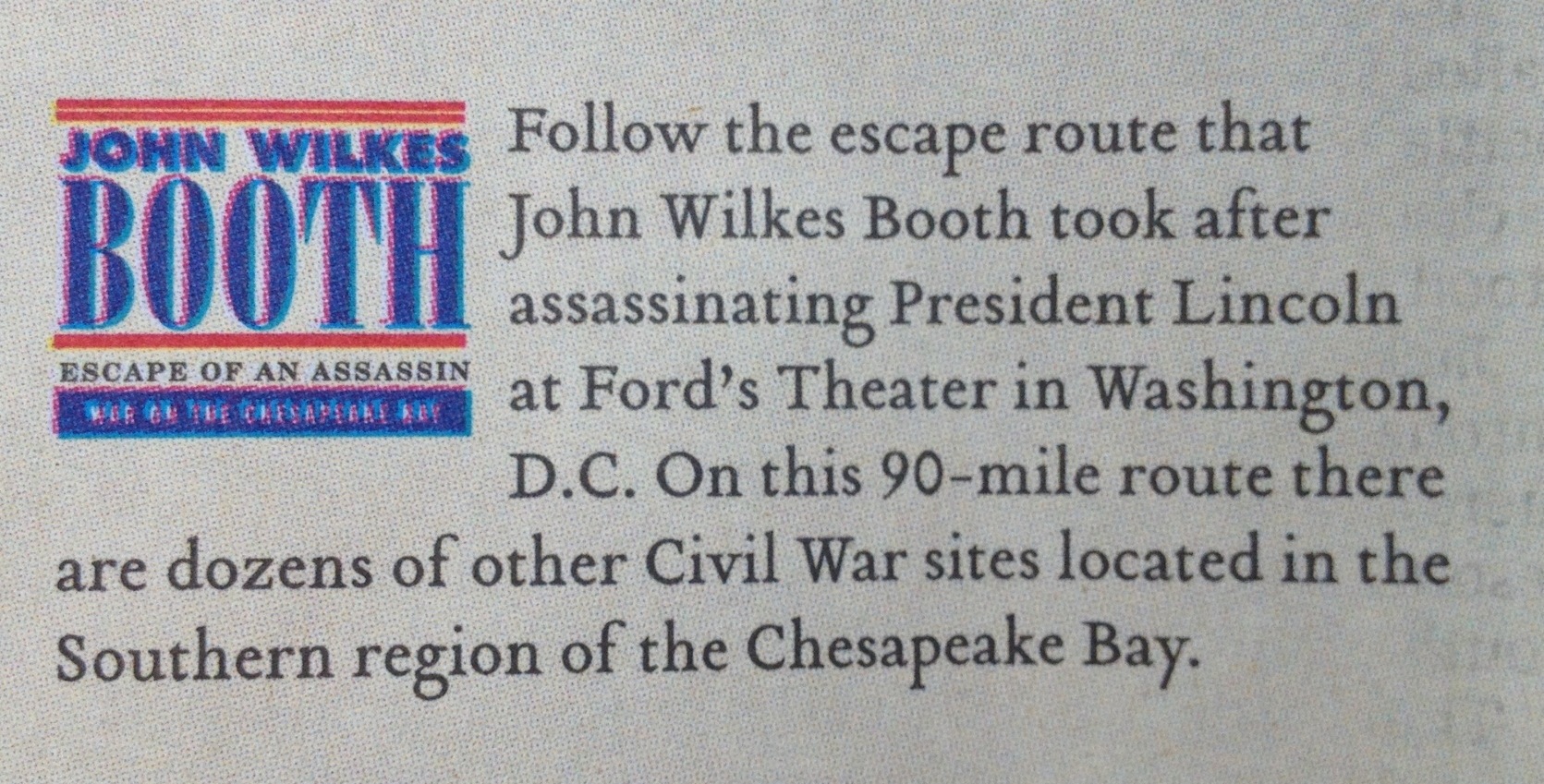
I like seeing the rarely used wanted poster image of David Herold in the advertisement for Ford’s Theatre walking tour and the small note on the bottom of the Surratt House, “Ask about our popular John Wilkes Booth Escape Route Tours”. They are quite popular, indeed.

In addition to these ads, there was also a Visit Maryland ad that highlighted their Civil War Trails program:

20130504-192637.jpg

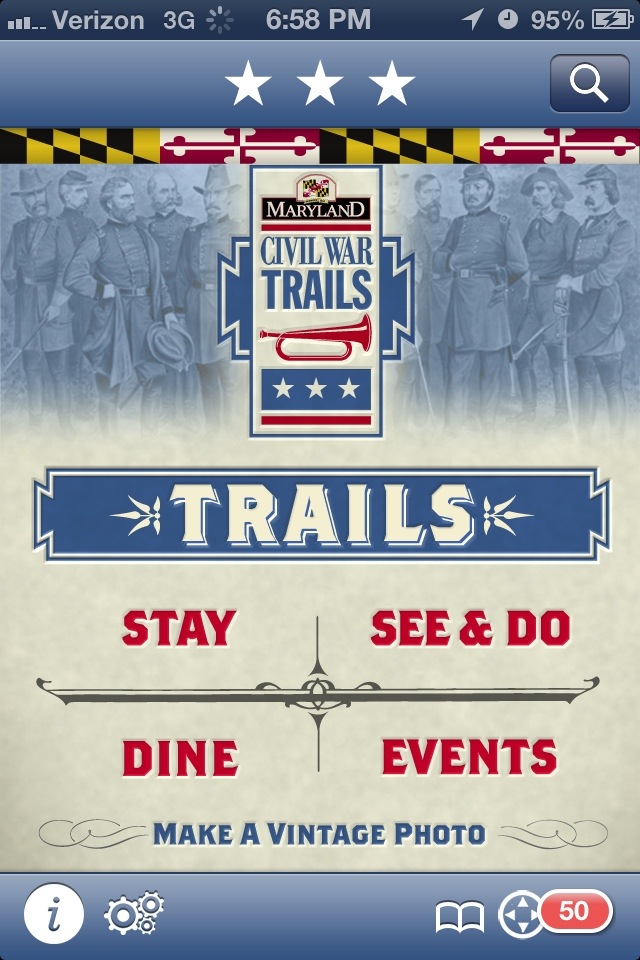
It also mentioned their new mobile app and so I decide to download it:

20130504-194657.jpg

I wanted to see how their tour app of the assassination route compared to the app created in conjunction with Michael Kauffman’s new book, In the Footsteps of an Assassin:

20130504-195042.jpg

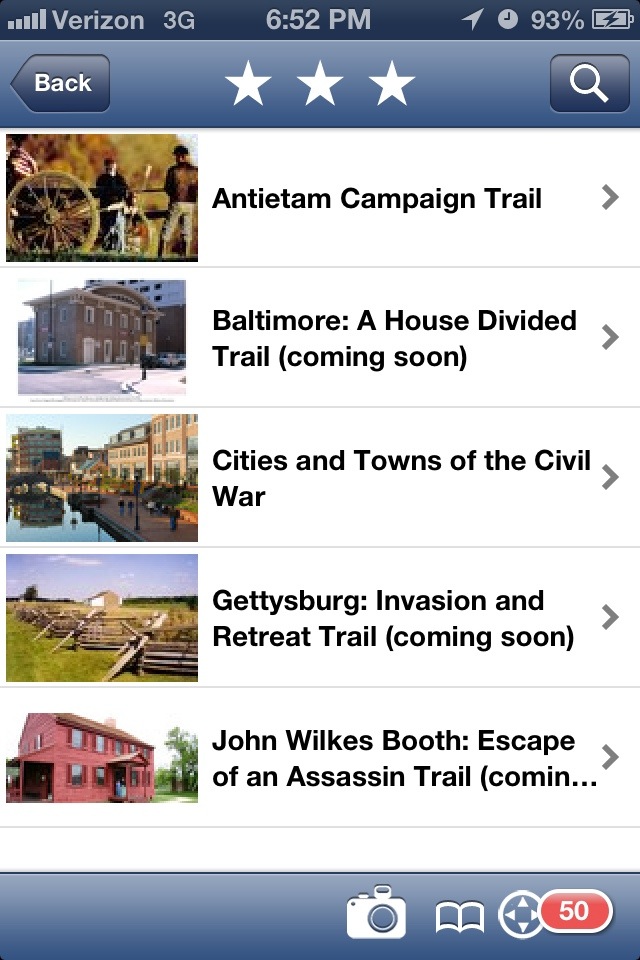
Sadly, the Booth escape route portion of the Civil War Trails app is, “coming soon”.

20130504-195527.jpg

So, as of now, Michael Kauffman’s app is still the only mobile app out there for the assassination route. The app itself is free and called, “MyTourGuide” and then it costs $9.99 to purchase the escape route tour. There are a few mistakes in it, (the Herndon House narration doesn’t work, the locations of some of the sites are a bit off) but it’s a nice start for those who want/have to experience Booth’s escape on their own. Once the Civil War Trails app is updated, I’ll review that one further.

Categories: Uncategorized | Tags: | 9 Comments

The Port Royal Museum of American History

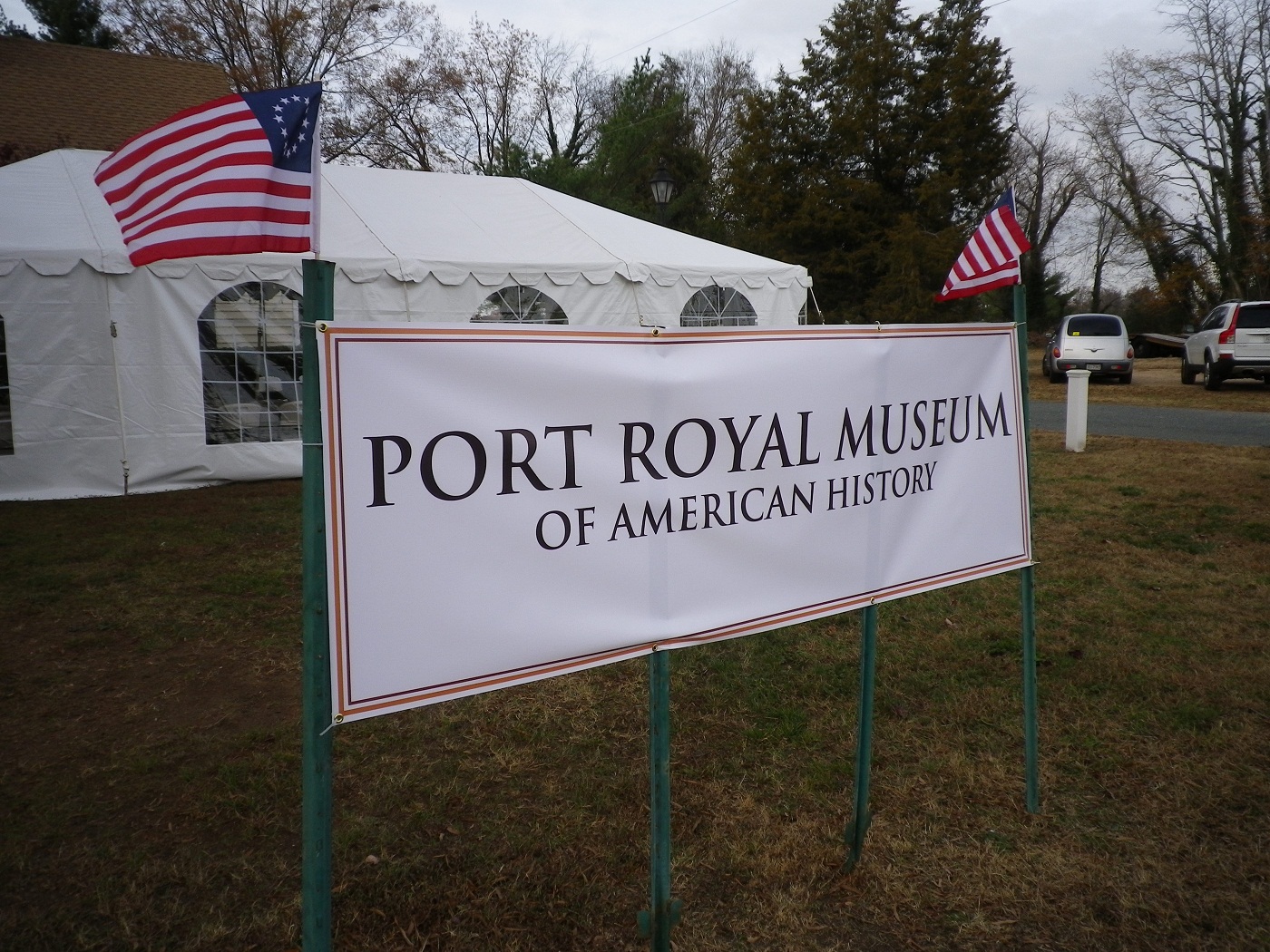
Today I attended a “soft opening” of a new museum in Caroline County, Virginia.  Called the Port Royal Museum of American History, it is located in the heart of Port Royal right off of Route 301 in the former Union First Market Bank building.

The museum contains the extensive collection of Herbert Collins, a former curator of the Smithsonian’s National Museum of American History, who I have highlighted on this blog before.  Herb’s collection of White House china takes up an entire room in the new museum as does his collection of toleware pieces.

The whole museum is decorated with many paintings by Sidney King who was the main painter for the National Parks Service for many years.  He created over 180 paintings for the nation’s parks with his most famous being his large Jamestown paintings.  Herb Collins was good friends with Sidney King and collected over 30 paintings by him.  Upon Mr. King’s death in 2002, Herb gave the eulogy at his funeral.

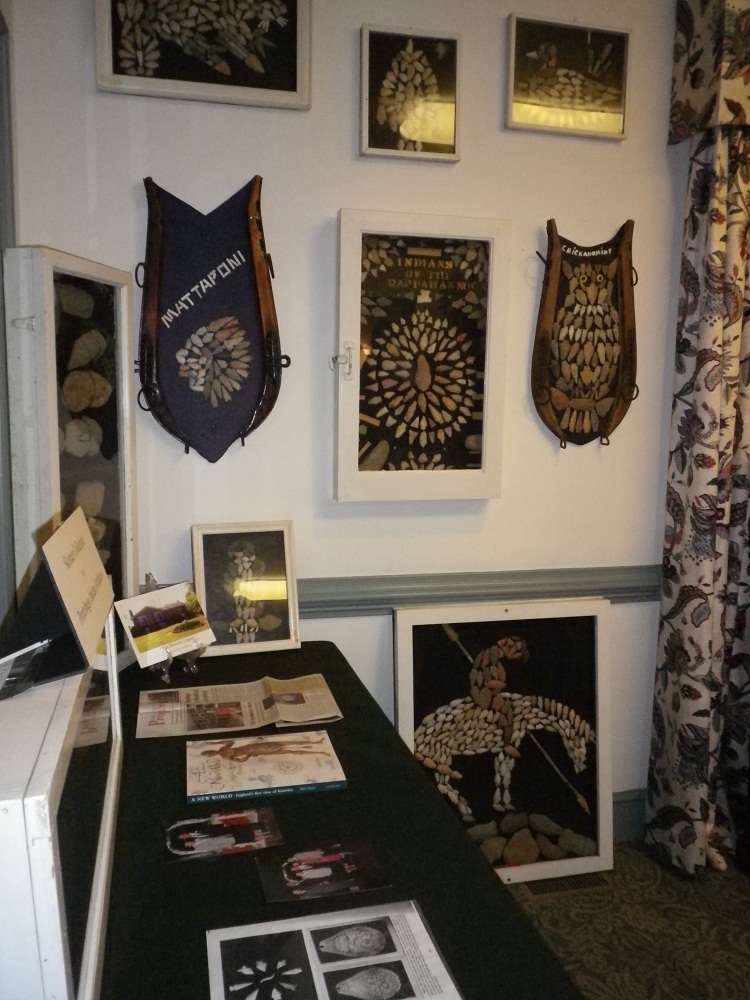
In addition to these many items from Herb’s collection, which he permanently donated to Historic Port Royal, the museum also holds a large number of Native American artifacts collected by the Skinner family of Caroline County.

The museum is not a large one, really only one main room and two small ones, but it’s collection is a wonderful mix of old and new.  Important to the history of Caroline County, the museum also has a few items relating to John Wilkes Booth and his death at the Garrett’s.

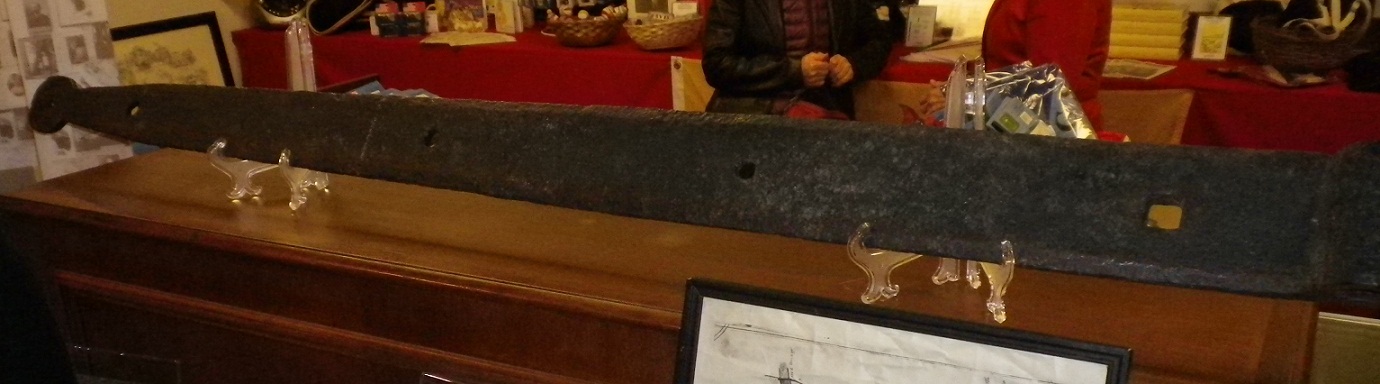
The most notable item is a hinge said to be from the barn in which Booth died.

The affidavit that accompanies it is from Sidney King and states the following:

“John Wilkes Booth, an actor and southern sympathizer, shot Lincoln while watching a play at the Ford Theater in Washington, D.C.  Twelve days later he was captured at the Richard H. Garrett estate barn near Bowling Green, VA.

In 1954, the National Park Historian Frances Welshun obtained permission to search the area where the barn once stood.  This large wrought iron hinge was found there.  The remaining hinges were never found.  This hinge was left in my charge and I present this hinge to the Caroline Historical Society as a loan, the 28th of Jan. 1990.

Sincerely,

Sidney E. King”

While there is no way to prove its authenticity, it’s still fun to hiope that this hinge could have come off the barn in which Booth died.

The Port Royal Museum of American History won’t have its true grand opening until the spring.  When it does open for good, I hope some of you in the area will stop by and show the museum your support.  Thanks to the generosity of Herb Collins and the selfless work by the members of Historic Port Royal, the history of Caroline County, Virginia, and the United States as a whole, will continue to be shared.

Categories: Uncategorized | Tags: , , , | 10 Comments

Herbert Ridgeway Collins – A Living Legend

As opposed to most of the people I talk about here on BoothieBarn, the subject of this post is a man with no historical connection to the Lincoln assassination.  Even further afield from my modus operandi, the subject of this post is also very much alive.  In fact, this week he celebrated his birthday.  My reasoning for departing from my ‘regularly scheduled assassination programming’ is to highlight a very unique man who has lived the most interesting life of anyone I have ever known.

To start this off, I have to admit that I only met Herb Collins for the first time less than a month ago.  Through our mutual friend and researcher Jim Garrett, I had the opportunity to make the acquaintance of Mr. Collins when a group of us went exploring in his home county of Caroline County, VA.  After this relatively brief introduction and tour of his historic house, I called him up and spent an entire Sunday attentively listening to this remarkable man.  This weekend, I will again be driving into Virginia to spend the day learning from him.  What follows is merely a small sampling of some of the unique experiences he has had and shared with me.  There may be some mistakes in my narrative, as I am going from memory.

Herbert Ridgeway Collins is a native born son of Caroline County, Virginia.  The house he grew up in, still owns, and has transformed into a personal museum is called Green Falls and was built in 1711.  It has been in the Collins family since the 1787 and is on the National Register of Historic Places.

Green Falls in Caroline County, VA

Herb has furnished the house with many beautiful antiques and he can give the origin of every single one.  From a mirror belonging to President James Madison to rare chairs with matching pairs in Mount Vernon, Green Falls is remarkable in its furnishings and history.  Some local historical societies schedule tours of his magnificent place, while Herb occasionally gives private tours to those he catches admiring the house from the road.

Herb Collins giving a tour of his beautiful Green Falls estate

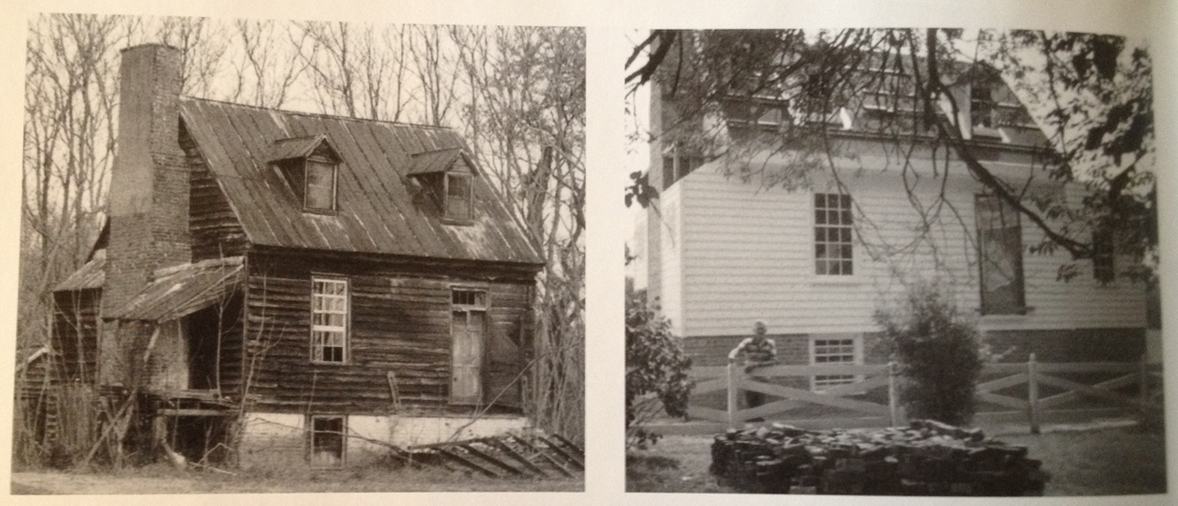
In addition to the main house, Herb also purchased a period plantation overseer’s house from a neighbor.  He had the structure physically moved a few miles down the road and placed next to his house.  He then painstakingly restored the very dilapidated building to its original glory and furnished it accordingly.  The most amazing part, however, is that this has been what Herb Collins has done, merely in his retirement.

As a young man, Herb was always interested in history.  When he joined the army as a young man, fate smiled on Herb.  A secretary of a Missouri congressman bought a house opposite of Herb’s Green Falls home.  Through her, Herb was able to secure a position assigned to the Pentagon.  Here he was responsible for preparing the top secret briefing charts for the Secretary of the Army.  He was also able to take a genealogy class through the National Archives that coincided with his love of history.  When he wasn’t on duty or in class, he was working on a book of his own family’s genealogy.  At the age of 22, he published it.  It would be the first of many books that he would write.  After six years in the army at the Pentagon, Herb was discharged.  The class he had taken in genealogy made him very desirable to three different institutions, the Library of Congress, the National Archives, and the Smithsonian.  In the end, Herb decided to join the Smithsonian where he became a junior researcher in the Smithsonian’s political history collection.  He eventually made his way to the top, retiring as the Executive of the American History Museum and division chief of the political history collection.  It is during this period that Herb Collins met, dined with, and acquired items from practically every President and First Lady from Harry Truman to George Bush, Sr.  Here are some of the stories, both long and short, that he told me about his time at the Smithsonian:

  • Herb recounted to me his first trip to meet Harry Truman.  The Smithsonian did not have a lot of items from Truman’s time as President.  Herb traveled to Truman’s home of Independence, Missouri and met with the former President and First Lady Bess Truman.  Herb’s genealogical education made him aware that he was distantly related to Bess Truman, and that both Bess and Harry Truman were related to families from Port Royal, VA (on a side note, Herb seems to know the genealogy of every old family in Virginia.  His memory of families and connections is uncanny).  According to Herb, Harry Truman was the kind of guy that enjoyed making a person feel uneasy.  Every sentence that Herb spoke, Harry Truman would battle a response right back to him, trying to throw him off.  When asked if he had any sports memorabilia to give the Smithsonian, Truman said he didn’t because he couldn’t see well to bat in baseball so they made him play umpire because you didn’t need to see to be umpire.  When Herb said he didn’t have anything from Truman in the Smithsonian, Truman just answered, “Well why don’t you get something?”  Eventually, Truman found that for everything he said, Herb was able to come up with an answer for him.  After that he stopped acting difficult and slapped Herb on the back and invited him to see some political cartoons he had framed out in the back office.  Truman enjoyed when people took punches at him like Herb had done and he had framed some of his favorite political cartoons that had mocked him when he was president.  Together Herb and Harry Truman laughed and joked about them, and Truman genially offered some of his items to Herb for the Smithsonian.
  • When President Dwight Eisenhower died, he wanted to be buried his complete uniform.  At the funeral home that was preparing the body, they found that they did not have a shirt or socks that matched his uniform.  The funeral home called the military history department of the Smithsonian and asked them if they had any extra matching shirts and socks that they could have to bury Eisenhower in.  As a matter of fact they did.  When Herb had left the army, he donated his uniforms to the Smithsonian for his period in history.  The shirt contained Herb’s laundry mark.  With his blessing, the Smithsonian sent over Herb’s old shirt and socks to the funeral home.  President Eisenhower was buried in Herb Collin’s issued shirt and socks.
  • Herb Collins became good friends with JFK’s secretary, Evelyn Lincoln.  Two books in his collection are autographed copies of hers with long messages of appreciation and friendship.  Evelyn Lincoln was married to a man named Harold Lincoln.  Herb was unaware that Harold’s nickname was ‘Abe’ Lincoln.  One day he received an invitation in the mail to attend a rally for Abe Lincoln, who was running for Congress.  He ignored the mailer.  Days after the event, Evelyn called Herb and asked him why he didn’t come to support her husband’s run for Congress.  Herb told her that he didn’t know Harold went by Abe, and that he thought “Abe Lincoln running for Congress” was just a joke.  The two had a good laugh about it.
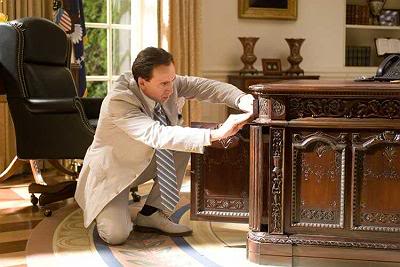
  • After JFK was killed, Jackie Kennedy and others toured the country trying to raise money for a JFK museum.  They traveled with exhibits about the late president to raise funds.  Herb wrote to Jackie informing her that the flag that flew over the Capitol on the day of the President’s funeral was hers.  She wrote him back thanking him for letting her know that.  One item that went traveling to raise money was the famous Resolute desk from the Oval Office.  Johnson didn’t want to use the desk as he found it too big.  Those of you who have seen the movie, National Treasure 2: Book of Secrets, will know that the Resolute desk plays an important part of Nicholas Cage’s clue finding.  In the movie he makes his way into Oval Office and, by pulling out drawers to the right length, unlocks a secret compartment in the desk: While you may all be shocked to learn this, there is no hidden compartment in the Resolute desk.  Herb Collins has taken the Resolute desk apart, “a dozen times”.  He told me it all comes apart fairly easily and he helped pack it up when it went on tour to raise money for the JFK museum.  When it was done touring, Herb took control of it and placed it in the collection of the Smithsonian.  It stayed, on display in the Smithsonian until Carter asked for it back.  According to Herb, he was out to lunch one Wednesday and when he returned to the Smithsonian he had a message from Jimmy Carter asking for the Resolute desk to be placed back into the Oval Office by Friday, as he wanted to show it off to some foreign delegates.  Herb said he took it apart, had it transported over to the White House, and reassembled it for Carter in the Oval Office right on time.
  • Herb had the chance to meet many Presidents but he spent more time with the First Ladies.  He stated that his favorite first lady was Pat Nixon.  According to him she was the most down to earth.  In conversations with Herb, she never said, “The President” or “Mr. Nixon”, it was always just, “Dick” and she invited Herb to refer to him as the same.
  • Herb has written over 25 books.  During his time at the Smithsonian he created almost encyclopedic volumes about political flags and lanterns, as well as writing books about the transportation methods of the presidents.  He was one of the first to call attention to a fall that Mary Todd Lincoln suffered in a carriage accident that caused her to suffer recurring dizzy spells that may have exasperated her mental decline.
  • Herb has a credit in the Lincoln assassination book by Dorothy and Phillip Kunhardt entitled , Twenty Days.  He recalled when they came to the Smithsonian and wanted to photograph the conspirators’ hoods and jail keys.  At one point, they wanted a picture of what was thought to be Mary Surratt’s hood.  Looking around, Herb couldn’t find a female bust to place the hood over.  In a pinch he saw a bust of Henry Clay, Kentucky’s noted politician who served multiple times as Speaker of the House and was John Quincy Adams’ Secretary of State.  According to Herb, Henry Clay had a small, feminine enough looking head to pass as Mary Surratt’s.  So, Herb slipped the hood onto Henry Clay’s bust and the Kunhardts photographed it.  Sadly, that particular shot did not make it into their Twenty Days book.

There were other stories and insights Herb shared with me from his time with the Smithsonian, but these are the main ones I can remember for now.  Herb is an unending fountain of information and I am looking forward to the many conversations I will have with him in the future.

UPDATE:

Yesterday I once again spent the day with Herb.  We visited the Caroline County library in Bowling Green, VA where Herb has his Herbert Collins Room.  The room holds his massive collection of books about genealogy, Virginia history, and the history of Caroline county.  It is a private research room accessible by appointment only.  After that Herb and I traveled to nearby Essex County to visit an antique store in Tappahannock that he regularly purchases items from.  Herb’s only purchase for the day was a copper kettle that he said would match one he already had at Green Falls.  While at the antique store, Herb openly talked with other patrons and helped them pick out pieces.  Through these conversations with strangers, I met the president of the Restore Port Tobacco organization.  He was pleasantly surprised that I knew about the Chimney House in Port Tobacco, behind which George Atzerodt’s carriage shop was purported to be. Apparently the Chimney House is on the market now.  After this we traveled back to Herb’s home and subsequently ended our day together.  The following is some of the pictures I took yesterday:


The Herbert Collins room at the Caroline County Library

Herb Collins researching in his room

The left image is what the Overseer’s house (mentioned above) looked like before it was moved to Green Falls and restored. The right image is what the house looked like while renovations were underway. The house is a sight to see today.


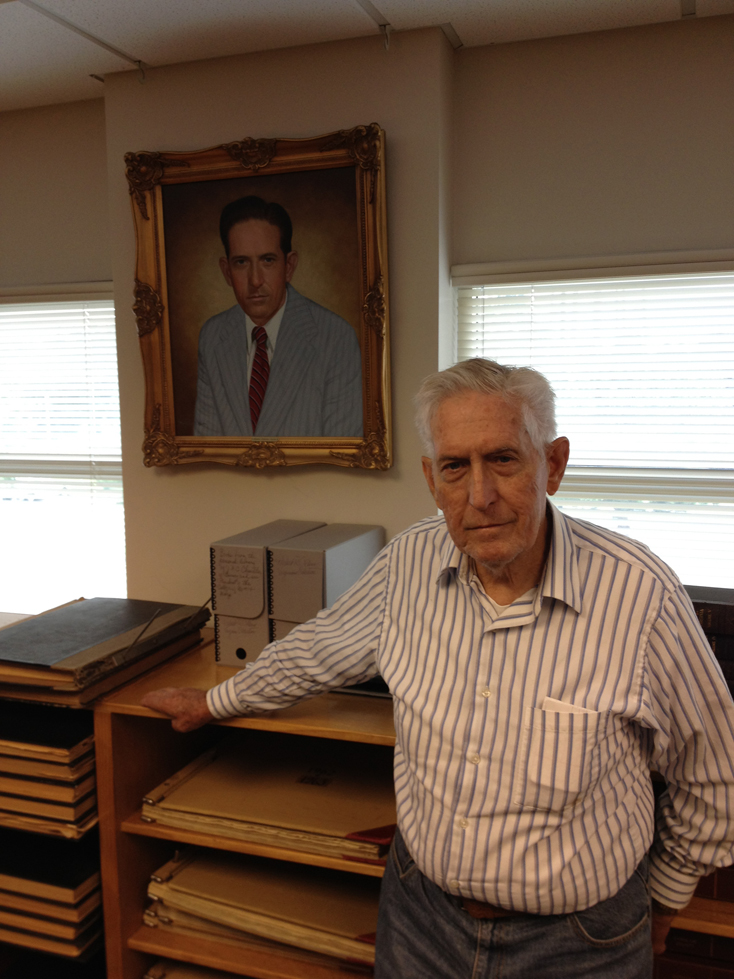
Herbert Ridgeway Collins and his portrait 

Categories: Uncategorized | Tags: , , | 26 Comments

Visit the Surratt Tavern in…Chicago, IL?

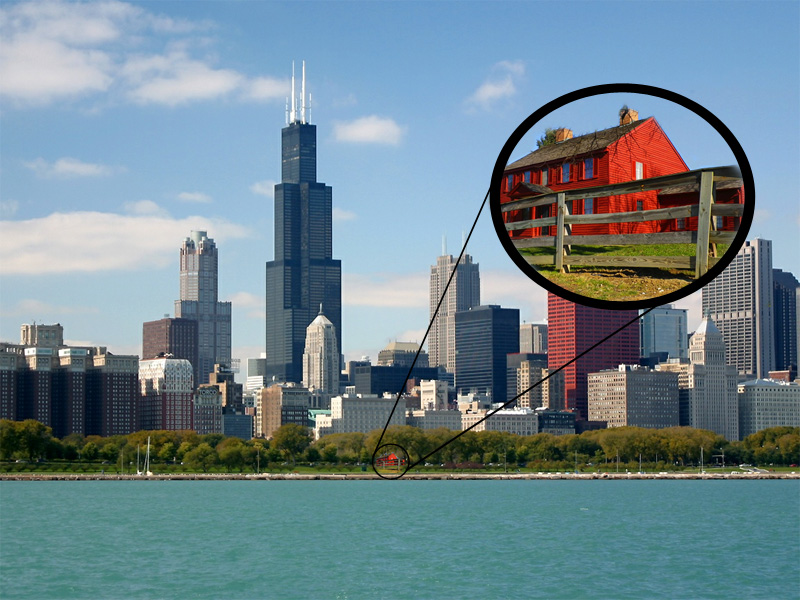
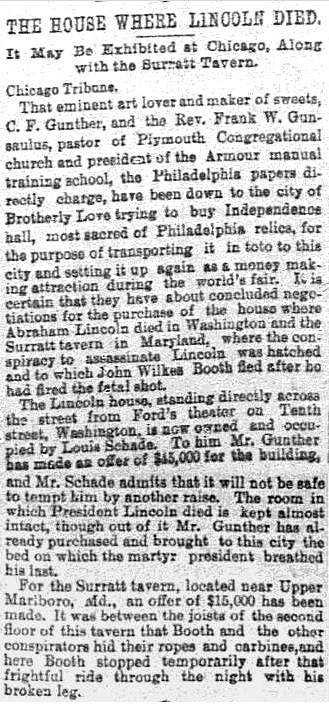
If wealthy candy confectioner and noted collector Charles Gunther had gotten his way, Chicago would have become the home of many transplanted historical sites:

If relocating entire buildings like this sounds like an impossible feat, know that Charles Gunther had already done it once.  In the late 1880’s he purchased the Libby Prison from Richmond, Virginia.  He dismantled the prison, transported it to his hometown of Chicago, and rebuilt it there.  The Libby Prison Museum operated from 1889 to 1895 before decreasing visitors forced Gunther to dismantle it.  When this article was written in 1893 it is likely Gunther was hoping to reinvigorate his museum by creating an entire campus of historic sites.

As we know, Gunther never managed to purchase Independence Hall, the Petersen House, or the Surratt Tavern.  Despite his generous offer to Louis Schade, the Petersen house was eventually sold to the federal government instead.  Had the Petersen House been sold to Gunther, he could have reunited the building with some of the items that were there when Lincoln died.  The bed upon which Lincoln died and many other articles from the Petersen house were acquired by Gunther in 1889.  When Gunther died, the Chicago Historical Society purchased most of his extensive collection.  This is the reason why Lincoln’s true deathbed is in the Chicago History Museum and not in Washington, D.C.

I believe Charles Gunther’s proposed acquisition of these historic sites allows for a very entertaining “what if”.  Imagine what it would be like to look out a window of the Surratt Tavern and see the house where Lincoln died.  Imagine the historical DisneyWorld that could have existed in Chicago.  Instead of Mickey Mouse ears, visitor would purchase powdered wigs at the “Ye Olde Independence Hall Gift Shop” before taking the monorail to the “Lincoln Assassination Pavilion”.  Had this eccentric collector been able to build his dream, how differently our nation’s history would be interpreted today.

References:
The Chicago Historical Society has a nice website recounting Charles Gunther’s collection and Libby Prison Museum.

Categories: Uncategorized | Tags: , , , | 10 Comments

Artifact History: Nélaton probe

The collection of the National Museum of Health and Medicine (NMHM) contains several objects relating to Presidential health and care.  In regards to the Lincoln assassination, the museum contains items extracted from both the President and his assassin during their subsequent autopsies.  Booth’s vertebrae and a piece of his spinal cord, through which Boston Corbett’s bullet passed, are housed in this collection.  From Lincoln’s autopsy, the museum has pieces of Lincoln’s skull, the bullet that took his life, and some hair clippings taken by the doctors and surgeons as mementoes.  As was previously written, the collection was once housed at Ford’s Theatre from 1865 – 1887 when it was called the Army Medical Museum.   During that time at Ford’s however, the Lincoln relics were not part of the collection, only Booth’s pieces were there.  In fact, the bullet that killed Lincoln was entered as an official exhibit during the Conspiracy Trial and it, along with the skull pieces, were housed with the other evidence in the office of the Judge Advocate General.  In 1940, the exhibits were donated to the Lincoln Museum (Ford’s) who then gave the bullet and pieces of Lincoln to the Medical Museum.  So while pieces of Lincoln and Booth both returned to the venue of their last living meeting, it was not at the same time.

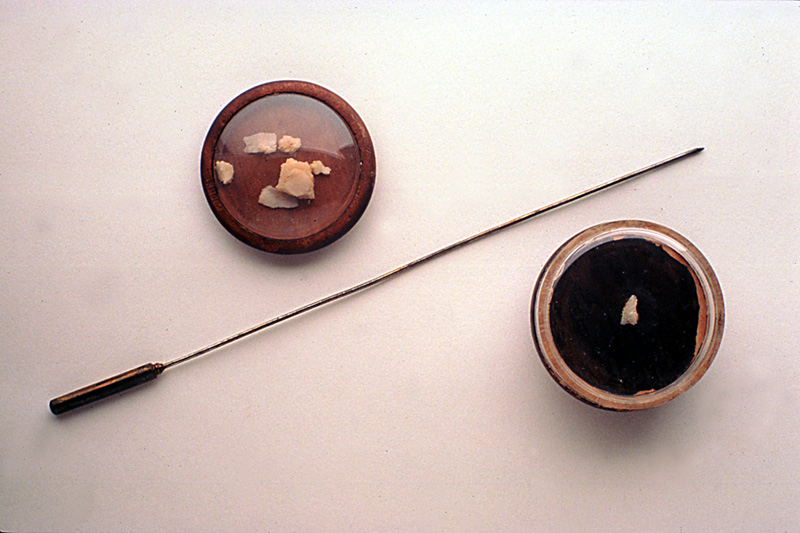
In addition to the bullet and the skull fragments, the National Museum of Health and Medicine also has a rather unassuming instrument housed with these Lincoln relics: a long, medical probe:

Lincoln’s skull fragments and Nélaton probe
(NMHM)

This probe has a specific name and a specific function.  Called a Nélaton probe (or Nélaton’s probe) it was used by the doctors during Lincoln’s final night to ascertain the depth and path of the bullet in Lincoln’s head.  Before delving into that, however, let’s look at the history behind this medical tool.

In 1862, Italian general Giuseppe Garibaldi, was shot while trying to take control over the city of Rome.  At that time, Italy had just completed a massive unification to create one kingdom.  This kingdom of Italy later became the republic of Italy as we know it now.  However, as of 1862, several cities in Italy did not accept unification and Rome was one of them.  Tired of waiting for them to come around, General Garibaldi decided to raise a volunteer force to take the city of Rome.  The Battle of Aspromonte, as it was called was fought between Garibaldi’s men and the Royal Army of Italy on August 29th, 1862.  Both sides were hesitant to harm the other as they were countrymen and Garibaldi was well liked and supported by the people of Italy.  When the Royal Army “attacked” Garibaldi’s forces, he ordered his forces not to fire on their brothers.  One part of his army did attack though, and during the fire fight, Garibaldi was hit three times.  The battle lasted less than ten minutes with only 15 combined casualties.  Garibaldi and the rest of his volunteers were arrested and imprisoned.

While imprisoned, Garbaldi was still given the respect and medical treatment he deserved.  Two of the three shots Garibaldi received were to the hip and proved easily treatable.  The third shot hit Garibaldi’s right ankle, just a little above and in front of what we would consider the “ankle bone” (scientifically, it was his internal malleolus).  This wound pained him greatly.  When he was on the battlefield, a surgeon had made an incision on the opposite side of the wound when he felt swelling but found nothing inside of it.  A few days after the battle, Garibaldi was re-examined by more than half a dozen doctors who all believed, save one, that the bullet was no longer in his ankle.  Meanwhile, in England, supporters of Garibaldi in the medical field took it upon themselves to see if they could help the general.  In an extremely presumptuous way, the English doctors elected that Dr. Richard Partridge, professor at King’s college, should travel to England and check on Garibaldi’s wound and treatment.  When Dr. Partridge arrived on September 16th, he examined Garibaldi himself, and came to the same conclusion of the Italian physicians: the ball was no longer in his ankle.  He returned back to England and guaranteed his colleagues and the press that, while Garibaldi was still in considerable pain, it was not caused by a bullet being lodged in his ankle.  Dr. Partridge believed his condition would improve in time.

After five weeks, though, no improvement was noted and Garibaldi was still in quite a deal of pain.  This time, the Italian doctors reached out.  They sent for Auguste Nélaton, a Parisian professor of surgery.  He arrived on October 28th and examined Garibaldi himself.  After inserting a normal probe into the wound, he was convinced that the bullet was still in there.  The Italian doctors did not concur, citing Dr. Partridge’s agreement of their initial assessment.  So, Dr. Partridge returned.  Soon, Garibaldi’s sick room became an international conference with the Italian doctors, the Frenchman Nélaton, the Englishman Partridge, and even a Russian physician all prodding and poking General Garibaldi.  Dr. Partridge actually changed his mind and started believing that the bullet was still in the general’s ankle.  Nélaton, believing amputation to be unnecessary, ordered that the wound entrance be widen with sponges so that the bullet could be removed in time.  While the Italian doctors followed this idea, they were still unconvinced that there was a bullet in Garibaldi, and were getting sick of all these foreigners going back and forth on the matter.

Auguste Nélaton attending to General Giuseppe Garibaldi in 1862 (National Library of Medicine)

When Nélaton returned to France, he started working on a way to prove that there was a bullet in Garibaldi.  The problem was that it was impossible for a physician of the time to identify the hard substance met by a probe in a wound.  It could be normal bone or a foreign substance like a bullet.  The bulk of the Italian doctors believed their probes continually hit the normal bone structure of the ankle, while Nélaton thought it was a bullet.  Nélaton began constructing a new probe for his purposes.  In the end, his probe was ingenious in its simplicity.  At the tip of a normal medical probe he attached an unglazed porcelain tip.  When the porcelain touched bone inside a wound, the probe would be unaffected.  When it rubbed against the lead of a bullet however, the tip would become marked identifying it as a foreign substance.

A simple Nélaton probe

Nélaton quickly sent his new instrument to the doctors in Italy.  After using it to confirm Nélaton’s diagnosis that the bullet was, in fact, still in Garibaldi’s ankle, the Italian physicians were able to successfully remove it on November 22nd.  Shortly thereafter General Garibaldi sent a letter to Auguste Nélaton offering his love, gratitude, and thanks.

Nélaton’s probes proved wonderfully efficient.  They started to be produced on mass and were shipped all over the world.  They quickly became an instrument of necessity for any military surgeon and found a market in the surgeons fighting on both sides of the American Civil War.  They continued to be used into the 1900’s before they were essentially replaced by the advent of less intrusive devices like the X-ray.

Let’s return now to the night of April 14th, 1865.  Lincoln was taken to the Petersen House across the street from Ford’s after being shot.  There, he was attended to by several doctors including the Surgeon General Joseph Barnes and the first responder, Dr. Charles Leale.  At first, the doctors introduced regular, silver probes into Lincoln’s wound.  However, like in Garibaldi’s case, they were unsure if the solid mass they encountered was the bullet or a piece of Lincoln’s skull.  A steward was then sent for a Nélaton probe.  From Dr. Leale’s account we can learn how they used the device:

“About 2 AM the Hospital Steward who had been sent for a Nelatons probe, arrived and an examination was made by the Surgeon General, who introduced it to a distance of about 2 ½ inches, when it came in contact with a foreign substance, which laid across the track of the ball.

This being easily passed the probe was introduced several inches further, when it again touched a hard substance, which was at first supposed to be the ball, but as the bulb of the probe on its withdrawal did not indicate the mark of lead, it was generally thought to be another piece of loose bone. The probe was introduced a second time and the ball was supposed to be distinctively felt by the Surgeon General, Surgeon Crane and Dr. Stone.”

Using Nélaton’s probe, the doctors established that the bullet was above and behind Lincoln’s right eye.  Between its use in the early hours of April 15th and today, the Nélaton probe used by the doctors on Lincoln has lost the porcelain tip that marked the bullet.

The end of the probe used by Lincoln’s deathbed physicans, missing the unglazed porcelain tip.

While the first person to utilize Auguste Nélaton’s invention made a full recovery because of it, it was well established before the probe was introduced in Lincoln’s case that he was beyond help. The Nélaton probe did not change Lincoln’s medical prognosis as it did for Garibaldi, but it is still a historically relevant artifact.  Its inclusion in the collection of the National Museum of Health and Medicine is so that it can be a testament to the devotion of the doctors who cared for President Lincoln.  Despite the hopelessness of his situation, doctors like Barnes, Leale, Taft, and others, did all in their power to aid and comfort the fallen President.

References:
National Museum of Health and Medicine 
The details regarding Auguste Nélaton’s invention came from this essay from the National Institute of Health
Dr. Leale’s account
American Brutus by Michael Kauffman

Categories: Uncategorized | Tags: , , | 15 Comments

The Collapse of Ford’s Theatre

On this date, June 9th, in 1893, a part of the three upper floors of Ford’s Theatre collapsed killing twenty two clerks and injuring over 100 more government employees.

NPS Photo

After the assassination of Lincoln, the government immediately seized Ford’s Theatre.  Military guards had been posted to the theatre and access was granted by War Department passes.  Matthew Brady was allowed to photograph the interior and members of the stage crew and orchestra were allowed to retrieve their items from within its walls.  After the execution of the conspirators on July 7th, 1865, John T. Ford was given permission to reopen his theatre.  He announced that the play, “The Octoroon” was to be performed on July 10th.  As is shown on the playbills and broadsides from “Our American Cousin”, “The Octoroon” was initially scheduled for April 15th.  While Ford sold over 200 tickets for the performance, there was also a large uproar over the theatre reopening after what had transpired within her walls.  Ford received this anonymous letter implying retribution if he fulfilled his plan:

 “Sir:

You must not think of opening tomorrow night.  I can assure you that it will not be tolerated.  You must dispose of the property in some other way.  Take even fifty thousand for it and build another and you will be generously supported.  But do not attempt to open it again.

One of many determined to prevent it.”

For fear of the place being burned, the Judge Advocate ordered a troop of soldiers to the theatre on the night of July 10th, to prevent anyone from attending the play.  Ford placed a sign on the door reading, “Closed by Order of the Secretary of War” and refunded the ticket holders.  He would not attempt to revive his theatre again.

The government decided its best option was to just retain the property.  They began paying John Ford $1,500 a month to lease his theatre.  By July of 1866, the government bought the property outright for Ford for $88,000.  Even before purchasing the building, the government had started renovating the theatre.  They transformed the interior into a three story office building.  In December of 1865, the Army Medical Museum moved into the third floor of the space.

Engraving of the Army Medical Museum housed in Ford’s Theatre from the book, “Ten Years in Washington: Life and Scenes in the National Capital as a Woman Sees Them” (1874).

The museum would stay in Ford’s until 1887, when a separate building was constructed for their purposes.  The Army Medical Museum’s occupancy at Ford’s provided a slightly macabre reunion between Abraham Lincoln and John Wilkes Booth.  The museum housed pieces of Lincoln’s skull and hair, and Booth’s vertebrae, each taken from their perspective autopsies.  Parts of the two men spent over twenty years together at the scene of their last meeting. EDIT: Further research has shown that Lincoln’s skull fragments were not given to the Army Medical Museum until after it had moved out of Ford’s Theatre. Darn.

Lincoln Skull Fragments and Nelaton Probe

Engraving of Booth Vertebrae

The other two floors of Ford’s housed the Office of Records and Pensions run by the War Department.  When the medical museum moved out, they took over the entire building.  The many clerks employed in the building compiled the official pension records for Civil War veterans and others.

In 1887, the Pension bureau received a new chief, Colonel Fred C. Ainsworth.  As a boss, Ainsworth was not a popular fellow.  His methods of leadership and his expectations of his clerks was a drastic change from the department’s previous leaders.  Old timers who had worked in the office for years found themselves held to greater expectations and increased workloads.  While this made Ainsworth an efficient chief, it also made him a very disliked leader.  However, Ainsworth was not heartless and tried his best to appease his clerks.    Ainsworth was aware of his clerks’ apprehension about the building they occupied.  When he first started, he heard rumors that the east wall of Ford’s was unsafe.  He made inquiries with his superiors and was assured that the wall was perfectly secure and the whole building was safe.  In 1888 and 1889, Ainsworth directed the installation of a new steam heating apparatus and a new plumbing system for the building.  Then in 1893, he received permission to install an electric light plant for the building.  In order to place the light plant and provide amble ventilation for it, it was required to excavate about twelve feet between two partition walls in the basement.  Ainsworth wrote up specifications, gave them to the War Department, and the War Department created a contract and accepted bids.  Eventually, the bid by a contractor named George W. Dant was chosen to do the work.  During this entire process, no element of danger was discussed by anyone.  With proper underpinning of the floor above, the excavation was a relatively safe job.

While this construction was going on, the clerks’ unease about the building increased.  Plaster was known to fall from the ceiling and, at one point, part of the first floor was roped off causing the clerks to worry about the structure.  None of them however, seem to have brought their concerns up with Colonel Ainsworth.  As chief, he continually went into the basement to check on Dant and his men.  Dant continually assured him that everything was fine and that the roped off area was just because that particular part of the first floor was to be removed as part of the excavation.

Then, on this day in 1893, tragedy struck Ford’s again.  During the course of the work day, with hundreds of clerks and files hustling about, a support pier in the basement excavation area collapsed.  The floors above were supported by iron beams, which rested on columns, which rested on the brick piers in the basement.  When the one pier gave way, a 40 foot section from all three floors collapsed down.  Twenty one clerks were instantly crushed and killed.  One would die a few days later from his injuries.  A total of 105 clerks suffered injuries, with two more clerks dying as a result of their injuries over the next three years.

Almost as soon as the dust settled, and the dead were dug out, the public demanded to know who was responsible for the collapse.  A Coroner’s inquest was held to determine if there was any criminal responsibility.  The surviving clerks, furious over the loss of their brethren, used this opportunity to lay the blame on their despised chief, Colonel Ainsworth.  On the witness stand they spoke of the building being a death trap long before the accident.  They claimed they were told by Ainsworth’s assistants to tip toe on the stairs because they were dangerous.  They said they were too afraid to say anything about the conditions for fear they would be fired.  The room in which the inquest was held turned into a scene of fury, with all rage directed towards the Colonel.  A man who lost his brother in the accident came up behind the sitting Colonel and yelled “You murdered my brother!”  Shouts of agreement came from others in the crowd and several rose to their feet moving to close in on the Colonel.  Luckily the police lieutenant in the court was able to disperse the impromptu mob.  As more and more witnesses took the stand, the outbursts from the crowd increased.  All the while, the Colonel sat calmly in his chair, unwavering.

With emotions high, even members of the jury broke decorum.  B. H. Warner, a juror, interrupted a testimony and asked for Ainsworth to leave as he was intimidating witnesses with his mere presence.  The crowd applauded this suggestion for a full minute glaring at Ainsworth all the while.  Ainsworth refused to leave citing it as his right to hear testimony regarding the events.  The Coroner agreed.  He had no precedent to evict Ainsworth, as he had done no wrong and merely sat there.  When the Colonel’s representative, a Mr. Perry, rose to address the room, the crowd yelled at him and hissed.  When the room finally gained its composure, Mr. Perry begged the crowd, “I appeal to you as American citizens for fair play.”  To this a member of the crowd replied with, “You didn’t give us fair play!” At that point, the tempest roared.  The shouts of, “Murderer!” changed to, “Hang him! Hang him!” and the mob approached Ainsworth who continued to sit cool and collected in his chair.  The police lieutenant was powerless to disperse the mob.  For a brief moment of time, it appeared the Colonel’s life was to end right there by the hands of his angered employees.

The only thing that brought the mob back to its senses was the when the juror who previously spoke, B. H. Warner, stood upon his chair and begged for order.  He calmed the crowd back down with the following:

“This outbreak of feeling must be suppressed not by the strong hand of the law, but by the hand of fraternity.  I appeal to you to have fair play as American citizens, and not to stain the fair name of the glorious Capitol of this Republic.  I appeal to you in the name of the Master who reigns above.”

The inquest continued for the next few days but with increased police attendance that squashed all disturbances before they could start.  The jurors of the inquest found Colonel Ainsworth, contractor Dant, the superintendent of the building, and the mechanical engineer of Ford’s guilty of criminal negligence.  However, the Coroner’s inquest had no real power.  It merely established whether or not the men could be charged with the crime.  Despite the findings, the district attorney never charged the superintendent or the mechanical engineer with any crime.  Due to the public outcry, however, he did go after Ainsworth and Dant.  The defense effectively postponed matters until time allowed the public to cool down.

In the end, the charges against Colonel Ainsworth were dropped as the Coroner’s inquest never proved that he had any knowledge that the building was unsafe.  The jurors’ verdict was a product of the emotions of the times and not the evidence.  The accident was a travesty, but the Colonel was guilty of no wrong doing.  He continued as Chief of the Records and Pensions bureau and worked his way up to becoming the Adjutant General.  He died in 1934 and is buried in Arlington.

Of all those involved, it is probably George W. Dant who is to blame for the collapse.  It appears that he and his crew did not properly shore up the brick piers around the excavation.  With the ground around them gone, the weight of the floors above was too much for the exposed piers.  The cause of the collapse was due to the improper support of these piers.  While Dant was the most liable for what occurred, by April of 1895 the prosecution gave up its case against him.

NPS Photo

For the clerks who perished, the government paid $5,000 to each of their families.  Those who were wounded in the collapse received anywhere from $50 to $5,000 depending on the extent of their injuries.

The inside of Ford’s was rebuilt immediately after the collapse.  From 1893 to 1931 the building housed the Government Printing Office under the direction of the Adjutant General.  In 1931 the building was turned over to the Department of the Interior and the Osborne Oldroyd’s Lincoln Museum opened on the first floor in 1932.  It became a National Historic Site the same year.  After being renovated and restored to its 1865 appearance, it reopened as a working theatre and museum in 1968.

While it is well known, the one item of coincidence regarding the June 9th, 1893 collapse of Ford’s is still worth repeating here.  At around the same time the clerks of Ford’s were falling to their deaths, another man was being buried in Massachusetts.  Edwin Booth, the great tragedian and brother of the assassin, died on June 7th.  On the day of the collapse, he was being interred at his final resting place in Mount Auburn cemetery.  Despite Edwin’s lifetime of success as the greatest actor of his generation, both his life and death are eclipsed by tragedies at Ford’s Theatre.

References:
Ford’s Theatre and the Lincoln Assassination by Victoria Grieve
Restoration of Ford’s Theatre by George Olszewski
There are many newspaper articles about the inquest and legal proceedings regarding the collapse.  I used GenealogyBank searches for Ainsworth and Dant to find several articles.  Others can be found in the New York Times’ archive.  The most entertaining account (which contains the material about the mob at the first session of the inquest) can be read here.
Other articles about Ainsworth’s legal process: 1, 2, 3

Categories: Uncategorized | Tags: , , | 23 Comments

Blog at WordPress.com.