Posts Tagged With: Ford’s Theatre

Alice Gray: An Actress is Born

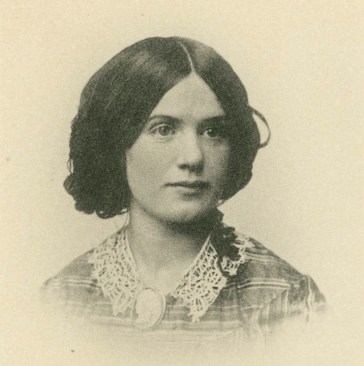
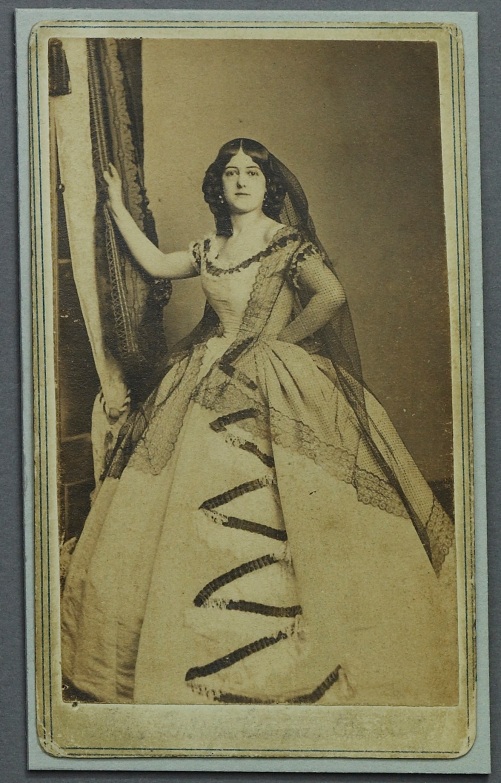
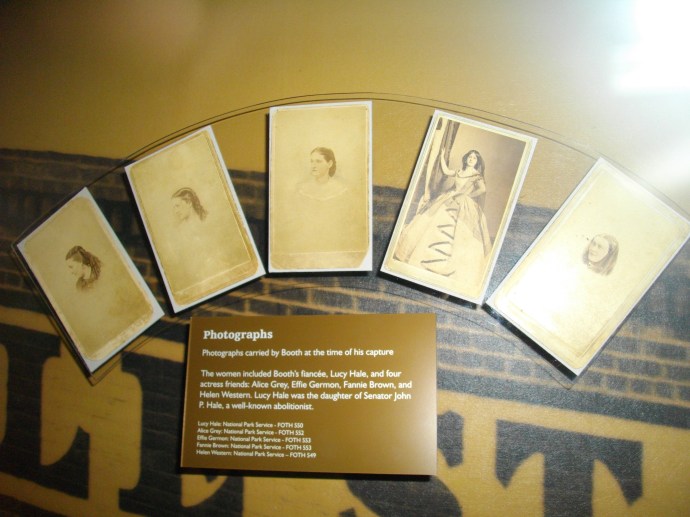
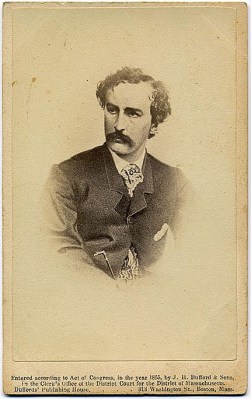
As John Wilkes Booth was running from the authorities after assassinating President Abraham Lincoln, he carried with him a total of five carte-de-visite photographs. These photographs were placed safely in a wallet like pocket of Booth’s diary as he struggled through swamp and stream, darkness and dawn, for 12 long days. When Booth was finally cornered and killed on April 26, 1865, these photographs were removed from his dying body. A previous post highlighted how the process of identifying these ladies was a slow one that did not even commence until several years after the assassination. In the end, the women of Booth’s wallet were determined to be Lucy Hale, his fiancée, and four actress friends, Effie Germon, Helen Western, Fanny Brown, and Alice Gray.

This slideshow requires JavaScript.

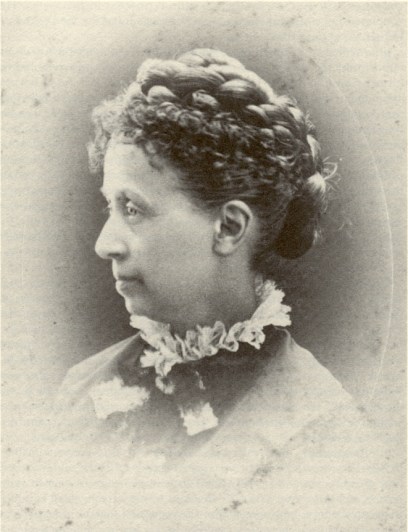
Though these actresses were each talented and respected during their careers, they have largely become footnotes to history. Their photographic presence on the body of the assassin has become the defining moment of their entire lives. For one of these actresses in particular, very little exists about her life outside of John Wilkes Booth. While Fanny Brown may have been dubbed “The Mysterious Beauty,” the truly mysterious and unknown beauty in Booth’s possession was Alice Gray.

While there is some biographical information readily available about Effie Germon, Helen Western, and Fanny Brown, the fourth actress in Booth’s pocket is a bit more elusive. The Lincoln Financial Foundation Collection, which contains copies of Booth’s CDVs, had this to say about Alice Gray when they highlighted the photographs in a post on their blog:

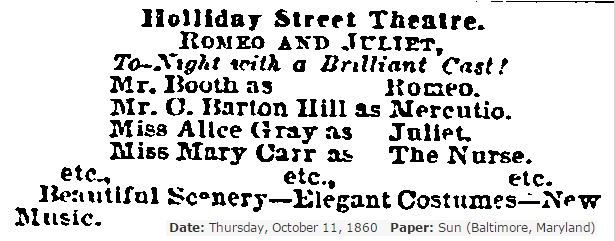
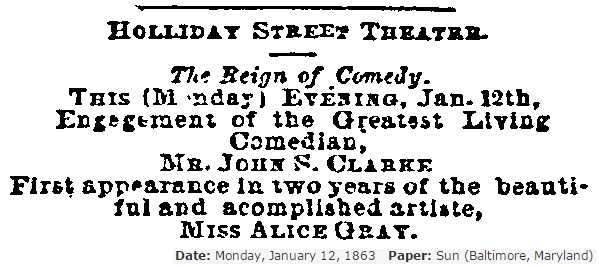
“Little is known about Alice Grey.  In 1858 she toured with Barry Sullivan and performed at the Walnut Street Theatre in Philadelphia in the early 1860s.  She appeared as Juliet opposite John Wilkes Booth as Romeo in Baltimore in 1863.  By 1865, she was a leading lady in the company at Ford’s Theatre in Washington, where she again played opposite Booth in a production of The Apostate on March 18.  She was not at the theater the night of Lincoln’s assassination.”

With so little known about Alice Gray, an in depth search was enacted to discover more about the life and career of this forgotten lady.  The following biographical sketch was developed by consulting a variety of sources including digitized newspapers such as the Buffalo Courier, Baltimore Sun, New York Clipper and D.C.’s National Intelligencer. Further information was discovered using creative searches on Ancestry.com and in cemetery records. In all, it took several days’ worth of work to find and organize the material. This post is the first in a series about Alice Grey’s life, career, and connection to the Booth family. To read part two, Successful Partnerships click HERE.

Alice Gray

Part One: An Actress is Born

In order to find out about Alice Gray’s beginning, it was first necessary to look at her end. Initially, the only information found about her birth came from her later obituaries.  According to most of the obituaries, Alice Gray was born in Boston in 1833 to Irish parents. The more detailed obituaries also stated that she commenced her acting career when she was 16 years old by performing in the Federal Street Theatre in Boston. Numerous genealogical searches were conducted with this information to try and find out more about Alice Gray’s family. All were fruitless until one final obituary contained the partially blurred name of a brother in Cincinnati. The brother’s true name was discovered by searching an old Cincinnati directory, which led to his burial record, which gave the incorrect name of his father (which wasted a lot of time looking for and led me back dejectedly to the brother’s burial record) and correct name of his mother, which led me to Alice’s mother, which led me to the true identity of Alice Gray.

Alice Gray’s true name was Alice Dehan. According to census records, she was born in New York between June 16 – July 31, 1835. Her parents were Patrick and Ann Dehan who were both immigrants from Ireland.

1850 Census Alice Gray

I have been unable to find a record of the family living in Boston, but in the 1870 census Alice’s brother John gives his birthplace as Boston. This is a contradiction to the 1850 and 1860 censuses which give his birthplace as New York, however. If the family did live in Boston, it was for a short time. By 1850, the family was living in Livingston County, New York, near Buffalo. Alice’s father, Patrick, was a laborer and likely worked on the expansion of the Erie Canal. Patrick died sometime between 1850 and 1860, leaving his wife and two children without a means of support. It appears that it was after the death of her father that Alice, then around 16 years of age, began her career as an actress. She chose the stage name of Alice Gray and would be billed as such for the rest of life.

Metropolitan Theater advertisement 1855Since her family had settled near Buffalo, NY, it was appropriate for Alice to commence her career in that city. She was able to acquire a position at the recently opened Metropolitan Theatre.

A theater historian in Buffalo later recalled, “When she came to the Metropolitan Theatre in 1851 or ’52, she could neither read nor write, but she was naturally bright and advanced rapidly.” Alice must have started with minor roles as her name did not receive billing very often in the early years. If she was learning the craft it is likely that she merely acted in walk on roles and silent characters. It was not until 1854, that Alice’s name began to make appearances in the advertisements for the Metropolitan Theatre performances. Over the next few years she stayed at the Metropolitan, honing her craft and receiving larger and larger roles. In 1856 she met and acted alongside a visiting star named Mr. Edward Eddy. Though Eddy’s engagement at the Metropolitan was short, Gray made an impression on him. In the upcoming years, Eddy would keep in touch with Gray and provide her with further acting opportunities. By 1857, Alice Gray had graduated to the main stock actress for the Metropolitan Theatre, in which she was responsible for playing the leading female roles opposite the visiting stars.Edwin Booth circa 1860

In November of 1857, a young, 24 year-old star billed as, “The Wonder of the Age” made his first appearance at the Metropolitan Theatre. The noted star who was greeted with such fan fare was Edwin Booth. Though the weather was poor during Booth’s time in Buffalo, the theater was packed every night. This was not only good for Edwin, but also for Alice Gray who ably played alongside Booth as his female counterpart. The increased crowd at the Metropolitan allowed more of Buffalo’s theater patrons to see how much Alice Gray’s abilities had progressed over the last few years. These performances with a member off the Booth family would be the first of many for Alice Gray. In a few short years she would become extremely familiar with practically all acting members of the Booth family.

After Edwin departed Buffalo, the very next performance at the Metropolitan Theatre was a benefit in Alice Gray’s honor. Her performances with Edwin had clearly garnered her some more attention. The newspapers, in describing her benefit, gave kind, but realistic descriptions of Gray’s abilities:

“…the merit of of Miss Gray as an actress deserves to be substantially recognized. The steady improvement she has made since her first appearance in Buffalo, is acknowledged by all. She personates the leading female characters acceptably; is uniformly accurate in the text, and evinces care and study in the business of the stage. Her many friends should encourage and reward her efforts by their presence this evening.”

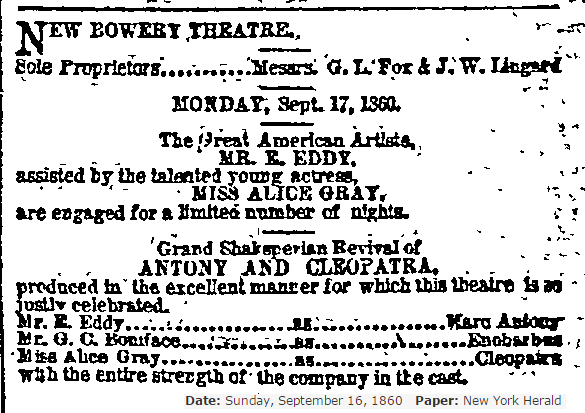
Gray was undoubtedly becoming a better actress, but had not yet achieved the talent of a star. She continued with the Metropolitan Theatre for the remainder of the 1857-1858 season with a small break in March of 1858 where she performed briefly at the Bowery Theatre in New York City. At that time, the Bowery Theatre was being leased by her friend Edward Eddy. The chance to act in New York City and possibly become a star performer on those elite stages was the dream of many actresses. While Alice Gray acted ably alongside Eddy and even received a benefit in her honor one night, once Eddy was finished leasing out the Bowery Theatre, Gray’s first foray in New York City was over.  While she had not been “discovered” by the New York City patrons, this experience would help her in the future. She returned home to Buffalo.

When the theatrical season of 1858-1859 was advertised, Alice Gray was given top billing as the leading lady of the Metropolitan Theatre once more. However, when the season debuted on September 20, 1858 and Gray took the stage for the first time as Lady Teazle in School for Scandal, she found herself faced with an agitated audience:

1858 Hissed from the stage Alice Gray

Gray must have been traumatized by this sudden betrayal of the audience. The same people who had supported her growth over the last few years were now hissing her from the stage. A newspaper from a few days later explained the reason:

1858 reason for hiss Alice Gray

As reported, Alice Gray had apparently made some enemies in the Buffalo theatrical world. The business then was just as cut-throat as it is today (if not more so). Perhaps the other actresses were jealous of Gray’s recent debut in New York City due to the generosity and assistance of Edward Eddy. Whatever the reason, the scheme against Alice Gray worked as planned. Whether by her own choice or the decision of the manager, Gray did not appear at the Metropolitan Theatre for the rest of the 1858 season. Coincidentally, she was replaced at first with “Mrs. J. B. Booth”. This was Clementina DeBar Booth, the first wife of Junius Brutus Booth, Jr. Though Mr. and Mrs. Booth were divorced due to Junius running off to California with another woman in 1851, Clementina kept the name and used it professionally. Not long after this, the gossip reported in the above article came to fruition when the manager of the Metropolitan Theatre had his own wife take over some of the main female roles.

After being shunned from the Metropolitan Theatre, Alice Gray made her way back to New York City, where she had briefly performed in March. At that point, her friend Edward Eddy had leased the Broadway Theatre for the season. Though the season had already begun and Eddy already had his stock company, he hired Alice Gray. She acted at the Broadway Theatre with the rest of the stock actors until the end of the season. She received very little press during her time at the Broadway Theatre and without good press and attention, it was practically impossible for a supernumerary to make it as a star. During the next season, Alice began to travel outside her home state of New York, perhaps hoping that good word of mouth from audiences in smaller cities would help her establish herself the next time she acted in New York City.

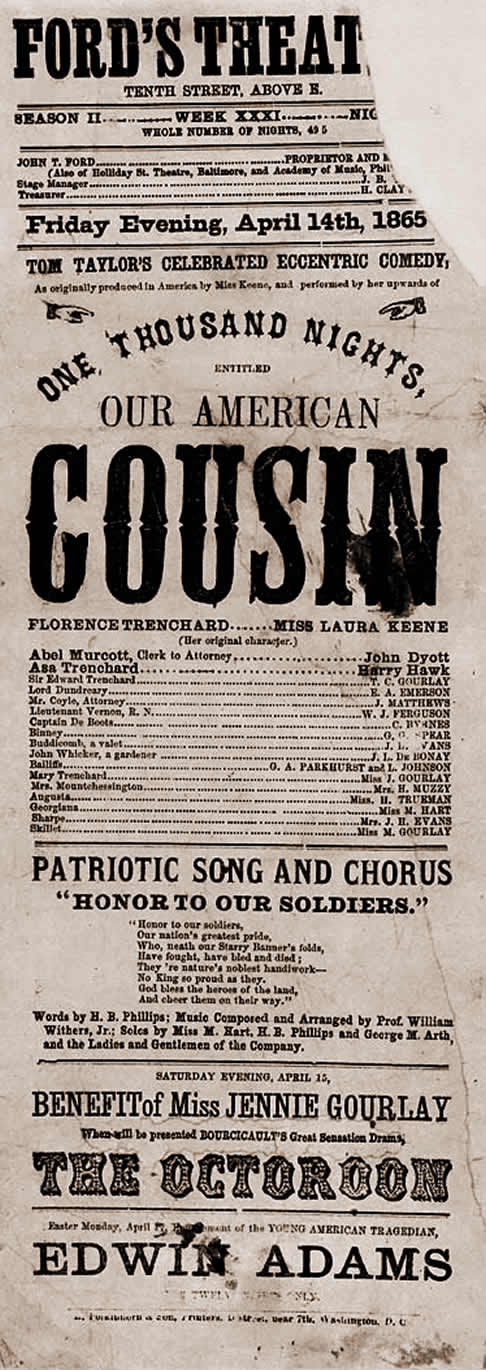
The beginning of the 1859 season found Alice in Charleston, South Carolina. She was the lead stock actress for the Charleston Theatre, an establishment which promised its public a diverse selection of entertainment. The theatrical portion of the season only lasted until November 12, 1859, which was a benefit performance for Henry B. Phillips, a Charleston native. Phillips was a well known actor who had toured the eastern states. He was also known for helping to coach novice actors and teach them the proper points and recitations.  In a few short years, H.B. Phillips would be hired by John T. Ford to be the acting manager of Ford’s Theatre in Washington, D.C. In that capacity, Phillips sole job would be to train inexperienced actors on how not to make fools of themselves. For his benefit performance, Phillips choose two pieces, The Poor Gentleman, in which Alice Gray was billed as his leading lady, and the very popular comedy of the day, Our American Cousin. This would be Alice Gray’s first experience with the play, Our American Cousin, but, due to the events connected with it in the future, this performance would hardly be the most memorable. After the Phillips’ benefit in Charleston, the whole theatrical company traveled to Mobile, Alabama. In the mean time, the Charleston Theatre opened to an opera troupe while advertising its next, diverse entertainment offering to the public, stating that a “troupe of learned monkeys, goats, and dogs, will present themselves,” in the week to come.

Alice Gray found a welcoming audience in Mobile and her abilities were praised when she was given a benefit performance there:

1860 Nice review Alice Gray

The company stayed in Mobile until late March of 1860, when the Charleston Theatre reopened (hopefully after they cleaned up the mess from the “learned” monkeys, goats, and dogs) for theatrical events.  The headlining star for the reopening was none other than Edwin Booth. Though there were no advertisements billing him as the “The Wonder of the Age” as there were in Buffalo more than two years ago, he was nevertheless warmly welcomed by the Charleston public. Booth played at the Charleston Theatre until April 4th, likely teaming up once again with Alice Gray as his leading lady. Not long after his departure, however, Alice became sick. An article in the April 14th edition of the New York Clipper reported that Alice had “been quite ill” and “confined to her room for more than a week”. She recovered from her illness and finished up the rest of the season in Charleston but this would not be the first time that illness and other personal matters would preclude Alice from performing.

During the summer of 1860, Alice Gray made extra money by taking a little more than a week long summer engagement at Cleveland’s Academy of Music. For most performers, summers were the dry times. Most theaters closed down or engaged cheaper entertainments for the few patrons who would visit during the hot months. The few theaters that did engage actors at this time, however, generally did a wonderful job advertising them. Alice Gray received star billing in the Cleveland newspapers for her brief run with her name in the largest type size that she would ever see in her career:

1860 Star billing Alice Gray

As Alice Gray performed as a star in Cleveland, back home in Buffalo the census taker was knocking at her mother’s door for the 1860 census. Despite her almost year long absence in the South and Midwest, Alice’s mother included her daughter as a member of the household. Ann Dehan gave the census taker her daughter’s real name, Alice Dehan, and set in stone what she was going to be for the rest of her life: a “Theater Actress”.

1860 Census Alice Gray


This concludes part one of the series about Alice Gray’s life, career and connection to the Booth family. To read the second installment, “Successful Partnerships,” click HERE.

References:
Backstage at the Lincoln Assassination by Thomas Bogar
Additional research graciously provided by Thomas Bogar
American Tragedian: The Life of Edwin Booth by Dr. Daniel Watermeier
Edwin Booth: A Biography and Performance History by Arthur Bloom
John Wilkes Booth: Day by Day by Arthur Loux
Images of America: Ford’s Theatre by Brian Anderson for the Ford’s Theatre Society
Ford’s Theatre Society
Ancestry.com
Library of Congress
Newspaper extracts from: University of Illinois (free), FultonHistory.com (free), GenealogyBank.com (subscription)

Categories: History | Tags: , , , , , , , , , | 9 Comments

John Wilkes Booth’s “Mysterious Beauty”

“Some Photographs of Females”

After John Wilkes Booth was shot and pulled from the Garretts’ burning tobacco barn, his body was subjected to a search. While the assassin of President Lincoln lay paralyzed and dying on the front porch of the Garrett farmhouse, the detectives rifled through his pockets, removing pieces of evidence. The items the detectives discovered worked to confirm his identity (which was never really in question), and gave them the evidence they needed to prove back in Washington that Booth had, indeed, been taken. With reward money on their minds, such proof was of the utmost importance. Detective Everton Conger was so anxious to spread the news that Booth had been captured that he departed with some of Booth’s possessions before Booth had even died. One of the objects Conger brought back to Washington with him was Booth’s diary, which contained the photographs of five ladies.

Historians Richard Sloan and Art Loux view the five photographs found on John Wilkes Booth's body when he was killed. The man in the middle is former Ford's Theatre curator Michael Harmon.

Historians Richard Sloan and Art Loux view the five photographs found on John Wilkes Booth’s body when he was killed. The man in the middle is former Ford’s Theatre curator Michael Harmon.

These images, like the diary itself, were turned over to the War Department, where they languished for quite some time. Booth’s collection of ladies was deemed unimportant to the official investigation. They were eventually boxed up along with other evidence used at the trial and Booth’s other possessions. They were stored with the War Department files in the Judge Advocate General’s Office.

It was quite some time before the existence of these photographs became known to the general public. When the text of John Wilkes Booth’s diary was published for the first time in 1867, the affidavit attached to it from Secretary of War Edwin Stanton stated that only the quoted entries and “some photographs of females” comprised the contents of the diary. There appears to have been no follow-up or inquiry about who these females were or why Booth had their photographs in his diary. It wasn’t until several years later, when the occasional newspaper reporter convinced the Judge Advocate General’s Office to let them take a peek at the relics of the assassination, that any discussion of the photographs began.

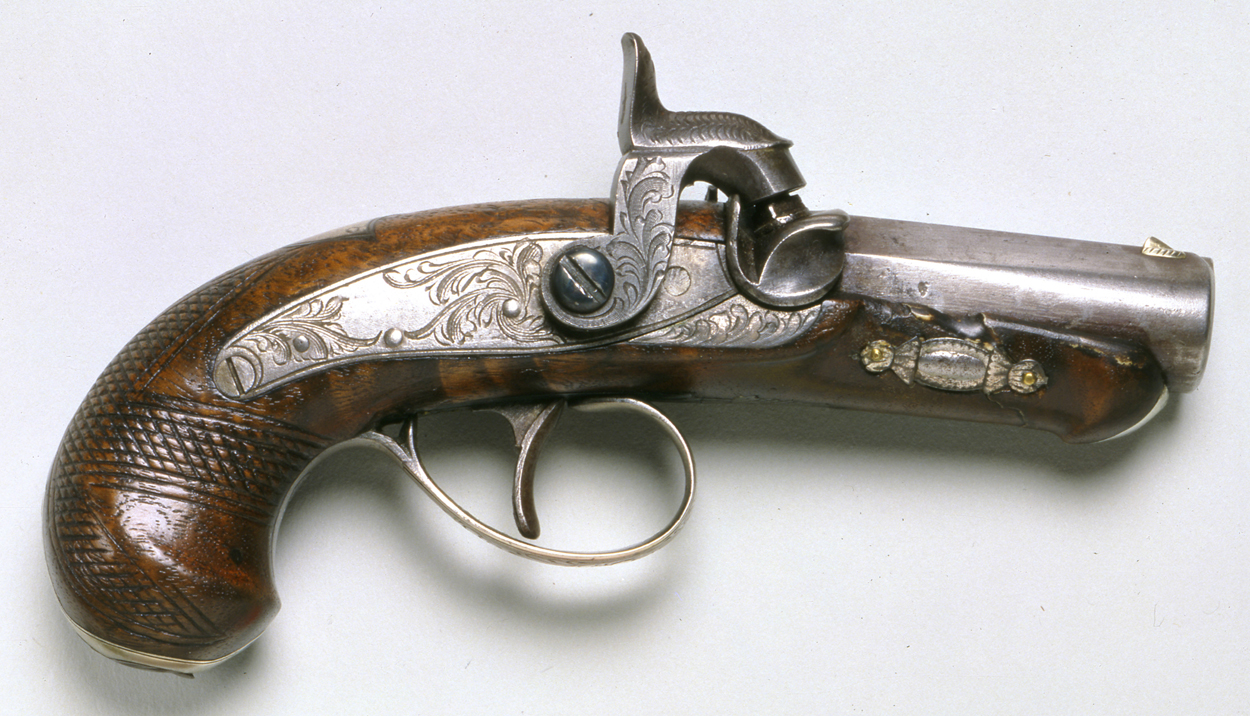
An inquisitive reporter with the Cleveland Herald visited the relics in the JAG office in 1884. Entranced with the more vivid relics such as Booth’s derringer and pieces of Lincoln’s skull, the reporter only made a passing mention of the ladies in Booth’s diary. He stated, “Among the articles found in the ‘pocket’ of the book are five photographs of young women, presumably actresses.” It appears that the identities of the ladies in Booth’s pocket had not been researched much prior to this, seeing as this reporter was given no information about who they were.

Visitors to see the relics were relatively scarce, and those who were able to view the artifacts could only do so with advance permission from either the Secretary of War or the Judge Advocate General. The artifacts were viewed by “about three or four people a year,” considerably slowing down the process of identifying the ladies. It was essentially left to the few clerks who acted as custodians over the relics to attempt to identify them, which they did with varying degrees of success.

Effie Germon and Lucy Hale

It appears that the identities of two of the ladies contained in Booth’s diary were identified a bit earlier than the rest. A reporter who was given access to view the relics in 1891 was correctly told that two of the images in the set were of actress Effie Germon and of “a daughter of one distinguished Senator from a New England state.”

On the night of Lincoln’s assassination, Effie Germon was performing the lead of Aladdin at Grover’s National Theatre in D.C. In the audience was young Tad Lincoln, who heard the news of his father’s assassination when the play at Grover’s was halted to announce the tragedy. The 1891 reporter was kind in describing the image Booth possessed of this easily recognizable star of the stage, “Miss Effie Germon, once leading lady at Wallack’s, is one. It is a fair young face, strikingly beautiful.” However, the reporter is not so kind when he relates Ms. Germon’s current state, “Miss Germon, if living, is now an old woman, and they say she is fat.”

Lucy Hale was the daughter of U.S. Senator John Parker Hale of New Hampshire. She was also John Wilkes Booth’s secret fiancée. The main evidence for believing that Booth and Lucy were actually in love is not only the collections of the Booth family who supported the idea of an engagement, but also from Booth’s own words. Some of Booth’s final thoughts were of Lucy, and this is demonstrated in his diary.

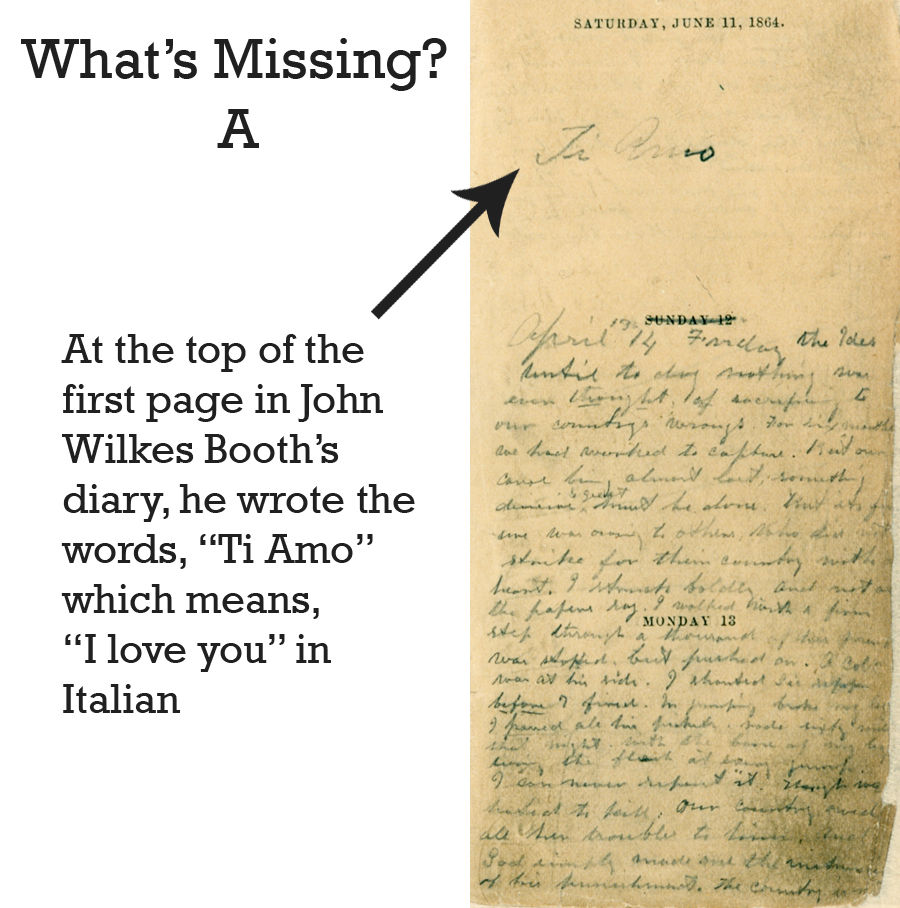
It is largely forgotten or ignored that the very first words written in Booth’s diary are “Ti Amo.” “Ti Amo” is Italian but seems to be an understandable misspelling of the Spanish “Te Amo.” Regardless, both translate into English as “I love you”. This announcement of love, coded a bit, seems out of place in Booth’s diary. Before starting his manifesto about why he shot the President, John Wilkes Booth was compelled to write a brief note of love to someone. It seems likely that this message was meant for Lucy Hale.

Ti Amo

Prior to the assassination, Lucy’s father, Senator Hale, had been appointed as a minister to Spain.  All of the Hales were in earnest to learn some Spanish before heading abroad with their father. Lucy vowed to John Wilkes that she would return in a year, with or without her father’s permission, in order to marry him. Lucy lived in the same Washington hotel as Booth, and he would have almost assuredly witnessed his fiancée practicing Spanish.

It may be a romantic idea, but it’s possible that the Ti Amo in Booth’s diary was his final message to the woman he loved. It was a message Lucy would know was meant for her and for no one else. It was a way for him to announce his love for her, for the last time, without endangering her further.

What would have become of Booth and Lucy’s relationship had he not assassinated the President is unknown. Perhaps it was always doomed to fail due to Booth’s womanizing, as evidenced by his diary’s collection of other beautiful women. Still, the presence of Lucy’s image and the coded “I love you” message in Booth’s diary could easily demonstrate that, in his final days on the run, John Wilkes Booth thought of, and loved, Lucy.

Mistakes and Misidentifications

Though it was correctly concluded that Effie Germon and Lucy Hale were among those represented in Booth’s photographs, this did not mean that they were always identified correctly. In 1891, a reporter was shown the relics by a clerk of the Judge Advocate General’s office named Mr. Saxton. You can read the reporter’s article about the visit by clicking this line. Unfortunately, Mr. Saxton appears to have been all mixed up when it came to which image was of which woman.  In addition, he provided incorrect identifications for the rest of the images and only seemed to show the reporter four out of the five images.

Mr. Saxton’s mistakes and misidentifications, which demonstrate the JAG office’s lingering uncertainty about who these women were, are as follows:

Actress Alice Grey was mistaken for fellow actress Effie Germon:

Lucy Hale was misidentified as a singer named Caroline Richings:

Actress Helen Western Poet Laura Redden was mistaken for actress Olive Logan by the reporter before Mr. Saxton misidentified her as Lucy Hale:

And actress Effie Germon was mistaken for another actress named Rose Eytinge:

While we may laugh today about the numerous mistakes in Mr. Saxton’s 1891 identifications, it does demonstrate that there was somewhat of an attempt by someone in the JAG office to learn the identities of these women. This leads us to the last image in the set of photographs and the case of John Wilkes Booth’s “Mysterious Beauty”.

“The Mysterious Beauty”

Fannie Brown CDV

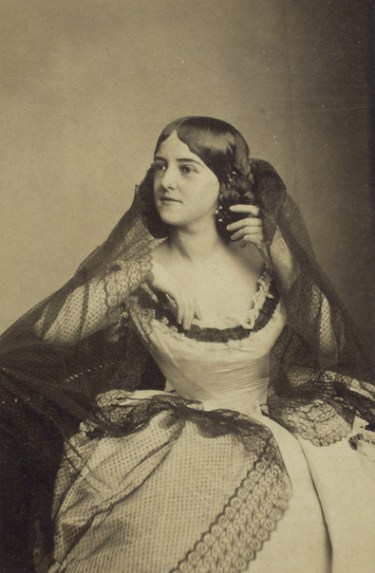
We know that, eventually, the first four vignetted photographs were identified as Alice Grey, Effie Germon, Helen Western, and Lucy Hale. It is likely that the clerks of the JAG office consulted a few more visitors who possessed far better knowledge about the theatrical leading ladies of the 1860s, and that they helped fix the mistakes. However, even after four of the five women were identified, the identity of the woman in the last image remained uncertain. This woman, her image different from the rest in that it showed her full body rather than just a vignette of her face, was still unknown. A more active search was undertaken to learn who she was.

As has been demonstrated by other images of artifacts in possession of the Judge Advocate General’s office (this one, for example), the items relating to Lincoln’s assassination were not always treated with the same degree of preservation or care as they receive today. Some of the smaller pieces found on Booth’s body have mysteriously disappeared over the years, including a small horseshoe charm, a diamond stick pin, and a Catholic medallion. In addition to these losses, the clerks at the JAG office even burned some of the clothing collected as evidence when moths began to eat away at it. Modern museum curators would cringe at the way these artifacts were locked in a box with no regard for temperature or humidity.

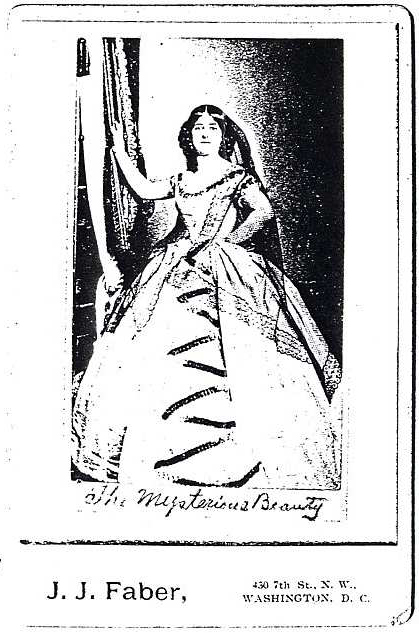
It is, therefore, unsurprising that the images of Booth’s ladies would also be subjected to neglect or ignorant mistreatment. Such was the case when one of the custodians of the artifacts decided he really wanted to know the identity of the woman in the standing photo. Until she was recognized, some unnamed clerk nicknamed her “The Mysterious Beauty” and went so far as to write that moniker on the bottom of the original image itself.

The Mysterious Beauty Cabinet card

One must remember that the entire collection of assassination-related artifacts stored by the Judge Advocate General’s office was still considered to be official evidence and property of the U.S. government. In the years after the assassination, several organizations had tried, and failed, to gain ownership of the artifacts. There were even efforts by various Judge Advocate Generals to rid themselves of the pesky items that garnered such macabre interest. The items were almost transferred to the Smithsonian before the Judge Advocate General’s office declared that even if they were transferred to the Smithsonian, the government would still own them, and the Smithsonian essentially couldn’t do anything with them other than store them. After that, the Smithsonian was no longer interested.

With this in mind, it is amazing to picture a clerk of the Judge Advocate General’s office casually taking this CDV, a piece of government-owned evidence that even the Smithsonian couldn’t be trusted with, out of the JAG office and into the Washington streets. The clerk walked to the nearby photography studio of J.J. Faber and had the photographer duplicate the image with “The Mysterious Beauty” inscription onto larger format images known as cabinet cards. A photocopy of one of the cabinet cards is pictured above. How many copies were made of this image is unknown, but it is likely that the unnamed clerk made enough copies to pass around. The original, defaced image was subsequently returned to its governmental prison.

How long it took to correctly identify this beauty after her image was duplicated and passed around, or who made the correct identification, is unknown, but the unnamed clerk’s effort eventually paid off. On the back of the photocopied cabinet card pictured above (which was sent to author Francis Wilson in the 1910’s – 1920’s as he was working on his book about John Wilkes Booth), the following statement was recorded:

“The original of this picture was found, after his death, in the diary of John Wilkes Booth, the assassin of President Lincoln. It was not known for a long time who the subject of the picture was and the custodian of the ‘Booth diary’ and other articles connected with the great tragedy, stored in the archives of the War Department, had some copies made of it for the purpose of identification. It was finally recognized as being the picture of Fanny Brow, an actress who died many years ago. Since that time the words “The Mysterious Beauty” have been effaced from the original in the War Department.

War Department
Office of the Judge Advocate General

John P. Simonton
Custodian”

Indeed, this final image was determined to be that of actress Fanny Brown.

Revealed at last, John Wilkes Booth's "Mysterious Beauty" was Fanny Brown.

Revealed at last, John Wilkes Booth’s “Mysterious Beauty” was Fanny Brown.

Fanny Brown had known John Wilkes Booth since at least 1863, when they performed together throughout cities in New England. Gossip of the day even hinted at a romantic relationship between the pair, which would not be surprising given Booth’s established success in wooing women:

JWB and Fanny Brown Gossip

As clerk John Simonton* states, after Fanny Brown’s identity was established, the words “The Mysterious Beauty” were erased from the original image. However, as any museum curator will tell you, alterations to an artifact can never truly be erased. A close inspection of the bottom of Fanny Brown’s CDV shows the faint outline of the words that were once carelessly scribbled onto her gift to John Wilkes Booth:

The-Mysterious-Beauty-anima

A Fitting Repose

Eventually, Alice Grey, Effie Germon, Helen Western Laura Redden, Lucy Hale, and Fanny Brown escaped their prison in the Judge Advocate General’s office. On February 5, 1940, the artifact evidence held by the JAG was officially transferred to the Lincoln Museum, also known as Ford’s Theatre. In the years since then, the ladies have spent some time on display but even more time in a couple of National Park Service storage facilities. Today, however, all five of these beauties are on display in the assassination section of the Ford’s Theatre Museum.

Booth's Ladies

After so many years of being confined to a box, ignored, misidentified, and forgotten, it’s great to see these ladies on display so prominently at Ford’s Theatre. Their innocent beauty is a much-needed contrast to the dark tools of the assassination that surround them. These images of Lucy Hale, Alice Grey, Effie Germon, Fanny Brown, and Helen Western Laura Redden perfectly represent the beautiful life that John Wilkes Booth mysteriously threw away when he committed his violent act of hate on April 14, 1865.

References:
Denver Rocky Mountain News, January 13, 1884 (republishes the article from the Cleveland Herald)
“Relics of a Tragedy”, The World, April, 26, 1891
The Richard and Kellie Gutman Collection
The Art Loux Archive
Ford’s Theatre Museum
Library of Congress
New York Public Library

*John Paul Simonton, the clerk who wrote the note on the back of the cabinet card explaining the story of “The Mysterious Beauty,” is occasionally referenced by those who believe John Wilkes Booth was not killed on April 26, 1865. Simonton worked as a law clerk in the JAG office from 1877 to 1920. After his retirement, he wrote an affidavit in 1925 stating, in part, “I studied the evidence in this case and examined all the exhibits as an expert and found no definite proof that John Wilkes Booth was ever captured. The fact that John Wilkes Booth was captured could not be established before any court in the United States on the evidence submitted at the time of the trial and now on file at the War Department.” Conspiracy theorists use this as “proof” that Booth escaped. Interestingly, they largely ignore an 1898 letter from Simonton to Finis Bates (of the Booth mummy story) in which Simonton stated, “While I have not what may be styled direct or positive evidence that the man killed was Booth, I have such circumstantial evidence as would seem to prove the fact beyond doubt.” In addition, Simonton clearly states on the back of this cabinet card that “this picture was found, after his death, in the diary of John Wilkes Booth,” solidifying that it was his firm opinion that it was John Wilkes Booth who was killed. When it comes to his 1925 statement, Simonton is very clearly pointing out the fact that Booth’s death was not definitely proven at the trial of the conspirators, and in this, he would be correct. The object of the trial of the conspirators was not to conclusively prove that Booth was dead; it was to try the conspirators for their involvement in Lincoln’s death. The files and evidence of the conspiracy trial do not definitely or directly prove Booth’s death, as this was not the objective of the trial. However, evidence from sources outside the conspiracy trial (i.e. autopsy reports, the numerous identification of Booth’s body by his friends and family, official statements from David Herold, the Garrett family, the troopers that captured him, etc.) along with the circumstantial evidence presented at the conspiracy trial (i.e. Booth’s possessions taken from him after he was shot) do conclusively prove that Booth was killed.
Categories: History | Tags: , , , , , , , , , | 12 Comments

What’s Missing? Episode 2

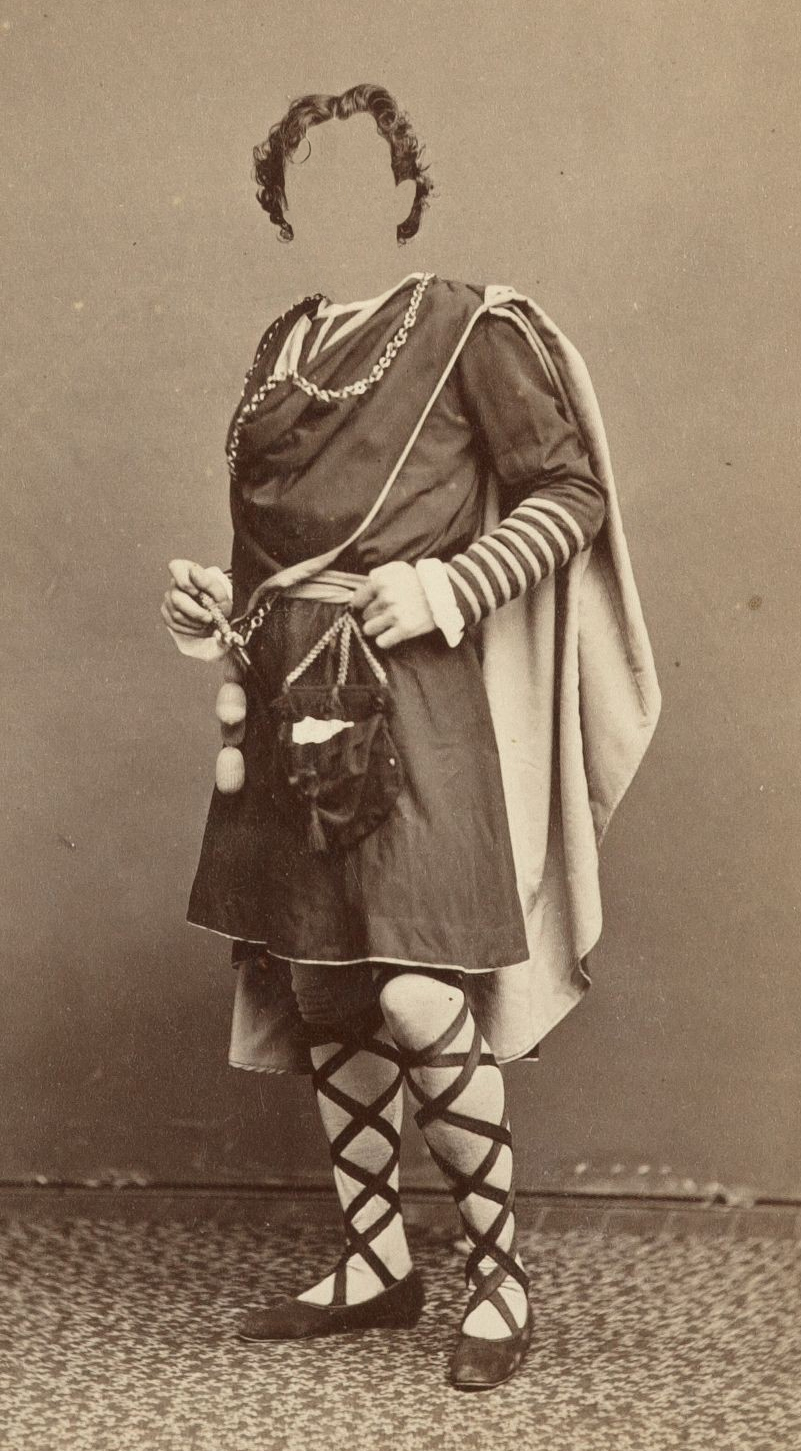
Once again it’s time to test your Boothie knowledge, resourcefulness, and observational skills with a game called, What’s Missing?

What's Missing Icon

Below you will find 20 images all related in some way to the Lincoln assassination story. Most of them have previously appeared on this website, either in the Picture Galleries or in one of the many posts. Your job is to look at the images carefully to see if you can determine “What’s Missing?” from the image. You can click on each image to enlarge it a bit and get a better look. When you’re stumped, or ready to check your answer, click on the “Answer” button below each image. Good luck!

What’s Missing A:

What's Missing A

What's Missing Answer Icon

What’s Missing B:

What's Missing Answer Icon

What’s Missing C:

What's Missing C

What's Missing Answer Icon

What’s Missing D:

What's Missing D

What's Missing Answer Icon

What’s Missing E:

What's Missing E

What's Missing Answer Icon

What’s Missing F:

What's Missing F

What's Missing Answer Icon

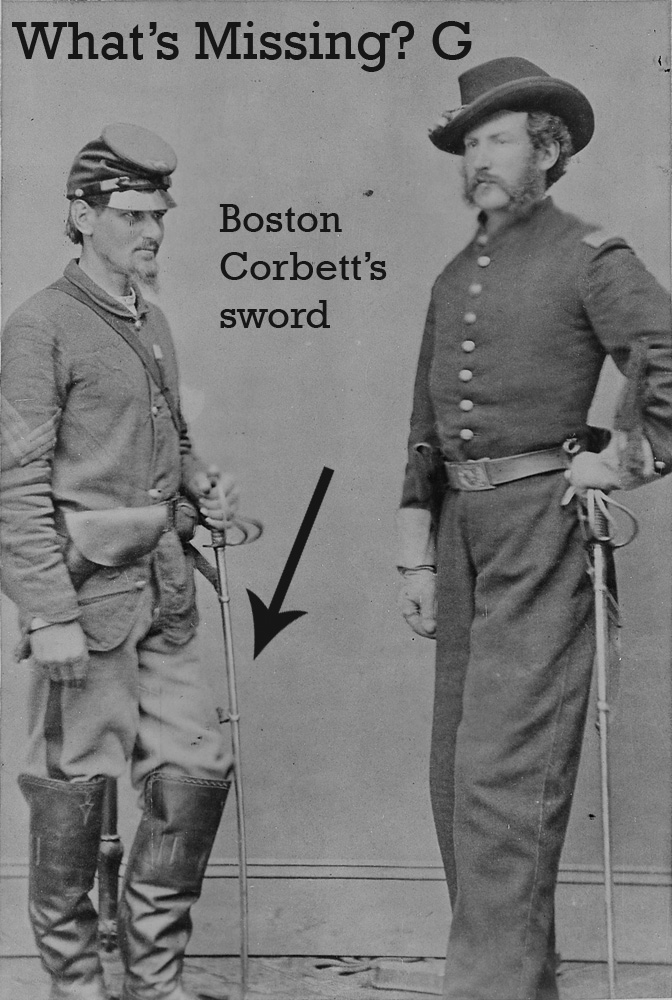
What’s Missing G:

What's Missing G

What's Missing Answer Icon

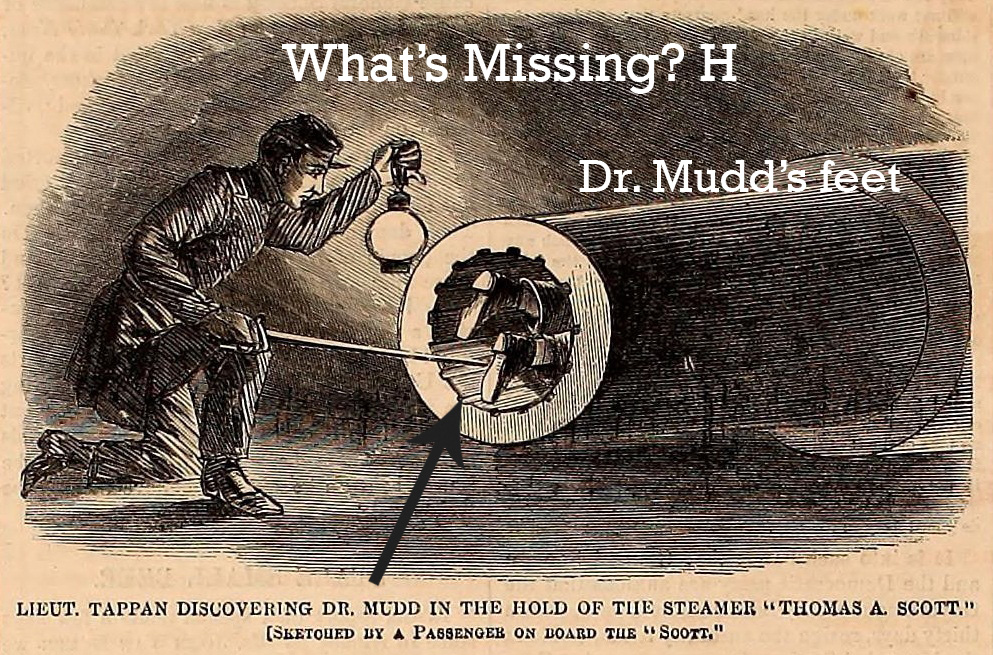
What’s Missing H:

What's Missing H

What's Missing Answer Icon

What’s Missing I:

What's Missing I

What's Missing Answer Icon

What’s Missing J:

What's Missing J

What's Missing Answer Icon

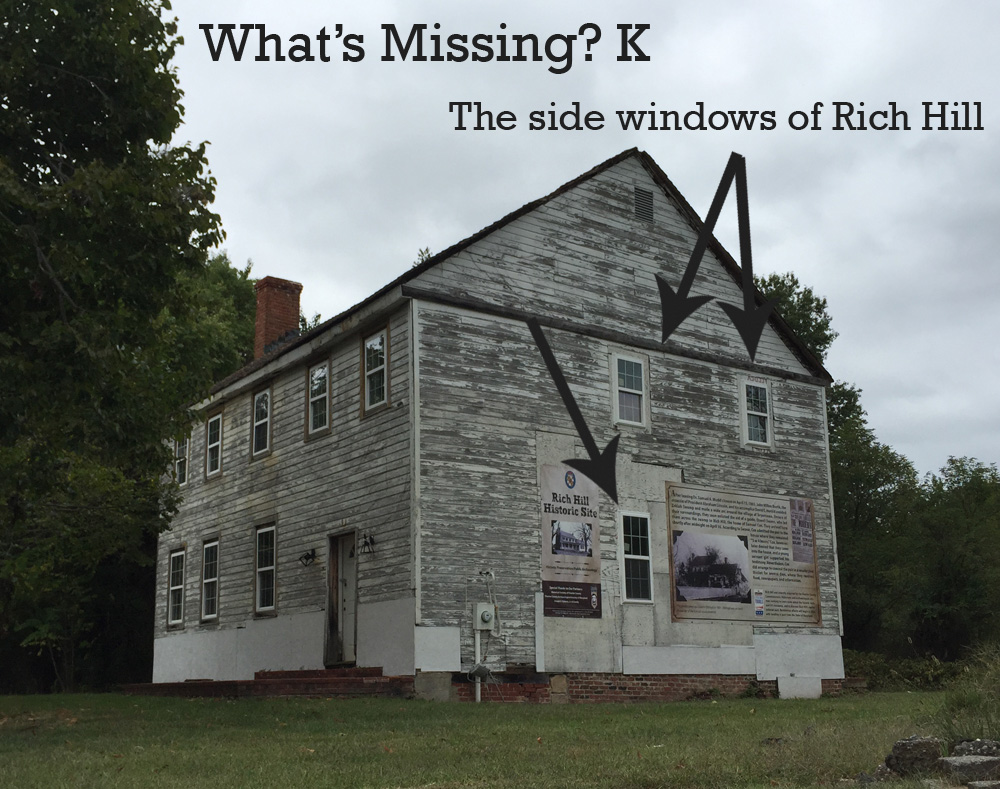
What’s Missing K:

What's Missing K

What's Missing Answer Icon

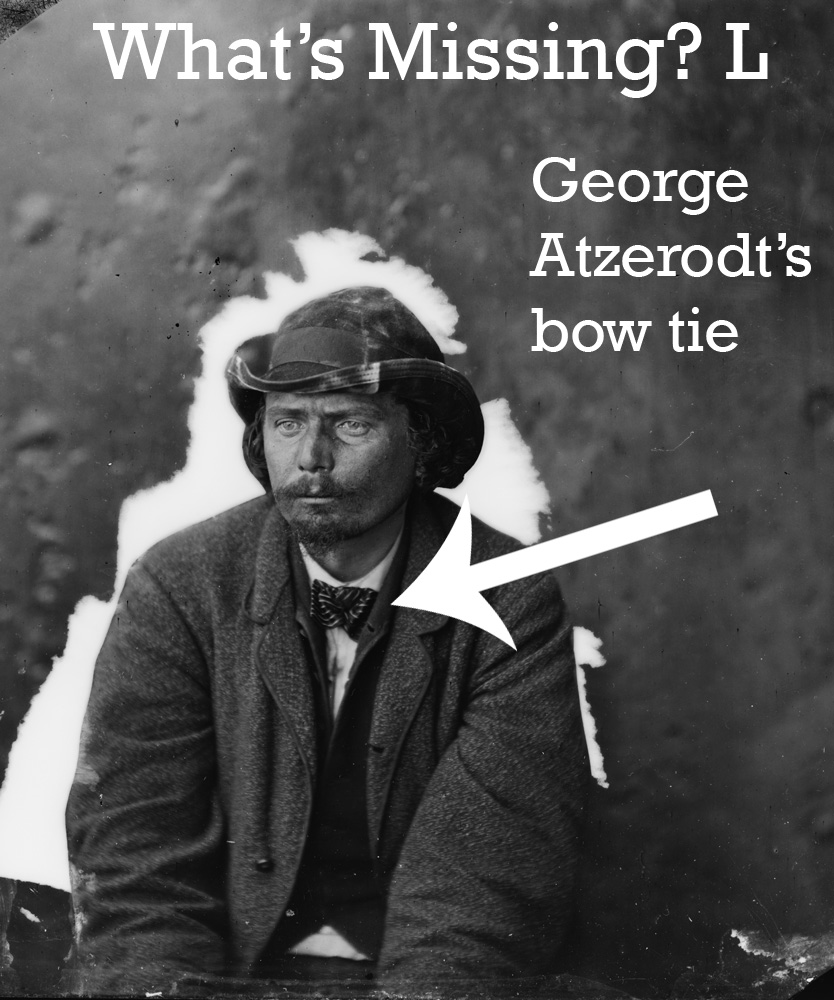
What’s Missing L:

What's Missing L

What's Missing Answer Icon

What’s Missing M:

What's Missing M

What's Missing Answer Icon

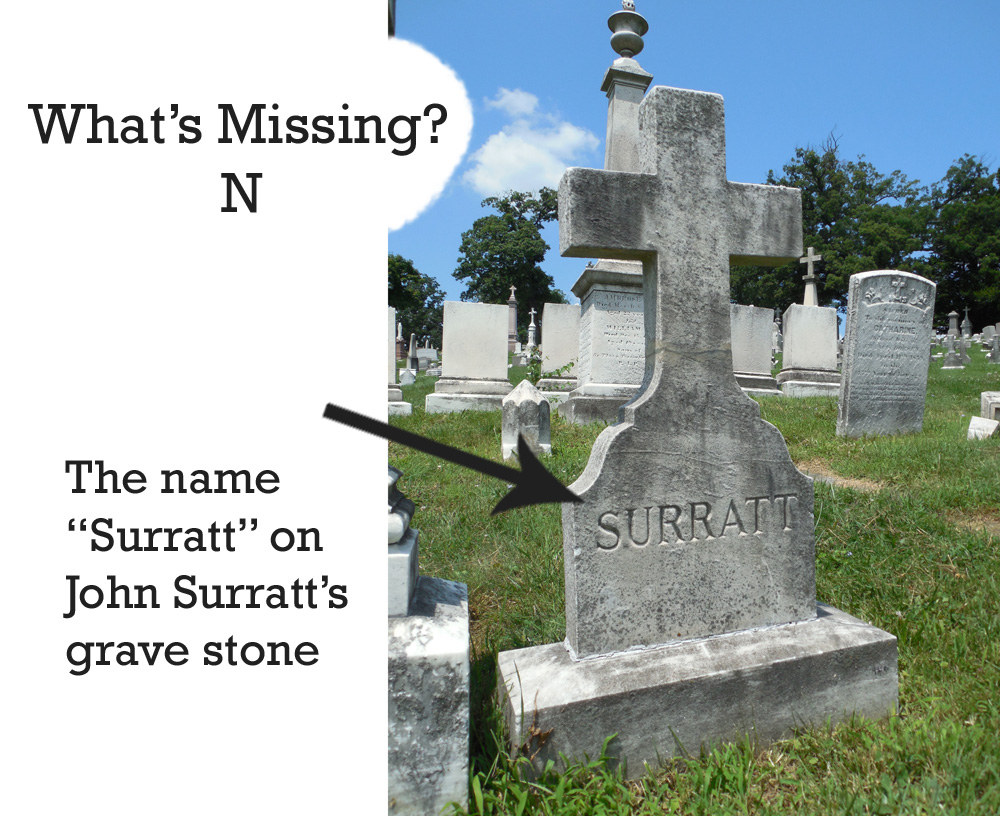
What’s Missing N:

What's Missing N

What's Missing Answer Icon


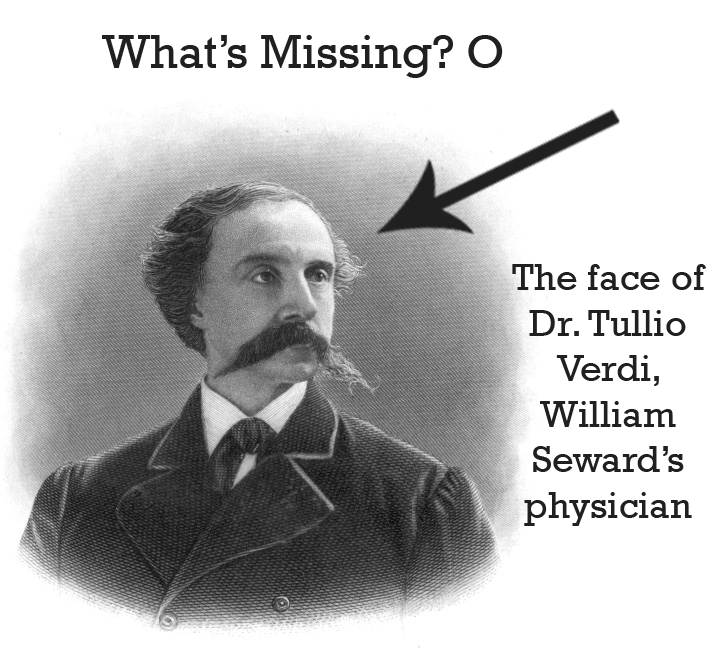
What’s Missing O:

What's Missing O

What's Missing Answer Icon

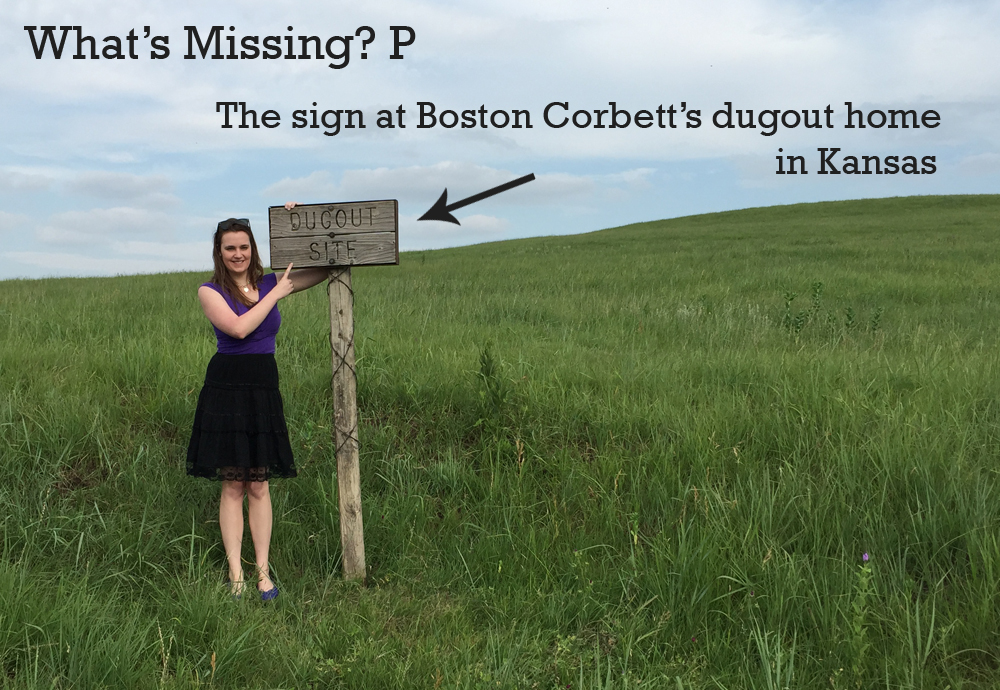
What’s Missing P:

What's Missing P

What's Missing Answer Icon

What’s Missing Q:

What's Missing Q

What's Missing Answer Icon

What’s Missing R:

What's Missing R

What's Missing Answer Icon

What’s Missing S:

What's Missing S

What's Missing Answer Icon

What’s Missing T:

What's Missing T

What's Missing Answer Icon

So how did you do? Let us know in the comments section below.

Categories: Levity | Tags: , , , , , , , , , , , , , , , | 9 Comments

The Lincoln Assassination on Aerial America

Aerial America Logo

Aerial America is a stunningly beautiful television show on the Smithsonian Channel. The premise of the show is simple: use awe inspiring aerial photography to tell compelling stories of a state’s varied history. The series, which premiered in 2010, has featured each of the 50 states, the District of Columbia, and has also expanded into other destinations. The hour long episodes feature exquisite fly overs of historic sites and vistas, along with a compelling retelling of their significance.

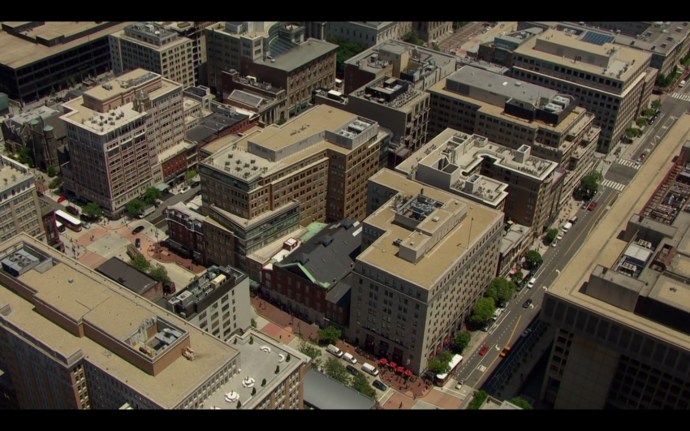
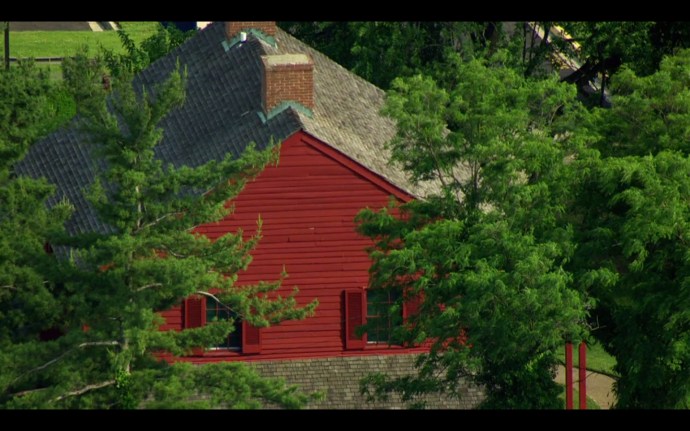
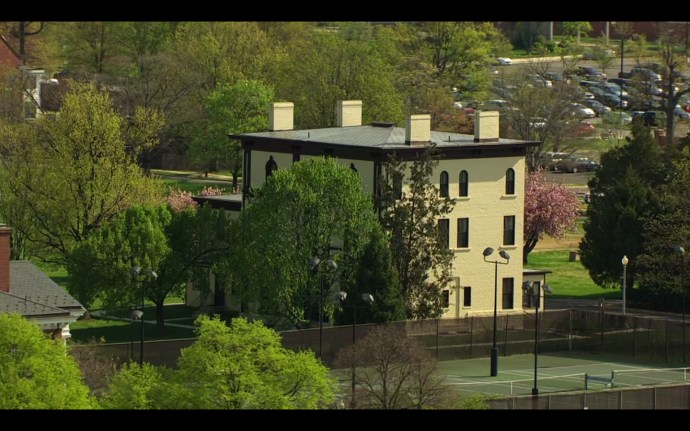
On April 26, 2015, the episode devoted to Washington, D.C. aired for the first time.  It was ironic date for the show to debut because not only is April 26 the same day John Wilkes Booth was cornered and killed, but the episode itself featured a five minute segment about Lincoln’s assassination and Booth’s escape. The episode provided beautiful shots of Ford’s Theatre, Baptist Alley behind Ford’s, the Surratt Tavern, Dr. Mudd’s House, Rich Hill, and Grant Hall where the trial of the conspirators occurred. Here are some screen grabs of the episode:

Ford's Theatre 1 Aerial America

Ford's Theatre 2 Aerial America

Baptist Alley Aerial America

Surratt House 1 Aerial America

Surratt House 2 Aerial America

Mudd House 1 Aerial America

Mudd House 2 Aerial America

To see the episode images of Col. Samuel Cox’s home of Rich Hill, please visit the Friends of Rich Hill blog post entitled, Rich Hill on Aerial America. and please consider following the Friends of Rich Hill blog to stay up to date with our rehabilitation of the home.

Grant Hall Aerial America

The episode also contained some generic shots of woods, swamps, and farms to represent other areas of the escape route but were clearly not the real places they were describing. Still, the five minute segment gave a wonderful look at part of the escape of John Wilkes Booth, from the unique aerial perspective.

You can visit the Aerial America page of the Smithsonian Channel’s website to check for future airings of the Washington, D.C. episode (next one appears to be November 28th at 5:00 pm EST).  You can also purchase the episode through video streaming websites like Amazon Video.

Categories: News | Tags: , , , , , , , | 15 Comments

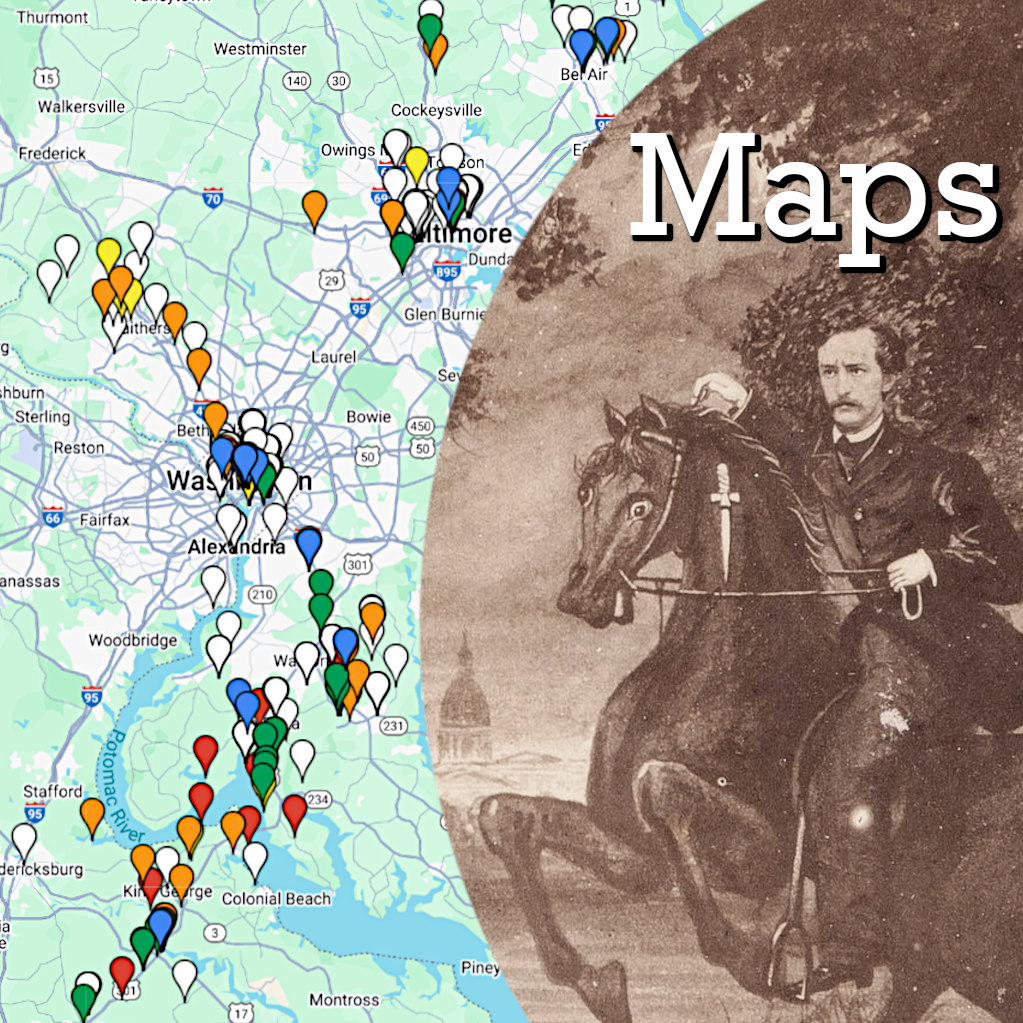
The Escape of John Wilkes Booth

I found this free interactive mapping program online today and decided to see if I could construct a nice little map of John Wilkes Booth’s escape route. Unfortunately, this particular map will not embed straight into my site, but you can click the image below to view it.

The Escape of John Wilkes Booth map image

Categories: History | Tags: , , , , , , | 13 Comments

Julia Wilbur and the Saga of the Lincoln Assassination Conspirators

This is the second of two posts utilizing content gleaned from the diaries of Julia Ann Wilbur, a relief worker who lived in Alexandria, Virginia and Washington, D.C. during the Civil War. For biographical information on Julia Wilbur, as well as information regarding her diaries please read the first post titled, Julia Wilbur and the Mourning of Lincoln.


Witness to History: Julia Wilbur and the Saga of the Lincoln Assassination Conspirators

Source: Haverford College

Julia Ann Wilbur, Source: Haverford College

When Abraham Lincoln’s assassination occurred on April 14, 1865, Julia Wilbur understood the impact it would have on the history of our country. When not working to provide relief to the thousand of newly freed African Americans residing in Alexandria and Washington, D.C., Julia Wilbur was a student of history. She traveled far and wide to visit places of historical importance, relished exploring the old burial grounds of a city, and found instances to mingle with those who were shaping her times. Therefore, she not only took the time to be a part of the mourning events for Abraham Lincoln, but she also went out of her way to document and even involve herself in the saga of the Lincoln assassination conspirators. The following are excerpts from Julia Wilbur’s diaries detailing her interactions with the assassination’s aftermath.

Reporting the News

Like many citizens around the country, Ms. Wilbur took to her diary to report the latest news about the hunt for Booth and his assassins. Sometimes the news was good. Other times, Ms. Wilbur reported on the gossip that was on the lips of everyone in Washington.

April 15, 1865:

“President Lincoln is dead! Assassinated last night at the theater shot in the head by a person on the stage. The president lingered till 7 this A.M. so all hope is over. And Secretary Seward had his throat cut in bed in his own house, but he was alive at the last despatch. It is said an attempt was made on Sec. Stanton but he escaped. Many rumors are afloat, but the above is certain.

…Evening. Sec. Seward is comfortable, & may recover, his son Frederick is in a very critical condition, his son Clarence has only flesh wounds & is able to be about the house. There is a report that Boothe has been taken; that his horse threw him on 7th st. & he was taken into a house.— There is no doubt that it was intended to murder the President, the Vice Pres. all the members of the cabinet and Gen. Grant. & that the managers of the theater knew of it.”

April 16, 1865:

“Two Miss Ford’s were at the Theater at the time of the murder.”

[Note: These Miss Ford’s appear to be friends of Ms. Wilbur’s and unaffiliated with the Fords who owned Ford’s Theatre]

April 17, 1865:

“About noon we saw people going towards G. on the run. & we were told that two men had been found in a cellar dressed in women’s clothes. & it was thought they were the murderers, Miss H. & I walked up that way. They are probably deserters. We met them under guard; they were guilty looking fellows.

…We passed Seward’s House. A guard is placed all around it. & on the walk we were not allowed to go between the guard & the house. He was not told of the President’s death until yesterday. He seems to be improving. No news in particular. No trace of the murderers.”

Wilbur diary no trace of the murderers
April 18, 1865:

“Mr. Seward is no worse & Mr. F. Seward is improving.”

April 19, 1865:

“When Frances got ready about 12 M. we went out. (all about are posted notices, “$20,000 reward for the apprehension of the Murderer of the President.”)”

April 20, 1865:

“Numbers of persons have been arrested. but Booth has not been taken yet. Ford & others of the Theater have been arrested. The Theater is guarded or it would be torn down. If Booth is found & taken I think he will be torn to pieces. The feeling of vengeance is deep & settled.”

April 21, 1865:

“I went around by Ford’s Theater today. It is guarded by soldiers, or it wd. be torn down. There is great feeling against all concerned in it.— Mr. Peterson’s House opposite where the President died is an inferior 2 storybrick,—but the room in which he died will be kept sacred by the family. A number of persons have been arrested & there are many rumors; but Booth has not been taken yet.— Mr. Seward & son remain about the same.”

April 26, 1865:

“Report that Booth is taken.”

Learning of Booth’s Death from an Eyewitness

One of the more remarkable things in Ms. Wilbur’s diary is how she recounts the details of Booth’s capture and death. On April 27th she is able to give specifics of Booth’s death when such details did appear in papers until the next day. The reason for this is because Ms. Wilbur was able to hear the story firsthand from one of the soldiers of the 16th New York Cavalry, Emory Parady.

Pvt. Emory Parady in his later years

Pvt. Emory Parady in his later years

April 27, 1865:

“Booth was taken yesterday morning at 3 o clock, 3 miles from Port Royal on the Rappac., in a barn, by 25 of 16th. N.Y. Cav. & a few detectives. He was armed with 2 revolvers & 2 bowie knives & a carbine 7 shooter, all loaded. Harrold, an accomplice was with him. Neither wd. surrender until the barn was fired. Then Harrold gave himself up. & when Booth was about to fire at some of the party, he was shot in the head by Sargt. B. Corbett, & lived 2 ½ hrs. afterwards. He was sewed up in a blanket & brought up from Belle Plain to Navy Yd. in a boat this A.M. One of the capturers, Paredy, was here this P.M. & told us all about it.”

Collecting Relics

Julia Wilbur was fond of acquiring relics and would occasionally display her collection to visiting friends. The events of April 14th, motivated Ms. Wilbur to acquire some relics of the tragic event.

April 20, 1865:

“I purchased several pictures of the President, also Seward’s.

…Miss Josephine Slade gave me a piece of a white rosette worn by one of the pallbearers. Then Mrs. C. & I went to Harvey’s where the coffin was made. & obtained a piece of the black cloth with wh. the coffin was covered & pieces of the trimming. The gentleman who was at work upon the case for the coffin was very obliging & kind. This case is of black walnut, lined with black cloth, & a row of fringe around the top inside, I have also a piece of this box.”

April 21, 1865:

“Called on Mrs. Coleman. Then we went to Mr. Alexander’s & got some pieces of the cloth which covered the funeral Car. Then we saw an artist taking a Photograph of the car. which stood near the Coach Factory where it was made. We went there & Mrs. C. took of pieces of the cloth & alpaca. & a young man told us the Car would be broken up to day & he would save us a piece.

“…Then I went out again & obtained a board from the Funeral Car, which a workman was taking to pieces. & also some of the velvet of the covering. I intend to have this board made into a handsome box. & will make a pin cushion of the velvet.”

April 22, 1865:

“Went to see Mrs. Coleman. she gave me some of the hair of President Lincoln.”

May 2, 1865 (in Philadelphia):

“In all the shops are pictures of the President, & there are some of Booth.”

Booth drawing CDV 1865

October 12, 1865:

“Called at Ford’s Theater. got relic.”

October 18, 1865:

“Then Mrs. B. went with me to Ford’s Theater & we each obtained from Mr. Kinney who has charge of the building, a piece of the Presidents Box. The wood work where his knees rested when he was shot.”

A Visit to Richmond

Ms. Wilbur temporarily departed Washington in mid May of 1865. During that time she traveled to Richmond, with side trips to Petersburg and Appomattox, to provide relief work for the newly freed African Americans. Diary entries during her time in Richmond lament the poor living conditions of the black citizens and also discuss her own experiences in the city. One of my favorite anecdotes from that period is Ms. Wilbur’s recounting having tea with a family of free African Americans.

May 19, 1865:

“Took tea by invitation at Mr. Forrester’s. Quite a company. We drank from Jeff. Davis’s tea cups, eat with his knives & forks & eat strawberries & ice cream from his china saucers— I sat in the porch & looked at Jeff’s house not many rods distant, & tried to realize that I was in Richmond— The morning of the evacuation people fled & left their houses open. goods were scattered about the street, & Jeff’s servants gave this china to Mr. Forrester’s boys. That morning must have been one long to be remembered by those who were there. All night long there was commotion in the streets. Jeff. & his crew were getting away with their plunder.”

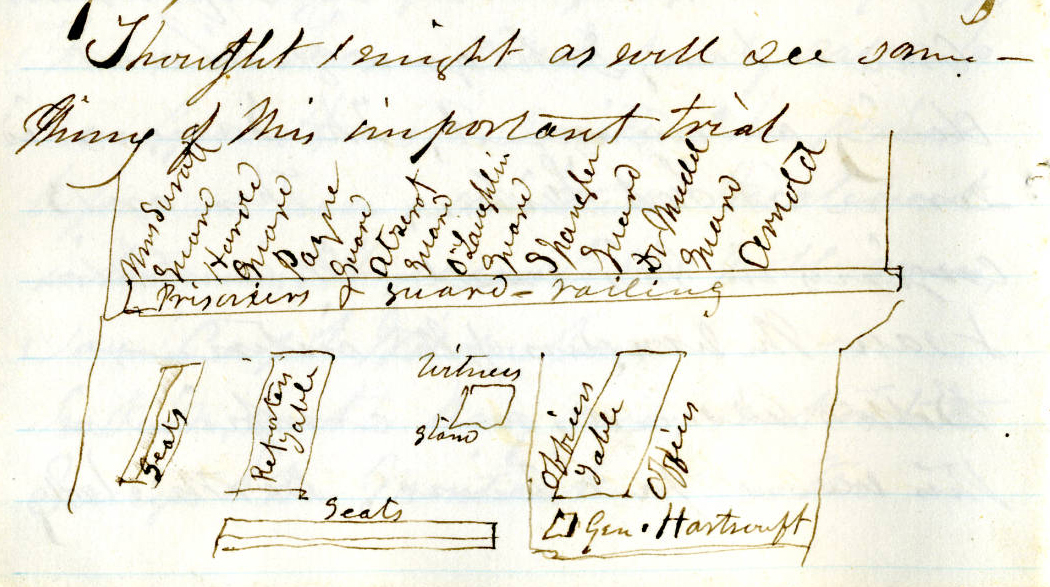
“Thought I might as well see some thing of this important trial”

Admission to the Conspiracy Trial

Ms. Wilbur returned to Washington, D.C. in mid-June.  Once back home, she quickly resumed her habit of engrossing herself in the historical proceedings happening around her. In June of 1865, such historical proceedings could only be the trial of the Lincoln conspirators. Before attending the trial however, Ms. Wilbur first visited the conspirators’ former site of incarceration.

June 17, 1865:

“In P.M. went to Navy Yard. Went on to the Saugus & the Montauk.

…The Saugus weighs 10 hundred & 30 tons, draws 13 ft. water & its huge revolving turret contains 2 guns wh. carry balls of 470 lbs. It is 150 ft. in length, pointed fore & aft & its 83 deck & sides plated with iron. The turret, pilot house— smokestack & hatchways are all that appear on deck & in an engagement not a man is visible. It has been struck with heavy balls & deep indentations have been made on the sides of the turret. Once a heavy Dahlgren gunboat during an engagement, The Saugus did service at Fort Fisher.— There are 13 engines in this vessel.

We went below & saw the wonders of the interior. Booth’s associates were confined on this vessel for a time. Booth’s body was placed on the Montauk before it was mysteriously disposed of.”

Then, on June 19th, Julia Wilbur attended the trial of the conspirators:

“At 8 went for Mrs. Colman & got note of introduction to Judge Holt from Judge Day & proceeded to the Penitentiary.

Thought I might as well see some thing of this important trial.

Mr. Clampitt read argument against Jurisdiction of Court by Reverdy Johnson.

It was very hot there. Mrs. Suratt was sick & was allowed to leave the room & then they adjourned till 2, & we left. Mrs. S. wore a veil over her face & also held a fan before it all the while.

Harold’s sisters (4) were in the room. The prisoners excepting Mrs. S. & O’Laughlin appeared quite unconcerned. They are all evidently of a low type of humanity. Great contrast to the fine, noble looking men that compose the court.”

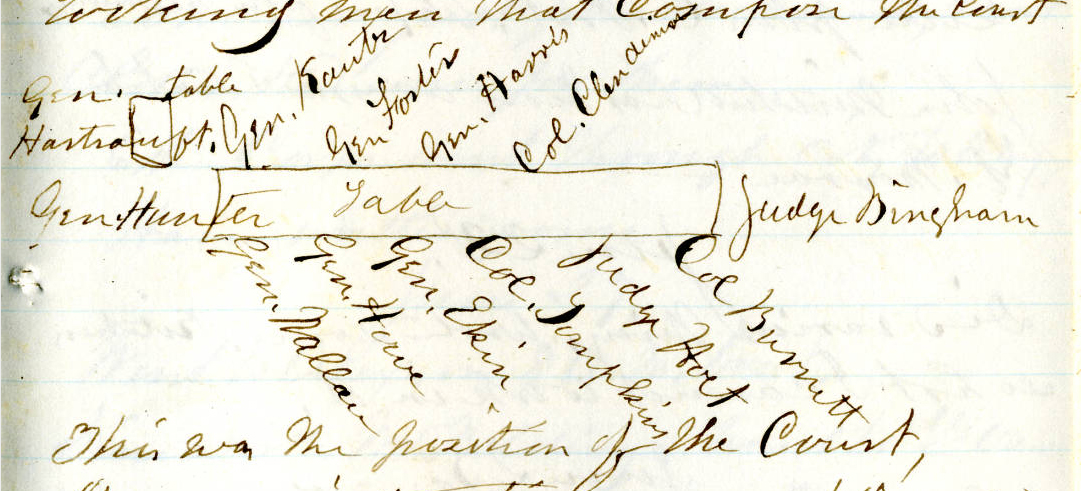
Ms. Wilbur’s diary entry concerning the courtroom is valuable not only due to the descriptions she gives of Mrs. Surratt and Michael O’Laughlen, but also because she took the time to sketch the layout of the court when she got home:

Wilbur diary Courtroom layout 1

Wilbur diary courtroom layout 2

“This was the position of the court.

It was an interesting scene, & I am glad I went, although it is so far, & so hot.”

These diagrams are fascinating and help us solidify the placement of the conspirators and members of the military commission in the court room.

Reporting on the Execution

It is likely that the excessive heat in the courtroom convinced Ms. Wilbur that she did not need to attend the trial again.  However, she did keep up with the proceedings and reported on the sentencing and execution of the conspirators (which she did not attend).

July 6, 1865:

“The conspirators have been sentenced. Payne, Harold, Atzerott & Mrs. Surratt are to be hung to morrow. O’Laughlin, Mudd, & Arnold to be imprisoned for life at hard labor, & Spangler to State prison for 6 yrs.”

July 7, 1865:

“Hottest morning yet. Martha ironed, & the whole house has been like an oven. It was too much for me. I could not work.— The days pass & nothing is accomplished— This eve. F & I took a walk.

— About 1 P.M. The executions took place in the Penitentiary Yard. A large number of people witnessed them. They were buried within a few feet of the gallows. It is all dreadful, but I think people breathe more freely now. They are convinced that Government means to punish those who deserve it. Jeff. Davis friends may feel a little uneasy hereafter.”

Facesofdeath

Unfortunately, it does not appear that Ms. Wilbur had any reaction to the death of Mary Surratt, a middle aged woman like herself.  In fact the very next day Ms. Wilbur mentions walking past Mrs. Surratt’s house without any commentary.

July 8, 1865:

“Then passed Mrs. Surratt’s house on the way to Mr. Lake’s, where we had a pleasant call.”

It’s likely that Ms. Wilbur agreed with Mrs. Surratt’s fate as Ms. Wilbur was very against those who held “secesh” sympathies.

Attending Henry Wirz’ Trial

Julia Wilbur continued her habit of attending historic trials in the city, by attending the trial of Andersonville prison commandant, Henry Wirz. After Henry Wirz’ execution she once again invoked the Lincoln conspirators:

November 11, 1865:

“Called at Mr. B’s office & saw Mr. & Mrs. Belden. Heard particulars of the Execution yesterday. Mr. B. gave me an Autograph Note of Henry Wirz, a lock of hair & a piece of the Gallows. I came only for the autograph. His body was mutilated after death, Kidneys were divided among 4 surgeons. Another person had a little finger, obtained under pretense of Post Mortem examination. Remainder of body buried in Yard of the Penetentiary near Atzerot. All this, & we claim to be civilized & human! If his body had been given up to his friends, it would be torn to pieces by the infuriated people.”

As we know Henry Wirz mingled with the bodies of the conspirators until 1869, when Andrew Johnson allowed the bodies of all those executed to be claimed by family. Wirz was buried in Mt. Olivet Cemetery, the same resting place of Mary Surratt.

Piece of Henry Wirz' Old Arsenal coffin in the collection of the Smithsonian's American History Museum.

Piece of Henry Wirz’ Old Arsenal coffin in the collection of the Smithsonian’s American History Museum.

In the Interim

By 1866, John Wilkes Booth and four of his conspirators were dead. The other four tried at the trial of the conspirators were serving sentences at Fort Jefferson off the coast of Florida.  As such there was a lull for a time during which Julia Wilbur reported next to nothing revolving around the events of April 14, 1865. Only a few brief mentions exist in her diary of 1866 and early 1867.

April 14, 1866:

“Anniversary of a sad day.

Departments have been closed, & flags are at half mast. No other observance. A year ago today I was in Alex. & could not get away. It was a sad time.”

April 28, 1866:

“Went to the Army Medical Museum. Many interesting in this Museum. Called on Mrs. Smith. She is ill. Went into Ford’s Theater. Not finished yet. It is intended for archives relating to the War of the Rebellion. The sad associations connected with it will make it an object of interest for generations to come.”

April 15, 1867:

“Anniversary of Death of Abraham Lincoln! Two years have passed rapidly away.”

On visiting the National Cemetery in Alexandria on May 12, 1867:

“There is also a monument to the memory of the 4 soldiers who lost their lives in pursuit of Booth the Assassin. They were drowned.”

Upon seeing Secretary War Edwin Stanton on May 27, 1867:

“Saw Sec. Stanton today, but how unlike the Sec. of War that I saw in his office in Oct. ’62. He was then in the vigor & prime of manhood. Hair & beard dark & abundant. But 5 years of War have made him 20 years older. He is thin, sallow, careworn. His locks are thin & gray. I never saw a greater change in any man in so few years.”

June 21, 1867:

“On return went into Ford’s Theater to see the Medical Museum.”

The Escaped Conspirator

In late 1866, John H. Surratt, Jr. was finally captured after more than a year and a half on the run. Surratt had been an active member of John Wilkes Booth’s plot to abduct President Lincoln and take him south. His arrest in Alexandria, Egypt and extradition to the U.S., set in the motion the last judicial proceedings relating to Abraham Lincoln’s death.  Once again, Ms. Wilbur would be sure to take part in this event, attending John Surratt’s trial twice and providing some wonderful detail of the courtroom scene.

February 18, 1867:

“(Surratt arrived in Washington today, is in jail)”

June 19, 1867:

Surratt Trail Ticket

“Miss Evans & I went to Mr. B’s & he went with us to City Hall & got tickets of admittance for us to the Court Room. 6 ladies present besides ourselves. Surratt was brought in at 10, & the court was opened. Judge Fisher presiding. Witnesses examined were Carroll Hobart. Vt.; Char. H. Blinn, Vt.; Scipano Grillo, Saloon keeper at Ford’s Theater; John T. Tibbett mail carrier, & Sergt. Robt. H. Cooper. Examined by Edwards Pierpoint of N.Y, Atty, Carrington.

Surratt sat with his counsel, Bradly, he, a pale slender, young man, seemed to take an interest in all that was said. His mother’s name was mentioned often, & Tibbett said he had heard her say “she wd. give $1000 to any body who would kill Lincoln.” I could not feel much sympathy for him. They must have been a bad family.

But I think Surratt will never be punished. The Government will hardly dare do it after releasing Jeff Davis.

The room outside the bar was crowded, & this is the first day ladies have been seated inside the bar.

Miss Evans was never in a Court before, & we were both much interested.”

June 21, 1867:

“Frances & Miss Evans went to Surratt’s trial”

June 27, 1867:

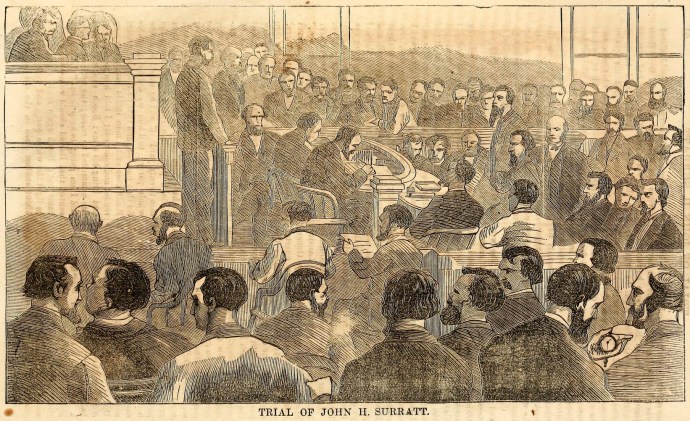
John Surratt Trial Drawing

“Rose early. Worked till 9 A.M. Then went to Surratt’s trial at City Hall. Courtroom crowded. Judge Fisher presiding. Witnesses, 2 brothers Sowles, & Louis Weichman. He last boarded with Mrs. Surratt, was intimate with J.H. Surratt. His testimony was minute but of absorbing interest. Examined by Edwards Pierpoint. Bradly & Merrick, counsel for prisoner, are evil looking men.

Surratt looked less confident today than when I saw him a week ago yesterday.

When they were removing the handcuffs he breathed hard. Took his seat looking a little disturbed. His brother Isaac soon came & took a seat by him & they talked & laughed a few minutes.

Isaac looks like a hard case & quite unconcerned. It is very evident that J.H. Surratt was a conspirator & that the family were bad.

Wilbur diary Surratt was a conspirator

I would like to be here at the close of the trial, and hear the summing up.”

Unfortunately, Ms. Wilbur did not get her wish to witness the close of John Surratt’s trial. She was visiting back home near Avon, New York when the trial ended.

August 10, 1867:

“Papers from Washington.

Argument in Surratt case finished. Jury do not agree.”

August 12, 1867:

“Finished reading for Father Mr. Pierpointt’s argument in Surratt case to father. Very able argument.”

August 16, 1867:

“Jury discharged, could not agree, ([illegible]). Surratt remanded to jail.

Bradley has challenged Judge Fisher. Much excitement in W[ashington].”

Epilogue

While the period of assassination events effectively ended with the trial of John Surratt, Ms. Wilbur maintained diaries for the rest of her life.  There could be more passages in her diaries commenting on or recalling those tragic days. As stated in the prior post about Julia Wilbur and the Mourning of Lincoln, Julia Wilbur’s diaries have only been transcribed for the period of March 1860 until July of 1866. All entries in this post dated beyond July 1866, were discovered by meticulously reading through the digitized pages of Ms. Wilbur’s diaries located here. There are still many discoveries to be made in Julia Wilbur’s diaries and I encourage you all to follow Paula Whitacre’s blog to read more about the work being done on Julia Wilbur.

References:
Paula Whitacre’s Blog on Julia Wilbur
Transcriptions of Julia Wilbur’s Diaries from Alexandria Archaeology
Digitized pages of Julia Wilbur’s Diaries from Haverford College

Categories: Uncategorized | Tags: , , , , , , , , , , , , , , , , , | 16 Comments

“President Lincoln Is Dead: The New York Herald Reports the Assassination” at the Newseum

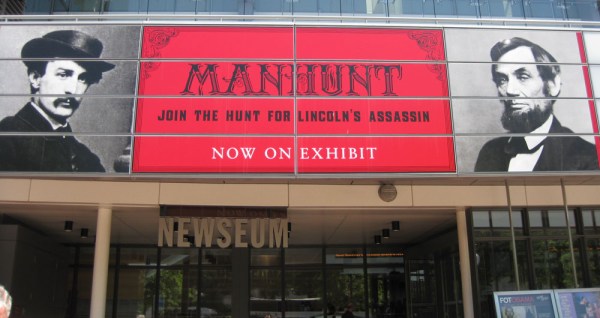
Located on the corner of Pennsylvania Avenue and 6th Street in northwest D.C., the Newseum is an impressive institution devoted to the evolution of news reporting and the importance of free press in a society. The seven floor museum contains impressive permanent exhibits relating to some of the most news worthy events in American and world history. There are also many galleries in the museum which house an array of different temporary exhibits. When I visited Washington, D.C. for the first time in 2009, I made sure to tour the Newseum due to the fact that they were displaying a temporary exhibition based around James Swanson’s book, Manhunt. One of my very first posts on this site recounted that wonderful exhibit.

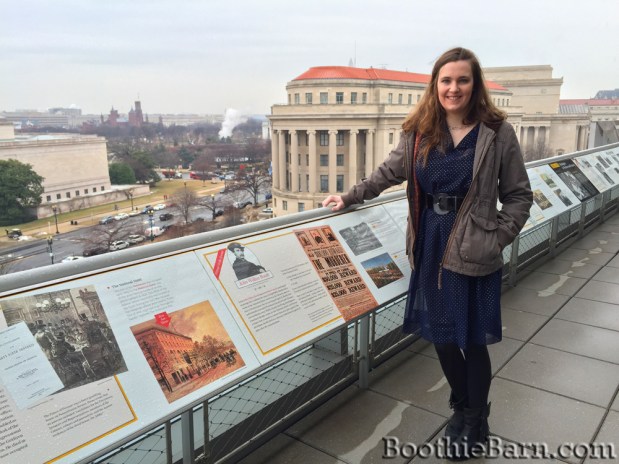
Since that time (and my subsequent move to Maryland), I have made many visits to the Newseum.  Their exhibits are fascinating and it is a wonderful place to bring guests from out of town.  As you might expect, there are several permanent items on display at the Newseum related to Lincoln’s assassination that I see each time I am there.  One permanent, 80 foot long display on the top terrace overlooks Pennsylvania Avenue and recounts the history of Washington’s most famous street.

Newseum Terrace

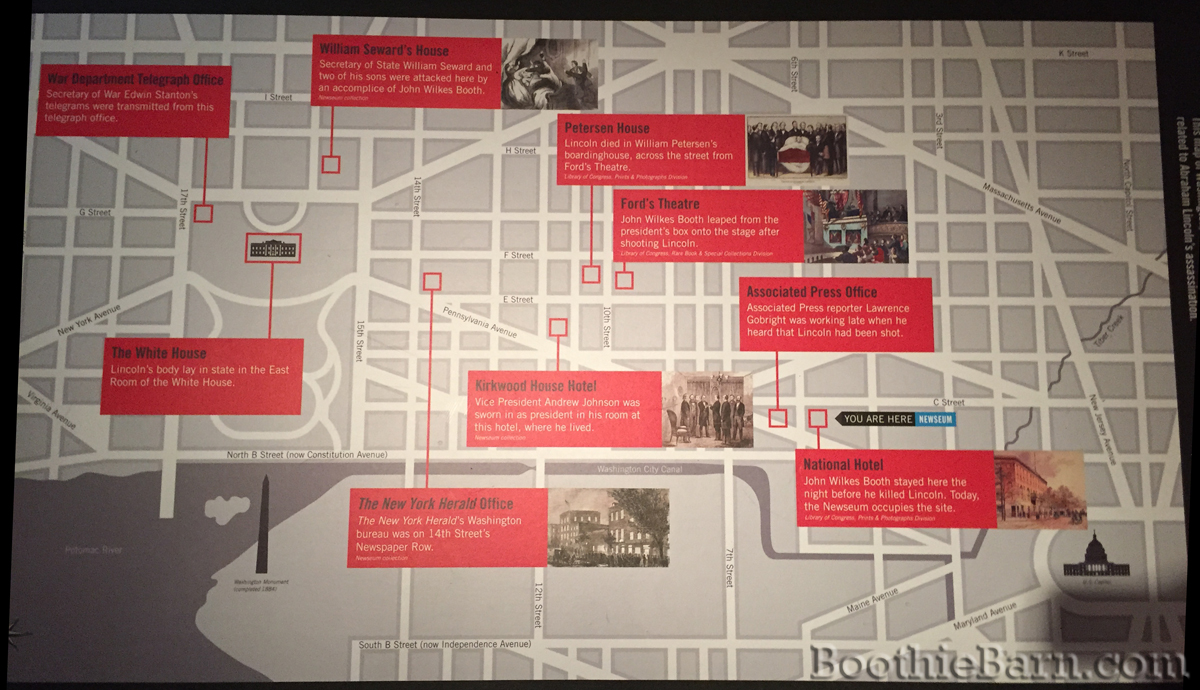
The display also points out that the site currently occupied by the Newseum was once the home to the National Hotel, the preferred hotel of John Wilkes Booth when he was in Washington.

The Newseum collection also contains different newspapers, both physical and digital, that cover the assassination of Abraham Lincoln:

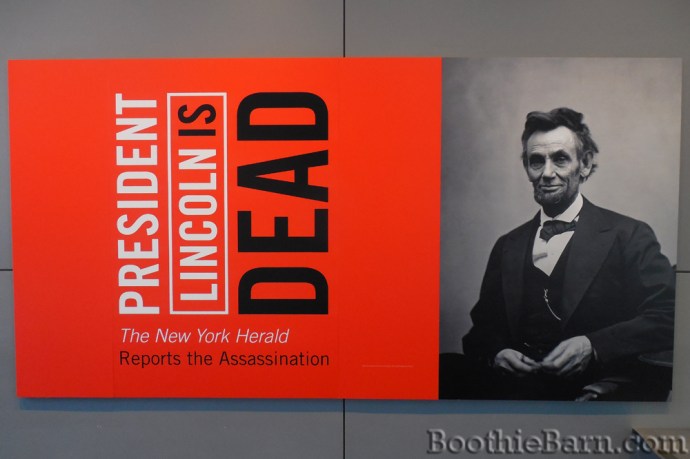
However for this year, the 150th anniversary of the assassination of Abraham Lincoln, the Newseum has created a very special exhibition:

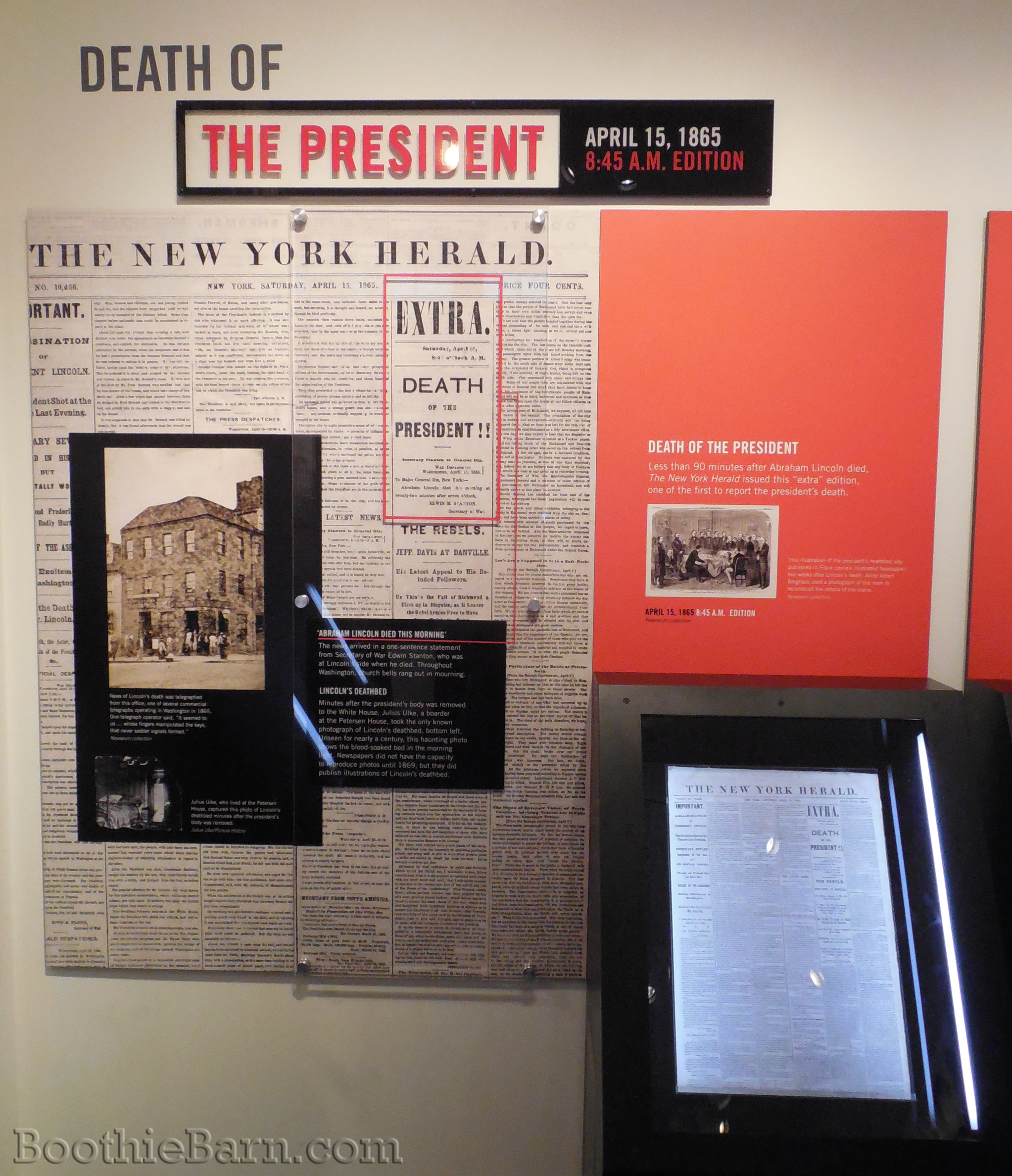
New York Herald Exhibit Newseum

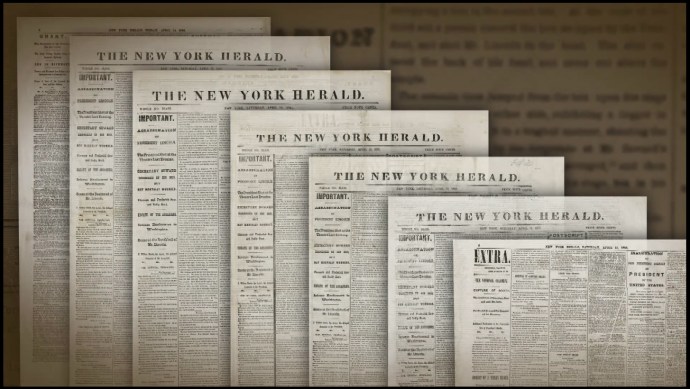
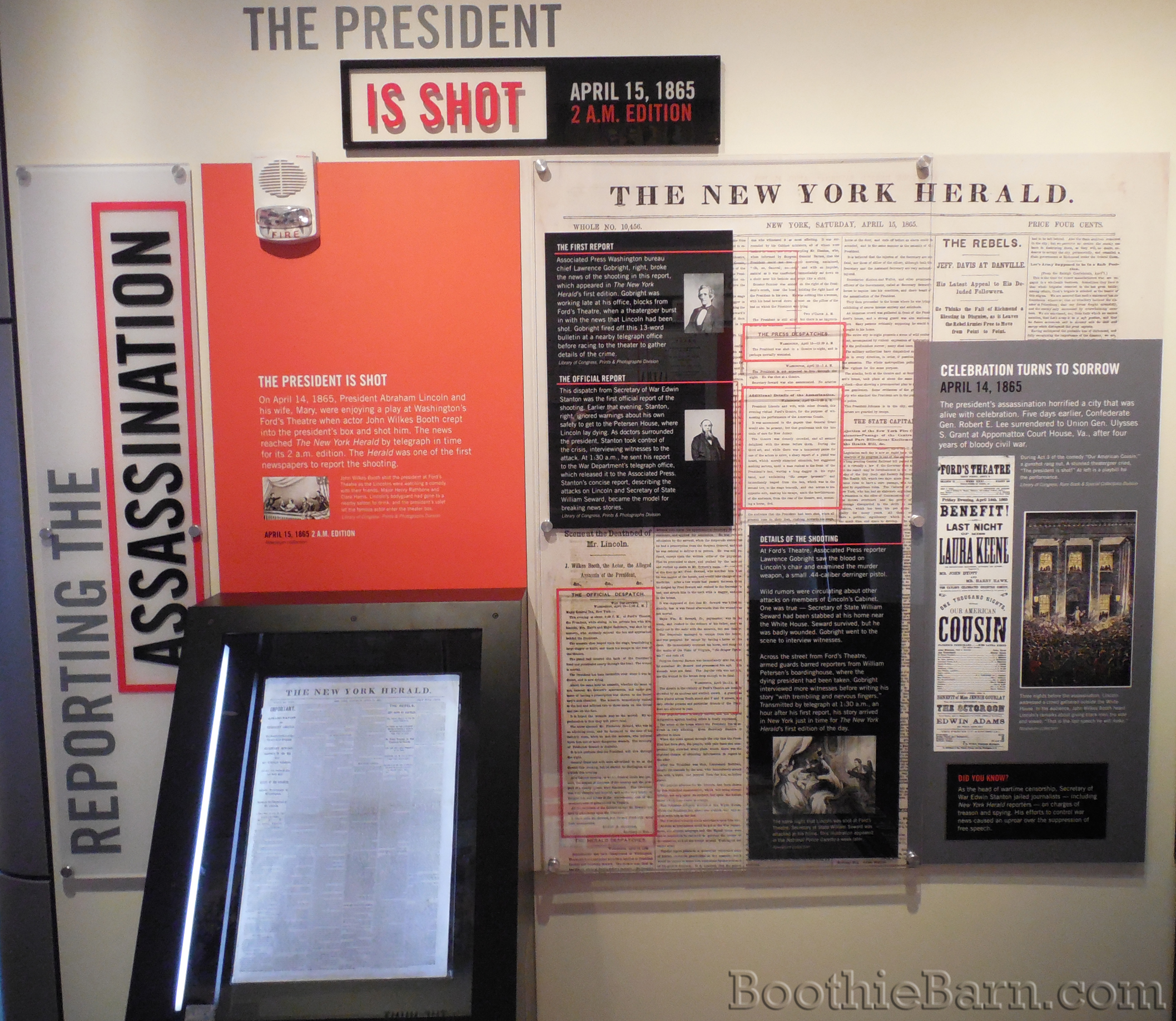
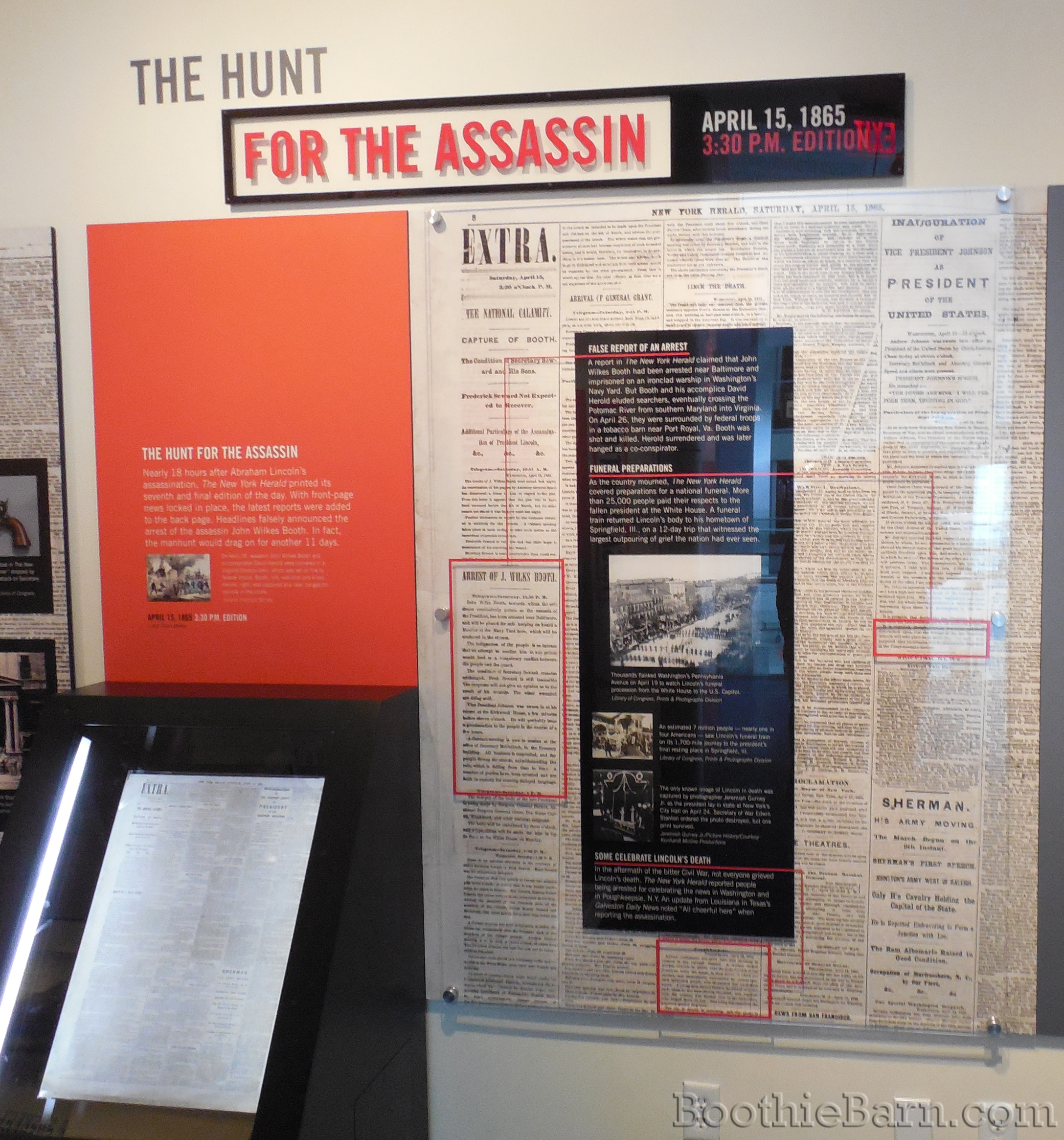
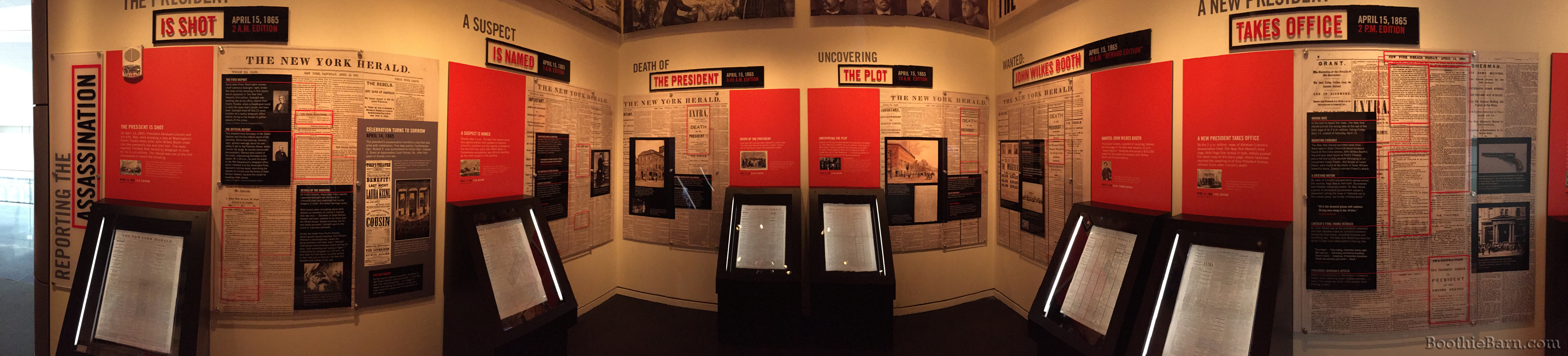
President Lincoln Is Dead: The New York Herald Reports the Assassination” is a detailed look at how one of the most widely read newspapers in the country covered the events of April 14, 1865.  Over a period of 18 hours following the shot at Ford’s Theatre, the New York Herald would publish an unprecedented seven special editions, each with new information regarding the President and Secretary of State’s conditions and the subsequent search for their assassins.  The Newseum may very well be the only institution in the world that contains copies of each of the seven editions of the New York Herald from that tumultuous time.


Coverage Chronologically

 
Seven Issues of New York Herald Newseum

The current exhibit at the Newseum contains an original of each of these editions paired with large wall displays that highlight the differences and additions between them.

2:00 AM edition:

NYH 2 am edition Newseum

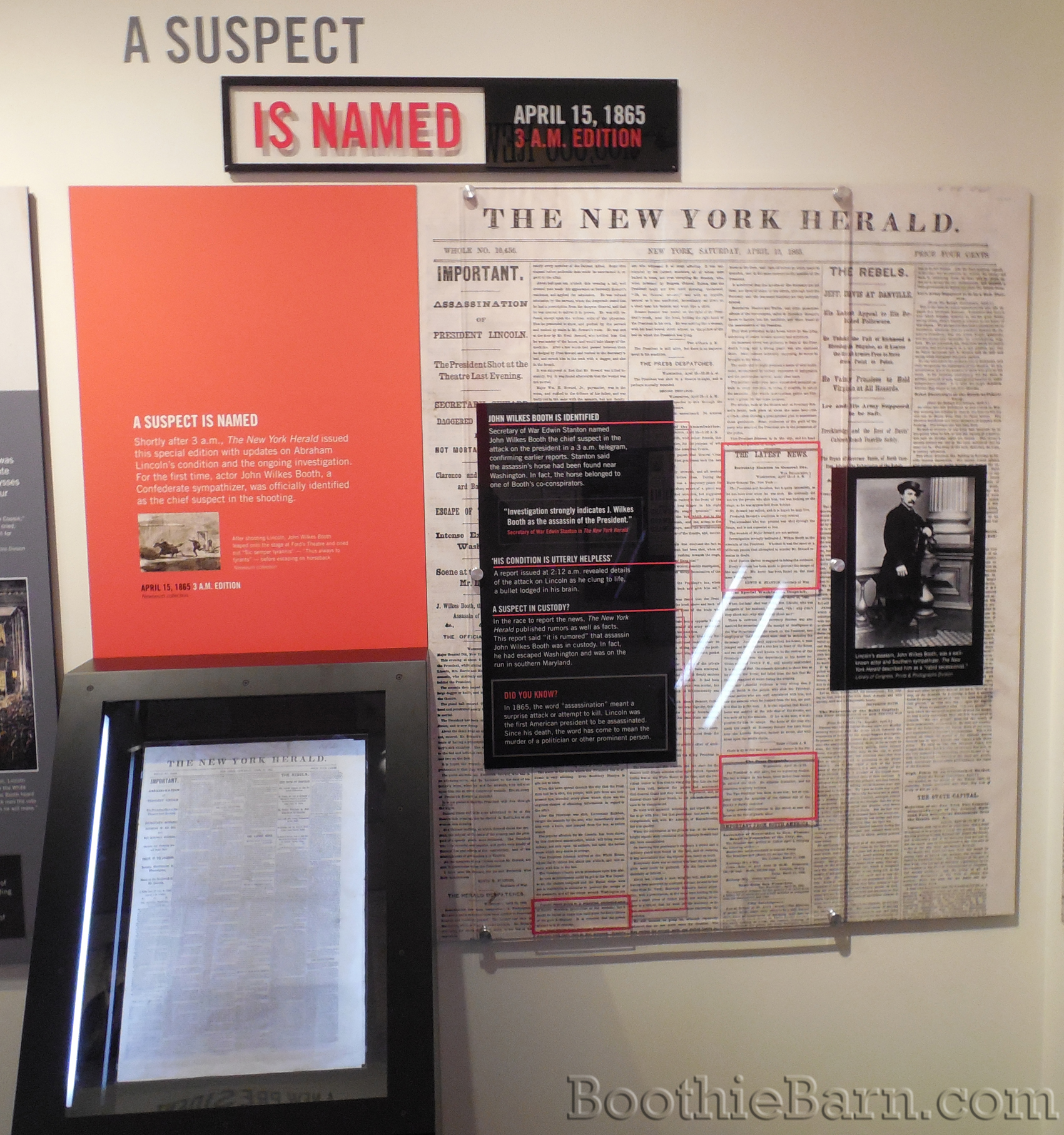
3:00 AM edition:

NYH 3 am edition Newseum

8:45 AM edition:

NYH 8 am edition Newseum

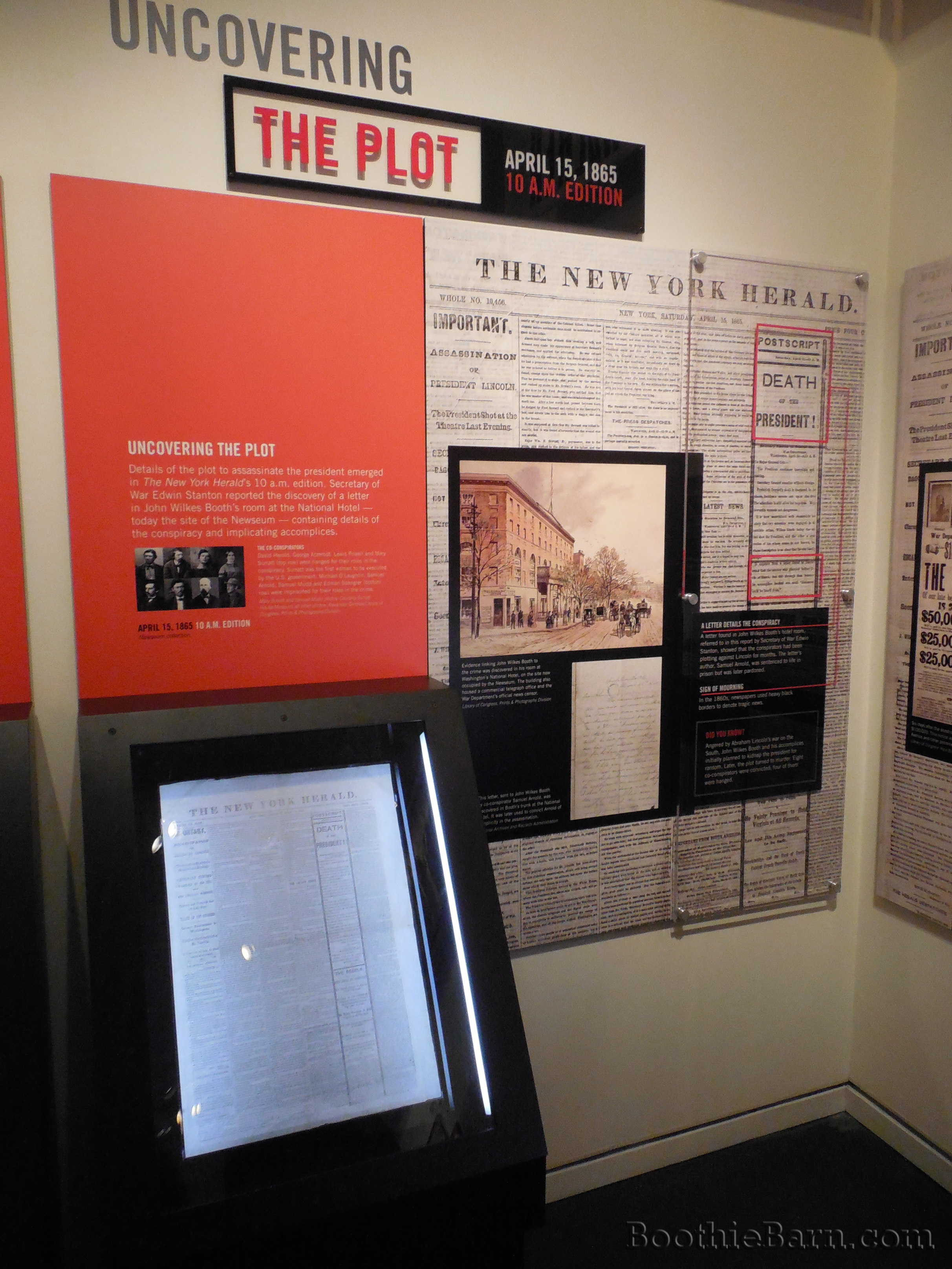
10:00 AM edition:

NYH 10 am Uncovering the Plot edition Newseum

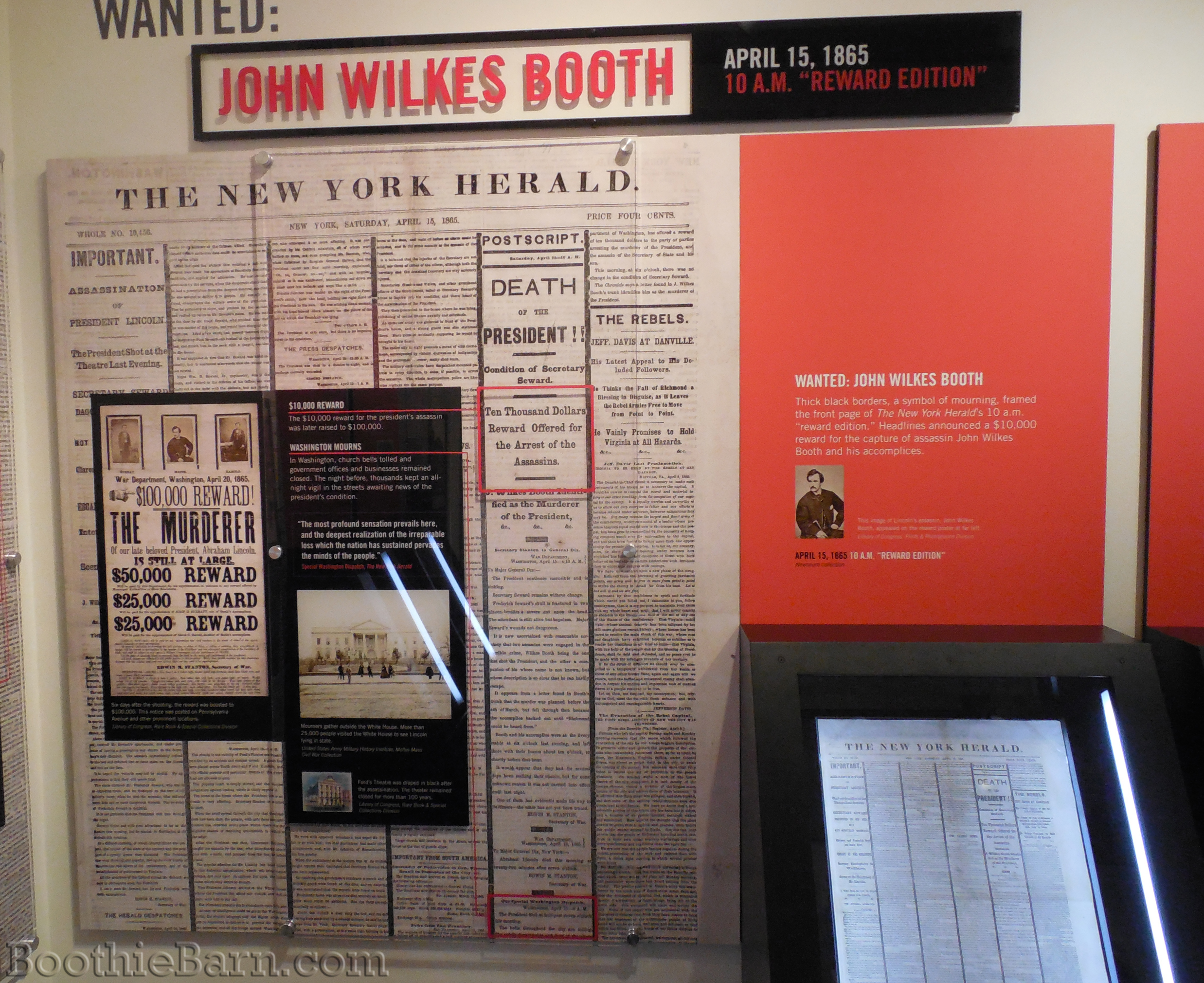
10:00 AM “Reward” edition:

NYH 10 am Reward edition Newseum

2:00 PM edition:

NYH 2 pm edition Newseum

3:30 PM edition:

NYH 3 pm edition Newseum

Click to Enlarge

Click to Enlarge


Floor to Ceiling Coverage

 
While the “President Lincoln Is Dead: The New York Herald Reports the Assassination” exhibit is only contained in one small room of the Newseum, there is no wasted space.  Even the floor and ceiling contain displays.  On the floor is a map of Civil War Washington with labelled sites relating to the assassination:

Floor map Newseum

Meanwhile the ceiling is festooned with wonderful banners (several of which I wish I could own myself) relating to the assassination:

Click to enlarge

Click to enlarge


The Stories Behind the Story

 
The displays not only provide commentary on the evolving story of how the country came to learn the details of Lincoln’s assassination, but they also introduce us to the people involved in reporting the news.  One of my favorite stories is that of Associated Press reporter, Lawrence Gobright who was responsible for the very first telegraphic dispatch covering Lincoln’s assassination:

First dispatch Newseum

In 1869, Gobright would recollect his actions that night:

“On the night of the 14th of April, I was sitting in my office alone, everything quiet : and having filed, as I thought, my last despatch, I picked up an afternoon paper, to see what especial news it contained. While looking over its columns, a hasty step was heard at the entrance of the door, and a gentleman addressed me, in a hurried and excited manner, informing me that the President had been assassinated, and telling me to come with him! I at first could scarcely believe the intelligence. But I obeyed the summons. He had been to the theatre with a lady, and directly after the tragedy at that place, had brought out the lady, placed her at his side in his carriage, and driven directly to me. I then first went to the telegraph office, sent a short ” special,” and promised soon to give the particulars. Taking a seat in the hack, we drove back to the theatre and alighted; the gentleman giving directions to the driver to convey the lady to her home.

The gentleman and myself procured an entrance to the theatre, where we found everybody in great excitement. The wounded President had been removed to the house of Mr. Peterson [sic], who lived nearly opposite to the theatre. When we reached the box, we saw the chair in which the President sat at the time of the assassination; and, although the gas had for the greater part been turned off, we discovered blood upon it…

Lawrence Gobright

Lawrence Gobright

My friend having been present during the performance, and being a valuable source of news, I held him firmly by the arm, for fear that I might lose him in the crowd. After gathering all the points we could, we came out of the theatre, when we heard that Secretary Seward had also been assassinated. I recollect replying that this rumor probably was an echo from the theatre; but wishing to be satisfied as to its truth or falsity, I called a hack, and my companion and myself drove to the Secretary’s residence. We found a guard at the door, but had little trouble in entering the house. Some of the neighbors were there, but they were so much excited that they could not tell an intelligent story, and the colored boy, by whom Paine was met when he insisted on going up to the Secretary’s room, was scarcely able to talk. We did all we could to get at the truth of the story, and when we left the premises, had confused ideas of the events of the night. Next we went to the President’s house. A military guard was at the door. It was then, for the first time, we learned that the President had not been brought home. Vague rumors were in circulation that attempts had been made on the lives of Vice-President Johnson and others, but they could not be traced to a reliable source. We returned to Mr. Peterson’s house, but were not permitted to make our way through the military guard to inquire into the condition of the President. Nor at that time was it certainly known who was the assassin of President Lincoln. Some few persons said he resembled Booth, while others appeared to be confident as to the identity.

Returning to the office, I commenced writing a full account of that night’s dread occurrences. While thus engaged, several gentlemen who had been at the theatre came in, and, by questioning them, I obtained additional particulars. Among my visitors was Speaker Colfax, and as he was going to see Mr. Lincoln, I asked him to give me a paragraph on that interesting branch of the subject. At a subsequent hour, he did so. Meanwhile I carefully wrote my despatch, though with trembling and nervous fingers, and, under all the exciting circumstances, I was afterward surprised that I had succeeded in approximating so closely to all the facts in those dark transactions…”

In addition to his quick reporting and continual dispatches throughout the night, Gobright also holds a place in history due to his brief custodianship over the derringer that was used to kill Abraham Lincoln.

Edwin Pitts holding the Derringer 1

After shooting Lincoln with the single shot pistol, John Wilkes Booth immediately dropped the gun onto the floor of the theater box. Somehow it went unnoticed during the chaos that ensued in the small box as physicians entered to care for the mortally wounded president. One of the men who had entered the box along with the physicians was a man named William Kent. Kent would later claim it was his penknife that was used to cut the collar from around Lincoln’s neck. After departing the theater that night, Kent discovered he had lost his keys and so returned to the theater and gained entry into the now empty box. He was searching for his keys when his foot struck something. Lawrence Gobright had also just arrived in the box to report on the scene of the crime:

“A man [Kent] standing by picked up Booth’s pistol from the floor, when I exclaimed to the crowd below that the weapon had been found and placed in my possession. An officer of the navy — whose name I do not now remember — demanded that I should give it to him ; but this I refused to do, preferring to make Major Richards, the head of the police, the custodian of the weapon, which I did soon after my announcement.”

As stated, Gobright did turn the derringer over to the Metropolitan Police and William Kent identified it on April 15th:

William Kent statement


Don’t Believe Everything you Read in the Newspapers

 
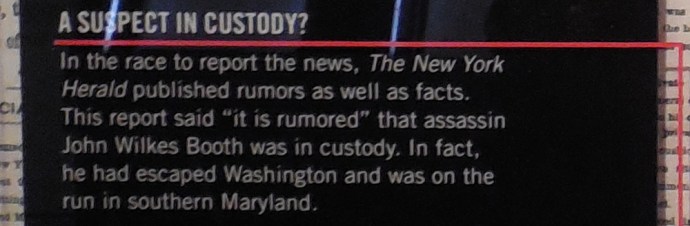
The New York Herald exhibit at the Newseum also demonstrates how the newspapers covering Lincoln’s assassination made the same mistake as some modern journalists by printing unreliable or unsubstantiated claims in hopes of being the first to provide their audience with an exclusive.

Booth in custody Newseum

Rumors and speculation would fill every mouth, diary, and newspaper for the next twelve days as the entire country searched for John Wilkes Booth.

In addition to misinformation that was printed in a rush, the New York Herald exhibit at the Newseum also brings attention to later instances that have caused unintended deception.  The New York Herald’s coverage of Lincoln’s assassination was so wide spread that even many years later, the paper was still very well connected to the event in the minds of the public.  Many advertisers attempted to benefit from this connection by creating their own, custom reprints of editions of the New York Herald.  On the face of it, the reprints appeared genuine though some, like the one below, included engravings that were never in the originals.  No matter how real they looked however, hidden either in the text of the front page or within the interior pages were advertisements for the latest miracle tonic, liniment, or some other product.

Fake NYH Newseum

This type of “historical advertising” was very popular in the late 19th and early 20th century.  People were more likely to hold on to the advertisement if it had something compelling on it.  Another example of this type of advertising is this reproduction CDV of John Wilkes Booth’s escape on a bag for dysentery syrup:

John Wilkes Booth Dysentery Syrup

While the newspapers were well known to be advertisements in their day, as time has passed reproductions like the one above have fooled many unknowing treasure seekers into thinking they have a genuine (and pricey) piece of American history. Most of the time, however, a careful read through (especially of the interior pages which are usually just full page ads for the product) will reveal it is a reproduction.  You can see a small sampling of some of the many advertising reproductions of the assassination editions of the New York Herald here.


Plan Your Visit

 
I highly recommend a visit to the “President Lincoln Is Dead: The New York Herald Reports the Assassination” exhibit at the Newseum.  It is located on the 4th floor of the museum which is open daily from 9:00 am to 5:00 pm.  Tickets to the Newseum cost $23 for adults and allow you to return the next day for free.  While this price may seem a bit expensive compared to the federally funded museums in D.C. that offer free admission, the Newseum has many wonderful galleries and exhibits that make the price more than worth it.  This special New York Herald exhibit only runs until January 10, 2016 so be sure to visit the Newseum before it is gone.

References:
President Lincoln Is Dead: The New York Herald Reports the Assassination at the Newseum
Recollection of men and things at Washington during the third of a century by Lawrence Gobright (1869)
National Archives
Library of Congress

Categories: Uncategorized | Tags: , , , , , , , , , | 3 Comments

Calendar: May 2015

I hope you were all able to take part in some of the April events that commemorated the 150th anniversary of the assassination of Abraham Lincoln, the escape, and subsequent death of his assassin, John Wilkes Booth. Even though most of the big events have passed, there are still some programs and exhibitions going on in the month of May.  May 9th, in particular, has two very exciting events planned. Take a look at the events below and be sure to visit the Calendar section of this site for a full list.

May 1st – 4th:

Lincoln Funeral Train Weekend in Springfield, Illinois

  • Those of you in the central Illinois region will definitely want to make plans to visit the state capital.  Springfield is going all out with events and activities recreating the arrival of Lincoln’s Funeral Train.  For more information and a list of the many events planned, click here.

May 4th:

Brian Unger show

“Lincoln’s Killer on the Run” episode of Time Traveling with Brian Unger debuts on the Travel Channel

  • How the States Got Their Shape host, Brian Unger has a new show taking unsuspecting tourists to lesser visited historic sites.  On May 4th, at 10:00 pm EST, a new episode dealing with John Wilkes Booth is set to air.  Unger will take a group into a Maryland pine thicket (my doesn’t that sound familiar…), row across the Potomac, and visit the site of the conspirator’s execution.  For other dates and times of airings, click here.

May 9th:

2015 Tudor Hall Symposium Graphic

Tudor Hall, the Booths of Maryland and the Civil War Symposium in Bel Air, Maryland

  • The Junius B. Booth Society (JBBS) and the Historical Society of Harford County (HSHC) are holding a one day, one-of-a kind symposium titled Tudor Hall, the Booths of Maryland and the Civil War from 8:00 AM to 4:45 PM at the Bel Air Armory in Bel Air, MD. Tudor Hall, the home of the theatrical Booths of Maryland, a short distance away will be open to the attendees following the symposium for tours till 7 PM.  This is a fundraiser and the proceeds will be split between JBBS and HSHC. All proceeds to JBBS will be used for turning Tudor Hall into a museum. For more information and for directions on how to register for the symposium, click here.

150th Anniversary of the Trial of the Conspirators at Fort McNair in Washington, D.C.

  • Fort Lesley J. McNair in Washington, D.C. contains Grant Hall, the site of the trial and execution of the Lincoln conspirators.  To mark the 150th anniversary of the start of the trial, Fort McNair will be having a very special event. Historians and authors, including Betty Ownsbey, Barry Cauchon, and John Elliott, will be presenting on the imprisonment, trial, and execution of the Lincoln conspirators.  Since Fort McNair is expecting higher than average visitation on this day, those wishing to participate in the programs need to RSVP for their desired hour of programming.  For more information, including the links of how to register to visit, click here.

May 17th:

Ann Hall's Grave

“The Loyal Servants of the Booths: Joe and Ann Hall” presented by Jim Chrismer at the Booth family home of Tudor Hall in Bel Air, Maryland

  • Harford County Historian Jim Chrismer will present at 2:00 pm about the Booth family servants Joe and Ann Hall.  Ann Hall is buried not far from Tudor Hall. For more information, click here.

May 21st:

“Forensics of the Lincoln Assassination” presented by Douglas H. Boxler at the Lew Wallace Study in Crawfordsville, Indiana

  • Speaker Douglas Boxler used a Derringer pistol and a “Spatter Head” that simulates the structure of the human cranium to conduct research on his talk about the “Forensics of Lincoln’s Assassination”. Visit the home of Lew Wallace, a member of the military commission that tried the Lincoln conspirators at 7:00pm to watch his speech.  The Wallace Study also does a wonderful job live tweeting their lectures.  For more information, click here.

May 29th:

Silent Witnesses” Ends at Ford’s Theatre in Washington, D.C.

  • This day marks the end of special exhibit, “Silent Witnesses“, at Ford’s Theatre.  Make sure to visit Ford’s on or before this date to make sure you see these unique treasures before they go back to their home museums:

paine

Alias “Paine”: A Book Lecture by Betty Ownsbey at the Seward House Museum in Auburn, New York

May 31st:

“The Loyal Servants of the Booths: Joe and Ann Hall” presented by Jim Chrismer at the Booth family home of Tudor Hall in Bel Air, Maryland

  • Deja vu? Jim Chrismer will repeat his May 17th program about the Halls at Tudor Hall. For more information, click here.

Ongoing Events/Exhibits:

Undying Words: Lincoln 1858 – 1865 at the Abraham Lincoln Presidential Library and Museum in Springfield, IL
A Fiendish Assassination at the Abraham Lincoln Presidential Library and Museum in Springfield, IL
Remembering Lincoln at the Illinois State Museum in Springfield, IL (ends May 10th)
Now He Belongs to the Ages at the Lincoln Heritage Museum in Lincoln, IL
A Nation in Tears: 150 Years after Lincoln’s Death at the University of Illinois’ Rare Book and Manuscript Library in Champaign-Urbana, IL (ends May 4th)
So Costly a Sacrifice: Lincoln and Loss at the Indiana State Museum in Indianapolis, IN
Autopsy for a Nation: The Death of Abraham Lincoln at the Fenimore Art Museum in Cooperstown, NY
The Attempted Assassination of William Seward at the Seward House in Auburn, NY (ends June 1st)
Shooting Lincoln at the Chrysler Museum of Art in Norfolk, VA
His Wound is Mortal: The Final Hours of President Abraham Lincoln at the National Museum of Health and Medicine in Silver Spring, Maryland
President Lincoln Is Dead: The New York Herald Reports the Assassination at the Newseum in Washington, D.C.
Silent Witnesses: Artifacts of the Lincoln Assassination at Ford’s Theatre in Washington, D.C. (ends May 29th)
The Full Story: Maryland, The Surratts, and the Crime of the Century at the Surratt House Museum in Clinton, MD
Remembering Lincoln a digital archives project by Ford’s Theatre
History on Foot: Detective McDevitt is a great walking tour of D.C. put on by Ford’s Theatre of some of the sites associated with Lincoln’s assassination:

Categories: Uncategorized | Tags: , , , , , , | 5 Comments

Blog at WordPress.com.