Posts Tagged With: Conspiracy

Midnight on the Potomac by Scott Ellsworth

In July of 2025, bestselling author Scott Ellsworth published his newest book, Midnight on the Potomac: The Last Year of the Civil War, The Lincoln Assassination, and the Rebirth of America. After devouring Dr. Ellsworth’s incredibly well-written and engaging book, I reached out to him seeing if he would be willing to sit down for a virtual interview about his work. Below you will find our talk where we discuss the end of the Civil War, the character of John Wilkes Booth, and the Confederate Secret Service.

I’m so grateful to Dr. Ellsworth for chatting with me and I hope you will all pick up your own copies of Midnight on the Potomac wherever you get your books. While Scott didn’t quite make a believer out of me when it comes to the Confederacy’s role in Lincoln’s death, his book provides many intriguing points to ponder. On top of all that, the book gives an engaging accounting of the final months of the Civil War that is impossible to put down.

Categories: History, News | Tags: , , , | 5 Comments

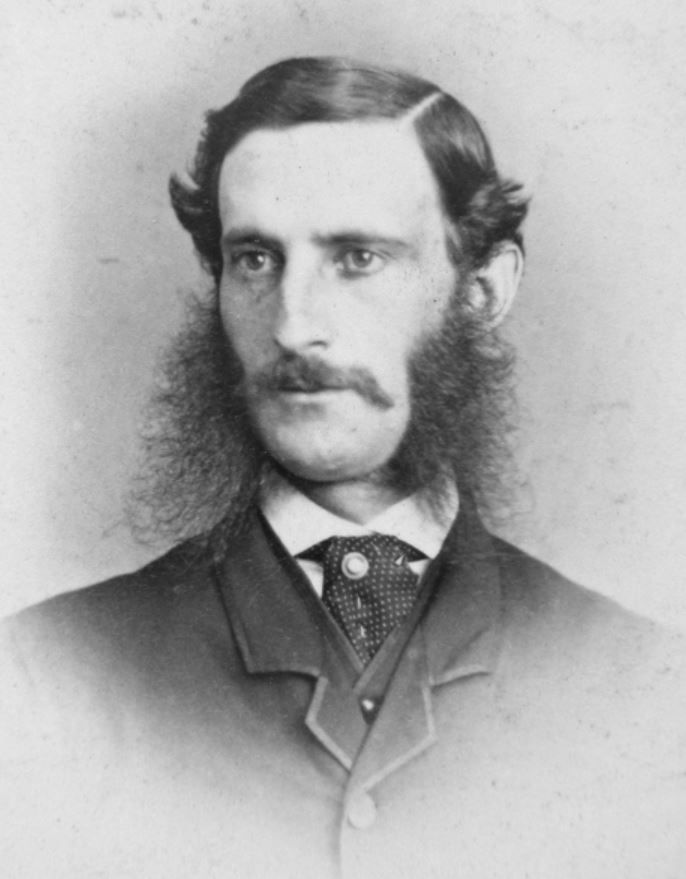
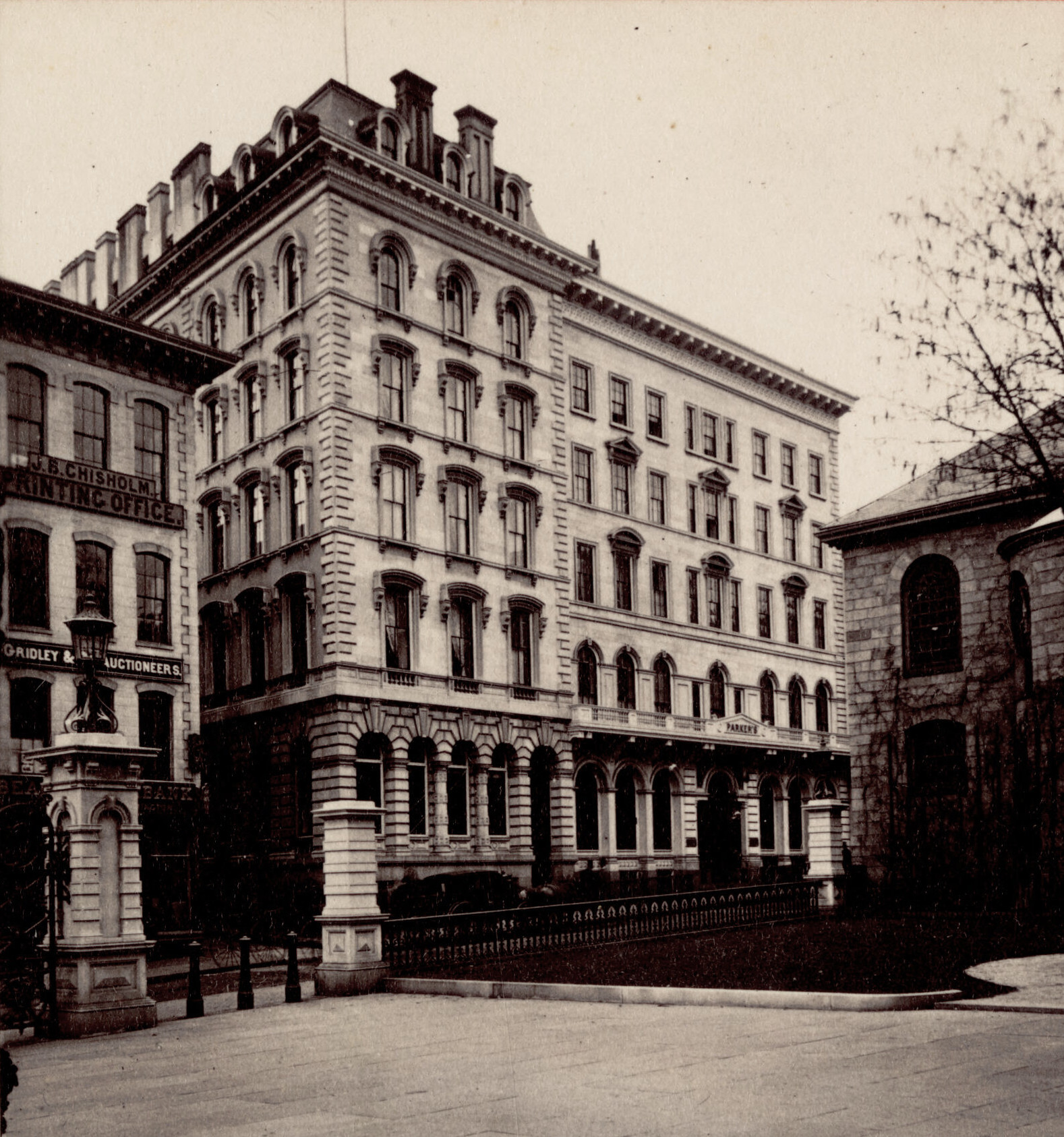
John Wilkes Booth at the Parker House Hotel

In 1988, Lincoln assassination researchers General William Tidwell, James O. Hall, and David Gaddy published a book called Come Retribution: The Confederate Secret Service and the Assassination of Lincoln. The volume was the first book of its kind, attempting to unravel the activities of the Confederate Secret Service during the Civil War. The trio documented many plots and instances of guerrilla warfare that Confederate agents undertook to undermine the Union war effort and support the goals of the Rebel South. In addition to documenting the South’s spying apparatus, the authors revitalized the belief of the Union government in 1865, which posited that the Confederate government was behind John Wilkes Booth’s plot against Abraham Lincoln. 

There is no denying that John Wilkes Booth had several intriguing interactions with those involved in some way with secret Confederate activities. His conspirator in the kidnapping plot, John Surratt, was a known Confederate courier, helping to transport mail and people across the line between Union and Confederate territory. In October of 1864, while working on his plan to abduct Lincoln, Booth traveled to Montreal, Canada, a hotbed of Confederate intrigue, where it was claimed he met with high-ranking Confederate officials stationed there. At the trial of the Lincoln conspirators, a group of witnesses gave damning testimony regarding Booth’s familiarity with members of the Confederate leadership in Canada. The belief of the federal government was that the assassin was following the directive of Confederate leaders and that they were as much to blame for the murder of Lincoln as John Wilkes Booth. 

However, despite the strong belief that the Confederate government was the moving spirit of Booth’s plot, concrete evidence proving such a connection has never quite materialized. Most of the witnesses who placed Booth with high-ranking Confederate officials in Canada were later proven to have committed perjury and been bribed to provide their false testimony. No document from the Confederate government mentions Booth, nor were any documents connecting him to the Confederacy found among Booth’s papers after his crime. John Surratt denied that his foray with Booth was in any way connected with his activities as a rebel courier. 

While Booth undoubtedly had flirtations with Confederates and clearly assembled a gang of Confederate sympathizers to help him in his plan, the smoking gun proving that John Wilkes Booth was acting as an authorized agent of the Confederacy remains elusive. 

Even with acknowledging the lack of definitive proof, Tidwell, Hall, and Gaddy proceeded to build a circumstantial case attempting to prove the Confederacy culpable for Lincoln’s death. One piece of evidence the men pointed to revolved around a trip John Wilkes Booth took to the Parker House hotel in Boston, Massachusetts, in July of 1864.

Part of Come Retribution discusses a Confederate attempt to utilize biological warfare against the Union. Several boxes of clothing “infected” with Yellow Fever were sent to northern cities in an effort to start an outbreak of the deadly disease. Luckily, the plot proved unsuccessful as the medicinal knowledge of the day was unaware that Yellow Fever is not contagious but is spread through the bites of infected mosquitoes. Still, this attempt to poison Northern cities was a significant escalation, and the plot was discussed at the trial of the Lincoln conspirators to show how the Confederacy had been willing to commit terrible deeds to win the war.

Details of the Yellow Fever plot piqued the interest of a man named Cordial Crane, who was an official of the Custom House in Boston, Massachusetts. The trunks of yellow fever clothing had made their way through the port of Boston, and one of the conspirators in the plot was said to have stayed at the Parker House hotel in Boston during the shipping process. Acting under his own initiative, Crane went and consulted the hotel register for the Parker House. While he was not able to find any evidence of the Yellow Fever conspirator in the ledger book, he did note the appearance of John Wilkes Booth’s name. I’ll let Come Retribution take it from here:

“…He [found] J. Wilkes Booth on the Parker House register for 26 July 1864 along with three men from Canada and one from Baltimore. Crane’s suspicions were aroused. He copied the entries and sent a letter dated 30 May 1865 to Secretary of War Edwin M. Stanton. He listed the names “Charles R. Hunter, Toronto, CW [Canada West], J Wilkes Booth, A. J. Bursted, Baltimore, H. V. Clinton, Hamilton, CW, R. A. Leech, Montreal.” In his letter to Stanton, Crane wrote that he sent the “names as a remarkable circumstance that representatives from the where named places should arrive and meet at the Parker House at about the same time Harris was on his way to Halifax with his clothing.” Crane put the emphasis in his letter on “Harris” and the supposedly infected clothing. No investigation was made into the other names on the Parker House register. After all, Booth was dead and the War Department already had information about the “yellow fever plot.” Crane’s letter was filed and not followed up.

Now, more than a century later, the gathering at the Parker House can be construed differently. It has all the earmarks of a conference with an agenda. The inference is that agents of the Confederate apparatus in Canada had a need to discuss something with Booth. Capturing Lincoln? Within a few weeks Booth was in Baltimore recruiting others for just such a scheme and had closed out his Pennsylvania oil operations. The inference becomes stronger as a result of a careful search of records in Toronto, Baltimore, Hamilton, and Montreal. No trace of Hunter, Bursted, and Leech was found. The names appear to be aliases.

The man using the name “H. V. Clinton” did turn up in a not unexpected place. Such a man registered at the St. Lawrence Hall, Montreal, on 28 May 1864. Instead of listing himself as from Hamilton, CW, he gave his home address as St. Louis, Missouri. He was back at the St. Lawrence Hall on 24 August 1864, again entering his name on the register as “H. V. Clinton, St. Louis.” A thorough search of St. Louis records from the 1850-1870 period was made. “H. V. Clinton” was not found.”

Now this is an example of where I believe Tidwell, Hall, and Gaddy go too far astray with their suppositions and theories in hopes of proving their overall thesis. With nothing but transferred names from a hotel registry, they have concocted a scenario in which Booth engaged in a meeting with these fellow hotel guests, and that the purpose of this meeting was the actor’s recruitment into an abduction plot against the President. The main evidence of this scenario is the trio’s belief that the names used in the register are aliases, and thus, proof of the men being Confederate agents. Yet this is a laughable conclusion to make without evidence. A researcher’s inability to find more information about a person listed in a hotel registry doesn’t prove the person used an alias. Once you start down that route, you might as well put on your tinfoil hat because then every name is an alias.

Tidwell, Hall, and Gaddy were good researchers, to be sure, but they were as capable of making mistakes and missing things as anyone. One thing that they, and other researchers since, have missed is the fact that they have transcribed one of the names from Crane’s list incorrectly. His list doesn’t include the name Charles R. Hunter, but rather the name “Chas R Winter.”

Above is the original handwritten letter that Crane sent to Edwin Stanton. A microfilmed version of the letter is contained in the Lincoln Assassination Evidence collection housed at the National Archives, and that entire collection is digitized and viewable at Fold3.com. At the bottom of the first page, Crane lists the first of five names he copied from the Parker House hotel registry dated July 26, 1864.

Now, looking at it quickly, I can understand why Tidwell, Hall, and Gaddy read this as “Charles R Hunter, Toronto CW.” The first letter of the last name certainly seems like an H with an incomplete crossbar. We’ll get to that later. Instead, look at the second letter in the last name. Tidwell, Hall, and Gaddy transcribed this letter as a “u”, but there is clearly a dot floating above it indicating the letter is actually an “i”. An “i” is also the only way that the rest of the word “-nter” would work, since a cursive “n” had two bumps and a ‘u” would steal one of these bumps to make the downstroke. William Edwards and Edward Steers, in their edited printed volume of the evidence agrees that this second letter is an “i” and they transcribe the name as “Chas R Hinter.” However, I believe the name is actually “Winter” with the “W” somewhat hastily drawn. For comparison, look at the way Crane writes Booth’s middle name.

Note how the “W” in Wilkes starts with a little flag or serif before starting the down stroke. The first letter in Charles’s last name also starts with a flag-like serif (admittedly, a somewhat smaller one). Returning to “Wilkes’ we can see how Crane’s downstroke immediately angles upwards and then falls again to make the middle of the “W.” However, rather than bringing the final stroke completely back to the top to complete the capital “W,” this final stroke is significantly shortened and connects directly into the next letter, an “i.” When I taught cursive to my third graders, I always taught them that a capital W doesn’t connect to the rest of the word, but Crane has made his own shortcut of sorts. We can see the same basic formation later on the second page when Crane writes about “the sad tragedy at Washington.” Again, the capital W starts with a decorative serif (this time it’s not connected to the main letter) and the final stroke of the W is almost non existent as it merges into the “a.” Looking back at Charles’s name we see the small flag, the downward stroke and then the start of the upward angled stroke before the line breaks. It could have been that the pen Crane was using was misbehaving, or he failed to put enough pressure during this stroke, which is why it cuts off. Still, we then have the downstroke and the significantly shortened final upstroke that goes into the “i” instead. For those who might still believe this letter is meant to be an “H,” look at the other examples of capital Hs in the letter. There is no starting serif, no upward diagonal. Crane forms the middle of his H by making a loop in his second vertical line. There is no evidence of an attempt to “loop” the downward stroke before the “i.” The name is not Charles Hunter or Charles Hinter, but Charles Winter.

While Tidwell, Hall, and Gaddy may not have been able to find a Charles R. Hunter living in Toronto, there was a Charles R. Winter who lived there. Charles Robinson Winter was born in Barnstaple, England, in 1832. His older brother immigrated to Canada in the late 1840s, and Charles eventually followed him. Charles R Winter from Toronto is included in the arrivals list for the Royal Hotel in Hamilton, Ontario, on May 17, 1864. In January 1865, he married a fellow English native turned Canadian resident, Elizabeth A. Baker, at the home of her brother in Toronto. In the 1871 and 1881 censuses, Winter is listed as an “agent” and directories specify him as a “manufacturer’s agent,” a role that would require a lot of travel. In fact, in the 1868 Toronto directory, his occupation is listed as “traveller.” Now, I can’t prove that this Charles R. Winter is the same one as the one who checked into the Parker House hotel in Boston on July 26, 1864, but I feel that this is more of a possibility than this name being an alias. Winter died in 1899 and is buried in Toronto.

The final name on Crane’s list is “R. A. Leech Montreal.” Though it’s spelled a tiny bit differently, through some research, I pretty quickly found a Robert A. Leach who resided in Montreal during this time period.

Robert A. Leach (according to an image on FindaGrave)

Robert A. Leach was a young lawyer from Montreal. He is found in the 1864 Montreal directory as the “R” in “R & D Leach, Advocates.” This was a firm he shared with his brother David. Both were the elder sons of William Turnbull Leach, the archdeacon of Montreal’s St. George Church. Robert A. Leach died from an unspecified illness in 1871 at the age of 32. He is buried in Montreal. Again, I feel the possibility that the R A Leech in Crane’s letter is more likely to have been Robert A. Leach than an alias of a Confederate agent.

Now I wish I could say that I’ve found prospective identities for each of the names on the list. While I definitely have a step up over Tidwell, Hal, and Gaddy, who worked in the pre-Internet age, the remaining two names on the list have mostly eluded my own searches.

However, it’s clear from Crane’s letter that he had a hard time deciphering the last name of the man from Baltimore. Come Retribution only provides Crane’s first guess, “A J Bursted,” but the original letter shows Crane adding “(or Rursted)” after this entry, showing his uncertainty. “Bursted” and “Rursted” are not surnames for anyone. It is unlikely a person would have used such a nonexistent last name, even as an alias. It is far more likely that Crane just couldn’t read the poor handwriting of the entry. The last name might have been Bustard, Buster, Bumstead, or something else entirely. With only the initials “A. J.” (if even those are accurate), we don’t know what first names to search. Unfortunately, we cannot go back to the original records ourselves to try our hand at deciphering these names. The original registers for the Parker House hotel during this period no longer exist. All we have is this small snapshot from Crane, which doesn’t even specify if these were the only names entered into the register on July 26, 1864. It seems unlikely that a busy metropolitan hotel like the Parker House would only gain five guests over the whole day. It seems more likely that these were the only names Crane recorded because he was looking for a connection to Canada.

The Parker House hotel in Boston

But let’s still look at “H V Clinton” of Hamilton, Canada West. This name is seemingly the linchpin of Come Retribution’s theory that the names on the list are all aliases. As they note, the name “H V Clinton” also appears on the register for the St. Lawrence Hall hotel in Montreal in 1864. That hotel was known to cater to many Confederate agents and sympathizers. It was said that the St. Lawrence Hall was the only hotel in Canada to serve mint juleps, a favored drink among the plantation South. I’ll admit that I have not been able to find an “H. V.” Clinton living in Hamilton, Ontario. However, I did find a whole family of Clintons, with different initials, who lived in the area. James H. and William Wesley Clinton were farmers who resided in the Oneida Township of Haldimand County, Ontario. Haldimand County abuts the city of Hamilton, and the distance between downtown Hamilton and the Oneida Township is about 18 miles. A resident of this rural area would likely provide their place of residence as Hamilton on a hotel register in the same way Booth regularly registered in hotels as being from Baltimore rather than Bel Air. While Booth had also lived in Baltimore as a child, once his father died in 1852, he never resided in Baltimore again. The Booths didn’t even have a home there after the 1850s. If I were to try to find John Wilkes Booth in Baltimore records during the 1860s, I would fail. In the 1860 census, the Booths are all enumerated as living in Philadelphia. During the summer of 1864, he resided with his brother Edwin in New York City. Yet, to Booth, he was “from” Baltimore, and that’s why he would sign hotel registers that way. H V Clinton from Hamilton, Ontario, might have followed the same course. There was a man named William Clinton who lived in Hamilton and worked as a saw-filer in 1863 and beyond. Granted, none of these individuals appear to match the given initials  “H. V.”, but remember that we are trusting Cordial Crane that he transcribed the right letters. Regardless, there were Clintons living in and around Hamilton, Ontario, during the 1860s who could represent the man who checked into the Parker House.

What of the mysterious H.V. Clinton, who checked into the St. Lawrence Hall in Montreal in 1864? As Come Retribution notes, this Clinton wrote his place of residence as St. Louis, Missouri. He checked in on May 28, July 8, and August 24. For some reason, the Come Retribution authors neglected to mention the July 8 entry, despite their having been aware of it. On that day, H V Clinton checked in at 7:30 pm. Earlier that same day, an entire party from St. Louis had also checked in. This party was headed by “Mr and Mrs Garneau,” their two children, a nurse, and two other guests: a “Miss Withington” and a “Miss Clinton.” The Garneaus were Joseph and Mary Garneau. Joseph was a Montreal native who immigrated to the States and settled in St. Louis. There, he established a bakery that grew into one of the largest factories for baked goods in the U.S. He produced crackers in huge quantities and helped supply the Union with crackers and hardtack during the war. Mrs. Garneau’s maiden name was Withington, and the Miss Withington who joined them was her younger sister, Emily Withington. The names of this party can also be found in a newspaper article published in Buffalo, New York, on July 6. It appears that the Garneau party traveled part of the distance from St. Louis to Montreal aboard a boat called the Badger State commanded by Captain James Beckwith. The article contained a thank you to Captain Beckwith and a positive review of the journey that the boat provided. Included in the signatories of the article are the names Joseph Garneau, Mrs. Joseph Garneau, Miss E Withinton [sic], and Miss Maggie Clinton. I have been unable to determine the relationship between this Maggie Clinton and the Garneaus. 

The St. Lawrence Hall hotel in Montreal

Still, the arrival of H V Clinton, also from St. Louis, to the same Montreal hotel, on the same day as the Garneau party featuring Maggie Clinton, definitely seems to be connected. In addition, Come Retribution fails to mention that when H V Clinton returned to the St. Lawrence Hall hotel on August 24, he was not alone. That time, he checked in with “Miss Kate Clinton,” also from St. Louis. The two were put in adjoining rooms. All of this makes me think there was some sort of family connection between H V, Maggie, and Kate Clinton, and that they were also somehow connected to the cracker magnate, Joseph Garneau, who was originally from Montreal. 

As Come Retribution mentions, searches for H V Clinton in St. Louis, Missouri, fail to provide identifying information. There were definitely Clintons living in St. Louis in 1864. So far, I have only been able to find one instance of an H V Clinton in St. Louis. It was common practice in days gone by to publish lists of unclaimed letters held by the post office in the newspaper. Many people addressed their letters with just the name of the recipient and the city or town where they resided, rather than a full street address. It was then up to the recipient to go to the post office and inquire about any letters for them to receive their mail. To illustrate this, here’s the envelope to a letter John Wilkes Booth wrote. It gives the addressee’s name but merely directs it to the post office where it would have to be picked up.

If a person did not pick up their mail from the post office after a certain period of time, postmasters would publish a list in the paper, hopefully informing the recipient that they have mail waiting for them. The name H. V. Clinton is featured on such a list in the St. Louis Globe Democrat newspaper on September 15, 1866. It’s worth noting that this date is well after the end of the Civil War. If the name H V Clinton were indeed an alias, there would have been no need to continue using it after 1865. It seems more likely that H V Clinton was a resident of St. Louis in the 1860s, albeit one that is difficult to track down. 

During my research, I stumbled across other H V Clintons in the 1860s that could possibly be the same person, but their connection to St. Louis is unproven. There was an H V Clinton living in Carroll Parish, Louisiana, through the 1860s. A H V Clinton and his wife from Indiana visited Newport, Rhode Island, in 1862. Henry V. Clinton, residing in Newport, advertised for a nanny to accompany him and his young son on a year-long trip to Europe in 1864. There’s no way to prove or disprove that any of these are the same H V Clinton.

In the same way, we cannot prove that the H V Clinton from Hamilton, Ontario, who signed the Parker House hotel registry in Boston on July 26, 1864, is the same H V Clinton from St. Louis, Missouri, that thrice signed the St. Lawrence Hall register in Montreal in May, July, and August of 1864. The difficulty in finding either of these men does not prove they are the same person or, even more, that they were an alias for a Confederate agent who subsequently recruited Booth into the plot to kidnap Lincoln. 

In the credit of Tidwell, Hall, and Gaddy, when they wrote Come Retribution, they were understandably intrigued by the fact that Booth made a seemingly random visit to Boston in the summer of 1864. In June of that year, he had been tending to his failing oil investments in Pennsylvania before arriving and spending weeks with his family in New York City and in New London, Connecticut. This register entry of a trip to Boston was a mystery, and, following Cordial Crane’s suspicions, the trio made a conspiracy out of it.

However, just about a month before Come Retribution was published, a new and exciting discovery was made. Six letters written by the assassin between June 7 and the end of August 1864 were made known to historians. Booth had written the letters to a 16-year-old Boston girl by the name of Isabel Sumner. The actor had likely met the girl during his long engagement in Boston earlier that spring. From the tone and content of these letters it is clear that Booth was smitten with the young woman, so much so that he even gifted her a pearl ring with the inscription “J.W.B. to I.S.” Though it does not appear that their romance lasted beyond the summer, young Ms. Sumner retained this cache of letters, the ring, and photographs of the actor, even after he murdered the President. These items were passed down through members of her family until her descendants revealed them and sold the lot in 1988 to collector Louise Taper. James O. Hall, when in the process of helping to facilitate the sale of the letters to Taper, even wrote to the Sumner descendant offering to send a copy of his soon-to-be-published book, Come Retribution. Had the Sumner letters been known a year earlier, the contents may have caused Hall to see Booth’s Boston trip in a less conspiratorial light. 

Isabel Sumner

On July 24, 1864, Booth wrote to Isabel Sumner from his brother’s home in New York City. That letter was sealed in the envelope previously shown above. The smitten Booth apologized to Isabel for coming on so strong with his many love letters and feared he had scared her off. He apologized for his intensity and vowed not to write her another letter until he heard from her. Yet, despite this vow, it’s clear Booth was unwilling to wait for a response. He ended his letter with, “Remember, dear friend not to let anyone see my letters. I will come at once to Boston.” Two days after writing this letter, Booth checked into the Parker House hotel in Boston. 

Seen in its proper context, there is no mystery regarding Booth’s visit to Boston in July of 1864. The man was clearly smitten with 16-year-old Isabel Sumner and traveled from New York to Boston to see her. His own written words betray his purpose. His trip to Boston was not of a conspiratorial nature, but one of desire. 

In the years since Come Retribution was published, several authors have taken up Tidwell, Hall, and Gaddy’s thesis, transforming what the trio presented as couched theories into near certainties. The late John Fazio, author of Decapitating the Union, was the greatest master of this. In his section about Booth’s visit to the Parker House he stated uneqivialy (and without evidence) that Booth, “met with three Confederate agents from Canada and one from Baltimore” and that “this meeting was the first, or at least one of the first, that John had with Confederate agents and that many more followed.” Yet, as can be seen, there is no evidence that Booth took part in a Confederate conference at the Parker House hotel in Boston. The underlying “support” for this is that some of the men who also checked into the hotel on this date were from Canada, and researchers of the past couldn’t find out more about them. 

As I stated at the beginning of the post, John Wilkes Booth did have some legitimate and intriguing connections with members of the Confederate underground. But we must also remember that much of this underground was not the same as the official Confederate Secret Service, which enacted authorized missions. Confederate sympathizers often acted in the same way as modern terrorist cells. They had the same ultimate goal to help the Confederacy and win the war, but not every action completed by these groups was controlled by or even known to the Confederate government. 

Ultimately, I believe that Booth was speaking honestly when he closed his manifesto for the kidnapping plot, identifying himself as “A Confederate doing duty upon his own responsibility, J. Wilkes Booth.” But even those who believe that the Confederate government may have had a hand in Booth’s plots against Lincoln, it is important to be realistic about the evidence supporting this. There is nothing to support the idea that John Wilkes Booth met with Confederate agents at the Parker House hotel in July 1864. 


If you found this post interesting and want to support my research and writing, please consider joining my Patreon page. For just $3 or more a month, you get access to a weekly newsletter that keeps you up to date on all things Lincoln assassination-related. For $7 or more a month, you also get access to exclusive fortnightly posts delving into the history of artifacts relating to the assassination story, and for $15 or more a month, you get monthly videos from me where I share new research discoveries and answer your questions about this history. The contributions of patrons help cover my research subscriptions and associated website costs. For example, the All Access Membership subscription to Ancestry.com (which was needed to consult Canadian and other international records in the writing of this post) costs about $500 a year, so every little bit helps. Click here or on the icon below to learn more about my Patreon.

Categories: History | Tags: , , , , | 7 Comments

Manhunt Review: Episode 7 The Final Act

I conducted reviews of the seven-part AppleTV+ miniseries Manhunt, named after the Lincoln assassination book by James L. Swanson and released in 2024. This is my historical review for the seventh episode of the series “The Final Act.”  This analysis of some of the fact vs. fiction in this episode contains spoilers. To read my other reviews, please visit the Manhunt Reviews page.


Episode 7: The Final Act

The final episode of the series opens with a flashback to 1862. Edwin Stanton attends a party at the White House thrown by the Lincolns. The first family is concerned about the poor health of their son Willie, who will soon die from typhoid fever. Stanton agrees to take over as Lincoln’s Secretary of War.
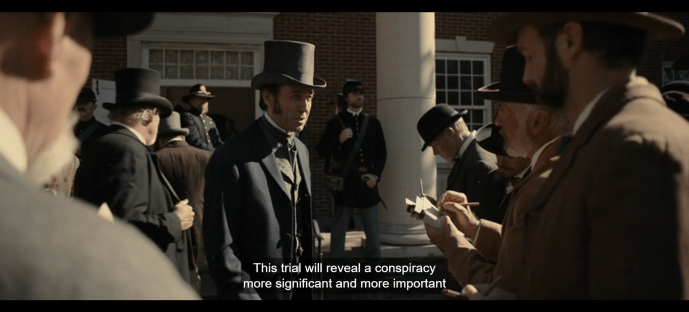
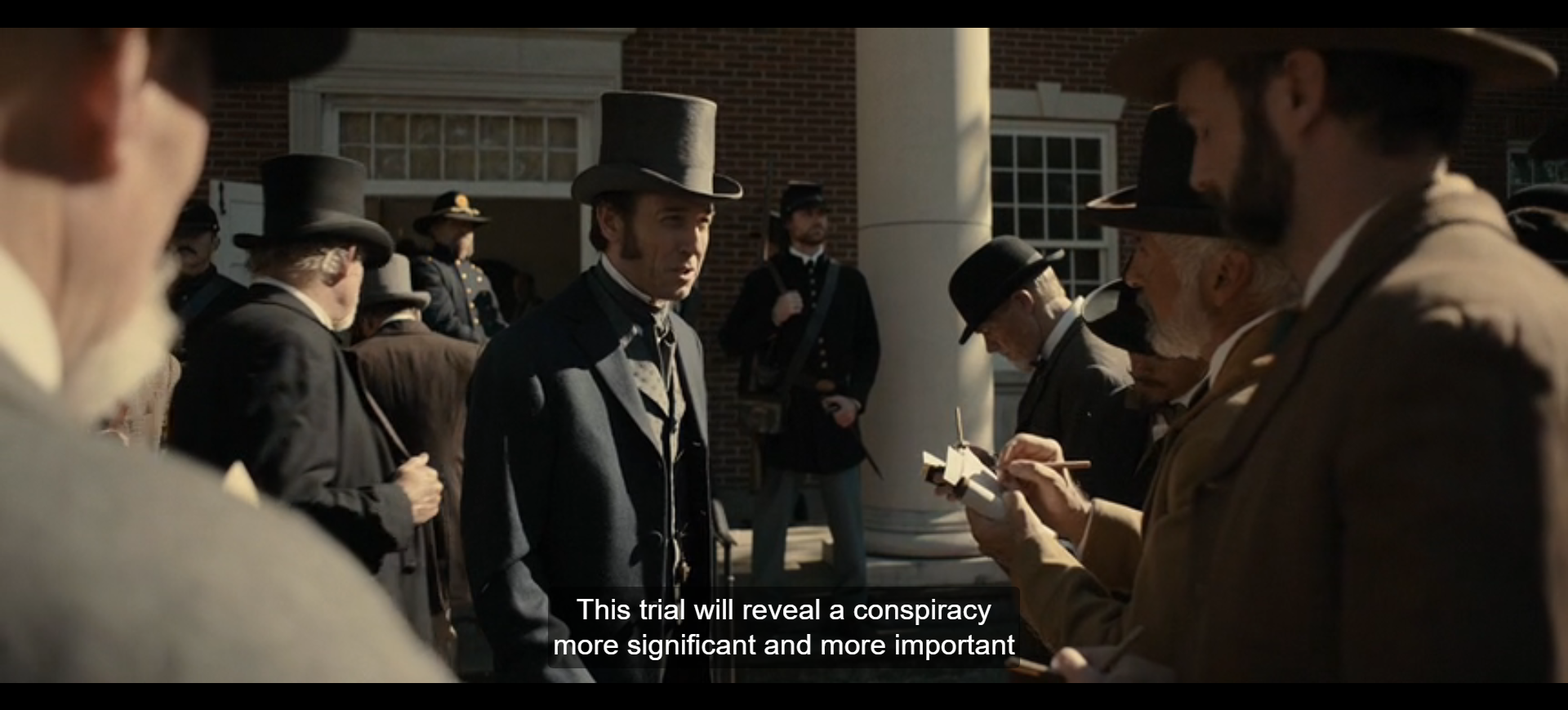
We then flash forward to the first day of the trial of the conspirators. Stanton talks with reporters outside before seating himself to watch the proceedings. Judge Advocate General Joseph Holt lays out the charges against the conspirators who are seated on a bench in the front of the courtroom. When Holt announces that the government is also charging Jefferson Davis in Lincoln’s assassination, audible gasps and rumblings are heard throughout the courtroom.

Next, we see Stanton talking to Jefferson Davis in his prison cell. The Confederate president denies any involvement in Lincoln’s death and is defiant that the cause of the Confederacy will live on.

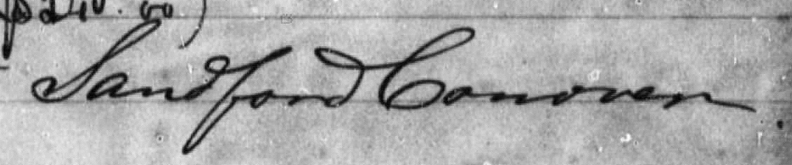
In the War Department, Stanton and Holt ask Lafayette Baker what evidence his agent, Sandford Conover, has implicating Davis. Baker admits that Conover has been two-timing them and has also been acting as an agent for the Confederacy. However, Baker plays this as good news as the Confederate Secret Service now knows that Conover has betrayed them and he is now willing to tell everything he knows. Among the information Conover now wants to share is a letter the CSS calls “the pet letter.” Baker tells the men that “pet” was Jefferson Davis’s nickname for Booth, and Stanton announces that Conover will now be their star witness.

There is a brief scene of Holt and Stanton working with Mary Simms to prepare her for her time on the witness stand before we return to the trial for a mash-up of testimonies. William Bell testifies about Powell’s attack on the Seward household, Joseph “Peanut John” Burroughs testifies about Edman Spangler’s assistance to Booth at Ford’s Theatre, and Thomas Eckert misrepresents the importance of Booth’s “Confederate” cipher, as instructed by Stanton in the previous episode.

The testimony then turns to Dr. Mudd, with Jeremiah Dyer defending the doctor’s reputation and accusing his servants (Mary Simms) of having been poor. Baptist Washington, having taken a bribe from Dyer in the previous episode, also speaks favorably of Dr. Mudd and accuses Mary Simms of being a liar, much to the distress of Simms, who sits watching the proceedings. Outside of the courtroom, Simms expresses her concern to Stanton that she won’t be enough to put Dr. Mudd away. We then see her talking to her brother, Milo, at the freedmen’s camp, begging him to testify about Mudd’s treatment of him. Milo is hesitant but is next shown in Stanton’s office in the War Department, listening to Stanton explain how important his testimony would be.
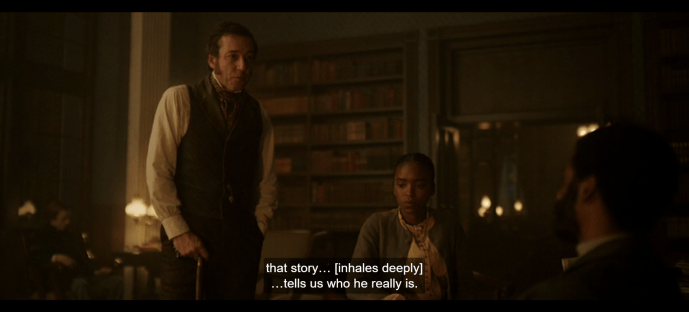
After some more talk between the siblings, Milo agrees to testify. As the Simmses prepare to depart, Mary talks with Louis Weichmann, who is also practicing with Stanton for his upcoming testimony against Mary Surratt. Mary Simms gently accuses Weichmann of not saying everything he knows and asks him to back her up on the stand when she states that Dr. Mudd, John Surratt, and John Wilkes Booth all knew each other before the assassination. Also, Sandford Conover arrives at Stanton’s office and produces the “pet letter” described earlier by Lafayette Baker.

We then jump back to the trial where Milo Simms is on the stand, and he recounts having been shot in the leg by Dr. Mudd when he was enslaved by him. Mary Simms then takes the stand and talks about Dr. Mudd’s disloyal sentiments and having harbored Confederate on his farm in 1864. Mary recounts that John Surratt was a common visitor to the farm and that Mudd had known Surratt and Booth before the assassination. When Dr. Mudd’s defense attorney, Gen. Ewing, attempts to discredit Mary, she tells them to ask Louis Weichmann about it.

Weichmann, next on the stand, describes having seen the conspirators in and around Mary Surratt’s boardinghouse. He describes his friendship with John Surratt and how John was often on trips to Montreal and Richmond. Weichmann also defends Mary Simms, acknowledging that he and John Surratt first met John Wilkes Booth through an introduction made by Dr. Mudd.

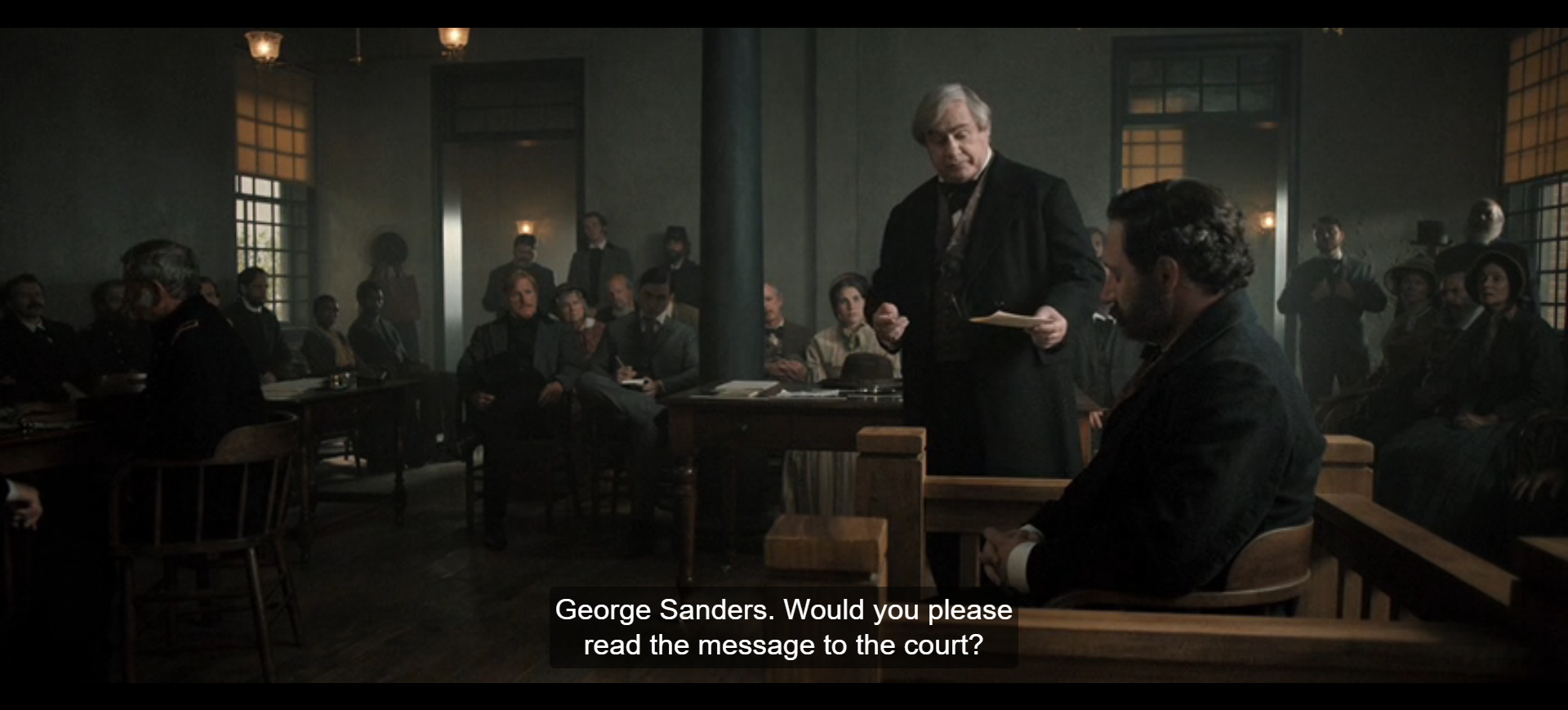
Then, it’s time for Stanton’s key witness, Sandford Conover. He admits to having worked for both the Union War Department and the Confederate Secret Service, leveraging information on both in order to make a living. Conover states that when Confederate General Robert E. Lee surrendered, the CSS in Montreal received orders from Richmond via John Surratt to set “pet” in motion. Conover claims that Jefferson Davis referred to John Wilkes Booth as his “pet.” He implicates George Sanders in the assassination plot explicitly but states that Sanders did not have confidence that Booth would succeed. Conover then reads part of the “pet letter” addressed to Sanders, which states that “pet has done his job well and old Abe is in hell.”
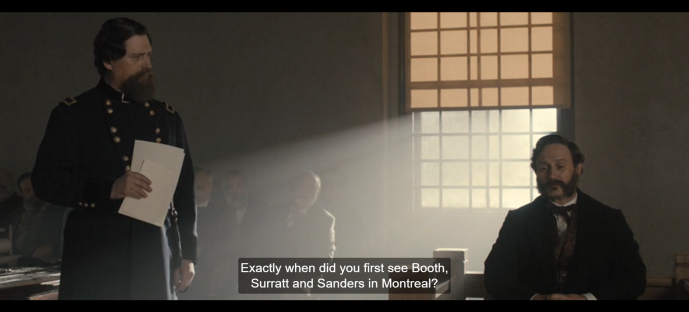
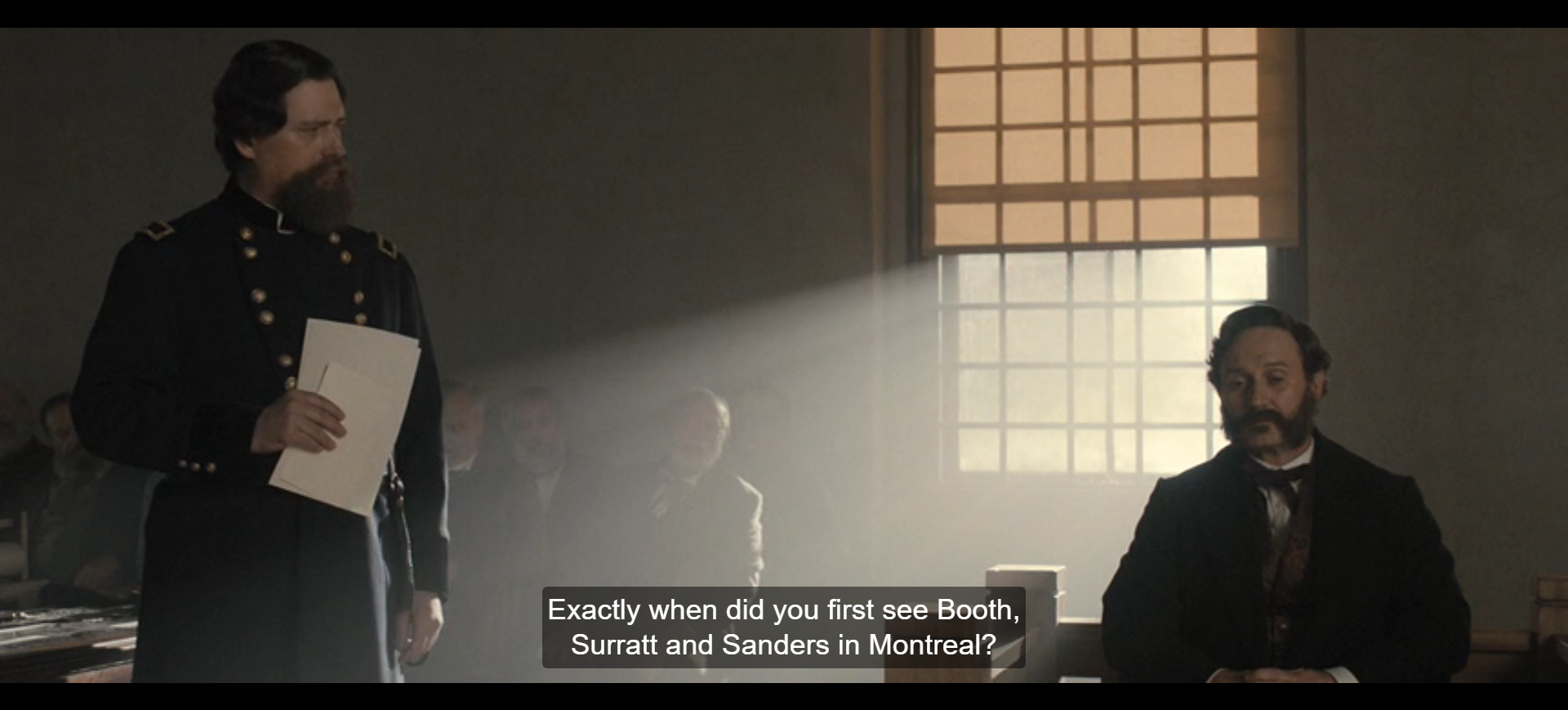
On cross-examination, Conover admits that he has several other aliases, including James Wallace and Charles Dunham. When asked when he saw Booth, Surratt and Sanders together in Montreal, Conover pauses before giving the date of October 17, 1864. Defense attorney Ewing then counters with a record establishing that Conover was in jail during the month of October. Conover admits his mistake over the date but is adamant that Jefferson Davis knew of and ordered the assassination of Lincoln. After accusing Conover of deliberate perjury, Gen. Ewing rests his defense.

Back at the War Department, Stanton, Mrs. Lincoln, and others await the announcement of verdicts in the case. Mrs. Lincoln tells Stanton he has done well, regardless of the outcome involving Jefferson Davis. Thomas Eckert then gets word that the judges have finished their deliberations, and pretty much the whole cast of characters makes their way back to the courtroom.

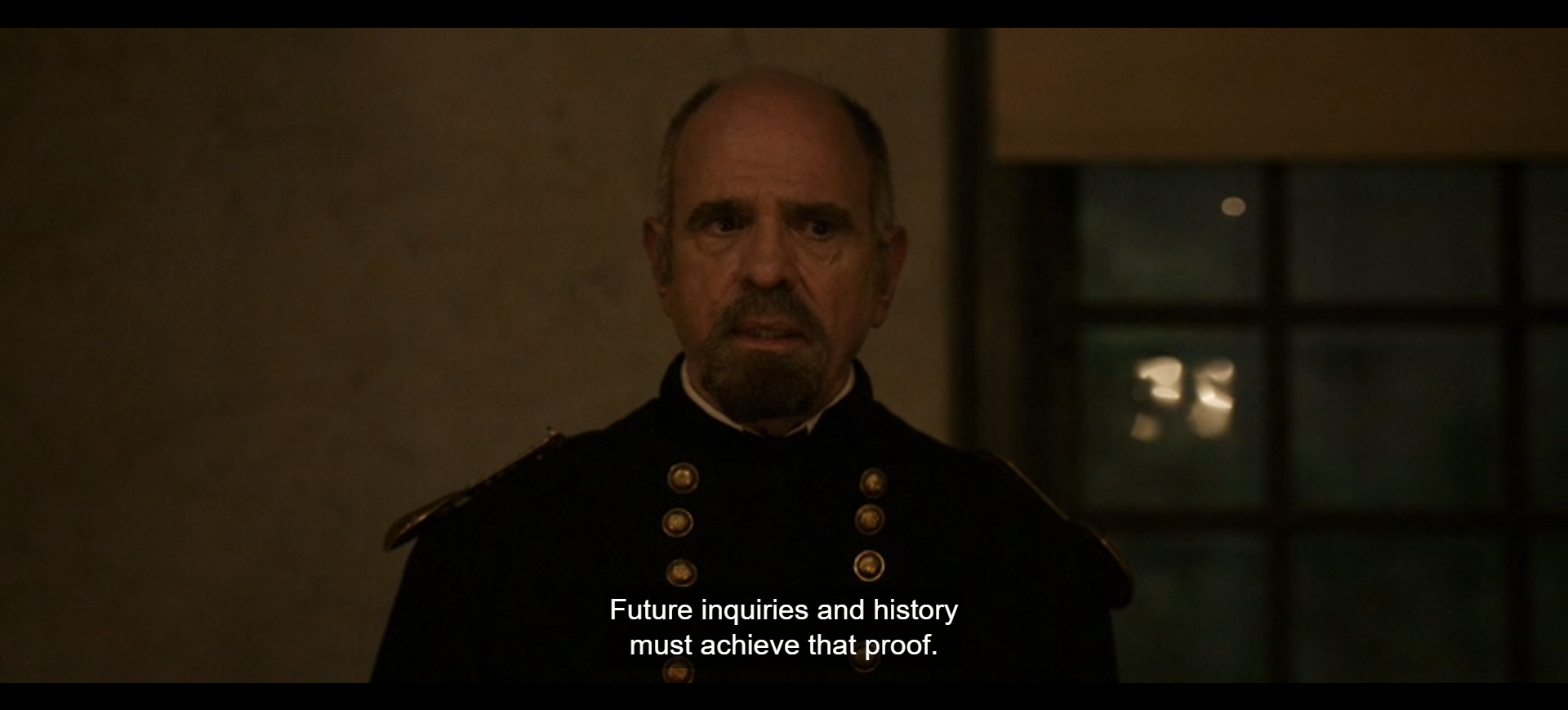
General David Hunter, the president of the military commission, first addresses the courtroom, noting his belief that Jefferson Davis is as much guilty of the conspiracy against Lincoln as John Wilkes Booth. However, Hunter states that the commission was unable to conclusively reach a verdict on such a grand conspiracy due to tainted evidence. He leaves it to history to prove the Confederacy’s culpability.

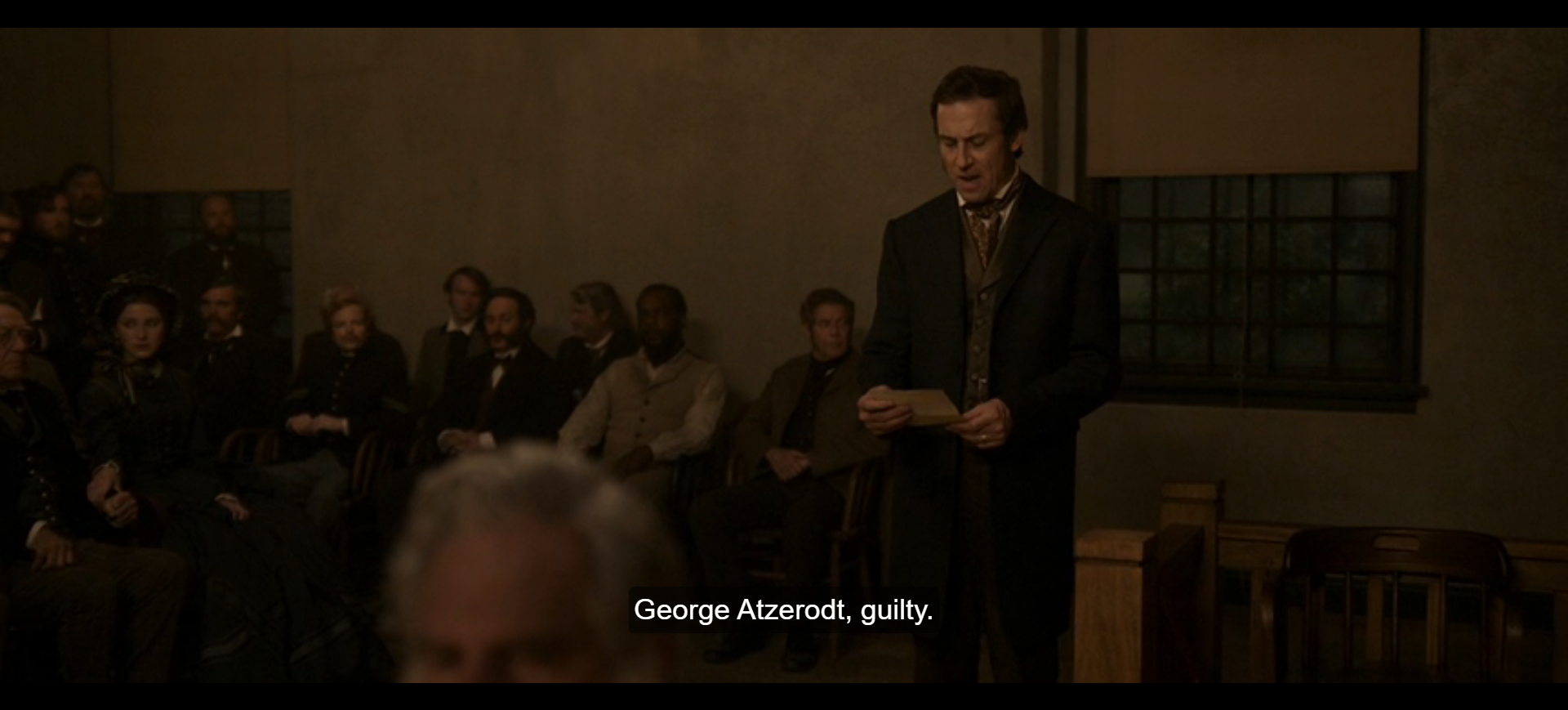
Hunter then turns to the conspirators in the courtroom, all of whom are still standing. He hands the verdicts over to Secretary Stanton to read. Stanton reads through each name and verdict, one at a time. After announcing that Mary Surratt, Lewis Powell, George Atzerodt, and David Herold have all been found guilty, Hunter interposes with the news that these four will be hanged tomorrow. Stanton then announces Spangler’s guilt and sentence of 6 years in prison. An impatient Mary Simms whispers to Eddie, asking about Mudd seconds before his father declares Mudd guilty and sentences him to life imprisonment. Mary and Milo Simms embrace, and the conspirators are led out of the room.

Outside the courthouse, Lafayette Baker and Edwin Stanton confront Sandford Conover about his faulty testimony. Conover says he told the truth but admits that he had received a suspicious package from London that morning. Baker concludes that George Sanders got to him. In a brief montage, we witness David Herold pulled from his cell, situated on a scaffold, and a rope placed around his neck. He is standing alongside the other condemned conspirators before we cut to a photograph in Stanton’s hand showing the execution.

Thomas Eckert informs Stanton that the National Archives collected the pieces of evidence from the trial but noted that pages from Booth’s diary are missing. Eckert warns Stanton that they might open an inquiry. Stanton lies, saying that Lafayette Baker had the diary last. A knowing Eckert then tells Stanton that he had the secretary’s fireplace cleaned recently, showing his loyalty to his boss, who destroyed the diary pages in that fireplace the episode before.

We flash forward to a future date. Elizabeth Keckley is hosting a fundraiser for the Freedmen’s Bureau by selling copies of a book about her time in the White House. Mary Simms is there and is encouraged to apply to Howard University, a new college for Black Americans. Secretary Stanton speaks favorably of the Freedmen’s Bureau and complains of President Johnson’s lack of support for its mission. To this party, the President arrives, accompanied by General Lorenzo Thomas, an adversary of Stanton’s. Johnson informs Stanton of his intention to remove troops from the Southern states. Knowing that Stanton will oppose him, Johnson tells Stanton that Gen. Thomas will be replacing him as Secretary of War. Stanton notes that trying to remove him will trigger an impeachment investigation by Congress, but President Johnson is unconcerned.

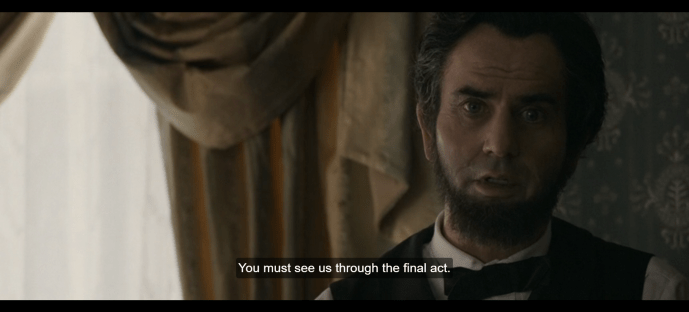
A fuming Stanton offers General Thomas a tour of the War Department. As he shows his replacement around, Stanton recalls a conversation he had with President Lincoln the day before the assassination. Stanton attempted to resign now that the war was coming to a close, but Lincoln denied his request, noting that he needed Stanton more than ever to fight for the future of the nation during Reconstruction. Remembering his promise to Lincoln, Stanton locks his office door and barricades himself into the War Department, determined to preserve Lincoln’s plans for Black suffrage and a united nation.

Through text on the bottom of the screen, we are told that Stanton barricaded himself in the War Department for three months while Andrew Johnson faced impeachment. In the end, Johnson avoided removal from office by a single vote. We also learn that John Surratt was eventually returned to the United States but was not convicted. He is shown giving a speech about his involvement with John Wilkes Booth. Mary Simms is also shown preparing for her first day at Howard University as the text tells about the adoption of the 13th and 14th amendments, which officially ended slavery and granted citizenship to Black Americans.

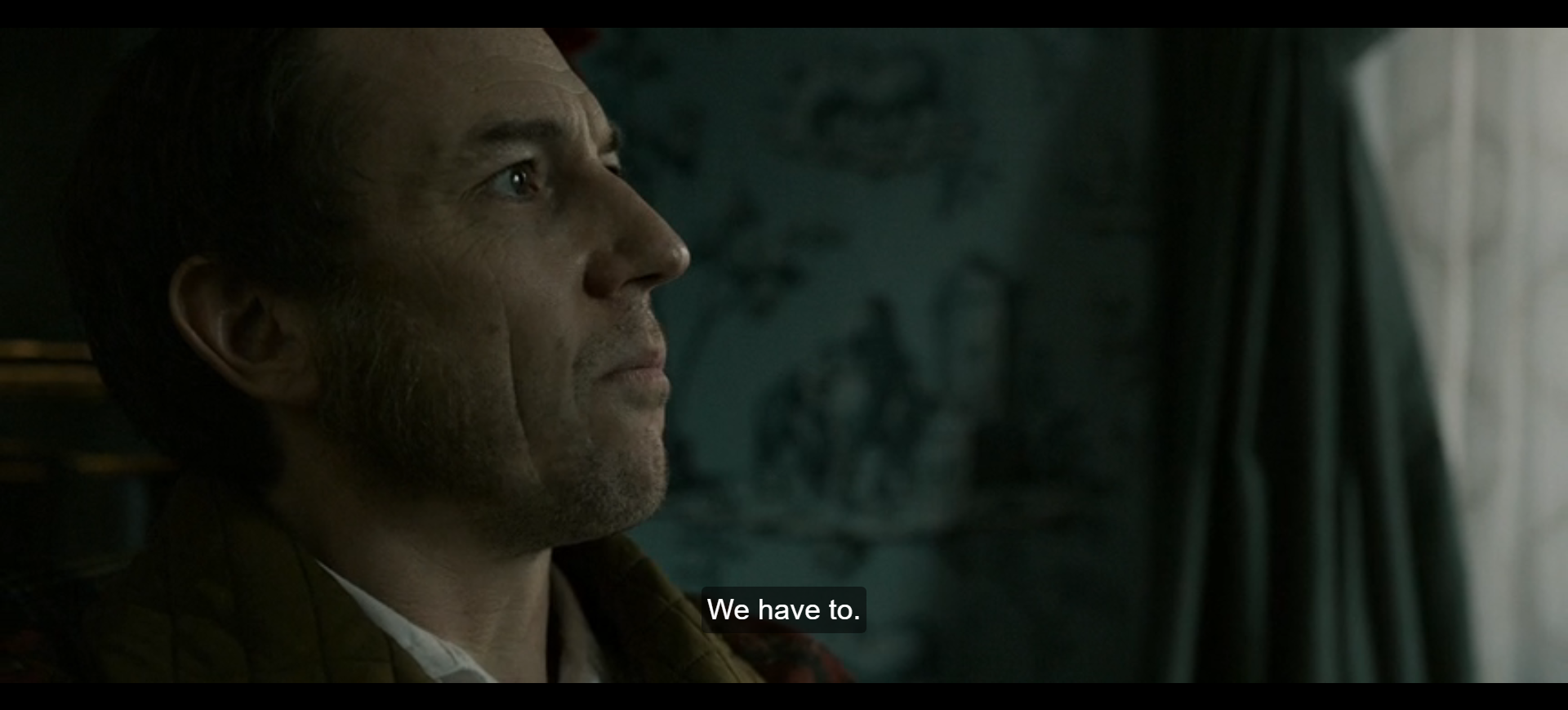
We then jump to Christmas Eve of 1869. It’s clear Stanton’s asthma has gotten worse over the intervening years as he inhales vapors through a medical device. Eddie Stanton brings news to his father that the elder statesman has been officially confirmed as a new justice of the Supreme Court. The younger Stanton is confident that, as a member of the Supreme Court, his father will continue to ensure Lincoln’s vision for the country and congratulates his father. Even in his weakened state, Stanton is noticeably pleased. After Eddie excuses himself, a teary-eyed Stanton looks out the window and announces, “We finish the work now. We have to.”
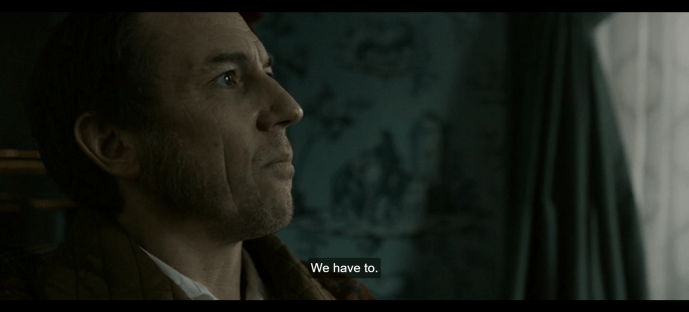
However, as the former Secretary attempts to rise from his chair to join his family downstairs for a meal, he becomes weak and collapses back down into his chair. His papers fall to the ground, and we see that Edwin Stanton has died. A voiceover from Eddie Stanton laments his father’s death from asthma-related organ failure before he was able to serve on the court. A similar voiceover from Mary Simms relates the ratification of the 15th Amendment two months after Stanon died. Finally, the series ends with an echo of Stanton’s words that the work still needs to be finished.


Here are some of the things I enjoyed about this episode:

  • The Trial Room

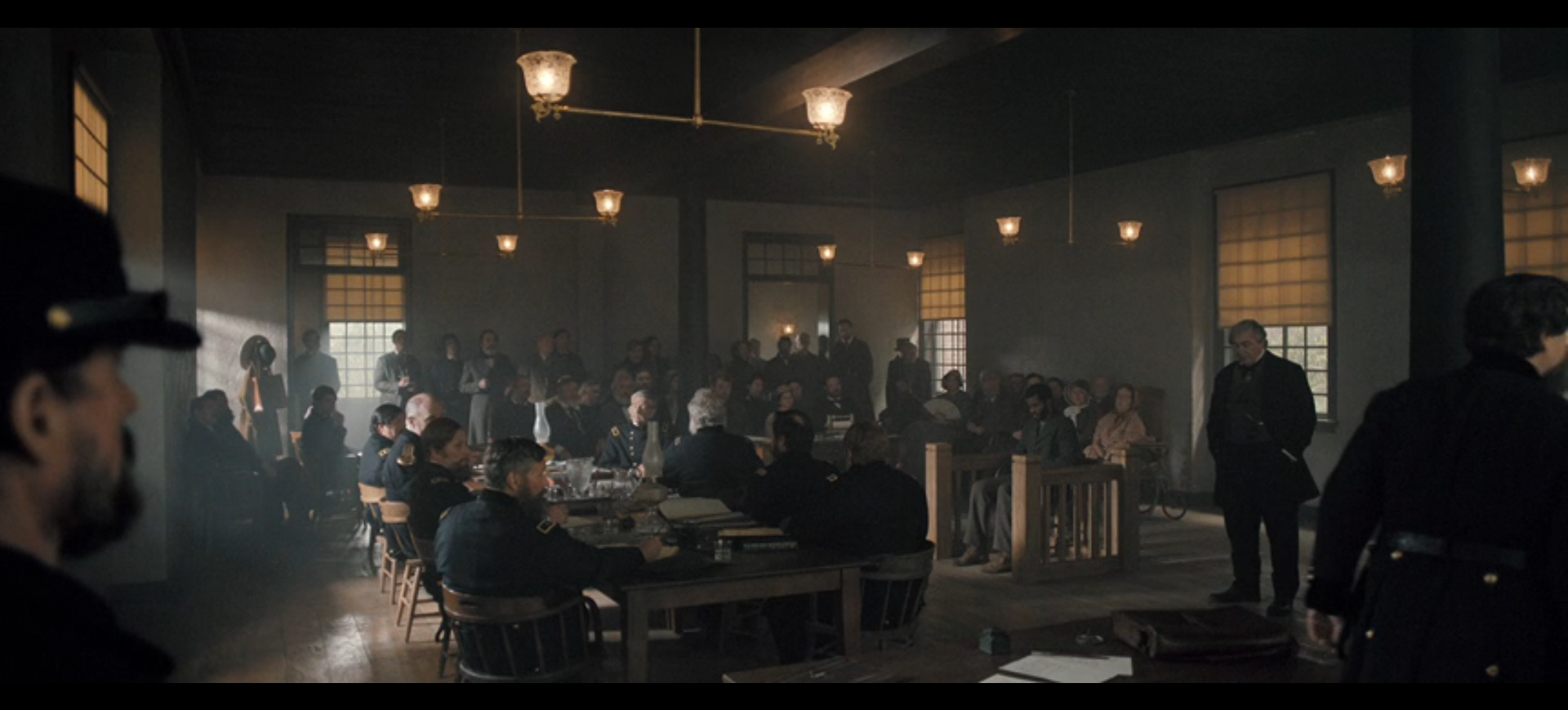
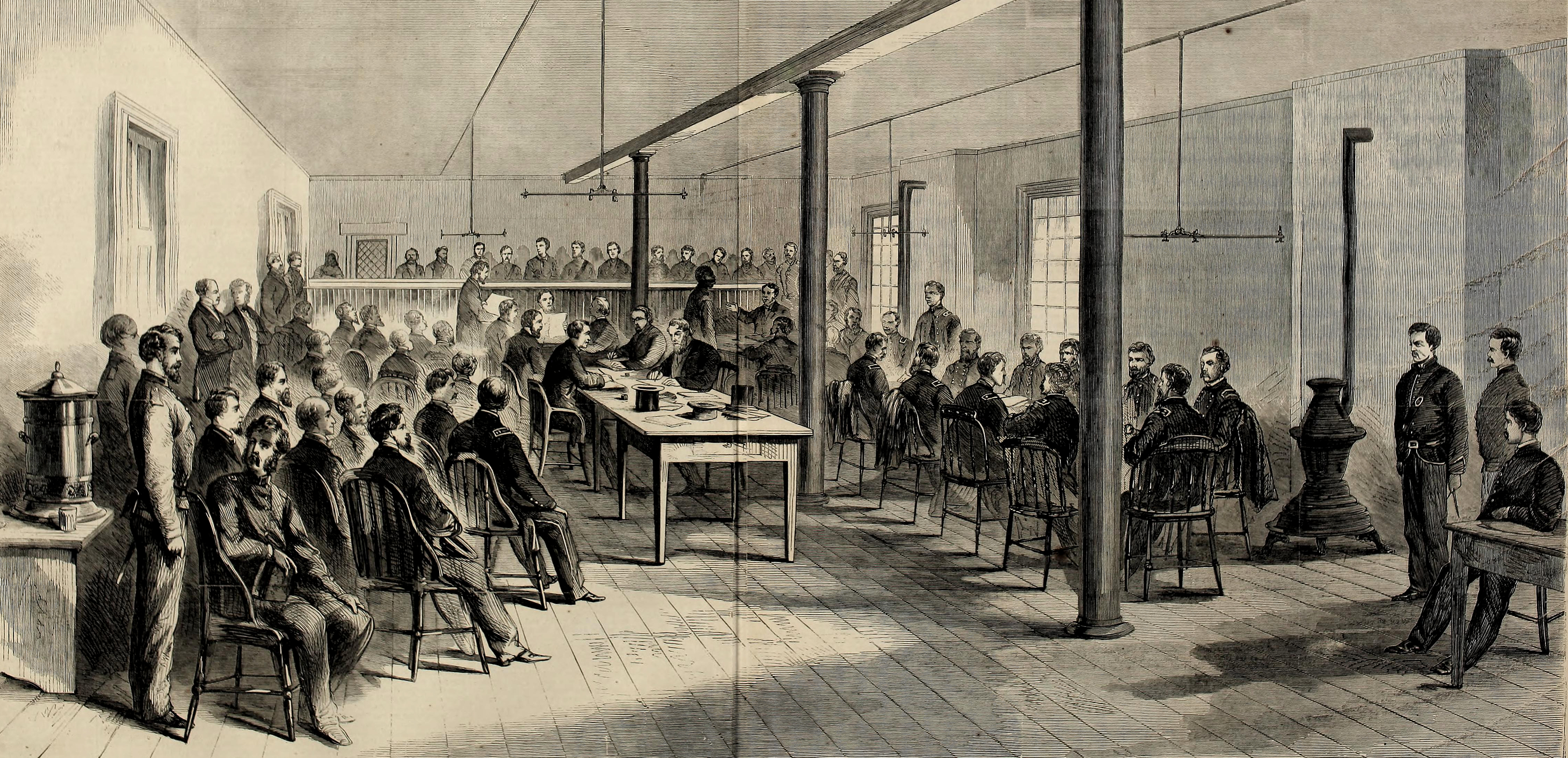
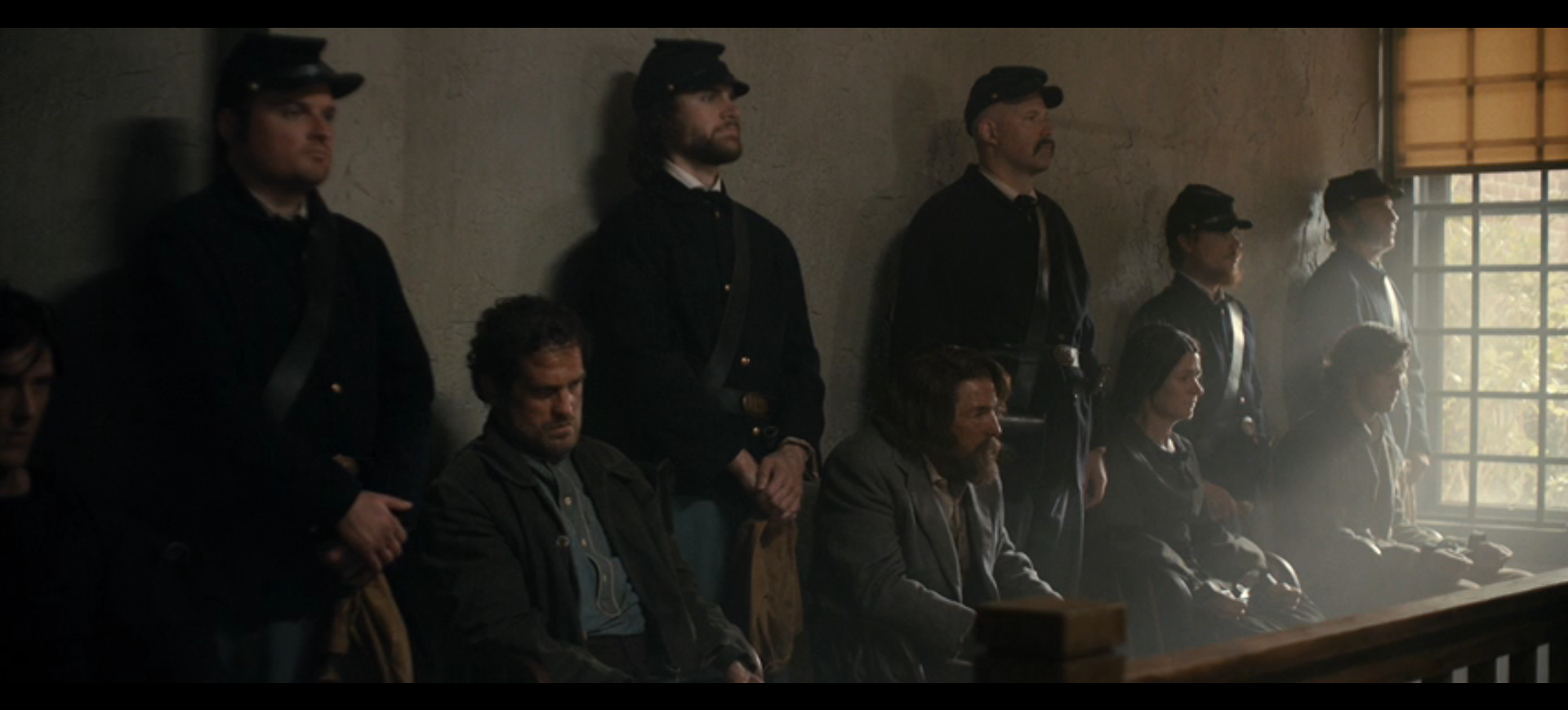
As someone who has spent quite a bit of time giving tours to visitors at the trial room of the Lincoln conspirators at Fort Lesley J. McNair, I was impressed with how well the production managed to duplicate the look and layout of the room. The set designers clearly studied the engravings of the trial room that were published in the illustrated newspapers and did their best to recreate them.
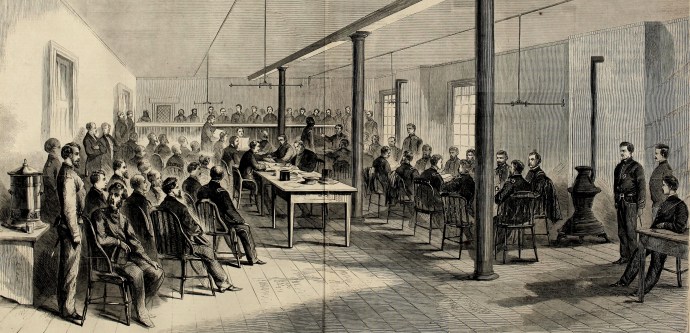
For the sake of filming and space, not every detail of the room is the same, but my hat goes off to the crew for this admirable recreation.

  • Mary Simms’ Testimony

As I have noted throughout these reviews, the Mary Simms shown in this miniseries is a fictional representation of the real person. Mary Simms had been enslaved by Dr. Mudd but left the farm after emancipation came to Maryland in November of 1864. She was not present at the Mudd farm when John Wilkes Booth stopped there after assassinating Lincoln.

Despite the entirely fictional nature of the Mary Simms shown in this series, the writers actually provide a fairly realistic portrayal of Mary Simms’ trial testimony in this episode. Rather than being asked about Dr. Mudd setting Booth’s broken leg and letting him stay the night (something the real Mary Simms never witnessed, but this fictional one does), Judge Advocate Holt asks Mary about Dr. Mudd’s Confederate sympathies. This is in line with the testimony of the real Mary Simms, who described how a group of Confederate soldiers found refuge at the Mudd farm during the summer of 1864. The real Mary Simms also discussed how John Surratt had been a visitor to the Mudd house, establishing a connection between Mudd and clandestine Confederate activities.

Aside from the ending appeal to the judges to ask Louis Weichmann about the relationship between Booth, Surratt, and Mudd and the claim that she had tried to leave the Mudd farm but couldn’t, the testimony presented by Mary Simms in the series is surprisingly close to accurate. You can read the real Mary Simms’ testimony for yourself here.
  • The Ending

I have to give credit to the series for providing an emotional and compelling ending. Watching Stanton fight tooth and nail to protect the dream of a truly unified country in which citizens of all races are treated equally, only to die right after achieving a position where he could make a sizable difference, is heartbreaking and inspiring. In truth, it was clear that the miniseries was always intended to be about Edwin Stanton’s fight with President Johnson over Reconstruction and the Freedmen’s Bureau. You can tell that the writers had so much more that they wanted to include about the fight over Reconstruction and how its failure negatively impacted our nation for a century.


Let’s dig now into the fact vs. fiction of this episode and learn about the true history surrounding these fictional scenes.

1. Stanton (and others) Never Attended the Trial

There’s quite an assortment of familiar faces attending the trial of the conspirators on its first day. In addition to Edwin Stanton, we see  Mary Lincoln, William Seward, Fanny Seward, and Lafayette Baker. In reality, none of these people ever visited the conspiracy trial in person.
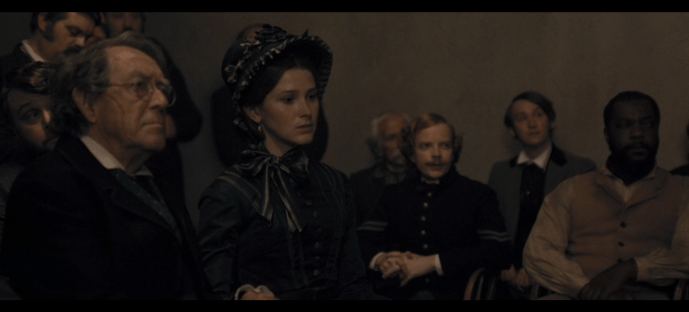
William and Fanny Seward at the conspirators’ trial

Secretary Stanton had far more important things to attend to as the head of the War Department to spend his days in the courtroom. He trusted JAG Holt and his assistants to take care of things without his presence. Mary Lincoln would have never entered the courtroom where her husband’s murderers were on trial, though she remained in the White House until about May 23 before departing for Illinois. Tad Lincoln was the other member of the Lincoln family who attended the trial of the conspirators, and he did so on May 18, shortly before leaving the city with his mother. William Seward was still too badly injured by the attempt on his life to have attended the trial. The Secretary of State was forced to wear a mouth splint to heal his broken jaw all the way up to October of 1865. There is no evidence that Fanny Seward attended the trial either, though her brother Augustus Seward did testify about the attack on their father on May 19. While Lafayette Baker took an interest in the trial and even inserted some of his own men to act as guards and keep an eye on things, he never attended the trial himself.

In truth, practically no one attended the trial during the first few days anyway. Stanton had originally ordered the trial to be conducted behind closed doors with no access to the press and public. However, after General Grant testified behind these closed doors on May 12, he visited President Johnson personally and lobbied for the proceedings to be opened to the public for the sake of transparency. Johnson acquiesced and ordered the press and public to be granted access. The first outside visitors were allowed in after lunch on May 13, the fifth day of the trial.

2. The Missing Conspirators

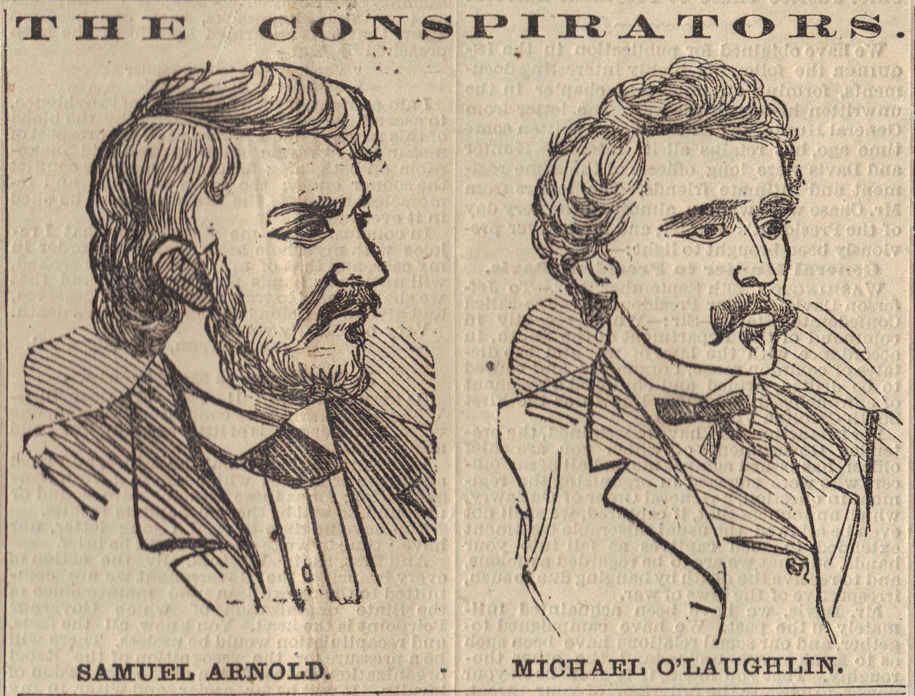
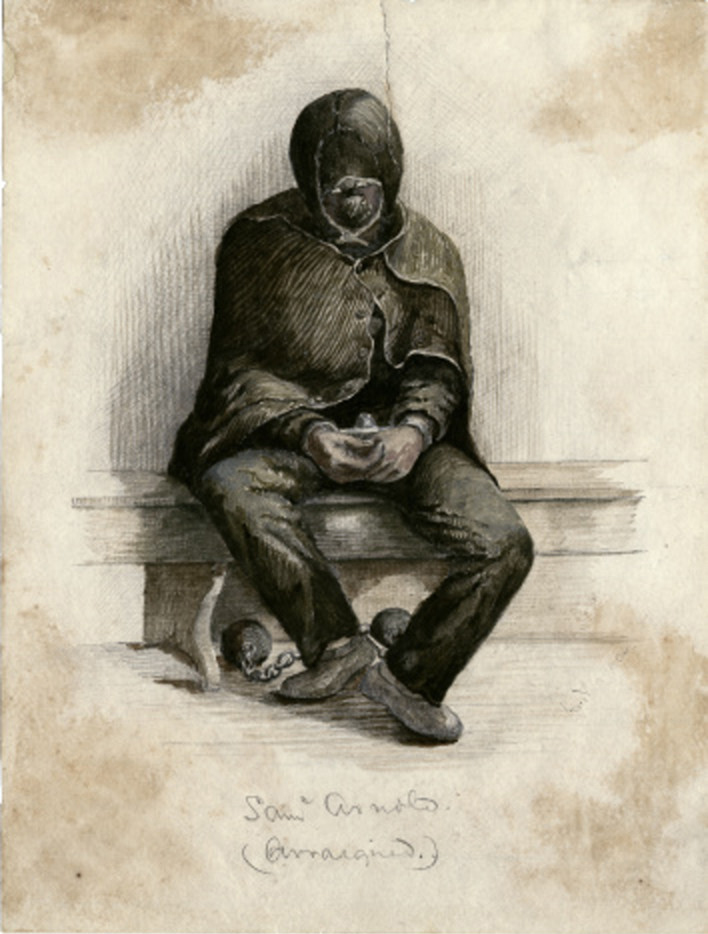
When Joseph Holt is naming off the conspirators on the prisoner’s bench during the first trial scene, there are two noticeable missing faces. These would be the figures of Samuel Arnold and Michael O’Laughlen, two of Booth’s childhood friends who took part in the actor’s initial plot to abduct the President but were not actively involved when that plot changed to assassination. The miniseries never really addresses this abduction plot, which ultimately brought all of the conspirators together in the first place. As a result, Arnold and O’Laughlen do not appear at all in the series.
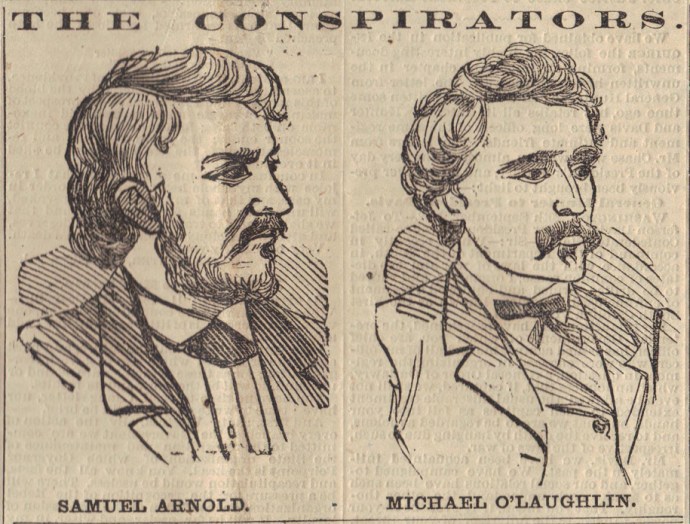
I think it is a bit regrettable to have not included these men, for while they may not have had much to contribute to the manhunt for Booth aspect of the show, a letter written by Arnold to John Wilkes Booth is actually a rare piece of tangible evidence connecting the Confederacy to Booth and his abduction plot. During a search of Booth’s room after the assassination, investigators found a letter written by Arnold to Booth in which Arnold expresses his apprehension in continuing with the abduction plot. Arnold is concerned that the men have waited too long to act and questions whether anything good could now be accomplished by kidnapping Lincoln. It’s essentially a “Dear John” letter with Arnold announcing his intention to bow out of the whole affair.

Arnold includes one intriguing caveat, however. He writes to Booth to “go and see how it will be taken at R—-d, and ere long I shall be better prepared to again be with you.” In short, he tells Booth that if he is able to visit the Confederate capital of Richmond and get their approval for the plot, he would be willing to come back into the fray. Even today, historians point to this letter and Booth’s involvement with Confederate courier John Surratt in their debates regarding how involved the Confederacy may have been with John Wilkes Booth and his plots.

3. The Prisoners’ Dock

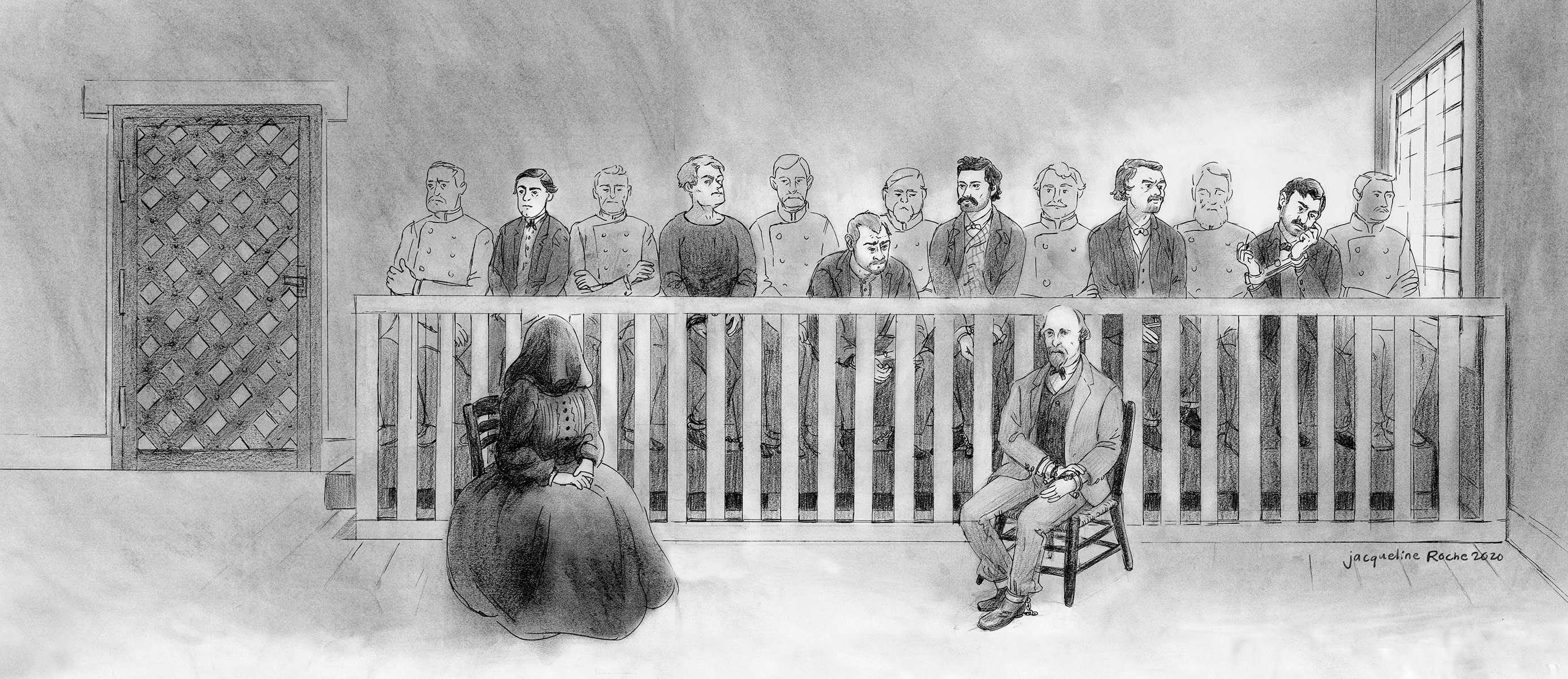
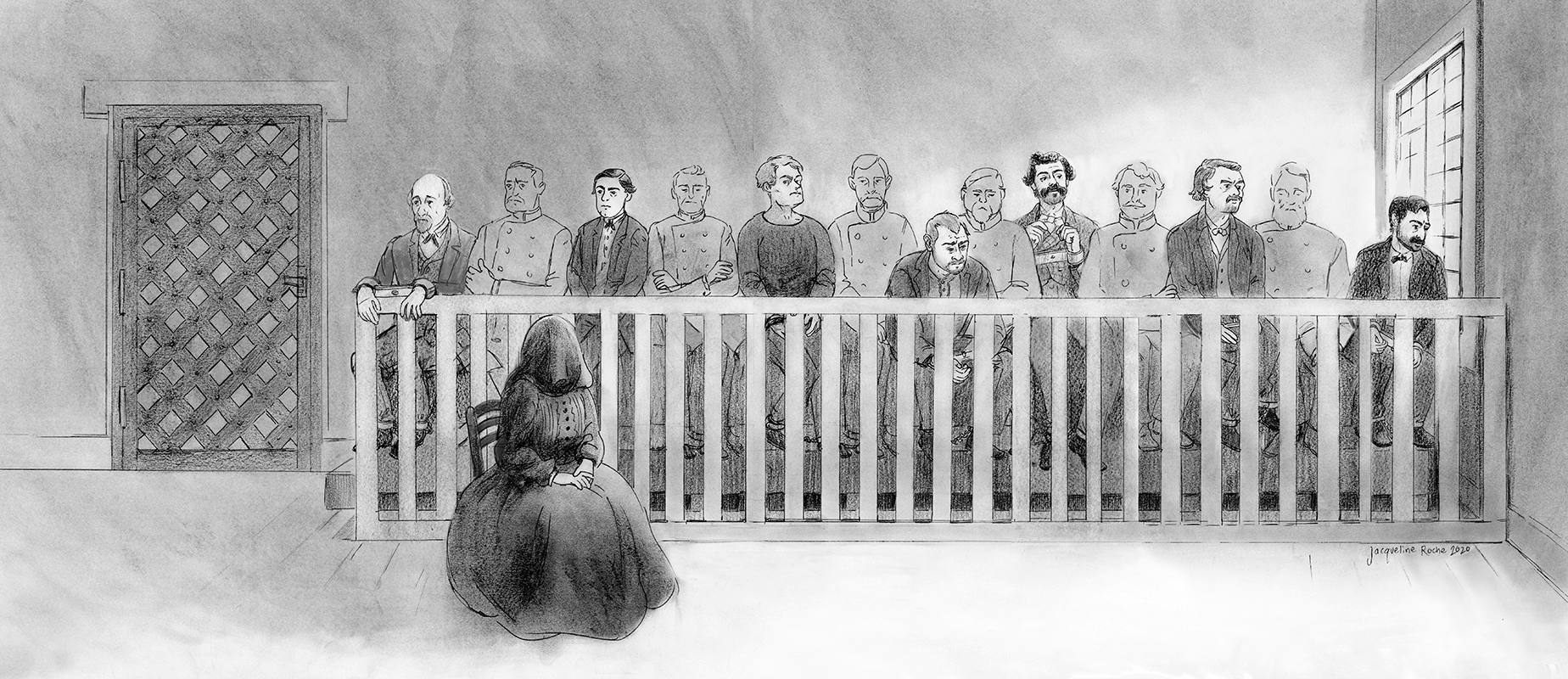
In addition to the absence of Samuel Arnold and Michael O’Laughlen, the way in which the conspirators were arranged on the prisoners’ dock during the first day of the trial does not match the actual arrangement. Over the course of the eight-week trial, the conspirators were seated in multiple arrangements. For my project thoroughly documenting the trial of the Lincoln conspirators, I commissioned a talented artist named Jackie Roche to sketch out the different seating arrangements in which the conspirators were placed. Here, again, are those drawings:

May 9 and 10

During the first two days of the trial, both Mary Surratt and Dr. Mudd were placed in chairs in front of the prisoners’ dock. The reason for this was that the bench seating that had been created for the prisoners was not long enough to seat each conspirator with a guard between them. When General Winfield Scott learned that Dr. Mudd had been given a seat outside of the prisoners’ dock, he wrote to General John Hartranft, the commander in charge of the conspirators, asking why Mudd was being given preferential treatment. General Hartranft explained Mudd’s preferential seating was accidental as he and Mrs. Surratt had merely been the last prisoners to enter the courtroom on the first day and were given chairs since there was no more room.

May 11 – 13
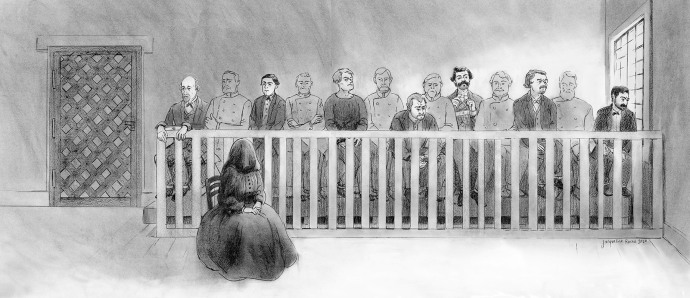
In order to prevent the appearance of Dr. Mudd receiving preferential treatment, on May 11, General Hartranft altered the seating arrangement in order to squeeze Dr. Mudd in on the bench. This was done by removing the guard who had been seated between Samuel Arnold and the window and placing Mudd at the other end. The conspirators stayed in this position for the remainder of the first week of the trial while Mrs. Surratt was still seated in a chair in front of the other prisoners.

May 15

On the first day of the second week of trial, Mrs. Surratt was moved to be placed in line with the other conspirators, though she still occupied a chair of her own. A seated guard was also placed between her and the rest of the prisoners. Conflicting accounts also state that Dr. Mudd was moved to a spot between Arnold and Atzerodt on this date.

May 16 – June 17

After the court adjourned on May 15, additional carpentry work was done to extend the prisoners’ dock. A small raised platform was created on the other side of the door through which the conspirators entered and exited. The railing in front of the conspirators was also extended all the way to the wall, with a small gate created near the door. For the bulk of the trial, this was the seating arrangement for the conspirators. Mary Surratt sat on a chair on her small platform with a seated guard in a chair on the floor between her and the long raised bench seating occupied by the men and their guards.

June 19 – 21

During the testimony on June 19, Mrs. Surratt became ill, resulting in an early adjournment for lunch. When the court resumed an hour later, Mrs. Surratt was allowed to sit in a chair in the passageway between the courtroom and one of the adjoining rooms. In this way, Mrs. Surratt had better access to airflow in the hot third-story room. Due to her ill health, this adjoining room became Mrs. Surratt’s new prison cell from that day on. She sat between these two rooms for the next few days when the court was in session.

June 23 – 28

During the final days of the trial, Mrs. Surratt’s condition prevented her from appearing in the courtroom. Instead, she remained behind the closed door in what had become her new cell. She likely listened to the closing proceedings through the door.

You will also note in the drawings that Mrs. Surratt wore a veil throughout her time in the courtroom. While the miniseries shows Mrs. Surratt being forced to wear a hood over her head, she never had to endure the hoods like most of the male conspirators did. Dr. Mudd was the only male conspirator who was also not forced to wear a hood when not in the courtroom. Except for the very first day of trial, the hoods were always removed from the conspirators’ heads before they were filed into the courtroom, as the military judges disliked seeing them.

4. The Testimony Against Spangler

During the testimony portion of the episode, we see the return of Joseph “Peanut John” Burroughs as he bears witness against Edman Spangler. Burroughs recounts how Spangler told him to hold Booth’s horse at the rear of Ford’s Theatre on the night of the assassination. When Burroughs said he couldn’t due to his other duties, Spangler replied threateningly that he didn’t have a choice. Burroughs also swears “on the Bible” that Spangler opened the rear door of the theater for Booth to escape.

While all of Burroughs’ testimony aligns with what was portrayed in the first episode of the series, I just wanted to repeat that the series in no way represents the truth behind Spangler and his supposed culpability in Booth’s crime. It is true that after riding up to the back of Ford’s Theatre Booth asked for Spangler by name to hold his horse and that the stagehand passed the duty off to Peanut John. However, beyond this fact, the series is way off. Rather than threatening Burroughs when the latter mentioned he had his own duties to perform, Spangler told Peanut to lay the blame on him if anyone should object to the young man not being at his normal post. The subsequent idea that Edman Spangler was outside of the theater when the shot occurred and then opened the door for Booth is completely inaccurate. Spangler was carefully tending to his duties backstage and preparing for a scene change when the shot rang out.

Spangler may have been friendly with Booth and done small handyman work for the actor when he visited Ford’s Theatre, but practically all historians agree that Edman Spangler was innocent of any knowledge of Booth’s plot against the President.

5. Louis Weichmann’s Testimony

Louis Weichmann was a key witness at the trial of the conspirators and testified at length on multiple occasions. His main benefit to the prosecution was to document the movements of some of the conspirators in and around Mary Surratt’s boardinghouse in the time leading up to the assassination.
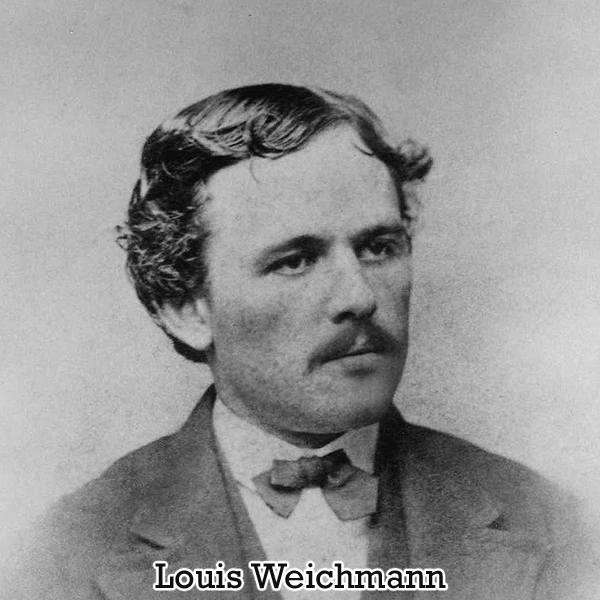
Weichmann also testified about his introduction to John Wilkes Booth by way of Dr. Mudd. This is the introduction that Mary Simms references in her conversation with Weichmann before the trial and what Weichmann testifies about on the stand. The miniseries has Weichmann state that this introduction occurred in January of 1865, which is what he did testify to at the trial. However, the real Weichmann was mistaken about this date, as the actual day of Booth’s introduction to John Surratt via Dr. Mudd occurred on December 23, 1864. Dr. Mudd’s defense seized upon the discrepancy in Weichmann’s timeline and produced a litany of witnesses to prove that Dr. Mudd did not visit D.C. in January of 1865. While I appreciate that the miniseries had Weichmann swear to January on the stand, the lack of any follow-up muddies the history a bit (no pun intended).

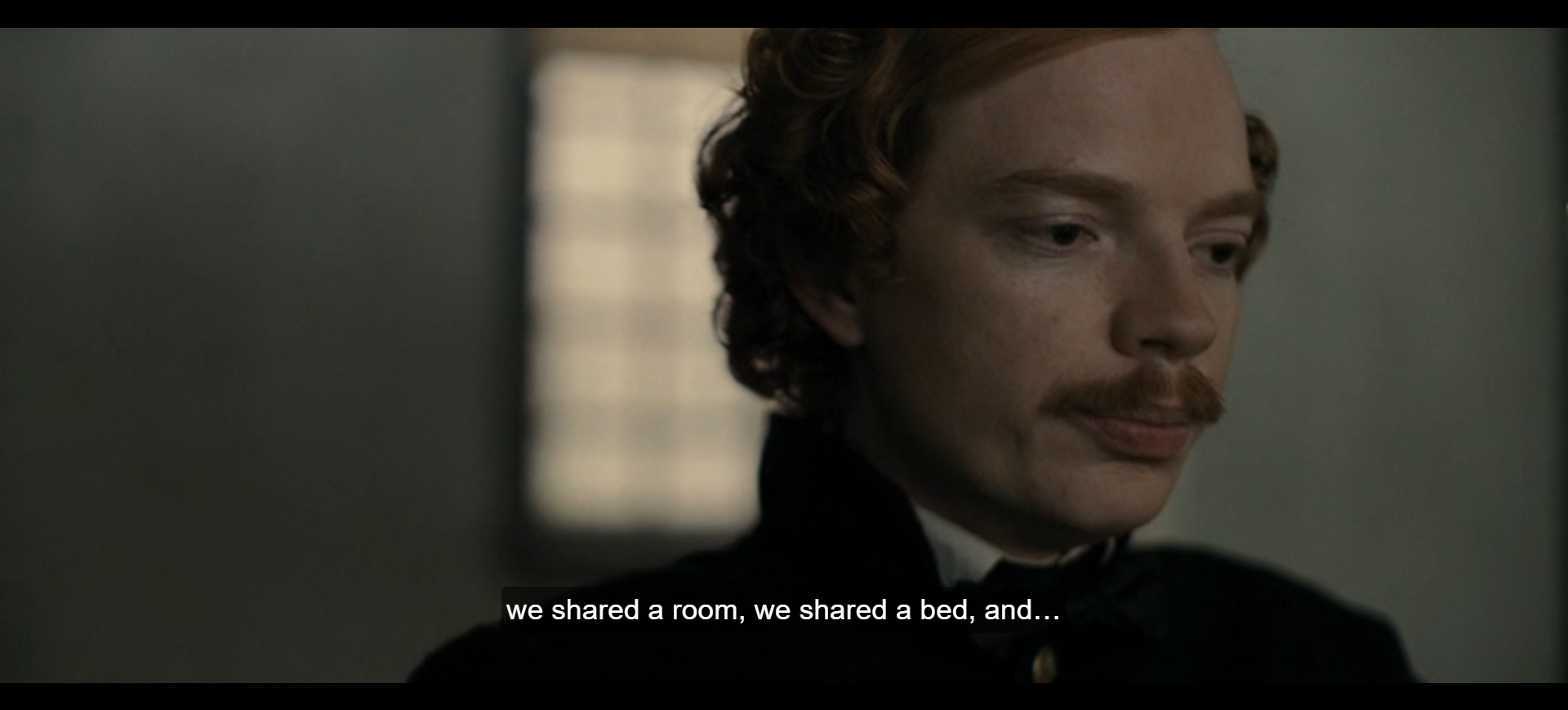
The far more questionable aspect of the miniseries’ portrayal of Weichmann’s testimony, however, is the attempt to add some scandalous drama where it does not exist. When asked about how well he knew John Surratt, Wiechmann states that they had both attended seminary school together and remained close after both had dropped out. Wiechmann recalled how he came to move into Mary Surratt’s D.C. boardinghouse and how he and John Surratt shared a room and a bed. Then, a hesitant Weichmann states that the two men had “slept together,” which draws gasps and murmurs from the crowd, and we are given a shot of Mary Surratt showing her apparently traumatized by the news her son might be a homosexual.

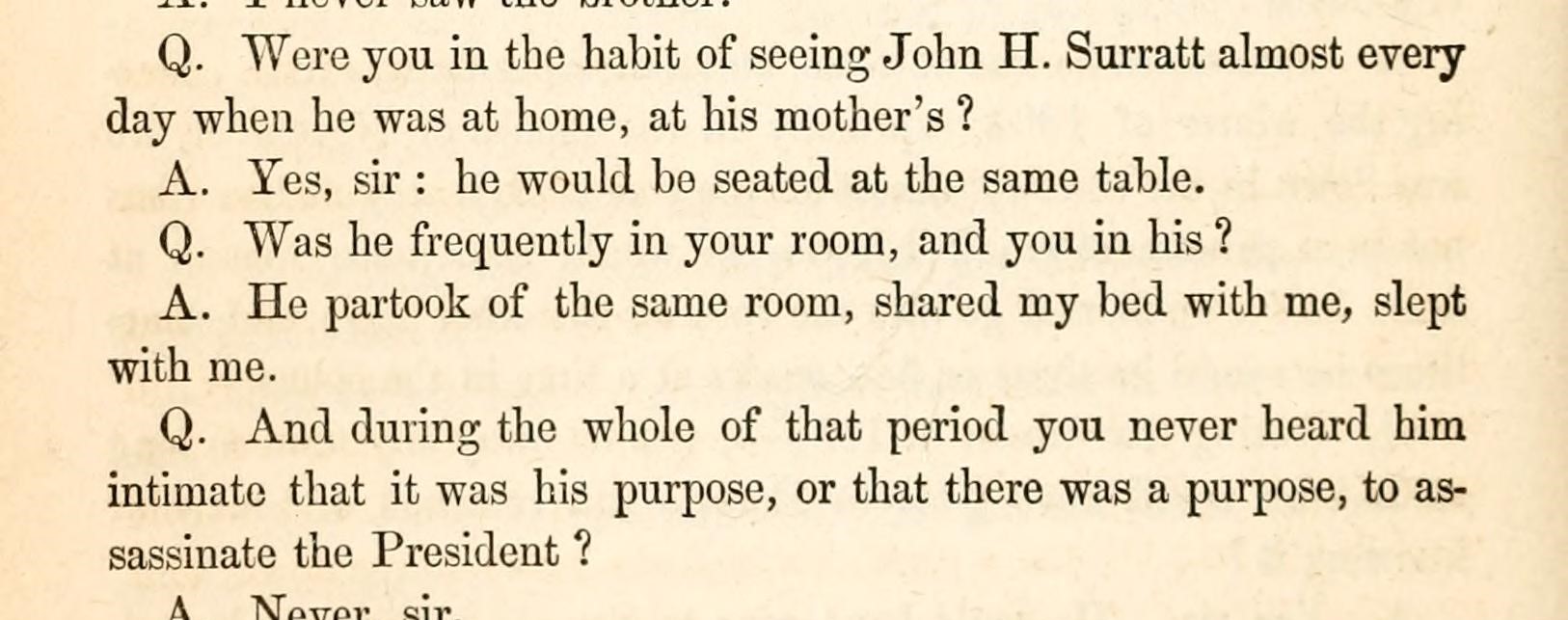
It is true that Weichmann testified about having slept with John Surratt. Here’s that part of his testimony.
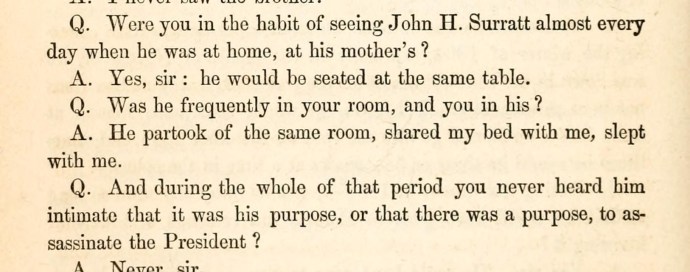
However, the idea that Weichmann’s words here are an admission to having a sexual relationship with Surratt is an example of painful historical illiteracy on the part of the writers of this series. The sharing of beds was a very normal part of life during this period of time. Space was at a premium in Washington during this time, especially with the huge influx of visitors and new residents on account of the war. Unless you were wealthy enough to secure truly private lodgings, it was expected that you would share a room and bed with someone else when staying in a boardinghouse or hotel. When you checked into a hotel, you were paid for a spot in a bed, not for your own room. To illustrate this, after George Atzerodt failed to assassinate Vice President Johnson, he eventually took a late-night room at the Pennsylvania House Hotel. The room was already occupied by others, and George merely joined the other male occupants in the bed that night. Men “sleeping with” other men and women “sleeping with” other women was not a euphemism for having sex; it was a common sleeping arrangement that would have been perfectly understood by those living in the 1800s. No one would have gasped or even thought Weichmann was referring to anything sexual during his testimony. This scene, and the implication that Weichmann was testifying against his own lover, is perhaps the cringiest part of the entire series.

6. Sandford Conover’s Testimony

Sandford Conover’s appearance in this trial episode is the only one in which his inclusion makes any historical sense. Despite having been portrayed as an active member of the manhunt over Lincoln’s death, including a trip up to Canada in a failed attempt to snag John Surratt, Conover is little more than a lying footnote in the grand scheme of things. This episode has Conover take the stand, which the real man did three times, including on the last day of testimony. Rather than try and untangle the unique tapestry of partially true and fictitious statements sworn to by the miniseries’ Conover, here’s an excerpt from my trial project documenting the real Conover’s final time on the witness stand. This comes from the June 27 session, the last day in which witnesses testified.
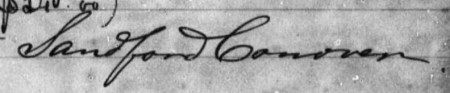
Sandford Conover, a key one of the government’s main perjurers, was recalled to the stand after previously testifying for the prosecution on May 20 and 22nd. During his earlier times on the stand, Conover, whose real name was Charles A. Dunham, claimed that he saw John Wilkes Booth and John Surratt in Canada plotting the assassination of Lincoln with known Confederate agents. His testimony, along with that of James Merritt and Richard Montgomery, was the prosecution’s main evidence that the plot to kill Lincoln had originated with Confederate officials. In 1866, James Merritt would testify before a congressional committee and admit that his testimony had been false. Conover had paid both Merritt and Richard Montgomery to commit perjury. In November of 1866, Conover would be indicted for perjury, found guilty, and sentenced to ten years in prison.

After giving his original perjured testimony in May, Conover returned to Canada where he was known as James Watson Wallace. He was sent there, ostensibly, to uncover more vital information regarding the origins of the plot. While in Canada, Conover’s previously secret and withheld testimony was prematurely published in the press. Though he had been outed as a spy of sorts, Conover/Wallace/Dunham decided to double down on his lies. When confronted in Canada, “Wallace” swore under oath that he had never used the name of Conover and that he had never testified in Washington. He accused “Conover” of impersonating him and denied that he knew Jacob Thompson, one of the Confederate agents that Conover had claimed to have had discussions of Lincoln’s assassinations with, intimately. He also swore then that he never saw John Wilkes Booth in Canada. Wallace went so far in his denials of “Conover’s” testimony that he offered to come to Washington to prove to the commission that he was not Conover and offered a reward of $500 for the capture of the man who had impersonated him. His lies in Canada did not seem to get him as far as his lies in the U.S., however, as by June 16, Wallace was in jail in Montreal, where the newspapers reported, “he now confesses he is Sanford Conover, and wishes to disclose how and by what means he was induced to go to Washington at the instance of Federal pimps for perjury, but that Southerners here scorn to go near him to receive his disclosures.” Not wanting Conover’s arrest and possible confession to perjury to sully his vital testimony at the conspiracy trial, the U.S. War Department arranged for Conover’s release from prison in Montreal and brought him back to D.C. to re-take the stand and explain himself.
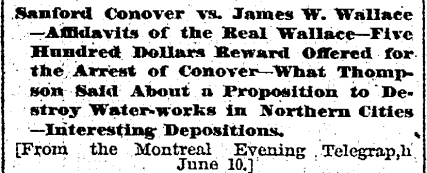
Back on the witness stand in Washington and away from Canada, Conover testified on June 27 that the affidavits he swore to in Canada and his offers of reward for the arrest of himself were false. He claimed that Confederate agents confronted him with a pistol to his head when his May testimony at the conspiracy trial was released and that the only reason he swore under oath that he was not Conover was to save his life. Conover also spent a large part of his testimony on June 27 claiming that the official transcript of the trial of the St. Albans raiders did not provide an accurate copy of his testimony and that what he had testified to at this trial was the truth. In reality, very little of what Conover/Wallace/Dunham testified to was truthful. Conover was continuing to lie and perjure himself so that he could keep “investigating” his accusations for the U.S. government in order to milk it of funds. He told the authorities exactly what they wanted to hear in order to stay in their good graces as long as possible. The prosecution’s insistence on sticking by Sandford Conover even after the evidence of his perjury was made known demonstrates how the Judge Advocate General was willing to “use tainted evidence to gain his ends.”

To be fair to the miniseries, Conover still comes across as unreliable and shifty by the end of this episode, even if the writers did make it seem like he was being threatened by the boogie man of George Sanders to justify his failure to deliver on his promises.

7. The Pet Letter

Much is made about “the pet letter” in this episode. It is first hinted at by Lafayette Baker, who portrays it as definitive proof that Jefferson Davis authorized his “pet,” John Wilkes Booth, to kill the president. When Sandford Conover reappears in Stanton’s office, the Secretary of War hungrily reads the letter that Conover has recovered from the Confederate Secret Service. During the trial, Conover claimed that the letter was addressed to George Sanders but that he never picked it up. From the way the miniseries talks about it, this “pet letter” seems to be one of the most important pieces of evidence at the trial.

In reality, however, the “pet letter” was not connected to either George Sanders or Jefferson Davis and is just another example of how the prosecution was so desperate to connect Booth to the Confederacy that they brought forth the most spurious pieces of evidence available. Here is an explanation of the “pet letter” from my trial project. This first section is from June 5, when the letter was first entered into evidence.

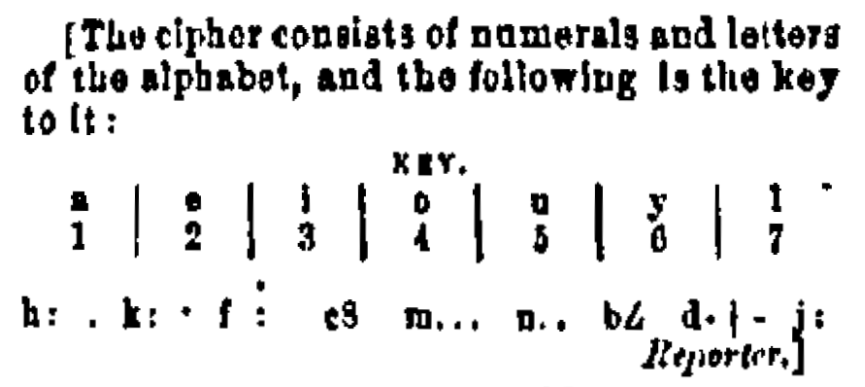
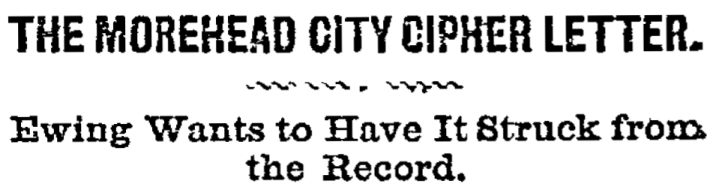
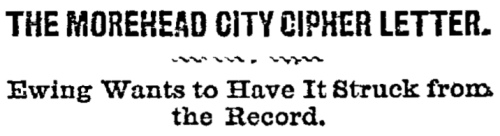
Charles Deuel, a member of the Construction Corps, Railroad Department, testified that he had been working in Morehead City, North Carolina, during the month of May. On May 2nd, while he and another man named James Ferguson were near the government wharf in that city, he noticed a letter floating in the water. He picked it up and discovered it was written in code. Deuel stated that through a little trial and error, he managed to decode the note. The letter was supposedly dated April 15th and was in an envelope bearing the name John W. Wise. The letter spoke of the work “Pet” had done well and that “Old Abe” was now dead. The writer lamented that “Red Shoes” lacked nerve in “Seward’s case.” The writer also appealed to the intended recipient to “bring Sherman” and commanded them not to “lose your nerve.” The letter continued in a coded, conspiratorial fashion and was ultimately signed by “No. Five”. At this point, the defense had very few questions about the letter as they deemed it unrelated to their clients’ cases and assumed the government was admitting it in the same manner they had presented evidence against the Confederate government. Only Frederick Aiken cross-examined Deuel, asking how he decoded the letter and whether the original letter had suffered a great deal of blurring from being found in the water. Deuel stated his belief that it did not appear to have been in the water long and was, therefore, not blurred. In his book, The Lincoln Assassination Encyclopedia, author Edward Steers, Jr. states that “The letter appears to be a fabrication, but by whom and for what purpose is not clear.” Later, on June 7th, Thomas Ewing would make a motion to have this cipher letter stricken from the record.
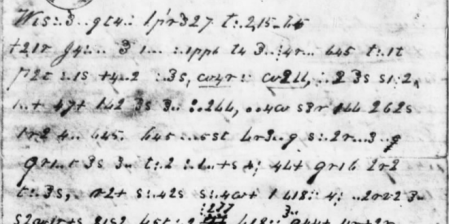
The coded letter, found in the water in Morehead City, NC, was entered into evidence as Exhibit 79.
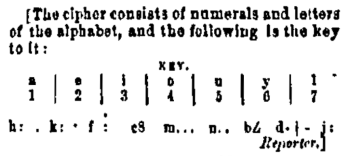
James Ferguson, a laborer working under the previous witness, Charles Deuel, testified that he was with Deuel in Morehead City, NC. Ferguson claimed he was the one who noticed the letter in the water and called it to the attention of Deuel, who retrieved it. Ferguson identified the letter submitted into evidence as the same one he had seen.

So the “pet letter” was a random coded letter found in the waters of Morehead City, North Carolina, on May 2, 1865. It was addressed to a “John W. Wise” and appeared to make references to the assassination of Lincoln. Here is the full, decoded “pet letter” for more context:

“WASHINGTON, April the 15, ’65.

DEAR JOHN,

I am happy to inform you that Pet has done his work well. He is safe, and Old Abe is in hell. Now, sir, All eyes are on you. You must bring Sherman: Grant is in the hands of Old Gray ere this. Red Shoes showed lack of nerve in Seward’s case, but fell back in good order. Johnson must come. Old Crook has him in charge.

Mind well that brother’s oath, and you will have no difficulty; all will be safe, and enjoy the fruit of our labors.
We had a large meeting last night. All were being in carrying out the programme to the letter. The rails are laid for
safe exit. Old — always behind, lost the pop at City Point.

Now I say again, the lives of our brave officers, and the life of the South, depends upon the carrying this programme into effect. No. Two will give you this. It’s ordered no more letters shall be sent by mail. When you write, sign no real name, and send by some of our friends who are coming home. We want you to write us how the news was received there. We receive great encouragement from all quarters. I hope there will be no getting weak in the knees. I was in Baltimore yesterday. Pet had not got there yet. Your folks are well, and have heard from you. Don’t lose your nerve.

O. B.
No. Five.”

As was seen, the defense attorneys didn’t have much to say about the “pet letter” when it was first entered into evidence. However, that changed two days later, on June 7, when one of the defense attorneys decided to bring the matter back up:

Defense lawyer Thomas Ewing then made a motion that the cipher letter found in the waters of Morehead City, NC, and entered into evidence on June 5th be stricken from the record. Ewing explained that he had been absent from the courtroom at the time the cipher letter was introduced after being assured that the testimony concerning it would only deal with the larger Confederate conspiracy the government was pursuing. It was only after seeing the record concerning the cipher this morning that Ewing learned more about it. Ewing stated his belief that the cipher was undoubtedly fictitious, and even if the prosecution thought otherwise, it was still wholly inadmissible under the rules of evidence. As Ewing noted, the note was not signed, its handwriting was not proven to be one of the conspirators, it was not shown to be connected to any of the conspirators, nor was it in the possession of any of the conspirators. Ewing stated that the cipher was the declaration of an unknown person not shown to be connected in this conspiracy, and, therefore, the letter was as unconnected with this case as “the loosest newspaper paragraph that could be picked up anywhere.”
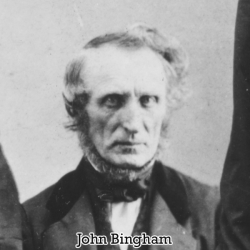
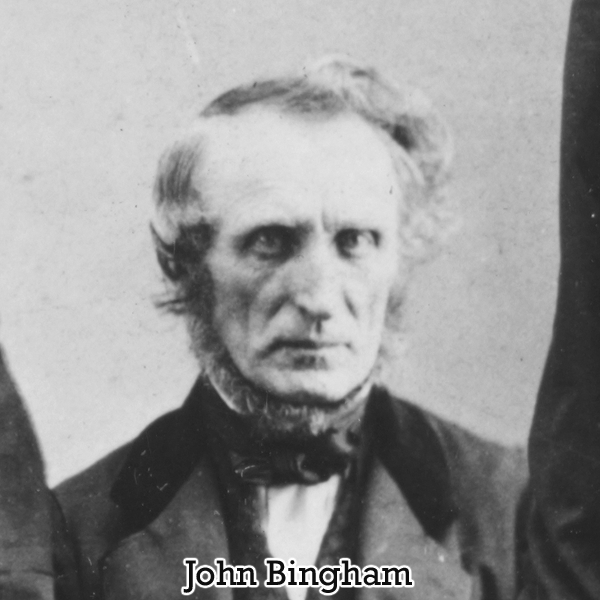
Assistant Judge Advocate John Bingham countered that part of the charge and specification against the eight conspirators now on trial was that they had entered into a conspiracy with parties named and others unknown. Bingham then went into a long description of the evidence already presented, which formed the foundation for the admission of this cipher. In the end, he stated that this letter was proof of the additional unknown conspirators the charge and specification spoke about. Ewing replied that for such a letter to be admissible, it would have to be proven to have been written by a co-conspirator. Bingham stated that based on the other proofs in the case, the prosecution believed that this cipher was written by an otherwise unknown co-conspirator.

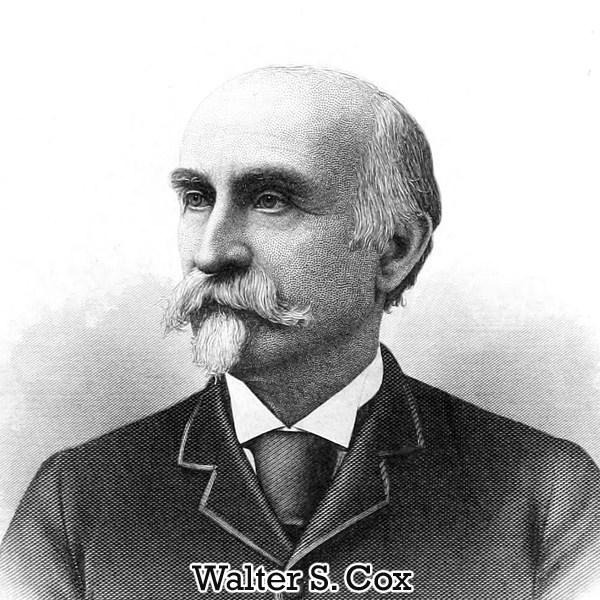
Walter Cox, the lawyer for Michael O’Laughlen, then joined Thomas Ewing in his motion against the cipher. He reiterated that, originally, the defense team had no objections to the letter because they were under the impression that it would relate to the machinations of agents in Canada with possible connections to authorities in Richmond. Cox made it clear that the defense had never opposed testimony of this kind in order to ferret out the truth. They merely wished to show that their own clients had no involvement with any such Confederate plans. The defense, therefore, did not preview this cipher before it was read into court. After it was read, however, and it was purported to have been written by someone immediately connected with the assassination, that changed the nature of the evidence. Cox agreed that the law allowed the declaration of one conspirator to be used against another conspirator, but he insisted, like Ewing, that the connection must first be made showing that the alleged conspirator making the declaration is actually connected to the conspiracy. Until other evidence proved the author of the cipher’s connection to the conspiracy, Cox stated that it was inadmissible to use it as evidence. Cox reiterated that the letter was not proven to be connected in any way to Booth or any of his associates. Cox criticized Bingham’s explanation as to why the cipher was proper evidence.
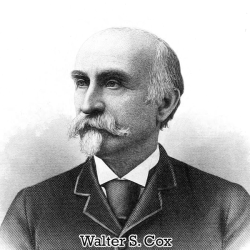
According to Cox, Bingham’s logic was that: Booth was engaged in a conspiracy with some unknown persons, this cipher letter comes from an unknown person, and therefore this letter is from somebody connected with the conspiracy and constitutes admissible evidence. Cox referred to this as “chop logic” on the part of the prosecution and reiterated that the rule of law stated that the author of a declaration must be shown first when a letter is entered into evidence.

Cox then went on to explore the idea first mentioned by Thomas Ewing concerning how the cipher was undoubtedly a fabrication. The testimony stated that the letter was picked up out of the water in Morehead City yet the letter was not blurred from its contact with the water. Cox expressed his belief that it had been written and dropped into the water immediately before it was found by government agents for the very purpose of it being used as evidence. Cox then looked at the text, noting that it was dated April 15th, the day after Lincoln was shot. The text stated that “I was in Baltimore yesterday” and that “Pet,” assumed to be Booth based on the context of the letter, “had not yet got there.” Since, in context to the letter, “yesterday” would have been April 14th, the day of the assassination, it made no sense that “Pet” would be in Baltimore before his work of assassination had been done. Cox also laughed at the letter’s claim that on the night of April 14th, “We had a large meeting,” when it had been shown that most of the conspirators were fleeing for their lives.
John Bingham, continuing his objection to the motion, noted that the cipher letter and its corresponding testimony could not be struck out or erased by anybody through any motion. He conceded that Ewing could ask the court to disregard it but stated that the proper time for him to do so would be during his closing arguments. Bingham stated that asking the court to disregard this evidence now was akin to asking the court to try part of the case now and the rest of it later. Bingham also came to the defense of the letter and its contents, attempting to repudiate the words of Walter Cox. Bingham pointed out that the references to Sherman and Grant showed evidence of a conspiracy, one that was not known to anyone in America except the conspirators themselves, on April 15th. Cox then countered that they did not know what day it was written. Bingham stated that Cox, himself, had given credit to the date of April 15th during his criticisms of the letter. Cox still pointed out that it was not found until the 2nd of May, three weeks after the assassination, when knowledge of the conspiracy was well known to the public. He insisted that the evidence suggested the cipher was a forgery, “written by somebody who possessed himself of sufficient knowledge of the facts charged against the conspirators to enable him to fabricate a letter specious on its face and appearing to have some bearing on the conspiracy itself.”

In his own closing, John Bingham maintained that the contents of the letter proved it was genuine and that it had been in the possession of an unknown conspirator. Bingham believed that all other evidence in the case regarding the larger conspiracy (a large portion of which was later found to be perjury) corroborated the truthfulness of the cipher letter.

In the end, the commission sided with their advisor, Bingham, and overruled Thomas Ewing’s motion to strike the letter from the record. During the course of this excited debate over the cipher letter, “a lady fainted, and was carried out of the court-room.”

The “pet letter” was an obvious fake with no proven connection to Booth or his conspirators. Its admittance into evidence was yet another embarrassing error of judgment on the part of the government in its blind quest to connect the assassination of Lincoln to the Confederate government by any means necessary.


Quick(ish) Thoughts

  • I’ve mentioned it before, but the government was not aware of Lewis Powell’s real name until about halfway through the conspiracy trial. Up until that point, he was a mystery man known only by the alias Lewis Paine. To learn more about Lewis Powell’s history and life up until his involvement with Booth, check out this post regarding his early life.

  • I will give credit to the writers for doing their research on the trial exhibits. When Judge Advocate Holt is asking Eckert about the Confederate cipher cylinder recovered from Richmond, he notes that this is “exhibit number 59.” That is actually the correct exhibit number from the trial. Holt then switches to the handwritten Vigenère cipher table found in Booth’s room and calls it “Exhibit 7,” which, again, is the correct exhibit number for that piece of evidence.
  • Jeremiah Dyer, a witness for Dr. Mudd, is portrayed as a pastor in Bryantown and speaks highly of Mudd’s reputation. In reality, Dyer was no pastor but Dr. Mudd’s brother-in-law. The doctor was married to Jeremiah’s sister, Sarah Frances Dyer.
  • In much the same way that the series created a fictional Mary Simms, they also merged her two brothers into one character. While Mary’s brother Milo did testify at the trial (and at around 14 or so, was among the youngest to do so), he had never been shot by Dr. Mudd. Like his sister Mary, Milo had left the Mudd farm after emancipation came in 1864 and so he was not around when the assassin showed up. Dr. Mudd had shot the Simms’ older brother, Elzee Eglent, in June of 1863 when he felt the enslaved man was not working hard enough. Mudd also threatened to send Eglent to Richmond in order to help build defensive fortifications for the Confederacy. Eglent, along with a group of around 40 others, escaped from the farms belonging to Dr. Mudd, his father, and Jeremiah Dyer in August of 1863. Elzee Eglent did testify at the trial, just like the real Milo and Mary Simms, but there was no large reaction or an outburst from Mudd when he mentioned having been shot by the doctor.
  • Despite Mary Simms appealing to the court to ask Louis Weichmann about the relationship between Dr. Mudd, Surratt, and Booth, in reality, Weichmann had testified about the connection between the men several days earlier. The real Mary Simms had no knowledge of any connection between Mudd and Booth.

  • Edwin Stanton’s dramatic reading of the conspirators’ verdicts inside the packed trial room makes for compelling drama but is nothing like what occurred. There was no extra court session for the public during which the verdicts were read. After the commissioners finished their deliberations on June 30, their findings were sent over to the President for final approval. President Johnson officially approved the commission’s verdicts and sentences on July 5, and the condemned conspirators learned of their fates when the commander of the prisoner, General John Hartranft, brought them the news on July 6.
  • For the sake of time, the conflict between Stanton and President Johnson, which resulted in Stanton’s ultimate removal from office, was sped up. For an overview of the full story, I recommend a quick read of the latter part of the Reconstruction section and the Impeachment section on Edwin Stanton’s Wikipedia page.

  • The text stating that John Surratt held “rallies across America” about his connection with Booth is a bit misleading. John Surratt tried his hand at becoming a professional lecturer after his own trial ended in a hung jury. However, he only gave his talk about his connections with Booth three times. Once in New York City, once in Baltimore, and once in Rockville, Maryland. When he announced an upcoming talk in D.C., there was outrage, and he was reminded that he was never acquitted of the charges against him and that further lectures could provide evidence that the government could use if they decided to put him on trial again. This ended John Surratt’s short-lived career as a speaker.

Thus, we arrive at the end of Manhunt, the miniseries. Was this series an accurate adaptation of James L. Swanson’s nonfiction book documenting the assassination of Abraham Lincoln and the search for his assassin? No, it wasn’t. From the historian’s viewpoint, this series was a turducken of factual tidbits stuffed inside dramatic license, all stuffed inside imagination.

Looking back on my own reviews, it’s clear how my opinions became more jaded as the series went on. In the beginning, I so badly wanted to give the writers the benefit of the doubt as I understood that I was the worst critic for this series because of my knowledge of the actual events. As the series went on and continued to deviate so extremely from the actual history, the excitement and hope I once felt for the series waned quickly. This is why it has taken me 8 months since the release of the final episode to finally review it.

Even as I criticized each episode, I strove in each of my reviews to point out aspects of the series that I liked, such as my enjoyment of many of the supporting actors in the series, particularly the portrayals of David Herold, Andrew Johnson, Mary Simms, and Thomas Eckert. At times, the series pleasantly surprised me by including a fact I did not expect them to bring up. This is to say that despite my groaning about some things, there is still much to like about the series. When I turn off my brain and watch the series as the piece of historical fiction that it is, I enjoy the compelling drama.

In the end, I know my opinions of this series would likely have been kinder had it been called anything other than ManhuntIf the series were called The War Secretary or something like that, there would no longer be any expectation in my mind that the series would stay true to a non-fiction book about the Lincoln assassination. The writers of this series were clearly stuck between a rock and a hard place. They wanted to write a series about Stanton, Johnson, and the fight for the future of the country during Reconstruction, which is a noble and worthwhile idea. The best parts of this series are the times when it is allowed to explore this aspect of history. Unfortunately, the attempt to merge this series idea with another about the hunt for John Wilkes Booth resulted in a mismatched marriage where neither history got the attention that it deserved.

Categories: History, News | Tags: , , , , , , , , , , , , , | 4 Comments

The Lincoln Assassination on this Day (August 8 – August 14)

Taking inspiration from one of my favorite books, John Wilkes Booth: Day by Day by Art Loux, I’m documenting a different Lincoln assassination or Booth family event each day on my Twitter account. In addition to my daily #OTD (On This Day) tweets, each Sunday I’ll be posting them here for the past week. If you click on any of the pictures in the tweet, it will take you to its individual tweet page on Twitter where you can click to make the images larger and easier to see. Since Twitter limits the number of characters you can type in a tweet, I often include text boxes as pictures to provide more information. I hope you enjoy reading about the different events that happened over the last week.

NOTE: After weeks of creating posts with multiple embedded tweets, this site’s homepage now tends to crash from trying to load all the different posts with all the different tweets at once. So, to help fix this, I’ve made it so that those viewing this post on the main page have to click the “Continue Reading” button below to load the full post with tweets. Even after you open the post in a separate page, it may still take awhile for the tweets to load completely. Using the Chrome browser seems to be the best way to view the tweets, but may still take a second to switch from just text to the whole tweet with pictures.

Continue reading

Categories: History, OTD | Tags: , , , , , , , , , , , , | 1 Comment

The Lincoln Assassination On This Day (October 18 – October 24)

Taking inspiration from one of my favorite books, John Wilkes Booth: Day by Day by Art Loux, I’m documenting a different Lincoln assassination or Booth family event each day on my Twitter account. In addition to my daily #OTD (On This Day) tweets, each Sunday I’ll be posting them here for the past week. If you click on any of the pictures in the tweet, it will take you to its individual tweet page on Twitter where you can click to make the images larger and easier to see. Since Twitter limits the number of characters you can type in a tweet, I often include text boxes as pictures to provide more information. I hope you enjoy reading about the different events that happened over the last week.

NOTE: After weeks of creating posts with multiple embedded tweets, this site’s homepage now tends to crash from trying to load all the different posts with all the different tweets at once. So, to help fix this, I’ve made it so that those viewing this post on the main page have to click the “Continue Reading” button below to load the full post with tweets. Even after you open the post in a separate page, it may still take awhile for the tweets to load completely. Using the Chrome browser seems to be the best way to view the tweets, but may still take a second to switch from just text to the whole tweet with pictures.

Continue reading

Categories: History, OTD | Tags: , , , , , , , , , , , , , | Leave a comment

The Lincoln Assassination On This Day (September 27 – October 3)

Taking inspiration from one of my favorite books, John Wilkes Booth: Day by Day by Art Loux, I’m documenting a different Lincoln assassination or Booth family event each day on my Twitter account. In addition to my daily #OTD (On This Day) tweets, each Sunday I’ll be posting them here for the past week. If you click on any of the pictures in the tweet, it will take you to its individual tweet page on Twitter where you can click to make the images larger and easier to see. Since Twitter limits the number of characters you can type in a tweet, I often include text boxes as pictures to provide more information. I hope you enjoy reading about the different events that happened over the last week.

NOTE: After weeks of creating posts with multiple embedded tweets, this site’s homepage now tends to crash from trying to load all the different posts with all the different tweets at once. So, to help fix this, I’ve made it so that those viewing this post on the main page have to click the “Continue Reading” button below to load the full post with tweets. Even after you open the post in a separate page, it may still take awhile for the tweets to load completely. Using the Chrome browser seems to be the best way to view the tweets, but may still take a second to switch from just text to the whole tweet with pictures.

Continue reading

Categories: History, OTD | Tags: , , , , , , , , , , , , , , | 2 Comments

Vanished: John Wilkes Booth

Last year I was contacted by a couple of podcasters named Jen Taylor and Chris Williamson who asked me if I would like to appear on their show, Vanished. The podcast originated as a deep dive into the mystery behind Amelia Earhart’s disappearance in 1937 and the many different theories about what happened to her and Fred Noonan. The entire season on Earhart was widely praised and the pair were specifically complemented on their unique format. Not only do Jen and Chris present the evidence on the different theories proposed by their guests, but they then take it to court, with each host advocating for a specific side. Jen is an actual defense attorney and this allows the pair to put these theories to the test and try them in a court of their own making. While looking for different cases to pursue for their second season, Chris stumbled across the John Wilkes Booth escape theory which posits that another man was killed at the Garrett farm on April 26, 1865. The pair then went about looking for guests who would like to talk in favor of and against this theory in order to put it to the test.

At first, I was reluctant to agree to be on a podcast about the “Booth” mummy. Those of you who keep up with the different TV documentaries that have aired in recent years about the Lincoln assassination know that the escape theory has been played to death. Practically every show covers this topic, with many being based solely around it. As a person who studies this history, this is very frustrating for me because pretty much all of those TV shows portray the escape theory as credible when all the evidence I know says the complete opposite.

I mean…seriously…don’t get me started

Despite my hesitation to take part in this podcast however, in the end I found myself swayed by the format Jen and Chris use. Unlike a 45 minute docudrama on the “History” channel, Jen and Chris really wanted to get into the nitty gritty and explore the reliability of the evidence. I found this very refreshing and really the best way to present a theory such as this one. So, I signed on to discuss the true history (as close as we can ascertain it) with Jen, the talented lawyer, on my side.

I have to say that I had so much fun being on Vanished. I recorded multiple hours with Jen as we first explored the story of Booth’s escape and death and then addressed the problems with the escape theorists’ evidence. Vanished is a long form podcast and several of the Booth episodes are multiple hours long. I would definitely encourage you to start at the beginning and hear the evidence from all of the guests, but I also understand that it is a time commitment, especially if you are new to podcasts. However, if you are interested and willing to sit through at least one 4-hour episode (and remember you can absolutely start and stop it to digest it in parts), I wanted to really highlight the “trial episode” of the series which just dropped. In it you will hear Chris interview Nate Orlowek, who has been championing the Finis Bates / John St. Helen / David E. George theory for almost 50 years. Then you will hear Jen cross examine Nate and his evidence. Then I make my second appearance on the show where I discuss the problems with the escape theorists’ evidence. This episode also includes an interview with Mark Zaid, the attorney who represented Nate Orlowek during the Booth exhumation hearing that occurred in the 1990s. It’s a jam packed episode and includes both Chris and Jen’s closing arguments. In my mind, if you can only listen to one episode, this is the one to tune in for:

Click this image to listen to Vanished: John Wilkes Booth episode 4 “Trial by Jury”

That being said, the prior episodes are also very good with one of them featuring my original appearance where I discuss the escape of Booth and his death at the Garrett farm. Kate Clifford Larson, author of The Assassin’s Accomplice is featured on another of the episodes and, in my opinion, really steals the show with her knowledge on Mary Surratt. I really recommend you give the whole series a listen. I think, taken together, it really demonstrates the different ways people think about and conduct historical research. Even when I listened to the folks I vehemently disagreed with, it helped me understand why they believe what they believe.

If you like this series of Vanished, definitely check out the other cases they have done and subscribe so you can follow along with the next one. They are planning episodes in the near future on hijacker D. B. Cooper and dreaded pirate Henry Every. You can access the show online or through any normal podcast provider like Apple Podcasts, Spotify, etc.

Also if you want to hear more from Jen doing her defense attorney thing, I highly recommend her standalone podcast, In Defense of Liberty. Jen takes historic court cases and explains how they contributed to criminal law in America. She is really good at taking complex legal ideas and presenting them to everyday folks in a compelling way. I’ve learned a lot from Jen through our discussions and have been fascinated by each episode of In Defense of Liberty I have listened to. Definitely give her a follow.

I’d like to thank Jen and Chris for having me on their show. While I’ve done other podcasts before, I really appreciated how deep they were willing to go in this case. It really wasn’t something I’d ever seen done before.

So, now it’s your turn to go tune in and listen to the evidence being presented. Did John Wilkes Booth really escape justice in 1865 and live out his life in Texas and Oklahoma before ending it all and being turned into a mummy? What is the evidence that the escape theorists have for their beliefs? And how do people like myself evaluate and assess what they bring to the table? Check out Vanished it get the fullest accounting that has ever been told about one of the strangest tales in the Lincoln assassination story.

Categories: History, News | Tags: , , , , , | 13 Comments

Conspiracy in Presidential Assassinations

I am continuing to work on my Master’s in American History degree from Pace University and the Gilder-Lehrman Institute of American History. They have a great online program designed specifically for K – 12 teachers and I have been enjoying it immensely. My most recent class, which ended today, was titled The Kennedy Era and was taught by Kennedy historian Barbara Perry. For my final paper for the class, I chose to write about the history of conspiracy in presidential assassinations. In the same way that I previously posted my final paper for my American Indian class last year, I thought I would share this one as well. I do not claim to be a Kennedy expert and the purpose of my paper is not to rehash the evidence against Lee Harvey Oswald. Rather, I wanted to cover the history of conspiracy and explain why conspiracy theories are so common in the study of presidential assassinations.


Conspiracy in Presidential Assassinations

By Dave Taylor

Since the founding of the United States of America, four presidents have met violent deaths at the hands of their fellow citizens. Abraham Lincoln, James Garfield, William McKinley, and John F. Kennedy have all lost their lives through acts of public assassination. Their murders have occurred over a period of almost 100 years, with the first assassination taking place in 1865 and the most recent having occurred in 1963. The men who became martyrs for the country they served came from distinctly different backgrounds and epochs in the American experiment, and so did their respective assassins. Despite these differences in time and character, there has been one overarching concept that can be found in the story and memory of each successful Presidential assassination – the involvement of conspiracy in their deaths. The nature of the first successful Presidential assassination in the United States set a historical precedent for conspiracy. That assassin, John Wilkes Booth, recruited literal conspirators to help him in his plan to assassinate not only President Lincoln but also other heads of the federal government. Since that time, the American public has returned to the idea of conspiracy when trying to make sense of subsequent reoccurrences of presidential assassinations. By looking at the history of real and perceived conspiracy in our country’s assassinations and the psychological effects of conspiracy theories on the general public, we can come to understand why, despite a preponderance of evidence implicating Lee Harvey Oswald and the sole murderer of President John F. Kennedy, conspiracy theories regarding the murder of JFK continue unabated in the minds and memory of the public.

The history of conspiracy as a real and concrete part of American assassinations stems from the death of President Abraham Lincoln on April 15, 1865. In the aftermath of Lincoln’s assassination and the subsequent killing of his assassin twelve days later, a trial of eight of John Wilkes Booth’s alleged conspirators occurred. While there is much debate regarding the effect vengeance had on the meting out of justice in Lincoln’s case, there is no debate that a legitimate conspiracy existed in the death of our first president. At the same time that Lincoln was being shot at his box at Ford’s Theatre, William Seward, the Secretary of State, was viciously stabbed in his bed by a would-be assassin. “Coordinated assaults could mean only one thing: a conspiracy, and a well-developed one.”[1] The Union government’s primary goal in the aftermath of Lincoln’s death was to find all of those who had a hand in its execution, thus resulting in the trial of the conspirators. Of the seven men and one woman who were put on trial in 1865 for their involvement in Booth’s conspiracy, the evidence overwhelmingly supported knowledge of a plot for five of them. These men had been persuaded by Booth to join a conspiracy to abduct Abraham Lincoln from Washington and ferry him into the open arms of the Confederacy in Richmond. As the assassin himself wrote while on the run, “For six months we had worked to capture. But our cause being almost lost, something decisive & great must be done.”[2] It was the surrender of Confederate General Robert E. Lee’s Army of Northern Virginia to Union General Ulysses S. Grant’s Army of the Potomac on April 9, 1865, at Appomattox Courthouse and the impending end of the Civil War that caused Booth to change his plot from one of abduction to assassination. Some of those put on trial in 1865 joined him in the carrying out of Lincoln’s murder, while some had left beforehand. Regardless of this distinction, in the eyes of the public and the law, they were held vicariously liable for the death of Lincoln and the attempted assassination of William Seward. Their shared act of conspiracy, first to kidnap and then to kill Lincoln, bonded them together and showed to the public that the death of the Great Emancipator was not the act of a single man but of a group. Occurred as it did, during the time of war in which a great many men had sealed themselves together in an act of rebellion against the United States, this conspiracy helped the public make sense of Lincoln’s death and put it into context. This established the precedential connection between presidential assassination and conspiracy in the minds of the American public.

However, it is important to point out that while there was a legitimate and established conspiracy involved in Abraham Lincoln’s death, the true precedent that was set in 1865 and became increasingly applicable to President Kennedy’s death in 1963 dealt with the assumption of a larger and more complex conspiracy. In his book, The Lincoln Murder Conspiracies, historian William Hanchett devotes one whole chapter to the idea that the assassination of Lincoln was a “Grand Conspiracy” by the Confederacy. Even though the writing was on the wall regarding the collapse of the so-called Confederate States, the open hostilities that had existed between the North and the South made the Confederates an extremely plausible, and even likely, scapegoat for the death of Lincoln. The investigation into Lincoln’s death led those at the highest heads of the government to vocally support the idea that Booth had acted not just of his own accord in support of the Confederacy but as their approved agent. The final charges against the captured conspirators put on trial included the names of still-at-large officials of the Confederacy, officially avowing that “the assassination was the result of a grand conspiracy involving the Confederate leadership and the Copperhead Booth and his associates.”[3] Despite the government’s fully supported attempt to place the blame for Lincoln’s death at the feet of Jefferson Davis and other high-ranking members of the Confederate government, their case was stymied by perjured witnesses and a lack of concrete evidence. Two future investigations, including the 1867 impeachment investigation against President Andrew Johnson and the civilian trial of Booth conspirator John Surratt, once again failed to prove the existence of a grand Confederate plot. According to Hanchett, by 1869, “there was nothing left of [Judge Advocate General Joseph] Holt’s grand conspiracy except long-lingering bitterness.”[4]

So, too, was there the initial impression and belief that Lee Harvey Oswald’s crime was the result of a grand conspiracy with Communists being exchanged for Confederates as the puppet-master perpetrators. In the very first instance of Lyndon Johnson being addressed as “Mr. President” from a hallway inside Parkland Hospital in Dallas, Texas, on November 22, 1963, Johnson was asked by Assistant White House Press Secretary Mac Kilduff if he could announce President Kennedy’s death to the public. Johnson first nodded yes before countermanding with, “No. Wait. We don’t know whether it’s a Communist conspiracy or not. I’d better get out of here and back on the plane.”[5] It is telling that Lyndon Johnson’s first reaction to Kennedy’s murder was the assumption of a Communist conspiracy. While the United States was not overtly at war with the Communists in 1963 in the same manner they were at war with the Confederates in 1865, Lyndon Johnson perfectly encapsulates the impression Kennedy’s murder had on those in power and the general populace due to the heightened level of fear during the Cold War era. As Max Holland, a Kennedy assassination researcher and Warren Commission chronicler, noted, “The overwhelming instant reaction among those [national security] officials was to suspect a grab for power, a foreign, Communist-limited conspiracy aimed at overthrowing the U.S. government.”[6] The immediate fear of the unknown in Kennedy’s death and the precedent of Lincoln’s death almost one hundred years earlier at the hands of an assumed grand conspiracy played into the public perception of what occurred in Dallas. The idea that Oswald was merely a cog in a Communist conspiracy was also influenced by another prior assassination – the death of William McKinley in 1901.

In 1901, almost forty years after the death of Lincoln, our country suffered its third assassination of a President. William McKinley was struck down while shaking hands with a queue of well-wishers at the Great Pan-American Exposition in Buffalo, New York. A young man wearing what appeared to be a bandage around his right hand slowly made his way to the front of the line to greet McKinley. When McKinley reached for the man’s unbandaged left hand to order to shake it, two bullets emerged from a concealed pistol behind the handkerchief. The assassin was a 28-year-old self-proclaimed anarchist named Leon Czolgosz. Unlike his forbearer of John Wilkes Booth, Czolgosz made no effort to run or evade capture after his crime. Instead, he did little to prevent bystanders from subduing and even attacking him in their rage. When interviewed after his arrest about his crime, Czolgosz stated, “I killed President McKinley because I done my duty. I didn’t believe one man should have so much service and another man should have none…I am an anarchist, a disciple of Emma Goldman. Her words set me on fire.”[7] In the same way Communism had become the sinister enemy facing the United States in Kennedy’s day, by the end of the 19th century, the threat to the world was the concept of anarchism and its teachings. Anarchist violence had already deprived the world of many leaders during the era, including the King Umberto I of Italy just the year before. Czolgosz had been inspired by the killing of Umberto, carrying an article about his assassination in his pocket and purchasing the same type of handgun used by Umberto’s assassin for use in his own murder of McKinley.[8] Czolgosz’s identification as an anarchist led to a crackdown on known anarchists, including the arrest of many anarchist leaders. “Telegrams went out from Buffalo headquarters to Chicago police, who arrested [anarchist Abe] Isaak and his family that night, and [Emma] Goldman within the next couple of days, charging them with conspiracy in the President’s shooting.”[9] These actions were taken despite Czolgosz’s own insistence that he was acting under his own accord and that, even under possible torture, he did not, “implicate anyone else.”[10] In the end, the investigators could find no overt connection between other anarchists and the murder of McKinley. Leon Czolgosz was no doubt inspired by the anarchists’ movement and their portrayal of a utopian society where the suffering borne from class oppression would be replaced with a commune and leaderless existence where each person worked and provided for the well-being of the whole. He also took great motivation from the violent anarchists, who were a distinct subset of the aforementioned intellectual breed who spoke mostly in hypothetical terms. The violent anarchists believed the only way to bring about the desired leaderless and utopian society was through the removal of all leaders through direct action. By killing McKinley, Czolgosz desired to prove his worth as an anarchist.

Leon Czolgosz, the assassin of President McKinley

Due to Czolgosz’s status of a self-proclaimed anarchist and the subsequent arrest of anarchist leaders, it was easy for the press of the day to portray McKinley’s death as a conspiracy, even though such a view was not supported by the authorities. “There is reason to believe,” the New York Herald newspaper reported, “that other anarchists stand ready to complete the work of Czolgosz if the President recovers.”[11] Even after the mania stage of McKinley’s shooting and death subsided and the investigators officially dismissed any notion that others were directly involved in the president’s death, the idea of conspiracy remained present in explaining the assassin’s actions. At his trial, both the defense and the prosecution made note of how much Czolgosz had been affected by the language and allure of the anarchist circles. While no other anarchist leaders were put on trial next to him (as had been the case in the death of Abraham Lincoln), anarchism, as a concept, was tried to the same degree in the court of public opinion.

In the same way John Wilkes Booth wrote sympathetically of the Confederacy and anarchist propaganda was loving collected by McKinley’s murderer, so, too, were Communist writings discovered in Lee Harvey Oswald’s home by investigators. Writing in his you are there style, lawyer-turned-author Vincent Bugliosi described the search of Oswald’s rooming house. “The detectives are particularly struck and alarmed by the stuff in Russian and the left wing literature. It’s not the kind of thing they find too often in Dallas. There’s a letter…in Russian from the Soviet embassy in Washington, and another from someone called Louis Weinstock of the Communist Party’s paper, the Worker.”[12] Throughout the investigation, it became increasingly clear that, similar to the case of Leon Czolgosz sixty years earlier, Lee Harvey Oswald had been well educated in a system believed to be very much at odds with the Presidency of the United States. Yet, an education alone does not mean one was part of a conspiracy. Oswald may have been motivated by his Communist beliefs to murder Kennedy in the same way that Czolgosz was motivated by his anarchist beliefs, but legitimate investigations failed to uncover any overt connections between Oswald and a greater conspiracy.

Lee Harvey Oswald, the assassin of President Kennedy

In talking to reporters in the early hours of November 23rd, Dallas District Attorney Henry Wade (of later Roe v. Wade fame) was asked, “Are you willing to say whether you think this man [Oswald] was inspired as a Communist or whether he is simply a nut or middleman?” Wade replied, “I’ll put it this way, I don’t think he’s a nut.”[13] The reporter who phrased this question was channeling another precedent set by presidential assassins in American history. While conspiracy had been an overarching theme and one that could be traced to Lincoln’s death in 1865, the question of mental instability had always gone hand in hand with conspiracy. There was a societal expectation that those who engaged in such heinous acts, such as the murders of the heads of state, must have suffered from severe mental disorders. This expectation was likely reinforced by the case of another prior presidential assassin.

On July 2, 1881, President James Garfield was shot at a Washington, D.C. train depot by assassin Charles Guiteau. A barely qualified lawyer by profession, Guiteau was a unique combination of religious zealot, grifter, and delusional dreamer. From an early age, Guiteau had grandiose dreams about his own self-worth and prospects for the future. When he became a lawyer (an easier task in those days than today), he filled his business cards with the names of well-known businessmen he had barely met and bragged that his office building had an elevator.[14] Ever trying to improve his lot in life, Guiteau attempted to drift into politics, a realm where a man of his assumed talents could truly prosper. During the Presidential election of 1880, Guiteau put himself firmly behind the Republican ticket and its candidate, James Garfield, hoping to hitch his own wagon to that of the prospective president. Before Garfield became the Republican nominee, Guiteau was convinced that U. S. Grant would take to the White House again. He wrote a speech extolling the virtues of the former President and the need for his leadership once again. When Garfield, not Grant, became the nominee, Guiteau adapted his speech by merely changing the names and little else. Through shameless tenacity, Guiteau managed to convince Chester A. Arthur, Garfield’s running mate, to allow him to give a short stump speech for the pair in New York. According to historian Candice Millard, this insignificant act – the recitation of a hurried and half-heard speech by a complete stranger – convinced Guiteau that he “had played a pivotal role in putting Garfield in the White House and that it should certainly guarantee him a position of prominence in the administration.”[15] When Garfield was elected to the presidency, Guiteau truly believed that his reward for all of his hard work was soon at hand and that an ambassadorship was in his near future.

Charles Guiteau arrived in Washington, D.C., the day after Garfield’s inauguration, eager to attain the position he felt himself rightfully owed. Lacking any sense of tact or shame, he repeatedly wrote and visited the White House, ready to be given an ambassadorship to France. He even met with President Garfield in the White House regarding his request, giving the President a copy of his speech and relating his own qualifications for the job. To Garfield, however, Charles Guiteau was just one of the many unqualified office seekers who flooded the White House looking for a handout. Garfield treated the man kindly the first time they met but had no inclination to give him any sort of position. Months went by, with Guiteau making repeated calls to the White House and State Department, addressing many notes and letters to the President, though he never met with him again. At first, the delusional Guiteau truly believed that his application was being considered and reviewed and that his ambassadorship was only a matter of time. However, the normal protocol of ignoring office seekers and waiting them out did not work with Guiteau. His delusions were of such a degree that he would not give up on his goal. Guiteau truly felt he deserved a consul position and that he would get one. Eventually, Secretary of State James Blaine lost all patience with the man and told him that he had “no prospect whatever of receiving” an appointment with the government and that he should “never speak to me about the Paris consulship again.”[16]

Stung by Sec. Blaine’s response, Guiteau began writing to Garfield informing him that he must fire Blaine at once and that the man would cause his downfall if allowed to remain in his administration. He continued to visit the White House hoping to speak with Garfield, but as Millard put it, eventually, “Guiteau’s eccentricity and doggedness turned into belligerence,” and he was barred from the White House.[17] Over the next few weeks, Guiteau’s mind began to reflect on his own mistreatment and further embraced a religious zealotry that he had learned from his youth. By the end of May 1881, Charles Guiteau had convinced himself that God wanted him to kill James Garfield. “The Lord inspired me to attempt to remove the President in preference to some one else, because I had brains and the nerve to do the work. The Lord always employs the best material to do His work,” Guiteau later explained.[18]

In the aftermath of Guiteau’s crime, which he finally enacted on July 2nd, the assassin was very vocal about how God had chosen him to remove Garfield. He was only an instrument of God’s will on earth, and therefore, he could not be tried or convicted by men. The conspiracy behind James Garfield’s death was quickly understood by the public to be the imagined conspiracy in Guiteau’s unstable mind between himself and God. Insanity was the conspiracy that satisfied the public in their quest to understand Garfield’s murder. Lincoln was killed by a group of conspirators, many men poised against one. Though Garfield was killed by a single man, that man was mad and completely outside the realm of normal society and expectations. There was no need to pin Garfield’s death on a more complex conspiracy in this case as the public more widely understood and accepted Guiteau as being crazy. Garfield’s death was still an event to be lamented and mourned, but there was no uncertainty behind it that required a specter of conspiracy for understanding.

Thus, when Dallas D.A. Henry Wade gave the press his opinion on November 23, 1963, that Lee Harvey Oswald wasn’t “a nut”, he gave credence to the only other mode of understanding that the public had experience with – conspiracy. Interestingly, this opinion also helped put into motion the event that would help to solidify the idea of conspiracy in Kennedy’s death: the subsequent murder of Lee Harvey Oswald by Jack Ruby. The owner of popular night clubs in Dallas and deeply affected by the President’s death, Ruby had been drawn to the police headquarters much like Charles Guiteau had been drawn to the White House for his ambassadorship. Through confidence alone, Ruby managed to gain entrance into the police headquarters and ingratiated himself with the press reporting on the assassination. He was present when Oswald was first brought before the press. “I felt I was deputized as a reporter momentarily,” Ruby later said.[19] Ruby introduced a disc jockey from the local KLIF radio station named Russ Knight to Henry Wade, the D.A. Knight later mentioned that, “Ruby was insistent that I ask Wade if Oswald were insane,” which he did and was informed that, “Oswald was not insane and that the President’s murder was premeditated.”[20] This information regarding Oswald’s sanity was important to Jack Ruby, who already felt that Oswald deserved to die for what he had done to the country and Mrs. Kennedy. However, had the belief been that Oswald was of unsound mind through the police’s initial rounds of questioning, this may have made an impact on Ruby. It’s impossible to know for certain, but Ruby, who was accused of being mentally unstable himself after his own arrest, may have altered his plans to kill Oswald if he had reason to believe Oswald was not responsible for his actions. Without any such extenuating circumstances, however, Jack Ruby took justice into his own hands and shot Lee Harvey Oswald in front of live television crews as the assassin was being escorted through the Dallas police headquarters basement on November 24, 1963. Oswald was rushed to a hospital, where he was pronounced dead during emergency surgery about an hour and a half later, and Jack Ruby was taken into police custody. As he was being taken up in the police headquarters’ elevator from the basement, Ruby stated to the policemen all around him, “Somebody had to do it, you guys couldn’t.”[21]

Lee Harvey Oswald died almost exactly 48 hours after his victim, President Kennedy. During his brief time in police custody, he denied having anything to do with JFK’s assassination, and his few writings contain no reason for it. During his limited time in front of the press while being shuffled from different rooms at headquarters, Oswald feigned ignorance of the whole affair, even going so far as to state the infamous “I’m just a patsy!” line that conspiracy theorists continue to cling to today.[22] However, as many of those who interviewed Oswald before his death stated, it was obvious that Oswald was putting the police and FBI through the motions as a form of sick punishment or comeuppance for their former surveillance of him and his Communist activities. The police and press alike described Oswald’s attitude during his interrogations as “arrogant,” “defiant,” and “stoic.”[23] In the aftermath of his crime, Oswald was enjoying himself. He had brought a country to its knees and now had all the attention placed on himself. But the sense of power and control he maintained at the Dallas police station would not have lasted forever. Just before his ill-fated escort to the basement of the headquarters in order to be transferred to the county jail, Secret Service Agent Forrest Sorrels noted a change in Oswald’s demeanor. “I felt he was less arrogant,” Sorrells later said, “more ready to break.”[24] It seems likely that Oswald’s arrogant façade would have broken as the walls came closing in on him in county lock up and he was less available to the press to feed his desire for importance.

Oswald’s murder before he could express his reason for killing Kennedy and be put on trial for it created an uncomfortable hole in the minds and hearts of the American people. A similar hole had been created in 1865 when John Wilkes Booth was cornered and killed twelve days after shooting the President, but the trial and execution of his conspirators helped to satisfy the public in feeling that Lincoln had been properly avenged. Even though Charles Guiteau was deemed insane, he likewise paid the ultimate price for murdering Garfield, while Leon Czolgosz also suffered trial and execution for killing McKinley. After Oswald’s death on November 24, 1963, at the hands of a private citizen, Jack Ruby, the public lacked a person to punish properly for a President’s murder. Unlike Booth, Oswald did not have any conspirators to take his place. The government did its best to press on in making sense of Kennedy’s death, even as millions of private individuals struggled to do so. Less than a year after the assassination in Dallas, the President’s Commission on the Assassination of President Kennedy released their reports on the evidence in the case. Known as the Warren Commission, their report “included an 888-page summary, twenty-six volumes of supporting documents, testimony or depositions of 552 witnesses, and more than 3,100 exhibits.”[25] The commission concluded, beyond a reasonable doubt, that Lee Harvey Oswald acted alone in shooting John F. Kennedy from the sixth floor of the Texas School Book Depository.

Why, then, with such detailed and voluminous evidence pointing to Oswald as the lone gunman, is the story of President Kennedy’s death so fraught with outlandish conspiracy theories that place the blame on a multitude of others? As has already been discussed, Oswald’s denials, closely crafted words during his brief period in police custody, and the unexpected nature of his death created a lack of resolution in the mind of the public, which often turned to suspicion and paranoia. Violent crime is something that a society is programmed to abhor. There is a natural tendency to attempt to dehumanize any perpetrator of an overtly violent act. This is one reason we often portray violent criminals as being “crazy” or “insane.” The label of insanity serves to help us feel separate from those who commit crimes. It reinforces the idea that there is something fundamentally wrong with them and prevents us from having to face the possibility that we may be capable of the same violent act under different circumstances. Historian James W. Clarke, in his book American Assassins, took a psychological approach in writing about those who have tried to take the life of the chief executive. Clarke groups the different men and women into different categories based on their upbringings, life experiences, and character traits. In the case of Oswald, Clarke classified him as an “anxious, emotional, and ultimately depressed person who is primarily concerned with his or her personal problems and frustrations and only secondarily with causes or ideals.”[26] While Oswald may have had political feelings about the United States’ treatment of Cuba and communism, he did not act out of a purely political ideal. He was not like Booth, who was willing to sacrifice himself on behalf of the Confederacy, nor was he Czolgosz, who sought to prove his worth to the anarchism community. Neither was Oswald a Charles Guiteau, so irrational that he was unable to grasp the response his crime would bring. Even after taking into account the many failed assassins that had preceded him, Clarke still determined Oswald to have been the first assassin of his type, making him an outlying point of data that could not be easily understood in his day.

In the end, it has been Lee Harvey Oswald’s enigmatic nature that has helped conspiracy theories about Kennedy’s death spread and grow. The day before he gunned Oswald down in the police basement, Jack Ruby verbalized the same thoughts that millions of people had (and continue to have) regarding the man who shot the President: “It’s hard to realize that a complete nothing, a zero like that could kill a man like President Kennedy. It’s hard to understand how a complete nothing could have done this.”[27] This true and honest assessment of Lee Harvey Oswald as “a complete nothing” is at the heart of all of the conspiracy theories about Kennedy’s death. Those who portray Oswald as a framed bystander, a patsy, or merely the trigger finger of a shadowy organization suffer from the same inability as Jack Ruby to make sense of the incongruity between Oswald and his victim. Kennedy historian William Manchester makes the most eloquent argument regarding why many believe and will continue to believe, that John F. Kennedy’s death was the result of a conspiracy. Manchester invokes the image of a scale as a way in which we try to make sense of a great tragedy. Using the Holocaust as an example, he relates that “if you put six million dead Jews on one side…and on the other side put the Nazi regime – the greatest gang of criminals ever to seize control of a modern state – you have a rough balance: greatest crime, greatest criminals.” But, when it comes to the death of President Kennedy, the scale between Kennedy and the “zero” Oswald does not balance: “You want to add something weightier to Oswald. It would invest the President’s death with meaning, endowing it with martyrdom. He would have died for something.”[28] We have a psychological desire to balance that scale. Balance brings comfort and understanding. It reaffirms to us that society is just and stable and that only huge events and huge people can be at the cause of such massive suffering, such as the loss of a President. And so conspiracy theorists look for more to put on Oswald’s side. They use misconstrued “evidence” and faulty reasoning to place Oswald on top of a massive house of cards, hoping to balance him with the greatness that is President Kennedy. But the truth is that the scales rarely, if ever, truly balance. Booth and his legitimate band of conspirators don’t balance out the greatness that was Abraham Lincoln. Charles Guiteau’s insanity doesn’t balance out the promise that was James Garfield. Leon Czolgosz and his anarchism didn’t balance the representational American government that William McKinley embodied. In the end, conspiracy theories are nothing more than misguided coping strategies – faulty tools we invent for ourselves to help us make sense of what is actually a chaotic and random world. As strange as it seems, there’s a comfort in the concept of conspiracy. It creates a group of unspecified “others” that can be blamed or railed against when things go wrong or tragedies happen. But, as nice as this may seem, conspiracy theories also prevent us from developing real strategies for addressing and dealing with problems both in our public and private lives. Conspiracy theories provide a scapegoat for our troubles but deny us a path to healing and growth. American presidential assassins share this in common with the conspiracy theorists in that each group fails to develop healthy means to interact with the world around them and chooses, instead, to lash out at those they blame for their lack of control.

The idea of conspiracy has played a role in the public’s understanding of every assassination of an American president, but it has not always manifested the same way. In the introduction to his book, James Clarke wrote that “many of the thoughts and emotions of some of the [assassins] may be disturbingly familiar to a good number; the beast slumbers in us all.”[29] In the case of President John F. Kennedy, for example, the conspiracy Lee Harvey Oswald was engaged in that led him to shoot from his sixth-floor window in Dallas was not a conspiracy of men but a conspiracy of neuroses from within his own mind. Oswald could not rectify his life and failures, and the 35th President of the United States paid the price.


[1] Michael W. Kauffman, American Brutus: John Wilkes Booth and the Lincoln Conspiracies (New York: Random House, 2004), 24.
[2] Kauffman, American Brutus, 399.
[3] William Hanchett, The Lincoln Murder Conspiracies (Chicago: University of Illinois Press, 1986), 64 – 65.
[4] Hanchett, Lincoln Murder Conspiracies, 89.
[5] Vincent Bugliosi, Four Days in November: The Assassination of President John F. Kennedy (New York: W. W. Norton & Company, 2007), 119.
[6] Bugliosi, Four Days in November, 121.
[7] Jack C. Fisher, Stolen Glory: The McKinley Assassination (La Jolla (CA): Alamar Books, 2001), 93 – 94.
[8] Fisher, Stolen Glory, 9.
[9] Eric Rauchway, Murdering McKinley: The Making of Theodore Roosevelt’s America (New York: Hill and Wang, 2003), 19.
[10] Rauchway, Murdering McKinley, 31.
[11] Fisher, Stolen Glory, 91.
[12] Bugliosi, Four Days in November, 215.
[13] Ibid., 307.
[14] Candice Millard, Destiny of the Republic: A Tale of Madness, Medicine, and the Murder of a President (New York: Anchor Books, 2011), 59.
[15] Millard, Destiny of the Republic, 111.
[16] Ibid., 125.
[17] Ibid., 134.
[18] Ibid., 137
[19] Gerald Posner, Case Closed: Lee Harvey Oswald and the Assassination of JFK (New York: Anchor Books, 1993), 378.
[20] Posner, Case Closed, 379.
[21] Steven M. Gillon, Lee Harvey Oswald: 48 Hours to Live (New York: Sterling, 2013), 127.
[22] Bugliosi, Four Days in November, 256.
[23] Gillon, Lee Harvey Oswald, 78 – 79.
[24] Ibid., 119.
[25] Ibid., 137.
[26] James W. Clarke, American Assassins: The Darker Side of Politics (Princeton: Princeton University Press, 1982), 15.
[27] Posner, Case Closed, 377 – 378.
[28] Ibid., 469.
[29] Clarke, American Assassins, 16 – 17.

Categories: History | Tags: , , , | 6 Comments

Blog at WordPress.com.