Posts Tagged With: cleydael

A Genuine Garrett Farm Relic? Patrick Tighe and the Patrols of the 16th NY

My friend Carolyn Mitchell alerted me to this lot currently up for bid from Raynor’s Historical Collectible Auctions. It is a collection of materials from a Civil War veteran by the name of Patrick Tighe.

The lot includes some of Tighe’s possessions including his Grand Army of the Republic medals and badges, his pocket watch, a memorial ribbons for President Lincoln, and also some CDVs and books which are not pictured. The most interesting part of the lot, and the likely reason that the starting price is $3,500, is the large piece of wood that has a replica wanted poster affixed to it. According to the lot description the piece of wood is from the Garrett house, on the porch of which John Wilkes Booth died on the morning of April 26, 1865.

The lot description states, in part:

“Patrick Tighe, (The CW Date Base spells it TIGH) at age 38, enlisted September 3, 1864 at Avon New York, mustering into Company H, 16th NY Cavalry and mustered out May 29, 1865. Tighe was a member of of the detachment of the 16th New York that had the distinction of killing Lincoln assassin John Wilkes Booth and apprehending accomplice David Herold. Post war, Tighe joined GAR post #235, Avon New York. The impressive 13″ x 18” barn wood has two period labels, “GAR Post 235, H.C. Cutler, Avon New York” where Tighe was a member and the donor of the piece. The second label “This barn siding was from the Garnett House where John W. Booth was killed”. When the Post closed, c1930, the siding was returned to the Tighe family. The siding has a reproduction April 20, 1865 Reward Poster for the Assassins, 11″ x 15″…”

Carolyn knew this lot would pique my curiosity due to my interest in the death of Booth at the Garrett farm. But the name of Patrick Tighe did not ring a bell. With some research I confirmed that Pvt. Tighe was a member of the 16th NY Cavalry. As we know, a detachment of the 16th NY were the ones who tracked down John Wilkes Booth. However, when I consulted a list of the soldiers of the 16th NY present at the Garrett farm when Booth was shot and killed, Tighe’s name is not included. Nor did Tighe receive any reward money for the capture of Booth. Tighe wouldn’t be the first member of the 16th NY Cavalry to later claim to have been at Booth’s death even though he wasn’t. Several others who were part of the 16th NY but not at the Garrett farm embellished and lied about their role in hunting down Booth in the decades that followed. I was ready to chock up Patrick Tighe’s piece of Garrett farmhouse wood as yet another fake, just like the replica wanted poster attached to it.

But I decided to dig a little bit more on Mr. Tighe. Though Tighe never received any money for Booth’s capture, I was surprised to find that he did make an application to the government for a share of the reward. Here are the microfilm scans of Tighe’s official application for reward money followed by a transcription:

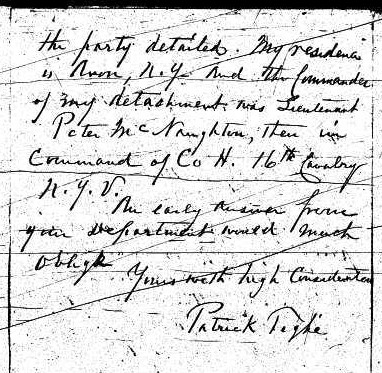
“Avon, Dec. 8th 1865
To/ The Adjutant General of the Armies of the U.S.

Your petitioner, Patrick Tighe private in Co. H. 16th Cavalry N.Y.V humbly represents that he was one of the Cavalry detailed to arrest, seize, and if necessary kill the Assassin of Abraham Lincoln, and his accomplices.
As the Government has set apart a sum to reward those engaged to secure such arrest, I hereby put in my claim for such part of the reward as I may be entitled to – being myself, Patrick Tighe aforesaid, one of party detailed. My residence is Avon, N.Y. and the Commander of my detachment was Lieutenant Peter McNaughton, then in command of Co. H. 16th Cavalry N.Y.V.
An early answer from your department would much oblige.

Yours with high Consideration
Patrick Tighe”

I was a bit perplexed by this reward application. It is carefully worded to imply that Tighe was with the group that arrested Booth and Herold, but it doesn’t explicitly state that. It just states that Tighe was detailed with attempting to find the assassins. Hundreds of men were put in the field to search for Booth and his accomplices and many of them filed reward claims only to be denied, as Tighe was. But his ongoing connection to the 16th NY was intriguing.

I contacted Steve Miller who is THE expert on Boston Corbett and the 16th NY. He stated Tighe’s name didn’t ring any bells but the commander Tighe mentioned, Lt. Peter McNaughton, did. Steve reminded me about how different detachments of men from the 16th NY Cavalry were all over the place during the manhunt. John M. Lloyd, the renter of Mary Surratt’s tavern who became a key prosecution witness against her, was arrested by men of the 16th NY. On April 21st, Dr. Mudd was arrested by Lt. Alexander Lovett of the Veteran Reserve Corps. accompanied by Lt. William Farrell (and men) of the 16th. At the same time Booth was shot and killed a separate detachment of men from the 16th NY claimed to have been on his trail and only four miles from the Garrett farm. Lt. Peter McNaughton, in his own reward application, claimed to have been one of the men present at Dr. Mudd’s arrest.

Lt. Peter McNaughton
Courtesy of Steven G. Miller

McNaughton was also one of the leaders of what Steve calls the second Garret farm patrol. The first Garrett farm patrol is the one we are familiar with. Those were the 26 guys led by Lt. Edward Doherty, along detectives Everton Conger and Luther Baker, who tracked and killed Booth at the Garrett farm. All of those participants received a share of the reward money. After Booth’s body was transported by these men up to Washington, it was determined that a second patrol was needed to return to the northern neck of Virginia in order to retrace and determine Booth’s route through the region. This second Garrett farm patrol consisted of 20 Cavalry men of the 16th NY guided by detective Luther Baker, who had been present at Booth’s death. The soldiers were commanded by Lt. McNaughton.

The group was also accompanied by a reporter for the New York Herald, a man by the name of William N. Walton. How Walton managed to gain access to this detachment is unknown. Late on April 29th, the group set out from D.C., steamed south, and then headed overland to the Garrett farm. They arrived back at the Garrett farm just before sundown on April 30th. Several members of the detachment remained at the Garrett house overnight as did William Walton. During this time, Walton sketched the Garrett house and the remains of the burned down barn. These sketches would later be turned into woodcuts and published in the May 20 edition of Harper’s Weekly.

As the bulk of the second Garrett farm patrol rested at the farm, some men were ordered out in search of Willie Jett, the Confederate private who had dropped John Wilkes Booth off at the Garrett farm in the first place. Jett had originally been arrested by the first Garrett farm patrol. He was the one who led the soldiers from Bowling Green back to the Garrett farm where Booth was hiding out in the barn. Jett witnessed Booth’s death and then traveled northward with Luther Baker, a couple soldiers, and Booth’s body. However, during the trek north through Virginia, Luther Baker released Jett and allowed him to go home. When the party arrived in D.C., the Secretary of War was angry at Baker for releasing Jett and immediately ordered his arrest.
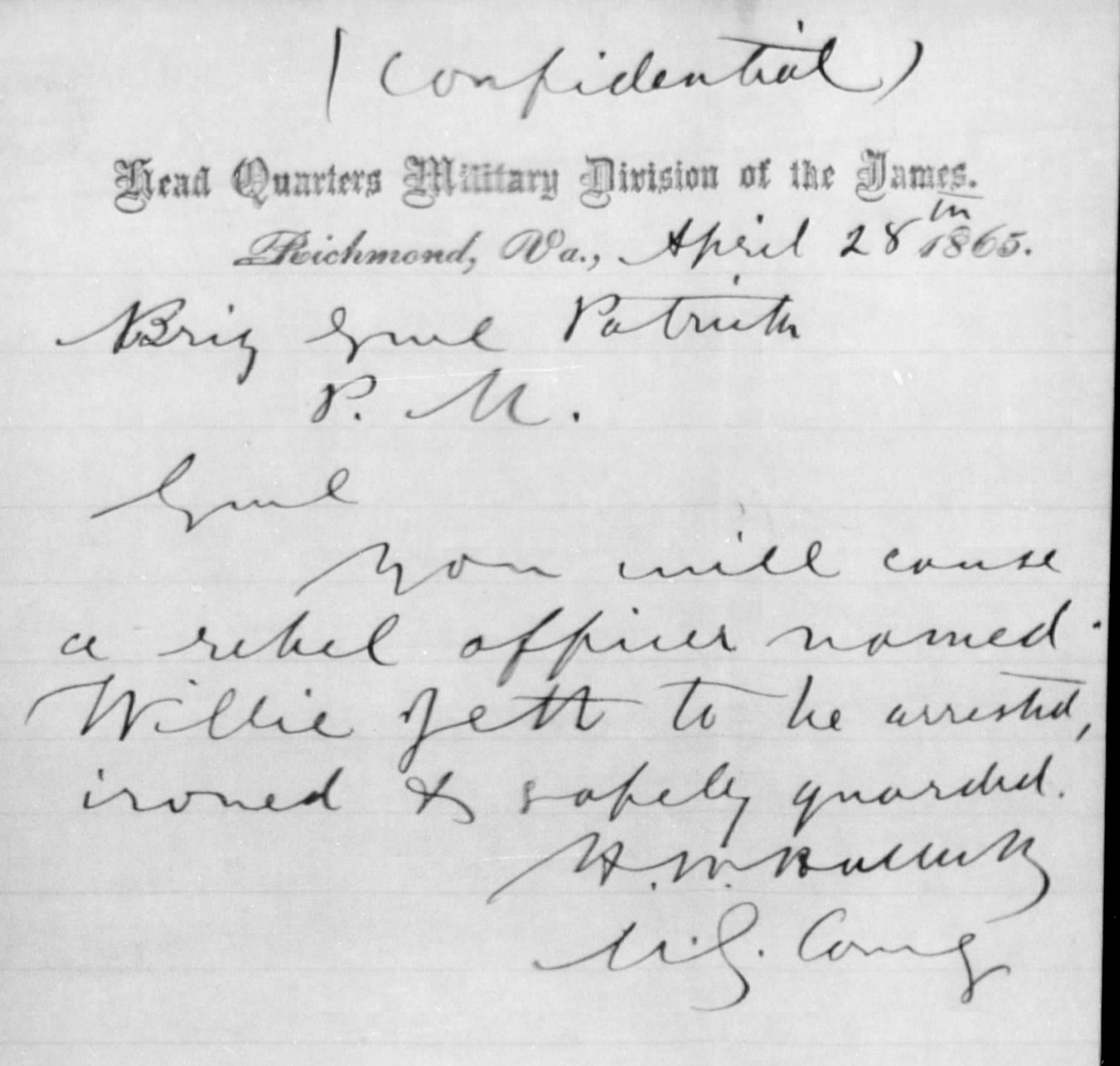
An arrest order for Willie Jett dated April 28th.

Recapturing Jett was a key part of the second Garrett farm patrol’s mission. Earlier on April 30th, Mr. Garrett had visited Willie Jett in Bowling Green and attempted to get Jett to sign a statement attesting that he had brought Booth to the farm under an assumed name. Jett had decline to sign the statement. When the troopers attempted to find Jett in Bowling Green, they discovered he had departed. Eventually they hunted him down to the home of his father in Westmoreland County and placed him under arrest.
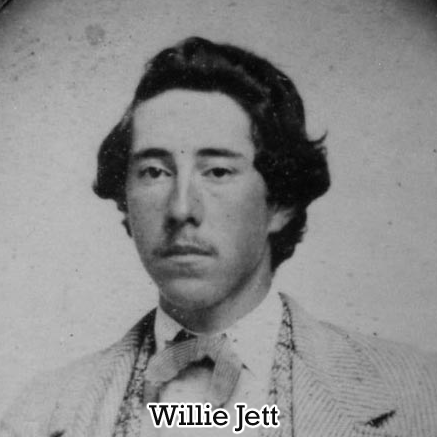
Over the course of the next couple of days, the second Garrett farm patrol retraced Booth and Herold’s movements backwards. They spoke with several people who interacted with the fugitives during their escape and arrested several of them. They seemed to be especially keen on arresting folks with the first name of William. In addition to Willie Jett, the patrol rounded up William Rollins, the fisherman in Port Conway who had agreed to take Booth and Herold across the Rappahannock River before Jett and the other two Confederates arrived, William Lucas, the free Black man that Booth essentially evicted from his home after being turned away by Dr. Stuart, and William Bryant, the man who transported the fugitives from Mrs. Quesenberry’s to Dr. Stuart’s home of Cleydael. The group also interviewed Mrs. Quesenberry and her daughter who had spoken with David Herold after the pair made landfall in Virginia.

On May 3rd, the second Garrett farm patrol arrived back in D.C. and deposited their detainees in the Old Capitol Prison. They also passed along the information they had gained from their Virginia sojourn. The next day, William Walton published a lengthy article in the New York Herald documenting what he had learned about the escape route of John Wilkes Booth as a result of his trip with the second Garrett farm patrol.

From Walton’s article, it appears that the second Garrett farm patrol was very successful in establishing JWB’s escape route through Virginia. However, it was decided by the authorities in Washington that the second patrol had not done an adequate job in acquiring all of the witnesses that were needed. As a result, a third patrol of men from the 16th NY was quickly assembled in order to make a return trip. Detective Baker did not join this group and it was, instead, solely led by Lt. McNaughton who was now familiar with the territory. Reporter William Walton later wrote about this third trip but it’s difficult to tell if he was speaking from his own firsthand experiences with this third patrol or if he was relating things that were told to him by Lt. McNaughton, whom he appears to have befriended.

The third group of men from the 16th NY Cavalry departed D.C. late on May 4th. Rather than going to the Garrett farm, however, this detachment was tasked with finding and arresting Absalom Bainbridge and Mortimer Ruggles, the Confederate soldiers who ran into Booth with Willie Jett at the Rappahannock River. The posse traveled to Friedland, the home of Confederate General Daniel Ruggles, in King George County, Virginia. There they found and arrested Mortimer Ruggles, who was Gen. Ruggles’ son. Friedland plantation was also the home of Absalom Bainbridge as his mother and Mortimer Ruggles’ mother were sisters. Bainbridge was not at the home when Lt. McNaughton and his men got there but, according to Walton’s account arrived back about a half hour later. The two cousins were transported and placed on a waiting steamer while the group then traveled to Dr. Stuart’s home of Cleydael. While the second Garrett farm patrol had interviewed Dr. Stuart a few days earlier, they had not taken him into custody. This time, however, he was compelled to come with the men. On May 6, the whole detachment, with their three prisoners in tow, arrived back in D.C.

As stated, William Walton wrote about this third expedition for the New York Herald. You can read that article here.

Now that we have a handle of the different patrols of 16th NY Cavalry that visited Virginia, let’s return to the subject of Patrick Tighe and his alleged piece of wood from the Garrett house. As we have established, Pvt. Tighe was not one of the soldiers of the 16th NY Cavalry present in the first Garrett farm patrol that cornered and killed John Wilkes Booth on April 26, 1865. The third patrol which traveled into Virginia on May 4th did not stop at the Garrett farm but stayed in King George County the whole time. Therefore, the only way for this relic to be genuine and to have been  personally acquired by Pvt. Tighe is if he was a member of the second Garrett farm patrol that arrived at the farm on April 30th.

The problem is, there’s no way to prove that Tighe was part of that patrol. The only reason the specific members of the original Garrett farm patrol are known is because of the fight for the reward money. Lt. Doherty made a list of the men under his command in order to ensure each one received their fair share. There are no rosters of the second or third group of 16th New Yorkers who traveled into Virginia during the subsequent visits. Patrick Tighe’s application for reward money is vague. He might have been with Lt. McNaughton and the second Garrett’s farm patrol, or he might have been with him at the arrest of Dr. Mudd or another part of the manhunt. Without more information, we can never be sure.

Patrick Tighe’s grave in Avon, NY.
The stone is incorrect. Patrick Tighe died on April 3, 1907.

While the relic being genuine is an intriguing possibility, I’ll admit that the size of the wood piece and the corresponding lot description gave me some pause. Why would the Garretts allow a solider to take such a sizable piece (13″ x 18″) of wood from their house, which was their main residence and undamaged from the fire that consumed their barn? The Garretts continued to reside in the farmhouse for decades after Booth’s death and while a sneaky soldier might be able to break off a small relic, it seems improbable that Tighe could have walked off with a large piece of the house without any of the Garretts noticing and objecting. The phrasing of the lot description is also confusing as it is refers to the relic as “barn wood” from the “Garnett [sic] house”. Why would the siding of the house be called barn wood?

It appears that there are some quality control issues over at this auction house. I zoomed into the small label affixed to the wood. It’s a bit pixelated as the original image isn’t all that big. Still, in my opinion, this label reads, “This barn siding was from the Garrett barn where John W. Booth was killed.”
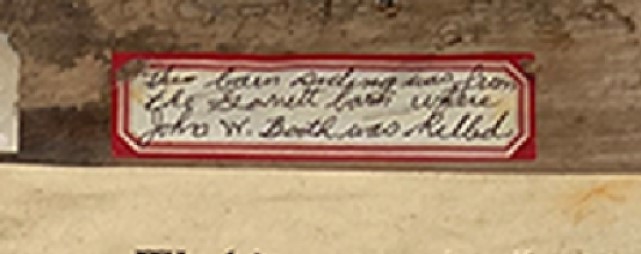
The wood relic coming from the remains of the burned down barn makes more sense than a piece pried off of the Garrett house. I wish the auction house had more images of the wood piece. It would be interesting to see if it bears any evidence of having been charred or blackened.

At the end of the day, however, this lot is far too pricey for a centerpiece item whose authenticity is only a “maybe”. Two of the claims in the lot description, that Tighe was there when Booth was killed and that the wood came from the Garrett “house” have been disproven. While it’s still possible that the piece is genuine and something that Pvt. Tighe acquired as a member of the second Garrett farm patrol, without further evidence, such claims would be impossible to prove. Still, this relic served as an illuminating jumping off point to learn more about the different patrols of the 16th New York Cavalry that were sent into Virginia in order to retrace the steps of John Wilkes Booth. And, hey, if anyone wants to purchase the lot before it ends on August 27th, I certainly wouldn’t say no to a gift.

Many thanks to Carolyn Mitchell for making me aware of this auction item and to Steve Miller for sharing his picture of Lt. McNaughton and his expertise with the 16th NY Cavalry with me. 

Categories: History, News | Tags: , , , , , , , , , , | 23 Comments

LincolnConspirators.com Silent Auction!

There is something indescribable about being able to put your hands on a piece of history. It is a physical connection with the people and times of the past. Relics have an almost magical way of connecting us to the past in a way that mere words and knowledge cannot. During my trips and adventures in history, I have always sought to find something tangible that I can take home with me in order to help me surround myself in this shared past. I hadn’t realized how much I had taken to collecting until last year, when Jen and my friends helped me pack up my things for my move to Texas. Over my 9 years living in Maryland, I had amassed enough of a collection that we labeled a whole moving box as “Dave’s Bricks and Wood”. Along with these relics, I have also managed to acquire several period newspapers and images connected to the study of Lincoln and his assassination over the years.

Well since that move I’ve gotten married (well actually, Jen and I secretly eloped after two months of dating and then announced the fact via a game at our wedding reception exactly one year later, but that’s another story) and I have settled happily into the life of a family man with my amazing wife and two stepsons. In an effort to raise some money for my family here in Texas, I have decided to auction off a part of my collection.

As many of you know, my career had been that of an elementary school teacher and so you won’t find anything too expensive listed below. I don’t have a piece of Laura Keene’s blood stained dress or a John Wilkes Booth Wanted Poster in my collection. However, I do have a nice selection of photographs, relics, and period newspapers, that I think will appeal to many of you. While I could put this stuff up on eBay and sell things that way, I wanted to offer these relics to an audience who would appreciate and know about them. While others would look at one of my relics and just see a rock, fellow history buffs can appreciate the rarity of a rock from the dugout home in Cloud County, Kansas where Boston Corbett, the slayer of John Wilkes Booth lived. While my goal is, of course, to raise some money to help with bills, I also want to share these unique pieces with others who will appreciate them.

The format of my auction is different than others. I’m not running it through eBay or any auction website. Instead, it is going to take the form of a traditional silent auction as seen at school fundraisers (like I said, my background is that of a teacher). The big difference is that this silent auction will be online and the different bids will be tracked using Google Forms. There are a total of 28 lots for auction and I have created different Google Forms for each one. I invite you to peruse each lot, read its description, and look at the provided pictures. Each lot has a modestly set “Starting Bid” which is listed on the last line of the description.

If you are interested in placing a bid, you can click the hyperlink between the description and the pictures. This will take you to the Google Sheet which contains the current bid for the item. To place your higher bid, simply return to the lot’s Google Form, enter your name and bid at the bottom, and click “Submit”. This will register your bid and the bidding list will be updated so that others can see the new bid. You’ll have to come back to check and see if someone outbids you and, if they do, you can submit a new, higher bid.

If you decide to make a bid, you will also need to fill out a Bidder Information Sheet. This form is for my eyes only and gives me the necessary information I need to contact you at the end of the auction. Without this form, I wouldn’t know how to get in touch with you about your winning bid. You only need to fill out the Bidder Information Sheet once during the auction period. Your personal information will not be shared with anyone.

As of this post’s publication, the auction is open and each lot is now accepting bids! The auction period will close at 9:00 pm central time on Friday, August 26, 2022. Each bid that comes in automatically includes a timestamp and no bids that come in after the posted close of the auction will be accepted. I will then contact the winners to discuss shipping and payment options. Winners will pay their bid plus the USPS shipping cost from Texas to their homes.

If you have any questions, please add them to comments below and I will do my best to answer them ASAP. In the mean time, I invite you to explore each of the items up for bid by clicking the lots below. If you find a lot you are interested in, feel free to put in your bid, and then fill out the Bidder Information Sheet with your information.

Thank you for taking the time to look at the lots. Even if you don’t find anything to bid on, there is still some interesting history contained in each lot’s description. My family and I thank you for your support and consideration.

Happy Bidding!

– Dave (Jen, Atticus, and Noah) Taylor


Remember, while you should come back often to see if you have been outbid on your lot and put in a higher bid, you only have to fill in the Bidder Information Sheet once.

Images and Documents

Relics and Artifacts

Period Newspapers

The auction will close at 9:00 pm central time on Friday, August 26, 2022 so get your bids in before it’s too late.

Categories: History, News | Tags: , , , , , , , , , , , , , , , , , , , , , | 3 Comments

The Lincoln Assassination On This Day (April 18 – April 24)

Taking inspiration from one of my favorite books, John Wilkes Booth: Day by Day by Art Loux, I’m documenting a different Lincoln assassination or Booth family event each day on my Twitter account. In addition to my daily #OTD (On This Day) tweets, each Sunday I’ll be posting them here for the past week. If you click on any of the pictures in the tweet, it will take you to its individual tweet page on Twitter where you can click to make the images larger and easier to see. Since Twitter limits the number of characters you can type in a tweet, I often include text boxes as pictures to provide more information. I hope you enjoy reading about the different events that happened over the last week.

NOTE: After weeks of creating posts with multiple embedded tweets, this site’s homepage now tends to crash from trying to load all the different posts with all the different tweets at once. So, to help fix this, I’ve made it so that those viewing this post on the main page have to click the “Continue Reading” button below to load the full post with tweets. Even after you open the post in a separate page, it may still take awhile for the tweets to load completely. Using the Chrome browser seems to be the best way to view the tweets, but may still take a second to switch from just text to the whole tweet with pictures.

Continue reading

Categories: History, OTD | Tags: , , , , , , , , , , , , , , , | Leave a comment

The Lincoln Assassination On This Day (October 4 – October 10)

Taking inspiration from one of my favorite books, John Wilkes Booth: Day by Day by Art Loux, I’m documenting a different Lincoln assassination or Booth family event each day on my Twitter account. In addition to my daily #OTD (On This Day) tweets, each Sunday I’ll be posting them here for the past week. If you click on any of the pictures in the tweet, it will take you to its individual tweet page on Twitter where you can click to make the images larger and easier to see. Since Twitter limits the number of characters you can type in a tweet, I often include text boxes as pictures to provide more information. I hope you enjoy reading about the different events that happened over the last week.

NOTE: After weeks of creating posts with multiple embedded tweets, this site’s homepage now tends to crash from trying to load all the different posts with all the different tweets at once. So, to help fix this, I’ve made it so that those viewing this post on the main page have to click the “Continue Reading” button below to load the full post with tweets. Even after you open the post in a separate page, it may still take awhile for the tweets to load completely. Using the Chrome browser seems to be the best way to view the tweets, but may still take a second to switch from just text to the whole tweet with pictures.

Continue reading

Categories: History, OTD | Tags: , , , , , , , , | Leave a comment

John Wilkes Booth Escape Route Tour Through Virginia

While there have been many wonderful books written about the Lincoln assassination, whenever someone asks for my opinion about the best book on the subject I always direct them to American Brutus: John Wilkes Booth and the Lincoln Conspiracies. In terms of depth of research and wealth of knowledge I believe American Brutus to be unparalleled in Lincoln assassination scholarship. In turn, I also view its author, Michael Kauffman, to be the foremost expert on the Lincoln assassination. The man has spent over 50 years delving into every single side story relating to Booth and the assassination. Not only that but Mr. Kauffman has also “walked the walked” in personally recreating many of the events relating to the history. His stories of jumping from a ladder onto the stage at Ford’s Theatre and his own attempt to row across the Potomac were big motivations to me and inspired me to create my “John Wilkes Booth in the Woods” reenactment.  Mr. Kauffman is a walking encyclopedia and also happens to be one of the nicest people you could meet. Needless to say that whenever I get a chance to talk and learn from Mr. Kauffman, I am definitely in awe of his knowledge and experience.

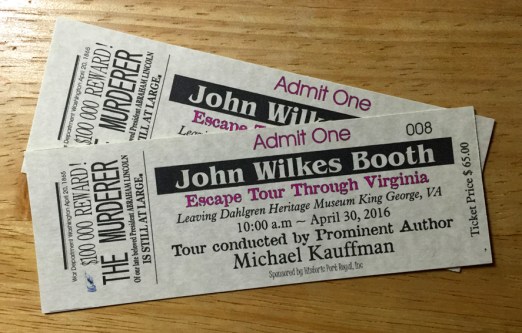
The reason I am saying all of this is because there is a rare opportunity for those of you in the D.C., Maryland, and Virginia area to learn from this true expert on the Lincoln assassination. While Mr. Kauffman was once a fixture of the John Wilkes Booth escape route bus tours put on by the Surratt Society, he retired from doing that a few years ago and rarely does bus tours anymore. However, he will be conducting a very special John Wilkes Booth escape route bus tour on Saturday, April 30, 2016. This unique bus tour is being put on by Historic Port Royal, the historical society in Port Royal, Virginia, where John Wilkes Booth was cornered and killed. This tour is focused entirely on Booth’s escape through Virginia and will commence just over the Potomac River in King George County, Virginia. Here’s a scanned page about the event from the newest HPR newsletter:

HPR Page April 30 BERT Kauffman

Click to enlarge

As some of you may know, I am a board member for Historic Port Royal. We are a growing historical society and currently operate three different museums: The Port Royal Museum of American History, The Port Royal Museum of Medicine, and the Old Port Royal School. Each year HPR also organizes an Independence Day celebration. This is in addition to our quarterly newsletter and public events and speakers throughout the year. If you are not already a member of Historic Port Royal, please join us. We are a 100% volunteer organization and so your small annual dues help us preserve our growing collection of artifacts and keep the lights on at our museums so that more people may come and learn about this historic town.

Historic Port Royal is using this bus tour as a fundraiser and we would love to sell out every seat on the bus. As stated on the above flyer, the tour is from 10:00 am to 5:00 pm on Saturday, April 30, 2016. The cost is $65 which includes a box lunch.

For those who have taken other Booth escape route tours before, this tour will include familiar spots such as Mrs. Quesenberry’s house, Dr. Stuart’s Cleydael, and the Peyton House in Port Royal. However it will also include stops at Belle Grove Plantation (the birthplace of President James Madison where members of the 16th NY Cavalry stopped while on the hunt for Booth), The Port Royal Museum Museum of American History (which contains several artifacts relating to the Garrett farm and the death of Booth), and a fuller tour of Port Royal itself complete with a skit on the porch of the Peyton House re-enacting Booth’s arrival in town (by yours truly).

The whole event promises to be one that participants will not soon forget especially with a guide as knowledgeable as Michael Kauffman.

To get more information or to reserve your spot please call HPR Treasurer Bill Henderson at (804) 450-3994 or email him at WehLsu82@aol.com. There are very few seats left for this special tour of John Wilkes Booth’s escape through Virginia led by Lincoln assassination expert Michael Kauffman. I hope to see some of you there.

Kauffman BERT tix HPR

Categories: News | Tags: , , , , , , , | 8 Comments

What’s Missing? Episode 2

Once again it’s time to test your Boothie knowledge, resourcefulness, and observational skills with a game called, What’s Missing?

What's Missing Icon

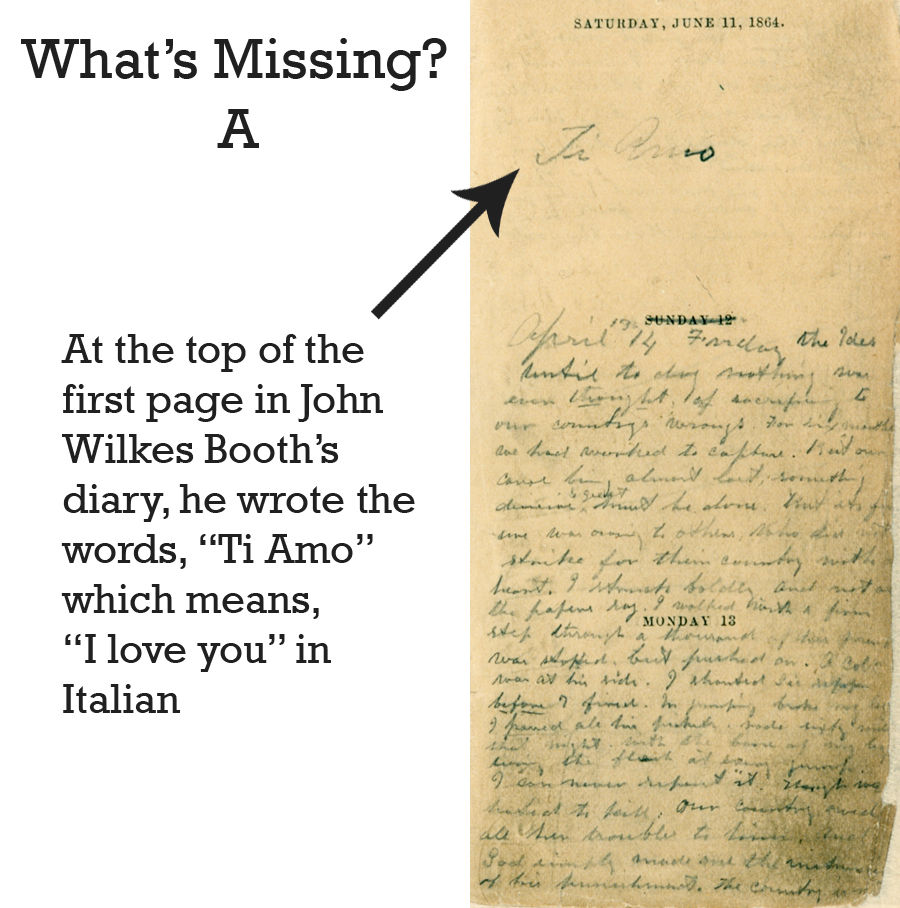
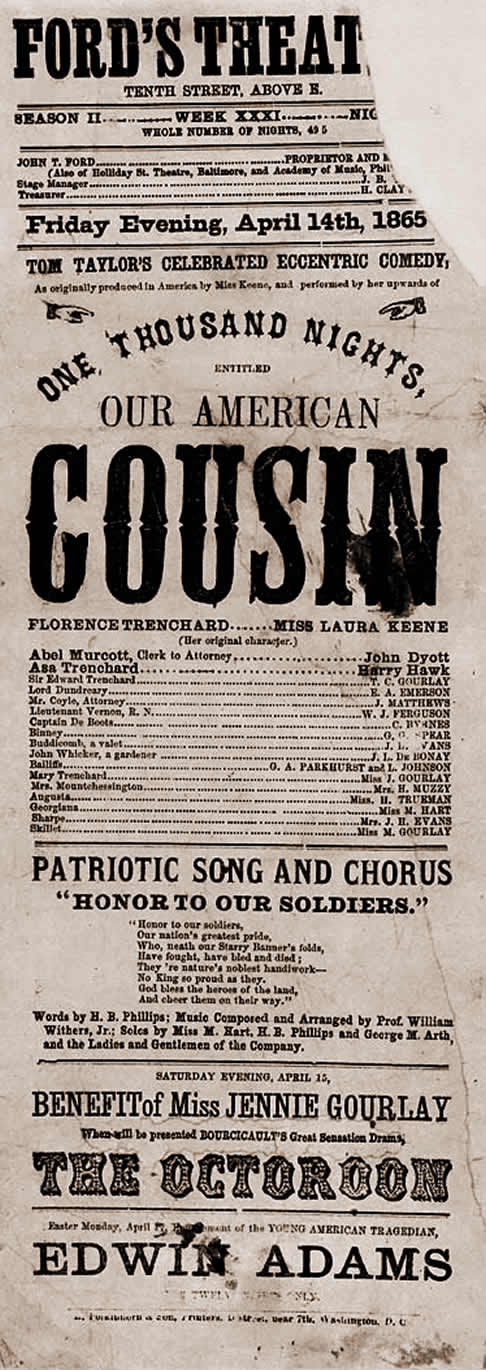
Below you will find 20 images all related in some way to the Lincoln assassination story. Most of them have previously appeared on this website, either in the Picture Galleries or in one of the many posts. Your job is to look at the images carefully to see if you can determine “What’s Missing?” from the image. You can click on each image to enlarge it a bit and get a better look. When you’re stumped, or ready to check your answer, click on the “Answer” button below each image. Good luck!

What’s Missing A:

What's Missing A

What's Missing Answer Icon

What’s Missing B:

What's Missing Answer Icon

What’s Missing C:

What's Missing C

What's Missing Answer Icon

What’s Missing D:

What's Missing D

What's Missing Answer Icon

What’s Missing E:

What's Missing E

What's Missing Answer Icon

What’s Missing F:

What's Missing F

What's Missing Answer Icon

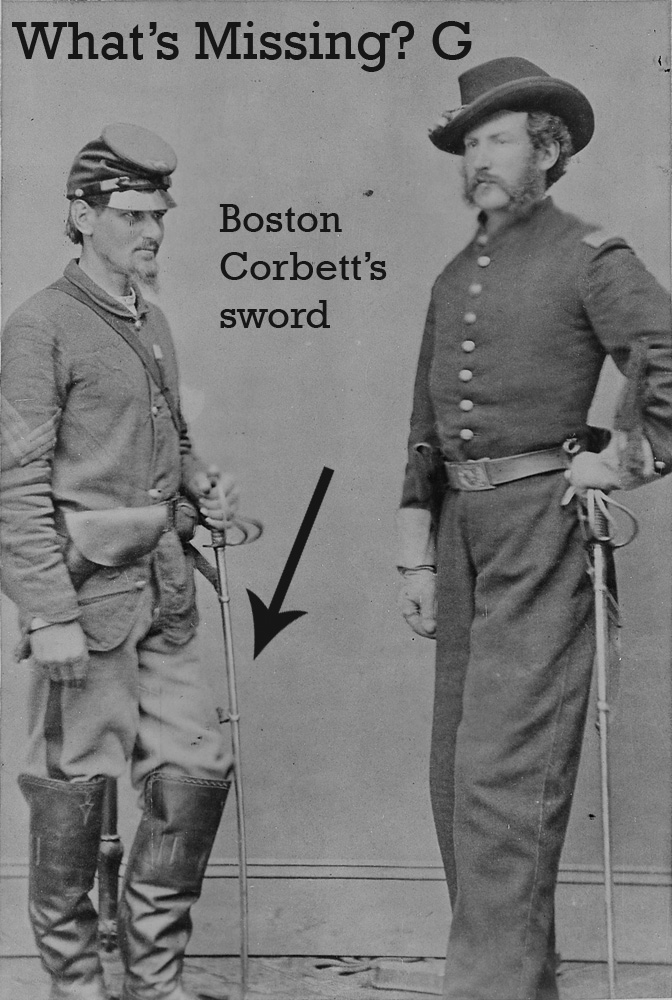
What’s Missing G:

What's Missing G

What's Missing Answer Icon

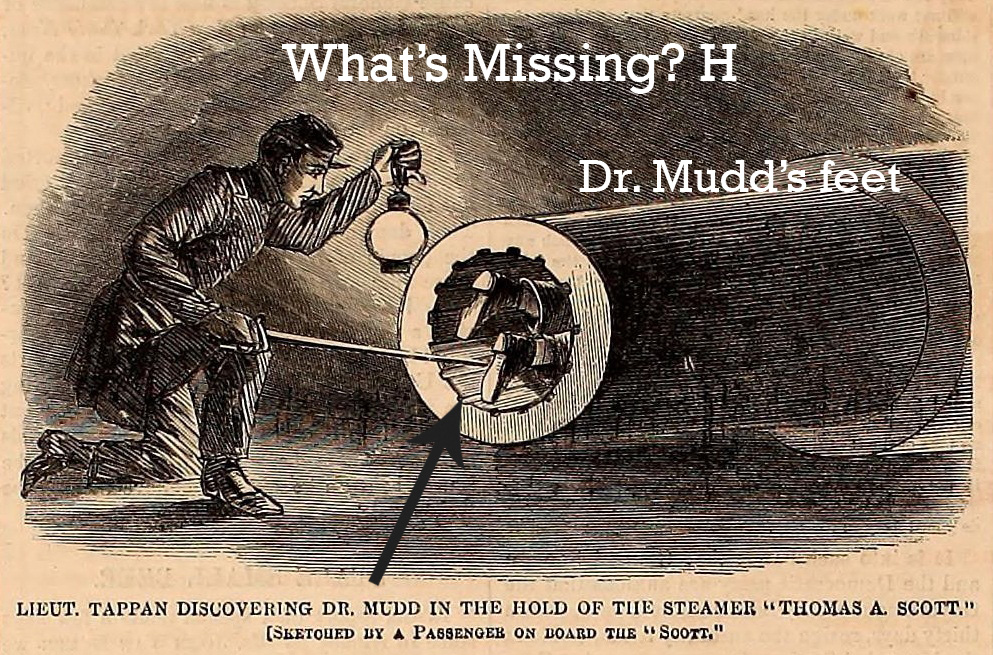
What’s Missing H:

What's Missing H

What's Missing Answer Icon

What’s Missing I:

What's Missing I

What's Missing Answer Icon

What’s Missing J:

What's Missing J

What's Missing Answer Icon

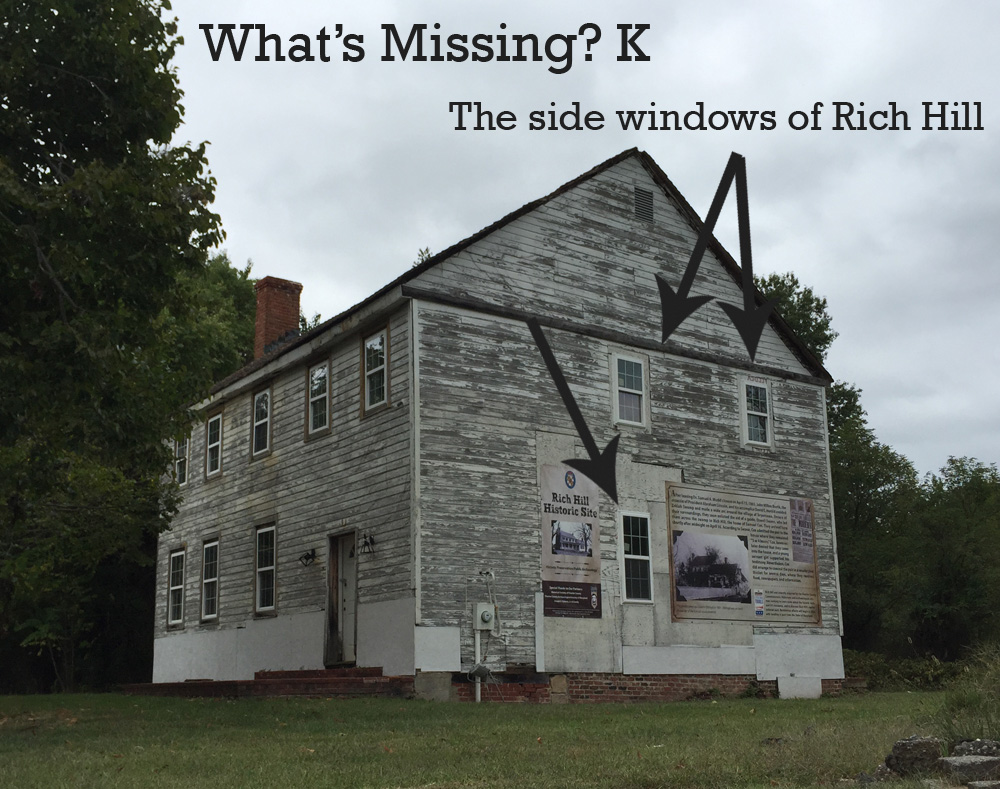
What’s Missing K:

What's Missing K

What's Missing Answer Icon

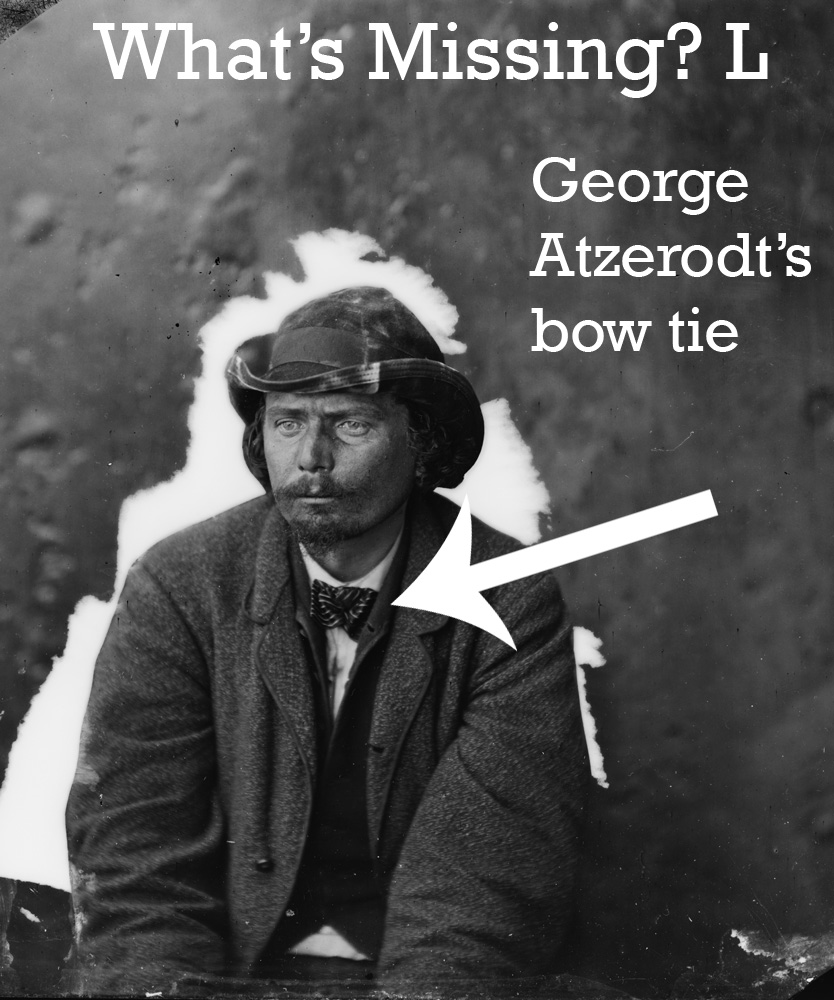
What’s Missing L:

What's Missing L

What's Missing Answer Icon

What’s Missing M:

What's Missing M

What's Missing Answer Icon

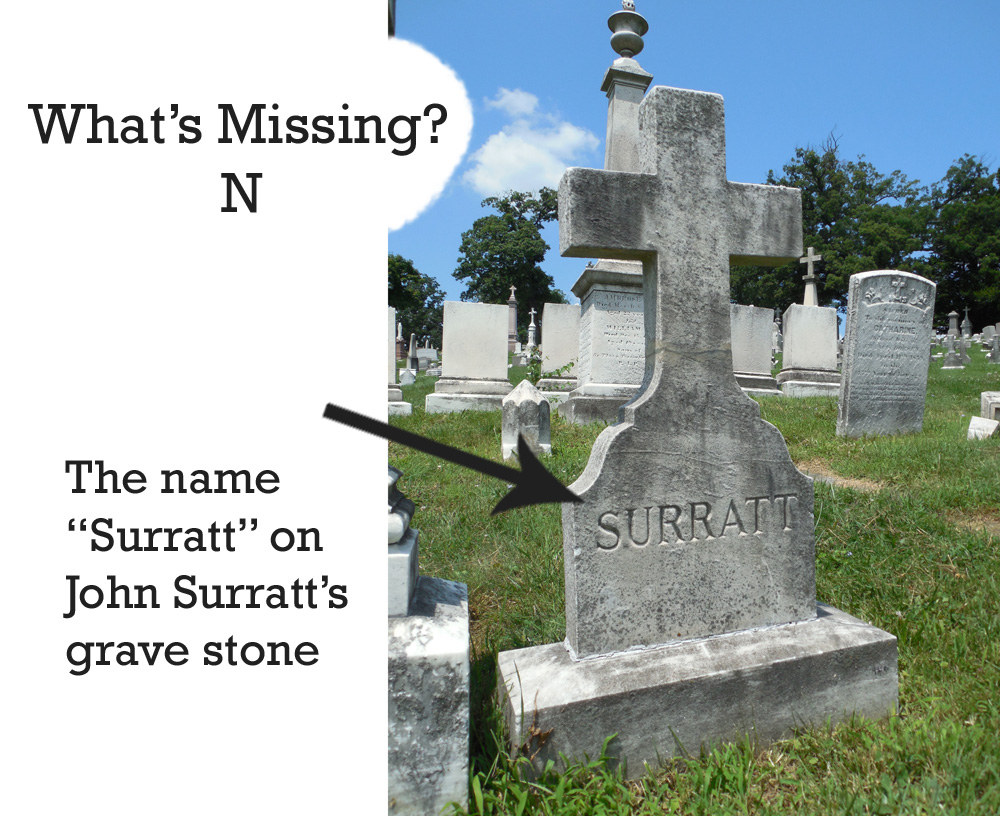
What’s Missing N:

What's Missing N

What's Missing Answer Icon


What’s Missing O:

What's Missing O

What's Missing Answer Icon

What’s Missing P:

What's Missing P

What's Missing Answer Icon

What’s Missing Q:

What's Missing Q

What's Missing Answer Icon

What’s Missing R:

What's Missing R

What's Missing Answer Icon

What’s Missing S:

What's Missing S

What's Missing Answer Icon

What’s Missing T:

What's Missing T

What's Missing Answer Icon

So how did you do? Let us know in the comments section below.

Categories: Levity | Tags: , , , , , , , , , , , , , , , | 9 Comments

New Picture Gallery: Cleydael

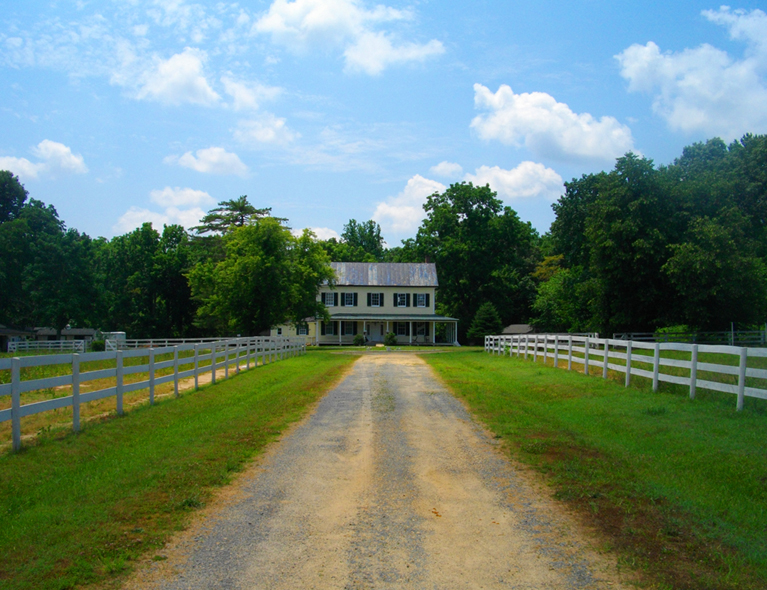
Cleydael, the summer and wartime home of Dr.Richard Stuart in King George, Virginia, was a stop John Wilkes Booth and David Herold made during their escape South.  After crossing into VA, the pair made their way to the home of Elizabeth Quesenberry.  She contacted Confederate agent Thomas Harbin who, in turn, sent the fugitives with a nearby farmer, William Bryant, to Dr. Richard Stuart’s home, Cleydael.  Booth and Herold expected hospitality and probably some medical attention from Dr. Stuart.  Instead, Stuart already had a full house was very suspicious of the pair.  He refused them lodging and medical attention.  In the end he did give them a meal.  After they ate, Stuart sent the men off a short ways to the home of a family of free blacks, the Lucases.  Booth and Herold forced William Lucas and his family out of their own house and slept there.  The next morning the pair paid William’s son, Charley Lucas, to take them to Port Conway by wagon. Cleydael still exists today as a private residence.  In recent years the property had fallen into some disrepair.  In 2012, the house was purchased at auction by Renee and Charlie Parker.  The Parkers are in the process of restoring Cleydael to its former glory.  In addition, they are gracious enough to open up their house to the Surratt Society’s Booth Escape Route Tours that run in the spring and fall.  I just drove by Cleydael today, and I can tell you the Parkers are doing a wonderful job. Visit the Parker’s website to keep up to date with their successes: http://www.cleydaelestate.com/

In addition to this brand new picture gallery, I’ve also added a few new pictures to the other galleries.  There are also new videos to be seen in the Rich Hill and Pine Thicket galleries.  These videos were shot by Charles County native and fellow Boothie, Joe Gleason, and he has allowed me to put them up here.  Click around and see what’s new in the Picture Galleries.

Categories: Uncategorized | Tags: | Leave a comment

Welcome to scenic Neck Quarter, Virginia!

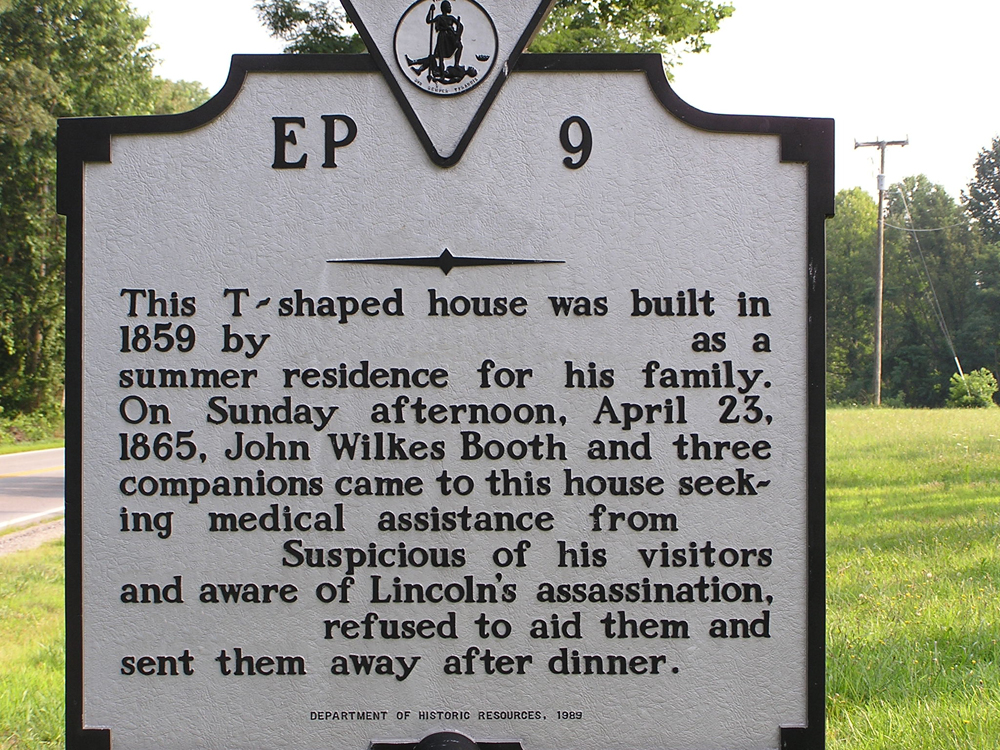
Not familiar with the name? I don’t blame you. Neck Quarter was the former name of a parcel of land located in King George County, Virginia owned by Nathaniel Hooe. In December of 1845, Hooe sold this tract of land to Dr. Richard H. Stuart. His wife subsequently renamed Neck Quarter to its modern name, Cleydael.

Dr. Stuart was one of most prominent doctors and wealthiest men in the county. Before buying Cleydael’s land, Dr. Stuart owned land and a house eight miles away near the coast of the Potomac called, “Cedar Grove”. While Dr. Stuart and his family enjoyed Cedar Grove, the hot, muggy, summers near the Potomac proved unpleasant with cases of malaria being common. Upon purchasing Neck Quarter from Nathaniel Hooe, Dr. Stuart began construction on a summer home. This summer home utilized an unusual design that created cross breezes to naturally cool the house during the hot summers. When the Civil War began, Dr. Stuart and his family left Cedar Grove and began residing at Cleydael year round. Their home on the Potomac was deemed too dangerous as the threat of Union shelling was a very real one. During the war, Cleydael would house General Robert E. Lee’s daughters (cousins to Mrs. Stuart) when they were forced to leave their home at Arlington. Dr. Stuart continued his practice from the safety of this home. An office with a waiting room, and easy passage between it and Dr. Stuart’s bedroom, allowed the good doctor to continue to service patients even late at night.
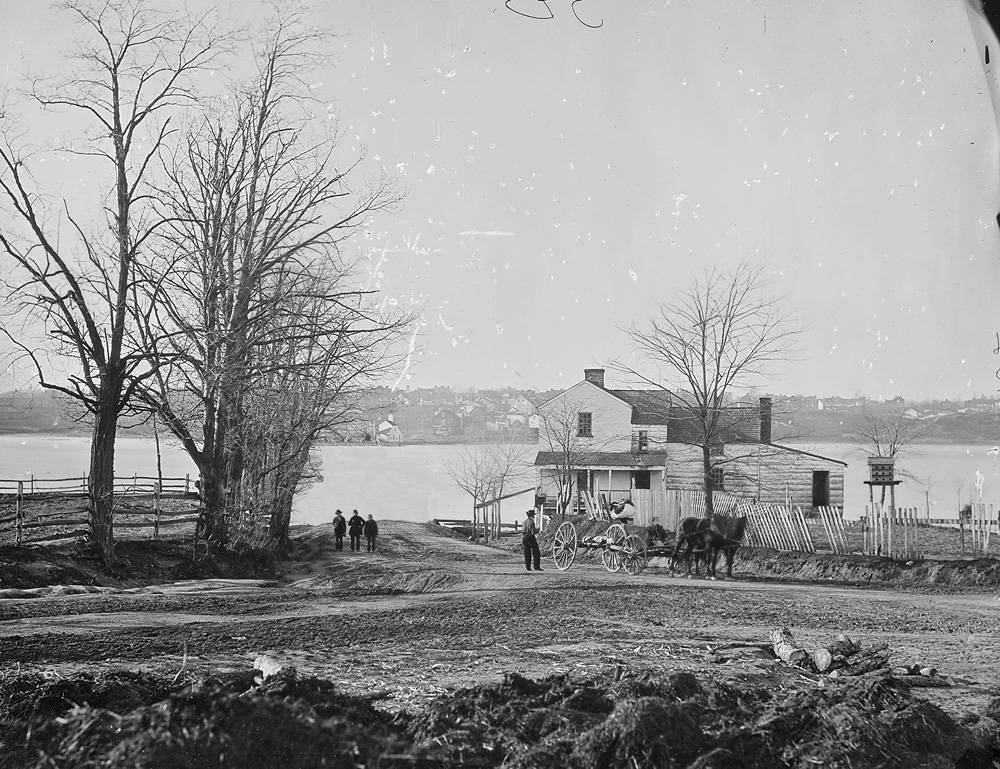
On the night of April 23, 1865, John Wilkes Booth and David Herold were led to Dr. Stuart’s by Confederate agent, William Bryant. The doctor, having heard about Lincoln’s assassination was suspicious of the men and refused to let them stay. He relented to giving the men a meal before sending them on to the cabin of William Lucas, a free black who lived nearby. Booth would later write a poison pen thank you letter to Dr. Stuart for his “generosity”. While Dr. Stuart would spend a month in prison, it was this letter that proved his innocence and refusal to help Booth.

So where does the name Cleydael come from anyway? Mrs. Stuart’s maiden name was Julia Calvert. She was the granddaughter of Henri Stier, a wealthy Belgian baron. Her grandfather’s home was Château de Cleydael near Antwerp, Belguim:

When the French army invaded Antwerp in 1794, the baron and his family fled to America, leaving Cleydael behind. Mrs. Stuart renamed their summer residence Cleydael in honor of her ancestral home.

Recently, there was much worry over the future of Cleydael. The previous owner passed away without a will and with debts to be paid. Despite a historical easement on the house, there was a real chance the house and property would be sold and demolished. Luckily, such a crisis was averted when the house was recently bought by a couple committed to restoring and retelling the history of Cleydael.

Resources:
Cleydael’s 1937 Virginia Historical Inventory Project record
Cleydael’s 1986 National Register of Historic Places Nomination form (.pdf)

Categories: Uncategorized | Tags: | 2 Comments

Blog at WordPress.com.