Posts Tagged With: Auction

More History from the LincolnConspirators Patreon


In March 2025, I started a Patreon page to solicit financial support for my efforts on LincolnConspirators.com and my ongoing book project. The Patreon has three different levels of support: the $3 a month Family Circle, the $7 a month Dress Circle, and the $15 a month Orchestra Chairs level. Each tier offers distinct perks that accumulate and stack on top of one another.

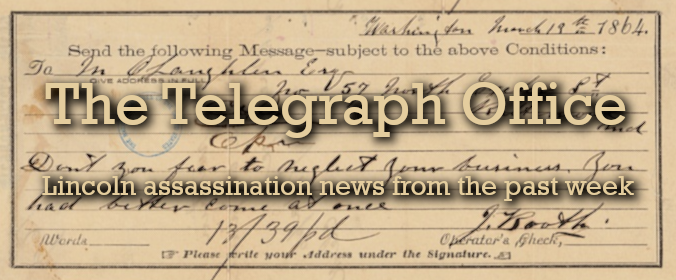
For $3 a month, you receive a weekly dispatch from The Telegraph Office. These are posts featuring Lincoln assassination-related news from the past week, upcoming events, a look at a unique auction item, and an anniversary of an event related to the assassination. When I first started the Patreon, I made the first Telegraph Office dispatch public and accessible to all so that prospective patrons could see what this offering looked like.

At that time, though, I did not provide samples of the benefits available at the higher tiers of support. This was because I was still fine-tuning everything in the beginning. However, it has now been over three months, and there are 40 posts on the Patreon page. Having built up a nice level of content to explore, I decided now would be a good time to show off examples of the benefits available for joining the Dress Circle and Orchestra Chairs levels.

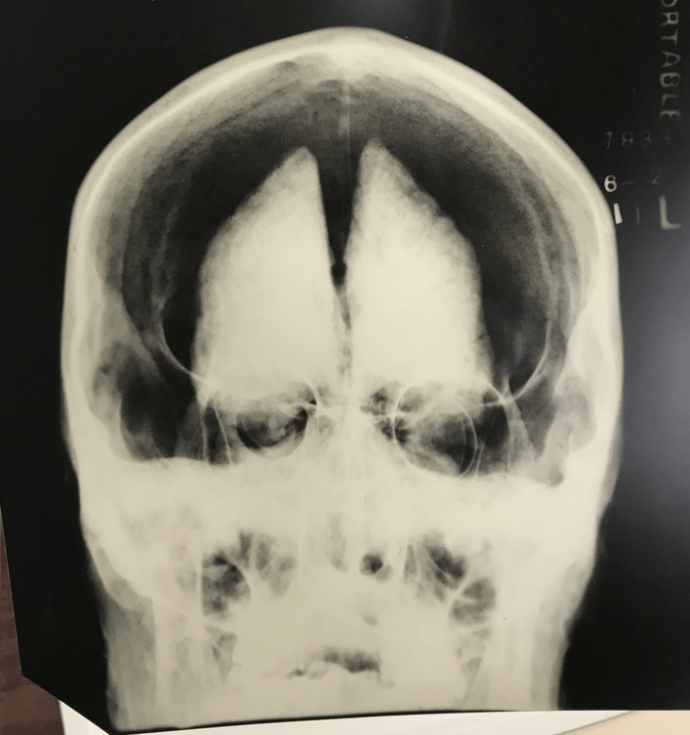
For the $7 a month Dress Circle level, you gain access to The Vault, fortnightly posts exploring artifacts related to the Lincoln assassination. Just today, I published the newest installment of The Vault – a look at X-rays from the so-called John Wilkes Booth mummy. Please click here or on the image below to check out this free offering into The Vault. Remember that subscribers to the Dress Circle also receive weekly dispatches from the Telegraph Office.

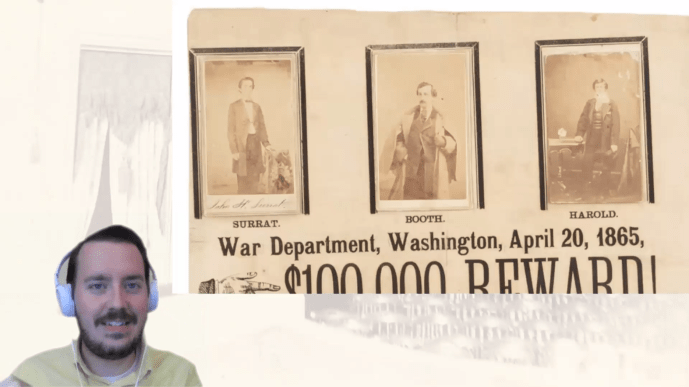
The Orchestra Chairs level is the top tier of support at $15 a month. Patrons at this level have the best seats in the house, not only getting weekly dispatches from the Telegraph Office and fortnightly visits to The Vault, but also getting access to exclusive monthly videos. These videos discuss my current research and discoveries while also providing personalized Q&A sessions for patrons at this level. I thoroughly enjoy putting these videos together. A few days ago, I published my June 2025 video for Orchestra Chair level patrons, and I am making it free for everyone to watch. Please click here or on the image below to check out this example of a monthly video at the Orchestra Chair level.

Even if you’re not in a position to support me financially, I hope that you’ll check out these examples of the work being done over on the LincolnConspirators Patreon page. And, if you are in a position to give, I hope you’ll consider becoming a patron. As you can see, I’m working hard to ensure that patrons receive a good value in return for their monthly donations.

With great appreciation,

Dave

Categories: History | Tags: , , | 2 Comments

An Assassination Playbill Goes to Auction

Update: This playbill sold for $85,000. After adding the 25% Buyer’s Premium, the total cost of the playbill was $106,250. At the same auction, a John Wilkes Booth wanted poster sold for $105,000 ($131,250 with Buyer’s Premium).

This Saturday (9/28/2024), R.R. Auctions is set to sell an iconic and rare Lincoln assassination-related item: a Ford’s Theatre playbill from the night of Abraham Lincoln’s assassination.
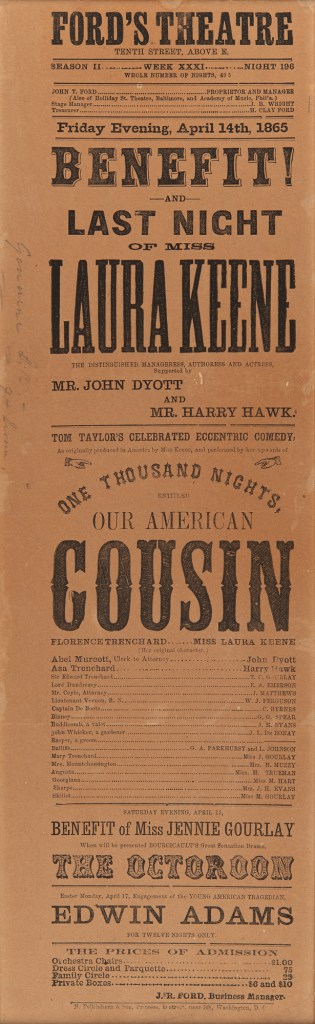
While there are a plethora of period reprints and modern replicas of assassination playbills, genuine playbills are very elusive things, and examples rarely come up for auction. One of the most recent sales of a genuine Ford’s Theatre assassination playbill was by Christie’s auction house. In 2003, they sold a second issue playbill (those included an added section near the bottom advertising the planned singing of “Honor to Our Soldiers”) for $31,000.

Normally, I don’t post about all the interesting items that come up for auction, but this playbill is different. If you check out the auction listing for this playbill, you might notice a familiar name:

It turns out I have a little history with this specific playbill.

One of my earliest posts on this blog concerned the assassination playbills and how you can tell real playbills from fakes and replicas. In addition to regularly being asked my opinion on possible “new” John Wilkes Booth photographs, I have been sent pictures of a few playbills in the past. Each time I have had to break it to people that they have a reprint or a forgery. Last year, I received an email from a couple who had read my post and were hoping to get my thoughts on a Ford’s Theatre playbill that they owned. I happily agreed to take a look at it while mentally preparing to let down yet another disappointed replica owner.

As I looked at the pictures sent me, I was surprised to see that I was not able to instantly discount the playbill. I scoured over the small details of typography, spacing, and printing, and each seemed to align with genuine bills. I sent some follow-up questions to the owners, not tipping my hand that I was getting excited by what I was seeing. I asked about the provenance behind the piece and set to work investigating that. After a few days of research, I came to the astonished conclusion that this was a genuine first-issue playbill for Our American Cousin.

In my excitement, I went about writing up a research report for the owners explaining my conclusions. Never one for brevity, that report ended up being nine pages long. In advance of the sale on Saturday, I asked the owners if I could publish my report for them on this blog. They agreed, so I have published my report below. For the privacy of the current owners, I have redacted their names from the report and replaced them with John and Jane Doe.


Report on an April 14, 1865 “Our American Cousin” playbill owned by John and Jane Doe

By Dave Taylor
LincolnConspirators.com

Introduction: On April 25, 2023, I was contacted through my website, LincolnConspirators.com, by Jane Doe. Several years ago, I published an article on my site discussing the different playbills issued by Ford’s Theatre on the night of Lincoln’s assassination. Given my experience in analyzing authentic and fraudulent Lincoln assassination playbills, Jane asked me if I would look at a playbill owned by her and her husband, John, and give my opinion of it. I accepted and was provided with several images. The following is a report of my research process and ultimate conclusions regarding the playbill in question.

Background: Abraham Lincoln was shot by assassin John Wilkes Booth on the evening of April 14, 1865, while the President and his party were attending a performance at Ford’s Theatre in Washington, D.C. The play they were attending was a comedy entitled Our American Cousin, with actress Laura Keene as the lead star. After the shooting of Lincoln, the theater was shut down and would not see another performance for over 100 years. Very shortly after the tragedy, there was a demand for playbills of the last play Lincoln saw. This demand led to a secondary market of replica and forged playbills. Some of the fraudulent bills were so convincing that they even managed to fool those who were present at the assassination into swearing to their authenticity. In 1937, researcher Walter C. Brenner privately published a monograph entitled The Ford Theatre Lincoln Assassination Playbills: A Study. Brenner analyzed several variations of bills housed in different collections in an attempt to definitively determine which version or versions of playbills were actually printed and present on the night of Lincoln’s assassination. Through his research, Brenner was able to locate proven examples of legitimate assassination playbills in the Harvard Theatre Collection. He published his findings and included a chart noting the small details that can prove or disprove a suspected assassination playbill. In 1940, Brenner published a small supplement to his original research, reproducing an 1898 article that narrated the history of the playbills and why there were two different, but both equally legitimate, versions of playbills used at Ford’s Theatre on April 14, 1865. During my own analysis of the Doe playbill, I heavily referenced Brenner’s work.

Visual Analysis: The Doe playbill measures approximately 18.5” long and 5.5” wide. It is currently matted inside of a frame with a handwritten piece of provenance below it (Fig. 1).

Figure 1: Framed playbill

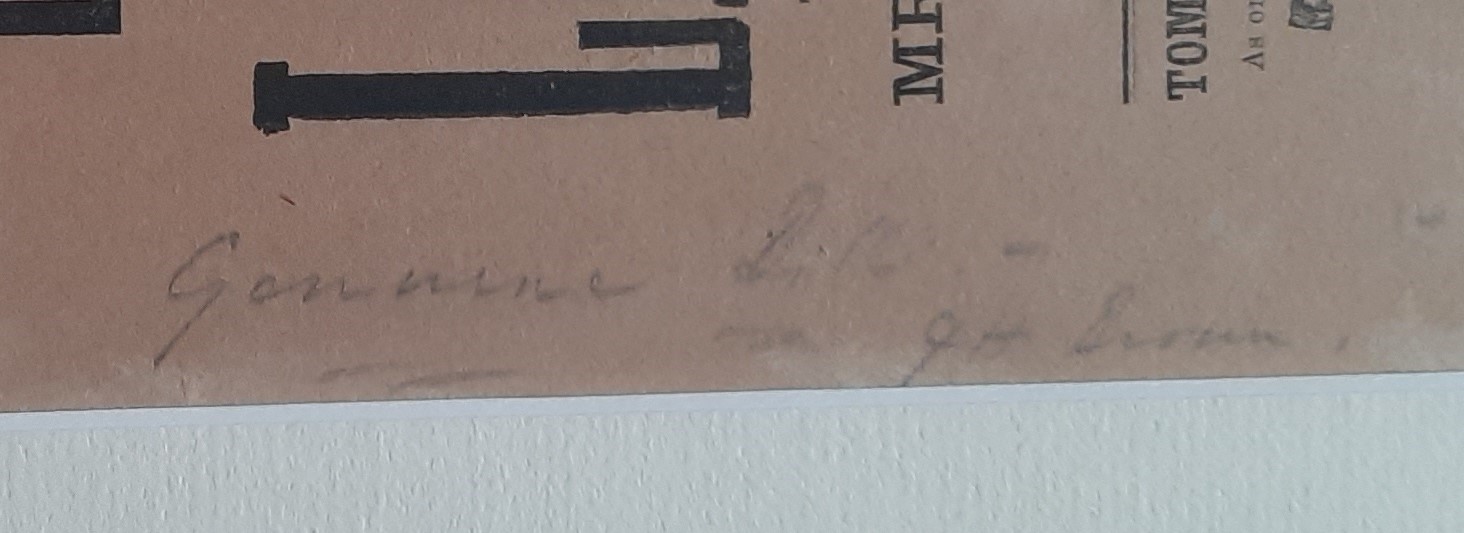
On the left edge of the bill near the name of Laura Keene is written in pencil the words “Genuine bill – [illegible] J H Brown” (Fig. 2).

Figure 2: Notation reading “Genuine Bill – [illegible] J H Brown”

The paper of the bill is browned. There are some discolorations and mild defects around the visible edges. A circular shaped defect about ¼” in size can be seen about 7 inches from the top near the name of John Dyott (Fig. 3).

Figure 3: Small defect near the name of John Dyott

There is evidence that the bill was previously folded with a light horizontal crease through the line containing the text “Buddicomb, a valet” (Fig. 4).

Figure 4: Faint horizontal crease through the entry for “Buddicomb, a valet”

Minor discoloration can be seen in other places. Still, overall, the bill is very clean, albeit browned from prior display. The bill was not examined out of the frame.

Compositional Analysis: At first glance, this bill represents an example of the first issue playbill for April 14, 1865. Bills of this sort were initially the only bills in production by printer H. Polkinhorn and Son in preparation for the evening’s show. After it was ascertained that President Lincoln was going to be attending the theater that night, it was decided that the singing of a patriotic song that was planned for the following evening was to be included. As a result of this change, the type of the printed bill was adjusted to include a paragraph about the now-planned singing of “Honor to Our Soldiers.” The Doe bill does not contain this paragraph, thus making it a possible first-issue playbill.

The Huntington Library in San Marino, CA, owns a genuine first-issue playbill for Our American Cousin. They have digitized this playbill at a high resolution, and it is available to view here: https://hdl.huntington.org/digital/collection/p16003coll6/id/5034/rec/1 Using this bill as an example, I then conducted a detailed comparison between it and the Doe playbill.

During my comparison, I looked for the different details documented by Brenner as those present on a genuine first-issue playbill, all of which are borne out on the Huntington playbill. Among those details are:

  • A space between the digits 9 and 5 in the text “NUMBER OF NIGHTS, 49 5”
  • The condition of the final E in the name of “LAURA KEENE”
  • The condition of the final R in the word “MANAGER”
  • The alignment of the letter H in the name “H. CLAY FORD”
  • The alignment of the letter S in the words “Supported by”
  • A small interior misprint on the letter C in “COUSIN”
  • A small circular defect on the letter N in “COUSIN”
  • The spelling of “Sensation”
  • The word “Chairs” after the word “Orchestra”
  • Several breaks in the horizontal lines separating different blocks of text

For each point of comparison, I found that the Doe playbill matched the details of the Huntington playbill. Everything was compositionally correct and in the right place to match a genuine first-issue bill.

I then looked for evidence of duplication. There have been other bills that I have examined in the past that have had the correct content, but they have distinct evidence that were merely copies of a legitimate bill. When copies of bills are made, there is a distinct drop in quality and detail. This is very noticeable in the font of “THE OCTOROON,” where the small details are lost. In addition, duplication removes the minor irregularities present during the original printing process. In addition to examining the font of “THE OCTOROON,” I requested and was provided with close-up images of the word “COUSIN” so that I could assess the natural deviations in this boldly printed word.
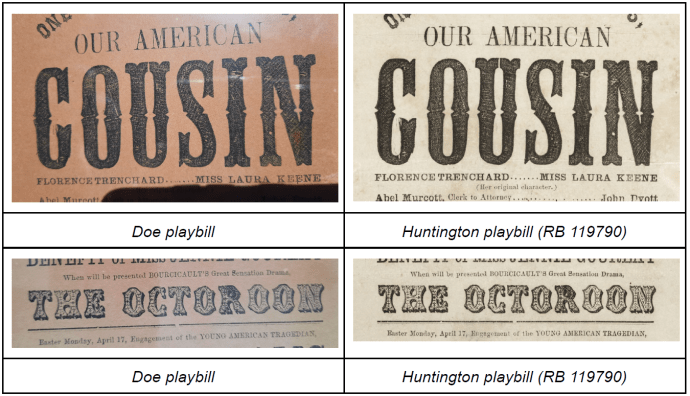
In my opinion, this bill does not show signs of being a duplicate. The fine details are present and consistent with an original printing, not a copy done by modern means.

Based on my visual and compositional analysis, I believe that the Doe playbill is a genuine first issue from April 14, 1865. It matches all points of comparison as laid out by Walter Brenner in his study of genuine assassination playbills, and there is no evidence of the bill being a period of modern reproduction.

Provenance Analysis: From my communications with Jane, I learned that this playbill has been in her husband’s family for over a hundred years. Mr. Doe’s great-grandfather was named Frederick S. Lang, the owner of a sizable Lincoln collection. According to Jane, this playbill and some other materials are what remains of the former Lang collection of Lincolniana.

In June of 1919, C. F. Libbie and Co. auctioned off what was advertised as a “Lincoln Collection formed by Frederick S. Lang, Boston.” Mr. and Mrs. Doe still retain two copies of this auction catalog. A digitized version of the catalog, housed on the Internet Archive, can be viewed here: https://archive.org/details/catalogueoflinco00libb. In examining the catalog, we find the following lot description:

“1129 Play Bill. Ford’s Theatre, April 14, 1864[sic]. One of the original play bills, first issue. Neatly matted in a narrow oak frame. Folio. This is one of the original play bills purchased from the Estate of John B. Wright, who was stage manager, by J. H. Brown.”

This lot appears to describe the playbill still in possession by the Does. Jane sent images of the original frame the playbill was housed in before it was reframed by her in-laws. One of these images is included below. This frame appears to match the description of “a narrow oak frame.”

Given the presence of the playbill with a descendant of Frederick Lang today, it would appear that this lot did not sell in 1919. Perhaps the misprint in the auction catalog of 1864 rather than 1865 caused it to fall under the radar.

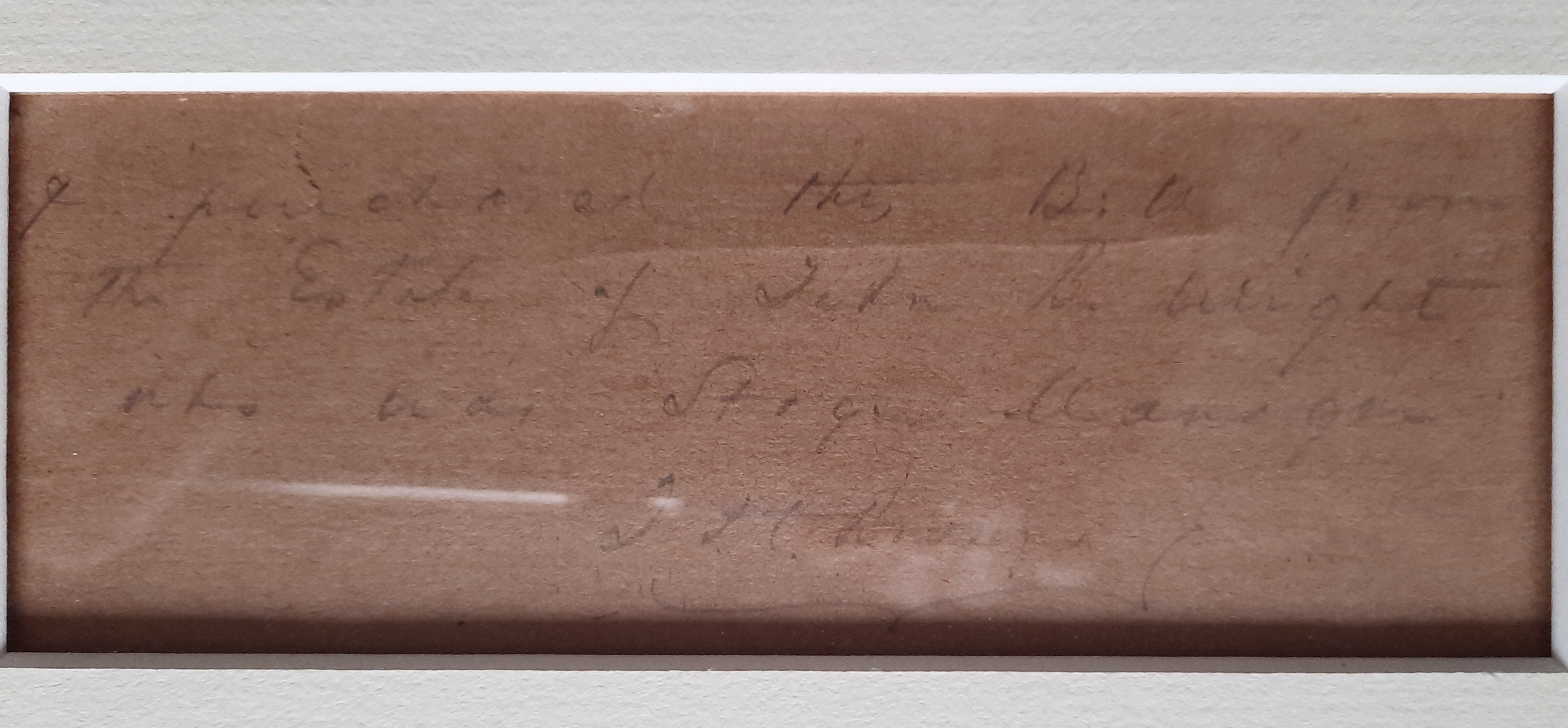
In addition to the playbill’s entry in the 1919 auction catalog, the bill is framed alongside a small handwritten note. This note is faded and brown but is still legible. It states, “I purchased this Bill from the Estate of John B. Wright who was Stage Manager / J H Brown”

Further information about the bill is included in a transcript of a circa 1909 typewritten essay or article about Frederick Lang’s collection. This transcript is owned by Mr. Doe. Jane provided a picture of a page from this essay that mentions the playbill. The text is as follows:

“occupying[sic] a prominent place on the wall is the exceedingly rare, genuine play-bill of Ford’s Theatre, April 14th, 1865 the night of Lincoln’s assassination. The attraction was Laura Keene, in Our American Cousin, and in the cast were many players well known in Boston, among them being W. J. Ferguson, Harry Hawk, and Geo. G. Spear. This play-bill was obtained from the collection of the late J. H. Brown, one of the best known theatrical collectors in the country. It is accompanied by his affidavit that it was purchased from the estate of J. B. Wright, the stage manager of Ford’s Theatre at the time of the tragedy. Mr. Wright was well known in Boston, as he was for many years connected with the National Theatre of this city, as stage manager and lessee. Mr. Lang also has a copy of the fac-simile of the genuine bill, copyrighted 1891, with affidavit by R. O. Polkinhorn who was pressman at the time of the assassination, and certificate from J. F.[sic] Ford, proprietor of the threatre[sic]. Accompanying this is a copy of this bogus bill which had a wide sale before the fraud was disclosed. This bill contains the following announcement, ‘This evening the performance will be honored by the presence of President Lincoln.’ As it was not known at the time of printing the bills, that Lincoln would attend the threatre[sic], this alone stamps the bill as spurious, but as this fact was not widely known, many of them were disposed of at fancy prices. This bogus bill is seldom met with now, and the three items make a rare and interesting collection in themselves. The latter two are not framed but are in a Booth portfolio.”

Through research, I determined that the J. H. Brown mentioned in the provided provenance was James Hutchinson Brown, a Massachusetts theatrical collector who lived from 1827 to 1897. In 1898, C. F. Libbie and Co. sold off Brown’s extensive collection of dramatic books, autographs, and playbills over the course of three different auctions. The third and final of these auctions occurred on June 15 and 16, 1898. This auction contained a collection of around 180,000 American and English playbills, “formed by the late James H. Brown, Esq., of Malden, Mass.” A digitized version of this auction catalog, housed on the Internet Archive, can be viewed here: https://archive.org/details/cu31924031351533. In examining this catalog, we find the following lot description:
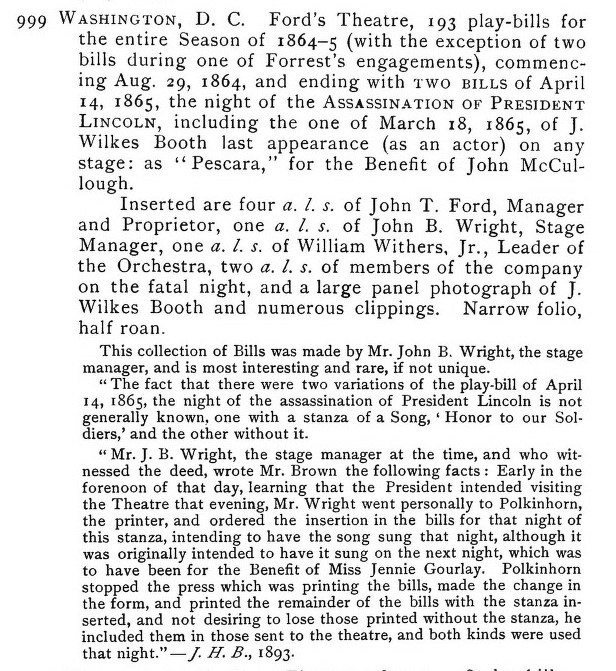
“999 Washington, D. C. Ford’s Theatre, 193 play-bills for the entire Season of 1864-5 (with the exception of two bills during one of Forrest’s engagements), commencing Aug. 29, 1864, and ending with TWO BILLS of April 14, 1865, the night of the ASSASSINATION OF PRESIDENT LINCOLN, including the one of March 18, 1865, of J. Wilkes Booth last appearance (as an actor) on any stage: as ‘Pescara,’ for the Benefit of John McCullough. Inserted are four a.l.s. of John T Ford, Manager and Proprietor, one a.l.s. of John B. Wright, Stage Manager, one a.l.s. of William Withers, Jr., Leader of the Orchestra, two a.l.s. of members of the company on the fatal night, and a large panel photograph of J. Wilkes Booth and numerous clippings. Narrow folio, half roan. This collection of Bills was made by Mr. John B. Wright, the stage manager, and is most interesting and rare, if not unique. ‘The fact that there were two variations of the play-bill of April 14, 1865, the night of the assassination of President Lincoln is not generally known, one with a stanza of a Song, ‘Honor to our Soldiers,’ and the other without it. ‘Mr. J. B. Wright, the stage manager at the time, and who witnessed the deed, wrote Mr. Brown the following facts: Early in the forenoon of that day, learning that the President intended visiting the Theatre that evening, Mr. Wright went personally to Polkinhorn, the printer, and ordered the insertion in the bills for that night of this stanza, intending to have the song sung that night, although it was originally intended to have it sung on the next night, which was to have been the Benefit of Miss Jennie Gourlay. Polkinhorn stopped the press which was printing bills, made the change in the form, and printed the remainder of the bills with the stanza inserted, and not desiring to lose those printed without the stanza, he included them in those he sent to the theatre, and both kinds were used that night.’ – J.H.B., 1893.”

Interestingly, while the assumption would be that Mr. Lang purchased this lot of Ford’s Theatre playbills at auction in 1898, we know that not to be the case. This lot was purchased by another collector named Evert Jansen Wendell (1830 – 1917). After Wendell’s death, this specific collection of Ford’s Theatre playbills was donated to Harvard University. It was this same collection of playbills that Walter Brenner consulted for his 1937 study. At the time of Brenner’s research, the collection still had the two April 14, 1865 bills mentioned in the Brown auction catalog, making it impossible for Lang to have purchased this lot of 193 playbills.

John B. Wright, former stage manager at Ford’s Theatre

However, this auction catalog does confirm that James H. Brown had dealings with the estate of John Burroughs Wright, the former stage manager of Ford’s Theatre. Wright was a Massachusetts native who maintained a home in the Boston area even when he was working for John T. Ford in Baltimore and D.C. during the Civil War years. After the shooting of Lincoln, Wright returned to Boston. After several seasons touring with star Edwin Forrest and managing theaters in New York, Wright retired from the theater business in 1880. He died in 1893. His wife Annie, who had been present in the audience on the night Lincoln was assassinated, outlived her husband and eventually died in 1924.

The catalogs for the Brown auctions contain several pieces associated to John B. Wright, showing that Brown’s purchases from the Wright estate were more than just the collection of Ford’s Theatre playbills from 1864 – 1865, which eventually went to Evert Wendell. It is, therefore, reasonable to assume that John B. Wright possessed more than one copy of the first issue playbill used on the night of Lincoln’s assassination and that James H. Brown purchased it along with the rest of the materials he acquired from the Wright estate. From there, this specific bill was purchased by Frederick Lang, a collector not of theater memorabilia but of Lincolniana.

The framed note, along with the Frederick Lang auction catalog, conclusively traces this playbill back to Ford’s Theatre stage manager John B. Wright. Two other genuine playbills from the Wright collection exist in the Harvard Theatre Collection, demonstrating that Wright retained genuine playbills after the assassination of Lincoln.

In my opinion, the provenance associated with the Doe playbill is strong.

Conclusions: The Doe playbill has all the marks of a first-issue Ford’s Theatre playbill from the night of Abraham Lincoln’s assassination. By looking at the minute details, it can be seen that the bill is not a period reproduction, nor is there any evidence of modern duplication. The provenance demonstrates an unbroken line of ownership from John B. Wright, stage manager of Ford’s Theatre, to the current owners, John and Jane Doe. The claims of provenance can be backed up with supplementary evidence in prior auction catalogs.

It is my opinion that the Doe playbill is a genuine playbill from the night of April 14, 1865. As such, it is a rare and unique piece of American history.

Dave Taylor

List of sources and references used in this research:

  • Bogar, Thomas A. Backstage at the Lincoln Assassination: The Untold Story of the Actors and Stagehands at Ford’s Theatre. Washington, D.C.: Regnery, 2013.
  • Brenner, Walter C. The Ford Theatre Lincoln Assassination Playbills: A Study. Philadelphia: Privately Printed, 1937.
  • Brenner, Walter C. Supplement for insertion in The Ford Theatre Lincoln Assassination Playbills: A Study. Philadelphia: Privately Printed, 1940.
  • Catalogue of a Lincoln collection formed by Frederick S. Lang, Boston. Boston: C. F. Libbie & Co., 1919.
  • Catalogue of the valuable collection of play-bills, portraits, photographs, engravings, etc., etc., formed by the late James H. Brown, Esq., of Malden, Mass. Boston: C. F. Libbie & Co, 1898.
  • The Huntington Library, Art Museum, and Botanical Gardens
  • Harvard Theatre Collection
  • Emails with Jane Doe

I hope you enjoyed a dive into the research and provenance behind the Ford’s Theatre playbill that will be sold by R.R. Auctions. If you’ve always wanted to own one of the rarest pieces of assassination history, you might want to keep on eye on Saturday’s auction. But be prepared to shell out quite a nest egg to add this to your collection. At the time of this writing, during the pre-auction bidding period, this playbill is already up to $55,000 and will likely go much higher before the gavel falls.

Even if you’re like me and will never have the scratch to own something like this, I hope you still enjoyed learning about the playbill and its history. And, if anyone else has any cool priceless artifacts you’d like me to look at, I’m happy to give my opinion. This genuine playbill just goes to show that there are still treasures to be found out there.

Categories: History, News | Tags: , , , , | 10 Comments

A Genuine Garrett Farm Relic? Patrick Tighe and the Patrols of the 16th NY

My friend Carolyn Mitchell alerted me to this lot currently up for bid from Raynor’s Historical Collectible Auctions. It is a collection of materials from a Civil War veteran by the name of Patrick Tighe.

The lot includes some of Tighe’s possessions including his Grand Army of the Republic medals and badges, his pocket watch, a memorial ribbons for President Lincoln, and also some CDVs and books which are not pictured. The most interesting part of the lot, and the likely reason that the starting price is $3,500, is the large piece of wood that has a replica wanted poster affixed to it. According to the lot description the piece of wood is from the Garrett house, on the porch of which John Wilkes Booth died on the morning of April 26, 1865.

The lot description states, in part:

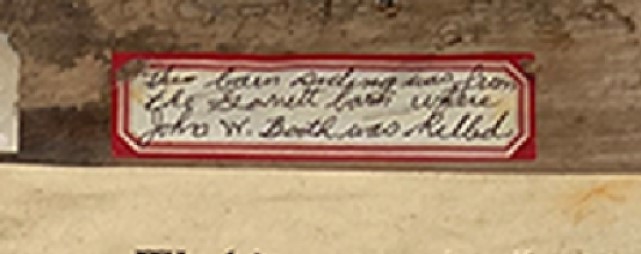
“Patrick Tighe, (The CW Date Base spells it TIGH) at age 38, enlisted September 3, 1864 at Avon New York, mustering into Company H, 16th NY Cavalry and mustered out May 29, 1865. Tighe was a member of of the detachment of the 16th New York that had the distinction of killing Lincoln assassin John Wilkes Booth and apprehending accomplice David Herold. Post war, Tighe joined GAR post #235, Avon New York. The impressive 13″ x 18” barn wood has two period labels, “GAR Post 235, H.C. Cutler, Avon New York” where Tighe was a member and the donor of the piece. The second label “This barn siding was from the Garnett House where John W. Booth was killed”. When the Post closed, c1930, the siding was returned to the Tighe family. The siding has a reproduction April 20, 1865 Reward Poster for the Assassins, 11″ x 15″…”

Carolyn knew this lot would pique my curiosity due to my interest in the death of Booth at the Garrett farm. But the name of Patrick Tighe did not ring a bell. With some research I confirmed that Pvt. Tighe was a member of the 16th NY Cavalry. As we know, a detachment of the 16th NY were the ones who tracked down John Wilkes Booth. However, when I consulted a list of the soldiers of the 16th NY present at the Garrett farm when Booth was shot and killed, Tighe’s name is not included. Nor did Tighe receive any reward money for the capture of Booth. Tighe wouldn’t be the first member of the 16th NY Cavalry to later claim to have been at Booth’s death even though he wasn’t. Several others who were part of the 16th NY but not at the Garrett farm embellished and lied about their role in hunting down Booth in the decades that followed. I was ready to chock up Patrick Tighe’s piece of Garrett farmhouse wood as yet another fake, just like the replica wanted poster attached to it.

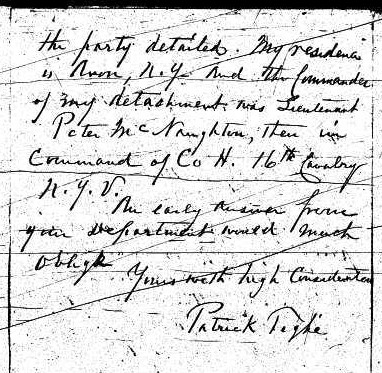
But I decided to dig a little bit more on Mr. Tighe. Though Tighe never received any money for Booth’s capture, I was surprised to find that he did make an application to the government for a share of the reward. Here are the microfilm scans of Tighe’s official application for reward money followed by a transcription:

“Avon, Dec. 8th 1865
To/ The Adjutant General of the Armies of the U.S.

Your petitioner, Patrick Tighe private in Co. H. 16th Cavalry N.Y.V humbly represents that he was one of the Cavalry detailed to arrest, seize, and if necessary kill the Assassin of Abraham Lincoln, and his accomplices.
As the Government has set apart a sum to reward those engaged to secure such arrest, I hereby put in my claim for such part of the reward as I may be entitled to – being myself, Patrick Tighe aforesaid, one of party detailed. My residence is Avon, N.Y. and the Commander of my detachment was Lieutenant Peter McNaughton, then in command of Co. H. 16th Cavalry N.Y.V.
An early answer from your department would much oblige.

Yours with high Consideration
Patrick Tighe”

I was a bit perplexed by this reward application. It is carefully worded to imply that Tighe was with the group that arrested Booth and Herold, but it doesn’t explicitly state that. It just states that Tighe was detailed with attempting to find the assassins. Hundreds of men were put in the field to search for Booth and his accomplices and many of them filed reward claims only to be denied, as Tighe was. But his ongoing connection to the 16th NY was intriguing.

I contacted Steve Miller who is THE expert on Boston Corbett and the 16th NY. He stated Tighe’s name didn’t ring any bells but the commander Tighe mentioned, Lt. Peter McNaughton, did. Steve reminded me about how different detachments of men from the 16th NY Cavalry were all over the place during the manhunt. John M. Lloyd, the renter of Mary Surratt’s tavern who became a key prosecution witness against her, was arrested by men of the 16th NY. On April 21st, Dr. Mudd was arrested by Lt. Alexander Lovett of the Veteran Reserve Corps. accompanied by Lt. William Farrell (and men) of the 16th. At the same time Booth was shot and killed a separate detachment of men from the 16th NY claimed to have been on his trail and only four miles from the Garrett farm. Lt. Peter McNaughton, in his own reward application, claimed to have been one of the men present at Dr. Mudd’s arrest.

Lt. Peter McNaughton
Courtesy of Steven G. Miller

McNaughton was also one of the leaders of what Steve calls the second Garret farm patrol. The first Garrett farm patrol is the one we are familiar with. Those were the 26 guys led by Lt. Edward Doherty, along detectives Everton Conger and Luther Baker, who tracked and killed Booth at the Garrett farm. All of those participants received a share of the reward money. After Booth’s body was transported by these men up to Washington, it was determined that a second patrol was needed to return to the northern neck of Virginia in order to retrace and determine Booth’s route through the region. This second Garrett farm patrol consisted of 20 Cavalry men of the 16th NY guided by detective Luther Baker, who had been present at Booth’s death. The soldiers were commanded by Lt. McNaughton.

The group was also accompanied by a reporter for the New York Herald, a man by the name of William N. Walton. How Walton managed to gain access to this detachment is unknown. Late on April 29th, the group set out from D.C., steamed south, and then headed overland to the Garrett farm. They arrived back at the Garrett farm just before sundown on April 30th. Several members of the detachment remained at the Garrett house overnight as did William Walton. During this time, Walton sketched the Garrett house and the remains of the burned down barn. These sketches would later be turned into woodcuts and published in the May 20 edition of Harper’s Weekly.

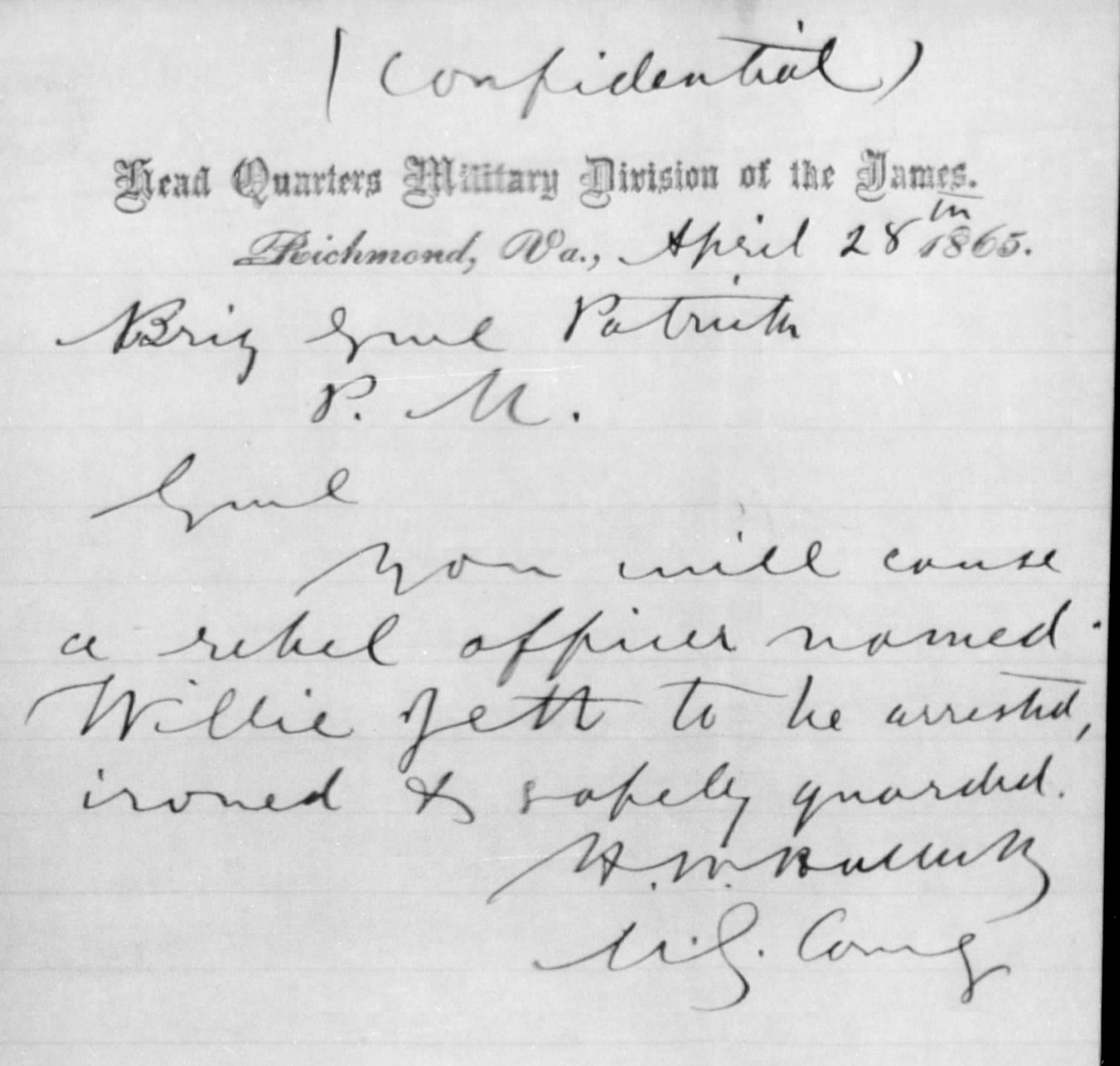
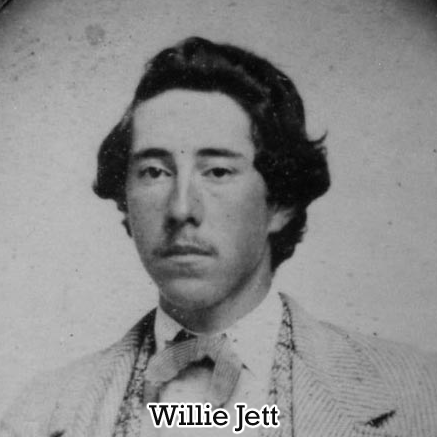
As the bulk of the second Garrett farm patrol rested at the farm, some men were ordered out in search of Willie Jett, the Confederate private who had dropped John Wilkes Booth off at the Garrett farm in the first place. Jett had originally been arrested by the first Garrett farm patrol. He was the one who led the soldiers from Bowling Green back to the Garrett farm where Booth was hiding out in the barn. Jett witnessed Booth’s death and then traveled northward with Luther Baker, a couple soldiers, and Booth’s body. However, during the trek north through Virginia, Luther Baker released Jett and allowed him to go home. When the party arrived in D.C., the Secretary of War was angry at Baker for releasing Jett and immediately ordered his arrest.

An arrest order for Willie Jett dated April 28th.

Recapturing Jett was a key part of the second Garrett farm patrol’s mission. Earlier on April 30th, Mr. Garrett had visited Willie Jett in Bowling Green and attempted to get Jett to sign a statement attesting that he had brought Booth to the farm under an assumed name. Jett had decline to sign the statement. When the troopers attempted to find Jett in Bowling Green, they discovered he had departed. Eventually they hunted him down to the home of his father in Westmoreland County and placed him under arrest.

Over the course of the next couple of days, the second Garrett farm patrol retraced Booth and Herold’s movements backwards. They spoke with several people who interacted with the fugitives during their escape and arrested several of them. They seemed to be especially keen on arresting folks with the first name of William. In addition to Willie Jett, the patrol rounded up William Rollins, the fisherman in Port Conway who had agreed to take Booth and Herold across the Rappahannock River before Jett and the other two Confederates arrived, William Lucas, the free Black man that Booth essentially evicted from his home after being turned away by Dr. Stuart, and William Bryant, the man who transported the fugitives from Mrs. Quesenberry’s to Dr. Stuart’s home of Cleydael. The group also interviewed Mrs. Quesenberry and her daughter who had spoken with David Herold after the pair made landfall in Virginia.

On May 3rd, the second Garrett farm patrol arrived back in D.C. and deposited their detainees in the Old Capitol Prison. They also passed along the information they had gained from their Virginia sojourn. The next day, William Walton published a lengthy article in the New York Herald documenting what he had learned about the escape route of John Wilkes Booth as a result of his trip with the second Garrett farm patrol.

From Walton’s article, it appears that the second Garrett farm patrol was very successful in establishing JWB’s escape route through Virginia. However, it was decided by the authorities in Washington that the second patrol had not done an adequate job in acquiring all of the witnesses that were needed. As a result, a third patrol of men from the 16th NY was quickly assembled in order to make a return trip. Detective Baker did not join this group and it was, instead, solely led by Lt. McNaughton who was now familiar with the territory. Reporter William Walton later wrote about this third trip but it’s difficult to tell if he was speaking from his own firsthand experiences with this third patrol or if he was relating things that were told to him by Lt. McNaughton, whom he appears to have befriended.

The third group of men from the 16th NY Cavalry departed D.C. late on May 4th. Rather than going to the Garrett farm, however, this detachment was tasked with finding and arresting Absalom Bainbridge and Mortimer Ruggles, the Confederate soldiers who ran into Booth with Willie Jett at the Rappahannock River. The posse traveled to Friedland, the home of Confederate General Daniel Ruggles, in King George County, Virginia. There they found and arrested Mortimer Ruggles, who was Gen. Ruggles’ son. Friedland plantation was also the home of Absalom Bainbridge as his mother and Mortimer Ruggles’ mother were sisters. Bainbridge was not at the home when Lt. McNaughton and his men got there but, according to Walton’s account arrived back about a half hour later. The two cousins were transported and placed on a waiting steamer while the group then traveled to Dr. Stuart’s home of Cleydael. While the second Garrett farm patrol had interviewed Dr. Stuart a few days earlier, they had not taken him into custody. This time, however, he was compelled to come with the men. On May 6, the whole detachment, with their three prisoners in tow, arrived back in D.C.

As stated, William Walton wrote about this third expedition for the New York Herald. You can read that article here.

Now that we have a handle of the different patrols of 16th NY Cavalry that visited Virginia, let’s return to the subject of Patrick Tighe and his alleged piece of wood from the Garrett house. As we have established, Pvt. Tighe was not one of the soldiers of the 16th NY Cavalry present in the first Garrett farm patrol that cornered and killed John Wilkes Booth on April 26, 1865. The third patrol which traveled into Virginia on May 4th did not stop at the Garrett farm but stayed in King George County the whole time. Therefore, the only way for this relic to be genuine and to have been  personally acquired by Pvt. Tighe is if he was a member of the second Garrett farm patrol that arrived at the farm on April 30th.

The problem is, there’s no way to prove that Tighe was part of that patrol. The only reason the specific members of the original Garrett farm patrol are known is because of the fight for the reward money. Lt. Doherty made a list of the men under his command in order to ensure each one received their fair share. There are no rosters of the second or third group of 16th New Yorkers who traveled into Virginia during the subsequent visits. Patrick Tighe’s application for reward money is vague. He might have been with Lt. McNaughton and the second Garrett’s farm patrol, or he might have been with him at the arrest of Dr. Mudd or another part of the manhunt. Without more information, we can never be sure.

Patrick Tighe’s grave in Avon, NY.
The stone is incorrect. Patrick Tighe died on April 3, 1907.

While the relic being genuine is an intriguing possibility, I’ll admit that the size of the wood piece and the corresponding lot description gave me some pause. Why would the Garretts allow a solider to take such a sizable piece (13″ x 18″) of wood from their house, which was their main residence and undamaged from the fire that consumed their barn? The Garretts continued to reside in the farmhouse for decades after Booth’s death and while a sneaky soldier might be able to break off a small relic, it seems improbable that Tighe could have walked off with a large piece of the house without any of the Garretts noticing and objecting. The phrasing of the lot description is also confusing as it is refers to the relic as “barn wood” from the “Garnett [sic] house”. Why would the siding of the house be called barn wood?

It appears that there are some quality control issues over at this auction house. I zoomed into the small label affixed to the wood. It’s a bit pixelated as the original image isn’t all that big. Still, in my opinion, this label reads, “This barn siding was from the Garrett barn where John W. Booth was killed.”

The wood relic coming from the remains of the burned down barn makes more sense than a piece pried off of the Garrett house. I wish the auction house had more images of the wood piece. It would be interesting to see if it bears any evidence of having been charred or blackened.

At the end of the day, however, this lot is far too pricey for a centerpiece item whose authenticity is only a “maybe”. Two of the claims in the lot description, that Tighe was there when Booth was killed and that the wood came from the Garrett “house” have been disproven. While it’s still possible that the piece is genuine and something that Pvt. Tighe acquired as a member of the second Garrett farm patrol, without further evidence, such claims would be impossible to prove. Still, this relic served as an illuminating jumping off point to learn more about the different patrols of the 16th New York Cavalry that were sent into Virginia in order to retrace the steps of John Wilkes Booth. And, hey, if anyone wants to purchase the lot before it ends on August 27th, I certainly wouldn’t say no to a gift.

Many thanks to Carolyn Mitchell for making me aware of this auction item and to Steve Miller for sharing his picture of Lt. McNaughton and his expertise with the 16th NY Cavalry with me. 

Categories: History, News | Tags: , , , , , , , , , , | 23 Comments

Last 12 Hours of the Silent Auction!

Thank you to everyone who has taken an interest in my silent auction of Lincoln and assassination items. I wasn’t sure how many people would bid in this different style of auction but it seems to be working really well. I’m excited these items are going to find new homes with fellow history buffs who will appreciate them.

If there is something in the auction that catches your eye, we are down to the last 12 hours for you to bid on it! All lots will close at 9:00 pm central time tonight (Friday, August 26, 2022). Each time you submit a bid for a lot it provides a timestamp on the corresponding lot’s high bid sheet and any bids that come in after the end of the auction will not counted. For you current high bidders, be sure to come back and check on your lots before 9:00 in case someone tries to snipe them away from you in the last minutes.

Remember to check the current bid for each item before you submit your bid and to complete a Bidder Information Sheet one time so that I know how to contact you when the auction is over.

For convenience, here are the lots being offered again, with the current bid prices at the time of this posting at 9:00 am CDT. They may have increased since then.


Images and Documents

Relics and Artifacts

Lot 11: Rich Hill RelicsCurrent Bid: $25

Lot 12: Cleydael RelicsCurrent Bid: $25

Lot 21: Replica DerringerCurrent Bid: $125

Period Newspapers

The auction will close at 9:00 pm central time so get your bids in before it’s too late!

Categories: News | Tags: | Leave a comment

The Lincoln Assassination on this Day (August 15 – August 21)

Taking inspiration from one of my favorite books, John Wilkes Booth: Day by Day by Art Loux, I’m documenting a different Lincoln assassination or Booth family event each day on my Twitter account. In addition to my daily #OTD (On This Day) tweets, each Sunday I’ll be posting them here for the past week. If you click on any of the pictures in the tweet, it will take you to its individual tweet page on Twitter where you can click to make the images larger and easier to see. Since Twitter limits the number of characters you can type in a tweet, I often include text boxes as pictures to provide more information. I hope you enjoy reading about the different events that happened over the last week.

NOTE: After weeks of creating posts with multiple embedded tweets, this site’s homepage now tends to crash from trying to load all the different posts with all the different tweets at once. So, to help fix this, I’ve made it so that those viewing this post on the main page have to click the “Continue Reading” button below to load the full post with tweets. Even after you open the post in a separate page, it may still take awhile for the tweets to load completely. Using the Chrome browser seems to be the best way to view the tweets, but may still take a second to switch from just text to the whole tweet with pictures.

Continue reading

Categories: History, OTD | Tags: , , , , , , , , , , , , , , , , , | Leave a comment

LincolnConspirators.com Silent Auction!

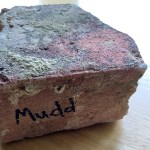
There is something indescribable about being able to put your hands on a piece of history. It is a physical connection with the people and times of the past. Relics have an almost magical way of connecting us to the past in a way that mere words and knowledge cannot. During my trips and adventures in history, I have always sought to find something tangible that I can take home with me in order to help me surround myself in this shared past. I hadn’t realized how much I had taken to collecting until last year, when Jen and my friends helped me pack up my things for my move to Texas. Over my 9 years living in Maryland, I had amassed enough of a collection that we labeled a whole moving box as “Dave’s Bricks and Wood”. Along with these relics, I have also managed to acquire several period newspapers and images connected to the study of Lincoln and his assassination over the years.

Well since that move I’ve gotten married (well actually, Jen and I secretly eloped after two months of dating and then announced the fact via a game at our wedding reception exactly one year later, but that’s another story) and I have settled happily into the life of a family man with my amazing wife and two stepsons. In an effort to raise some money for my family here in Texas, I have decided to auction off a part of my collection.

As many of you know, my career had been that of an elementary school teacher and so you won’t find anything too expensive listed below. I don’t have a piece of Laura Keene’s blood stained dress or a John Wilkes Booth Wanted Poster in my collection. However, I do have a nice selection of photographs, relics, and period newspapers, that I think will appeal to many of you. While I could put this stuff up on eBay and sell things that way, I wanted to offer these relics to an audience who would appreciate and know about them. While others would look at one of my relics and just see a rock, fellow history buffs can appreciate the rarity of a rock from the dugout home in Cloud County, Kansas where Boston Corbett, the slayer of John Wilkes Booth lived. While my goal is, of course, to raise some money to help with bills, I also want to share these unique pieces with others who will appreciate them.

The format of my auction is different than others. I’m not running it through eBay or any auction website. Instead, it is going to take the form of a traditional silent auction as seen at school fundraisers (like I said, my background is that of a teacher). The big difference is that this silent auction will be online and the different bids will be tracked using Google Forms. There are a total of 28 lots for auction and I have created different Google Forms for each one. I invite you to peruse each lot, read its description, and look at the provided pictures. Each lot has a modestly set “Starting Bid” which is listed on the last line of the description.

If you are interested in placing a bid, you can click the hyperlink between the description and the pictures. This will take you to the Google Sheet which contains the current bid for the item. To place your higher bid, simply return to the lot’s Google Form, enter your name and bid at the bottom, and click “Submit”. This will register your bid and the bidding list will be updated so that others can see the new bid. You’ll have to come back to check and see if someone outbids you and, if they do, you can submit a new, higher bid.

If you decide to make a bid, you will also need to fill out a Bidder Information Sheet. This form is for my eyes only and gives me the necessary information I need to contact you at the end of the auction. Without this form, I wouldn’t know how to get in touch with you about your winning bid. You only need to fill out the Bidder Information Sheet once during the auction period. Your personal information will not be shared with anyone.

As of this post’s publication, the auction is open and each lot is now accepting bids! The auction period will close at 9:00 pm central time on Friday, August 26, 2022. Each bid that comes in automatically includes a timestamp and no bids that come in after the posted close of the auction will be accepted. I will then contact the winners to discuss shipping and payment options. Winners will pay their bid plus the USPS shipping cost from Texas to their homes.

If you have any questions, please add them to comments below and I will do my best to answer them ASAP. In the mean time, I invite you to explore each of the items up for bid by clicking the lots below. If you find a lot you are interested in, feel free to put in your bid, and then fill out the Bidder Information Sheet with your information.

Thank you for taking the time to look at the lots. Even if you don’t find anything to bid on, there is still some interesting history contained in each lot’s description. My family and I thank you for your support and consideration.

Happy Bidding!

– Dave (Jen, Atticus, and Noah) Taylor


Remember, while you should come back often to see if you have been outbid on your lot and put in a higher bid, you only have to fill in the Bidder Information Sheet once.

Images and Documents

Relics and Artifacts

Period Newspapers

The auction will close at 9:00 pm central time on Friday, August 26, 2022 so get your bids in before it’s too late.

Categories: History, News | Tags: , , , , , , , , , , , , , , , , , , , , , | 3 Comments

Blog at WordPress.com.