Mary Surratt’s Photograph
Add this to the list of “Things I wish I knew the location of today”:
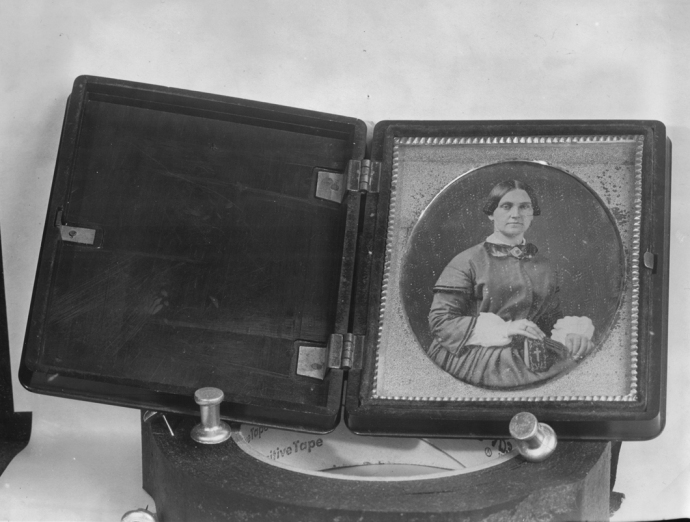
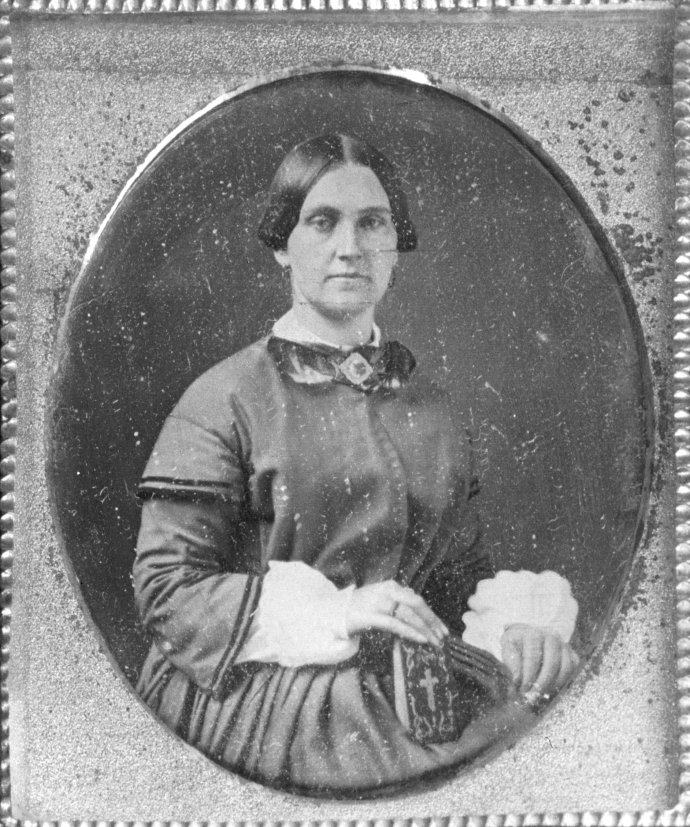
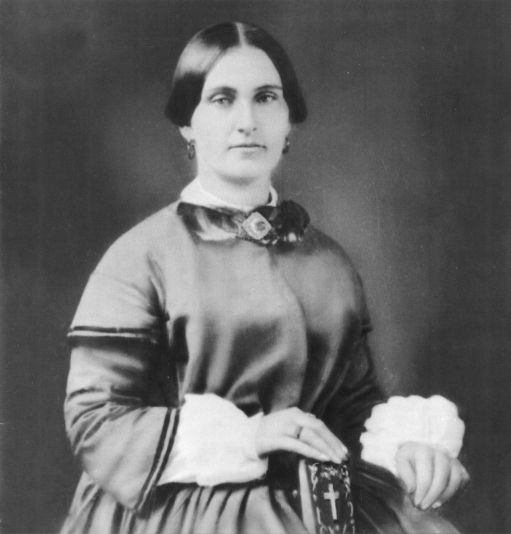
I bought this circa 1961 image from the archives of the Baltimore Sun. It shows what appears to be an original daguerreotype or ambrotype of Mary Surratt. I’m guessing the photographer did not bring his equipment for this photo shoot since the image is being held up on a stand made out of a roll of tape and tacks. Unfortunately, there is no notation on the back to explain exactly when, where, and by whom the image was taken. Nevertheless, here is a close up of the seemingly original photograph of Mary Surratt:
There are only two known images of Mary Surratt (aside from her pictures on the gallows). The above picture represents the earlier of the two known images. This image was taken of Mary when she was probably in her late twenties or early thirties.
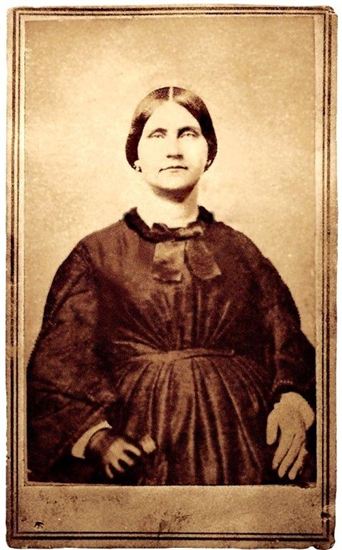
The other known image of Mary is described as Mary’s “fair, fat and forty” photo. The description was a quote from the New York Times in which the author covering the trial of the conspirators compared Mary to the Shakespeare character of Falstaff. In Shakespeare’s play, “The Merry Wives of Windsor,” the fat character of Falstaff is forced to disguise himself as a woman to avoid a confrontation with the husband of a woman he is trying to court. The ladies and servants pretend that Falstaff is the obese aunt of one of the maidens. The comparison made by the New York Times regarding Mary, therefore, is not a kind one. Nevertheless this picture was probably taken when Mary was around 40 years old.

I’d truly love to know where the original, earlier photograph is today. While we have modern images based on that one, over the years Mary has been “airbrushed” somewhat. The finer details of her face have been lost due to repeated duplication.
Granted these “airbrushed” photos make her appear prettier, but it doesn’t give a completely accurate view of her features.
For more images of Mary Surratt, visit the Mary Surratt Picture Gallery.
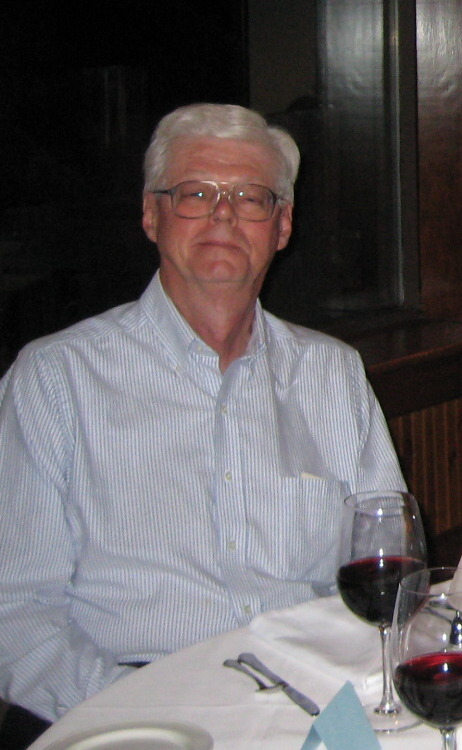
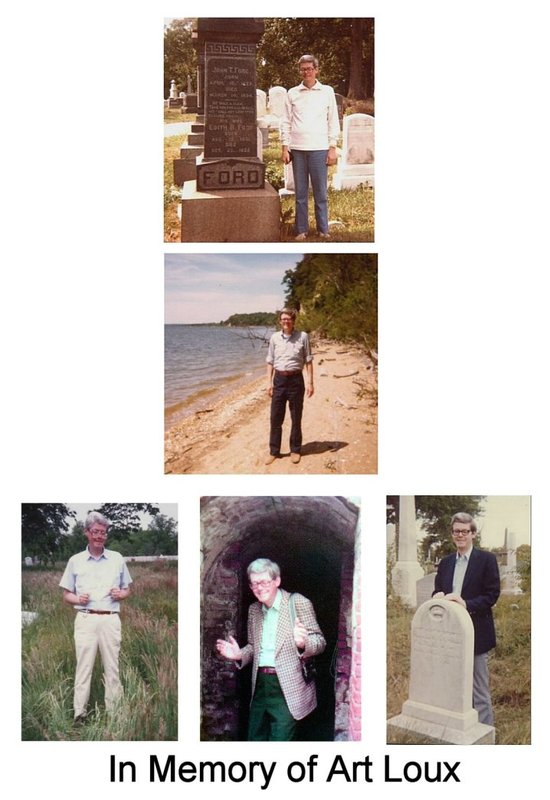
In Memory of Art Loux
On December 29th, 2013, the world lost an unmatched historian by the name of Arthur F. Loux.
To those who knew and corresponded with Art, he needs no introduction. Art was an original “Boothie” of the highest order. You’ll find his name in the acknowledgement and reference sections of several imminent assassination books including, American Brutus by Michael Kauffman, Blood on the Moon by Edward Steers, and Manhunt by James Swanson. Art’s encyclopedic knowledge on John Wilkes Booth was due to his decades long work of meticulously chronicling the assassin’s life. In 1990, he privately published his manuscript, entitled John Wilkes Booth: Day by Day. Rather than selling his work, he selflessly presented the 12 copies his work as gifts to his fellow colleagues and friends. Since that time, Art’s manuscript has proven to be one of the most sought after resources and references for assassination authors. The copy of his manuscript at the James O. Hall Research Center is one of the most well loved and consulted books in the collection.
Art had a deep interest in the living Abraham Lincoln as well and was well versed in the histories of many Civil War generals. He was one of the founding members of the Lincoln Group of New York and served as the group’s first secretary. Upon his relocation to Kansas, Art was very active in the Lincoln Club of Topeka, serving in a variety of positions. Art loved to travel and was a longtime “cemetery buff” taking pictures of countless historical graves all over the world.
Art Loux was also the most generous man I have ever had the honor to know. Though we never met in person, over the last year and a half Art has graciously sent vital and important information about many of the subjects discussed here on BoothieBarn. I found myself often referring to Art when I had a question that I couldn’t find an answer for. I quickly came to admire this man who knew practically everything about Lincoln’s assassination. When I asked about the early “Boothie” days and the first few Surratt Society Booth Escape Route Tours, Art sent me three DVDs filled with audio recordings. The collection contained early narrations of the escape route from the “greats” like James O. Hall and Mike Kauffman, recorded speeches from a multitude of notable authors and researchers, and the practically “play by play” research conducted by Art, John C. Brennan, and others in archives and libraries. I inhaled the recordings, hearing, for the first time, the voices of the men who laid the groundwork for today’s scholarship. I expressed my deep appreciation to Art for the most generous gift. He replied back with the mantra that had been the guiding principle for the early Boothies, “the more one shares the more one learns.”
Art was instrumental to the development of the National Geographic special “Killing Lincoln” which aired back in February of 2013. He sent the producer of the program, Erik Jendresen, a digital version of his book, JWB:DBD, which he never stopped working on. His name is seen in the credits at the end of the show. When Erik presented at the annual Surratt Society conference in March, he expressed how the show could not have been produced without Art’s help. Art was not able to make it to the conference, but as I sat there listening to Erik’s accolades for him, I took out my cellphone and sent a short email to Art:
“Art,
I’m sitting here right now watching Erik Jendresen give his presentation and I wanted to let you know that Erik is singing your praises. I wish you were here to appreciate how grateful he is to you. Wonderful work, Mr. Loux.
Dave”
Art replied back to me the next morning with:
“Dave,
Thanks for your kind and thoughtful message. Working with Erik was one of those peak experiences.
Art”
That was Art. He was never one to toot his own horn or clamor for attention. He was content knowing that he had helped another human being and had shared all that he could.
In June, Art asked for my address again stating that he had “something” to send me. I happily provided him with it, anxious to receive anything from the man who had become the best teacher I had known. In the mail I received a 16 gigabyte flash drive, without any sort of note as to its contents. When I plugged it into my computer, I was speechless to discover that it contained the entirety of Art’s assassination archive. Every letter, every page, every article that he possessed regarding the Lincoln assassination had been scanned, organized and archived. I emailed him back in complete shock, thanking him for what is the most generous gift I have ever been given. He replied back that there was no need to thank him as it was, “a joy for me to share this stuff.” Though I’ve had the archive for six months, I’ve barely scratched the surface of the materials before me. Thanks to Art, I found and visited the former home of conspirator, Samuel Arnold. Thanks to Art, I was able to assemble a thorough accounting of what is known about John Wilkes Booth’s time at the Indiantown farm. Thanks to Art, Booth’s forgotten sister Rosalie is less forgotten. I will never be able to repay Art for the gift of knowledge he has bestowed on me. But, like him, I will do my best to share as much of it as I can. Every time you see “The Art Loux Archives” in the references section for a post, know that what you read is due to the generosity of this great man.
On December 27th, I (and many others in the assassination field) got an email from Art. In it, he announced his success in signing a contract with McFarland Publishing to have his magnum opus, John Wilkes Booth: Day by Day published for the masses. Art had never stopped working on his manuscript, revising, editing and adding to it since he published it privately in 1990. We all wrote him back with our congratulations and our shared anticipation of the book’s unequivocal success. For a man who had given so much to so many others over the years, we all knew he was more than deserving of the wide recognition the book would garner him. Art passed away in his sleep two days later, having fought a long battle with a form of muscular dystrophy. Art’s daughter, a respected historian herself, is finishing her father’s work and will ensure that it will be published per his wishes.
Art’s book will easily become the premiere resource for Lincoln assassination readers and researchers. Of that, there is no doubt. His death, right at the culmination of his life’s work, is nothing less than tragic. Though he never sought it, Art Loux deserved to experience the public admiration that will accompany his book. We, his friends and colleagues, mourn his loss deeply for he never got to experience the accolades he rightly earned.
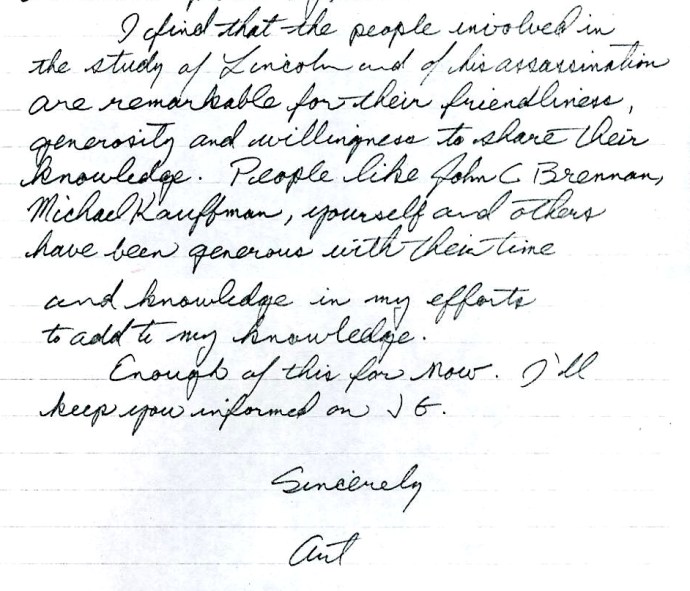
I know that, as a public blog, many of those who will read this post will not have known Art. Though you may know his name from his aforementioned book, it is impossible to accurately describe how special he was. Over the last several days, I have tried my best to think of someway to portray him as more than a biography. I decided the best way to attempt this was to share pictures, recordings, and writings of Art’s. In this way it is hoped that even strangers who never knew him can start to understand and appreciate his amazing life.
Though John Wilkes Booth: Day by Day will stand as Art Loux’s most public achievement, the love he spread and the lives he touched demonstrate his greatest work. He lived a life of generosity and humility. I am honored to have known him. and I will strive to follow in his footsteps.
Art Loux in Photographs, Recordings and Writings
“The bus pulled away from the Surratt House early on a beautiful May day in 1977. The prospect of traveling Booth’s escape route filled me with anticipation. I had never met anyone else on the tour. As the bus bumped along from stop to stop, the passengers listened with rapt attention to James O. Hall, the tour guide, a venerable, white-haired gentleman with, as he described it, an Ozarkian accent. I soon found myself absorbed in interesting conversations on all variety of subjects with my seat-mate, a man somewhat older than I. The man was a bundle of energy. He passed pictures and descriptive sheets among the passengers. He seemed to know everyone on the bus. It seemed, within minutes, I had known John Brennan for years…I kept in touch with John after the tour. Soon my mailman began delivering daily letters overflowing with interesting items. Most often the letters contained information related, no matter how remotely, to the Lincoln assassination…Letters received by John were often disseminated to a large number of his correspondents. I felt I had arrived the first time John distributed one of my letters.” – Art Loux in his memorial about fellow researcher John C. Brennan
“Once I was taking pictures in back of Ford’s Theatre when the rear door opened. Someone obviously was giving a tour to Vincent Price who was then appearing at the theatre. Suddenly face to face with Vincent Price my warped mind quickly thought – he’s an actor, he’s coming out the rear door of Ford’s Theatre – so I said, “Did you shoot the President?” He looked at me like I was obviously deranged and shut the door without a word.” – Art Loux in an email to a friend
New Gallery – Surratt House and Tavern
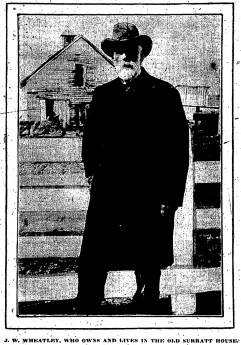
“A short distance beyond, on the same side of the road, I recognized the historic Surratt House. It is nestled in a clump of beautiful trees, and I venture to say that the occupants of the house in war times would not recognize the place. The owner of it, Mr. J. W. Wheatley,
was sitting on the front porch, and as I walked up and told him my business, stating that I wanted to stop with him until the next day, he at once made me feel at home. The sign at the corner of the house reads: “Village Hotel.” The farm originally contained 168 acres. The Surratts sold it to John Hunter, and at his death it was left to Mrs. Addison, a relative, and she sold 117 acres to Mr. Wheatley ten years ago. At that time it was a perfect wilderness, grown over with pines and underbrush, but with liberal expenditure of money and time it now has no superior in southern Maryland. Every foot of ground, with the exception of a small piece of timber, is under cultivation. The house faces to the west, and a halt runs through the center. The room at the northwest corner is used as the barroom, and the one adjoining on the east for card-playing, etc. It was through the barroom door, leading out to the north end of the house, that Lloyd, the tenant, handed the carbine and whisky to Booth and Herold. The room in which Lloyd secreted them when John Surratt left them in his care an unfinished one, was upstairs, but has been finished since Mr. Wheatley became possessor of the house. I obtained some good views with my Kodak of the most interesting places around the house — the back door where Lloyd stopped on his return from Marlboro on the afternoon of the assassination, and handed his fish in the kitchen door, and where Mrs. Surratt met him and told him to be sure and be at home that night, for the guns that had been left with him would be called for.”
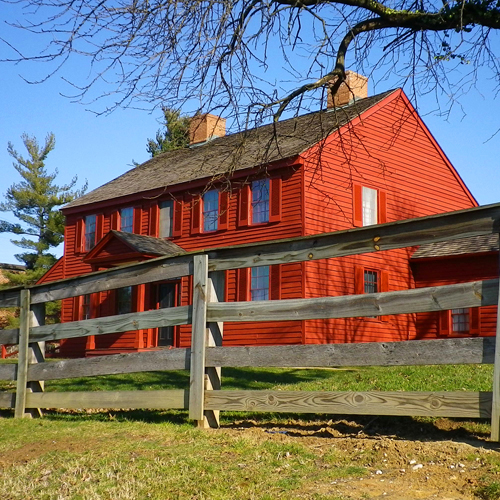
The above was written by assassination author and collector Osborn Oldroyd in his 1901 book, The Assassination of Abraham Lincoln. He visited the Surratt House, met its owner at the time, Mr. Wheatley (pictured), and apparently took several pictures of the building. Following Mr. Oldroyd’s lead, the newest Picture Gallery here on BoothieBarn consists of images relating to Mary Surratt’s former house and tavern. Once a brief stop for the assassin and his accomplice it is now the site of the restored Surratt House Museum.
Visit the Surratt House and Tavern Picture Gallery to see engravings and photographs of the house through the years. Then plan your future visit to see the Surratt House Museum in person.
Click here to visit the Surratt House and Tavern Picture Gallery.
When Junius Took the Stage – Part 5
I’m in the midst of reading the book, Junius Brutus Booth: Theatrical Prometheus by Stephen M. Archer. One of the most fascinating things I’ve come across thus far is the drama that occurred when Junius Brutus Booth made his star debut in the theaters of London. In preparation for a post about the matter, I found myself with a wealth of material on the early theatrical life of Junius Brutus Booth. Instead of summarizing key points of Junius’ initial acting career, I decided to write a series of posts examining the humble acting beginnings of the man who would later father a theatrical dynasty, including the assassin of President Lincoln. What follows is a continuing part of a series of posts entitled, “When Junius Took the Stage”. Click here for Part 1, here for Part 2, here for Part 3, and here for Part 4 of the series.
Part 5 – When Junius Took on Kean
On February 12th, 1817, Junius Brutus Booth made his staring debut at the Covent Garden Theatre in London. A thunderous round of applause and acclaim followed his efforts and the crowd demanded a repeat of the spectacle the following night. This reprise also proved to be extremely successful for the young actor and also buoyed the spirits of Henry Harris, the manager of Covent Garden who had been convinced to give Booth a shot at stardom. When the audience once again called for a repeat of Booth’s performance the next night, Harris assured the crowd that Booth would return, just not that next night. Harris not only scheduled Booth to play Richard the Third again on Monday the 17th, but also entered into negotiations to sign Booth to a three year contract with his theatre. Junius had exceeded his “try out” as a star at Covent Garden, and Harris was eager to have the rising star remain in his employ.
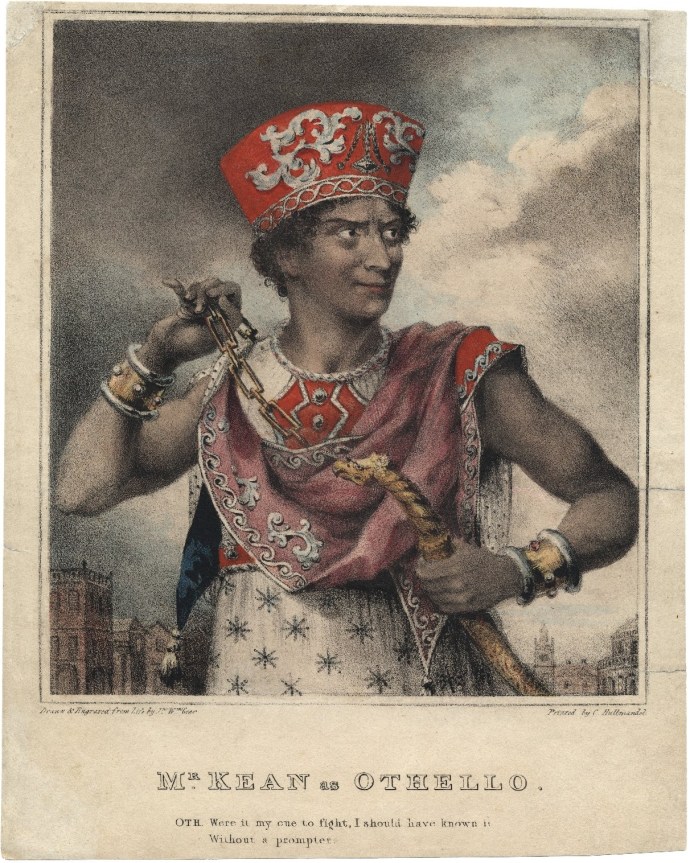
The press caused by Booth’s appearances at Covent Garden caught the attention not only of the theater-going public, but also the leading star of the London stages, Edmund Kean. Kean was the unrivaled star of London and had been since his staring debut in 1814. Kean had an extremely devoted group of fans and was almost universally adored and acclaimed by the newspapers and theatrical magazines. Kean’s supporters were called “Keanites” but a faction of extremely devoted fans was appropriately known by the name of “The Wolf Club”. In their appreciation and fanaticism for Kean, the Wolves made it a practice to effectively quell any prospective rivals to Kean’s dominance in London. They openly heckled actors who had the audacity to act in roles “perfected” by Kean. Booth’s successful and seemingly ongoing engagement at Covent Garden proved a threat to Kean’s throne. The Wolves responded by describing Booth’s acting as a mere imitator of the great Kean. Perhaps hoping to contain this rival before he had a chance to eclipse him, Edmund Kean, himself, entered the scene.
After Booth’s second staring performance, Kean heard through sources that Booth and Henry Harris had disagreed on an appropriate contract for him to play at Covent Garden. Kean rushed into a carriage and found Booth dining. He greeted Booth as a fellow colleague and informed him that he had a theatrical engagement for him. Kean took Booth over to Drury Lane Theatre, the theatre he acted in and had a great deal of influence. Over drinks and accolades, Kean convinced Junius to sign a contract with Drury Lane. It was inferred that the two would be partners and, together, they would astound London with their mutual talents. For their first shared debut it was decided that they would act in Othello. Kean would play the heroic Venetian general, Othello, while Junius would play the antagonistic ensign bent on his leader’s destruction, Iago. For Junius this likely appeared to be the opportunity of a lifetime. He would act side by side of the great Kean and show all of London that they were equals, skyrocketing his popularity. Perhaps even, the audience would deem him the superior actor, essentially establishing him for life as the premiere actor in London. So much was on the line for this performance in Junius’ eyes. To Kean’s perspective, however, their debut was a chance to put this young upstart down for good. It was an opportunity for Kean to prove his preeminence in the most direct way possible.
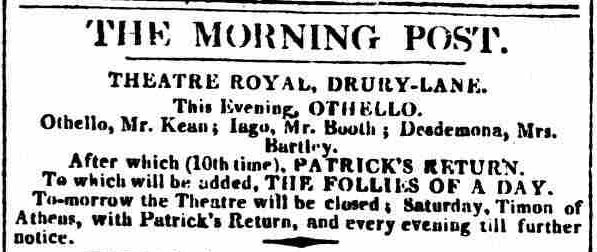
In Dr. Archer’s book on Junius Brutus Booth, he entitled the chapter on the Kean-Booth performance as, “Showdown at Old Drury”. This perfectly encompasses the tone that occurred on February 20th, 1817, when the curtain rose on Shakespeare’s Othello.

A newspaper advertisement announcing the shared performance of Booth and Kean for February 20, 1817.
It was a night to be talked about for years to come and the audience came out in droves to see which man earned his laurels. I quote from Dr. Archer:
“Booth lost. Most accounts suggest that Kean acted Booth off the stage, driving him out of London and to America. While not exactly the case, Kean took the palm for the evening, and London theatregoers never again considered Booth a rival to Kean, even after the older actor fell from public favor.”
Kean had brought out all the stops for this much anticipated performance. “On this occasion,” the London Sun reported, “[Kean] exerted himself more than he ever did before. His energy was great, and his execution of many touches very fine. Indeed the whole third Act was a masterpiece in his style.” Kean’s increased vigor and passion was easily observed by the audience and elicited thunders of applause and esteem by his “Wolves”.
Junius’ performance, it was written, “was a creditable performance, but it was nothing like what a too [sanguine] public fondly anticipated it would prove.” The young actor was no match for eminent Kean. In one performance, Kean established his perpetual dominance over Junius Booth. Reviews were consistent that Junius performed well, and that, “with another actor [as Othello] the Iago of the evening might have been thought of great, but by the side of Kean we could discover in him nothing strikingly original in thought, vivid in conception, or brilliant in execution.” It seems clear that the two men were on completely different levels and that Kean’s star shined higher and brighter than Junius’. The cruelest reviews for Junius continued the idea that Booth was merely an imitator of Kean and unworthy to act in his presence.
It is likely that his inability to topple Kean and the practically universal reviews announcing his submission to the reigning star, depressed the young actor. His misfortune was not over yet, however. With a clear victor established, Drury Lane proceeded to cast plays headlining Kean and banishing Booth to less prominent roles. Junius quickly learned that he would not be able to play any roles that “belonged” to Kean. In Richard the Third, the play that had brought him accolades at Covent Garden, he was banished to playing the smaller role to Richmond to Kean’s Richard. He could not play Hamlet, Sir Giles Overreach, or Bertram either. He was to be essentially shelved, allowed in to act in roles barely better than the stock actors, so that he would never dream of rivaling Kean again.
At the same time, Junius was once again approached by Henry Harris at the Covent Garden Theatre. Harris did not consider their negotiations regarding a contract with his theatre to be over and he still desired Junius for his stage. A performance was scheduled at Drury Lane for February 22nd, in which Junius would act as Richmond to Kean’s Richard III. Junius was overwhelmed. As Dr. Archer puts it, “he had acted only slightly more than three years, and he now found himself torn between the two leading theatres of the English-speaking world.” He had signed a contract with Drury Lane to act with Edmund Kean but, on the other hand, fulfilling that contract would subjugate him to less prominent roles and he was receiving an offer from Covent Garden which would allow him to act in his leading roles once again.
A second performance of Othello at the Drury Lane Theatre was scheduled for February 22nd. Audiences, already knowing that Booth was no match for their beloved Kean, came out in droves to express their admiration for the victor. Junius was not anxious for another round of reviews calling him grossly inferior to Kean. He needed time to think and reflect on his future. He wrote a letter to the manager of Drury Lane which was delivered to the theater by 3:30 pm. In it he expressed his inability to perform that night due to being, “extremely ill from the agitation,” he had suffered the previous week. Junius, along with a friend named James Salter, departed London and traveled by coach to a suburb of London called Tottenham. Here, he attempted to restore his body and spirit.
Trouble was brewing back in London, however. Though the manager of the Drury Lane Theatre, Alexander Rae, had received Junius’ letter early enough in the day to have the playbills changed and an announcement of his illness posted, he chose not to. Whether this inaction was prompted by Kean is unknown, but the outcome of this certainly worked in his favor. When the audience members arrived to see Kean and Booth in Othello and were told that Booth was not there, they were furious. The performance went on with stage manager Rae playing the part of Othello to Kean’s Iago.
Due to the crafty behavior of Rae, Kean and the Drury Lane Theatre, Booth’s absence from the performance that night was seen as a slight to London’s theatre going public. In an occupation where one thrived, or died, based on the whims of the audience, this offense would have major ramifications for Junius Brutus Booth. Stay tuned for the next installment in this series, “When Junius Took on the Mob”.
References:
Junius Brutus Booth: Theatrical Prometheus by Stephen Archer
Lincoln Assassination sites via View-Master
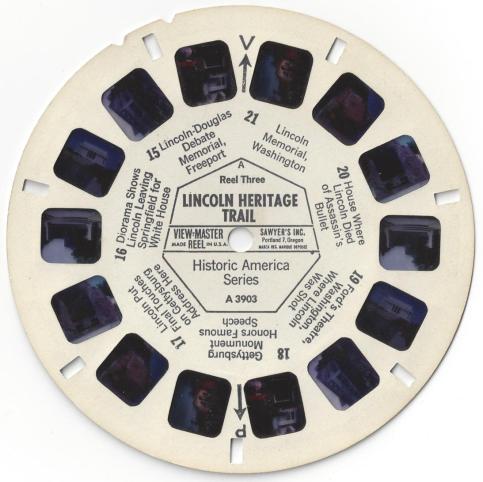
One of the great things about being home for the holidays is the chance to engage in some nostalgia. Today, I was looking through some of the old toys that my siblings and I played with as kids. My eyes came across a large container full of old View-Master cards. I found my favorite reels containing images of Mickey Mouse, Muppets, Snoopy, and other childhood characters. After playfully clicking through and looking at the familiar 3D images, I discovered some non-familiar View-Master reels. We probably inherited from my grandparents collection and it’s doubtful that I ever took any interest in these, non character, related reels as a child. Among the different views of national parks and seascapes was a set of three reels entitled the, “Lincoln Heritage Trail”.
Though I have not been able to come up with a date for the images or the reels, there were two pictures from the reels that connect to Lincoln’s assassination.
I put the other 19 images from the “Lincoln Heritage Trail” View-Master reels up on Roger Norton’s Abraham Lincoln Discussion Symposium. Check them out here.
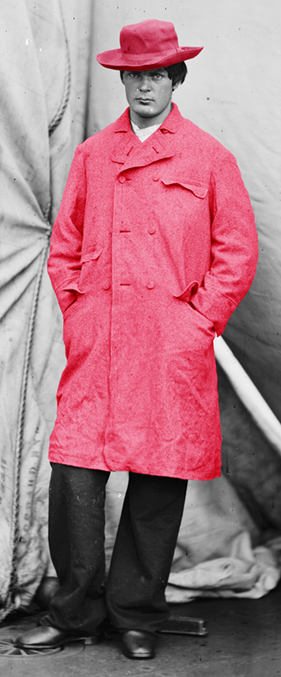
Lewis Powell is Coming For You
Leading up to the holidays last year I posted three Christmas carols that I had rewritten to be Lincoln assassination themed. You can read them here, here, and here. Tonight, as many children are going to sleep and dreaming of a man in a red suit who will soon enter their house, I present one more carol about a different, less jolly man who entered a house on April 14th, 1865.
Lewis Powell is Coming For You
As sung to, “Santa Claus is Coming to Town”You better watch out.
You better not cry.
You better not pout.
I’m telling you why.
Lewis Powell is coming for you.He’s made up his rounds,
He’s checked up on you.
He’s found all about,
Your injury, Sew.
Lewis Powell is coming for you.He’ll wait ‘til you are sleeping.
He’ll say he has some meds.
He’ll follow Bell right up your stairs,
Then bash Fred in the head.You better watch out.
You better not cry.
You better not pout.
I’m telling you why.
Lewis Powell is coming for you.Then Lew will draw a dagger,
He’ll slash and hit your brace.
So you’ll survive another day,
With a scar upon your face.So, you better watch out.
You better not cry.
You better not pout.
I’m telling you why.
Lewis Powell is coming for you!
On a serious note, thank you for your continual support and friendship. I hope all of your Christmases are merry and bright and that you have a blessed holiday season.
Sincerely,
Dave Taylor
BoothieBarn.com
Views of Fort Jefferson
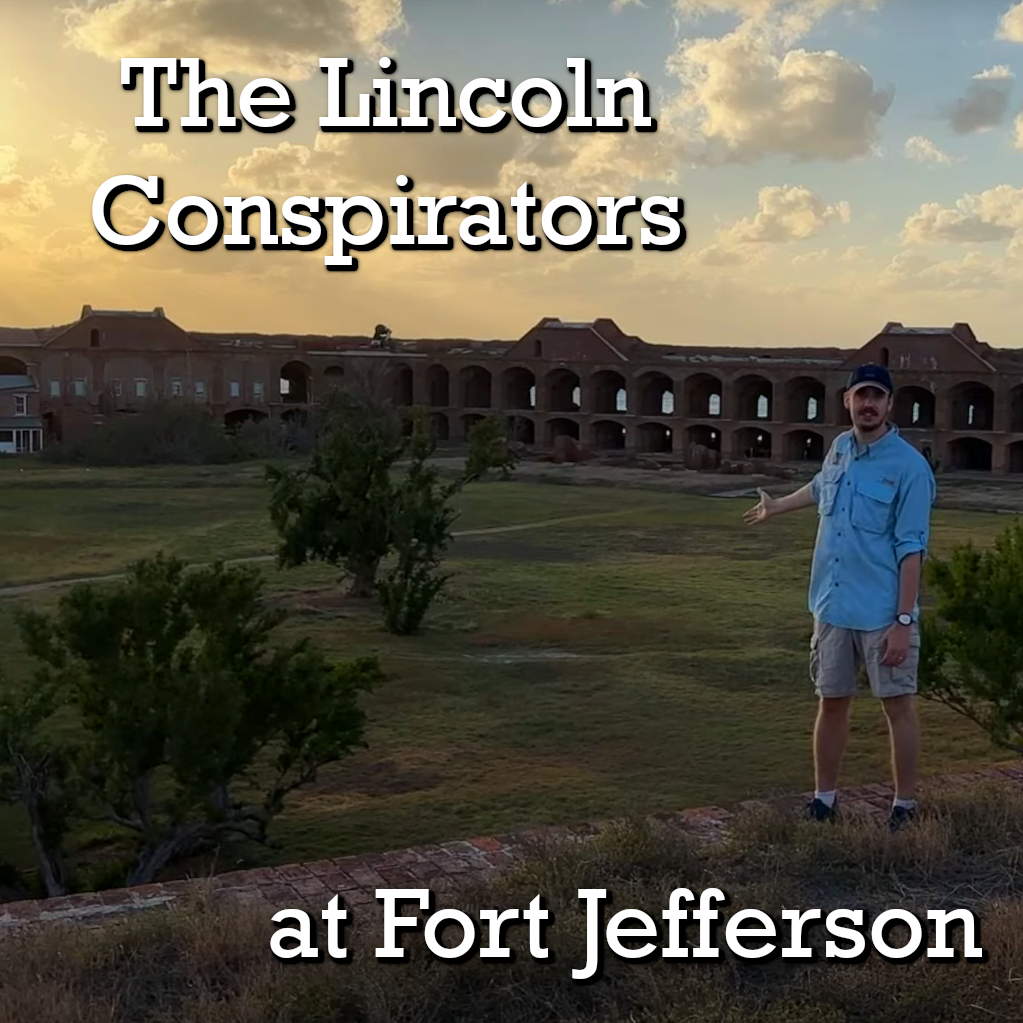
My sincerest thanks go out to fellow blogger, Dop Troutman, who sent me the following images he took of Fort Jefferson, Florida. Fort Jefferson was a military fortress built on an island off of the coast of Florida near Key West. During the Civil War, the base was also used as a military prison by the Union. After the assassination of Abraham Lincoln and the trial of the conspirators, Dr. Samuel Mudd, Samuel Arnold, Michael O’Laughlen, and Edman Spangler were sentenced to prison at Fort Jefferson. They were imprisoned here from 1865 until their subsequent pardons in February of 1869. Michael O’Laughlen died at Fort Jefferson in 1867 from a Yellow Fever epidemic that struck the base.
Dop, who writes about a variety of topics on his blog “View From the Jeep“, emailed me a couple weeks ago telling me he was planning on visiting the Fort and asked if I would like any photographs of anything in particular. I happily took him up on his offer telling him I would love any pictures he might be willing to send me, especially pictures of the conspirators’ cell from different angles. True to his word, Dop graciously sent me several photographs. I’m happy to share them along with Dop’s very detailed descriptions.
“Sally Port is the only entrance to the fort. The 4 conspirators were all housed together in one open-air cell. That cell is directly above the Sally Port door. The three narrow windows above the door mark the cell:”

“These are of Mudd’s Cell after he was thrown in the “dungeon” following his attempted escape. There is no proof this was the actual location, but the conditions would have been the same. The interesting thing about the fort is that there were no doors, cells, or bars. It was an open-air prison. No “cages”, just guards stationed everywhere to keep prisoners in their place. However, the lack of food & fresh water and the oppressive heat usually took the spunk out of everyone:”


For the story of this plaque, click here.
“There used to be a sign above the door that read something like “Abandon Hope All Ye Who Enter”, but its been removed:”

“You can see how large the space is. I’m sure Mudd shared this space with other prisoners. We estimate it to be about 1100 square feet:”


“This is the conspirators’ shared cell. All 4 were housed here beginning in late January 1866 until their release. O’Laughlen died here of yellow fever. Included are a few pics of the floor. You’ll see small canals cut into the floor. These were done by Mudd to divert rainwater from his bed. We measured the space as being 15′ by 40′:”


Thanks again, Dop, for these great views of Fort Jefferson!


Recent Comments