
I am conducting an ongoing review of the seven-part AppleTV+ miniseries Manhunt, named after the Lincoln assassination book by James L. Swanson. This is a prologue to my future historical review for the fourth episode of the series, “The Secret Line.” This post contains a description of the episode and some screengrabs that contain spoilers. To read my reviews of other episodes, please visit the Manhunt Reviews page.
Episode 4: The Secret Line
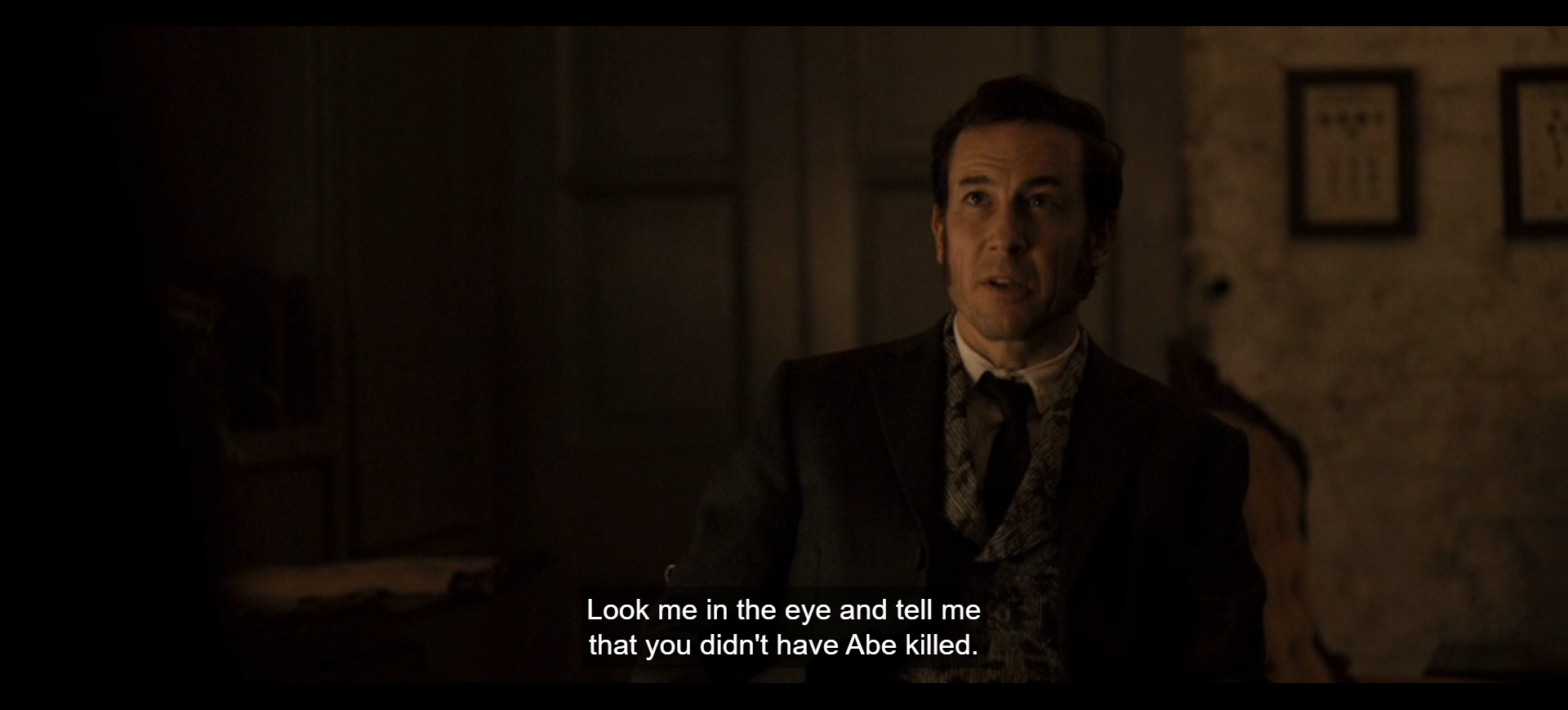
In this installment of Manhunt, practically all of the action is focused on Edwin Stanton’s intensifying conflict with Confederate agent George Sanders. In his newly purchased newspaper, Sanders spreads the story that the Secretary of War had authorized a failed attempt on the life of Confederate President Jefferson Davis earlier in the war. When a judge suggests that Sanders is too powerful for a warrant, Stanton goes after his support system of bankers. Stanton’s own father-in-law gets caught in the dragnet, the epitome of the 1% who cares about nothing but profits. Likely in retribution for the arrests of the bankers, Lafayette Baker’s office in New York is broken into and sacked. Files connected to Baker’s spy, Sandford Conover, are stolen, but Baker decides not to tell Stanton of this fact. Through his apparent direct line to President Johnson, Sanders has acquired a government contract to provide uniforms for the War Department. One of the first shipments is sent to a security team escorting the first family on the funeral train route. Soon after receiving their uniforms, the men fall ill from smallpox. Conover arranges a face-to-face meeting between Sanders, who has traveled from Montreal to NYC since the last episode, and Stanton himself. On the way to the meeting, Stanton is attacked by a knife-wielding figure wearing a Lincoln mask, Guy Fawkes style.
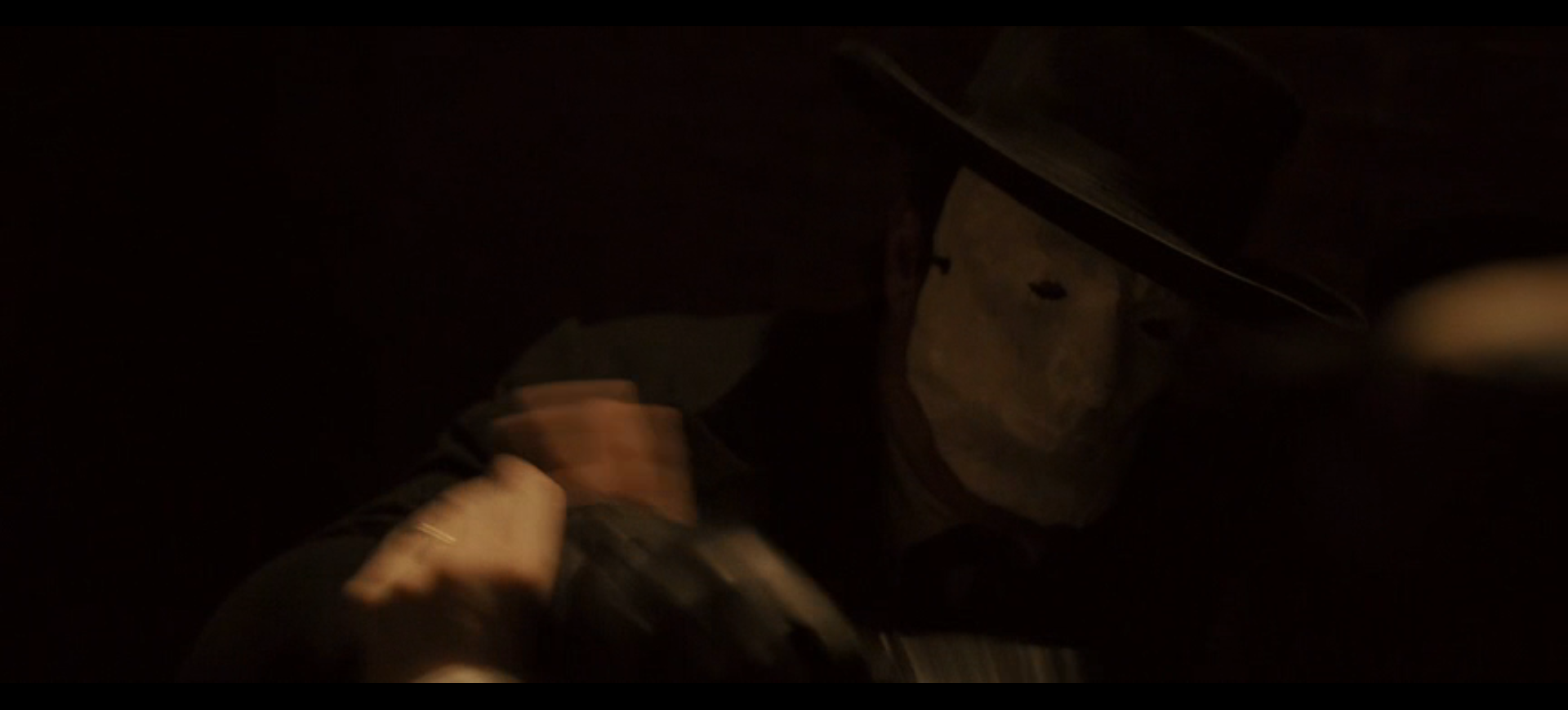
The assailant runs off before seriously harming Stanton. In his sit down with Sanders, Stanton is willing to make a “deal with the Devil.” He offers to approve Sanders’s arrangement with Johnson over the uniform contract, if Sanders will tell him where Booth is. Sanders appears to truthfully tell Stanton that, despite his wealth and connections, he is unable to tell the Secretary Booth’s exact whereabouts. Stanton then sweetens the pot, offering even more money than the uniform contract is worth if Sanders will provide a map of the Confederate agents helping Booth. Yet, to Sanders, this is a step too far. The money means nothing to him, and his real goal is to make sure the country continues to “belong to the white man” and to prevent Stanton from “giving it away.”
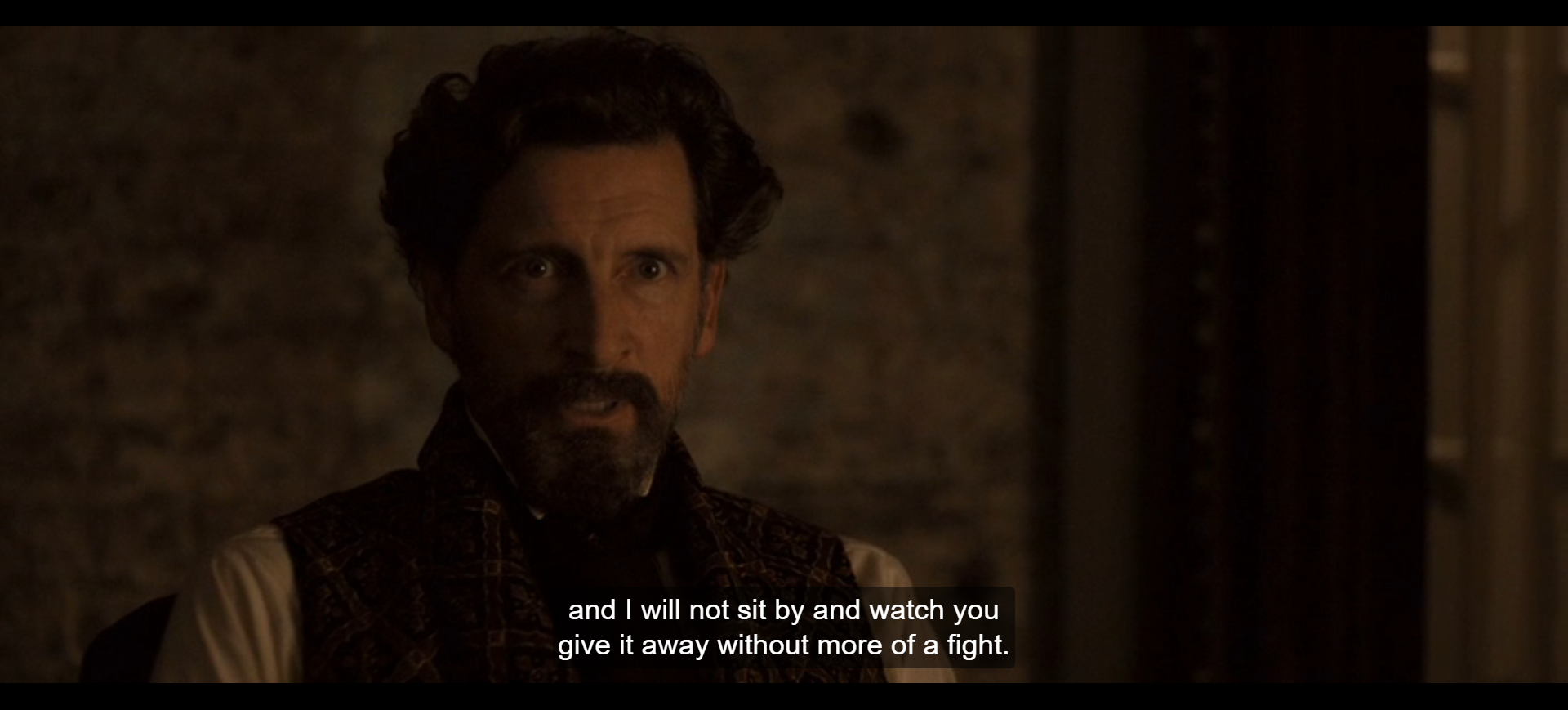
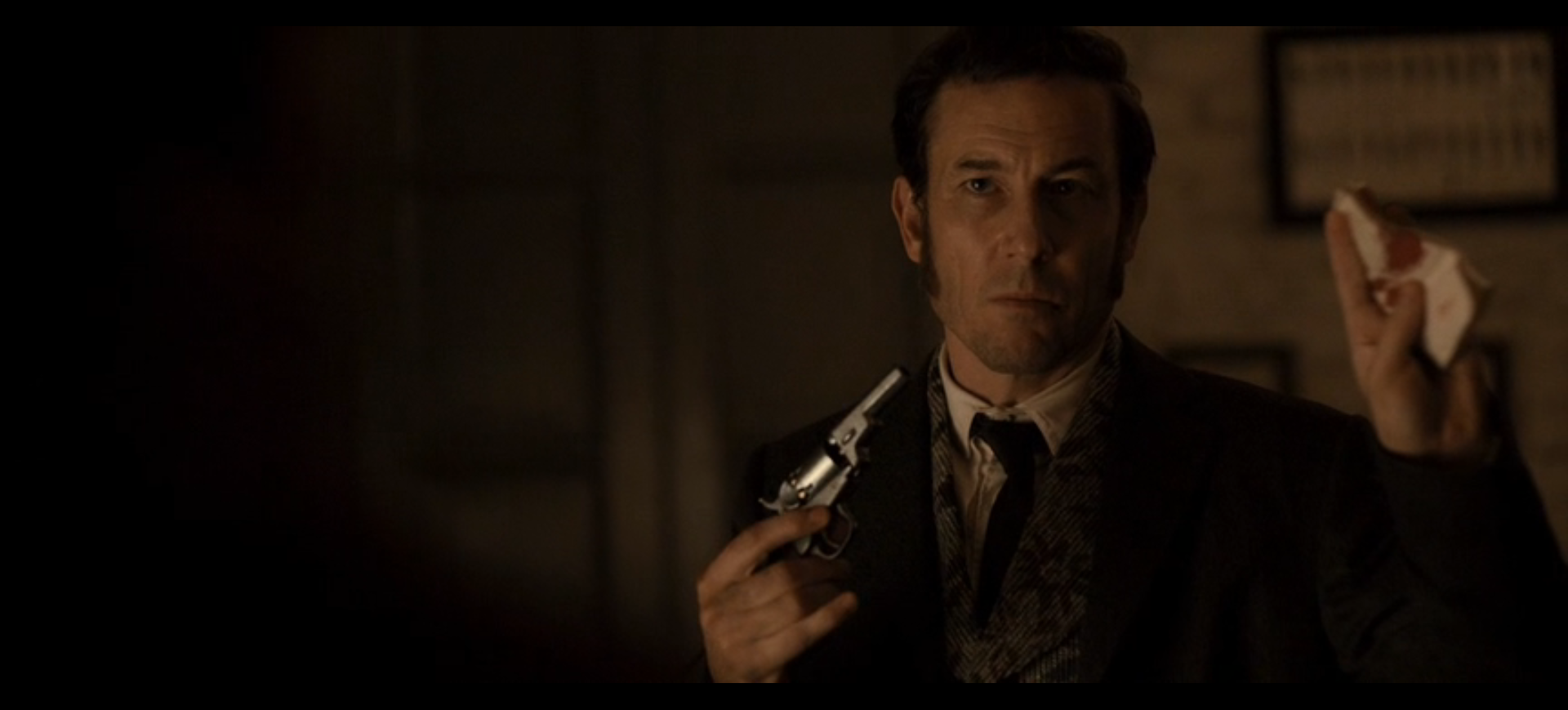
In true supervillain fashion, Sanders tells Stanton that there are countless men like himself who will work to prevent Stanton’s plans for Reconstruction as he pulls a gun on the Secretary. Then he brags, Trumpian-style, that he could shoot Stanton on Wall Street in broad daylight and get away with it. Looking down the barrel of Sanders’s gun, Stanton slowly draws his own and looks like he is going to take Sanders out. Instead, Stanton shoots a nearby window, sending a signal to Baker and his men to come storming in to arrest Sanders for dealing in smallpox-infected clothing. Sanders is unconcerned and is later shown bailing out and back to dealing on Wall Street. In searching Sanders’s office after his arrest, Baker finds paperwork related to Sandford Conover that clearly distresses him. Meanwhile, Stanton and his son rush to the shipments of smallpox clothing about to be destroyed. Stanton checks the “distributors list” and concludes that the names on the list are members of the “secret line” that he has been looking for.
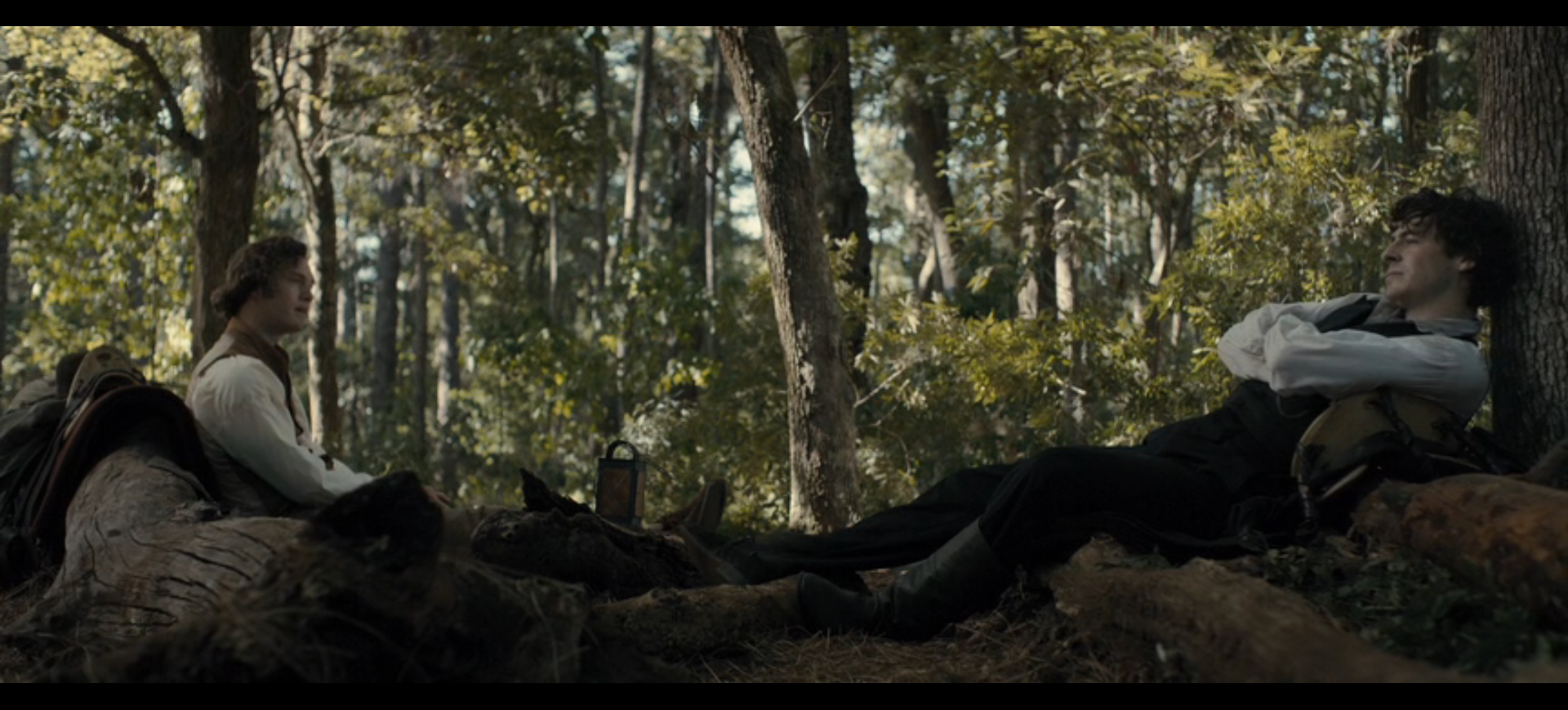
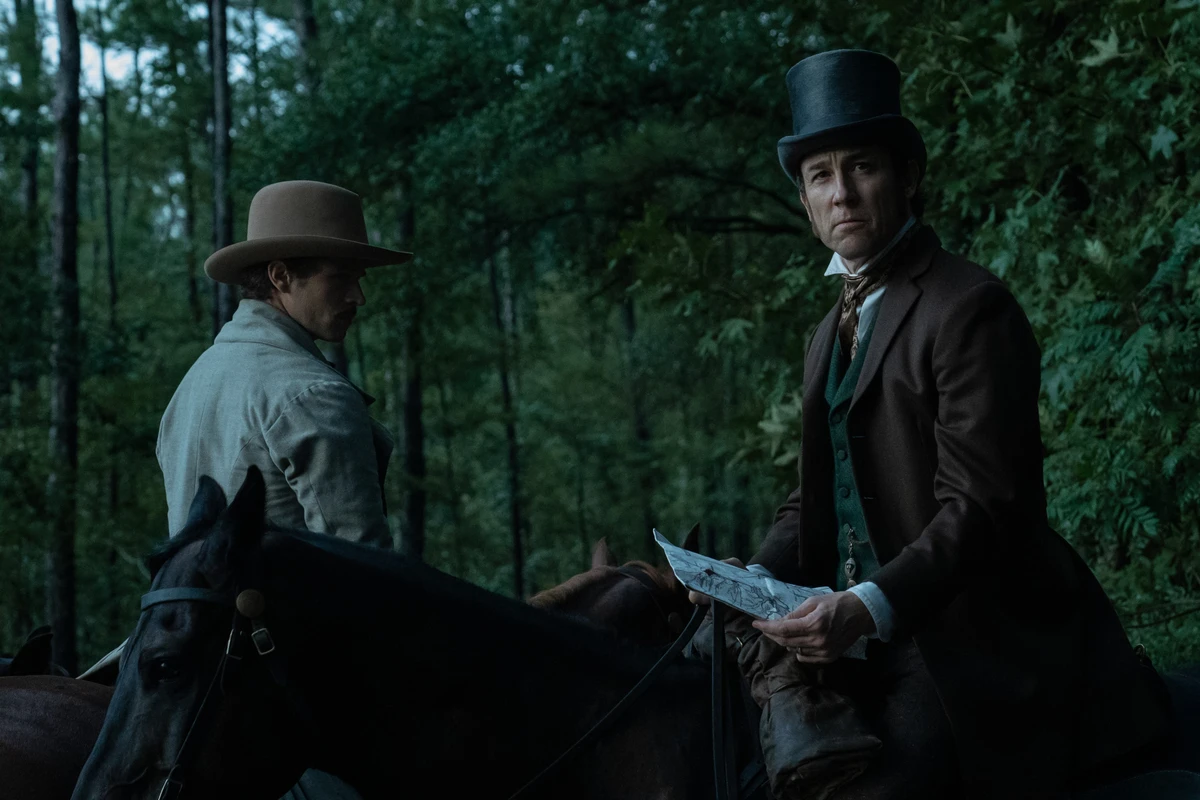
The secondary storylines in this episode consist of Booth and Herold hanging out in the pine thicket before the River Ghost finally takes them to the Potomac River and sets them across. Mary Simms finally quits being Dr. Mudd’s servant and starts establishing a community school on the land she was deeded in the prior episode. Edwin Booth also makes his appearance in this episode as he attends a wake for the President in New York City and expresses his sympathy to Mrs. Lincoln. An unrealistic version of the relationship between John Wilkes and Edwin Booth is also shown in a flashback during an attempt to burn New York City in 1864. The whole show ends with Stanton, his son, and a single soldier outside of Washington, D.C., riding off into “to Virginia,” seemingly to catch Booth all on their own.
Prologue to a Review
A great sense of relief came over me when watching this episode of Manhunt, and that motivated me to write this prologue to my full review of episode 4, which will come later when I have more time. During the first few episodes, I tried my best to give the benefit of the doubt to the writers, understanding that I didn’t know the ins and outs of developing and pitching a historical miniseries. I attempted to justify certain decisions I disagreed with, such as the merging of real people into largely fictionalized caricatures or the use of poorly supported historical concepts, as all being done for the “greater good” of making a more cohesive and easy-to-follow narrative for a general audience. However, in my last review in particular, I struggled to bridge the ever-growing chasm between the actual history and what was presented on screen. In the beginning, I had disagreed with but accepted instances of dramatic and artistic license under the guise that they were meant to capture the spirit of the event, even if the truth of it was sacrificed. When enough actual history was combined with these instances of dramatic license, I was okay (but still not happy) with it.
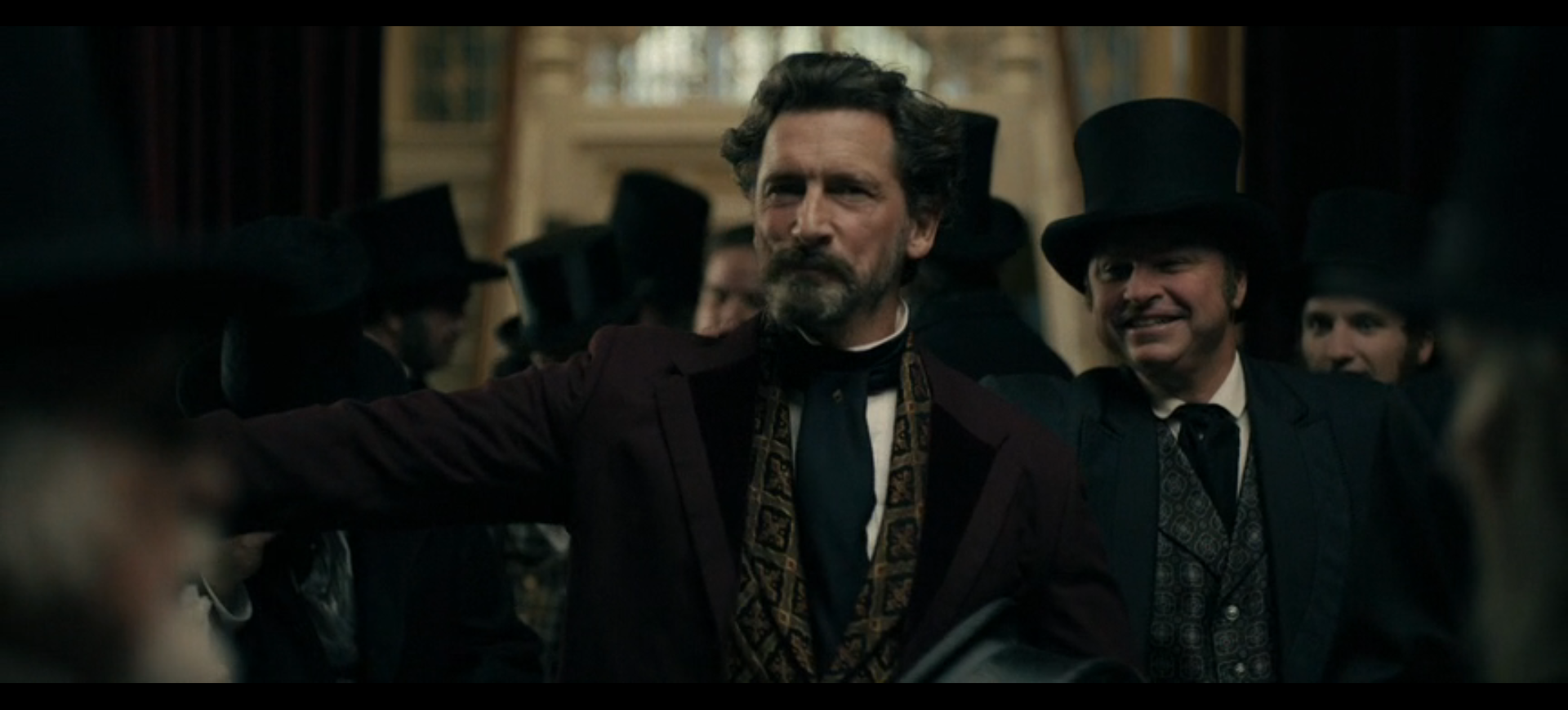
Episode 4 has helped free me from my prior illusions that this series is trying to be historically accurate. All of the fantastical intrigue between Stanton and Sanders in this episode proves that there was never an intention to make an accurate retelling of the assassination and search for Booth. It is clearly meant to be a fictional drama inspired by the time period surrounding Lincoln’s death, with a heroic Edwin Stanton acting as the savior spy of the country. And that would all be perfectly fine if only it wasn’t called Manhunt.
Halfway through this episode, Jen turned to me and said, “I’ve read Manhunt. This show is not based on the book Manhunt.” And she’s right. The series may be called Manhunt, but it’s not Manhunt, which is the underlying problem. Had this series been called The War Secretary or something like that, I would be enjoying it immensely and probably celebrating the series for the few historical facts it has gotten right or close to right. There would have been no expectation for this historical drama to stay anywhere close to the true history. But when a series is titled and said to be based on a noted nonfiction book, there is a reasonable expectation that it would try its best to be accurate. The complete abandonment of historical realism or truth in this episode proves conclusively that this is not intended to be an adaptation of Manhunt but a completely new fictional drama.
None of this is to say that this episode or the series as a whole is “bad.” In fact, I found this episode particularly entertaining, if a bit silly at times. I will continue to watch this show and probably enjoy the spectacle of it. I still have nice things to say about this episode when I write my complete historical review later.
But I’m resetting my parameters for this series going forward. I am going to try to keep reminding myself that, despite the name, this series is not based on the book Manhunt, and its goal is not to be historically accurate but to tell a story of historical fantasy—a well-acted, superbly costumed, and thrilling historical fantasy with a few “bones” of truth. By removing my expectation for accuracy, I think I can finally enjoy this fictional series for what it is.
There are many pieces of media that are inspired by true events that bear little resemblance to them. As a kid, I had a VHS of the 1952 movie Hans Christian Andersen, starring Danny Kaye. It is a cute musical film about the famous Danish author. I distinctly remember how, after the opening credits, the movie started with a text card that said, “Once upon a time there lived in Denmark a great storyteller named Hans Christian Andersen. This is not the story of his life, but a fairy tale about this great spinner of fairy tales.” This is how I will approach Manhunt now. It is not the real story of the search for Booth but a fairy tale about the man who led the search. I can enjoy a compelling fairy tale as much as anyone, though I am saddened that my hopes of seeing an accurate representation of the escape and manhunt for John Wilkes Booth just wasn’t to be.
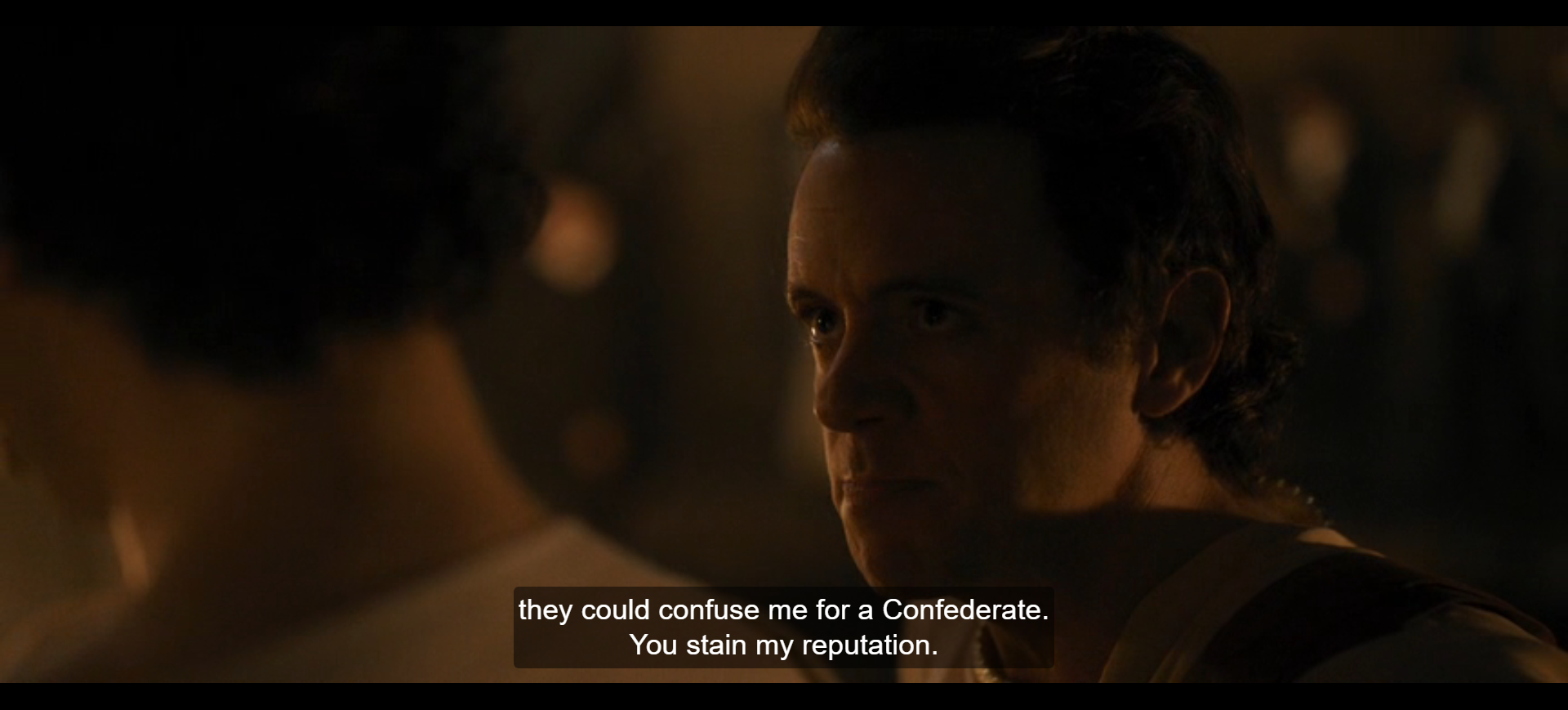
I promise to come back and give a historical review of this episode and attempt to cover the few kernels of truth that grew such a garden of imagination. The Stanton storyline here is 99% fantasy, and aside from some “quick thoughts,” I won’t have much to say there. But there’s a lot to correct about the evil “mirror universe” version of Edwin Booth shown in this episode. It was disappointing how Edwin comes off as the bad guy and JWB as the sympathetic one in their scenes together. But all that will have to wait until next time. I appreciate your understanding that the real review for this and the next episode may be awhile due to my other commitments.
Dave





 LincolnConspirators.com
Wow. Just wow. I definitely won’t be waiting on the DVD set for this one. You have a lot more patience with this than I would! Can’t wait for your full reviews!
Thank you!
Great read and you are so right. The series should have another name or even remove Swanson from the credits. I still believe following the book would have been equally as interesting, especially to those that know nothing. I have given the book to friends, many teenagers, and they all come back having read the real story with great delight. This is now almost all fiction or at least pure speculation.
Thanks Dave. Having read Manhunt as well I was having trouble especially with this episode. After reading what you just wrote I will approach the rest of the episodes with this new perspective.
You’re far kinder to the producers than I. Enjoying your commentary, as always.
You are so right about MANHUNT, Dave. I, too, was wondering why the writers committed so many abuses of historic license. You summed it up beautifully!
I’d like to add that truth is stranger than fiction, and that it’s too bad they didn’t just dramatize Jim Swanson’s book, as the true story is certainly good en
ough!
Watching Manhunt reminds me of the old joke: “Opera isn’t nearly as bad as it sounds!” As my buddies, Dave and Richard can probably tell you, I have a high tolerance for Lincoln Assassination fiction. On my shelves I have novels where the Great Crime was being investigated by a Pinkerton agent, an officer of the Washington Metro Police, various private detectives and even Sherlock Holmes (in at least two different cases!) I was ready for a certain Hollywood dramatic spin, but I didn’t think we would quite that far afield from the historical realities as we’ve come to know it.
As far as Edwin Stanton goes: Eighty years ago a popular book argued that he was really behind the murder, I guess in order to gain the presidency for himself. In the early1960’s the supposed secret code left by Lafe Baker advised us that “In New Rome there walked three men; a Judas, as Brutus and a Spy.” The Judas, naturally, was the War Secretary.
Now here we have Edwin M. Stanton acting as a super sleuth/tormented best friend of Lincoln. It seems that as Stanton’s beard shrinks into nothingness in the popular media we see that he becomes more and more heroic. Will we see him shadowing the cavalry patrol all the way to the burning barn? Will he fall from grace while gasping out his last few breaths in a cosmic death ballet with the evil duo of Andrew Johnson and George Sanders? I, for one, will stay tuned to find out.
Steve Miller
I completely agree. This series is a travesty. I occasionally like historical fiction and on rarer occasions I enjoy a good farce, but I like to be notified ahead of time which genre to which I am going to be exposed. Sadly, the producers of Manhunt decided upon the latter and were driven by a motive other than historical truth. But the biggest regret is that many viewers will believe this rubbish is history.
There was a book and film in the 70’s called The Lincoln Conspiracy, a pile of nonsense that argued among other things, that Booth wasn’t the one killed in the barn, that Lafayette Bakker was poisoned and that Stanton was involved in the assasination.
As for the endgame, I fully expect to see Stanton pull the trigger of the gun that fired the bullet that killed Booth.
I’m so glad I’m not alone! I agree with everything 100%. If you read the creator/showrunner/writer/EP’s social media posts (Monica Belesky), she originally pitched the idea to Apple TV+ about Edwin Stanton, how he held the country together during the assassination, and the relationship he had with Lincoln. Someone then suggested she read Manhunt, which she then used as source material about actual assassination & Booth’s 12-day journey. She also wished to show how the Confederacy could have been involved, and she wanted to highlight the roles African Americans played during that time & how they factored into the assassination & the conviction of the conspirators, as well as how they were impacted after Lincoln’s death. I think that says it all, because then it all makes sense. Edwin first, Edwin/Lincoln relationship, Confederate spy network/African American roles. Then Booth thrown wherever. I always felt Manhunt on its own could easily be made into a script, but that’s not what happened. I felt really disappointed initially, but now I just see it as a fictional show with some historical names, places & events thrown in. That’s the only way to look at it!
Have always appreciated your optimism. Being older and much more cynical I kind of saw this coming soon into the first episode. The series has moved from historical fiction into the realm of Sunn Classics’ The Lincoln Conspiracy. I would also include Abe Lincoln Vampire Hunter- but at least with Vampire Hunter, you knew what to expect going in.
I never really cared for Manhunt - thought it was a level or two below both Blood on the Moon and American Brutus and always thought James Swanson cared more for the attention than the product. Never met a 15 minute TV segment he didn’t like. Swanson had to have seen the completed series yet embraced it wholeheartedly.
…..great stuff…
The writer is maybe a fan of the recent series of The Pinkertons. It is about as historically accurate.
I guess I’m kind of a wonk, but I think Swanson’s follow up volume, Bloody Crimes, is a better book. The popularity of Manhunt however has brought the story to many readers who would have not gotten exposed to the event. Perhaps they would have been drawn to the revisionist books (“the true story . . .”) like Ted Nottingham’s claims that Booth made a clean getaway, or B&S’s The Lincoln Conspiracy, or even the recent one that argues that John Surratt actually killed the president not Booth. Correct me if I’m wrong, Mr. Dave, but I recall that you were snared by Manhunt. We can thank Mr. Swanson for that.
The writers of Manhunt the mini-series may have taken their story line where no historian has dared go, but they are clear about who their villains are and why they think so.
They’ve also given us a few Easter Eggs. The plot line of having Mary Simms involved in the Christians Riot was one of them. Another popped up in the 4th episode in the form of the question about Lincoln’s role in authorizing the Dahlgren raid. Did the CSA secret service sanction the murder of Lincoln in revenge for Dahlgren’s supposed plan to kill Jefferson Davis?
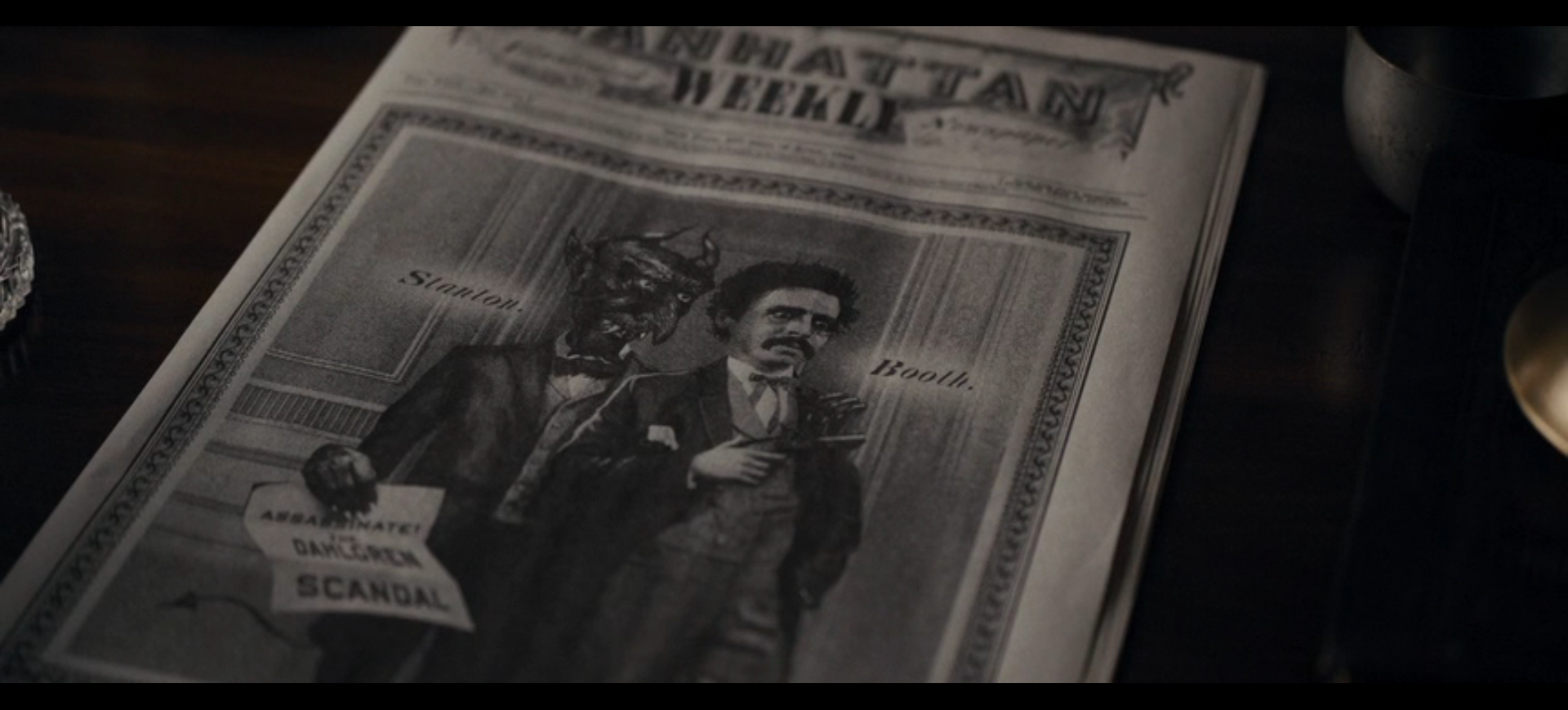
I also like some of the little details: the recreated mug shots of the conspirators, the wanted poster with Booth’s photo on it, and the front page graphic from Sanders’ paper showing Booth and Satan plotting together. The Devil is identified as Stanton and the paper his is holding mentioned Ulric Dahlgren.
Steve Miller
The series refers to a supposed attempt to spread smallpox through the Union Army via virus- infected army uniforms. I believe this is entirely fictional… inspired by the abortive attempt to spread Yellow Fever by clothing sent north. (The latter plot failed, because yellow fever cannot be spread via clothing). For what possible reason have the writers invented this false scarlet fever conspiracy?
I still sort of want to watch it, but I think these reviews say enough! I do appreciate their treatment of Davey Herold though, he isn’t just some throwaway thing. So they were right in that aspect.
Sadly, I’m enjoying this less and less with each episode. It’s become unrecognizable from the book and the story we all know and expected to see on the screen, I think. I’m disappointed that Swanson seems to approve.
……hate to kick a dead horse…..but….epically bad……..
Totally agree with your prologue comments and everyone else. Watching Episode 3 and now 4 I wondered if I had forgotten so much that was in one of my favorite books. Watching it with my wife, who has limited knowledge of the events made it even more disturbing, as she frequently asked, “is that true?” “did that really happen” and I had no clue. This is totally a fictional drama that should have had a different name. What is very disturbing is that i watched the interview with Swanson before watching the show and he gushed over the historical accuracy and his unfailing support for the series. Watching it, I keep wondering, what was he thinking, but then noticed he was credited as a producer. So guess he had ulterior motive for his support. But as indicated in your comments, now I can relax and enjoy a fictional tale. Thank you for your ever insightful comments and reviews.
I can tolerate turning history into pure fiction. I can tolerate turning Edwin Stanton, who could barely breath in real life, into an action hero. I can even tolerate treating Andrew Johnson as a villain. But what I cannot tolerate is the idea that Abraham Lincoln actually plotted to murder Jefferson Davis (As if he would have really thought that would end the war). Not only would Lincoln never have done that but he would have understood that Davis was an unimportant figurehead and Lee and his army were the key to ending the war. Also Lincoln dominated war strategy. He directed “Mars”. He didn’t ask him “How do we win the war.” This show makes it look like Lincoln was a minor figure in his own administration. I understand the show is not about Lincoln. But still he is showing up a decent amount and to get his character so entirely incorrect is just wrong.
In the 7th episode of Manhunt, during the Trial of the Conspirators, witness Sanford Conover, the duplicitous journalist, introduced a piece of evidence they referred to as the “Pet Letter”. It was meant to implicate Jefferson Davis in the scheme to kill President Lincoln. Conover, in the episode testified that Davis referred to Booth as “Pet”. Conover’s veracity was undermined by the defense attorney and the judges were not able to rule that Davis was involved in a Grand Conspiracy. The head of the court opined that Davis and others not in court were most likely guilty, too, but they were not being adjudged as such because of questionable evidence.
Was there really such a letter? If so, did it link Davis to the assassination? Was Conover the witness who presented it at the trial?
The answer to the first question is, Sort of. There was a letter introduced at trial – along with a lot of other miscellaneous items meant to hint at a wider conspiracy –but it was not quite what Manhunt’s writers showed it to be. Theodore Roscoe prints the text on pages 455 and 456 in his 1960 book The Web of Conspiracy. He says, “perhaps the weirdest item of correspondence introduced as evidence was a code letter which had supposedly been fished from a river at Morehead City, North Carolina . . . in early May by a wharf builder.” It was decided and sent to the War Department in time for the trial.” It was addressed to “John Wise” and signed by “O’B . no. 5.” It was dated Washington April 25. 65” and it just reeks of blood oaths, secret knocks and lurking assassins hiding behind every corner. Roscoe says, “Fake or genuine, the “John Wise” letter proved nothing specific. Yet the officers of the tribunal appear to have regarded it, along with much else that was vaporous, as direct evidence in support of the general indictment.”
The first part of the letter says, “I am happy to inform you that Pet has done his work well, He is safe and old Abe is in hell. Now sir all eyes are on you. You must bring Sherman. Grant is in the hands of old Gray ere this. Red Shoes shewd a lack of nerve in Sewards case, but he fell back in good order. Johnson must come, old Crook has him in charge, mind well that brothers oath and you will have no difficulty….” The rest of the text is typical of junior high school melodrama.
The first line about old Abe being in hell was read by Conover from the stand in the program, but this trial exhibit had nothing to do with him in real life. The Manhunt writers cleverly used this as a way to impugn Conover and to show that the prosecution was willing to sometimes use dubious evidence to push their narrative.
Certainly the type of language used in the series is a tipoff to how historically inaccurate the approach is. In Episode 1, they find the bankbook from the Montreal bank, and a reference to “money laundering” is made. That phrase did not come into use until 1973, during the Watergate hearings. The act of money laundering is most well known during Prohibition and Al Capone. Also, the phrase used in Baker’s office, “if you see something, say something”. Really? Trying to hard to make this historical drama palatable to modern viewers.