Monthly Archives: January 2014

John Surratt in The Days’ Doings

In December of 1870, John H. Surratt gave his first public lecture about his involvement with John Wilkes Booth and the plot to kidnap Abraham Lincoln. His hope was to turn his notoriety into a successful career as a lecturer. He gave speeches in Rockville, MD, New York, Baltimore and was scheduled to speak in Washington, D.C. when public outcry and his arrest put an end to dream vocation. In truth, his lecture did not provide any earth shattering revelations and the full text of his Rockville lecture can be read on Roger Norton’s Lincoln Assassination Research Site here.

Surratt Proposed Lecture

Regardless, John Surratt’s lecture was newsworthy. It was particularly suited for an illustrated newspaper across the ocean called The Days’ Doings. The Days’ Doings was owned by Frank Leslie, the namesake of the American illustrated newspaper, Frank Leslie’s Illustrated Newspaper. Frank Leslie was a English immigrant and engraver whose real name was Henry Carter. While his American newspaper set the bar for quality for illustrated newspapers, The Days’ Doings was specifically made to fulfill the darker desires and interests of its readers. Joshua Brown, a historian on Frank Leslie and The Days’ Doings, said it best: “In short, with The Days’ Doings, Leslie could pursue a male readership with a repertoire of sex, scandal, sports, and violence that would have undermined the necessary propriety of his most valued publication.” As an example, I previously posted this cover from an issue of The Days’ Doings, which I think demonstrates the newspapers normal content:

Booths body

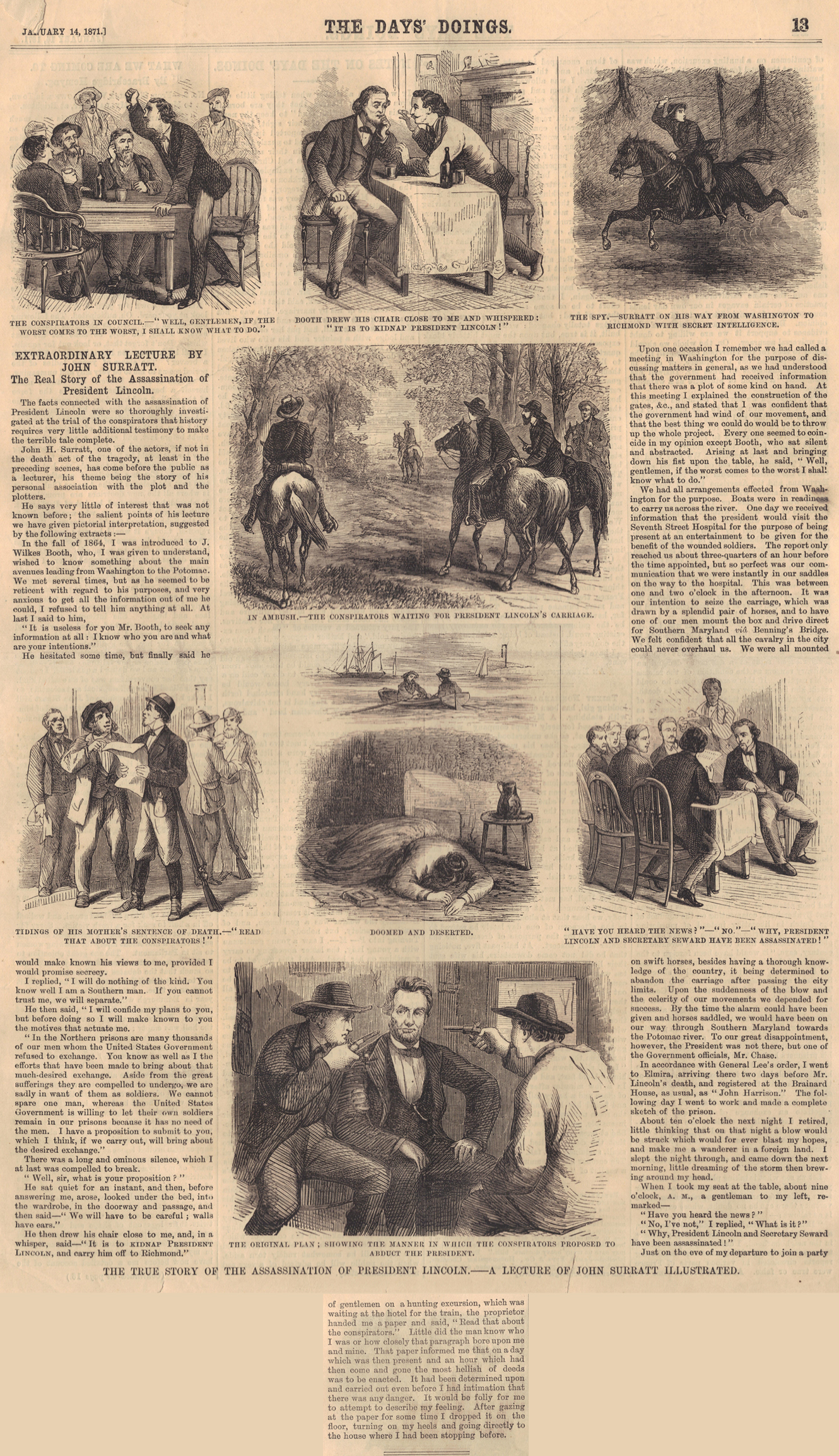
Publishing the words of John Surratt, an accomplice of the assassin, clearly fit the newspaper’s modus operandi. However, they found Surratt’s lecture too tame and lacking of drama. “He says very little of interest that was not known before,” the newspaper stated and, therefore, they supplemented the text by including several engravings: “The salient points of his lecture we have given pictorial interpretation”.

The article, which was published in The Days’ Doings on January 14th, 1871, contains a few abstracts from John Surratt’s lecture with far more space given to the lively “pictorial interpretations”:

Surratt Days Doings 1871

Surratt as a Spy

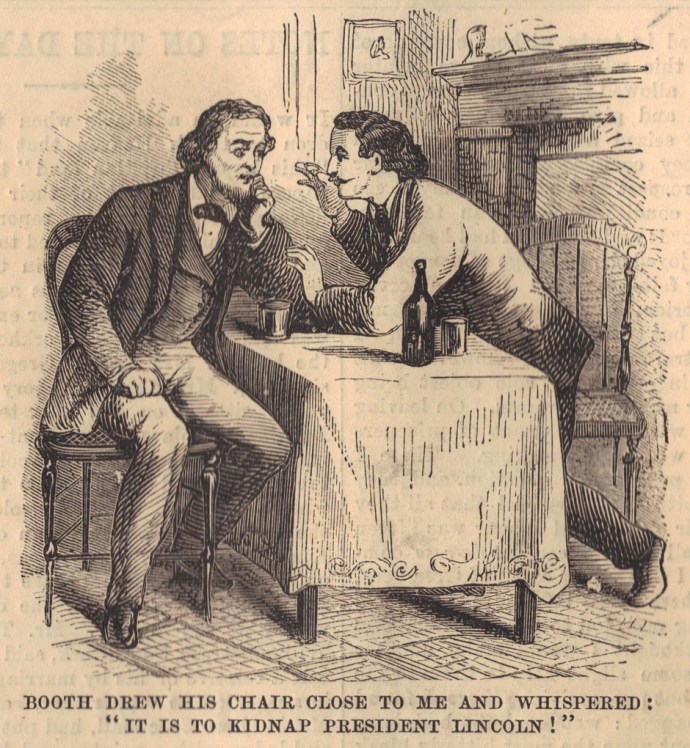
Booth Telling Surratt of his Plan

Surratt Booth Meting of Conspirators

Conspirators Waiting for Lincoln

Surratt Learning of Lincoln's Assassination

Surratt Mary Deserted

Surratt Learning of his Mother's fate

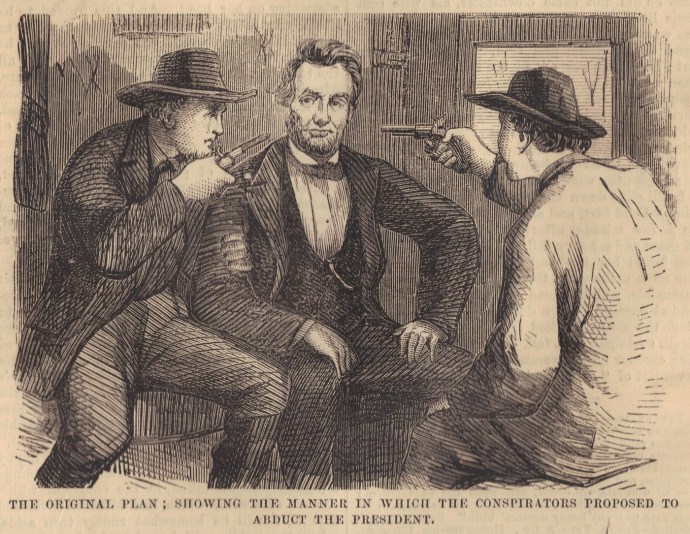
Surratt Booth Lincoln Abduction plan

References:
The Days’ Doings (January 14th, 1871) owned by Dave Taylor
Indiana Historical Society
The Days’ Doings: The Guilded Age in the Profane Pictorial Press by Joshua Brown

Categories: Uncategorized | Tags: , | 1 Comment

“That ghastly errand”

Some of the misinformation that exists out there regarding John Wilkes Booth’s death is the idea that the Booth family never identified his body.  Conspiracy theorists use this incorrect idea to support their opinion that the man buried in the unmarked grave in the Booth family plot at Green Mount Cemetery is not Lincoln’s assassin.  Like so much of the conspiracy theorists’ “evidence”, however, the truth easily dismisses the myths.  The family did identify the body and they had no doubt in their minds as to who it was.  In fact, during the time prior to Finis Bates’ conspiracy book about John St. Helen and David E. George, setting the record straight about the matter of identification didn’t even focus on John Wilkes.  The following is a letter written by Edwina Booth Grossman, Edwin Booth’s daughter, to the editor of the Century Magazine, R. W. Gilder.  In it, she requests that Gilder put something in print to set the record straight about which family member identified Wilkes’ remains.  I find it humorous that, back then, the “controversy” was not about John Wilkes Booth’s body, but rather which Booth claimed him.

The Arlington
Washington, D.C.

July 10, 1909

Dear Mr. Gilder,

May I ask you to kindly correct a statement which has recently appeared in print viz, that my father went to Washington to identify the body of his brother John Wilkes when it was disinterred from beneath the Arsenal.  I once asked my father if he had seen his brother’s body and he emphatically replied that he had sent his brother Joseph on that ghastly errand.  This may not be of sufficient importance to the public at large, but as it means much to me, I am naturally anxious that a correct version of the incident be published.  My father also told me that he never set foot in Washington since the day he was summoned thither by the authorities and courteously detained but a short time while giving testimony under oath as to his ignorance or knowledge of his brother’s crime.  That having satisfied his inquisitors he was allowed to return at once to his broken hearted mother and to his home in New York.  That is all the information I ever sought from my father on this painful subject.

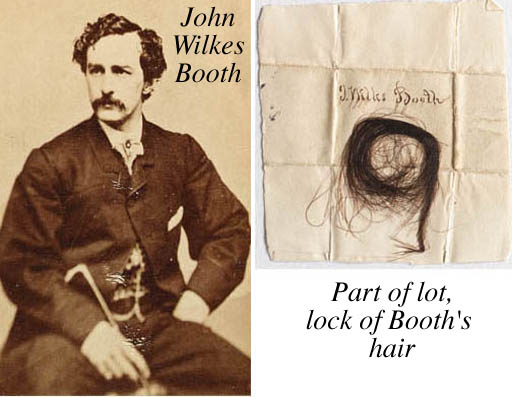
It may interest you to know that I found among my dear father’s private papers an envelope containing a lock of hair and a note on which were written the following lines:

“John Wilkes Booth’s hair cut by my brother on board the U.S.S. ‘Montauk’ at Washington, D.C., my brother William being in command of that vessel when Booth’s body was brought on board the ‘Montauk’.”
Signed
“Mary R Crowninshield”

I have never heard of the lady in question and wonder if she is still alive! Perhaps you can inform me?

I am grateful that my beloved father is spared the anguish which the approaching Centenary of Abraham Lincoln would most assuredly have awakened in him.  Although the tragedy of those awful days is scarcely within my recollection it has brought sorrow even unto the third generation and in these days of my enforced residence in Washington I am also sitting ‘within the shadow’

Believe me, dear Mr. Gilder

Most sincerely yours

Edwina Booth Grossman

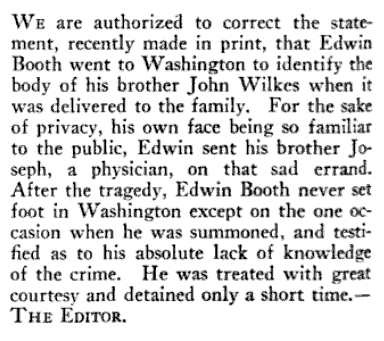
Mr. Gilder fulfilled Edwina’s wishes and, in the April, 1909 edition of Century Magazine, at the end of an article about Edwin Booth and Lincoln, he published this note:

Gilder's note for Edwina concerning Joe identifying Wilkes

Also, back in 2000, this letter, along with the lock of Wilkes’ hair Edwina mentions, were sold at auction by Christie’s for $35,250.

Grossman Crowninshield JWB hair lock

References:
James O. Hall Research Papers
Century Magazine (April, 1909)
Christie’s

Categories: Uncategorized | Tags: , | 19 Comments

Dent’s Meadow 1-20-2014

Yesterday, I visited Loyola on the Potomac, the Jesuit Retreat House located in Faulkner, MD.  Though I have been to the Retreat’s property several times in the past as part of the Surratt Society’s Booth Escape Route Tours and through my own arrangements, this was the first time that I have ever been inside of the Retreat House itself.   I was graciously given a tour of the facility by the director as we discussed an upcoming “Boothie” project of mine.  More on that will come later.  After the very productive meeting, I walked down the trail that leads to the water’s edge.  This, of course, is Dent’s Meadow, the point at which John Wilkes Booth and David Herold attempted to cross the Potomac River.  For a refresher, here’s a video I shot discussing the location back in August:

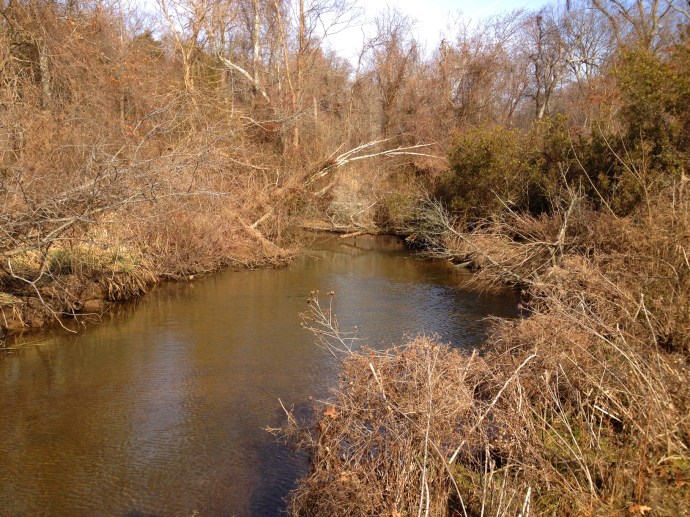
Though little has changed at the site since that video, there was less vegetation present due to the cold weather. So, I took the opportunity to make my way into some of the underbrush in order to take some pictures of the unnamed stream that Henry Woodland hid the boat in.  Since it was low tide, there was plenty of beach and the mouth of the stream was quite small.  Here are a few pictures I took yesterday:

Dents Unnamed stream 1

Dents Unnamed stream 2

Dents Back of unnamed stream

I also took this panorama of the stream and then added the woodcut of Booth’s boat that appeared in Frank Leslie’s Illustrated newspaper.  Click it to see it larger (and longer):

Boat in the Stream Panorama

Lastly, back in August I wrote on a piece of driftwood the historical significant of the site. I was pleased to see that my homemade marker was still there:

Dents Writing on the log 1

Dents Writing on the log 2

Categories: Uncategorized | Tags: | Leave a comment

Grover’s Theatre and the Lincoln Assassination

Ford’s Theatre was not the only theatre in Washington, D.C. visited by President Lincoln and his family.  Here are some interesting facts about the National Theatre owned by Leonard Grover.

Grover's National Theatre

The rivalry between the Ford and Grover

There had been a friendly rivalry between Leonard Grover and John T. Ford ever since Ford opened his first theatre in Washington in 1861.  The huge increase in population in Washington D.C. during the Civil War allowed both theatres, and their owners, to prosper.  Still, the two men attempted to one up each other in their attempts to get a bigger piece of the pie.  After the burning of Ford’s old theatre, he rebuilt, creating a smaller, but far more luxurious and comfortable theatre.  This was at odds with Grover’s, whose theatre which was described as,  “an ice vault in winter, and a sweatbox in summer”.  Grover advertised his theatre as the capital’s only “Union” playhouse, highlighting John Ford’s more “Secesh” sentiments.  Both houses had vied for Mr. and Mrs. Lincoln’s attendance on April 14th, 1865, but it was Ford’s Theatre, with Laura Keene’s Our American Cousin, that won the honor.

Tad Lincoln Attended Grover’s on April 14th

Unlike his parents, Tad Lincoln was more interested in seeing “Aladdin” at Grover’s Theatre on April 14th, 1865.  It was there that poor Tad learned of his father’s assassination.  Another individual who was attending Grover’s that night was Corporal James Tanner, a wounded Union veteran whose training in shorthand would prove invaluable later.  Tanner described the moment when the news of Lincoln’s assassination reached the theatre:

“While sitting there witnessing the play about ten o’clock or rather a little after, the entrance door was thrown open and a man exclaimed, “President Lincoln is assassinated in his private box at Ford’s!” Instantly all was excitement and a terrible rush commenced and someone cried out, “Sit down, it is a ruse of the pickpockets.” The audience generally agreed to this, for the most of them sat down, and the play went on; soon, however, a gentleman came out from behind the scenes and informed us that the sad news was too true. We instantly dispersed.”

Tad, quite distraught over the shocking news about his father, was quickly removed from Grover’s and taken to the White House. White House doorkeeper, Thomas Pendel, recalled what happened when Tad returned home:

“Poor little Tad returned from the National Theatre and entered through the east door of the basement of the White House. He came up the stairway and ran to me, while I was in the main vestibule, standing at the window, and before he got to me he burst out crying, “O Tom Pen! Tom Pen! They have killed papa dead. They’ve killed papa dead!” and burst out crying again.

I put my arm around him and drew him up to me, and tried to pacify him as best I could. I tried to divert his attention to other things, but every now and then he would burst out crying again, and repeat over and over, “Oh, they’ve killed papa dead! They’ve killed papa dead!”

At nearly twelve o’clock that night I got Tad somewhat pacified, and took him into the President’s room, which is in the southwest portion of the building. I turned down the cover of his little bed, and he undressed and got in. I covered him up and laid down beside him, put my arm around him, and talked to him until he fell into a sound sleep.”

Tad Lincoln

Tad Lincoln

Leonard Grover Wasn’t in Town

At the time of the assassination neither John T. Ford or Leonard Grover, were at their namesake theatres.  Each man owned or leased other theatres in other cities and were tending to business elsewhere.  John T. Ford was in Richmond at the time of the assassination and Leonard Grover was in New York.  After the news had reached Grover’s Theatre and the building had emptied, Charles Dwight Hess, the manager of Grover’s Theatre, sent a telegram to Leonard Grover in New York.  Grover later recalled:

“On that eventful day I was in New York, busily getting ready for my approaching Easter season of opera at the Academy of Music. I had passed a laborious day and retired an early hour, at the old Metropolitan Hotel. I was soundly sleeping when a sharp rap at the door awoke me, and some one called, ”Mr. Grover, here’s a telegram for you.” Thinking it was the usual message from one of the theaters (for I was then managing a Philadelphia theater as well) which would simply convey the amount of the receipts of the house, I called back: “Stick it under the door.” But the rapping continued with vigor, and there were calls, ”Mr. Grover, Mr. Grover, please come to the door!”

I arose, hastily opened the door, when the light disclosed the long hall compactly crowded with people. Naturally, I was astonished. A message was handed to me with the request: “Please open that telegram and tell us if it’s true.” I opened it and read:

“President Lincoln shot to-night at Ford’s Theatre. Thank God it wasn’t ours. C. D. Hess.”

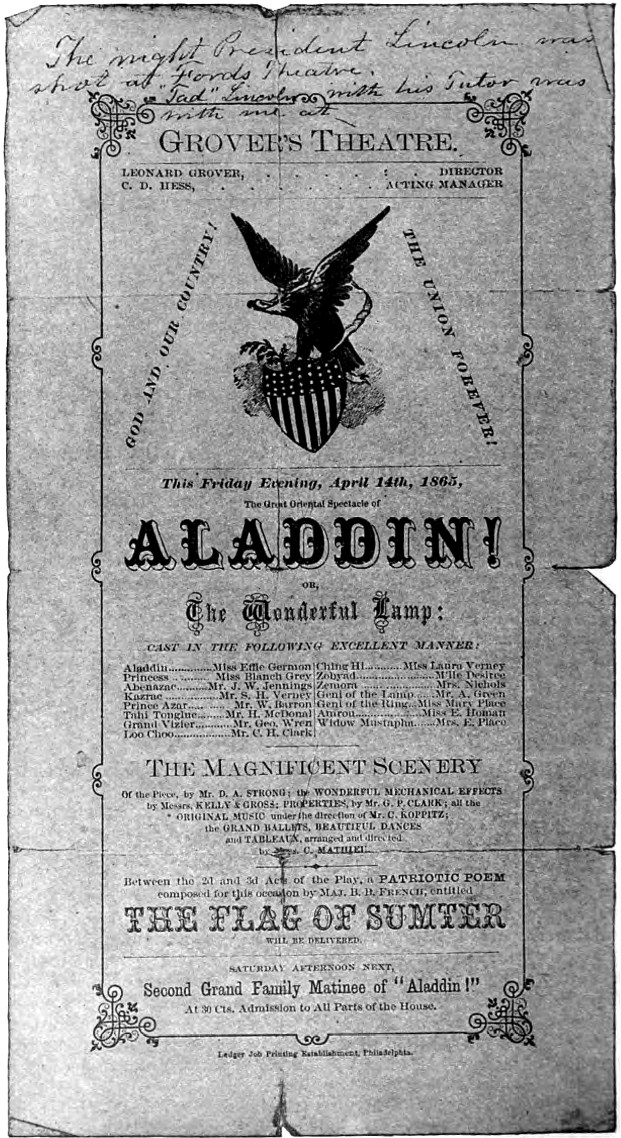
What follows is a copy of the Grover’s Theatre playbill that was used for the April 14th, performance of “Aladdin”.

Aladdin Playbill

The handwritten text at the top reads, “The night President Lincoln was shot at Fords Theatre. “Tad” Lincoln with his Tutor was with me at -“. Though the playbill is credited as belonging to Leonard Grover, we know Grover was not at his theatre at the time of the assassination. It is likely that this playbill was actually owned by Charles D. Hess, the manager of Grover’s who as present at theatre and shared the news with the audience.

The Assassination could have been at Grover’s Theatre

In April of 1909, two articles were published in Century Magazine which theorized that Lincoln still would have been assassinated even if he had attended Grover’s Theatre that night instead of Ford’s. For a wonderful recounting of this theory, please visit the corresponding page on Roger Norton’s Lincoln Assassination Research Site.

Booth carried Aladdin with him

When John Wilkes Booth was cornered and killed at the Garrett farm, the detectives thoroughly searched his person, removing any papers and objects they could find. Inside his small memorandum book (better known as his diary), they found five photographs.  One of the photographs was of this woman:

Effie Germon CDV

Her name is Effie Germon and she was an actress friend of John Wilkes Booth. If you look at the playbill for Grover’s production of “Aladdin” you can find her name.  She was the star of the night, portraying the eponymous Aladdin.

References:
Backstage at the Lincoln Assassination by Thomas Bogar
Thirty-Six Years in the White House by Thomas Pendel
“What if the Lincolns had attended the play at Grover’s Theatre” by Roger Norton
Lincoln’s Interest in the Theatre by Leonard Grover
“Lincoln and Wilkes Booth as Seen on the Day of the Assassination” by M. Helen Palmes Moss as printed in the Century Magazine (April, 1909).

Categories: Uncategorized | Tags: , | 6 Comments

Lesson Learned

Doctor Smock Dr. Mudd Comic 11-30-1977

Categories: Uncategorized | Tags: , | 3 Comments

Mary Surratt’s Photograph

Add this to the list of “Things I wish I knew the location of today”:

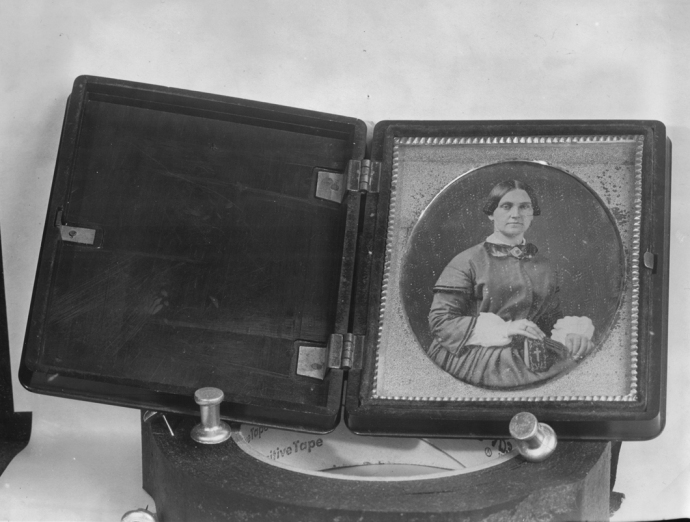
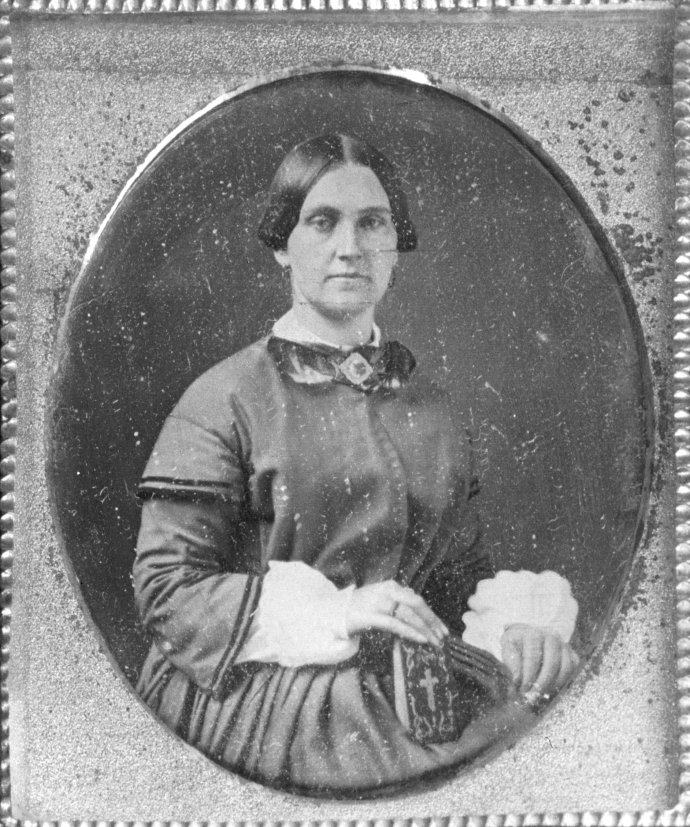
Mary Surratt photo in case

I bought this circa 1961 image from the archives of the Baltimore Sun. It shows what appears to be an original daguerreotype or ambrotype of Mary Surratt.  I’m guessing the photographer did not bring his equipment for this photo shoot since the image is being held up on a stand made out of a roll of tape and tacks.  Unfortunately, there is no notation on the back to explain exactly when, where, and by whom the image was taken.  Nevertheless, here is a close up of the seemingly original photograph of Mary Surratt:

Mary Surratt original

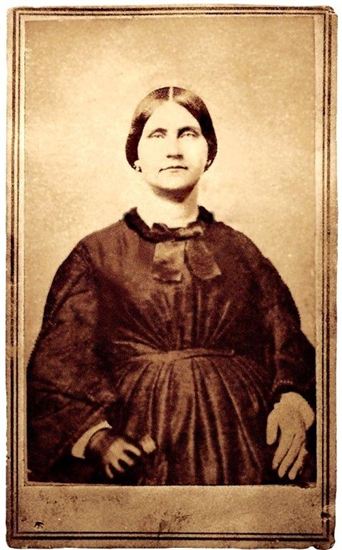
There are only two known images of Mary Surratt (aside from her pictures on the gallows). The above picture represents the earlier of the two known images. This image was taken of Mary when she was probably in her late twenties or early thirties.

The other known image of Mary is described as Mary’s “fair, fat and forty” photo. The description was a quote from the New York Times in which the author covering the trial of the conspirators compared Mary to the Shakespeare character of Falstaff.  In Shakespeare’s play, “The Merry Wives of Windsor,” the fat character of Falstaff is forced to disguise himself as a woman to avoid a confrontation with the husband of a woman he is trying to court.  The ladies and servants pretend that Falstaff is the obese aunt of one of the maidens.  The comparison made by the New York Times regarding Mary, therefore, is not a kind one.  Nevertheless this picture was probably taken when Mary was around 40 years old.

Mary Surratt's CDV 1

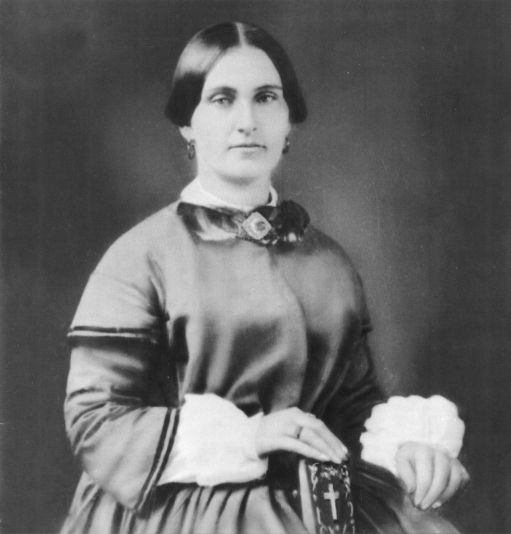
I’d truly love to know where the original, earlier photograph is today. While we have modern images based on that one, over the years Mary has been “airbrushed” somewhat.  The finer details of her face have been lost due to repeated duplication.

Mary Surratt 1

Granted these “airbrushed” photos make her appear prettier, but it doesn’t give a completely accurate view of her features.

For more images of Mary Surratt, visit the Mary Surratt Picture Gallery.

Categories: Uncategorized | Tags: | 16 Comments

In Memory of Art Loux

On December 29th, 2013, the world lost an unmatched historian by the name of Arthur F. Loux.
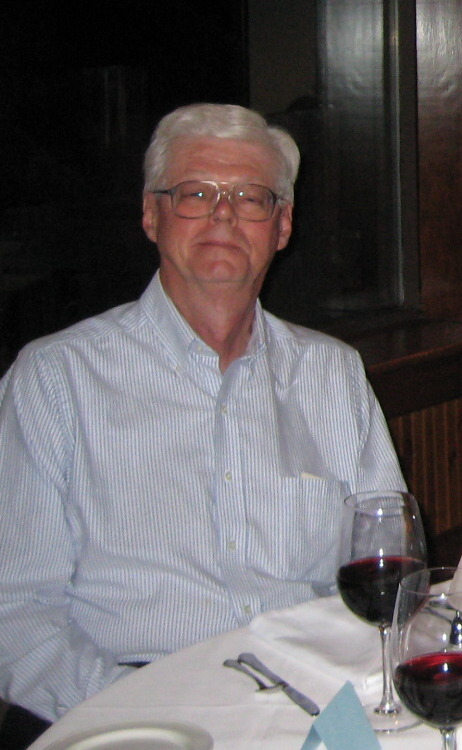
Art Loux

To those who knew and corresponded with Art, he needs no introduction.  Art was an original “Boothie” of the highest order.  You’ll find his name in the acknowledgement and reference sections of several imminent assassination books including, American Brutus by Michael Kauffman, Blood on the Moon by Edward Steers, and Manhunt by James Swanson.  Art’s encyclopedic knowledge on John Wilkes Booth was due to his decades long work of meticulously chronicling the assassin’s life.  In 1990, he privately published his manuscript, entitled John Wilkes Booth: Day by Day.  Rather than selling his work, he selflessly presented the 12 copies his work as gifts to his fellow colleagues and friends.  Since that time, Art’s manuscript has proven to be one of the most sought after resources and references for assassination authors.  The copy of his manuscript at the James O. Hall Research Center is one of the most well loved and consulted books in the collection.

Art had a deep interest in the living Abraham Lincoln as well and was well versed in the histories of many Civil War generals.  He was one of the founding members of the Lincoln Group of New York and served as the group’s first secretary.  Upon his relocation to Kansas, Art was very active in the Lincoln Club of Topeka, serving in a variety of positions.  Art loved to travel and was a longtime “cemetery buff” taking pictures of countless historical graves all over the world.

Art Loux was also the most generous man I have ever had the honor to know.  Though we never met in person, over the last year and a half Art has graciously sent vital and important information about many of the subjects discussed here on BoothieBarn.  I found myself often referring to Art when I had a question that I couldn’t find an answer for.  I quickly came to admire this man who knew practically everything about Lincoln’s assassination.  When I asked about the early “Boothie” days and the first few Surratt Society Booth Escape Route Tours, Art sent me three DVDs filled with audio recordings.  The collection contained early narrations of the escape route from the “greats” like James O. Hall and Mike Kauffman, recorded speeches from a multitude of notable authors and researchers, and the practically “play by play” research conducted by Art, John C. Brennan, and others in archives and libraries.  I inhaled the recordings, hearing, for the first time, the voices of the men who laid the groundwork for today’s scholarship.  I expressed my deep appreciation to Art for the most generous gift. He replied back with the mantra that had been the guiding principle for the early Boothies, “the more one shares the more one learns.”

Art was instrumental to the development of the National Geographic special “Killing Lincoln” which aired back in February of 2013.  He sent the producer of the program, Erik Jendresen, a digital version of his book, JWB:DBD, which he never stopped working on.  His name is seen in the credits at the end of the show.  When Erik presented at the annual Surratt Society conference in March, he expressed how the show could not have been produced without Art’s help.  Art was not able to make it to the conference, but as I sat there listening to Erik’s accolades for him, I took out my cellphone and sent a short email to Art:

“Art,

I’m sitting here right now watching Erik Jendresen give his presentation and I wanted to let you know that Erik is singing your praises.  I wish you were here to appreciate how grateful he is to you.  Wonderful work, Mr. Loux.

Dave”

Art replied back to me the next morning with:

“Dave,

Thanks for your kind and thoughtful message.  Working with Erik was one of those peak experiences.

Art”

That was Art.  He was never one to toot his own horn or clamor for attention.  He was content knowing that he had helped another human being and had shared all that he could.

In June, Art asked for my address again stating that he had “something” to send me.  I happily provided him with it, anxious to receive anything from the man who had become the best teacher I had known.  In the mail I received a 16 gigabyte flash drive, without any sort of note as to its contents.  When I plugged it into my computer, I was speechless to discover that it contained the entirety of Art’s assassination archive.  Every letter, every page, every article that he possessed regarding the Lincoln assassination had been scanned, organized and archived.  I emailed him back in complete shock, thanking him for what is the most generous gift I have ever been given.  He replied back that there was no need to thank him as it was, “a joy for me to share this stuff.”  Though I’ve had the archive for six months, I’ve barely scratched the surface of the materials before me.  Thanks to Art, I found and visited the former home of conspirator, Samuel Arnold.  Thanks to Art, I was able to assemble a thorough accounting of what is known about John Wilkes Booth’s time at the Indiantown farm.  Thanks to Art, Booth’s forgotten sister Rosalie is less forgotten.  I will never be able to repay Art for the gift of knowledge he has bestowed on me.  But, like him, I will do my best to share as much of it as I can.  Every time you see “The Art Loux Archives” in the references section for a post, know that what you read is due to the generosity of this great man.

On December 27th, I (and many others in the assassination field) got an email from Art.  In it, he announced his success in signing a contract with McFarland Publishing to have his magnum opus, John Wilkes Booth: Day by Day published for the masses.  Art had never stopped working on his manuscript, revising, editing and adding to it since he published it privately in 1990.  We all wrote him back with our congratulations and our shared anticipation of the book’s unequivocal success.  For a man who had given so much to so many others over the years, we all knew he was more than deserving of the wide recognition the book would garner him.  Art passed away in his sleep two days later, having fought a long battle with a form of muscular dystrophy.  Art’s daughter, a respected historian herself, is finishing her father’s work and will ensure that it will be published per his wishes.

Art’s book will easily become the premiere resource for Lincoln assassination readers and researchers.  Of that, there is no doubt.  His death, right at the culmination of his life’s work, is nothing less than tragic.  Though he never sought it, Art Loux deserved to experience the public admiration that will accompany his book.  We, his friends and colleagues, mourn his loss deeply for he never got to experience the accolades he rightly earned.

I know that, as a public blog, many of those who will read this post will not have known Art.  Though you may know his name from his aforementioned book, it is impossible to accurately describe how special he was.  Over the last several days, I have tried my best to think of someway to portray him as more than a biography.  I decided the best way to attempt this was to share pictures, recordings, and writings of Art’s.  In this way it is hoped that even strangers who never knew him can start to understand and appreciate his amazing life.

Though John Wilkes Booth: Day by Day will stand as Art Loux’s most public achievement, the love he spread and the lives he touched demonstrate his greatest work.  He lived a life of generosity and humility.  I am honored to have known him. and I will strive to follow in his footsteps.

Art Loux in Photographs, Recordings and Writings
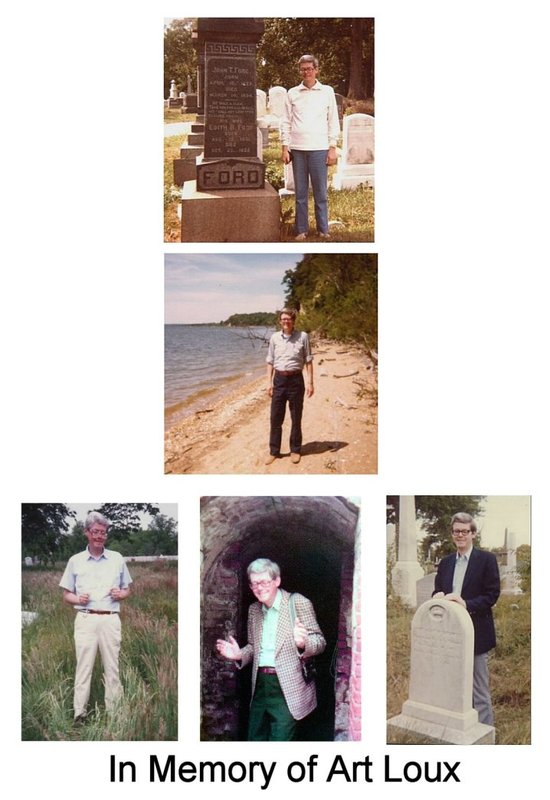
A collage of Art Loux created by his friend and fellow researcher, Betty Ownsbey.
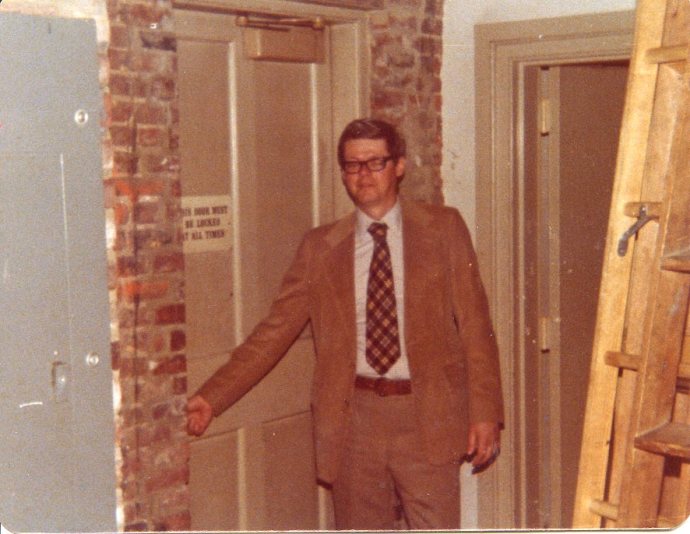
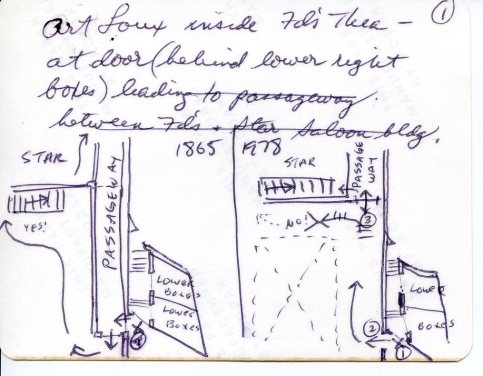
A collage of Art Loux created by his friend and fellow researcher, Betty Ownsbey.

Loux at Ford's 1 Loux at Ford's 2

“The bus pulled away from the Surratt House early on a beautiful May day in 1977. The prospect of traveling Booth’s escape route filled me with anticipation. I had never met anyone else on the tour. As the bus bumped along from stop to stop, the passengers listened with rapt attention to James O. Hall, the tour guide, a venerable, white-haired gentleman with, as he described it, an Ozarkian accent. I soon found myself absorbed in interesting conversations on all variety of subjects with my seat-mate, a man somewhat older than I. The man was a bundle of energy. He passed pictures and descriptive sheets among the passengers. He seemed to know everyone on the bus. It seemed, within minutes, I had known John Brennan for years…I kept in touch with John after the tour. Soon my mailman began delivering daily letters overflowing with interesting items. Most often the letters contained information related, no matter how remotely, to the Lincoln assassination…Letters received by John were often disseminated to a large number of his correspondents. I felt I had arrived the first time John distributed one of my letters.” – Art Loux in his memorial about fellow researcher John C. Brennan

“Once I was taking pictures in back of Ford’s Theatre when the rear door opened. Someone obviously was giving a tour to Vincent Price who was then appearing at the theatre. Suddenly face to face with Vincent Price my warped mind quickly thought – he’s an actor, he’s coming out the rear door of Ford’s Theatre – so I said, “Did you shoot the President?” He looked at me like I was obviously deranged and shut the door without a word.” – Art Loux in an email to a friend
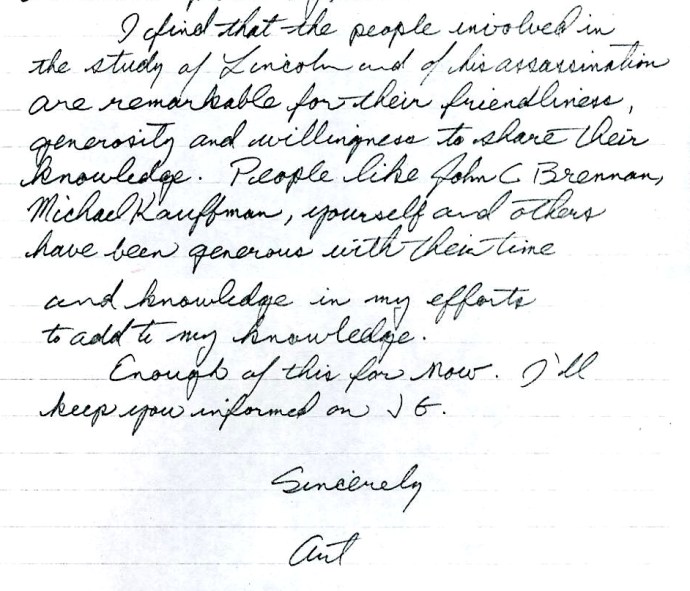
Art's letter 1977

Categories: Uncategorized | Tags: , | 6 Comments

Blog at WordPress.com.