Posts Tagged With: Media

A Second Manhunt Trailer

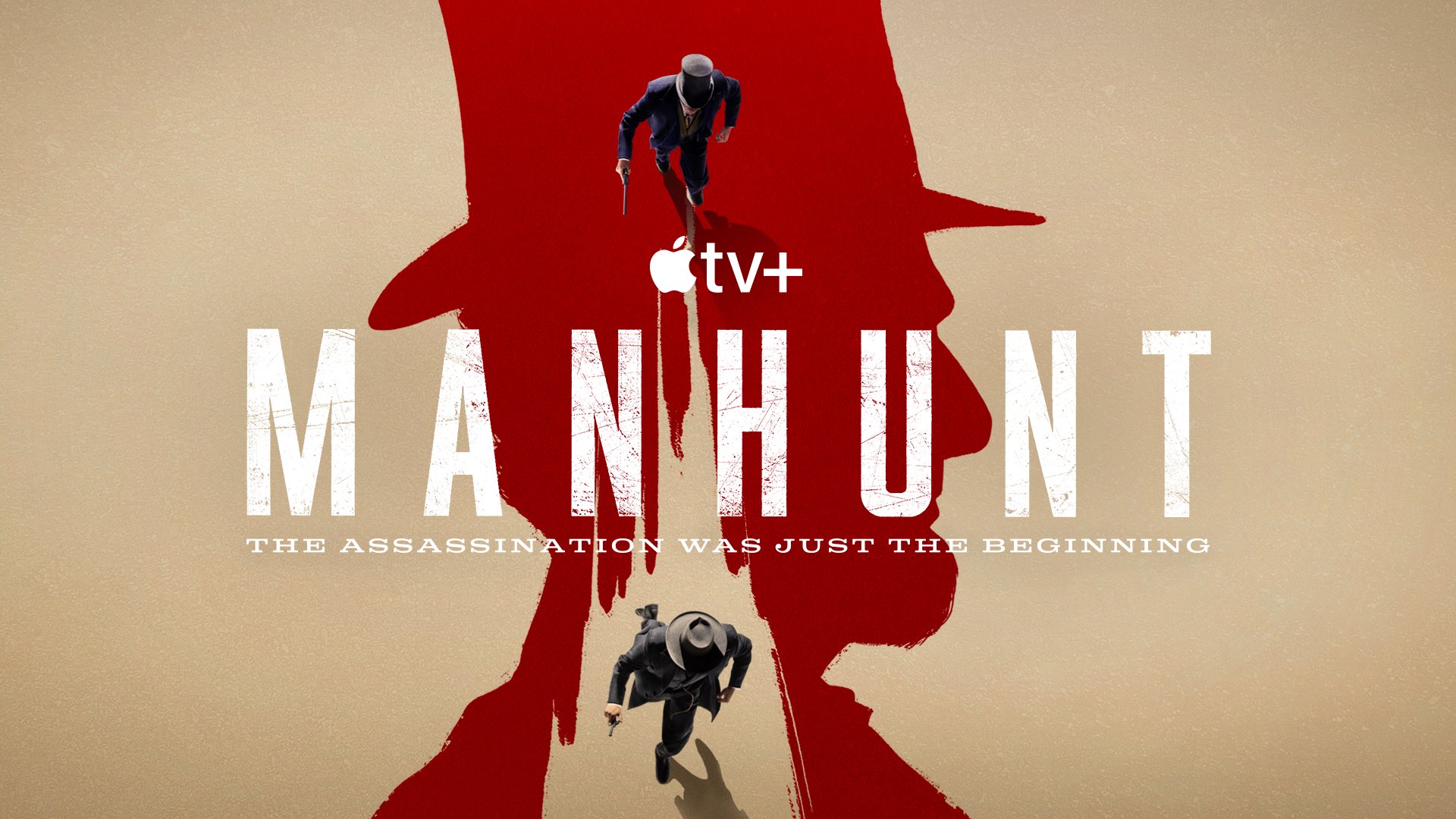
Today, February 12, 2024, is Abraham Lincoln’s 215th birthday. Likely in celebration of this day, the folks over at AppleTV+ have released a second trailer for their upcoming miniseries Manhunt, based on the book by James L. Swanson. Unlike the trailer released last week, this one is in the form of a featurette and contains clips of the actors and producer of the series discussing their work. It’s still on the sort side of around two minutes in length, but this new trailer does show us a bit more of what the show will have to offer. Give the new trailer a watch:

Here are some of my thoughts after watching this new trailer:

  • The trailer opens with President Lincoln and United States Colored Troop soldiers walking through a severely damaged city. My guess is that this is referencing the visit Lincoln made to the fallen Confederate capital of Richmond not long before the assassination. However, the special effects of the scene could also lead one to believe this may be a dream-like sequence for the president. We’ll just have to wait and see.
  • We get our first glimpses of Lewis Powell’s attack on Secretary Seward and his household here. The clip quickly shows Powell’s entry at the Seward home, his bludgeoning of Frederick Seward with his gun, and his grappling with someone in the Seward house (enough to break a window). This trailer also clears up the question as to where Stanton went first. We see Stanton witnessing the bloodshed at Seward before asking if the President was still at the theater. This is in line with what actually occurred. Stanton had been informed by a messenger that Lincoln and Seward had been attacked and he had traveled to Seward’s house to dispel the rumor. When he witnessed the bloody scene at the Seward house, he then proposed to Gideon Welles, the Secretary of the Navy who had arrived at the Seward home at the same time, that he would go to Ford’s Theatre. As he was getting ready to depart Major Thomas Eckert rode up on horseback, he having just come from the scene outside of Ford’s Theatre. Major Eckert advised Stanton against going to 10th Street for fear there might still be assassins amongst the throng of people. As we know, Stanton decided to go anyway. In the trailer, the man to whom Stanton asks about the President and his whereabouts is Major Eckert.
  • Mary Lincoln is shown mournfully climbing the steps to the Lincoln funeral car in her black mourning attire while a steady rain falls. This is an example of understandable dramatic license on the part of the series. In reality, the bereft Mary Lincoln was too overcome with grief to participate in the public funerary events for her husband. She did not escort Lincoln’s coffin on the funeral train and, as far as I know, never set foot on the train where her husband and son’s remains were transported. The scene does make for a touching visual, though.
  • There are a few character collages that pop up during this trailer. The first is titled “The Hunters,” and shows the actors playing the figures of Edwin Stanton, Col. Lafayette Baker, Thomas Eckert, and Boston Corbett.
  • At the 40-second mark, a voice is heard saying, “It’s a code” and then a cipher cylinder is shown. It will be interesting to see how this is worked into the series. As I’ve written about previously, there’s a lot of confusion and misinformation out there about John Wilkes Booth’s so-called “Confederate” cipher. During the investigation, a paper Vigenère table in Booth’s handwriting was found in his trunk at the National Hotel. It was admitted into evidence during the trial of the conspirators. A Vigenère cipher cylinder like the one shown in the trailer was also entered into evidence. This cylinder had been captured from the Confederate offices in Richmond along with coded letters. However, there is no connection between Booth’s Vigenère table and the seized Confederate cipher aside from the format being the same. A Vigenère table is merely a tool for encoding or decoding information. We know of no coded letters written by Booth or his conspirators. The Vigenère table was likely Booth’s attempt at playing “spy,” as he would like to boast to his sister, Asia. While the Confederacy used their ciphers to send coded messages, there is no evidence that Booth ever participated in this. No coded notes from the Confederacy have ever been found mentioning Booth or his plot. The purpose of admitting the cipher cylinder as evidence at the trial was due to the fact that Confederate officials were also being tried, in absentia, for Lincoln’s murder. The fact that Booth owned a Vigenère table was the government’s weak attempt to connect Booth to the Confederate government. While having a Vigenère table may seem damning, it’s more akin to trying to connect Botoh to Jefferson Davis because they both had crossword puzzles on their desks. The government was desperate to put the blame for Lincoln’s death on Confederate officials, which is why they threw everything they could against the wall, hoping something would stick.
  • The second character collage grouping is called “The Conspirators” and shows John Wilkes Booth, David Herold, Mary Surratt, and John Surratt. I look forward to seeing where the miniseries places John Surratt on the night of the assassination. Will they depict him as being in D.C. that night or up in Elmira, New York, as he always stated?
  • While the actor playing David Herold is talking, there a brief scene is shown of a man emerging from a brick alleyway near Ford’s Theatre, likely meant to be the alley between Ford’s Theatre and the Star Saloon next door. He catches sight of Edwin Stanton and then attempts to run when he is stopped by Thomas Eckert. It all happens so fast it’s hard to tell who that character is meant to be. My best guess is that it is supposed to be Edman Spangler. I hope I’m mistaken, as that scene would be pretty unfair to ol’ Ned. Spangler never attempted to flee from the authorities who interviewed him multiple times before officially arresting him. As one of the few conspirators that most historians agree was innocent of any involvement in Booth’s plot, it’s hard to see him acting as if he had a reason to flee. But I could be wrong about my identification here.
  • Stanton is shown holding a Lincoln mask, complete with strings presumably for attaching to one’s face. I can’t say if masks like these ever existed. This mask is based on a genuine Abraham Lincoln face mold that the President sat for with sculptor Clark Mills in February of 1865. Plaster and bronze copies of this mold can be found in many museums and Lincoln sites around the country. Many folks confuse this mold to be a “death mask” of Lincoln made after his assassination, but it was a life mask made when the President was alive.

Clark Mills’ plaster life mask of Abraham Lincoln. 1865

  • The special effects department did a good job of photoshopping their Booth actor into the famous images of Lincoln’s second inauguration. We know that Booth was present on that day, and in 1956, photography historian Frederick Hill Meserve pointed out a somewhat familiar mustachioed face in the crowd to readers of Life Magazine.
  •  The collage of “The Informants” shows the characters of Mary Simms, “Wallace,” Joseph “Peanut John” Burroughs, and Louis Weichmann. I don’t know who “Wallace” is, but that is the character name actor Josh Stewart plays, according to IMDB. My guess is that this identification is a mistake. My money is that he is supposed to be Mary Surratt’s tavern renter, John M. Lloyd.
  • I’m not trying to harp on it as I’m sure the actress will give a great performance, but I feel it’s important to reiterate that Mary Simms was not at the Mudd farm during John Wilkes Booth’s escape. Mary and her family had been enslaved by Dr. Mudd, but they left the Mudd farm in 1864 when they were freed after the new Maryland state constitution prohibited slavery. Mary Simms did testify at the trial of the conspirators, but her testimony had nothing to do with John Wilkes Booth. She was a prosecution witness against Dr. Mudd, testifying about his Confederate sympathies and disloyalty during the Civil War. Mary Simms did not interact with John Wilkes Booth during the escape. All of the scenes where they appear together or of her at the Mudd house in 1865 are completely fictitious.
  • Since the actual layout of the box at Ford’s Theatre has not been replicated, the assassination scene has been understandably altered. In the trailer, we see Major Rathbone apparently jump down to the President’s box after the shot. Booth slashes at him a couple of times, knocking him back. Rathbone does not appear to make a last-second grab at the assassin’s clothing as he testified. Instead, the miniseries appears to show that Booth gets tripped up by the decorative flags, a common enough version of the events. The portrait of Washington that was affixed to the front of the actual box does not appear to be present in this recreation (or if it is, it does not get knocked to the stage when Booth makes his jump).
  • I do like how one audience member is seen to climb onto the stage and give chase to Booth after the shot. That’s a nice nod to Major Joseph Stewart, “one of the tallest men in Washington,” who was the only audience member to quickly run after the assailant.
  • There’s a scene of a mustache-less Booth riding fast through a village of some sort during the daytime. This is likely another case of dramatic license. After shaving his mustache off at Dr. Mudd’s, Booth made his way under the cover of darkness to Samuel Cox’s home and was then secreted in a nearby pine thicket. Once in the thicket, Booth and Herold’s horses were disposed of. After this, the only times Booth rode on a horse was when sharing it with another person and never at breakneck speed. It certainly helps with the action, though.
  • Mary Simms is shown in conversation with Louis Weichmann, apparently motivating him to disclose all that he knows. As far as I know, Mary Simms and Louis Weichmann never interacted with each other. While Weichmann was arrested and pressed to divulge what he knew about the conspirators, Mary Simms was never arrested. She was only brought forward to testify at the trial a month after the assassination.
  • As we expect with trailers, the last bit is full of quick edits that build up the action. The scenes fly by so fast that it’s too difficult to break them all down. But I am curious as to what urban-looking building is on fire at the 1:45 mark, the identity of the pretty lady apparently tending to Booth at 1:46, and is Stanton holding a baseball in his hand when he embraces Lincoln at 1:34?
  • I enjoyed hearing the cast speak about the series. Patton Oswalt, in particular, seems like he enjoyed his role, which is wonderful to hear.
  • The costuming for all the characters is really well done. Everything looks the period as far as I can see, and the details are exceptional.

I’m not sure if they will tease us with another trailer between now and the miniseries’ debut on March 15, but if they do, I’ll be sure to let you all know. I’m really looking forward to seeing the whole thing in about a month’s time.

In the meantime, Happy Birthday, Abe!

Categories: History, News | Tags: , , , , , | 6 Comments

Manhunt Miniseries Trailer

AppleTV+ released its first trailer today for its upcoming miniseries based on the Lincoln assassination book, Manhunt: The 12-Day Chase for Lincoln’s Killer by James L. Swanson. I have previously written about this new series that is set to debut on the streaming service on March 15. This trailer gives us our first real look into the series, which will focus on the efforts of Secretary of War Edwin Stanton to track down Lincoln’s assassins. Give the trailer a watch:

I had a few initial thoughts while watching this trailer.

  • Anthony Boyle, the actor playing John Wilkes Booth, looks pretty good in the role. He has a decent resemblance to the assassin, much more so than some of the reenactment Booths used in some TV documentaries about the assassination.
  • Booth yells “Freedom for the South” from the theater box. While a limited number of eyewitness accounts claimed Booth might have yelled, “Freedom!”, “Revenge for the South!” or “The South is avenged!” I don’t recall reading “Freedom for the South!” before. It’s certainly not in Swanson’s book. The overwhelming evidence is that Booth said, “Sic Semper Tyrannis!” after shooting Lincoln, though whether this was in the box or on the stage is debated.
  • Stanton is shown learning of Lincoln’s assassination while riding a carriage during a fireworks display. Fireworks are also shown as Booth is riding out of Baptist Alley behind Ford’s. While visually appealing, the Grand Illumination in D.C. featuring fireworks was technically on the night of April 13, not the night of Lincoln’s assassination. Also, Stanton learned of the attack on Secretary Seward first. It was when Stanton arrived at the Seward house to check on the Secretary of State at about the same time as Secretary of the Navy Gideon Welles that he was informed that Lincoln had also been targeted. However, this trailer may be depicting that event as it’s unclear from the clip where Stanton is supposed to be.
  • Booth is shown interacting with and seemingly threatening actress Lovie Simone, who plays the part of Mary Simms. As I previously noted, Mary Simms and her siblings left the Mudd farm in 1864 and were not around in 1865. Booth did not interact with Mary Simms during his escape.
  • The interior of Ford’s Theatre replicates the stage set of Our American Cousin well, but the theater box looks nothing like the real thing. It appears that Major Rathbone and Clara Harris are seated in their own box a few feet above the President and Mrs. Lincoln. It’s too bad the actual box appearance and layout couldn’t be recreated.
  • The overhead shot of Lincoln’s plain coffin being carried down the circular stairs of the Petersen House is an effective one.
  • At the 1:06 mark, you’ll see the actor playing Booth’s slayer, Boston Corbett. The actor’s name is William Mark McCullough. Coincidentally, he played John Wilkes Booth in 2015 Smithsonian Channel documentary, Lincoln’s Last Days.

  • There’s just a flash of the conspirators seated in their courtroom at the 1:13 mark. I can easily make out a hunched and bearded George Atzerodt, but I’m not sure about the other two men visible. Mary Surratt is erroneously shown placed amongst the men.
  • A man is shown in daylight pulling guns on the fugitives and stating, “I know who you are Mr. Booth.” I was uncertain who this figure was supposed to represent, but looking through the cast list on IMDB, it seems this is actor Roger Payano in the role of Oswell Swan. Swan guided Booth and Herold across the Zekiah Swamp to Samuel Cox’s home of Rich Hill. However, this occurred at nighttime, and Swan didn’t know the identities of the men he took over the swamp. He certainly didn’t pull a gun on them.
  • At 1:30, blink and you’ll miss actor Matt Walsh as Dr. Samuel Mudd handing something to Herold and Booth while a servant (likely the anachronistic Mary Simms) watches in the background. From this quick shot, Walsh looks good as Dr. Mudd.
  • The music in this trailer is quite good. I hope the actual show utilizes some of the songs included here.

From this trailer, it’s clear there will be a lot to talk about when the miniseries airs. What are your thoughts on this first look?

Categories: History, News | Tags: , , , , , , , , | 22 Comments

Manhunt: A New Miniseries

After almost two decades in developmental hell, a miniseries based on James L. Swanson’s 2006 book Manhunt: The Twelve-Day Chase for Lincoln’s Killer is finally going to become a reality. While reports said that filming on the project had been completed in 2022, nothing about the series’ possible premiere date was forthcoming until an article was published on December 13, 2023, in Vanity Fair. The article, titled “Manhunt: First Look at the Long-Awaited Show About Hunting Lincoln’s Killer” can be read in full here.

This article announced that the miniseries will premiere on March 15, 2024, on the streaming platform Apple TV+. Two episodes will be released on that day, followed by weekly releases of new episodes until the finale on Friday, April 19, 2024. This makes seven episodes of the series in all.

The Vanity Fair article provided an overview of the series, highlighting the efforts of those involved in bringing this project to life. I applaud Monica Beletsky, the showrunner and writer, for her dedication to shedding light on the unknown aspects of the assassination. The focus of the miniseries will be on Edwin Stanton, the Secretary of War, and his role as a catalyst for justice. It is refreshing to see Stanton portrayed in a heroic light, especially given the numerous conspiracy theories that have attempted to implicate him in Lincoln’s death.

The role of Secretary Stanton is played by British actor Tobias Menzies. Images provided by Apple TV+ give us our first official look at the protagonist. While I do not believe that actors have to look very much like the historical figures they emulate, I have to state that I am disappointed to see that Menzies was not given a beard for the role. Edwin Stanton wore a very recognizable beard. I understand not wanting to cover up Menzies’ handsome face, but, in my opinion, portraying Stanton without his long skunk beard is like depicting Abraham Lincoln without his iconic stovepipe hat. I suppose it’s a good thing the miniseries won’t be debuting for another three months as that will give me time to slowly come to accept this clean-shaven man as Edwin Stanton.

In addition to covering the process of creating the series, the Vanity Fair article hints at several characters and scenes we can expect in the series. I was excited to read how the character of Mary Lincoln will be portrayed. Showrunner Beletsky states in the article that Mrs. Lincoln “was owed a different portrayal” than prior characterizations of her as merely being crazy, or a burden to President Lincoln. I believe that prior media interpretations (and many historians, for that matter) have been unnecessarily hard on Mrs. Lincoln. Beletsky seems to agree, relating how the loss of her children occurred, “pre-psychology, pre-therapy, pre-understanding of trauma. I asked the question of, ‘How would you behave had you suffered so much loss?’” It will be interesting to see how actress Lili Taylor takes on the role of the First Lady during one of the most traumatizing times in her life.

The article also shows us other interesting visuals, such as comedian Patton Oswalt in the role of Col. Lafayette Baker. The leader of the National Detective Poice was a key ally to Stanton during the hunt for Booth, but his methods and character were considered extreme even to jaded politicians. I’m excited to see how Oswalt is able to capture this scoundrel of a man.

There are also a few historical inaccuracies to be found in the article (aside from Stanton’s beard). Some are small nitpicks, such as an image of Stanton and his son, Edwin Lamson Stanton, apparently on horseback on the hunt for John Wilkes Booth. While Stanton was instrumental in helping to organize the manhunt for the conspirators, he did not take part in the search himself. As the Secretary of War during wartime, he had many other duties to perform as the search was going on. While Stanton occasionally interviewed prospective witnesses, his schedule of cabinet meetings, preparing Lincoln’s funeral arrangements, and sending off telegrams to various generals in the field about the remaining Confederate forces kept him confined to Washington during the manhunt. It’s possible that the caption for the image is merely mistaken and does not actually show Edwin and his son hunting for Booth but merely riding somewhere together. Time will tell.

Another critique I have is the characterization that John Wilkes Booth’s actions may have been motivated by a sense of professional rivalry between himself and his brother, Edwin (or his deceased father, Junius Brutus Booth). This belief comes up often enough, with many others playing on the idea that Lincoln’s death was the result of some intense sibling rivalry between John Wilkes and Edwin. I think many people fail to realize that, in 1865, John Wilkes and Edwin were pretty much on equal footing in terms of fame. Granted, Edwin had some advantage over his brother because he had started his career earlier and he had ingratiated himself into New York City society. In addition, just prior to the assassination, Edwin had finished his historic run of 100 nights of Hamlet. In time, Edwin would be known as one of the greatest actors of his day and is still considered by many as the greatest Hamlet who ever lived, but his legacy was still many years in the making in 1865.

John Wilkes Booth was also a very successful actor, and it was mostly due to his own choice to stop acting in 1864 and 1865, that caused him to cede so much ground, as it were, to his older brother. There was undoubtedly some rivalry between the siblings who were engaged in the same profession, but both brothers enthusiastically supported each other. They performed together on many occasions and celebrated each other’s histrionic achievements. While the two brothers were very far apart politically, I don’t believe that John Wilkes Booth felt too overshadowed by Edwin’s success. Nor do I believe that sibling rivalry had any real influence on Wilkes’ decision to kill Lincoln. However, I accept that this is a valid interpretation for someone to have.

There is also some shakiness regarding the layout of Ford’s Theatre in the article. It states that “Lincoln’s killer could have been lost to history if Booth had quietly slipped away, backed into the corridors of Ford’s Theatre, and escaped anonymously out into the streets of Washington, DC” rather than jumping to the stage in full view of the audience as he did. Anyone familiar with Ford’s Theatre knows there was nowhere else for Booth to go after barricading himself into the corridor leading to the President’s box. A jump from the box to the stage was his only option. Even if he had removed the wooden bar he had placed to prevent entry into the box, he would still have been surrounded by angry audience members until he could get to the back of the house. There was no scenario in which Booth could have “quietly slipped away” after shooting the President as he did. Retracing his steps out of the box would have meant his instant capture.

When I first read the article, the names of the owners of the house across the street where Lincoln died were the “Petersons.” I’m glad to see that someone has since fixed the spelling of their name and the house to Petersen.

Minor issues aside, the article does include one substantive bit of historical inaccuracy that could result in some misinformation. This is associated with the fugitives’ time at the home of Dr. Samuel A. Mudd. The article provides the following image of actors Lovie Simone and Antonio Bell as Mary Simms and her brother Milo.

A good deal of the article discusses the figure of Mary Simms, a young woman who had been enslaved by Dr. Mudd and testified against him at the trial of the conspirators. Mary Simms’ testimony connected Dr. Mudd to Confederate activities during the war and was a key part of establishing his disloyal sympathies. The inclusion of Black witnesses in a criminal trial against white defendants was a historic case, and Stanton worked hard to ensure this would happen. Mary Simms was a brave woman who risked a lot to give her testimony. Her brother Milo (who believed he was only about 14 or so in 1865) also testified about conditions on the Mudd farm.

Both Mary and Milo Simms have a role in the Lincoln assassination story, and I’m happy to see them in the Manhunt miniseries. However, the caption under the images states that the two “grapple with their orders to provide aid and comfort to the fugitive assassin.” In the main article text just below the caption, it states the following:

During Mudd’s treatment, Booth crosses paths with Mary Simms (played by Greenleaf’s Lovie Simone), who was enslaved by Mudd and later testified in the investigation into Lincoln’s killing. “Mary Simms is someone that I came across in the transcript of the conspirators trial,” says Beletsky. “I found her extremely compelling. I knew that she kept house for Dr. Mudd and that her brother was considered Dr. Mudd’s carpenter. So with that in mind, when Booth needs a crutch, I have Milo, her brother, making the crutch.”

The big issue with the caption and the quote above is that Mary and Milo Simms were not at the Mudd farm in 1865. Both Mary and Milo are clear in their testimony that they left the Mudd property in November of 1864, just after the new Maryland state constitution abolished slavery, freeing them. Mary and Milo had no interaction with John Wilkes Booth during his escape, and none of their testimony at the trial had to do with the assassin himself. While the showrunner may have decided to have Milo Simms make Booth’s crutch in the miniseries, in reality, Dr. Mudd stated that the crutch was made by himself and an English handyman who resided on the farm named John Best.

Based on the descriptions in the article, we will have to see how truthful the scenes involving Mary and Milo Simms turn out to be. Any interaction between Mary Simms and John Wilkes Booth would be completely fictitious since she was no longer residing at the Mudd farm when Booth shot Lincoln.

I want to clarify that my intention is not to minimize the effort and creativity of those involved in Manhunt. I understand that historical dramas often take creative liberties to enhance the narrative. Even so-called “documentaries” are often fast and loose with the truth nowadays. However, when these liberties stray too far from the established historical record, they can have a negative impact on the viewer’s understanding of the past and cause more harm than good. It is frustrating as a historian when this happens since there are often just as creative ways of telling the story in ways that are accurate. For example, while Mary Simms was far from the Mudd farm at the time of the assassination, other men and women who were formerly enslaved by Dr. Mudd were there when the fugitives arrived. Thirteen-year-old Lettie Hall and her eleven-year-old sister Louisa Cristie had been enslaved by the Mudds, stayed with them after emancipation, and were at the home when Booth showed up. The two girls cooked and served breakfast to Booth at the Mudd home on April 15. Frank Washington had likewise been enslaved by the Mudds and was still at the farm working as a plowman in 1865. Washington was there when Booth and Herold arrived, and he personally put their horses in the doctor’s stables. When he testified at the conspirators’ trial, Washington was very nervous and was clearly conflicted about how he was supposed to testify. His desire to tell the truth was undoubtedly being challenged by his fear of retribution by his white neighbors if he spoke against the Mudds. These figures and the internal conflicts they had regarding their activities on April 15 would have been very interesting to see represented on screen. But, perhaps they still will be, and I’m getting all concerned about Mary Simms for nothing. We’ll just have to wait and see.

Despite Stanton’s missing skunk beard and the unknown accuracy of the Mary and Milo Simms portions, I remain excited about the series’ potential to reach a new audience and contribute to increased interest in this pivotal event. Though it will mean shelling out for yet another streaming service, I’m willing to throw a few bucks to Apple TV+ to watch a miniseries that I truly thought would never come. Come March 15, 2024, I’ll settle in to watch Manhunt for what I hope will be an engaging and thought-provoking viewing experience that stays true to the spirit of history.

Categories: History, News | Tags: , , , , , , , | 19 Comments

Some Upcoming Events 2023

A few interesting Lincoln assassination related events have popped up on the radar over the next couple of months that I wanted to share. I wish I lived near some of these so that I could attend them.


August 25, 2023

Boston, Massachusetts

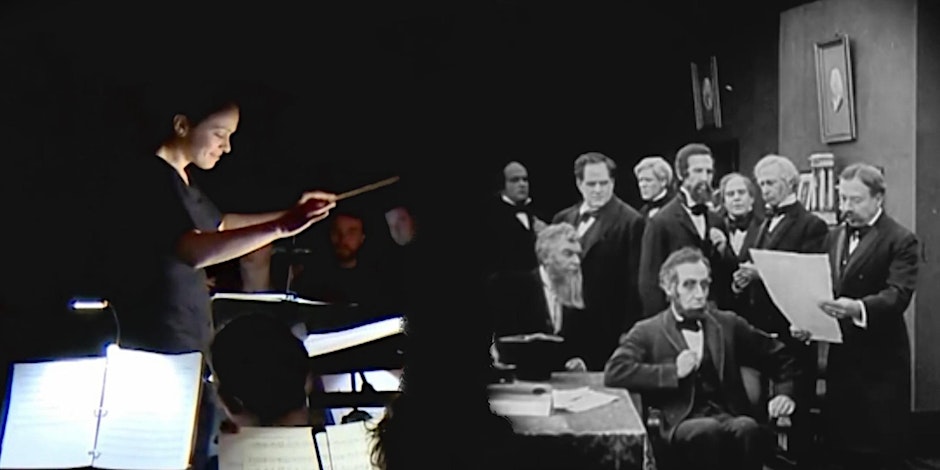
Lincoln and Booth: Live Music Played to Film

“The West End Museum presents an unforgettable theatrical experience when members of the New England Film Orchestra combine the magic of film with the power of music as they perform live music in-sync to two films highlighting the lives of Abraham Lincoln and John Wilkes Booth.

Odie Henderson, Boston Globe Film Critic and author of ‘Black Caesars and Foxy Cleopatras: A History of Blaxploitation Cinema’ (out in January 2024), will join us to provide context for the films.

John Wilke’s Booth was in Boston in April of 1865, eight days before the assassination of President Abraham Lincoln. What the well-known actor was doing during those last fateful days is not altogether clear, but during that time was purportedly seen practicing his aim at a local shooting gallery.

The first firm is an early silent short by Thomas Edison from 1915 entitled “The Life of Abraham Lincoln,” which spans the famous president’s life from his marriage to his assassination by Booth. The second, “The Man in the Barn,” is a speculative docu-drama from 1937 that asks if John Wilkes Booth didn’t die by gunshot while trapped in a burning barn just days after Lincoln’s assassination, but rather escaped to live another 38 years.

Don’t miss this one-of-a-kind “surround-sound” movie event at Boston’s landmark Hub Hall, adjacent to TD Garden and North Station and boasting 18 diverse food and drink options for a before or after-movie snack.”

Cost: $15

Event page: https://www.eventbrite.com/e/lincoln-and-booth-live-music-played-to-film


September 23, 2023

Washington, D.C.

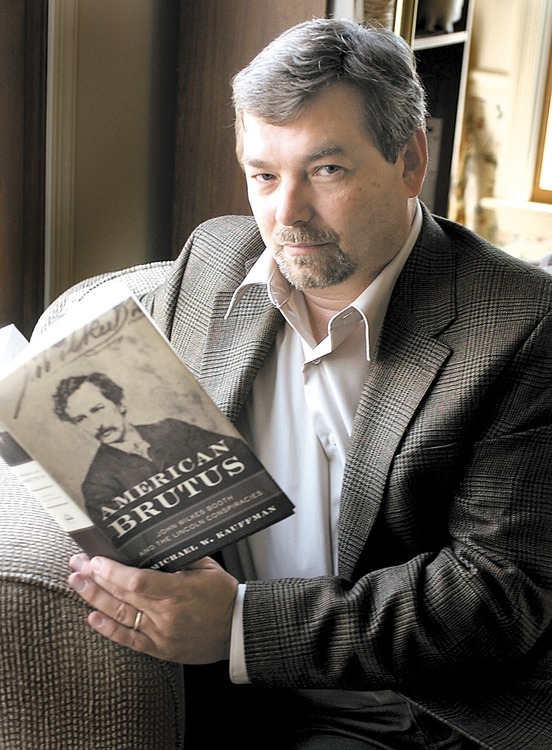
Smithsonian Booth Escape Route Bus Tour  [led by American Brutus author, Michael Kauffman!]

“Fleeing Ford’s Theatre on the night of April 14, 1865, John Wilkes Booth traveled through Maryland into Virginia, where, a few days later, he was found and fatally shot. Historian Michael Kauffman retraces Booth’s escape route and reveals the personalities and intrigues surrounding the Lincoln assassination.

Stops include Ford’s Theatre; the house near Clinton, Maryland, belonging to Mary Surratt, who was hanged for her involvement in the plot; and the house of Dr. Samuel A. Mudd, who set Booth’s broken leg.

Enjoy a seafood lunch at Captain Billy’s Crab House at Popes Creek Landing, near where Booth and co-conspirator David Edgar Herold crossed the Potomac. In Virginia, visit sites where they contacted local sympathizers and where Booth was captured and died.”

Cost: $170 for members, $220 for non members

Event page: https://smithsonianassociates.org/ticketing/tickets/booths-escape-route


October 15, 2023

Albany, New York

The Rathbones of Albany The Tragic Story of John Wilkes Booth’s Last Victim

Presented by the Friends of Albany Rural Cemetery

“Clara Harris and Henry Reed Rathbone were from prominent families in Albany. Each had wealth, education, and a bright future. Mark will reveal the sad, gruesome, yet true story of two local people who witnessed the assassination of President Abraham Lincoln first-hand, and the Cottage in Loudonville where ghostly apparitions have been reported.”

[Note from Dave: While Henry and Clara Rathbone are not buried at the Albany Rural Cemetery, their parents are. In addition, this cemetery is the final resting place of Absalom Bainbridge, one of the Confederate soldiers who met up with John Wilkes Booth and David Herold at Port Conway on April 24, 1865. Bainbridge assisted his cousin Mortimer Ruggles and a third Confederate, Willie Jett, in transporting Booth to the Garrett farm. Herold went with Bainbridge to spend the night at the home of Mrs. Clarke outside of Bowling Green. On the morning of April 25th, Bainbridge and Ruggles brought Herold back to the Garretts where they dropped him off. After seeing the Union soldiers crossing the ferry between Port Conway and Port Royal, Bainbridge and Ruggles raced back to alert Booth and Herold before fleeing themselves. If you attend this event, be sure to hunt down Bainbridge’s grave (and send me a photo of it). President Chester Arthur is buried here, too.]

Cost: Tickets don’t go on sale until September 24th

Event page: https://www.eventbrite.com/e/the-rathbones-of-albany-the-tragic-story-of-john-wilkes-booths-last-victim


October 21, 2023

Bel Air, Maryland

The Lincolns, the Booths, and the Spirits & The Forgotten Women of the Lincoln Assassination

“The Junius B. Booth Society (JBBS) and the Historical Society of Harford County, Inc. (HSHC) are holding an intriguing, one-of-a kind fundraising event titled  The Lincolns, the Booths, and the Spirits & The Forgotten Women of the Lincoln Assassination featuring author/historians Terry Alford and Kathryn Canavan on Saturday, October 21 at the Historical Society of Harford County.  This is a fundraiser and the proceeds will be split between JBBS and HSHC. All proceeds to JBBS will be used for the Tudor Hall museum. Seating is limited to 95 people, so reserve your seats now. Drinks and snacks will be provided. Following the closing remarks, the first floor of Tudor Hall, the childhood home of John Wilkes Booth will be open to attendees till 5:30 PM.

Terry Alford will present The Lincolns, the Booths, and the Spirits. Terry’s latest book, In the Houses of Their Dead, is the first book of the many thousands written about Lincoln to focus on the president’s fascination with Spiritualism (very popular in the Civil War era). Terry will demonstrate how it linked Lincoln, uncannily, to the man who would kill him. Abraham Lincoln is usually seen as a rational, empirically-minded man, yet as acclaimed scholar and biographer Terry Alford reveals, he was also deeply superstitious and drawn to the irrational. Like millions of other Americans, including the Booths, Lincoln and his wife, Mary, suffered repeated personal tragedies, and turned for solace to Spiritualism, a new practice sweeping the nation that held that the dead were nearby and could be contacted by the living. Remarkably, the Lincolns and the Booths even used the same mediums, including Charles Colchester, a specialist in “blood writing” whom Mary first brought to her husband, and who warned the president after listening to the ravings of another of his clients, John Wilkes Booth.

Kathryn Canavan is an independent researcher and the author of Lincoln’s Final Hours: Conspiracy, Terror, and the Assassination of America’s Greatest President. Kathryn will present The Forgotten Women of the Lincoln Assassination digging deep and uncovering surprising secrets and stories about some of the fascinating women connected to Lincoln’s assassination.”

Cost: $30

Event page: https://www.harfordhistory.org/event/the-booths-of-bel-air/

Categories: History, News | Tags: , , , , , , , , , | 8 Comments

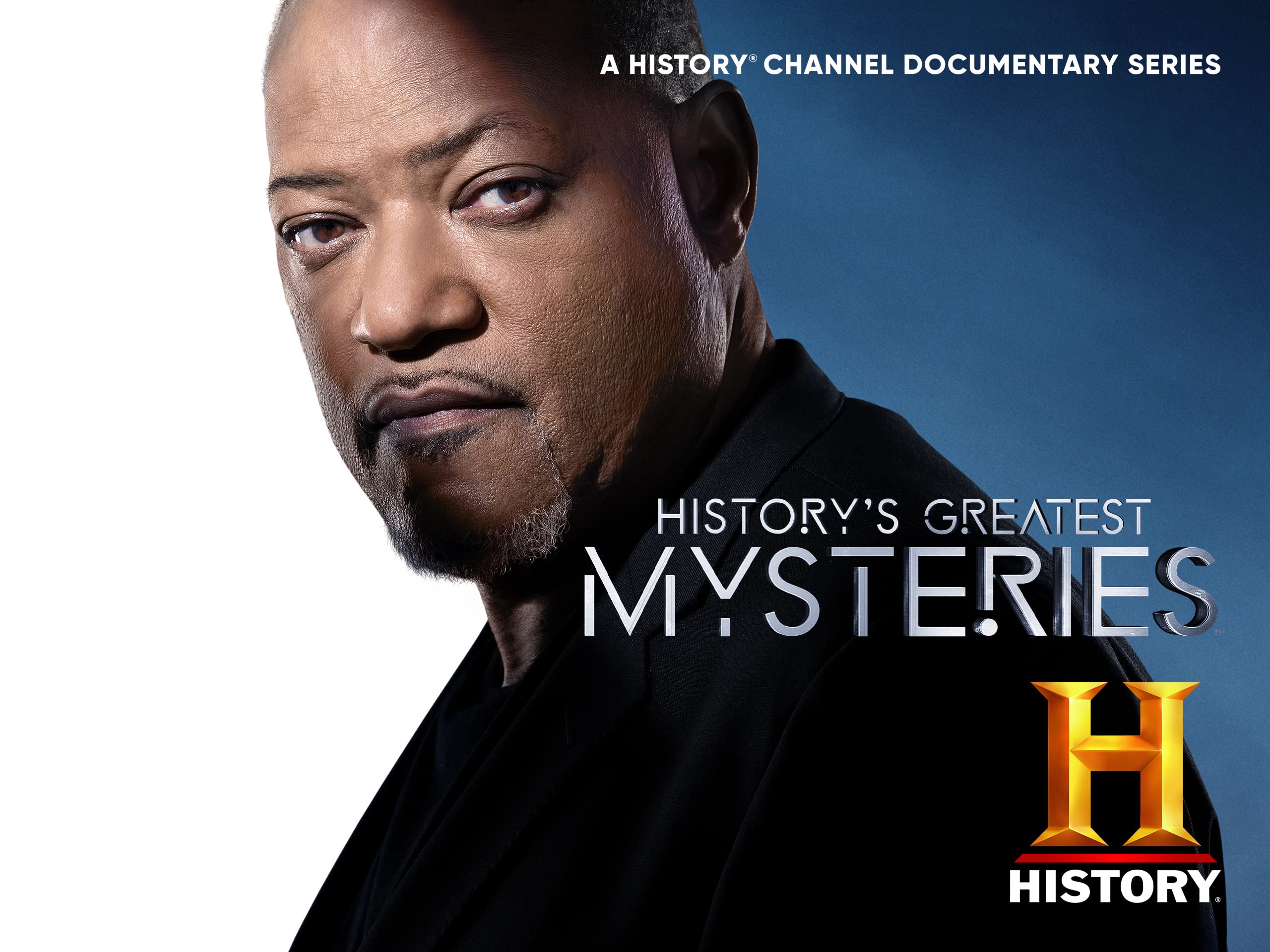
History’s Greatest Mysteries: The Escape of John Wilkes Booth

On December 5, 2020, the History Channel aired the fourth episode of their television show History’s Greatest Mysteries. This episode was called The Escape of John Wilkes Booth. And while it did have some reputable experts like Michael Kauffman who described the assassination and Booth’s subsequent 12 day escape, the almost hour and a half long episode mainly dealt with the plethora of conspiracy theories claiming that JWB escaped his death at the Garrett farm. Sadly, it seems like all the “documentaries” today that cover the Lincoln assassination story end up being about these very fringe and long discredited theories. When the episode first aired, I angrily tweeted from my friend Bob’s ottoman about the most obvious falsehoods as so many incorrect and illogical statements were presented alongside legitimate history.

The show seemed to be following the route of its injudicious “everything you have ever been told is a lie” predecessors which would inevitably end with a call to exhume JWB’s body on the basis of “evidence” that has been repeatedly and thoroughly debunked. While the very end of the episode did ultimately feature the hosts wondering if more information could be found by digging Booth up, just prior to that, this program pleasantly surprised me. They actually put some of these conspiracy theories to the test by using handwriting analysis and DNA comparison.

Below, I have excerpted a seven minute portion from near the end of the program that reveals their analysis of three theories presented in the show. These theories are: that David E. George was John Wilkes Booth (as claimed by Finis Bates), that John Wilkes Booth fathered children with Izola Martha Mills both before and after his supposed death, and a separate claim that John Wilkes Booth escaped and fathered a child that bore his own name. Give it a watch:

Let’s recap what we just saw there. First a handwriting expert looked at notarized document which stated, only at the end, that David E. George claimed to have been John Wilkes Booth just before his death. The expert concluded the document had been altered and the sentence describing George’s so called confession was added after the original had been notarized. The same expert also compared David E. George’s signature to known examples of John Wilkes Booth’s handwriting and found they did not match.

Next, the show used DNA from a descendant of Jane Booth Mitchell, Junius Brutus Booth’s sister, in order to see if various descendants of Martha Izola Mills are related to the Booth family. It was established that Booth descendant and the Mills descendants are not related. Then a similar comparison was done to a descendant who claimed John Wilkes Booth as her great great grandfather. Her father’s name was John Wilkes Booth III (and was actually interviewed by members of the Surratt Society in the 1980s). It was found that this descendant was also not related to the family of the real John Wilkes Booth.

In one fell swoop, History’s Greatest Mysteries actually did a huge favor to legitimate history by publicly discrediting these conspiracy theories. While it’s unfortunate that the important information uncovered is hidden in over an hour of misinformation, I’m still grateful they made some attempt to be objective and not just cater to sensationalism.

In this way, the show proved what close family and siblings of John Wilkes Booth knew all along. Their brother was killed at the Garrett farm on April 26, 1865. Even before he died, JWB was identified by photograph comparison at the Garrett farm and he had identifying items on his person. Despite the poor condition of his corpse by the time it got back to Washington, numerous friends, acquaintances, and his doctor further identified him on the USS Montauk. Finally, when his body was released to the family in 1869, his remains were once again identified by close theater friends who had known him for years and by his own brother, Joseph Booth. While some modern Booth relatives may wholeheartedly hope that their distant relative escaped his death, it’s just not so. Hopefully this program will help bring closure to a family that has long been abused by hucksters and frauds who attempted to use members of the Booth family to push their own agendas.

If you would like to watch the full episode, it’s available to purchase digitally on sites like Amazon and Google Play for like $2. You can also purchase season 1 & 2 of History’s Greatest Mysteries on DVD from Amazon for $10. If you are a subscriber to the Disney Plus streaming service, you can actually watch the episode for free. Just be warned that some of the “experts” featured on the show are really out there with their fantasies (i.e. the claim that Willie Jett shot “Booth”).

My friend Steve Miller refers to the Booth escaped conspiracy theories as rubber spiders. Like rubber spiders, no matter how hard you stomp on them, they just can’t be killed. I know that despite the mountain of evidence proving that John Wilkes Booth was killed at the Garret farm and is buried in the family plot at Green Mount Cemetery, people will continue to claim that Booth somehow escaped his own death. We’ll never be able to stomp out these stories for good. Still, I try to find solace in the fact that anyone who actually takes the time to investigate and evaluate these stories for themselves will quickly see that, like the rubber spiders, these conspiracy theories have never been real.

Categories: History | Tags: , , , , , | 10 Comments

Ben-Hur and John Wilkes Booth

This slideshow requires JavaScript.

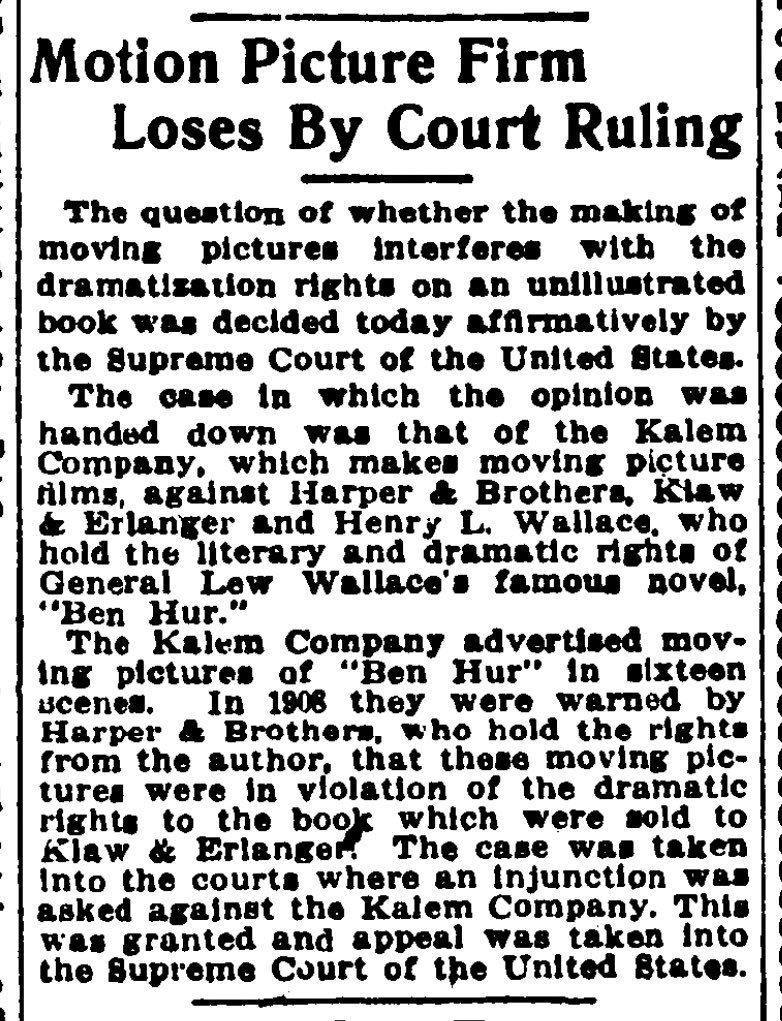
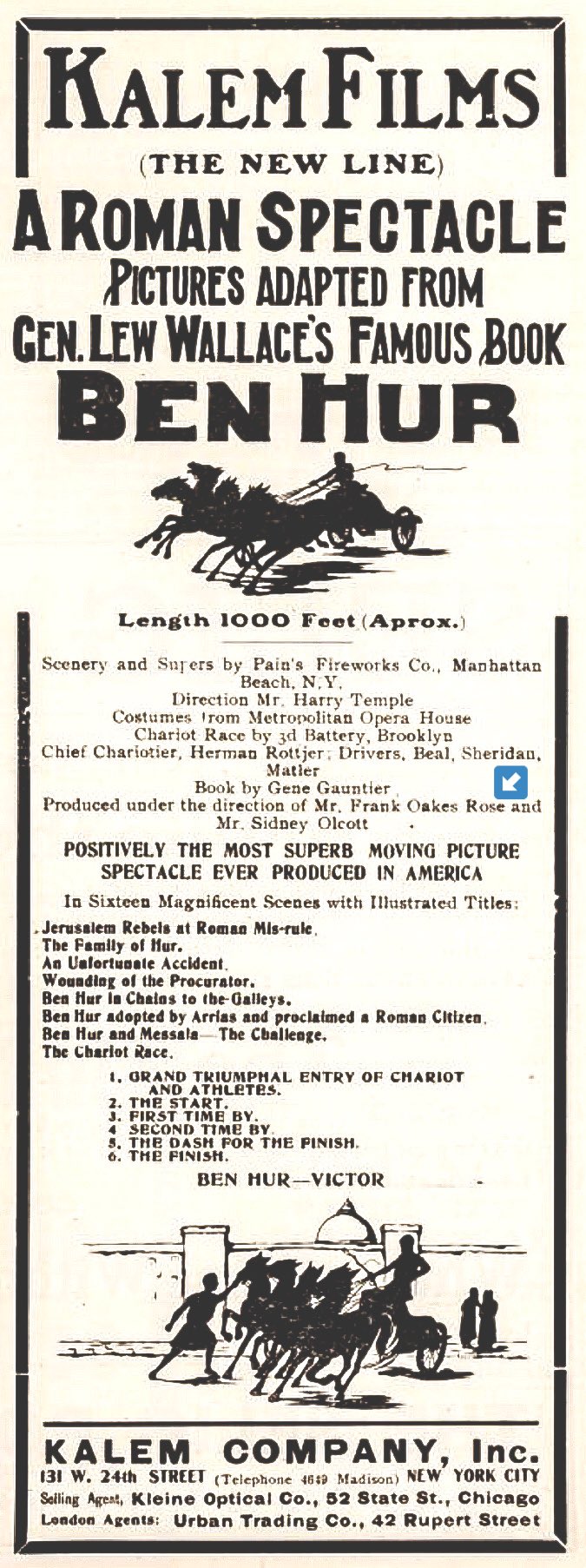
In 1907, the first film adaptation of Ben-Hur was produced. Author Lew Wallace had written the highly successful book 15 years after he had served on the commission that tried & convicted the Lincoln assassination conspirators. Wallace had died in 1905 & early filmmakers usually ignored copyright laws anyway, so Kalem Company made their silent film without any approval or permission. While less than 15 minutes long, the film was a big success, largely due to the book’s ongoing popularity. You can watch it here:

The Wallace estate and the book’s publishers sued Kalem for copyright infringement. Surprisingly, the estate won their suit. This set the precedent still in place today that producers must acquire the film rights to copyrighted material before producing a movie.

But commissioner Lew Wallace as the source material is not the only connection the 1907 Ben-Hur film has to the Lincoln assassination. One of the co-directors of the film was a man named Frank Oakes Rose.

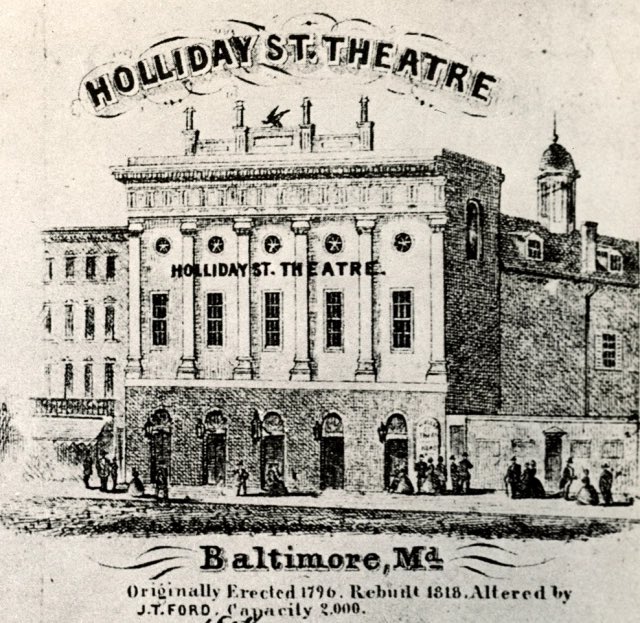
In 1869, a young Rose was a stock actor for John T. Ford in Baltimore. On Feb. 17, 1869, John T. Ford closed rehearsal early, beckoning a select few to follow him to an establishment behind the Holliday St. Theatre. While not invited, Frank Oakes Rose, along with fellow actor William Burton, scaled a fence and followed Ford & the others.

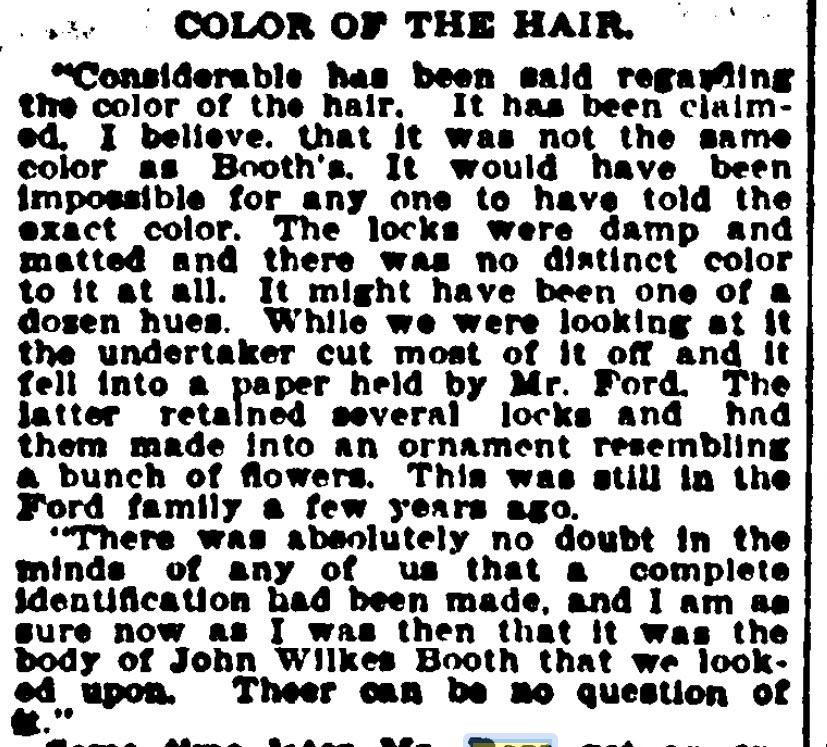
Rose & Burton found themselves among a group of about 25. They were all standing in Weaver’s undertaker shop, which was located behind the theater. There, the actors witnessed the final identification of John Wilkes Booth’s body which had just been shipped to Baltimore from D.C.

Rose observed as Joseph Booth helped to identify his brother using a gold plugged tooth in the skull of the remains. William Burton also volunteered that he had gone ice skating once with JWB. An investigation of the boot on the corpse’s foot had the same screw holes from the ice skate’s mounting. The same holes have been noted on the bottom of the boot on display at Ford’s Theatre.

This slideshow requires JavaScript.

Frank Oakes Rose never forgot the experience. Years later, when charlatans like Finis Bates tried to pass off an itinerate painter named David E. George as John Wilkes Booth, Rose told his story and his certainty the body he saw in 1869 was JWB.

Most of the Booth family found claims that JWB escaped his death at the Garrett farm to be ridiculous. Sydney Barton Booth, the son of Junius Brutus Booth, Jr. and Wilkes’ nephew, heard about Rose. In 1905, Sydney wrote to Rose, asking for his help in countering Bates & his lies.

This slideshow requires JavaScript.

I think it’s interesting that the movie that established the precedent for film rights was produced with stolen material from one the judges of the Lincoln conspirators and co-directed by a man who hopped a fence & stole a glance at the final identification of John Wilkes Booth.

Categories: History | Tags: , , , , | 10 Comments

The Lincoln Assassination on this Day (December 5 – December 11)

Taking inspiration from one of my favorite books, John Wilkes Booth: Day by Day by Art Loux, I’m documenting a different Lincoln assassination or Booth family event each day on my Twitter account. In addition to my daily #OTD (On This Day) tweets, each Sunday I’ll be posting them here for the past week. If you click on any of the pictures in the tweet, it will take you to its individual tweet page on Twitter where you can click to make the images larger and easier to see. Since Twitter limits the number of characters you can type in a tweet, I often include text boxes as pictures to provide more information. I hope you enjoy reading about the different events that happened over the last week.

NOTE: After weeks of creating posts with multiple embedded tweets, this site’s homepage now tends to crash from trying to load all the different posts with all the different tweets at once. So, to help fix this, I’ve made it so that those viewing this post on the main page have to click the “Continue Reading” button below to load the full post with tweets. Even after you open the post in a separate page, it may still take awhile for the tweets to load completely. Using the Chrome browser seems to be the best way to view the tweets, but may still take a second to switch from just text to the whole tweet with pictures.

Continue reading

Categories: History, OTD | Tags: , , , , , , , , , , , , , | Leave a comment

The Lincoln Assassination on this Day (November 28 – December 4)

Taking inspiration from one of my favorite books, John Wilkes Booth: Day by Day by Art Loux, I’m documenting a different Lincoln assassination or Booth family event each day on my Twitter account. In addition to my daily #OTD (On This Day) tweets, each Sunday I’ll be posting them here for the past week. If you click on any of the pictures in the tweet, it will take you to its individual tweet page on Twitter where you can click to make the images larger and easier to see. Since Twitter limits the number of characters you can type in a tweet, I often include text boxes as pictures to provide more information. I hope you enjoy reading about the different events that happened over the last week.

NOTE: After weeks of creating posts with multiple embedded tweets, this site’s homepage now tends to crash from trying to load all the different posts with all the different tweets at once. So, to help fix this, I’ve made it so that those viewing this post on the main page have to click the “Continue Reading” button below to load the full post with tweets. Even after you open the post in a separate page, it may still take awhile for the tweets to load completely. Using the Chrome browser seems to be the best way to view the tweets, but may still take a second to switch from just text to the whole tweet with pictures.

Continue reading

Categories: History, OTD | Tags: , , , , , , , , , , , , , , , , , , , , , | Leave a comment

Blog at WordPress.com.