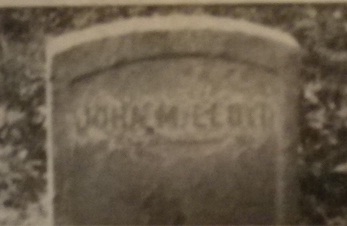
Posts Tagged With: Graves

Finding George Atzerodt

IMPORTANT NOTE: Further information as posted in the comments section below has thrown into question whether or not George Atzerodt is actually buried in St. Paul’s.  Please click here to read the update to this post.  What is without question is that George’s mother Victoria, sister Mary, and brother-in-law Gottlieb Taubert, are all buried in this cemetery.

After Mary Surratt, Lewis Powell, David Herold and George Atzerodt were executed for their involvement in Lincoln’s assassination, their bodies were buried on the Old Arsenal prison grounds.  The graves and pine boxes that would hold the quartet are seen in the execution photographs of the conspirators, merely a stone’s throw from where the scaffold stood.   John Wilkes Booth’s body had previously been deposited at the Old Arsenal grounds, having been secretly buried underneath the floor of a supply room.

This impromptu cemetery would also hold the body of Confederate officer Henry Wirz after he was tried and executed for the atrocities at his Andersonville Prison.  His pine box would lay right along side those of the Lincoln conspirators:
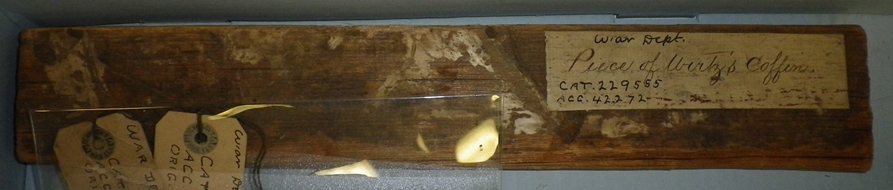
Piece of Henry Wirz’ coffin in the collection of the Smithsonian’s American History Museum.

The bodies of all of these individuals would stay under the Arsenal grounds until the waning hours of Andrew Johnson’s presidency.  Less than a month before leaving office, Johnson allowed the family members of the conspirators to take possession of their loved ones bodies.  Booth’s body was interred in the family plot at Green Mount Cemetery in Baltimore.  Mary Surratt was interred at Mt. Olivet Cemetery in Washington, D.C. David Herold was interred in the family plot in D.C.’s Congressional Cemetery.  The final disposition of all of Lewis Powell’s remains is still being researched by his biographer, Betty Ownsbey, but his skull somehow made its way into the collection of the Smithsonian before being discovered and subsequently buried next to his mother in Geneva Cemetery, Florida.  While finding Powell’s remains is a more modern mystery, for over a hundred years there was very little known about where George Atzerodt’s final resting place was.  Through the research of original Boothies, James O. Hall and Percy Martin, the mystery of George’s burial was solved.

After receiving permission to take possession of his brother’s body, John C. Atzerodt, a former detective on staff of the Maryland Provost Marshal, transferred George’s remains to the northern D.C. cemetery, Glenwood.  Records show that on February 17th of 1869, George’s body was placed in a holding vault.  John had apparently decided to purchase a lot in Glenwood in which to bury his brother.  Some newspapers reported on the arrival of Mrs. Atzerodt from Baltimore to attend the reinterment of her son in D.C.:

It looked like George would spend the rest of eternity in Glenwood Cemtery…

In 1854, the Second Evangelical Lutheran Congregation of Baltimore purchased four acres in Baltimore’s Druid Hill for use as a cemetery.  Between 1854 and 1868, the Second Evangelical church divided into three congregations; St. Paul’s, Immanuel, and Martini Evangelical.  Each new church held equal control over the Druid Hill cemetery.  Together, they sold half of the land to the city of Baltimore decreasing the cemetery to 2.25 acres.

St. Paul’s Evangelical Lutheran church, one of the three newly formed churches, was located in Baltimore on the corner of Saratoga and Freemount  streets.  One block south of that intersection was Lexington St.  Living on Lexington street and probable members of St. Paul’s congregation was Gottlieb Taubert and his wife Mary.  Gottlieb and his wife were both German immigrants.  Specifically, Mary Taubert’s maiden name was Mary Atzerodt.  She was the daughter of Henry and Victoria Atzerodt, and sister to George.  Mary and Gottlieb had married in 1860 when they were 18 and 24 respectively.  By 1865, the Tauberts had already purchased a lot in the Druid Hill cemetery, needing it to bury an infant child on April 12th.  They would also bury a five year old daughter there in 1866.

On February 19th, 1869, an odd “coincidence” occurs.  Just when John Atzerodt needs a place to bury his brother, the Tauberts suddenly have a burial in their St. Paul’s  lot.  The records back at Glenwood are confusing and missing, but it seems that John Atzerodt never actually paid for the lot he was going to bury his brother in.  In fact other people, completely unrelated to the family, are currently buried in John Atzerodt’s supposed lot.   George was never buried in Glenwood.  Instead of coming to D.C. to attend her son’s reburial, Victoria Atzerodt came to bring her son’s body back up to Baltimore to rest secretly in his sister’s cemetery lot.

And a secret affair his burial was.  So secret in fact, that his name does not even appear in the burial records.  The record’s for St. Paul’s cemetery in Druid Hill were not always exact in their documentation.  The records were hand written in old German Script and would often be missing several important pieces of information.  Whether George’s name was left off of the records purposefully by a sympathetic  church clerk, or accidentally by a lazy one, we may never know.  What can be gained from the record is that a burial did take place on February 19th in the Taubert lot.  In his 1984 article for the Surratt Courier, Percy Martin cited the record as describing the deceased as, “Gottlieb Taubert, aged 29 years”.  In the book, Records of St. Paul’s Cemetery by Elaine and Kenneth Zimmerman, they show it as being a “child of Gottlieb Taubert” and being 29 days old.  The discrepancies between the two is understandable.  Reading handwritten German Script is tedious and difficult.  While I have not seen the original record, it is likely that both accounts stated above are different interpretations of the same record.  The Zimmermans, familiar with how records for children often lacked any name except for the parent, took “Gottlieb Taubert” to be the name of the deceased’s father.  When presented with an age of 29 “years” they fixed what they assumed was a mistake and recorded a more reasonable age for an unnamed child, 29 “days”.  Mr. Martin, knowing that the age of 29 years would be consist with George Atzerodt (though George actually turned 30 while in prison), took the name of Gottlieb Taubert to be the name that George was buried as.  Either way, Gottlieb Taubert was not a fictitious name as is sometimes stated.  It was the name of George’s brother-in-law.   The most likely scenario is that George was buried namelessly, and not under a pseudonym.  Gottlieb’s name was attached to the record, just like it was for his two young children, because the burial occurred in his lot.

Victoria Atzerodt died on January 3rd, 1886, three months shy of her 80th birthday.  She was buried right alongside her poor son George, in the Taubert plot.  Gottlieb Taubert, himself, died in April of 1925.  The final burial in the Taubert lot was Mary Atzerodt Taubert on September 15th, 1928.

St. Paul’s Cemetery is located in the middle of Baltimore’s Druid Hill park.  It is currently maintained by Martini Lutheran Church, the last of the three divided churches still in operation.  Though vandals severely damaged many of the stones in the cemetery in 1986, the church has slowly been righting and restoring the stones.  The Taubert lot is a vacant one, however.  There is no sign that the lot ever bore a stone for any of the Atzerodts or Tauberts.

The name of the cemetery (St. Paul’s) has caused a lot of confusion for those looking to find George Atzerodt’s final resting place.  Despite what is on his FindAGrave page, George is not buried in the St. Paul’s cemetery located off of Martin Luther King Jr. Blvd in downtown Baltimore.  Rather he is in the St. Paul’s cemetery located in the middle of Druid Hill Park.

Specifically, the Atzerodts and Tauberts are buried in lot #90:

Had it not been for the research of people like James O. Hall and Percy Martin (and our own Richard Sloan, I should add), George’s resting place may never have been known.  Discovering his burial site was a product of collaboration.  As we continue on in our studies of those involved in the great crime of April 14th, 1865, may we always remember the strength that comes from such cooperation.

References:
The Search for George Atzerodt by Percy Martin in, “In Pursuit Of…Continuing Research in the Field of the Lincoln Assassination” published by the Surratt Society
Records of St. Paul’s Cemetery by Elaine Obbink Zimmerman and Kenneth Edwin Zimmerman
Martini Lutheran Church
Cemetery drawing from the James O. Hall Research Papers

Categories: Uncategorized | Tags: , , | 22 Comments

Sam and Mike

When it comes to the assassination saga, there are many remarkable individuals.  There are several men and women who stand on their own in the drama that occurred in 1865.  As students of the assassination though, there are also many people (and aspects of their stories) that we have joined together.  There are names and experiences that we have come to almost automatically associate together as a set or a pair.  The Lincoln’s guests that fateful evening, Major Henry Rathbone and Clara Harris, are one such couple that, by virtue of engagement and tragedy, are forever linked together as a pair.  Louis Weichmann and John Lloyd, as the chief witnesses again Mary Surratt in the trial, share a legacy in books and a recent movie.  John Wilkes Booth and David Herold are linked due to their shared twelve day escape.

In addition to these and many others we have created, two men tried during the summer months of 1865 are interconnected.  Though strangers until that fateful year, Samuel Arnold and Michael O’Laughlen, are now rarely spoken of as individuals.  Rather, Sam and Mike are a pair.

Both knew John Wilkes Booth when they were children.  Both joined Maryland regiments in the Confederate army.  Both left military service early.  Both agreed to aid John Wilkes Booth in his kidnapping plot.  Both lost interest and split with Booth before the plot turned to assassination, and both were sentence by the military tribunal to life imprisonment at FortJefferson.  They shared such similar lives, it makes sense that one would invoke the other.  After reading over accounts of the time that these two men spent together when in the employ of Booth and their subsequent incarceration, one cannot help but imagine a friendship that must have grown between the two men.  While all the conspirators started as strangers to each other, spokes connected by the hub of John Wilkes Booth, Sam and Mike appear to share the same values and life experiences that would produce a true friendship.  The shared imprisonment would lead to a friendship between Dr. Mudd and Edman Spangler as well, but, in my eyes, Sam and Mike’s had a stronger foundation.

One discrepant piece of information towards a strong friendship between Sam and Mike is Sam Arnold’s own memoirs.  As was previously written, Sam Arnold released his memoirs after a different Sam Arnold died and the newspapers reported his own death.  In these memoirs he recounts his involvement with Booth and gives graphic descriptions of his time at FortJefferson.  In Michael Kauffman’s edited book of Arnold’s memoirs, he succinctly points out a large anomaly in the narrative:

“The most striking omission is the absence of any comment on the case of his cellmate, Michael O’Laughlen.  Arnold ignores him so completely that in telling about the end of the yellow fever epidemic , Arnold writes that, ‘happily, we lived through it all,” when, in fact, O’Laughlen had died from the disease.”

While Arnold’s account was written many years after O’Laughlen’s death, the omission of so much regarding him is odd.  In truth, it throws a bit of a monkey wrench in my whole, “They were good friends,” hypothesis.  If I lost a close, albeit rather recent, friend in jail, I would probably write about him.  In the end, I still maintain they two shared a bond of friendship due to a brief mention in an article regarding the other Sam Arnold’s death.

The October 9, 1902, Baltimore American ran an article correcting the misconception that the conspirator Sam Arnold had died.  In it, they attempted to find out where the real Sam Arnold was.  During their search they reported the following regarding Sam’s life:

“When he came back from his island prison, off the Florida coast, he brought with him a number of mementoes of one of his fellow prisoners from Baltimore, who had died of fever, to the latter’s brother here.  This brother said yesterday that he had not seen or heard from “Sam Arnold” for at least 15 years, and he was reasonably sure he had not been in Baltimore during that time.”

So while Dr. Mudd was the man who attended to Mike on his deathbed and Spangler was the one Mike said his last goodbye to, it was Sam Arnold who returned Mike’s effects to his brother Samuel Williams O’Laughlen.  To me, that shows a deep friendship.  Sam wanted to connect with the family of his lost friend and bring them some comfort.

Though O’Laughlen’s brother stated he hadn’t heard from Arnold in 15 years that still means Arnold was in contact with the O’Laughlen family into the 1880’s.  Friends do that.  They keep in touch with the family and they share memories long after a loved one has passed.

In my view, the absence of Mike’s death in Sam’s memoirs does not display coldness.  I choose to believe that Sam was deeply affected by Mike’s passing.  I choose to believe that the two men shared a strong, emotional bond that kept Arnold from publicly expressing his grief at his friend’s death.  Mike is avoided in Sam’s memoirs, not because he meant nothing to him, but because he meant a great deal.

While my views on Sam and Mike’s friendship are merely my personal opinion, there is nevertheless a connection between these two men.  They shared so much in life, that we have appropriately linked them together.  When a discussion of the conspirators arises, the name of one man will almost inevitably follow the other.  It appears that Sam and Mike will be associated together more than any other two conspirators,  and they fittingly rest in peace in the same cemetery for all time.

References:
Memoirs of a Lincoln Conspirator by Samuel Bland Arnold edited by Michael Kauffman
Baltimore American – “Death Recalls Great Tragedy” 10/9/1902

Categories: Uncategorized | Tags: , , | 3 Comments

George Robinson’s Grave

Just a quick post today as I’m still in the process of getting set up in my new Maryland residence.

During a brief site seeing trip I took with two of my family members who helped me make the move from Illinois, we visited Arlington National Cemetery. I have been there before, but every time I visit it I am still humbled by the white, uniformed acres of sacrifice before me.

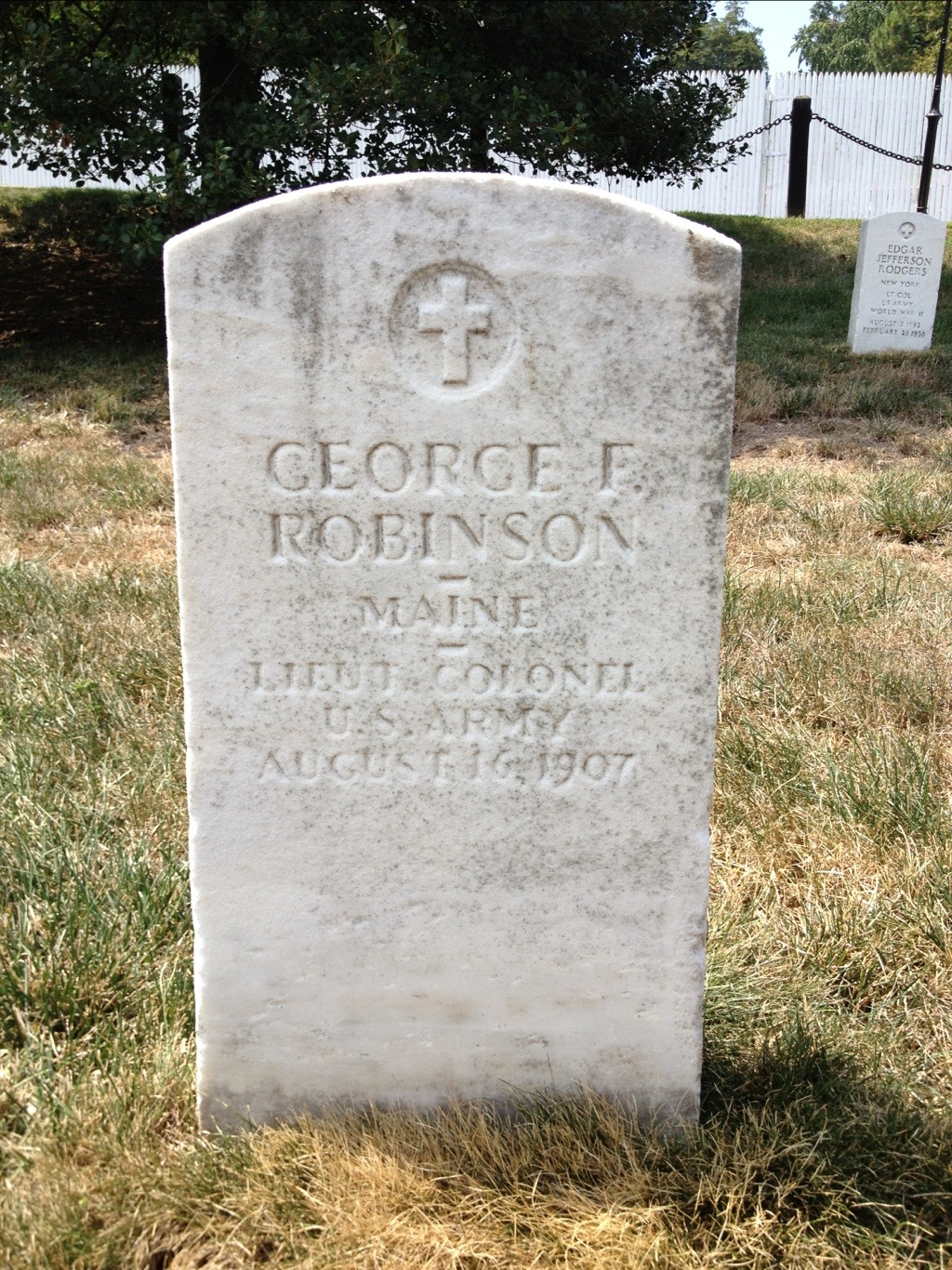
One grave related to the Lincoln assassination in Arlington belongs to George Foster Robinson.

20120806-115912.jpg

On April 14th, 1865, Robinson was an army private tending to Secretary of State William Seward after the latter suffered a carriage accident. When Lewis Powell slashed his way into Seward’s bed chamber, it was largely Robinson who discharged him. He was credited as saving the Secretary’s life and was given many accolades. Robinson would receive Powell’s knife as a memento, be presented with a gold congressional medal and $5,000, and, 100 years later, a mountain in Alaska was named after him for saving the man who later purchased the territory of Alaska from Russia.

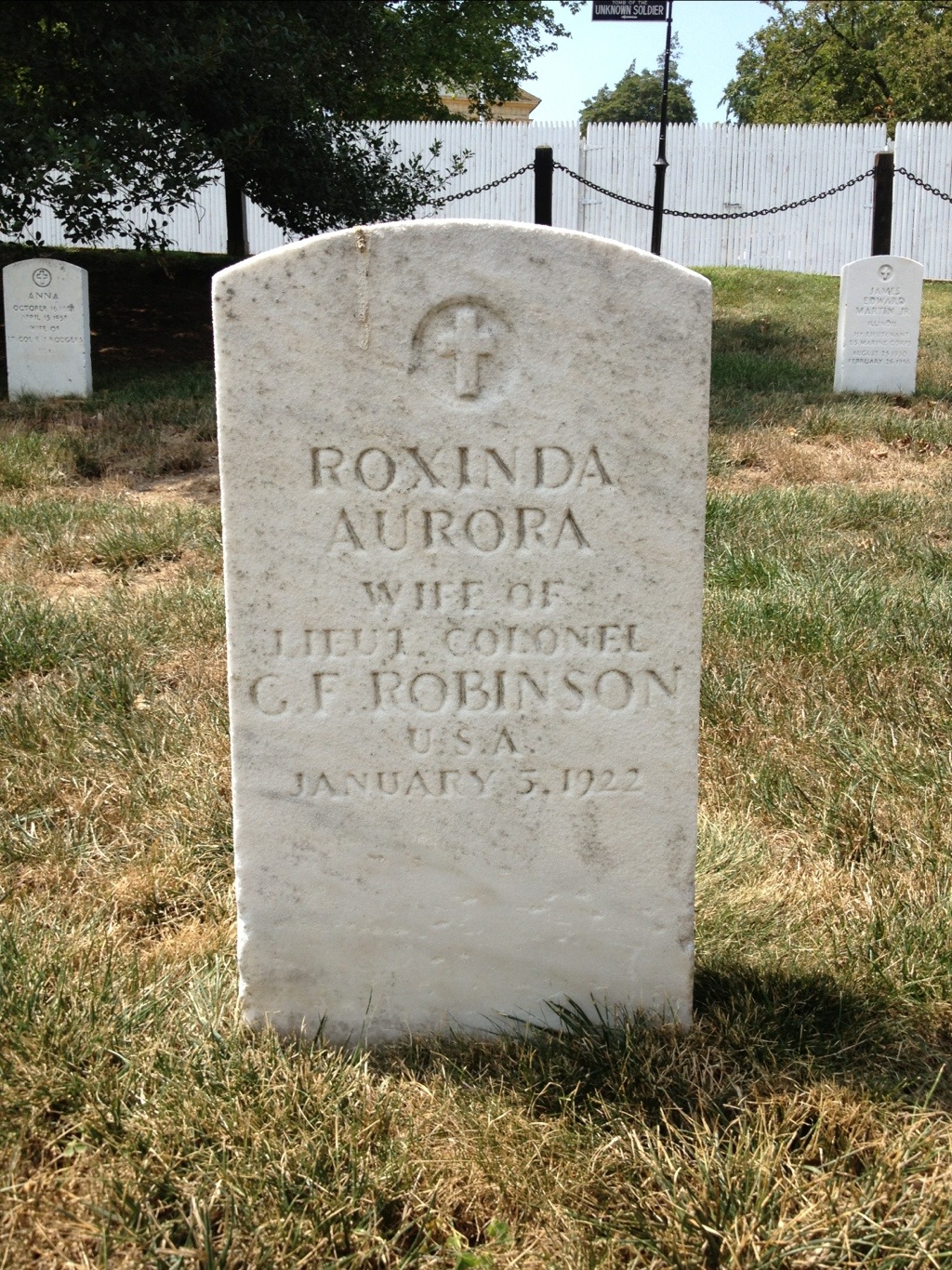
Today he rests in Arlington next to his wife Roxinda Aurora:

20120806-121442.jpg

The Robinsons are located just a stone’s throw from Bobby and Teddy Kennedy’s graves. In the background of the pictures you can see the large white fence that currently shields Teddy Kennedy’s grave. So next time you’re at Arlington make the minor detour into the section in front of the Kennedy brother’s and pay your respects to a true Civil War hero: George Foster Robinson.

20120806-122557.jpg

References:
http://www.eighthmaine.com/Pages/OurHero.aspx
http://www.arlingtoncemetery.net/gfrobinson.htm

Categories: Uncategorized | Tags: , , , | 2 Comments

The Nine Lives of Sam Arnold

Samuel Bland Arnold was born on September 6, 1834 to Benedict “George” and Mary (Bland) Arnold.  In his early days, he and his brother William attended St. Timothy’s Hall, a military academy in Catonsville, MD.  St. Timothy’s was a firm school requiring the students to wear steel-grey uniforms and maintain strict military discipline.  In 1852, Sam and Billy became introduced to a fellow student, John Wilkes Booth.  Booth was not the best of students, fighting against the regimental nature of the school.  The death of John’s father in November of 1852 put an end to his time at St. Timothy’s.  Sam, on the other hand learned well from his time at the academy.  When John Wilkes Booth was developing his career as an actor, Sam signed up for service in the Confederate States of America.  He joined the First Maryland Infantry in 1861 before he was discharged for illness.  He later joined another brother, George, who was serving in the Nitre and Mining Bureau in Georgia.  He left this position in early 1864 to care for his ailing mother in Baltimore.  In August of 1864, John Wilkes Booth happened to run into his old schoolmate, William Arnold in Washington, D.C.  William said that his brother Sam, a veteran of the CSA, was also in D.C. at the time, and he arranged a meeting with him and Booth.

The two old schoolmates quickly rekindled their friendship over drinks.  During their meeting, another of Booth’s childhood friends, Michael O’Laughlen, appeared, having been invited by Booth.   After a bit, Booth brought the two men into his confidence about his plan to abduct President Lincoln and hold him for ransom.  Arnold and O’Laughlen, both influenced by and sharing in Booth’s dream for a drastic turn in the war, pledged themselves to help Booth fulfill his goal.  This support in the kidnapping plot and an ambiguous letter from Sam found in Booth’s room would prove his undoing.  After the assassination, Sam Arnold was sentenced to life imprisonment at Fort Jefferson, Dry Tortugas.

Fast forward 37 years later.  Arnold was pardoned in 1869 after four years of the most grueling imprisonment possible.  From his day of release, he lived a quiet, reserved life away from public eye.  He denied interviews at every turn.  Then on October 7th, 1902, Sam Arnold died…kind of:

As this article states, Arnold had promised to release a statement regarding his involvement upon his death.  As of a few days later, however, no newspapers had been able uncover any such statement.  The reason for this was discovered by another newspaper that reported the following:
Yes, it appears that the Samuel Arnold that died on October 7th was not the Sam Arnold involved in the conspiracy.  Rather he was just a man that shared the same name as the conspirator.  As Osborn Oldroyd had written, the real Sam Arnold had already died.  He did so quietly and without any statement having been released upon his death.  And so the world was left without ever hearing the words of the last Lincoln conspirator tried by military tribunal in 1865.

All of this breaking news about Sam Arnold’s death proved confusing to a 68 year-old resident of Friendship, MD.

As he read the many obituaries about the Lincoln conspirator, he saw how the newspapers continually perpetrated the same misconceptions and injustices of years past.  Finally, he had seen enough.  This man decided to change his previous arrangement regarding telling his story.  The real, and very much alive, Samuel Bland Arnold decided to release his account:
Arnold’s account became a daily column for two weeks in many national newspapers.  Most of his account detailed his imprisonment at Dry Tortugas.  In 1995, author Michael Kauffman reprinted the account as the book Memoirs of a Lincoln Conspirator.  It is an essential, albeit biased, version of the conspiracy that led to Lincoln’s assassination.

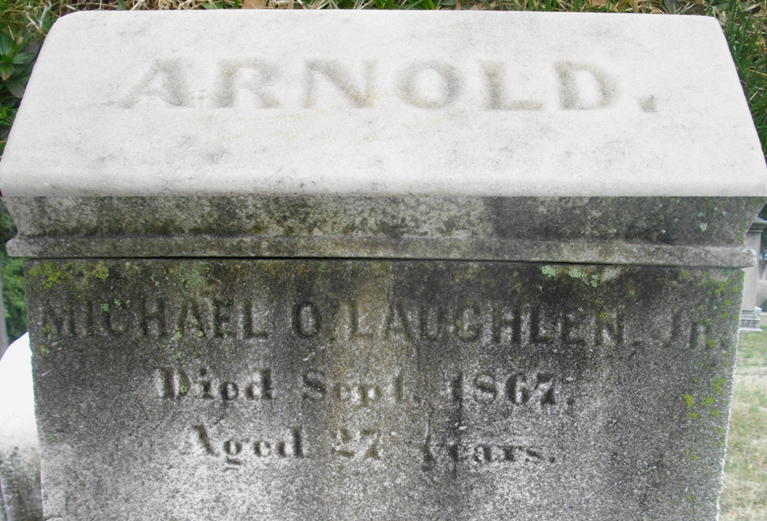
The real Sam Arnold actually died on September 21, 1906 at the home of his sister-in-law Helen Arnold.  He is buried in Greenmount Cemetery in Baltimore.  His nondescript “Arnold” stone rests in the same cemetery as John Wilkes Booth and Michael O’Laughlen, recreating his visit with the two men so many years before.

Post Script – Even after the mistakes that were made when the other Sam Arnold died, the press still made mistakes when the real one passed on.  For example, did you know the conspirators were imprisoned in Hawaii?

References:
My Thoughts Be Bloody by Nora Titone
American Brutus by Michael Kauffman
Memoirs of a Lincoln Conspirator by Michael Kauffman
Newspaper accounts retrieved from Genealogybank.com

Categories: Uncategorized | Tags: , , | 21 Comments

The Marking of Frederick Aiken’s Grave

On June 14, 2012, the Surratt Society dedicated a new grave marker for Frederick A. Aiken.

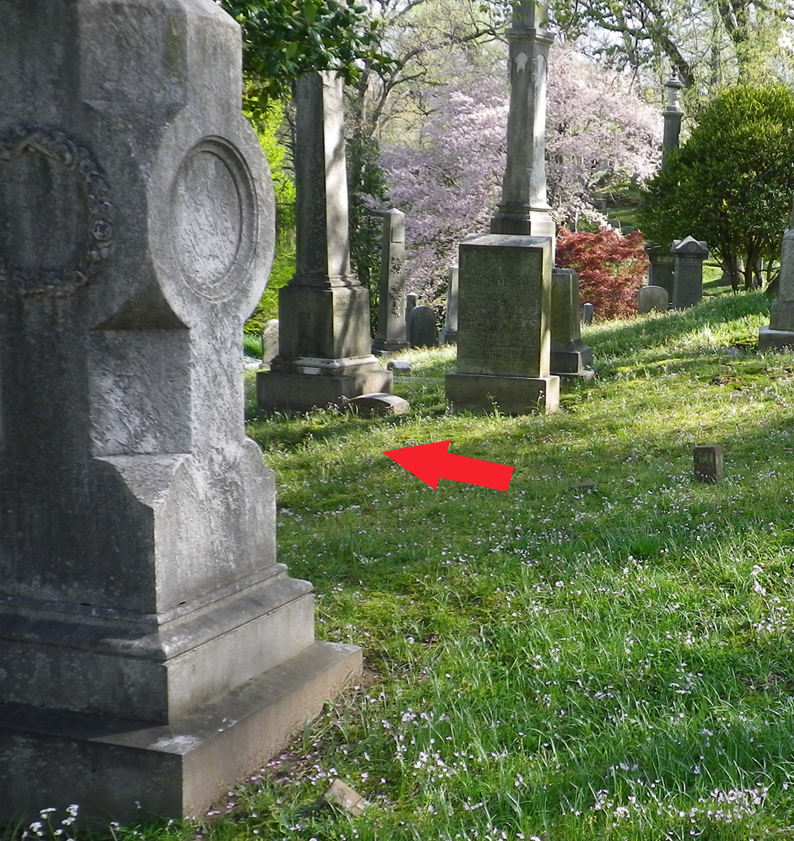
Mr. Aiken was part of Mary Surratt’s legal consul during the Conspiracy trial. The production and release of Robert Redford’s film about Mary Surratt and Frederick Aiken entitled The Conspirator, led to the discovery by researcher Christine Christensen that Mr. Aiken was buried in an unmarked grave in Washington D.C.’s Oak Hill Cemetery.

Aiken’s resting place when it was unmarked

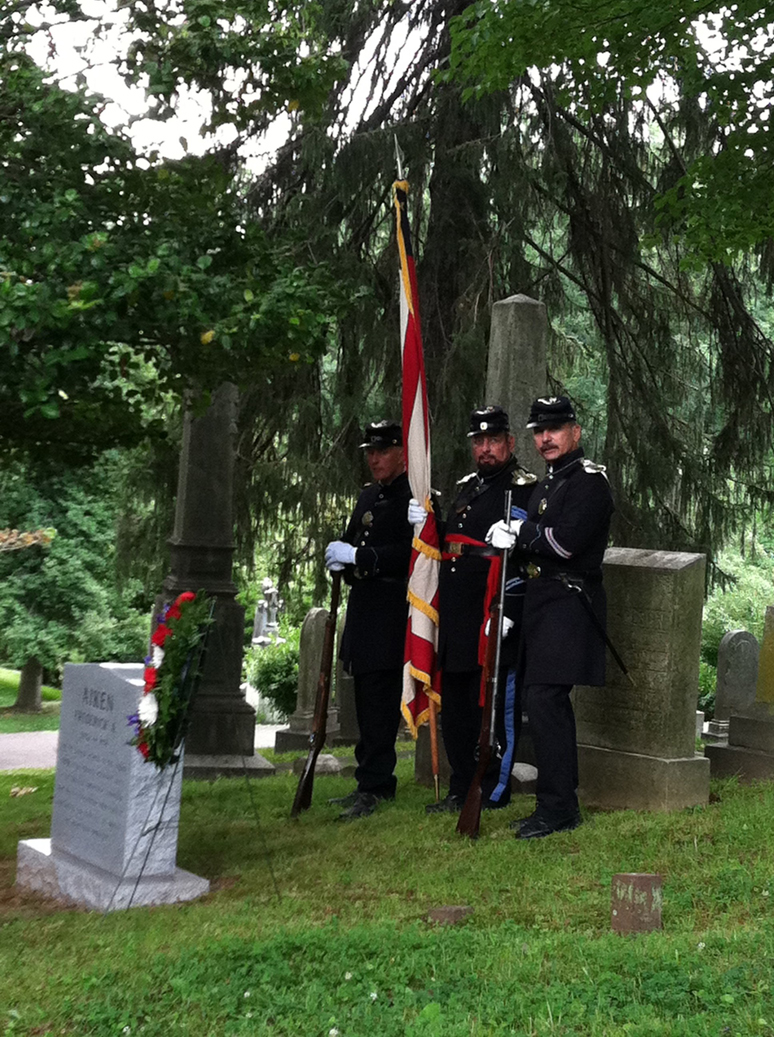
The Surratt Society, having previously taken up funds to mark the graves of Edman Spangler and Elizabeth Keckly, started a fundraising campaign to mark his grave. The dedication service was attended by members of the Surratt Society and Museum, a group of Honor Guard reenactors, and even some descendants of the Aiken and Clampitt family (Aiken’s legal partner in Mary Surratt’s case). Short speeches were given based on the biographical details gained from Christine Christensen’s impressive research (Her 29 page document about Aiken can be read by clicking HERE). The Aiken descendant gave a nice speech while playing a recording he had made of the chimes of a grandfather clock. That grandfather clock was in an Aiken house that Frederick spent time in as a child. You can hear a short recording of them by clicking HERE. At the close of the ceremony, as the group was dispersing, the cemetery was visited by a doe and her fawn. The following are just a few images of that day sent to me by Betty Ownsbey, Lewis Powell’s biographer:

A descendant of the Aiken family (left) and Clampitt family (right). Sadly, Frederick Aiken had no children of his own and so he has no direct line.

The Honor Guard at Aiken’s Grave

Visitors at the Cemetery

References:
Finding Frederick by Christine Christensen
Betty Ownsbey

Categories: Uncategorized | Tags: , , | 11 Comments

Resurrecting Gravestones

April 14th is the 147th anniversary of Lincoln’s assassination.  Several generations have passed in that time.  Most recently, we mourned the passing of the last of Dr. Mudd’s grandchildren, succinctly showing the time that has elapsed since the great crime.  As has been done for ages, we mark our lost generations with gravestones.  They are a reminder of their time on earth and their influence on others.  Unfortunately the stones on which names are placed are not impervious to time’s unceasing march.  Water, wind, heat and cold, erase names and dates.  Markers stand as unreadable, phantom reminders of people and lives unknown.  Along with the elements, humans, both directly and inadvertently damage stones.  Markers are chipped, broken or fallen by human hands.  For many of these stones, this is the end.  Without families aware of their destruction, they remain broken, fallen, and forgotten.

For some related to the Lincoln assassination this is the case.  John M. Lloyd is one example.  Lloyd was Mrs. Surratt’s tenant occupying her Tavern in Surrattsville (then Robeysville), MD.  One the day of the assassination, Lloyd testified that Mary told him, “I want you to have those shooting irons ready: there will be parties here to-night who will call for them.”  The shooting irons referred to were Spencer Carbines that were hidden at the Surratt Tavern during the proposed kidnapping plot.  In addition Mary gave Lloyd a package wrapped in paper later found to be field glasses.  Later that night, Booth and Herold stopped by the Tavern, took one of the carbines and the field glasses.  Lloyd was a key witness against Mary Surratt at the Conspiracy trial.  Lloyd would later die an accidental death in 1892:

“He was in the construction business and died of an accident that occurred on one of his building projects. He wasn’t satisfied with some work that had been done and went up on a scaffold to inspect it. Near the other end of the scaffold flooring a load of bricks had just been deposited. As he reached the scaffold and stood on it, the boards gave way, and he fell to the ground. The bricks tumbling down upon him crushed his head, kidneys, and other parts of his body.”

John M. Lloyd's gravestone circa January 1969. Courtesy of the Surratt House Museum

Lloyd was laid to rest in Mount Olivet Cemetery in D.C.  This is same cemetery in which Mary Surratt is buried.  He was buried in December of 1892 and his marker was standing until it fell some time in 1969.  Today, his plot is unmarked – a shining example of the many who have fallen and have been forgotten. Correction: I have been informed by gravestone expert Richard Smyth that, as of 2008, Lloyd’s marker was still on his grave.  When Rich visited Mount Olivet, he had to dig the stone out and remove the dirt and grass that had grown over it.  The current condition of the stone is unknown.

There are also those to whom, markers were never created.  In these instances we are sometimes fortunate to have cemetery records to tell us who has been placed where.  This is the case of the Surratt Society’s current drive to place a marker on the grave of Frederick Aiken.  Aiken was one of the lawyers who defended Mary Surratt at the Conspiracy trial.  A tremendous amount of research into Mr. Aiken’s life was done by researcher Christine Christensen.  Her 28 page biography about this man’s extraordinary life is available through the Surratt House Museum and has been the catalyst for soliciting donations to mark his grave.  He is currently unmarked in Georgetown’s Oak Hill Cemetery:

A stone bearing his name, dates and a quote given by him at the trial will be put up once enough donations are received.

Finally, there are grave stones that have been resurrected so to speak.  These are stones that have been broken or worn, but have been fortunate enough to have been replaced.  Mary Surratt and Dr. Mudd are two examples of resurrected gravestones.

May Surratt was originally buried next to the gallows on which she died, in the yard of the Old Arsenal prison.  Eventually, her body was released to her family and she was interred at Mount Olivet.  For almost 100 years she was marked by this stone:

Then, around the 1970’s, this headstone was broken.  The original headstone is currently in pieces in storage at the Surratt House Museum.  They received the remnants from Boothie researcher John Brennan who asked and was permitted to have the broken gravestone.  Mary’s stone was replaced and this is the one that stands there today:

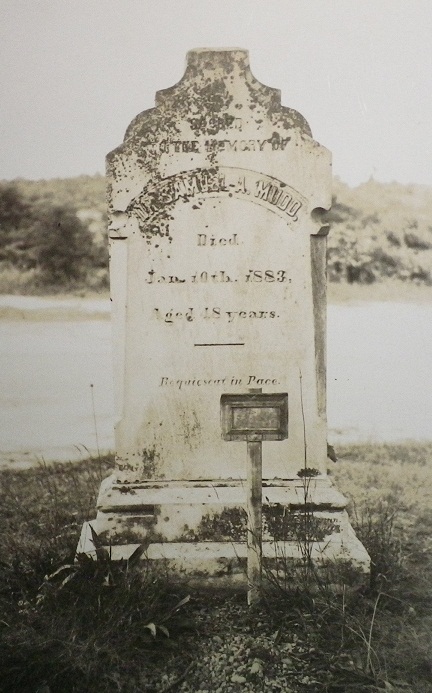
Dr. Mudd’s grave has a similar story.  Dr. Mudd died in 1883 at the age of 49.  He was buried at St. Mary’s Catholic Church in Bryantown, MD.  From this point until 1940, Dr. Mudd had this gravestone:

As you can see, over time, part of the stone became moss covered.  In addition, this stone mistakenly puts the doctor’s age as 48 when he was truly 49.  Lastly, this stone originally had a cross at the top that was broken off.  In 1940, Mudd descendants placed a new gravestone on Dr. Mudd’s:

Dr. Mudd’s old stone is currently on display behind the Dr. Samuel Mudd House in one of the stables:

There are many individuals related to the Lincoln assassination who are without markers.  For the key conspirators, this was done to avoid either vandalism against them or reverence for them.  It was smart then, as retribution against their final resting place was a true worry.  But 147 years have passed since their actions.  The trot of time allows us to see them as people, and all people deserve to be recognized for their time on Earth.  Hopefully, with the help of organizations like the Surratt Society and private history-minded individuals, more Lincoln assassination figures will have their final resting places marked or resurrected.

References:
“That Man Lloyd” by Laurie Verge, April 1988, Surratt Courier
Finding Frederick by Christine R. Christensen

Categories: Uncategorized | Tags: , , , , | 5 Comments

A jaunt through Congressional Cemetery

Congressional Cemetery is a beautiful cemetery located in Washington D.C. along the coast of the Anacostia River.  This 35 acre cemetery is a National Historic Landmark and contains over 22,000 interments.  On a walk through the cemetery today, here are some of graves of people related to the Lincoln assassination:

Emerick Hansell:

Hansell was a State Department messenger whose main duties were ferrying messages between the State department and the Secretary of State, William Seward.  After the Secretary’s carriage accident, Hansell was helping to keep an eye on the wounded Seward.  On the night of April 14th, Hansell was lodging at the Seward house.  The noise from Powell’s assassination attempt awoke him, and, as he was heading down the stairs to raise the alarm, Powell overtook him and stabbed him in the back.  Hansell was one of the five wounded victims from that night.  He is buried here at Congressional with his first wife, Elizabeth.

Peter (Pedro) Taltavull:

A Spanish immigrant, Taltavull co-owned The Star Saloon.  The Star Saloon was the tavern adjoining Ford’s Theatre and was one of the places where Booth had a drink before shooting Lincoln.  While he did not serve during the Civil War, Taltavull was also in the US Marine Corp Band for over 20 years.

Charles Forbes:

Forbes was a footman for Lincoln’s carriage.  As the stone states, Forbes was the only one sitting outside of the President’s box during his time at Ford’s Theatre.  Forbes was not a bodyguard and had no instructions against letting people into the President’s box.  In fact, he let a messenger in to see the President prior to Booth’s arrival.  Booth presented Forbes with a card, and Forbes easily allowed the famous and innocently looking actor into the President’s box.

There is a wonderful story from Thomas Pendel’s book, Thirty-Six Years in the White House, demonstrating Lincoln’s sense of humor and relationship with Forbes:

“On one occasion, President Lincoln, when riding near the Soldiers’ Home, said to his footman, named Charles Forbes, who had but recently come from Ireland, “What kind of fruit do you have in Ireland, Charles?” To which Charles replied, “Mr. President, we have a good many kinds of fruit: gooseberries, pears, apples, and the like.” The President then asked, “Have you tasted any of our American fruits?” Charles said he had not, and the President told Burke, the coachman, to drive under a persimmon tree by the roadside. Standing up in the open carriage, he pulled off some of the green fruit, giving some of it to Burke and some to Charles, with the advice that the latter try some of it. Charles, taking some of the green fruit in his hand, commenced to eat, when to his astonishment he found that he could hardly open his mouth. Trying his best to spit it out, he yelled, “Mr. President I am poisoned!” Mr. Lincoln fairly fell back in his carriage and rolled with laughter.

This story was afterward told by the coachman, justifying himself upon the grounds that it was too good to keep.”

Hester A. Butler:

Ms. Butler’s connection to the Lincoln assassination is a relatively distant one.  Butler is her maiden name which she and her children reverted back to after the death of her husband.  At the time of Lincoln’s assassination, Hester’s husband, John, was a detective on the staff of Maryland provost marshal James L. McPhail.  Before that he was in the carriage business in the city of Port Tobacco.  John owned his carriage business with his brother, George Atzerodt.  This made Hester Atzerodt nee Butler, the sister-in-law of the would be assassin of Andrew Johnson.  After the death of her husband John, Hester and her children freed themselves from the stigma of the Atzerodt name by changing back to Butler.  Hester, along with two of her children are buried at Congressional.

David Herold:

The only conspirator buried at Congressional is Davy Herold.  After being executed on July 7th, 1865, Davy, the other conspirators, John Wilkes Booth, and Andersonville Prison commander Henry Wirtz, were all buried on the Arsenal grounds.  Eventually, the Herold family received permission to retrieve Davy’s body from the Arsenal.  He was reburied in the Herold family plot in Congressional in February of 1869.  His specific grave is unmarked, but his unmarried sister, Elizabeth Jane, was buried right on top of him in 1903.  The rightmost headstone in this picture is Elizabeth Jane’s, and is therefore the only marker for Davy.  At least for now…

References:
Congressional Cemetery Website
Thirty-six years in the White House by Thomas F. Pendel

Categories: Uncategorized | Tags: , , | 3 Comments

Edward John Collis

In a brushy outlying area of the St. Ignatius Cemetery in Port Tobacco, Maryland, there is a weather worn grave marker:

While extremely faded from time and neglect, the name on the marker and some information can still be gleaned from it.  From this picture we can make out something along the lines of:

“Sacred
To the Memory of
Edward John Collis
Once of Angelo
Stourbridge, England
Who Died at Bel Alton
April 21, 1895
Aged 52 Years
Blessed are the dead that die in the Lord.
They rest from their labours and their works do follow them.”

The outlying location of this grave is a wonderful metaphor for this man’s outlying connection to the assassination story.

Edward John Collis was born at Wollaston Hall in Worcestershire, England on March 28, 1843.  His father was a deputy Lord Lieutenant in Worcestershire.  On July 9th, 1867, Edward married Elizabeth Louis Swann in England.  An educated man, Mr. Collis worked in mines as an engineer.  He and his wife came to America in 1887 for pleasure and health.  Working in the mines caused Mr. Collis to contract rheumatic fever.  Finding the American climate and way of life to his liking, Mr. Collis and his wife bought property and settled in Bel Alton, Maryland in 1890.  Though being a newcomer to the area, Mr. Collis engrained himself in local functions and positions in Charles county.  The Englishman who took well to the Southern Maryland way of life passed away in 1895, five short years after moving in.  His cause of death was reported in the papers to have been from epilepsy and nephritis (inflammation of the kidneys).

This gent’s connection to the Lincoln assassination is as follows.  During the short time Mr. Collis was in Maryland, he lived in a particular house.  That house was built on the land where Thomas A. Jones first met John Wilkes Booth and David Herold as they were hidden in the pine thicket.  In Thomas Jones’ book, J. Wilkes Booth, written in 1893, Jones cites, “An Englishman, named Collis, now occupies a house built upon the exact spot where I first beheld the fugitives.”

A drawing of the Collis house taken from Thomas Jone’s book.

In 1865, everyone referred to the land where the pair hid as Captain Michael Stone Robertson’s land, even though the good captain had been killed in 1862 at the Battle of Harrisonburg.  Regardless, after the pair arrived at Colonel Samuel Cox’s home, Rich Hill, Cox had his overseer hide the men in the pine thicket to avoid detection.  He then sent his son, Samuel Cox, Jr. to fetch Thomas Jones.  Jones agreed to help the pair and, over the next several days, he brought them food, water, and supplies.  When the soldiers cleared the area, Jones put them on a boat across the Potomac.  Before any of that occurred, however, Jones met Booth and Herold right where Edward Collis’ house stood.

Today, it is believed that original Collis house still stands as part of this modern house:

While Edward John Collis only has a passing connection with the history of the assassination, he is still worthy of a mention. When Collis died in 1895, one of his pallbearers was Samuel Cox, Jr.  This means that Samuel Cox, Jr. not only helped direct Thomas Jones to the spot where he found the conspirators, but he also laid to rest a man who made his home there.

References:
Abstracts from the Port Tobacco Times and Charles County Advertiser – Vol 6 by Roberta J. Wearmouth
J. Wilkes Booth by Thomas A. Jones
The wonderful Mr. Joe Gleason who showed me this grave and house.

Categories: Uncategorized | Tags: , , , , | 8 Comments

Blog at WordPress.com.