
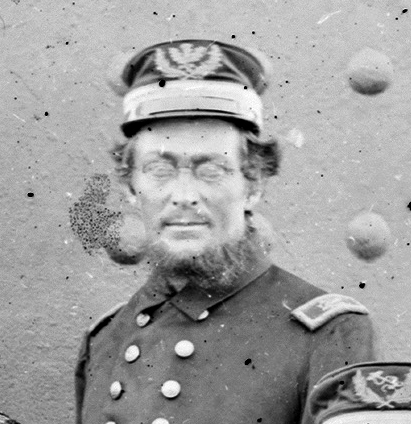
William F. Keeler was an assistant paymaster aboard the U.S.S. Florida, the sidewheel steamer assigned to transport the four Lincoln assassination conspirators sentenced to prison terms from Fortress Monroe, Virginia, down to Fort Jefferson in the Florida Keys. The Florida reached the Dry Tortugas on July 24, 1865. A few days later, when the ship was in Key West, Paymaster Keeler wrote a letter to his wife, Anna, informing her of his recent duties. The following is part of the letter Keeler wrote about his experience picking up the conspirators, transporting them to their island prison, and his observations of life at Fort Jefferson.
U.S. Steamer Florida
Key West, Florida
July 27th, 1865Dear Anna,
We left New York, as I have previously informed you in a brief note, on Sunday 16th. We had been ordered to be ready for Sea a number of days previously & had been give to understand that we were to go to Port Royal [South Carolina] to tow one of the monitors to Philadelphia.
…It seems however that the orders for Port Royal etc. were only for a blind & to conceal the real purpose in sending us off. Just as we were leaving the dock, a telegram from Washington was received ordering us to call at Hampton Roads.
We reached there the next day about noon & dropped an anchor opposite Fortress Monroe, the familiar scenery on all sides reminding me of the eventful occurrences at the outbreak of the war. Of course we were all ignorant of the cause of our being sent there & many speculations were ventured as to the why & wherefore. We had not long to wait however for a steamer which we saw coming down the bay as we came into the harbour, came up and anchored near us.
Big. Gen. [Levi Axtel] Dodd with a portion of his staff came on board in a small boat and were soon followed by Dr. [Samuel A.] Mudd, [Samuel] Arnold, McLaughlan [Michael O’Laughlen] & [Edman] Spangler, the unhung ones of the president’s assassins & a guard of 30 of the veteran reserves in charge.
The mystery was now solved and our real destination was found to be the Dry Tortugas. The prisoners were brought on board in irons and closely guarded, nothing about them to attract particular attention though their crime had given them a notoriety which made them objects of curiosity to all on board. They had been gazed at I suppose till they ceased to regard it as anything strange & seated themselves quite composedly in some chairs which had been placed for them on the quarter deck.
None of us were allowed any communication with the shore. We were under way again before sundown & were probably many miles at sea before the curious public knew but what the murderers were safely housed as for weeks past in the old capital prison. They were taken from Washington in the middle of the night, none but the President & his cabinet being aware of the transaction except the guard who accompanied them. The prisoners had seen in the papers that they were to be sent to the Albany penitentiary & supposed they were put on board of us for the purpose of being conveyed to New York. It was not till they had been on board for forty-eight hours that they began to mistrust their real destination. They appeared a good deal dejected when they learned the truth.
The Dr. wanted to know “how long a person would probably live at the Tortugas.” Like most all criminals they all claimed that they had been found guilty upon false evidence. Dr. Mudd had a good deal to say about the trial, pointing out the evidence where it clashed as he thought, giving the character of various witnesses, calling attention to points which he thought had been overlooked or had not received sufficient attention from the court. He had had the evidence in his case, pro & con, published in book form & produced a copy which he commended to our careful perusal.
He is about 30 years of age though he looks much older, he leaves a wife & four children. He is said to be a sharp shrewd man but I saw nothing about him to indicate it – he has a sort of cunning, foxy look as if possessed of plenty of low cunning & a desire for concealment.
The officers in charge of them & who have had a good opportunity of knowing say that “Mrs. Surratt & him furnished the brains for the party” – & they think that he should have accompanied her to the gallows, that her fate was just & merited they have no doubt & that she had any claims, as a woman, on executive clemency, they deny.
Spangler is a coarse, rough, uneducated, unprincipled man. His bull neck, bullet head & brutish features mark a villain, but without sufficient nerve & steadiness to carry out the villainny his heart would promote. He appears to take his punishment (six years) quite stoically & appears at times quite light hearted. He protests with any amount of profanity his entire innocence of the charge but admits that he was committed crime enough of other kinds to merit the punishment so that his sentence is not undeserved.
The other two are young men, quiet & still, saying but little except when spoken to – men of no more than ordinary information & intelligence. With the exception of Dr. Mudd who may have the ability to plan I cannot conceive how the execution of plans of such vast consequences to the rebels could have been entrusted to such kind of persons.
With Gen. Dodd was Capt. [George W.] Dutton, Dr. [John H.] Porter & thirty privates. The Assistant Judge Advocate General (Col. [Levi C.] Turner) also went down with us with instructions to look into the status of all the political prisoners at Tortugas & other places south & with power to liberate such as in his judgement he might deem advisable. We had a very pleasant company, the Gen. & Col. going into the cabin to mess & the Dr. & Capt. coming into the Ward Room.
The hand irons were taken off the prisoners after they came on board but the leg irons were kept on for the first two or three days, after that they were removed during the day but put on at night. The first two nights they were kept on the orlop deck below the Ward Room, but they complained so much of the heat & closeness they were allowed to spread their mattresses on the quarter deck but were closely guarded. They were fed the same as the sailors – the regular ration. I was in hopes they would send us Jeff Davis from Fortress Monroe, it needed him to make the assortment of scoundrels complete. They appeared much more contented & resigned than I should suppose persons leaving behind them everything that could make life desirable, to be shut out from the world the remainder of their lives could be. … that they realized their condition was shewn by a remark of the Dr.’s one day – that “if it were not for his dread of an hereafter he should jump overboard.”
We arrived at Port Royal on Wednesday the 19th & left for the Tortugas on the 21st… I could imagine the feelings of our prisoners as we approached Fort Jefferson, on the Dry Tortugas, on the morning of the 24th where they were to spend the remainder of their lives. The particular island is a small, low patch of white sand on the coral reef of about thirteen acres, seven of which are enclosed within the brick walls of the fort, a good portion of the reminder being covered with sheds, shops, stables, etc., pertaining to the fort & its occupants giving it, at a short distance, the appearance of a small village.
Not a particle of vegetation is visible on the island outside the fort. The only green thing in sight was a few scrubby oak bushes on another small patch of sand a half a mile or so distant. Inside the fort, vegetation adapted to the dry, sandy, hot soil was nursed with a great deal of care, most of it transplanted from Key West, a tamarina, a few oaks, some banannas, mangroves, a number of varieties of the cactus (one of them producing the flower from which the night blooming cereus is extracted) were pointed out to me growing around the officers quarters.
A false impression seems to be entertained of this place at the north – that it is dreary & desolate in its appearance you can infer from what I have already said – nothing but the “wide blue sea” can be seen from it except a few small patches of low, barren, white sand scattered at irregular intervals along the coral reefs. A sea breeze continually blowing makes it cool & comfortable & the health must be good as a visit with the Surgeon to the hospital of the garrison of a full regiment (the 110 N.Y.) shewed but five patients & that of the 550 prisoners contained by 4. The Dr. told me that in his six years’ residence there he had but six cases of yellow fever. His wife had just left for the north after a stay of three years.
The prisoners are kept employed when there is work to do, but, now there is nothing for them to do & they roam about the fort & beach at will, fishing, bathing, gathering corals, shells, mosses etc. which they sell to those visiting the place or send abroad for sale, many of them realising quite a handsome sum from the proceeds of these curiosities. They are kindly treated & seem to enjoy almost unrestricted liberty. Notwithstanding the sentence of “hard labor with ball & chain” with which many of them are sent there such punishment is not carried out & is only resorted to as a penalty for misbehavior after their arrival on the island.
Dr. Mudd is to be sent into the hospital as an assistant to the Surgeon, Arnold is to be employed as a clerk & Spangler will be kept to work at his trade. I have no doubt but what they are glad by this time that they were not sent to the penitentiary as was first intended.
I got some beautiful corals which I will send home the first opportunity – hope I will be able to bring them myself.
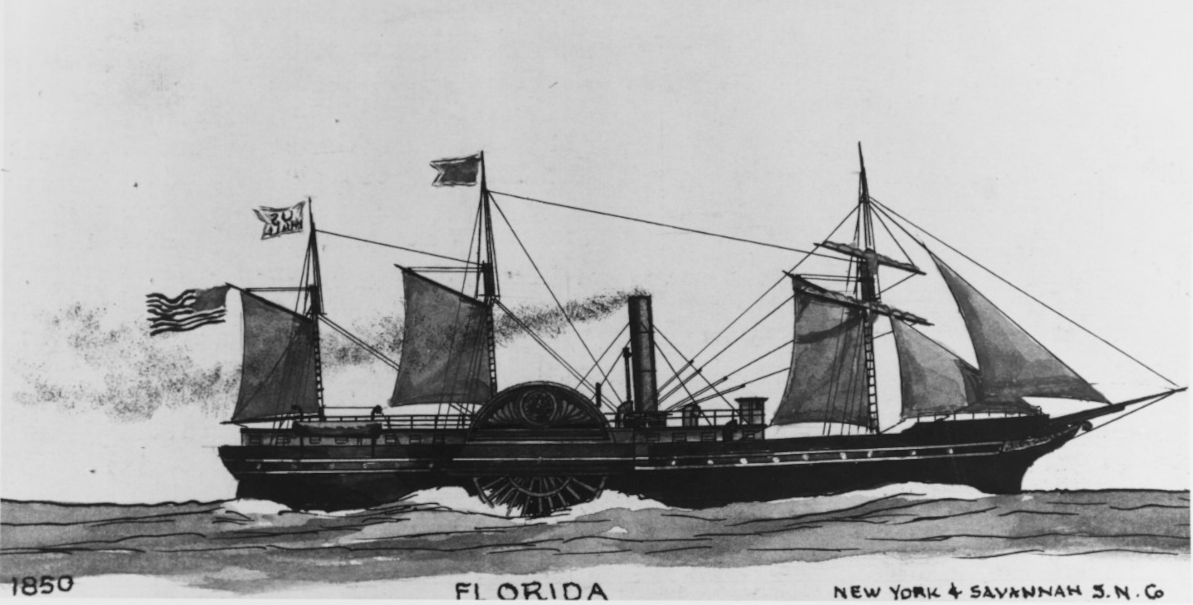


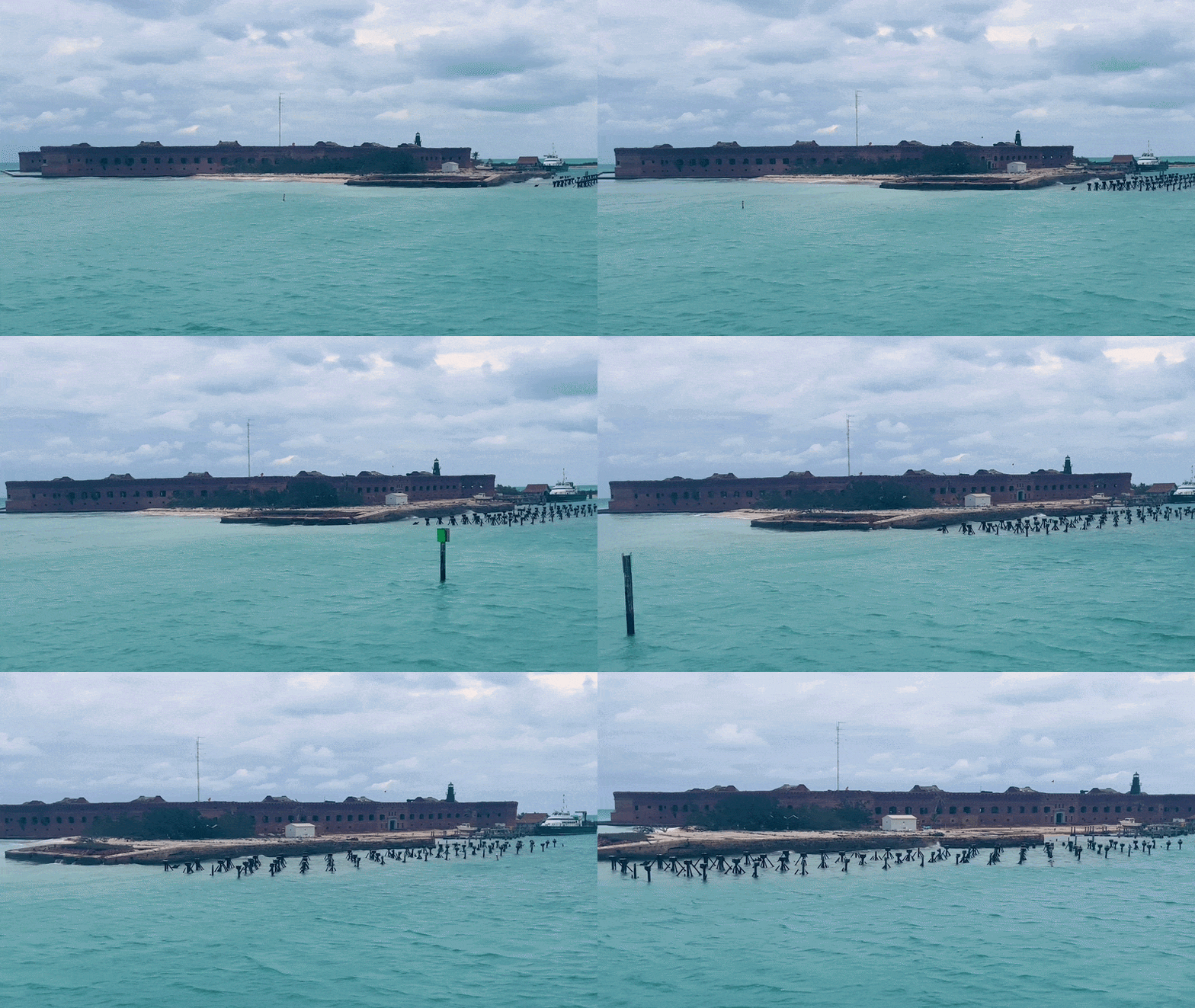
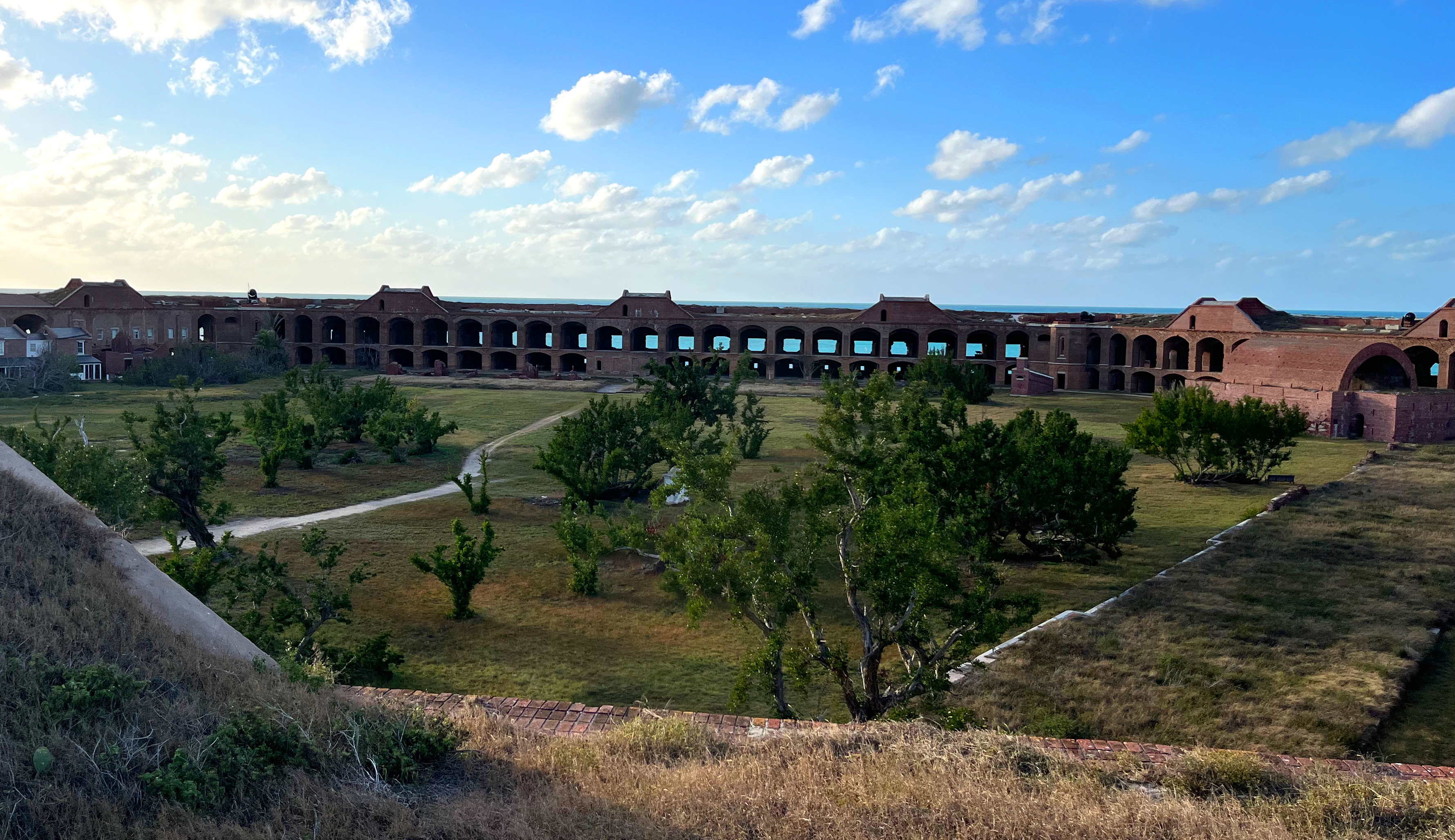
To learn more about what the prison experience was like for the four Lincoln conspirators escorted to the Dry Tortugas by William Keeler and the rest, may I recommend the documentary I created and put on YouTube entitled The Lincoln Conspirators at Fort Jefferson. This eight-part series was shot on location in Key West and the Dry Tortugas, and it covers the history of Fort Jefferson and the conspirators’ time there.
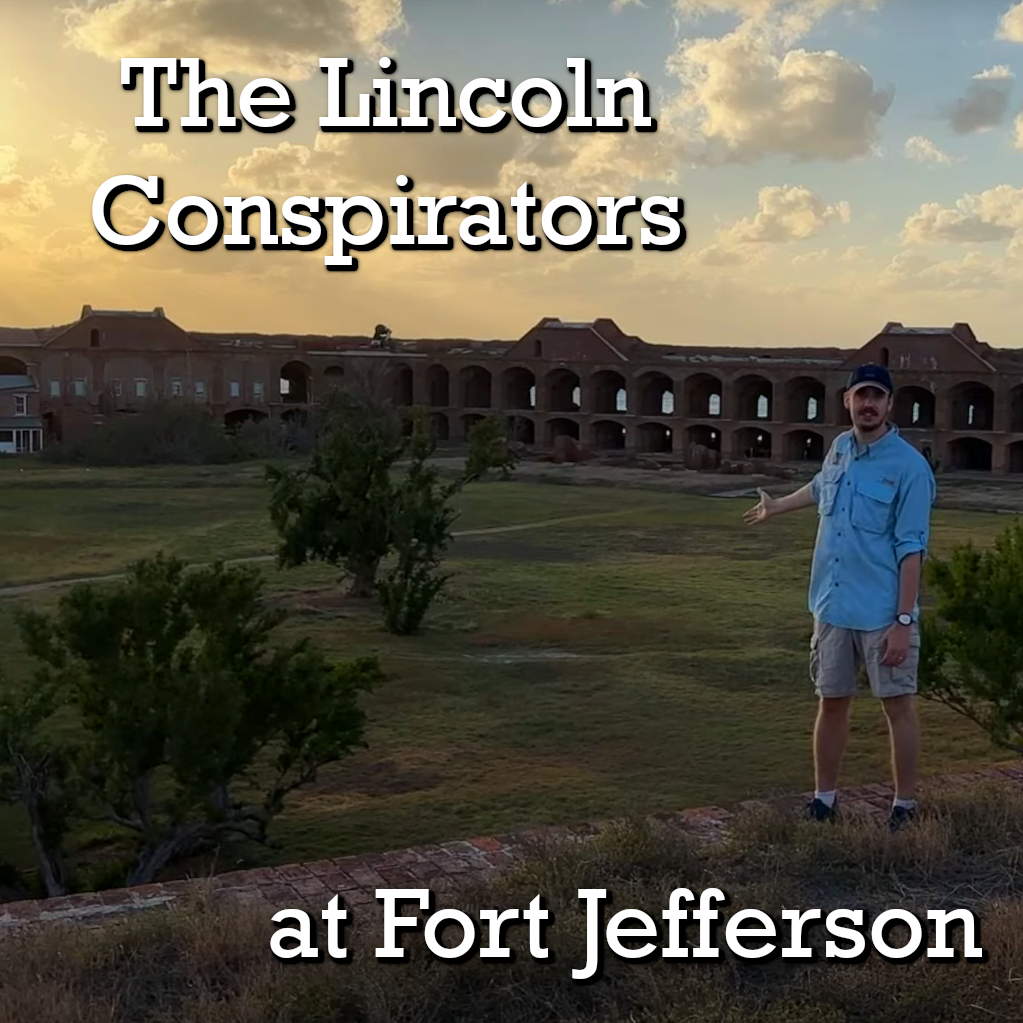
In addition, on June 30, 2026, I was asked by a local news affiliate out of Orlando to appear as a live guest to talk about the conspirators and Florida’s role in guarding them. Here is the video of that live interview for those interested.
References:
Aboard the USS Florida: 1863-65: The Letters of Paymaster William Frederick Keeler, U.S. Navy To his wife, Anna edited by Robert W. Daly (1980)




Recent Comments