
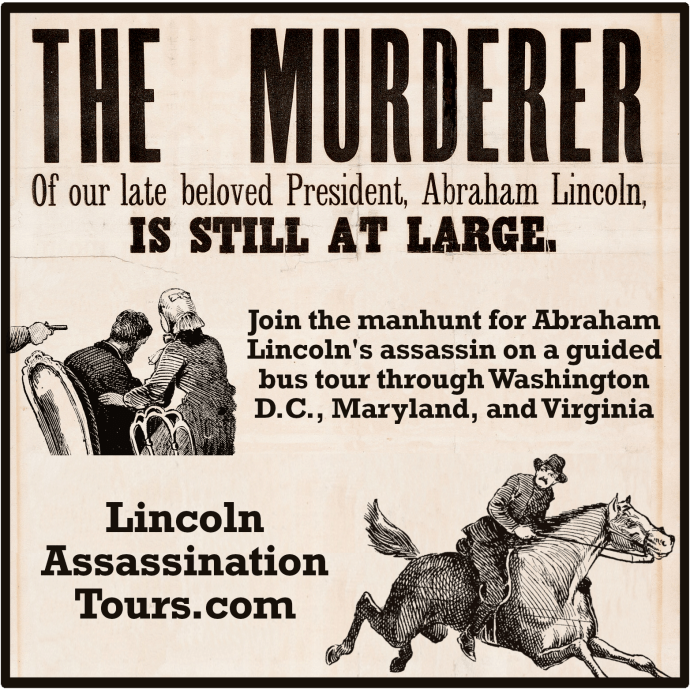
In October, I announced the launch of Lincoln Assassination Tours, my own venture to restart the John Wilkes Booth escape route bus tours that I used to narrate for the Surratt Society before COVID-19 brought them to an end. Since that time, I’ve been blown away by the support of so many of you who follow this blog. While I knew there was still a demand to join the manhunt for Lincoln’s assassin, I wasn’t sure whether a new business focused on such a specialized tour could break through and find its audience. That is why I am so pleased to announce that Lincoln Assassination Tours has reached the minimum participant threshold for our first tour on March 14, 2026. This means that our inaugural tour is officially confirmed!
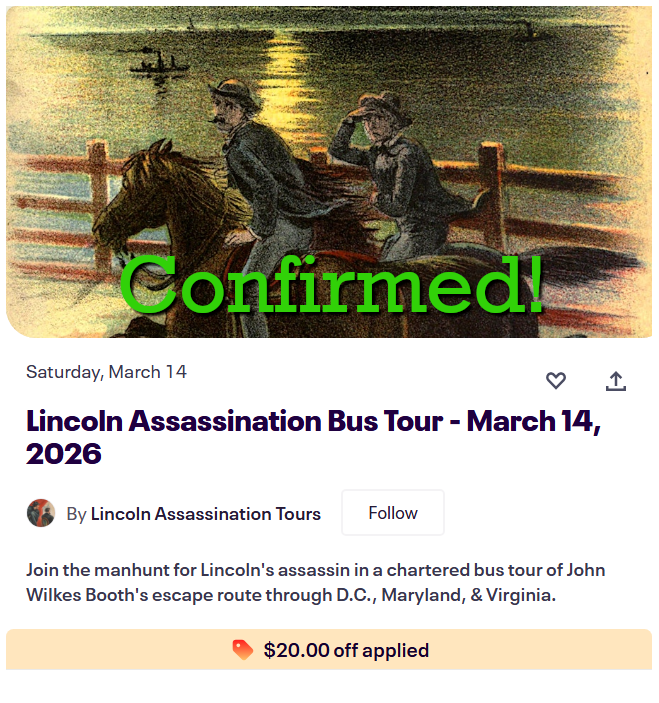
We’re going to have a great time in March chasing John Wilkes Booth over his escape route through D.C., Maryland, and Virginia. I’m thankful to everyone who has purchased tickets for this tour and for our subsequent tours planned for Saturday, April 18, and Sunday, April 19.
I’m indebted to my wonderful site partners who have helped to spread the word about the tours.
- The Surratt House Museum in Clinton, Maryland, has endorsed the tour on the Prince George’s County History Facebook page and kindly provides space for our advertising cards and bookmarks in their visitor center.
- The Dr. Samuel A. Mudd House Museum in Waldorf, Maryland, likewise displays our cards in their gift shop (see image below) and has written about us on their Facebook page.
- The Historical Society of Charles County (the operators of the newest museum on the route, Rich Hill) has been so supportive of our efforts, emailing its membership about the tours and posting several times on its Facebook page. We’ll be getting some cards into their hands when we visit Rich Hill in March.
- Even though the Booth family home of Tudor Hall in Harford County, Maryland, isn’t on the tour, they have some of our marketing material on hand for when they open up again for their own tours and talks in the spring. Click the link to check out their impressive lineup of speakers for 2026.
- The folks at Explore Charles County have been great. They have added our tours to their community calendar and display our cards in the county’s welcome center off of Route 301.
- The Surratt Society graciously mentioned Lincoln Assassination Tours in the September/October 2025 edition of the Surratt Courier.
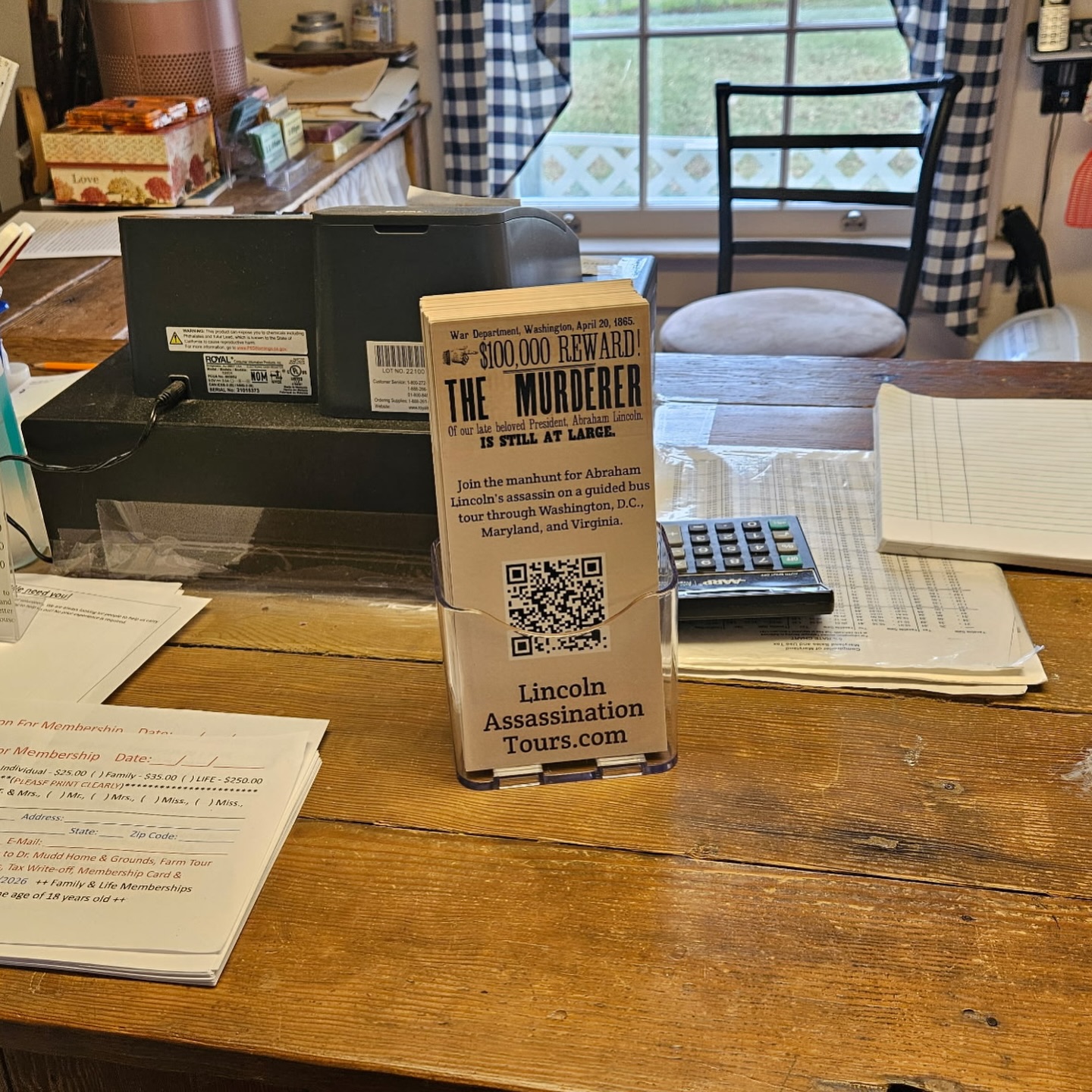
Lincoln Assassination Tours cards on display in the gift shop of the Dr. Samuel A. Mudd House Museum
While meeting the minimum threshold for the March tour is a reason to celebrate, I’m now focused on making sure our two tours in April go forward. We still have over two months of sales to go before we reach the “make-or-break” cut-off date for minimum participants for the April tours. I’m still hopeful we will get enough sales to run both tours, but I would be eternally grateful for your help in getting them over the line. Word of mouth is really the best way to help a new business get on its feet, especially one as specialized as this. Please, if you’re so inclined to help, tell your friends, family members, and social circles about Lincoln Assassination Tours. Follow us on Facebook, Instagram, and Bluesky. If you follow this blog, I know you’ll find those pages just as interesting. I regularly post information about the tours and the Lincoln assassination in general. “Liking” and sharing our posts on those platforms can really help extend our reach.
While Lincoln Assassination Tours is a business, profit is not my goal. I am an educator who taught elementary grades for 12 years. As the narrator for the Surratt Society tours, I truly loved taking people down the escape route of the assassin and teaching them about this momentous event in history. The goal of Lincoln Assassination Tours is to teach a new generation about the death of Abraham Lincoln. The minimum participant threshold does not include any profit; it merely covers the costs associated with operating the tour. At this moment, for example, the March tour count just covers the expenses, and there is no profit to be had. While I would love to sell out a whole bus, I’m just as happy doing the March tour for the smallest possible number of people, because I truly love giving the tour and sharing the experience with others.
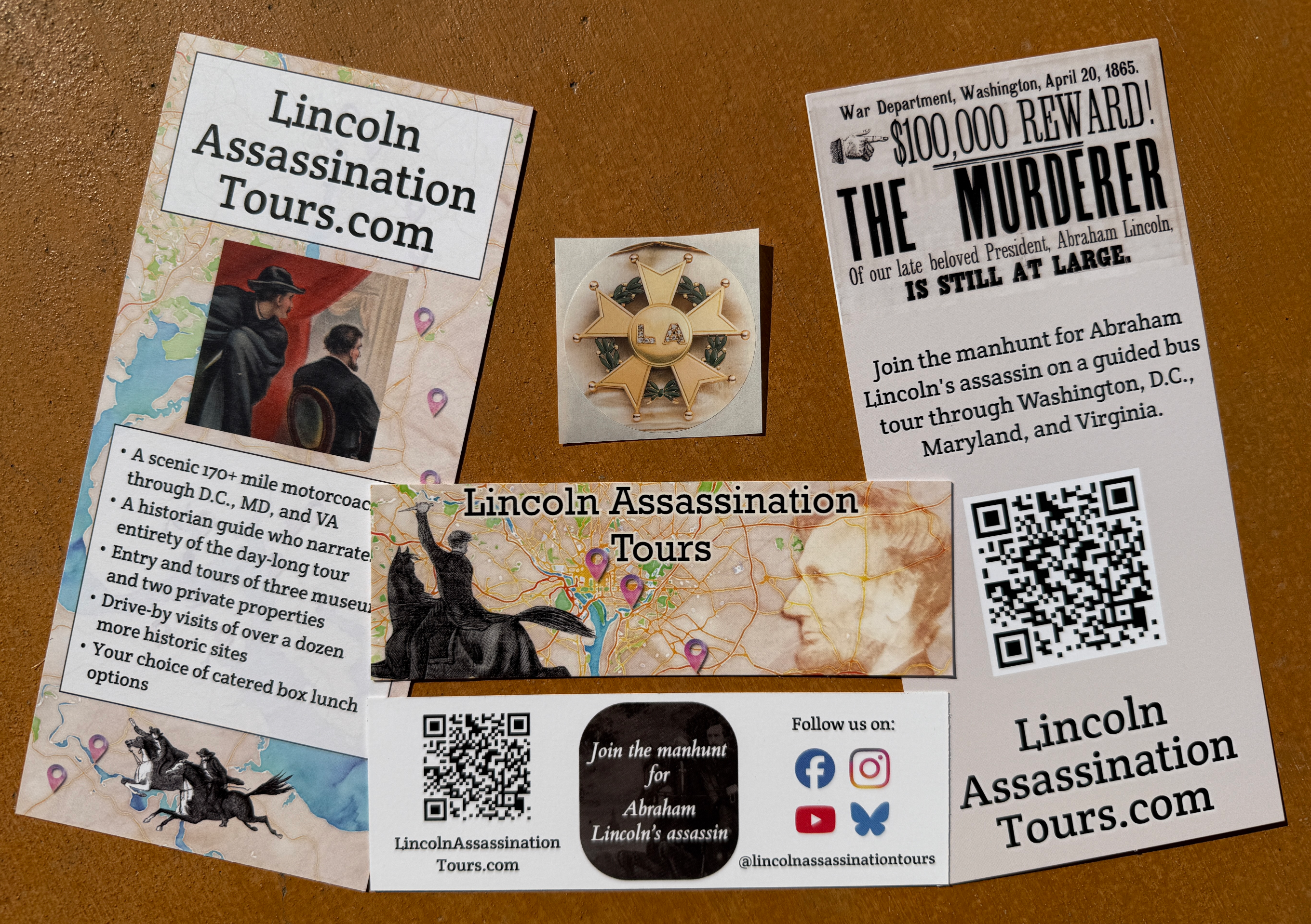
I hope you’ll consider registering for one of our April tour dates. At the end of this post, I’ll include hyperlinked images to where you can purchase your tickets. Even if you previously took the Booth escape tour with the Surratt Society, Smithsonian, or another group, I can assure you that there is something new to experience on a Lincoln Assassination Tour. Our tours are the first to include a stop in the brand-new museum of Rich Hill in Charles County, Maryland. Our narration not only describes the movement of the assassin and his accomplices, but also the everyday people who crossed paths with this momentous event and the scores of manhunters who sought justice for the President. Each Lincoln Assassination Tour will end with a free raffle where a lucky participant (or two) will walk away with a book about Lincoln’s assassination. And, of course, all participants will receive a coveted Lincoln’s Avengers sticker and Lincoln Assassination Tours bookmark for successfully tracking down John Wilkes Booth.
I promise I won’t always be asking for help like this, but the success of these spring tours is crucial to ensuring they can continue for years to come. My hope is that these first few tours will lead to positive reviews and allow me to record more tour-specific content to help grow a wider audience. They will also help me gain valuable experience to refine the tour process across booking, marketing, and execution. Essentially, being able to run three tours this spring will set us up for continued success going forward.
If you have already purchased a ticket for a Lincoln Assassination Tour, you have my deepest thanks. It’s because of you all that a new group will be able to experience this fascinating tour and momentous time in history firsthand on March 14. For those who haven’t bought tickets but have been thinking about it, I’d love to have you join us for our tours on Saturday, April 18, or Sunday, April 19. These tours will take place just days after the anniversary of Abraham Lincoln’s death, and in the midst of the hunt for the assassin. You will be able to traverse and stand in the same spots the assassin did exactly 161 years before. You can’t get much closer to history than that.
Thank you all, again, for your amazing support. I know Lincoln Conspirators has been a little slow of late as I focus on getting Lincoln Assassination Tours off the ground, and I greatly appreciate your patience and understanding.
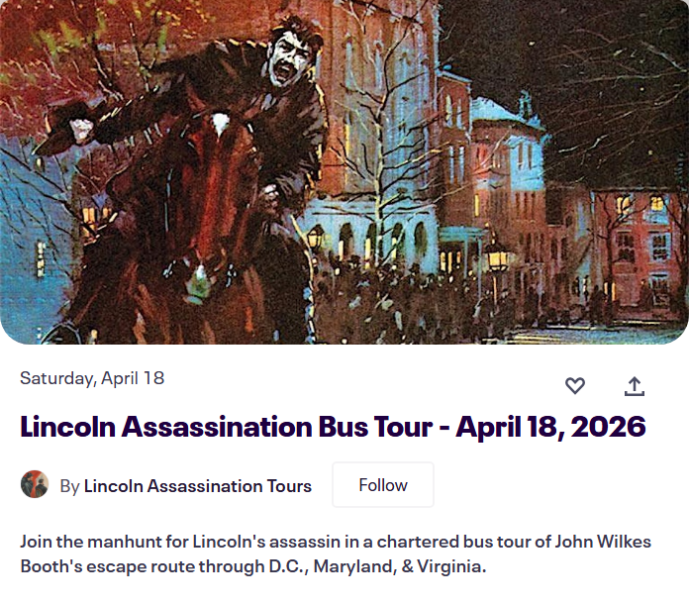
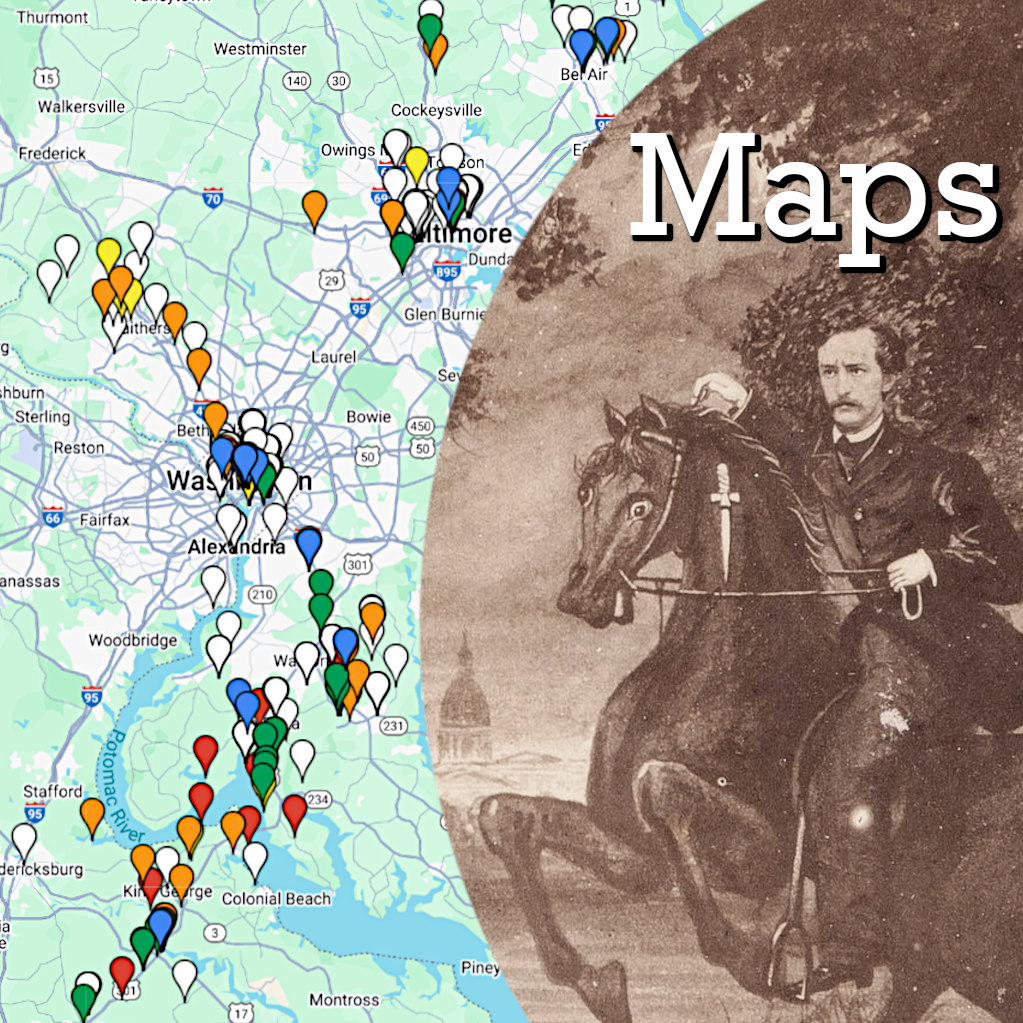
Click the image above to register for our John Wilkes Booth escape route bus tour on Saturday, April 18, 2026.
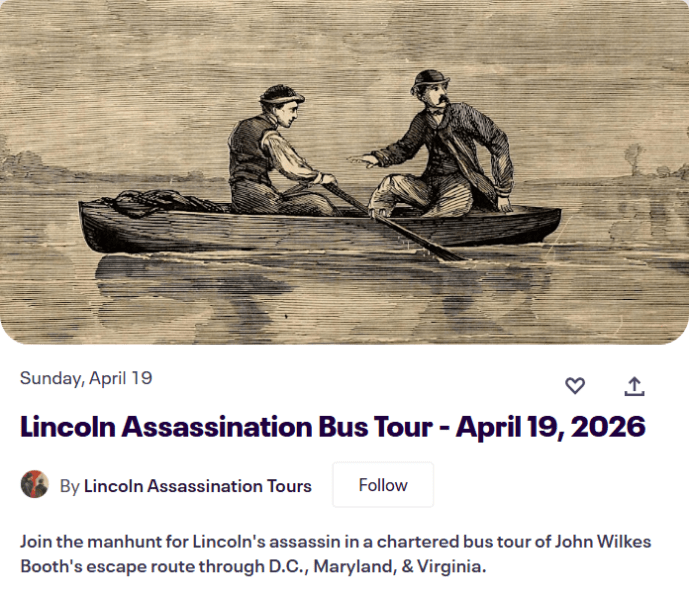
Click the image above to register for our John Wilkes Booth escape route bus tour on Sunday, April 19, 2026.






 LincolnConspirators.com
Recent Comments