In the fifth part of the series, we look at the everyday life of the Lincoln conspirators. We examine the daily struggles of insects, disease, and poor food which made it challenging to survive on such a distant and dangerous land. This part also looks at the few ways the conspirators occupied their time when not at work, including writing and creating woodworking projects to send home.
In the aftermath of Dr. Mudd’s escape attempt in 1865, the Lincoln conspirators found themselves removed from their regular cell in the second tier of the fort and placed into a locked room on the first floor. In this installment of The Lincoln Conspirators at Fort Jefferson, we learn what life was like for the men in The Dungeon.
After two months of being imprisoned at the Dry Tortugas, Dr. Samuel A. Mudd had come to a decision. He had witnessed first-hand other prisoners make their escape by stowing aboard the supply ships that visited the island. Motivated by racism, fear, and a strong desire to return home, Dr. Mudd decided to risk it all for freedom. In this installment of The Lincoln Conspirators at Fort Jefferson, we discuss Dr. Mudd’s Escape.
The Civil War led to a significant change for Fort Jefferson. Rather than just being a military garrison on the gulf, the fort was transformed into an isolated island prison for disloyal and criminal Union soldiers sentenced by court-martial. In this, the second part of my documentary series, I discuss the use of the Dry Tortugas as a prison, the assassination of Abraham Lincoln, and the arrival of the four Lincoln conspirators sentenced to serve time at Fort Jefferson.
Slumbering in the midst of the Gulf of Mexico at the very end of the Florida Keys is a unique relic of the past. It is the largest brick masonry fort in the Western Hemisphere, built to guard America’s shipping lanes through the Gulf. During the Civil War, this southern fort stayed in Union hands and found a new purpose as an isolated prison. In 1865, Dr. Samuel A. Mudd, Samuel Arnold, Michael O’Laughlen, and Edman Spangler were convicted of assisting in the assassination of Abraham Lincoln and found themselves condemned to this lonely fortification. While all four men would eventually leave this place, one did so in a coffin.
In 2023, my wife Jen and I visited the Dry Tortugas and shot footage for a homemade documentary series about the Lincoln conspirators’ lives at Fort Jefferson. After sitting on the footage for over a year, daunted by the prospect of how to put it all together, I finally commenced editing. I’m happy to announce that the project is now ready to be shared.
The end result is a documentary series of over an hour and a half in length. For ease of viewing, I have split it up into eight parts. Today, I am releasing the first in this eight-part series. I will continue to release new parts a few times a week until they are all published. In addition to these individual posts, the videos can also be found on the new permanent “The Lincoln Conspirators at Fort Jefferson” page on the top menu bar.
I hope that you will enjoy learning about the history of Fort Jefferson and the time the Lincoln conspirators spent there.
So, without further ado, here is A Fort is Built, the first part in the series The Lincoln Conspirators at Fort Jefferson.
I hope that this first entry has whet your appetite for more. In a few days, I’ll publish part two of the series titled A Prison for the Lincoln Conspirators.
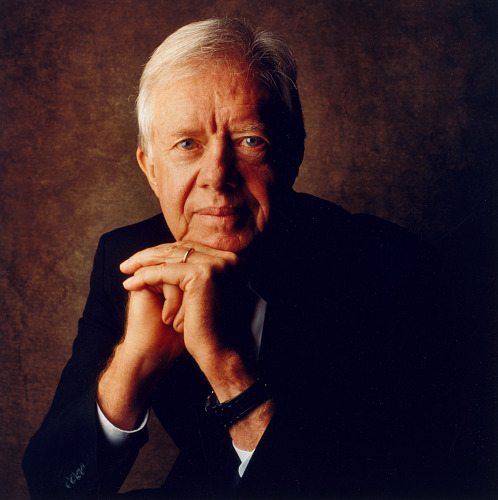
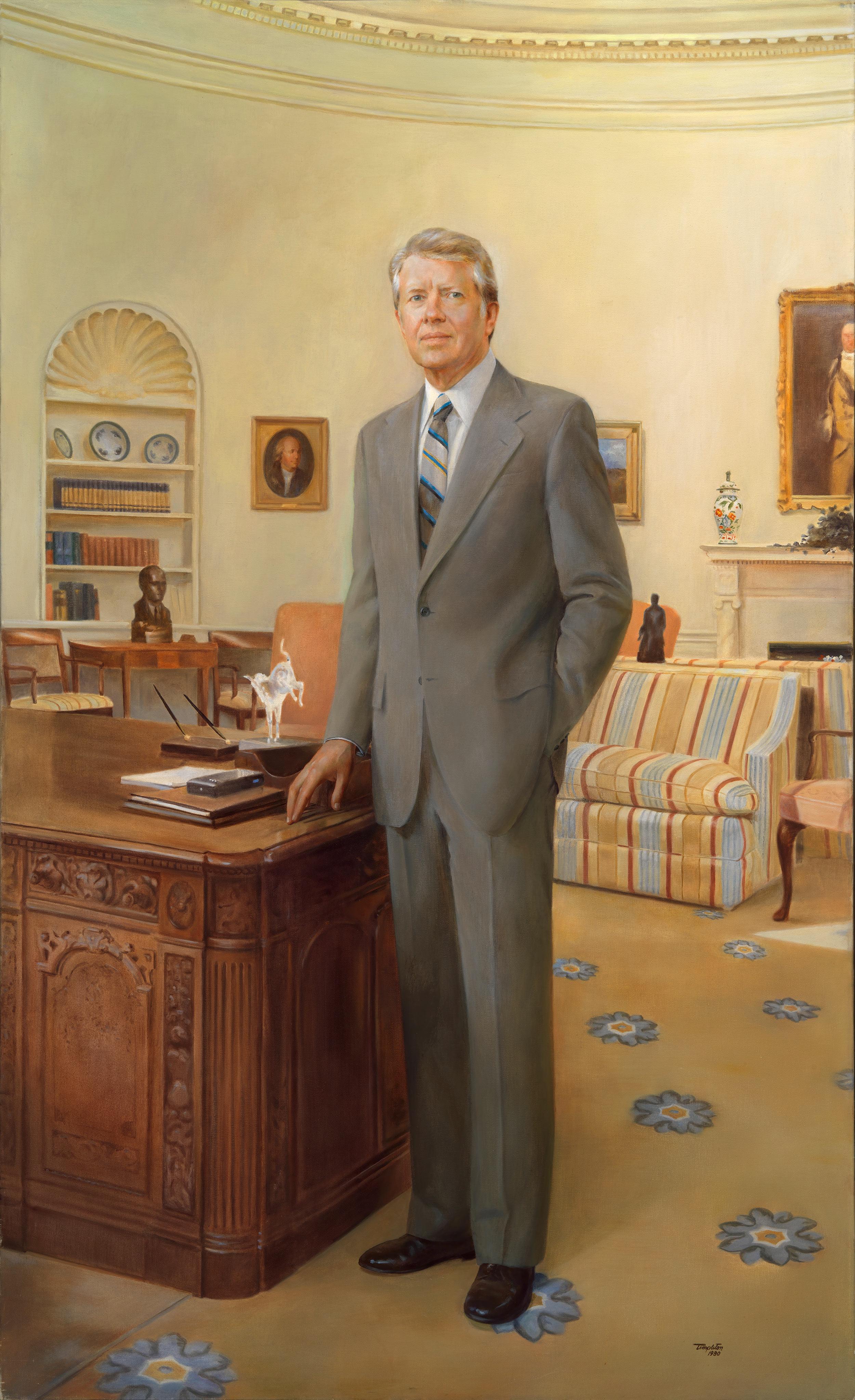
Like so many across our country and world, I wish a very Happy Birthday to President Jimmy Carter! On October 1, 2024, President Carter became the first U.S. President to live to the age of 100.
While President Carter’s time in office was limited to a single term, his positive influence on the world has been lifelong. Jimmy Carter is the definition of a humanitarian, advocating for peace, aid, and health for all people of the world. Carter’s post-presidency life has been filled with service, from negotiating treaties and using diplomatic channels to secure the release of American political prisoners held overseas to selflessly working well into his 90s to physically construct homes with Habitat for Humanity.
In a time when so many politicians denigrate immigrants, the poor, and the downtrodden, Jimmy Carter has worked to raise them up. In a time when religion has been fashioned into a weapon to justify atrocities and bigotry, Jimmy Carter has lived a life of faith and love for all. In a time when people advocate turning our back on the world and seek their own selfish wants at the cost of all others, Jimmy Carter has represented the noble good that can be done when we come together and embrace the global brotherhood of man.
Jimmy Carter reminds us that true leaders care about others. His life of service is the much-needed antidote to the venom that has infected our country of late. In a world of selfish Trumpism that cheers the worst impulses of humanity, Jimmy Carter represents the “better angels of our nature” that Abraham Lincoln once spoke about.
Jimmy Carter was born fifty-nine years after the assassination of President Lincoln. While I don’t feel that I need to justify a post about a man who has so justly earned the respect of his country, President Carter does have a few connections to the subject of this blog. One of them comes by way of another centenarian.
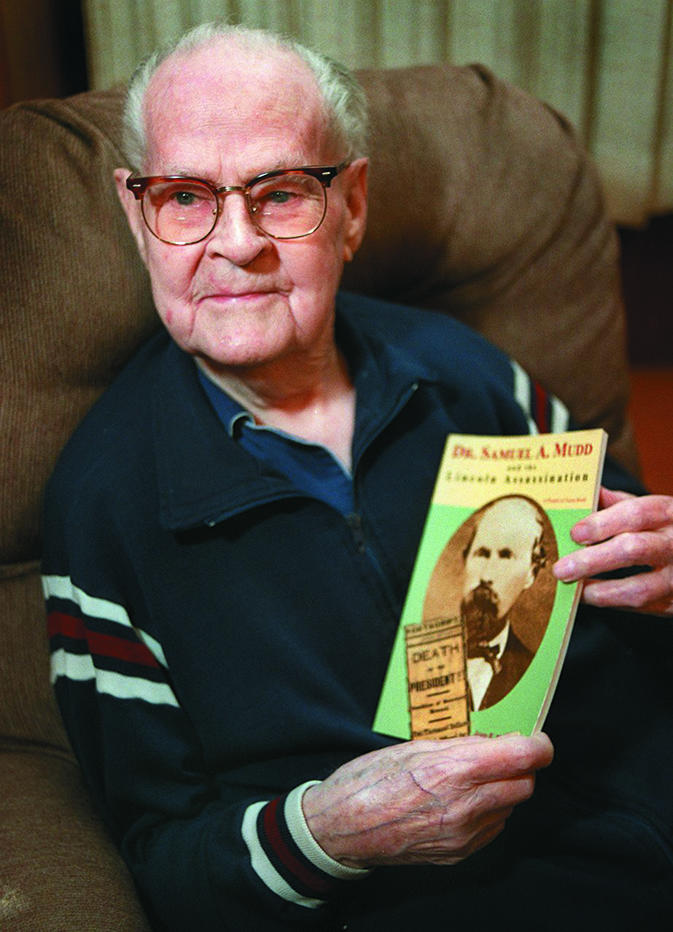
Dr. Richard D. Mudd was the grandson of Dr. Samuel Mudd. He was born in 1901 and died in 2002 at the age of 101. Richard spent his whole life advocating for the innocence of his grandfather. He was constantly writing letters to his Representatives and Senators, hoping for some measure that could overturn Dr. Samuel Mudd’s conviction. When those efforts stalled, Richard made inroads in other ways, like successfully getting a plaque installed at Fort Jefferson highlighting Dr. Mudd’s heroic activities during the 1867 yellow fever epidemic that, ultimately, helped grant him a pardon. While I firmly disagree with Richard’s interpretations of his ancestor’s actions and involvement in Lincoln’s assassination, I respect the way he tirelessly advocated for his beliefs. In addition to his Congressmen, Richard Mudd wrote to the chief executives themselves. Richard received responses from Nixon and Reagan, both telling him that nothing could be done to change history, especially since his grandfather had accepted a pardon (and the implied guilt that comes along with the acceptance).
Dr. Richard Mudd
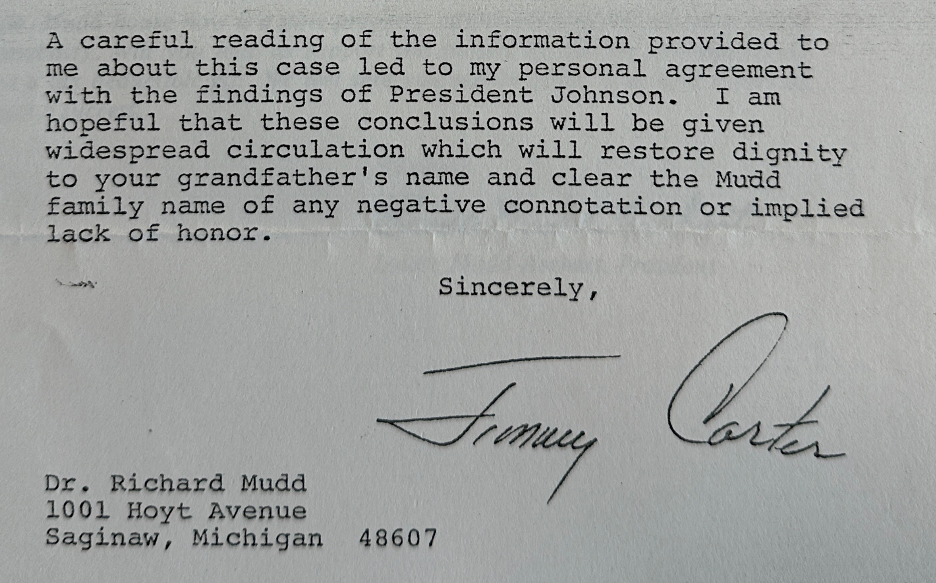
Jimmy Carter also sent Richard Mudd a letter. Like his predecessor and successor, President Carter informed Richard Mudd that nothing could be done to overturn his grandfather’s conviction. However, Jimmy Carter went a bit beyond what other Presidents had done. In his compassion, President Carter expressed his own personal belief that Dr. Mudd was only guilty of aiding and abetting John Wilkes Booth and David Herold after the assassination and not of being a party in the conspiracy that led to Lincoln’s death. In coming to this conclusion, President Carter cited Andrew Johnson’s own pardon of Dr. Mudd, in which Lincoln’s successor seemed to express some doubt as to Dr. Mudd’s proven culpability. What follows is a transcript of Jimmy Carter’s letter to Dr. Richard Mudd in answer to Richard’s many entreaties.
The White House
Washington
July 24, 1979
To Dr. Richard Mudd
I am aware of your efforts to clear the name of your grandfather, Dr. Samuel Alexander Mudd, who set the broken leg of President Lincoln’s assassin, John Wilkes Booth, and who was himself convicted as a conspirator in the assassination. Your persistence in these efforts, extending over more than half a century, is a tribute to your sense of familial love and dedication and is a credit to the great principles upon which our nation was founded.
Your petition and the petitions submitted to me on behalf of your grandfather by numerous members of Congress, several state legislatures, historians and private citizens have been exhaustively considered by my staff over the past two years. Regrettably, I am advised that the findings of guilt and the sentence of the military commission that tried Dr. Mudd in 1865 are binding and conclusive judgments, and that there is no authority under law by which I, as President, could set aside his conviction. All legal authority vested in the President to act in this case was exercised when President Andrew Johnson granted Dr. Mudd a full and unconditional pardon on February 8, 1869.
Nevertheless, I want to express my personal opinion that the declarations made by President Johnson in pardoning Dr. Mudd substantially discredit the validity of the military commission’s judgment.
While a pardon is considered a statement of forgiveness and not innocence, the Johnson pardon goes beyond a mere absolution of the crimes for which Dr. Mudd was convicted. The pardon states that Dr. Mudd’s guilt was limited to aiding the escape of President Lincoln’s assassins and did not involve any other participation or complicity in the assassination plot itself — the crime for which Dr. Mudd was actually convicted. But President Johnson went on to express his doubt concerning even Dr. Mudd’s criminal guilt of aiding Lincoln’s assassins in their escape by stating:
” … it is represented to me by intelligent and respectable members of the medical profession that the circumstances of the surgical aid to the escaping of the assassin and the imputed concealment of his flight are deserving of a lenient construction, as within the obligations of professional duty and, thus, inadequate evidence of a guilty sympathy with the crime or the criminal;
“And… in other respects the evidence, imputing such guilty sympathy or purpose of aid in defeat of justice, leaves room for uncertainty as to the true measure and nature of the complicity of the said Samuel A. Mudd in the attempted escape of said assassins…”
A careful reading of the information provided to me about this case led to my personal agreement with the findings of President Johnson. I am hopeful that these conclusions will be given widespread circulation which will restore dignity to your grandfather’s name and clear the Mudd family name of any negative connotation or implied lack of honor.
Sincerely,
Jimmy Carter
Despite a couple more decades of trying, this letter proved to be the best result Richard Mudd attained in his quest to exonerate his ancestor. Legally, this letter changed nothing about Dr. Mudd’s guilt, but it was a moral victory of sorts. A sitting President had expressed his belief that Dr. Mudd had been innocent of the crime he was convicted of. Even today, this letter from President Carter is something that certain members of the Mudd family point to to support their case.
Now, I very much disagree with President Carter regarding Dr. Mudd’s involvement in John Wilkes Booth’s plot, but I also recognize that Carter was not an assassination historian. He was the chief executive, taking time out of his busy schedule to respond to a man who had spent the last two years recruiting Representatives and sending petitions concerning a matter of family honor. Knowing that nothing could be done to provide Richard with the result he wanted, President Carter did his best to mitigate the disappointment by volunteering his own opinion on the matter. Even this letter demonstrates Jimmy Carter’s empathy and consideration for a fellow citizen.
A year and a half before writing his letter to Richard Mudd, Jimmy Carter attended a gala celebrating the 10th anniversary of the reopening of Ford’s Theatre as a working theater. While the old Ford’s Theatre building had housed a Lincoln museum since the 1930s, it wasn’t until the 1960s that the building was reconstructed to its 1865 appearance. The restored Ford’s Theatre had its debut performance on January 30, 1968, with Lady Bird Johnson in the audience without President Johnson. President Nixon never visited Ford’s Theatre during his Presidency. On April 17, 1975, President Gerald Ford attended James Whitmore’s one-man play “Give ’em Hell, Harry” about the life of President Harry Truman.
When President and Mrs. Carter attended the 10th-anniversary gala at Ford’s Theatre on January 29, 1978, he was only the second sitting President to see a show at Ford’s Theatre since Abraham Lincoln. More importantly, this event marked the start of a tradition. Starting with Jimmy Carter in 1978, every sitting president has attended a nonpartisan gala night of speeches and entertainment at Ford’s Theatre.
President and Mrs. Carter attend Ford’s Theatre on January 29, 1978.
Just before heading off to Ford’s Theatre for its 10th-anniversary gala, President Carter hosted a reception at the White House for the invited guests. As part of his remarks for the evening, President Carter thanked the crowd for their support of Ford’s Theatre and for their “generosity in keeping it a live tribute to the past and an opportunity for the future.” Despite the tragedy that had occurred at the site, Carter expressed his admiration that Ford’s Theatre had been reopened, noting that:
“It wasn’t the character of Lincoln to have a source of entertainment, tragedy, and humor kept closed and isolated from the people of our Nation. And so a unique occurrence has been recognized tonight that happened 10 years ago, when a national historical site was opened, not as a museum, a closed or a dead thing just to be looked at and admired, but an open and a live thing which is the source of both entertainment and inspiration for us all.”
After thanking select people for their efforts in bringing back live theater to Ford’s, Carter ended his remarks by saying:
“So, as a southerner, as a President, I would like to say that I’m very proud of all of you for helping to unite the consciousness of our Nation to remember the past, but also to prepare for the future with confidence and also with pleasure. That’s the way President Lincoln would have liked it. And you’ve honored him in performing as you have in keeping Ford Theatre alive.”
When President Carter entered home hospice care in February of 2023 at the age of 98, it seemed unlikely that he would make it to this milestone age. When his beloved wife of 77 years, Rosalynn, passed in November of 2023, it was also feared that grief might take its toll. Amazingly, however, Jimmy Carter continues to bless this earth with his presence.
In truth, 100 years is an arbitrary number. If Jimmy Carter had passed last year, five years, or even two decades ago, his good deeds would have still been a testament to his character. On his 100th birthday, we celebrate not just the impressive number of years President Carter has lived, but the positive impact he packed into each and every one of those years.
Happy Birthday, President Carter. In addition to the well-deserved praise you will receive today, I sincerely hope you get your birthday wish of making it to November 5 so that you can cast your vote for the next leader of this country.
AppleTV+ released its first trailer today for its upcoming miniseries based on the Lincoln assassination book, Manhunt: The 12-Day Chase for Lincoln’s Killer by James L. Swanson. I have previously written about this new series that is set to debut on the streaming service on March 15. This trailer gives us our first real look into the series, which will focus on the efforts of Secretary of War Edwin Stanton to track down Lincoln’s assassins. Give the trailer a watch:
I had a few initial thoughts while watching this trailer.
Anthony Boyle, the actor playing John Wilkes Booth, looks pretty good in the role. He has a decent resemblance to the assassin, much more so than some of the reenactment Booths used in some TV documentaries about the assassination.
Booth yells “Freedom for the South” from the theater box. While a limited number of eyewitness accounts claimed Booth might have yelled, “Freedom!”, “Revenge for the South!” or “The South is avenged!” I don’t recall reading “Freedom for the South!” before. It’s certainly not in Swanson’s book. The overwhelming evidence is that Booth said, “Sic Semper Tyrannis!” after shooting Lincoln, though whether this was in the box or on the stage is debated.
Stanton is shown learning of Lincoln’s assassination while riding a carriage during a fireworks display. Fireworks are also shown as Booth is riding out of Baptist Alley behind Ford’s. While visually appealing, the Grand Illumination in D.C. featuring fireworks was technically on the night of April 13, not the night of Lincoln’s assassination. Also, Stanton learned of the attack on Secretary Seward first. It was when Stanton arrived at the Seward house to check on the Secretary of State at about the same time as Secretary of the Navy Gideon Welles that he was informed that Lincoln had also been targeted. However, this trailer may be depicting that event as it’s unclear from the clip where Stanton is supposed to be.
Booth is shown interacting with and seemingly threatening actress Lovie Simone, who plays the part of Mary Simms. As I previously noted, Mary Simms and her siblings left the Mudd farm in 1864 and were not around in 1865. Booth did not interact with Mary Simms during his escape.
The interior of Ford’s Theatre replicates the stage set of Our American Cousin well, but the theater box looks nothing like the real thing. It appears that Major Rathbone and Clara Harris are seated in their own box a few feet above the President and Mrs. Lincoln. It’s too bad the actual box appearance and layout couldn’t be recreated.
The overhead shot of Lincoln’s plain coffin being carried down the circular stairs of the Petersen House is an effective one.
At the 1:06 mark, you’ll see the actor playing Booth’s slayer, Boston Corbett. The actor’s name is William Mark McCullough. Coincidentally, he played John Wilkes Booth in 2015 Smithsonian Channel documentary, Lincoln’s Last Days.
There’s just a flash of the conspirators seated in their courtroom at the 1:13 mark. I can easily make out a hunched and bearded George Atzerodt, but I’m not sure about the other two men visible. Mary Surratt is erroneously shown placed amongst the men.
A man is shown in daylight pulling guns on the fugitives and stating, “I know who you are Mr. Booth.” I was uncertain who this figure was supposed to represent, but looking through the cast list on IMDB, it seems this is actor Roger Payano in the role of Oswell Swan. Swan guided Booth and Herold across the Zekiah Swamp to Samuel Cox’s home of Rich Hill. However, this occurred at nighttime, and Swan didn’t know the identities of the men he took over the swamp. He certainly didn’t pull a gun on them.
At 1:30, blink and you’ll miss actor Matt Walsh as Dr. Samuel Mudd handing something to Herold and Booth while a servant (likely the anachronistic Mary Simms) watches in the background. From this quick shot, Walsh looks good as Dr. Mudd.
The music in this trailer is quite good. I hope the actual show utilizes some of the songs included here.
From this trailer, it’s clear there will be a lot to talk about when the miniseries airs. What are your thoughts on this first look?
After almost two decades in developmental hell, a miniseries based on James L. Swanson’s 2006 book Manhunt: The Twelve-Day Chase for Lincoln’s Killer is finally going to become a reality. While reports said that filming on the project had been completed in 2022, nothing about the series’ possible premiere date was forthcoming until an article was published on December 13, 2023, in Vanity Fair. The article, titled “Manhunt: First Look at the Long-Awaited Show About Hunting Lincoln’s Killer” can be read in full here.
This article announced that the miniseries will premiere on March 15, 2024, on the streaming platform Apple TV+. Two episodes will be released on that day, followed by weekly releases of new episodes until the finale on Friday, April 19, 2024. This makes seven episodes of the series in all.
The Vanity Fair article provided an overview of the series, highlighting the efforts of those involved in bringing this project to life. I applaud Monica Beletsky, the showrunner and writer, for her dedication to shedding light on the unknown aspects of the assassination. The focus of the miniseries will be on Edwin Stanton, the Secretary of War, and his role as a catalyst for justice. It is refreshing to see Stanton portrayed in a heroic light, especially given the numerous conspiracy theories that have attempted to implicate him in Lincoln’s death.
The role of Secretary Stanton is played by British actor Tobias Menzies. Images provided by Apple TV+ give us our first official look at the protagonist. While I do not believe that actors have to look very much like the historical figures they emulate, I have to state that I am disappointed to see that Menzies was not given a beard for the role. Edwin Stanton wore a very recognizable beard. I understand not wanting to cover up Menzies’ handsome face, but, in my opinion, portraying Stanton without his long skunk beard is like depicting Abraham Lincoln without his iconic stovepipe hat. I suppose it’s a good thing the miniseries won’t be debuting for another three months as that will give me time to slowly come to accept this clean-shaven man as Edwin Stanton.
In addition to covering the process of creating the series, the Vanity Fair article hints at several characters and scenes we can expect in the series. I was excited to read how the character of Mary Lincoln will be portrayed. Showrunner Beletsky states in the article that Mrs. Lincoln “was owed a different portrayal” than prior characterizations of her as merely being crazy, or a burden to President Lincoln. I believe that prior media interpretations (and many historians, for that matter) have been unnecessarily hard on Mrs. Lincoln. Beletsky seems to agree, relating how the loss of her children occurred, “pre-psychology, pre-therapy, pre-understanding of trauma. I asked the question of, ‘How would you behave had you suffered so much loss?’” It will be interesting to see how actress Lili Taylor takes on the role of the First Lady during one of the most traumatizing times in her life.
The article also shows us other interesting visuals, such as comedian Patton Oswalt in the role of Col. Lafayette Baker. The leader of the National Detective Poice was a key ally to Stanton during the hunt for Booth, but his methods and character were considered extreme even to jaded politicians. I’m excited to see how Oswalt is able to capture this scoundrel of a man.
There are also a few historical inaccuracies to be found in the article (aside from Stanton’s beard). Some are small nitpicks, such as an image of Stanton and his son, Edwin Lamson Stanton, apparently on horseback on the hunt for John Wilkes Booth. While Stanton was instrumental in helping to organize the manhunt for the conspirators, he did not take part in the search himself. As the Secretary of War during wartime, he had many other duties to perform as the search was going on. While Stanton occasionally interviewed prospective witnesses, his schedule of cabinet meetings, preparing Lincoln’s funeral arrangements, and sending off telegrams to various generals in the field about the remaining Confederate forces kept him confined to Washington during the manhunt. It’s possible that the caption for the image is merely mistaken and does not actually show Edwin and his son hunting for Booth but merely riding somewhere together. Time will tell.
Another critique I have is the characterization that John Wilkes Booth’s actions may have been motivated by a sense of professional rivalry between himself and his brother, Edwin (or his deceased father, Junius Brutus Booth). This belief comes up often enough, with many others playing on the idea that Lincoln’s death was the result of some intense sibling rivalry between John Wilkes and Edwin. I think many people fail to realize that, in 1865, John Wilkes and Edwin were pretty much on equal footing in terms of fame. Granted, Edwin had some advantage over his brother because he had started his career earlier and he had ingratiated himself into New York City society. In addition, just prior to the assassination, Edwin had finished his historic run of 100 nights of Hamlet. In time, Edwin would be known as one of the greatest actors of his day and is still considered by many as the greatest Hamlet who ever lived, but his legacy was still many years in the making in 1865.
John Wilkes Booth was also a very successful actor, and it was mostly due to his own choice to stop acting in 1864 and 1865, that caused him to cede so much ground, as it were, to his older brother. There was undoubtedly some rivalry between the siblings who were engaged in the same profession, but both brothers enthusiastically supported each other. They performed together on many occasions and celebrated each other’s histrionic achievements. While the two brothers were very far apart politically, I don’t believe that John Wilkes Booth felt too overshadowed by Edwin’s success. Nor do I believe that sibling rivalry had any real influence on Wilkes’ decision to kill Lincoln. However, I accept that this is a valid interpretation for someone to have.
There is also some shakiness regarding the layout of Ford’s Theatre in the article. It states that “Lincoln’s killer could have been lost to history if Booth had quietly slipped away, backed into the corridors of Ford’s Theatre, and escaped anonymously out into the streets of Washington, DC” rather than jumping to the stage in full view of the audience as he did. Anyone familiar with Ford’s Theatre knows there was nowhere else for Booth to go after barricading himself into the corridor leading to the President’s box. A jump from the box to the stage was his only option. Even if he had removed the wooden bar he had placed to prevent entry into the box, he would still have been surrounded by angry audience members until he could get to the back of the house. There was no scenario in which Booth could have “quietly slipped away” after shooting the President as he did. Retracing his steps out of the box would have meant his instant capture.
When I first read the article, the names of the owners of the house across the street where Lincoln died were the “Petersons.” I’m glad to see that someone has since fixed the spelling of their name and the house to Petersen.
Minor issues aside, the article does include one substantive bit of historical inaccuracy that could result in some misinformation. This is associated with the fugitives’ time at the home of Dr. Samuel A. Mudd. The article provides the following image of actors Lovie Simone and Antonio Bell as Mary Simms and her brother Milo.
A good deal of the article discusses the figure of Mary Simms, a young woman who had been enslaved by Dr. Mudd and testified against him at the trial of the conspirators. Mary Simms’ testimony connected Dr. Mudd to Confederate activities during the war and was a key part of establishing his disloyal sympathies. The inclusion of Black witnesses in a criminal trial against white defendants was a historic case, and Stanton worked hard to ensure this would happen. Mary Simms was a brave woman who risked a lot to give her testimony. Her brother Milo (who believed he was only about 14 or so in 1865) also testified about conditions on the Mudd farm.
Both Mary and Milo Simms have a role in the Lincoln assassination story, and I’m happy to see them in the Manhunt miniseries. However, the caption under the images states that the two “grapple with their orders to provide aid and comfort to the fugitive assassin.” In the main article text just below the caption, it states the following:
During Mudd’s treatment, Booth crosses paths with Mary Simms (played by Greenleaf’s Lovie Simone), who was enslaved by Mudd and later testified in the investigation into Lincoln’s killing. “Mary Simms is someone that I came across in the transcript of the conspirators trial,” says Beletsky. “I found her extremely compelling. I knew that she kept house for Dr. Mudd and that her brother was considered Dr. Mudd’s carpenter. So with that in mind, when Booth needs a crutch, I have Milo, her brother, making the crutch.”
The big issue with the caption and the quote above is that Mary and Milo Simms were not at the Mudd farm in 1865. Both Mary and Milo are clear in their testimony that they left the Mudd property in November of 1864, just after the new Maryland state constitution abolished slavery, freeing them. Mary and Milo had no interaction with John Wilkes Booth during his escape, and none of their testimony at the trial had to do with the assassin himself. While the showrunner may have decided to have Milo Simms make Booth’s crutch in the miniseries, in reality, Dr. Mudd stated that the crutch was made by himself and an English handyman who resided on the farm named John Best.
Based on the descriptions in the article, we will have to see how truthful the scenes involving Mary and Milo Simms turn out to be. Any interaction between Mary Simms and John Wilkes Booth would be completely fictitious since she was no longer residing at the Mudd farm when Booth shot Lincoln.
I want to clarify that my intention is not to minimize the effort and creativity of those involved in Manhunt. I understand that historical dramas often take creative liberties to enhance the narrative. Even so-called “documentaries” are often fast and loose with the truth nowadays. However, when these liberties stray too far from the established historical record, they can have a negative impact on the viewer’s understanding of the past and cause more harm than good. It is frustrating as a historian when this happens since there are often just as creative ways of telling the story in ways that are accurate. For example, while Mary Simms was far from the Mudd farm at the time of the assassination, other men and women who were formerly enslaved by Dr. Mudd were there when the fugitives arrived. Thirteen-year-old Lettie Hall and her eleven-year-old sister Louisa Cristie had been enslaved by the Mudds, stayed with them after emancipation, and were at the home when Booth showed up. The two girls cooked and served breakfast to Booth at the Mudd home on April 15. Frank Washington had likewise been enslaved by the Mudds and was still at the farm working as a plowman in 1865. Washington was there when Booth and Herold arrived, and he personally put their horses in the doctor’s stables. When he testified at the conspirators’ trial, Washington was very nervous and was clearly conflicted about how he was supposed to testify. His desire to tell the truth was undoubtedly being challenged by his fear of retribution by his white neighbors if he spoke against the Mudds. These figures and the internal conflicts they had regarding their activities on April 15 would have been very interesting to see represented on screen. But, perhaps they still will be, and I’m getting all concerned about Mary Simms for nothing. We’ll just have to wait and see.
Despite Stanton’s missing skunk beard and the unknown accuracy of the Mary and Milo Simms portions, I remain excited about the series’ potential to reach a new audience and contribute to increased interest in this pivotal event. Though it will mean shelling out for yet another streaming service, I’m willing to throw a few bucks to Apple TV+ to watch a miniseries that I truly thought would never come. Come March 15, 2024, I’ll settle in to watch Manhunt for what I hope will be an engaging and thought-provoking viewing experience that stays true to the spirit of history.














 LincolnConspirators.com
Recent Comments