
On December 23, 1883, a tragedy eighteen years in the making occurred in Germany. For the prior nine months, an American couple, their three children, and their nanny had been living in the German city of Hanover. The couple was independently wealthy and often split their time between a home in Washington, D.C., and various long vacations abroad in Europe. Their German neighbors noted that the 46-year-old husband was “shy of human beings” but that they had lovely interactions with his 49-year-old wife and their three children, aged 13, 12, and 11. The family enjoyed life in Hanover as the children were educated in nearby schools.
Then tragedy struck just two days before Christmas. In the early morning hours, screams were heard from the room shared by the couple. The nanny, Louise, who was also the wife’s sister, entered the bedroom in response to the uproar. Louise witnessed a tragically bloody scene before her. Her sister was sprawled on the bed with two bullets in her chest and a knife wound to her heart. Within minutes, the woman was dead.
On the floor lay the husband. He had been stabbed five times, with one of the wounds striking his lung. In severe pain, he cried to Louise and to his wife for help. But Louise was focused on the bed above him. The husband gathered his strength and pulled himself onto the bed. The shock of seeing his wife’s bloody and lifeless body caused the man to scream out to Louise, “Who could have done this? I have no enemies!”
Louise quickly called for the authorities. When the German police arrived, the husband warned them of possible attackers hiding behind the paintings on the bedroom walls. He was taken to a hospital and treated for his stab wounds. Fearful of the well-being of his children, the man begged the police to catch the perpetrator of this violent act. The police informed the husband that the culprit had already been arrested at the scene of the crime. But it was not a man hiding behind a painting that had caused the bloodshed. It was the wounded husband, himself, Henry Rathbone, who had murdered his beloved wife, Clara.
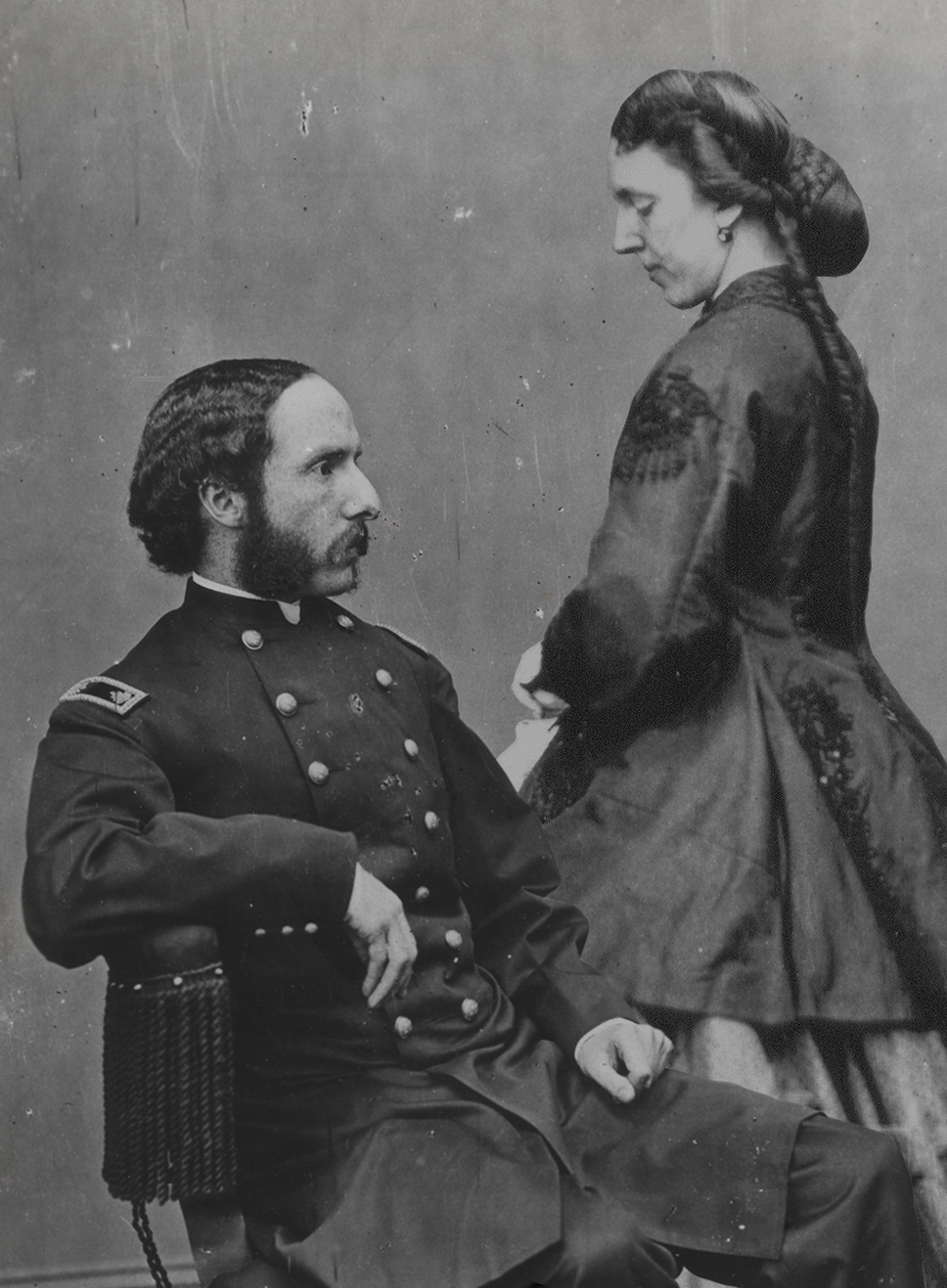
Eighteen years earlier, Major Henry Rathbone and his fiancee Clara Harris had been invited by Abraham and Mary Lincoln to join them for a night at the theater. The young couple were happy to spend a night out with the President and First Lady as the nation was celebrating the effective end of the Civil War. Henry and Clara were seated beside the Presidential couple when assassin John Wilkes Booth snuck into their shared theater box. Before the intruder’s presence had even been detected, Booth fired his derringer pistol at the back of Lincoln’s head, fatally wounding the President.

To his credit, Rathbone reacted quickly. The army veteran grabbed the intruder and grappled with him. Booth took out a long knife and slashed at the Major. Rathbone lifted his arm to block the blade and suffered a deep and painful stab to the arm as a result. When Booth mounted the balustrade of the box, preparing to jump to the stage below, Rathbone reached for him. The Major got a handful of clothing, throwing the descending man off balance to the stage. As cries from Mrs. Lincoln and Clara Harris echoed from the box, Rathbone screamed for someone to stop that man. Others attempted to enter the box in order to render aid to its occupants, but Booth had barred the outer door shut before shooting the President. Bleeding profusely from his stab wound, Rathbone managed to dislodge the wooden bar from the outer door, allowing doctors and others to rush in. The Major nearly passed out from blood loss as all attention was focused on the unconscious President.

Major Rathbone had performed admirably in attempting to subdue the assassin at Ford’s Theatre. He recognized the gunshot and reacted far quicker to it than anyone else in the theater. Rathbone had grappled with an armed assassin at the risk of his own life. He had demonstrated true bravery.
Despite his heroics, Henry Rathbone was forever haunted by the night of April 14, 1865. He came to unreasonably blame himself for Lincoln’s death, even though there was nothing he could have done to prevent the shooting. Still, the event likely caused Rathbone to develop Post Traumatic Stress Disorder, which slowly affected his mental health.
Henry and Clara had postponed their marriage in the aftermath of the assassination out of respect for the martyred President. The couple eventually wed in 1867, and three children were born from their union. The oldest was Henry Riggs Rathbone, born on February 12, 1870. This meant that Henry’s namesake son shared a birthday with the late President Lincoln. Another son, Gerald, was born in 1871, and a daughter, Clara Pauline, came in 1872. When living in Washington, the family resided in a house located in the affluent neighborhood of Lafayette Square. From their home, the Rathbones could easily see both the White House and the home where Secretary of State William Seward was living when he was attacked by Lewis Powell on the night of Lincoln’s assassination.
Clara Rathbone was very much in tune with her husband’s mental struggles. The family’s long vacations to Europe were her efforts to bring about a change of scenery and mood for Henry, and, for several years, these effectively treated his despondency. His children were also a source of great pride to Henry, and he loved them dearly. However, Henry’s melancholic periods increased in length as the years passed. He began to grow more temperamental and aggressive towards Clara at times. In late 1882, as the Rathbones were planning their trip to Hanover, they visited family back in New York for a time. Their extended family all noticed a great change in Henry. Henry would often alter the subject of conversations to that of Lincoln’s assassination, stating his belief that the country had expected him to protect the President. His friends reassured him that this was not the case, but Henry couldn’t be swayed from his sense of guilt. The family also noticed Henry’s increased outbursts of anger. Some advised Clara to separate from Henry for a time or have him placed in an asylum. But Clara felt that Henry was better off in the company of her and their children than in the care of strangers. She loved Henry and felt she was the best person to help bring him out of his instances of paranoia. However, Clara did ask for her sister, Louise, to join the family in Hanover in order to help her with the children and Henry.
 Clara Harris Rathbone
The family’s time in Hanover did little to improve Henry’s mood. Henry became increasingly irritable and paranoid. He began to believe that Clara was planning to leave him and take the children with her. Despite her constant reassurances to him that she and the children weren’t going anywhere, he continued to ruminate on the idea.
Henry became increasingly somber and distant in the days leading up to Christmas. Clara noticed the change and feared that Henry might attempt to take his own life. Henry seemed to have completely succumbed to his depression. For years, he had suffered from dyspepsia, a form of chronic indigestion, that had caused him constant pain, though how much of this physical pain was more psychosomatic is not known. Perhaps fearful of another sneak attack like the one he experienced in 1865, Henry slept with a pistol under his pillow. All of Henry’s demons took control of him on the morning of December 23.
At around 5:30 a.m., Henry arose from his bed, dressed himself, grabbed his pistol, and walked down the hall to the room where his children were sleeping. He knocked on the door, which was answered, but not opened, by Louise, who also occupied the room. Henry asked Louise through the door if Pauline was in bed. Louise replied that she was. He then asked if the two boys were in the room as well. Louise affirmed that they were. Henry told Louise to open the door as he wanted to see them for himself. In Henry’s deluded mind, the children had been taken away or were in the process of departing. Not knowing Henry was armed, Louise proceeded to crack the door, hoping the sight of his sleeping children would restore his senses.
Clara, awoken by her husband’s departure from their bedroom, had made her way to Henry by this time. She eyed the weapon in his hand and the look in his eyes. Clara attempted to calm Henry and began directing him back towards their bedroom. She called out to her sister to “lock the door and save the children; there is going to be dreadful work.”
To Henry, this command confirmed his paranoia. Clara was planning on absconding with his children and leaving him alone. He grabbed Clara by the arm and dragged her into their bedroom. Louise locked the door of the children’s bedroom and listened helplessly to the sounds of struggle from the couple’s bedroom down the hall. Louise heard the door of the couple’s bedroom lock and unlock several times. Whether Henry was trying to prevent Clara from escaping or Clara was attempting to keep Henry in the room to protect the children is unknown.
Eventually, Louise left the children alone and went to the couple’s bedroom in hopes of protecting her sister. Henry quickly escorted Louise out of the room and locked the door. Not long after, Louise heard Clara scream, “Henry, let me live!” followed by gunshots and a long silence. A house servant, aroused by the gunfire, joined Louise outside the couple’s bedroom door. Together, they two broke the door’s lock and entered the room. There, they found Clara dying on the bed and Henry with self-inflicted knife wounds on the floor.
Louise fled to her sister, whose last words were, “He has killed us both at last.”
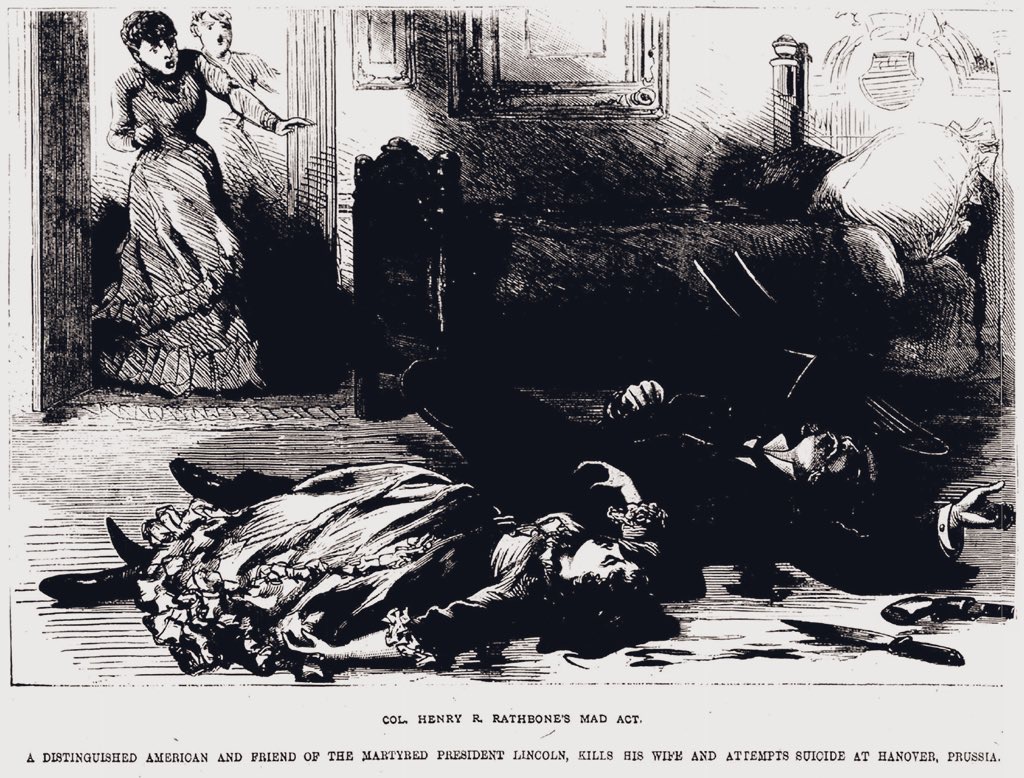
Henry Rathbone’s trial commenced in January 1884. He was adamant that he had nothing to do with his wife’s death and that someone else had broken into his home, attacked him, and murdered Clara. Through interviews with Louise and others, the court effectively established a history of insanity on the part of Henry Rathbone. Rather than sentenced to prison, Henry was committed to an asylum in Hildesheim, Germany. He remained there for over 25 years until his death in 1911.
The three Rathbone children, left without either parent, were taken in by Clara’s brother William Harris, and moved to Ohio. In time, Henry Riggs Rathbone, the eldest child, became a Representative from Illinois and sponsored the government’s purchase of Osborn Oldroyd’s collection of Lincolniana housed in the Petersen House where Lincoln died.
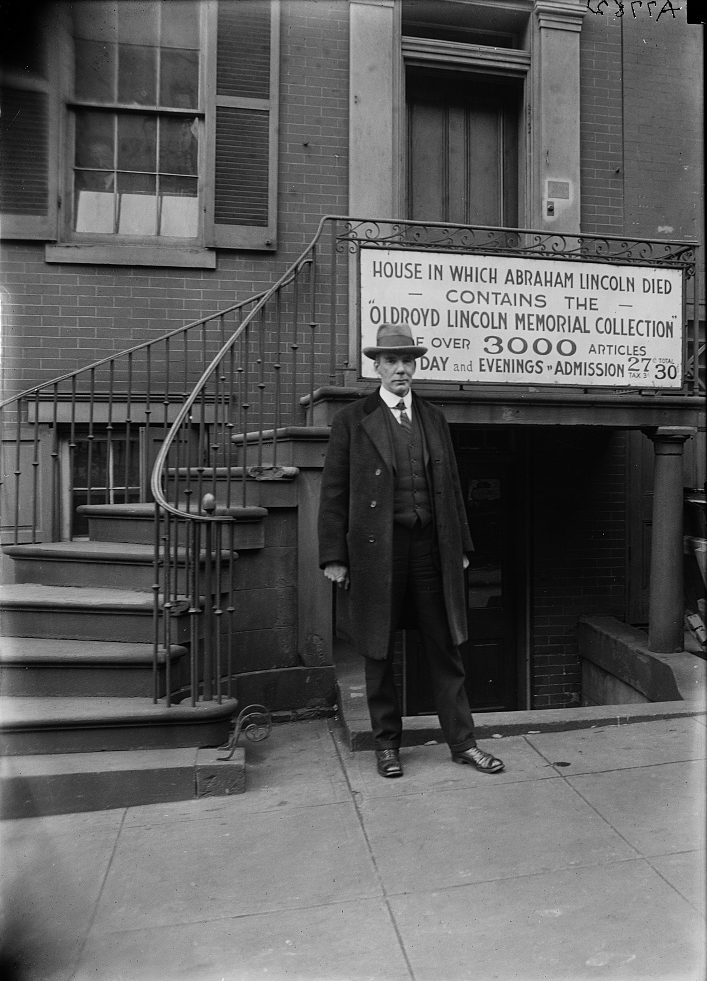 Henry Riggs Rathbone in front of the Petersen House
The story of Henry Rathbone and Clara Harris demonstrates the devastating long-term effects victims of crime can face. Henry Rathbone’s mind was forever scarred by the events of April 14, 1865. His inability to save the President created a sense of overwhelming guilt from which he could not escape. This trauma festered in Henry, devastating his mind. Yet, in the end, it was Clara, not Henry, who paid the ultimate price for this trauma. Clara, herself having suffered the trauma of witnessing the shooting of the President and the stabbing of her fiancee, lost her life in trying to stop the man she loved from harming their children. In this way, both of the Rathbones proved themselves to be selfless and heroic.
While Henry is the one who killed Clara in a fit of insanity, he is not the sole answer to the question, “Who could have done this?” The blood of this Christmas tragedy is also to be found on the hands of John Wilkes Booth.
References:
Worst Seat in the House: Henry Rathbone’s Front Row View of the Lincoln Assassination by Caleb Stephens










 LincolnConspirators.com
Recent Comments