Posts Tagged With: Acting

An Assassination Vacation in the Midwest

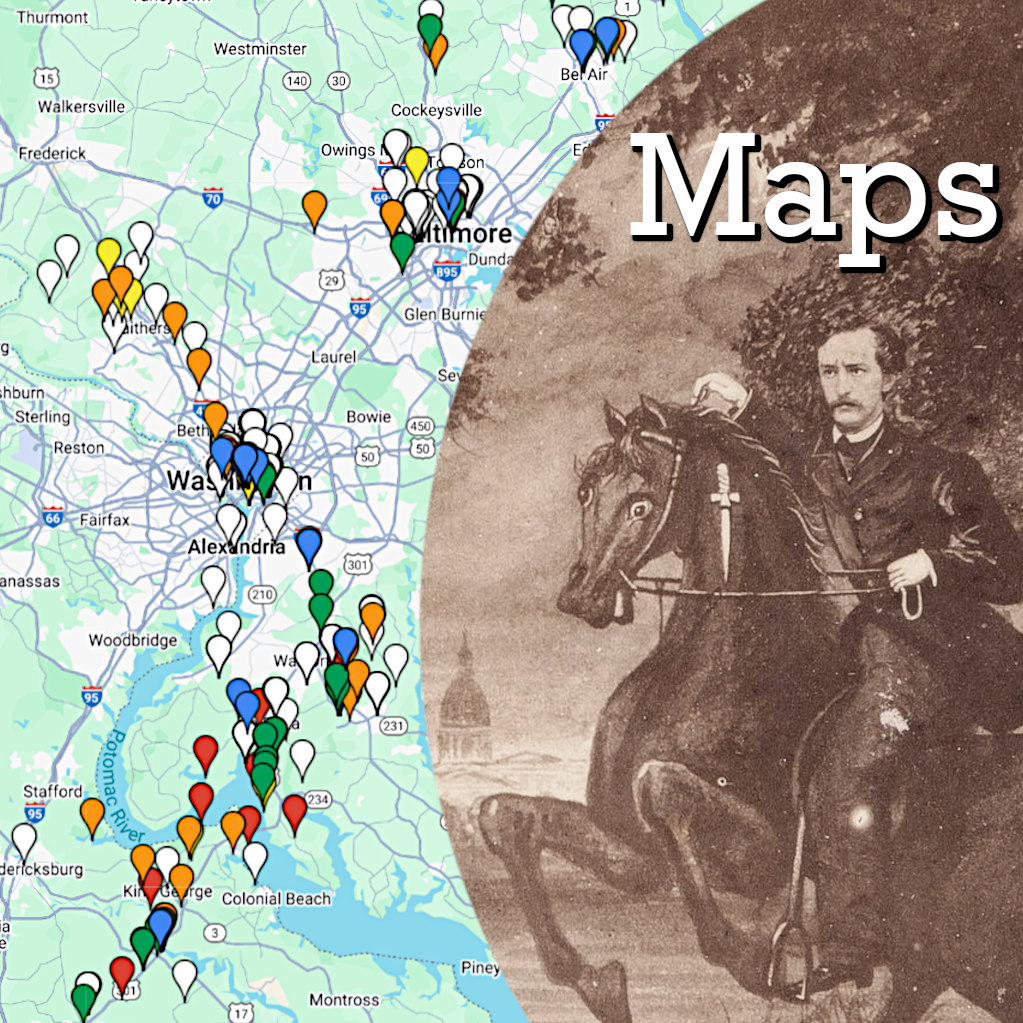
I am visiting my family here in Illinois and decided to use the opportunity to make use of the newly updated Lincoln assassination maps here on BoothieBarn.  I planned and executed a two day excursion to visit some of the sites on the Lincoln Assassination in the Midwest map.  The following is an overview of my trip composed using the tweets I sent out en route along with a couple of short videos I made.

While the trip mainly consisted of two long days of driving, I enjoyed myself and it was a lot of fun to see so many Lincoln assassination places, graves, and artifacts all at once.  Thank you to the Historical Society of Quincy and Adams County, Mr. Blair Tarr, curator of the Kansas State Historical Society Museum, Nikaela Zimmerman, Barry Cauchon, and Steve Miller for all your help in making this trip possible.  Also, thank you to my parents for letting me use (and put a considerable number of miles on) their car.

Now you all get out there, take your own assassination vacation, and tell me about it in the comments below!

Categories: Uncategorized | Tags: , , , , , , , , , | 19 Comments

John Wilkes Booth: Snowbound

Today, as the New England region of the United States recovers from what is being called the “Blizzard of 2015”, I am reminded of another historic winter storm. To many in the Midwest, the winter of 1863/64 became frozen in their minds as one of the worst winters ever experienced. Between December and January, temperatures rarely went above freezing. On December 18, 1863, for example, Fort Kearny, Kansas, reported a temperature of 25 degrees below zero with snow four to five feet deep in places. New Year’s Day, 1864, brought along a massive blizzard for the Midwest, with places like Minneapolis, Minnesota, seeing a high of 25 degrees below zero that day.

It was around this time that John Wilkes Booth, a now successful and celebrated actor, was performing in Leavenworth, Kansas. He had been delayed in arriving at Leavenworth from his former engagement in Cleveland, Ohio, appropriately due to snow. However, this minor delay of a day would amount to nothing compared to what was in store for the actor.

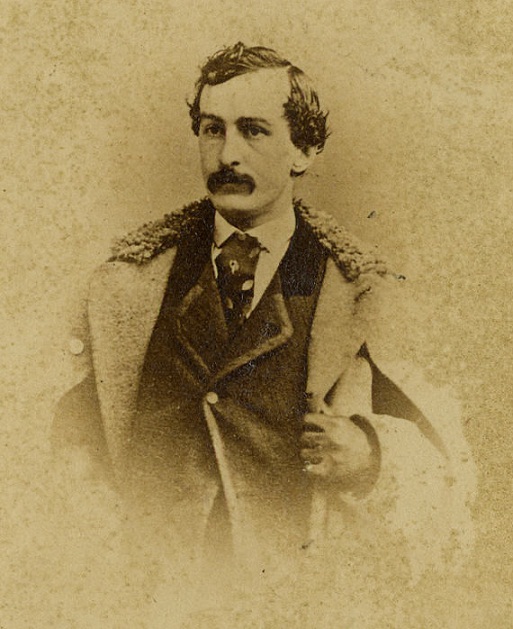
John Wilkes Booth Gutman 24

Booth finished his engagement in Leavenworth on December 31. During his time there, critics spoke of his talents:

“Mr. Booth has not only genius, but careful culture and trained power of intellect. There is no actor now on the stage who displays so much of dramatic force and insight as Mr. J. Wilkes Booth, except, perhaps, for his brother Edwin. There is no imitation on the part of the junior, either to his renowned father or his now famous brother. He has a grace and charm all his own, though resembling them in genius, skill and painstaking care, with which his characters are presented on the stage.”

John Wilkes Booth set off from Leavenworth on January 1, 1864. In the morning, he made a brief visit to Fort Leavenworth, a few miles north of the city, to see some friends. This trip occurred on one of the coldest days on record and at a time when newspapers were describing the terrible winds thusly: “Ah, this is a blessed cold snap! Patient old Job may have seen colder weather, but he never undertook to walk up Sixth street facing such a wind as we felt yesterday. Not he. His reputation for patience would have been blasted. God help the shivering poor.” Booth later wrote of having “an ear frost bitten” by the time he arrived at the Fort.

Accompanying Booth during this western trip was a young, black man, possibly named Leav, about whom practically nothing is known other than he served as Booth’s valet and servant. Upon leaving Fort Leavenworth for the journey back to town in order to catch the ferry, Booth gave Leav some items to carry, including his pocket flask. Booth wrote the sorrowing effects of this decision in a letter to the man with whom he had been boarding with in Leavenworth:

Portion of a John Wilkes Booth letter in which he recounts the loss of his flask in the snow.

Portion of a John Wilkes Booth letter in which he recounts the loss of his flask in the snow.

“After giving my boy my flask to keep for me, I started for a run and made the river (four miles) on foot. I run without a stop all the way. I then found my boy had lost that treasured flask. I had to pay five dollars for a bare-backed horse to hunt for it. I returned within sight of the Fort and judge my dismay upon arriving to see a waggon just crushing my best friend. But I kissed him in his last moments by pressing the snow to my lips over which he had spilled his noble blood.”

Some have tried to use this visual of the actor, mourning the destruction of his flask and sucking the last bit of its spilled contents from the snow, as evidence that Booth was an alcoholic. While possible, I view the scene as entirely appropriate given Booth’s dramatic flair in a moment when the outside conditions so desperately warranted the “warming” effects of alcohol. Saddened as he was, things were still only going to get worse for the actor.

When Booth returned to the boat landing, he found that ice had prevented the ship from reaching the shore. Booth, along with others, helped to cut the ice in order to allow the boat to dock. The ship then took him across the Missouri River, and he slept that night across the river from Leavenworth in the town of Weston, Missouri. His end goal was St. Louis, where he was booked at Ben DeBar’s theater starting on January 5. On the morning of January 2, he boarded a train at Weston and took it north about 35 miles to St. Joseph. From there, he was hoping to catch a train with the Hannibal and St. Joseph Railroad, which would take him eastbound towards St. Louis. The weather, however, had other plans.

The blizzard of 1863/1864, known as “The Big Snow” by those who lived through it, occurred over an area of 3,000 miles, hitting a large portion of Illinois, Iowa, and Missouri. As one Missouri citizen later recalled, “a terrible snow storm set in and continued with unabated fury for forty-eight hours.” Near St. Joseph, the ground was covered with snow to a depth of about 27 inches, but areas east of St. Joseph had been hit even worse. Huge snow drifts occurred, completely covering the railroad tracks. Not one, not two, but eight trains along the Hannibal and St. Joseph Railroad were trapped in the snow, some buried up to thirty feet in it. The closest trapped train was only about 19 miles east of St. Joseph. All were unlikely to be freed anytime soon.

The cover of the January 23, 1864 edition of Harper's Weekly shows the condition of railroads across the Midwest.

The cover of the January 23, 1864, edition of Harper’s Weekly shows the condition of railroads across the Midwest.

By the time Booth had arrived at St. Joseph, no train had traversed the Hannibal and St. Joseph rails for the past week. Booth, like everyone else who came to St. Joseph hoping to go east, was completely snowbound. Local newspapers printed a report, later to be proven entirely too optimistic, that the train line might be up and running again in four days. With no other options available to him, Booth found a room at the now wholly overcrowded Pacific House hotel in St. Joseph.

Booth spent his first full day in St. Joseph on Sunday, January 3. Even after only a day, Booth likely empathized with the local newspaper, which wrote, “We are ‘in the wilderness,’ and can’t see any way to get out.”

On Monday, January 4, Booth’s reputation had caught up to him. After becoming aware that the famous tragedian was effectively stuck in their city, citizens of St. Joseph wrote a letter to Booth asking him to perform for them in some capacity. They wrote:

“J. Wilkes Booth, Esq., Pacific House:
Sir:
The Undersigned, citizens and travelers detained here, having learned that you were making a short visit to this city and entertaining a high appreciation of your ability as a tragedian, would most respectfully but earnestly request that you would favor us with a public reading from any of your favorite authors, at any time and place most convenient for you. When and where we pledge you an appreciative audience”

The request was then signed by 70 citizens and guests of St. Joseph, including the mayor. Booth, later wrote to a friend that he was down to his last cent in St. Joseph, and so he heartily agreed to the public’s demand of him. He wrote the following response to the invitation:

“Gentlemen:
Your flattering request has just been recieved and I endeavor to show my appreciation of it, by the promptness of my compliance. I have gained some little reputation as an actor, but a dramatic reading I have never attempted. I know there is a wide distinction as in the latter case, it is impossible to identify ones-self with any single character. But as I live to please my ones, I will do all in my power to please the kind friends I have met in St. Joseph.
I will therefore designate Tuesday evening, Jan. 5th, at Corby’s Hall. I am
Very Respectfully,
J. Wilkes Booth”

Despite his assertions to the contrary, Booth had, in fact, performed public recitations before. When he ran off with the Richmond Grays to attend the execution of John Brown, he had entertained his fellow soldiers with readings. That was, however, over four years ago when he was still but a novice actor.

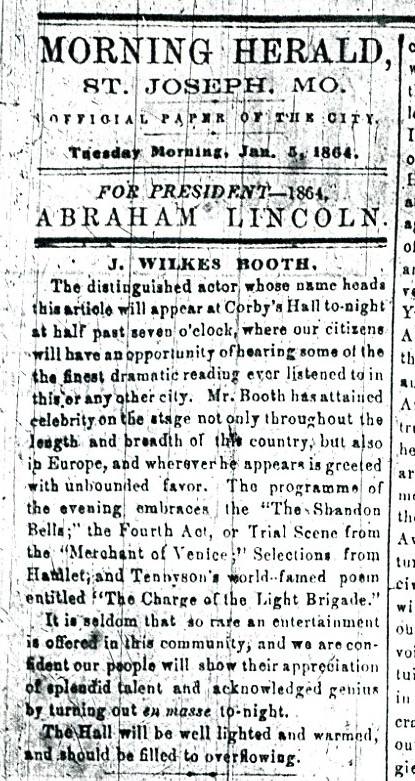
The next day’s newspaper advertised the performance as its lead article, with the newspaper’s ironic political sentiments being the only thing preceding it in the issue.

John Wilkes Booth will perfom with Lincoln ad 1-5-1864 St Joseph Morning Herald

In addition to reciting pieces contained in the article above, John Wilkes also took this chance to recite one of his favorite, and entirely appropriate, poems, “Beautiful Snow.” The newspapers hailed the performance the next day, stating:

“The dramatic reading of this celebrated actor last evening was well attended and gave universal satisfaction.  The Hall was well filled, but it was so very cold that everybody found it almost impossible to be comfortable. The selections of the reader were all rendered in a captial style, but we were particularly pleased with ‘Once I was Pure [Beautiful Snow]‘ and the ‘Charge of the Light Brigade.’ Our citizens would greet Mr. Booth with a crowded house could he be persuaded to repeat the entertainment.”

Booth did not perform again in St. Joseph despite the newspaper’s suggestion. It might have had something to do with the condition of the audience, which the newspaper scolded for their behavior during his recitations:

“It is inexplicable why full grown men will go about in a hall on such an occasion as that of last night, stamping like elephants, and moving chairs as though they were anvils. A trifle of good breeding is a capital thing to be used in keeping a hall quiet.  Stupid dolts who go thundering about the world, to the disgust of every sensible person, should be debarred from the privileges of Corby’s Hall during dramatic readings.”

Booth received $150 from the performance, which was greatly needed. Days were still passing with little sign that the trains would start running again. On Thursday, January 7, the temperature in St. Joseph at 9:00 am was twenty-one degrees below zero. Some days were better than others, however, with the newspaper celebrating the reappearance of the sun despite the “crisp, cold day”.

By Friday, January 8, it was clear that everyone was suffering from the prolonged freeze. The newspaper lamented, “Well, this is a big storm. In the memory of man, no such cold weather and no such fall of snow has been known as we are now suffering in. Hundreds of travelers are here, weatherbound.” An earlier report stated, “Our people are in a terrible fix. The snow has effectually shut us out from ‘all the world and the rest of mankind,’ and there is no prospect of relief.” John Wilkes Booth was now three days overdue for his engagement in St. Louis, 300 miles away. A man arrived in St. Joseph and related that he had taken the train west from Macon, the transfer point to St. Louis. The train made it west until Breckenridge, where the other stopped trains and snow prevented it from going further. Booth, realizing that if he could make it to Breckenridge, 60 miles to the east, he could catch the working trains to Macon and then St. Louis, decided to put an end to his snowy vacation in St. Joseph. With $100 of the money he had received from his public reading, Booth hired a four-horse sleigh to take him the 60 miles to Breckenridge. He departed on January 8, after spending about five and a half days in St. Joseph, Missouri.

The exact details of Booth’s journey by sleigh are not known for sure. He later wrote to his friend John Ellsler of the journey:

“[The performance at St. Joseph] gave me $150. with which I hired a sleigh and came 100 miles over the plains. Four days and nights in the largest snow drifts I ever saw Its a long story which I want to tell you when I see you, but I will say this that I never knew what hardship was till then.”

There are two individuals who, many years later, gave accounts regarding Booth’s time in the snow. One of them was William D. Bassett, then a 16-year-old railroad telegraph operator stationed in Cameron, Missouri. Around the turn of the century, various newspaper articles were published featuring Bassett’s recollections of The Big Snow. Bassett stated that he shared his comfortable room at the Cameron depot with Booth after Booth arrived, along with this theatrical troupe, in Cameron by train. The way Bassett portrays it, Booth was never trapped at St. Joseph, but, instead, with him at Cameron. All of this is suspect and is contrary to the facts. However, it is possible that Bassett has some truth in his accounts. Perhaps, Booth, while on his four-day sleigh journey to Breckenridge, stopped in Cameron to rest for a day or two and found hospitality with young Bassett in the depot. Cameron was just about halfway between St. Joseph and Breckenridge, making it an extremely appropriate spot to rest before moving on. In Bassett’s recollections of their time together, he states that Booth was fond of literature and that the pair spent some time reading Victor Hugo’s Les Misérables together. Booth was also apparently quite entertained when, upon visiting the local bar one morning, he found a captive audience of customers waiting patiently as the bartender was attempting to thaw out bottles of whiskey that had frozen solid.

Probably the most entertaining of Bassett’s recollections involves Booth’s interactions with the children of Cameron. From other accounts, we know that John Wilkes Booth was very fond of children and was fairly gifted at conversing with them. According to Bassett:

“Several little children played around the depot everyday while Booth was there, and with these innocent creatures he soon became a prime favorite. He would teach them games and engage in snowball battles with them. Sometimes they would all join against him and give him much the worst of it, but he took it all in perfect good nature, and was as rollicking and boisterous as the best of them. For many weeks after his departure the little girls and boys would ask me when ‘Mr. Boots’ was coming back.”

A newspaper article containing Bassett’s memories, published in 1901, includes this wonderful drawing of the event.

Snowbound John Wilkes Booth The Republic 8-4-1901

Even if Bassett’s accounts are untrue, I have no problem believing that, at some point in his life, whether it be during the many days he spent at St. Joseph or a previous snowy winter, John Wilkes Booth engaged some local children in a snowball fight. His affinity for children makes this a very likely scenario.

One of the other individuals who later spoke of Booth’s time in the snow was an actress named Mrs. McKee Rankin. According to an article by her published in 1909, she heard Booth recount some of the struggles he faced during his sleigh ride to Breckenridge. It is very difficult to put any reliability in her account, however. Not only was it published 45 years after the event, but Mrs. Rankin also admits that she is remembering the story told by Booth to a friend while she was listening through a transom in a different room. The account is filled with factual errors regarding the events and, in truth, is barely worth the paper it is written on. However, it is still an extremely entertaining read. Surprisingly, the one thing Mrs. Rankin does get right is the inclusion of Booth’s otherwise forgotten servant. She recalls an exciting tale in which Booth and Leav hire a horse named “The Girl” to lead their sleigh. At one point, it is so dark that the men went right over a snow drift, sending them flying from the sleigh. As Mrs. Rankin wrote it, after the accident, poor Leav was like a cartoon character with his head and body buried while his legs and feet stuck out of the snow. Booth pulled him out, and together they righted the sleigh. Leav was freezing cold and buried himself under robes and blankets on the sleigh. While Booth recovered himself, he bent down to get a drink of whiskey from a jug they had brought along, only to find that it had broken. After lighting a half-broken cigar, Booth heard footsteps approaching. He tried to rouse Leav, but at that point, Leav was unconscious, wrapped in the sleigh. As the footsteps got closer, Booth drew long on his cigar, hoping to see something in the darkness. Then he felt the panting of an animal before him and saw two balls of fire reflecting in the eyes of an animal before him. It was a wolf! In that instant, the “heroic” Booth grabbed the broken piece of whiskey jug and brought it down right onto the head of the beast. Before getting a chance to see how many wolves were out there, “The Girl” let out a yelp and, with a bound, was pulling the sleigh away at top speed. According to Mrs. Rankin, the horse, at a dead run, didn’t stop until they reached their destination.

While it’s safe to say that probably none of Mrs. Rankin’s account is true, it is at least possible that Booth said some of these falsehoods to make a good story. In fact, another actor by the name of Edwin Adams recalled another likely case of Booth adding flourish to a story:

“I heard [Booth] boasting over a long and tedious journey from Leavenworth across the prairies in a sleigh to St. Louis and after of having threatened a conductor’s life, who had stopped his train on account of the great depth of snow, and that by placing a pistol to his head, made him continue his journey.”

The truth of Booth’s journey, however, is far less flashy. On Monday, January 11, John Wilkes Booth, his servant, and his sleigh team had made the cold trek of sixty miles from St. Joseph to Breckenridge. The tracks on the Hannibal and St. Joseph Railroad were clear from that point eastward. Booth caught the first train he could eastward. At Macon, he transferred from the Hannibal and St. Joseph Railroad to the Northern Missouri Line. This line took him southeast, all the way to his destination of St. Louis.

He opened at the St. Louis Theatre on Tuesday, January 12, exhausted but not wanting to lose any more days from his engagement. The Big Snow had caused him to lose seven days of performances—and pay. The toils of his journey had taken much out of him. One of the stock actors in the company later wrote, “[Booth] told me of his hardships in coming down from [St. Joseph] to fill his date in St. Louis, and that he had made the greater part of the journey in sleds…He looked worn out, dejected and as melancholy as the dull, gray sky above us…After ordering beer, he sat gloomily and silent for a time, and upon my asking him the cause, he smilingly answered that no doubt it was the rough experience he had passed through lately.” Booth would only perform five times in St. Louis before he had to move on to his next engagement in Louisville, Kentucky.

Just as the residents of Boston will long remember the Blizzard of 2015, so did John Wilkes Booth retain a memory of his run-in with the Big Snow of 1863/64. He spent just under a week snowbound in St. Joseph, Missouri, and, when he could take it no longer, he braved the harsh weather by sleigh for four days. In less than a year and a half, John Wilkes Booth would again be braving the elements for a chance at freedom as he ran for twelve days, attempting to flee one of the largest manhunts in American history.

References:
John Wilkes Booth: Day by Day by Art Loux
“Right or Wrong, God Judge Me”: The Writings of John Wilkes Booth edited by John Rhodehamel and Louise Taper
January 1, 1864 – January 9, 1864 editions of the St. Joseph Morning Herald
Snowbound with John Wilkes Booth at Cameron, MO by William F. Bassett in The St. Louis Republic Magazine, August 4, 1901
The News of Lincoln’s Death by Mrs. McKee Rankin
The Lincoln Assassination: The Evidence edited by William Edwards
Recollections of an Old Actor by Charles A. Krone
Harper’s Weekly
The Art Loux Archive
GenealogyBank.com

Categories: History | Tags: , , , | 3 Comments

John Wilkes Booth’s Movements at Ford’s Theatre

It is well known that John Wilkes Booth assassinated President Lincoln in his theater box, jumped to the stage, and escaped out of the back door of Ford’s Theatre.  These hurried moments at Ford’s instigated a massive manhunt that lasted twelve days and ended with the death of the assassin.

The moments that preceded John Wilkes Booth’s firing of his derringer are not as well known.  John Wilkes Booth was intimately familiar with the layout, and people, of Ford’s Theatre.  It was like a second home to him insomuch that he even had his mail delivered to Ford’s when he was in Washington.  This familiarity allowed Booth to move about Ford’s Theatre without arousing suspicion.  What follows is an account of Booth’s movements at Ford’s Theatre in the time before he shot the president.

Ground Floor of Ford's Theatre and Baptist Alley plan

John Wilkes Booth had a busy day on April 14th.  His preparations to assassinate the President took him to the Herndon House hotel to alert his conspirators, the Kirkwood House hotel to leave a suspicious note for Vice President Johnson, and near Willard’s hotel to give a note to John Mathews which would justify his later actions.  Booth also visited Mary Surratt’s boarding house on H street three times that day.  It was after his third visit, where Mrs. Surratt confirmed she had given John Lloyd the message that parties would be calling for the hidden weapons tonight, that John Wilkes Booth walked to Ford’s Theatre.  He first went into the Star Saloon owned by Peter Taltavul. It was located right next door to Ford’s Theatre.  He briefly drank there with some of the stagehands from Ford’s, including Edman Spangler, since the play for that night, “Our American Cousin“, was at an intermission.  He found himself drinking alone when the men we called to curtain.

From the Star Saloon, Booth made his way to Baptist Alley behind Ford’s Theatre and got his horse, a bay mare, out of her stable. Spangler built the stable for Booth and took care of it for him.  Booth walked his horse to the back door of Ford’s Theatre. At the back door, Booth called for Spangler, who he hoped would hold his horse until he would need it.   Booth was told by another stagehand that Spangler was needed for an upcoming scene change and so Booth waited with his horse.  After the change, Spangler came out and agreed to hold Booth’s horse.  Booth entered the back door of Ford’s.  The current scene of the play left Booth with no room to sneak across.

The back wall of Ford's Theatre from backstage.  When Booth tried to go across here, there was not enough room.

The back wall of Ford’s Theatre from backstage. When Booth tried to go across here, there was not enough room.

Instead, he lifted a trap door and descended a staircase that led under the stage.  This was a T shaped passageway that was used by stagehands to cross the stage underground and for the musicians to reach the orchestra pit.  Booth emerged by ascending another flight of stairs and opening a trap door on the opposite side.

From there, Booth exited a stage door and into a covered alleyway between Ford’s Theatre and the Star Saloon.  He exited the passageway right out onto Tenth St.  Various witnesses put Booth in the theater lobby and at the Star Saloon at different times which makes knowing his precise course impossible.  However, a likely scenario would have Booth entering the lobby of Ford’s Theatre after exiting the alleyway.  He walked past the ticket taker, John Buckingham, who instinctively held out his hand for a ticket until he realized it was Booth.  Buckingham said that Booth entered the theater and stood behind the seats watching the production (and the President’s box) for some time.

As this was going on, Spangler had grown tired of caring for Booth’s horse.  He called for Peanut John, a young man who acted as an errand boy for the theater, to come out and take his place.  With Peanut holding the reigns, Spangler returned to work.

John-Wilkes-Booth-at-Ford's

An animated clip showing, approximately, Booth’s movements at Ford’s Theatre on April 14, 1865.

Booth exited the theater and walked next door to the Star Saloon.  Here he had a glass of whiskey and some water to chase it down.  He also acquired a cigar and began puffing away.  Cigar in mouth, Booth returned to the lobby of Ford’s.   Booth entered the main floor of the theater again and watched the production some more.  Upon exiting, he conversed with Harry Ford who was in the ticket office counting receipts.  Booth placed his half smoked cigar down on the window’s ledge and joked with Ford that no man should disturb his cigar.

As stated before, Booth’s movements are not an exact science.  It is likely that Booth, anxiously passing the time while waiting to strike, repeatedly traveled between Ford’s Theatre and the Star Saloon, attempting to gain courage with every drink.  Eventually, however, Booth realized that it was time to strike.  From the lobby of Ford’s Theatre, Booth ascended the staircase which led him to the balcony level.

Booth crept across the back of the dress circle level.  As he approached closer to the president’s box he stopped and noticed a guard sitting in front of the entryway to the boxes.  He removed his hat, and took out something, probably a calling card, from his pocket.  He then approached the man and presented the card to him.  He was allowed to pass and entered the vestibule with led to the boxes.  Booth closed the door and, using a bar he had hidden there earlier, he wedged the door shut.  The door to Box 8, which was at the end of the passageway, was open.  With his single shot derringer in hand and a large Rio Grande Camp knife at the ready, Booth entered the President’s box through door 8, turned left, and shot Abraham Lincoln in the head at close range.

The Shot 14 National Police Gazette 4-22-1865

Booth cried out “Sic Semper Tyrannis” and dropped the gun.  He raised the knife in his hand as Major Rathbone, one of the President’s guests that night, rushed at him.  Booth tried to stab Rathbone in the chest but Rathbone parried the strike and took it in his left arm instead.  Booth then ran to the front of the box, put his hands on the railing, and leaped over.  He fell almost twelve feet to the stage below.  He landed awkwardly, either due to a last minute grab by Rathbone or his spur catching one of the decorative flags adorning the box.  In a moment he raised himself up and with quick speed made his way across the stage, perhaps pausing briefly at center stage to raise his knife and shout “The South shall be Free!”  Booth ran into the wings and towards the back door he originally entered through.  William Withers, the orchestra director, unknowingly got in his way and Booth pushed him away, cutting his vest in the process.  Booth reached the back door, rushed through it, and shut the door close behind him.

In the alley, Booth shouted at Peanut John to, “Give me the horse!”  Booth knocked Peanut away using the butt of his knife and a firm kick.  He swiftly mounted the horse and put spurs to her.  She dashed down Baptist Alley.  Booth turned her northward and exited out onto F Street.  He would soon escape D.C. via the Navy Yard bridge and America’s largest manhunt would begin.

References:
Backstage at the Lincoln Assassination by Thomas A. Bogar
Restoration of Ford’s Theatre by George Olszewski
American Brutus by Michael W. Kauffman
The Art Loux Archive

Categories: Uncategorized | Tags: , , , , , | 7 Comments

The Debate Over Gutman #1

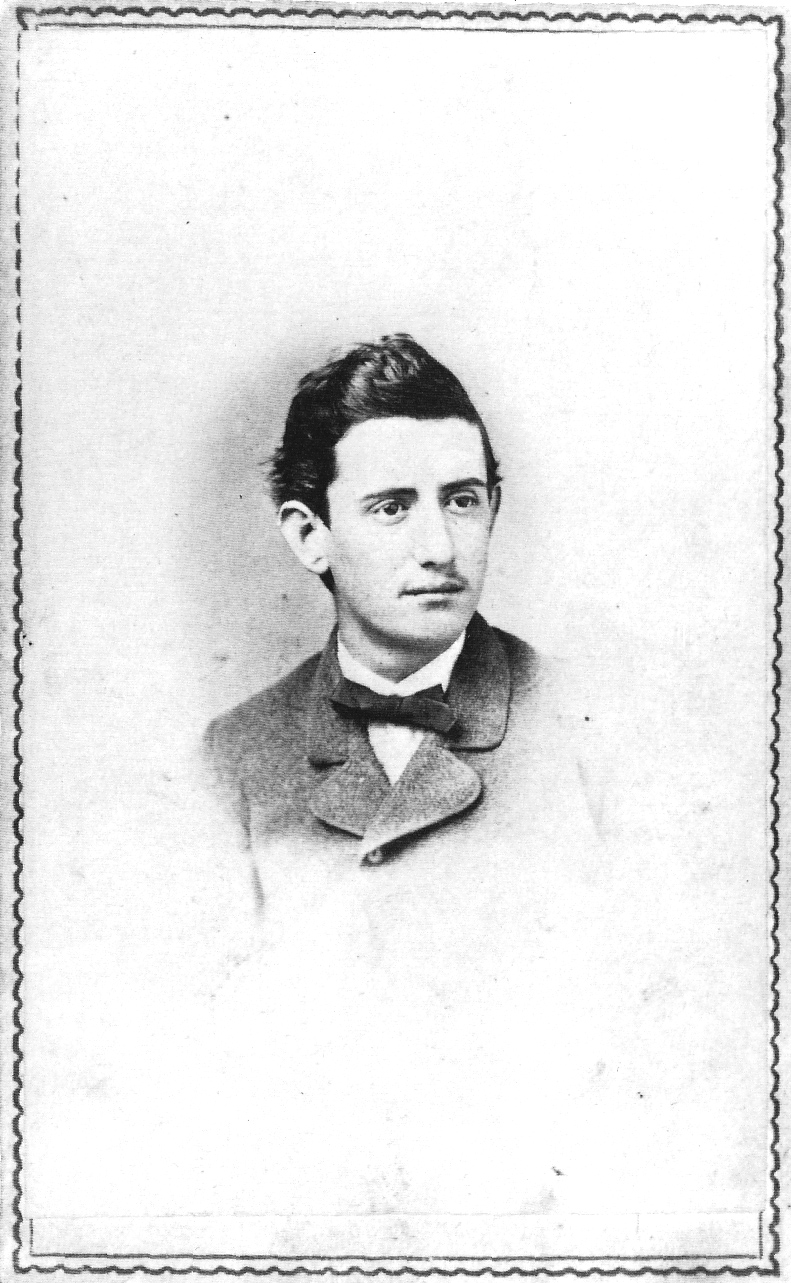
Yesterday morning, friend and frequent commenter on the site, Carolyn Mitchell, posted a new picture to the Spirits of Tudor Hall Facebook page. The image came from the book John Wilkes Booth Himself by Richard and Kellie Gutman. In this 1979 publication limited to just 1,000 books, the Gutmans compiled all the images of John Wilkes Booth that were known at the time. Their first one, labeled Gutman #1, is as follows:

Gutman #1

Gutman #1

This image is captioned in John Wilkes Booth Himself with the following: “The earliest known photograph of John Wilkes Booth is a head and shoulders vignette, depicting him at age 18. One copy exists as a carte de visite done by Mansfield’s City Gallery, St. Louis, Missouri. In all likelihood, this is not the original photographer or photograph. John Wilkes Booth turned 18 on May 10, 1856-and that year is a bit early for a carte de visite in the United States. This may have been copied from another form of photograph (daguerreotype, ambrotype or tintype) or a larger paper print. In any event, copies of this picture are very rare. It has been published only one time, in Album of the Lincoln Murder (Harrisburg, PA.: Stackpole Books, 1965).”

Armed with this information, Carolyn posted the photograph like so many other rare and unique views of the Booth family she has come across.

Very quickly though, people started to express their doubts that this was a picture of Booth.  Some said it could be of one of the other Booth brothers like Edwin or Joseph.  I long ago questioned the identity of the young man in this particular photo, too. At the time of writing this, there were 15 responses to this photo on the Facebook page. After receiving an email from a colleague trying to remember a previous discussion regarding this photo, I decided to post here about it.

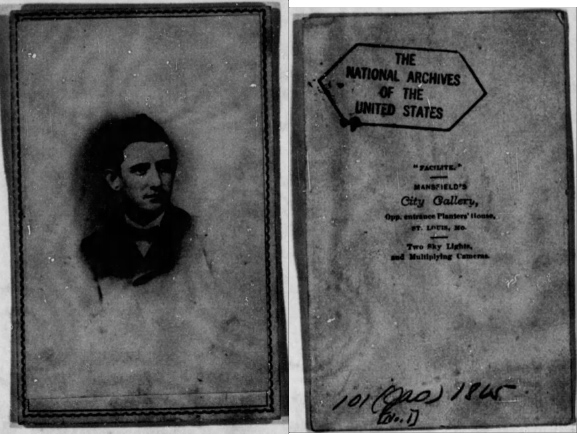
As far as I know, part of the description from the Gutmans is correct in that there is only one copy of this carte-de-visite known to exist. It is in the National Archives in their Lincoln Assassination Suspects file. Here is the microfilmed quality version of this CDV:

Gutman 1 NARA

The CDV itself was found among Booth’s papers and files in the National Hotel after the assassination. It was deemed not relevant to the investigation but still retained in the government’s files. This probably explains the Gutman’s desire to include this picture in their collection of Booth photos. It was found with his things, does not bear any writing precluding it from being Booth, and has some similarities to the young tragedian turned assassin. Stating it is of a young Booth makes it easier to ignore some of the discrepancies in appearance.

Not everyone, however took the identification by the Gutmans at face value on this one. In the book, The Lincoln Assassination: The Evidence by William Edwards and Edward Steers, Jr., and in Steers’ The Lincoln Assassination Encyclopedia, this photograph is identifed as being Benedict “Ben” DeBar. Ben Debar was a theatre owner and actor. Junius Brutus Booth, Jr., JWB’s brother, married Ben’s sister, Clementine DeBar and they had a daughter together Blanche. June abandoned Clementine and Blanche, running off to California with a prostitue named Harriet Mace. Ben filed for a divorce on behalf of his sister and adopted Blanche as his own. John Wilkes assumedly still cared for his niece, as in his papers at the National, there is a letter from Ben DeBar extolling young Blanche’s early success as an actress. Attaching newspaper clippings and a playbill bearing the name “Blanche DeBar”, Ben brags to JWB, “I have sent June a bill to prove to him I have no wish that the girl should have any other than my name.”

The reason Steers and Edwards claim that this image, Gutman #1, is of Ben DeBar is because this image is microfilmed right alongside of the materials from Ben DeBar. Sandwiched right next to a newspaper clipping of Blanche’s success and a playbill announcing her performance in the comedy “Love Chase”, is this image. While the letter from Ben does not mention a photograph, its placement with the other materials seems to point that is from him.

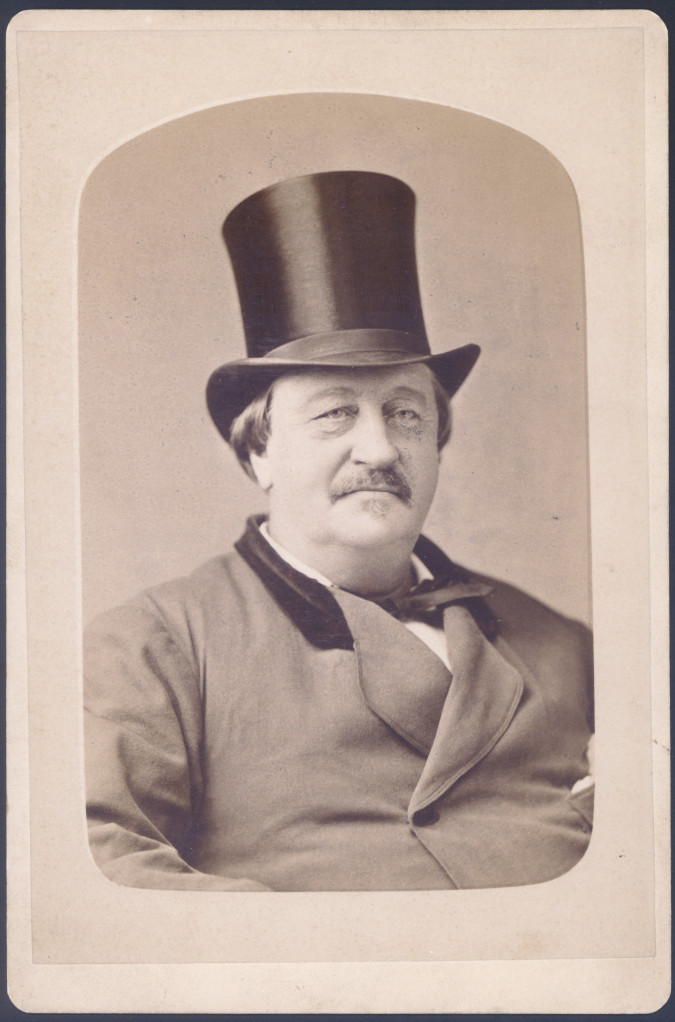
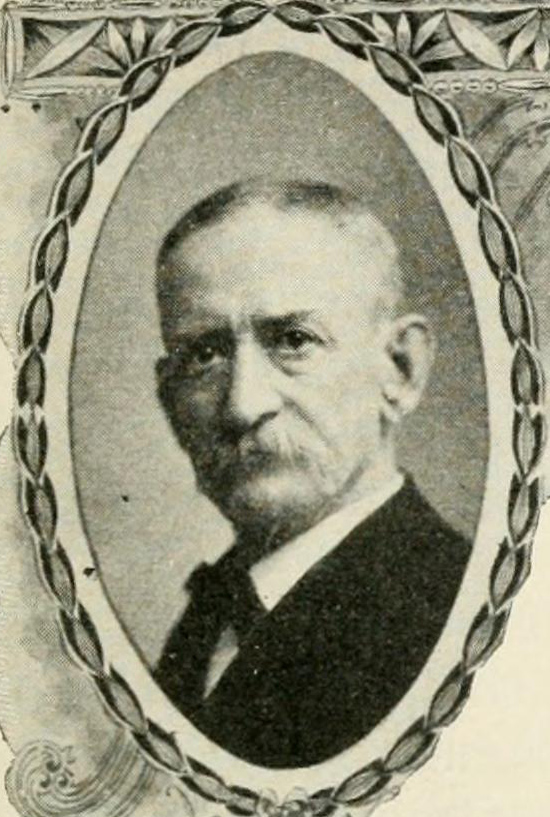
The problem is, however, that Ben DeBar was quite a bit older than the young lad in the picture. DeBar was born in 1821 and at the time of his writing in March of 1865 would have made him about 44 years old. Here’s a picture of Ben Debar taken around 1870 for comparison:

Ben DeBar

Ben DeBar

So while Steers and Edwards’ theory that Gutman #1 is Ben DeBar makes sense in the context of the image’s placement in the microfilmed files, the difference in ages and appearances makes it as unlikely as the photograph being of Booth.

Thus far, the most logical and probable explanation of who this individual is comes from the authors John Rhodehamel and Louise Taper who edited the book, “Right or Wrong, God Judge Me”: The Writing of John Wilkes Booth. They put forward that the man on this CDV was a young clerk working for General Grant’s office named Richard Marshall Johnson.

From Booth’s papers at the National we find that he did have a letter from Richard M. Johnson. Dated February 18th, 1865, Johnson writes in part, “I may be vain in presuming that our brief Memphis acquaintance has made us friends, but on my part it has…” Johnson recounts their initial meeting during which Johnson was drinking away his sorrows over the death of a friend. Booth befriended the young Union officer and evidently made quite the impression on him. Johnson asks Booth about his oil ventures and gives him the “riot act” for not acting this season. “You have too fine a reputation in this part of the country to let a winter pass away without giving us a call,” Johnson explains. The remaining part of the letter is of a request Johnson has of Booth:

“By the way, send me another of your photographs with your autograph on it. The one you sent me from New Orleans was disposed of rather strangely. A young lady of rare accomplishments and talent asked me for it. I refused the gift. She insisted and I proposed to get her a fine picture of you, but she wanted the one with your autograph. She has seen you frequently and was deteremined to have it. After much persuasion, I concluded to let her have it intending to write you for another. I gave it to her with the promise that when you visited this city I would take you to call on her. Today she sleeps in Bellefontaine Cemetery having died shortly after I gave her the picture. When I visit her family and see her album I see the name of J. Wilkes Booth written at the bottom of your photograph and think of the unfulfilled promise that she should know you. Your picture will always remain in the album as the touch she gave it in placing it there is now considered sacred. She was a woman of rare and beautiful excellence.”

While, as you can see, there is much talk in this letter of Booth’s photograph, Johnson never mentions sending one of himself to Booth. The evidence for that lies in a letter from Booth to Johnson that is housed at the Huntington Library. In the portion of letter above, Johnson mentions the photograph Booth sent him, “from New Orleans”. The letter from Booth to Edward Johnson is dated almost a year before the above letter on March 28th, of 1864 and states the following:

“Dear Johnson

Yours of the 12th; recd:. I am glad to find that you have not forgotten me, and hope I may ever live in your generous remembrance. I enclose in this a picture of myself, better (I think) than the one I gave you.

This of you I will ever keep among my very few and chosen friends. Excuse the shortness of this, am in haste. I am your’s

J. Wilkes Booth”

It is in this letter that Booth attached a photograph of himself – the same one that Richard Johnson later gave to the lady mentioned before.

The most interesting thing about this letter from the Huntington Library however, is the second paragraph which starts, “This of you”. Booth is speaking of his receipt of a picture from Richard Johnson. This, according to Rhodehamel and Taper, is the photograph found in Booth’s papers at the National Hotel.

According to his newspaper obituary, upon his in 1922 Richard Marshall Johnson was, “about 80” years old. This would put his year of birth about 1842, making him around 22 years old when he was corresponding with Booth in 1864 and 1865. This age range better matches the age of the young man in the photograph more than a 44 year old Ben DeBar does.

The paper evidence is strong for this picture to be of Richard M. Johnson. We know the following facts: Booth corresponded with Johnson and sent him photographs of himself. In turn, Booth received a photograph from Johnson in 1864. Booth had a more recent letter from Johnson in his papers when he assassinated Lincoln in 1865. Richard Johnson’s age during the time of his interactions with Booth match the apparent age of the man in the photograph. Based on this documentary evidence alone, I’m confident this picture is of Richard M. Johnson. But I’m not through yet.

Richard Johnson had an interesting life as this short bio will demonstrate:

“RICHARD M. JOHNSON was born in Illinois in the city of Belleville. He received his early education in McKendree College. Coming to St. Louis in 1858, he read law in the office of his brother, Governor [Charles P.] Johnson. In 1861 he was appointed a clerk in the Postoffice Department, and in 1862 was tendered a position as chief corresponding clerk in General Grant’s headquarters, under Quartermaster Colonel Chas. A. Reynolds. In 1865 he was appointed Superintendent of the State Tobacco Warehouse by Governor Fletcher. He was married to Miss Annie Blow, daughter of Taylor Blow of St. Louis, in 1866. Appointed by General Grant in 1867 as Post Trader at Fort Dodge, Kan., and in 1869 he accepted an appointment tendered him by General Grant as Consul to Han Kow, China, which office he held with credit for eight years. Two of Colonel Johnson’s children were born in China. He returned to the United States and resumed the practice of law in 1877. He was elected Assistant Prosecuting Attorney in 1894, and was again elected in 1898, and while he has always been active in politics as a Republican, he numbers among his friends, regardless of political affiliations, as many Democrats as Republicans.”

In 1904, Johnson provided a chapter for the book, “Reminiscences by Personal Friends of Gen. U. S. Grant” recounting his friendship and experiences with General Grant. His stories of Grant are very interesting ones and can be read in full here. In addition to the biography from above, the book also features a picture of Richard M. Johnson:

Richard M. Johnson

Richard M. Johnson

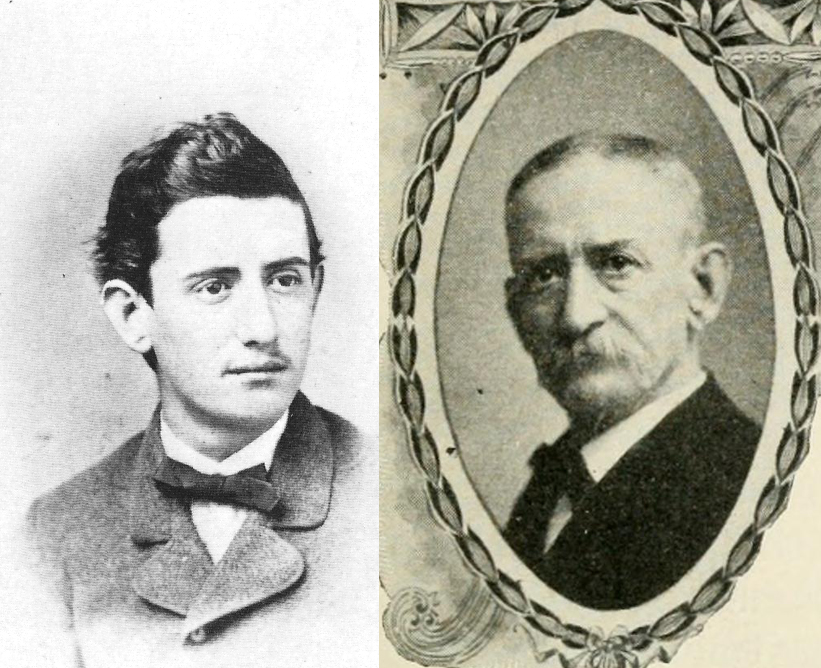
We all know photographs are subjective to the viewer. The Gutmans wanted this picture of a young man to be Booth and so they saw Booth in it. It could just be that I want this photo to be of Johnson because there is so much paper evidence supporting it, but I say these images show the same man, 40 years apart.
Gutman 1 and Johnson

As far as Gutman #1 is concerned, I support Rhodehamel and Taper and say it is Richard Marshall Johnson.

References:
The Evidence by Edwards and Steers
John Wilkes Booth Himself by Richard and Kellie Gutman
“Right or Wrong, God Judge Me” by Rhodehamel and Taper
Reminiscences by Personal Friends of Gen. U. S. Grant
Fold3.com
Note: There may be more images of Richard Johnson for compariosn contained in the Missouri History Museum. They have a collection of diaries and scrapbooks attributed to R. M. Johnson.
Note: R. M. Johnson is buried in the same cemetery as the lady who wanted Booth’s photograph, Bellafontaine Cemetery in St. Louis.

Thanks for the great topic starter, Carolyn!

Categories: Uncategorized | Tags: , , | 27 Comments

OTD: Edwin Booth Returns to the Stage

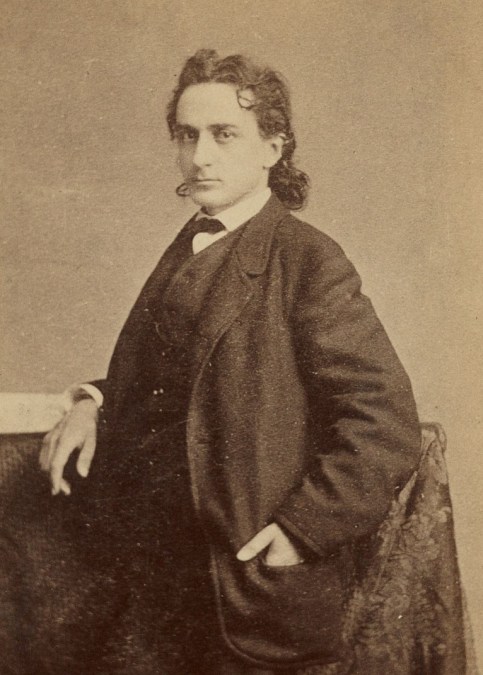
On this date, January 3rd, in 1866, famed tradegian Edwin Booth returns to the stage for the first time since his brother’s crime.

Edwin Booth Returns

After Lincoln’s assassination Edwin had vowed to end his theatrical careeer forever. However, the allure of the stage was too much for the actor. Edwin’s return appearance as Hamlet at the Winter Garden Theatre envoked an ovation of applause and cheers that lasted four full minutes. The theater going public never blamed him for his brother’s act, and continued to support him for the next twenty five years.

Edwin Booth reciting part of Othello Act I, Scene III:

“Most potent, grave, and reverend signiors,
My very noble and approved good masters,
That I have ta’en away this old man’s daughter,
It is most true; true, I have married her:
The very head and front of my offending
Hath this extent, no more. Rude am I in my speech,
And little bless’d with the soft phrase of peace:
For since these arms of mine had seven years’ pith,
Till now some nine moons wasted, they have used
Their dearest action in the tented field,
And little of this great world can I speak,
More than pertains to feats of broil and battle,
And therefore little shall I grace my cause
In speaking for myself. Yet, by your gracious patience,
I will a round unvarnish’d tale deliver
Of my whole course of love; what drugs, what charms,
What conjuration and what mighty magic,
For such proceeding I am charged withal,
I won his daughter.”

Then Booth skips some dialog from other characters
and finishes with:

“Her father loved me; oft invited me;
Still question’d me the story of my life,
From year to year, the battles, sieges, fortunes,
That I have passed.
I ran it through, even from my boyish days,
To the very moment that he bade me tell it;
Wherein I spake of most disastrous chances,
Of moving accidents by flood and field
Of hair-breadth scapes i’ the imminent deadly breach,
Of being taken by the insolent foe
And sold to slavery, of my redemption thence
And portance in my travels’ history:
Wherein of antres vast and deserts idle,
Rough quarries, rocks and hills whose heads touch heaven
It was my hint to speak,–such was the process;
And of the Cannibals that each other eat,
The Anthropophagi and men whose heads
Do grow beneath their shoulders. This to hear
Would Desdemona seriously incline:
But still the house-affairs would draw her thence:
Which ever as she could with haste dispatch,
She’ld come again, and with a greedy ear
Devour up my discourse: which I observing,
Took once a pliant hour, and found good means
To draw from her a prayer of earnest heart
That I would all my pilgrimage dilate,
Whereof by parcels she had something heard,
But not intentively: I did consent,
And often did beguile her of her tears,
When I did speak of some distressful stroke
That my youth suffer’d. My story being done,
She gave me for my pains a world of sighs:
She swore, in faith, twas strange, ’twas passing strange,
‘Twas pitiful, ’twas wondrous pitiful:
She wish’d she had not heard it, yet she wish’d
That heaven had made her such a man: she thank’d me,
And bade me, if I had a friend that loved her,
I should but teach him how to tell my story.
And that would woo her. Upon this hint I spake:
She loved me for the dangers I had pass’d,
And I loved her that she did pity them.”

References:
My Thoughts Be Bloody: The Bitter Rivalry Between Edwin and John Wilkes Booth that Led to an American Tragedy by Nora Titone (2010) Page 374
Sound recording of Edwin Booth and transcript from Archive.org

Categories: Uncategorized | Tags: , , | 11 Comments

“Beautiful Snow”

There is none on the ground in Maryland and only patches of it in the grass here in Illinois, but, to so many, snow is the harbinger of Christmas.  I think Bing Crosby said it best with, “I’m dreaming of a white Christmas, just like the ones I used to know.”  As a Chicagoland native, snow has always been an integral part of the holiday season.  For this reason, instead of sharing another of my tacky Boothie carols, I am posting here a Civil War era poem.

Beautiful Snow

O the snow, the beautiful snow,
Filling the sky and the earth below!
Over the house-tops, over the street,
Over the heads of the people you meet,
Dancing, Flirting, Skimming along.
Beautiful snow! it can do nothing wrong.
Flying to kiss a fair lady’s cheek;
Clinging to lips in a frolicsome freak;
Beautiful snow, from the heavens above,
Pure as an angel and fickle as love!

O the snow, the beautiful snow!
How the flakes gather and laugh as they go!
Whirling about in its maddening fun,
It plays in its glee with every one.
Chasing, Laughing, Hurrying by,
It lights up the face and it sparkles the eye;
And even the dogs, with a bark and a bound,
Snap at the crystals that eddy around.
The town is alive, and its heart in a glow,
To welcome the coming of beautiful snow.

How the wild crowd go swaying along,
Hailing each other with humor and song!
How the gay sledges like meteors flash by,
Bright for the moment, then lost to the eye!
Ringing, Swinging, Dashing they go.
Over the crest of the beautiful snow:
Snow so pure when it falls from the sky,
To be trampled in mud by the crowd rushing by;
To be trampled and tracked by the thousands of feet
Till it blends with the horrible filth in the street.

Once I was pure as the snows,—but I fell:
Fell, like the snow-flakes, from heaven—to hell:
Fell, to be tramped as the filth of the street:
Fell, to be scoffed, to be spit on, and beat.
Pleading, Cursing, Dreading to die,
Selling my soul to whoever would buy,
Dealing in shame for a morsel of bread,
Hating the living and fearing the dead.
Merciful God! have I fallen so low?
And yet I was once like this beautiful snow!

Once I was fair as the beautiful snow,
With an eye like its crystals, a heart like its glow;
Once I was loved for my innocent grace,
Flattered and sought for the charm of my face.
Father, Mother, Sisters all,
God, and myself, I have lost by my fall.
The veriest wretch that goes shivering by
Will take a wide sweep, lest I wander too nigh;
For all that is on or about me, I know
There is nothing that’s pure but the beautiful snow.

How strange it should be that this beautiful snow
Should fall on a sinner with nowhere to go!
How strange it would be, when the night comes again,
If the snow and the ice struck my desperate brain!
Fainting, Freezing, Dying alone,
Too wicked for prayer, too weak for my moan
To be heard in the crash of the crazy town,
Gone mad in its joy at the snow’s coming down;
To lie and to die in my terrible woe,
With a bed and a shroud of the beautiful snow!

“Beautiful Snow” was originally published in Harper’s Weekly on November 27, 1858.  The poem contrasts the purity of new fallen snow with a fallen woman who has lost hers.

Harper's Beautiful Snow

The 1924 book, Famous Single Poems and the Controversies Which Have Raged Around Them by Burton Stevenson, provides a wonderful critique of the poem and the reason for its success:

“One of the most popular of such recitations was entitled ‘Beautiful Snow,’ and purported to be the tragic revery of an out-cast as she makes her way along the wintry streets of a great city in the midst of a driving snow-storm. It was ‘sure-fire stuff,’ especially when recited by one of the gentler sex, because to the hopeless melancholy which was once so popular in pieces of this sort it added discussion, or at least mention, of a subject strictly taboo.

The Scarlet Woman was a phenomenon to which polite society at that time not only shut its eyes, but of which it pretended to be unaware. If she was pictured at all, it was as despairing and hopeless, ceaselessly bemoaning her fall from virtue, drinking the dregs of misery and want, with remorse ever gnawing at her heart, and finally dying of starvation amid wretched surroundings.

The idea that a woman who had taken the wrong turning could ever come back was anathema. In fact, society was banded together to prevent her coming back. To contend that such a woman had any claim to consideration, that she might be a good sort at bottom, and that she might eventually make a success of her life and be happy and contented in her last days was to incur grave suspicion. French fiction was held to be vicious and degraded because it occasionally developed such a theme. The fact that she died of consumption was the one thing that palliated the sins of Camille. Nobody knew exactly what to make of Trilby, though her death, too, was to her credit; but everybody agreed that for Little Billee to have married her would have been a crime against good morals. For sin must be punished.

‘Beautiful Snow’ laid the colors on exactly as society liked to imagine them.”

Since Harper’s carried the poem with no author byline, many people came forward trying to claim the composition as their own.   Stevenson stated that, “Probably no other poem in American literature has been so fought over,” as “Beautiful Snow”.   Sensationally romantic stories of the poem being found on the body of a dead woman on the street abounded.  The true author was John Whitaker Watson and he would publish a book of his poems including “Beautiful Snow” in 1869.  Though Watson would write many poems, he is known today for this “one hit wonder”.

Many individuals would perform public recitations of this poem to adoring audiences.  While visiting the city of Washington in the spring months of 1865, a young lady named Miss Porterfield heard the poem expertly recited by a young man:

“He was a very attractive man, winning and softvoiced, and more or less of a favorite among those who lived in or frequented the hotel. With a fine head, a figure handsomely proportioned from the waist upward, and graceful and easy manners, he soon fascinated me and my girl friend. On several occasions I heard him recite in the parlor, and his recitations never failed to attract and impress those who happened to hear him. I remember his rendition of ‘Beautiful Snow’ and Poe’s ‘Raven,’ as well as numerous plays with which he was familiar. He often talked to me and my companion, and, knowing that we were school-girls, tried to impress us with the need of speaking clearly and understanding; and on one occasion asked us to read a few lines from Shakespeare’s ‘Henry VIII,’ carefully criticizing our expression and accent as we read. Although we were mere misses, he treated us with the utmost deference and respect, and we finally became so well acquainted with him that he gave each of us his photograph, signed by himself.”

This man, as you were probably already aware, was John Wilkes Booth.  Even during this period of his life when he was away from the stage, Booth still played a part.  He enjoyed the close knit performance of giving impromptu readings at his hotel, The National.  George Alfred Townsend’s, The Life, Crime, and Capture of John Wilkes Booth, also speaks of Booth’s enjoyment of Watson’s poem:

GATH Booth Beautiful Snow

Admittedly, aside from the snow in it, “Beautiful Snow” is not a particularly Christmas-y poem.  Nevertheless, I felt it was an appropriate one to share on this day.  When reproduced in anthologies and selected poetry books many versions of “Beautiful Snow” would include one final stanza, an addendum to Watson’s original poem.  Contrary to Stevenson’s critique that “society was banded together to prevent” the redemption of a fallen woman, the revisionist ending speaks of God’s love for all downtrodden souls.

I hope that during this day and this season, we all remember to show our fellow men peace and love.  To quote my buddy Bing again, “May your days be merry and bright. And may all your Christmases be white.”


References:
Famous Poems from Bygone Days by Martin Gardner
Famous Single Poems and the Controversies Which Have Raged Around Them by Burton Stevenson
The Life, Crime, and Capture of John Wilkes Booth by GATH


Categories: Uncategorized | Tags: , | 16 Comments

The Actors Repent

When John Wilkes Booth assassinated Abraham Lincoln at Ford’s Theatre, he not only stigmatized the Booth name for all time, but he also set back the entire profession of acting.  While today actors are celebrated, and many are viewed as members of high social standing, this was not the case in 1865.  Actors were seen by many as vagrants akin to gypsies.  While audiences would celebrate and applaud talented actors, they would not socialize publicly with them.  While some progress had been made with actors like Edwin Booth gaining acceptance in esteemed social circles, most of the populace still saw actors and their profession in an unfavorable light.  After Lincoln was shot and it was determined that the wound was fatal, the doctors moved him to the Petersen house so that he would not have the shame of dying in a theatre.

After the assassination, many of the actors and crew from Ford’s Theatre, probably worried about the future of their careers and occupation, met together and drafted resolutions to make it clear to the public that they did not support the actions of their fellow actor, John Wilkes Booth.  On April 24, 1865, the Daily National Republican ran the following article:

Resolutions of the Theatrical Profession Respecting the Assassination of the President –

At a meeting of members of the theatrical profession now sojourning in Washington, Wednesday, April 19, 1865, the following preamble and resolutions were unanimously adopted:

Whereas the fact being indisputably proved that our beloved lae President, Abraham Lincoln, was assassinated in a most wanton and brutal manner on the night of the 14th of April, 1865, by a fiend named John Wilkes Booth, who has used our profession as an instrument to the accomplishment of his horrible and inhuman design; Therefore

Resolved, That in the cruel murder of President Lincoln our country has lost its wisest defender and best and greatest citizen – greatest because best.

Resolved, That the Histrionic profession especially has cause for heart-fels mourning in the awful sacrifice of Mr. Lincoln, the good and kindly man of liberal mind, who, through genial patronage, was refining and popularizing the dramatic art.

Resolved, That disloyalty, under any guise, has not nor ever will be countenanced by our noble profession, whose members are to be found in the ranks of the Union army and whose hearts are always open to the appeals of charity

Resolved, That the undersigned do hereby pledge themselves to hold no friendly intercourse with any person, male or female, who has or shall give utterance to the least sympathy with secession, and that managers as well as artistes are invited to co-operate with us in this resolve.

Resolved, That we will wear a suitable badge of mourning for ninety days.

J. C. McCollom, George Wren, S. H. Verney,
Tom Hampton, H. B. Phillips, J. B. Wright,
J. W. Jennings, C. H. Clark, Wm. Barron,
G. G. Spear, Chas. Koppitz, Wm. Withers, Jr,
T. C. Gourlay, C. V. Hess, J. H. Evans,
G. A. Parkhurst, A. C. Green, D. A. Strong and
H. McDonall, W. J. Ferguson, J. Lamb, sc’c art.

Many who signed their names above would have to carry the association of that dreadful night forever.  In the end though, the public’s desire for entertainment trumped any retribution for Booth’s crime against acting as a whole.  The main acting related casualty from that night was John T. Ford’s beautiful theatre.  It was shut down and would not reopen as a theatre again until long after the generation that witnessed Lincoln’s death had, themselves, turned to dust.

References:
My Thoughts Be Bloody by Nora Titone

Categories: Uncategorized | Tags: , | 6 Comments

One Rough Romeo

John Wilkes Booth was well known for his devotion to the physicality of the characters he portrayed.  While his elocution of Shakespearian parts required additional training, audiences would still come out in droves to witness Booth leap and fight with unbridled passion.  It was Booth’s energy that made him a star.  Even Edwin remarked at his brother’s ability by stating, “When time and study round his rough edges he’ll bid them all ‘stand apart.’” Edwin paraphrases a line from Richard II that states, “Stand all apart, and show fair duty to his majesty” displaying his belief that his brother had the makings to be a prince of the stage as well.

Nevertheless, John’s vigor proved trying to many of the actors and actresses with whom he shared the stage.  Catherine Reignolds-Winslow, an actress who played with John Wilkes in Boston, wrote of him in her memoirs:

“As an actor he had more of the native fire and fury of his great father than any of his family, but he was as undisciplined on the stage as off.  When he fought, it was no stage fight.  If his antagonist did not strain his nerve and skill, he would either be forced over the stage into the orchestra as happened, I believe, once or twice; or cut and hurt, as almost always happened.  He told me that he generally slept smothered in steak or oysters to cure his own bruises after Richard the Third, because he necessarily got as good as he gave, – in fact more, for though an excellent swordsman, in his blind passion he constantly cut himself. How he threw me about! Once even knocked me down, picking me up again with a regret as quick as his dramatic impulse had been vehement. In Othello, when, with, fiery remorse, he rushed to the bed of Desdemona after the murder, I used to gather myself together and hold my breath, lest the bang his cimeter gave when he threw himself at me should force me back to life with a shriek.

The sharp dagger seemed so dangerous an implement in the hands of such a desperado that I lent him my own – a spring dagger, with a blunt edge, which is forced back into its handle if it is actually struck against an object. In the last scene of Romeo and Juliet, one night, I vividly recall how the buttons at his cuff caught my hair, and in trying to tear them out he trod on my dress and rent it so as to make it utterly useless afterward; and in his last struggle literally shook me out of my shoes! The curtain fell on Romeo with a sprained thumb, a good deal of hair on his sleeve, Juliet in rags and two white satin shoes lying in the corner of the stage!”

So, while Booth was known to be a heart breaker to the women he wooed off of the stage, it appears he was known as a bit of a bone breaker to those he encountered on it.

One interesting note in Catherine Reignolds-Winslow’s memoirs is the mention of her lending him a collapsible dagger.  A similar dagger from the Booth family and apparently used by John Wilkes once belonged to Dr. John Lattimer and was sold at auction in 2008.  If true, perhaps other leading ladies began requiring Booth to use such a prop in hopes that they might avoid further harm at his hands.

References:
My Thoughts Be Bloody by Nora Titone
Yesterdays with Actors by Catherine Mary Reignolds-Winslow

Categories: Uncategorized | Tags: , | 3 Comments

Blog at WordPress.com.