The Actors Repent

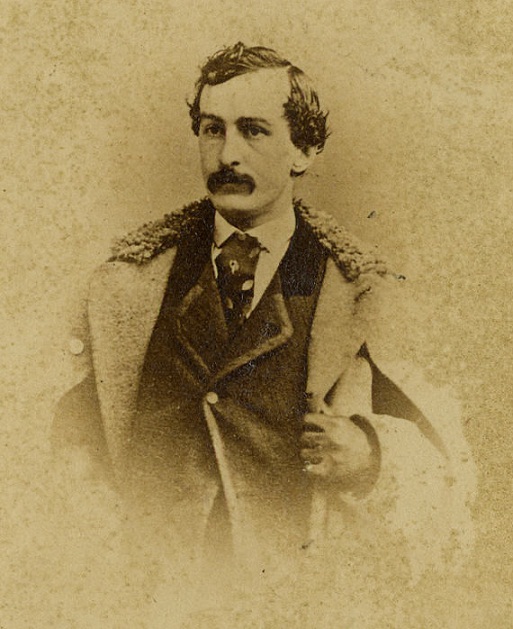
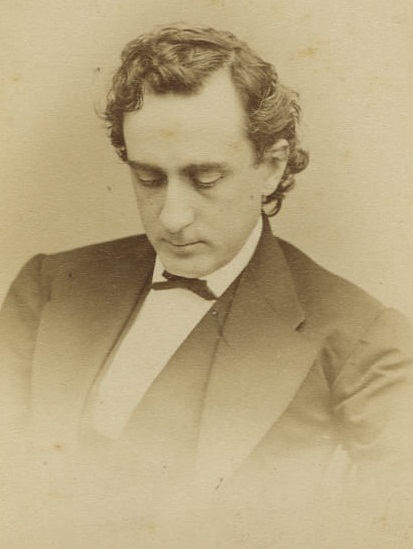
When John Wilkes Booth assassinated Abraham Lincoln at Ford’s Theatre, he not only stigmatized the Booth name for all time, but he also set back the entire profession of acting.  While today actors are celebrated, and many are viewed as members of high social standing, this was not the case in 1865.  Actors were seen by many as vagrants akin to gypsies.  While audiences would celebrate and applaud talented actors, they would not socialize publicly with them.  While some progress had been made with actors like Edwin Booth gaining acceptance in esteemed social circles, most of the populace still saw actors and their profession in an unfavorable light.  After Lincoln was shot and it was determined that the wound was fatal, the doctors moved him to the Petersen house so that he would not have the shame of dying in a theatre.

After the assassination, many of the actors and crew from Ford’s Theatre, probably worried about the future of their careers and occupation, met together and drafted resolutions to make it clear to the public that they did not support the actions of their fellow actor, John Wilkes Booth.  On April 24, 1865, the Daily National Republican ran the following article:

Resolutions of the Theatrical Profession Respecting the Assassination of the President –

At a meeting of members of the theatrical profession now sojourning in Washington, Wednesday, April 19, 1865, the following preamble and resolutions were unanimously adopted:

Whereas the fact being indisputably proved that our beloved lae President, Abraham Lincoln, was assassinated in a most wanton and brutal manner on the night of the 14th of April, 1865, by a fiend named John Wilkes Booth, who has used our profession as an instrument to the accomplishment of his horrible and inhuman design; Therefore

Resolved, That in the cruel murder of President Lincoln our country has lost its wisest defender and best and greatest citizen – greatest because best.

Resolved, That the Histrionic profession especially has cause for heart-fels mourning in the awful sacrifice of Mr. Lincoln, the good and kindly man of liberal mind, who, through genial patronage, was refining and popularizing the dramatic art.

Resolved, That disloyalty, under any guise, has not nor ever will be countenanced by our noble profession, whose members are to be found in the ranks of the Union army and whose hearts are always open to the appeals of charity

Resolved, That the undersigned do hereby pledge themselves to hold no friendly intercourse with any person, male or female, who has or shall give utterance to the least sympathy with secession, and that managers as well as artistes are invited to co-operate with us in this resolve.

Resolved, That we will wear a suitable badge of mourning for ninety days.

J. C. McCollom, George Wren, S. H. Verney,
Tom Hampton, H. B. Phillips, J. B. Wright,
J. W. Jennings, C. H. Clark, Wm. Barron,
G. G. Spear, Chas. Koppitz, Wm. Withers, Jr,
T. C. Gourlay, C. V. Hess, J. H. Evans,
G. A. Parkhurst, A. C. Green, D. A. Strong and
H. McDonall, W. J. Ferguson, J. Lamb, sc’c art.

Many who signed their names above would have to carry the association of that dreadful night forever.  In the end though, the public’s desire for entertainment trumped any retribution for Booth’s crime against acting as a whole.  The main acting related casualty from that night was John T. Ford’s beautiful theatre.  It was shut down and would not reopen as a theatre again until long after the generation that witnessed Lincoln’s death had, themselves, turned to dust.

References:
My Thoughts Be Bloody by Nora Titone

Categories: Uncategorized | Tags: , | 6 Comments

A Sketch of Seward’s Assassin

“Looking again to the right, and omitting the alternate guard, we come to one of the most remarkable faces of the group – a face which, once seen, may never be forgotten; on whose moral stature is readily determined by his face.  This man is clothed sparingly.  He is in his shirt sleeves – a sort of steel mixed woolen shirt; his pantaloons dark blue cloth; his neck bare and shirt collar unbuttoned.  He is fully six feet high; slender body; angular form; square and narrow across the shoulders; hollow breast; hair black, straight and irregularly cut and hanging indifferently about his forehead, which is rather low and narrow.  Blue eyes, large, staring, and at times wild, returning your look steadily and unflinchingly.  Square face; jaw irregular; nose turned at the top but expanding abruptly at the nostrils; thin lips, and slightly twisted; mouth curved unsymmetrically a little to the left of the middle line of the face; a wild, savage-looking man, bearing no culture or refinement – the most perfect type of the ingrained hardened criminal…” – Milwaukee Sentinel (05/16/1865)

For the time being all I can manage to post is this self created montage of Lewis Powell and a description of him from a period newspaper account. Of course Powell’s biographer, Betty Ownsbey, is the best source for information on Lewis Powell and happily discusses him on Roger Norton’s Lincoln Discussion Symposium.

I, myself, have been busy preparing for an upcoming move out of my home state of Illinois to the great state Maryland.  I recently got a new teaching job in Maryland and I am very excited about being closer to the history that I love.

Categories: Uncategorized | Tags: , , | 7 Comments

One Rough Romeo

John Wilkes Booth was well known for his devotion to the physicality of the characters he portrayed.  While his elocution of Shakespearian parts required additional training, audiences would still come out in droves to witness Booth leap and fight with unbridled passion.  It was Booth’s energy that made him a star.  Even Edwin remarked at his brother’s ability by stating, “When time and study round his rough edges he’ll bid them all ‘stand apart.’” Edwin paraphrases a line from Richard II that states, “Stand all apart, and show fair duty to his majesty” displaying his belief that his brother had the makings to be a prince of the stage as well.

Nevertheless, John’s vigor proved trying to many of the actors and actresses with whom he shared the stage.  Catherine Reignolds-Winslow, an actress who played with John Wilkes in Boston, wrote of him in her memoirs:

“As an actor he had more of the native fire and fury of his great father than any of his family, but he was as undisciplined on the stage as off.  When he fought, it was no stage fight.  If his antagonist did not strain his nerve and skill, he would either be forced over the stage into the orchestra as happened, I believe, once or twice; or cut and hurt, as almost always happened.  He told me that he generally slept smothered in steak or oysters to cure his own bruises after Richard the Third, because he necessarily got as good as he gave, – in fact more, for though an excellent swordsman, in his blind passion he constantly cut himself. How he threw me about! Once even knocked me down, picking me up again with a regret as quick as his dramatic impulse had been vehement. In Othello, when, with, fiery remorse, he rushed to the bed of Desdemona after the murder, I used to gather myself together and hold my breath, lest the bang his cimeter gave when he threw himself at me should force me back to life with a shriek.

The sharp dagger seemed so dangerous an implement in the hands of such a desperado that I lent him my own – a spring dagger, with a blunt edge, which is forced back into its handle if it is actually struck against an object. In the last scene of Romeo and Juliet, one night, I vividly recall how the buttons at his cuff caught my hair, and in trying to tear them out he trod on my dress and rent it so as to make it utterly useless afterward; and in his last struggle literally shook me out of my shoes! The curtain fell on Romeo with a sprained thumb, a good deal of hair on his sleeve, Juliet in rags and two white satin shoes lying in the corner of the stage!”

So, while Booth was known to be a heart breaker to the women he wooed off of the stage, it appears he was known as a bit of a bone breaker to those he encountered on it.

One interesting note in Catherine Reignolds-Winslow’s memoirs is the mention of her lending him a collapsible dagger.  A similar dagger from the Booth family and apparently used by John Wilkes once belonged to Dr. John Lattimer and was sold at auction in 2008.  If true, perhaps other leading ladies began requiring Booth to use such a prop in hopes that they might avoid further harm at his hands.

References:
My Thoughts Be Bloody by Nora Titone
Yesterdays with Actors by Catherine Mary Reignolds-Winslow

Categories: Uncategorized | Tags: , | 3 Comments

Newish News

Most of what follows is probably already known to those who regularly read this blog.  Nevertheless here’s some newish news on the Lincoln assassination front.

Booth reading the news

 1.  New Site

When it comes to learning about Abraham Lincoln’s life, there really is no better resource than the Abraham Lincoln Research Site run by Roger Norton.  The website at http://rogerjnorton.com is actually composed of three equally valuable sections: the life of Abraham Lincoln, the life of Mary Todd Lincoln, and Lincoln’s assassination.  The proprietor of the site is Roger Norton, a retired Illinois social studies teacher.  His website is the top choice for students, both young and old, to learn about Lincoln.  In 2006, his site received the prestigious honor of being completely archived by the Library of Congress.  Just as the LOC archives and preserves movies and TV shows deemed culturally significant, Mr. Norton’s site was archived for all time due to its educational significance.  It is a very high honor for an individual’s site to achieve and speaks to the quality of Mr. Norton’s work.

Recently, Mr. Norton has expanded his website to now include a public forum.  The Lincoln Discussion Symposium is open to all who wish to discuss the many aspects of Abraham Lincoln.  It is a collaborative community where amateurs and experts alike can post questions and comments regarding our 16th President.  Due to the large amount of traffic Mr. Norton receives from students in the school setting, forum members are expected to be courteous and respectful in their remarks.  While it is still growing, the forum already houses a wonderful community of experts from the Lincoln community eager to answer questions and take part in discussions.  I, myself, am a member there and endorse it fully.  While my main interest lies in Lincoln’s assassination, the forum has already taught me so much that I didn’t know about the living Lincoln.  Membership is growing every day, so I invite you all to visit the Lincoln Discussion Symposium and join the wonderful community of learners.

2.  New Links

On the right side of the blog you might have noticed a list of “Links to Learn More”.  Here I have placed links to some of the best websites out there for Lincoln assassination material.  Hovering over each link will give you a short description of the site.  To this list, I have recently added two new links.  The first is the above mentioned Lincoln Discussion Symposium.  The second is the Facebook page for the Spirits of Tudor Hall.  The Tudor Hall estate was the Booth family homestead in Maryland.  The theatrical patriarch of the Booth clan, Junius Brutus bought the land when he and Mary Ann Holmes emigrated from England.  The Booth family originally lived in a log cabin on the property before Junius commissioned the building of the beautiful Tudor Hall manor house in the fall of 1851.  Sadly, Junius never got to live in the main house as he died while on tour on November 30th 1852.  The Booth family lived on the Tudor Hall property on and off from 1822 to 1858.  Nowadays, Tudor Hall is used as an office for the Harford County Center for the Arts.  It is also home to the Junius B. Booth Society.   The house is open on select weekends for public tours about the Booth family and the history of Tudor Hall.  The Spirits of Tudor Hall Facebook page advertises the house’s tour dates and times, along with highlighting wonderful pictures and articles on the Booth family (including some from here, Woot!).  If I was a member of Facebook, I would Share it/Like it/Poke it/Friend it/Hug it/High Five it, whatever it is that you young people do there.  One thing they are advertising on Tudor Hall’s behalf is the sale of a genuine brick from a Tudor Hall chimney.  While the bricks can’t be completely authenticated to when the Booths lived there, it’s still a relic you can own dating back to Edwin Booth’s lifetime.  Add the Spirits of Tudor Hall Facebook page to your favorites today.

3.  New(ish) Books

I am happy to report that William Edwards’ book, The Lincoln Assassination – The Reward Files, is now available for purchase as an ebook through GoogleBooks.  Previously released as a book on CD-ROM, Mr.  Edwards has revamped his collection of primary source documents into a searchable ebook.  The Reward Files hold many details about the military’s search for Booth and contains firsthand accounts (like Samuel Arnold’s confession) not found in other sources.  This text along with The Evidence and the Court Transcripts, make up the trilogy of the government’s primary documents into the assassination of Abraham Lincoln.

Also, Ed Steers, the noted Lincoln author and co-author on The Evidence with William Edwards, has also just released an updated Kindle ebook version of his popular booklet, The Escape and Capture of John Wilkes Booth.  Mr. Steers originally posted the news of his revised book on the Lincoln Discussion Symposium.

Well, that’s all the newish news that’s fit to print.  Back to our regularly scheduled programming.

Categories: Uncategorized | Tags: , , , , | 10 Comments

The Player and the President

In Chicago’s Lincoln Park, there stands a magnificent bronze sculpture of Abraham Lincoln.

The statue was erected by Augustus Saint-Gaudens in 1887.  Saint-Gaudens was a celebrated sculptor and a member of Edwin Booth’s exclusive club, The Players.  This statue is one of the most celebrated of the 16th President and replicas of it are located in Springfield, Mexico City, and London.

While countless individuals have visited this sculpture since its unveiling, none have done so with the same degree of personal angst as Edwin Booth.  A witness to the event described the visit of the Player to the statue of the fallen President

“When I was a boy, I lived in Chicago near Lincoln park.  Once when Edwin Booth was playing in the city, I went with another boy to hear ‘Hamlet’.  I was permitted to spend the night at my friend;s house but went home for breakfast.

At that early hour Lincoln park was deserted, but as I drew near Saint-Gaudens’ great statue of Lincoln, I saw a carriage approach, driven by a negro coachman.  It stopped before the statue, the door opened and out stepped – Edwin Booth.  Curious to see what would happen, I stepped behind a clump of shrubbery where I might watch, unobserved.

The great actor stood for a moment before the wonderful bronze, with his head bared.  Then he took a rose from his buttonhole and laid [it] at the base of the statue.  He entered the carriage and was driven away, utterly unconscious that the incident had been witnessed by one who would ever after cherish its memory.”

Though the writer of the above account is unknown, it is likely that it was written by George Middleton, a playwright who later became a member of The Players.  A similar version of this account is attributed to him in the book, A Certain Club:

“Over him constantly appeared to hang the memory of his family’s disgrace.  George Middleton, one of the earliest Players, who had met Booth at his father’s home, recalled coming upon him accidentally in the Chicago park where Augustus Saint-Gaudens’ statue of Lincoln had recently been unveiled.  Booth had driven alone in a carriage to see it.  Getting out, he did not notice Middleton and, looking around, observed no one else.  With bared head, he contemplated Lincoln’s sorrowful face for a long time, then plucked a flower from his buttonhole and placed it at the statue’s feet.  Returning to the carriage, he turned and made a gesture of sorrow and infinite regret, climbed in and drove away.”

While Edwin Booth was celebrated as the greatest tragedian of his generation, he was forever haunted by his brother’s horrible crime.  Recent conspiracy theorists have called for the exhumation of Edwin Booth’s remains in order to “prove” genetically that John Wilkes Booth wasn’t killed on April 26th, 1865.  Not only do they ignore and manipulate the thorough documentation of John Wilkes’ death at the Garrett’s farm, but they now desire to desecrate the grave of his noble brother in order to “prove” their misconceptions.  I would ask all who may choose to support their plans to read this account.  Understand the lifetime of personal suffering all the Booths were forced to endure after John Wilkes’ act.  Though it is unfortunate, history will always remember John’s anger over Edwin’s talent.  The last ounce of respect we can give to Edwin is to let him rest in peace.  His life was marred by his brother.  Let us not dishonor him further in death.

References:
My Thoughts Be Bloody by Nora Titone
A Certain Club: One Hundred Years of The Players by John William Tebbel
A Tribute to Lincoln – The Pittsburgh Press (5/2/1915)

Categories: Uncategorized | Tags: , | 9 Comments

Shooting Booth

While Boston Corbett has entered history as the man who avenged Abraham Lincoln in the morning hours of April 26th, 1865, Booth had another bullet enter his body some time before that date.  This shooting was courtesy of his own manager and agent, Matthew W. Canning.

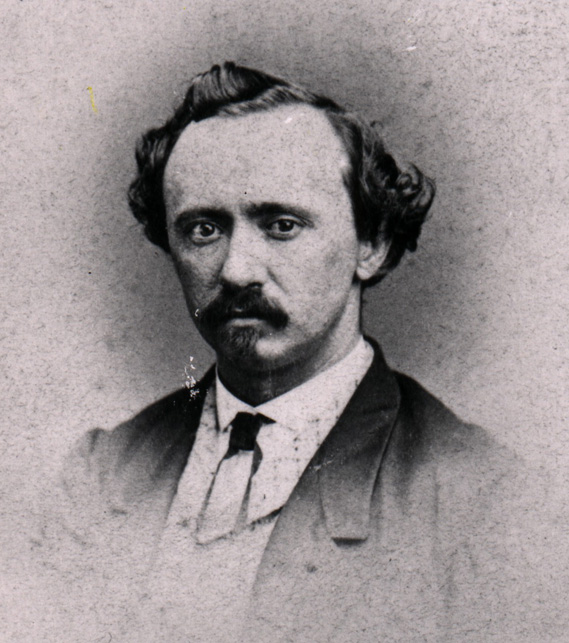
Matthew W. Canning

By 1860, John Wilkes Booth had started to tire of playing supernumerary parts.  The pay was very small, and he longed to be recognized as a talented actor.  His brother, Edwin Booth, was being lauded as his father’s creative heir and was enjoying life as a bona fide star.  While lacking the training his older brother received through his father’s tutelage, Wilkes believed himself to be on par with his famous brother.  He set out for his own “star” tour.  The theatrical star system of the day allowed the lead actor and actress to receive a part of the profits for each performance, rather than a small set salary for the season that the stock actors received.  Being the son of the great tragedian Junius Brutus Booth and brother to the successful Edwin, Wilkes had an easier time than most finding himself an agent.  Despite his amateurish experience, his Booth name was guaranteed to bring in patrons.  Wilkes was invited to play as a star by a former Philadelphia lawyer turned theatrical manager, Matthew Canning.

Matthew W. Canning was in the process of building his own theatre in Montgomery, Alabama and saw the benefits of having a Booth as his star.

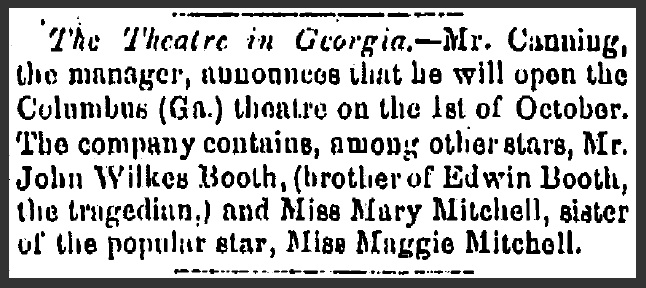
Before his own theatre opened, however, the Canning Dramatic Company toured the southern states starting in Columbus, Georgia.  The other actors in the company included the sisters Maggie, Mary, and Emma Mitchell and Samuel Knapp Chester, a man Booth later would attempt to include in his conspiracy.  Perhaps to save the Booth name for his own theatre’s success, Canning continued to bill John Wilkes Booth under his stage name, “J. B. Wilkes”.  While the lineage of the Canning Dramatic Company’s lead was becoming less and less of a secret with the press and the public, during the troupe’s entire run in Columbus, “Mr. Wilkes” was the star.

Mr. Wilkes’ first performance as a star occurred on October 1, 1860, playing Romeo to Maggie Mitchell’s Juliet.  His time in Columbus proved a success, with newspapers speaking of the company being, “much superior” from Canning’s last troupe and citing that, “Mr. Wilkes and Miss Mitchell are highly complimented.”  For an actor who had a shaky start as a stock player, Booth’s first star tour was everything he could have hoped for.  Until the night of October 12th that is, when Canning shot Booth.

The exact details on how the shooting occurred are varied.  A newspaper of the day, stated, “Mr. John Wilkes Booth was accidentally shot in the thigh at Cook’s Hotel.  Mr. Booth and Mr. Canning were practicing with a pistol, when it went off in Mr. Canning’s hand as he was letting down the hammer, inflicting a flesh wound in Mr. Booth’s thigh.”  A more amusing, though less likely account comes from The Mad Booths of Maryland by Stanley Kimmel: “The night he was to play Hamlet another actor was with him in his dressing room when Canning entered and jokingly threatened to shoot both of them.  The gun unexpectedly exploded and Wilkes ‘was shot in the rear.’”

The most reliable account, while written years after the fact and probably embellished with age, comes from Matthew Canning himself.  On January 19th, 1886 George Alfred Townsend, better known as GATH, published an interview he had with Matthew Canning in the Cincinnati Enquirer:

“No doubt your readers smile at me for having so often in this correspondence brought up incidents concerning John Brown and Booth, the assassin.  The fact is that I have just got off my hands a piece of literary work concerning these parties, which has taken so much investigation that I have at times discharged my findings into correspondences.  I shall not have the amiable defect of Lot’s wife in ever looking behind me, and therefore, these notes will end with the work for which they were obtained.

Yesterday I saw Matthew Canning, who started with Booth on a starring tour as his manager, and he said to me as follows: ‘Edwin Booth asked me to give his brother Wilkes a star.  He was not, strictly speaking, a star: he was a member of my stock company and played as a star, but of course he did not get the profits a star would receive.  I had a little circuit in the Southern States, with Montgomery for its chief center, and I was building a theater down there when I happened to shoot John Booth.  I can tell you about that curious incident.  Booth was one of the best shots in the profession, and his special passion was his physical training and strength.  That may have led him into the crime in the way he committed it.  When I took him out he was quite a young fellow, and had been known in the profession before as Mr. Wilkes.  I made it a point with Edwin Booth that he should play under his family name, as it would draw me money.  We were at Columbus, Ga., and my theater was not finished and had given me a great deal of trouble.

‘I went into my room one day, and he said to me: ‘Now, you must let me nurse you.  You are fagged out.’ I told him I only wanted to go to sleep.  I laid down on the bed and was in a doze when he saw my pistol in my rear pocket.  Every body carried weapons down in that country, and so did I.  Seeing the pistol, Booth yielded to his passion for arms, and he drew it out of my pocket.  I could feel it glide from me, but was in that state that I did not resist or rise.  Although he had just said that I wanted rest and sleep, he pointed the pistol at an iron mark on a wall opposite and discharged it right there in the room.  Of course I sprang up, complaining that he excited me by that explosion.  He then said he wanted another shot, and I objected; but he seemed to have his mind on firing again to show his accuracy of aim.  The pistol had got rusted, and when I gave him a cartridge to put in it, it would not fit easily.  He took his knife and began to scrape the pistol and the cartridge, and while in the act of doing it, down came the lock in my hand and discharged the pistol, and the ball struck him in the side, barely missing the femoral artery and it lodged in his body.  We thought he would die, but he recovered in a few weeks.”

The wound Booth received from Canning was not just a flesh wound as the newspaper stated and would lay him up for some time.  Starting from the night of the accident until Booth’s return, the lead roles were played by John W. Albaugh, Canning’s stage and acting manager.  This gave Albaugh the opportunity to act alongside Mary Mitchell, the woman who would later become his wife.

On October 19th, seven days after Booth was shot, Canning scheduled a benefit in his honor where he would receive most of the proceeds of the show.  It is likely Canning was attempting to assuage his guilt for shooting and disabling his lead actor.  Unfortunately, inclement weather in Columbus kept even the heartiest of theatre-goers away on the 19th, and so the benefit was rescheduled for the next day.  This was the company’s last day in Columbus and they performed Julius Caesar.  Booth’s injury kept him from performing in the whole play but, as a gesture of thanks for the city that supported him and celebrated him in his first starring engagement, Booth took the stage and recited Mark Anthony’s pivotal, “Friends, Romans, countrymen, lend me your ears,” speech.

From Georgia, the Canning Dramatic Company travelled to Montgomery, Alabama to perform in Matthew Canning’s own, appropriately named, Montgomery Theatre.  Though advertisements promised “Mr. John Wilkes” would make his debut on the 23rd of October, the night came and went without his appearance on stage.  The notoriously agile and active player was still not physically healed enough to perform.   He would not make his Montgomery debut until October 29th when he played the role of Pescara in The Apostate.
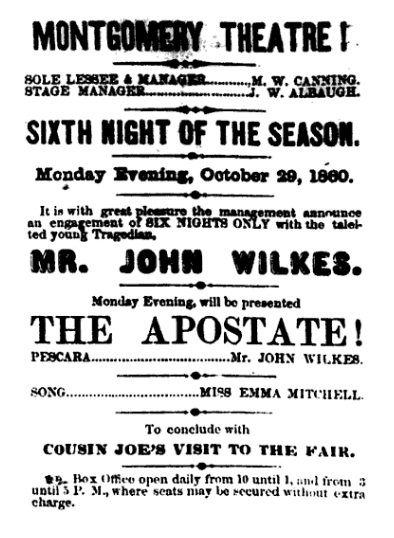
Though his wound forced him to be a little more reserved than his normal acting habits, the Montgomery audiences supported this young and talented actor.  When Booth played Hamlet, Canning’s theatre was filled to the brim with patrons.  Everyone came to see the son of Junius Brutus Booth, rival of Edwin Booth, and most agreed that, while he needed some refinement, he carried his father’s torch well.  During all of this time, however, John was still billed as “Mr. Wilkes”.

It does not appear that the transition from “Mr. Wilkes” to “J. Wilkes Booth” was instigated by John.  In fact, his star billing as “Mr. Wilkes” for weeks shows that he wanted to be celebrated for his own abilities.  In the end, John did not take the Booth name back; rather it was justly given to him.  The first billing of him as J. Wilkes Booth occurred on December 1st, when Maggie Mitchell presented a benefit in his honor.

His fellow actors had conferred his Booth name upon him and, after receiving such admiration in his first tour, he believed it to have been rightly bestowed.  He had proven himself worthy of the name Booth and would keep it for the rest of his career.

By mid-December, Booth’s time with Canning’s company was up.  He returned to Philadelphia to rest at the home his brother Edwin had rented for their mother and siblings.  Asia wrote to a friend on December 16th that, “John Booth is at home.  He is looking well but his wound is not entirely healed yet – he still carries the ball in him.”  With Canning as his agent, Booth accepted starring engagements in northern cities like Albany and Portland, Maine.  Eventually, he would become a hugely successful star and become his own agent, no longer needing Matthew Canning’s services.  Before that occurred however, the two men shared another experience that involved Booth shedding some blood:

The following is the continuation of GATH’s 1886 interview with Canning:

“Somewhere about 1862 I was playing Booth in Washington City, and he began to have a boil on the side of his neck.  It grew more and more inflamed, and at last was discernible from the house, and on his fine, youthful skin it made a bad impression.  So I said to him one morning: ‘Come here, John, and take a ride with me.  It is none of your business where I am going.’ I drove him to the house of Dr. May, a surgeon, and took him in there.  May looked at his neck and said: ‘Why, this is a tumor.  You will have to submit to an operation to be relieved of it.’ Booth said he would sit right down there and have it cut out.  The doctor said to him: ‘Young man, this is no trifling matter.  You will have to come when we are ready for you, when I have an assistant here.’

‘No,’ said Booth, ‘You can cut it out right now.  Here is Canning, who will be your assistant.’ He threw himself across a chair and leaned his head on the chair-back so as to throw up his neck.  ‘Now cut away,’ said he.  The doctor told me that if I was to assist in the operation that I must pull back the skin or flesh as he cut.  The first wipe he made with his knife nearly made me fall on the floor fainting.  The black blood gushed out, and he seemed to have cut the man’s neck partly off.  Booth did not move, but his skin turned as white as the wall.  The doctor continued to cut, and notified me that I was a remarkable assistant for an amateur.  Meantime my stomach was all giving away.  The first thing that happened was I rolled over and fell on the floor, and Booth from loss of blood reeled and fell off the chair.  When he came to the doctor told me that I was not as much of an assistant as he thought I was going to turn out to be.  Booth was laid up for about a month…”

This impromptu surgery left a discernible scar upon Booth’s neck.  That scar would be identified by Dr. May during Booth’s autopsy and is one of the many details that prove that Booth did not escape.

Dr. John Frederick May

As stated, Booth and Canning would part ways when Booth felt comfortable on his own.  Though occasionally Booth would still contact Canning to help him make engagements.  Matthew Canning’s last meeting with Booth occurred in December of 1864.

During that time, Canning was in Philadelphia, as the agent to Vestvale, the actress.  Booth was in the city as well and asked Canning for a favor.  At that time, Canning was a bit perturbed at Booth as he had made several engagements on his behalf that Booth had cancelled.  As we know now, Booth’s mind was no longer on acting but on his “oil speculations” i.e. kidnapping President Lincoln.  He had already gained the support of two of his childhood friends, Michael O’Laughlen and Samuel Arnold, for the endeavor.  His next target was a friend from his initial days with Canning.  Booth wanted Samuel Knapp Chester in his conspiracy.

Samuel Knapp Chester

During their conversations, Booth spoke to Canning about his recent visit with Chester in New York.  He found out truthfully, that Chester was unhappy at his current theatre in New York, but lacked the ability to change it.  Chester was not a star like Booth and had a harder time finding engagements.  Booth had revealed to Chester his idea to kidnap Lincoln and ferry him into the open arms of the Confederacy.  Chester had refused to join his plot, but Booth was not a man to give up easily.  He hoped that assisting Chester in his career would motivate him to reconsider.  So, under the guise of a helpful friend, Booth asked Matthew Canning to convince John T. Ford to engage him at one of his theatres.  Ford owned theatres in Baltimore and Washington, which would bring Chester closer physically into the realm of the conspiracy.  Booth, desperate to get on Chester’s good side promised Canning he would, “give [him] anything if he would see Ford.”  After some convincing, Canning agreed to do what he could.  At first Ford was hesitant but a recent party had cancelled on him and so Chester was hired to take their place.  Canning wrote to Booth of his probable success in finding Chester a job at Ford’s.  He received a telegram back from Booth stating, “Don’t fail to hush that matter at once.”  This response puzzled Canning.  Did Booth mean to stop pursuing it because Chester had reconsidered?  He wrote Booth asking for clarification.  Booth responded back with, “The telegraph operator is an ass, he telegraphed ‘don’t fail to hush the matter’ when I wrote ‘fail to push the matter.’”

Despite being grateful to Booth for getting him a new engagement, Samuel Chester remained unmoved in his views on the kidnapping plot.  He would have nothing to do with it.

After Booth assassinated Lincoln, everyone relating to him was rounded up, including Matthew Canning.  Canning had the luck of being arrested in Philadelphia by a former actor turned solider with whom he was friendly.  Canning immediately wrote out a statement regarding his history with Booth.  While arrested on the night of April 15th, Canning was allowed to retrace his footsteps and collect signed affidavits to his recent whereabouts in the presence of Capt. John Jack, the former actor.  Only after all of this was done was Canning sent to Washington.  He was placed in the Old Capitol Prison and shared a room with John Ford.  His thorough paperwork helped him and he was released from prison on April 28th upon taking the oath of allegiance.

Canning died on August 30th, 1890 at the age of sixty.  He was a theatrical manager and agent to the end, dying in a New York hotel room while managing his “The Blue and the Gray” acting company.  His body was shipped back to his native Philadelphia and he was buried in Woodlands Cemetery there.

While Canning may have felt guilty in 1860 for accidentally shooting his star and main attraction, after the events of April 1865 he may have adopted the same “what if” beliefs as another veteran actor:

“‘If’ that shot had been fatal he would not have lived to plunge his country into the depths of despair and mourning, nor crushed with most poignant anguish those who loved him best; he would not have lived to ‘pour the sweet milk of concord into hell’, to fire the shot that shook the foundation rock upon which his country lived.”

References:
GATH’s Special Dispatch to the Enquirer – Cincinnati Enquirer, Jan 19, 1886
Lust for Fame: The Stage Career of John Wilkes Booth by Gordon Samples
The Lincoln Assassination: The Evidence by William Edwards and Ed Steers
“Right or Wrong, God Judge Me”: The Writings of John Wilkes Booth by John Rhodehamel and Louise Taper
The Mad Booths of Maryland by Stanley Kimmel
Article images from GenealogyBank.com
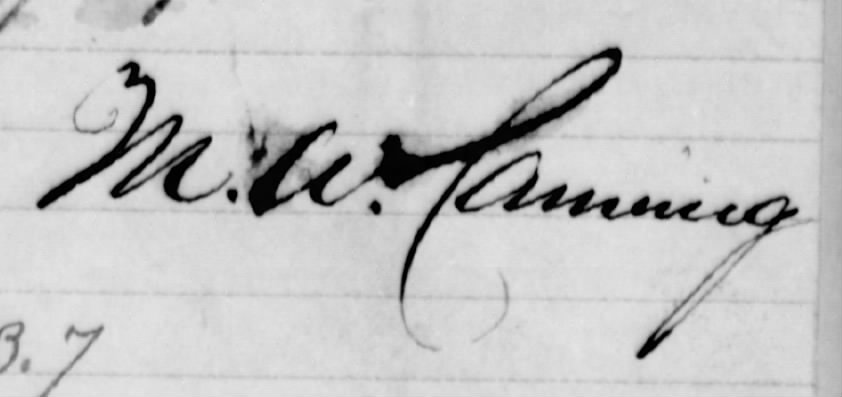
Matthew Canning’s handwritten affidavits are available on Fold3.com in the Turner/Baker papers (must be a paying member to view)
The article containing the ending quote is here.
An additional article recounting Matthew Canning’s arrest is here.

Categories: Uncategorized | Tags: , , , , , | 13 Comments

7/7/1865

I watched them lead him out the door,
As he exited his cell.
I followed them, as he had asked,
To give his last farewell.

“A boy” I thought of him at first,
When I was called to pray,
But with death’s knocking out in the yard,
I saw a man today.

While saddened by his coming death,
He confessed to me his crime:
“I helped a man who killed a man.
Where will I spend all time?”

I said I could not answer him,
To God he must appeal.
We sat there in redemptive prayer,
And begged his soul to heal.

So while his frame may falter,
During these, his last grains of life,
On the gallows he’ll stand, with his clenched hands,
A man, adverse to strife.

Fictional poem from the perspective of Rev. Dr. Mark Olds, David Herold’s spiritual advisor on the scaffold.

Justified or not, four individuals paid the ultimate price for their involvement with John Wilkes Booth.  Those saved from execution faced their own mortality when they heard the drops fall and would carry the stigma of their association for the rest of their lives.  Lincoln’s assassination killed not only the President and the innocence of our nation, but also the lives of the misguided supporters who knew not what they were doing.

Categories: Uncategorized | Tags: , , , , | 16 Comments

Touched by an Angel

If you have the time, I invite you all to watch this 1998 episode of Touched by an Angel entitled “Beautiful Dreamer”. In it, Della Reese’s character recounts the assassination of Lincoln through the experiences of her fellow angels, who were there at the time.  The show is filled with artistic and spiritual license (it is Touched by an Angel, after all), but it still provides an entertaining and fairly accurate representation of Lincoln’s death.  While Booth is portrayed more drunken than sinister, the writers of the show still gave him wonderful dialogue with the angel, Andrew, explaining his motivations and beliefs.  It is a unique portrayal of Booth that actually leaves us feeling sorry for him rather than hatred.   What’s more, it’s clear the producers did their homework.  They stunningly recreated the façade of Ford’s Theatre, the presidential box, and even included auxiliary characters by name like Laura Keene, Peter Taltavull, and John Parker.  In my opinion, this dramatization of Lincoln’s assassination from the mainstream media is one worth watching.

Categories: Uncategorized | Tags: , , | 7 Comments

Blog at WordPress.com.