New Gallery – Dr. Mudd House

In November of 1857, Dr. Samuel A. Mudd married his childhood sweetheart Sarah Frances Dyer. Shortly after their union, Dr. Mudd and his new wife were given 218 acres of prime farmland called St. Catherine’s by Dr. Mudd’s father, Henry Lowe Mudd.  Henry Mudd went on to commission the building of a house on the property for the new couple to live in.  It took two years to construct the house but by 1859 the Mudds arrived in their new home.  From that time up to the present, the Mudd family has maintained possession of the house.  Today, the Mudd house is a private museum dedicated to Dr. Mudd and his descendants.  The Dr. Samuel A. Mudd House Museum is open seasonally from early spring to late fall.  Go here to visit the museum’s new website for more information.

The newest Picture Gallery here on BoothieBarn revolves around this historic house.  Click the picture to visit the new Dr. Mudd House Picture Gallery!

Categories: Uncategorized | Tags: | 10 Comments

The Assassination in “The Birth of a Nation”

In 1915, D. W. Griffith released his film, The Birth of a Nation. The silent movie told the story of two families, one Northern and one Southern, during the Civil War and Reconstruction periods. The second half of the film, which revolves around Reconstruction, depicts the hugely inaccurate formation and glorified rise of the Klu Klux Klan. Though considered an influential and important piece due to its groundbreaking cinematic techniques for the time, the racist content of the film makes it very uncomfortable to watch.

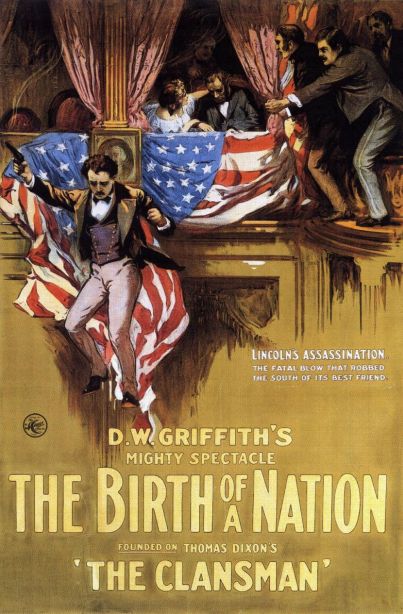
While not the first film to depict the assassination of Abraham Lincoln, The Birth of a Nation brought the event to the widest audience due to its commercial success. The scene itself was even used on some of the movie posters for the film:

Birth of a Nation Assassination Poster

The depiction of Lincoln’s assassination comes at the end of the first half of the film. What follows are some stills from that part of the film. Also, since the film is in the public domain, you can watch the assassination scene here, just start it at the 1 hour and 21 minute mark.

This slideshow requires JavaScript.

The man who played Booth was Raoul Walsh. Walsh served as Griffith’s assistant director and editor for the film. He would go on to become a legendary director in Hollywood directing films until 1964. Walsh died in 1980 at the age of 93.

Categories: Uncategorized | Tags: | 6 Comments

OTD: The Padded Hoods are Removed

On this date, June 10th, in 1865, the Lincoln assassination conspirators received relief from their dreadful padded hoods.

Padded hoods

From the early days of their incarceration, the bulk of the assassination conspirators were forced to wear hoods. Originally, the hoods were of made of canvas. All the main conspirators as we know them, excepting Dr. Mudd and Mary Surratt, had to wear these hoods. The hoods were placed on their heads in order to prevent communication among the conspirators while aboard the monitors and then continued while they were imprisoned in the Arsenal Penitentiary. On May 1st, Dr. George Porter, who was under the command of the prison’s superintendent, General Hartranft, made an examination of the prisoners and suggested that, “the hoods be paded.” Though it has been written that this recommendation was caused by the so called “suicide attempt” on the part of Lewis Powell, it is also possible that Dr. Porter was hoping a padded hood might be of better comfort to the prisoners. As it turns out, Dr. Porter’s order caused even more grief to the Lincoln assassination conspirators.

On May 8th, the padded hoods had been made and were placed on the conspirators. Sam Arnold remembered these hoods with distinct displeasure:

It fitted the head tightly, containing cotton pads, which were placed directly over the eyes and ears, having the tendency to push the eyeballs back in the sockets. One small aperture allowed about the nose through which to breathe, and one by which food could be served to the mouth, thence extending also from the crown of the head backwards to the neck. The cords were drawn as tight as the jailor in charge could pull them, causing the most excruciating pain and suffering, and then tied in such a manner around the neck that it was impossible to remove them.

A padded hood on display at the Quincy and Adams County Historical Society in Quincy, IL. A padded hood on display at the Quincy and Adams County Historical Society in Quincy, IL

When the conspirators were brought into the court room for the first time on May 9th, even the members of the military commission were taken aback at their torturous appearance. After observing the disgust of the commission, General Hartranft made sure, from that day forward, that the padded hoods were removed before the conspirators were brought into the trial room. Nevertheless, they were still required to wear the padded hoods when not in court.

As time passed, General Hartranft began to take pity on the suffering conspirators due to their padded hoods. On June 6th, Hartranft formally requested the padded hoods be removed from all the conspirators excepting Lewis Powell. This request was finally carried out on June 10th.

Padded hood in he collection of the Chicago Historical Society attributed to Lewis Powell

Padded hood in the collection of the Chicago Historical Society attributed to Lewis Powell CHS 1920.1271

The removal of the hoods was a godsend to the conspirators and greatly benefited their quality of life. Less than a month later however, four of the conspirators would receive a new hood. The insides of these July 7th execution hoods would be the last view Mary Surratt, Lewis Powell, David Herold, and George Atzerodt would ever see.

References:
A Peek Inside the Walls – 13 Days Aboard the Monitors by John “Jeff” Elliott and Barry Cauchon

Categories: Uncategorized | 13 Comments

When Junius Took the Stage – Part 2

I’m in the midst of reading the book, Junius Brutus Booth: Theatrical Prometheus by Stephen M. Archer. Though I’m only about 40 pages into it, I already have the book brimming with Post-It notes marking items of interest requiring further investigation. The most fascinating things I’ve come across thus far, is the drama that occurred when Junius Brutus Booth made his star debut in the theaters of London.  In preparation for a post about the matter, I found myself with a wealth of material on the early theatrical life of Junius Brutus Booth.  Instead of summarizing key points of Junius’ initial acting career, I decided to write a series of posts examining the humble acting beginnings of the man who would later father a theatrical dynasty, including the assassin of President Lincoln. What follows is the first part of a series of posts entitled, “When Junius Took the Stage”.  Click here for Part 1 of the series.

Part 2 – When Junius Took to the Sea

When we left Junius Brutus Booth, it was March of 1814 and he was back at home with his father, Richard.  Malnutrition and illness had befallen Junius while he was engaged in his introductory acting tour as a glorified supernumerary.  His pay was so low he could not afford adequate subsistence and was forced back home.  Richard, relieved at the return of his son, hoped that this foolishness with acting was at an end.  This was not to be, however.  The allure of the stage proved too strong for Junius, and just days after this 18th birthday, he left his father’s house to rejoin his acting troupe of Jonas-Penley.  For this leg of the tour however, the company would not be traveling to the fishing villages and dock towns of England’s coast.  Rather, they had a more adventurous destination awaiting for them, and it is likely that Junius, having been thwarted at his attempt to escape seaward at a younger age, was up for the journey.  The Jonas-Penley Company set sail for continental Europe.

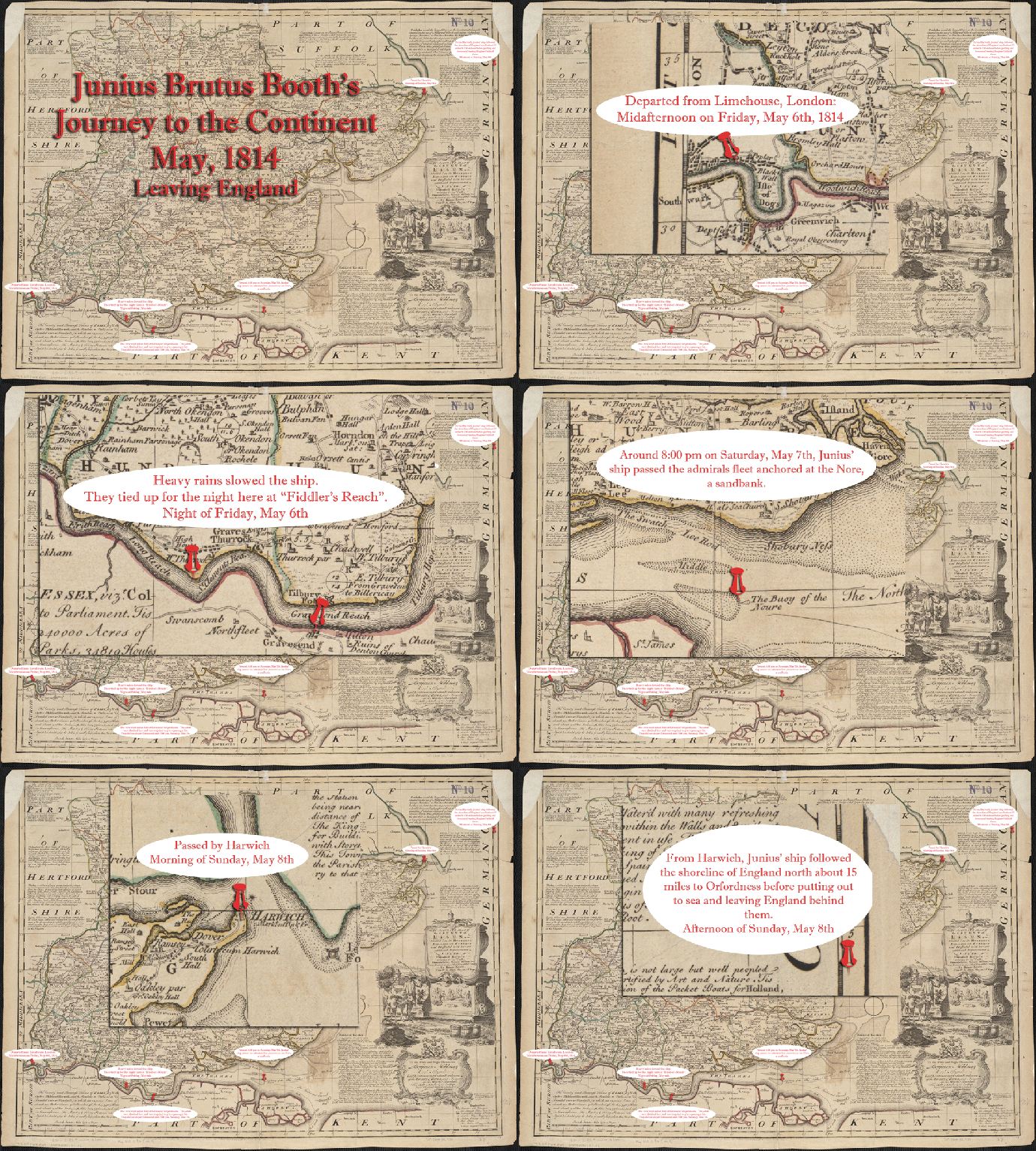
The journey was the first of its kind for Junius, who proceeded to keep a diary of his trek.  Using the details Junius provided and a map, we can follow his route almost exactly.

Junius and the other members of the Jonas-Penley troupe, began their journey on Friday May 6th ultimately bound for Amsterdam, Holland.
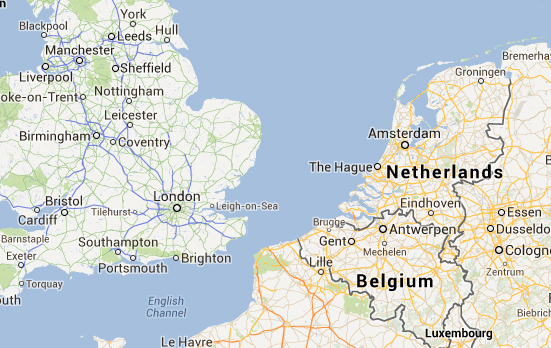
England & Netherlands

Forgiving my now unalterable errors in writing, what follows is an animated map showing the path Junius’ ship took in departing England:
Junius-to-Europe-1814-Part-

When passing by the Nore, a sandbank in the Thames estuary, Junius wrote the following:

“We dropped down and reached the Nore, where the fleet were at anchor. About eight o’clock I observed, for the first time, the setting sun, which went down in all its splendor, leaving the world to the influence of Luna till the morn. At the same time the admiral’s ship fired the evening-gun, on which all the rest followed the example, and the music on board played ‘God save the king!’
After contemplating the beauties of the evening and reflecting on my situation till dark, we betook ourselves to the hold, which was our bedchamber (the cabin being for the accommodation of the ladies), and slept upon a box all night.”

When the ship finally left the English shores near Orfordness and went out to sea, Junius went on to write:

“Saw several porpoises; wind against us, but very fine weather. In the afternoon I, among the rest, was taken sick, went into the hold and lay till next morning. We were now almost out of sight of land, which, as we gradually lost, I felt a kind of regret within me at leaving my native shore.”

At first, Junius attempted to make the most out of their journey, as one of Booths fellow actors later recounted:

“On going down to the hold, our ears were saluted with the exclamation, ‘By Holy Paul, I will not dine before his head be brought to me,’ – from Jane Shore; wondering whence the voice proceeded, we presently saw a figure seated astride a barrel, having the fragments of a meat pie before him, and surrounded by such towering heaps of boxes as almost buried him from observation; but on nearer approach, his look betrayed no ordinary degree of intelligence, and there was something altogether as interesting as grotesque in the scene—his plate was raised by the box which contained his whole wardrobe, and which was about the size of a lady’s dressing case—but not of such bright materials. The impending packages enveloped all the treasure of the histrionic adventurers; and wretched as his situation might appear to the uninitiated, he had it in its power to make a pillow of the cestus of Venus, and a footstool of the thunderbolts of Jove!”
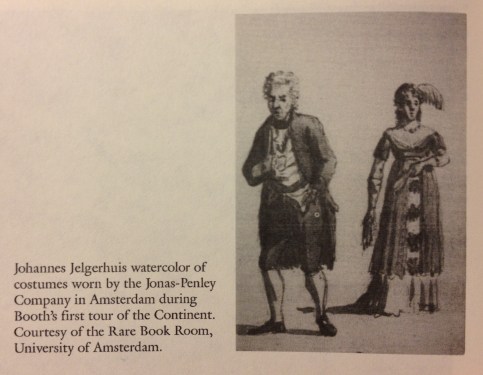
Photo Jun 06, 9 27 47 PM

However, as the journey went on the sea started to take its toll on the 18 year-old land lubber. His accommodations were not in the least bit comfortable:

“We came in sight of land on Monday evening, but soon lost it. The night was very cold, and three of us, Platt, Jones, and myself, slept on a tub, covered by a coat which we borrowed from a sailor, near a poor, sick Prussian, who infested the ship with garlic. We slept, for the first time since our departure, for about two hours, but were soon awakened by the roaring of the sea and the jargon of the Prussian and a sailor quarrelling about the bed.”
Over the north sea

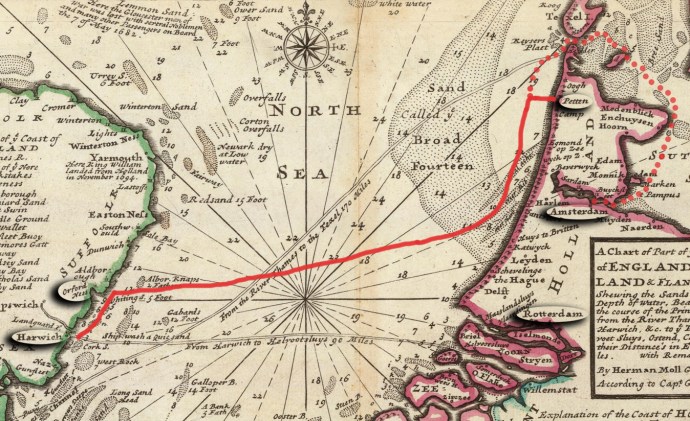
As shown on the map above, the ship was bound for Amsterdam, but long before they reached this destination the cast members already had enough of the North Sea:

“The wind was right in our teeth. They made several tacks, but lost upon all. We were apprehensive of danger. At night we were in sight of land, and many of us insisted upon going ashore in the morning; then betook ourselves to our miserable beds on the casks and boxes. As soon as morning broke, we insisted on the men making signals for a boat to come to our assistance; and, about seven o’clock, some fishermen put off through the raging surf. We entreated the captain to put into Rotterdam; but he refused to do so, being bound for Amsterdam.
At length the boat came alongside. When we saw the rude, savage appearance of the men, cased as they were in leather and wearing large hairy caps and wooden shoes, we made some scruple of trusting ourselves with them; but we had resolved not to remain in the vessel, which had become hateful to us. We asked what money they wanted; and these fellows, true Dutchmen, demanded ten guineas to take us on shore, — a distance of about three miles. This did not tally with our pockets; so, after much grumbling, they agreed to take two guineas.”

Departing from their ship and into the fishermen’s vessel, Junius and the rest of the company were making a desperate dash for land. The turmoil and poor conditions on the ship were too much for this group of actors. Not to give up so easily, old Neptune even challenged their arrival to shore:

“A crowd of women and children had collected on the shore to see us land. The surf beat violently and prevented us landing, on which these fellows jumped into the sea; and, taking a sort of grappling-iron with them, stuck it in among the stones. They then returned; and each taking one of us astride his back, brought us to the shore. This was at Petten, near Camperdown, on Wednesday, 11th of May.”

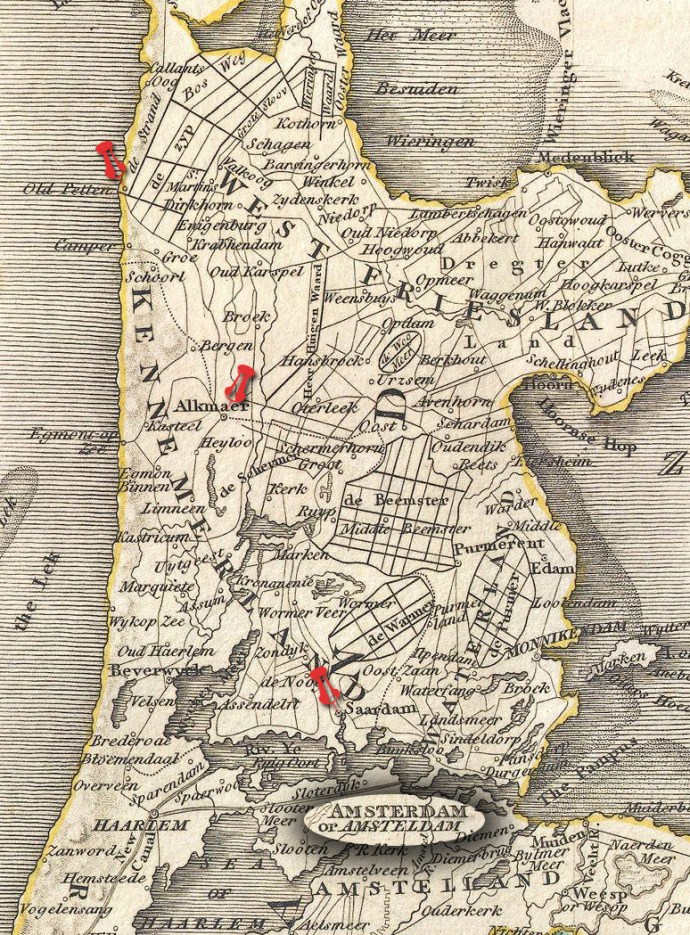
While finally out of the sea, the troupe was still a distance away from their goal of Amsterdam.
In holland

His trials still not over, Junius recounts his difficulty in traveling by land in Holland:

“After satisfying our ravenous appetites we set out. I had not walked far when my feet grew so sore, that I could not put them to the ground. I was obliged to loiter on the way, and with the assistance of Mr. John Penley, I limped along, but was forced to take off my shoes, and hopped over the roads, on banks of canals, composed of shells. I was left behind at a considerable distance without a stiver in my pocket, in a foreign Country, and with symptoms of illness. I could not help cursing my folly at leaving England. About six, I reached Alkemar, where I found my companions smoking their pipes and drinking wine in the Crown Hotel.”

Clearly Junius was no leading star yet, being left behind by his group actors due to his inability to keep up.  Those last two sentences seem to shout contempt at his fellow actors.

“The next morning, hurried to the boat which was to convey us to Amsterdam. I was astonished at the vast number of mills I saw on every side, which verifies the remark that Cervantes should not have written ‘ Don Quixote ’ till he had seen Holland. We proceeded to Saardam, a delightful place, and reached the great city of Amsterdam, May 12, 1814.”

Though the trip from London to Amsterdam took only six days, it clearly appears to have been the longest six days of this young man’s life.

While working on this post, I came across an interesting discrepancy between Dr. Archer’s biography on Junius Brutus Booth and Asia Booth Clarke’s book about her father. In recounting the name of the ship that Junius and the rest of the troupe took from London and Amsterdam, Dr. Archer gives the name as the Three Brothers. In Asia’s book, she gives the ship’s name as the Two Brothers. Interestingly the Two Brothers is the name of the ship that would later bring Junius Brutus Booth and Mary Ann Holmes to America. So, while I trust Dr. Archer’s work and assume Asia made a mistake with the ship’s name, I can’t help but wonder “what if Dr. Archer is wrong?”. This could mean that Junius subjected himself to the same ship and conditions more than once and, the latter time, forced his mistress to join him. Perhaps, when looking for a way to abscond to America, Junius stuck with “the devil he knew” and booked passage aboard the same ship that first took him from England. More research is needed.

In the next installment in this series, we will look at Junius’ time in continental Europe during which he meets an individual who will alter his life forever.

References:
Junius Brutus Booth: Theatrical Prometheus by Stephen Archer
Booth Memorials: Passages and Incidents and Anecdotes in the Life of Junius Brutus Booth by Asia Booth Clark
Memoirs of Junius Brutus Booth from his Birth to the Present Time

Categories: Uncategorized | 4 Comments

The Rathbones – Lost and Found

One of the most tragic stories connected to the assassination of Abraham Lincoln is that of the Rathbones.  As guests of the Lincoln’s that fateful night, Major Henry Rathbone and his fiancée, Clara Harris, had front row seats to the crime of the century.  The aftermath of that encounter shaped the pair and ultimately culminated in Henry Rathbone’s mental break and subsequent murder of Clara while living abroad  in Germany.

Major Henry Rathbone and Clara Harris (composite by the author)

Major Henry Rathbone and Clara Harris (composite by the author)

After Clara was buried, Henry lived out the rest of his days in a German insane asylum before he, too, joined her in the ground.  The story held that, after a lack of attention and payment to the cemetery for upkeep, the graves of Henry and Clara Rathbone were dug up and the bodies were disposed of to free the plot up for new burials.  However, recent work by researcher Eva Elisabeth Lennartz of Germany has found some exciting new information about the fate of the Rathbones’ remains.

The information was first shared on Roger Norton’s impeccable Lincoln Discussion Symposium.  Please visit both of the following links below to learn more about the Rathbones in Germany:

Major Rathbone’s accommodation in Hannover – Lincoln Discussion Symposium

Rathbone Uncovered – Lincoln Discussion Symposium

Categories: Uncategorized | Tags: | 7 Comments

The King’Pin’ and his Gang

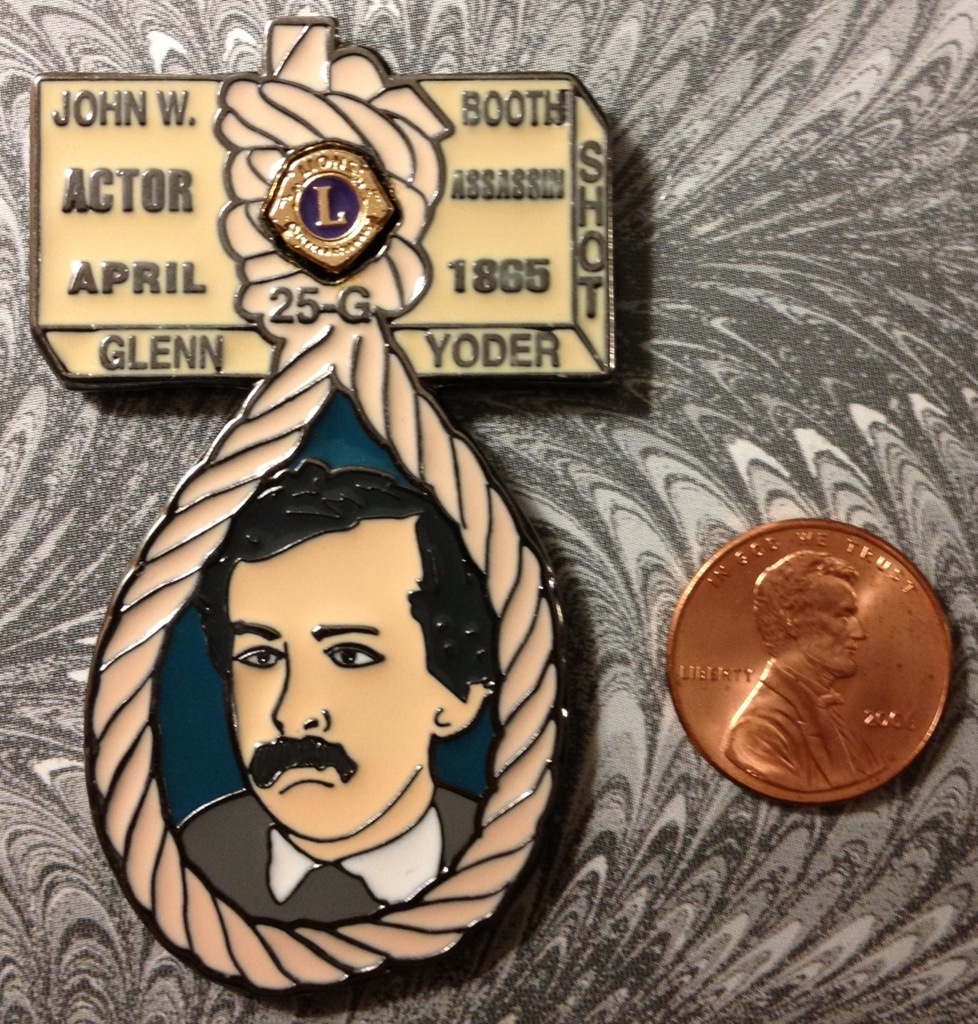
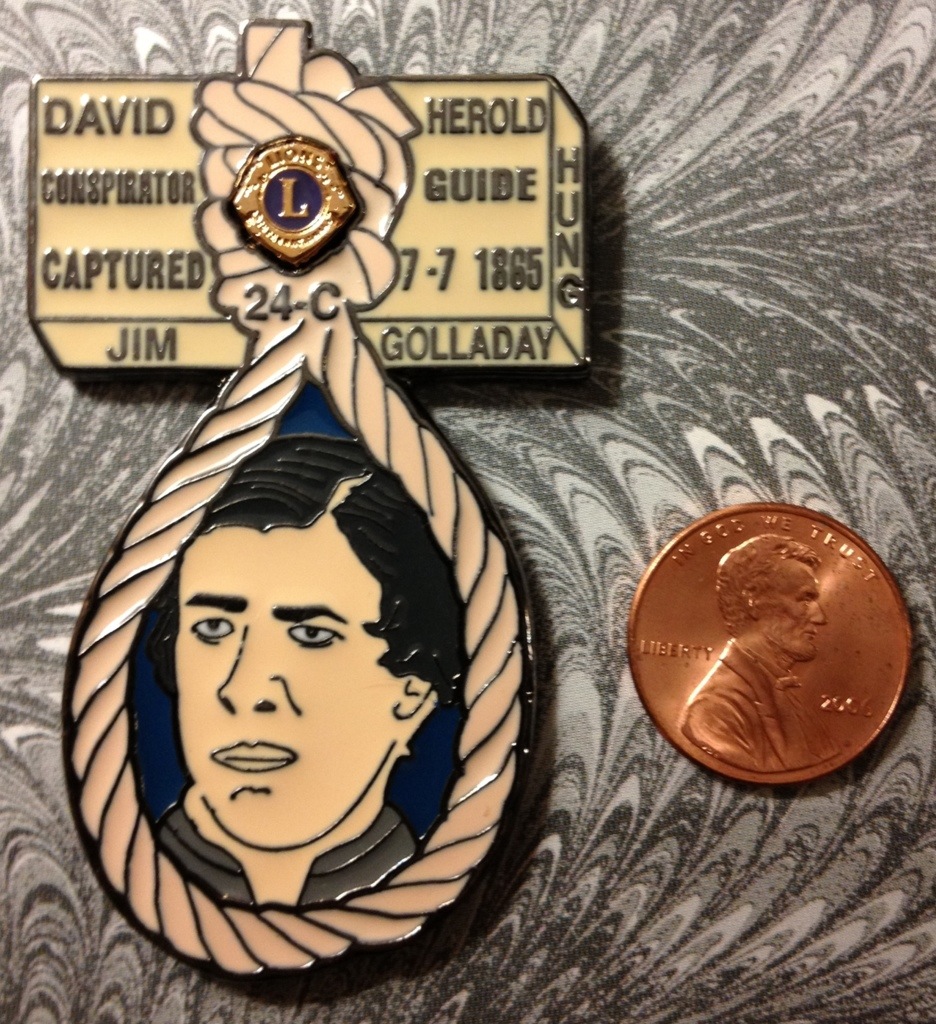
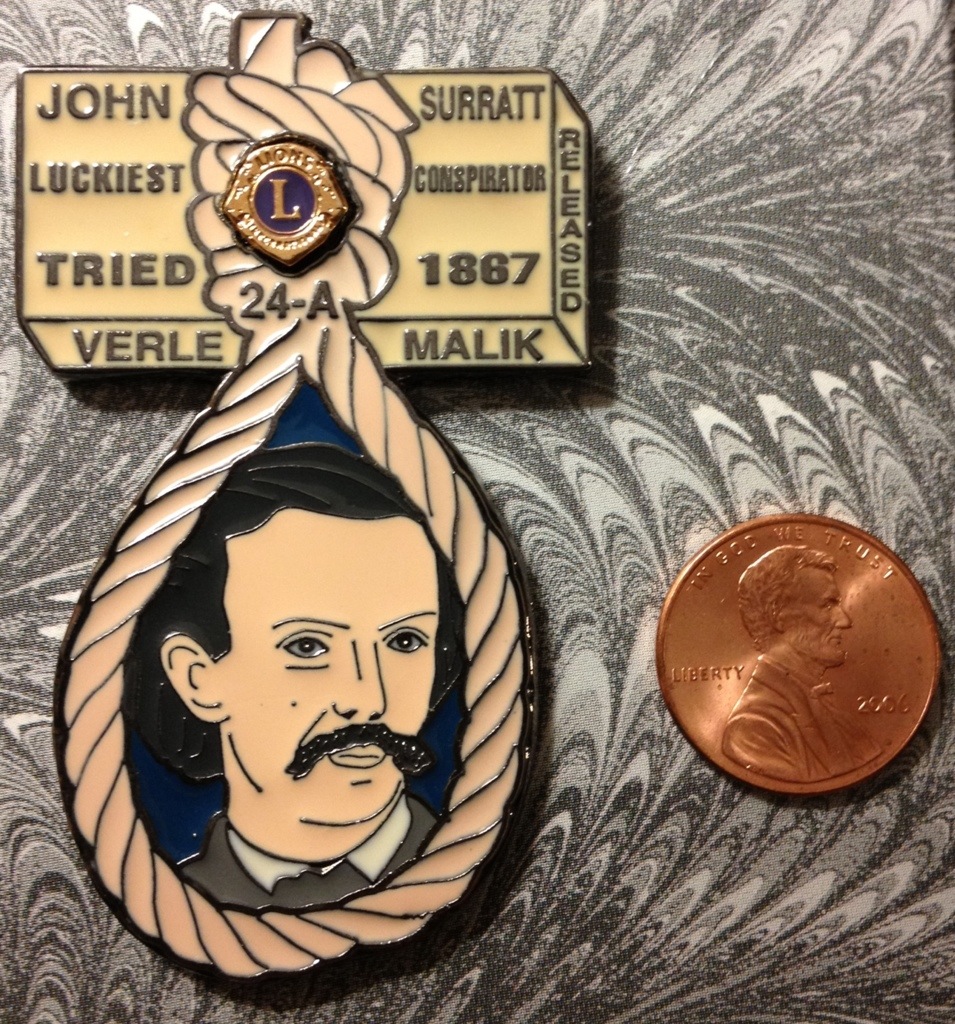
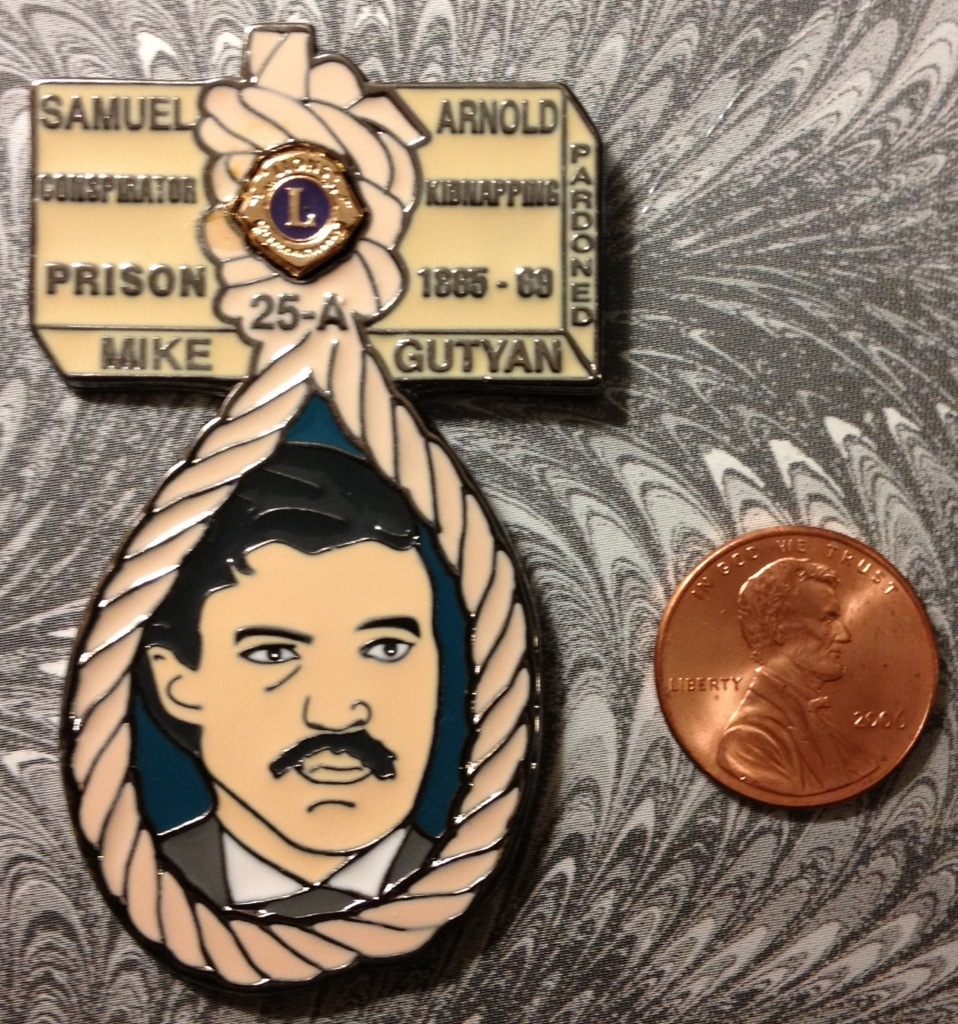
eBay, that wonderful online auction house for the everyman, is full of unique objects up for sale. When not searching for a new, “Inflatable Unicorn Horn” for my cat, I tend to do searches for Lincoln assassination related things. Most of the time it’s the same old books and prints. Yawn… Last week, however, I found myself bidding on, and winning, some truly one-of-a-kind Lincoln assassination tchotchkes: conspirator pins!

20130603-193432.jpg

Though little description came with the pins, it appears as though some history minded Lions Club members decided to make pins for themselves based on the different conspirators. Each pin contains an image and name of a conspirator, a description of their involvement in a couple words, and, on the side, their ultimate fate. The pins also contain the name of the Lions Club person for whom the pin was presumedly made for.

20130603-192103.jpg

20130603-192115.jpg

20130603-192126.jpg

20130603-192142.jpg

20130603-192155.jpg

20130603-192208.jpg

20130603-192219.jpg

20130603-192252.jpg

20130603-192324.jpg

20130603-192348.jpg

You’ll notice they made the understandable error of confusing Hartman Richter’s mug shot for Dr. Mudd. It also appears that Michael O’Laughlen and Edman Spangler got a bit more facial hair. I’ll also leave it up to you to decide how accurate their descriptions of each conspirator is.

There were impulse buys, but not ones that I regret…yet. It just goes to show you that, no matter what you’re looking for, eBay can surprise you sometimes. Now I’m going back to searching for more practical things like the most affordable can of unicorn meat.

Categories: Uncategorized | Tags: | 11 Comments

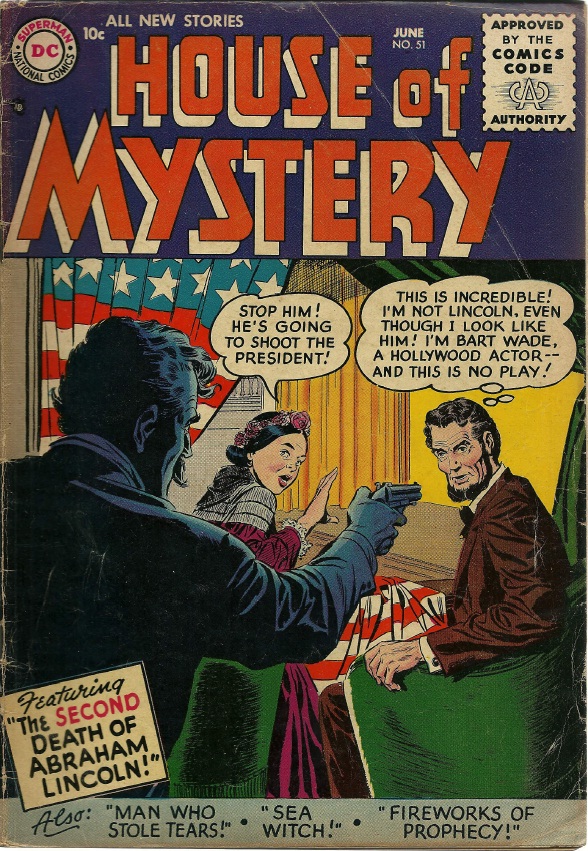
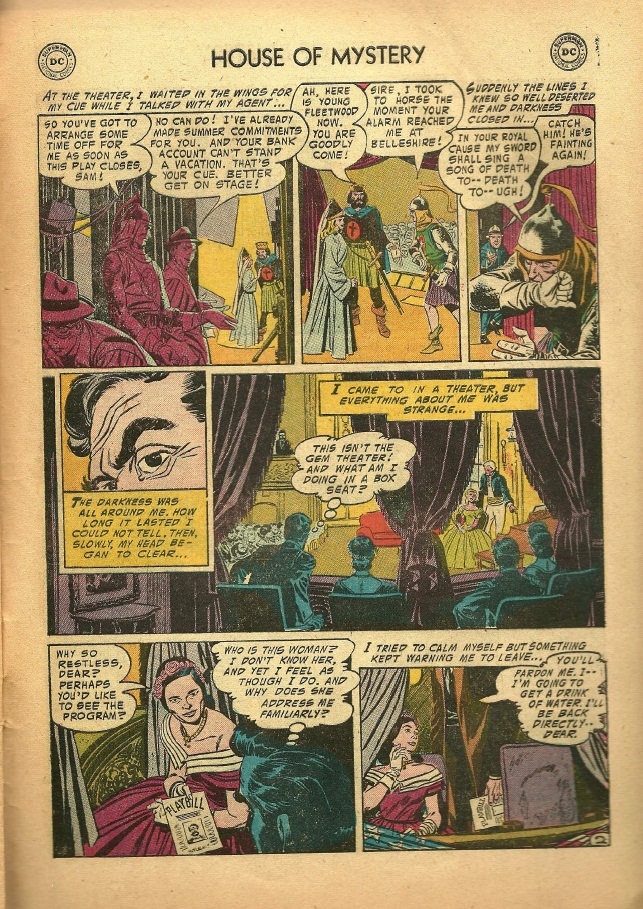
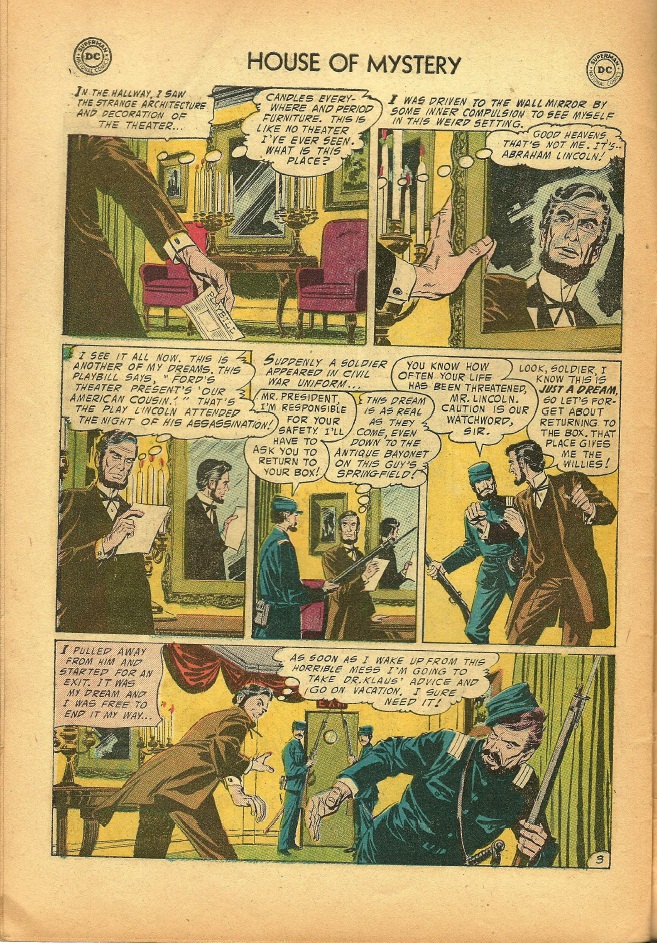
The Second Death of Abraham Lincoln

Thank you to Richard Sloan for sending this unique, albeit strange, comic book from his collection. You can see excerpts of other Lincoln assassination comic books here.

Second Death of Lincoln 1 Second Death of Lincoln 2 Second Death of Lincoln 3 Second Death of Lincoln 4 Second Death of Lincoln 5 Second Death of Lincoln 6 Second Death of Lincoln 7

Categories: Uncategorized | Tags: , | 3 Comments

When Junius Took the Stage – Part 1

I’m in the midst of reading the book, Junius Brutus Booth: Theatrical Prometheus by Stephen M. Archer. Though I’m only about 40 pages into it, I already have the book brimming with Post-It notes marking items of interest requiring further investigation. The most fascinating things I’ve come across thus far, is the drama that occurred when Junius Brutus Booth made his star debut in the theaters of London.  In preparation for a post about the matter, I found myself with a wealth of material on the early theatrical life of Junius Brutus Booth.  Instead of summarizing key points of Junius’ initial acting career, I decided to write a series of posts examining the humble acting beginnings of the man who would later father a theatrical dynasty, including the assassin of President Lincoln. What follows is the first part of a series of posts entitled, “When Junius Took the Stage”
Young Drawing of Junius Brutus Booth

Undated drawing of a young Junius Brutus Booth.

The year is 1813 and Junius Brutus Booth is 17 years old.  He is an energetic and passionate young man, rebelling at the desires of his widowed father, Richard Booth, at every turn.  Junius loathed the printing apprenticeship Richard had secured for him.  He worked under the apprenticeship of a printer by the name of George Piggot at 60 Old Street, London.  According to Junius he aided in the printing of items like “ballads, tales of wonder, and stories of fairies and goblins.”  In addition, Piggott printed the “dying speeches” of soon to be executed criminals.  These were single sided broadsides, sold in the streets of an execution to the gathered masses.  They usually contained a description of the condemned man’s last hours and a confession, often in the style of a cautionary poem:

One of George Piggot’s “dying speeches” broadsides.  Junius would have assisted in the printing of these.  Source: Harvard Law School Library

One of George Piggot’s “dying speeches” broadsides. Junius would have assisted in the printing of these. Source: Harvard Law School Library

Junius, in a move that eerily duplicated the actions of his father at his age, sought to sail away from his apprenticeship and life in England.  Had the winds been more favorable to his quest, Junius would have sailed away as a cabin boy bound for Rio de Janeiro before his father ever knew he was gone, however, Richard did find out about his plan and retrieved the boy before his ship set sail.  This was not the first time Richard had to save this misguided youth.  Not once, but twice, Richard, the lawyer, had to defend his son against paternity tests.  Though official court records of these suits against Junius have not been found, early Booth biographers state that Richard lost both suits and was forced to pay for his son’s carnal transgressions.

So what was this rebellious young man to do with his life?  Printing and the law had no appeal to him.  Then, on either October 7th or 13th, 1813, Junius Brutus Booth went to see Othello at London’s Covent Garden Theatre.  That experience would set the path that Junius would follow for the rest of his life.  Invigorated with the allure of the stage and the possibility of fame and fortune, Junius sought to make himself an actor.  It is likely that the opposition to the venture brought forth by his father only further fueled Junius’ desire to attempt the stage.

He started, as practically all aspiring actors did, in a nursery theater.  Akin to modern community theaters, these playhouses were little more than barns or lofts, where milkmen and laborers who dreamed of stardom performed for the local crowd.  From this, Junius was able to secure himself his first professional engagement when he signed on as a member of an acting troupe and toured around the dock towns and river villages of England.  This afforded him the minuscule salary of one pound sterling a week.  As a paid actor in this troupe he made his theatrical career debut on December 13th, 1813 in the comedy, The Honeymoon by John Tobin.  From my quick scanning of some of the text, I can ascertain that the main character, a Duke, has married a very beautiful, yet proud and feisty woman.  In order to “train” her to be gentler, the Duke decides, as a honey moon, to take his wife to a peasant’s hut and make to act that he is actually a commoner who has been impersonating a duke.  When his new wife goes to the duke’s castle to inform against him and request a divorce, the duke has one of his servants, Jaques, play the part of himself, hilarity ensues.  Again, this was just a cursory glance of the text and may be inaccurate.  Nevertheless, Junius Brutus Booth played the part of Campino in this professional stage debut.  Campino is an extraordinarily minor role, with only a handful of speaking lines.  Essentially, Campino is just a named servant who gets to read the words of the Duke ordering the servants to treat the simpleton, Jaques, as if he was the true Duke.  He is present when Jaques enters for the first time in royal clothing to the laughter of all the other servants, as depicted in this engraving:

Honeymoon engraving

When asked by another servant how Jaques was fairing with his newly bestowed nobility, Junius, as Campillo replied, “Like most men in whom sudden fortune combats against long-established habit.”

Junius would continue traveling with this troupe through the various dock villages, making a pittance.  His meager salary forced him to rely on only one meal a day and, by March of 1814, illness and poverty forced him back home to his father.  For a while, it appeared as if Junius’ acting days were done.

Stay tuned for future posts in this series regarding Junius Brutus Booth’s early life on the stage.

References:
Junius Brutus Booth: Theatrical Prometheus by Stephen M. Archer
The Honeymoon by John Tobin

Categories: Uncategorized | Tags: | 5 Comments

Blog at WordPress.com.