Uncategorized

“Our family is in grate distress”

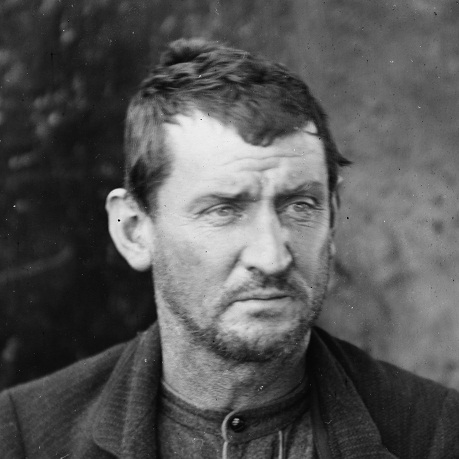
As I have mentioned before, the assassination of Abraham Lincoln caused both trouble and immense grief for the family members of the conspirators.  Imagine the horror of waking up one morning and reading the name of your son or daughter in connection with such an atrocious crime.  Such was the case for elderly and infirmed William Spangler, the father of 39 year-old Ford’s Theatre stagehand, Edman Spangler.

Spangler Icon

In response to the accusations William read regarding Edman’s alleged role in John Wilkes Booth’s plot, he wrote the following letter to his son asking for the truth:

“York, [Pennsylvania] April [1865]

Dear Son This is to let you no that we are all in good Heath except my selfe.  I am Getting worce in my leg and Arm.  I can scarcily do aney Work but I thank my God That my Body Heath is Good.  I have no particular to wright.  Only this that our Family is in grate distress That your name is mentioned In So Maney papers About you In this murder of the Chief President.  now if you Will gratify us to hear of you the Truth of the matter and The reason of your name in almost every paper in the Country.  You can certainly let me no the truth about The Matter.  I expected A Letter from you as you might have reconciled our Family much by Sending us the truth of all you no About it.   there is so much About it in the News that We cannot no the truth.  And as the[re] is so much suspicen I don’t want to wright here than I want to no wat you no about it.  if you Wright and think that your Letter is or may bee Suspicious Take it to the post office and Let it Bee red by some of the Members of the post office.  My hand is so lame that I can scarcely hold the pen.  Dear Son Do answer this Imediatley.  From your affectinate father.  God bee with you. Wm Spangler”

To his dying day, Edman Spangler declared his innocence regarding Booth’s plot. Therefore, it is likely that his reply to his father would contain the same message.  Spangler easily and truthfully would recount to detectives his introduction to the Booth family during the construction of Tudor Hall and his friendship with John Wilkes during his employment at Ford’s Theatre, but denied any knowledge of what Booth had planned on the night of April 14th, 1865.

References:
Maryland Historical Society
Art Loux Archives

Categories: Uncategorized | Tags: | 7 Comments

When Junius Took the Stage – Part 3

I’m in the midst of reading the book, Junius Brutus Booth: Theatrical Prometheus by Stephen M. Archer. Though I’m only about 40 pages into it, I already have the book brimming with Post-It notes marking items of interest requiring further investigation. The most fascinating things I’ve come across thus far, is the drama that occurred when Junius Brutus Booth made his star debut in the theaters of London. In preparation for a post about the matter, I found myself with a wealth of material on the early theatrical life of Junius Brutus Booth. Instead of summarizing key points of Junius’ initial acting career, I decided to write a series of posts examining the humble acting beginnings of the man who would later father a theatrical dynasty, including the assassin of President Lincoln. What follows is a continuing part of a series of posts entitled, “When Junius Took the Stage”. Click here for Part 1 and here for Part 2 of the series.

Part 3 – When Junius Took a Wife

After a long and arduous journey, Junius Brutus Booth, a mere supporting player in the Jonas-Penley acting troupe, made it across the sea from London to Amsterdam. On Wednesday, May 18th, 1814, the company opened in Amsterdam’s High German Theatre playing the same play Booth had made his professional debut in five months earlier, The Honey Moon. Booth reprised his extremely minor role as the servant Campillo. Though Booth put on a good face and performed as required, his feet still hurt him greatly from his lonely trek the days before. For the next two nights’ performances, Junius did not appear.

Though appearing in the High German Theatre, the troupe performed in their native English. Therefore, witnessing the troupe’s performances was an interesting experience for many Dutch theatergoers. One non-English speaking theater goer was a man named Johannes Jelgerhuis. Though unable to follow the script, Jelgerhuis judged the troupe by their mannerisms and costumes and felt they were reasonably accomplished. Jelgerhuis was a graphic artist and made sketches of the cast’s wardrobe and notes on their scenery. So, while the Jonas-Penley troupe appealed more to the English tourists and English citizens in the different cities they visited in the continent, non-English speakers still attended their performances for the visual entertainment.
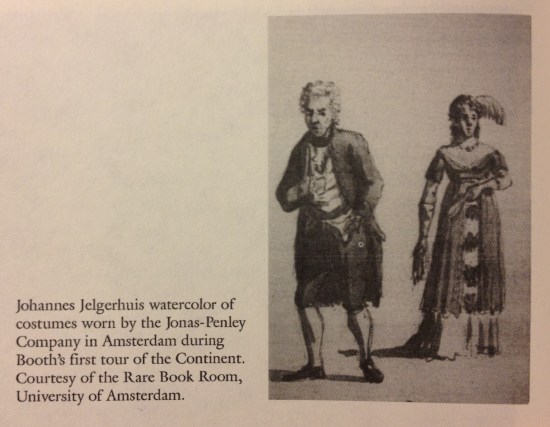
The troupe stayed three months in Amsterdam before moving on to Antwerp on July 22nd. Junius was struck by the beauties of the churches in Antwerp. He felt guilty and sinful about going to perform in a morally contemptuous theatre after visiting such holy structures.

By August the 14th, the troupe moved cities again, this time establishing themselves in Brussels. As Mr. Archer states, “Jonas and Penley had picked a propitious time for a Brussels engagement. Wellington’s defeat of Napoleon at nearby Waterloo on June 18th had swelled pro-British sentiment in the Netherlands; at no period in its history had Brussels so esteemed the English.” While a fortuitously profitable time for an English theatrical troupe, finding lodging in the militarily swollen Brussels became difficult. Left to his own devices, Junius found housing from a widow who lived close to the theatre.

His landlord’s name was Agatha Delannoy. He paid her seventeen francs a month and would ultimately board with her from August 14th until November 25th when the troupe departed for Ghent. The troupe only performed 36 times over the 104 days that Junius stayed under Madam Delannoy’s roof. This gave him ample time to get to know Ms. Delannoy’s four daughters, all of whom were between the ages of 19 and 24. There was Marie Josepha Agatha, Marie Christine Adelaide, Therese Eleonore, and Amelie Francoise Julienne. On August 25th, the birthday of the Prince of Orange, the troupe failed to perform as two of the actors did not show up. Junius foresaw this eventuality and had prearranged for two of Ms. Delannoy’s daughters to accompany him to see the celebration. Though not known with certainty, it is assumed that one of these “fine ladies” Booth escorted was Adelaide Delannoy. “Mimi” as she was nicknamed by her mother and sisters, was four years older than Junius, but the young actor was smitten. A romantic relationship evolved between the two over the course of his stay with the family and, when the troupe was poised to move on to Ghent on November 25th, reckless Adelaide eloped with Junius much to the dismay of her mother.
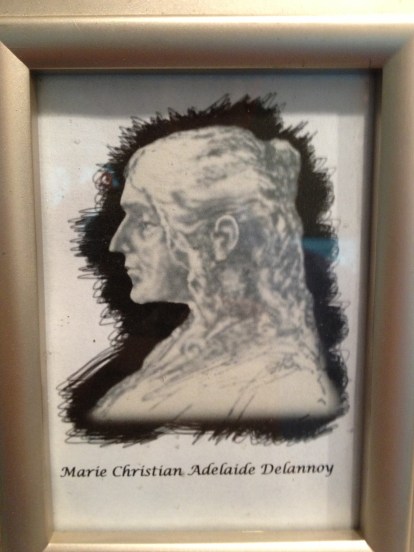
The only known drawing of Adelaide Delannoy.

The only known drawing of Adelaide Delannoy.

At least twice over the years, Junius recounted, with plenty of flair, the adventure the star crossed lovers experienced while fleeing from Adelaide’s disapproving family. According to one account, on the night of November 25th, the pair decided they would escape Adelaide’s family via a covered stagecoach. At the appointed hour, Junius stood beneath Adelaide’s window, while she lowered down to him a bundle of her favorite keepsakes and relics. While in the process of doing this, one of Adelaide’s sisters discovered Junius in the yard and, while raising the alarm, ejected Junius’ from the property. In the commotion that occurred, Adelaide was able to sneak off and make it to the carriage before it passed by the home. Junius was able to catch up with the stagecoach and join Adelaide. By this time Ms. Delannoy had called on the authorities to find and retrieve her misguided daughter and save her from this actor. Upon seeing the police approaching the wagon, Adelaide bundled herself under the seats of the carriage and covered herself with the large coat of another passenger. Junius, on the other hand, chose not to hide, but used his skill of acting to disguise his appearance: “He knew the perseverance of his opposers, wherefore, casting himself to the part of an invalid at the last extremity, pulling his cap and hat over his forehead, and assuming a cast [squint] in one eye, he sat mutely in a corner of the machine.” When the pursuers searched the stagecoach, they could find no persons matching the descriptions given to them by Ms. Delannoy, and the wagon continued its route to Ghent.

To the benefit of the pair, the Jonas-Penley Company did not stay in Ghent long, leaving the city after only six performances. By December 11th, the couple was in Bruges, having now successfully eluded Adelaide’s family. The troupe stayed in Bruges through New Year’s, departing for the coastal town of Ostend on January 2nd, 1815.

Ostend was too cold for Junius’ tastes. He called it “a most wretched place.” Though it could have undoubtedly happened prior to this time as well, in Ostend, Junius and Adelaide succeeded in using the timeless method of keeping warm in a cold climate: shared body heat. It was about this time in Ostend that Adelaide became pregnant. Though two others had accused and even successfully sued Junius for paternity when he was even younger, there is no doubt that this recently conceived child of Adelaide Delannoy’s was the child of 18 year-old Junius Brutus Booth.
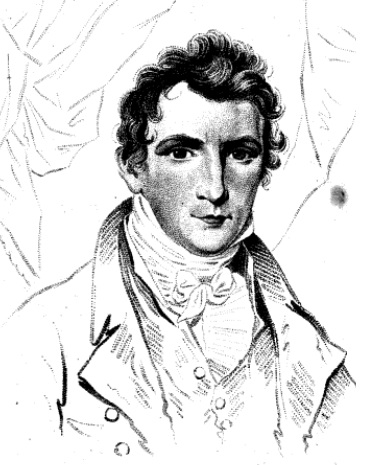
Young Junius Brutus Booth Drawing

A young Junius Brutus Booth

It was while performing in Ostend that the Jonas-Penley Troupe began its round of benefit performances for all of its actors. Junius received his first of many theatrical benefits on Monday, March 13th. Junius performed Richard III and brought in twenty-three pounds. He had to pay the managers twelve pounds for expenses and he was given the remaining eleven.

It had been almost four months since Adelaide ran away with Junius when the latter had his first benefit. During the period in between, Junius had managed to reconnect with Ms. Delannoy, clearly not wanting to excessively worry the woman who would be his mother-in-law. Perhaps understanding the recklessness of youth and that further protests of their relationship would only alienate her daughter further, Ms. Delannoy tried instead to talk sense into Junius in regards to his career. Ms. Delannoy attempted to secure for Junius a more respectable vocation as a clerk’s stationer. In a letter from Junius to Adelaide’s mother dated March 17th, Junius acts interested in the position but is likely humoring the poor woman as he had done many times with his own father. He brags about his salary and prestige as an actor, exaggerating it greatly. Junius writes of wanting to live in Brussels, while he is simultaneously preparing to return to England at the end of the month. He ends the letter with, “I believe you are angry, but there is no cause for it.” I would have to disagree with Junius on that. Ms. Delannoy had justifiable reasons to be angry at the rash young actor who ran off with her daughter.

On March 31st, 1815, the Jonas-Penley Company, Junius, and Adelaide sailed back to England, their continental tour having ceased. His time abroad allowed Junius to act for the first time in some of the roles he would later make famous. Like a child learning to ride a bike, this tour served as Junius’ training wheels. While the continent gave him the skills, it would be the London theaters that would make him a star. But all that would come later.

Junius arrived back to the home of his father Richard. Dr. Archer succinctly states, “What explosions rocked Queen Street when the prodigal son introduced his pregnant Adelaide to Richard we can today only imagine.” No doubt motivated by the growing pregnancy and the urging of his father, Junius and Adelaide were married on May 8th, 1815, one week after Junius’ 19th birthday. The young actor was now married, expecting, and looking to make a name for himself on the London stages.

Stay tuned for the next installment where Junius find himself as one of the key players in a war that rocks the London theatres.

References:
Junius Brutus Booth: Theatrical Prometheus by Stephen Archer
Booth Memorials: Passages and Incidents and Anecdotes in the Life of Junius Brutus Booth by Asia Booth Clark
Memoirs of Junius Brutus Booth from his Birth to the Present Time

Categories: Uncategorized | Tags: | 6 Comments

Horsehead Tavern Regains its Head

Forget the possibility of human head transplants, and say hello to a recently restored Horsehead tavern sign.

20130703-152416.jpg

The sign outside of Horsehead Tavern, a waypoint marking one of the two possible routes Booth and Herold took between the Surratt Tavern and Dr. Mudd’s, had fallen into disrepair over the last few years and was completely missing for awhile.

20130703-154145.jpg

The new sign here at Horsehead is a bit different than the previous one. Instead of the image of the horse being painted onto planks of wood, the entire middle part of the sign seems to be made of a type of ceramic.

You can view more images of Horsehead Tavern and its signs in the Horsehead Tavern Picture Gallery.


Categories: Uncategorized | Tags: | Leave a comment

New Gallery – Garrett House

As most readers of this blog know, I have a deep interest in the Garrett family of Caroline County.  It seems that everyone who studies the Lincoln assassination finds a specific facet of it that appeals to them more than others.  For me, that facet is the Garretts.  In March of this year, I presented at the Surratt Society’s annual conference about my ongoing research into the Garrett family.  I’ve come into contact with many Garrett descendants and a few have even bestowed upon me the title of “honorary Garrett”, much to my delight.  It’s hard to explain why I’m so caught up with this family and their interaction with John Wilkes Booth, but I am.

At the Surratt Conference, I went through a slideshow of pictures that I found of the Garrett house.  It showed the house from its days as the family’s home, to  its subsequent collapse around 1937/38.  As of this posting, I have accumulated 34 pictures of the Garrett house.  Some pictures are well known and seen in books on the assassination.  Others have come from universities, libraries, and private collections.  Since that presentation, I have been asked by a few people to put the pictures up here on my site.  I have been hesitant to do so, but today I am making a compromise.

In the Garrett House Gallery I have just made, I am displaying half of the pictures I have.  Additionally, I’ve done something I haven’t done before in my other galleries, and I’ve watermarked each image.  I’ve done this because I am working on a book about the Garretts and their run in with John Wilkes Booth and, while I love sharing new information and images here on BoothieBarn, I also want to protect these images in case I want to use them in my later publication.  That is also the reason why I have also failed to source where the different images came from.  Until I either use them, or fail to use them, in my future book, I want to keep their origins a mystery.  I hope you all understand.  I am doing this all to protect this Garrett project of mine as it means a great deal to me.

Now, without further ado, click HERE or on the picture above to visit the new Garrett House Picture Gallery.

Categories: Uncategorized | Tags: | 10 Comments

“…The people here are all traitors…”

The following letter, gleaned from the files at the James O. Hall Research Center, describes the search for Booth and Herold in Southern Maryland.  The author was a captain named William Hazelton who served under Major John Waite of the 8th Illinois Cavalry.  His letter recounts accurately the investigation that occurred in and around Bryantown.

“Bryantown, Md. April 27, 1865.

Dear Mother:

I have been endeavoring to get an opportunity to write you but have been so constantly on the move for the last two weeks that I’ve had no chance for writing.

We were first ordered to Washington to form part of the military escort at President Lincoln’s funeral, immediately after which we were sent here into Maryland in pursuit of Booth and some of his accomplices who were known to have come here.  We traced Booth to the house of a Dr. Mudd where he went to have his leg set, a bone in which had been broken by a fall of his horse.  At this Doctor’s he arrived on the morning after the murder.  He had with him a man by the name of Harrold, one of his accomplices and a desperado well known in these parts.  Here he remained until 2:00 o’clock in the afternoon of the same day.  From here we were unable to trace him farther for some days.  In vain we scoured the country in all directions, I was out with my Company night and day.  With us were dozens of the most expert detectives of the Untied States, but all our efforts to trace him further failed until at length a free negro [Oswell Swann] came in and reported that he acted as guide for them to the house of a Captain Cox some fifteen miles from here.  At that time I happened to be the only officer off duty, and at 12:00 o’clock at night started with thirty men, two detectives and this same negro guide for the home of Captain Cox.

We reached there just at daylight, saw Captain Cox (a notorious “secesh”) but he denied all knowledge of the parties.

We obtained evidence, however, that Booth and Harrold remained at his house some four hours in private conversation with him.  They then mounted their horses, Booth being lifted on the horse by the negro guide whom they dismissed, and again we lose all trace of them.  Cox we arrested and he is now in the Old Capitol prison.

The great difficulty is the people here are all traitors, and we can get no information from them.  A report reached us day before yesterday that they had been seen not far from where I am now writing.  They came to the edge of a woods and called for this colored woman (our informant) to bring them some food.  She describes the men and said one of them had crutches.  We immediately surrounded the woods and one hundred of our men searched it through and through, but found nothing.  The country here is all heavily wooded, making it next to impossible to find one who makes any effort to escape.  I hope, however, we will yet find him if he is not across the Potomac.

Yours truly,

William

P.S. I must not forget to tell you that your boy is now Captain.  My commission came some days ago.”

It seems quite obvious that the rebellious nature of the Southern Marylanders caused problems for the soldiers seeking the assassin of President Lincoln, a man for whom the natives had no love lost.

The, "notorious secesh", Samuel Cox.

The, “notorious secesh” mentioned above, Samuel Cox.

Still, through the statements of Dr. Mudd and Oswell Swann the soldiers were able to accurately track Booth until his departure from Cox’s house at around 4:00 am on Sunday, April 16th.  From here, Booth and Herold were escorted into the nearby Pine Thicket by Cox’s adopted son, who subsequently went for Thomas Jones in the morning.  This letter, dated April 27th, was written a day after Booth and Herold were captured at Garrett’s farm, with the former having been killed in the process. Apparently, at the time of his writing the news had not yet reached Captain Hazelton and the other soldiers and detectives stationed at Bryantown.

References:
James O. Hall Research Papers

Categories: Uncategorized | Tags: , | 1 Comment

A Quick Tour of the Garrett site

Today, I attended a Garrett family reunion south of Richmond. I had a wonderful time chatting with the different family members about their ancestors and their run in with John Wilkes Booth. One relative even brought a picture of the Garrett house that I had not seen before and the handwritten will of one of the Garrett children, which were major pluses. On my way back home, I drove past the site of the old Garrett house in Caroline County. I decided to make a brief stop to check on the place. Then I took out my phone and made this short little video showing the spot in the median where the house once stood:

By the way, for those of you who plan on driving the escape route in the future, the cost to cross the Potomac River Bridge (AKA the Harry Nice Bridge) from Maryland into Virginia is being raised from $4 to $6 effective tomorrow. I need to make sure I put a couple more singles in my center console so I’m not turned away next time.

Categories: Uncategorized | Tags: | 9 Comments

The Residents of St. Ignatius Cemetery

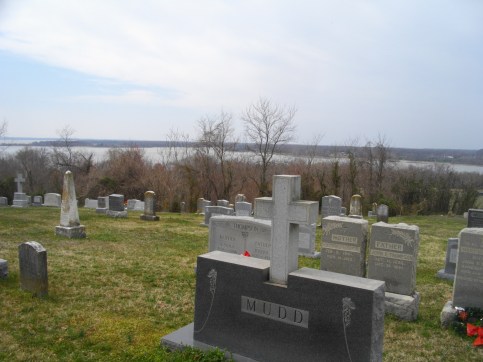
High atop beautiful Chapel Point near Port Tobacco, MD is St. Ignatius Church and St. Thomas Manor.  St. Ignatius is one of the oldest catholic parishes still in continuous service having been founded in 1641.  The present church on the site was constructed in 1798.  The cemetery surrounding the church holds the graves of many Charles County residents.

St. Ignatius Cemetery

St. Ignatius Cemetery

At least three of the people buried here at St. Ignatius are connected to the Lincoln assassination story.

Edward John Collis

Edward Collis' Grave

“Sacred
To the Memory of
Edward John Collis
Once of Angelo
Stourbridge, England
Who Died at Bel Alton
April 21, 1895
Aged 52 Years
Blessed are the dead that die in the Lord.
They rest from their labours and their works do follow them.”

I’ve previously written of Mr. Collis and his grave. He is an extremely peripheral character who wasn’t even in this country when Lincoln was assassinated. Nevertheless, he has the distinction of building his house on the Pine Thicket where Booth and Herold hid. Since my first post about Mr. Collis, I’ve learned that he was not a Catholic. This might explain why his grave is so far removed from the rest of the cemetery. After Mr. Collis died, Mrs. Collis returned to England, selling off the land and the house. It does not appear that the two had any children and no pictures of Edward John Collis have surfaced as of yet.

Collis House Today

The Collis House Today

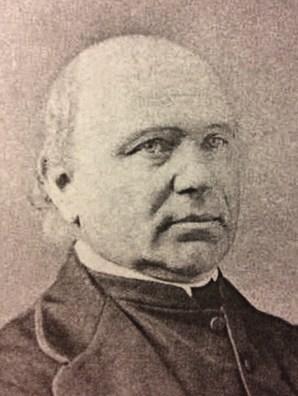
Father Bernardin Wiget

Father Bernardin Wiget

Father Bernardin Wiget

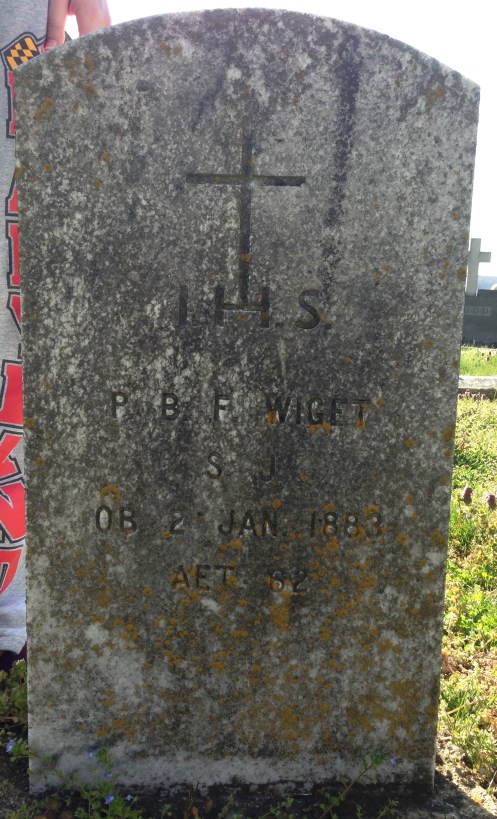
Father Wiget’s grave is right next to the church with the other parish fathers. Wiget enters the assassination story a few of times. While popularly known for being one of the two ministers who accompanied Mary Surratt when she ascended the gallows on July 7th, 1865, Father Wiget had a long history with the Surratt family. During the trial of the conspirators, Wiget was a character witness for Mary Surratt. Their association with each other started back in 1854, when Wiget performed Anna Surratt’s first communion. In 1855, Mary Surratt was looking to place her boys in a Catholic school away from their drunk father. She instilled the help of another priest, Father Nota, who wrote to Father Wiget. Wiget was, at that point, the new president of a school located right here at Chapel Point. Wiget, after getting the permission from his superiors, enrolled Isaac and John Surratt at his school at St. Thomas Manor at a discounted rate due to Mary’s poor financial situation. After Wiget left St. Thomas, the school closed and Mary was forced to look elsewhere for a place for her sons.

Father Bernardin Wiget's Grave

Father Bernardin Wiget’s Grave

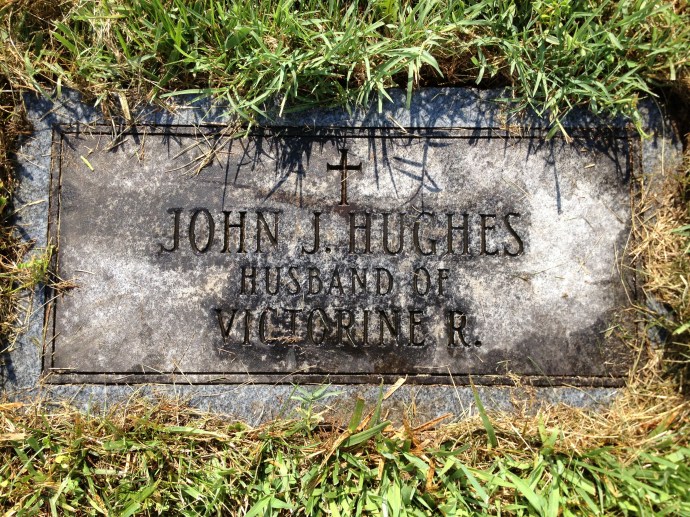
John J. Hughes

John J. Hughes

John J. Hughes

On April 20th, Booth and Herold were put in a boat and directed toward the Virginia shore by Thomas Jones. Their crossing that night did not go according to plan. Currents, gunboats, and darkness all impeded their crossing of the Potomac river. When they made landfall in the morning hours of April 21st, the men were still in Maryland, having rowed into Nanjemoy Creek. After a bit of reconnoitering, Herold realized they were near the farm of a well-known figure in Charles County named Peregrine Davis. Living in a house on Davis’ land was his son-in-law, John J. Hughes. Hughes family lore states that Booth and Herold approached John J. Hughes house, seeking lodging but that Hughes denied them entry. Instead he, suggested they stay in a slave cabin near the water which they assumedly did. They stayed on the Hughes’ property from their landing in the morning hours of April 21st, until they left the Maryland shore again on the night of April 22nd.

John J. Hughes' grave

John J. Hughes’ grave

Admittedly, there may be others buried at St. Ignatius that I just don’t know about…yet. It was just today, while researching at the James O. Hall Research Center on the Surratt House campus, that I learned that John J. Hughes was buried there. I drove straight from the Surratt House to Chapel Point to see if I could find his stone which, obviously, I did. If you know of someone else relating to the Lincoln assassination buried at St. Ignatius, drop me a comment below.

Categories: Uncategorized | Tags: | 16 Comments

John H. Surratt the Teacher

John Surratt

John Surratt

Like the other Lincoln conspirators who survived trial and imprisonment, John H. Surratt, Jr. experienced difficultly making his way in the world during the aftermath.  The stigma attached to the Surratt name was great.  Employment prospects were bare for the man who had escaped justice in 1865, and then was freed by a hung jury in 1868.  Upon being released, John Surratt traveled to South America for a bit before returning and trying his hand at the mercantile business:

JJSellingTeas1869

In this venture he failed and he was forced to look elsewhere for employment.  Therefore in 1870, John Surratt started a new career path in Montgomery County, MD.  John Surratt became a teacher.

On September 28th, 1919, Washington D.C.’s Evening Star published an article written by The Rambler.  Titled “The Rambler Finds Another Historic Spot”, the article partially describes John Surratt’s life as a teacher.  Rather than reproducing the entire article, I’ve summed up The Rambler’s narrative below.  If you would like, you can read the full article here.  Be warned however, The Rambler loves his superfluous details.

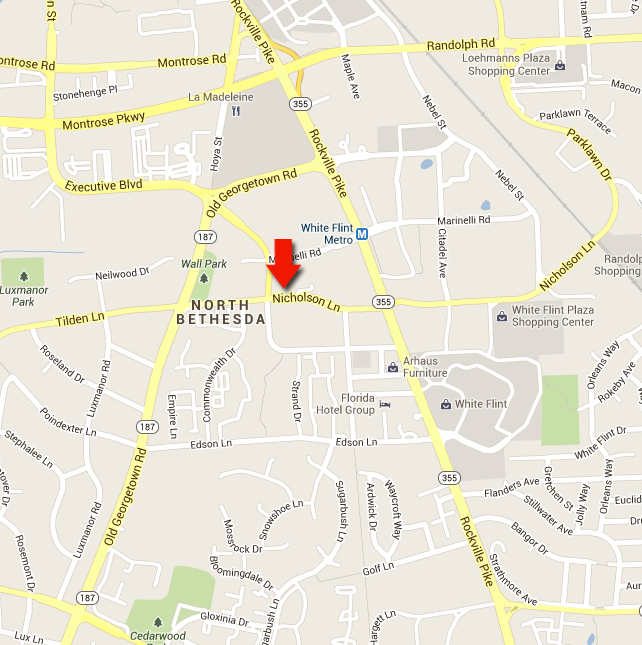
Essentially the article comes down to this.  In 1919 The Rambler, whether purposefully or by accident, came across the former school site of where John Surratt was a teacher from 1870 – 1873.  Based on his description of the area,  I believe that the former “Schoolhouse Ln.” on which the school once stood is currently called Nicholson Ln. and is located in North Bethesda:

The approximate area where John Surratt was a teacher at Montrose School from 1870 - 1873.

The approximate area where John Surratt was a teacher at Montrose School from 1870 – 1873.

When The Rambler visited this area in 1919, the site was already devoid of any structures.  According to what he heard from those around the area, two schools had once occupied the spot.  The first school there either burned down or was torn down, and the second was torn down around 1909 or so.  The Rambler believed the school in which John Surratt taught was called Montrose schoolhouse also called the “Upper School”.

I’ll let The Rambler describe what he found next:

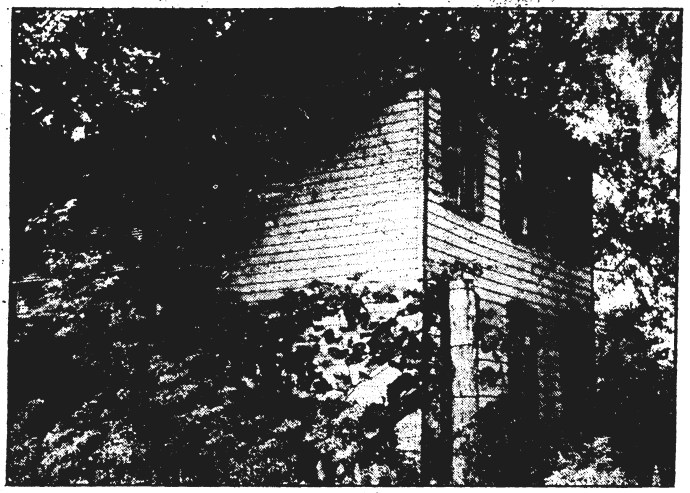
A few hundred yards west of the site of the school and on the south side of School House lane is an old frame house set in a shady garden where grow fine old boxwood trace, a giant British yew tree, one of those trees bearing large panicles of blue flowers and which is called “the pride of China” or the “Empress of China” tree, an ash, a willow and a tree locally called “Illinois locust.” There are tubs full of gat petunias and circles and beds of many other flowers. By the side of the house is a vegetable garden, where nearly all the vegetables that can be raised in this climate are growing. This is now the home of Conrad Franklin Maught and his sister, Miss Lucinda. Here it was that John Surratt boarded while a teacher at the “Upper School,” and Mr. Maught was one of his pupils.”

Photograph of the Maught House, where John Surratt boarded when he was a teacher nearby.

Photograph of the Maught House, where John Surratt boarded when he was a teacher nearby.

Conrad Franklin Maught, a pupil of John H. Surratt's.

Conrad Franklin Maught, a pupil of John H. Surratt’s.

“Mr. Maught has a very clear remembrance of John Surratt, and says he was a good teacher, a good man, and is affectionately remembered by all the people who took their lessons under his guidance and who are still living. The first teacher at that school, so far as Maught can remember, was one whose name was Mounts. Another was Thomas Harris, one was Luther Claggett and another William Keefe. Mounts returned to this school, and, if the Rambler is reading his notes straight, he succeeded John Surratt, Miss Blanche Braddock taught at this school, and she is now a teacher in a school at or near Glen Echo. The last teacher at that school was Miss Beulah Dove, who is now living at Rockville.”

The Rambler goes on discussing the other people of the neighborhood, never coming back to the discussion of John Surratt.  Other sources, however, have tried to better account for this time in John Surratt’s life.

It was during this time at Montrose school that Surratt tried his hand at the lecture circuit, telling his sensational life story.  Perhaps he was motivated to do so due to the attention he was able to garner from his students.  His first lecture was on December 6th, 1870 in the Montgomery County Courthouse.  As a local celebrity, his first lecture was well attended and received generous reviews.  Armed with an agent, Surratt scheduled further lectures in New York, Baltimore, and even Washington, D.C.  It is probable that Surratt was expecting his newfound career of lecturing to take off, and that he would soon be quitting his teaching job.  That was not to be, however.  As author, Andrew Jampoler wrote in his book, “The Last Lincoln Conspirator“, Surratt was “shredded” by his New York reviewers.  One review scorned him for, “hawking his mother’s corpse,” and went on to say the lecture was, “the most flagrantly and deliberately indecent method of making money which has ever occurred to the depraved human mind.”  When his lecture came to D.C. as advertised below, the mayor prepared for riots.  Though a crowd had gathered to gain admission, the D.C. lecture never occurred because Surratt had been arrested in Richmond the day before on charges of selling tobacco without a license during his mercantile days.

Surratt Proposed Lecture

After less than a month, John Surratt’s lecturing career was over.  He returned to teaching at Montrose having scarcely enough time to have left it in the first place.  During his tenure as a teacher there he married the woman who would be his wife for 43 years and bear him ten children, Mary Victorine Hunter.

John Surratt and his wife, Mary Victorine Hunter, in their later years.

John Surratt and his wife, Mary Victorine Hunter, in their later years.

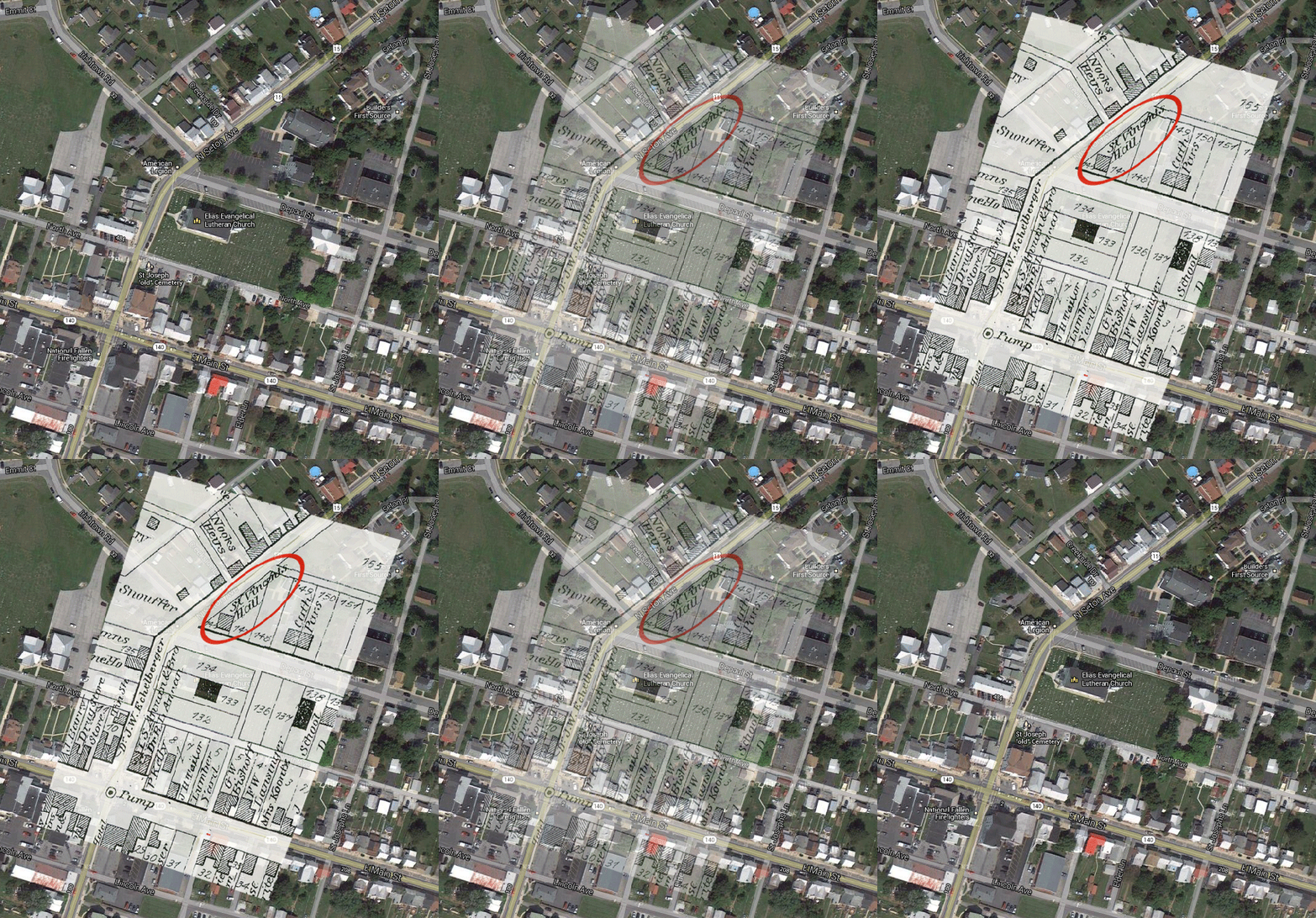
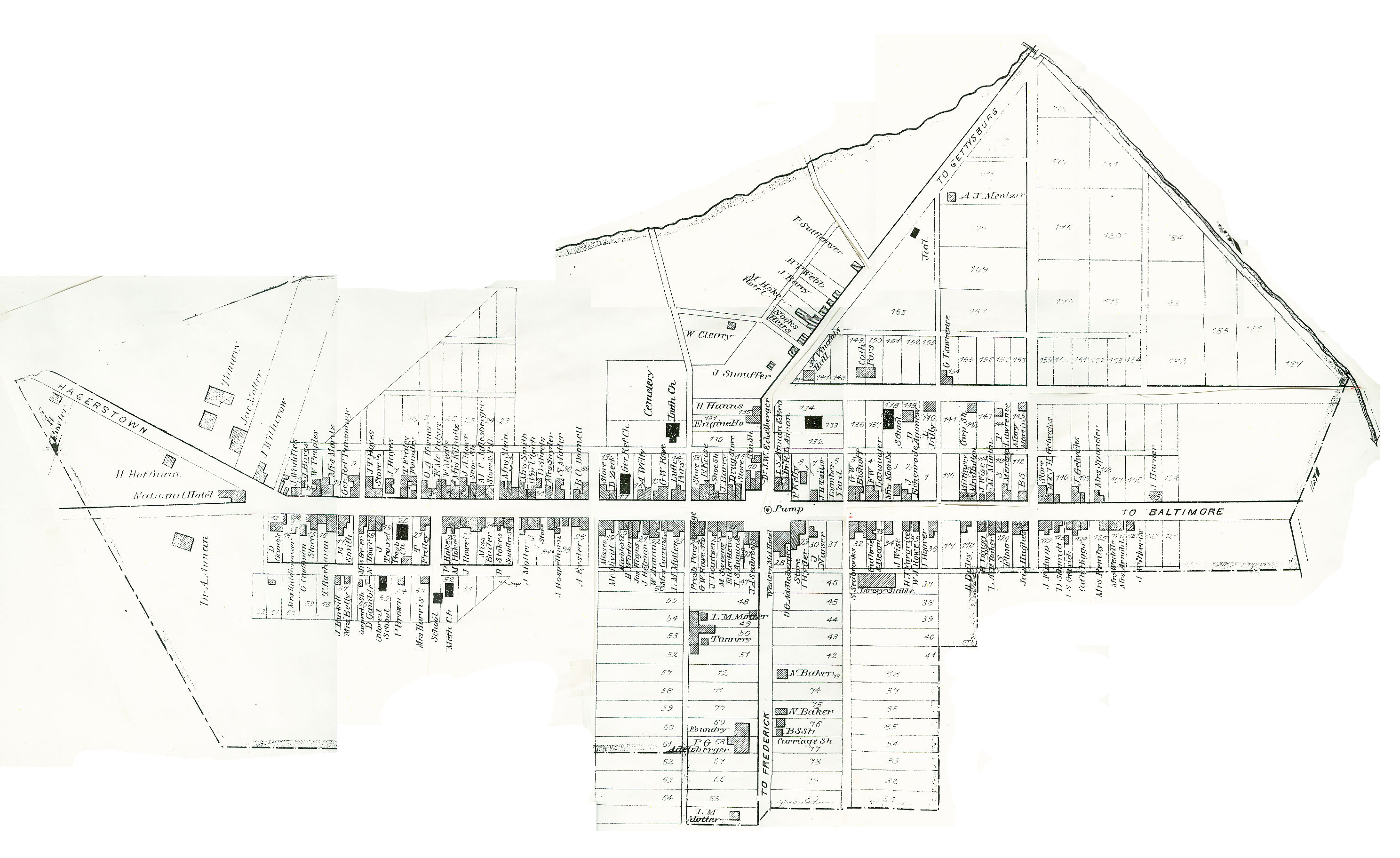
In 1873, Surratt left teaching in Montrose and became the principal at a new school in Frederick County, Maryland.  About a mile south of the border with Pennsylvania, Surratt was the principal of St. Vincent’s Hall in Emmitsburg.  Like his former school near Rockville, St. Vincent’s no longer stands.

Map of Emmitsburg, MD showing the former location of St. Vincent's Hall, the school at which John Surratt was principal for a time.

Map of Emmitsburg, MD showing the former location of St. Vincent’s Hall, the school at which John Surratt was principal for a time.

Surratt tenure at St. Vincent’s was ripe with discontentment. On April 26th, 1873 (the 8th anniversary of John Wilkes Booth’s death at Garrett’s farm coincidentally), Surratt wrote a letter to Father Charles Jolivet, a priest who had given him sanctuary in Liverpool, England during his 1865 escape. He wrote Father Jolivet the following:

“My greatest desire, Father Jolivet is to leave this abominable country and go to Europe there to spend the balance of my days in peace and quiet. If I could only feel secure of something to do in France or England that would assure me of a moderate living, I would leave here in less than a week. Ah! Father Jolivet if you could only secure me some kind of employment, you would confer a favor indeed. I have been married about eleven months and am the happy father of a hearty boy.”

Surratt was unsuccessful in this attempt to find employment overseas. Even without any foreign prospects, Surratt could no longer continue in his teaching / principal position.  His tenure at St. Vincent’s Hall was even shorter than his teaching at Montrose. The January 31st, 1874 edition of the local Emmitsburg newspaper, Catoctin Clarion, reported the following:

“Mr. John H. Surratt has resigned the situation of teacher of the Parochial school of this place. He has gone to Baltimore to reside. It is said he is about publishing a book.”

In Baltimore, John Surratt found a job working for the Baltimore Steam Packet Company.  It would be in this career that John Surratt would devote the remainder of his working days.  From 1874 until his retirement in 1915, Surratt worked his way up peaking as the company’s general freight agent and auditor.

John H. Surratt’s foray into teaching was, like so many things in his life previous to it, short-lived.  Regardless, it is an interesting part of his history and, therefore, teaches us more about the characters in Lincoln’s assassination.  So perhaps John Surratt never really stopped teaching after all.

References:
The Rambler Finds Another Historic Spot – Evening Star, September 28, 1919
The Last Lincoln Conspirator by Andrew Jampoler
The Travels, Arrest, and Trial of John H. Surratt by Alfred Isacsson
Life After a Failed Assassination by Jim Rada
Emmitsburg Historical Society Map 1873

Categories: Uncategorized | 12 Comments

Blog at WordPress.com.