News

Looking at General Grant

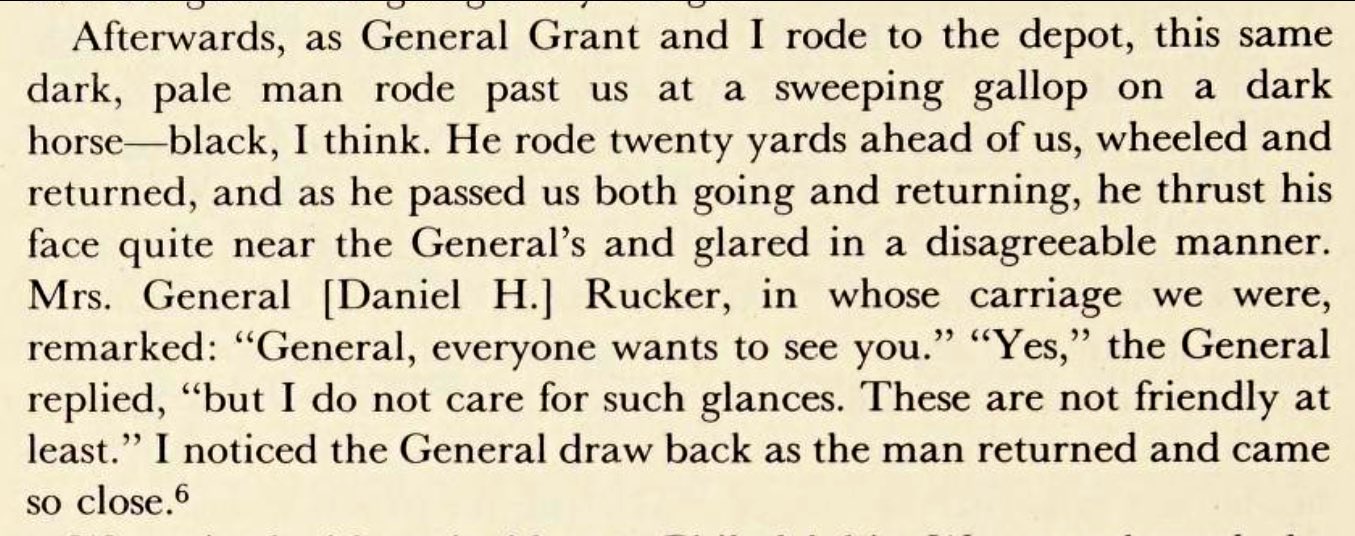
Tonight marks the end of the History Channel’s three part miniseries about the life of Civil War lieutenant major general turned President, Ulysses S. Grant. Being without cable, I have yet to see to the miniseries myself, but I am looking forward to viewing it in the near future. However, thanks to the power of promos and Twitter, I have already been made aware of one part of the miniseries that airs tonight and deals with Grant’s connection to Lincoln’s assassination. The miniseries describes how General and Mrs. Grant declined the Lincolns’ invitation to join them at Ford’s Theatre on the night of April 14, 1865. Instead, the Grants decided to travel by train to New Jersey in order to visit with their children. The miniseries shows the following scene of the Grants riding in a carriage on their way to the train depot when a mysterious stranger stops them.

After this promo was posted on Twitter, one of my followers there, Ilka, asked me if this story of an unfriednly glance between John Wilkes Booth and Gen. Grant on April 14th was true. While I had heard of it before, I always took it to be an apocryphal account with no evidence to support it other than Mrs. Grant’s lively imagination. However, as I researched it this morning, I found that the story has more evidence going for it than I thought. What follows is a Twitter thread I wrote this morning highlighting my research into this story.

Here’s the text from Col. Porter’s reminiscences as included in the above tweet:

Here is Julia Grant’s memory of the event as included in the above tweet:

In response to my thread, fellow tweeter Darin Weeks shared his skepticism regarding the story which I fully understand.

I’m not ready to 100% declare that it happened either, but I responded to Darin that at least this story (unlike a lot of others) has evidence to back it up.

After responding to Darin, I realized that, if the story was true, it might help to explain why Booth wasn’t better armed when he assassinated the President at Ford’s later that night.

In the end, we’ll never truly be sure that John Wilkes Booth was the man who gave Gen. and Mrs. Grant such an unfriendly glance on the afternoon of April 14th, but evidence shows that it could have been!

Categories: History, News | Tags: , , | 5 Comments

Prelude to a Project

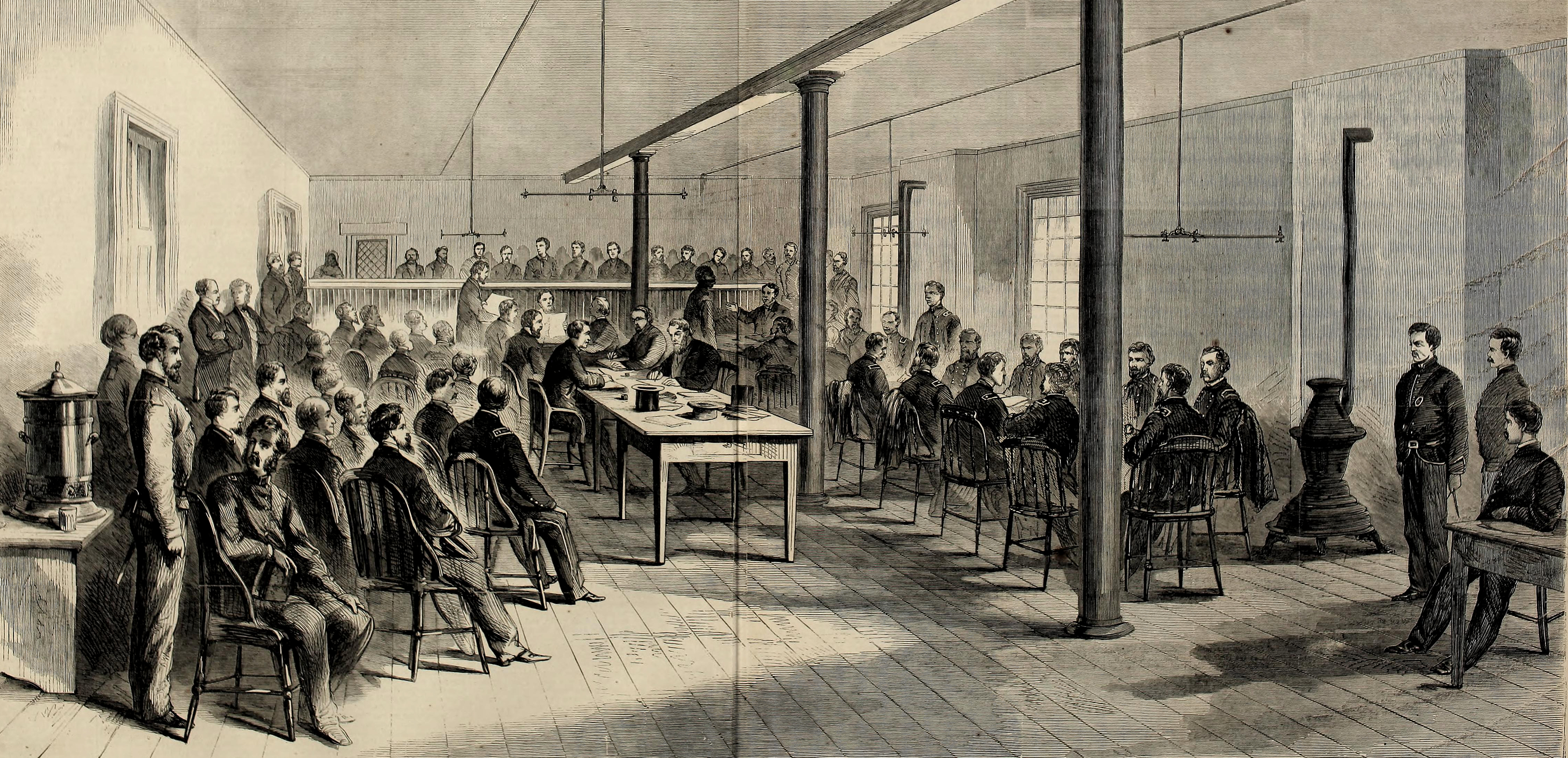
Over two years ago, I came up with an idea for a project. I wanted to expand my knowledge of the trial of the Lincoln assassination conspirators. While I was very familiar with the outcome of the trial and the big revelations that the different testimonies brought to light, my knowledge of the trial, as an event, had been lacking. The trial was such a large and inaccessible part of the assassination story to a person without any legal background. Even with my knowledge of the history of Lincoln’s assassination, attempting to read the trial transcript, and make sense of it all, was an intimidating prospect.

The original incarnation of this project still shied away from the transcript itself with my interest being drawn to learning more about the experiences of the individual conspirators while the trial was going on. While we have practically nothing from the 8 conspirators regarding their day to day thoughts on the proceedings, the daily newspapers of the time often contained descriptions of the conspirators’ appearances and little mentions of their actions on the prisoners’ dock. The first draft of this project was little more than a list of the witnesses who testified on each date, followed by these descriptions from the newspapers.

However, as I went on, I found that I needed to provide at least some summation, if only for myself, regarding what each witness was testifying about. Some of the witnesses, especially the important ones, were easy as I was already familiar with the relevance of their words. However the trial consisted of 347 unique witnesses and most of them gave testimony that is only comprehensible if you know the testimonies that preceded it.

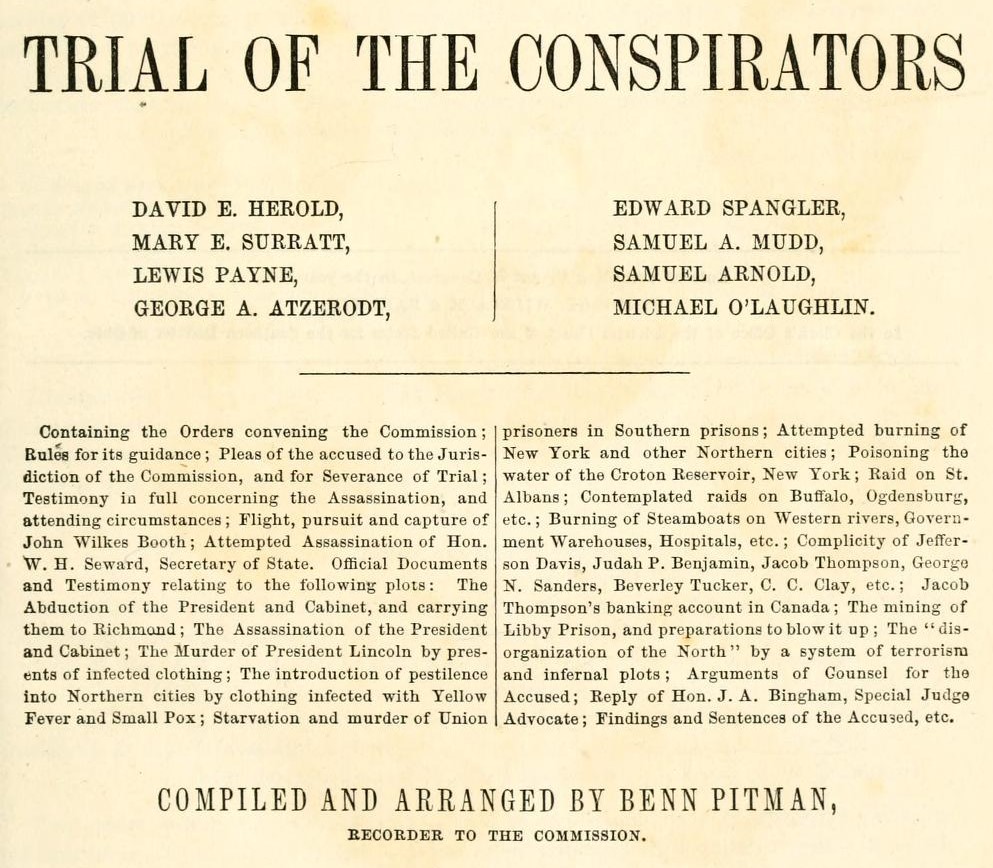
With this in mind, the project expanded. I started reading the trial transcript, word for word. I am greatly indebted to the work of author William Edwards, who published the most detailed and accurate version of the trial transcript that exists. At over 1400 pages in length, I knew the task ahead of me was going to be long but I wanted to create a more interactive and, most importantly, accessible version of the trial. I took on the role of Benn Pitman, the court’s chief recorder who later published a one volume transcript of the trial using summarized testimonies. I wanted to do the same as Pitman but update it using the technology available to us. Over time, what started as a cheat sheet for myself, became an interactive resource for understanding and referencing the trial of the conspirators.

The end project, as you will soon see, consists of a day by day chronology of the trial of the Lincoln conspirators. For each day of the trial, I have documented the proceedings, summarized the testimony of each witness, and included the descriptions and recollections of the individuals who took part in or visited the trial on each day. I have painstakingly researched the 347 witnesses, rectifying misspelled names from the transcript and doing my best to find visuals that represent them and their lives. I have been assisted in this by many of my friends and colleagues whose names appear in the acknowledgement section at the bottom of the trial home page.

Each day of the trial exists as its own page here on LincolnConspirators.com and they will be released on their corresponding anniversary here in 2020. In this way you will be able to experience the trial, day by day, in the same way those in 1865 did. This post was published on May 1, 2020 and so the page for May 1, 1865 is now available to read. It contains the announcement that, 155 years ago today, President Andrew Johnson released the orders to create a military commission to try the Lincoln assassination conspirators. The decision to try the conspirators in a military court rather than a civilian trial was, and continues to be, a controversial decision with many arguments to be made about its constitutionality. However, my purpose in this project is not to debate the legality of the trial. I am more concerned about the testimony that was given at the trial and the ramifications it had on the conspirators.

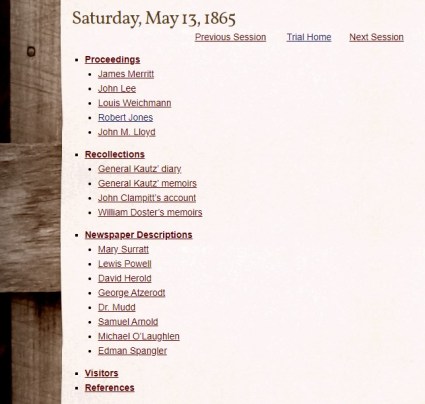
Using my own limited computer abilities, I have worked to make this project as interactive as possible. Starting with May 9th, the day in which the proceedings of the trial actually began, each individual page contains a Table of Contents at the top. Using this you can click to jump down to a specific witness or conspirator. Clicking entries on the Table of Contents will also provide you with direct links to those places in the page, making it helpful if you want bookmark or share a specific testimony rather than the whole page. When reading my summarized version of a witness’s testimony, the full name of the witness is always hyperlinked. Clicking on their name will take you to their full testimony in the historical transcripts so that you can read them for yourself. In addition, when witnesses are recalled or make direct reference to the prior testimony of others, I have included hyperlinks to the corresponding testimony in question. In this way you can quickly review and/or cross reference the sometimes contrary statements being made.

A sample Table of Contents for a day of the trial.

At the beginning of the trial, the court was held in closed session. Public and private uproar over the secrecy of the court caused the doors to be opened up to outside press and visitors starting on May 13th. Starting on this date, the Table of Contents grows to include the newspaper descriptions of the conspirators and known visitors to the court room. As the trial goes on and interest in the individual conspirators’ appearances wanes, there are less descriptions available. Near the latter part of the trial an attempt has been made to supplement these areas with general descriptions of the conspirators from undated sources.

For each day of the trial, I will be publishing a corresponding post here on LincolnConspirators.com containing a teaser of what occurred on this date 155 years ago. The posts will also contain a link to newly released trial page. I apologize in advance for blowing up your inbox with nearly daily posts for the next two months. The home page for the trial project, which contains links to the individual days, will always be accessible and available, though the links will not work until that specific day has arrived. By the end of June 2020 every day of the trial project will be accessible and will remain so.

I’m very much looking forward to sharing with you this project that has occupied too much of my time over the past two years. My hope is that this project will be a helpful resource for all who seek to learn more about the trial of the conspirators.

So, while we are still about a week away before the trial of the Lincoln conspirators officially began, I invite you to visit the Home Page of the project and take a look at the Witness List for the days to come. If you’re so inclined you can even take a look at the project’s Bibliography and read through the Introduction (which is pretty much just this post again).

In the end, I hope you will come back as regularly as you can during May and June to see how the conspiracy trial plays out, day by day.

Sincerely,

Dave Taylor

Categories: History, News | Tags: | 70 Comments

2020 Surratt Conference Cancelled

Following the recommendation from the Centers for Disease Control to limit group gatherings, the Surratt House Museum has decide to cancel this year’s Surratt Society Lincoln Assassination Conference. The conference was originally scheduled for April 3 – 5, 2020, but is now cancelled in order to lessen the spread and impact of COVID-19 (coronavirus).

I was scheduled to speak at this year’s conference on the imprisonment of Dr. Mudd and the other conspirators at Fort Jefferson. As disappointing as the cancellation is, I wholeheartedly agree with the Surratt Society’s decision to put the welfare of its attendees first.

Those who have already registered and paid for the conference will receive a refund of their registration fees, as well as the fees for the Friday and Sunday bus tours if applicable. The Surratt House Museum will be sending out more information in the following weeks about the refund process. You can also contact them directly with any questions. Their phone number is (301) 868-1121.

The decision to cancel the conference was not an easy one, but was done in solidarity with the hundreds of other historical institutions and organizations who are canceling events in order to decrease the spread of this virus. As an annual conference, the Surratt Society looks forward to 2021 when we may all, once again, come together to share in our love of history.

Categories: News | Tags: , | Leave a comment

An Update Regarding John Wilkes Booth’s Knife

Back in December, I put up a post here on LincolnConspirators that contained my research on the knife John Wilkes Booth used to stab Major Rathbone following the assassination of Abraham Lincoln. By consulting the period evidence that came out during the trial of the conspirators, it is my firm belief that Ford’s Theatre has been displaying the incorrect knife for years and that the correct knife is locked away at the NPS storage facility in Landover, MD.

If you haven’t read the piece, please take a few minutes to read the article and look at the evidence for yourself: https://lincolnconspirators.com/2018/12/31/cloak-and-daggers-cutting-through-the-confusion-of-the-assassination-knives/

The post itself was actually just a reprint of my original article on the subject, which had been published in the Surratt Courier in March of 2012. Since that time, I have been trying to get Ford’s Theatre to acknowledge its unintentional error. In 2012, I sent the article to the National Park Service rangers at Ford’s and to representatives of the Ford’s Theatre Society. While I had a few individuals tell me that they found the evidence compelling, none felt they had the authority to make any changes. And so, for the past seven years, each time I take a group or a bus tour to Ford’s Theatre, I am compelled to point out to the group that they should disregard the knife on display. When asked why Ford’s Theatre doesn’t make an effort to correct its mistake, I can only shrug my shoulders in reply.

Recently, however, there has actually been some progress regarding John Wilkes Booth’s knife. The Ford’s Theatre Society and the National Park Service felt motivated to do their own investigating and last month they published an article on their blog regarding their exploration into the knives. I highly recommend you read their post before continuing with this one: https://www.fords.org/blog/post/which-knife-did-john-wilkes-booth-use-disentangling-the-lincoln-assassination-knives/

By looking at their accession and cataloging records, the Ford’s Theatre team discovered what those of us who study some of these artifacts already knew – their records are incomplete and, at times, incorrect. Remember that after the trials of the conspirators, John Surratt, and the impeachment proceedings against President Johnson, the pieces of evidence (like the knives) were locked away in the Judge Advocate General’s office. They stayed in the possession of the JAG for over 70 years, but there was a distinct lack of orderly care and documentation of those artifacts. The items were regularly removed from their boxes in the JAG and shown off to visitors and reporters. When moths were discovered infesting some of the trial exhibits, the JAG carted the clothing of the assassins into a courtyard and burned it. Some pieces, such as Booth’s diamond stick pin, just mysteriously disappeared from the collection. The JAG was simply not a good steward of the trial exhibits. When the artifacts were finally turned over to The Lincoln Museum (Ford’s) in 1940, the people in the JAG didn’t really know what they had anymore. They wrote up a list which was filled with inaccuracies, and that is what Ford’s has had to rely on for many years. Ford’s inherited messy records and a faulty catalog through no fault of their own.

My research, however, doesn’t rely on those faulty records. I drew my conclusions based on the period evidence of 1865 and 1867, which describes the knife Booth used on Major Rathbone. Those descriptions clearly show that the Liberty knife on display at Ford’s Theatre is not correct. Even the two authors of Ford’s article, David McKenzie and Janet Folkerts, seem to accept that my research on this is sound:

“In his post, Taylor presents additional evidence that the knife currently on display at the Ford’s Theatre Museum, FOTH 3235 (the Liberty knife), is not the actual knife. He cites testimony of witnesses in the assassination investigation, the 1865 military tribunal and the 1867 trial of John Surratt to argue that FOTH 3218 (the Rio Grande knife) is the knife that Booth used to stab Rathbone, and not FOTH 3235 (the Liberty knife), the knife that is currently on display at the Ford’s Theatre Museum.

Between that evidence and what is in the curatorial files described above, we’re inclined to say, at the very least, that a good amount of evidence points to that conclusion.”

The Ford’s Theatre blog post addresses their messy records (which, again, is not their fault as they were originally given erroneous records regarding these artifacts) and acknowledges that the period evidence regarding the knives points to the conclusion that they have the incorrect knife on display.

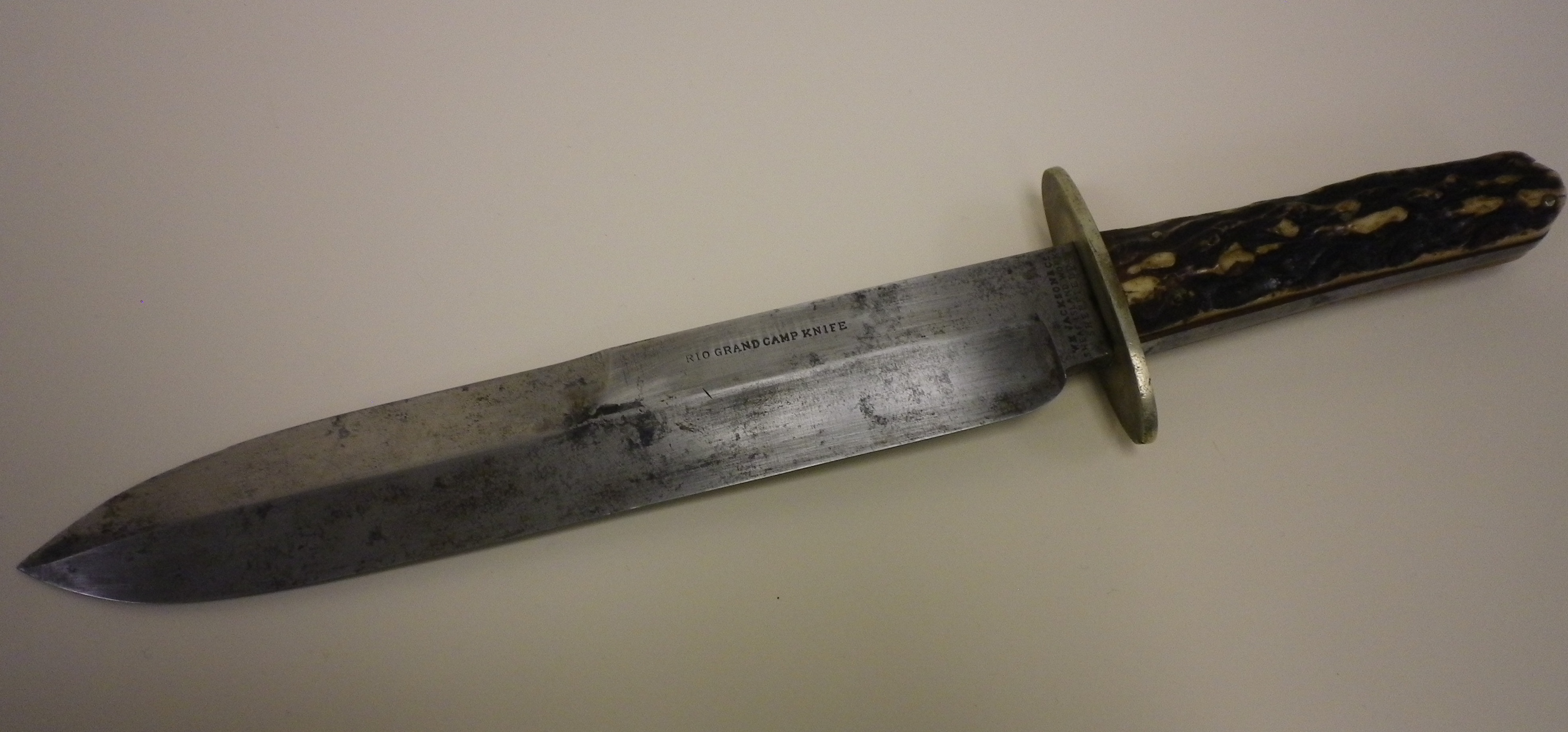
And yet, the very next sentence in the post is, “But because the evidence is so messy, as Taylor notes, we aren’t prepared to make a definitive declaration.” I have a couple of problems with this sentence. First of all, as I have already stated, the evidence that is “messy” is not historical but curatorial. The accession records regarding the artifacts are inherently messy due to the manner in which they were stored for over 70 years. That is why it is so crucial to take the time to return to the historical evidence for these artifacts. While my article addresses the messy curatorial records, all of my conclusions are based on the historical records, which are clear. John Wilkes Booth stabbed Major Rathbone with a Rio Grande Camp Knife that bore a small spot of rust that looked like blood on the blade.

The Liberty knife (shown below), currently on display at Ford’s Theatre, does not fit that description. The Rio Grande Camp knife, known as FOTH 3218, currently in storage in the Museum Resource Center in Landover, does fit this description. While there is a bit of uncertainty regarding where the Liberty knife came from and its place in the trial exhibits, it is clear that it was not the knife Booth used to stab Rathbone.

Secondly, the claim that they “aren’t prepared to make a definitive declaration” is, in itself, a declaration. It’s a declaration that when faced with choosing between incomplete accession and cataloging records or compelling historical evidence, Ford’s Theatre will choose the former if it keeps the status quo. In the course of their post, Ford’s Theatre does not provide any historical evidence to support the Liberty knife as being the one that Booth used. Other than some newspaper accounts from the 1900s from journalists who went to see the artifacts in storage and were told inaccurate information by the clerks in the JAG office, I have never come across any historical evidence that attributes the Liberty knife to Booth. Without true historical evidence, how can Ford’s Theatre only commit that at some unspecified “future” the “on-site and online labels at Ford’s Theatre will reflect the ambiguity of the knives”? Even their claim that “Perhaps a future display could, like Taylor’s post and ours suggest, showcase both knives and lay out evidence to show our visitors how ambiguous historical evidence often is,” creates a false equivalency between Ford’s messy curatorial records and actual historical evidence from the period.

The historical evidence in support of FOTH 3218 as being the knife John Wilkes Booth used on the night of Lincoln’s assassination and as the one that was recovered from his body at the Garrett farm is not ambiguous. Messy accession and cataloging records should not supersede historical evidence at an institution committed to educating the public on the life and legacy of Abraham Lincoln. While John Wilkes Booth’s knife may not rise to the same level of other artifacts like Lincoln’s stovepipe hat, the weapons and possessions of the assassins tell a crucial story of Lincoln’s effect on his fellow man.

I know that the employees of the Ford’s Theatre NPS and the Ford’s Theatre Society are good people. I have worked with them on projects and on Booth tours. I follow many of them on Twitter and know that they are professionals who value education and public history. I appreciate greatly that Ford’s Theatre has chosen to address this part of their collection in such a public way. As David and Janet state in their closing line, “transparency about artifacts like these knives can lead to discussions about what makes visitor experiences in museums ‘real’ and how the history of objects and places affect us in the present day.” Ford’s is to be commended for their professionalism and their ongoing work in acknowledging the complications in their own collection. But acknowledgement without subsequent action is meaningless. It’s the “thoughts and prayers” of the museum world.

To my friends at Ford’s Theatre NPS and the Ford’s Theatre Society: The wrong artifact is on display and has been for many years. With the historical evidence solely in favor of FOTH 3218 and your cataloging records expectantly inconclusive, the correct remedy is to remove the Liberty knife from display and replace it with FOTH 3218. By doing so, you will show your visitors that Ford’s Theatre is an institution that actively improves its exhibits based on sound research, is open about the history of its collection and the uncertainties that exist, and demonstrates a commitment to using historical evidence to guide your public outreach.

In September, I will be taking my next busload of guests to Ford’s Theatre for the John Wilkes Booth escape route tour. My sincerest hope is that I will finally be able to point to FOTH 3218 in the case and rave about the wonderful professionals at Ford’s Theatre who acknowledged an error in their collection and used historical evidence to rectify it. The research has been done, and the error has been acknowledged. All that’s left to do now is to fix it.


For those who are interested, what follows is the fairly long series of tweets I wrote shortly after I read the Ford’s Theatre blog post in May. I have expressed many of the same sentiments in what I wrote above, but I thought I’d include my original thoughts as well.


Categories: History, News | Tags: , , , , , | 9 Comments

A New Photograph of Dr. Mudd?

I’ve always been a big proponent of digitization efforts on the part of institutions. Scanning and putting materials online allows researchers to connect with items that they would not know existed otherwise. It was through a digital collection that I noticed that there was a third mug shot photograph of conspirator Michael O’Laughlen when most texts and historians were only aware of two. At the time, I had believed that discovery of a new photograph of a Lincoln conspirator had been a once in a lifetime find. Yet last night while doing some minor research regarding Fort Jefferson, the island prison of the Lincoln assassination conspirators, I believe I stumbled across another historic find and, once again, digitization efforts have made it possible.

In April of this year, I fulfilled my dream of visiting and camping at Fort Jefferson in the Dry Tortugas. I took almost 2500 pictures while on the island and yesterday I went through some of them. Some of the pictures I took were attempts to recreate older photos of the Fort that I had seen in books. The goal was to match the old photo as close as I could and use them for side by side shots demonstrating the “Then and Now” of Fort Jefferson. Last night I was looking for high resolution copies of some of the older photographs in order to provide the best visuals I could. While searching for better quality images of National Park Service photographs, I came across a digitization site called the Open Parks Network.

Operating in partnership with the NPS and Clemson University, Open Parks Network is digitizing some of the National Park Service’s holdings of images and documents. In this manner they have digitized some of the collection of Dry Tortugas National Park. I was grateful to find that the Open Parks Network had several of the older images I needed and that they were available to download for free and were in the public domain.

Then, as I was scrolling through the items from the Dry Tortugas collection, I found this curious entry.

Though titled, “Doctor Mudd at fort entrance, Fort Jefferson” it had the date of 1870 attached to it. Given that Dr. Mudd was pardoned and left Fort Jefferson in 1869, I was suspicious. I just assumed that some archivist or digitizer made a mistake somewhere, but I clicked on the entry anyway. This is the image I was presented with.

I, of course, immediately zoomed in on the figure sitting on the railing near the moat.

Now I receive a lot of pictures from people claiming to have a previously unknown photograph of John Wilkes Booth. At times I have been sent a prospective Lewis Powell or George Atzerodt to consider. I’ve also been given a couple of Dr. Mudds to peruse. Yet, despite the many folks who believe their mustachioed gentleman is John Wilkes Booth, I have never been presented with a new image of the conspirators (aside from the O’Laughlen one) that I felt was the real McCoy. Some have trouble accepting my opinion on their images and try to convince me that I’m mistaken. They provide “evidence” which “proves” their image is who they say it is. Some have even taken their images to so-called photography experts who have used scientific means to prove their image is genuine. But such claims have never changed my mind. All of the commissioned “proof” in the world can’t make my eyes see something that it doesn’t. I can speak about details in Booth’s face but, in the end, it just comes down to the basic question, “Does it look right”? Thus far, they never have. So I think it’s safe to say that I have a pretty discriminating eye when it comes to images of Booth and his conspirators.

It is for this reason that I am amazed to find myself saying that this image of Dr. Mudd looks right to me. I fully admit that the quality of the image is not great. The main subject is sitting farther back from the camera than would be optimal. His face is only partially turned toward the camera which impedes identification. And the notation of 1870 needs rectifying. Yet despite all of that, when I look at the gentleman in the picture I see Dr. Mudd. I see his mustache and his goatee (though trimmed a bit closer than in his other pictures). I see his slender build, made even more slender from the conditions of his imprisonment. And even though they are little more than pixels in this low quality image, I can still make out the light and aloof eyes that identify Dr. Mudd to me. In addition the pants and shoes the man is wearing closely, if not exactly, match the attire Dr. Mudd was photographed in while he was working in the carpentry shop at Fort Jefferson.

Let’s address the other aspects of the photo. After the uncanny resemblance to Dr. Mudd, there were a few things I noticed right off the bat. First, this is clearly a photo of a photo. At some point the original photo appears to have been tacked up on a wall or board somewhere and someone took a camera and photographed it. You can still see the tacks that held up the image in the corners.

Second, the original image looks like half of a stereoview photograph.  Stereoview or stereoscopic images are taken with a camera that has two lenses spaced beside each other. The camera captures two slightly different angles of the same subject. When viewed with a stereoviewer a three dimension image can be seen. This type of photography was popular in the Civil War era and beyond and can still be seen in the children’s toy, Viewmaster.  The closely cut right hand side of the image and the rounded top seem to imply that this image was taken with one side of a stereoscopic camera.

A stereoview card of Ford’s Theatre

Third, this photograph is old. When it comes to pictures of Fort Jefferson there are only a few that come from the Civil War and Reconstruction eras. A large percent of the archived image of Fort Jefferson are from the 1930s onward. There are a few that were taken in the late 1890s and early 1900s when the Spanish American War made Fort Jefferson an important and useful fort again. Photography had also advanced quite a bit at that time which made photography easier, cheaper and more popular among amateurs. The presence of Union soldiers behind the Dr. Mudd figure and the good condition of the Fort itself show that this image most certainly could have been taken during Dr. Mudd’s imprisonment.

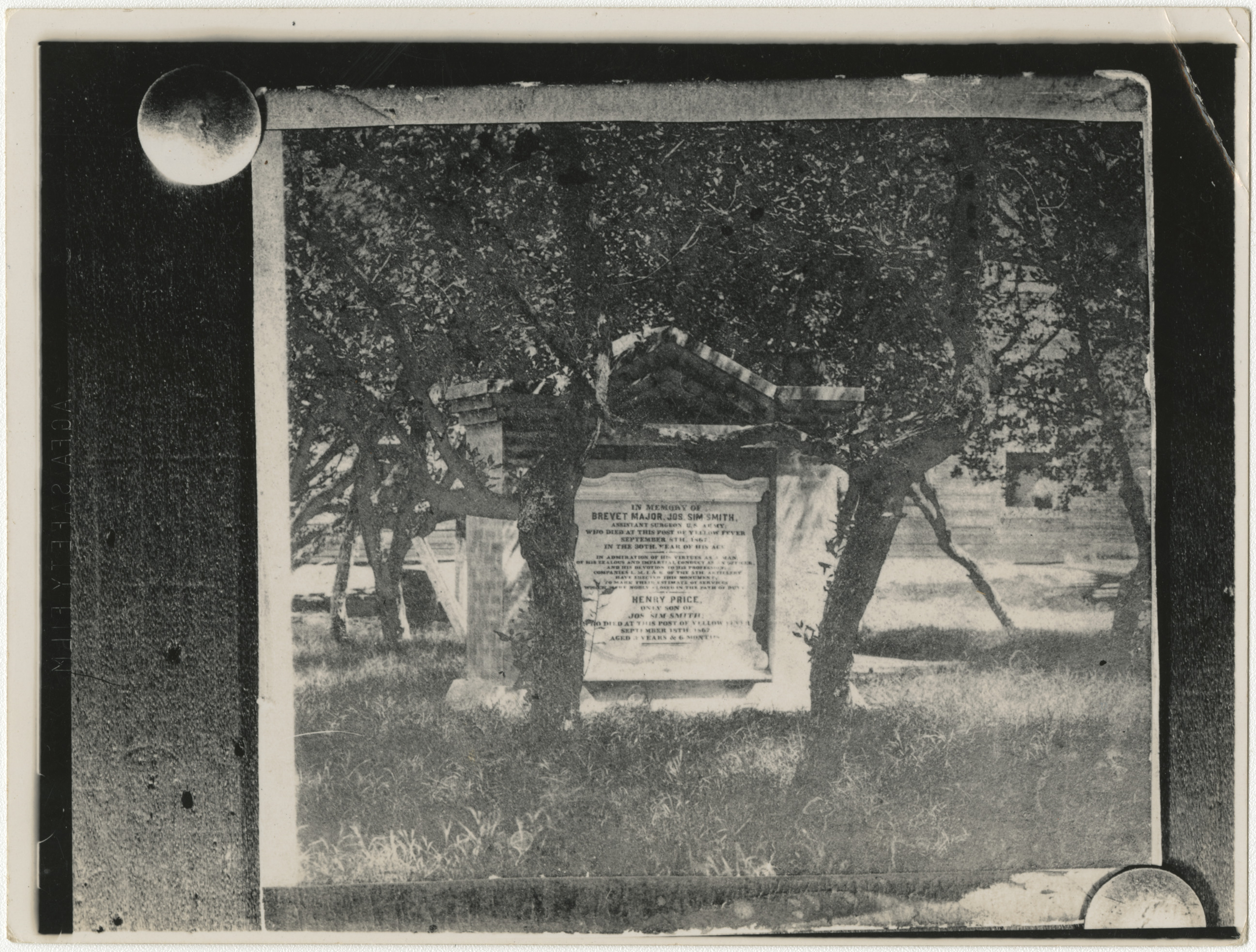
After going through all of the images in the Dry Tortugas collection that the Open Parks Network has digitized, I discovered that this was not the only image that shares the unique features mentioned above. I found eight other images of scenes around the Fort that are photographs of photographs and similarly appear to be parts of stereoview cards. You can view them here (1), here (2), here (3), here (4), here (5), here (6), here (7) and here (8). All the images show the Fort in the state of construction that it was in during the conspirators’ time there. One of the images is of the memorial for Dr. Joseph Sim Smith, the post doctor who died in the Yellow Fever epidemic of 1867 that Dr. Mudd took over for.

If this image was taken at the same time as the Dr. Mudd one, which would seem likely, this can help us date that picture to after 1867.

The back notation of 1870 is a discrepancy in all of this. As far as we know, Dr. Mudd never returned to Fort Jefferson after his pardon in 1869 and, even if he did, it would seem extremely unlikely he would return so soon after his release. Some of the images that look similar to the Dr. Mudd one also bear the notation 1870, but others from the same series do not. It is my opinion that those notations of 1870 cannot be taken as accurate. As stated before, the images are clearly pictures of pictures so we do not know what writing, if any, was on the originals. The fact that none of the 9 images in the series have any other notation on the back shows that not a lot of detail was given to recording precise information about what they show and when. Perhaps 1870 was an approximate (or circa) guess by a well-meaning Park Service employee who discovered the image years later.

To me, despite its problems, this photograph checks all the boxes. The original image was taken using period appropriate photography equipment. The condition of the Fort matches the period of time when the Lincoln conspirators were imprisoned there. The Dr. Mudd figure has the same facial hair and body type as the doctor and his clothes closely match an outfit Mudd was known to have had with him on the fort. Lastly, the specific location of this photograph at the fort makes sense for Dr. Mudd. For a large part of his imprisonment at Fort Jefferson, Mudd was housed in the cell right above the Sally Port entrance. The three vertical windows on the second floor of this image are the windows of Dr. Mudd’s cell. So this image captures not only a figure who looks like Dr. Mudd, but the location of his imprisonment, which seems purposefully planned.

The cell that Dr. Mudd, Samuel Arnold, Michael O’Laughlen and Edman Spangler shared was located above the sally port entrance to Fort Jefferson and is marked by the three vertical windows.

Still, all of this evidence only proves that it is possible for this image to be of Dr. Mudd. In the end, we must all draw our own conclusions.

Personally, I believe that this is an unpublished and previously unknown image of Lincoln assassination conspirator Dr. Samuel A. Mudd. I’m very excited that digitization has allowed me to find this image and share it with all of you. I hope that it can be used to further our understanding of the life of Dr. Mudd and his time at Fort Jefferson.


EDIT: A couple of comments have been made expressing doubt that the figure is Dr. Mudd due to the fine nature of the subject’s clothing. On the face of it, it is hard to believe that a man who was imprisoned on a isolated island for 3 years and 9 months could look so immaculately dressed. The following is the comment I made in reply to that conclusion which shows why I think it actually makes perfect sense for Dr. Mudd to look so well presented:

“Please thank Rick Smith for his analysis of the clothing. He is a real expert on both civilian and soldier attire so I’m glad to see that this image matches the time period.

It appears that the only reason Rick is suspicious that the image is not Dr. Mudd is due to the cleanliness and fine quality of his outfit. You also seemed surprised by the niceness of his attire. However, we must remember that Dr. Mudd was furnished with clothes by Mrs. Mudd while he was in prison. He used one of his fine suit of clothes when he attempted to make his escape in 1865. Here’s a quote from the report about Mudd’s escape attempt which mentions Dr. Mudd’s clothing:

“Since he has been in confinement here, he has been employed in the Prison Hospital, as Nurse and Acting Steward. When he came here, it was noticed that he immediately adopted the same clothing as worn by other prisoners. Although he had good clothes of his own. On the day he attempted to escape he put on one of the suits he brought with him and in some way got outside the Fort to the Wharf…”

Shortly after his escape attempt, Dr. Mudd wrote home asking his wife to provide him (and his cell mates) with additional clothing. On October 5, 1865, Mudd wrote, “The only article of clothing I need is shirts. The Government furnishes flannel shirts, which I find very pleasant in damp weather, but very disagreeable and warm in dry sunshine. If the friends of Arnold and O’Laughlin should send a box of clothing to them, you may put in a couple of brown linen, or check linen, shirts and a couple pairs cotton drawers. You may not bother yourself to this extent if you anticipate an early release. My clothing is sufficient to come home in.”

At least one shipment of clothes arrived by December as he wrote then to his brother-in-law Jeremiah Dyer that he had received a shipment, “containing a quantity of fine clothes”. A similar letter written to Mrs. Mudd at the time also commented on the clothing shipment stating, “The clothing is finer than I need, besides I am not situated to wear them.

These accounts establish that while Dr. Mudd did possess some fine pieces of clothing while at Fort Jefferson, during his day to day prison life he generally wore the normal garb provided by the government. However, I would imagine that getting your photograph taken would be the one event that would lead you to put on your finest clothing. And, if we speculate that this image might have been taken shortly before Dr. Mudd left Fort Jefferson forever, it would make sense he would change into his finest suit for the journey home.”


EDIT #2: I neglected to mention that this picture of Dr. Mudd wasn’t the only treasure in the Dry Tortugas collection. Also included in the digitized images is this picture of the door to the dungeon that held Dr. Mudd and the other conspirators after Dr. Mudd’s escape attempt. In his later memoirs Samuel Arnold mentioned that the door was headed with the inscription “Whoso entereth here leaveth all hope behind.” From this image of the original door we can see that inscription was a bit more succinct than Arnold recalled but just as foreboding:

Categories: History, News | Tags: , , , | 37 Comments

One Million!

On August 13, 2018 at around 10:15 pm, BoothieBarn officially reached over one million views!

I announced similar milestone moments when this blog made it to 10,000 and 100,000 views. I was happy then and I’m ecstatic now that this blog continues to grow at such an amazing pace.

While the vast majority of the visitors to this site come from the United States, this blog has been able to make a splash internationally as well. Here’s a map showing all the places that have visited BoothieBarn.com since its founding in 2012.

Granted, the map isn’t completely filled up. Clearly I have to do more outreach in places like Chad, Greenland, Lesotho, Tajikistan, Svalbard, the Solomon Islands, Djibouti, and others. Still, I’m very pleased this site has found such a global audience especially since it deals with a uniquely American story.

Here are some more numbers to mark this milestone:

453 = total number of posts on this blog (so far)

629 = average words per post in 2012

756 = total number of blog followers

2,354 = age of the blog in days

3,119 = average words per post in 2018

6,072 = highest number of views in a single day. It occurred on April 14, 2015, the 150th anniversary of Lincoln’s assassination

15,633 = average views per month in 2017

401,904 = total number of words contained in all the blog posts here on BoothieBarn

I’d just like to thank you, the readers, for all of your support and community over these past six years. I have been blown away by the level of generosity and am so very appreciative of it. With this level of continued support, I’m hoping to bring even more exciting things to BoothieBarn in the future. With one million views there’s no stopping us.

Thank you all for reading, commenting, and giving to BoothieBarn.

Sincerely,

Dave Taylor

Categories: News | Tags: , , | 13 Comments

Booth’s Richard III on Stage

Two years ago, Eric Colleary, Curator of Theater and Performing Arts at the University of Texas’ Harry Ransom Center, collaborated with Beth Burns of the Austin based theater company, Hidden Room Theatre, to conduct a staged reading of Richard III based on a promptbook in the collection of the Ransom Center that was once owned and annotated by John Wilkes Booth. The staged reading (which can be viewed by clicking this link) was a great success. Since that time Eric, Beth, and the Hidden Room Theatre company have continued their collaboration and have managed to turn Booth’s promptbook into a full production that will soon take the stage.

For those of you who live in the Austin, Texas area, this is a wonderful opportunity to essentially go back in time and experience live theater as it was in the 1860s.  Over the past few months, the entire creative team behind the production has conducted in-depth research on theater history and dramatic techniques in order to make this show as accurate to the period as possible. A few days ago, Eric and Beth took part in a fascinating discussion / question and answer session regarding how their collaboration came about and the impressive work being done to bring it to fruition.

As you can see, despite its title, the upcoming production of Booth’s Richard III is far more than just a re-enactment of John Wilkes Booth’s edits to Shakespeare’s (really Cibber’s) work. Instead, it is a rare look into the type of acting and production that was commonplace in the 1800s but is almost completely lost today. John Wilkes Booth’s promptbook is a time capsule of theater history and it is a rare event to see such a piece of history brought back to life. The Hidden Room Theatre in collaboration with the Harry Ransom Center will be performing Richard III at Austin’s Scottish Rite Theater for only eight performances starting on Friday, June 15 and running through Saturday, June 30. For more information, and to purchase tickets, please click this link or the image below:

For those of you who, like me, are no where near Austin, Beth Burns mentioned in the question and answer session that she is hoping one of the shows will be recorded and later made available online. While I am grateful for that, I know a recorded show will not be able to replace the total immersive effect of witnessing it firsthand. Beth also mentioned her hope that this show may live on in the future as an educational tool for college and university theater companies that wish to re-enact theater history. So there is chance Booth’s Richard III could be do a bit of touring if interest is high. Though I know it is a bit of a pipe dream, I, for one, would love to see this show produced by the Ford’s Theatre Society on their historic stage.

In closing, I would ask that any of you who are able to get to Austin during the show’s run and see Booth’s Richard III to please report back to those of us who were not so fortunate. The comment section will definitely be open. I’d love to hear your thoughts on experiencing 1860s theater just as people like Mr. Lincoln would have.

Categories: History, News | Tags: , , , , , , | 5 Comments

An Assassination Cane

An Interesting Artifact

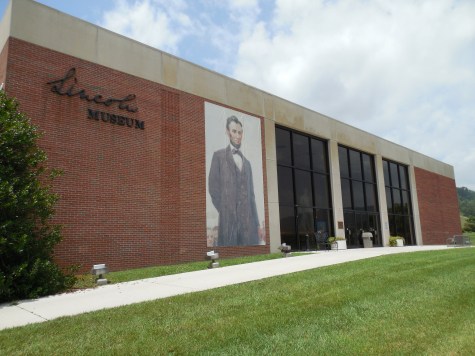
The collection of the Abraham Lincoln Library and Museum in Harrogate, Tennessee contains many fascinating artifacts relating to the 16th President. Among their collections is a cupboard made by Abraham’s father, Thomas Lincoln; a china set owned by the Lincolns in their Springfield home; a lock of Willie Lincoln’s hair taken from his head after his death; and a massive archive of art, books, manuscripts, photographs, and ephemera relating to Lincoln. One of the most famous artifacts in the museum, however, is an ebony cane topped with a sterling silver knob handle which bears the inscription “A. Lincoln”.
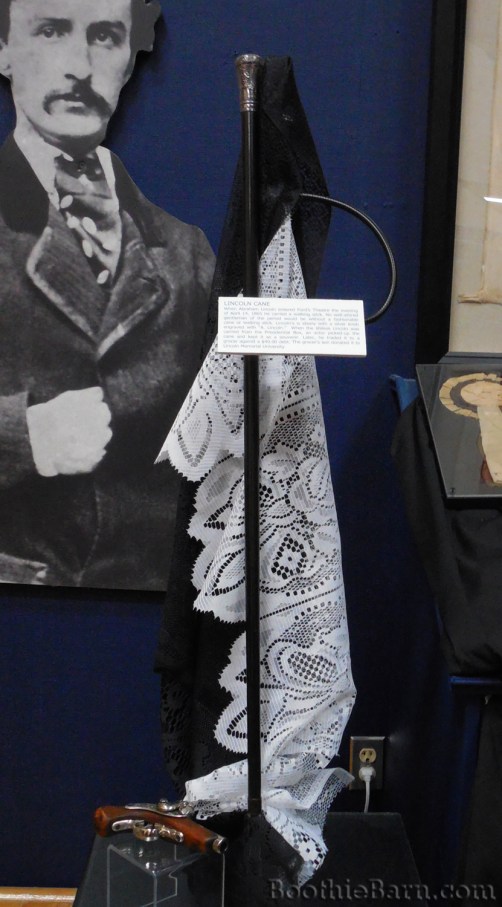
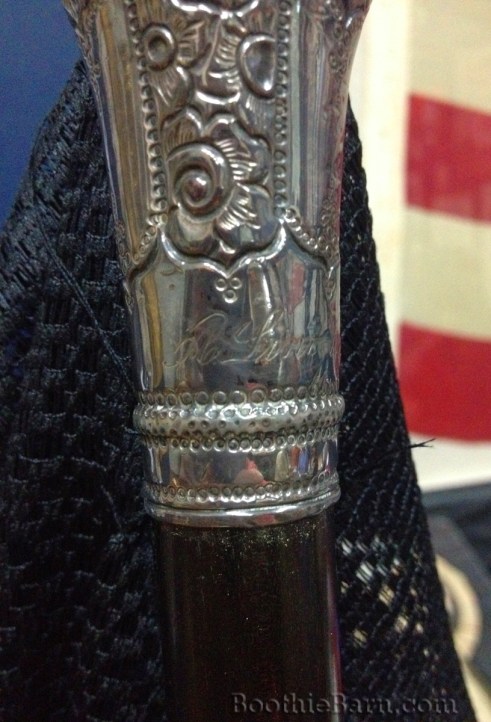
Compared to modern canes which are mainly used as functional tools to assist in walking and balance, this 35.5 inch long cane owned by Lincoln was solely a fashion piece. Short canes, or walking sticks, were very common accessories for men during the Victorian era. Many men carried canes as evidence of class and elaborate canes were common affectations designed only to impress or convey prestige. For example, Lincoln’s future assassin, John Wilkes Booth, was often photographed with walking sticks. Since Booth would often give out these photographs to friends and admirers, the cane helped to subtlety reinforce his self-image as a member of high society.

While Lincoln was not known to crave prestige, canes were also often presented as gifts. Visiting dignitaries often received decorative canes as tokens of esteem. There are many accounts of Lincoln being presented with canes during his career as a lawyer and politician.

The question remains then, why is the Lincoln cane at the ALLM one of the highlights of the museum’s collection? What sets it apart from any number of canes that are said to have been owned or presented to Lincoln? Well, this cane is said to have been with Abraham Lincoln when he was assassinated at Ford’s Theatre on April 14, 1865.

The Provenance

The Lincoln cane arrived in the collection of the ALLM on September 10, 1929. It was given to the museum by a former resident of Troy, New York named Joseph Mayhew. In his donation of the cane, Mr. Mayhew included two notarized letters conveying the history of the cane. One letter was written by Mr. Mayhew and the other was by his sister, Emma Cuenin nee Mayhew. The following is from Emma’s affidavit:

“In 1875 my father, Stephen Mayhew, was the proprietor of a grocery and meat market at the corner of Fifth and Ferry Streets, Troy, N.Y. After school I would often wait on the customers who came into the store. This was when I was about 11 years old.

I remember a man and his wife named Phelps trading at the store. Phelps was an actor. He would purchase groceries and meats and then charge them. When his bill amounted to about $40.00 and he was unable to pay he offered father Abraham Lincoln’s cane in lieu of the bill. Father accepted the cane as payment in full.

Phelps related how he became possessor of Abraham Lincoln’s cane, saying that he, Phelps, was an actor having a minor part in the play at Ford’s Theatre in Washington, D.C. on the night President Lincoln was assassinated. In the excitement that followed Lincoln’s being shot Phelps entered the President’s box and seeing the cane in the corner where Lincoln left it he picked it up and kept it as a memento.

Father often carried the cane, making no secret that it at one time belonged to President Lincoln.”

Stephen Mayhew continued to own and display Lincoln’s cane to his friends and neighbors. According to the affidavits, the display of the cane caused jealously among a certain Troy resident who sought to claim the cane as his own.

“Some litigation was started concerning the cane, as a man named Kisselberg though he would like to gain possession of it. My father’s interests in the matter were defended by a lawyer named Palmer. After spending some money and time in the courts Palmer caused the cane to be sold at Sheriff’s sale in order that a clear title could be obtained. It was bought in for my father.

During the litigation a letter was written to Lincoln’s son concerning the cane, in which it was explained how father became possessor of it. Lincoln’s son replied, stating that as long as father had obtained it through an honest debt he was entitled to it.”

Joseph Mayhew’s affidavit contains a bit more detail regarding the legal battle concerning the cane, but fails to mention the detail regarding Robert Todd Lincoln’s involvement in the case:

“At a later date, when it became generally known that my father had the cane in his possession, it was seized by the local authorities. It was kept for a time by the Sheriff of Rensselear County and also in a jeweler’s safe. This jeweler’s name was Kisselberg and his place of business was on River Street in Troy, N.Y.

My father took legal action to recover the cane. He engaged a lawyer, named Palmer. Palmer caused the cane to be sold at Sheriff’s sale and bought it in for my father so that my father would have a clear title to it. The litigation cost my father between eighteen hundred ($1800.00) and two thousand ($2000.00) dollars.”

After recovering his property, Stephen Mayhew continued to own Lincoln’s cane. In 1914, Stephen gave the cane to Joseph. The elder Mayhew died in 1917.
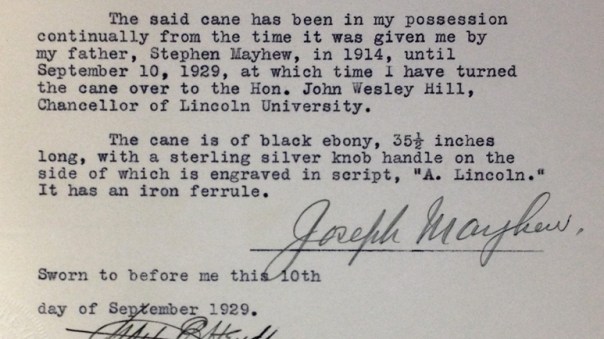
With these two pieces of evidence in hand and a priceless, highly fought over, silent witness in their collection, the assassination cane has been a centerpiece of the ALLM’s collection for years.

Recently, I have been looking through my files relating to my own visit to the ALLM back in 2014. Though I was only able to spend a brief period of time researching in their archives, I was amazed at the breadth of their collection. I previously did a blog post about a letter owned by conspirator Samuel Arnold that is in the museum’s collection. In revisiting my files, I decided it would be worthwhile to publish a quick post about the Lincoln cane with the intention of bringing about some more awareness to this unique artifact. After a bit of research into this cane and the provenance behind it however, I have come to an unexpected conclusion.  I do not believe this cane was at Ford’s Theatre on April 14, 1865.

The Research

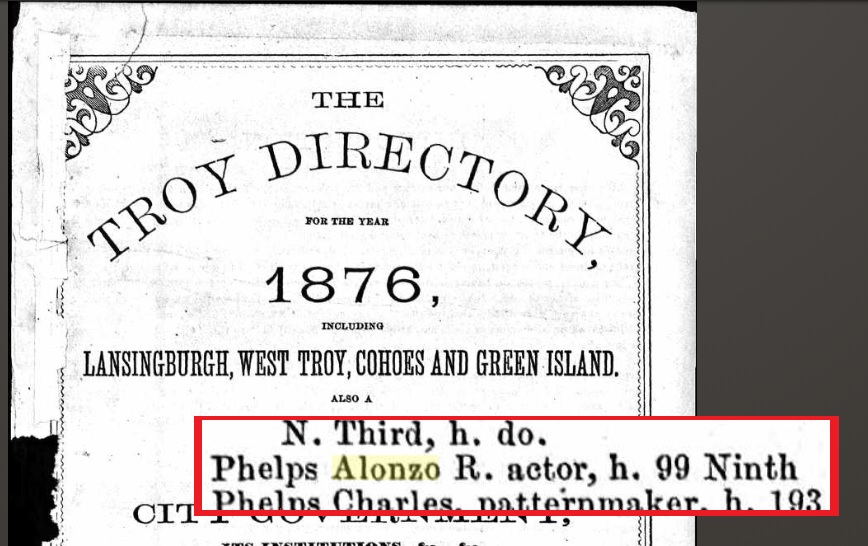
Near the end of Joseph Mayhew’s affidavit he mentions that when his father finally presented the cane to him, it was also accompanied by, “a copy of ‘The Trojan Observer,’ a newspaper dated Monday, January 26, 1880, and published at Troy, N.Y. This newspaper contains an account with reference to the Lincoln cane.” It turns out that the seizure and legal battle concerning the cane was a newsworthy event. The local Troy papers talked about the recovery of the cane and how it would, undoubtedly, be returned to Robert Todd Lincoln. The story of Lincoln’s cane was reprinted across the country. The newspapers, likely getting their information from Stephen Mayhew, reported that the man who recovered the cane was named A. R. Phelps, the stage name of actor Alonzo Raymond Phelps. This name concurs with the Mayhew children’s statements years later. Also helpful to the Mayhews’ statements is the fact that Alonzo Phelps, for a brief period of time in the mid 1870s, did reside in Troy, NY as evidenced by his inclusion in a Troy city directory.

From this point onward, however, the evidence against the cane’s provenance begins to add up. By consulting Thomas Bogar’s impeccably researched book, Backstage at the Lincoln Assassination, one finds that Alonzo Phelps did not perform in Our American Cousin at Ford’s Theatre that night. He was not part of the Ford’s stock company and was not a member of Laura Keene’s visiting troupe. The idea that Phelps was acting at Ford’s Theatre on the night of Lincoln’s death is not supported by the evidence.

The question then becomes, if Phelps did not perform at Ford’s Theatre that night, was it possible for him to be there in the role of an audience member instead? Unfortunately, that does not appear to be likely.

The entry for A. R. Phelps in the 1870 edition of Brown’s History of the American Stage states that, “in 1854 [Phelps] sailed for California, in company with the Denin Sisters, where he opened in ‘Love’s Sacrifice,’ on April 10 of that year. He remained on that coast, playing through California, Oregon, Nevada, etc., until 1866, when he took the overland trip to New York.” Further research demonstrates Phelps’ long residence in California where he worked as both an actor and a theater manager. In 1856, for example, A. R. Phelps and fellow actor Junius Brutus Booth, Jr. leased the Union Theatre in San Francisco. Among the actors the business partners brought in that season was June’s younger brother, Edwin Booth, who was just beginning his starring theatrical career.
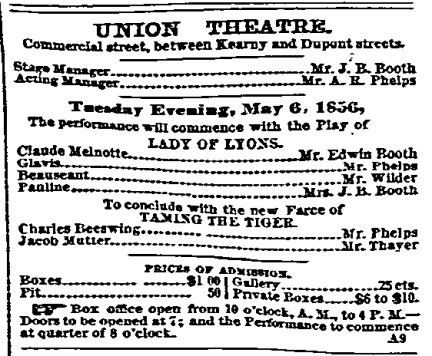
Phelps stayed in California during the course of the Civil War and the evidence indicates that Phelps was likely still in California when Lincoln’s assassination occurred. In addition to the entry in Brown’s History of the American Stage which states that Phelps did not return east until 1866, we also find A. R. Phelps’ name in the 1864 and 1865 city directories for San Francisco. Newspaper advertisements also indicate that he was performing at the Metropolitan Theatre in San Francisco as late as March of 1865. With the journey between San Francisco and New York lasting about a month in those days, it is extremely unlikely Phelps was on the correct coast when Lincoln was assassinated. The bulk of the evidence points to him still being in California when Lincoln was killed.

With it having been established that Phelps was not performing at, or likely even near, Ford’s Theatre on April 14, 1865, the provenance of the “assassination” cane is dealt a significant blow. What is interesting, however, is that this is not the first time the authenticity of the cane has been questioned. In fact, the true history of the cane may have very well been established back in 1880 when the initial reports went out about its recovery from Stephen Mayhew. An article, originally published by the Troy Evening Standard and reprinted by other newspapers across the country, gives a different history of where this cane came from:

“Many years ago, when President Lincoln was a poor lawyer in Springfield, Illinois, he carried about with him a plain ebony cane, with a silver ferrule, marked ‘A. Lincoln.’ The cane may have cost $5.

When Lincoln found himself in Washington he still carried the old ebony, being loath to part with his old friend. One day a delegation of friends waited upon and presented him with an elegant modern cane with an elaborately engraved gold handle. He accepted the gift more to accommodate his friends than to please himself. The old cane was given to a trusty valet who often frequented a prominent restaurant in Washington, where nightly assembled many professional men, actors, lawyers and musicians. Among the number was A. R. Phelps, the first manager of the Grand Central Theatre. Hard pushed for money, the valet pawned the cane with the proprietor of the restaurant, and from the latter it passed into the hands of Phelps. In his vocation as a theatrical manager and actor Phelps struck Troy some three or four years ago, and assumed the management of the Grand Central Theatre for Thomas Miller, the proprietor. Finally adversity overtook him. Misfortune fell heavily upon him, and he with his wife and six children was left in the direst distress, and he pawned the cane to a down-town citizen for $25. He then left town and has not since been seen here…”

If accurate, this article paints a very different story as to the circumstances surrounding Alonzo Phelps’ attainment of Lincoln’s cane. Rather than having retrieved the cane from the President’s box at Ford’s Theatre, Phelps is said to have received the cane as a gift from a restaurant proprietor in Washington on an undetermined date. In addition, the article claims that the cane was one purchased by Lincoln himself while living in Springfield and given away by the living Lincoln when he received a different one in Washington. While the article does not provide any sources for the history behind Lincoln’s cane, it is clear that at least some research was undertaken in its reporting. The article gives the circumstances of Phelps’ residence in Troy in the mid-1870s stating that he was the theatrical manager of the Grand Central Theatre. This appears to be backed up by a January 20, 1877 article in the New York Clipper which announced that Phelps was to receive a complimentary benefit at the Grand Central Theatre.

However, there are some small discrepancies in the article as well, such as the amount Phelps owed to Mayhew ($25 vs $40) and the number of children Phelps had at the time (6 vs 5). In addition, the article goes on to recount the involvement of Robert Todd Lincoln in attempting to recover the cane:

“Robert T. Lincoln, son of the dead President, learning that the cane was in this city, corresponded with Chief Markham with a view of obtaining possession of it. Yesterday morning Markham received track of its whereabouts and served a search warrant upon the proprietor of a meat market at the corner of Federal and North Fourth streets. There the cane was recovered. In the police court yesterday afternoon, before Justice Donohue, the matter of the disposition of the cane was taken up, and postponed for two weeks. It is supposed Phelps gave the cane as security for the meat consumed by his family.”

According to this article, Robert Todd Lincoln was taking an active role in the recovery of his father’s cane. This is in contrast to the Mayhews’ statements which claim the seizure of the cane was brought upon by a jealous and covetous neighbor and that it was a letter by Robert Lincoln which allowed them to retrieve the artifact. After some further digging, however, it appears that neither set of these circumstances are true.
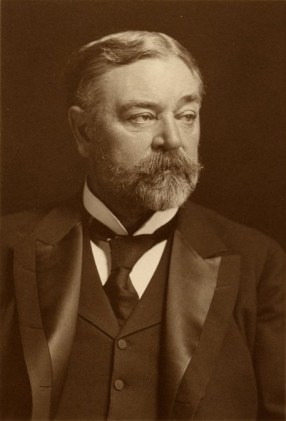
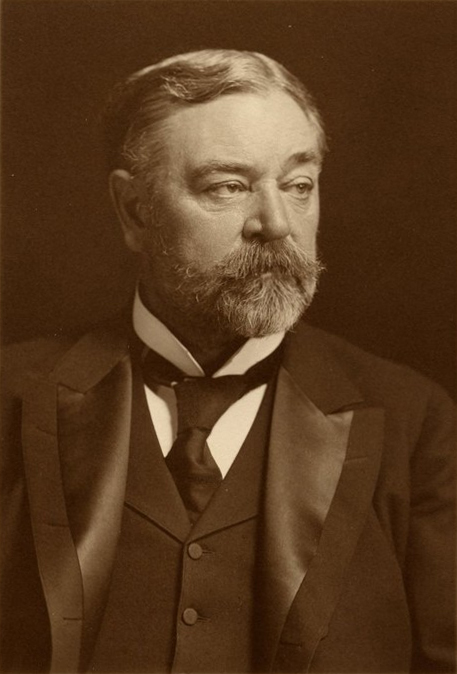
Between 1903 and 1926, Robert Todd Lincoln maintained a correspondence with a former journalist named Isaac Markens of New York. Markens was studying Abraham Lincoln and wrote many letters to Robert asking him questions about his father. Markens published a few pamphlets on Abraham Lincoln and was said to have been working on a full biography of the President that was never completed. In the 1960s, the 82 letters written by Robert Lincoln in answer to Isaac Markens’ questions were donated to the Chicago Historical Society. In 1968, the CHS published the bulk of the letters as a book titled, A Portrait of Abraham Lincoln in the Letters by his Oldest Son. While the book does not contain the original letters Markens sent to Robert, it seems clear that at one point Markens came across one of the 1880 newspaper stories regarding the assassination cane and decided to ask Robert about it. The following is part of a letter Robert Lincoln sent to Markens on January 25, 1918 in which he discusses the cane:

“The story about the cane is queer. I think I should have remembered any such events as are described in it if they had occurred, and I do not. I do not think there is a word of truth in the story. I do not own any cane ever possessed by my father, and I never took any interest in any such cane. He never used a cane himself at all. At various times in his life there were presented to him canes. I remember such things, but he never cared anything about them, and gave them no attention. I think it is true that after his death my mother gave away to servants some canes which had come to him in Washington, for which none of us had any regard whatever. Such canes may be in existence, but they possess no real interest in connection with my father.

Very sincerely yours,

Robert T. Lincoln”

In this letter, Robert Lincoln makes it clear that he never had any involvement regarding a cane belonging to his father. This is in contrast to both the newspaper articles and the affidavits from the Mayhews. Nevertheless, Robert Todd Lincoln is a more reliable source on these matters than the other two and his statement must carry the most weight.

Conclusions

We are left with an “assassination” cane whose provenance is full of holes and half-truths. Each piece of the story can be broken down into categories of likely and unlikely.

It seems likely that Alonzo Phelps gave Stephen Mayhew a cane in exchange for a debt the actor owed the grocer. This piece of the story is consistent across all sources and there is evidence that places Phelps in Troy during the applicable time period.

It seems highly unlikely that Alonzo Phelps retrieved the cane from the President’s box at Ford’s Theatre on the night of Lincoln’s assassination. Evidence proves that Phelps was not performing at Ford’s Theatre in direct contradiction to the claims of the Mayhew family. Given Phelps’ established residence in California up until March of 1865, it seems incredibly unlikely that he was even in Washington, D.C. that fateful night.

It is unlikely that this cane was even carried by Abraham Lincoln to Ford’s Theatre on April 14th. For this point we have two pieces of evidence. The first, and admittedly weaker, piece of evidence is Robert Lincoln’s assertion that his father did not regularly carry a cane. Since Robert was not a witness to his father’s assassination, this piece alone does not prove much. However, there was an eyewitness to Lincoln’s assassination who publicly disputed the idea that Lincoln carried a cane with him that night. After the story of Lincoln’s cane was published across the country in 1880, a brief retort was published in Washington, D.C.’s the Evening Star. The article stated, “The story telegraphed from Troy about the recovery of a cane stolen from Mr. Lincoln’s box in the theater on the night of his assassination, is pronounced by Mr. Charles Forbes, who was an usher at the White House at the time, to be false, as Mr. Lincoln had no cane with him.” Though the brief article failed to mention it, Charles Forbes was far more than just a White House usher. Forbes had accompanied the Lincoln party to Ford’s Theatre that night and he was the one sitting outside of the President’s box when John Wilkes Booth approached. Booth presented Forbes with a calling card of some sort and Forbes allowed Booth entry into the box. Forbes is a very reliable witness in this matter and his claim that Lincoln had no cane with him that night is further evidence against the cane’s reported history.

Charles Forbes, the man who sat outside of Lincoln’s box and allowed John Wilkes Booth to enter. He denied Lincoln carried a cane that night.

After looking at all of the evidence, I do not believe the “assassination” cane held by the ALLM was ever with Lincoln at Ford’s Theatre on April 14, 1865. The most likely history of this cane, in my mind, was largely laid out by Robert Lincoln. We know that Abraham Lincoln was presented with many canes during his lifetime. The Lincoln Financial Foundation Collection contains an entire file folder of clippings relating to Lincoln canes. In addition to ones gifted to him, Lincoln himself was known to present canes as gifts. In 1864, for example, 19 silver headed ebony canes were purchased by the government and presented to the 19 governors of the Pueblo tribes in New Mexico. Each of these canes were engraved with the name of the governor and also the name of the President “A. Lincoln”. In his letter, Robert Lincoln mentions how, after his father’s death, Mary Lincoln gave away canes that had been presented to her husband. I believe a situation similar to this likely occurred with the cane at the ALLM. Somehow, perhaps from a restaurant owner in D.C. as the newspaper account stated, Alonzo Phelps acquired a cane that had, at one time, been owned or presented to Abraham Lincoln. Phelps cherished the cane until he was forced to part with it in Troy in the 1870s to Stephen Mayhew. Over time, either through outright lies or faulty memories, the story of the cane morphed, giving it a far more dramatic backstory. Lincoln Memorial University was more than happy to acquire this unique piece for their growing Lincoln collection and the two notarized statements from the Mayhew children were provenance enough in the 1920s. However, with the help of modern tools and resources, we can more deeply investigate the provenance behind artifacts like the Lincoln cane. While such investigations may lead to disappointing conclusions, like the debunking of a cherished Lincoln artifact, the process is an important part of evaluating and reevaluating what we think we know about the past.

References:
Abraham Lincoln Library and Museum (ALLM)
Provenance records for President Lincoln’s cane at the ALLM (80.0379)
Backstage at the Lincoln Assassination by Thomas Bogar
San Francisco Theatre Research: Theatre Buildings Vol. XV Part 1 edited by Lawrence Estevan
History of the American Stage (1870) by T. Allston Brown
San Francisco City Directory, Oct 1864 and Dec 1865 accessed via Ancestry.com
“Lincoln’s Cane” Troy Evening Standard article reprinted in the San Francisco Bulletin, February 2, 1880
A Portrait of Abraham Lincoln in Letters by his Oldest Son edited by Paul M. Angle with assistance of Richard G. Case
Charles Forbes Statement in the January, 23, 1880 edition of the Evening Star
Lincoln Financial Foundation Collection: Canes Owned by Lincoln file, Cane – Assassination file
“At the Griswold Opera-House, Troy, N.Y. …The veteran actor and manager A. R. Phelps, and wife, who recently resigned from the Griswold Opera-house, are to be the recipients of a complimentary benefit at the Grand Central.” – The New York Clipper January 20, 1877

Categories: History, News | Tags: , , , , , , | 14 Comments

Blog at WordPress.com.