History

The Other Reward Offers for John Wilkes Booth’s Capture By Steven G. Miller

 “It is hard to get them all in court”

The Other Reward Offers for John Wilkes Booth’s Capture

By Steven G. Miller

One of the most famous broadsides in American History was the one issued by the War Department on April 20, 1865, announcing a $100,000 reward for the capture of John Wilkes Booth, David Herold, and John H. Surratt. This poster is one of the best-known features of the assassination of President Lincoln, and is easily identifiable by people who know little of the details of Booth’s deed and its aftermath.

One of the least-known aspects of the Lincoln Assassination is the existence, specifics, and disposition of other monetary offers for Booth’s capture. I’ve discovered that there were at least nine of them, and they were made by cities and states from “coast to coast.” All of these offers were repudiated, ignored, or combined with other schemes. The only one that was settled was the one made by the Secretary of War.

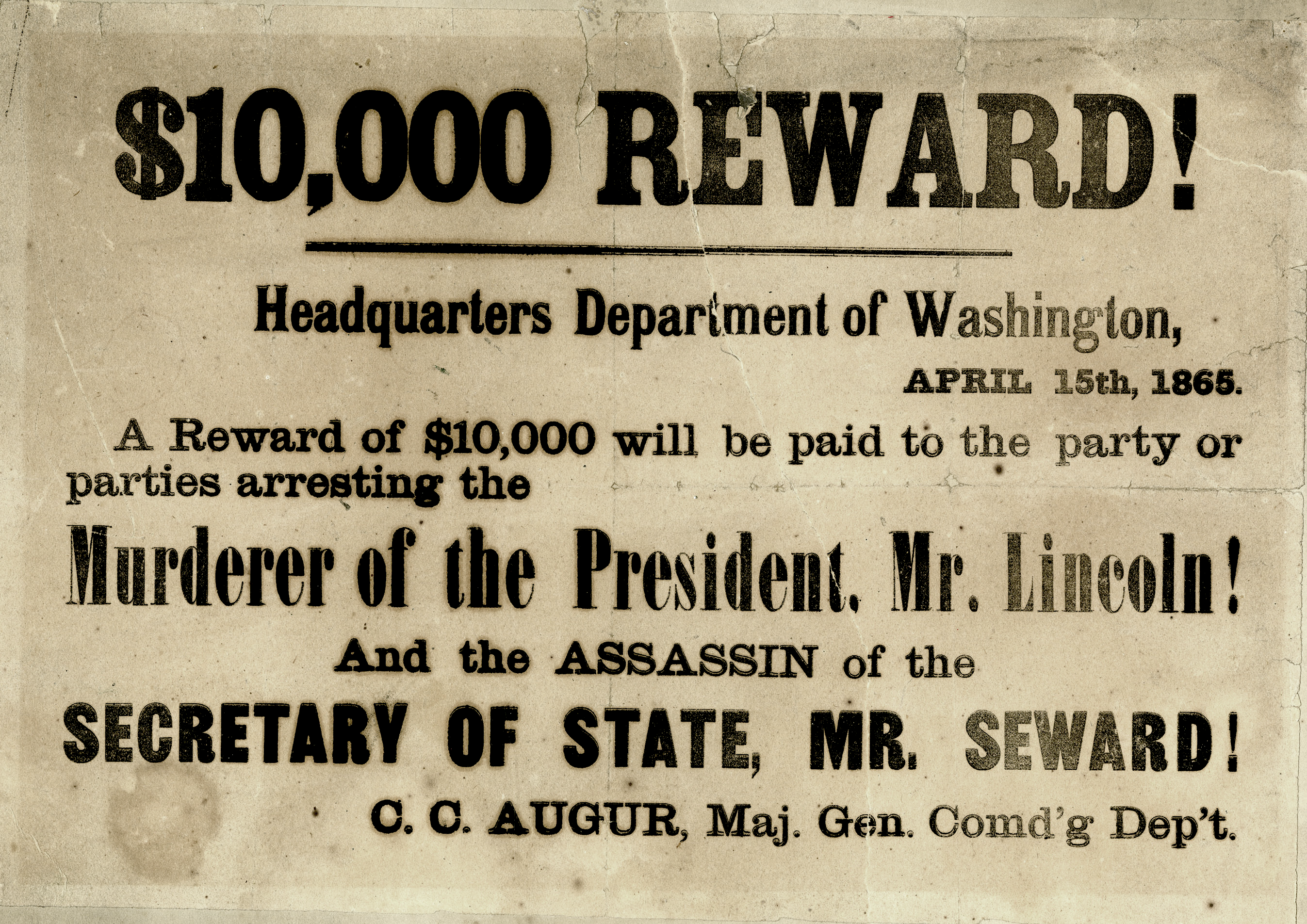
  • The first reward offer was made on the 15th of April by General Christopher Columbus Augur, the commander of the Twenty-Second Army Corps, the man in charge of the Defenses of Washington. He proclaimed that $10,000 would be given to the person or persons who aided in the arrest of the assassins.

Courtesy The Historical Society of Washington, D.C.

  • Two days later, the Mayor and Common Council of the City of Washington passed “Chapter 274 of the Special Laws of the Council of the City of Washington.” This Act stated: “Be it enacted by the Board of Aldermen and Board of Common Council of the City of Washington, that the Mayor be, and he is hereby authorized and requested to offer a reward of twenty thousand dollars for the arrest and conviction of the person or persons who were concerned in the assassination of President Lincoln, and attempted murder of Secretary Seward and family on the evening of the 14th inst. Provided that if more than one should be arrested and convicted, then said amount shall be apportioned accordingly. Approved April 17, 1865.”
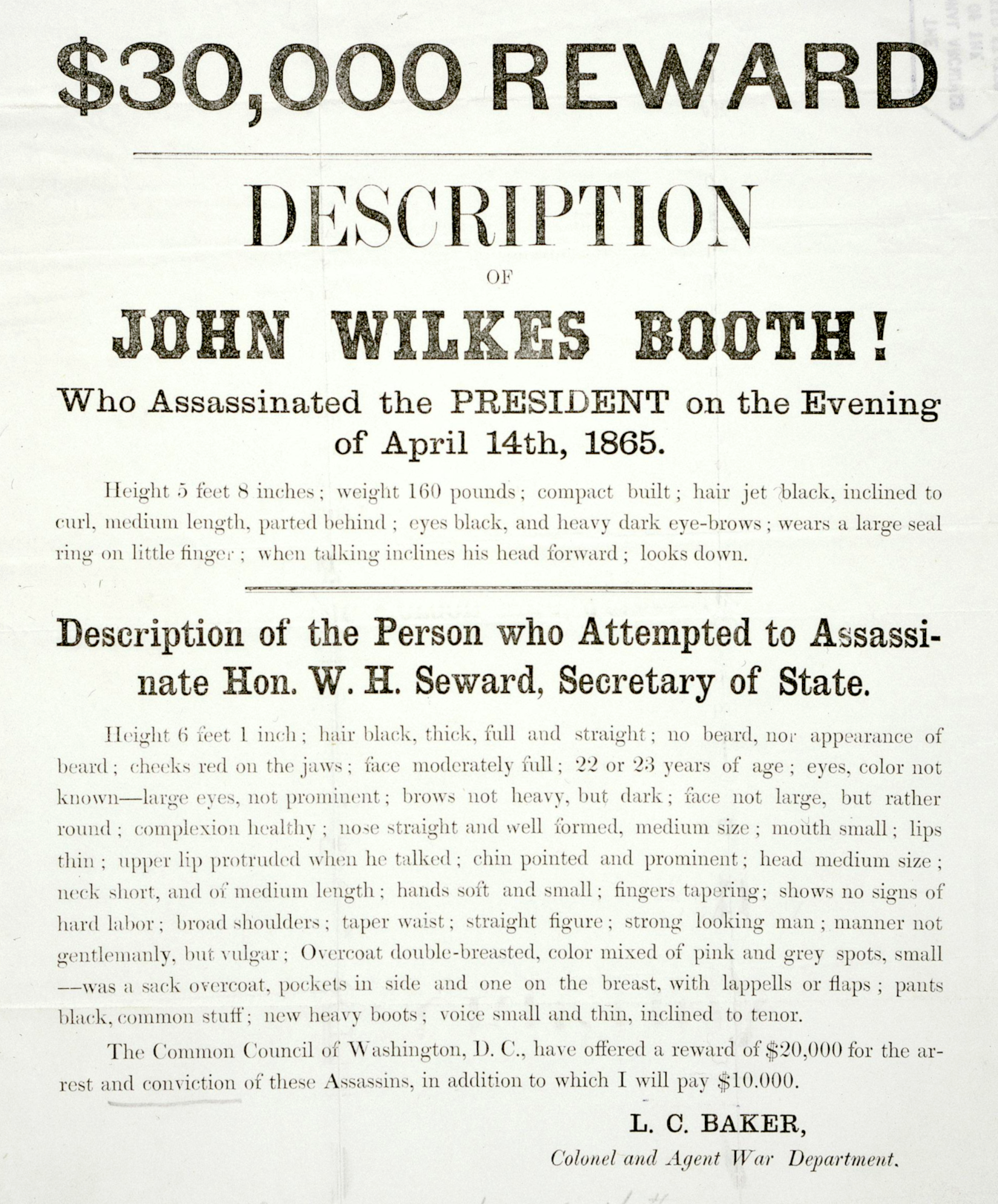
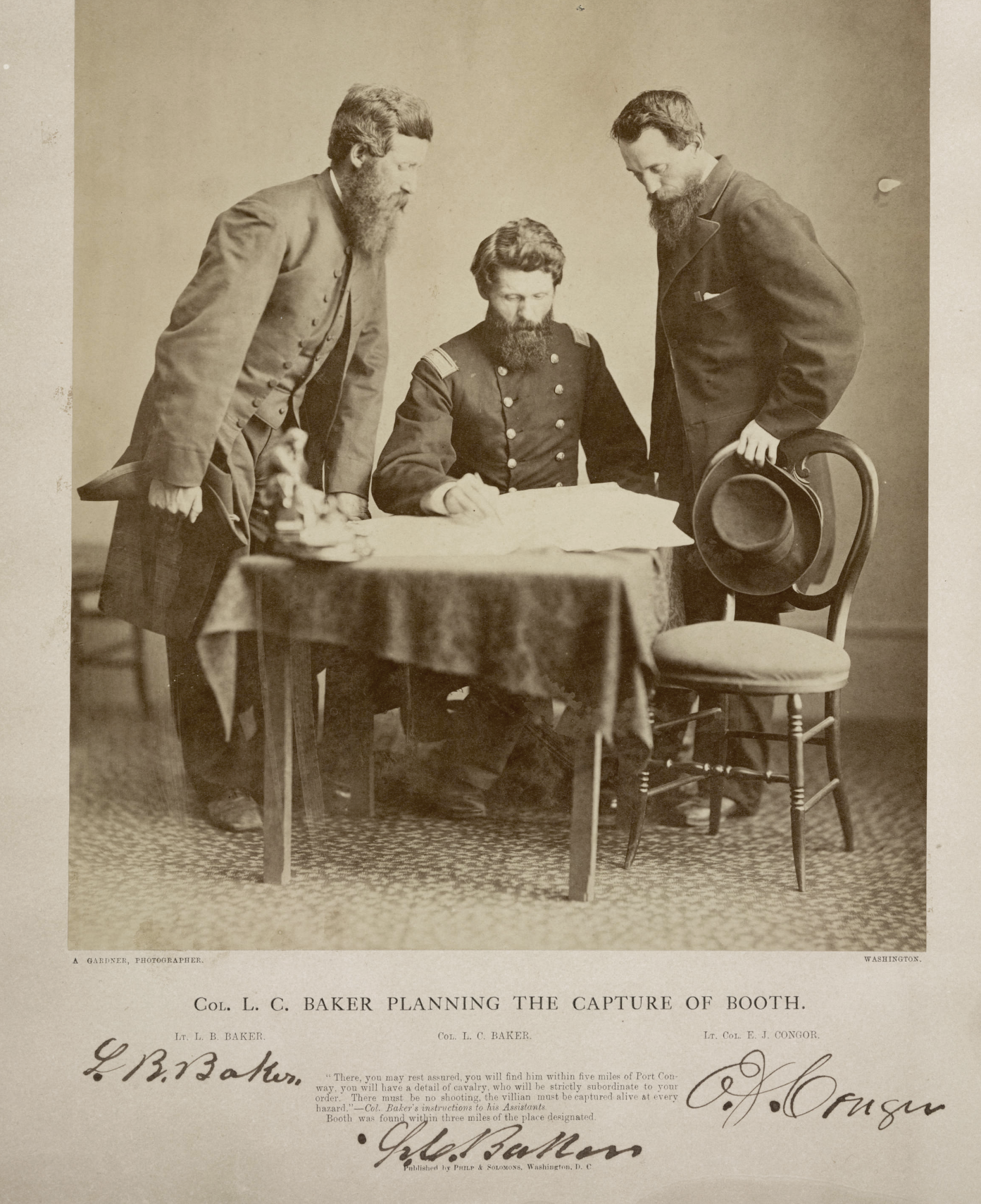
  • Later that day, Colonel L.C. Baker, the infamous War Department detective-chief, published a handbill proclaiming a $30,000 Reward. It described John Wilkes Booth and offered a description of the “Person Who Attempted to Assassinate Hon. W.H. Seward, Secretary of State.” As a matter of explanation, Baker stated, “The Common Council of Washington, D.C. have offered a reward of $20,000 for the arrest and conviction of these Assassins, in addition to which I will pay $10,000.”

  • On some date unknown—possibly April 17—a $10,000 reward was supposedly offered by the Common Council of Philadelphia.
  • The City Council of Baltimore also offered $10,000 for the arrest of the assassin, a former hometown boy. An untitled squib, in the Davenport (IA) Daily Gazette, April 19, 1865, commented on the offer saying, “The feeling here (Baltimore) against Booth is greatly intensified by the fact that he is a Baltimorean, and it is desired by the people that one who has so dishonored the family should meet with speedy justice.”
  • On April 20th, Governor A.G. Curtin of Pennsylvania announced $10,000 for the capture of the assassin. However, this offer had a catch: the assassin had to be arrested on Pennsylvania soil.

  • On April 20, Edwin Stanton published his famous $100,000 reward, offering sums of $50,000 for Booth and $25,000 each for David Herold and John Surratt. A version of Stanton’s reward poster even had photos of the three major conspirators attached. Since this was in the days before the technique of printing halftone photos was developed, photographic prints of the three suspects were actually glued onto the printed piece. This is reportedly the first time actual photographs were added to a wanted poster. Copies of this broadside were distributed throughout Maryland and carried by search parties. The poster was also “re-composed” (re-typeset, in other words) and reprinted in New York City.

  • On some unspecified date, the State of California offered $100,000 in gold to the captors. The claim agents for Private Emory Parady, one of the captors of Booth and Herold, contacted the California officials, but nothing came of it, and nothing specific is known about this offer.
  • New York State supposedly offered a reward, too. Details are sketchy, but John Millington, another of the Garrett’s Farm patrol members, mentioned this in a 1913 letter to the National Tribune.

Most of these proposals died a quiet death and were forgotten in the aftermath of the arrest, trial, and execution of the conspirators. But attorneys pursued the offers made by the City of Baltimore, and the Washington City.

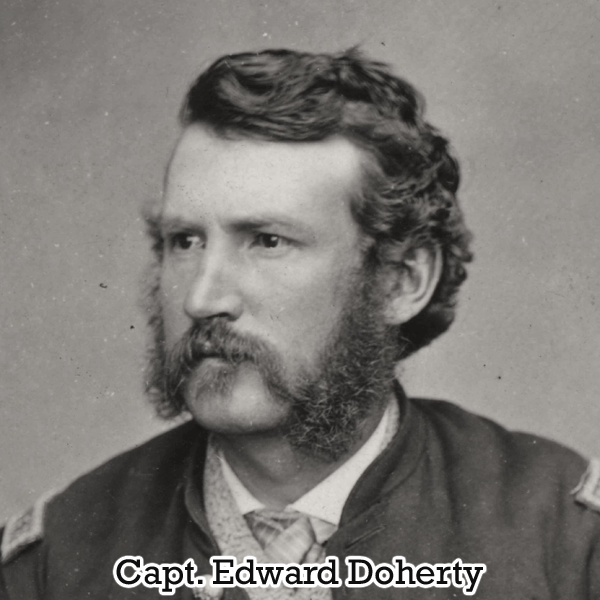
The Baltimore effort ended quickly. An article headlined “Capt. Doherty’s Story” in the August 22, 1879, New York Times explained what happened: “In the case of the claim against the City of Baltimore, which offered $30,000 {sic, should be $10,000} for the arrest of the assassin, Capt. Doherty did not sue to recover, the Mayor and Aldermen telling him point blank that they would not pay it, as the reward was offered under a previous administration. The claim has now lapsed by limitation.”

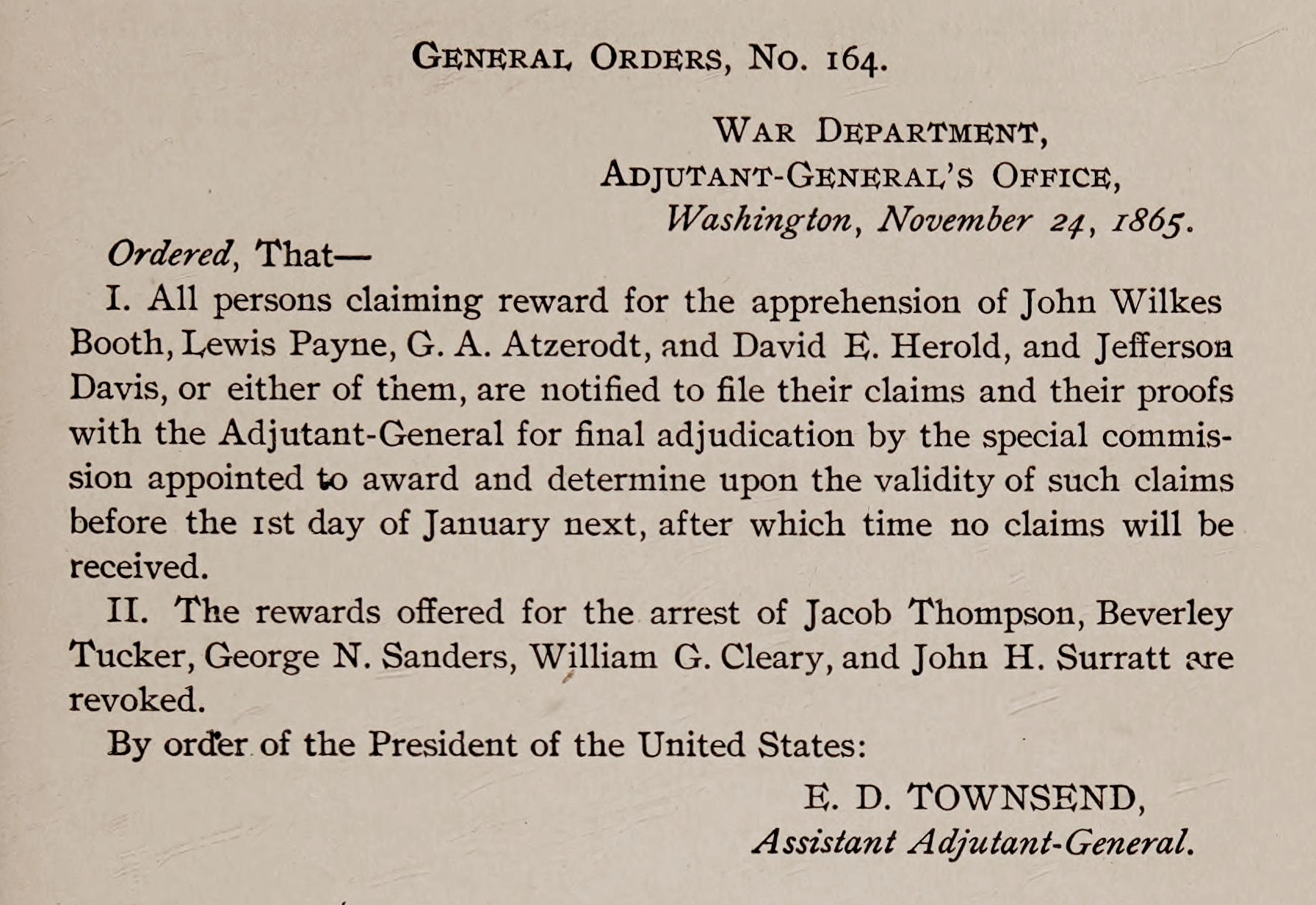
On November 24, 1865, the War Department issued “General Order No. 64”, which announced that a special commission would be set up to determine the validity of claims for the Reward and that all applications for a share had to be submitted by the end of the year.

It also announced that any other offered rewards were withdrawn. This applied to the $25,000 reward offered for John H. Surratt, who was still a fugitive, and to other amounts posted for members of the so-called Confederate “Canadian Cabinet.” When the final report of the commission was issued, the offers by General Augur and Colonel Baker had been incorporated into the Stanton offer of April 20th.

There was a great deal of wrangling involved in the settlement of the War Department $100,000 offer (as detailed in my article “Were The War Department Rewards Ever Paid?” February 1994, Surratt Courier), but that was minor as compared to the struggle over the reward offered by the officials of the City of Washington. A lawsuit was filed by the three National Detective Police officers in an effort to get the city fathers to live up to their promise. This fight involved a huge cast of characters and dragged on for over a dozen years. It took so long, in fact, that by the time it started moving through the courts, one of the major players was dead.

Here’s the story of that case:

On October 10, 1866, an equity case was filed in the Supreme Court of the District of Columbia in General Term by the three detectives and their attorneys. It was designated case “No. 790” and was known as “L.C. Baker, E.J. Conger and L.B. Baker v. The City of Washington, et al.” There were forty-six individuals involved in the suit, all of whom had gotten shares of the War Department reward for the capture of Booth, Herold, Atzerodt, and Payne. The stated purpose of the case was: “For Distribution of the Reward offered by the City of Washington for Assassins of Abraham Lincoln, President of the U.S.”

As I pointed out in my earlier article, the troopers of the Garrett’s Farm patrol monitored the progress of the suit. One of the men who captured Booth, former private Emory Parady, received periodic progress reports from his agents, attorneys Owen & Wilson of Washington. On December 26, 1866, for instance, they wrote: “The suit on the city is progressing — there are so many parties it is hard to get them all in court so we can try. Capt. Dougherty is in North Carolina & we have not got service upon him and there are several others of the same character. When they are all properly before the Court we shall call it up & have it tried.”

The filing of motions, gathering and introduction of affidavits took the rest of 1866, 1867, and all of 1868. During this process, one of the prime movers, Col. Lafayette C. Baker, died in Philadelphia on July 3, 1868. Finally, all of the papers were submitted, and the Court took the matter under consideration. On April 20, 1869, the D.C. Supreme Court announced their verdict. They dismissed the case against the City, ordering that the plaintiffs pay the court costs.

The decision was appealed. On April 25, 1870, a re-argument of the case was granted by a Special Term of the D.C. Supreme Court. On September 29, 1870, the court received an “Amended Answer of the Mayor & Board of Aldermen & Common Council – motion for leave to file made in the Court sitting in General Term.”

The New York Herald summed up the case in an article on September 30th. There were several plaintiffs, the Herald said; the three detectives, Capt. Doherty, attorneys representing the 26 soldiers of the Garrett’s Farm patrol, and three civilians involved in the planning or capture of Mrs. Surratt and Louis Powell. The Herald laid out the positions of the various parties pretty clearly: The attorney for the Corporation of Washington opined that the City had had no authority to offer the reward, and that “the parties claiming this reward did nothing more than, as good citizens, they should have done.” He also stated that they were merely following the orders of their officers.

The counsel for Prentiss M. Clark, one of the civilians involved in the Mary Surratt arrest, stated that police, detectives, and soldiers had no claim since they were only doing their normal duties. By this argument, then, only civilians who gave evidence would be entitled to a chunk of the reward. (Clark was a mere civilian at the time of the arrest, naturally.)

The attorney for the troopers responded that it was not part of their duty as soldiers to assist in the capture of offenders against the law, and, besides, they were not subject to any orders from the officials of Washington City.

In the official documents of the case, counsel for the defendants stated that “the Mayor, Board of alderman and Board of Common Council of the City of Washington did not and do not possess any legal authority to offer or to pay out of the monies of the tax payers of said city any sum whatsoever for the purposes mentioned in the (1865) ordinance.”

Edward Doherty responded with evidence that the mayor had issued a Message on June 30, 1868, indicating that he would seek permission from Congress (which then, as now, governed the District and Washington City) to raise $550,000 in bonds. These were to pay city debts. One of the debts specifically mentioned in the message by the mayor was the $20,000 reward, Doherty noted.

On October 15, 1870, the Special term of the Supreme Court of the District of Columbia dismissed the appeal. They found in favor of the City of Washington, et al, and against Stedpole (the executor of the estate of L.C. Baker, deceased), et al.

A long period of silence ensued, but on October 12, 1875, an appeal was filed with the United States Supreme Court. The two individuals who put up the $550 bond for the filing were Prentiss Clark and George F. Robinson, the attendant who helped save Secretary William Seward’s life in 1865.

The appeal was labeled Case No. 691. Which was soon changed to case number 441, and then to 200. It was placed on the docket for October Term 1877, but not called. It carried over to October Term 1878.

The High Court finally dealt with it, but not in a way that the plaintiffs hoped: on November 15, 1878, the U.S. Supreme Court ordered the appeal “dismissed with costs” and ordered that the defendants get their costs from the complainants.

In the end, only the War Department paid any reward for the capture of the assassins of President Lincoln. In 1898, former Pvt. John W. Millington summed up the situation to a reporter in Sioux City, Iowa. The journalist stated: “Other rewards had been offered by different states, but Mr. Millington never saw any part of them and long ago came to the conclusion that most of them were in the nature of ‘grand stand plays’.”

Sources:
Boston Corbett-George A. Huron Papers, Kansas State Historical Society, Topeka, Kansas
“Lafayette C. Baker, Everton J. Conger and Luther B. Baker, v. City of Washington, et al,” Equity docket, Supreme Court of the District of Columbia, Equity Case 790, National Archives, Washington.
Miller, Steven G., “Were The War Department Rewards Ever Paid?” February 1994, Surratt Courier.
The Millington-Parady Papers, Steven G. Miller Collection.
“One of Booth’s Captors,” National Tribune (Washington, DC), June 26, 1913. (John Millington “wants to know why” the rewards offered by the governors of New York and Pennsylvania were never paid.)
“The Reward for the Discovery of the Lincoln Assassins,” New York Herald, September 30, 1870.
“Thirty-Three Years Ago. Anniversary of the Assassination of Lincoln by John Wilkes Booth. A Resident of Sioux City Who Assisted in the Capture of the Murderer. Story of the Pursuit and the Final Scene When He Refused to Be Taken Alive and Was Shot,” The Sioux City (IA) Times, April 14, 1898.


I’m grateful to my friend Steve Miller for allowing me to republish this very interesting article he wrote about the rewards offered for the capture of John Wilkes Booth. This article was originally published in the September 2006 edition of the Surratt Courier.

Categories: History, Steven G. Miller | Tags: , , , , , , | 7 Comments

The Kaw and the Last Lincoln Conspirator

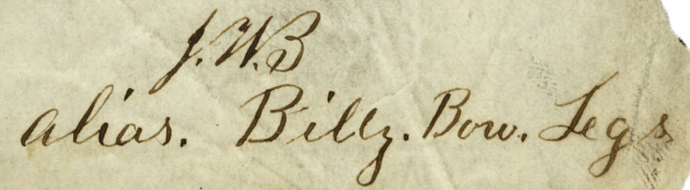
November is Native American Heritage Month. Years ago, I shared a paper I wrote about Holata Micco, a Seminole chief in Florida who was known as Billy Bowlegs to non-Native speakers. As a child, John Wilkes Booth sometimes went by the nickname of Billy Bowlegs among his friends due to his bowleggedness. As a teen, he even ended a letter with this moniker.

I wanted to mark Native American Heritage Month on the social media pages for Lincoln Assassination Tours. I considered rehashing my work on Holata Micco, but the connection between the noted Seminole chief and the future assassin of Lincoln is pretty contrived. I considered discussing the Piscataway tribes as it was through their ancestral lands that the assassin made his escape. In fact, one of the figures in the escape, Oswell Swann (who innocently escorted the fugitives to Rich Hill), is said to have been part Piscataway Indian.

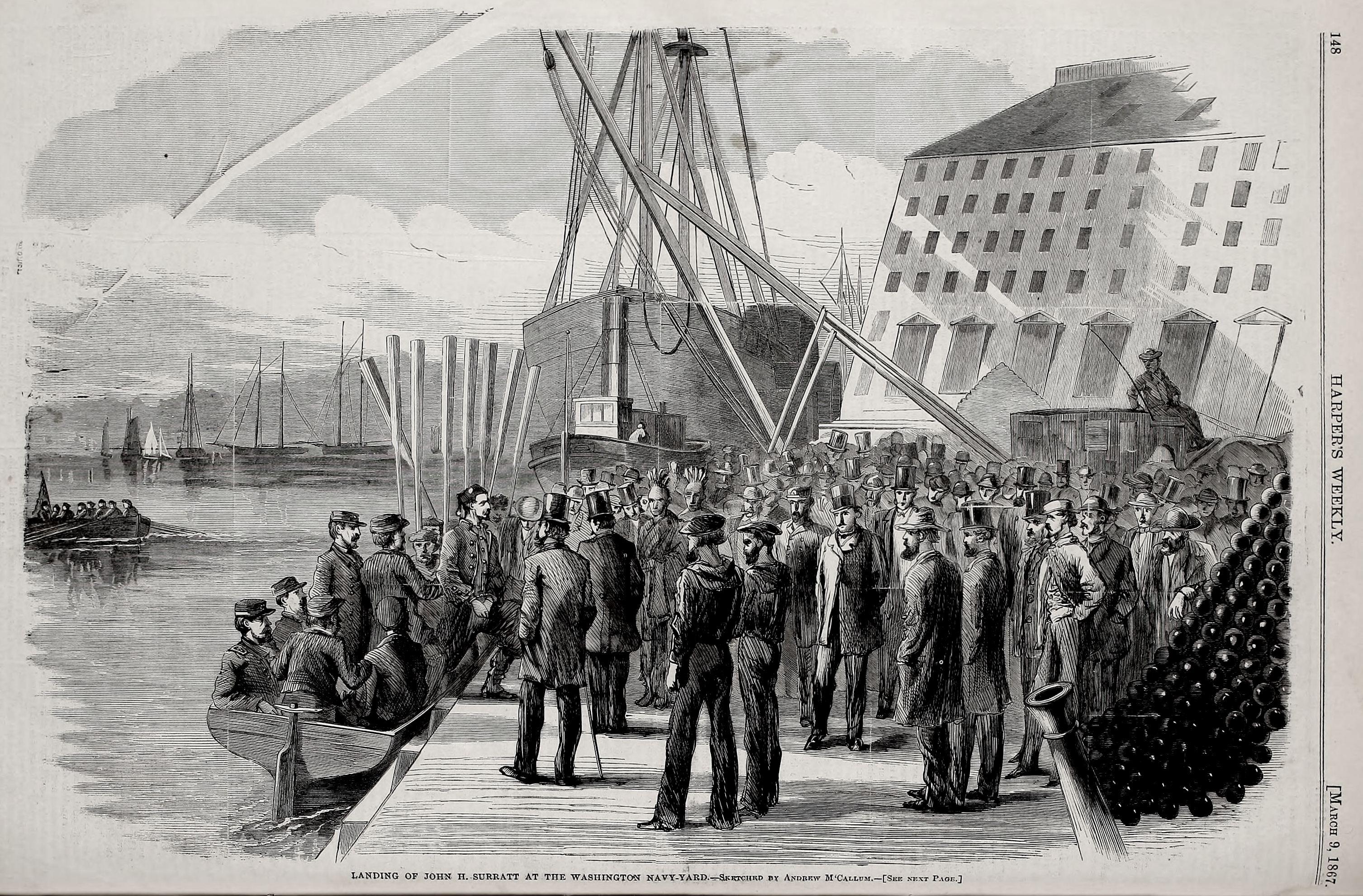
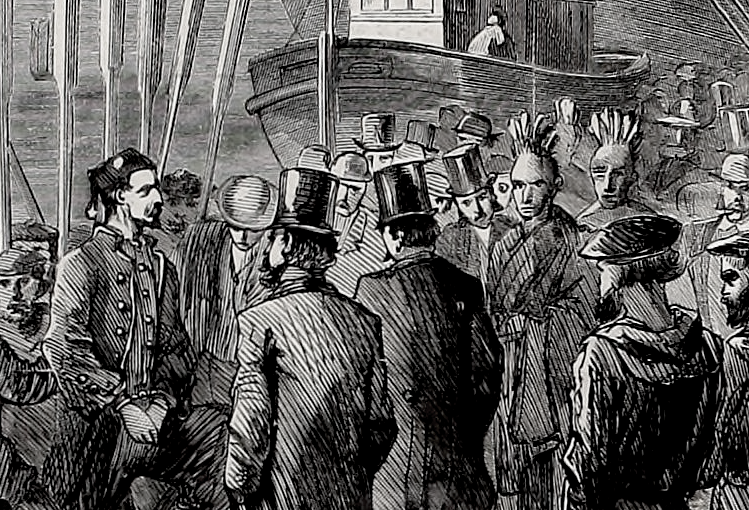
In the end, however, I decided to take my motivation from a historic image. The March 9, 1867, issue of Harper’s Weekly contains a full-page drawing of the return of John Surratt to the United States after a year and ten months on the run.

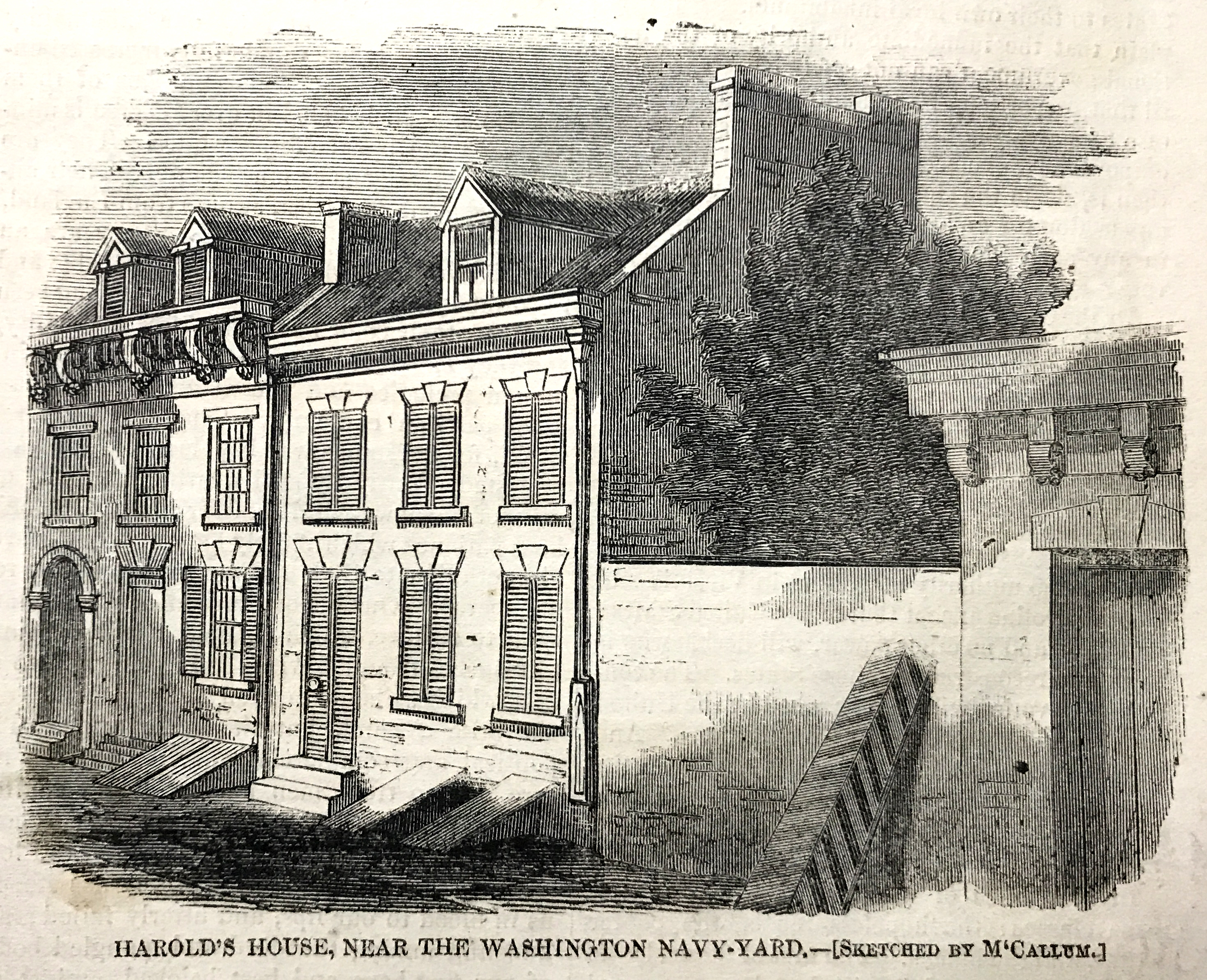
The scene at the Washington Navy Yard was captured by Andrew McCallum, the same artist who, in 1865, had sketched the nearby home of David Herold.

A notable detail in the drawing showing John Surratt’s return is the presence of three Native Americans wearing headdresses.

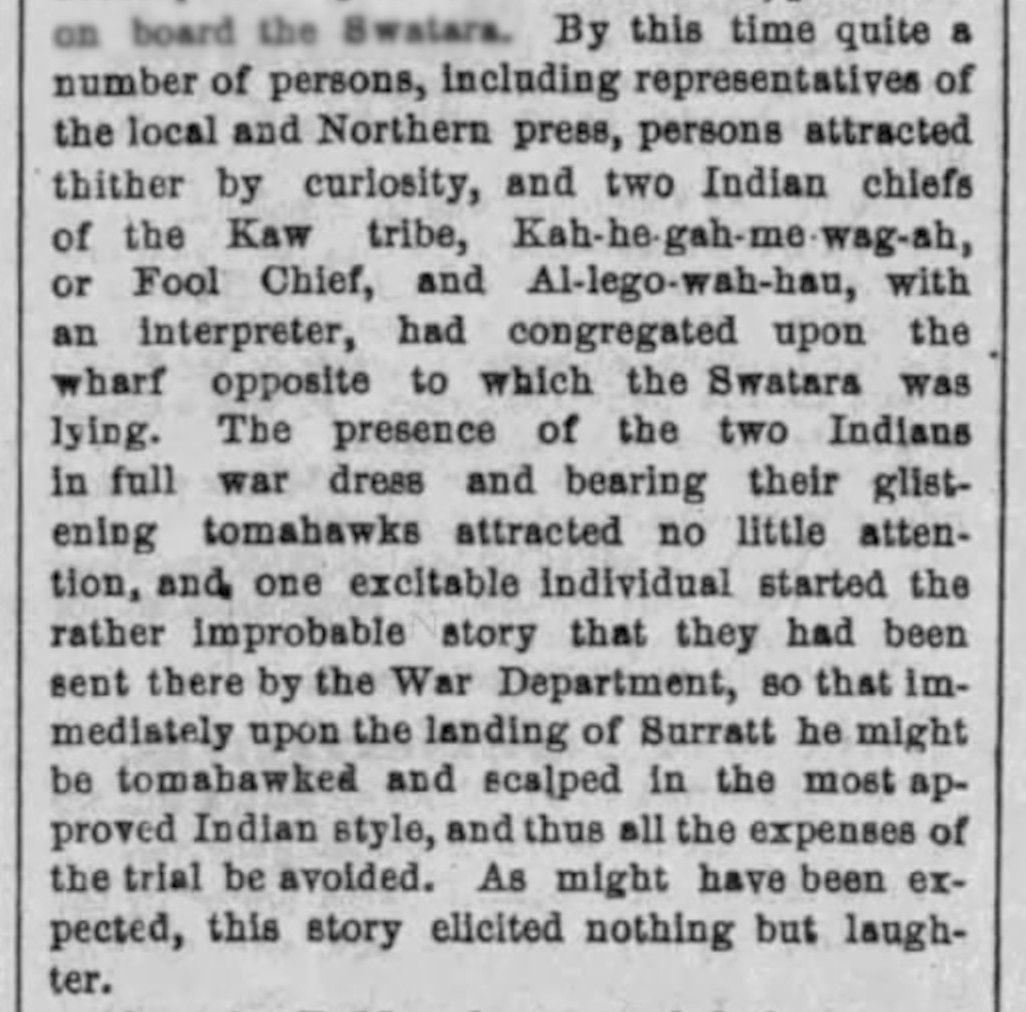
The inclusion of Native Americans in this scene was not artistic license. The corresponding article in Harper’s contains the line, “There were not many persons besides the officials and guards present, only a few reporters and our artist, and a number of Indians of the Sioux delegation now at Washington, having been permitted to witness the scene.” Harper’s was partially right. A large delegation of Native Americans was present in Washington in February of 1867, but only some were from the Sioux tribe. While I initially held little hope of being able to identify the specific Native Americans who observed John Surratt’s arrival, I was fortunate that the Washington Chronicle newspaper had already done so.

I was even more fortunate to discover that the Kaw delegation was photographed during their time in Washington, providing me with a photo of the two chiefs who witnessed the disembarking. After doing more research on the Kaw people and their history, I was excited to write something about them.

In the end, I decided to create a video about the Kaw men who were present when John Surratt returned to face trial. I put the video on the Lincoln Assassination ToursFacebook, Instagram, Bluesky, and YouTube pages. I hope you’ll consider following those platforms for more historical tidbits.

So, without further ado, here’s the video, The Kaw and the Last Lincoln Conspirator. I hope you enjoy it.

Categories: History, Lincoln Assassination Tours | Tags: , , | 5 Comments

Introducing LincolnAssassinationTours.com

In 2009, between my junior and senior years of college, I took a trip with my dad to Washington, D.C. Having been born and raised in Illinois, I had never been to the nation’s capital before. As good Midwesterners, we had taken family trips to places like the Mall of America in Minnesota, Mackinac Island in Michigan, and even to parts of Canada to see Niagara Falls. However, our family vacations never extended to the East Coast (except for Disney World in Florida).

Thus, it was exciting when Dad and I flew to D.C. in May of 2009, just after college let out for the summer. As the youngest of my siblings and the only one still living at home, this was a nice, intimate trip for two (my mother opted out of this particular excursion). We visited all the iconic locations in and around the nation’s capital, including the Smithsonian museums, the Washington Monument, the Lincoln Memorial, Ford’s Theatre, Arlington National Cemetery, the Capitol Building, the Library of Congress, and more. We had the typical D.C. tourist experience and enjoyed it all.

But, in addition to seeing the “normal” D.C. sites, my dad and I also went off the beaten path a bit. This was primarily because, since around my freshman year of high school, I had become increasingly interested in the subject of Abraham Lincoln’s assassination. I had devoured many books on the subject as I quickly became fascinated with this event in our history. While reading the books was gratifying, I felt drawn to visit and see some of the places mentioned in the books firsthand.

Although it cost us a bit more to rent a car, my patient father indulged my obsession, and near the end of the trip, we headed south out of Washington. Dad drove while I tried my best to be the navigator, armed with printed MapQuest directions. We visited and toured the Surratt House Museum in Clinton and the Dr. Samuel A. Mudd House Museum in Waldorf. We then went to the cemeteries containing the graves of Edman Spangler and Dr. Mudd. Then we hit the long haul down to the site of the Garrett farm, where John Wilkes Booth died. The median strip where the Garrett house once stood was still open to the public in those days, so Dad and I parked on the side of the highway and trekked in. When we got to the small clearing that marked the area where the assassin died on the Garrett porch, Dad took this photograph of me.

While we had witnessed and toured many iconic sites during our visit to D.C., my favorite part of the whole trip was standing in that nondescript wooded median strip in Virginia. Millions flock to D.C. each year to experience the majesty of the memorials, but how many people would ever stand where Dad and I stood, knowing the history that occurred at this otherwise forgotten patch of land? Reading about a historical event is one thing, but nothing can replace the power of visiting a historical site firsthand, especially one that is off the beaten path.

Fast forward to 2015. I’m living and teaching in Maryland, while devoting my free time to my interest in this history. Just before the 150th anniversary of Abraham Lincoln’s assassination, I became the newest guide for the John Wilkes Booth escape route bus tours organized by the Surratt Society. This was after a year of training and taking the tour with the two other bus tour guides at the time, the late John Howard and Bob Allen. Becoming a narrator for the bus tour was incredibly exciting for me. I had moved to Maryland to be closer to where it all happened and to experience even more off-the-beaten-path history. As an educator who adores public history, guiding folks along the route used by the assassin became my favorite activity. People loved taking my tours, and I loved giving them. I loved discussing the history with other interested folks and seeing them marvel, as I once did, at being transported to the actual sites they had previously only read about. It truly was the perfect role for me, and I always looked forward to my turn to narrate the next tour. From 2015 to 2019, I narrated 20 bus tours for the Surratt Society (along with several other small group tours). After completing my last tour in September 2019, I couldn’t wait for the next season in April 2020.

With historian and author Ed Steers, who took my tour in April 2019.

We all know what happened right before that next season of tours was slated to start. The COVID-19 pandemic shut everything down, and it was clear that it would be a long time before any bus tours would start up again. Progress was made with the COVID vaccine, and in time, life returned to normal for many. However, even as other tour companies resumed their efforts, the Surratt Society’s bus tours never returned after this shutdown. The reasons for this are as complex as the tour itself, and it has not been due to a lack of desire on the part of the Society. In the end, however, the organization has just been unable to restart the tours, despite its best efforts.

However, that drive in me to help people experience this monumental event in our history firsthand has not diminished. I know there is still a demand to explore this history beyond the pages of a book or website. That is why I am announcing the start of a new, personal venture. I am launching Lincoln Assassination Tours, a tour business designed around educating a new generation about the assassination of Abraham Lincoln by taking them down the escape route of John Wilkes Booth.


Lincoln Assassination Tours offers an approximately 10-and-a-half-hour chartered bus tour in which participants join the manhunt for Lincoln’s assassin. On a scenic, 170+ mile round-trip journey, guests will learn about the plot against Lincoln and his cabinet members by retracing the assassin’s escape route firsthand. The tour includes entry and visits to three museums (including the soon-to-be-opened museum of Rich Hill) and two private properties. All participants will also receive their choice from 40 catered box lunch options, included in the ticket price.

Whether you are like me in 2009, yearning to visit the sites associated with his history for the first time, or a seasoned veteran of escape route tours, I hope you will check out Lincoln Assassination Tours to learn more about us and our tour. At Lincoln Assassination Tours, we adhere to the same historical standards established by the Surratt Society over its decades of tours, while offering an updated and brand-new experience for everyone. Although this tour is not affiliated with the Surratt Society, I feel fortunate to have their blessing and support in this new venture. I wouldn’t be the historian I am today if they didn’t take a chance on me as their guide back in 2015.

Lincoln Assassination Tours is currently booking for our inaugural escape route tour on Saturday, March 14, 2026. This debut tour will be followed by two more tours, being offered on Saturday, April 18, 2026, and Sunday, April 19, 2026.  To celebrate the launch of this new endeavor, we are offering a special $20 discount on our March tour date.

For those who won’t be able to make our first set of tours in the spring of 2026, fear not. We are planning future tours for the fall of 2026 (and possibly more before then). The best way to stay up to date on new tours is to sign up for our email list. Near the bottom of the Lincoln Assassination Tours homepage is a box labeled “Join Our Email List.” By entering your email address in that box and clicking submit, you will receive an email every time we post a new update to the site. You can also keep up to date with us on social media. Lincoln Assassination Tours is on Facebook, Instagram, and Bluesky.

I’m very excited to start this new venture, helping folks experience the history behind Abraham Lincoln’s assassination firsthand. Our initial focus for the time being will be the John Wilkes Booth escape route tours, but I have several ideas and plans for other tours as well. Sometime in the near future, we hope to offer walking tours, cemetery tours, and even some unique, one-off chartered tours.

I invite you all to take a look at the Lincoln Assassination Tours homepage, About page, and Frequently Asked Questions. When the time is right, I hope you’ll Register for a tour with us. I can’t wait to see you following in the manhunt for Lincoln’s assassin.

– Dave Taylor

Categories: History, Lincoln Assassination Tours, News | Tags: , , , , | 7 Comments

In the Peanut Gallery

I’m very grateful to Joe Barry and his piece “Will Research for Peanuts,” which he recently contributed to this website. Through his research, Joe put together the known facts about Peanut John and documented some of the theories that exist about the identification of this young man who innocently held John Wilkes Booth’s horse behind Ford’s Theatre.

Inspired by Joe’s work, I decided to do a little bit of digging into Peanuts on my own, and I have come up with my own possible theory. While I originally received Joe’s approval to add my speculation to the end of his piece, I didn’t want to detract from his writing with my own, lengthy conjecture. Instead, consider this post to be my own addition to the Peanut John discourse.
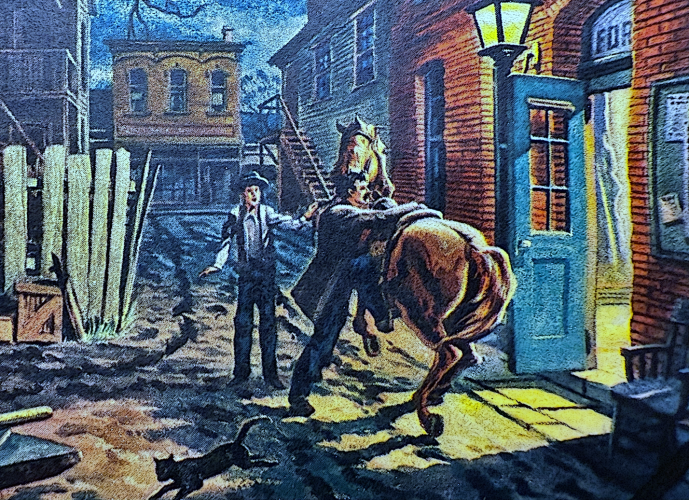
The main issue with trying to research this young man who held Booth’s horse is a lack of a consistent name. He was nicknamed variations of “Peanut John” and “John Peanuts” by the stagehands and employees at Ford’s Theatre. Harry Clay Ford, one of the managing operators of Ford’s Theatre, admitted to not knowing his employee’s full name, stating, “We have a doorkeeper at the back door, John. I don’t know his last name. The boys call him ‘Peanut.’ He is expected to keep the back door, and he works around the theater.” To Ford’s credit, he did not have much in the way of interactions with Peanuts, as the boy usually acted under the direction of James Gifford, the chief carpenter of the theater.

In one of his statements to the authorities, Peanuts notes that “They generally call me John Peanuts around [the theater] because I used to peddle peanuts.” It was not uncommon for individuals to sell small treats and concessions such as peanuts and candy to theater guests. In fact, Peanuts was actually one of several boys who engaged in this practice.

For much of the Civil War years, Dr. Ithamer S. Drake had been employed as a clerk in the Census Bureau in Washington, D.C. During the latter part of his employment, Dr. Drake resided with his family on 9th Street. Just about a week before the assassination, the Drake family had moved back to the doctor’s home in Richmond, Indiana. After hearing of the national calamity in Washington, Dr. Drake wrote a letter to an acquaintance of his who still resided in the city. The recipient was William A. Cook, a clerk in the General Land Office in the Department of the Interior. Dr. Drake noted to Cook that, “My youngest boy was in the habit of going through the theater with other boys.” The doctor then recounted how this son, Frank, informed him that during his time around Ford’s Theatre, he had heard disloyal talk from the scene painter at the theater, James Lamb, at the time of the fall of Richmond, Virginia. Dr. Drake alluded to possible conversations between Lamb and John Wilkes Booth that he felt should be investigated. In the letter, Dr. Drake informed Cook that one of the boys his son hung out with at the theater was David Finney and that he should be questioned on the matter. 

With the permission of Col. John Foster, one of the special commissioners engaged in investigating the assassination, William Cook interviewed David Finney at his father’s home on the corner of 9th and H Streets. Finney, who was about 15 years old at the time, described to Cook that while he did not recall any disloyal statements from Lamb when the Confederate capital fell, he did recall Lamb chastizing some revelers on the night of the Grand Illumination to celebrate the Union’s victory on April 13th. David Finney pointed out that Frank Drake was more acquainted with the people in the theater since the doctor’s son was “allowed to sell ‘gumdrops’ etc. in the building.”

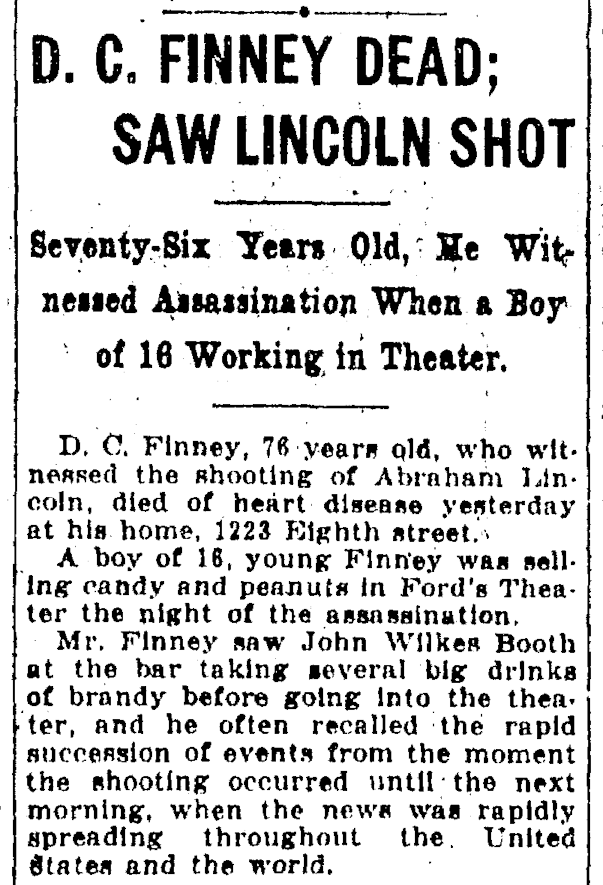
In this way, we know that Frank Drake acted as a sort of gumdrop and peanut boy at Ford’s Theatre. But he had left D.C. with his father shortly before the assassination, so we know he’s not our Peanut John. While in his statement to Cook, David Finney makes it seem like only Frank Drake was involved in the gumdrop trade, when Finney died in 1925, his obituaries noted that he also sold “candy and peanuts in Ford’s Theatre.” Moreover, these obituaries state that Finney was selling concessions the night Lincoln was killed and witnessed the events. In addition, one of Dr. Drake’s other sons, Albert, also told his father about the goings on at the theater, making it likely that there was a small cadre of boys who hung around the theater and made extra money selling gumdrops and peanuts.
While Peanut John had received his nickname from selling peanuts around the theater, he had clearly advanced beyond this role at the time of the assassination, leaving the job to boys like David Finney and the Drake brothers. As noted by Harry Clay Ford, Peanut was tasked with guarding the stage door: “He is to keep all strangers out, everybody…His instructions are not to let strangers on the stage.” In his own testimony, Peanut described his role thusly: “I used to stand at the stage-door, and then carry bills in the daytime.” During the day of April 14, Peanuts also assisted in the decorating of the Presidential box. In short, Peanut John was a gofer of sorts, fulfilling any small task given to him by James Gifford or anyone at the theater. 

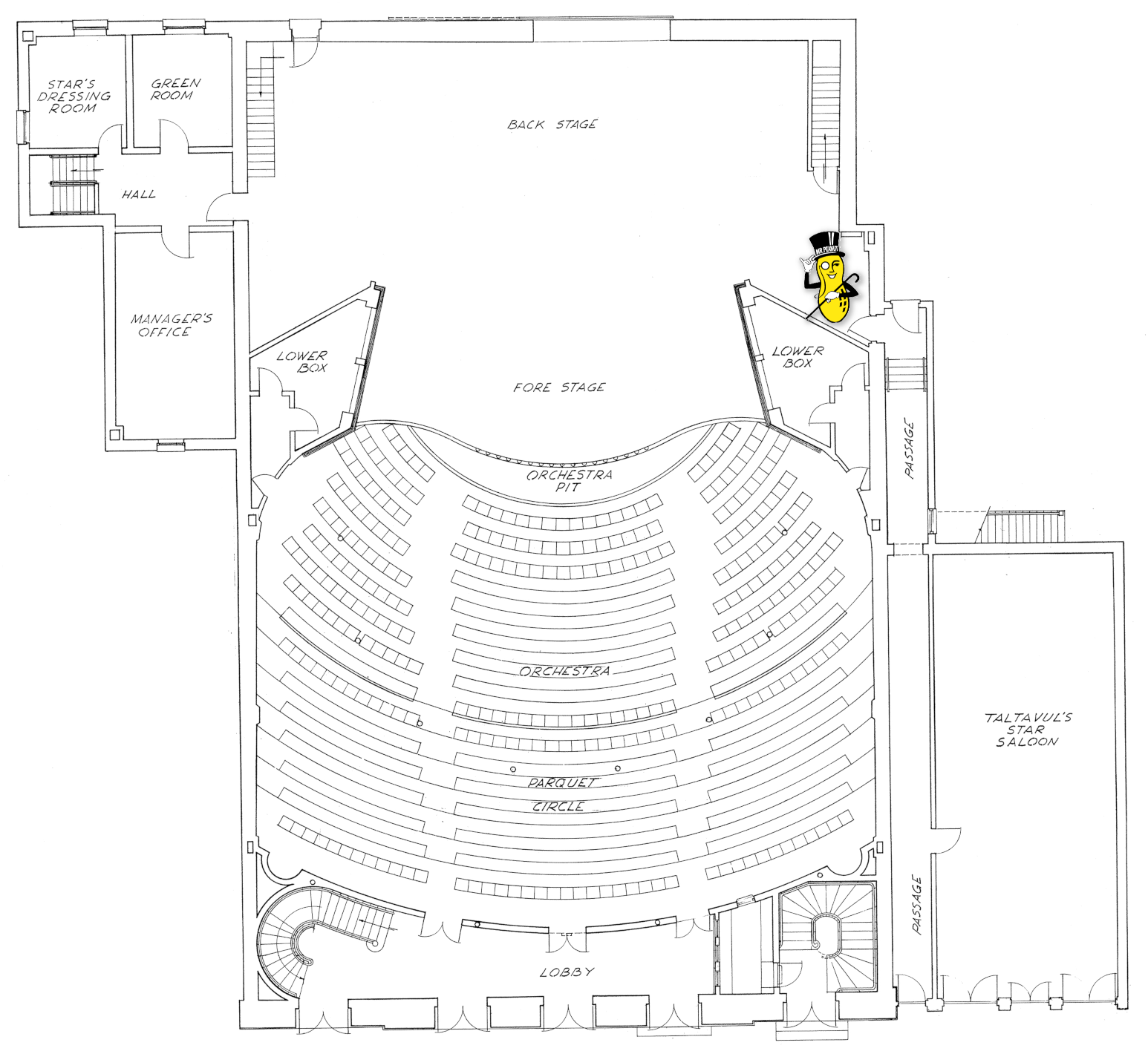
It’s worth pointing out that the stage door that Peanuts was tasked with guarding during performances is not the back door through which John Wilkes Booth entered. Rather, his place was located stage left on the south side of the building. A covered alleyway of sorts ran from Tenth Street all the way to the rear of Ford’s Theatre into Baptist Alley. This walkway separated Ford’s Theatre proper from the Star Saloon located just to the south. A side door of the Star Saloon led directly into this passageway, and it appears the Fords may have had an issue with bar patrons mistakenly opening the door directly onto the stage during performances. Therefore, Peanut John guarded this door, preventing anyone from accidentally interrupting a performance. When Peanuts was called by Edman Spangler, he abandoned his normal post to hold Booth’s horse directly behind Ford’s Theatre.
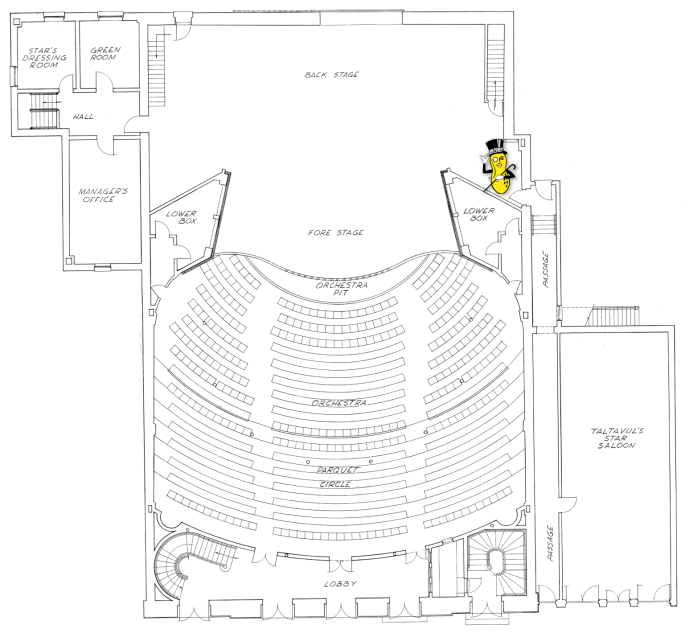
Location of Peanut John’s normal station, guarding the stage door at Ford’s Theatre

Prior to taking the stand at the trial of the conspirators, Peanut John gave two statements to the authorities. The first was on the morning of Lincoln’s death, April 15th. Edman Spangler was arrested around 6:00 am that day and taken to the police station on E Street between 9th and 10th. He had been brought in by Sergeant C. M. Skippon. As Spangler later recalled, “The sergeant, after questioning me closely, went with two policemen to search for Peanut John (the name of the boy who held Booth’s horse the night before) and made to accompany us to the headquarters of the police on Tenth street, where John and I were locked up…” After a period of time in confinement, both Spangler and Peanut were brought before Abram B. Olin, a Justice of the Supreme Court of D.C., who examined them individually and took down their accounts. Peanut John dictated two pages to Justice Olin. In this document, his name is given as Joseph Burrough. As noted by Joe in his article, he does not sign this name, however. Instead, he merely puts an “X” as his mark. Generally speaking, making an X implies that the person could not write their own name and that they may be illiterate. 
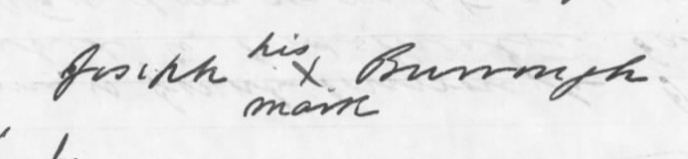
Due to Peanut not signing his name, Justice Olin needed a witness to swear to the fact that Peanut had, in fact, made the X himself. For this, Olin recruited the assistance of another witness who was awaiting examination. William T. Kent had been present at Ford’s Theatre and witnessed the shooting. After the call went up for help, Kent made his way into the Presidential box to render aid. When Dr. Charles Leale required a blade of some sort to cut open Lincoln’s shirt, Kent provided his penknife. After leaving the theater, Kent realized that he had lost his keys in the confusion. He was granted access back into the theater and searched the box. During his search, Kent came across the derringer used to shoot Lincoln. It was dropped in the box and kicked into a corner during the work to save the President. Kent took the gun and turned it over to the police, and he was now waiting his turn to tell his story to Justice Olin. The Justice thus had William Kent act as a witness to Peanut’s “signature” on this statement. Then it appears that Peanut John was released. 

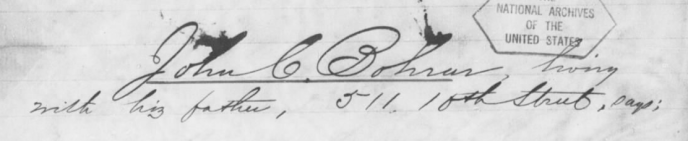
Nine days later, Peanut was interviewed again about the circumstances and people at Ford’s Theatre. This conversation on April 24th was transcribed onto six pages. The name given for this interview is John C. Bohrar, though there is no signature section at the end (X or otherwise). In this interview, Peanut gives more details about his caring for Booth’s stable behind Ford’s Theatre, and the circumstances of how he ended up holding Booth’s horse on the night of the assassination. While the name John Bohrar is different from Joseph Burrough, it’s clear that the same person was interviewed in both statements.
In his article, Joe explored the different Joseph Burroughs/Borrowses that have been suggested as possibly being “our” Peanut. Michael Kauffman theorized in American Brutus that Peanut might have been a son of Dr. Joseph Borrows, who lived right on E Street near Ford’s Theatre. But, thus far, we can’t seem to prove that Dr. Borrows had a surviving son at the time of the assassination. Fellow researcher Steve Williams tracked a Joseph A. Burroughs, who lived in Tenleytown (a neighborhood in the far northwest quadrant of D.C.) and later moved to Baltimore. He would have been about the right age for the teenage Peanuts, but this Burroughs is shown to be literate. 

While these possibilities are interesting, I would like to suggest that they may be based on a wrong assumption. The names we’ve explored have largely just been variations of Burroughs, Burrows, and Borrows. But when we look at the documents of Peanut’s two statements, neither of them put an “S” at the end of his name. He’s Joseph Burrough in the first one, and John Bohrar is the second. So, where is the ending S coming from? The answer, I think, is the trial transcript.

It was quite an undertaking to document the trial of the Lincoln conspirators. It was the duty of several court reporters to take down every word spoken in the courtroom by the commissioners, lawyers, and 347 unique witnesses. The court reporters listened to the words spoken in the trial room and took them down in shorthand. Between each session, the group would then painstakingly translate their notes into longhand and provide a transcript to the commissioners and lawyers the next day. They also provided copies to the newspapers for them to publish the trial, usually a day or two behind. As impressive as this system was, it wasn’t perfect. The shorthand process was done phonetically. Rather than taking down complete words or ideas, the different phonemes, or sounds, of words were taken down and then later transcribed. While this system worked well for much of the trial, one area where it caused mistakes was the spelling of names. When I completed my Trial Project a few years ago, completely documenting and summarizing the conspiracy trial into an easy-to-digest annotated form, the biggest bumps in the road were trying to determine the actual names and spelling of several witnesses. 
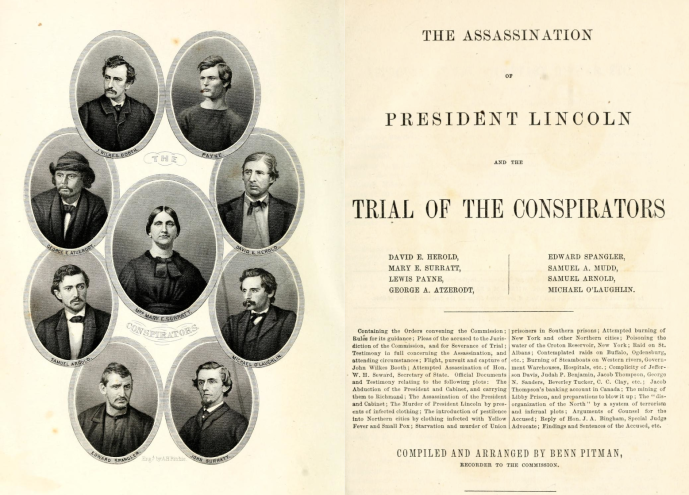
For example, two of the Ford’s Theatre employees, Jake Rittersbach and John Selecman, are given the names of Ritterspaugh and Sleichmann in the trial transcript. Dr. William Boarman is Dr. William “Bowman,” John Cantley is John “Cantlin,” and William Keilholtz is William “Keilotz,” just to name a few more.

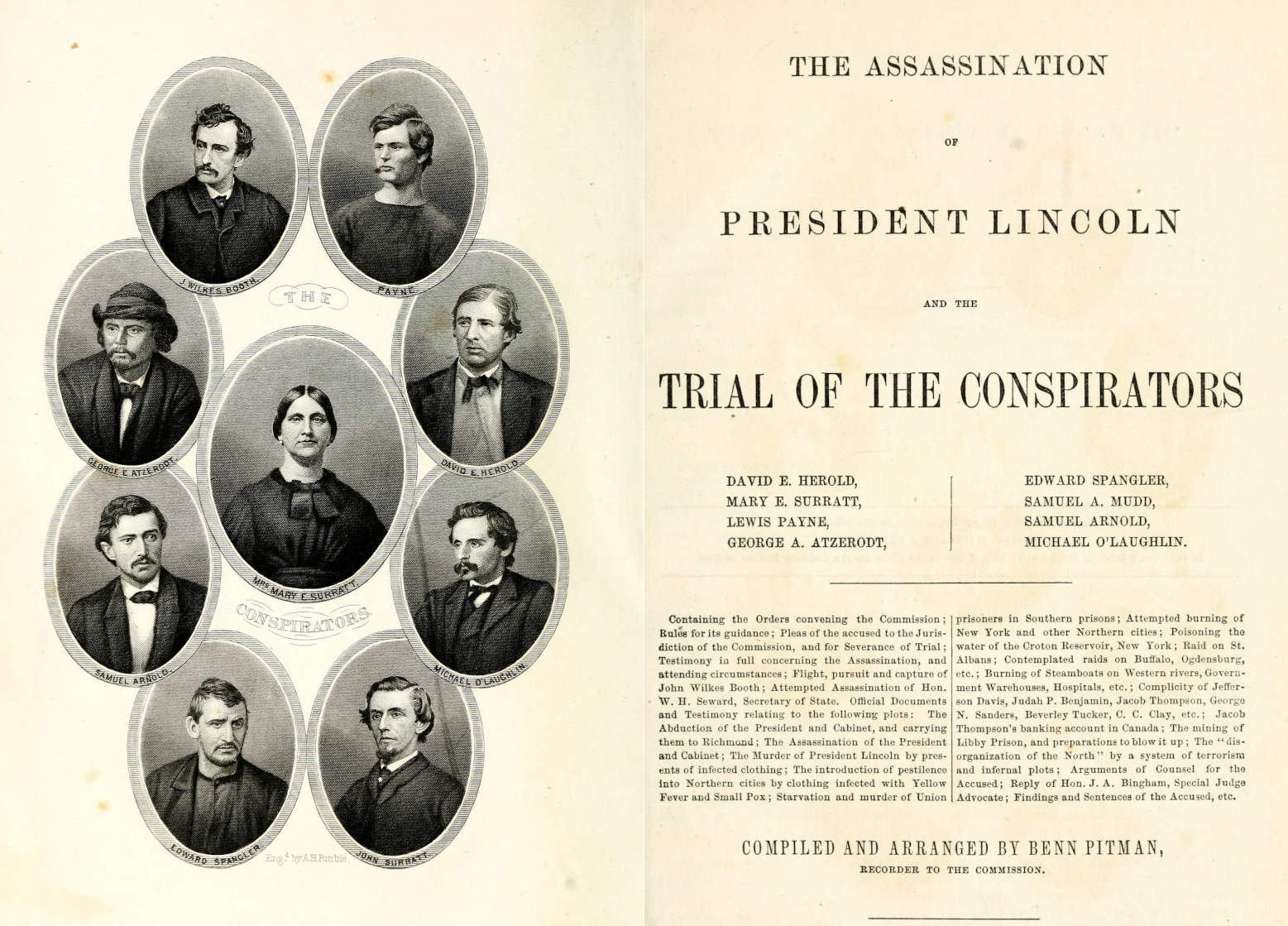
Different versions of the trial transcript exist. Benn Pitman published the “official” version of the trial as a single-volume book. He did this by essentially rewriting witness testimony into long paragraphs of text rather than the actual question-and-answer format that occurred when the lawyers were asking their questions to each witness. Because so much of the original content was taken out to reduce the trial to a single volume, the Pitman version is the least reliable trial transcript. But it is also the most well-known and widely available version. In the Pitman version, Peanut John’s name is given as Joseph Burroughs (with an S). The prevalence of Pitman’s transcript is probably why we have come to accept Peanut’s name to be Joseph Burroughs. However, given the numerous naming mistakes that occurred during the trial, we should be cautious about trusting this spelling, especially given the fact that neither of Peanut’s two statements put an S at the end of his name.

You may be thinking, “So what? Burrough or Burroughs, how does that help us?” Well, the reason I’m going into this is that I think the S has thrown us off. We’ve been looking for a Burrough/Borrow-like name that ends with an S, actively discounting any options without it. But if we free ourselves from the assumption that Peanut’s name has to end with an S, then there is an option that we have overlooked. It’s a small variation of the name given on the second interview Peanut did with the authorities. Let’s explore the possibility that Peanut John’s last name was actually Bohrer.

Aside from Peanut’s second interview with authorities on April 24, another piece of evidence that contributes to the speculation that Peanut’s last name might have been Bohrer is an article that was published in the D.C. Evening Star newspaper in 1928. The article recounted how a 1865 police report book had recently been unearthed from “a mass of debris in the subbasement of the Municipal Building.” The book contained handwritten logs from the Metropolitan Police Force from the time of Lincoln’s assassination. It describes some of the items that the police force took possession of after the assassination, as well as a list of those who came into the station to make reports in the hours after Lincoln was shot. This logbook also documented the aforementioned arrest of Edman Spangler and the bringing in of “John Borer (or Burrough) known around the opera house as ‘Peanut John.’” While the name isn’t a perfect match, it is another period document showing a last name without an S that is tantalizingly close to Bohrer.

Bohrer is a German name and, phonetically speaking, is not that far removed from a reasonable pronunciation of Burrough. Given that the Bohrar and Burrough spellings were both used in recording Peanut’s statements, we know that the way he pronounced his name had elements of each. Bohrer is a unique last name, but not an unheard-of one in the Washington, D.C. area. Various Bohrers had lived in the region for many years. 

One of the Bohrers who lived in the area was named Benjamin Schenckmyer Bohrer. He was born in Montgomery County, Maryland, in 1788, but moved to the then-independent city of Georgetown (now a neighborhood of D.C.), where he attended school and became a doctor. Except for a few years when he acted as a medical professor at Ohio Medical College in Cincinnati, Dr. Bohrer spent most of his life caring for the residents of Georgetown. In 1835, Dr. Bohrer was called to examine Richard Lawrence, the house painter who had attempted to assassinate President Andrew Jackson. Dr. Bohrer testified that he felt that Lawrence was “totally deranged” on the subject of President Jackson. Partly due to testimony from Dr. Bohrer and other medical professionals, Lawrence was found not guilty by reason of insanity for his attempted attack on President Jackson. Lawrence was committed to various institutions, eventually making his way to the Government Hospital for the Insane, later renamed to St. Elizabeth’s Hospital. Dr. Bohrer had helped establish this hospital. Dr. Bohrer died in 1862 and his death was greatly lamented in Georgetown, where he had been celebrated for ministering to “three generations in many families in the ancient town.”

Dr. Bohrer and his wife, Eliza Virginia Loughborough, had six children. One of the Bohrer sons was Benjamin Rush Bohrer, born about 1823. In order to avoid confusion with his physician father, Benjamin Jr. often went by his middle name of Rush or by his initials B. R. Bohrer. For a few years, this younger Bohrer ran a livery in Georgetown, renting out horses, buggies, and carriages to his neighbors. In 1848, Rush married Margaret Loretta Sullivan, a Maryland native. The couple had three children together, two of whom were born in D.C. The youngest child was born in Ottumwa, Iowa, where the couple had relocated for unknown reasons. It appears that it was in Iowa that Rush and Margaret’s marriage ended. In 1856, Margaret remarried a widower named Rudolph Bollinger and not long after moved to Brown County, Kansas. In the 1860 Federal Census, Margaret and her three children by Rush are shown living with their mom and stepfather in Claytonville, Kansas. Rush Bohrer had returned to Georgetown and was residing with his father, the doctor, who died two years later.

You may wonder why I’ve chosen to share all of these details about these particular Bohrers. Well, it’s because of my own theory that Peanut John might actually be the middle child of Benjamin Rush Bohrer and Margaret Loretta Sullivan. His name was John Jeremiah Bohrer, and this is a picture of him as he would have appeared at about the time of Lincoln’s death.

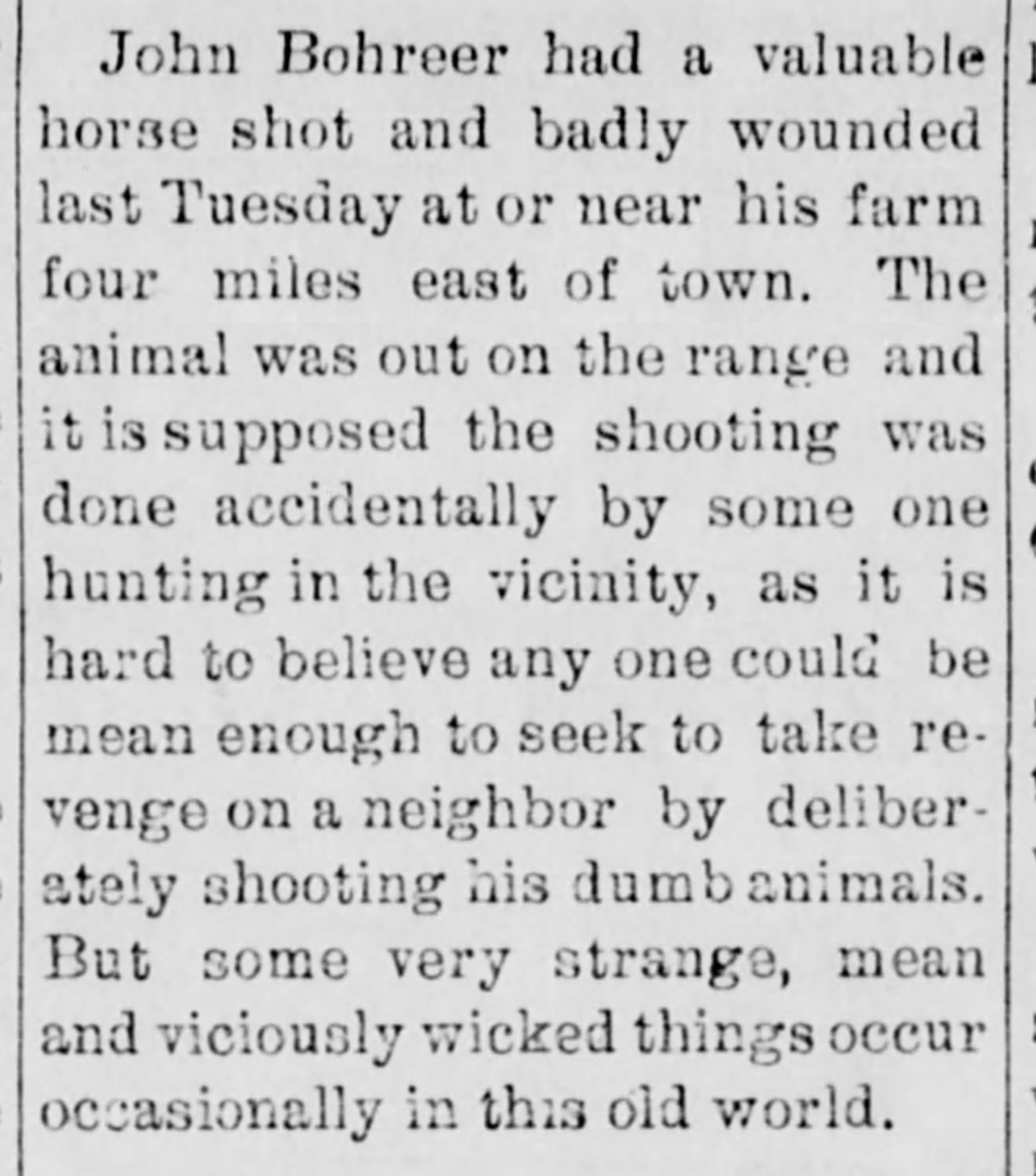
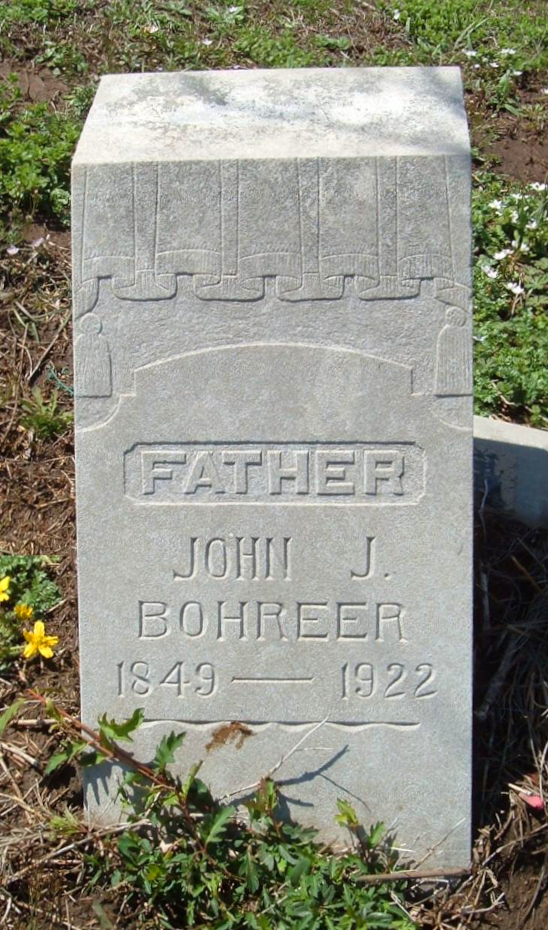
John Jeremiah Bohrer was the middle child of Rush and Margaret Bohrer. He was born on October 17, 1849, in Washington, D.C. As noted, John’s parents split up when he was young, and he seemingly resided with his mother and stepfather in the years after his parents’ divorce. In September of 1865, John’s name can be found in the Kansas state census, residing with his mother, stepfather, younger brother, and stepsiblings in Brown County, Kansas. In 1875, John married Susan Blackburn in Eufaula, Indian Territory (now Oklahoma). Susan was a member of the Choctaw Nation, being 1/16 Choctaw according to records. John Bohrer had likely made his way from Kansas to Indian Territory via the newly consolidated Missouri, Kansas and Texas Railway. He and Susan made their residence in the Choctaw Nation. They had six children together. At some point, John changed the spelling of his last name to Bohreer. All of John and Susan’s children were given the last name of Bohreer. Susan died in 1903, leaving John a widower. Oklahoma became a state in 1907, and the former Choctaw land on which John Bohreer had lived since about 1874 became part of Pittsburg County. In 1909, John married Mary Lynch, a widow 25 years his junior. John and Mary had two children together.

For the vast majority of his adult life, John Jeremiah Bohreer worked as a farmer, residing within a mile and a half of the same tract of land in Pittsburg County, Oklahoma. When he died on May 8, 1922, at the age of 72, he was remembered as one of the pioneers in the region, “beloved and respected by all.”
Now, I want to reiterate that I’m merely speculating that John J. Bohre[e]r might have been Peanut John. Much like Michael Kauffman’s theory about Peanut John being the son of Dr. Joseph Borrows, or Steve Williams’ exploration of the Joseph A. Burroughs who lived in Tenlytown, I can’t prove it. And, like those other examples, my theory also has issues. Still, here’s my speculative case.

1. He’s around the right age

John Jeremiah Bohrer was born in October of 1849. This would have made him 15 years old at the time of Lincoln’s assassination. William Kent, the witness who swore to Peanut’s X on his first statement, later estimated that Peanut was about 17 years old when he interacted with him. Bohrer’s age puts him right in the sweet spot and would have made other boys like David Finney and Frank Drake his peers.

2. His parents were not together

On the statement where Peanut’s name is given as “John C. Bohrar” it states that he is “living with his father.” At the time of Lincoln’s assassination, John Bohrer’s parents were divorced and living in different states. His mother, Margaret Bollinger, resided in Kansas while his father, Benjamin Rush Bohrer, was living in Georgetown.

3. John Bohrer changed his last name

As noted, John changed the spelling of his last name from Bohrer to Bohreer (which changed the pronunciation from Buh-rur to Buh-rear). During my research, I had a conversation with John’s granddaughter. She and the rest of the family are not sure why John changed his last name. Could it have been to distance himself from the history associated with his prior last name?

4. John Bohreer was barely literate

In the first statement Peanut gave, he signed the document with an X, implying that the boy was unable to sign his own name. We took this as evidence that Peanuts was likely illiterate. In the years just before his wife Susan’s death, John Bohreer applied to become a member of the Choctaw Nation through marriage. He did this to ensure land rights for himself and his children. He was granted acceptance into the Choctaw Nation and received several land grants to increase his holdings. Several of the documents associated with his application and land grants are available to view on Ancestry. In these records, it’s clear that someone other than John Bohreer is filling out the paperwork. But Bohreer was required to sign the documents. Here are some examples of his signature:

Bohreer was only in his 50s at the time these documents were signed. The shaky and inconsistent lettering across the signatures implies that he struggled to write his own name. If Bohreer was Peanuts and had spent part of his teenage years working at a theater rather than getting an education, it would make sense that that was the best signature he could give in later life.

5. The real Peanut John vanished after the assassination

Thomas Bogar writes in his book Backstage at the Lincoln Assassination that, after finishing his testimony at the trial of the conspirators, Peanut John, “stepped out of the witness box and out of the pages of history.” The whole reason we are having this discussion is that whoever Peanut John was, he seemingly failed to ever discuss his brush with history after leaving the witness stand. One would think that, in the 160+ years since the death of Lincoln, someone somewhere would have come across a newspaper article in which the real Peanut John told his story. The lack of any such document or account implies that the real Peanut John didn’t want to talk about this event. While Peanut was innocent of knowing what John Wilkes Booth was planning, he still held the assassin’s horse, unknowingly assisting in his escape. According to William Kent’s recollection, when those around Ford’s Theatre learned what Peanuts had done, “the infuriated crowd pounced on the boy, and but for the fact that a police station was a block away he would have been lynched. There were many cries of ‘Hang him.’” Thus, the assassination was an exceedingly traumatic experience for this young man. If I were Peanuts, I would want to get as far away from the scene of the crime as possible, as soon as I could. How much farther away from the event could you get than later moving to the frontier, residing in Indian Territory, and changing your name?

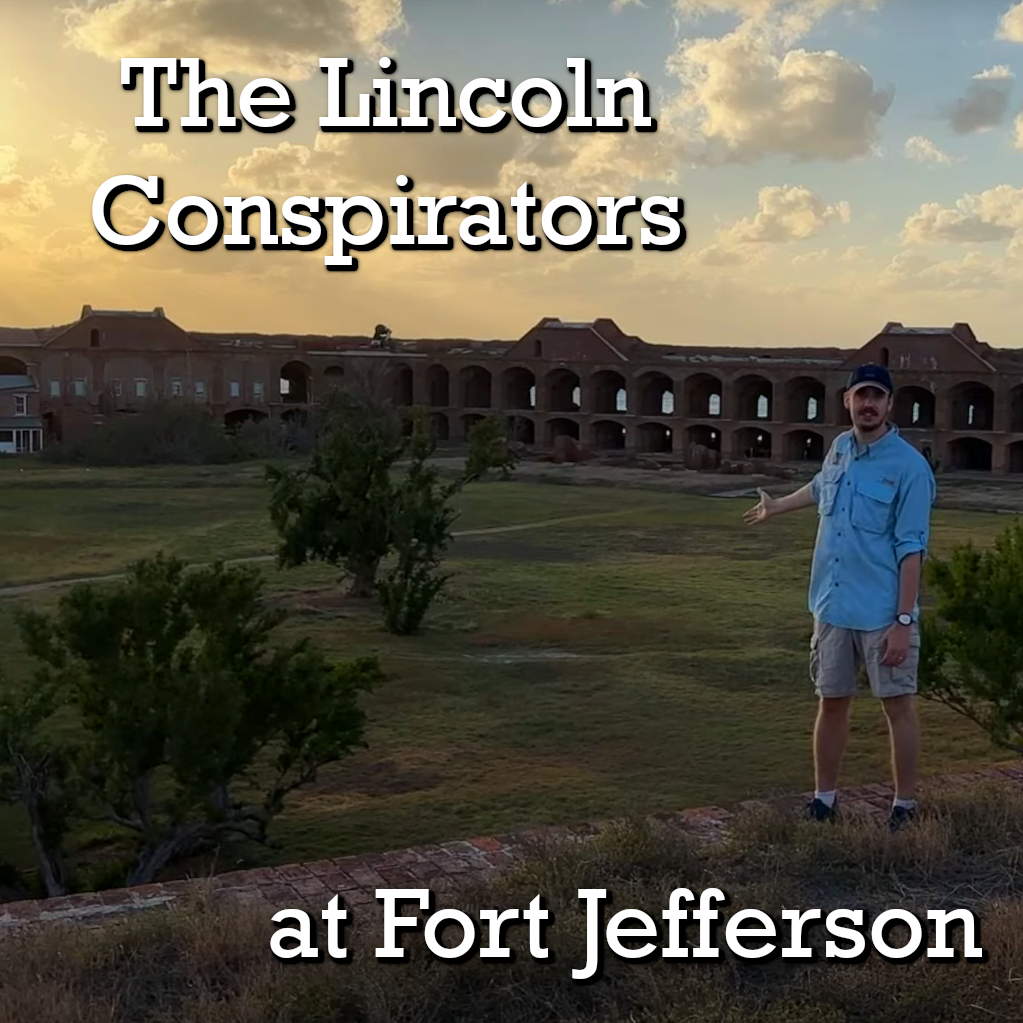
It’s worth mentioning that one of the actors in “Our American Cousin” later commented on the fate of Peanut John. Actress Kate Evans had the small role of Sharpe, the maid, in the last production Lincoln saw. She later moved to Chicago and was interviewed about the tragic events of April 14, 1865, several decades later. In her dated memory, Evans erroneously claimed that “Both Spangler and Peanut John, following the trial of the conspirators, were sent to Dry Tortugas, but [were] subsequently pardoned.” Peanut John was never sent to Fort Jefferson like Edman Spangler.

Of course, there are still a few flaws in my speculation. As noted before, John Bohrer is documented as living in Kansas with his mother in the 1860 Federal Census and the September 1865 state census. This doesn’t preclude the idea that, during the Civil War years, John travelled back to D.C. to live with his father, but I don’t have any records to support this. Another issue is that the statement that says Peanuts was living with his father at the time of the assassination gives the address as “511 Tenth Street.” I have not been able to find a record that places Rush Bohrer at this address. In 1866, he was in the D.C. directory, still living in Georgetown. In 1865, 511 Tenth Street was the home of a woman named Louisa Brent, the widow of Thomas. What connection she may have, if any, with Peanuts or the Bohrers is unknown. In addition, we have the other records that give Peanut’s first name as Joseph, rather than John. I can’t explain that repeated discrepancy if John Jeremiah Bohrer is the real McCoy.

Still, I speculate that John Bohrer could have been Peanut John. Perhaps during the Civil War years, John went to live with his father, Rush Bohrer. Even if they started off in Georgetown, young John would have wanted to explore the capital city. There were horse-drawn buses that made transportation between the two adjacent communities easy and fast. Somehow, during his visits, John became involved in selling peanuts and other concessions at Ford’s Theatre. This eventually led to him taking on more significant roles around the theater, such as carrying playbills around the city and guarding the stage door during performances. Perhaps because of this new job, he lived away from Georgetown and found lodging further down Tenth Street. John eventually became acquainted with the actor John Wilkes Booth and helped care for the stable Edman Spangler had helped construct for him in the alley behind the theater. Then April 14, 1865, came, and John’s life changed forever. After nearly being lynched for holding the assassin’s horse, John provided two statements to the authorities. In May, he testified twice at the trial of the conspirators, answering questions about his former coworker, Edman Spangler. Once his testimony was given and he was free to go, John decided to leave town. He made his way back to his mother and stepfather in Kansas and was enumerated with them in the state census in September. In the 1870s, the now-adult John took the train south from Brown County to Indian Territory. He met a girl, married her, and set up a new life with a new last name on the frontier. He spent the rest of his life as a respected pioneer and settler in what would become Oklahoma, dying in 1922.
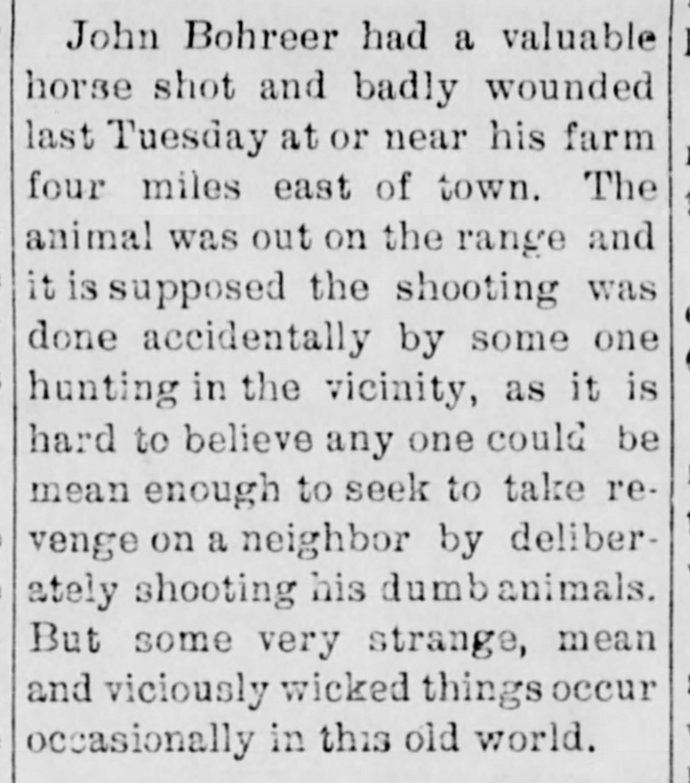
Even if John Jeremiah Bohreer isn’t our guy, I think researchers need to start branching beyond the traditional Burroughs/Borrows name when looking for Peanuts. The assumption that his last name must end with an ‘S’ comes from the unreliable trial transcript, whereas the two best sources we have omit an ‘S’ altogether. If we free ourselves from this constraint, who knows how many other folks with similar-sounding names we might be able to find and add to the old Peanut gallery.

Categories: History | Tags: , , , | 5 Comments

Will Research for Peanuts by Joe Barry

I’m so pleased to welcome another guest contributor to LincolnConspirators.com. The following piece was written by Joe Barry, a historical researcher currently working on a book about Joseph B. Stewart. On April 14, 1865, Stewart was seated in the front row of Ford’s Theatre, taking in the play. Stewart heard the sound of a gunshot and witnessed a man jump from the Presidential box to the stage below. While the rest of the audience remained frozen in their seats in confusion, Stewart was the first to take action. The D.C. lawyer, noted as one of the tallest men in Washington, climbed over the orchestra pit, onto the stage, and gave chase to the assassin. Joe Barry has spent the last few years uncovering many more interesting stories in the life of Joseph Stewart, a man he describes as the Forrest Gump of the 19th century. Having already previewed one of Joe’s chapters about the assassination, I’m very much looking forward to seeing the final product in the near future. You can learn more about Joe and his upcoming book by checking out his website JoeBarryAuthor.com

Will Research for Peanuts!

By Joe Barry

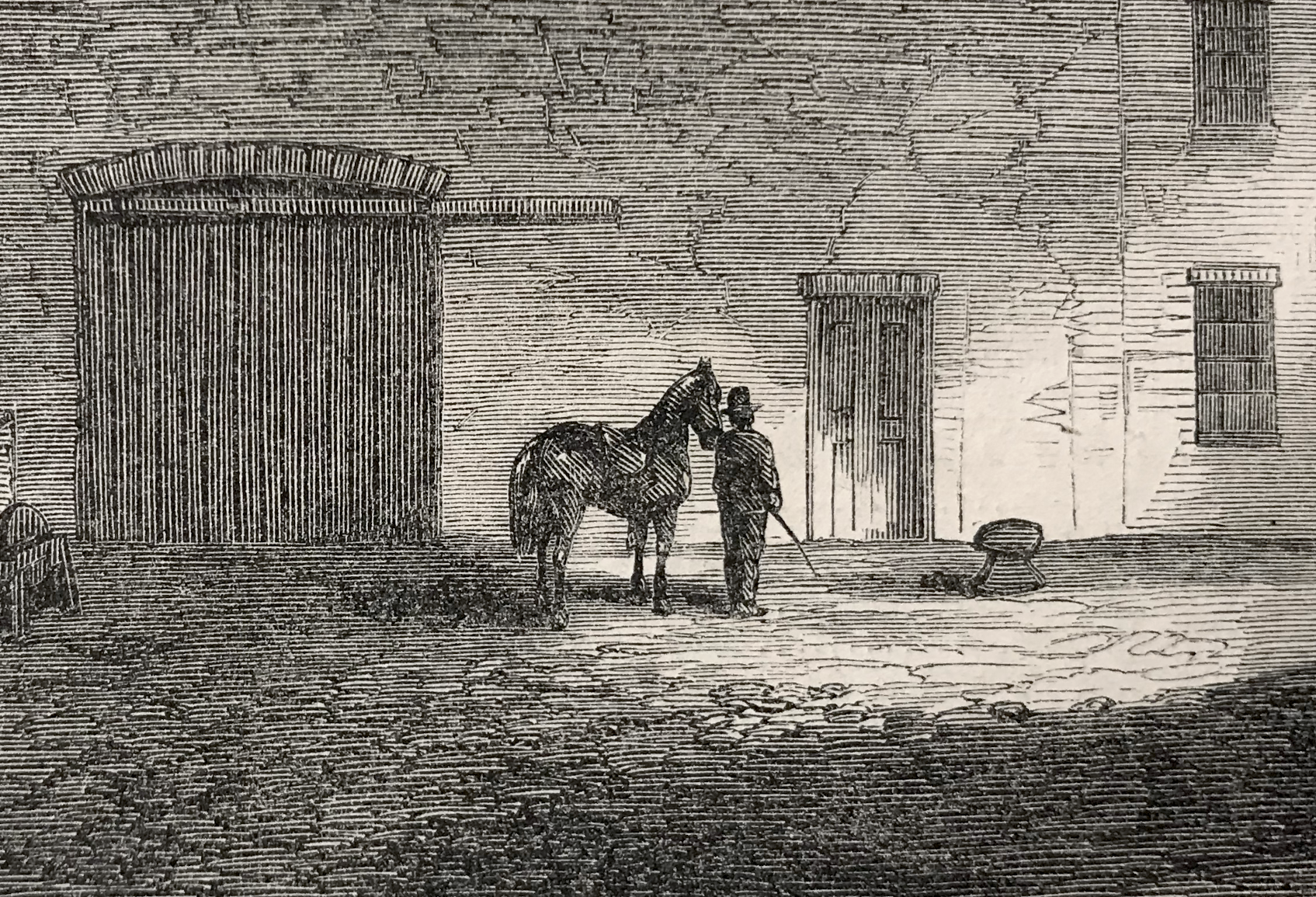
Joseph Burroughs holding John Wilkes Booth’s horse, from the May 13, 1865, Frank Leslie’s Illustrated

One of the more enigmatic figures of the Lincoln assassination is Joseph “John Peanuts” Burroughs, the young errand boy at Ford’s Theatre who held John Wilkes Booth’s horse prior to the assassin’s escape. Burroughs’s age is unknown, although estimates vary between fourteen to seventeen years old. In his statement to Justice Abram Olin on April 15, 1865, his name was dictated as Joseph Burrough. However, the conspiracy trial records also list Borroughs, Burrow, and John C. Bohraw—which are likely phonetic transcription errors. At the theater, he soon earned the nickname “John Peanuts” because he peddled peanuts in between acts. Some newspapers after the assassination even misreported “John Peanuts” as “Japanese.”[1]

Burroughs’s experience in the assassination was brief and traumatic. After Booth asked for the stagehand Edman “Ned” Spangler to hold his horse, Spangler begged off owing to his scene shifting duties, and the task fell to Burroughs. After approximately fifteen minutes, Booth burst through the back door into Baptist Alley and rewarded Burroughs’s loyalty by hitting him on the head with the butt of his knife and kicking him away from his horse. Across Peanut’s multiple pieces of testimony, he described handling horse-related duties for Booth over the previous few months, of working with Spangler in fixing the president’s box at Ford’s Theatre, and of Spangler cursing the president over the war.[2]

Throughout the years, a consensus emerged that Burroughs was Black and dull-witted. The best evidence indicates he was neither. Burroughs signed his second statement on April 24th with an “X”, which could suggest he was illiterate, but his testimony reveals he was intelligent, articulate, and well-versed with horses. The orchestra director, William Withers, and former police superintendent, Almarin C. Richards, both described him as Black, but these accounts were decades old. More conclusively, the trial transcripts for Burroughs lack the “(Colored)” description preceding his name in keeping with the discriminatory practice of the period. John F. Sleichmann, the assistant property manager at Ford’s Theatre, testified that Booth, Burroughs, and a few others shared drinks at the nearby saloon on the day of the assassination. Yet, Blacks were not allowed to sit down in such restaurants at this time, and an inveterate racist like Booth would not associate with a Black person. Nevertheless, contemporary newspaper illustrations depicted Burroughs as Black.[3]

Burroughs watching Joseph B. Stewart chase Booth, from the April 29, 1865 National Police Gazette

In American Brutus, Michael Kauffman theorizes Burroughs was the son of Doctor Joseph Borrows, III, a prominent physician in Washington, D.C. In his April 24th statement, Burroughs stated he was living with his father at 511 Tenth Street. Although this corresponds to the Ford’s Theatre address since at least 1948, prior to 1869, this address was south of Pennsylvania Avenue near the present-day block of 317-337 Tenth Street NW. The address for the Army Medical Museum in 1868 (housed within the theater building) was 454 Tenth Street. Notably, the city directory listed Dr. Borrows’s address as 396 E Street north, which abutted Baptist Alley behind Ford’s Theatre. The Borrows name and his close proximity to the theater make for a compelling connection—even if it does not illuminate Burroughs’s subsequent actions and movements.[4]

However, the Dr. Borrows theory has shortcomings. The reference to Peanuts living with his father implies the mother was absent. Yet, Dr. Borrows had a wife, Catherine, who outlived him. Further, the 1860 census for the Borrows household includes four females, but no son. Tragically, Catherine delivered a stillborn boy, Joseph, in 1850—a year after their five year-old daughter died. As author Susan Higginbotham has noted, a doctor’s son would be in school and not selling peanuts and running errands at a theater.[5]

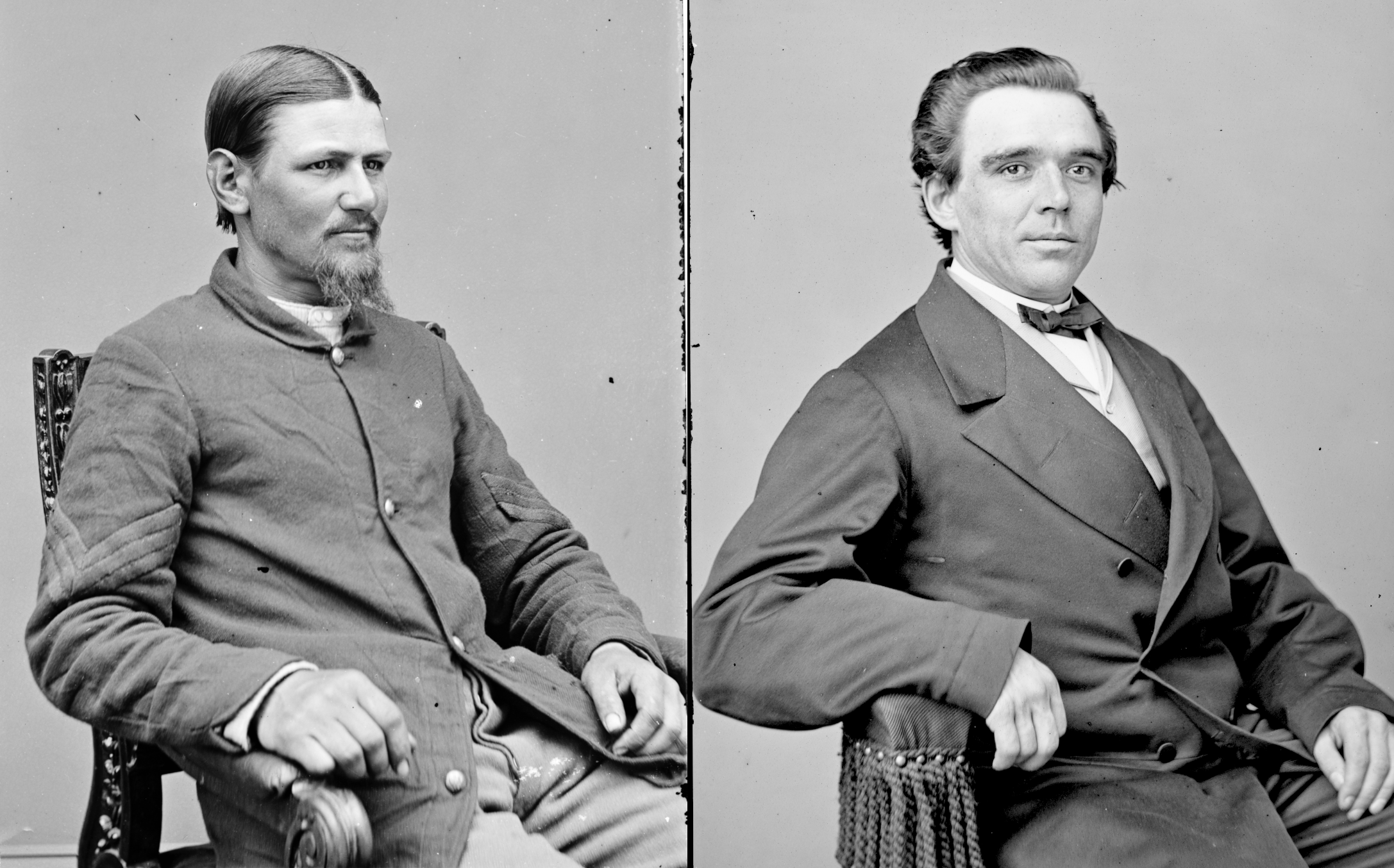
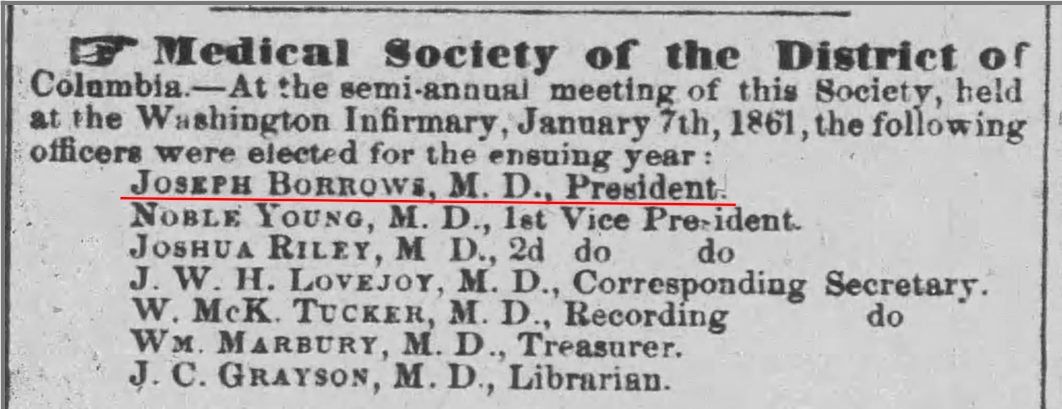
Even still, Dr. Borrows’s obituary in 1889 provides a clue that may explain a potential connection with Peanuts. The doctor was an eminent physician who served for several years as president of the Medical Society of the District of Columbia. His obituary in the Evening Star notes: “There was probably no more popular physician or man in the District than Dr. Borrows, and hundreds of children were named for him in families he attended through, in some instances, four generations.” It is possible Burroughs received assistance from Dr. Borrows and perhaps even stayed at his residence in the same itinerant manner as at Ford’s Theatre. Similarly, Ned Spangler kept a boarding house for supper but mostly slept inside Ford’s Theatre.[6]

Dr. Joseph Borrows was a leading Washington, D.C physician, Daily National Intelligencer, January 9, 1861

Along similar lines of a father-figure role, Thomas Bogar, author of Backstage at the Lincoln Assassination, posited in Roger Norton’s Lincoln Discussion Symposium that Ford’s Theatre stage manager John Burroughs Wright might have semi-adopted Joseph Burroughs and gave his middle name as Peanut’s surname. In 1915, Wright’s wife, Annie, referred to Peanuts as “a simple minded but good natured street waif who worked all day and half the night about the stage.” The Wrights lived at the Herndon House on the corner of F and Ninth streets, only one block to the rear of the theater. (This is the same building Lewis Powell stayed at, and where Mary Surratt called on him.) If the Wrights did play the role of surrogate parents, it was not enough to keep Peanuts from roaming.[7]

Ford’s Theatre stage manager John Burroughs Wright and his wife, Annie

After the assassination, Burroughs was deterred from providing a statement to the police due to the mob accusing anyone entering or departing the police station of being a conspirator. Burroughs had to be especially cautious once it became known he had held Booth’s horse, and one eyewitness recalled a policeman escorting Peanuts into the station. No parental figure appeared on his behalf.[8]

More proof of Burroughs’s independent wanderings is found in Judge Advocate Henry L. Burnett’s May 9, 1865, letter to Colonel Lafayette C. Baker relaying Secretary of War Edwin Stanton’s order “that the boy Peanuts be placed in confinement in some comfortable place that he may be forthcoming when wanted.” Again, if Burroughs had the protection of his parents and a permanent roof over his head, he would have been readily available for questioning and not require government quarters. Regardless, Burroughs avoided any further statements or publicity after his conspiracy trial testimony.[9]

The key question in tracking down Peanuts is whether he stayed in Washington, D.C. or left the capital. To this end, researcher Steve Williams has found an intriguing lead on a Joseph Alexander Burroughs from the Tenleytown D.C. suburb and of the correct age to be Peanuts. This Joseph Burroughs was listed as a farmer, married Mary Elizabeth Burroughs in Washington, D.C. in 1873, and moved to Baltimore shortly thereafter. After settling in Baltimore, this Joseph is listed as a laborer —thereafter a produce seller—and favored the Burrows surname. Joseph and Mary had three daughters and two sons. Of note, he was definitely literate, and his son, Joseph Cornelius, readopted the Burroughs surname. Joseph Burrows died in Baltimore in 1931.[10]

Joseph Burrows of Baltimore from the 1880 Census. Could this be Peanuts?

If Peanuts is not this Joseph Burroughs from Tenleytown, then he likely departed Washington, D.C. before the 1870 census. Bogar correctly notes Burroughs and the other backstage employees had highly transferable skills to find jobs in any city. In the frequently shortened lifespans of the nineteenth century, it is also possible he died early. If Burroughs had a family, he bucked the trend of those associated with the assassination to have their (often highly exaggerated) exploits published in their obituaries. Given the trauma of being an unwitting accomplice to President Lincoln’s assassination, it is understandable if, for the remainder of his life, Burroughs simply wanted to be left alone.[11]

In the decades following the assassination, “Peanuts” resurfaced in random locations, including Washington, D.C., New York, and Massachusetts—but these sightings seem spurious. In 1887, a Louisiana newspaper mentioned Peanut John was living in Shreveport and was known as “Mixie.” In 1930, an elderly Black man appeared at a Washington, D.C. fire station and showed a scar on his head supposedly from Booth’s knife. A formerly enslaved man named Nathan Simms told a tall tale of being John Peanuts and actually helping Booth dismount outside of Surratt’s Tavern later that night. In 1960—twenty six years after Simms’s death—the Boy Scout Troop of Marshallton, Pennsylvania, raised money for a gravestone that told his story. In 1980, A. C. Richards’s biographer, Gary Planck, cited the naturalist John Burroughs as Peanuts.[12]

The most colorful Peanuts imposter was an unwilling participant: a diminutive street person of Italian descent named Joe “Coughdrop” Ratto who sold cough drops near Ford’s Theatre. Local residents taunted him mercilessly, asking if he had held Booth’s horse—which would throw him into a violent rage. Stories of Ratto emerged as early as 1909, and likely fed follow on narratives that John Peanuts was Italian. An imaginative account from 1923 claimed the Italian ambassador helped free him from prison after the assassination, in which Peanuts returned the favor by serving in the Italian Army.[13]

Joe “Coughdrop” Ratto, forever taunted as “John Peanuts”

It need not be highlighted each theory relating to Joseph “John Peanuts” Burroughs relies upon healthy doses of speculation. With multiple names, a single address, and a publicity-shy witness who faded into history, we have limited material to work with. Indeed, the renowned researcher James O. Hall assembled a file on Peanuts, and on the outside cover summarized his findings: “I was never able to trace the boy.” In the end, we are left with the same plea from the Surratt Courier in 1989: “Will the Real ‘Peanuts’ Burroughs Please Rise?!”[14]

Only ghosts remain: Baptist Alley in the years after the assassination


[1] The official record of the commission compiled by Benn Pitman lists the name as Joseph Burroughs. The conspiracy trial transcripts show multiple references to Peanut(s), John Peanut(s), and Peanut(s) John. Michael Kauffman also cites Bohrar and Burrus in American Brutus. “The Assassination,” Daily Illinois State Journal, April 22, 1865, p. 1.
[2] Peanuts stated he held the horse for fifteen minutes at the conspiracy trial, although this is different from his provided statements. Burroughs’s testimony at the conspiracy trial is found at Edward Steers, Jr., ed., The Trial: The Assassination of President Lincoln and the Trial of the Conspirators (Lexington, Kentucky, 2003), 187-95, 465-66; William C. Edwards and Edward Steers, eds., The Lincoln Assassination: The Evidence, (Champaign, Illinois, 2009), 238;
[3] William J. Ferguson’s 1930 memoir I Saw Booth Shoot Lincoln refers to Peanuts as “dull-witted.” Joan L. Chaconas, “Will the Real ‘Peanuts’ Burroughs Please Rise?!” Surratt Courier (June, 1989), 1, 3-7; “Wilkes Booth Again,” Critic (Washington, D.C.), April 17, 1885, p. 1.
[4] Washington, D.C. addresses changed to a new format in 1869. William H. Boyd, Boyd’s Washington and Georgetown Directory, 1868 (Washington, D.C., 1868), 40; Edwards, Steers, The Lincoln Assassination, 463; Andrew Boyd, Boyd’s Washington and Georgetown Directory, 1865 (Washington, D.C., 1865), 142.
[5] “More on the Elusive Peanuts,” Surratt Courier (September, 2014), 11; 1870 US Census, Washington, D.C., Ward 3, family 220; “Dr. Joseph Borrows,” Find A Grave, https://www.findagrave.com/memorial/140486080/joseph-borrows.
[6] Emphasis added. The Ned Spangler information is from Jacob Ritterspaugh’s testimony. “Dr. Joseph Borrows Dead,” Evening Star, May 31, 1889, p. 3; Steers, The Trial, 394.
[7] The thread for this theory is found at: https://rogerjnorton.com/LincolnDiscussionSymposium/thread-1802.html. “She Saw Lincoln Shot,” Boston Globe, April 11, 1915, p. 66; Thomas A. Bogar, Backstage at the Lincoln Assassination: The Untold Story of the Actors and Stagehands at Ford’s Theatre (Washington, D.C., 2013), 88; Trial of John H. Surratt in the Criminal Court for District of Columbia, Hon. George P. Fisher Presiding, (2 vols., Washington, D.C., 1867) I, 235; Louis J. Weichmann, A True History of the Assassination of Abraham Lincoln and the Conspiracy of 1865 (New York, 1977), 121-22.
[8] “Lincoln’s Assassination,” St. Louis Globe-Democrat, Dec. 3, 1891, p. 12.
[9] Edwards, Steers, The Lincoln Assassination, 259-60.
[10] Substantial documentation for this potential Burroughs is in the same above Lincoln Discussion Symposium link.
[11] Bogar, Backstage at the Lincoln Assassination, 276.
[12] Chaconas, “Will the Real ‘Peanuts’ Burroughs Please Rise?!” Opelousas Courier (Opelousas, Louisiana), April 2, 1887, p. 1; Peanuts Folder, James O. Hall Research Center, Clinton, Maryland; Edward Steers, Jr., Lincoln Legends: Myths, Hoaxes, and Confabulations Associated with our Greatest President (Lexington, Kentucky, 2007), 319-22; Gary R. Planck, “The Lincoln Assassination: The ‘Forgotten’ Investigation, A. C. Richards, Superintendent of the Metropolitan Police,” Lincoln Herald, 82 (Winter 1980), 526.
[13] A. C. Richards later referred to Burroughs as Italian in 1906, likely stemming from the Joe Ratto lore. “Did ‘Coughdrop Joe’ Ratto Hold Booth’s Horse?” Lincoln Lore, 1571 (January, 1969), 2-3; “People Met in Hotel Lobbies,” Washington Post, Jul. 14, 1909, p. 6; C. W. S. Wilgus, “The Lincoln Tragedy,” Ravena Republican (Ravena, Ohio), April 19, 1906; “Brooklyn Man was in Theater Night Lincoln Was Shot,” Brooklyn Eagle, Feb. 11, 1923, p. 36.
[14] “Peanuts” folder, James O. Hall Research Center; Chaconas, “Will the Real ‘Peanuts’ Burroughs Please Rise?!”

Categories: History, Joe Barry | Tags: , , , | 4 Comments

Midnight on the Potomac by Scott Ellsworth

In July of 2025, bestselling author Scott Ellsworth published his newest book, Midnight on the Potomac: The Last Year of the Civil War, The Lincoln Assassination, and the Rebirth of America. After devouring Dr. Ellsworth’s incredibly well-written and engaging book, I reached out to him seeing if he would be willing to sit down for a virtual interview about his work. Below you will find our talk where we discuss the end of the Civil War, the character of John Wilkes Booth, and the Confederate Secret Service.

I’m so grateful to Dr. Ellsworth for chatting with me and I hope you will all pick up your own copies of Midnight on the Potomac wherever you get your books. While Scott didn’t quite make a believer out of me when it comes to the Confederacy’s role in Lincoln’s death, his book provides many intriguing points to ponder. On top of all that, the book gives an engaging accounting of the final months of the Civil War that is impossible to put down.

Categories: History, News | Tags: , , , | 5 Comments

John Wilkes Booth at the Parker House Hotel

In 1988, Lincoln assassination researchers General William Tidwell, James O. Hall, and David Gaddy published a book called Come Retribution: The Confederate Secret Service and the Assassination of Lincoln. The volume was the first book of its kind, attempting to unravel the activities of the Confederate Secret Service during the Civil War. The trio documented many plots and instances of guerrilla warfare that Confederate agents undertook to undermine the Union war effort and support the goals of the Rebel South. In addition to documenting the South’s spying apparatus, the authors revitalized the belief of the Union government in 1865, which posited that the Confederate government was behind John Wilkes Booth’s plot against Abraham Lincoln. 

There is no denying that John Wilkes Booth had several intriguing interactions with those involved in some way with secret Confederate activities. His conspirator in the kidnapping plot, John Surratt, was a known Confederate courier, helping to transport mail and people across the line between Union and Confederate territory. In October of 1864, while working on his plan to abduct Lincoln, Booth traveled to Montreal, Canada, a hotbed of Confederate intrigue, where it was claimed he met with high-ranking Confederate officials stationed there. At the trial of the Lincoln conspirators, a group of witnesses gave damning testimony regarding Booth’s familiarity with members of the Confederate leadership in Canada. The belief of the federal government was that the assassin was following the directive of Confederate leaders and that they were as much to blame for the murder of Lincoln as John Wilkes Booth. 

However, despite the strong belief that the Confederate government was the moving spirit of Booth’s plot, concrete evidence proving such a connection has never quite materialized. Most of the witnesses who placed Booth with high-ranking Confederate officials in Canada were later proven to have committed perjury and been bribed to provide their false testimony. No document from the Confederate government mentions Booth, nor were any documents connecting him to the Confederacy found among Booth’s papers after his crime. John Surratt denied that his foray with Booth was in any way connected with his activities as a rebel courier. 

While Booth undoubtedly had flirtations with Confederates and clearly assembled a gang of Confederate sympathizers to help him in his plan, the smoking gun proving that John Wilkes Booth was acting as an authorized agent of the Confederacy remains elusive. 

Even with acknowledging the lack of definitive proof, Tidwell, Hall, and Gaddy proceeded to build a circumstantial case attempting to prove the Confederacy culpable for Lincoln’s death. One piece of evidence the men pointed to revolved around a trip John Wilkes Booth took to the Parker House hotel in Boston, Massachusetts, in July of 1864.

Part of Come Retribution discusses a Confederate attempt to utilize biological warfare against the Union. Several boxes of clothing “infected” with Yellow Fever were sent to northern cities in an effort to start an outbreak of the deadly disease. Luckily, the plot proved unsuccessful as the medicinal knowledge of the day was unaware that Yellow Fever is not contagious but is spread through the bites of infected mosquitoes. Still, this attempt to poison Northern cities was a significant escalation, and the plot was discussed at the trial of the Lincoln conspirators to show how the Confederacy had been willing to commit terrible deeds to win the war.

Details of the Yellow Fever plot piqued the interest of a man named Cordial Crane, who was an official of the Custom House in Boston, Massachusetts. The trunks of yellow fever clothing had made their way through the port of Boston, and one of the conspirators in the plot was said to have stayed at the Parker House hotel in Boston during the shipping process. Acting under his own initiative, Crane went and consulted the hotel register for the Parker House. While he was not able to find any evidence of the Yellow Fever conspirator in the ledger book, he did note the appearance of John Wilkes Booth’s name. I’ll let Come Retribution take it from here:

“…He [found] J. Wilkes Booth on the Parker House register for 26 July 1864 along with three men from Canada and one from Baltimore. Crane’s suspicions were aroused. He copied the entries and sent a letter dated 30 May 1865 to Secretary of War Edwin M. Stanton. He listed the names “Charles R. Hunter, Toronto, CW [Canada West], J Wilkes Booth, A. J. Bursted, Baltimore, H. V. Clinton, Hamilton, CW, R. A. Leech, Montreal.” In his letter to Stanton, Crane wrote that he sent the “names as a remarkable circumstance that representatives from the where named places should arrive and meet at the Parker House at about the same time Harris was on his way to Halifax with his clothing.” Crane put the emphasis in his letter on “Harris” and the supposedly infected clothing. No investigation was made into the other names on the Parker House register. After all, Booth was dead and the War Department already had information about the “yellow fever plot.” Crane’s letter was filed and not followed up.

Now, more than a century later, the gathering at the Parker House can be construed differently. It has all the earmarks of a conference with an agenda. The inference is that agents of the Confederate apparatus in Canada had a need to discuss something with Booth. Capturing Lincoln? Within a few weeks Booth was in Baltimore recruiting others for just such a scheme and had closed out his Pennsylvania oil operations. The inference becomes stronger as a result of a careful search of records in Toronto, Baltimore, Hamilton, and Montreal. No trace of Hunter, Bursted, and Leech was found. The names appear to be aliases.

The man using the name “H. V. Clinton” did turn up in a not unexpected place. Such a man registered at the St. Lawrence Hall, Montreal, on 28 May 1864. Instead of listing himself as from Hamilton, CW, he gave his home address as St. Louis, Missouri. He was back at the St. Lawrence Hall on 24 August 1864, again entering his name on the register as “H. V. Clinton, St. Louis.” A thorough search of St. Louis records from the 1850-1870 period was made. “H. V. Clinton” was not found.”

Now this is an example of where I believe Tidwell, Hall, and Gaddy go too far astray with their suppositions and theories in hopes of proving their overall thesis. With nothing but transferred names from a hotel registry, they have concocted a scenario in which Booth engaged in a meeting with these fellow hotel guests, and that the purpose of this meeting was the actor’s recruitment into an abduction plot against the President. The main evidence of this scenario is the trio’s belief that the names used in the register are aliases, and thus, proof of the men being Confederate agents. Yet this is a laughable conclusion to make without evidence. A researcher’s inability to find more information about a person listed in a hotel registry doesn’t prove the person used an alias. Once you start down that route, you might as well put on your tinfoil hat because then every name is an alias.

Tidwell, Hall, and Gaddy were good researchers, to be sure, but they were as capable of making mistakes and missing things as anyone. One thing that they, and other researchers since, have missed is the fact that they have transcribed one of the names from Crane’s list incorrectly. His list doesn’t include the name Charles R. Hunter, but rather the name “Chas R Winter.”

Above is the original handwritten letter that Crane sent to Edwin Stanton. A microfilmed version of the letter is contained in the Lincoln Assassination Evidence collection housed at the National Archives, and that entire collection is digitized and viewable at Fold3.com. At the bottom of the first page, Crane lists the first of five names he copied from the Parker House hotel registry dated July 26, 1864.

Now, looking at it quickly, I can understand why Tidwell, Hall, and Gaddy read this as “Charles R Hunter, Toronto CW.” The first letter of the last name certainly seems like an H with an incomplete crossbar. We’ll get to that later. Instead, look at the second letter in the last name. Tidwell, Hall, and Gaddy transcribed this letter as a “u”, but there is clearly a dot floating above it indicating the letter is actually an “i”. An “i” is also the only way that the rest of the word “-nter” would work, since a cursive “n” had two bumps and a ‘u” would steal one of these bumps to make the downstroke. William Edwards and Edward Steers, in their edited printed volume of the evidence agrees that this second letter is an “i” and they transcribe the name as “Chas R Hinter.” However, I believe the name is actually “Winter” with the “W” somewhat hastily drawn. For comparison, look at the way Crane writes Booth’s middle name.

Note how the “W” in Wilkes starts with a little flag or serif before starting the down stroke. The first letter in Charles’s last name also starts with a flag-like serif (admittedly, a somewhat smaller one). Returning to “Wilkes’ we can see how Crane’s downstroke immediately angles upwards and then falls again to make the middle of the “W.” However, rather than bringing the final stroke completely back to the top to complete the capital “W,” this final stroke is significantly shortened and connects directly into the next letter, an “i.” When I taught cursive to my third graders, I always taught them that a capital W doesn’t connect to the rest of the word, but Crane has made his own shortcut of sorts. We can see the same basic formation later on the second page when Crane writes about “the sad tragedy at Washington.” Again, the capital W starts with a decorative serif (this time it’s not connected to the main letter) and the final stroke of the W is almost non existent as it merges into the “a.” Looking back at Charles’s name we see the small flag, the downward stroke and then the start of the upward angled stroke before the line breaks. It could have been that the pen Crane was using was misbehaving, or he failed to put enough pressure during this stroke, which is why it cuts off. Still, we then have the downstroke and the significantly shortened final upstroke that goes into the “i” instead. For those who might still believe this letter is meant to be an “H,” look at the other examples of capital Hs in the letter. There is no starting serif, no upward diagonal. Crane forms the middle of his H by making a loop in his second vertical line. There is no evidence of an attempt to “loop” the downward stroke before the “i.” The name is not Charles Hunter or Charles Hinter, but Charles Winter.

While Tidwell, Hall, and Gaddy may not have been able to find a Charles R. Hunter living in Toronto, there was a Charles R. Winter who lived there. Charles Robinson Winter was born in Barnstaple, England, in 1832. His older brother immigrated to Canada in the late 1840s, and Charles eventually followed him. Charles R Winter from Toronto is included in the arrivals list for the Royal Hotel in Hamilton, Ontario, on May 17, 1864. In January 1865, he married a fellow English native turned Canadian resident, Elizabeth A. Baker, at the home of her brother in Toronto. In the 1871 and 1881 censuses, Winter is listed as an “agent” and directories specify him as a “manufacturer’s agent,” a role that would require a lot of travel. In fact, in the 1868 Toronto directory, his occupation is listed as “traveller.” Now, I can’t prove that this Charles R. Winter is the same one as the one who checked into the Parker House hotel in Boston on July 26, 1864, but I feel that this is more of a possibility than this name being an alias. Winter died in 1899 and is buried in Toronto.

The final name on Crane’s list is “R. A. Leech Montreal.” Though it’s spelled a tiny bit differently, through some research, I pretty quickly found a Robert A. Leach who resided in Montreal during this time period.

Robert A. Leach (according to an image on FindaGrave)

Robert A. Leach was a young lawyer from Montreal. He is found in the 1864 Montreal directory as the “R” in “R & D Leach, Advocates.” This was a firm he shared with his brother David. Both were the elder sons of William Turnbull Leach, the archdeacon of Montreal’s St. George Church. Robert A. Leach died from an unspecified illness in 1871 at the age of 32. He is buried in Montreal. Again, I feel the possibility that the R A Leech in Crane’s letter is more likely to have been Robert A. Leach than an alias of a Confederate agent.

Now I wish I could say that I’ve found prospective identities for each of the names on the list. While I definitely have a step up over Tidwell, Hal, and Gaddy, who worked in the pre-Internet age, the remaining two names on the list have mostly eluded my own searches.

However, it’s clear from Crane’s letter that he had a hard time deciphering the last name of the man from Baltimore. Come Retribution only provides Crane’s first guess, “A J Bursted,” but the original letter shows Crane adding “(or Rursted)” after this entry, showing his uncertainty. “Bursted” and “Rursted” are not surnames for anyone. It is unlikely a person would have used such a nonexistent last name, even as an alias. It is far more likely that Crane just couldn’t read the poor handwriting of the entry. The last name might have been Bustard, Buster, Bumstead, or something else entirely. With only the initials “A. J.” (if even those are accurate), we don’t know what first names to search. Unfortunately, we cannot go back to the original records ourselves to try our hand at deciphering these names. The original registers for the Parker House hotel during this period no longer exist. All we have is this small snapshot from Crane, which doesn’t even specify if these were the only names entered into the register on July 26, 1864. It seems unlikely that a busy metropolitan hotel like the Parker House would only gain five guests over the whole day. It seems more likely that these were the only names Crane recorded because he was looking for a connection to Canada.

The Parker House hotel in Boston

But let’s still look at “H V Clinton” of Hamilton, Canada West. This name is seemingly the linchpin of Come Retribution’s theory that the names on the list are all aliases. As they note, the name “H V Clinton” also appears on the register for the St. Lawrence Hall hotel in Montreal in 1864. That hotel was known to cater to many Confederate agents and sympathizers. It was said that the St. Lawrence Hall was the only hotel in Canada to serve mint juleps, a favored drink among the plantation South. I’ll admit that I have not been able to find an “H. V.” Clinton living in Hamilton, Ontario. However, I did find a whole family of Clintons, with different initials, who lived in the area. James H. and William Wesley Clinton were farmers who resided in the Oneida Township of Haldimand County, Ontario. Haldimand County abuts the city of Hamilton, and the distance between downtown Hamilton and the Oneida Township is about 18 miles. A resident of this rural area would likely provide their place of residence as Hamilton on a hotel register in the same way Booth regularly registered in hotels as being from Baltimore rather than Bel Air. While Booth had also lived in Baltimore as a child, once his father died in 1852, he never resided in Baltimore again. The Booths didn’t even have a home there after the 1850s. If I were to try to find John Wilkes Booth in Baltimore records during the 1860s, I would fail. In the 1860 census, the Booths are all enumerated as living in Philadelphia. During the summer of 1864, he resided with his brother Edwin in New York City. Yet, to Booth, he was “from” Baltimore, and that’s why he would sign hotel registers that way. H V Clinton from Hamilton, Ontario, might have followed the same course. There was a man named William Clinton who lived in Hamilton and worked as a saw-filer in 1863 and beyond. Granted, none of these individuals appear to match the given initials  “H. V.”, but remember that we are trusting Cordial Crane that he transcribed the right letters. Regardless, there were Clintons living in and around Hamilton, Ontario, during the 1860s who could represent the man who checked into the Parker House.

What of the mysterious H.V. Clinton, who checked into the St. Lawrence Hall in Montreal in 1864? As Come Retribution notes, this Clinton wrote his place of residence as St. Louis, Missouri. He checked in on May 28, July 8, and August 24. For some reason, the Come Retribution authors neglected to mention the July 8 entry, despite their having been aware of it. On that day, H V Clinton checked in at 7:30 pm. Earlier that same day, an entire party from St. Louis had also checked in. This party was headed by “Mr and Mrs Garneau,” their two children, a nurse, and two other guests: a “Miss Withington” and a “Miss Clinton.” The Garneaus were Joseph and Mary Garneau. Joseph was a Montreal native who immigrated to the States and settled in St. Louis. There, he established a bakery that grew into one of the largest factories for baked goods in the U.S. He produced crackers in huge quantities and helped supply the Union with crackers and hardtack during the war. Mrs. Garneau’s maiden name was Withington, and the Miss Withington who joined them was her younger sister, Emily Withington. The names of this party can also be found in a newspaper article published in Buffalo, New York, on July 6. It appears that the Garneau party traveled part of the distance from St. Louis to Montreal aboard a boat called the Badger State commanded by Captain James Beckwith. The article contained a thank you to Captain Beckwith and a positive review of the journey that the boat provided. Included in the signatories of the article are the names Joseph Garneau, Mrs. Joseph Garneau, Miss E Withinton [sic], and Miss Maggie Clinton. I have been unable to determine the relationship between this Maggie Clinton and the Garneaus. 

The St. Lawrence Hall hotel in Montreal

Still, the arrival of H V Clinton, also from St. Louis, to the same Montreal hotel, on the same day as the Garneau party featuring Maggie Clinton, definitely seems to be connected. In addition, Come Retribution fails to mention that when H V Clinton returned to the St. Lawrence Hall hotel on August 24, he was not alone. That time, he checked in with “Miss Kate Clinton,” also from St. Louis. The two were put in adjoining rooms. All of this makes me think there was some sort of family connection between H V, Maggie, and Kate Clinton, and that they were also somehow connected to the cracker magnate, Joseph Garneau, who was originally from Montreal. 

As Come Retribution mentions, searches for H V Clinton in St. Louis, Missouri, fail to provide identifying information. There were definitely Clintons living in St. Louis in 1864. So far, I have only been able to find one instance of an H V Clinton in St. Louis. It was common practice in days gone by to publish lists of unclaimed letters held by the post office in the newspaper. Many people addressed their letters with just the name of the recipient and the city or town where they resided, rather than a full street address. It was then up to the recipient to go to the post office and inquire about any letters for them to receive their mail. To illustrate this, here’s the envelope to a letter John Wilkes Booth wrote. It gives the addressee’s name but merely directs it to the post office where it would have to be picked up.

If a person did not pick up their mail from the post office after a certain period of time, postmasters would publish a list in the paper, hopefully informing the recipient that they have mail waiting for them. The name H. V. Clinton is featured on such a list in the St. Louis Globe Democrat newspaper on September 15, 1866. It’s worth noting that this date is well after the end of the Civil War. If the name H V Clinton were indeed an alias, there would have been no need to continue using it after 1865. It seems more likely that H V Clinton was a resident of St. Louis in the 1860s, albeit one that is difficult to track down. 

During my research, I stumbled across other H V Clintons in the 1860s that could possibly be the same person, but their connection to St. Louis is unproven. There was an H V Clinton living in Carroll Parish, Louisiana, through the 1860s. A H V Clinton and his wife from Indiana visited Newport, Rhode Island, in 1862. Henry V. Clinton, residing in Newport, advertised for a nanny to accompany him and his young son on a year-long trip to Europe in 1864. There’s no way to prove or disprove that any of these are the same H V Clinton.

In the same way, we cannot prove that the H V Clinton from Hamilton, Ontario, who signed the Parker House hotel registry in Boston on July 26, 1864, is the same H V Clinton from St. Louis, Missouri, that thrice signed the St. Lawrence Hall register in Montreal in May, July, and August of 1864. The difficulty in finding either of these men does not prove they are the same person or, even more, that they were an alias for a Confederate agent who subsequently recruited Booth into the plot to kidnap Lincoln. 

In the credit of Tidwell, Hall, and Gaddy, when they wrote Come Retribution, they were understandably intrigued by the fact that Booth made a seemingly random visit to Boston in the summer of 1864. In June of that year, he had been tending to his failing oil investments in Pennsylvania before arriving and spending weeks with his family in New York City and in New London, Connecticut. This register entry of a trip to Boston was a mystery, and, following Cordial Crane’s suspicions, the trio made a conspiracy out of it.

However, just about a month before Come Retribution was published, a new and exciting discovery was made. Six letters written by the assassin between June 7 and the end of August 1864 were made known to historians. Booth had written the letters to a 16-year-old Boston girl by the name of Isabel Sumner. The actor had likely met the girl during his long engagement in Boston earlier that spring. From the tone and content of these letters it is clear that Booth was smitten with the young woman, so much so that he even gifted her a pearl ring with the inscription “J.W.B. to I.S.” Though it does not appear that their romance lasted beyond the summer, young Ms. Sumner retained this cache of letters, the ring, and photographs of the actor, even after he murdered the President. These items were passed down through members of her family until her descendants revealed them and sold the lot in 1988 to collector Louise Taper. James O. Hall, when in the process of helping to facilitate the sale of the letters to Taper, even wrote to the Sumner descendant offering to send a copy of his soon-to-be-published book, Come Retribution. Had the Sumner letters been known a year earlier, the contents may have caused Hall to see Booth’s Boston trip in a less conspiratorial light. 

Isabel Sumner

On July 24, 1864, Booth wrote to Isabel Sumner from his brother’s home in New York City. That letter was sealed in the envelope previously shown above. The smitten Booth apologized to Isabel for coming on so strong with his many love letters and feared he had scared her off. He apologized for his intensity and vowed not to write her another letter until he heard from her. Yet, despite this vow, it’s clear Booth was unwilling to wait for a response. He ended his letter with, “Remember, dear friend not to let anyone see my letters. I will come at once to Boston.” Two days after writing this letter, Booth checked into the Parker House hotel in Boston. 

Seen in its proper context, there is no mystery regarding Booth’s visit to Boston in July of 1864. The man was clearly smitten with 16-year-old Isabel Sumner and traveled from New York to Boston to see her. His own written words betray his purpose. His trip to Boston was not of a conspiratorial nature, but one of desire. 

In the years since Come Retribution was published, several authors have taken up Tidwell, Hall, and Gaddy’s thesis, transforming what the trio presented as couched theories into near certainties. The late John Fazio, author of Decapitating the Union, was the greatest master of this. In his section about Booth’s visit to the Parker House he stated uneqivialy (and without evidence) that Booth, “met with three Confederate agents from Canada and one from Baltimore” and that “this meeting was the first, or at least one of the first, that John had with Confederate agents and that many more followed.” Yet, as can be seen, there is no evidence that Booth took part in a Confederate conference at the Parker House hotel in Boston. The underlying “support” for this is that some of the men who also checked into the hotel on this date were from Canada, and researchers of the past couldn’t find out more about them. 

As I stated at the beginning of the post, John Wilkes Booth did have some legitimate and intriguing connections with members of the Confederate underground. But we must also remember that much of this underground was not the same as the official Confederate Secret Service, which enacted authorized missions. Confederate sympathizers often acted in the same way as modern terrorist cells. They had the same ultimate goal to help the Confederacy and win the war, but not every action completed by these groups was controlled by or even known to the Confederate government. 

Ultimately, I believe that Booth was speaking honestly when he closed his manifesto for the kidnapping plot, identifying himself as “A Confederate doing duty upon his own responsibility, J. Wilkes Booth.” But even those who believe that the Confederate government may have had a hand in Booth’s plots against Lincoln, it is important to be realistic about the evidence supporting this. There is nothing to support the idea that John Wilkes Booth met with Confederate agents at the Parker House hotel in July 1864. 


If you found this post interesting and want to support my research and writing, please consider joining my Patreon page. For just $3 or more a month, you get access to a weekly newsletter that keeps you up to date on all things Lincoln assassination-related. For $7 or more a month, you also get access to exclusive fortnightly posts delving into the history of artifacts relating to the assassination story, and for $15 or more a month, you get monthly videos from me where I share new research discoveries and answer your questions about this history. The contributions of patrons help cover my research subscriptions and associated website costs. For example, the All Access Membership subscription to Ancestry.com (which was needed to consult Canadian and other international records in the writing of this post) costs about $500 a year, so every little bit helps. Click here or on the icon below to learn more about my Patreon.

Categories: History | Tags: , , , , | 7 Comments

The Ides of April Podcast

In the world of podcasts, there are many episodes and series about the Lincoln assassination. I’ve been a guest on a few podcasts talking about this history. My favorite has been the series of Vanished episodes that dealt with the Booth escaped justice theory. Admittedly, part of what makes it my favorite is that it is how I met my wife, Jen, who is one of the podcast’s co-hosts. But we also spent a lot of time diving into the history of the Finis Bates story and ripping it to pieces, which was cathartic in the same way reading Frank Gorman’s recent book is. I’ve also enjoyed speaking with the duo of Mary and Darin on The Civil War Breakfast Club podcast about all things Lincoln assassination.

While these are examples of good podcasts that work hard to present accurate history, not all podcasts are created equal. The format is open to anyone with a microphone and the ability to upload their audio file to the internet. Because of this, there is a wide range of quality in podcasts that suit different tastes and levels of knowledge. Not too long ago, a somewhat “known” podcast did a series on the Lincoln assassination that received a lot of exposure. Though I don’t listen to many podcasts myself, I decided to give it a listen. After 10 minutes, I had to turn it off. It was the format of one guy essentially reading Wikipedia about the Lincoln assassination and his “bros” cracking jokes about it in a crass manner. Definitely not a style for me.

Then, a couple of weeks ago, I saw this announcement from Variety that actor Alec Baldwin would soon be hosting an eight-part podcast series about the Lincoln assassination and the hunt for John Wilkes Booth. As of this post’s publication, three episodes of the series have been released. It’s called The Ides of April, and while the majority of the narration is done by Baldwin, the show does feature audio clips from historians Harold Holzer, Walter Stahr, and Terry Alford. It was hearing and recognizing Dr. Alford’s voice in the trailer for the podcast that got me interested. As the author of the biography, Fortune’s Fool: The Life of John Wilkes Booth, and a member of the group that defended Green Mount Cemetery in 1995 from conspiracy theorists who wanted to exhume Booth’s body, I’m always interested in what Dr. Alford has to say about Booth and the assassination.

The Ides of April isn’t a perfect podcast. The graphics used for the title and episode cards have that soulless look that all AI-generated art does. The text that Baldwin reads can be a bit repetitive at times and isn’t always historically accurate. The podcast highlights many of the same questionable conclusions that many online sources do, such as Edwin and John Wilkes being bitter rivals. The episode titles, while evocative, are never explained or referenced. With that being said, Alec Baldwin, as a narrator, has a compelling voice that keeps you engaged, and the clips from the historians really help round out the rough spots in the text.

All in all, I’ve been casually enjoying the podcast so far. I don’t think it will break any new ground, but it’s a good-sounding, condensed account of the story we all know, featuring some impressive historians in the Lincoln field like Dr. Alford. If you want something to listen to while driving or doing chores around the house, you might enjoy the show as well. Perhaps you’ll be like me and play the game of “that’s not quite right” as you listen.

The Ides of April can be found wherever you listen to podcasts. They also have a YouTube channel where you can listen to the episodes. Here’s the link to the YouTube playlist of episodes. Remember that the series is still ongoing, with new episodes dropping on Wednesdays until the last one is scheduled to be released on September 3, 2025.

Categories: History, News | Tags: , , , , | 4 Comments

Blog at WordPress.com.