Monthly Archives: March 2012

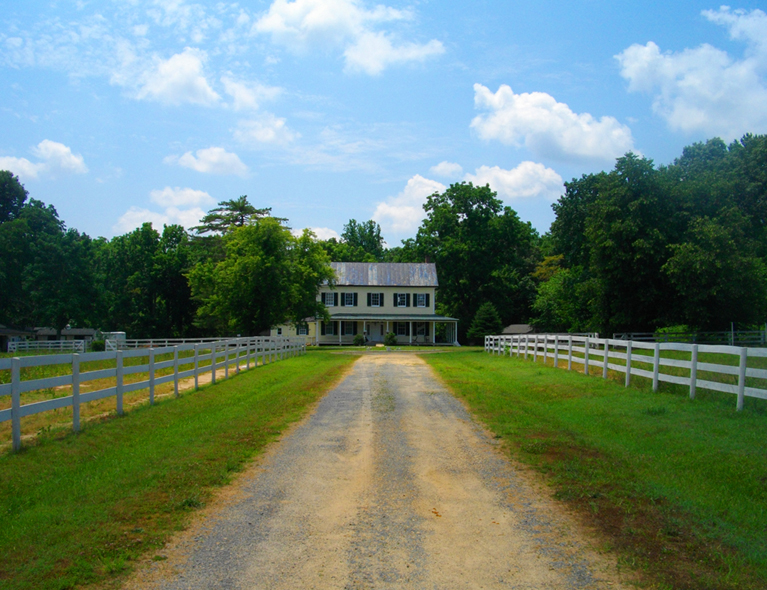
Welcome to scenic Neck Quarter, Virginia!

Not familiar with the name? I don’t blame you. Neck Quarter was the former name of a parcel of land located in King George County, Virginia owned by Nathaniel Hooe. In December of 1845, Hooe sold this tract of land to Dr. Richard H. Stuart. His wife subsequently renamed Neck Quarter to its modern name, Cleydael.

Dr. Stuart was one of most prominent doctors and wealthiest men in the county. Before buying Cleydael’s land, Dr. Stuart owned land and a house eight miles away near the coast of the Potomac called, “Cedar Grove”. While Dr. Stuart and his family enjoyed Cedar Grove, the hot, muggy, summers near the Potomac proved unpleasant with cases of malaria being common. Upon purchasing Neck Quarter from Nathaniel Hooe, Dr. Stuart began construction on a summer home. This summer home utilized an unusual design that created cross breezes to naturally cool the house during the hot summers. When the Civil War began, Dr. Stuart and his family left Cedar Grove and began residing at Cleydael year round. Their home on the Potomac was deemed too dangerous as the threat of Union shelling was a very real one. During the war, Cleydael would house General Robert E. Lee’s daughters (cousins to Mrs. Stuart) when they were forced to leave their home at Arlington. Dr. Stuart continued his practice from the safety of this home. An office with a waiting room, and easy passage between it and Dr. Stuart’s bedroom, allowed the good doctor to continue to service patients even late at night.

On the night of April 23, 1865, John Wilkes Booth and David Herold were led to Dr. Stuart’s by Confederate agent, William Bryant. The doctor, having heard about Lincoln’s assassination was suspicious of the men and refused to let them stay. He relented to giving the men a meal before sending them on to the cabin of William Lucas, a free black who lived nearby. Booth would later write a poison pen thank you letter to Dr. Stuart for his “generosity”. While Dr. Stuart would spend a month in prison, it was this letter that proved his innocence and refusal to help Booth.

So where does the name Cleydael come from anyway? Mrs. Stuart’s maiden name was Julia Calvert. She was the granddaughter of Henri Stier, a wealthy Belgian baron. Her grandfather’s home was Château de Cleydael near Antwerp, Belguim:

When the French army invaded Antwerp in 1794, the baron and his family fled to America, leaving Cleydael behind. Mrs. Stuart renamed their summer residence Cleydael in honor of her ancestral home.

Recently, there was much worry over the future of Cleydael. The previous owner passed away without a will and with debts to be paid. Despite a historical easement on the house, there was a real chance the house and property would be sold and demolished. Luckily, such a crisis was averted when the house was recently bought by a couple committed to restoring and retelling the history of Cleydael.
Resources:
Cleydael’s 1937 Virginia Historical Inventory Project record
Cleydael’s 1986 National Register of Historic Places Nomination form (.pdf)

Categories: Uncategorized | Tags: | 2 Comments

To have Peace…

The following letter was received by the Department of the Secretary of State, on April 23rd, 1865:

“To the Honorable Secretary of State

Dear Sir,

In looking over some old papers yesterday my eye came in contact with the enclosed extract which under the existing state of affairs I thought was worthy of being pointed out to you especially as the state (Ala) is now in our possession and the authors of the proposition can be hunted out and brought to justice ever provided they are innocent of the murder.

I have the honor to be your Obt. Servant,
Henry L. Greiner”

Attached to this letter was this extract from the Selma Dispatch:

One Million Dollars Wanted, to have Peace by the 1st of March. – If the citizens of the Southern Confederacy will furnish me with the cash or good securities for the sum of one million dollars, I will cause the lives of Abraham Lincoln, William H. Seward and Andrew Johnson to be taken by the first of March next.  This will give us peace, and satisfy the world that cruel tyrants can not live in the “land of  liberty.”  If this is not accomplished nothing will be claimed beyond the sum of fifty thousand dollars, in advance, which is supposed to be necessary to reach and slaughter the three villains.
I will give, myself, one thousand dollars towards this patriotic purpose.
Every one wishing to contribute will address box X, Cahaba, Alabama.  X.
December 1, 1864″

The author of this advertisement was George W. Gayle, a lawyer from Cahaba, Alabama.  Gayle ran this advertisement in the Selma Dispatch four or five times to express his, and his neighbors’, digust and hatred for the sixteenth president and his cabinet.  We can tell his threat was not a real one due to his million dollar fee.  Such a sum would be unobtainable in the war ravaged South.

While extravagant and crass, Gayle demonstrates the feeling that Abraham Lincoln was a tyrant.  This idea was shared by many others who watched a war between brothers rage on.  One man who shared this view was John Wilkes Booth.

Gayle’s violent expression of disgust against Lincoln would come back to haunt him.  After the government received the above note and newspaper clipping, Gayle was hunted down and arrested on May 24.  The 57-year-old lawyer had no real connection to John Wilkes Booth and Lincoln’s assassination,  but the government used him as a warning to all of those who spoke ill of the late President.  Not only was his advertisement and character involved in the Trial of the Conspirators in 1865, but, he was still trying to clear his name in court as of December, 1866.

The people of the Confederacy learned quickly from Mr. Gayle’s example.  Those who agreed with what Booth had done censored themselves to protect themselves.  Many only committed their approval in the form of diary and journal entries.  To learn more about the how Southerners viewed Lincoln’s assassination, I recommend the book, When the Bells Tolled for Lincoln: Southern Reaction to the Assassination by Carolyn L. Harrell.  This book is a wonderful look at how varied the perception of Lincoln’s death was across the Southern states.

Categories: Uncategorized | Tags: , | 2 Comments

Welcome to the BoothieBarn Blog!

The story is a well known one:  On April 14th, 1865, President Abraham Lincoln was shot while attending a play at Ford’s Theatre in Washington D.C.  His death the next morning was viewed as the great sacrifice of the leader who had pulled the nation through a bloody civil war.  Instantly, and appropriately, Lincoln became an American saint.  He gave his last, full measure for the country and was struck down just after completing his goal.  Abraham Lincoln’s actions and resolve have earned him the title of our country’s greatest president.  His story is told all over this country and he is the most written about figure after Jesus Christ.

But, there is another part of this story.  It is the story of a young actor driven to extremes.  It is the story of that man and his conspirators who were determined to strike back against a government that destroyed the United States they had known and loved.  It is the stories and facts about these individuals that this blog hopes to share.  Not because we agree with their actions or because we share their values.  We learn about them because the darker parts of history can shed the most light on the past.  While the actions they took were abhorrent, the sentiments that motivated those actions were shared by many.

Many of us who study the Lincoln assassination refer to ourselves as “Boothies”.  This does not mean we condone the actions of the assassin.  Rather, our moniker states our commitment to studying, analyzing, and interpreting the actions of John Wilkes Booth and others involved in the great American drama that is the Lincoln assassination.  Ignoring and dismissing the lives and actions of the men and women involved in the conspiracy does a great disservice to history and to the memory of Abraham Lincoln.  We cannot truly honor and appreciate the man without understanding the complexity of his death.

As a Boothie, I hope that this blog will be a source of education as well as levity every once and awhile.  It is my first time starting a blog, so who knows how it will turn out.  Regardless, I invite you all to come back from time to time to see the man, and the conspiracy, in the barn.

Categories: Uncategorized | Tags: | 19 Comments

Blog at WordPress.com.