
November is Native American Heritage Month. Years ago, I shared a paper I wrote about Holata Micco, a Seminole chief in Florida who was known as Billy Bowlegs to non-Native speakers. As a child, John Wilkes Booth sometimes went by the nickname of Billy Bowlegs among his friends due to his bowleggedness. As a teen, he even ended a letter with this moniker.
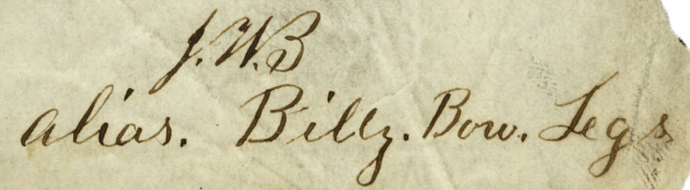
I wanted to mark Native American Heritage Month on the social media pages for Lincoln Assassination Tours. I considered rehashing my work on Holata Micco, but the connection between the noted Seminole chief and the future assassin of Lincoln is pretty contrived. I considered discussing the Piscataway tribes as it was through their ancestral lands that the assassin made his escape. In fact, one of the figures in the escape, Oswell Swann (who innocently escorted the fugitives to Rich Hill), is said to have been part Piscataway Indian.
In the end, however, I decided to take my motivation from a historic image. The March 9, 1867, issue of Harper’s Weekly contains a full-page drawing of the return of John Surratt to the United States after a year and ten months on the run.
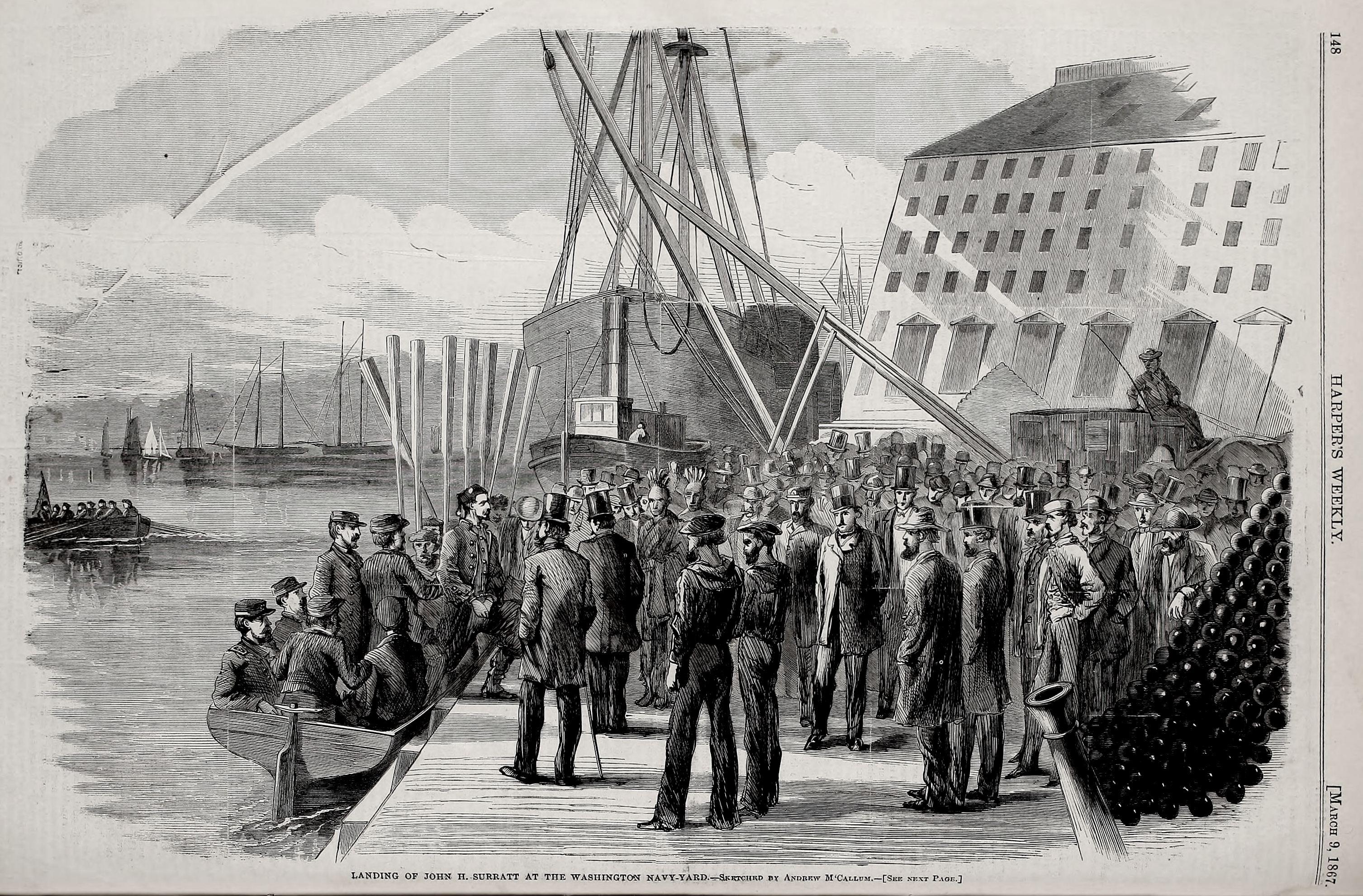
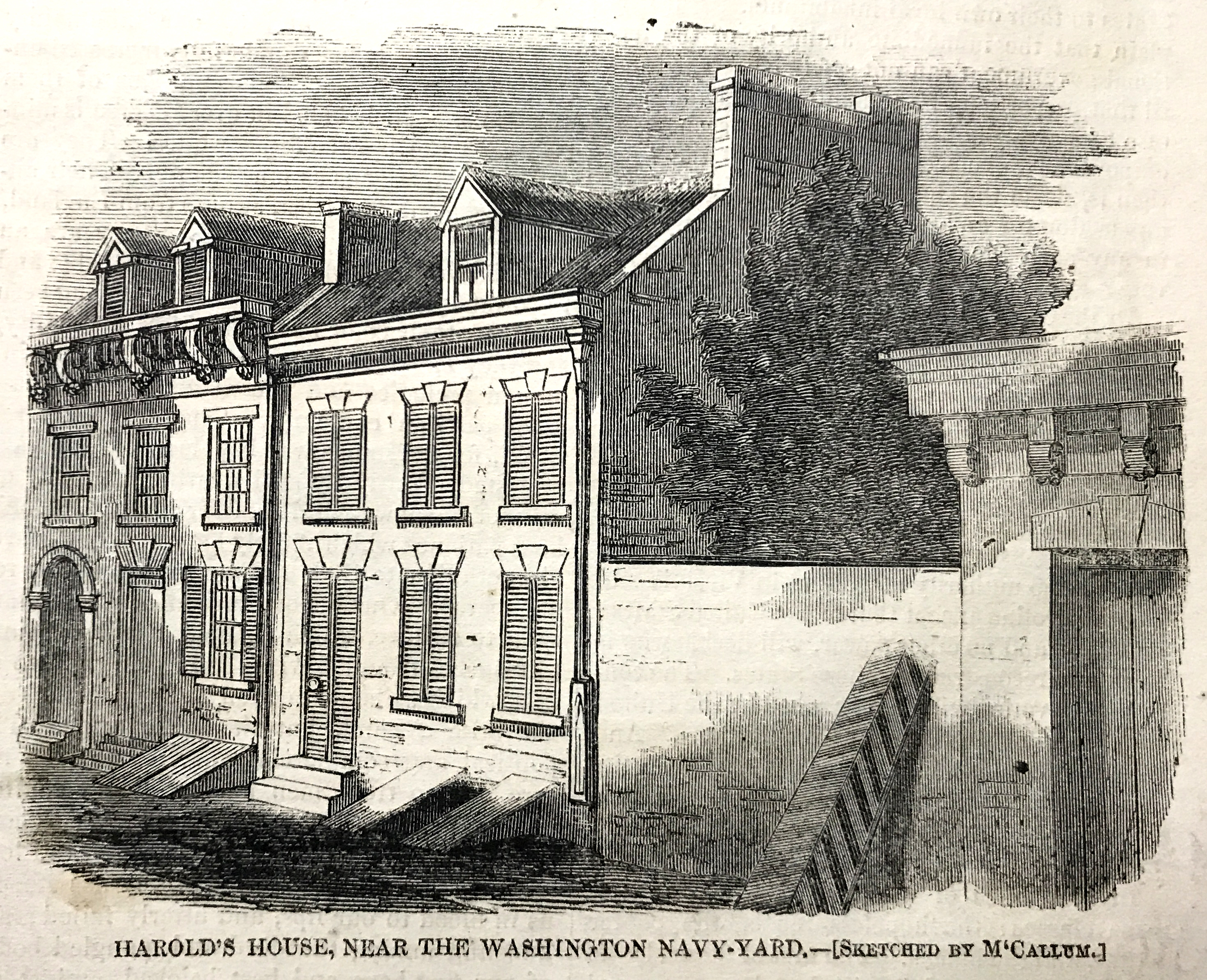
The scene at the Washington Navy Yard was captured by Andrew McCallum, the same artist who, in 1865, had sketched the nearby home of David Herold.
A notable detail in the drawing showing John Surratt’s return is the presence of three Native Americans wearing headdresses.
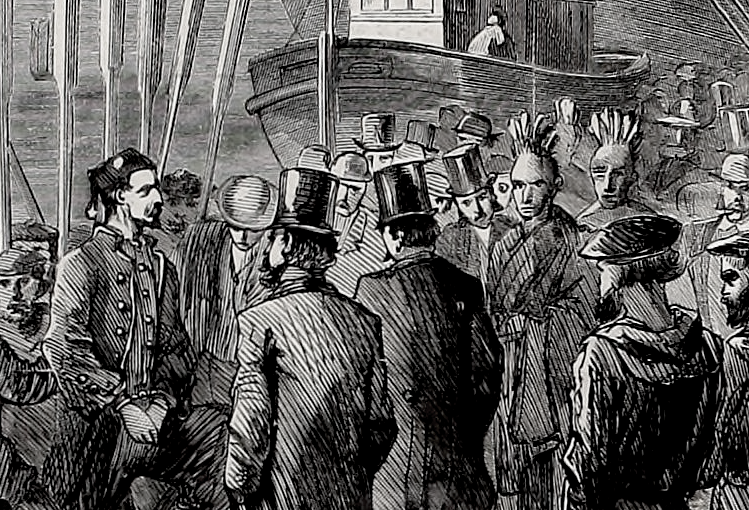
The inclusion of Native Americans in this scene was not artistic license. The corresponding article in Harper’s contains the line, “There were not many persons besides the officials and guards present, only a few reporters and our artist, and a number of Indians of the Sioux delegation now at Washington, having been permitted to witness the scene.” Harper’s was partially right. A large delegation of Native Americans was present in Washington in February of 1867, but only some were from the Sioux tribe. While I initially held little hope of being able to identify the specific Native Americans who observed John Surratt’s arrival, I was fortunate that the Washington Chronicle newspaper had already done so.
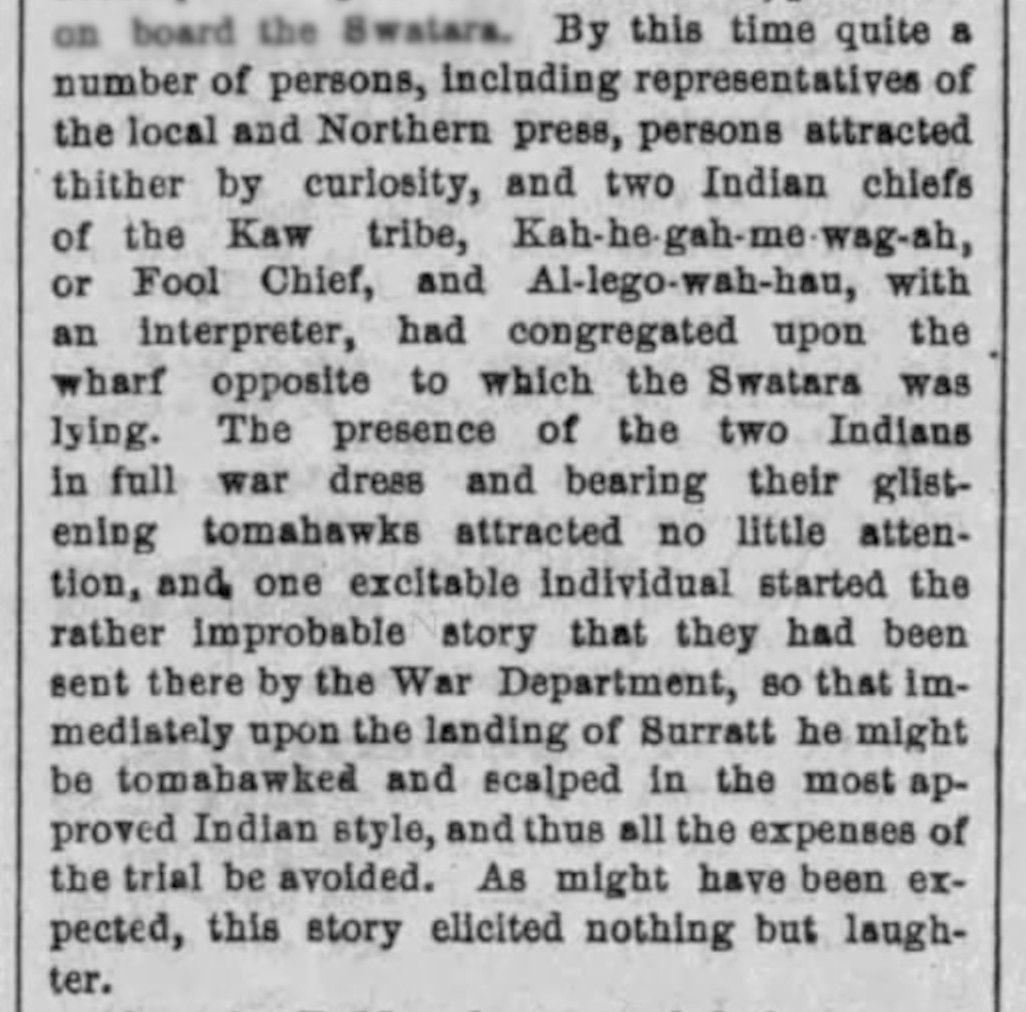
I was even more fortunate to discover that the Kaw delegation was photographed during their time in Washington, providing me with a photo of the two chiefs who witnessed the disembarking. After doing more research on the Kaw people and their history, I was excited to write something about them.
In the end, I decided to create a video about the Kaw men who were present when John Surratt returned to face trial. I put the video on the Lincoln Assassination Tours‘ Facebook, Instagram, Bluesky, and YouTube pages. I hope you’ll consider following those platforms for more historical tidbits.
So, without further ado, here’s the video, The Kaw and the Last Lincoln Conspirator. I hope you enjoy it.



 LincolnConspirators.com
Recent Comments