Posts Tagged With: Museums

On this date: May 1st, 1976

The Surratt House Museum in Clinton, Maryland opened for public tours.

The house and tavern, formerly the property of Mary Surratt and a stopping point for John Wilkes Booth on his escape south, was donated by its owner to the Maryland National Capital Park and Planning Commission in 1964.  The work on restoring the house led to the founding of the Surratt Society, an organization devoted to furthering the study of the Lincoln assassination through trained guides for the museum, a monthly newsletter (the Surratt Courier), a yearly conference on the assassination, and the coveted John Wilkes Booth Escape Route Tours in the spring and fall.  The campus also houses the James O. Hall Research Center, the first (and often best) stop for research about the Lincoln assassination.  Visit Surratt.org to view their many wonderful events for the year.

References:
Surratt House Museum: A Page in American History by Laurie Verge and Joan Chaconas

Categories: Uncategorized | Tags: , | Leave a comment

Ford’s New Center

The Ford’s Theatre Center for Education and Leadership opened on February 12th of this year.  The building, adjacent to the Petersen House where Lincoln died, continues the message of Lincoln’s legacy after his death.  The Center has four floors open to the public.  The first floor is the lobby and gift shop while the second holds space for temporary exhibits.  The third floor is deemed the “Legacy Gallery” which shows the many ways in which Lincoln has become ingrained in our culture and how his words affect us today.  While very nice and good, as a person interested in the Lincoln assassination, it is the 4th floor, named the “Aftermath Gallery” that I wish to discuss.

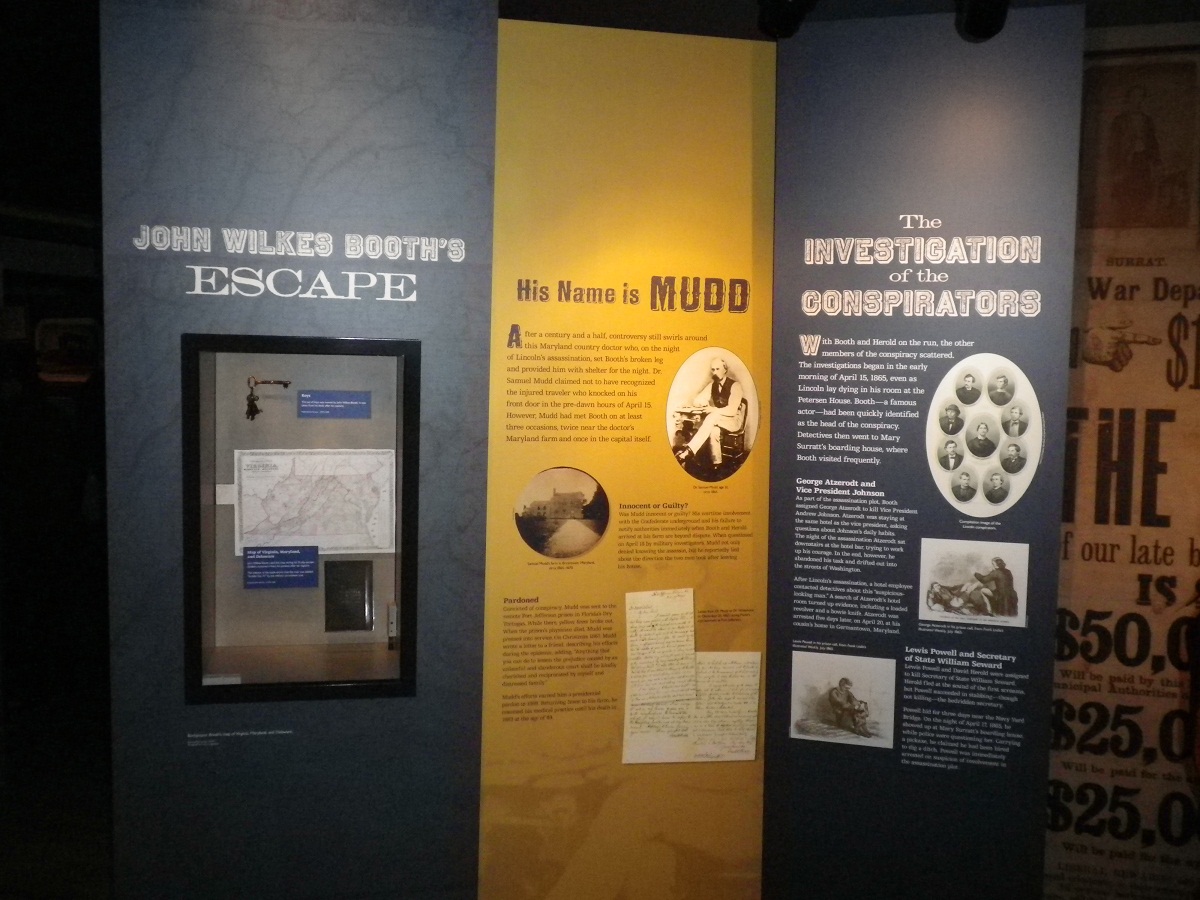
Visitors exit the Petersen House and travel via elevator to the 4th floor of the Center and work their way down.  On this floor you begin by viewing the turmoil that occurred on the morning of April 15th when the nation woke to the news of Lincoln’s death.  There is a recreation of the train car that took Lincoln’s body back to Springfield as well as an interactive map of the route.  Past this, are several wall displays recounting the manhunt for Booth and the imprisonment, trial, and execution of the conspirators:
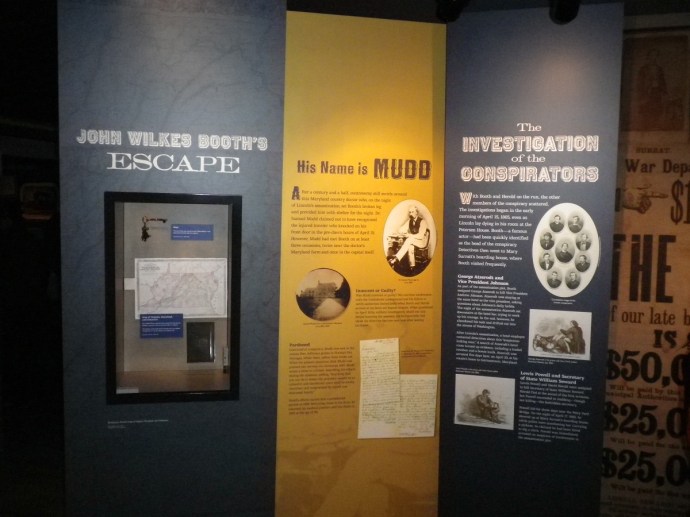
Before approaching the stairs down to the next level, there is a recreation of the tobacco barn with audio and visual effects to show Booth’s last few moments before being shot.

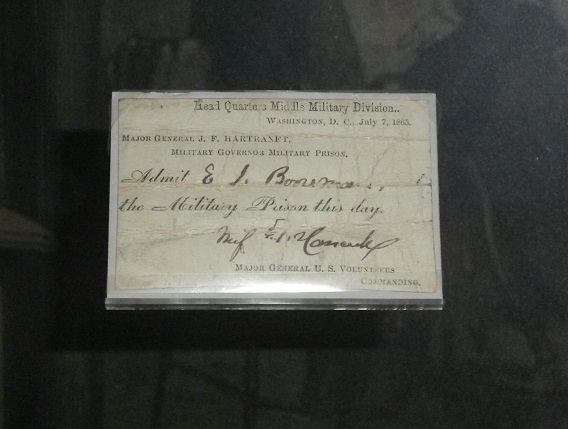
As always, it is the artifacts and relics of the assassination that draws my interest.  They have a pass to witness the execution of the conspirators on July 7th, 1865:
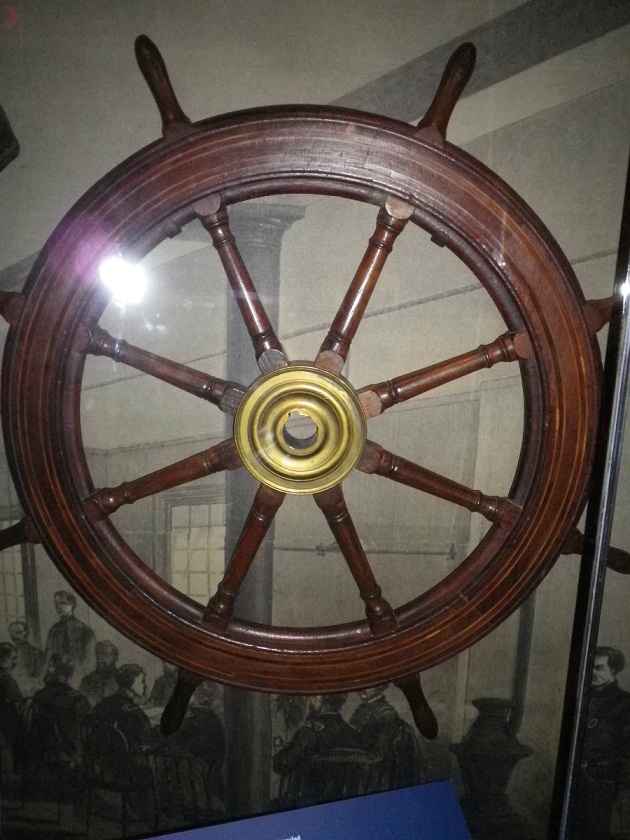
A steering wheel from the USS Montauk:
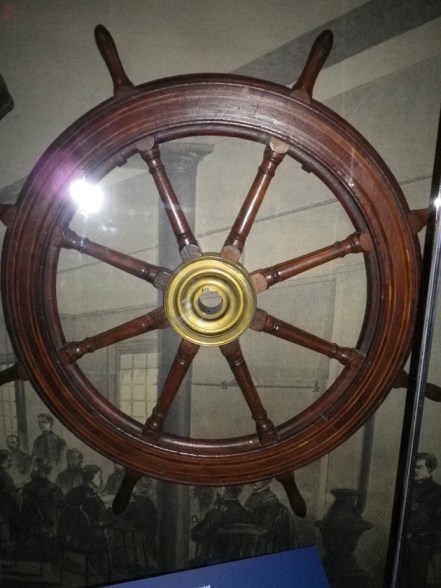
The USS Montauk and the USS Saugus were ironclad monitors which housed the conspirators during the initial investigation and arrests.  The Montauk held George Atzerodt, Edman Spangler, David Herold, John Wilkes Booth’s body, and Joao Celestino, an unrelated Portuguese sea captain.

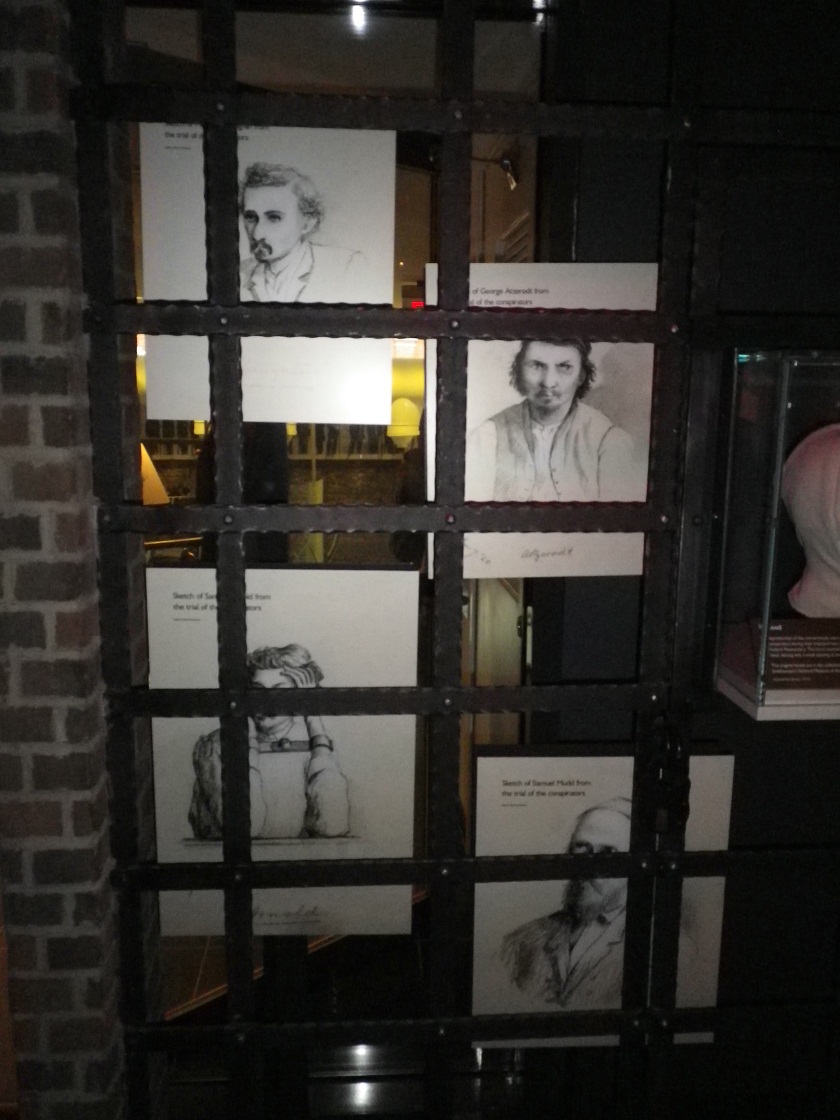
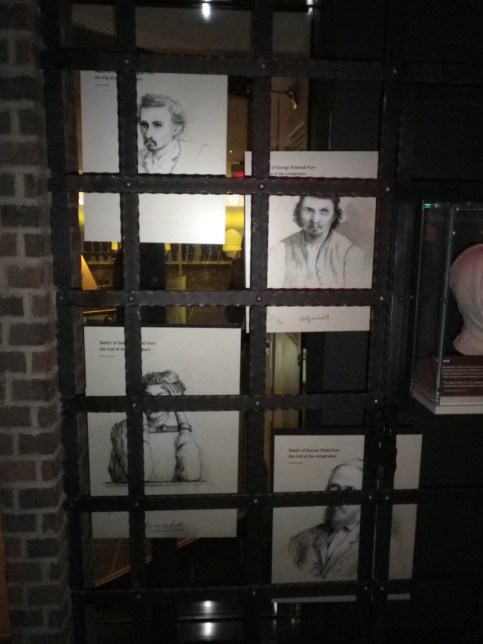
The gallery also has a nice display of the sketches military commission member Lew Wallace drew of the conspirators during the trial:
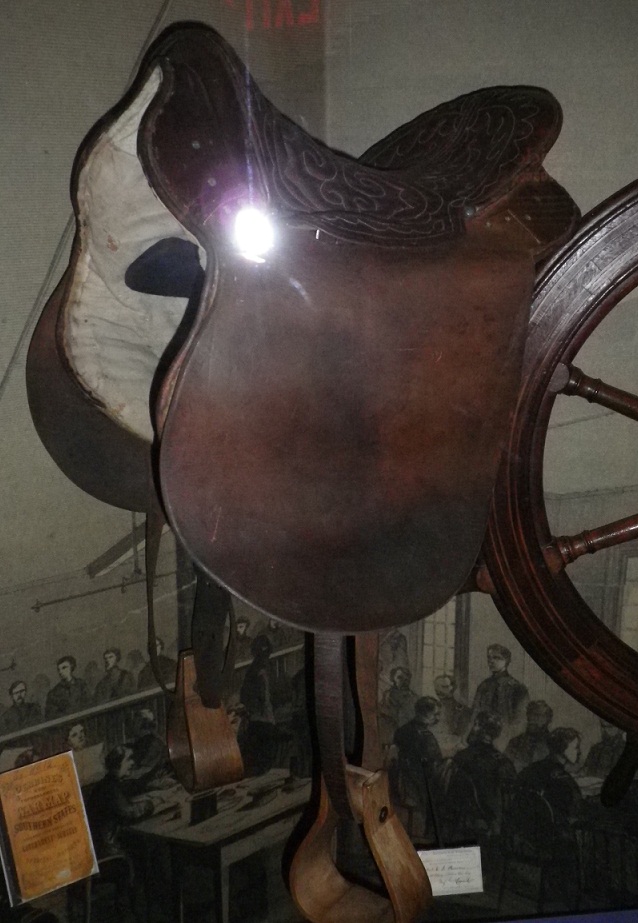
The Center also has on display Lewis Powell’s saddle:

Powell used this saddle on the night he attacked Secretary of State William Seward.  Powell biographer, Betty Ownsbey, was the first to see that this item was mislabeled as being owned by Booth (it was owned by George Atzerodt) and that it was improperly displayed.  The stirrups were shown under the saddle flap instead of over them, which would make a very uncomfortable ride for the horse.  After being made aware of the mistake, Ford’s has gladly fixed this and is now correctly displaying the beautiful saddle
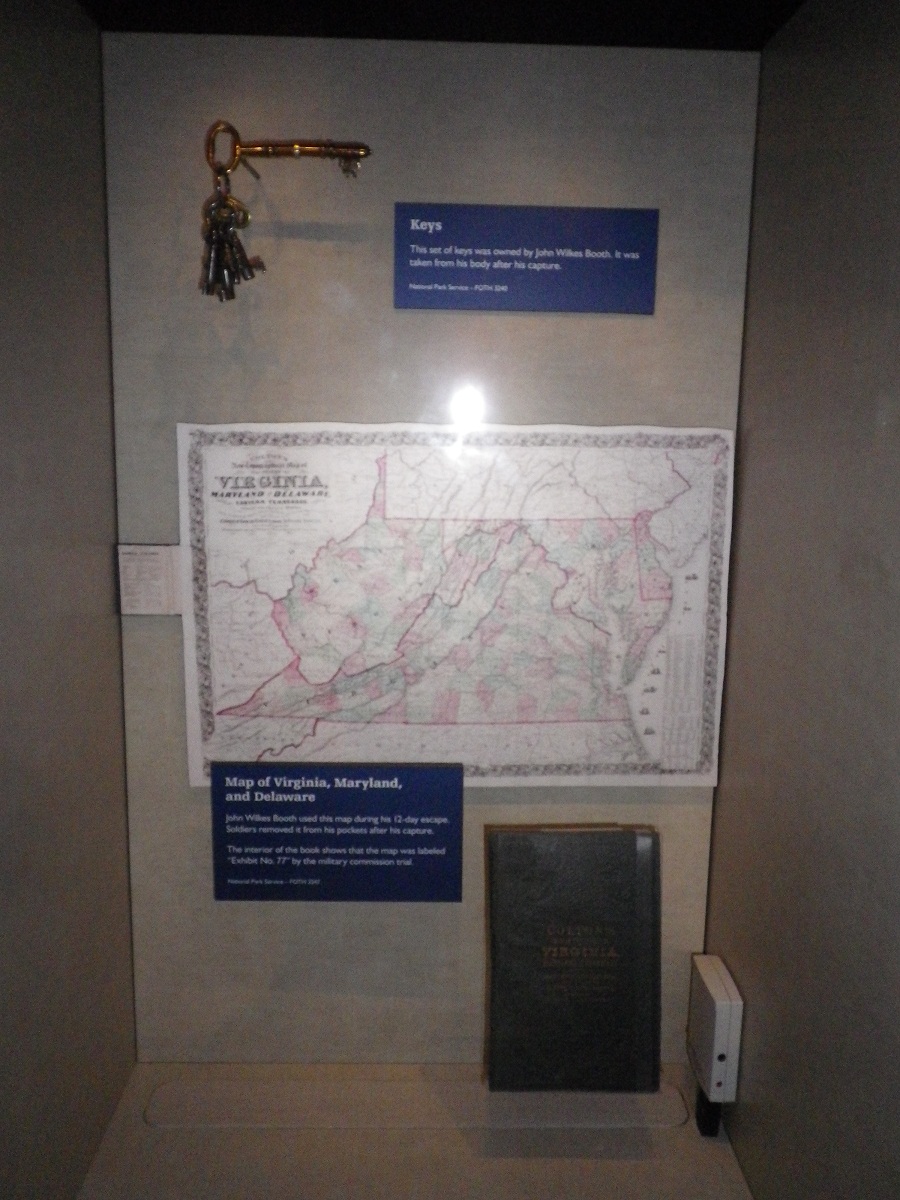
There is also an entire display case in the “Aftermath Gallery” with artifacts that I believe to be mislabeled:
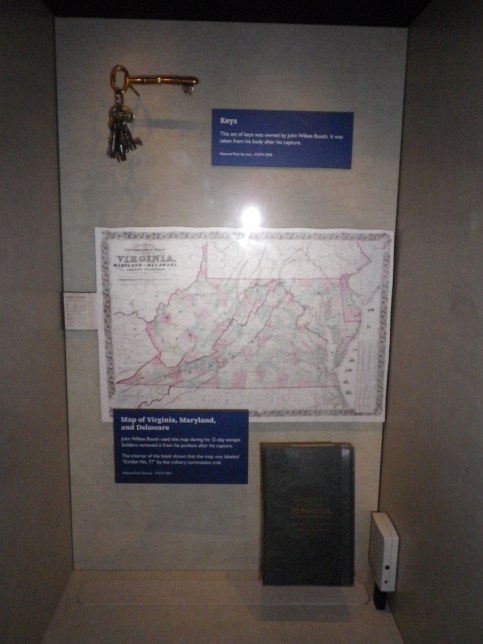
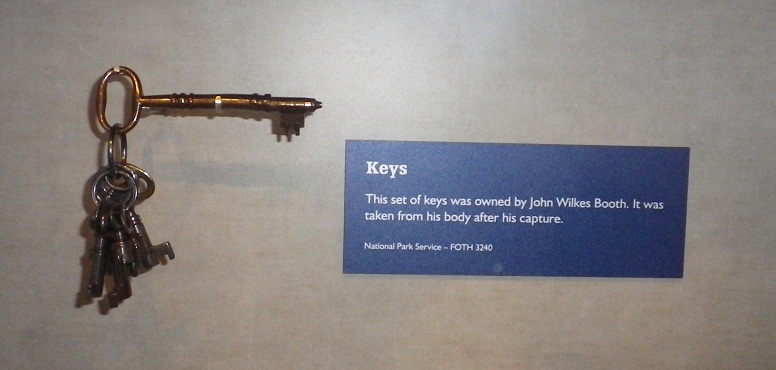
The display has two items, a set of keys and a map.  The keys are labeled as, “being owned by John Wilkes Booth” and being, “taken from his body after his capture.”
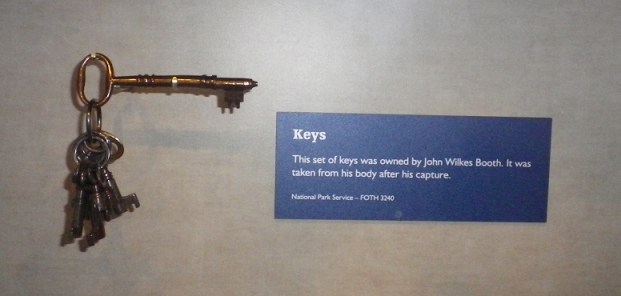
I do not believe that this is the case.  The War Department had these keys before they had even found John Wilkes Booth.  An April 24th inventory list of evidence cites, “No. 9 Envelope containing silver pencil, and a bunch of keys belonging to David Herold.”  These keys contained Davy’s key to his house and other places.  On the morning of April 15th, Detectives James McDevitt, John Clarvoe, and John Waite, along with Lewis Weichmann, visited the home of Mrs. Herold.  Here, they obtained two photographs of David Herold.  They also recovered these keys and a silver pencil.  According to a statement by Jane E. Herold, Davy, “…had to get home at 10 o’clock.  If not he would be locked out.  Always when he came he had a night key, but momma took it away from him…” While McDevitt and the others made mention of the photographs as they hoped it would increase their chances of getting some reward money, they didn’t mention the keys as they were not noteworthy.  In addition, if you read through the statements of people at Garrett’s barn when Booth was cornered and killed, none of them ever mention keys being taken from Booth’s body.  At the trials, individuals like Conger and Baker give very detailed lists of what they took off of Booth’s body, with no keys being mentioned.  Regardless, these keys could not have come off of Booth’s body as the government had them two days before Booth and Davy were found.

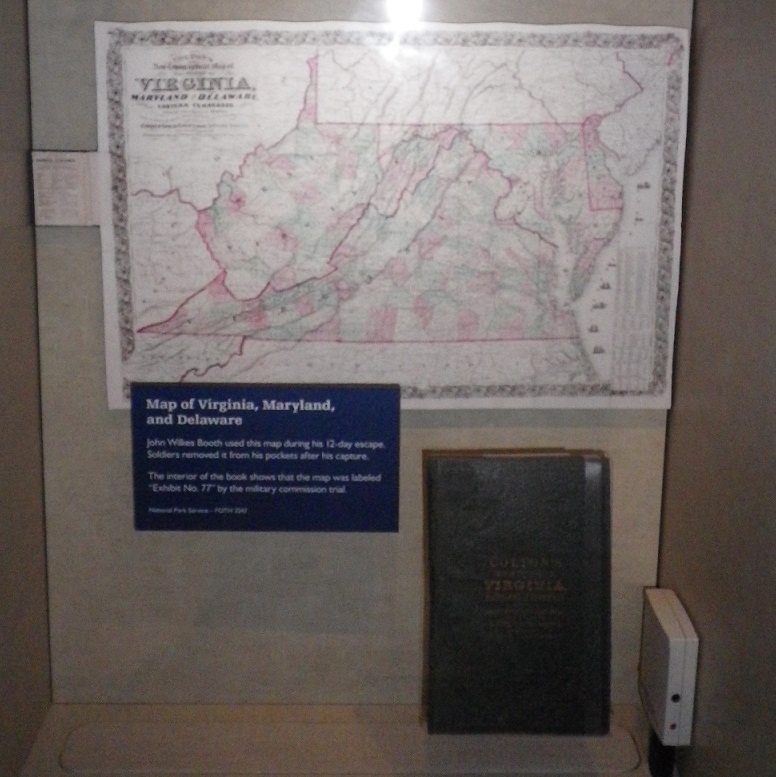
The other item in this display case is a map of Virginia, Maryland, and Delaware.  The label for it states the following, “John Wilkes Booth used this map during his 12-day escape.  Soldiers removed it from his pockets after his escape.  The interior of the book shows that the map was labeled, ‘Exhibit No. 77’ by the military commission trial.”
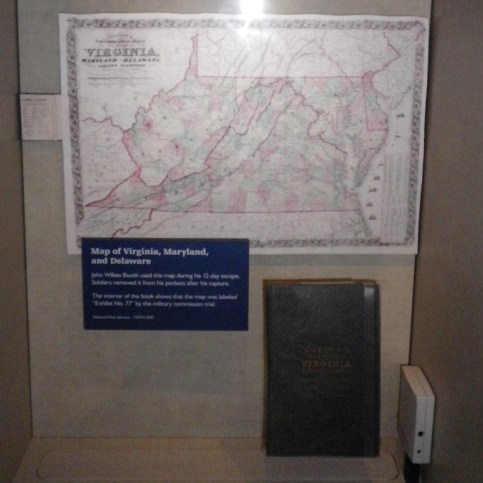
I believe that this label is also wrong.  Now it is true that Booth and Davy had a map with them during their escape.  That map was taken off of Davy, not Booth, when he surrendered at Garrett’s barn.  Unfortunately, this is not the map taken from Davy either.  On June 3rd, Dr. Joseph H. Blanford, brother-in-law to Dr. Mudd, retook the stand at the conspiracy trial.  The following is part of the interchange that occurred in Dr. Blandford’s testimony:

“Q. (Exhibiting a map to the witness.) Will you examine this map, and state to the Court whether the several localities that I have spoken of, and the roads, are properly marked upon it?
A. I think they are, as nearly as can be ascertained from this map; the roads not having been drawn upon it originally. The roads here, as drawn in ink, to the best of my knowledge, are the proper roads; and they would take those places in their route.
Q. Will you state whether you have examined that map before, and indicated the lines and points marked in ink upon it?
A. Yes, sir.
Q. Show to the Court, on the map, where Surrattsville, Dr. Mudd’s house, and Pope’s Creek, are.
Assistant Judge Advocate Bingham. If he is going to do that, let him write them down at once on the map.
The witness. They are already written here. Dr. Mudd’s house, T. B. and other points on the road are correctly stated.
(The map referred to was offered in evidence without objection and is marked Exhibit No. 77.)”

To preclude the idea that the map shown to Dr. Blanford was the same one recovered from Davy, we have the following testimony from Everton Conger:

“Q. What articles did you take from Herold? Anything?
A. A little piece of a map of the State of Virginia, and a part of the Chesapeake Bay on it.
Q. Do you remember whether that map embraced the region of country where they were?
A. It did. It embraced that region of country known in Virginia as the “Northern Neck.”
Q. Was it a map prepared in pencil?
A. No, sir.
Q. Was it a regular map?
A. Part of an old school map; a map that had originally been five or six inches square.
Q. (Exhibiting a map.) Is that it?
A. Yes, sir: that is it.
Q. That embraces the region of country in which they were captured?
A. Yes, sir. That is the only property I found on Herold.
Q. Look at this pocket compass. (Exhibiting a pocket compass.)
A. That was taken from Booth’s pocket, just as it is now, with the candle grease on it and all.
(The map and compass were offered in evidence without objection, and are marked Exhibit No. 38.)”

So Davy’s map, along with Booth’s compass, was entered into evidence as Exhibit #38.  Therefore, the map on display at Ford’s, marked as Exhibit #77, was not recovered from either Booth or Herold at Garrett’s.  Instead this map was used by Thomas Ewing during his defense of Dr. Mudd.

Ultimately, while the Ford’s Theatre Center for Education and Leadership has wonderful potential, I personally would care to see more space devoted to their true role in history, Lincoln’s assassination.  I understand that Ford’s has a fine line to walk in educating the public about Lincoln’s assassination, while not supporting the act.  Their big museum does this by presenting Lincoln’s entire term of office inclduign the assassination.  While this affords less space towards assassination related things, it also allows them to operate without appearing biased.  In my opinion though, people come to Ford’s because they want to learn about Lincoln’s death.  While a sad time in our history, I would prefer more attention in this area.  Regardless, as a center for education, it is Ford’s duty to present history as accurately as possible.   I hope that these artifacts will be looked into further.

References:
A Peek Inside the Walls: 13 Days Aboard the Monitors by John E. Elliott and Barry M. Cauchon
The Lincoln Assassination: The Evidence by William C. Edwards and Edward Steers, Jr.

Categories: Uncategorized | Tags: , , | 4 Comments

Why Lincoln and Booth are Intertwined

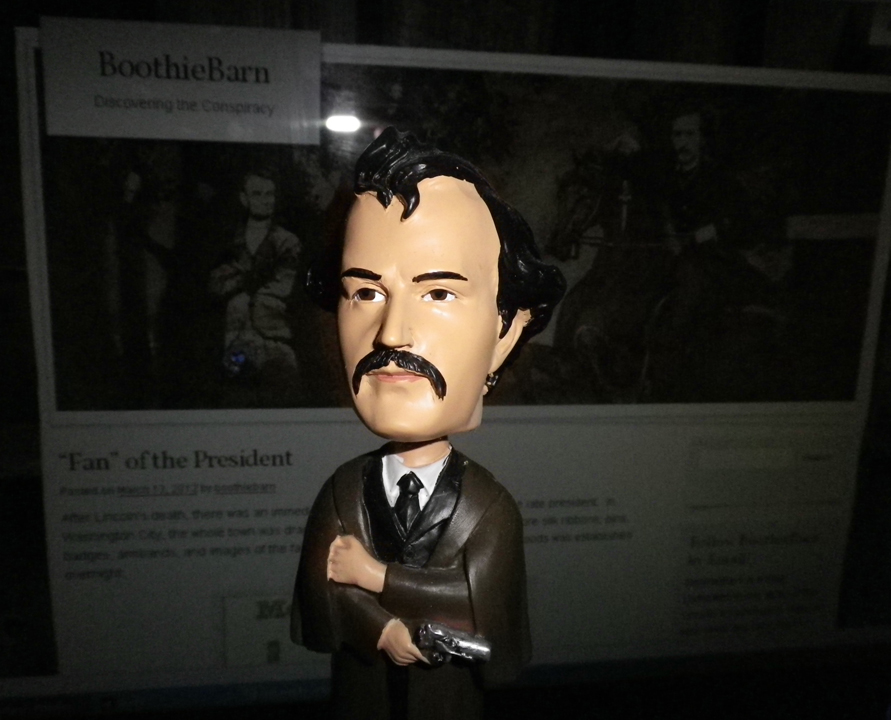
Recently, there has been a minor controversy regarding the sale of John Wilkes Booth bobblehead dolls.  A reporter from The Evening Sun of Hanover, PA, received an anonymous complaint about the dolls being sold at the Gettysburg National Military Park gift shop.  When he inquired about them, the gift shop removed them from their shelves within a couple of days.  Shortly thereafter, without any noted complaints or inquires, the Abraham Lincoln Museum and Library in Springfield, IL, followed suit and removed the bobbleheads from their gift shop.

What interests me the most about this controversy is how people have reacted to the dolls.  The original article notes that, “At first, the bobblehead drew chuckles from some of the students. But most reconsidered that reaction when asked to comment.”  This “chuckling” reaction would be the one I would expect from most people.  As a bobblehead doll, it is made to be a gag gift.  People either like them enough to buy them, or they move on, instantly forgetting them.

When probed about the dolls, the students being interviewed responded with the remarks akin to, “Yes, I suppose it is wrong to make them.” What changed their minds?  A few seconds earlier they were chuckling at the John Wilkes Booth bobblehead, and now they are calling for its immediate removal.  Their new-found disgust is a product of their education about Lincoln.  It is this education that we all receive.  We rightfully idolize and revere Lincoln for his strengths and courage as president.  He freed the slaves, kept the nation together and paid for it all with his life.  All of these things are true, but, in order to keep Lincoln as  the penultimate American president, we all ignore the complexity of his death.  The man who killed him was a crazy, racist, cold-blooded killer.  We simplify Lincoln’s death into its simplest but, inherently, incorrect terms.  Did Booth commit an atrocious deed that should be condemned?  Of course.  However, we should not dismiss his importance to the Lincoln we know and love.

This is the fine line that “Boothies” walk pursuing our interest.  As those who study the assassination, we look at the factors and motivations of Booth and other groups, North and South, who wished for and plotted to end Lincoln’s life.  While Lincoln was a great man and a great president, he was also one of our most hated presidents.  This version of Lincoln was buried and forgotten with Booth’s body.  One bullet, fueled by the anguish of the ravaged South, transformed Lincoln into a saint.  Booth should be studied not only for this crucial act, but for the complexity of his character that led him to such a crime.

Of all the reactions given in the articles and comments regarding the bobbleheads, I am slightly disappointed on a purely scholarly level with Mr. Harold Holzer’s quote in which he states that selling the John Wilkes Booth bobbleheads are, “…like selling Lee Harvey Oswald stuffed dolls at the Kennedy Center.”  While both Lincoln and Kennedy’s assassinations were traumatic events in our history, the men who committed them were polar opposites.  The times and events they lived through defined them as uniquely troubled individuals and each had vastly different motivations for their crimes.  By painting these two assassins with the same brush, we actually diminish the honored men they killed.  The story of Lincoln’s assassination is a dark one and an unpleasant one.  However, looking at the men and women who conspired to kill Lincoln helps us better understand the harsh period of time in which Lincoln lived and led a nation.

According to the original Evening Sun article, 11 out of the 12 people interviewed stated that the Booth bobblehead was inappropriate.  The sole hold out was a 15-year-old boy who stated, “It’s a part of history and we can’t just ignore it because it’s a bad part.”

I couldn’t agree more:

References:
Evening Sun articles: 1, 2, 3
Abraham Lincoln Museum and Library article

Categories: Uncategorized | Tags: , , , | 1 Comment

Manhunt: The Exhibit

In 2001, James Swanson and Daniel Weinberg released their book, Lincoln’s Assassins: Their Trial and Execution.  This coffee table sized book by Swanson, a D.C. attorney, and Weinberg, owner of the Abraham Lincoln Book Shop in Chicago, contains both men’s impressive collection of artifacts, documents, and images involving Lincoln’s assassination.  In addition, the pair found other noteworthy items in other private collection and museums to include in this visual tour of the assassination.  It is a truly wonderful picture book that should be in every assassination library.  In 2006, James Swanson once again entered the spotlight when he released his assassination book, Manhunt: The Twelve Day Chase for Lincoln’s Killer.  The book became a New York Times bestseller due to its appealing, fiction-like writing style.  The book’s popularity led to a temporary exhibit at the Newseum in Washington, D.C.  In this exhibit, many of Swanson’s artifacts were on display.  The exhibit has since closed, but I was able to visit it in May of 2009.  For those of you who were not able to see it, here are some of the highlights:

Click the images to enlarge them

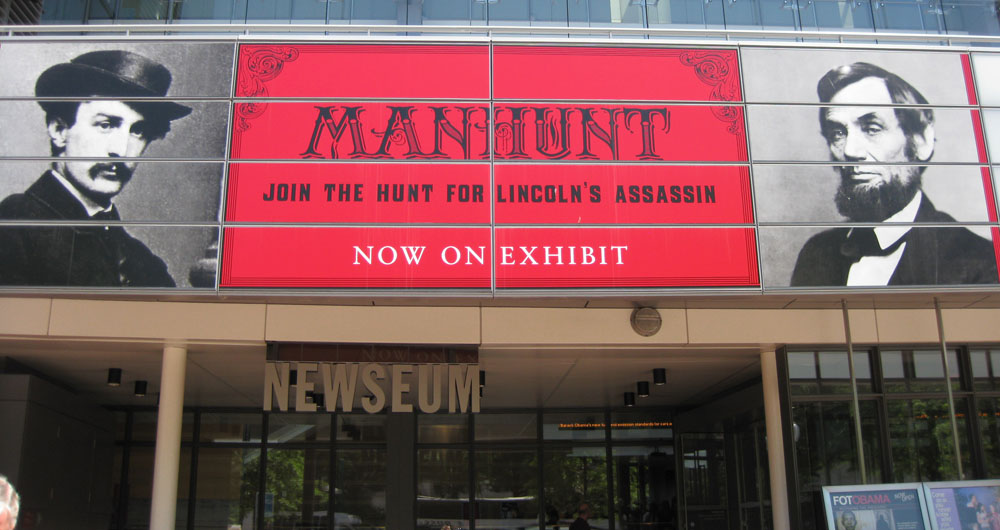
Advertising for the exhibit outside the Newseum.

The "Jumbotron" inside the Newseum cycled through a taped message about the exhibit.

The room containing the Manhunt exhibit.

The room had wonderfully bright displays of each of the conspirators...

...and the events.

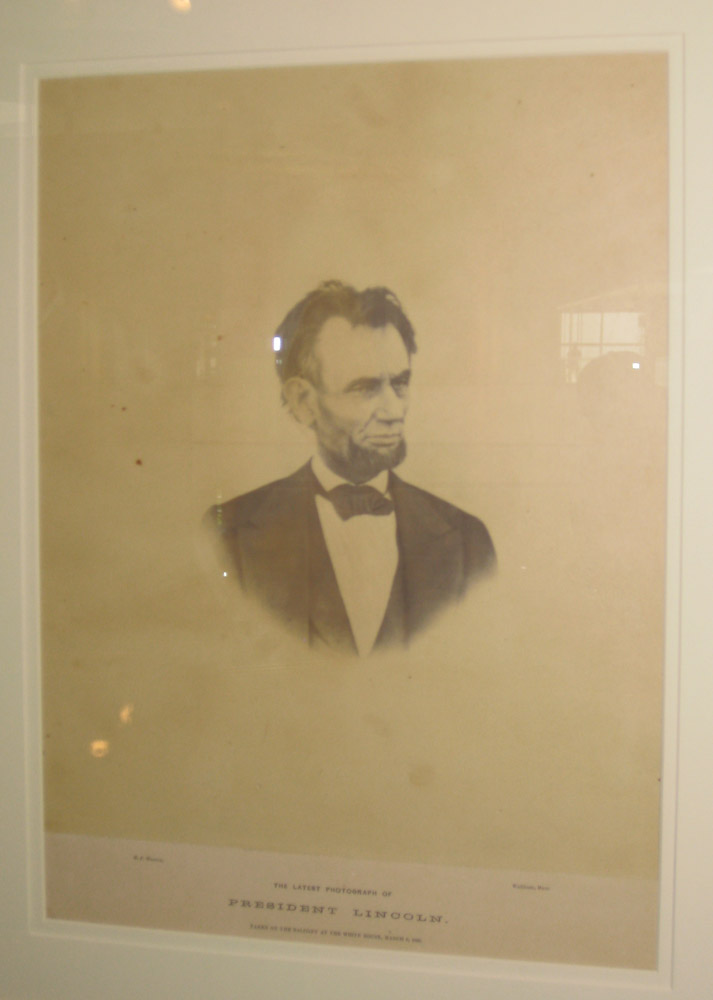
Some of the artifacts displayed included the last photograph of Lincoln.

Prints and photographs of Booth.

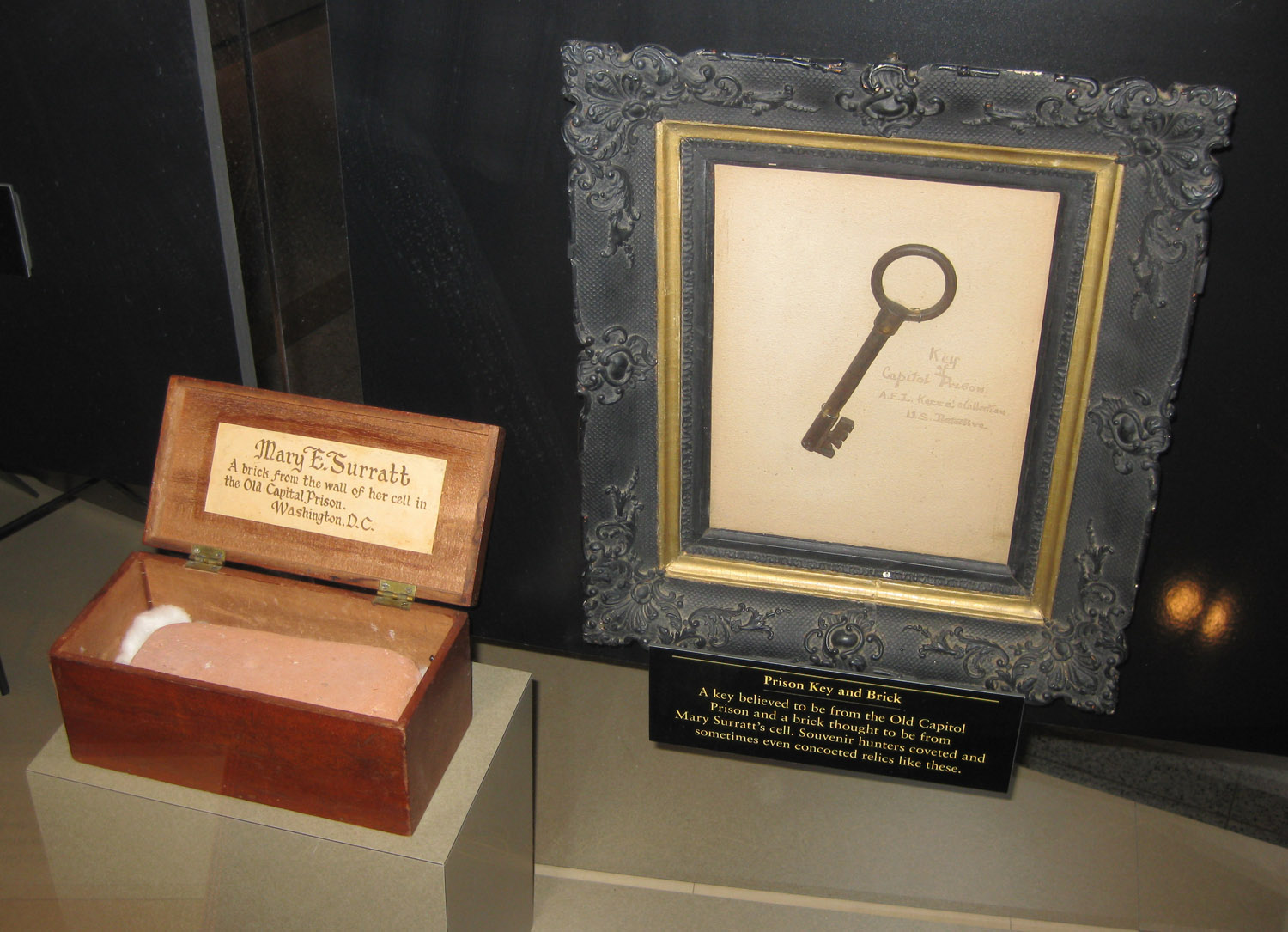
A key and brick from the Old Capitol prison which housed Mary Surratt along with many other witnesses and suspects.

A broadside about Booth's death.

A photograph and brick from Booth's favorite hotel, The National. The Newseum now occupies the same site where the National once stood.

An original (not a later reprint, I confirmed) playbill from Our American Cousin.

A period map showing D.C. and Booth's escape route.

While a little small for my liking (we could always use more assassination artifacts, after all), the exhibit did a great job showcasing Swanson’s book and collection.

Categories: Uncategorized | Tags: , , | 2 Comments

You want a piece of me?

Have an issue with tissue?  If so, then I recommend against you visiting the Mütter Museum in Philadelphia.  Founded in 1849 by the Philadelphia College of Physicians, it houses one of the premiere collections of medical oddities and specimens.  Perfectly preserved skulls, fetuses, and the most enlarged body parts you’ve ever seen, cover the walls from ceiling to floor.  Among the collection of plasticized parts, lies a piece of the assassin himself.

During his autopsy on April 27th 1865, the vertebrae through which the fatal bullet traveled were removed from John Wilkes Booth.  Those vertebrae now lie in the National Museum of Health and Medicine.  The tissue surrounding and scraped from those vertebrae, on the other hand, is exhibited at the Mütter Museum.

Tissue taken from John Wilkes Booth during his autopsy aboard the monitor Montauk.

While documented as a “piece of the thorax of John Wilkes Booth” and still labeled as such, it is more likely tissue from Booth’s neck.  No mention is made of Booth’s thoracic cavity in the brief autopsy records.  The doctors performing the autopsy focused almost exclusively on his broken leg and neck wound.

So, if you’re ever in Philadelphia and you want to observe the medical macabre, stop on in the Mütter Museum and catch a look at a piece of the assassin.

References:
The best resource about Booth’s autopsy is Roger Norton’s unparalleled Lincoln Assassination Research Site.  It was Mr. Norton who first learned that the Mütter specimen from Booth was probably not his thorax but tissue from his vertebrae.

Categories: Uncategorized | Tags: , , | Leave a comment

Blog at WordPress.com.