Posts Tagged With: Lafayette Baker

The Other Reward Offers for John Wilkes Booth’s Capture By Steven G. Miller

 “It is hard to get them all in court”

The Other Reward Offers for John Wilkes Booth’s Capture

By Steven G. Miller

One of the most famous broadsides in American History was the one issued by the War Department on April 20, 1865, announcing a $100,000 reward for the capture of John Wilkes Booth, David Herold, and John H. Surratt. This poster is one of the best-known features of the assassination of President Lincoln, and is easily identifiable by people who know little of the details of Booth’s deed and its aftermath.

One of the least-known aspects of the Lincoln Assassination is the existence, specifics, and disposition of other monetary offers for Booth’s capture. I’ve discovered that there were at least nine of them, and they were made by cities and states from “coast to coast.” All of these offers were repudiated, ignored, or combined with other schemes. The only one that was settled was the one made by the Secretary of War.

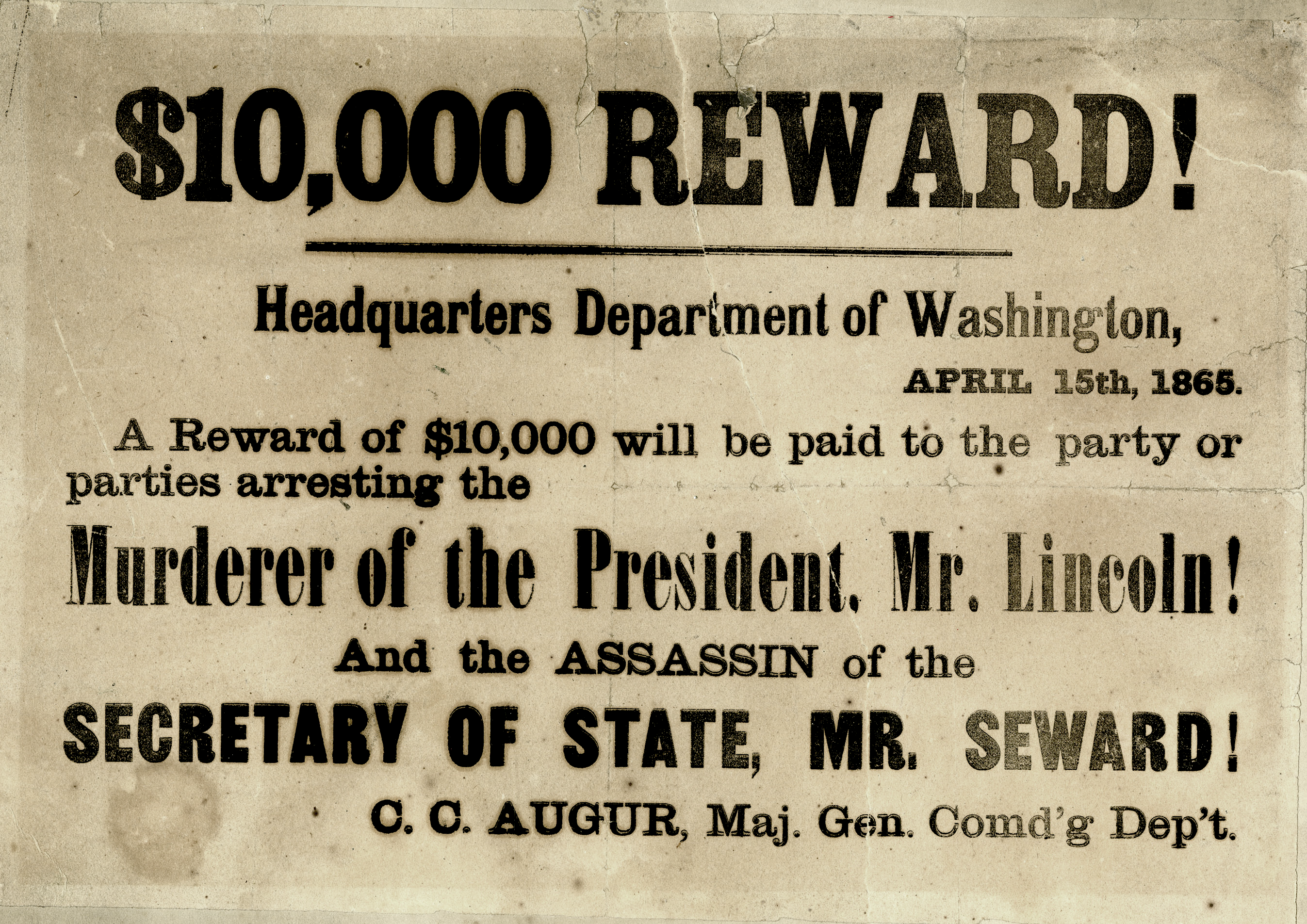
  • The first reward offer was made on the 15th of April by General Christopher Columbus Augur, the commander of the Twenty-Second Army Corps, the man in charge of the Defenses of Washington. He proclaimed that $10,000 would be given to the person or persons who aided in the arrest of the assassins.

Courtesy The Historical Society of Washington, D.C.

  • Two days later, the Mayor and Common Council of the City of Washington passed “Chapter 274 of the Special Laws of the Council of the City of Washington.” This Act stated: “Be it enacted by the Board of Aldermen and Board of Common Council of the City of Washington, that the Mayor be, and he is hereby authorized and requested to offer a reward of twenty thousand dollars for the arrest and conviction of the person or persons who were concerned in the assassination of President Lincoln, and attempted murder of Secretary Seward and family on the evening of the 14th inst. Provided that if more than one should be arrested and convicted, then said amount shall be apportioned accordingly. Approved April 17, 1865.”
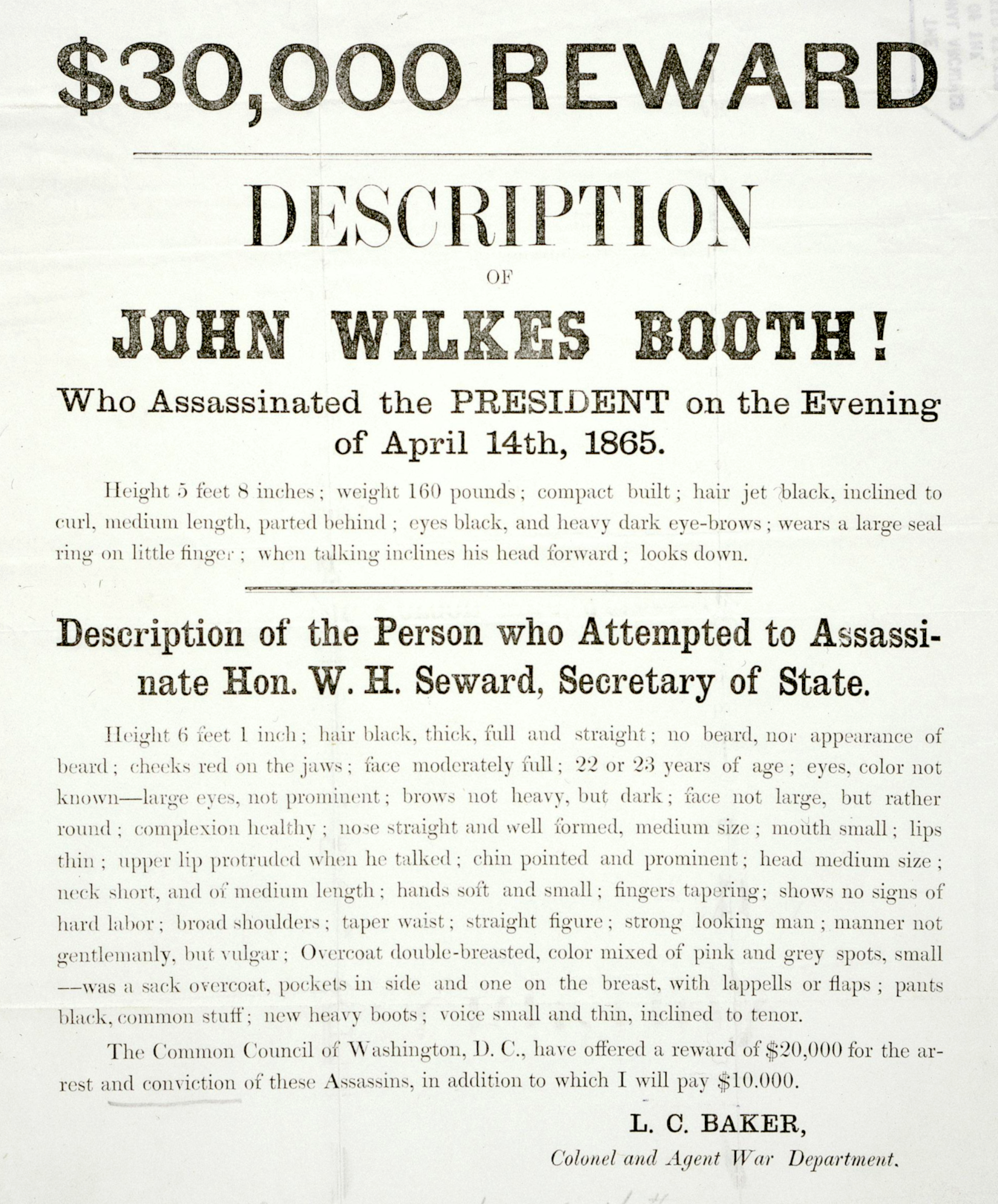
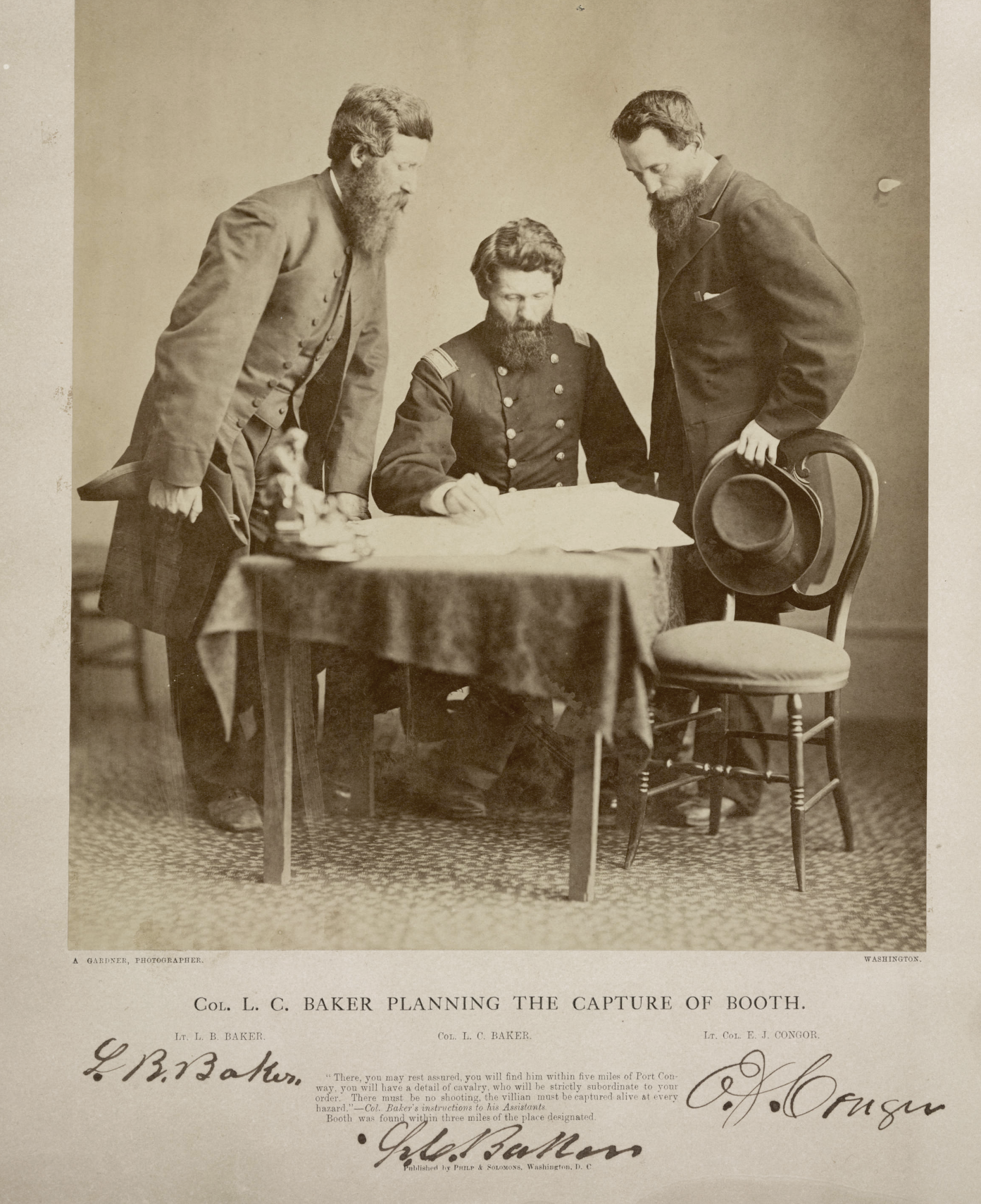
  • Later that day, Colonel L.C. Baker, the infamous War Department detective-chief, published a handbill proclaiming a $30,000 Reward. It described John Wilkes Booth and offered a description of the “Person Who Attempted to Assassinate Hon. W.H. Seward, Secretary of State.” As a matter of explanation, Baker stated, “The Common Council of Washington, D.C. have offered a reward of $20,000 for the arrest and conviction of these Assassins, in addition to which I will pay $10,000.”

  • On some date unknown—possibly April 17—a $10,000 reward was supposedly offered by the Common Council of Philadelphia.
  • The City Council of Baltimore also offered $10,000 for the arrest of the assassin, a former hometown boy. An untitled squib, in the Davenport (IA) Daily Gazette, April 19, 1865, commented on the offer saying, “The feeling here (Baltimore) against Booth is greatly intensified by the fact that he is a Baltimorean, and it is desired by the people that one who has so dishonored the family should meet with speedy justice.”
  • On April 20th, Governor A.G. Curtin of Pennsylvania announced $10,000 for the capture of the assassin. However, this offer had a catch: the assassin had to be arrested on Pennsylvania soil.

  • On April 20, Edwin Stanton published his famous $100,000 reward, offering sums of $50,000 for Booth and $25,000 each for David Herold and John Surratt. A version of Stanton’s reward poster even had photos of the three major conspirators attached. Since this was in the days before the technique of printing halftone photos was developed, photographic prints of the three suspects were actually glued onto the printed piece. This is reportedly the first time actual photographs were added to a wanted poster. Copies of this broadside were distributed throughout Maryland and carried by search parties. The poster was also “re-composed” (re-typeset, in other words) and reprinted in New York City.

  • On some unspecified date, the State of California offered $100,000 in gold to the captors. The claim agents for Private Emory Parady, one of the captors of Booth and Herold, contacted the California officials, but nothing came of it, and nothing specific is known about this offer.
  • New York State supposedly offered a reward, too. Details are sketchy, but John Millington, another of the Garrett’s Farm patrol members, mentioned this in a 1913 letter to the National Tribune.

Most of these proposals died a quiet death and were forgotten in the aftermath of the arrest, trial, and execution of the conspirators. But attorneys pursued the offers made by the City of Baltimore, and the Washington City.

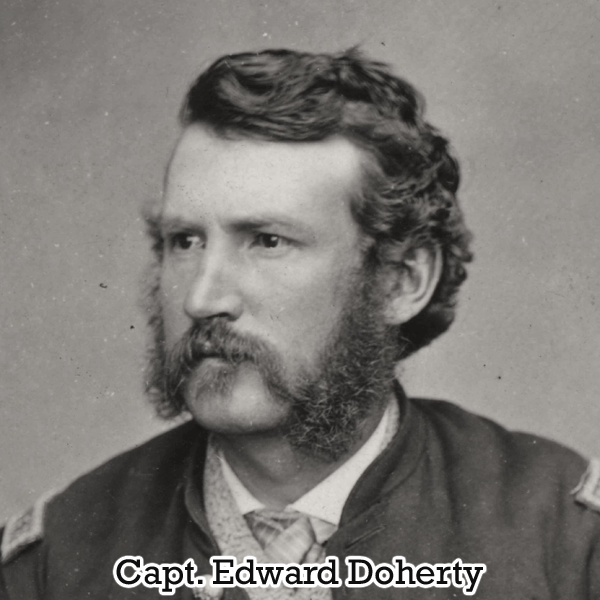
The Baltimore effort ended quickly. An article headlined “Capt. Doherty’s Story” in the August 22, 1879, New York Times explained what happened: “In the case of the claim against the City of Baltimore, which offered $30,000 {sic, should be $10,000} for the arrest of the assassin, Capt. Doherty did not sue to recover, the Mayor and Aldermen telling him point blank that they would not pay it, as the reward was offered under a previous administration. The claim has now lapsed by limitation.”

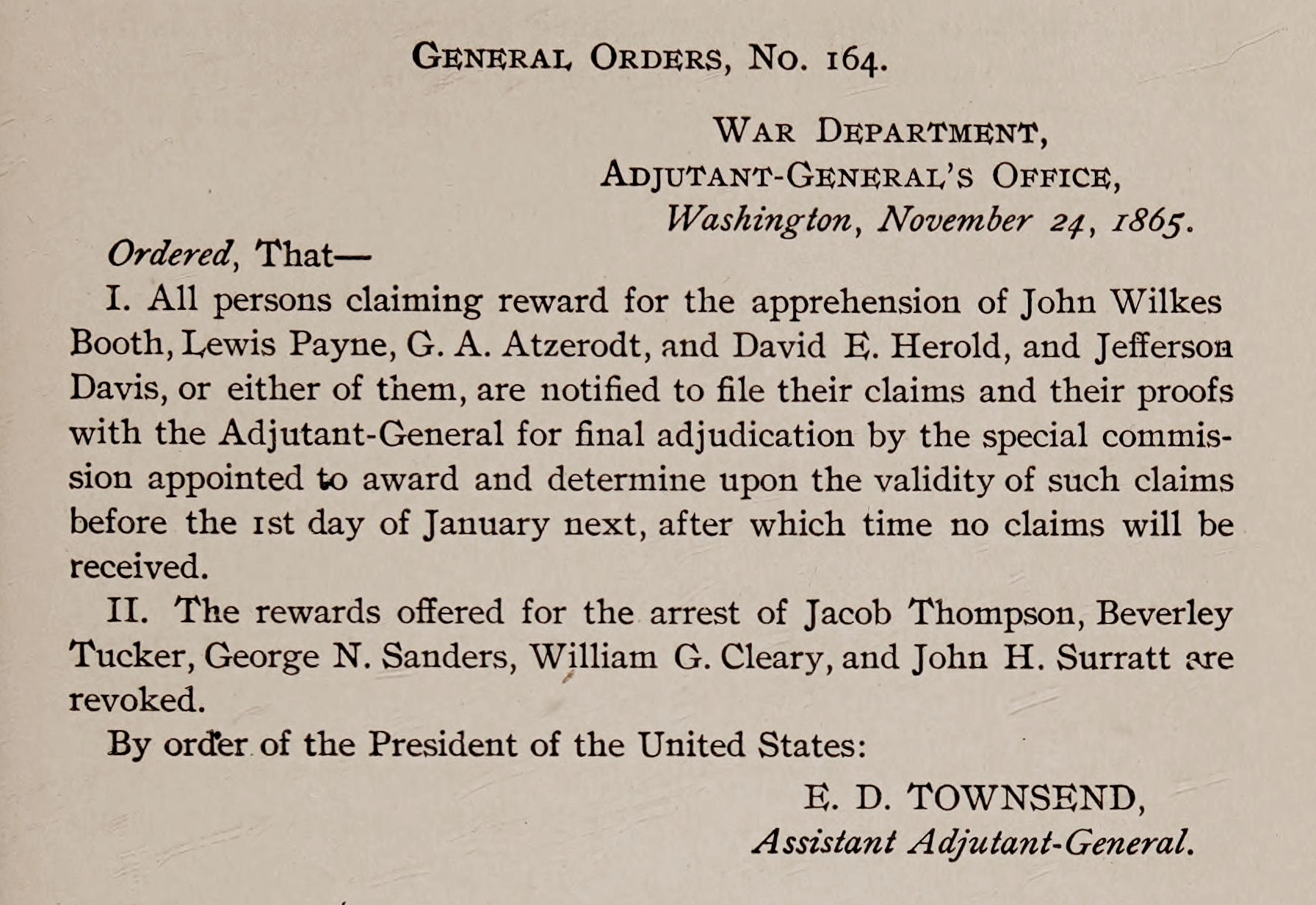
On November 24, 1865, the War Department issued “General Order No. 64”, which announced that a special commission would be set up to determine the validity of claims for the Reward and that all applications for a share had to be submitted by the end of the year.

It also announced that any other offered rewards were withdrawn. This applied to the $25,000 reward offered for John H. Surratt, who was still a fugitive, and to other amounts posted for members of the so-called Confederate “Canadian Cabinet.” When the final report of the commission was issued, the offers by General Augur and Colonel Baker had been incorporated into the Stanton offer of April 20th.

There was a great deal of wrangling involved in the settlement of the War Department $100,000 offer (as detailed in my article “Were The War Department Rewards Ever Paid?” February 1994, Surratt Courier), but that was minor as compared to the struggle over the reward offered by the officials of the City of Washington. A lawsuit was filed by the three National Detective Police officers in an effort to get the city fathers to live up to their promise. This fight involved a huge cast of characters and dragged on for over a dozen years. It took so long, in fact, that by the time it started moving through the courts, one of the major players was dead.

Here’s the story of that case:

On October 10, 1866, an equity case was filed in the Supreme Court of the District of Columbia in General Term by the three detectives and their attorneys. It was designated case “No. 790” and was known as “L.C. Baker, E.J. Conger and L.B. Baker v. The City of Washington, et al.” There were forty-six individuals involved in the suit, all of whom had gotten shares of the War Department reward for the capture of Booth, Herold, Atzerodt, and Payne. The stated purpose of the case was: “For Distribution of the Reward offered by the City of Washington for Assassins of Abraham Lincoln, President of the U.S.”

As I pointed out in my earlier article, the troopers of the Garrett’s Farm patrol monitored the progress of the suit. One of the men who captured Booth, former private Emory Parady, received periodic progress reports from his agents, attorneys Owen & Wilson of Washington. On December 26, 1866, for instance, they wrote: “The suit on the city is progressing — there are so many parties it is hard to get them all in court so we can try. Capt. Dougherty is in North Carolina & we have not got service upon him and there are several others of the same character. When they are all properly before the Court we shall call it up & have it tried.”

The filing of motions, gathering and introduction of affidavits took the rest of 1866, 1867, and all of 1868. During this process, one of the prime movers, Col. Lafayette C. Baker, died in Philadelphia on July 3, 1868. Finally, all of the papers were submitted, and the Court took the matter under consideration. On April 20, 1869, the D.C. Supreme Court announced their verdict. They dismissed the case against the City, ordering that the plaintiffs pay the court costs.

The decision was appealed. On April 25, 1870, a re-argument of the case was granted by a Special Term of the D.C. Supreme Court. On September 29, 1870, the court received an “Amended Answer of the Mayor & Board of Aldermen & Common Council – motion for leave to file made in the Court sitting in General Term.”

The New York Herald summed up the case in an article on September 30th. There were several plaintiffs, the Herald said; the three detectives, Capt. Doherty, attorneys representing the 26 soldiers of the Garrett’s Farm patrol, and three civilians involved in the planning or capture of Mrs. Surratt and Louis Powell. The Herald laid out the positions of the various parties pretty clearly: The attorney for the Corporation of Washington opined that the City had had no authority to offer the reward, and that “the parties claiming this reward did nothing more than, as good citizens, they should have done.” He also stated that they were merely following the orders of their officers.

The counsel for Prentiss M. Clark, one of the civilians involved in the Mary Surratt arrest, stated that police, detectives, and soldiers had no claim since they were only doing their normal duties. By this argument, then, only civilians who gave evidence would be entitled to a chunk of the reward. (Clark was a mere civilian at the time of the arrest, naturally.)

The attorney for the troopers responded that it was not part of their duty as soldiers to assist in the capture of offenders against the law, and, besides, they were not subject to any orders from the officials of Washington City.

In the official documents of the case, counsel for the defendants stated that “the Mayor, Board of alderman and Board of Common Council of the City of Washington did not and do not possess any legal authority to offer or to pay out of the monies of the tax payers of said city any sum whatsoever for the purposes mentioned in the (1865) ordinance.”

Edward Doherty responded with evidence that the mayor had issued a Message on June 30, 1868, indicating that he would seek permission from Congress (which then, as now, governed the District and Washington City) to raise $550,000 in bonds. These were to pay city debts. One of the debts specifically mentioned in the message by the mayor was the $20,000 reward, Doherty noted.

On October 15, 1870, the Special term of the Supreme Court of the District of Columbia dismissed the appeal. They found in favor of the City of Washington, et al, and against Stedpole (the executor of the estate of L.C. Baker, deceased), et al.

A long period of silence ensued, but on October 12, 1875, an appeal was filed with the United States Supreme Court. The two individuals who put up the $550 bond for the filing were Prentiss Clark and George F. Robinson, the attendant who helped save Secretary William Seward’s life in 1865.

The appeal was labeled Case No. 691. Which was soon changed to case number 441, and then to 200. It was placed on the docket for October Term 1877, but not called. It carried over to October Term 1878.

The High Court finally dealt with it, but not in a way that the plaintiffs hoped: on November 15, 1878, the U.S. Supreme Court ordered the appeal “dismissed with costs” and ordered that the defendants get their costs from the complainants.

In the end, only the War Department paid any reward for the capture of the assassins of President Lincoln. In 1898, former Pvt. John W. Millington summed up the situation to a reporter in Sioux City, Iowa. The journalist stated: “Other rewards had been offered by different states, but Mr. Millington never saw any part of them and long ago came to the conclusion that most of them were in the nature of ‘grand stand plays’.”

Sources:
Boston Corbett-George A. Huron Papers, Kansas State Historical Society, Topeka, Kansas
“Lafayette C. Baker, Everton J. Conger and Luther B. Baker, v. City of Washington, et al,” Equity docket, Supreme Court of the District of Columbia, Equity Case 790, National Archives, Washington.
Miller, Steven G., “Were The War Department Rewards Ever Paid?” February 1994, Surratt Courier.
The Millington-Parady Papers, Steven G. Miller Collection.
“One of Booth’s Captors,” National Tribune (Washington, DC), June 26, 1913. (John Millington “wants to know why” the rewards offered by the governors of New York and Pennsylvania were never paid.)
“The Reward for the Discovery of the Lincoln Assassins,” New York Herald, September 30, 1870.
“Thirty-Three Years Ago. Anniversary of the Assassination of Lincoln by John Wilkes Booth. A Resident of Sioux City Who Assisted in the Capture of the Murderer. Story of the Pursuit and the Final Scene When He Refused to Be Taken Alive and Was Shot,” The Sioux City (IA) Times, April 14, 1898.


I’m grateful to my friend Steve Miller for allowing me to republish this very interesting article he wrote about the rewards offered for the capture of John Wilkes Booth. This article was originally published in the September 2006 edition of the Surratt Courier.

Categories: History, Steven G. Miller | Tags: , , , , , , | 7 Comments

Manhunt Review: Episode 7 The Final Act

I conducted reviews of the seven-part AppleTV+ miniseries Manhunt, named after the Lincoln assassination book by James L. Swanson and released in 2024. This is my historical review for the seventh episode of the series “The Final Act.”  This analysis of some of the fact vs. fiction in this episode contains spoilers. To read my other reviews, please visit the Manhunt Reviews page.


Episode 7: The Final Act

The final episode of the series opens with a flashback to 1862. Edwin Stanton attends a party at the White House thrown by the Lincolns. The first family is concerned about the poor health of their son Willie, who will soon die from typhoid fever. Stanton agrees to take over as Lincoln’s Secretary of War.
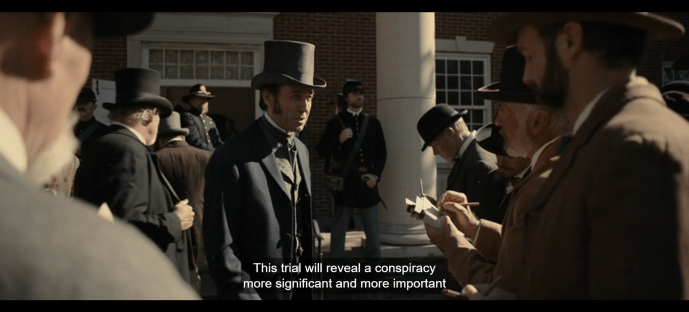
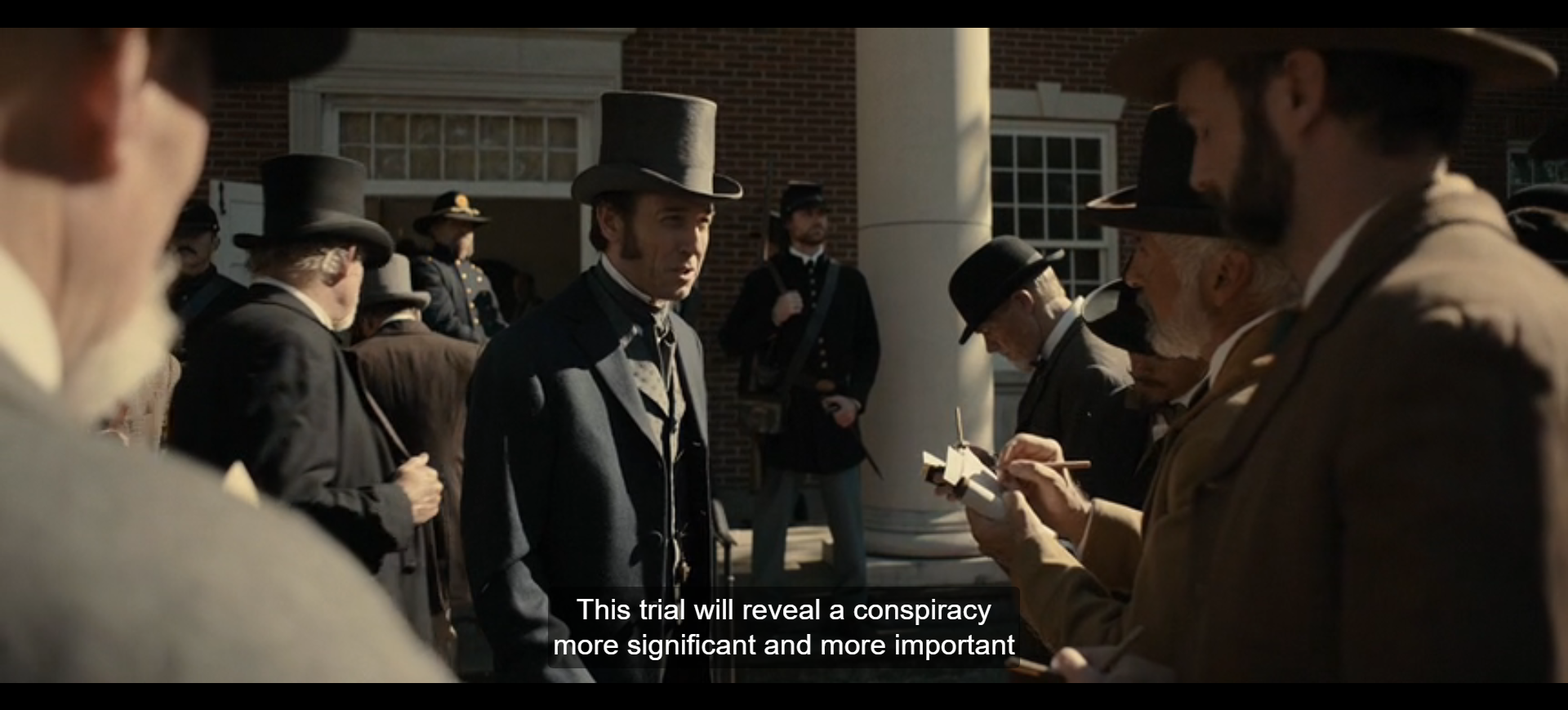
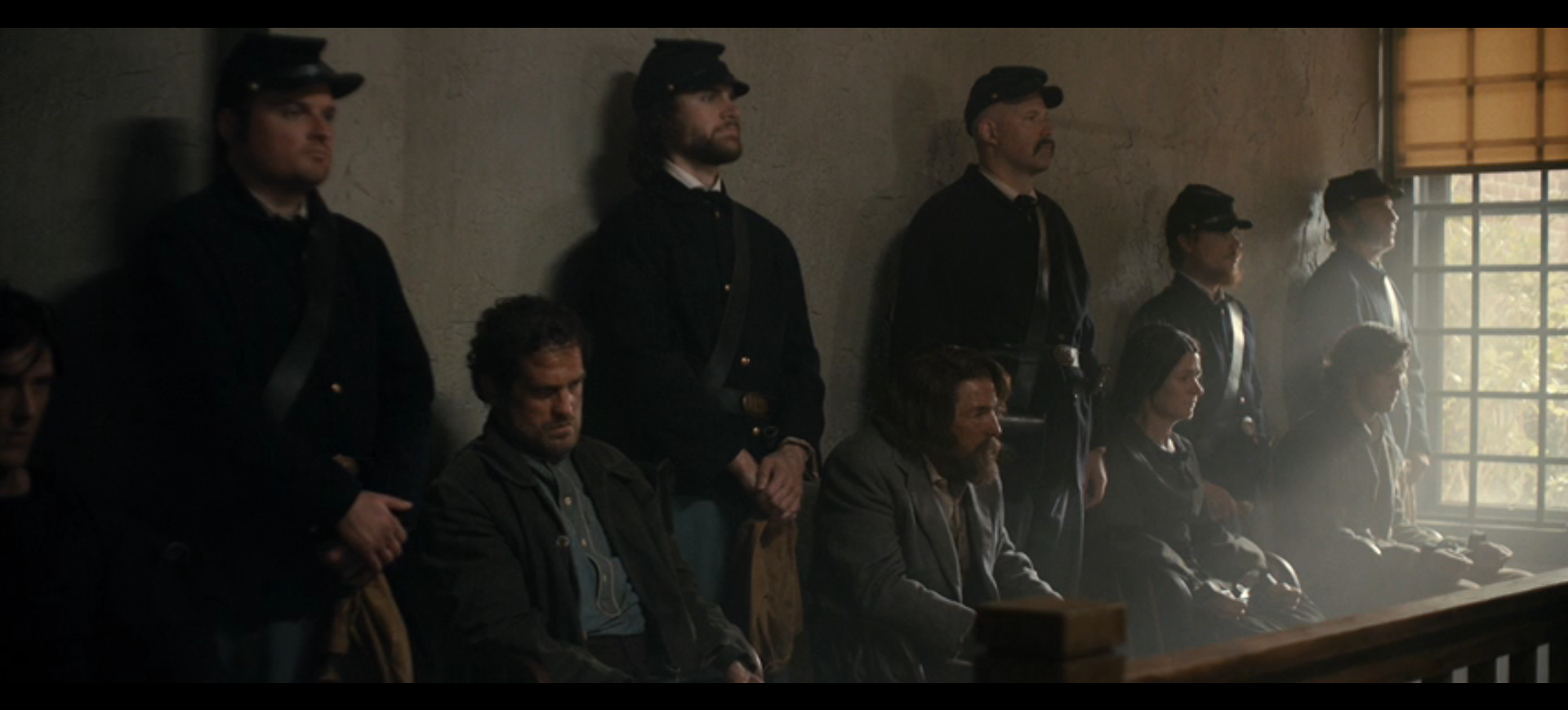
We then flash forward to the first day of the trial of the conspirators. Stanton talks with reporters outside before seating himself to watch the proceedings. Judge Advocate General Joseph Holt lays out the charges against the conspirators who are seated on a bench in the front of the courtroom. When Holt announces that the government is also charging Jefferson Davis in Lincoln’s assassination, audible gasps and rumblings are heard throughout the courtroom.

Next, we see Stanton talking to Jefferson Davis in his prison cell. The Confederate president denies any involvement in Lincoln’s death and is defiant that the cause of the Confederacy will live on.

In the War Department, Stanton and Holt ask Lafayette Baker what evidence his agent, Sandford Conover, has implicating Davis. Baker admits that Conover has been two-timing them and has also been acting as an agent for the Confederacy. However, Baker plays this as good news as the Confederate Secret Service now knows that Conover has betrayed them and he is now willing to tell everything he knows. Among the information Conover now wants to share is a letter the CSS calls “the pet letter.” Baker tells the men that “pet” was Jefferson Davis’s nickname for Booth, and Stanton announces that Conover will now be their star witness.

There is a brief scene of Holt and Stanton working with Mary Simms to prepare her for her time on the witness stand before we return to the trial for a mash-up of testimonies. William Bell testifies about Powell’s attack on the Seward household, Joseph “Peanut John” Burroughs testifies about Edman Spangler’s assistance to Booth at Ford’s Theatre, and Thomas Eckert misrepresents the importance of Booth’s “Confederate” cipher, as instructed by Stanton in the previous episode.

The testimony then turns to Dr. Mudd, with Jeremiah Dyer defending the doctor’s reputation and accusing his servants (Mary Simms) of having been poor. Baptist Washington, having taken a bribe from Dyer in the previous episode, also speaks favorably of Dr. Mudd and accuses Mary Simms of being a liar, much to the distress of Simms, who sits watching the proceedings. Outside of the courtroom, Simms expresses her concern to Stanton that she won’t be enough to put Dr. Mudd away. We then see her talking to her brother, Milo, at the freedmen’s camp, begging him to testify about Mudd’s treatment of him. Milo is hesitant but is next shown in Stanton’s office in the War Department, listening to Stanton explain how important his testimony would be.
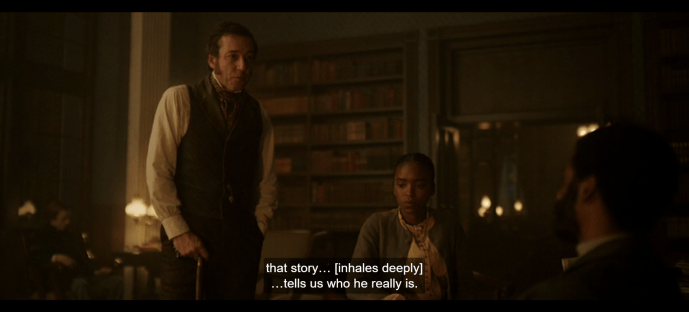
After some more talk between the siblings, Milo agrees to testify. As the Simmses prepare to depart, Mary talks with Louis Weichmann, who is also practicing with Stanton for his upcoming testimony against Mary Surratt. Mary Simms gently accuses Weichmann of not saying everything he knows and asks him to back her up on the stand when she states that Dr. Mudd, John Surratt, and John Wilkes Booth all knew each other before the assassination. Also, Sandford Conover arrives at Stanton’s office and produces the “pet letter” described earlier by Lafayette Baker.

We then jump back to the trial where Milo Simms is on the stand, and he recounts having been shot in the leg by Dr. Mudd when he was enslaved by him. Mary Simms then takes the stand and talks about Dr. Mudd’s disloyal sentiments and having harbored Confederate on his farm in 1864. Mary recounts that John Surratt was a common visitor to the farm and that Mudd had known Surratt and Booth before the assassination. When Dr. Mudd’s defense attorney, Gen. Ewing, attempts to discredit Mary, she tells them to ask Louis Weichmann about it.

Weichmann, next on the stand, describes having seen the conspirators in and around Mary Surratt’s boardinghouse. He describes his friendship with John Surratt and how John was often on trips to Montreal and Richmond. Weichmann also defends Mary Simms, acknowledging that he and John Surratt first met John Wilkes Booth through an introduction made by Dr. Mudd.

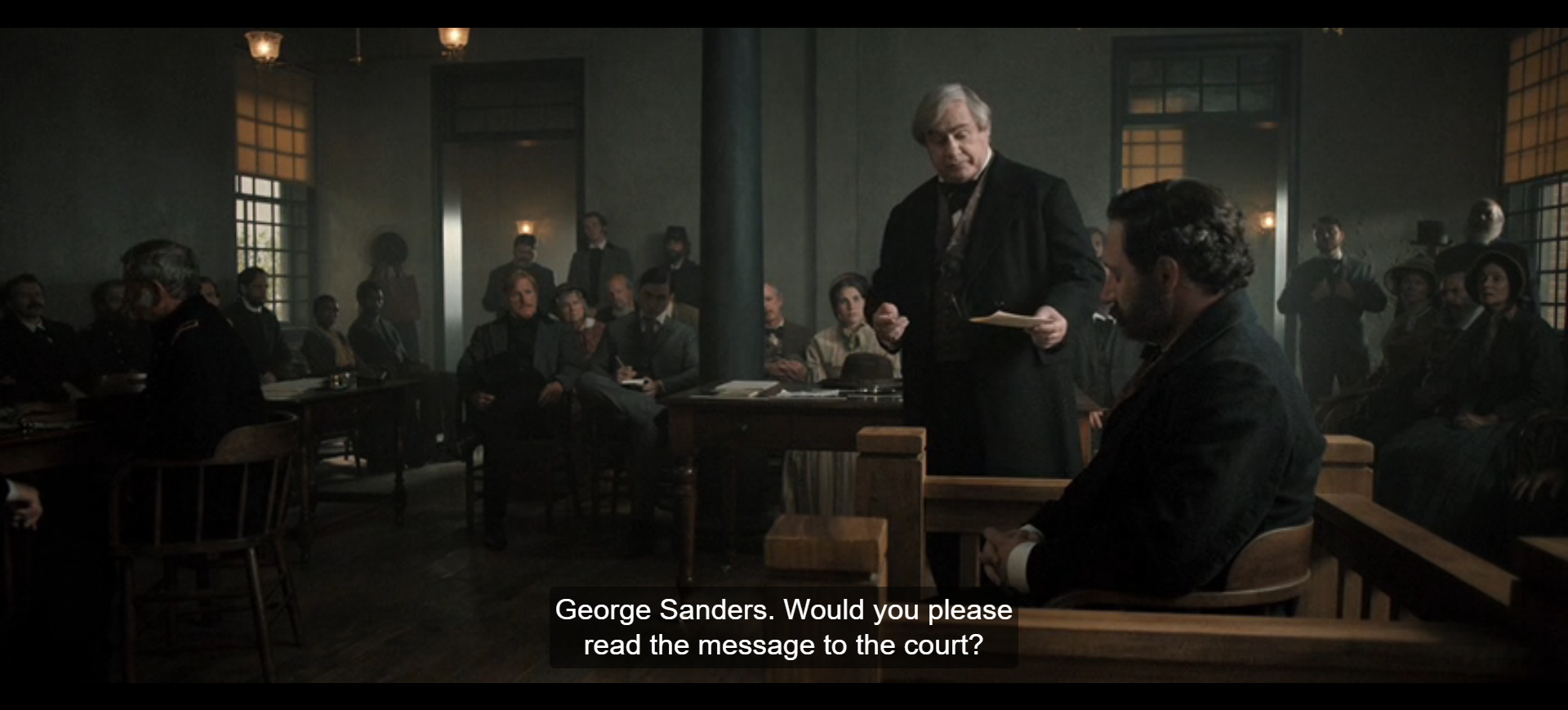
Then, it’s time for Stanton’s key witness, Sandford Conover. He admits to having worked for both the Union War Department and the Confederate Secret Service, leveraging information on both in order to make a living. Conover states that when Confederate General Robert E. Lee surrendered, the CSS in Montreal received orders from Richmond via John Surratt to set “pet” in motion. Conover claims that Jefferson Davis referred to John Wilkes Booth as his “pet.” He implicates George Sanders in the assassination plot explicitly but states that Sanders did not have confidence that Booth would succeed. Conover then reads part of the “pet letter” addressed to Sanders, which states that “pet has done his job well and old Abe is in hell.”
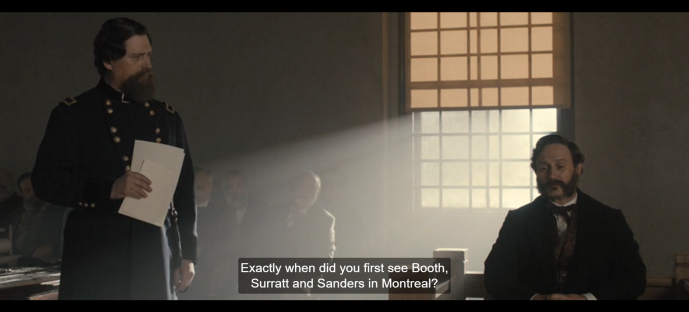
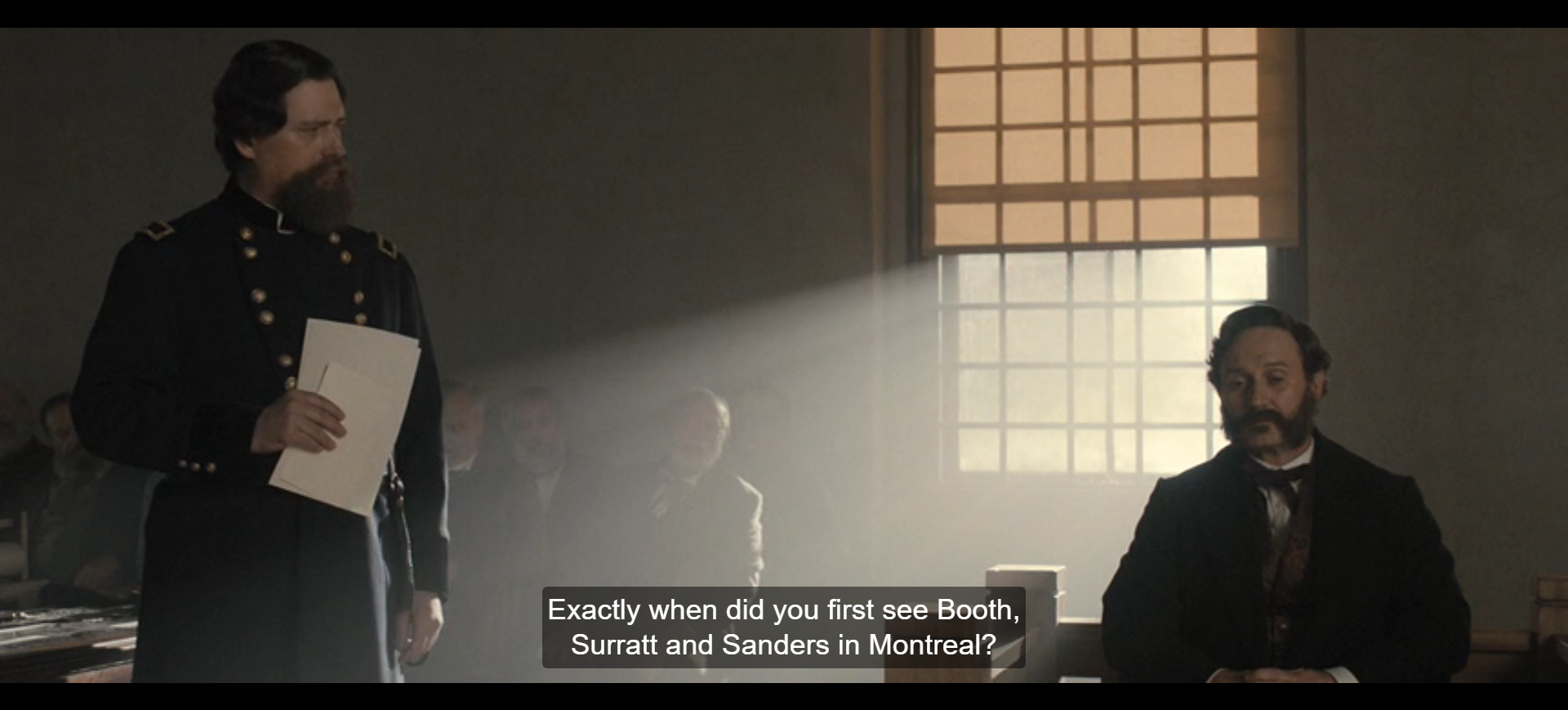
On cross-examination, Conover admits that he has several other aliases, including James Wallace and Charles Dunham. When asked when he saw Booth, Surratt and Sanders together in Montreal, Conover pauses before giving the date of October 17, 1864. Defense attorney Ewing then counters with a record establishing that Conover was in jail during the month of October. Conover admits his mistake over the date but is adamant that Jefferson Davis knew of and ordered the assassination of Lincoln. After accusing Conover of deliberate perjury, Gen. Ewing rests his defense.

Back at the War Department, Stanton, Mrs. Lincoln, and others await the announcement of verdicts in the case. Mrs. Lincoln tells Stanton he has done well, regardless of the outcome involving Jefferson Davis. Thomas Eckert then gets word that the judges have finished their deliberations, and pretty much the whole cast of characters makes their way back to the courtroom.

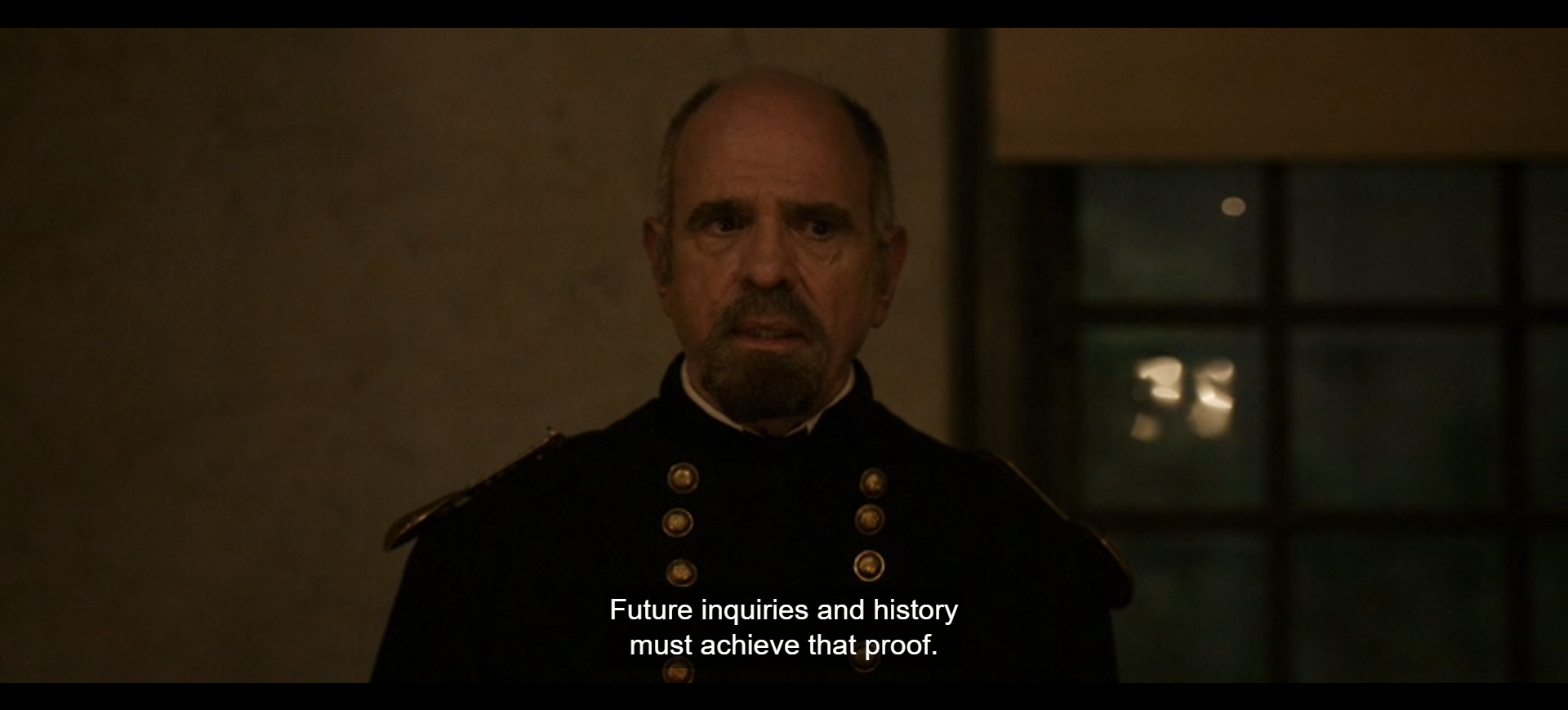
General David Hunter, the president of the military commission, first addresses the courtroom, noting his belief that Jefferson Davis is as much guilty of the conspiracy against Lincoln as John Wilkes Booth. However, Hunter states that the commission was unable to conclusively reach a verdict on such a grand conspiracy due to tainted evidence. He leaves it to history to prove the Confederacy’s culpability.

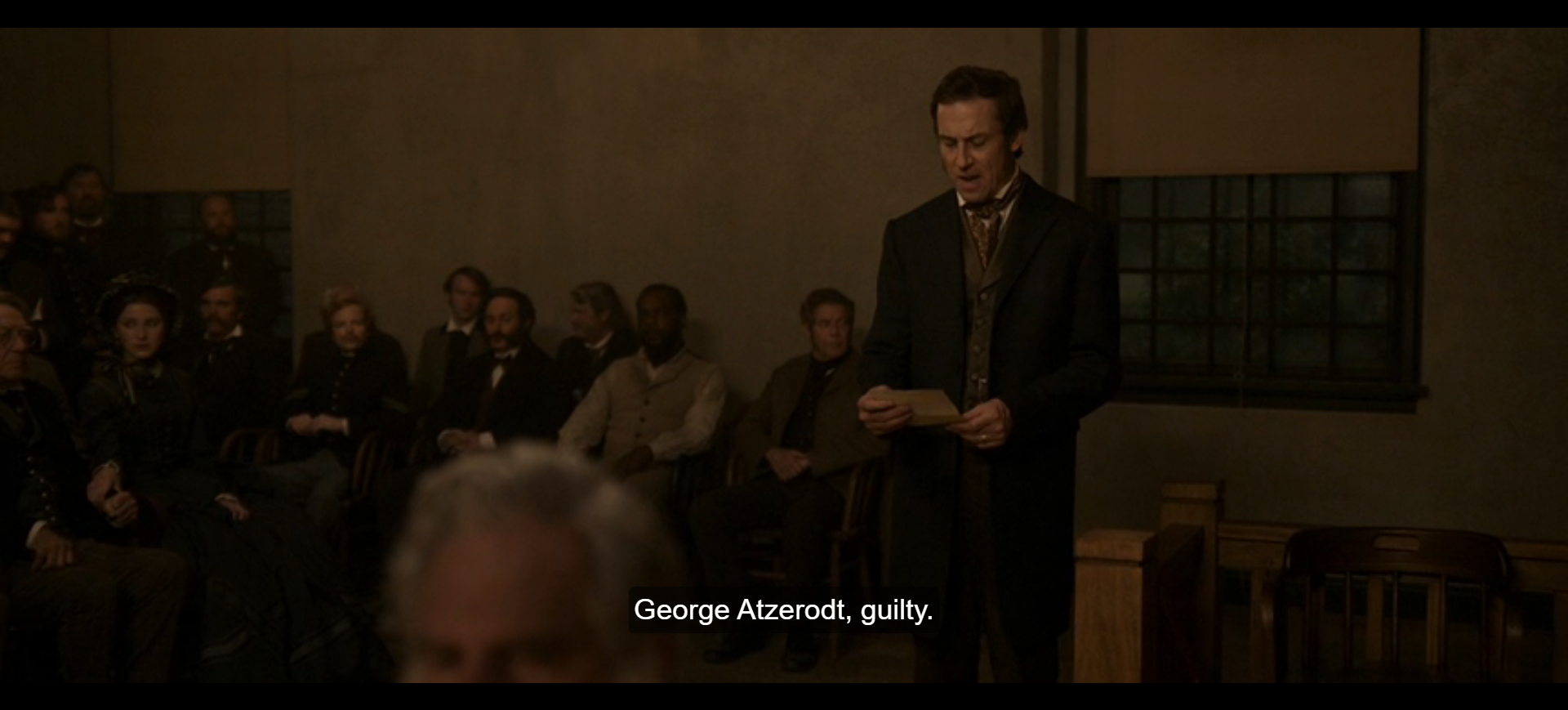
Hunter then turns to the conspirators in the courtroom, all of whom are still standing. He hands the verdicts over to Secretary Stanton to read. Stanton reads through each name and verdict, one at a time. After announcing that Mary Surratt, Lewis Powell, George Atzerodt, and David Herold have all been found guilty, Hunter interposes with the news that these four will be hanged tomorrow. Stanton then announces Spangler’s guilt and sentence of 6 years in prison. An impatient Mary Simms whispers to Eddie, asking about Mudd seconds before his father declares Mudd guilty and sentences him to life imprisonment. Mary and Milo Simms embrace, and the conspirators are led out of the room.

Outside the courthouse, Lafayette Baker and Edwin Stanton confront Sandford Conover about his faulty testimony. Conover says he told the truth but admits that he had received a suspicious package from London that morning. Baker concludes that George Sanders got to him. In a brief montage, we witness David Herold pulled from his cell, situated on a scaffold, and a rope placed around his neck. He is standing alongside the other condemned conspirators before we cut to a photograph in Stanton’s hand showing the execution.

Thomas Eckert informs Stanton that the National Archives collected the pieces of evidence from the trial but noted that pages from Booth’s diary are missing. Eckert warns Stanton that they might open an inquiry. Stanton lies, saying that Lafayette Baker had the diary last. A knowing Eckert then tells Stanton that he had the secretary’s fireplace cleaned recently, showing his loyalty to his boss, who destroyed the diary pages in that fireplace the episode before.

We flash forward to a future date. Elizabeth Keckley is hosting a fundraiser for the Freedmen’s Bureau by selling copies of a book about her time in the White House. Mary Simms is there and is encouraged to apply to Howard University, a new college for Black Americans. Secretary Stanton speaks favorably of the Freedmen’s Bureau and complains of President Johnson’s lack of support for its mission. To this party, the President arrives, accompanied by General Lorenzo Thomas, an adversary of Stanton’s. Johnson informs Stanton of his intention to remove troops from the Southern states. Knowing that Stanton will oppose him, Johnson tells Stanton that Gen. Thomas will be replacing him as Secretary of War. Stanton notes that trying to remove him will trigger an impeachment investigation by Congress, but President Johnson is unconcerned.

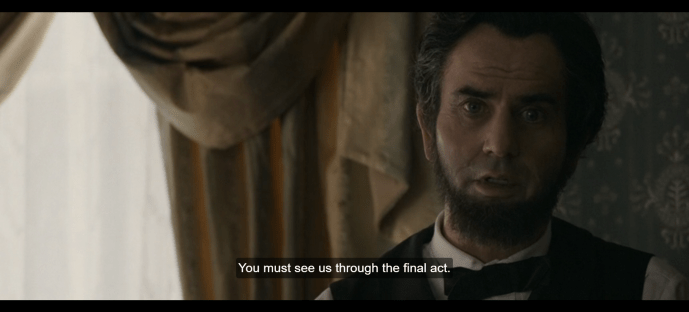
A fuming Stanton offers General Thomas a tour of the War Department. As he shows his replacement around, Stanton recalls a conversation he had with President Lincoln the day before the assassination. Stanton attempted to resign now that the war was coming to a close, but Lincoln denied his request, noting that he needed Stanton more than ever to fight for the future of the nation during Reconstruction. Remembering his promise to Lincoln, Stanton locks his office door and barricades himself into the War Department, determined to preserve Lincoln’s plans for Black suffrage and a united nation.

Through text on the bottom of the screen, we are told that Stanton barricaded himself in the War Department for three months while Andrew Johnson faced impeachment. In the end, Johnson avoided removal from office by a single vote. We also learn that John Surratt was eventually returned to the United States but was not convicted. He is shown giving a speech about his involvement with John Wilkes Booth. Mary Simms is also shown preparing for her first day at Howard University as the text tells about the adoption of the 13th and 14th amendments, which officially ended slavery and granted citizenship to Black Americans.

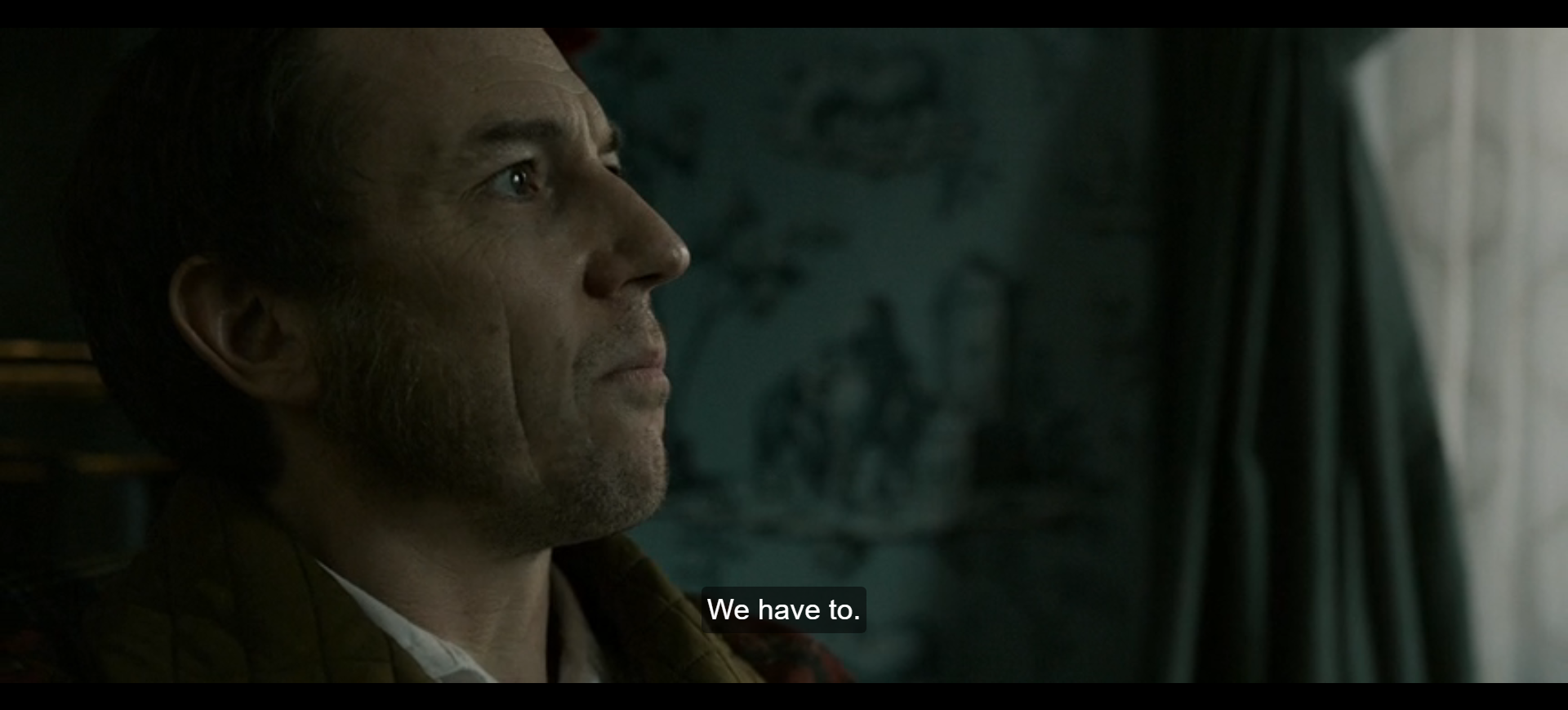
We then jump to Christmas Eve of 1869. It’s clear Stanton’s asthma has gotten worse over the intervening years as he inhales vapors through a medical device. Eddie Stanton brings news to his father that the elder statesman has been officially confirmed as a new justice of the Supreme Court. The younger Stanton is confident that, as a member of the Supreme Court, his father will continue to ensure Lincoln’s vision for the country and congratulates his father. Even in his weakened state, Stanton is noticeably pleased. After Eddie excuses himself, a teary-eyed Stanton looks out the window and announces, “We finish the work now. We have to.”
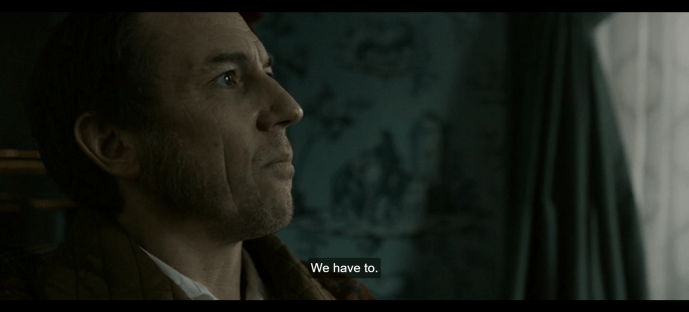
However, as the former Secretary attempts to rise from his chair to join his family downstairs for a meal, he becomes weak and collapses back down into his chair. His papers fall to the ground, and we see that Edwin Stanton has died. A voiceover from Eddie Stanton laments his father’s death from asthma-related organ failure before he was able to serve on the court. A similar voiceover from Mary Simms relates the ratification of the 15th Amendment two months after Stanon died. Finally, the series ends with an echo of Stanton’s words that the work still needs to be finished.


Here are some of the things I enjoyed about this episode:

  • The Trial Room

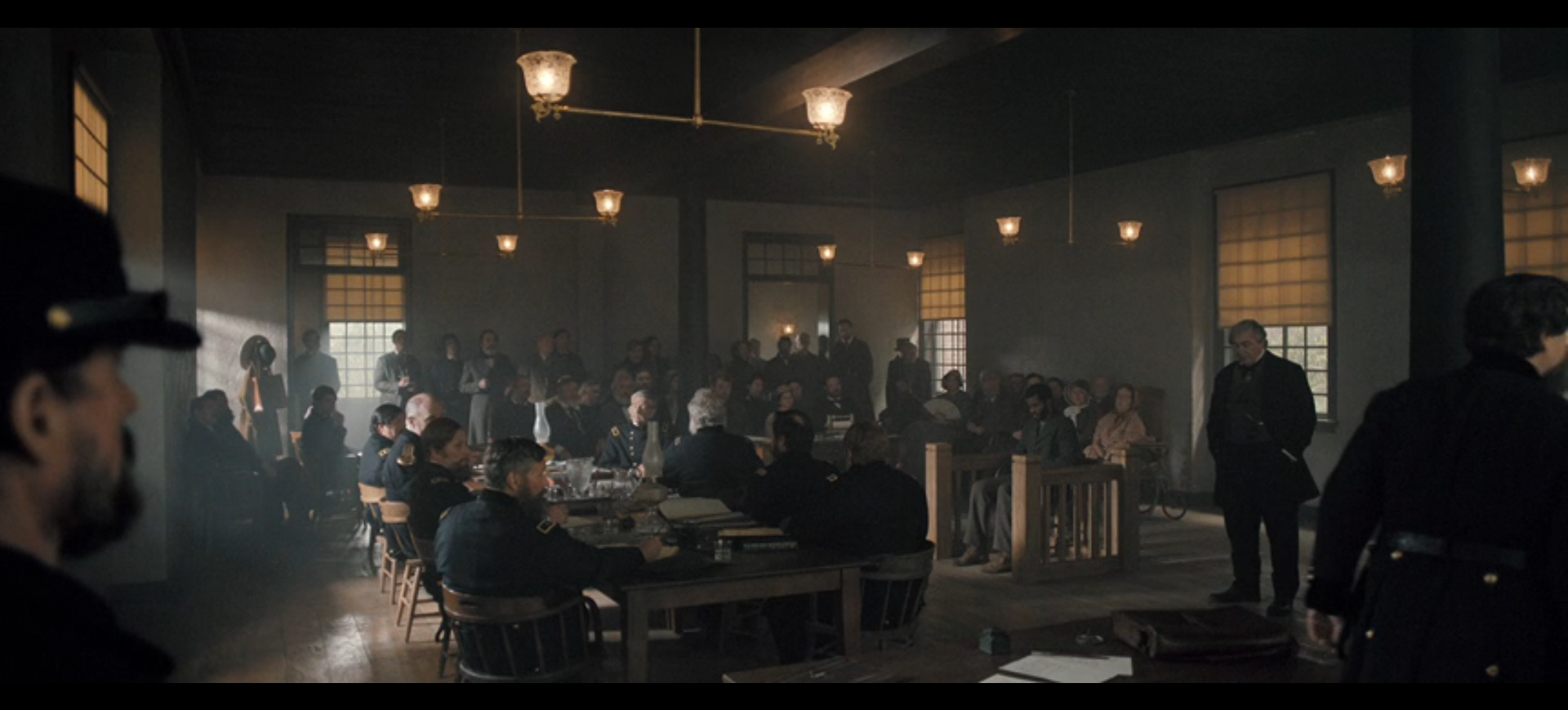
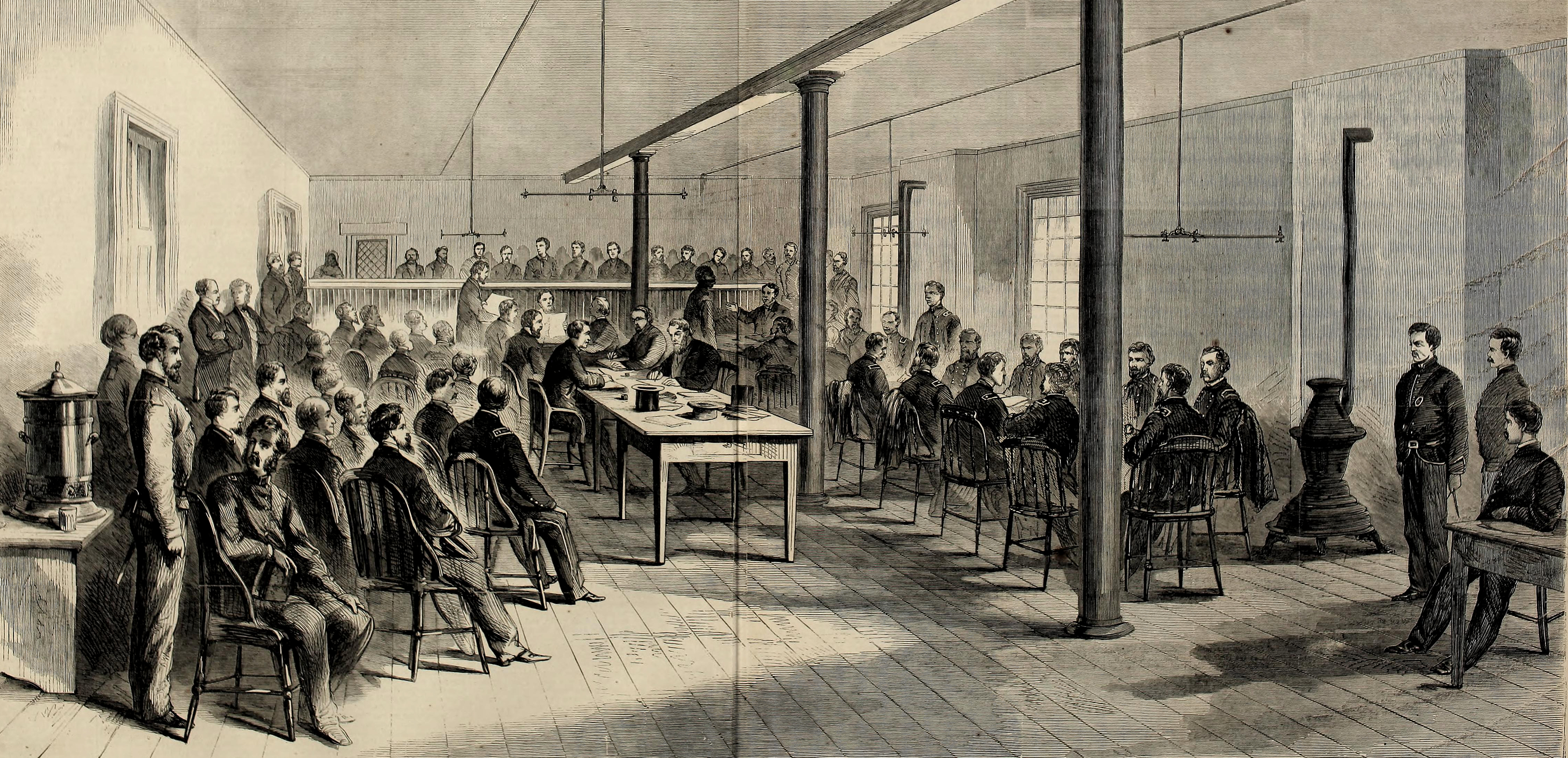
As someone who has spent quite a bit of time giving tours to visitors at the trial room of the Lincoln conspirators at Fort Lesley J. McNair, I was impressed with how well the production managed to duplicate the look and layout of the room. The set designers clearly studied the engravings of the trial room that were published in the illustrated newspapers and did their best to recreate them.
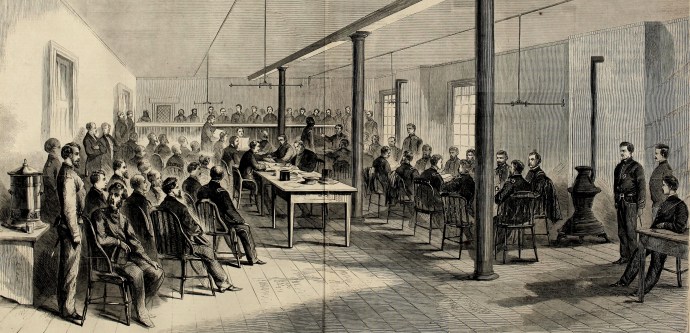
For the sake of filming and space, not every detail of the room is the same, but my hat goes off to the crew for this admirable recreation.

  • Mary Simms’ Testimony

As I have noted throughout these reviews, the Mary Simms shown in this miniseries is a fictional representation of the real person. Mary Simms had been enslaved by Dr. Mudd but left the farm after emancipation came to Maryland in November of 1864. She was not present at the Mudd farm when John Wilkes Booth stopped there after assassinating Lincoln.

Despite the entirely fictional nature of the Mary Simms shown in this series, the writers actually provide a fairly realistic portrayal of Mary Simms’ trial testimony in this episode. Rather than being asked about Dr. Mudd setting Booth’s broken leg and letting him stay the night (something the real Mary Simms never witnessed, but this fictional one does), Judge Advocate Holt asks Mary about Dr. Mudd’s Confederate sympathies. This is in line with the testimony of the real Mary Simms, who described how a group of Confederate soldiers found refuge at the Mudd farm during the summer of 1864. The real Mary Simms also discussed how John Surratt had been a visitor to the Mudd house, establishing a connection between Mudd and clandestine Confederate activities.

Aside from the ending appeal to the judges to ask Louis Weichmann about the relationship between Booth, Surratt, and Mudd and the claim that she had tried to leave the Mudd farm but couldn’t, the testimony presented by Mary Simms in the series is surprisingly close to accurate. You can read the real Mary Simms’ testimony for yourself here.
  • The Ending

I have to give credit to the series for providing an emotional and compelling ending. Watching Stanton fight tooth and nail to protect the dream of a truly unified country in which citizens of all races are treated equally, only to die right after achieving a position where he could make a sizable difference, is heartbreaking and inspiring. In truth, it was clear that the miniseries was always intended to be about Edwin Stanton’s fight with President Johnson over Reconstruction and the Freedmen’s Bureau. You can tell that the writers had so much more that they wanted to include about the fight over Reconstruction and how its failure negatively impacted our nation for a century.


Let’s dig now into the fact vs. fiction of this episode and learn about the true history surrounding these fictional scenes.

1. Stanton (and others) Never Attended the Trial

There’s quite an assortment of familiar faces attending the trial of the conspirators on its first day. In addition to Edwin Stanton, we see  Mary Lincoln, William Seward, Fanny Seward, and Lafayette Baker. In reality, none of these people ever visited the conspiracy trial in person.
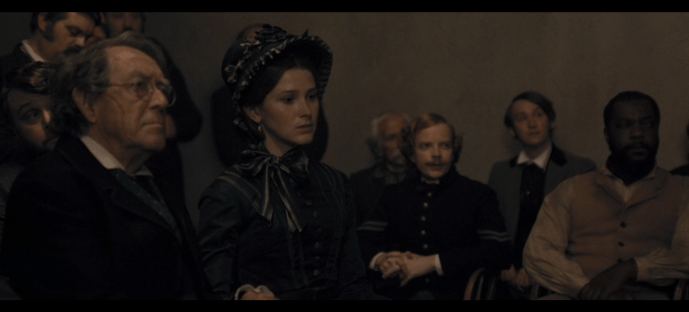
William and Fanny Seward at the conspirators’ trial

Secretary Stanton had far more important things to attend to as the head of the War Department to spend his days in the courtroom. He trusted JAG Holt and his assistants to take care of things without his presence. Mary Lincoln would have never entered the courtroom where her husband’s murderers were on trial, though she remained in the White House until about May 23 before departing for Illinois. Tad Lincoln was the other member of the Lincoln family who attended the trial of the conspirators, and he did so on May 18, shortly before leaving the city with his mother. William Seward was still too badly injured by the attempt on his life to have attended the trial. The Secretary of State was forced to wear a mouth splint to heal his broken jaw all the way up to October of 1865. There is no evidence that Fanny Seward attended the trial either, though her brother Augustus Seward did testify about the attack on their father on May 19. While Lafayette Baker took an interest in the trial and even inserted some of his own men to act as guards and keep an eye on things, he never attended the trial himself.

In truth, practically no one attended the trial during the first few days anyway. Stanton had originally ordered the trial to be conducted behind closed doors with no access to the press and public. However, after General Grant testified behind these closed doors on May 12, he visited President Johnson personally and lobbied for the proceedings to be opened to the public for the sake of transparency. Johnson acquiesced and ordered the press and public to be granted access. The first outside visitors were allowed in after lunch on May 13, the fifth day of the trial.

2. The Missing Conspirators

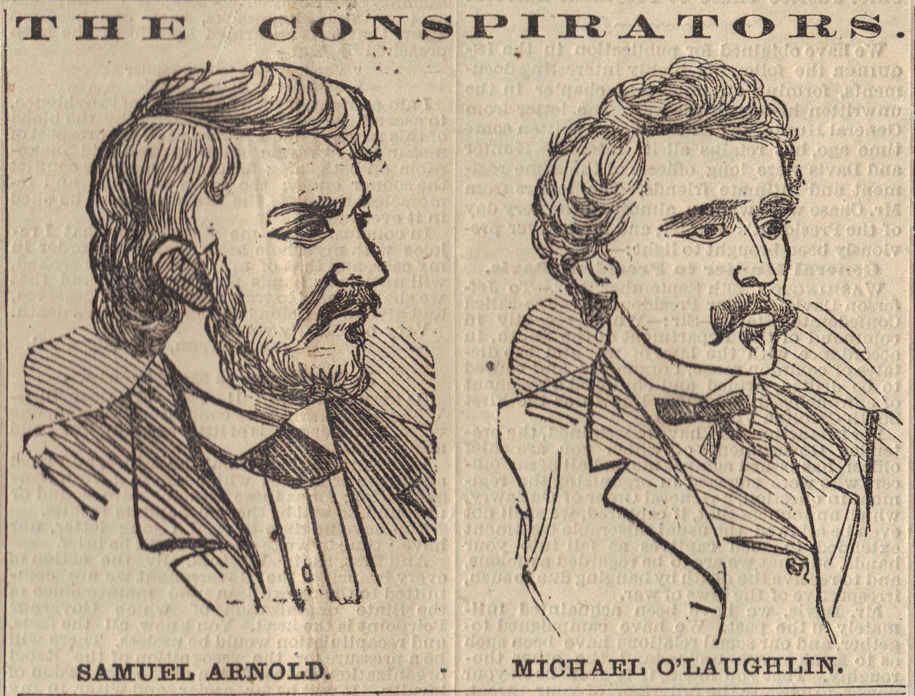
When Joseph Holt is naming off the conspirators on the prisoner’s bench during the first trial scene, there are two noticeable missing faces. These would be the figures of Samuel Arnold and Michael O’Laughlen, two of Booth’s childhood friends who took part in the actor’s initial plot to abduct the President but were not actively involved when that plot changed to assassination. The miniseries never really addresses this abduction plot, which ultimately brought all of the conspirators together in the first place. As a result, Arnold and O’Laughlen do not appear at all in the series.
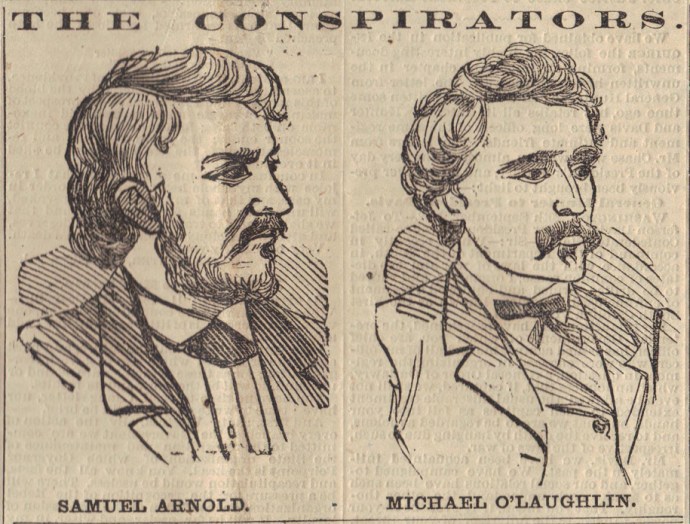
I think it is a bit regrettable to have not included these men, for while they may not have had much to contribute to the manhunt for Booth aspect of the show, a letter written by Arnold to John Wilkes Booth is actually a rare piece of tangible evidence connecting the Confederacy to Booth and his abduction plot. During a search of Booth’s room after the assassination, investigators found a letter written by Arnold to Booth in which Arnold expresses his apprehension in continuing with the abduction plot. Arnold is concerned that the men have waited too long to act and questions whether anything good could now be accomplished by kidnapping Lincoln. It’s essentially a “Dear John” letter with Arnold announcing his intention to bow out of the whole affair.

Arnold includes one intriguing caveat, however. He writes to Booth to “go and see how it will be taken at R—-d, and ere long I shall be better prepared to again be with you.” In short, he tells Booth that if he is able to visit the Confederate capital of Richmond and get their approval for the plot, he would be willing to come back into the fray. Even today, historians point to this letter and Booth’s involvement with Confederate courier John Surratt in their debates regarding how involved the Confederacy may have been with John Wilkes Booth and his plots.

3. The Prisoners’ Dock

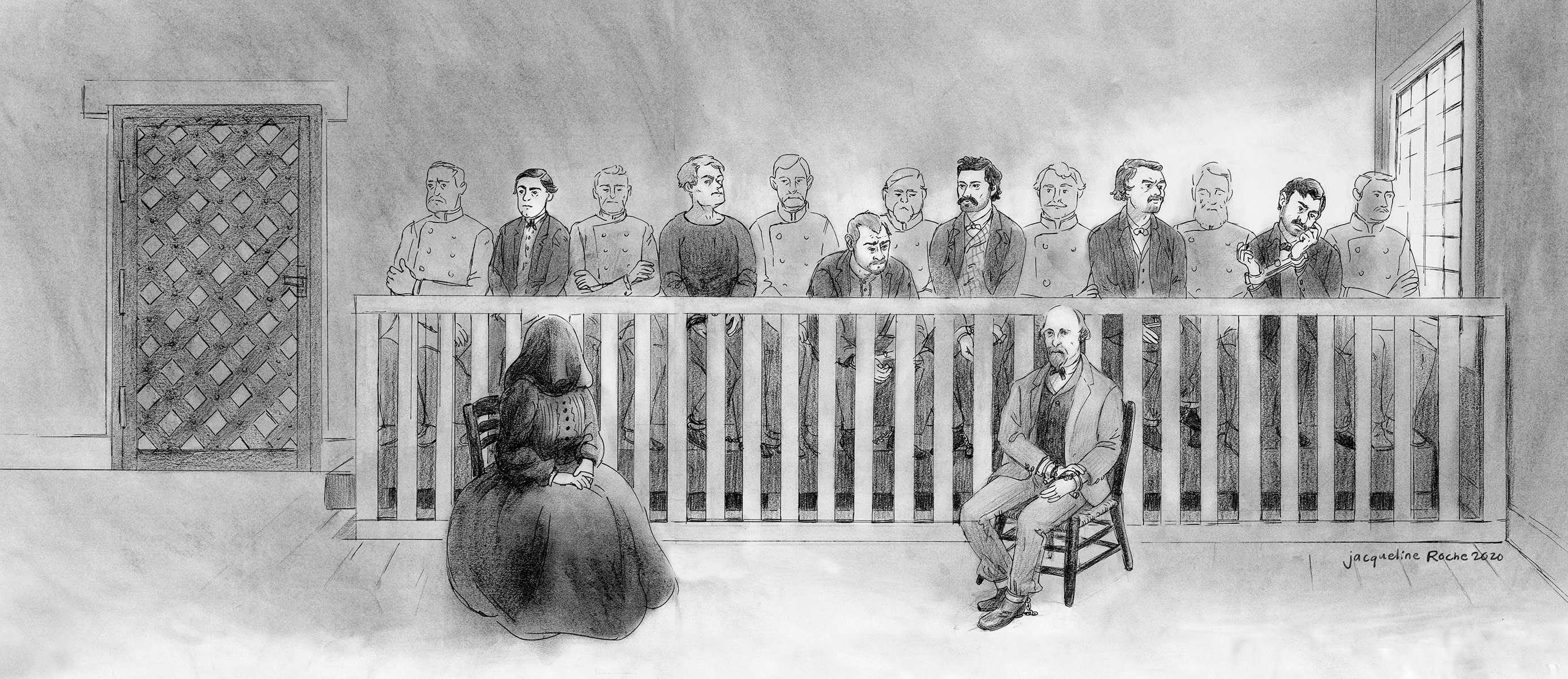
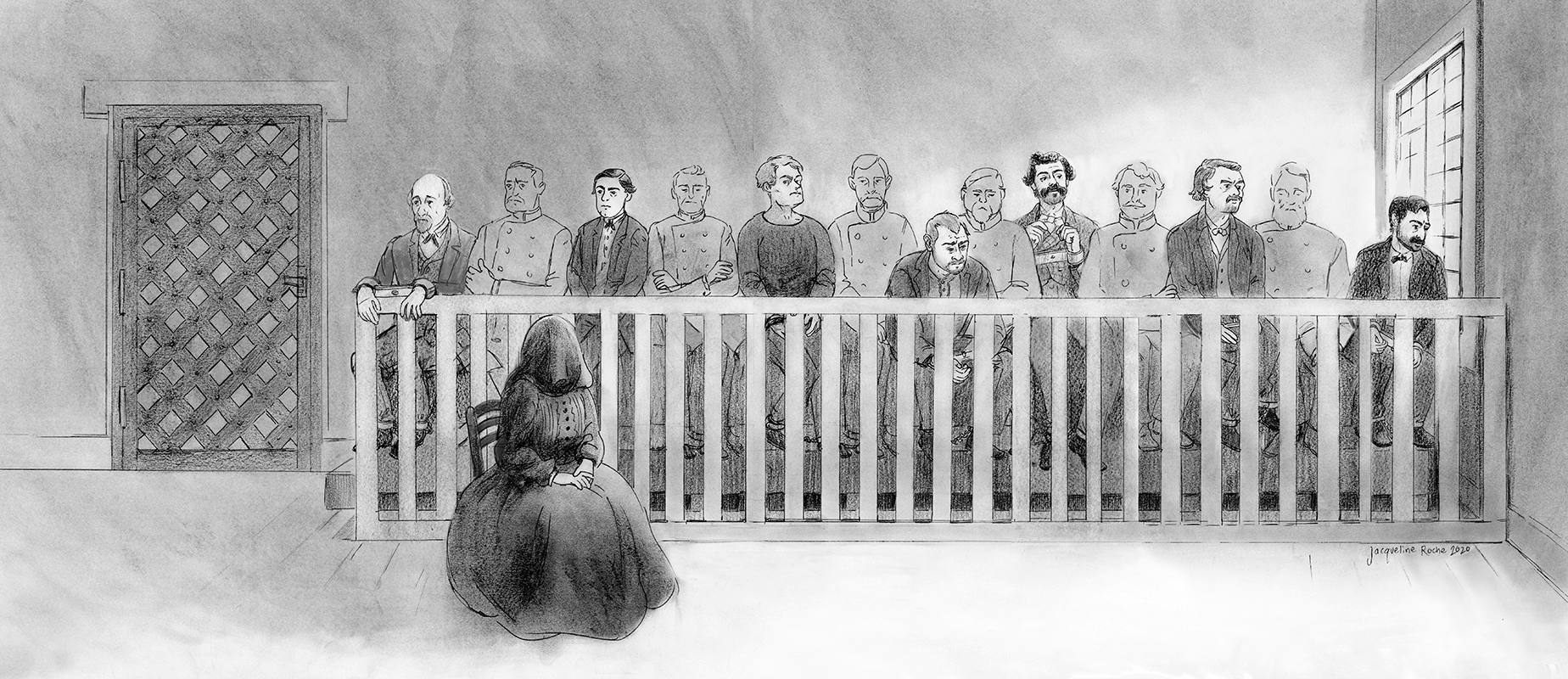
In addition to the absence of Samuel Arnold and Michael O’Laughlen, the way in which the conspirators were arranged on the prisoners’ dock during the first day of the trial does not match the actual arrangement. Over the course of the eight-week trial, the conspirators were seated in multiple arrangements. For my project thoroughly documenting the trial of the Lincoln conspirators, I commissioned a talented artist named Jackie Roche to sketch out the different seating arrangements in which the conspirators were placed. Here, again, are those drawings:

May 9 and 10

During the first two days of the trial, both Mary Surratt and Dr. Mudd were placed in chairs in front of the prisoners’ dock. The reason for this was that the bench seating that had been created for the prisoners was not long enough to seat each conspirator with a guard between them. When General Winfield Scott learned that Dr. Mudd had been given a seat outside of the prisoners’ dock, he wrote to General John Hartranft, the commander in charge of the conspirators, asking why Mudd was being given preferential treatment. General Hartranft explained Mudd’s preferential seating was accidental as he and Mrs. Surratt had merely been the last prisoners to enter the courtroom on the first day and were given chairs since there was no more room.

May 11 – 13
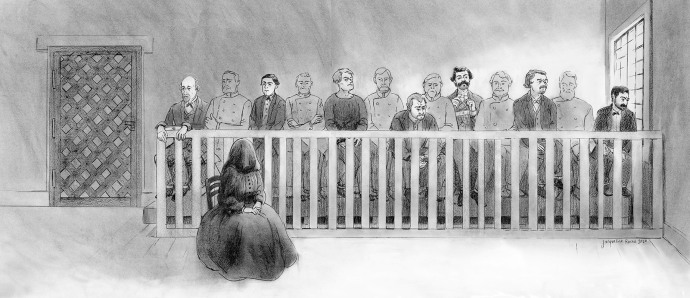
In order to prevent the appearance of Dr. Mudd receiving preferential treatment, on May 11, General Hartranft altered the seating arrangement in order to squeeze Dr. Mudd in on the bench. This was done by removing the guard who had been seated between Samuel Arnold and the window and placing Mudd at the other end. The conspirators stayed in this position for the remainder of the first week of the trial while Mrs. Surratt was still seated in a chair in front of the other prisoners.

May 15

On the first day of the second week of trial, Mrs. Surratt was moved to be placed in line with the other conspirators, though she still occupied a chair of her own. A seated guard was also placed between her and the rest of the prisoners. Conflicting accounts also state that Dr. Mudd was moved to a spot between Arnold and Atzerodt on this date.

May 16 – June 17

After the court adjourned on May 15, additional carpentry work was done to extend the prisoners’ dock. A small raised platform was created on the other side of the door through which the conspirators entered and exited. The railing in front of the conspirators was also extended all the way to the wall, with a small gate created near the door. For the bulk of the trial, this was the seating arrangement for the conspirators. Mary Surratt sat on a chair on her small platform with a seated guard in a chair on the floor between her and the long raised bench seating occupied by the men and their guards.

June 19 – 21

During the testimony on June 19, Mrs. Surratt became ill, resulting in an early adjournment for lunch. When the court resumed an hour later, Mrs. Surratt was allowed to sit in a chair in the passageway between the courtroom and one of the adjoining rooms. In this way, Mrs. Surratt had better access to airflow in the hot third-story room. Due to her ill health, this adjoining room became Mrs. Surratt’s new prison cell from that day on. She sat between these two rooms for the next few days when the court was in session.

June 23 – 28

During the final days of the trial, Mrs. Surratt’s condition prevented her from appearing in the courtroom. Instead, she remained behind the closed door in what had become her new cell. She likely listened to the closing proceedings through the door.

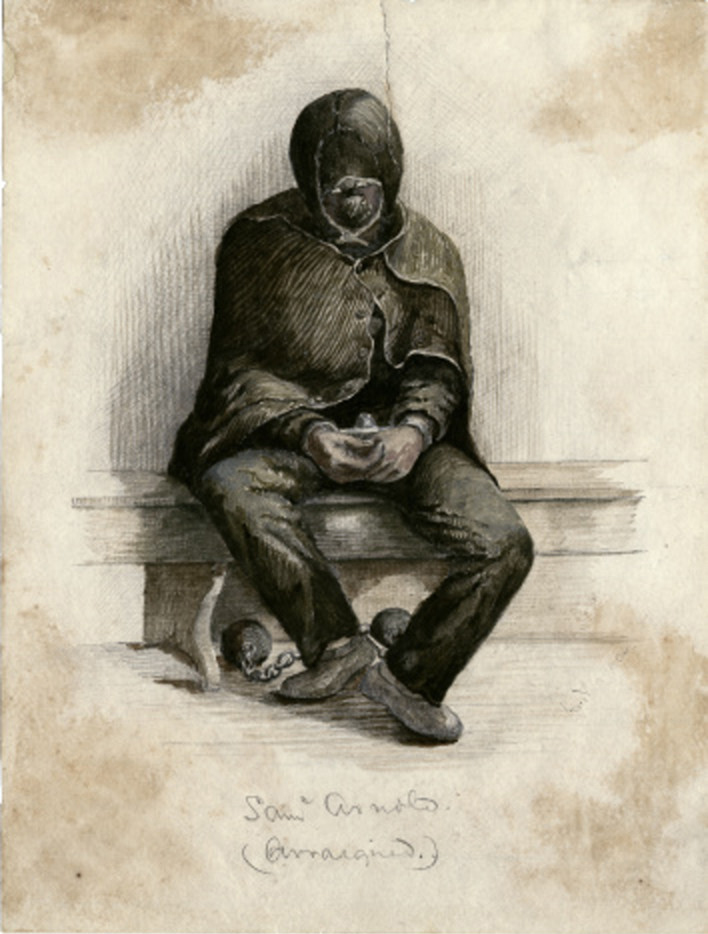
You will also note in the drawings that Mrs. Surratt wore a veil throughout her time in the courtroom. While the miniseries shows Mrs. Surratt being forced to wear a hood over her head, she never had to endure the hoods like most of the male conspirators did. Dr. Mudd was the only male conspirator who was also not forced to wear a hood when not in the courtroom. Except for the very first day of trial, the hoods were always removed from the conspirators’ heads before they were filed into the courtroom, as the military judges disliked seeing them.

4. The Testimony Against Spangler

During the testimony portion of the episode, we see the return of Joseph “Peanut John” Burroughs as he bears witness against Edman Spangler. Burroughs recounts how Spangler told him to hold Booth’s horse at the rear of Ford’s Theatre on the night of the assassination. When Burroughs said he couldn’t due to his other duties, Spangler replied threateningly that he didn’t have a choice. Burroughs also swears “on the Bible” that Spangler opened the rear door of the theater for Booth to escape.

While all of Burroughs’ testimony aligns with what was portrayed in the first episode of the series, I just wanted to repeat that the series in no way represents the truth behind Spangler and his supposed culpability in Booth’s crime. It is true that after riding up to the back of Ford’s Theatre Booth asked for Spangler by name to hold his horse and that the stagehand passed the duty off to Peanut John. However, beyond this fact, the series is way off. Rather than threatening Burroughs when the latter mentioned he had his own duties to perform, Spangler told Peanut to lay the blame on him if anyone should object to the young man not being at his normal post. The subsequent idea that Edman Spangler was outside of the theater when the shot occurred and then opened the door for Booth is completely inaccurate. Spangler was carefully tending to his duties backstage and preparing for a scene change when the shot rang out.

Spangler may have been friendly with Booth and done small handyman work for the actor when he visited Ford’s Theatre, but practically all historians agree that Edman Spangler was innocent of any knowledge of Booth’s plot against the President.

5. Louis Weichmann’s Testimony

Louis Weichmann was a key witness at the trial of the conspirators and testified at length on multiple occasions. His main benefit to the prosecution was to document the movements of some of the conspirators in and around Mary Surratt’s boardinghouse in the time leading up to the assassination.
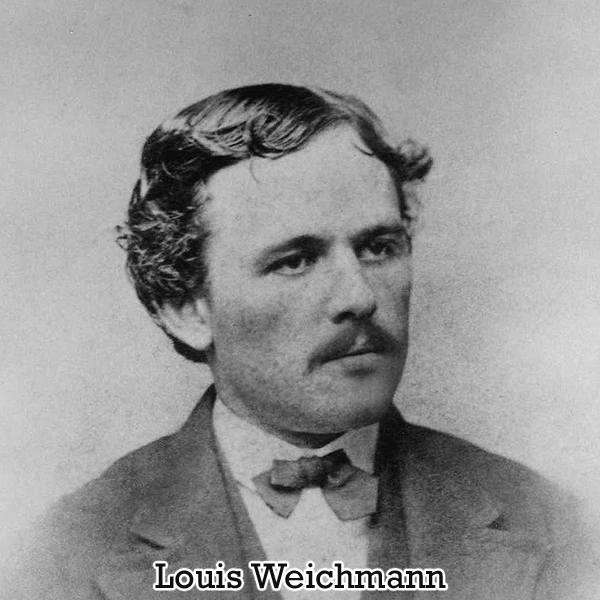
Weichmann also testified about his introduction to John Wilkes Booth by way of Dr. Mudd. This is the introduction that Mary Simms references in her conversation with Weichmann before the trial and what Weichmann testifies about on the stand. The miniseries has Weichmann state that this introduction occurred in January of 1865, which is what he did testify to at the trial. However, the real Weichmann was mistaken about this date, as the actual day of Booth’s introduction to John Surratt via Dr. Mudd occurred on December 23, 1864. Dr. Mudd’s defense seized upon the discrepancy in Weichmann’s timeline and produced a litany of witnesses to prove that Dr. Mudd did not visit D.C. in January of 1865. While I appreciate that the miniseries had Weichmann swear to January on the stand, the lack of any follow-up muddies the history a bit (no pun intended).

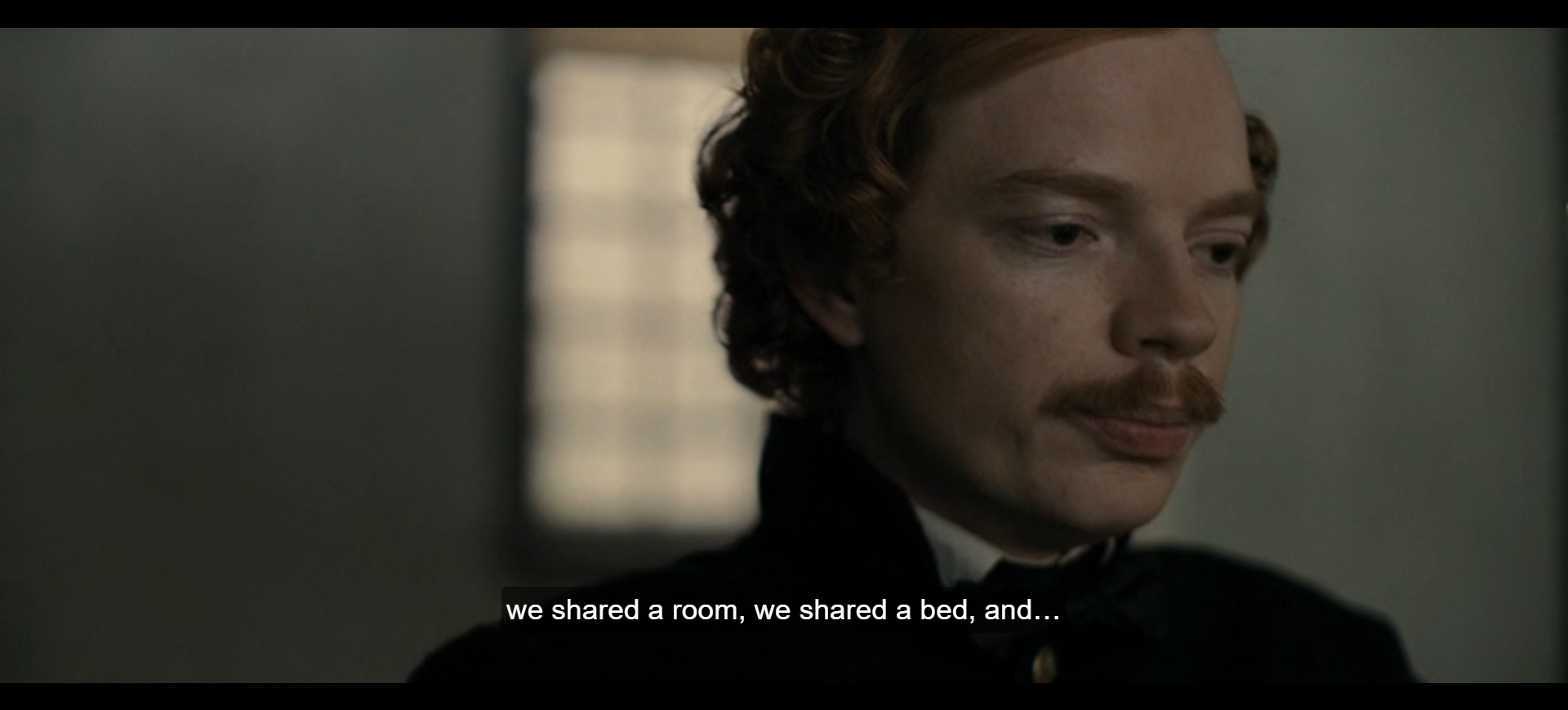
The far more questionable aspect of the miniseries’ portrayal of Weichmann’s testimony, however, is the attempt to add some scandalous drama where it does not exist. When asked about how well he knew John Surratt, Wiechmann states that they had both attended seminary school together and remained close after both had dropped out. Wiechmann recalled how he came to move into Mary Surratt’s D.C. boardinghouse and how he and John Surratt shared a room and a bed. Then, a hesitant Weichmann states that the two men had “slept together,” which draws gasps and murmurs from the crowd, and we are given a shot of Mary Surratt showing her apparently traumatized by the news her son might be a homosexual.

It is true that Weichmann testified about having slept with John Surratt. Here’s that part of his testimony.
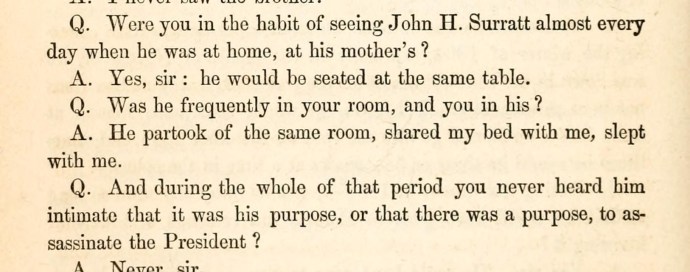
However, the idea that Weichmann’s words here are an admission to having a sexual relationship with Surratt is an example of painful historical illiteracy on the part of the writers of this series. The sharing of beds was a very normal part of life during this period of time. Space was at a premium in Washington during this time, especially with the huge influx of visitors and new residents on account of the war. Unless you were wealthy enough to secure truly private lodgings, it was expected that you would share a room and bed with someone else when staying in a boardinghouse or hotel. When you checked into a hotel, you were paid for a spot in a bed, not for your own room. To illustrate this, after George Atzerodt failed to assassinate Vice President Johnson, he eventually took a late-night room at the Pennsylvania House Hotel. The room was already occupied by others, and George merely joined the other male occupants in the bed that night. Men “sleeping with” other men and women “sleeping with” other women was not a euphemism for having sex; it was a common sleeping arrangement that would have been perfectly understood by those living in the 1800s. No one would have gasped or even thought Weichmann was referring to anything sexual during his testimony. This scene, and the implication that Weichmann was testifying against his own lover, is perhaps the cringiest part of the entire series.

6. Sandford Conover’s Testimony

Sandford Conover’s appearance in this trial episode is the only one in which his inclusion makes any historical sense. Despite having been portrayed as an active member of the manhunt over Lincoln’s death, including a trip up to Canada in a failed attempt to snag John Surratt, Conover is little more than a lying footnote in the grand scheme of things. This episode has Conover take the stand, which the real man did three times, including on the last day of testimony. Rather than try and untangle the unique tapestry of partially true and fictitious statements sworn to by the miniseries’ Conover, here’s an excerpt from my trial project documenting the real Conover’s final time on the witness stand. This comes from the June 27 session, the last day in which witnesses testified.
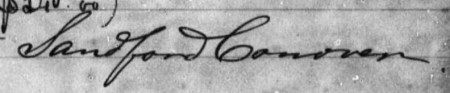
Sandford Conover, a key one of the government’s main perjurers, was recalled to the stand after previously testifying for the prosecution on May 20 and 22nd. During his earlier times on the stand, Conover, whose real name was Charles A. Dunham, claimed that he saw John Wilkes Booth and John Surratt in Canada plotting the assassination of Lincoln with known Confederate agents. His testimony, along with that of James Merritt and Richard Montgomery, was the prosecution’s main evidence that the plot to kill Lincoln had originated with Confederate officials. In 1866, James Merritt would testify before a congressional committee and admit that his testimony had been false. Conover had paid both Merritt and Richard Montgomery to commit perjury. In November of 1866, Conover would be indicted for perjury, found guilty, and sentenced to ten years in prison.

After giving his original perjured testimony in May, Conover returned to Canada where he was known as James Watson Wallace. He was sent there, ostensibly, to uncover more vital information regarding the origins of the plot. While in Canada, Conover’s previously secret and withheld testimony was prematurely published in the press. Though he had been outed as a spy of sorts, Conover/Wallace/Dunham decided to double down on his lies. When confronted in Canada, “Wallace” swore under oath that he had never used the name of Conover and that he had never testified in Washington. He accused “Conover” of impersonating him and denied that he knew Jacob Thompson, one of the Confederate agents that Conover had claimed to have had discussions of Lincoln’s assassinations with, intimately. He also swore then that he never saw John Wilkes Booth in Canada. Wallace went so far in his denials of “Conover’s” testimony that he offered to come to Washington to prove to the commission that he was not Conover and offered a reward of $500 for the capture of the man who had impersonated him. His lies in Canada did not seem to get him as far as his lies in the U.S., however, as by June 16, Wallace was in jail in Montreal, where the newspapers reported, “he now confesses he is Sanford Conover, and wishes to disclose how and by what means he was induced to go to Washington at the instance of Federal pimps for perjury, but that Southerners here scorn to go near him to receive his disclosures.” Not wanting Conover’s arrest and possible confession to perjury to sully his vital testimony at the conspiracy trial, the U.S. War Department arranged for Conover’s release from prison in Montreal and brought him back to D.C. to re-take the stand and explain himself.
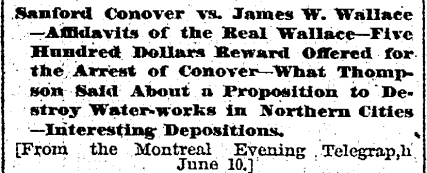
Back on the witness stand in Washington and away from Canada, Conover testified on June 27 that the affidavits he swore to in Canada and his offers of reward for the arrest of himself were false. He claimed that Confederate agents confronted him with a pistol to his head when his May testimony at the conspiracy trial was released and that the only reason he swore under oath that he was not Conover was to save his life. Conover also spent a large part of his testimony on June 27 claiming that the official transcript of the trial of the St. Albans raiders did not provide an accurate copy of his testimony and that what he had testified to at this trial was the truth. In reality, very little of what Conover/Wallace/Dunham testified to was truthful. Conover was continuing to lie and perjure himself so that he could keep “investigating” his accusations for the U.S. government in order to milk it of funds. He told the authorities exactly what they wanted to hear in order to stay in their good graces as long as possible. The prosecution’s insistence on sticking by Sandford Conover even after the evidence of his perjury was made known demonstrates how the Judge Advocate General was willing to “use tainted evidence to gain his ends.”

To be fair to the miniseries, Conover still comes across as unreliable and shifty by the end of this episode, even if the writers did make it seem like he was being threatened by the boogie man of George Sanders to justify his failure to deliver on his promises.

7. The Pet Letter

Much is made about “the pet letter” in this episode. It is first hinted at by Lafayette Baker, who portrays it as definitive proof that Jefferson Davis authorized his “pet,” John Wilkes Booth, to kill the president. When Sandford Conover reappears in Stanton’s office, the Secretary of War hungrily reads the letter that Conover has recovered from the Confederate Secret Service. During the trial, Conover claimed that the letter was addressed to George Sanders but that he never picked it up. From the way the miniseries talks about it, this “pet letter” seems to be one of the most important pieces of evidence at the trial.

In reality, however, the “pet letter” was not connected to either George Sanders or Jefferson Davis and is just another example of how the prosecution was so desperate to connect Booth to the Confederacy that they brought forth the most spurious pieces of evidence available. Here is an explanation of the “pet letter” from my trial project. This first section is from June 5, when the letter was first entered into evidence.

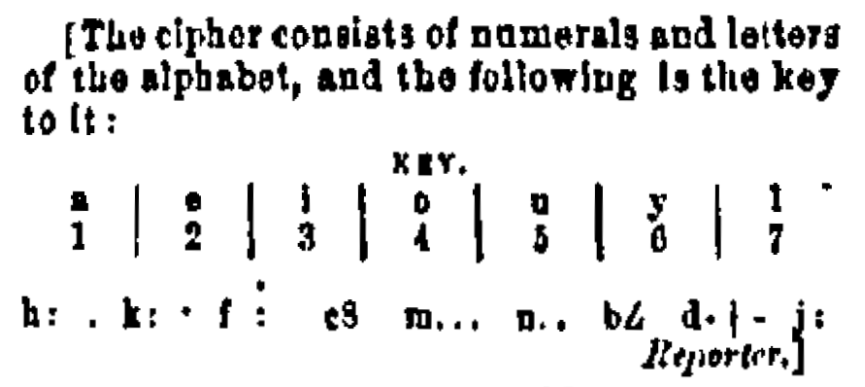
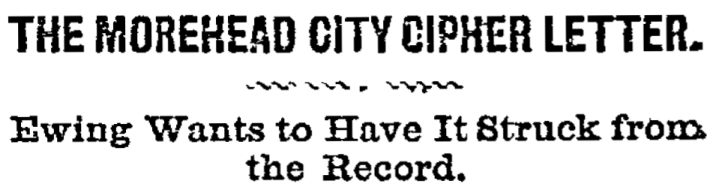
Charles Deuel, a member of the Construction Corps, Railroad Department, testified that he had been working in Morehead City, North Carolina, during the month of May. On May 2nd, while he and another man named James Ferguson were near the government wharf in that city, he noticed a letter floating in the water. He picked it up and discovered it was written in code. Deuel stated that through a little trial and error, he managed to decode the note. The letter was supposedly dated April 15th and was in an envelope bearing the name John W. Wise. The letter spoke of the work “Pet” had done well and that “Old Abe” was now dead. The writer lamented that “Red Shoes” lacked nerve in “Seward’s case.” The writer also appealed to the intended recipient to “bring Sherman” and commanded them not to “lose your nerve.” The letter continued in a coded, conspiratorial fashion and was ultimately signed by “No. Five”. At this point, the defense had very few questions about the letter as they deemed it unrelated to their clients’ cases and assumed the government was admitting it in the same manner they had presented evidence against the Confederate government. Only Frederick Aiken cross-examined Deuel, asking how he decoded the letter and whether the original letter had suffered a great deal of blurring from being found in the water. Deuel stated his belief that it did not appear to have been in the water long and was, therefore, not blurred. In his book, The Lincoln Assassination Encyclopedia, author Edward Steers, Jr. states that “The letter appears to be a fabrication, but by whom and for what purpose is not clear.” Later, on June 7th, Thomas Ewing would make a motion to have this cipher letter stricken from the record.
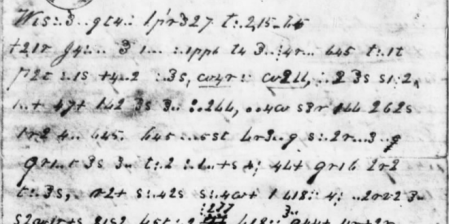
The coded letter, found in the water in Morehead City, NC, was entered into evidence as Exhibit 79.
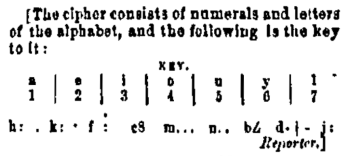
James Ferguson, a laborer working under the previous witness, Charles Deuel, testified that he was with Deuel in Morehead City, NC. Ferguson claimed he was the one who noticed the letter in the water and called it to the attention of Deuel, who retrieved it. Ferguson identified the letter submitted into evidence as the same one he had seen.

So the “pet letter” was a random coded letter found in the waters of Morehead City, North Carolina, on May 2, 1865. It was addressed to a “John W. Wise” and appeared to make references to the assassination of Lincoln. Here is the full, decoded “pet letter” for more context:

“WASHINGTON, April the 15, ’65.

DEAR JOHN,

I am happy to inform you that Pet has done his work well. He is safe, and Old Abe is in hell. Now, sir, All eyes are on you. You must bring Sherman: Grant is in the hands of Old Gray ere this. Red Shoes showed lack of nerve in Seward’s case, but fell back in good order. Johnson must come. Old Crook has him in charge.

Mind well that brother’s oath, and you will have no difficulty; all will be safe, and enjoy the fruit of our labors.
We had a large meeting last night. All were being in carrying out the programme to the letter. The rails are laid for
safe exit. Old — always behind, lost the pop at City Point.

Now I say again, the lives of our brave officers, and the life of the South, depends upon the carrying this programme into effect. No. Two will give you this. It’s ordered no more letters shall be sent by mail. When you write, sign no real name, and send by some of our friends who are coming home. We want you to write us how the news was received there. We receive great encouragement from all quarters. I hope there will be no getting weak in the knees. I was in Baltimore yesterday. Pet had not got there yet. Your folks are well, and have heard from you. Don’t lose your nerve.

O. B.
No. Five.”

As was seen, the defense attorneys didn’t have much to say about the “pet letter” when it was first entered into evidence. However, that changed two days later, on June 7, when one of the defense attorneys decided to bring the matter back up:

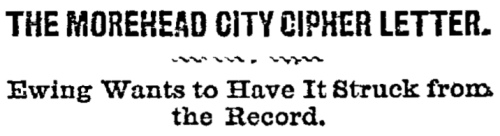
Defense lawyer Thomas Ewing then made a motion that the cipher letter found in the waters of Morehead City, NC, and entered into evidence on June 5th be stricken from the record. Ewing explained that he had been absent from the courtroom at the time the cipher letter was introduced after being assured that the testimony concerning it would only deal with the larger Confederate conspiracy the government was pursuing. It was only after seeing the record concerning the cipher this morning that Ewing learned more about it. Ewing stated his belief that the cipher was undoubtedly fictitious, and even if the prosecution thought otherwise, it was still wholly inadmissible under the rules of evidence. As Ewing noted, the note was not signed, its handwriting was not proven to be one of the conspirators, it was not shown to be connected to any of the conspirators, nor was it in the possession of any of the conspirators. Ewing stated that the cipher was the declaration of an unknown person not shown to be connected in this conspiracy, and, therefore, the letter was as unconnected with this case as “the loosest newspaper paragraph that could be picked up anywhere.”
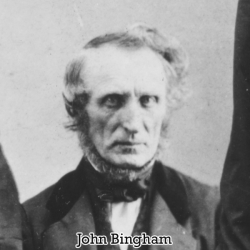
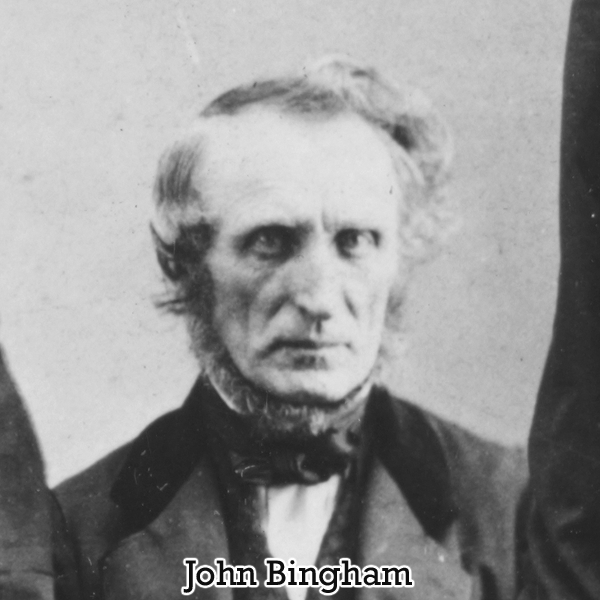
Assistant Judge Advocate John Bingham countered that part of the charge and specification against the eight conspirators now on trial was that they had entered into a conspiracy with parties named and others unknown. Bingham then went into a long description of the evidence already presented, which formed the foundation for the admission of this cipher. In the end, he stated that this letter was proof of the additional unknown conspirators the charge and specification spoke about. Ewing replied that for such a letter to be admissible, it would have to be proven to have been written by a co-conspirator. Bingham stated that based on the other proofs in the case, the prosecution believed that this cipher was written by an otherwise unknown co-conspirator.

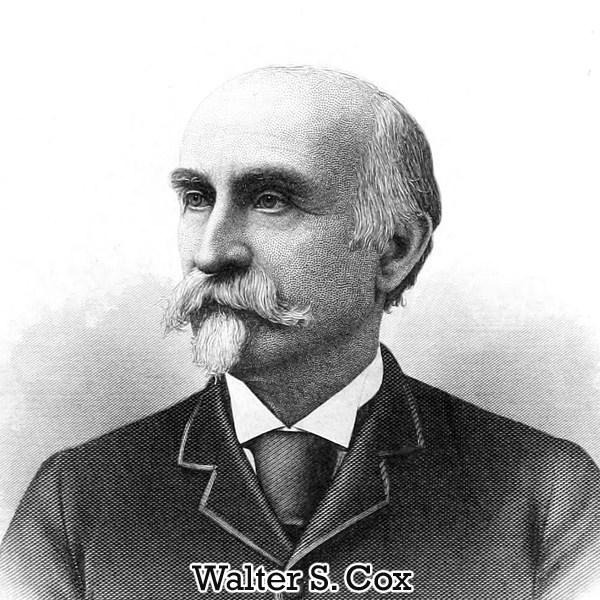
Walter Cox, the lawyer for Michael O’Laughlen, then joined Thomas Ewing in his motion against the cipher. He reiterated that, originally, the defense team had no objections to the letter because they were under the impression that it would relate to the machinations of agents in Canada with possible connections to authorities in Richmond. Cox made it clear that the defense had never opposed testimony of this kind in order to ferret out the truth. They merely wished to show that their own clients had no involvement with any such Confederate plans. The defense, therefore, did not preview this cipher before it was read into court. After it was read, however, and it was purported to have been written by someone immediately connected with the assassination, that changed the nature of the evidence. Cox agreed that the law allowed the declaration of one conspirator to be used against another conspirator, but he insisted, like Ewing, that the connection must first be made showing that the alleged conspirator making the declaration is actually connected to the conspiracy. Until other evidence proved the author of the cipher’s connection to the conspiracy, Cox stated that it was inadmissible to use it as evidence. Cox reiterated that the letter was not proven to be connected in any way to Booth or any of his associates. Cox criticized Bingham’s explanation as to why the cipher was proper evidence.
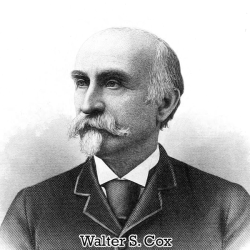
According to Cox, Bingham’s logic was that: Booth was engaged in a conspiracy with some unknown persons, this cipher letter comes from an unknown person, and therefore this letter is from somebody connected with the conspiracy and constitutes admissible evidence. Cox referred to this as “chop logic” on the part of the prosecution and reiterated that the rule of law stated that the author of a declaration must be shown first when a letter is entered into evidence.

Cox then went on to explore the idea first mentioned by Thomas Ewing concerning how the cipher was undoubtedly a fabrication. The testimony stated that the letter was picked up out of the water in Morehead City yet the letter was not blurred from its contact with the water. Cox expressed his belief that it had been written and dropped into the water immediately before it was found by government agents for the very purpose of it being used as evidence. Cox then looked at the text, noting that it was dated April 15th, the day after Lincoln was shot. The text stated that “I was in Baltimore yesterday” and that “Pet,” assumed to be Booth based on the context of the letter, “had not yet got there.” Since, in context to the letter, “yesterday” would have been April 14th, the day of the assassination, it made no sense that “Pet” would be in Baltimore before his work of assassination had been done. Cox also laughed at the letter’s claim that on the night of April 14th, “We had a large meeting,” when it had been shown that most of the conspirators were fleeing for their lives.
John Bingham, continuing his objection to the motion, noted that the cipher letter and its corresponding testimony could not be struck out or erased by anybody through any motion. He conceded that Ewing could ask the court to disregard it but stated that the proper time for him to do so would be during his closing arguments. Bingham stated that asking the court to disregard this evidence now was akin to asking the court to try part of the case now and the rest of it later. Bingham also came to the defense of the letter and its contents, attempting to repudiate the words of Walter Cox. Bingham pointed out that the references to Sherman and Grant showed evidence of a conspiracy, one that was not known to anyone in America except the conspirators themselves, on April 15th. Cox then countered that they did not know what day it was written. Bingham stated that Cox, himself, had given credit to the date of April 15th during his criticisms of the letter. Cox still pointed out that it was not found until the 2nd of May, three weeks after the assassination, when knowledge of the conspiracy was well known to the public. He insisted that the evidence suggested the cipher was a forgery, “written by somebody who possessed himself of sufficient knowledge of the facts charged against the conspirators to enable him to fabricate a letter specious on its face and appearing to have some bearing on the conspiracy itself.”

In his own closing, John Bingham maintained that the contents of the letter proved it was genuine and that it had been in the possession of an unknown conspirator. Bingham believed that all other evidence in the case regarding the larger conspiracy (a large portion of which was later found to be perjury) corroborated the truthfulness of the cipher letter.

In the end, the commission sided with their advisor, Bingham, and overruled Thomas Ewing’s motion to strike the letter from the record. During the course of this excited debate over the cipher letter, “a lady fainted, and was carried out of the court-room.”

The “pet letter” was an obvious fake with no proven connection to Booth or his conspirators. Its admittance into evidence was yet another embarrassing error of judgment on the part of the government in its blind quest to connect the assassination of Lincoln to the Confederate government by any means necessary.


Quick(ish) Thoughts

  • I’ve mentioned it before, but the government was not aware of Lewis Powell’s real name until about halfway through the conspiracy trial. Up until that point, he was a mystery man known only by the alias Lewis Paine. To learn more about Lewis Powell’s history and life up until his involvement with Booth, check out this post regarding his early life.

  • I will give credit to the writers for doing their research on the trial exhibits. When Judge Advocate Holt is asking Eckert about the Confederate cipher cylinder recovered from Richmond, he notes that this is “exhibit number 59.” That is actually the correct exhibit number from the trial. Holt then switches to the handwritten Vigenère cipher table found in Booth’s room and calls it “Exhibit 7,” which, again, is the correct exhibit number for that piece of evidence.
  • Jeremiah Dyer, a witness for Dr. Mudd, is portrayed as a pastor in Bryantown and speaks highly of Mudd’s reputation. In reality, Dyer was no pastor but Dr. Mudd’s brother-in-law. The doctor was married to Jeremiah’s sister, Sarah Frances Dyer.
  • In much the same way that the series created a fictional Mary Simms, they also merged her two brothers into one character. While Mary’s brother Milo did testify at the trial (and at around 14 or so, was among the youngest to do so), he had never been shot by Dr. Mudd. Like his sister Mary, Milo had left the Mudd farm after emancipation came in 1864 and so he was not around when the assassin showed up. Dr. Mudd had shot the Simms’ older brother, Elzee Eglent, in June of 1863 when he felt the enslaved man was not working hard enough. Mudd also threatened to send Eglent to Richmond in order to help build defensive fortifications for the Confederacy. Eglent, along with a group of around 40 others, escaped from the farms belonging to Dr. Mudd, his father, and Jeremiah Dyer in August of 1863. Elzee Eglent did testify at the trial, just like the real Milo and Mary Simms, but there was no large reaction or an outburst from Mudd when he mentioned having been shot by the doctor.
  • Despite Mary Simms appealing to the court to ask Louis Weichmann about the relationship between Dr. Mudd, Surratt, and Booth, in reality, Weichmann had testified about the connection between the men several days earlier. The real Mary Simms had no knowledge of any connection between Mudd and Booth.

  • Edwin Stanton’s dramatic reading of the conspirators’ verdicts inside the packed trial room makes for compelling drama but is nothing like what occurred. There was no extra court session for the public during which the verdicts were read. After the commissioners finished their deliberations on June 30, their findings were sent over to the President for final approval. President Johnson officially approved the commission’s verdicts and sentences on July 5, and the condemned conspirators learned of their fates when the commander of the prisoner, General John Hartranft, brought them the news on July 6.
  • For the sake of time, the conflict between Stanton and President Johnson, which resulted in Stanton’s ultimate removal from office, was sped up. For an overview of the full story, I recommend a quick read of the latter part of the Reconstruction section and the Impeachment section on Edwin Stanton’s Wikipedia page.

  • The text stating that John Surratt held “rallies across America” about his connection with Booth is a bit misleading. John Surratt tried his hand at becoming a professional lecturer after his own trial ended in a hung jury. However, he only gave his talk about his connections with Booth three times. Once in New York City, once in Baltimore, and once in Rockville, Maryland. When he announced an upcoming talk in D.C., there was outrage, and he was reminded that he was never acquitted of the charges against him and that further lectures could provide evidence that the government could use if they decided to put him on trial again. This ended John Surratt’s short-lived career as a speaker.

Thus, we arrive at the end of Manhunt, the miniseries. Was this series an accurate adaptation of James L. Swanson’s nonfiction book documenting the assassination of Abraham Lincoln and the search for his assassin? No, it wasn’t. From the historian’s viewpoint, this series was a turducken of factual tidbits stuffed inside dramatic license, all stuffed inside imagination.

Looking back on my own reviews, it’s clear how my opinions became more jaded as the series went on. In the beginning, I so badly wanted to give the writers the benefit of the doubt as I understood that I was the worst critic for this series because of my knowledge of the actual events. As the series went on and continued to deviate so extremely from the actual history, the excitement and hope I once felt for the series waned quickly. This is why it has taken me 8 months since the release of the final episode to finally review it.

Even as I criticized each episode, I strove in each of my reviews to point out aspects of the series that I liked, such as my enjoyment of many of the supporting actors in the series, particularly the portrayals of David Herold, Andrew Johnson, Mary Simms, and Thomas Eckert. At times, the series pleasantly surprised me by including a fact I did not expect them to bring up. This is to say that despite my groaning about some things, there is still much to like about the series. When I turn off my brain and watch the series as the piece of historical fiction that it is, I enjoy the compelling drama.

In the end, I know my opinions of this series would likely have been kinder had it been called anything other than ManhuntIf the series were called The War Secretary or something like that, there would no longer be any expectation in my mind that the series would stay true to a non-fiction book about the Lincoln assassination. The writers of this series were clearly stuck between a rock and a hard place. They wanted to write a series about Stanton, Johnson, and the fight for the future of the country during Reconstruction, which is a noble and worthwhile idea. The best parts of this series are the times when it is allowed to explore this aspect of history. Unfortunately, the attempt to merge this series idea with another about the hunt for John Wilkes Booth resulted in a mismatched marriage where neither history got the attention that it deserved.

Categories: History, News | Tags: , , , , , , , , , , , , , | 4 Comments

Lola

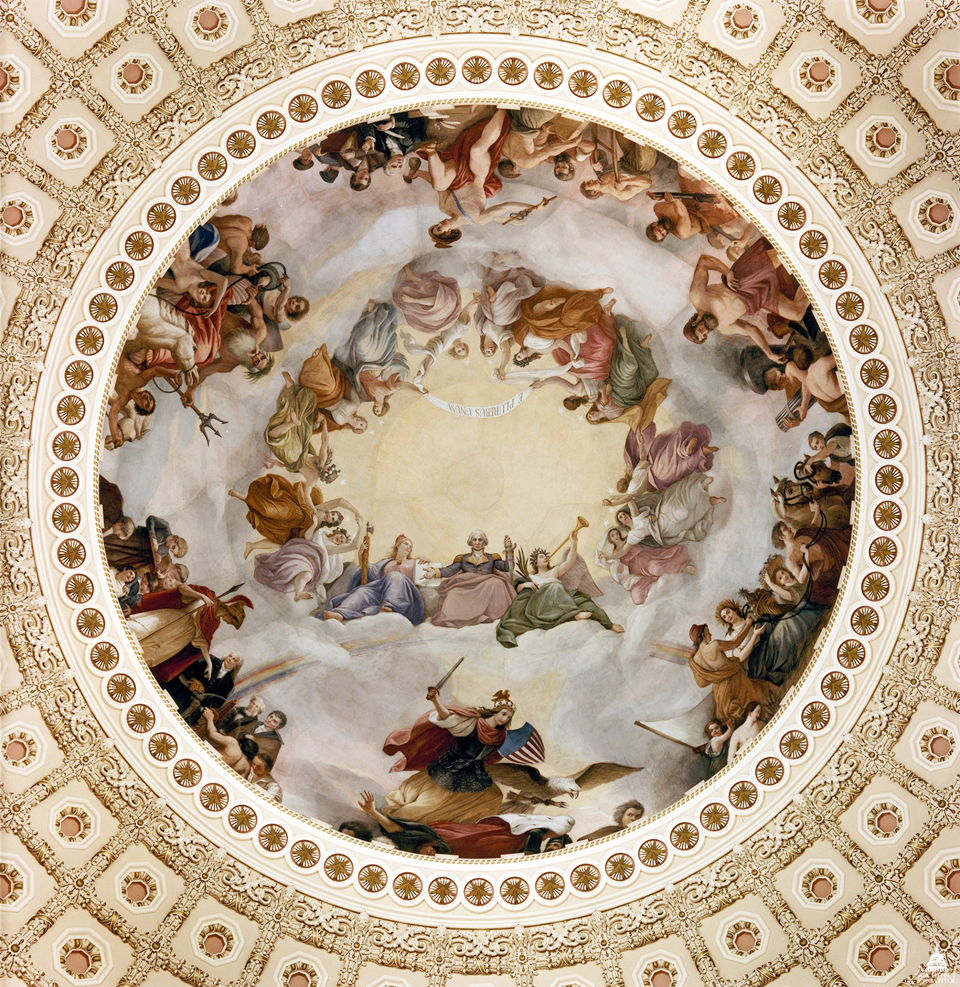
Constantino Brumidi’s The Apotheosis of Washington

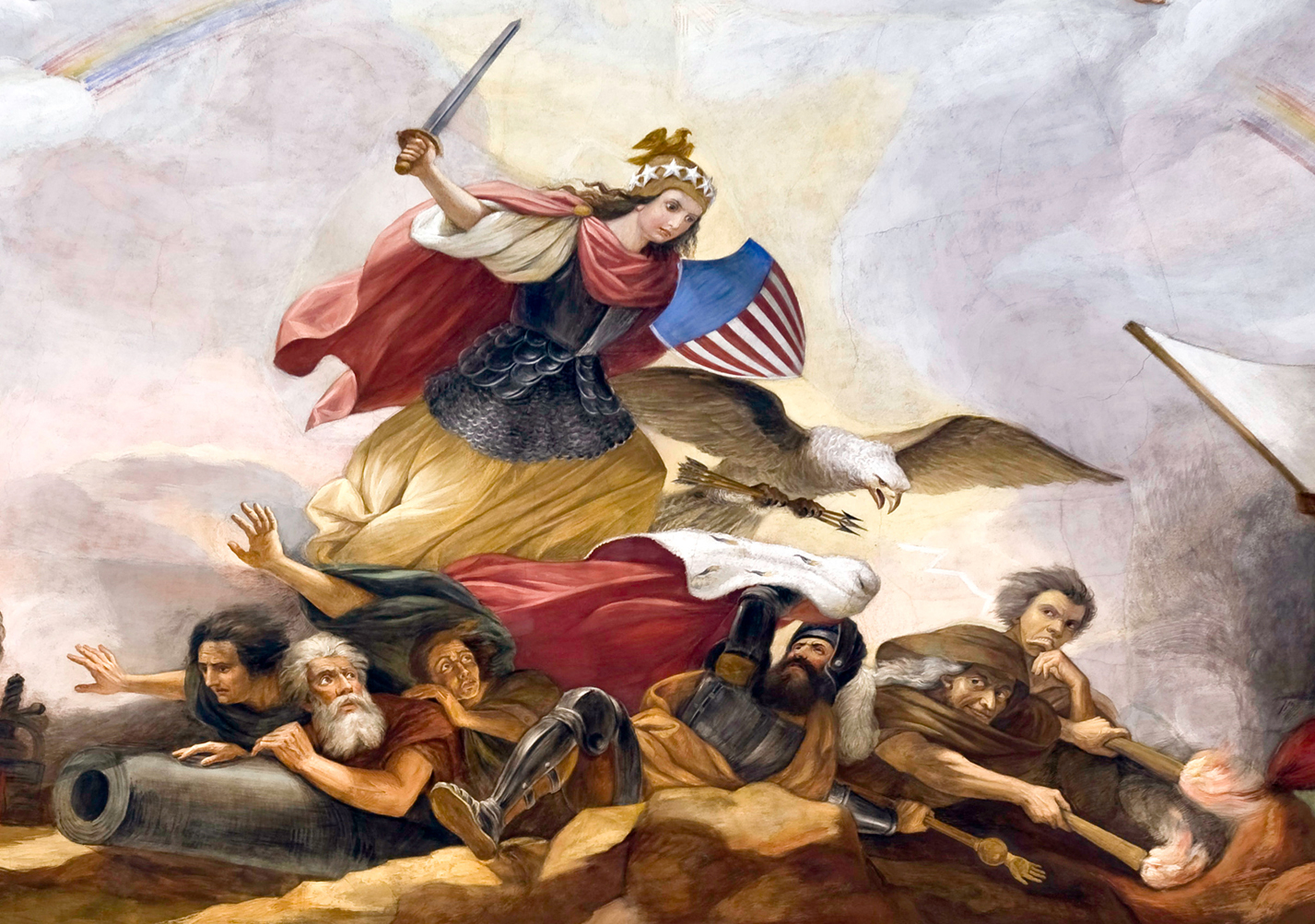
Millions of people have gazed upwards and seen her face. Armed with a sword, shield, and avenging eagle, her scene represents War. As a manifestation of Freedom, she stands victorious over her enemies. The adherents of tyranny and kingly power located at her feet flee from her sight. Located just below the saintly figure of George Washington, she is one of the most iconic parts of the masterpiece that covers the interior of the U.S. Capitol Dome.

The War scene in Constantino Brumidi’s The Apotheosis of Washington

Unknown to many, the figure of Freedom represented in the dome’s The Apotheosis of Washington is based on a real woman. Her name was Lola and this is her story.


Lola Virginia Germon was born about 1845 in Washington, D.C. She was the daughter of Vincent Germon, a leather currier. In 1855, Vincent Germon died, leaving his wife, Eliza, to care for Lola and her siblings. Even as a young girl, Lola was noted for her beauty. She was described as, “without exception, the handsomest young lady in Washington.”

Lola Virginia Germon

Lola’s looks were a family trait that also happened to be shared by a cousin of hers named Effie Germon. Effie used her looks to find success as an actress and was likewise complimented as having, “a fair young face, strikingly beautiful.” Though Effie Germon found her looks to be an asset that helped her achieve success, for Lola, her beauty would forever prove to be a double-edged sword.

As a young girl growing up in D.C., Lola, then called Jennie, was surrounded by unique urban types. According to later accounts, at one point Mrs. Germon decided to open up her house to boarders in order to help support her family. One of the gentlemen who allegedly found residence in the Germon household was an Italian artist named Constantino Brumidi. Brumidi was born in Rome on July 26, 1805 and had learned the art of fresco painting. He had done work in the Vatican Palace and even painted Pope Pius IX after his ascendance to the papacy. After political unrest swept through Rome and Brumidi spent time in prison under false charges, he decided to immigrate to America to continue his artist work. Brumidi arrived in America on September 18, 1852. He spent two years making a living doing portraits and frescos in private residences and churches throughout the northeast. He even traveled down to Mexico to complete an altar for a Catholic church. Brumidi arrived in Washington, D.C. in December of 1854 and arranged to meet Captain Montgomery C. Meigs, the engineer in charge of construction and decorations on the extensions being done to the U.S. Capitol building. Through Meigs, Brumidi was hired to be the Capitol’s chief artist and he would spend over 25 years painting the Capitol.

Constantino Brumidi, 1859

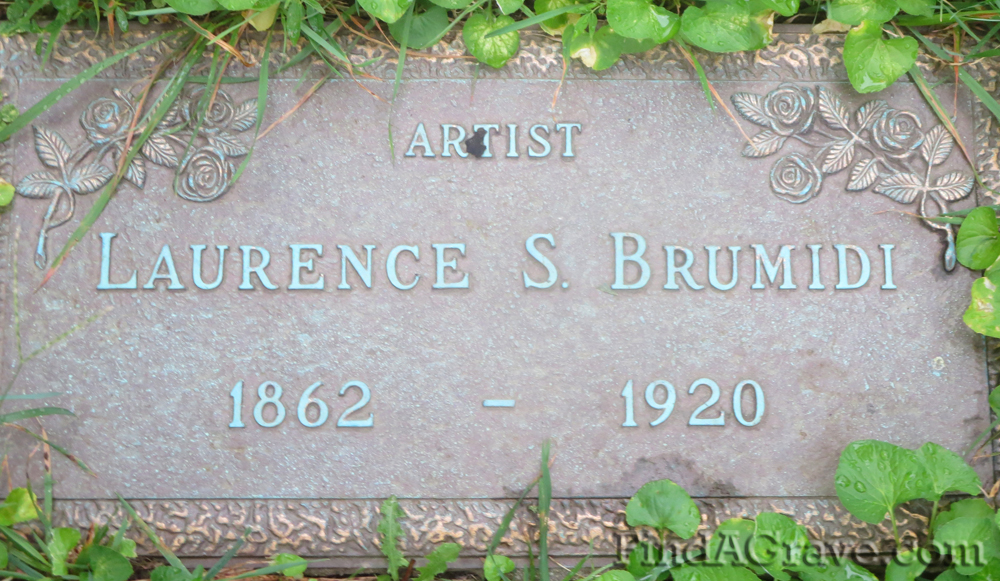
The story goes that Constantino first met Jennie in 1858 when she was between 13 and 15 years old. As she developed, Brumidi came to see Germon as his muse. She was said to have possessed, “all the perfecting features of beauty which poets choose to accord their heroines of that race, and, in addition, was grandly tall and as faultless in physique as a sculptor’s ideal.”  Brumidi is said to have become enraptured with Jennie Germon’s beauty. In time, the 56 year-old Brumidi began living with young Jennie separately from Mrs. Germon. A sexual relationship developed between the two though Jennie’s age precluded it from truly being an equal, consensual situation. Despite the relationship that the two would share in the years to come, it’s clear that Brumidi was one of the first to take advantage of the reluctantly beautiful Jennie. On May 12, 1861, Jennie Germon, who was between 16 and 18 years-old, gave birth to Brumidi’s son. The child was named Laurence Stauro Brumidi.

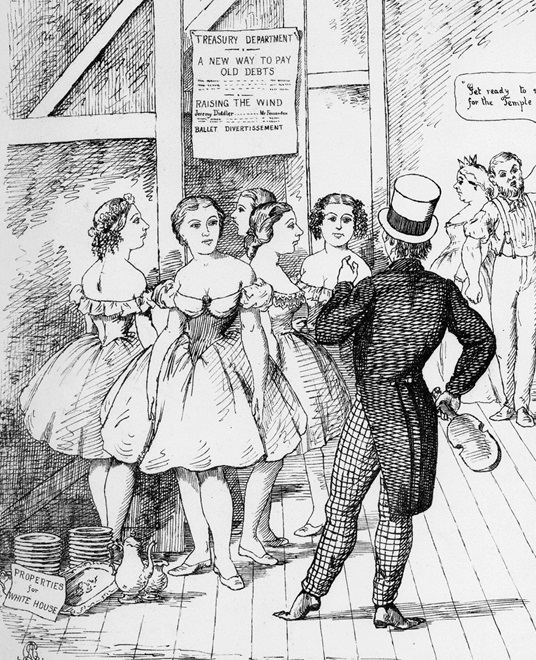
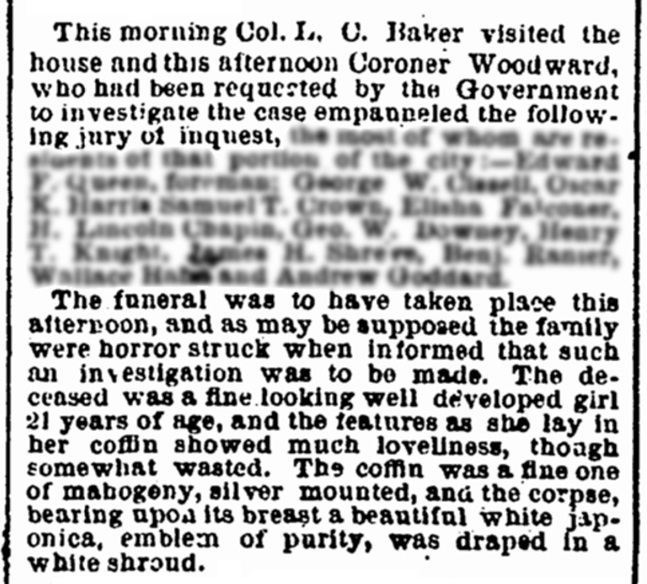
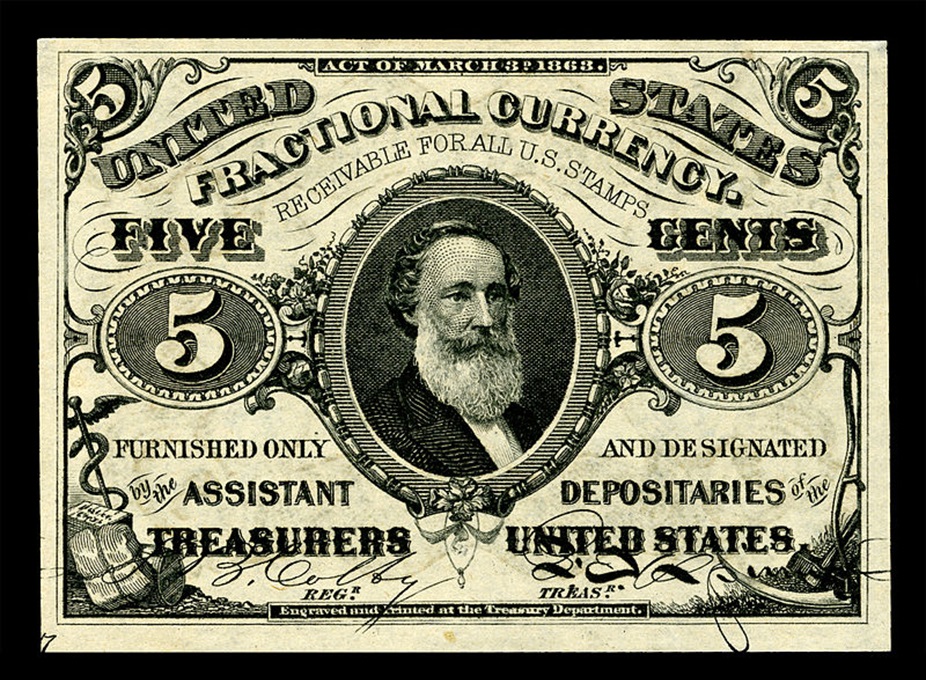
Evidence points to the idea that Jennie Germon appears to have left Brumidi not long after the birth of their son. It seems probable that Jennie sought to escape the relationship that had resulted in her pregnancy. In either late 1861 or early 1862, Jennie found employment in the Treasury Department as one of the first female clerks assigned to help with the process of cutting and sorting the government’s new paper money. The Treasury Department was one of the first government agencies to hire female employees and sought to hire only girls and women who demonstrated a true need for employment to help provide for their families. While such an arrangement helped women who were in otherwise dire financial situations, like Jennie Germon, it also created an environment where the clerks were powerless to stand up to the predatory attacks from their male superiors. Sadly, Jennie left one abusive relationship and was forced into another while at the Treasury department. It appears that Jennie Germon’s beauty once again made her a target as she was one of the women preyed upon by Spencer Clark, the first superintendent of the U.S. Bureau of Engraving and Printing (for context, it may be helpful to read the prior post about Clark).

Spencer Clark

When an investigation regarding the rumors of sexual misconduct on the part of Treasury department superiors occurred, Jennie Germon revealed that she was coerced into sexual situations several times by Spencer Clark in exchange for money which she used to support herself and her young son. Jennie’s full statement, which she hoped would not be given publicity and yet was later released by the investigator, Lafayette Baker, can be read here.

Jennie escaped the abuse she suffered at the Treasury the only way she knew how, by getting married. On September 21, 1863, Jennie married a man named Francis A. Clover. After departing the Treasury, the new Mrs. Clover also chose to retake her given name of Lola rather than her childhood nickname of Jennie. It appears that during Lola’s marriage to Clover she allowed Constantino Brumidi visiting rights to his son, Laurence. This re-introduction of the artist may have put a strain on her marriage, or perhaps Lola’s marriage to Clover had only been out of convenience sake. Regardless, Lola’s first marriage failed after only a year. On October 25, 1864, Lola was granted a divorce from Clover.

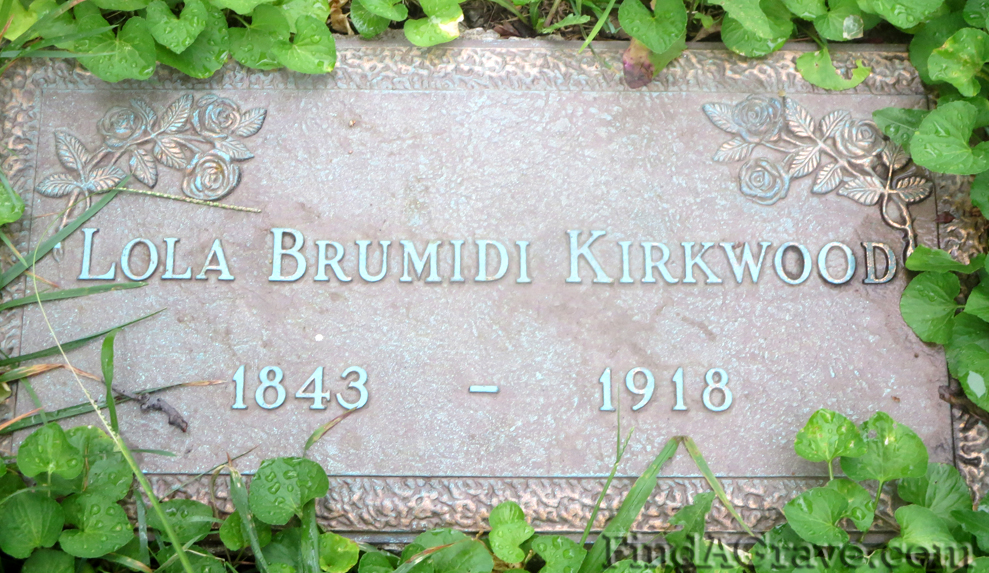
The exact details of what occurred over the next few years is not known for certain. What can be concluded is that Brumidi and the now about 20 year-old Lola reconnected and began living together once again. In later years, Lola would claim that the two were actually married in Baltimore during this time, but no official record of marriage between the two can be found. Later evidence also appears to cast doubt on the idea that Lola and Brumidi ever married. It was between this period of time though, from 1864 – 1870, that Lola began calling herself Mrs. Brumidi. It was also during this time that Brumidi began incorporating Lola’s likeness into many of his frescos at the U.S. Capitol. The most well-known of Brumidi’s works is the aforementioned The Apotheosis of Washington which adorns the interior of the dome of the Capitol building. Brumidi modeled the figure of Freedom in the War scene exclusively on Lola.

Lola Germon as Freedom in Constantino Brumidi’s The Apotheosis of Washington

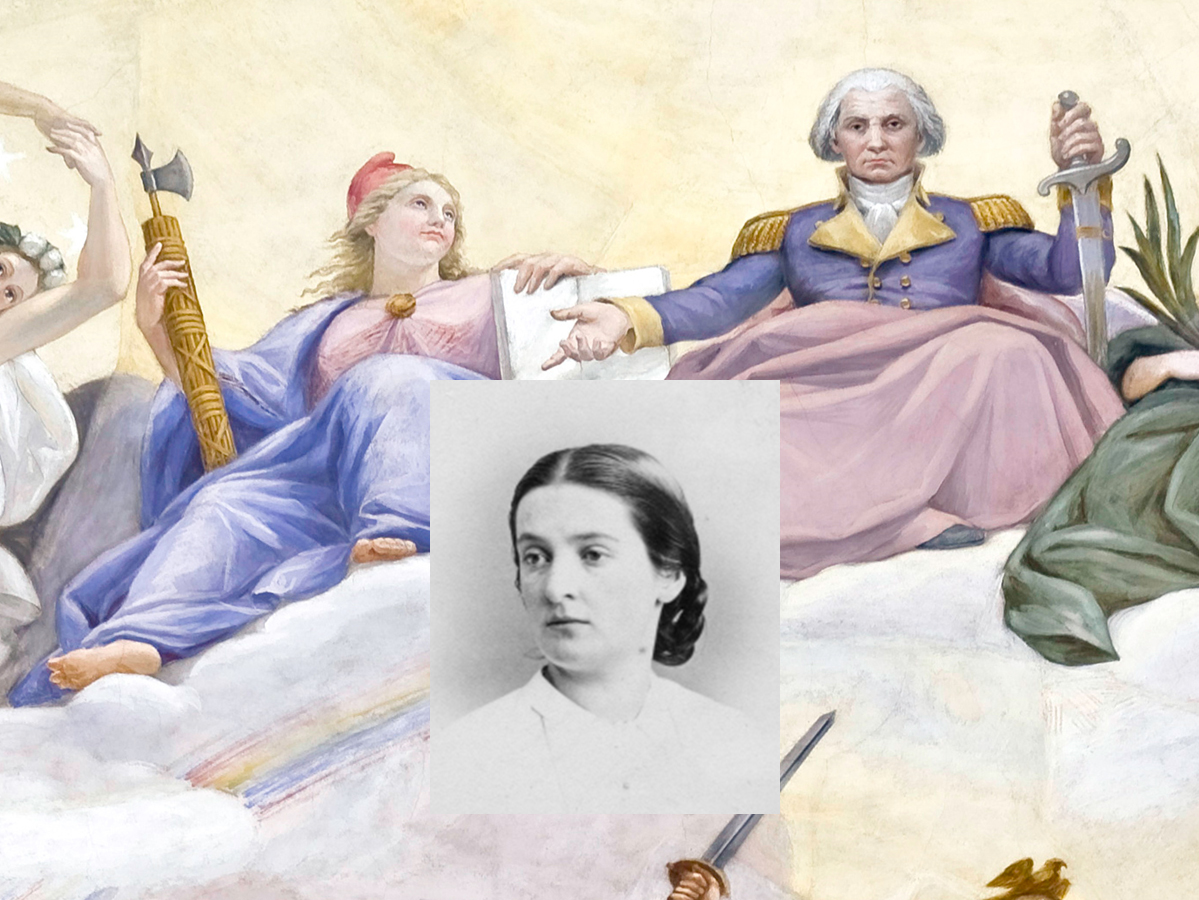
Lola was not the only one from whom Brumidi drew inspiration. The figure of Liberty who is seated at the right hand of George Washington was modeled after Lola’s similarly beautiful cousin, the actress Effie Germon. When John Wilkes Booth was cornered and killed after assassinating President Lincoln, Effie Germon’s carte-de-visite was one the photographs found on his body.

Effie Germon as Liberty in Constantino Brumidi’s The Apotheosis of Washington

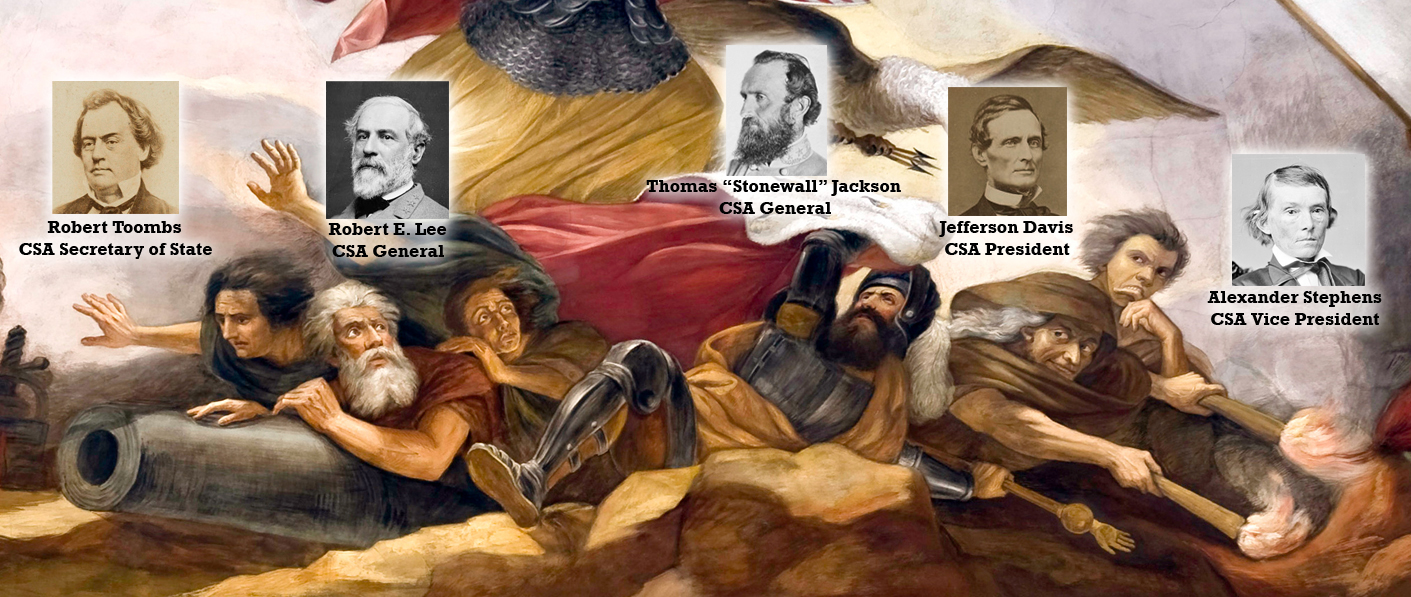
Brumidi also used a few well-known models for the figures of tyranny and kingly power which Lola’s figure of Freedom is shown vanquishing. Specifically, he chose to use the likenesses of the recently defeated leaders of the Confederacy as his traitorous models.

Confederate likenesses Constantino Brumidi’s The Apotheosis of Washington (click to enlarge)

While Brumidi was known to have continued his work on the Capitol between 1864 – 1870, he also took prolonged breaks in work for outside commissions. The U.S. government was not always timely in its payment for Brumidi’s services and so he would often take out-of-town commissions to maintain his finances. At the end of 1866, for example, Brumidi spent a few months painting in Cuba. Aside from absences such as these, however, Lola, Brumidi, and their young son, Laurence, all lived together in D.C.

Laurence Brumidi circa 1865

This second relationship between Lola and Brumidi did not last however. While we do not know the circumstances, on May 23, 1870, Lola married a man named Joseph Walsh, Jr. in Alexandria, VA. The circumstances of how they met or reliable background information on Mr. Walsh is not known. The few facts that can be gained from this marriage is that Walsh was fairly affluent and that Lola began residing outside of Washington with her new husband. She, Walsh and Laurence began splitting their time between D.C. and Brooklyn, New York. In 1873, 12 year-old Laurence was enrolled in the first grade at the Brooklyn Collegiate and Polytechnic Institute. Coincidentally, or perhaps purposefully, Constantino Brumidi took a number of commissions that brought him to New York during Lola’s residence there. Brumidi was known to be working at churches and sites in New York for periods of time in 1870, 1871 and 1873. It seems likely that Brumidi would visit his muse and his son during these commissions.

In yet another sad experience for Lola, she would come to learn that her new husband Walsh was not the man she thought he was. In 1875, Lola, then residing back in D.C. petitioned for a divorce against Walsh. Newspaper accounts stated that Lola, “charges her husband with various acts of unfaithfulness.” In particular, Lola alleged that she had reliable evidence that her husband was known to frequent a brothel while they were residing in Washington. She even went so far as to name the specific brothel (Lizzie Peterson’s) and prostitute (Nellie Sherman) that her husband visited. On June 10, 1876, Lola was granted a divorce from Joseph Walsh on the grounds of desertion.

Divorced for the second time (third if you include the possibility of a legitimate marriage to Brumidi), 31 year-old Lola Germon Clover [Burmidi] Walsh, took up residence on the 900 block of G St. NW. This is place where Lola would call home for the next 20 years.

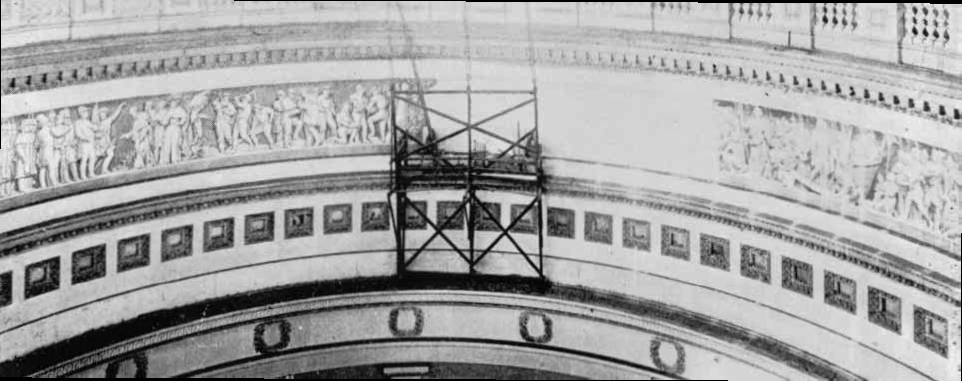
Lola’s son Laurence was growing rapidly. At the time of her divorce from Walsh in 1876, Laurence was already 15 years old and had been bitten by the painting bug. The occasional visits from his revered artist father made Laurence want to pursue a future in art and this was supported by Lola. As evidence of the once again softening of their relationship, Lola allowed Laurence to act as a sort of apprentice to his father as the elder Brumidi continued his work on the Capitol building frescos. Constantino was now over 70 years old and suffered from a variety of ailments including asthma. As difficult as the actual sketching and painting was, the mere process of making one’s way onto the scaffold from which to work was a long and laborious process as this account relates:

The scaffold Constantino Brumidi used to paint the friezes in the Capitol

“This wonderful old man has daily to climb up to an elevation of fully eighty feet, enter a window & then descend a ladder at least twenty five feet long to the little pent up crib where he toils. He is so aged and feeble that he requires help to reach the place, & you can easily imagine the fatigue attendant upon the mere labor of getting to and away from his work. Besides in stormy wet tempestuous weather he cannot get there at all…”

In time, Brumidi was granted an elevator system which was merely just a box in which the artist would sit which was then hoisted up to his scaffold via a pulley on the ceiling. Young and strong Laurence Brumidi was no doubt one of the assistants who helped hoist his father to his massive canvas. In addition to providing his father strength, Laurence also got the benefit of learning from a master and he quickly started to pick up his father’s artistic eye.

Lola observed all of this closely. Though her motivations are unclear, by 1878, Lola had allowed Brumidi to move into the home that she and Laurence shared on G street. Perhaps she was taking pity on the artist and sought to help care for him and his infirmities. Perhaps she hoped Brumidi’s close residence would further support her son’s education. Or perhaps, for some inexplicably reason, Lola actually had feelings for the man who had taken advantage of her when she was little more than a child. If Constantino Brumidi’s art is to be taken as evidence, it does appear that he did love Lola, at least in some fashion. It was likely a selfish love, one that Brumidi took in order to further his talents, but he did have a connection to Lola. What deep feelings and conflicts Lola had for Brumidi is not known. However, her conduct in the years after his death show her to be very protective of him and his legacy despite all of the trouble he had caused her. Though the two were now living together once again, they did not marry (or perhaps remarry). Lola was still documented in the city directory as Lola Walsh during this time.

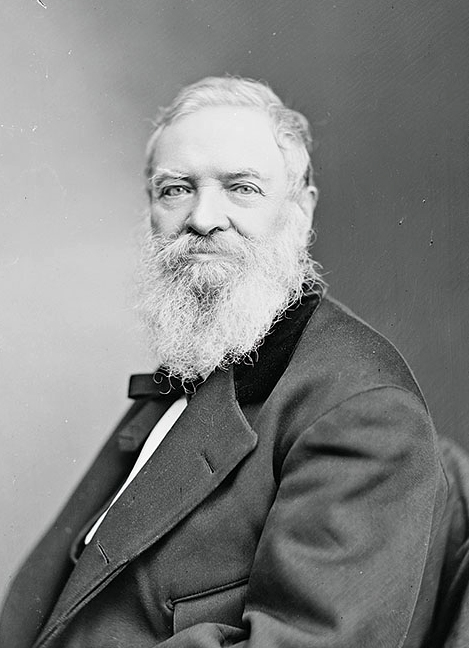
Constantino Brumidi in his later years

On February 19, 1880, at 6:30 am, Constantino Brumidi died at the age of 75. Newspapers reported that his death was a combination of asthma and kidney failure. When the end was coming, Laurence had sent for a doctor but none arrived in time. While we do not have a record of Lola’s whereabouts when Brumidi died, it seems likely that she was there with him. Obituaries for the artist of the Capitol were published throughout the country. Many lamented that while Brumidi had completed many beautiful works of art from the Apotheosis of Washington to the Brumidi Corridors in the Senate wing, the large frescos he was working on at the time of his death in the inner ring of the dome were still incomplete. The call went out for an artist to finish the job. Though Laurence Brumidi applied to complete his father’s work, he was judged too inexperienced to be tasked with such a project. As compensation though, the government chose to pay Laurence $1,500 for the sketches his father had made for the remaining unpainted frescos and used them as the template to complete the project. In addition, out of appreciation for Brumidi’s years of work, the government also decided to gift Laurence, and his half-sister from the artist’s first marriage in Italy, with $250 each for the services their father had provided and had not yet been paid for. The government also included an extra $200 gift payable to “Brumidi’s heirs” to help offset the cost of the artist’s funeral and burial.

While her name is not mentioned directly in the bill which provided the funds, it was Lola who took charge of Brumidi’s body upon his death. Lola buried him in Glenwood Cemetery, in the very same plot that held her own parents, the Germons. Despite the money received by the government, it does not appear that Lola put up a gravestone for Brumidi at the time of his death. Whether the funds actually went towards his burial, or use in her son’s education, we don’t know.

What we do know is that Lola did not let her son give up on his dreams. She sent him to the National Academy of Rome in the 1880’s to learn all he could. When he returned from abroad he moved out to Kansas City, Missouri for a time where he helped establish and served as the first director of the Kansas City Art Institute.

Throughout the 1880s and 90s, Lola maintained her home on G street in Washington. To make money, she opened up her few rooms to boarders and settled into the life of a boardinghouse keeper. It was also during this time that Lola stopped referring to herself as Lola Walsh and instead portrayed herself as Lola Brumidi, once again. Most people considered her to have been Brumidi’s legitimate widow even though they were definitely not married at the time of his death and probably had never been married in the first place.

Lola maintained the name of Lola Brumidi for about 20 years, until she found herself changing it once again. In 1900, 55 year-old Lola decided to marry again. Her husband was a 59 year-old widower by the name of Edwin Kirkwood. This marriage, unlike Lola’s other attempts, appears to have been a happy one, or at least, not one that ended with a divorce. While some men might have been intimidated to marry a woman whose personal history was so involved and dramatic, it was actually Lola who was taking a risk. Edwin Kirkwood was a convicted felon.

Edwin Columbus Kirkwood was born in Maryland in 1841 and had served in the Union army for one year during the Civil War before moving to D.C. He married his first wife, Alice, in 1862 and the two started a family. After a couple years, Kirkwood found employment as a clerk in the Navy’s Bureau of Medicine and Surgery where he would eventually rise through the ranks and become a lead financial clerk. Then in June of 1884, a reckoning came for Edwin Kirkwood when he was arrested and charged with fraud. It appears that during a period of time lasting from 1876 – 1884, Kirkwood and Daniel Carrigan, the chief clerk at the Bureau of Medicine and Surgery, repeatedly embezzled money from the government by way of fraudulent claims for reimbursement. After rumors of fraud came to the bureau’s knowledge, the then Surgeon General of the Navy asked the first chief of the Secret Service, William Wood, to investigate. Wood had previously been in charge of the Old Capitol Prison where many of those involved in the Lincoln assassination were held in 1865. Wood found evidence to support the idea that Kirkwood and Carrigan had brought in many third parties who would pose as business owners looking to receive payment for services and materials rendered to the bureau. The two clerks would create fraudulent claims containing lists and prices of materials and the third parties would present these claims to the treasury for reimbursement. Once the third parties received the money, they would split the funds with Kirkwood and Carrigan. The clerks’ long history with the bureau allowed them to get many fraudulent claims signed off by the different Surgeon Generals of the Navy. Most often, the clerks would place the fraudulent claims between the duplicates of legitimate claims. The Surgeon General of the Navy would consult the first claim on top, verify it was genuine and that the materials had been supplied, and then sign it and the duplicate copies underneath without reading them. After the fraudulent claims had been cashed, Kirkwood would then adjust the financial books to hide the payouts.

Through this scheme, the two clerks and their revolving group of “businessmen” successfully defrauded the government of over $44,000. In March of 1884, sensing that the game may have been found out, Daniel Carrigan resigned from the bureau and went west to the Dakotas. Kirkwood, however, stayed in D.C. and was still working at the bureau when he was arrested. His initial bail bond money was put up by a friend of his named James Pumphrey. Pumphrey was the owner of a stable and, in 1865, it was from Pumphrey’s stable that John Wilkes Booth had rented the horse he used to escape Washington, D.C. after shooting the President. As the bond amount increased with each additional case against the former bureau clerk, Pumphrey eventually stopped paying Kirkwood’s bond. For the next few months, Kirkwood was tried alongside various co-conspirators and Carrigan, in absentia. On March 7, 1885, Edwin Kirkwood was sentenced to 6 years in Albany Penitentiary for one instance of false claims with a third party businessman named Bill Mann. Though several more businessmen like Mann were brought to trial for their part in receiving monies from false claims, the government decided not to prosecute Kirkwood in these additional cases. Had they chose to pursue Kirkwood in each separate case of his fraud, his combined punishment could have been around 80 years in prison. Shortly after Kirkwood’s sentence of 6 years, Carrigan returned from the west and surrendered himself. He entered in a plea bargain confessing to four instances of fraud rather than being tried for all of the cases against him. Like Kirkwood, Carrigan was given a 6 year prison sentence. While at his initial trial Kirkwood claimed that he acted under the orders of Carrigan and did not know the claims he was helping to compose were fraudulent, Kirkwood later made a full confession of his crimes while in prison. Despite attempts by his lawyer to have him imprisoned in D.C., Kirkwood was sent up to Albany where he was put at hard labor. He was released early for good behavior and returned to D.C. on March 14, 1889.

During his time in prison, Kirkwood’s wife, Alice, died. His eldest son, Horace, took guardianship over his little sister and entered into the restaurant business. When Kirkwood returned home he decided to follow his son’s lead. Kirkwood purchased a property on the Rockville Turnpike leading out of Georgetown called The Willows. It served as a bar and restaurant. To avoid notoriety, Kirkwood operated the tavern under the name of Columbus Kirkwood, his middle name. It’s possible that Lola Brumidi met Kirkwood at his establishment.

At around the time Lola and Kirkwood met, Edwin’s son and daughter had moved to Richmond. After their wedding in 1900, Edwin moved his new wife down there as well. For the next few years, Edwin Kirkwood would work as a manager in his son’s restaurants and then as a grocer. In the 1910 census, Lola Kirkwood is shown living in Richmond with Edwin and her son, Laurence Brumidi.

Laurence Brumidi as an adult

After leaving Kansas City, Laurence Brumidi had traveled to Paris where he continued his studies and exhibited his work. Then he returned to the States where he focused not on frescoes, as was his father’s forte, but on landscape and portrait paintings. While he found some success as an artist, he never gained the fame of his father. Laurence was also troubled. He suffered from bouts of severe depression which impacted his art and his social life. It is likely he was living with his mother and stepfather in Richmond in 1910 for the emotional comfort they could provide him.

Still, depression and mental illness were not fully understood or accepted in those days. At some point after 1913, Edwin, Lola, and Laurence moved back to D.C. By 1916, Lola was so worried about her 55 year-old son’s well-being that she took the only option available at that time. On June 22, 1916, Laurence Brumidi was judged to be of unsound mind stemming from severe depression and he was committed to St. Elizabeth’s Insane Asylum. He would reside there for the rest of his life.

In 1918, Lola Kirkwood was about 73 years-old and in failing health. On April 2nd of that year she completed and signed what would prove to be her last will and testament. In that will, Lola instructed that upon her death all of her estate was to be transferred into the creation of a trust. The purpose of the trust was to provide for the “board and maintenance of my beloved son Lawrence [sic] S Brumidi during the term of his natural life.” The executor of Lola’s will and the one who was to oversee the trust was a successful real estate broker named Edward P. Schwartz. Having made arrangements for her son’s future, Lola added her signature to the will.

Less than six months later, Lola passed away. Her death occurred on September 26, 1918 at the home she shared with her final husband, Edwin. Lola was interred at D.C.’s Glenwood Cemetery in the same family plot where she had buried Constantino Brumidi 38 years earlier.

After the loss of his wife, Edwin Columbus Kirkwood was not long for this world. He died less than a month later on October 14, 1918. He was interred in the Germon family plot as well.

After the death of Lola Kirkwood, Edward Schwartz began the process of setting up a trust for her son Laurence. He began taking account of all of Lola’s possessions. Per his accounting he found that, at her death, Lola had over $10,000 in bank notes, cash, and possessions. She also owned a piece of property in Washington valued at $2,750 that was being leased at a rent of $25.50 per month. This made Lola a fairly wealthy woman when she died.

In addition to the above named assets, Edward Schwartz also began a search for a group of paintings and sketches that had been done by Constantino Brumidi. Schwartz would later state that Lola had informed him that a collection of her “husband’s” work were in storage somewhere but she did not know where. Upon her death and the creation of the trust for her son, Schwartz searched high and low for this collection, scouring old warehouses in the city. After almost a year of searching, Schwartz had found nothing.

Then, in October of 1919, Schwartz found himself at the National Savings and Trust Company in D.C. He was merely making a visit to a banker acquaintance of his named J. M. Boteler who knew Schwartz from his real estate business. The conversation was light and covered the topics of the day such as the approaching start date of Prohibition. Then Schwartz casually mentioned his ongoing quest to find a collection of paintings that had been done by Brumidi. According to a newspaper account,

“Boteler’s eyes bulged, and, waving his hands in the air, he said: ‘Thank goodness the mystery is going to be solved at last and we will find out what on earth is in those two big boxes that have been in our vaults for the last thirty years and which have accumulated storage charges of almost $300!’”

It appears that around 1889, nine years after Constantino’s death, Laurence Brumidi put two large boxes into storage at the National Savings and Trust Company. Schwartz, by sheer luck, had stumbled upon their hiding place. He subsequently sought permission from the courts to pay the storage fees, retrieve the boxes, and open them. Schwartz invited a few prominent Washingtonians to witness the opening of the boxes including representatives from the Library of Congress, the National Gallery of Art, and the art custodian of the Capitol building.

A journalist from the Evening Star was also there for the unboxing. He wrote:

“The boxes were so securely fastened together with screws and nails that it required the entire colored janitorial force of the bank half an hour to get them open. The packing was evidently done by Brumidi himself, because they were so arranged so expertly as to sustain no damage whatever. By far the most interesting painting found was that of an exact duplicate of the great painting in the dome of the Capitol. It is altogether probable that the artist painted this picture first and then used it as a model during the years he worked in the dome. It is in a splendid state of preservation.”

At least 27 paintings were rediscovered in those storage boxes that day, including Brumidi’s model for The Apotheosis of Washington. Also included in the cache, however, were two paintings of a more personal nature.

“Two large portraits of Brumidi’s American wife (he was twice married before leaving Italy), in heavy gold frames, were found among the other pictures in the first box that was opened. She was evidently a very beautiful woman.”

The above quoted Evening Star article on the discovery ran two full pages, with one of Lola’s paintings taking up a large portion of a page.

With the lost paintings found, Schwartz started the process of taking and accounting them for Lola’s estate. In less than a month, however, Schwartz found himself faced with legal challenges. It appears that during the interim between Lola’s death and the discovery of the paintings, Schwartz had made at least one enemy while going about his work as executor and director of Laurence’s trust. In trying to get a reckoning of Lola’s possessions, Schwartz made the surprising discovery that Lola was never named as an heir in Constantino Burmidi’s will. In fact, upon Constantino’s death in 1880, he left everything, all of his possessions, to his son, Laurence. Schwartz discovered that he was in an awkward position of being in charge of a trust for Laurence’s benefit based on Lola’s estate, but that some of the possessions that Lola had considered to be in her estate had always belonged solely to Laurence. This meant that there were assets out there that were technically Laurence’s that Schwartz had no control over, including the lost paintings. To rectify this, Schwartz petitioned the government to effectively make him Laurence’s guardian and gain control over all of his assets, not just Lola’s trust. This was granted by the courts and, at that point, Schwartz sought out items and possessions he believed belonged to Laurence. One object Schwartz sought to recover was a diamond ring that was valued at around $1,000. Schwartz was under the impression that the ring had been owned by Constantino before it came into Lola’s possession. During Lola’s last years, she had given the ring to her niece, Elizabeth Thompson. Schwartz approached Thompson and informed her that she had to surrender the ring. Thompson balked at this and stated that it had been a present from Lola. Schwartz responded that, since Laurence was Constantino’s only heir, the ring had never actually belonged to Lola and she was not authorized to give it away. As Laurence’s custodian, Schwartz demanded the ring’s return. Rather than giving in, Elizabeth Thompson hired a lawyer. Thompson’s lawyer, a man named E. Hilton Jackson, then worked through legal means to have Schwartz removed as Laurence’s custodian. This endeavor to remove Schwartz was still underway when Schwartz discovered the Brumidi paintings.

After the discovery of the paintings became news, several other relatives of Lola’s came forward and joined Elizabeth Thompson’s petition to remove Schwartz as custodian. It is likely that the value of the paintings motivated some of Laurence’s cousins to suddenly become so interested in their lunatic relative’s estate. Despite the legal challenges against him, however, the courts ruled that Edward Schwartz was acting within his court appointed fiduciary duties and that the petitioners did not have adequate evidence to have him dismissed. E. Hilton Jackson appealed the ruling of the D.C. court without success. On November 8, 1920, the case was decided conclusively in favor of Schwartz.

The very next day, November 9, 1920, Laurence Stauro Brumidi died at St. Elizabeth’s Asylum.

He was 59 years-old. In the obituary that appeared in Washington papers, Laurence was spoken of kindly as a talented portrait painter who assisted his father in his great work. Schwartz, as his custodian, had Laurence buried next to his mother and father in Glenwood Cemetery.

With Laurence now dead, Schwartz’s role now changed. In Lola’s will she had made it clear that, upon the death of her son, the remaining balance of her estate was to be split among five of her nieces and nephews, including Elizabeth Thompson. Despite the legal challenges Thompson had made for him, Schwartz was now compelled to work on her behalf. In addition, since Laurence never married or had any heirs of his own, it was decided that his estate would be split about his cousins. To facilitate this, Elizabeth Thompson’s lawyer, E. Hilton Jackson, was brought in to act as the cousins’ representative. Though it took some time, things went relatively smoothly from there. The family divided up some of Lola and Laurence’s personal possessions including a family photo album.

Photo album belonging to Lola Germon featuring images of Constantino Brumidi and Lola Germon

The heirs also chose to retain some of Brumidi’s sketches for the Capitol dome friezes. This photo album and the sketches were later donated to the Capitol.  The very valuable paintings that Schwartz had discovered, however, were to be sold at auction and the proceeds split equally among the heirs.

The auction of Brumidi’s paintings occurred on May 7, 1924 by care of C. G. Sloan and Company. A total of 27 of Brumidi’s paintings were auctioned off including his oil painting model of The Apotheosis of Washington. That specific painting would stay in private hands for the next 88 years. In March of 2012, the miniature version of the dome fresco was auctioned off by Skinner. A bit of a bidding war ensued for the piece, but, in the end, the winning bid came from the Smithsonian American Art Museum. The Smithsonian paid a whopping $539,500 for the model of Brumidi’s most famous painting.

Oil painting of The Apotheosis of Washington by Constantino Brumidi on display at the Smithsonian American Art Museum.

In a strange twist of fate, the graves of Constantino, Lola and Laurence Brumidi remained unmarked in Glenwood Cemetery for many years. While the U.S. government had provided Lola and Laurence with $200 to help offset the funeral costs for Constantino in 1880, it does not appear that either used these funds, or any subsequent funds, to pay for a headstone. Lola and Edwin died within a month of each other and Laurence was not considered sane enough to handle his own matters so their graves also remained unmarked. For a long period, the only gravestones in the family plot were those of Lola’s parents, Vincent and Eliza Germon. Thanks to a persistent woman who had some sway in Congress, however, all that changed.

Myrtle Cheney Murdock was the wife of Arizona representative John R. Murdock. Rep. Murdock was first elected to Congress in 1937 and served until 1953. During the Murdocks’ time in Washington, Mrs. Murdock became enamored with the artistry in the Capitol building. She sought to learn more about the man who had designed and painted so many beautiful works of art. What started as mere curiosity became a passion and soon Mrs. Murdock was looking for everything she could about Brumidi. In time, she had enough material on Brumidi to write a book on the artist. When she learned that the great artist of the Capitol was buried unmarked in Glenwood Cemetery, she persuaded her husband to petition Congress to help pay for a memorial on Brumidi’s grave. She persisted and in July of 1950, President Truman signed a bill allocated $500 for the erection of a bronze marker on Brumidi’s grave and the perpetual care of it. In February of 1952, the new grave marker for Constantino Brumidi was dedicated.

At some point following 1952, someone, possibly Mrs. Murdock or other admirers of Brumidi, commissioned to place markers on the graves of Lola and Laurence as well. Lola now sleeps flanked by her son and the artist she inspired. Her final husband, Edwin Kirkwood is still unmarked, sharing the same grave site as his wife.

In more recent years, the reputation of Constantino Brumidi has continued to grow. In 1998, Dr. Barbara Wolanin, Curator for the Architect of the Capitol, published an impeccably researched biography of Brumidi and his work. Her book, Constantino Brumidi – Artist of the Capitol, brought Brumidi’s life and accomplishments to a new generation. In 2008, President Bush signed legislation posthumously awarding Brumidi a Congressional Gold Medal. The medal was released in 2012 and bears a portrait of Brumidi on the obverse while the reverse contains the center ring of his Apotheosis of Washington. The story of Constantino Brumidi will, undoubtedly, continue to be told.


And so we return once more to the intended subject of this biographical sketch, Lola Germon. Due to a shortage of documentation regarding her own words and thoughts, it has been regrettably necessary to tell Lola’s story largely through the lens of the relationships she had with men, both famous and infamous. Lola was known for her beauty and her beauty helped to inspire many great works of art. However, she was more than just a pretty face. Lola Germon faced an immense amount of abuse and adversity during her lifetime. She struggled to raise a child, briefly witnessed the success of her emotionally draining labors to that end, and then had to endure his gradual mental decline. She was the muse to a great artist whose pieces have stood the tests of time, but he clearly took away pieces of her in the process. She suffered through too many marriages of unhappiness and unfaithfulness. Through it all, however, Lola Germon survived. Like the figure that bears her likeness in The Apotheosis of Washington, Lola never stopped vanquishing her foes. She never gave in or surrendered to the tyranny that sought to crush her. Instead, she continued to raise her sword high and fight for a better life for herself and her son despite the personal toll.
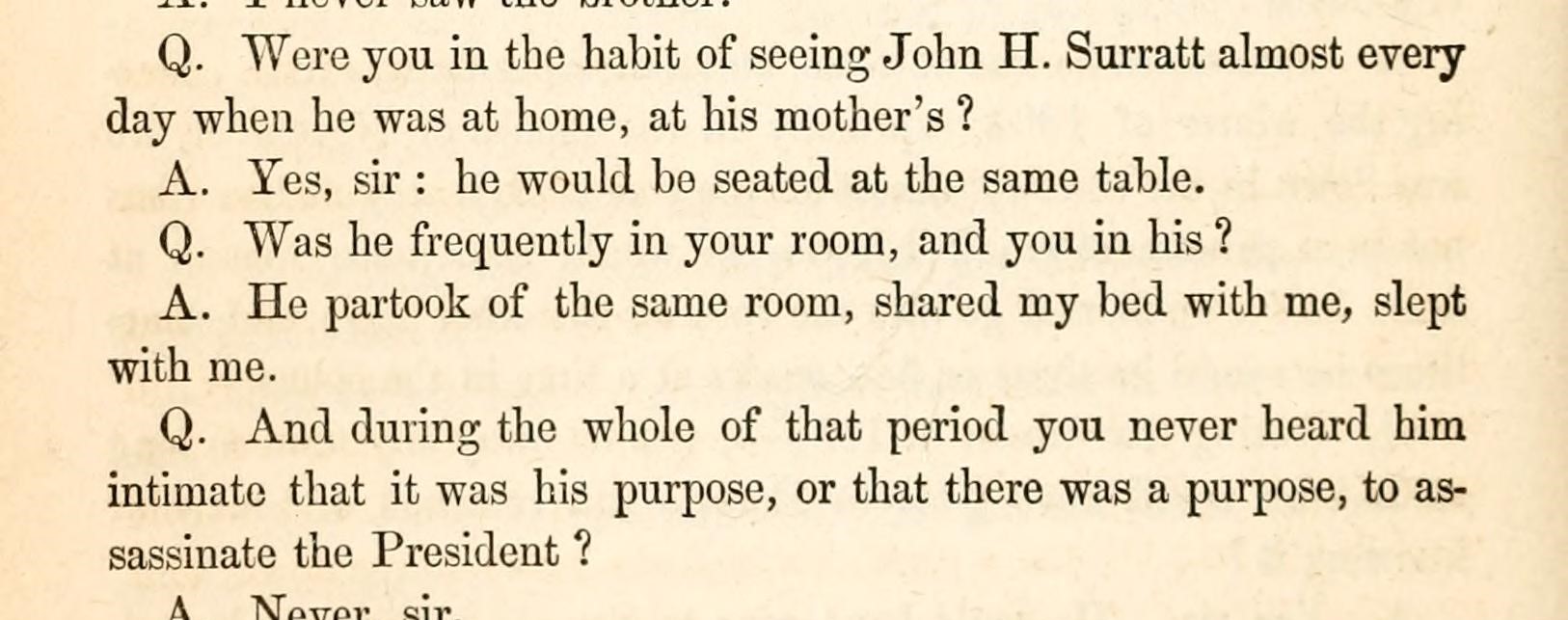
That is the story of Freedom. That is the story of Lola.


References:

  • Biographical facts about Lola and the others were painstakingly put together by utilizing the census records, marriage records, divorce records, city directories, and wills available on Ancestry.com. This material was supplemented with newspaper articles found via GenealogyBank.com, Newspapers.com, and the Library of Congress – Chronicling America.
  • Lola “Jennie” Germon’s statement regarding her abuse at the hands of Spencer Clark at the Treasury comes from The Treasury Investigation: The Suppressed Documents
  • Further details of Constantino Brumidi’s life and art come from Dr. Barbara Wolanin’s book, Constantino Brumidi – Artist of the Capitol. Several of the images in this post also come from that book.
  • Additional facts about Laurence Brumidi’s life were discovered by using Wolanin’s book and the legal records regarding his insanity and estate cases.
  • The details of Edwin Kirkwood’s crime and punishment were pieced together by consulting the plethora of newspaper records covering his trial and its aftermath.

This post took over a week to research and compose and, as such, is far longer than most offerings. I’d like to thank those of you who took the time to read it, especially since the main subject, Lola Germon, is really not connected to the story of Lincoln’s assassination. Despite this fact, I couldn’t help but take inspiration from Lola and wanted to share her story. I hope you found it worthwhile. – Dave Taylor

Categories: History | Tags: , , , , , , , , , , | 16 Comments

The Hidden History of Spencer Clark

On April 1, 2017, I spoke at the annual Surratt Society Conference. The topic of my speech revolved around the hidden histories of some of the minor characters in the Lincoln assassination story. One of the subjects of that talk was Spencer M. Clark, a witness at the conspiracy trial with a very scandalous past. The following text comes from my speech. Click here to read about another subject of the speech, James P. Ferguson.


Spencer Morton Clark

Burial Location: Spring Grove Cemetery, Hartford, Connecticut

Connection to the Lincoln assassination:

Spencer Morton Clark was the very first superintendent of the U.S. Bureau of Engraving and Printing. At the trial of the conspirators, Clark was called to testify regarding the pair of boots that had been confiscated from conspirator Lewis Powell. The day before Clark gave his testimony, he was given one of Powell’s boots by the Assistant Secretary of the Treasury and was asked to inspect it. Inside one of the boots was a mark of ink. After examining the boot under a microscope, Clark came to the conclusion that the mark of ink had been put there to obscure some sort of writing that lay beneath it. Using a bath of oxalic acid, Clark was able to remove the top layer of ink. He was clearly able to see the letters J W, then a letter that was either a P or a B. He also determined the last two letters were th. Clark concluded that the written word that had been covered up was the name J W Booth. Unfortunately, Clark left the oxalic acid on too long, and the ink from the name was also dissolved away. However, Clark was supported in his assessment by two other treasury workers who were with him. Spencer Clark’s testimony at the trial was brief but worked to prove that the boots worn by Powell had either been owned or purchased by John Wilkes Booth.

Hidden History:

Spencer Clark was born in Brattleboro, Vermont, in 1811. As a young man, Clark entered into many business ventures, all of which failed. He declared bankruptcy twice before gaining employment in D.C. in a position he was not qualified for. In 1860, Clark was made the Acting Engineer in the Bureau of Construction for the U.S. Treasury Department despite the fact that he was not an engineer. However, Clark made a good impression on Treasury Secretary Salmon Chase and was retained.
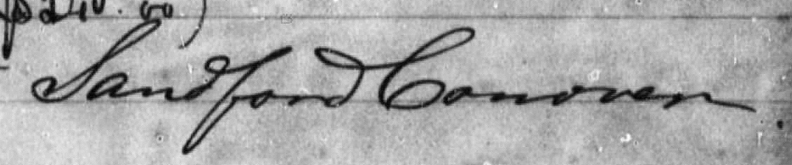
Salmon P. Chase was Lincoln’s Secretary of the Treasury from 1861 to 1864

Clark’s employment in the Treasury department came at a monumental time. Prior to the Civil War, the only legal tender in the United States was gold and silver coins produced by the Treasury. These coins were known as specie. However, the costs associated with the Civil War were so high, and the amount of gold and silver was limited. Lincoln and his government had to look elsewhere to find a way to finance the war. The decision was finally made to introduce paper notes to serve as legal tender bills. This is commonplace to us now, but back then, it was highly controversial, and even Lincoln only agreed to it as a necessary, yet unfortunate, war effort. The treasury at this time did not have the facilities to print its own notes, and there was great fear that the practice of printing money would fuel corruption within the government. Therefore, these early notes were printed by private companies and then sent to the Treasury in sheets. In his position in the Treasury, Clark and his clerks were charged with cutting out the notes, signing them on behalf of the Treasury officials, and imprinting each note with a seal.

Clark soon required a larger workforce to handle the increased output of the notes. With most able-bodied men off fighting in the war, the Treasury became one of the first government agencies to hire a large number of female clerks. The women who joined the ranks were often teenagers and young women whose fathers were either off fighting or had been killed. The Treasury sought to hire only girls and women who demonstrated a true need for employment to help provide for their families. Over 300 women found employment in the Treasury department before the end of the war.

In July of 1862, Clark and his department were investigated by a Congressional committee over the government’s contracts for the notes and qualifications of its workers. The committee determined that the contracts signed by the government with the private printers resulted in an extravagance in the expenditure of public money. They also found that Clark was not qualified for his position and suggested his removal. Clark was retained, however, due to his familiarity with Secretary Chase and his other superior, Francis Spinner, who was the Treasurer of the United States.

Francis Spinner was the Treasurer of the United States from 1861 to 1875

In August of 1862, Clark was authorized to purchase the machines necessary for the government to print some of its own notes rather than buying all of them from private companies. This decision essentially established the Bureau of Engraving and Printing and resulted in Spencer Clark becoming its first Superintendent. Clark supervised the production of the $1 and $2 notes. Clark’s new bureau was also tasked with the printing of the government’s new fractional currency. These bills were worth less than a dollar and were meant to supplement the dwindling supply of specie. In the initial run of fractional notes, only Thomas Jefferson and George Washington appeared.

Examples of U.S. fractional currency

Clark, it should be noted, did a good job of instituting better security measures to impede counterfeiting. In the second issue of fractional currency, Clark had a copper circle placed around the heads of Washington and Jefferson. If the bill were photographed, this ring would come out as black, thwarting the counterfeiter. Yet despite the positive aspects Spencer Clark brought to his position, there were also many negative aspects. Clark’s investment in the government’s printing presses proved to be misplaced. The presses Clark acquired literally came from the lowest bidder, and the quality was lacking. Broken presses were common and delayed their production. Clark was also very poor in his bookkeeping. His incomplete records of production and distribution were troublesome to members of Congress who were already worried about the corruptible nature of printing the country’s money.

In late 1863, Secretary Chase began hearing rumors about his printing department. These rumors were not about poor books or broken machines, however. The rumors being spread were about Clark, his female employees, and “gross immoralities” that were occurring under his supervision. Chase, who still held aspirations of his own to become President, decided to look into the matter in order to prevent any political enemy from discovering something that might damage his future. Chase requested that Secretary of War Edwin Stanton lend him a capable investigator to look into the rumors. Specifically, Chase requested the assistance of Lafayette Baker.

Lafayette Baker

Chase would come to regret his request to have Baker investigate. Baker had served as a detective, special agent, and finally as a special provost marshal under Stanton. While Baker made himself useful to the government, his methods and character were highly questionable. He was notorious for throwing those he believed were guilty of wrongdoing into the Old Capitol Prison without charge. The declaration of martial law during the war gave him the authority to do so. After Lincoln’s assassination in 1865, Stanton would call on Baker again to help manage the manhunt for John Wilkes Booth and his conspirators.

Lafayette Baker committed himself to his investigation into the Treasury, and opponents of the administration could smell the scent of scandal brewing. Salmon Chase had hoped for a quick exoneration of his subordinates, but that was not what Baker had in mind. Baker believed that the public demanded a full and detailed inquiry, and he would not allow himself to be a tool for Chase’s benefit. Baker was far too much of a loose cannon to do Chase’s bidding and wrap up the investigation quietly. While Baker charged a couple of Clark’s clerks with corruption, his biggest accusations were about Clark himself, whom he accused of committing sexual misconduct with his female workers. Baker gathered statements by female employees that added up to a very damning picture against Clark, a married man.

Ella Jackson stated that she and another female clerk had traveled to Philadelphia at the invitation of Clark and another male clerk in the department named Gustavus Henderson. In Philadelphia, Miss Jackson registered at a hotel under an assumed name and spent the weekend with Clark. She also stated that Clark often offered her beer in his private office late at night, though she insisted she never drank more than two glasses and was never drunk at work. Ada Thompson, an actress, provided further details of Clark’s affair with Miss Jackson by informing Baker that, “During the month of December last, Miss Jackson seldom came home before two or three o’clock in the morning. She stated to me that during these times she did not work later than ten or eleven o’clock and that the balance of that time…she spent in Mr. Clark’s private office.” Thompson also stated to Baker that she had “often seen in Miss Jackson’s possession obscene books, pictures, and prints, which she…informed me were given to her by Clark.”

Baker interviewed and received a statement from another young woman named Jennie Germon, who had been in the employ of Mr. Clark. Jennie stated:

“Mr. S M Clark came to me in the office, and asked me to come to his private residence, at the same time informing me that his wife was in the country. I did not at first comply with his request. On the next Saturday night…I went to Mr. Clark’s house about eight o’clock in the evening…Mr. Clark and myself occupied the same room until morning…About two weeks after my first visit to Mr. Clark’s house, he again asked me to go to his house and spend another evening with him; this request I complied with. I recollect distinctly a conversation I had with Mr. Clark. He said his wife was very jealous and at one time told him that she believed the Treasury Department was nothing more nor less than a house of ill-fame…Clark paid me as high as forty dollars; these amounts were independent of my wages earned in the Department…I freely confess my shame and disgrace, trusting that no publicity will be given to my statement.”

Lafayette Baker did not heed Jennie Germon’s request for confidentiality. Slowly, different pieces of Baker’s investigation were being leaked to the public. Secretary Chase was seeing the reputation of his department and himself sullied. Chase suspended Clark but stopped short of firing him. Chase wanted Clark to resign, but the latter would not go so easily. “I think it right that the country should know that your confidence in my official management has not been misplaced,” Clark wrote in an open letter to Chase that was published in the newspaper. Clark claimed that the charges against him were politically motivated since he was a holdout from President Buchanan’s administration. Essentially, Clark set it up that if Chase moved to fire him, it would be far more damaging to Chase and his prospects, as it would be confirmation that he had allowed things to get so out of hand in his department. Chase was trapped. The allegations against Clark were so detailed and extensive that they were undoubtedly true, but Chase had to save face. And so Chase turned to the only thing left of him, partisan politics.

While Baker’s investigation failed to find any major examples of monetary corruption in the Treasury department, the reports surrounding Clark’s sexual malfeasance became blood in the water to opponents of Lincoln’s administration in Congress. An investigative committee was created. Chase, however, was well-connected enough to ensure that the majority of the Congressmen placed on the committee were friends. While there were a few token Democrats to provide the illusion of impartiality, the chairman of the committee was Republican representative and future President James Garfield.

Representative James A. Garfield

Chase and Garfield had become extremely close, with Chase considering Garfield to be the son he never had.  The Republican majority committee worked extensively to attack Baker’s investigation. Each political party now found itself in a strange place. The Democrats, who loathed Baker and his methods, jumped to Baker’s defense while the Republicans, who had relied on Baker many times to be the shady means to achieve their ends, turned against him. Baker, feeling betrayed by his friends, released all the pages of his scandalous findings to the public. Many newspapers would not print the reports of Clark’s sexual exploitation and abuse of his young female workers, deeming them too depraved to print. Still, others published the ladies’ statements in all their depraved detail. A political cartoon of the day even included the scandal with a brazen gentleman eyeing a group of young ballerinas preparing for the Treasury Department’s production of “A New Way to Pay Old Debts”.

One might think that with all of the uproar that was being caused in the Democratic newspapers over Clark’s misconduct and the release of Baker’s reports, it would be impossible for Chase, Clark, and the Republicans to come out unscathed. However, in the end, Lafayette Baker’s own overzealousness in his investigation would ultimately lead to his downfall.

In early May of 1864, right about when the congressional investigation began, one of the Treasury Department’s female clerks, Maggie Duvall, suddenly died. Maggie was described as “a beautiful and attractive young lady, with auburn hair, somewhat freckled.” Baker did not believe this death was a coincidence. He believed that Maggie had been a victim of Mr. Clark and died as a result of an abortion. Baker was able to collect a statement from another clerk that seemed to support this idea. And so, against the heartrending protests of Maggie’s family, Baker had Maggie’s funeral halted and had her body sent to an examining committee of local physicians to check for signs of an abortion.

In the end, however, Baker’s gamble backfired. It was found that Maggie had died of consumption and that her “virtue” was still intact. When the press heard the news of what Baker had done, they crucified him for it. His desecration of the poor girl’s body against the wishes of her family and the way he had attempted to sully her reputation became more of an outrage than Clark’s actions towards the other women. The Republicans were amazingly able to reframe the issue and turn Baker into the enemy. When Garfield and his majority in the congressional committee released their report, they alleged that most of the charges against Clark were fabrications created by Baker on behalf of private printing companies in New York who were unhappy with having lost their contracts to print the government’s notes with the establishment of Clark’s bureau. In the end, the committee found that Lafayette Baker, “by the aid of coerced testimony” and with the assistance of “female prostitutes associated with him,” had set out to destroy the reputation of Spencer Clark.

Lafayette Baker was livid and challenged Garfield to produce any evidence that he was working on behalf of printing companies, had coerced any testimonies, or had used female prostitutes to make his case. In truth, all of these charges were groundless, but it didn’t matter. Garfield had managed to reframe the issue in the public mind to protect his friends and his party. The Treasury scandal just went away, which is why Spencer Clark was still in his position as superintendent of the printing division when he was asked to examine Lewis Powell’s boot in 1865.

But we’re still not done with Mr. Clark. In fact, we haven’t even touched on the scandal he is most known for and the way in which he changed the course of American currency forever.

In June of 1864, just after the inquiry over Clark’s sexual misconduct ended, Congress approved the creation of a third issue of fractional currency. The first and second issues, which ranged from 5 cents to 50 cents, had only contained the portraits of Washington and Jefferson. The design process was a lengthy affair with dies having to be created by outside companies. During this time, Secretary Chase resigned from his post. He was replaced by Maine Senator William Fessenden, who became the new Secretary of the Treasury.

William Fessenden was Lincoln’s Secretary of the Treasury from 1864 to 1865

Clark was in charge of the creation of the new fractional notes. It’s possible he was trying to curry favor with his new boss when he approached him with his idea for the portraits that should be placed on the new notes. Clark suggested that the notes contain the images of Secretary Fessenden, Assistant Secretary of the Treasury George Harrington, Controller of the Currency Hugh McCullough, and the Treasurer of the United States Francis Spinner.  Secretary Fessenden agreed to have his own face on one of the bills but told Clark to ask the other gentlemen for their consent. The other gentlemen were reluctant to the proposition but eventually agreed to it when they were assured by Clark that Secretary Fessenden wanted it so (which was a lie). In time, Secretary Fessenden’s portrait appeared on the 25-cent note, and Treasurer Spinner’s portrait went on the 50-cent note.

Fractional currency notes bearing the likenesses of William Fessenden and Francis Spinner

These high-value notes went into circulation but were not as common as the lower ones. The die for Controller McCullough’s note was damaged upon delivery to the Treasury, and he, already being uncomfortable with the idea of being on currency, refused to allow Clark to order a new one. The design for Harrington’s note was apparently not yet in production. What occurred next is a little uncertain, but the end result was this:

A 5-cent fractional note bearing the likeness of Spencer Clark

Spencer Clark put his own face on the 5-cent fractional note. The story goes that the demand for 5-cent notes was so high that the treasury was under a time crunch to release the new issue of these bills. Strangely, or perhaps purposefully, Clark had originally planned for Francis Spinner to be on the 5-cent note, but moved him to the less popular 50-cent note. Clark went up to Treasurer Spinner, told him of the almost completed design for the 5-cent note, but lamented he had no portrait to put upon it. According to one story, Clark then said, “What head shall we use?” Clark asked Spinner, “the boys have got up a die with my head, what objection is there to using it?” Spinner then allegedly replied, “I have none”. Clark then went off telling people that he had the authorization of Francis Spinner to use his own image, and he just so happened to have a die with his own portrait on it, ready to go. However, the truth is that Francis Spinner did not have the authority to approve designs, nor did he claim to have such authority. When Secretary Fessenden saw the early proofs of the new 5-cent notes with Clark’s face, he rebuffed Clark. Clark then told him that it was Spinner who had insisted that Clark’s image be put upon the notes due to his years of faithful service to the bureau (which was a lie). The other story surrounding the placement of Spencer Clark’s face states that, when Clark approached Treasurer Spinner inquiring about who to put on the 5-cent note, he said something along the lines of, “Would the likeness of Clark do?” Spinner apparently believed that Spencer was referring to that great American explorer William Clark, of Lewis and Clark fame. Spinner agreed to this, and it was not until after the proofs were made that it was discovered that there had been a “misunderstanding”. Regardless of what really happened, due to the time constraints and demand for the bills, the production of the 5-cent notes with Spencer Clark’s face was allowed to continue.

As you might imagine, when these new 5-cent notes first appeared in public in February of 1866, there was quite an uproar. People had previously talked of the impudence of when Salmon Chase was placed on the $1 notes produced by the treasury, and now here were fractional bills containing the images of three more treasury workers. Though George Washington was retained on the 3-cent and 10-cent notes, Thomas Jefferson had lost his place among our nation’s money completely.

Members of Congress were the most outraged, especially considering the drama that had unfolded around Clark just two years earlier. The man had been rightfully accused of using his position to solicit sexual favors from his female subordinates, and now he was the face of the 5-cent note. So, on March 1, 1866, Representative Martin Thayer of Pennsylvania added the following amendment to an appropriations bill for the Treasury:

“Hereafter no portrait or likeness of any living person shall be engraved or placed upon any of the bonds, securities, notes, or postal currency of the United States.”

Thayer humorously demonstrated how teachers all over the country will have to do away with their old table of Federal currency and learn the one currently promoted by the Treasury.

Rep. James Garfield expressed his disagreement with the amendment, initially citing his belief that money should represent the leaders of the day. However, his argument quickly shifted into a prolonged and flowery defense of Spencer Clark:

“Sir, I take pleasure in saying a word for an abused man, who is not here to answer his accusers; and I say it, too, remembering the declaration of an ancient philosopher, that people love to hear accusation better than defense. I do not hesitate to declare it as my opinion that when the history of our financial struggles during the later war shall have been written; when all passion and prejudice shall have died away; when the events of the present shall be seen in the clear light of veritable history, this man, whose picture is now sneered at; this man, so little known to fame, and so unfavorably spoken of among many members of this House, will stand out in that history as a man most remarkable for genius and ability, for having accomplished a work which will take its place among the wonders of mechanism and useful invention, and for having saved to the Treasury, by his skill and fidelity, millions of money. Whatever people please to say concerning S. M. Clark and his antecedents, he has done his country signal service; and, sir, I believe his merits will some day be recognized by the American people as they have been and still are by those who know what he has done and is still doing in the public service.”

Representative James Brooks from New York, the Congressman who had started the call to investigate Clark two years ago and served as one of Garfield’s token Democrats in the committee, could not let Garfield’s aggrandizement of Clark go without a response.

Rep. James Brooks of New York

“What a eulogy he has pronounced upon a great hero of this war! When the name of Grant shall have faded away; when the magnificent victories of Sherman, from the mountains of Tennessee throughout all George, North and South Carolina, and Virginia, shall have been forgotten; … when even Lincoln shall have been buried with Julius and Augustus Caesar, there will arise one remarkable man; high on the horizon, and that is Clark, the printer of the public money!”

This response was met with laughter from the House. Garfield and Brooks then argued for some time about the past investigation into Clark before Brooks brought the attention back to the matter at hand.

“Sir, the honorable gentleman from Pennsylvania, Mr. Thayer is right. No man should be immortalized upon the public money of the country until the verdict of posterity has been pronounced upon his name, and it can go down upon that record sanctioned by the voices of men of all parties, all politics, and of all religions.”

In the end, the Representatives voted to put Rep. Thayer’s amendment in. When the amendment arrived in the Senate, the only change made was to allow the current plates of notes to be used until their expiration in order to avoid the cost of halting production and purchasing new ones at this time. This was agreed to by both the Senate and House without dissent.

Finally, on April 7, 1866, the appropriations bill was passed, which contained the amendment banning living people from appearing on our money and stamps.

This policy still stands today. Coincidentally, the same appropriations bill that banned portraits of living people on money also approved the expenditure of $100,000 for the purchase of a property in Washington City “for the deposit and safe-keeping of documentary papers relating to the soldiers of the army of the United States, and of the museum of the medical and surgical department of the army.” The property’s name? Ford’s Theatre.

Spencer Clark survived an investigation into his qualifications. He survived an investigation into his immoral and predatory behavior with his female clerks. Spencer Clark even survived the aftermath of the widespread embarrassment he had brought upon his government by putting his own face on money. However, he could not survive one last scandal. On November 17, 1868, Clark tendered his resignation after an investigative committee found him guilty of…improper bookkeeping. After leaving the Treasury, Clark acquired a position in the Department of Agriculture, eventually becoming the head of the Bureau of Vital Statistics. Clark died on December 10, 1890, and is buried in Hartford, Connecticut, next to his wife.

Spencer Clark was a failed businessman, a fake engineer, the Superintendent of the Bureau of Engraving and Printing, a scumbag sexual predator, and a man who put his own face on money. That’s quite a scandalous hidden history.

References:
The Enemy Within: Fears of Corruption in the Civil War North by Michael Thomas Smith – a fascinating book which details Spencer Clark and the Treasury Scandal

Categories: Grave Thursday, History | Tags: , , , , , , , , | 8 Comments

Blog at WordPress.com.