Posts Tagged With: Booth Family

The Booth Children and Mary Ann’s Acting Career

In his later years, Edwin Booth would reflect, “What big families they used to raise!”  when discussing his brothers and sisters.  The world famous tragedian was one of ten children.  Today, these siblings are generally eclipsed by their infamous brother John Wilkes, but, as this blog has often shown, each member of the Booth clan led fascinating lives of their own.  Junius, Jr. was a moderately successful actor and theater manager. Henry Byron, who died at the age of 11 in England, was his father’s favorite. Edwin is easily considered the best actor of his generation and perhaps the best Hamlet ever.  Asia thoroughly documented the lives of her father and brothers through books.  Young Joe became a doctor.  Even Rosalie, the Booth I had dubbed the “forgotten” one, lived a devoted life caring for her siblings and mother.

In truth, the only forgotten Booths seem to be the ones who died quite young.  They are Mary Ann, Frederick, and Elizabeth.  So little is known about these three Booths because their lives were so short.  The small blurb they receive in books (if they are even mentioned at all) recounts their deaths from a cholera epidemic on the family farm in 1833 and the difficulty Junius Brutus Booth had accepting their loss.  A multitude of questionable newspaper accounts and later recollections paint a picture of a crazed Junius, unable to accept the death of his children, digging up the bodies of one or more of them from the family cemetery, hoping to revive them.  While there is some truth in these accounts the majority are dramatic exaggeration.

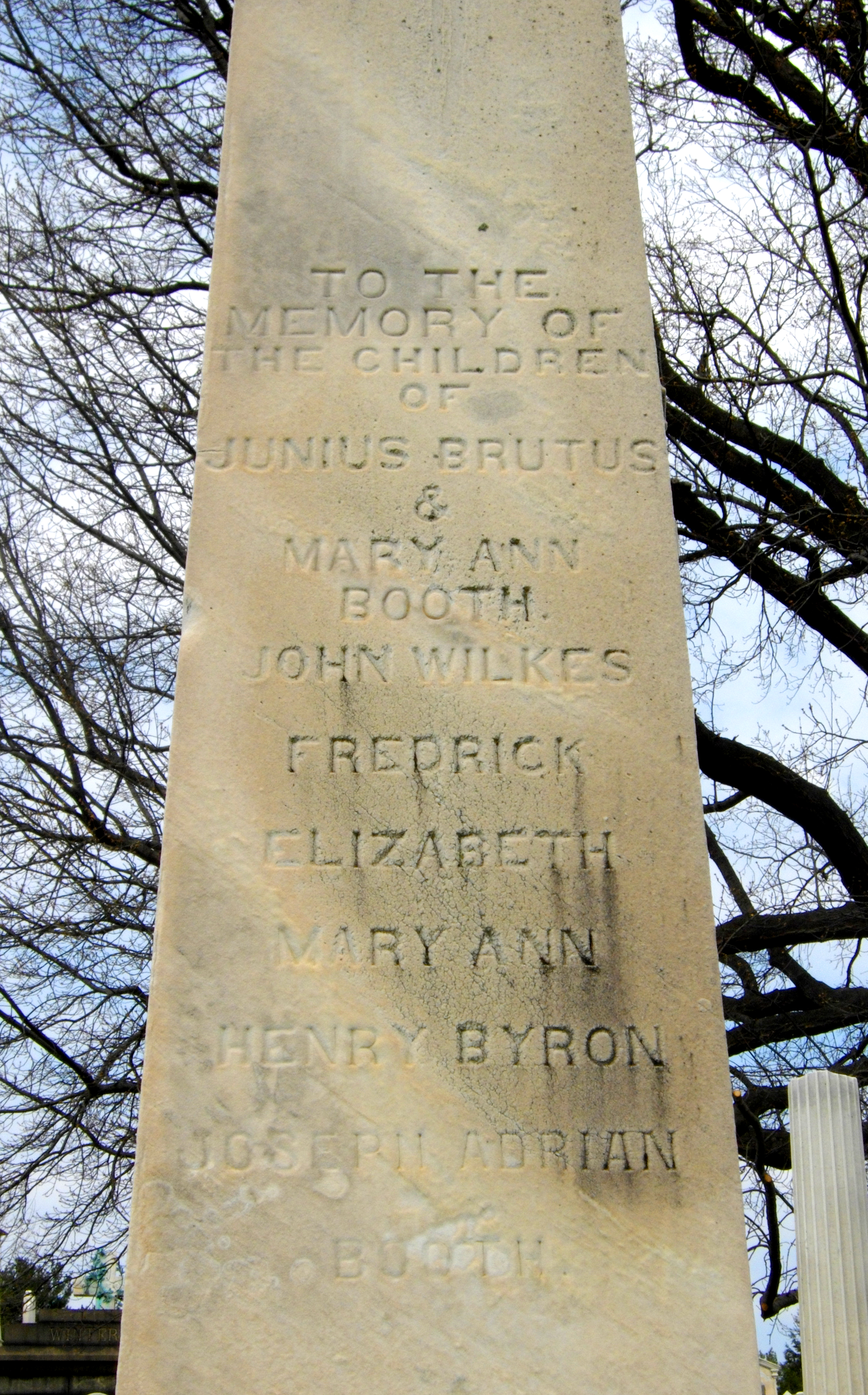
Back of the Booth monument

However, there is one mistake that has been accidentally perpetuated in books about these Booths for years.  Only two of the Booth children died of cholera in 1833.  These poor victims were Mary Ann and Elizabeth.  Their brother, Frederick, had actually died a few years earlier away from the family farm.

In fall of 1828, thirty-two year old Junius Brutus Booth, Sr. decided to try his hand at being a theater manager.  He rented the Tremont Theatre in Boston and began preparations to open for the season.
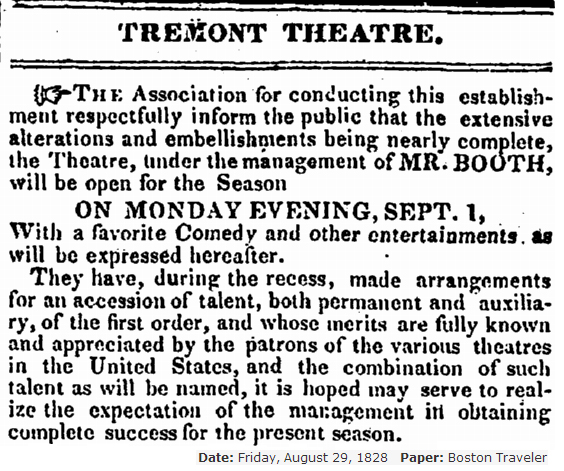
JBB Manager in Boston 1828

JBB as Manager in Boston 1828 1

JBB as Manager in Boston 1828 2

In Stephen Archer’s book, Junius Brutus Booth: Theatrical Prometheus, he proposes that with this managerial position, “the touring tragedian seemed to be trying to find a place to settle down.”  As a touring star, Junius was often away from his wife and five children.  They lived on the family farm in Harford County, and he could only make brief stops home when he was performing in Baltimore or during the summer break between theatrical seasons.  It appears the Junius was hoping this managerial position would not only provide for his family, but also allow him to stay in one place for a prolonged period.  His “wife” Mary Ann actually joined him in Boston during this time.  Whether she brought all of their children with her to Boston, or left some of them at the Bel Air farm, is unknown.  At the very least, it is known that Frederick, a little bit older than a year at that point, was with his parents in Boston.

It was during this point, when Junius was the manager of the Tremont Theatre, that Mary Ann may have made her acting debut.   Theater lore states that Mary Ann Booth did try her hand at acting for a very brief period of time.  The problem is that there has been little evidence found to support this idea.  The small evidence we do have is this advertisement:

Mrs Booth's 2nd appearance on stage 1828

Dr. Archer calls it a “mystery” but states that we can’t be certain this is our “Mrs. Booth”.  Actors and actresses were commonly referred to only by their surnames as you can see in the advertisement above.  Dr. Archer also points out that “later appearances of a Mrs. Booth further suggest someone other than the tragedian’s wife.”  However, in an article written for the Surratt Courier in 1991, John Wilkes Booth biographer Terry Alford seems to believe that this was our Mrs. Booth.  A clipping of this advertisement can be found in a scrapbook that was owned by Junius Brutus Booth, Jr.  Why else, Dr. Alford suggests, would June preserve a clipping of this advertisement unless it was of his mother?

After some searching, I found a newspaper advertisement which claims to be Mrs. Booth’s first appearance on stage:

Mrs Booth's 1st appearance on stage 1828

If this is Mary Ann Booth, then her first performance was not at the Tremont Theatre in Boston but at the Salem Theatre in nearby Salem, Massachusetts.  Salem and Boston are only separated by about 16 miles.  James H. Caldwell, the actor for whom both these benefits were for was well known to Booth.  In fact, earlier in 1828 Junius acted for over a month at the American Theatre in  New Orleans where Caldwell was the manager.  It seems possible that Mary Ann Booth knew the part of Rosalie Somers in the play Town and Country and Junius asked his friend Caldwell if she could play it alongside him.  Caldwell was looking to make as much money as he could in Boston, as he was hoping to build a new theater in St. Louis.  One Boston newspaper, the Boston Traveler, had a strong allegiance to the Tremont Theatre and partly chastised Caldwell for making his first appearance in the city at the rival Federal Street Theatre.  They wrote, “The old house offered him $100 a night, and he chose to go there for money, rather than appear at the Tremont for money and applause.”  Caldwell responded back to them humorously: “He informs us of his benefit, and gives us liberty, for one dollar, to speak of him as we like – provided we set down nothing in malice.”  After finishing three nights in Salem, it was announced that Caldwell was coming back to Boston and that this time he would perform at the Tremont instead of the Federal Street Theatre.  The Boston Traveler praised his choice and, as a last jab at the rival theater, stated, “He will now have an opportunity of appearing before such an audience as he has not yet seen in Boston.”  With this in mind, it’s likely that Caldwell would have welcomed Mrs. Booth’s company on stage as she might have proved a curiosity and drawn a larger crowd to his benefits.

Additionally, when it comes to Mrs. Booth’s appearance on the Tremont stage, she might have been acting at the insistence of her manager husband.  Mrs. Mary Ann Duff was a leading lady of the day and was scheduled to appear at the Tremont starting on October 15th.  However, she fell ill and did not make her debut until October 29th. Perhaps, Junius, needing someone to play Rosalie Somers in Town and Country asked his wife to fill in.  Her first performance at the far smaller Salem Theatre could have been her “try-out” before Booth had her play the same role the next day at his theater.  This, of course, is just a theory.  Mary Ann Booth’s supposed theatrical career is still a mystery.

Junius Brutus Booth departed the Tremont Theatre at the end of October after managing it for two months.  The Tremont Theatre Association presented him with a silver cup and plate valued at $100 as a token of their esteem.  For some time after Junius left to act in New York, Mary Ann and at least little Frederick were still residing in Boston.

Then, on November 5th, 1828, Mary Ann Booth lost her first child.  The exact circumstances of Frederick’s death are not known.  Thus far, no mention of the boy’s death has been found in the newspapers.  His death record states he was 1 year, 4 months old but no cause of death is given.

Frederick Booth's Death Record in Boston

His body was taken to the South Burying Ground in Boston.  The grounds have been described as, “a working man’s burying ground, where families paid a small fee to the City for burials”.  More research is being conducted to determine the exact disposition of Frederick’s body, i.e. whether he was buried or placed in a vault.  Nevertheless, the loss of their child must have affected Mary Ann and Junius deeply.  This was the second child Junius had lost.  The first had been a daughter, Amelia Portia, who he had with his first wife, Adelaide.  She too had died as an infant.  Young mother Mary Ann, experiencing the first of her many losses, was likely beside herself with grief over her dead son.

Frederick’s death record proves that he was not one of the victims of the 1833 cholera epidemic as was previously thought.  It also corrects his birth date which was thought to have been 1829.  It can now be accurately determined that Frederick Booth was born between June 6th and July 5th, 1827 and that he died on November 5th, 1828 in Boston.

In 1869, after John Wilkes Booth’s body was released by the federal government, Edwin Booth bought a family plot at Baltimore’s Green Mount Cemetery.  Here he placed the remains of his grandfather Richard, his father Junius, and his brother John Wilkes.  Edwin also had the bodies of his three young siblings who had died in America exhumed from the family cemetery at Tudor Hall.  These were the bodies of Mary Ann, Elizabeth, and little Frederick.  The touching story of how Frederick came “home” is recounted by his older sister Asia Booth:

“During the engagement in Boston, their infant child Frederick had died, and Mrs. Booth was lamenting the loss (on her return to the country home at Belair) and burial of her baby so far away.  Her husband said, “Do you wish the child to be buried here?”  “Oh it would cost so much,” hesitatingly answered the grateful mother.  “Come out and walk with me,” her husband rejoined.  Mrs. Booth thought this a feint to distract her mind from grief, and they strolled about together, then, directing his steps towards the Barn, Mr. Booth said tenderly, “I have brought your child home.”  She was not shocked then, when on entering the Barn, he took the straw from a box in the corner, on which rested the leaden cover containing the little coffin.  Mrs. Booth, relating this occurrence, remarked on the thoughtful tenderness of keeping this unknown to her, also the deep parental love of the father for so young a child.”

The reason the truth about Frederick’s death was unknown until now is because this passage from Asia Booth Clarke’s book, The Elder and Younger Booth is only located in one copy of her book.  At the University of Illinois in their Rare Book room there is a copy of Asia’s book inscribed, “To my dear son Wilfrid Booth Clarke, Oct. 29th, 1885, from his mother, Asia Booth Clarke”.  This copy of her book is different from all the other.  It has extra pages and notations inside of it which are assumed to have been either material that was edited out of the original or Asia’s suggestions for a second edition that never came to pass.  This passage about Frederick’s death is on one of these extra pages in this one, unique book.

The death of Frederick and the desire to have him buried at the family farm necessitated a family graveyard.

“…a little graveyard was railed in, where the Jewish althea bushes had their places among the yews and weeping-willows. In country homesteads these private graveyards are common, and the duty of reading the burial service devolves upon the master of the house when it is impracticable to obtain a clergyman. Mr. Booth was often called upon to officiate at the interment of members of his household here (the blacks being buried outside the rails).”

Mary Ann and Elizabeth were also buried in this graveyard after their deaths from cholera in February of 1833.  Another extra page from Asia’s personal copy of her book recounts Junius’ actions after the death of the first child from cholera.

“…[Junius] dug up the little grave at night and secreted the child’s coffin, while he wandered about silent and despondent.  Joe [Hall, their slave] for a day and a night searched over the farm and miles of country, with dogs and lantern, for the hidden coffin, and with heavy heart was returning to tell to the poor mother his failure when the dogs led him to some thickly-platted bushes quite near the house.  The child was re-buried, and the wretched father taken care of.”

Far more dramatic accounts emerged over the years exaggerating this occurrence to degrees fitting the public perception of the mad Junius Brutus Booth.

The Booths installed a metal gate at the entrance to the family graveyard.  When author Stanley Kimmel visited the Bel Air region to research his book, The Mad Booths of Maryland, he discovered that a neighbor had salvaged the gate after the Booth family sold the farm in the 1870’s and that the gate had been in that family’s possession ever since.  Stanley Kimmel purchased the gate around the 1930’s but its location today is unknown.
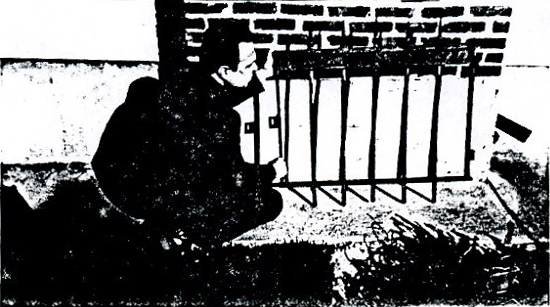
Stanley Kimmel and the gate to the Booth family cemetery

Stanley Kimmel and the gate to the Booth family cemetery

Frederick, Mary Ann and Elizabeth Booth never knew their four youngest siblings.  They never got to share in the success and fame of their brother Edwin, nor did they have to endure the tragedy and pain caused by John Wilkes.  When the trio was disinterred from the family graveyard at Tudor Hall in 1869, their small remains were placed together in one coffin.  At the Booth family plot at Green Mount Cemetery these three innocent Booths were buried right on top of their guilty brother.  When the misguided conspiracy theorists attempted to exhume John Wilkes Booth in the 1990’s, one of the reasons why Green Mount Cemetery blocked the exhumation was due to the fact that such a procedure would disturb the remains of these three Booths as well.  So, even though Frederick, Mary Ann and Elizabeth never knew their brother John Wilkes, even in death they managed to protect their little brother.

Area behind the Booth obelisk

References:
Junius Brutus Booth: Theatrical Prometheus by Stephen Archer
The Elder and Younger Booth by Asia Booth Clarke
Author’s copy of the Elder and Younger Booth by Asia Booth Clarke held by the University of Illinois
Mary Ann Booth – Actress? by Terry Alford, Surratt Courier, May 1991
Joseph and Ann Hall: Behind the Scenes at Tudor Hall by Dianh Faber, Harford Historical Bulletin, Fall 2006
The Mad Booths of Maryland by Stanley Kimmel
Behind the Scenes with Edwin Booth by Katherine Goodale
Mrs. Duff by Joseph Norton Ireland
South End Burying Ground
Newspaper articles are from GenealogyBank.com
Ancestry.com
The Art Loux Archive


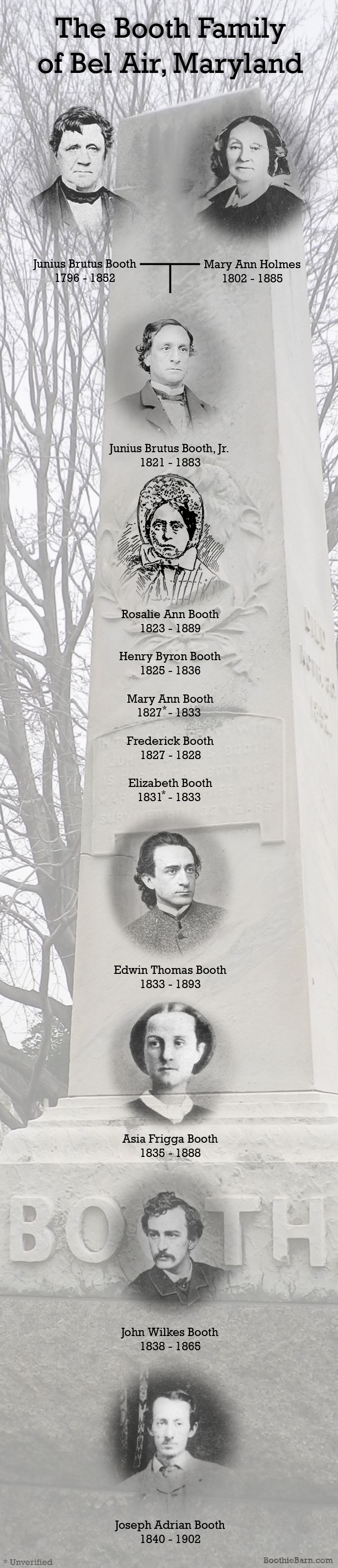
New Picture Galleries have been created for the “forgotten” Booth children: Rosalie, Henry Byron, Mary Ann, Fredrick, and Elizabeth Booth.  Click HERE to visit Rosalie’s Gallery or HERE to visit a combined gallery for the other Booth children.  You can also click their names on the image below to visit their respective gallery.
Click for Junius Brutus Booth Click for Mary Ann Holmes Booth Click for Junius Brutus Booth, Jr. Click for Rosalie Ann Booth Click for the Booth children Click for Edwin Thomas Booth Click for John Wilkes Booth Click for Joseph Adrian Booth
Categories: Uncategorized | Tags: | 10 Comments

Booth and “the Glorious Cause of Freedom”

Independence Day is a day to remember and give thanks to our forefathers who, in the face of immeasurable odds and conflict, acted with conviction to establish the blessings of freedom that we treasure today.  Our American struggle for Independence not only established the idea of democracy for our country, but changed the course of civilization around the world as others followed suit.  There are many heroes that come to mind with regards to our struggle for freedom, with our Founding Fathers and their Declaration of Independence being the center of our celebrations today.

In 1777, the appeal of Independence and the valiant struggle by the American colonies was foremost on the mind of a 22 year-old London native.  The young man decided to submit to the allure and adventure of what he called “the Glorious Cause of Freedom”.  He sought to enlist on the side of the Americans in their struggle against his homeland.  This man, who was so enamored with the concept of democracy and freedom, was Richard Booth, grandfather of the assassin John Wilkes Booth.

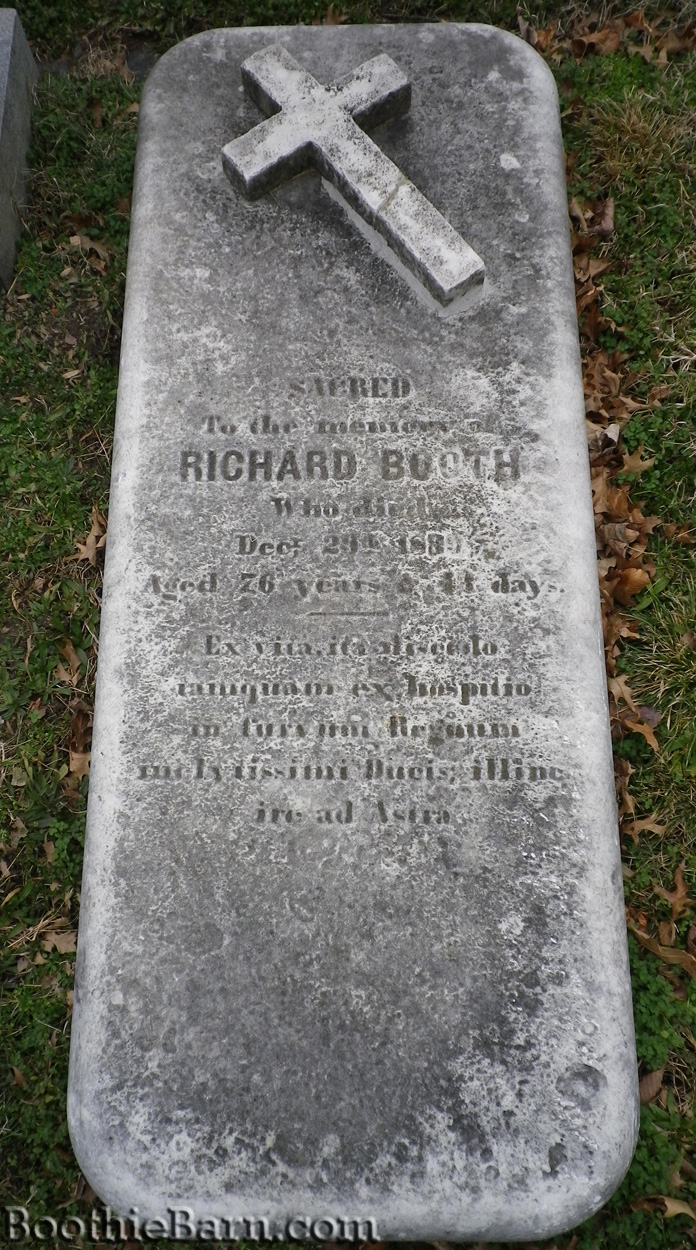
Richard Booth's grave

Richard Booth was joined in his endeavor by his cousin, John Brevitt.  The two young men left London and arrived in the coastal town of Margate.  From there they found passage across the English Channel to Ostend, Belgium.  From Belgium they traveled to Paris, France where they met with representatives from America and expressed their desire to become officers in the Continental Army.   Booth and Brevitt were informed that, before they would be allowed to enlist and be transported to America, they must first procure a letter of introduction from a prominent supporter of the American cause in England.  The pair then wrote to John Wilkes, a radical member of Parliament who opposed the war with America.  Their letter, asking Wilkes (who they claimed was a distant relative of theirs) for a letter on their behalf is reproduced below:

“To John Wilkes, Esq., Princes Court, Westminster.
Paris, Oct. 28th, ’77.

Sir, — You will certainly be much surprised at the receipt of this letter, which comes from two persons of whom you cannot possibly have the least knowledge, who yet at the same time claim the Honour of being of the same Family as yourself. Our conduct has certainly been in some respects reprehensible, for too rashly putting in execution a project we had for a long time conceived. But as it was thro’ an ardent desire to serve in the Glorious cause of Freedom, of which you have always been Fam’d for being the Strict and great Defender, we trust the request we are about to make will be paid regard to. As Englishmen, it may be urged that we are not altogether Justified in taking arms against our native Country, but we hope such a vague argument will have no weight with a Gentleman of your well-known abilities; for as that country has almost parted with all its Rights, which have been given up to the present Tyrannic Government, it must be thought the Duty of every true Briton to assist those who oppose oppression and lawless Tyranny. And as the people of America are composed of men who have still the spirit of their brave Forefathers remaining, it becomes all who are Englishmen to exert their utmost efforts in their behalf, leaving their Country for that purpose; being no more (as we presume) than the Romans, in the war between Octavius and Anthony on the one part, and those illustrious worthys, Brutus and Cassius, on the other, going from the army of the Tyrants to serve in that of the latter, and therefore equally justifiable.

‘Dulce et Decorum est pro patria mori,
Sed pro Libertate mori, Dulcissimum est.’

The manner in which we have conducted ourselves has been so very extraordinary as to be scarcely credible, but we are assured the Bearer of this Letter will convince you of its Authenticity. In short, we left England, and all the advantageous prospects we had there, purposely to go and serve in the Army of the Sons of Liberty, the brave Americans. In order to complete the Enterprise we came from London under a pretence of going on a party of pleasure to the Camp at Warley Common, but instead of proceeding thither, we went immediately for Margate and thence to Ostend, and have since arrived here, where we came to wait upon the Gentlemen who are Agents for the Congress in America, in order to the full completion of our Design of getting appointed officers in the Provincial Service, but for that purpose have since found it necessary to procure a Letter of recommendation from some Gentleman in the Interest of Liberty in England, and understand from Mr. Arthur Lee (who has promised to interest himself greatly in our behalf), that no recommendation will be of more service to us than yours. Our request therefore is, that you will condescend to give one in our favour, directed to that Gentleman at the “Hotel de la Reine, la Rue des Bons Enfants, a Paris,” which you will please to deliver to the Bearer hereof, as soon as possibly convenient. And the favour will be gratefully remembered, and the name of Wilkes be always held in the greatest respect and veneration.

Your most and obed’ Serv’ts at command,
R. Booth.
John Brevitt”

The Latin quote in their letter translates roughly to, “It is sweet and honorable to die for the fatherland, but to die for liberty is the most cherished.”

The pair were hopeful that Wilkes would oblige them and that, his letter of recommendation in hand, they would soon be off to the colonies to join in the fight.  This was not to be, however.  Instead, perhaps showing concern for the reckless youth, Wilkes forwarded the boys’ letter to Richard’s father, John Booth.  John Booth hired agents to retrieve the boys and they returned them to London.  John Booth then wrote a letter to John Wilkes, apologizing for the impudence of his son and nephew and the overt manner in which they discussed Wilkes’ sympathy with the treasonous colonies.  Through the letter, however, it appears that John Booth shared his son’s sympathies and admiration for Wilkes’ views and the American plight:

“To John Wilkes, Esqr.
Nov. 5th, 1777.

Sir, — I cannot but express the deepest concern when I reflect on the Imprudence of my Son and Nephew, in taking the liberty of addressing you without your first being apprised of it and your approbation for so doing. My uneasiness is not a little heightened when I consider to what Length their unguarded youth may lead them, and the various expressions which their thoughtless Pens may have made use of. I must assure you, sir, nothing could be more foreign to mine and to their Mother’s inclinations, nor could anything stimulate them to it but their looking up to you as the sacred Protector of the greatest Blessing on Earth, fair Freedom, and your invariable struggles for the Protection of it.

I cannot, however, but flatter myself that should at any Time a correspondence take place between you and Mr. Lee, and these two youths be the subject of it, that you would speak of them as children of those who stood foremost in Friendship for you, and who are not a little happy in the connection of Blood with which we stand.

. . . These youths, sir, have, as you are pleased to observe, to lament their not being personally known to you ; but I bless God, the best of characters can be had of them from Persons of the greatest merit and Fortune.

Your ob’dt humble S’rv’t,

John Booth.”

In addition to this letter, John Booth, who was a silversmith, sent Wilkes a plate and assured him that he would be happy to use his influence to help Wilkes in any way possible.

With Richard’s hopes of joining in the fight for Independence dashed, he took up the study of the law.  He never lost his love for the American republic, however.  His son, Junius Brutus Booth, recalled an incident in his own youth where he, too, sought adventure and wished to join the British Navy.  At that time Britain and America were engaged in the War of 1812 and Richard forbade his son from joining the British fleet:

“My father who was what is called then a hot headed Yankee or American being resolved that I never should be at odds with the Country which he in his youthful days had formed in his mind’s eye as being the grand desideratum or Heaven of all men.”

Junius also recounts his father’s “idolatry” for all things America, which “tended in a great measure to render him unpopular amidst the circle of those who but for that would have been his patrons. The picture of General Washington that hung up in our parlour and which was as ’twere a rarity amongst many of the Londoners was an object all around him friend or foe he insisted should be looked at with hat off and bowed to occasionally.”

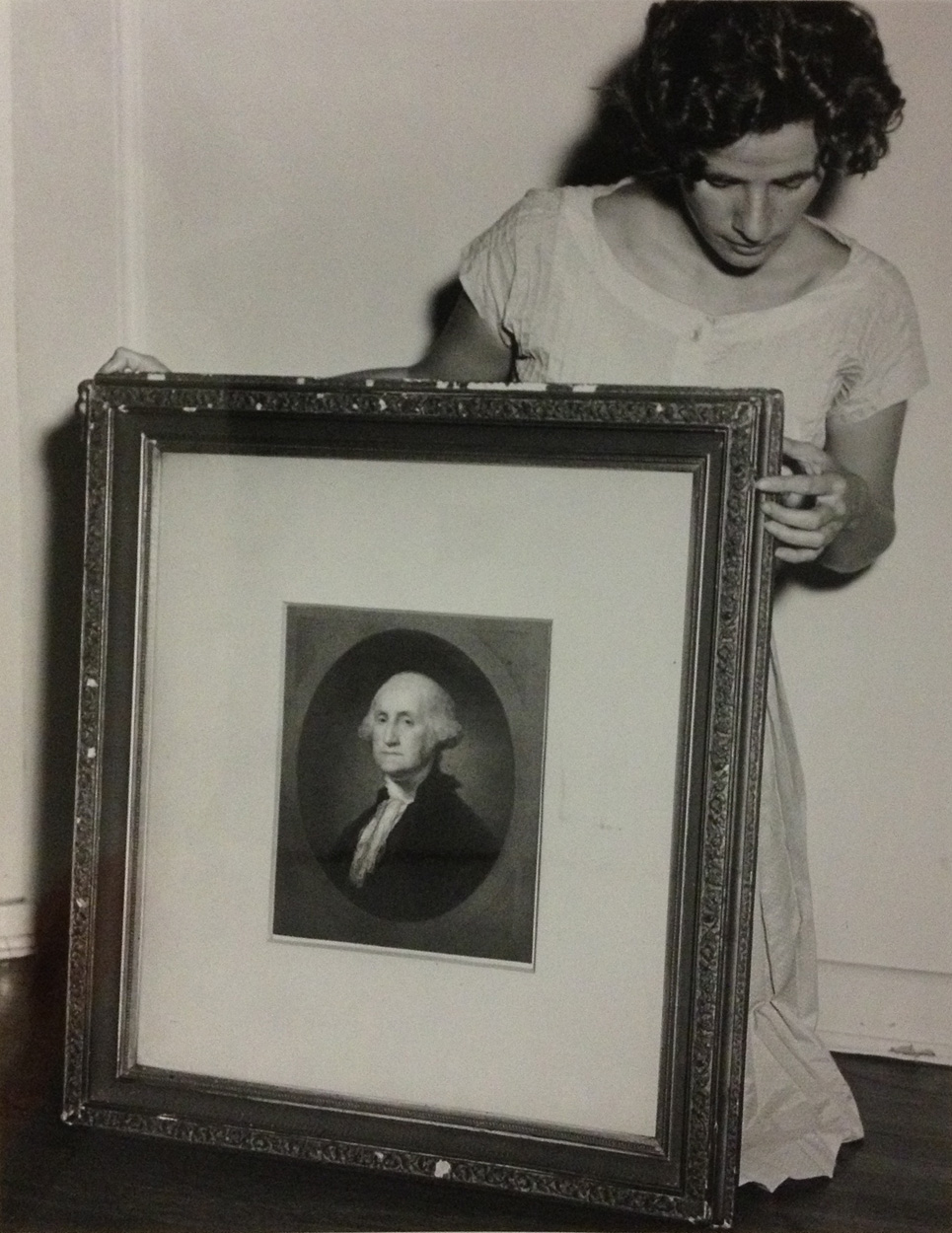
Rich Booth revered America and General Washington so much, he had Washington's portrait displayed in his London home and would make visitors bow towards it.  This portrait of Washington decorated the box at Ford's Theatre when Richard's grandson, John Wilkes Booth, assassinated Abraham Lincoln.

Richard Booth revered America and General Washington so much, he had Washington’s portrait displayed in his London home and would make visitors bow towards it. This portrait of Washington decorated the box at Ford’s Theatre when Richard’s grandson, John Wilkes Booth, assassinated Abraham Lincoln.

In the years after his son Junius found fame and success in America with his “wife” Mary Ann Holmes, Richard felt confident to finally immigrate to the land he adored so much.  He took up residence at the family home at Tudor Hall for a time, before finding his own lodging in nearby Bel Air.

Today, Richard Booth, a man who truly loved the spirit and promise of American liberty, is buried in the Booth family plot in Baltimore’s Green Mount Cemetery.  This would be patriot rests appropriately under the land that he forever held in high esteem.

References:
The Elder and Younger Booth by Asia Booth Clarke
Letter written by Junius Brutus Booth, May 1st, 1839
Art Loux Archives

Categories: Uncategorized | Tags: | 1 Comment

New Gallery – Junius Brutus Booth, Jr.

As the eldest child of Junius Brutus Booth and Mary Ann Holmes, Junius Brutus Booth, Jr. never achieved the fame (or infamy) of his brothers Edwin and John Wilkes but was a moderately successful actor and theatrical manager in his own right.   During the Civil War, he shared his brother John’s sympathies for the Confederacy and, unlike Edwin, June was imprisoned for suspicion following John’s assassination of Lincoln.  More than anything else, however, June was his father’s son.  In his later years, he resembled his father so closely that many images of June are convincingly mislabeled as Junius, Sr.  He also followed in his father’s footsteps when it came to his martial relationships.  June abandoned his first wife and assumed child, just like his father did, and ran off with a younger actress to California.  He had one child by her before her death in 1859.  In 1867, June married Agnes Perry who bore him four boys, two of which died during childhood.  All of June’s children (and all of his wives for that matter) became actors to various degrees of fame.  They all seemed to have money troubles at some point in their lives, with the pressures of debt causing one of his sons, Junius Brutus Booth III, to kill his wife and commit suicide.

Wives and Children of Junius Brutus Booth, Jr

The newest Picture Gallery here on BoothieBarn has to do with Junius Brutus Booth, Jr. and his family.  To visit the gallery, click HERE or on Junius, Jr.’s picture in the image below:


Click for Junius Brutus Booth Click for Mary Ann Holmes Booth Click for Junius Brutus Booth, Jr. Click for Rosalie Ann Booth Click for the Booth children Click for Edwin Thomas Booth Click for John Wilkes Booth Click for Joseph Adrian Booth
Categories: Uncategorized | Tags: | 4 Comments

New Gallery – Mary Ann Holmes Booth

Mary Ann Holmes was born in 1802 to Robert and Sarah Holmes.  Her father was a seedsman and owned a plant nursery in Lambeth, a borough in South London.  It is often written that Mary Ann was a flower girl, selling flowers in front of the London theaters like Eliza Doolittle from the play Pygmalion.  It is uncertain how truthful this claim is.  Most flower girls of the day were orphans who lived on the street or the product of neglectful parents.  Some even used the guise of selling flowers as a front for prostitution.  Given that Mary Ann’s father seemed to be moderately successful in his business it seems more likely that Mary Ann assisted her father in his nursery and that the term “flower girl” is a bit misleading.

When and how Mary Ann Holmes met Junius Brutus Booth is also a bit of a mystery.  On Junius Brutus Booth’s account book for 1820, someone (likely his daughter Asia) marked an X on October 9, 1820 and wrote, “The night mother first saw my father”.  Junius played King Lear that night in Reading, a city some 35 miles away from London.  Why Mary Ann would have been so far from her London home that night is unknown, but it is possible that the Holmeses had relatives in Reading.  Junius was still married to his first wife Adelaide and had a son at this point, but he found himself quickly smitten by the 18 year-old Mary Ann.  She found herself being wooed by the 24 year-old actor who sent her constant letters and books by the poet Lord Byron.  Their courtship was brief and in January of 1821, the couple ran away together.  They first spent time visiting two cities in Northern France.  They then returned to England and set sail for the islands of the Caribbean, where Junius would tour.  On route the boat stopped at the Island of Madeira, a Portuguese territory off the coast of Morocco.  The couple fell in love with the island and stayed there for several weeks.  When they decided to leave they booked passage on the schooner “Two Brothers” and this time their destination had changed.  When they got off the boat on June 30, 1831, Junius Brutus Booth and Mary Ann Holmes were in America.

In America, Mary Ann gave birth to ten children, spanning a theatrical dynasty.  For over 54 years she witnessed her family’s immense success and incomprehensible  tragedies.  She outlived her husband by over 30 years and buried six of her children.

The newest Picture Gallery contains images relating to the life and Mary Ann Booth nee Holmes.  To visit the gallery, click on Mary Ann’s picture on the image below or click HERE.

Mary Ann Holmes Booth Pictures

Click for Junius Brutus Booth Click for Mary Ann Holmes Booth Click for Junius Brutus Booth, Jr. Click for Rosalie Ann Booth Click for the Booth children Click for Edwin Thomas Booth Click for John Wilkes Booth Click for Joseph Adrian Booth

References:
Junius Brutus Booth: Theatrical Prometheus by Stephen M. Archer
“Mary Ann Doolittle? The “Flower Girl” Myth of the Booths’ Mother” by Deirdre Barber Kincaid, Surratt Courier, March 2004

Categories: Uncategorized | Tags: | 7 Comments

Junius Brutus Booth and the Fat Girl

Junius Brutus Booth was a mad theatrical genius and victim of severe mood swings. After one engrossing performance he had a chance meeting with a professional sideshow performer in the cramped backstage area. The result is documented as follows:

Junius Booth and the Fat Girl 1851

The real name of the “fat girl” who crossed paths with Booth was Hannah Crouse. From the age of 6, Hannah’s immense weight was commented on in newspapers and she soon found herself making a living as a traveling human oddity. Here is a newspaper advertisement from a time she was exhibiting herself in Washingon, D.C.

Hannah Crouse

As Hannah grew older, her weight did as well. A 1854 advertisement for the then 20 year-old girl, highlighted that she was:

“The youngest of all the Large Women, very intelligent and active, and weighing more than any other woman ever known – but she really does not weigh more than 900 pounds. We challenge the world to produce her equal.”

As time went on, Hannah Crouse was sometimes confused with another famous “Large Woman” of the era, Hannah Perkins. Ms. Perkins achieved even greater fame by touring with P. T. Barnum. She ended up marrying another performer named John Battersby who exhibited himself as the “Living Skeleton”.

Hannah and John Battersby

While Hannah Crouse survived her backstage encounter with the confused and frenzied Junius Brutus Booth, undoubtedly her immense weight contributed to her early demise. Hannah Crouse died in August of 1856 at the age of 21 or 22.

Categories: Uncategorized | Tags: | 5 Comments

New Gallery: Junius Brutus Booth

Junius Brutus Booth was the patriarch of the Maryland Booths.  Born in England, he achieved early fame in London theaters rivaling the biggest stars of the day.  He immigrated to America with his love, Mary Ann Holmes, fleeing his from his real wife and eyeing even greater success in this country.  America welcomed him with open arms and for decades he toured the nation as a unparalleled theatrical genius.  With genius also came madness.  Junius was known to be so passionate and enveloped in the characters he portrayed that, mixed with increasing bouts of drunkedness, he often blurred the line between his real life and the dramatic characters he played on the stage.  This caused stress for the Booth family but, when sober, Junius was a very devoted husband and father.  He inspired three of his sons to make theater their career and influenced generations of actors.  The newest Picture Gallery here on BoothieBarn is devoted to this passionate leader of the Booth Family, Junius Brutus Booth.

To visit the Junius Brutus Booth Gallery, click on Junius Brutus Booth’s picture on the image below or click HERE.  In time I’ll be creating other galleries for the rest of the Booths.

To learn more about Junius, read Dr. Stephen Archer’s unparalleled biography, Junius Brutus Booth: Theatrical Prometheus


Click for Junius Brutus Booth Click for Mary Ann Holmes Booth Click for Junius Brutus Booth, Jr. Click for Rosalie Ann Booth Click for the Booth children Click for Edwin Thomas Booth Click for John Wilkes Booth Click for Joseph Adrian Booth
Categories: Uncategorized | Tags: | 3 Comments

The Mystery of the Booth Epitaphs in Green Mount Cemetery by John C. Brennan

In the age before home computers and the internet, John Calder Brennan was the first search engine.  His passion for investigation and gift for correspondence allowed him to find the answer to any question posed to him.  And, like a search engine, John C. Brennan was a selfless sharer.  When he found a new piece of information about the Lincoln assassination, Mr. Brennan immediately took out his typewriter and carbon paper and sent out a dozen copies to the people on his Boothie mailing list.  For the more personal touch, “John C. Brennan in Laurel, Maryland” would often narrate the information using a system of 10 or more tape recorders connected together.  Though he never published his own book, Mr. Brennan’s name can be found in the acknowledgements of many.  He passed away in 1996 at the age of 87.

John C. Brennan dowsing for John Wilkes' grave on the Booth family plot in Green Mount Cemetery in 1988.

John C. Brennan dowsing for John Wilkes’ grave on the Booth family plot in Green Mount Cemetery in 1988.

In going through some of the files given to me by the late Art Loux, I stumbled across an extremely well researched and well written article composed by Mr. Brennan in 1990.  It appears that sometime in 1988 a gentleman wrote a letter to Mr. Brennan asking about the Booth family monument in Green Mount Cemetery.  He wanted to know whether the obelisk on the grave today was the original that had been changed over the years or was a new one.  As usual, Mr. Brennan went to work.  He wrote letters to dozens of people and organizations gathering information.  He scoured books and newspapers.  After two years, he had detailed the unique saga of the Booth family monument.  He wrote up his research in an article which he intended to submit to the Maryland Historical Society for inclusion in their monthly publication.  From what I can tell, either Mr. Brennan did not submit his article or the Society decided not to publish it.

Below I present a transcription of Mr. Brennan’s article, knowing that he would approve of it being shared.  In this way the search engines that followed him can make it available to the entire world, and not limited to carbon paper.


 The Mystery of the Booth Epitaphs in Green Mount Cemetery

by John C. Brennan


Junius Brutus Booth, the great Shakespearean actor, died in 1852 while en route from the West Coast to his home in Baltimore1.  His widow undoubtedly chose to bury him in Baltimore Cemetery at the eastern end of North Avenue for the reason that he had had his father, Richard Booth, reburied there the preceding year2.

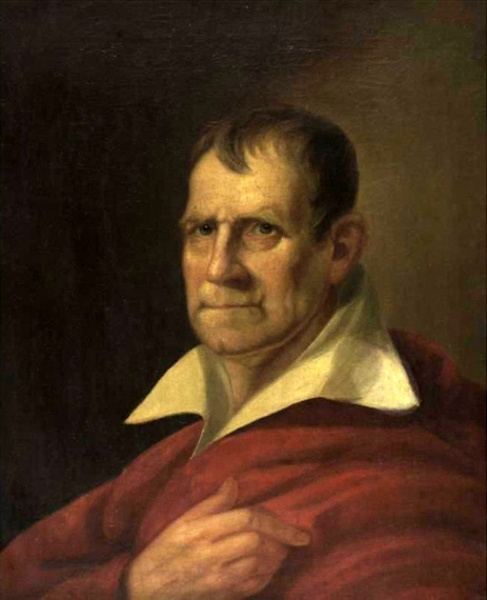
Painting of Junius Brutus Booth, father of the Maryland Booths

Painting of Junius Brutus Booth, father of the Maryland Booths

Edwin Booth, the nineteen-year-old second eldest son, who invariably took on all the family’s problems, was also a notable Shakespearean  actor, ultimately rivaling if not surpassing his father in celebrity.  Edwin was on tour when his father died, and did not return from Australia via the West Coast until 1855, evidently well-heeled from his stage appearances3.  He soon commissioned a distinguished Boston sculptor, Joseph Carew, to carve the dignified and stately (and expensive) monument that, shipped down to Baltimore by water, was erected on his father’s grave4 on May 1, 1858, the parent’s 62nd birthday.  Because the elder Booth had attained such eminence incident to his stage successes (as well as notoriety because of his eccentricities and escapades), details of the monument, including its precise measurements were thought newsworthy enough to be carried by an 1858 theatrical magazine5, all measurements proving to be the same today as they were originally.

Another not quite so detailed description of the Booth monument was published in an article appearing in the New York Times of August 7, 1858, about two months after its erection in Baltimore Cemetery, the writer being one Adam Badeau, a close friend of Edwin’s who later became a member of General Ulysses S. Grant’s staff6.  Badeau wrote that:

“On our way to town [from Tudor Hall, the Booth home near Bel Air, Maryland] we stopped at the cemetery where the worthy son of such a father had erected a beautiful and costly monument to the memory of the great actor whom he resembles.  ‘Tis an obelisk of polished Italian marble, on  a pedestal of undressed granite, some twenty feet high, and the work of Carew, the eminent Boston sculptor.  On one side are the dates of the birth and death of the tragedian, with his name in full; on another, simply the word Booth; on the third is a medallion head, full of character and beauty, both as a work of art, and as the representation of a noble, soulful face – ’tis extremely like the profile of the son.  The third side also bears this inscription [and hereinafter the inscription will be referred to as Epitaph No. 1]:

“His life was gentle; and the elements
So mixed in him, that Nature might stand up,
And say to all the world — This was a man.”

It is not anywhere stated that this first epitaph was applied in bas relief form, which it probably was inasmuch as Edwin seemed to prefer raised lettering and likenesses — as witness the present-day outsized word BOOTH, the writings on all three sides of the obelisk, the graceful frame enclosing the epitaph, and the embossed portrait of Junius Brutus.

How long it took Edwin to wake up to the fact that the Shakespearean quotation constituting Epitaph No. 1 was a thoroughly stereotyped vague one that could be used for any male decedent, and did not begin to reflect his father’s universally recognized status, is not known but, as will be seen below, he “came to” early in 1869 and used an original and eminently appropriate one (on a new, freshly carved obelisk) incident to the disassembly of the monument and its re-erection in Green Mount Cemetery7.

The tragic disruption in the lives of all the Booths was of course caused by John Wilkes Booth’s murderous act of April 14, 1865. Retribution was exacted of the assassin at the Garrett farm near Port Royal, Virginia, on April 26, and his body, held captive by the Federal government, was originally rumored to have been buried in the ocean or in the Potomac River8.  Eventually the family learned that Wilkes’ remains had been secretly interred under the floor of a building at the Old Arsenal Prison (Now Fort Lesley J. McNair) in southwest Washington, D.C.9

The unbelievable coincidence that Edwin Booth had once saved the life of the Lincolns’ son, Robert Todd, by pulling him out of the path of an oncoming train10, had undoubtedly been made known to General Grant by his aide, the previously mentioned Adam Badeau, and Grant, probably at Badeau’s insistence, had written Edwin to say that, if at any time he could be of service, he would.

Adam Badeau and General Grant

Adam Badeau and General Grant

Relying on this commitment, Edwin wrote Grant in September 1867, asking his intercession for the release of his brother’s body — which request Grant ignored.  A second request of February 15, 186911, made by Edwin direct to President Andrew Johnson, received prompt and favorable consideration, whereupon Edwin immediately began planning to establish a family lot in Green Mount in which Wilkes would be one of the first occupants.  He purchased two adjoining lots for $250 in  the name of his mother, Mrs. Mary Ann Booth, and a few years later made another payment of $100 for perpetual care12.

At the time of Junius Brutus Booth’s death in 1852, a man named William Thompson, editor of the Washington News newspaper, wrote Edwin’s beautiful and highly literate sister, Asia, a very kind letter enclosing an epitaph “which he hoped would be thought worthy to be placed upon his [Junius’] monument.” “My brother, Edwin,” Asia revealed, “at a much later period13 was pleased to have it carved on the the monument he erected to his father’s memory.” (The outstandingly apt lines, which follow, will hereinafter be referred to as Epitaph No. 2.)

“Behold the spot where Genius lies,
O, drop a tear when talent dies;
Of Tragedy the mighty chief,
The power to please surpass’d belief,
Hic jacet, matchless Booth.”

The 1869 re-erection of the monument in Green Mount, using an identically carved nine-foot obelisk to bear the beautiful poem just quoted, constitutes the first of Edwin’s two successful attempts to preserve unaltered the majestic original lines and appearance of the 1858 Carew sculpturing.  Fortunately for the sake of pictorial evidence a long search for a likeness of the monument before the third and final legend was applied yielded an 1875 woodcut of a distant but clean-cut view that is reproduced herewith14, and there is firm documentation that the shaft still bore Epitaph No 2 (Behold the spot, etc.) up to late 188515.

Booth grave Scribner's April 1875

As flattering and biographically accurate as the poetic Epitaph No. 2 was, Edwin felt forced, for a compelling reason, to discard it and arrange to have Epitaph No. 3, the final one, embossed on another sculptured obelisk after his mother’s death.

Here it becomes necessary to interrupt the continuity of this recital to state that there is still to be seen in Baltimore’s New Cathedral (Catholic) Cemetery a legible upright stone marking the grave of a woman whose maiden name was Mary Christine Adelaide Delannoy16, whom Junius Brutus Booth at age nineteen married in England in 1815, proclaiming that at the time of her death in 1858 she was the “wife of Junius Brutus Booth, tragedian.”

BOOTH, ADELAIDE - LOUDON PARK

This Belgian wife had previously cast a blight on the name of Edwin’s mother and on the legitimacy of her offspring during the time that she, Adelaide, was establishing residence in Baltimore preparatory to suing Junius for divorce in 1851 shortly before his death.  Adelaide alleged that her husband, Junius, had lived for many years past with a woman (Mary Ann Holmes) by whom he had a large family of children17.  The divorce was duly granted, and Junius and Mary Ann then became husband and wife on John Wilkes’ thirteenth birthday, May 10, 1851.  So, upon the death of his beloved mother in late 1885 Edwin felt constrained to place in marble on the third obelisk (in bas relief) an inconspicuous five-line assertion (replacing the five-line poem) that he mother was in fact his father’s “wife”:

“In the same grave with
Junius Brutus Booth,
Is buried the body of
Mary Ann, his wife, who
Survived him 33 years.”18

The Baltimore American’s account of Mrs. Booth’s funeral (she died in New York on October 22, 188519) quoted in full the soon to be replaced, captivating Epitaph No. 2 beginning “Behold the spot where Genius lies.”

In winding down this article it may be worthwhile to give the gist of what utilizing logic and common sense, it seeks to prove — that there was no way in the world in which Edwin Booth could have effected the described change in epitaphs without having commissioned experienced and artistic marblemen, of which there was certainly no shortage in Baltimore in the Victorian period, to produce identical reproductions of the Carew shaft.

An informal poll taken in writing among a half dozen knowledgeable and seasoned graveyard buffs, all frequent visitors to Green Mount and the Booth lot, confirms the certainty that the original obelisk could not possibly have been sandblasted or shaved or chiseled and still maintain, as it does, its 1858 measurements.  The base of the present shaft still fits precisely on what seems to be the original badly eroded and weatherized marble seat20.

If there was anything that the Booths sought to avoid after the Lincoln assassination it was publicity about their personal lives and activities, and in his changing the obelisk inscriptions Edwin must have gone to great pains to preserve secrecy and avoid arousing the curiosity of the press21.  The way he went about doing what he did was much, too much, for the author of the most detailed and authoritative book on Wilkes’ death and burials, George S. Bryan’s The Great American Myth22 , which volume carries a full photograph of the monument but otherwise omits all mention of it in the text.  The late Stanley Kimmel, who spent six years in research before writing his classic The Mad Booths of Maryland23 revealed himself to be completely baffled by the changes in inscriptions — touching only gingerly on one of them and in doing so perpetrating a first-class non sequitur24. A third intriguing and highly readable account of practically every aspect of the Lincoln assassination is Theodore Roscoe’s The Web of Conspiracy, whose 560 pages fail even to mention Green Mount Cemetery25.

The canvass made of graveyard buffs seeking agreement or disagreement with this hard-to-believe solution to the epitaphs mystery also asked for guesstimates as to which are the most-visited graves of famous/infamous people in the United States.  John Wilkes Booth came out fifth in this survey of opinions, with those topping him being the Unknown Soldier and President Kennedy in Arlington Cemetery, President Abraham Lincoln in Springfield, Illinois, and Elvis Presley in Memphis, Tennessee.  Along with the magnificent assortment  of sunlit photographs illustrating Green Mount’s centennial hardback of 1938 (Wilkes would also have been 100 in 1938), the noted Baltimore historian Gerald W. Johnson wrote on page 33 that Green Mount began to take on national and international note when the elder Booth was buried there.  Certainly Mr. Johnson knew, and well knew, that it was not (and is not) Junius Brutus Booth who attracts constant visitors to Green Mount, but the elder Booth’s beloved and errant son, the ill-starred assassin, John Wilkes Booth.

Footnotes:
1 – 5
5 – 14
14 – 20
20 – 21
21 – 25


Addendum by Dave:

As stated in the article the current obelisk is the third one commissioned by Edwin Booth.  Each time Edwin had the epitaph changed he required the construction of a new, but nearly identical stone.  All the lettering on the monument is in bas relief except for the back, which lists some of the children of Junius and Mary who were buried there.

Back of the Booth monument

The fact that this lettering is not in bas relief like the rest of the monument makes it seem like this side was carved in later.  Additional clues makes it likely that additional carving was done a second time after Joseph Booth died.  Here’s the likely scenario:

At some point after the final obelisk was erected around 1885/86 some member of the Booth family thought it would be wise to put the names of the four Booth children who died in childhood onto it.  Three of these children, Frederick, Mary Ann, and Elizabeth had been interred here in 1869, while the fourth, Henry Byron, had been buried in England.  Though some say his body was also brought back at a later date I have yet to find conclusive evidence for this.  Regardless, since carving the stone could be done without moving it, this was chosen instead of creating a fourth obelisk in order to have the names in bas relief.  Looking at the spacing it seems clear that the stone was likely carved:

“To the
Memory of
the Children
of
Junius Brutus
&
Mary Ann
Booth


Frederick

Elizabeth

Mary Ann

Henry Byron”

This order makes sense since this was the order in which the children died.  If you pretend John Wilkes’ name is not there you can see that there was supposed to be a nice space between the parents’ and the children’s names.   It does not appear that either Joe’s name or John Wilkes’ name were on the stone at first.  Joe was the longest living of the Booth children and died in 1902.  Upon his death he was buried in the family plot and has his own stone just like Asia and Rosalie.  Someone, however, thought his name should be added to the list on the obelisk even though none of the other Booth children who had grown to adulthood were on there.  The person who most likely did this was Cora Mitchell Booth, Joe’s second wife and cousin.  Not only did she add Joe’s name to the bottom of the list but also, for some inexplicable reason, she also took pity on the long dead John Wilkes and had his name squeezed in near the top.  Cora Mitchell Booth was the last person to be buried in the Booth lot when she died in  1936 and she has a stone beside her husband, Joseph, and infant son.

Categories: Uncategorized | Tags: | 5 Comments

Photo of the Day: Junius Brutus Booth, Jr.

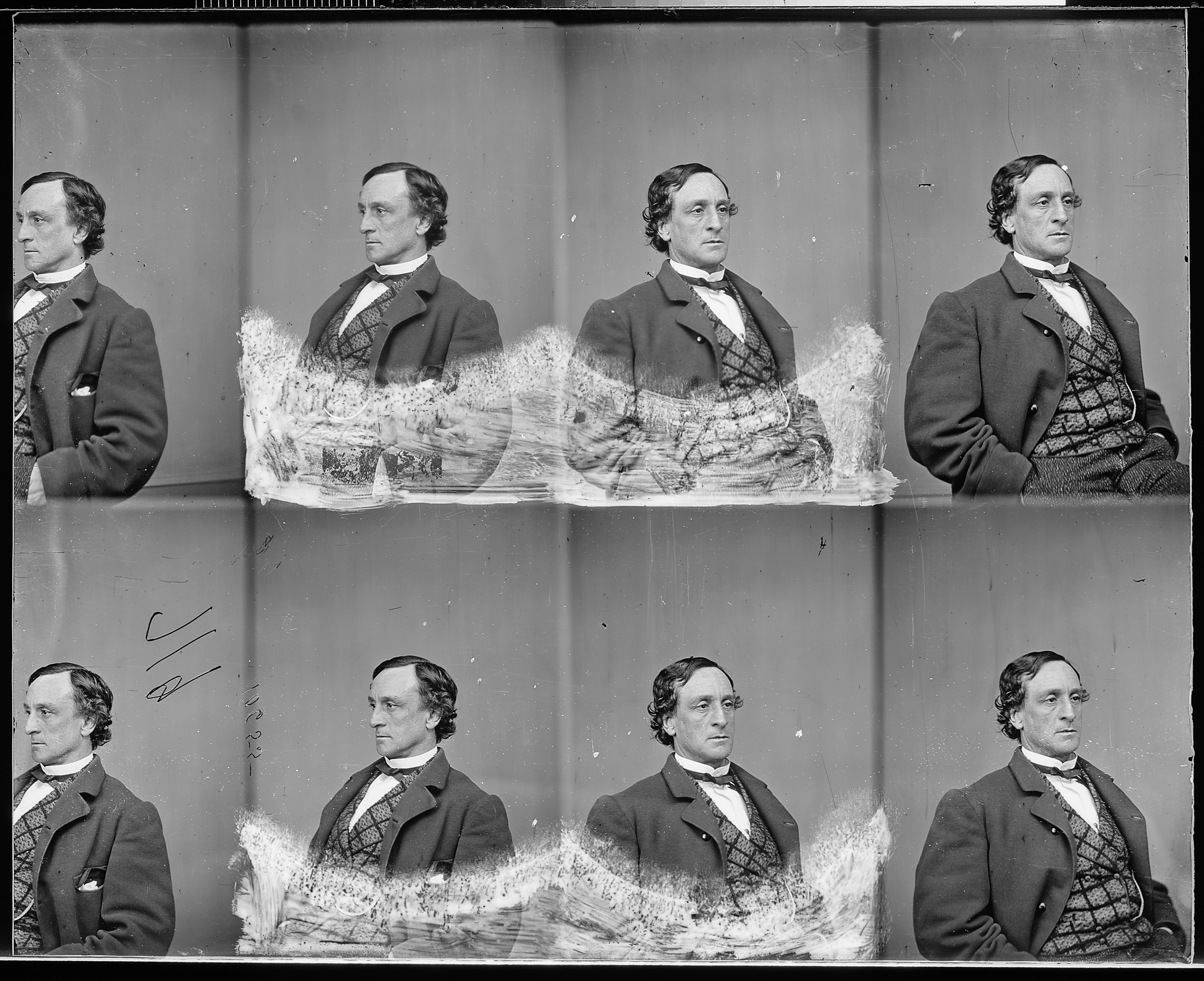
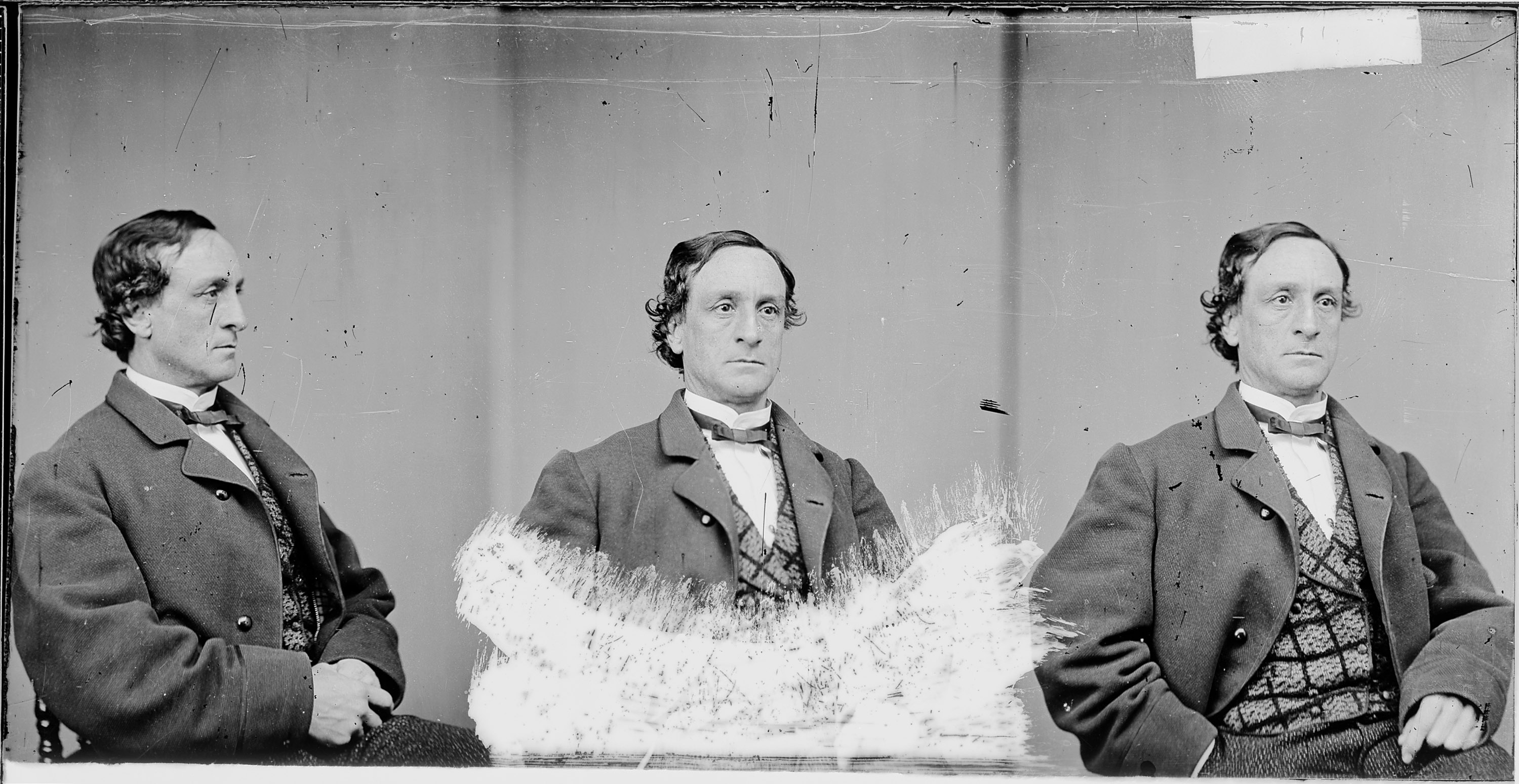
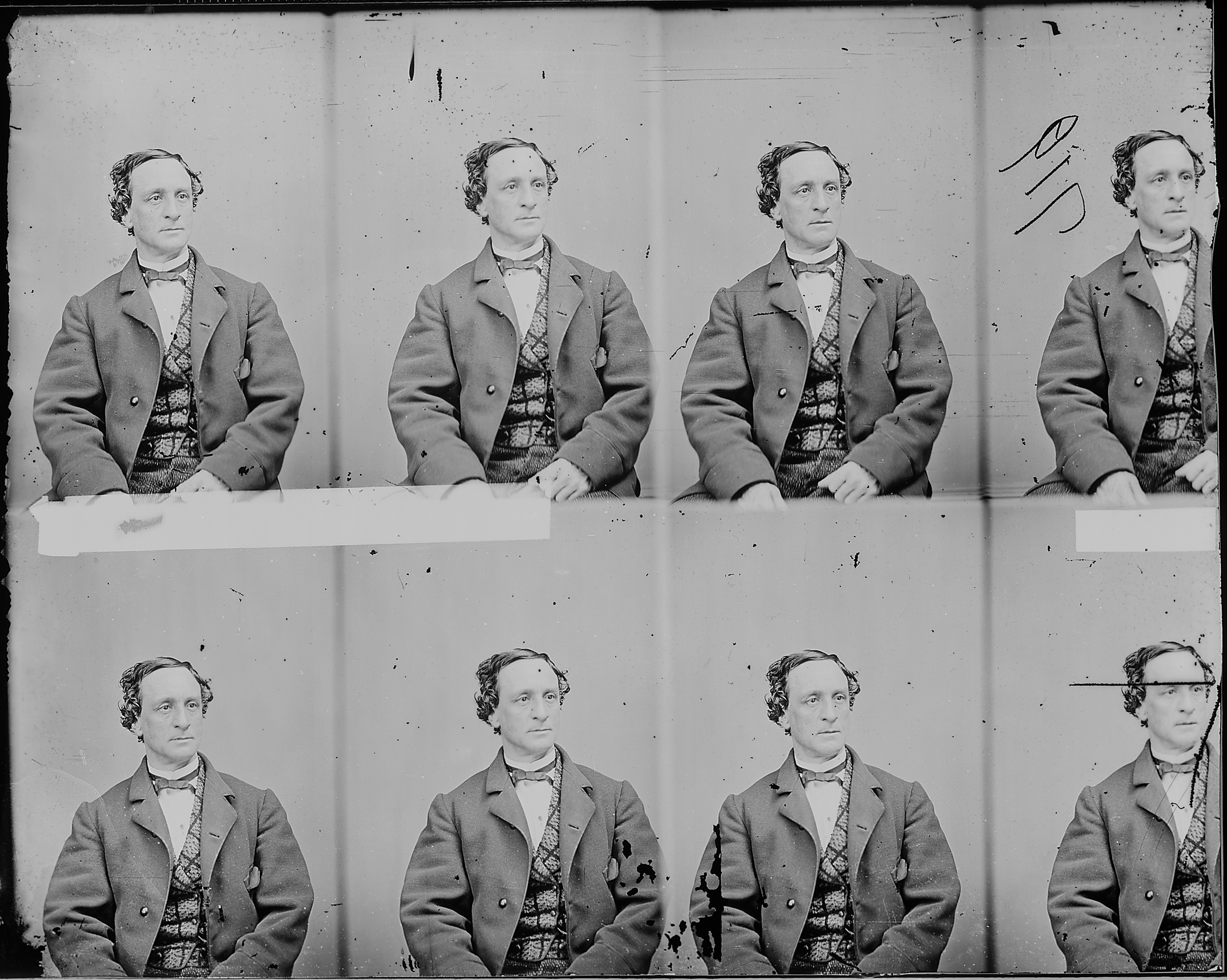
Junius Brutus Booth, Jr. was the eldest child born to Junius Brutus Booth and Mary Ann Holmes.  June, as he was called by the family, attempted to follow in his father’s theatrical footsteps, but seemingly lacked the “spark of genius” that made his father a star.  June was a full 11 years older than his brother Edwin and 16 years older than John Wilkes.  He was soon eclipsed professionally by his younger brothers’ talent, and later, infamy.  Nevertheless, June made a career out of the theater both onstage as an actor and offstage as a theatrical manager.  The following pictures of June were taken by Mathew Brady’s Studio at around the time of the Civil War. Click them to enlarge the images.

Landscape Landscape Landscape

Image Sources: National Archives


Categories: Uncategorized | Tags: | 1 Comment

Blog at WordPress.com.