New Gallery – Dr. Mudd

Our newest Picture Gallery on BoothieBarn.com is of the conspirator, Dr. Samuel Alexander Mudd.  When John Wilkes Booth arrived at this 31 year-old physician’s home in Charles County, MD during the morning hours of April 15th, 1865, it was his fourth face-to-face meeting with the good doctor that we know of.  On a previous meeting between Mudd and Booth in Washington, Dr. Mudd introduced the young actor to another man who would feature prominently in the conspiracy to abduct Lincoln, John H. Surratt, Jr.  After the assassination, Booth sought Dr. Mudd specifically to help set his broken leg.  Mudd did so, and Booth and Herold spent the daylight hours of April 15th on the Mudd property.  Dr. Mudd claimed ignorance of the wounded man’s identity and stated to investigators that he did not hear about the assassination of Lincoln until he made a trip into Bryantown that day.  According to Mudd, upon his return from Bryantown the two men were already departing from his house.

Though there has been considerable effort put forth, especially by his descendants, to portray Dr. Mudd as an innocent country doctor fulfilling his hippocratic oath, the truth is far more complicated and not as innocent.  Dr. Mudd’s involvement in Booth’s conspiracy is probably best stated by his own lawyer, Frederick Stone: “His prevarications were painful.  He had given his whole case away by not trusting even his counsel or neighbors or kinfolks.  It was a terrible thing to extricate him from the toils he had woven about himself.  He had denied knowing Booth when he knew him well.  He was undoubtedly accessory to the abduction plot, though he may have supposed it would never come to anything.  He denied knowing Booth when he came to his house when that was preposterous.  He had even been intimate with Booth.”

The Dr. Samuel Mudd photo gallery contains images relating to Dr. Mudd himself.  Additional galleries will come later to focus on specific places in Mudd’s life like the Mudd house and Fort Jefferson.  I hope you enjoy the new picture gallery about Dr. Mudd, and feel free to send any other pictures you might feel would be relevant to this gallery to boothiebarn (at) gmail (dot) com.

Special thanks to Robert Summers for sharing two pictures of Dr. and Mrs. Mudd for the gallery!

Categories: Uncategorized | Tags: | 2 Comments

OTD: Dr. Mudd receives a Pardon

On this date, February 8th, in 1869, President Andrew Johnson presented Mrs. Mudd with a pardon for her imprisoned husband.

Dr. Mudd 4

Mrs. Mudd, her friends, and neighbors had worked diligently trying to get Dr. Mudd released from Ft. Jefferson for years. According to Mrs. Mudd, during her several meetings with Johnson, “He conveyed to me always the idea that he wanted to release my husband, but said more than once ‘the pressure on me is too great.'” Now, with less than a month left in his presidency, Johnson called Mrs. Mudd to the White House and gave her a pardon for Dr. Mudd. A month later, on March 8th, Dr. Mudd was released from custody at Fort Jefferson.

Here is President Johnson’s pardon of Dr. Mudd in full, courtesy of Robert Summers’ impeccable Dr. Samuel A. Mudd Research Site:

“Andrew Johnson
President of the United States of America.

To all to Whom these Presents shall come. Greeting:

Whereas, on the twenty-ninth day of June in the year 1865, Dr. Samuel A. Mudd was by the judgment of a Military Commission, convened and holden at the City of Washington, in part convicted, and in part acquitted, of the specification wherein he was inculpated in the charge for the trial of which said Military Commission was so convened and held, and which specification in its principal allegation against him, was and is in the words and figures following, to wit:

And in further prosecution of said conspiracy, the said Samuel A. Mudd did, at Washington City and within the Military Department and military lines aforesaid, on or before the sixth day of March, A. D. 1865 and on divers other days and times between that day and the twentieth day of April A. D. 1865, advise, encourage, receive, entertain, harbor and conceal, aid and assist, the said John Wilkes Booth, David E. Herold, Lewis Payne, John H. Surratt, Michael O’Laughlen, George A. Atzerodt, Mary E. Surratt and Samuel Arnold and their confederates, with knowledge of the murderous and traitorous conspiracy aforesaid, and with intent to aid, abet, and assist them in the execution thereof, and in escaping from justice after the murder of the said Abraham Lincoln, in pursuance of said conspiracy in manner aforesaid:

And whereas, upon a consideration and examination of the record of said trial and conviction and of the evidence given at said trial, I am satisfied that the guilt found by the said judgment against the Samuel A. Mudd was of receiving, entertaining, harboring, and concealing John Wilkes Booth and David E. Herold, with the intent to aid, abet and assist them in escaping from justice after the assassination of the late President of the United States, and not of any other or greater participation or complicity in said abominable crime;

And whereas, it is represented to me by respectable and intelligent members of the medical profession, that the circumstances of the surgical aid to the escaping assassin and the imputed concealment of his flight are deserving of a lenient construction as within the obligations of professional duty, and thus inadequate evidence of a guilty sympathy with the crime or the criminal;

And whereas, in other respects the evidence, imputing such guilty sympathy or purpose of aid in defeat of justice, leaves room for uncertainty as to the true measure and nature of the complicity of the said Samuel A. Mudd in the attempted escape of said assassins;

And whereas, the sentence imposed by said Military Commission upon the said Samuel A. Mudd was that he be imprisoned at hard labor for life, and the confinement under such sentence was directed to be had in the military prison at Dry Tortugas, Florida, and the said prisoner has been hitherto, and now is, suffering the infliction of such sentence;

And whereas, upon occasion of the prevalence of the Yellow Fever at that military station, and the death by that pestilence of the medical officer of the Post, the said Samuel A. Mudd devoted himself to the care and cure of the sick, and interposed his courage and his skill to protect the garrison, otherwise without adequate medical aid, from peril and alarm, and thus, as the officers and men unite in testifying, saved many valuable lives and earned the admiration and the gratitude of all who observed or experienced his generous and faithful service to humanity;

And whereas, the surviving families and friends of the Surgeon and other officers who were the victims of the pestilence earnestly present their dying testimony to the conspicuous merit of Dr. Mudd’s conduct, and their own sense of obligation to him and Lieut. Zabriskie and two hundred and ninety nine noncommissioned officers and privates stationed at the Dry Tortugas have united in presenting to my attention the praiseworthy action of the prisoner and in petitioning for his pardon;

And whereas the Medical Society of Hartford County, Maryland, of which he was an associate, have petitioned for his pardon, and thirty nine members of the Senate and House of Representatives of the Congress of the United States have also requested his pardon;

Now, therefore be it known that I, Andrew Johnson, President of the United States of America, in consideration of the premises, divers other good and sufficient reasons me thereunto moving, do hereby grant to the said Dr. Samuel A. Mudd a full and unconditional pardon.

In testimony thereof, I have hereunto signed my name and caused the Seal of the United States to be affixed.

Done at the City of Washington, this Eighth day of February, A. D. (Seal) 1869, and the Independence of the United States the ninety third.

ANDREW JOHNSON, By the President”

Some recent advocates of Dr. Mudd have tried to use this pardon as proof that Dr. Mudd was wholly innocent of the crimes against him. However a pardon is not that same as being exonerated. Exoneration is when one is completely absolved from blame for a wrongdoing. A pardon is when one is forgiven for a wrongdoing. Dr. Mudd was offered and accepted a pardon. To accept a pardon is to accept the guilt of the wronging and to be forgiven for it.

In my eyes, Dr. Mudd earned his pardon due to his assistance during the Yellow Fever epidemic on the Fort.  He risked his life helping the soldiers and prisoners of the fort during their illnesses and subsequently paid for his involvement with John Wilkes Booth.

References:
Dr. Samuel A. Mudd Research Site

Categories: Uncategorized | Tags: | 9 Comments

New Galleries – The Assassination

I’m pleased to announce that there are four new galleries in the Picture Galleries section of the site.  All four of them consist of drawings and engravings regarding John Wilkes Booth’s assassination of Abraham Lincoln at Ford’s Theatre on April 14th, 1865.  Instead of putting all the drawings of the events that took place at Ford’s together, I’ve divided the actions into four sections.

 The first is called “Sneaking Up” and these images (only three at this point) show John Wilkes Booth in the moments before shooting Lincoln.  The next section is called “The Shot” and consists of the many images of John Wilkes Booth pulling the trigger of his single shot derringer.

The third section is entitled “The Leap“. These drawings show John Wilkes Booth’s leap from the president’s box after shooting Lincoln and wounding Major Henry Rathbone The last section demonstrating Booth’s havoc at Ford’s Theatre is called, “On the Stage“. These drawing show Booth brandishing his bloodied knife while making his way across the stage into the wings. From here Booth exited the back of the Theatre and escaped onto Baptist Alley.

I hope you enjoy these new additions to the site.

Categories: Uncategorized | Tags: , , | Leave a comment

Baltimore Cemeteries

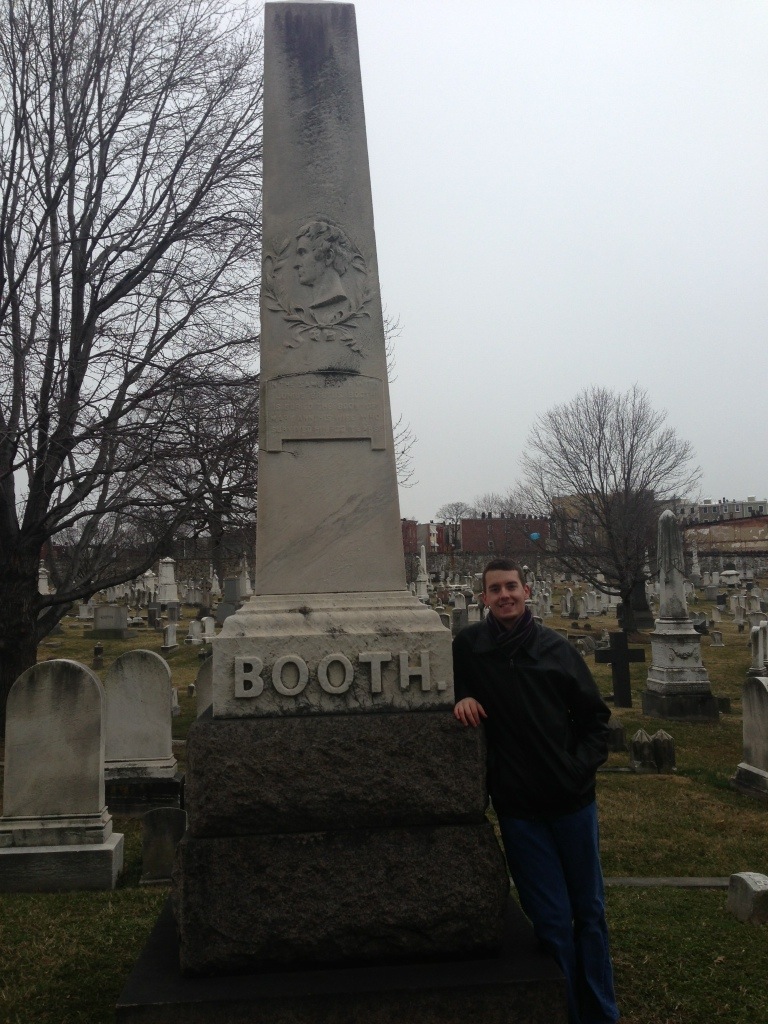
Here’s a quick photo post from my phone before I head back from a day in Baltimore. I stopped by three Baltimorean cemeteries today, Green Mount, St. Paul’s, and Loudon Park. This was my first visit to the last two. I brought along my camera but did not charge it before I left. It died after taking pictures of the Booth plot in Green Mount. What follows are some the pictures I had to take on my phone. I hope you like them:

20130202-190837.jpg
The Booth family plot in Green Mount.

20130202-191022.jpg

20130202-191112.jpg
Samuel Arnold’s grave in Green Mount. His mother is buried in the same plot.

20130202-191752.jpg

20130202-191845.jpg

20130202-191950.jpg
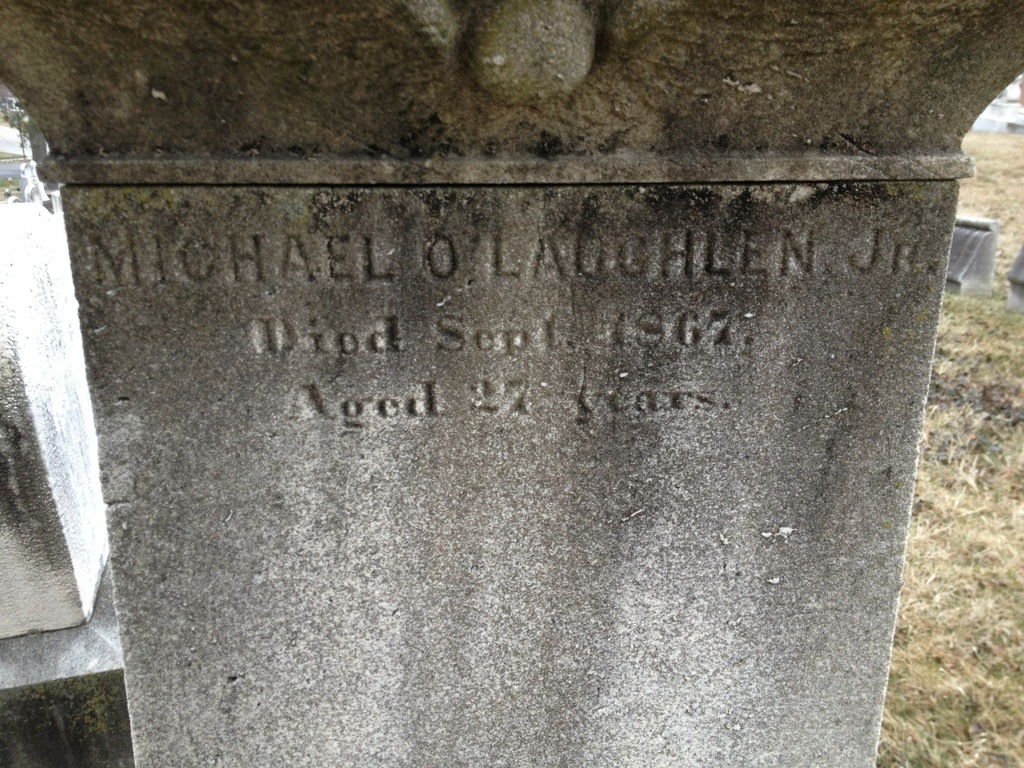
The O’Laughlen family marker in Green Mount. Michael is buried here with his father, infant brother, sister and probably other family members not marked on the stone.

20130202-192518.jpg

20130202-192606.jpg
The unmarked plot of the Taubert family in St. Paul’s cemetery in Druid Hill Park. Here is where family members of George Atzerodt are buried including his mother, sister, brother in law, and his nieces and nephews. It was once thought that George Atzerodt was also buried here, but recent research on this site has determined this to be incorrect.

20130202-193619.jpg

20130202-193819.jpg
Section and the approximate area in which John C. Atzerodt is buried in Loudon Park Cemetery. John was George’s brother and a detective who investigated his brother’s involvement. John is the one who received his brother’s body upon its release in 1869. The section in which John is buried is one of individual plots and sparsely marked. A thorough search of the area was conducted but no marker for John was discovered.

Categories: Uncategorized | Tags: , , | 10 Comments

The Debate Over Gutman #1

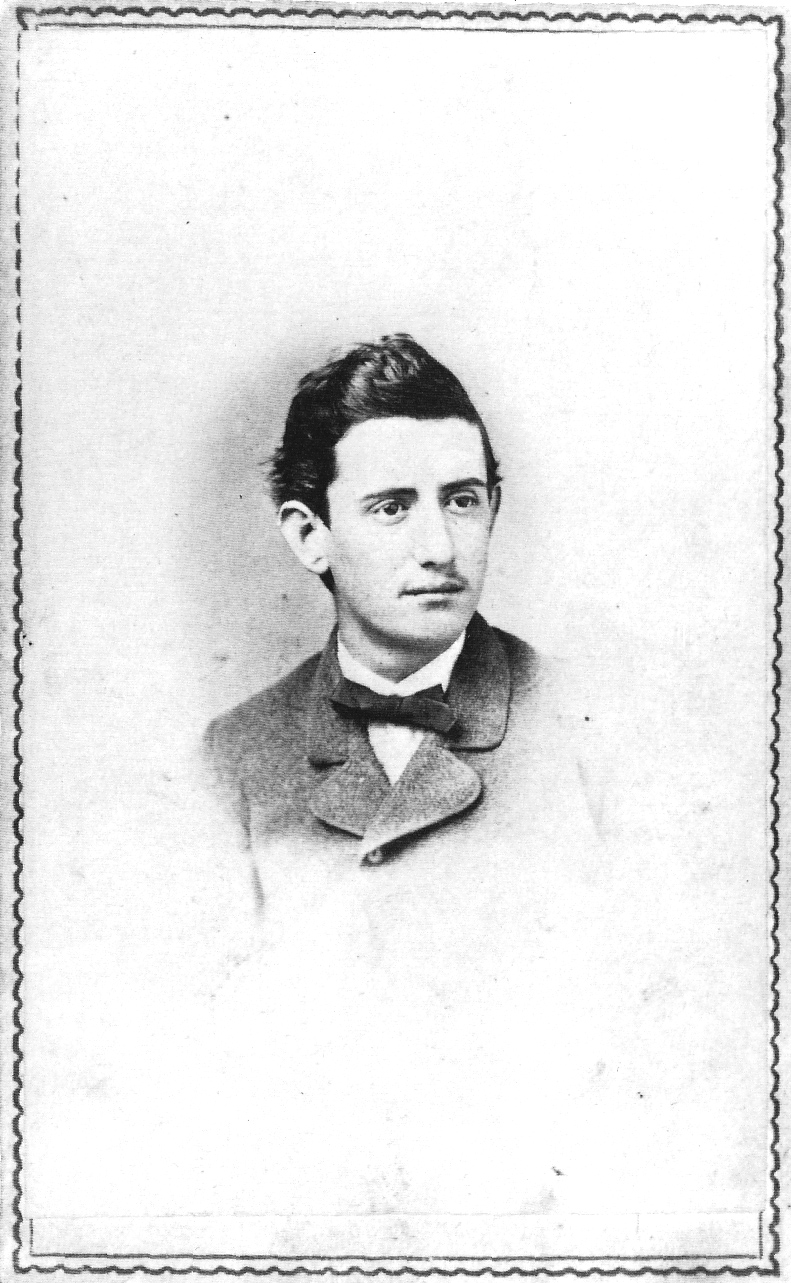
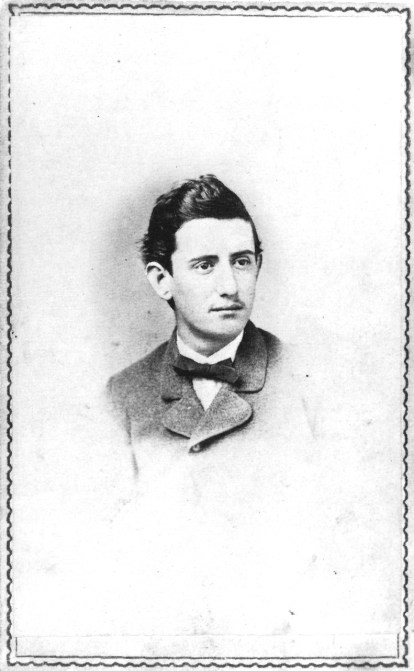
Yesterday morning, friend and frequent commenter on the site, Carolyn Mitchell, posted a new picture to the Spirits of Tudor Hall Facebook page. The image came from the book John Wilkes Booth Himself by Richard and Kellie Gutman. In this 1979 publication limited to just 1,000 books, the Gutmans compiled all the images of John Wilkes Booth that were known at the time. Their first one, labeled Gutman #1, is as follows:
Gutman #1

Gutman #1

This image is captioned in John Wilkes Booth Himself with the following: “The earliest known photograph of John Wilkes Booth is a head and shoulders vignette, depicting him at age 18. One copy exists as a carte de visite done by Mansfield’s City Gallery, St. Louis, Missouri. In all likelihood, this is not the original photographer or photograph. John Wilkes Booth turned 18 on May 10, 1856-and that year is a bit early for a carte de visite in the United States. This may have been copied from another form of photograph (daguerreotype, ambrotype or tintype) or a larger paper print. In any event, copies of this picture are very rare. It has been published only one time, in Album of the Lincoln Murder (Harrisburg, PA.: Stackpole Books, 1965).”

Armed with this information, Carolyn posted the photograph like so many other rare and unique views of the Booth family she has come across.

Very quickly though, people started to express their doubts that this was a picture of Booth.  Some said it could be of one of the other Booth brothers like Edwin or Joseph.  I long ago questioned the identity of the young man in this particular photo, too. At the time of writing this, there were 15 responses to this photo on the Facebook page. After receiving an email from a colleague trying to remember a previous discussion regarding this photo, I decided to post here about it.

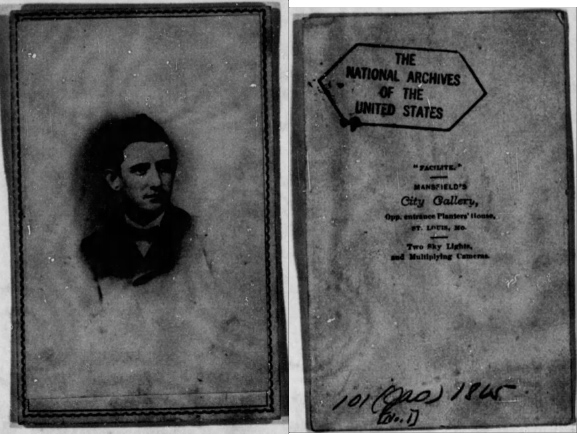
As far as I know, part of the description from the Gutmans is correct in that there is only one copy of this carte-de-visite known to exist. It is in the National Archives in their Lincoln Assassination Suspects file. Here is the microfilmed quality version of this CDV:
Gutman 1 NARA

The CDV itself was found among Booth’s papers and files in the National Hotel after the assassination. It was deemed not relevant to the investigation but still retained in the government’s files. This probably explains the Gutman’s desire to include this picture in their collection of Booth photos. It was found with his things, does not bear any writing precluding it from being Booth, and has some similarities to the young tragedian turned assassin. Stating it is of a young Booth makes it easier to ignore some of the discrepancies in appearance.

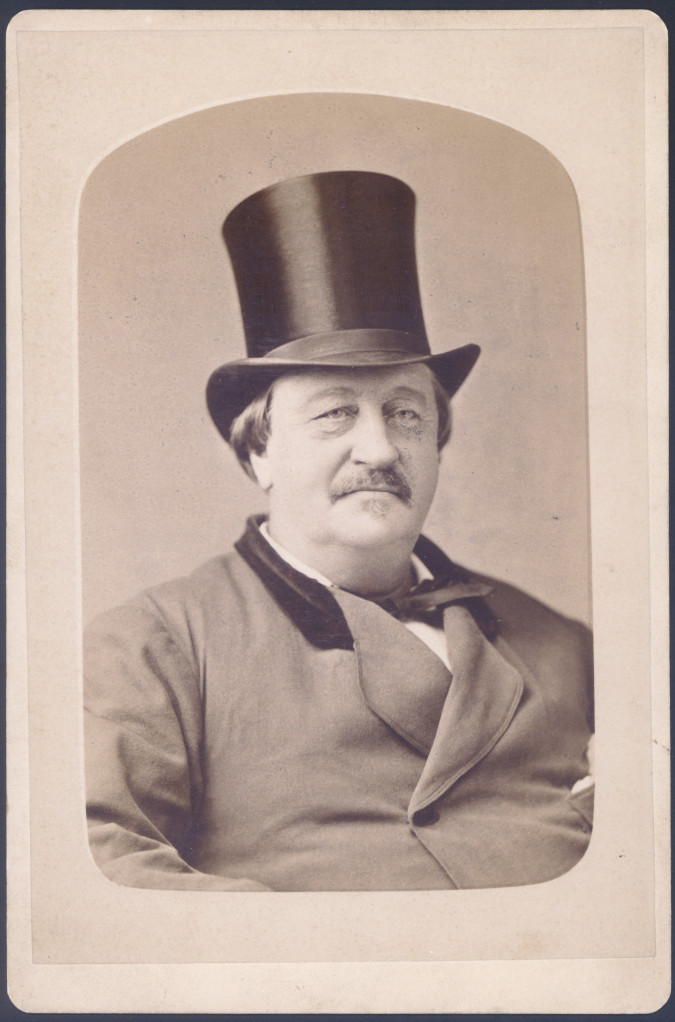
Not everyone, however took the identification by the Gutmans at face value on this one. In the book, The Lincoln Assassination: The Evidence by William Edwards and Edward Steers, Jr., and in Steers’ The Lincoln Assassination Encyclopedia, this photograph is identifed as being Benedict “Ben” DeBar. Ben Debar was a theatre owner and actor. Junius Brutus Booth, Jr., JWB’s brother, married Ben’s sister, Clementine DeBar and they had a daughter together Blanche. June abandoned Clementine and Blanche, running off to California with a prostitue named Harriet Mace. Ben filed for a divorce on behalf of his sister and adopted Blanche as his own. John Wilkes assumedly still cared for his niece, as in his papers at the National, there is a letter from Ben DeBar extolling young Blanche’s early success as an actress. Attaching newspaper clippings and a playbill bearing the name “Blanche DeBar”, Ben brags to JWB, “I have sent June a bill to prove to him I have no wish that the girl should have any other than my name.”

The reason Steers and Edwards claim that this image, Gutman #1, is of Ben DeBar is because this image is microfilmed right alongside of the materials from Ben DeBar. Sandwiched right next to a newspaper clipping of Blanche’s success and a playbill announcing her performance in the comedy “Love Chase”, is this image. While the letter from Ben does not mention a photograph, its placement with the other materials seems to point that is from him.

The problem is, however, that Ben DeBar was quite a bit older than the young lad in the picture. DeBar was born in 1821 and at the time of his writing in March of 1865 would have made him about 44 years old. Here’s a picture of Ben Debar taken around 1870 for comparison:

Ben DeBar

Ben DeBar

So while Steers and Edwards’ theory that Gutman #1 is Ben DeBar makes sense in the context of the image’s placement in the microfilmed files, the difference in ages and appearances makes it as unlikely as the photograph being of Booth.

Thus far, the most logical and probable explanation of who this individual is comes from the authors John Rhodehamel and Louise Taper who edited the book, “Right or Wrong, God Judge Me”: The Writing of John Wilkes Booth. They put forward that the man on this CDV was a young clerk working for General Grant’s office named Richard Marshall Johnson.

From Booth’s papers at the National we find that he did have a letter from Richard M. Johnson. Dated February 18th, 1865, Johnson writes in part, “I may be vain in presuming that our brief Memphis acquaintance has made us friends, but on my part it has…” Johnson recounts their initial meeting during which Johnson was drinking away his sorrows over the death of a friend. Booth befriended the young Union officer and evidently made quite the impression on him. Johnson asks Booth about his oil ventures and gives him the “riot act” for not acting this season. “You have too fine a reputation in this part of the country to let a winter pass away without giving us a call,” Johnson explains. The remaining part of the letter is of a request Johnson has of Booth:

“By the way, send me another of your photographs with your autograph on it. The one you sent me from New Orleans was disposed of rather strangely. A young lady of rare accomplishments and talent asked me for it. I refused the gift. She insisted and I proposed to get her a fine picture of you, but she wanted the one with your autograph. She has seen you frequently and was deteremined to have it. After much persuasion, I concluded to let her have it intending to write you for another. I gave it to her with the promise that when you visited this city I would take you to call on her. Today she sleeps in Bellefontaine Cemetery having died shortly after I gave her the picture. When I visit her family and see her album I see the name of J. Wilkes Booth written at the bottom of your photograph and think of the unfulfilled promise that she should know you. Your picture will always remain in the album as the touch she gave it in placing it there is now considered sacred. She was a woman of rare and beautiful excellence.”

While, as you can see, there is much talk in this letter of Booth’s photograph, Johnson never mentions sending one of himself to Booth. The evidence for that lies in a letter from Booth to Johnson that is housed at the Huntington Library. In the portion of letter above, Johnson mentions the photograph Booth sent him, “from New Orleans”. The letter from Booth to Edward Johnson is dated almost a year before the above letter on March 28th, of 1864 and states the following:

“Dear Johnson

Yours of the 12th; recd:. I am glad to find that you have not forgotten me, and hope I may ever live in your generous remembrance. I enclose in this a picture of myself, better (I think) than the one I gave you.

This of you I will ever keep among my very few and chosen friends. Excuse the shortness of this, am in haste. I am your’s

J. Wilkes Booth”

It is in this letter that Booth attached a photograph of himself – the same one that Richard Johnson later gave to the lady mentioned before.

The most interesting thing about this letter from the Huntington Library however, is the second paragraph which starts, “This of you”. Booth is speaking of his receipt of a picture from Richard Johnson. This, according to Rhodehamel and Taper, is the photograph found in Booth’s papers at the National Hotel.

According to his newspaper obituary, upon his in 1922 Richard Marshall Johnson was, “about 80” years old. This would put his year of birth about 1842, making him around 22 years old when he was corresponding with Booth in 1864 and 1865. This age range better matches the age of the young man in the photograph more than a 44 year old Ben DeBar does.

The paper evidence is strong for this picture to be of Richard M. Johnson. We know the following facts: Booth corresponded with Johnson and sent him photographs of himself. In turn, Booth received a photograph from Johnson in 1864. Booth had a more recent letter from Johnson in his papers when he assassinated Lincoln in 1865. Richard Johnson’s age during the time of his interactions with Booth match the apparent age of the man in the photograph. Based on this documentary evidence alone, I’m confident this picture is of Richard M. Johnson. But I’m not through yet.

Richard Johnson had an interesting life as this short bio will demonstrate:

“RICHARD M. JOHNSON was born in Illinois in the city of Belleville. He received his early education in McKendree College. Coming to St. Louis in 1858, he read law in the office of his brother, Governor [Charles P.] Johnson. In 1861 he was appointed a clerk in the Postoffice Department, and in 1862 was tendered a position as chief corresponding clerk in General Grant’s headquarters, under Quartermaster Colonel Chas. A. Reynolds. In 1865 he was appointed Superintendent of the State Tobacco Warehouse by Governor Fletcher. He was married to Miss Annie Blow, daughter of Taylor Blow of St. Louis, in 1866. Appointed by General Grant in 1867 as Post Trader at Fort Dodge, Kan., and in 1869 he accepted an appointment tendered him by General Grant as Consul to Han Kow, China, which office he held with credit for eight years. Two of Colonel Johnson’s children were born in China. He returned to the United States and resumed the practice of law in 1877. He was elected Assistant Prosecuting Attorney in 1894, and was again elected in 1898, and while he has always been active in politics as a Republican, he numbers among his friends, regardless of political affiliations, as many Democrats as Republicans.”

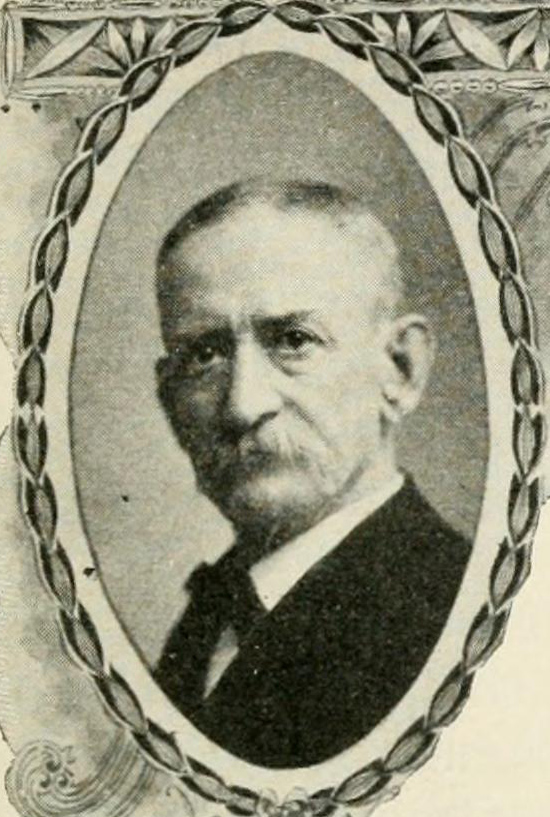
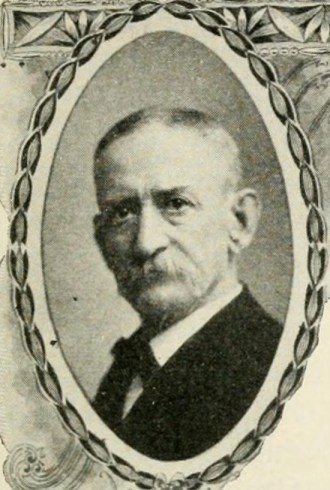
In 1904, Johnson provided a chapter for the book, “Reminiscences by Personal Friends of Gen. U. S. Grant” recounting his friendship and experiences with General Grant. His stories of Grant are very interesting ones and can be read in full here. In addition to the biography from above, the book also features a picture of Richard M. Johnson:
Richard M. Johnson

Richard M. Johnson

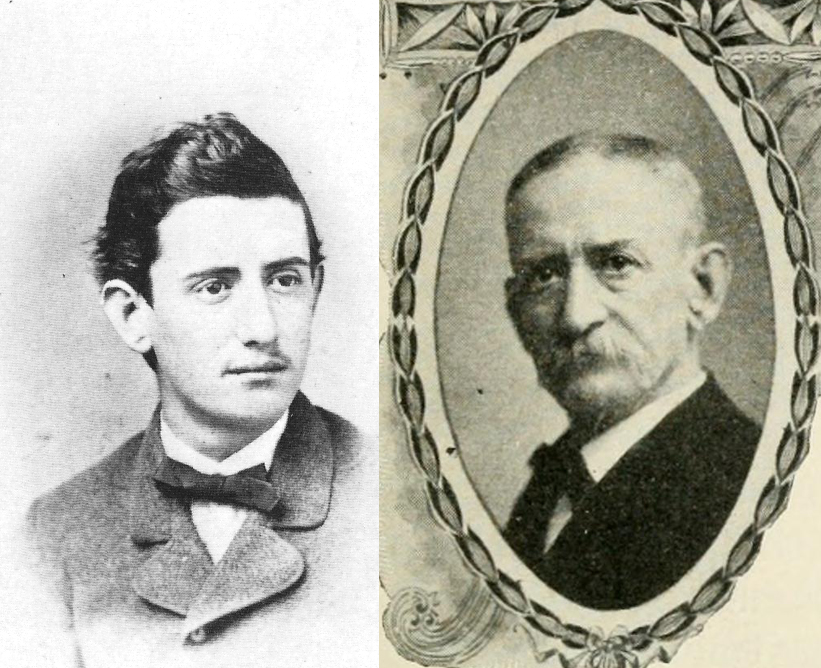
We all know photographs are subjective to the viewer. The Gutmans wanted this picture of a young man to be Booth and so they saw Booth in it. It could just be that I want this photo to be of Johnson because there is so much paper evidence supporting it, but I say these images show the same man, 40 years apart.
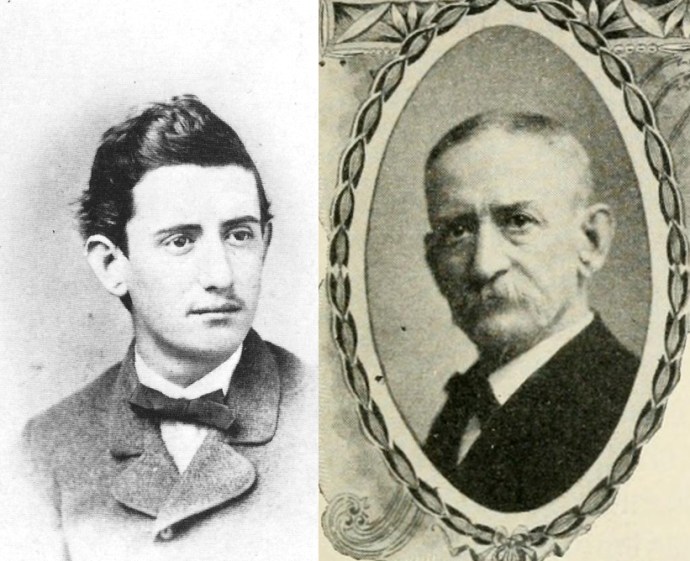
Gutman 1 and Johnson

As far as Gutman #1 is concerned, I support Rhodehamel and Taper and say it is Richard Marshall Johnson.

References:
The Evidence by Edwards and Steers
John Wilkes Booth Himself by Richard and Kellie Gutman
“Right or Wrong, God Judge Me” by Rhodehamel and Taper
Reminiscences by Personal Friends of Gen. U. S. Grant
Fold3.com
Note: There may be more images of Richard Johnson for compariosn contained in the Missouri History Museum. They have a collection of diaries and scrapbooks attributed to R. M. Johnson.
Note: R. M. Johnson is buried in the same cemetery as the lady who wanted Booth’s photograph, Bellafontaine Cemetery in St. Louis.

Thanks for the great topic starter, Carolyn!

Categories: Uncategorized | Tags: , , | 27 Comments

“John’s body”

“The box was taken into Harvey and Marr’s workshop by assistants, among whom was a volunteer, James Croggon, reporter for the Star. Harvey had said to Croggon: ‘Don’t ask any questions, but be at our place at six o’clock this evening as one of my assistants, and you will get a good item.’ Croggon was there, helped to lay the box on trestles, and watched as the body was identified for the third time. He saw Weaver lift the head and examine it- it still had the ‘fine suit of hair,’ distinctive as in life. He saw a man enter from the office and intently study the teeth, heard him  announce with emphasis: ‘This is Wilkes Booth, for this is some of my work.’ It was a dentist from Baltimore, whose opinion had been sought in the case. The reporter also saw a high boot on one  leg and on one a rough shoe which he mistakenly thought had been improvised by cutting away the other boot’s long top. He understood that a brother of John’s was in Harvey and Marr’s front room. It was not Edwin, as he supposed, but ‘Doc’ Booth, awaiting the reports of Weaver and the dentist.

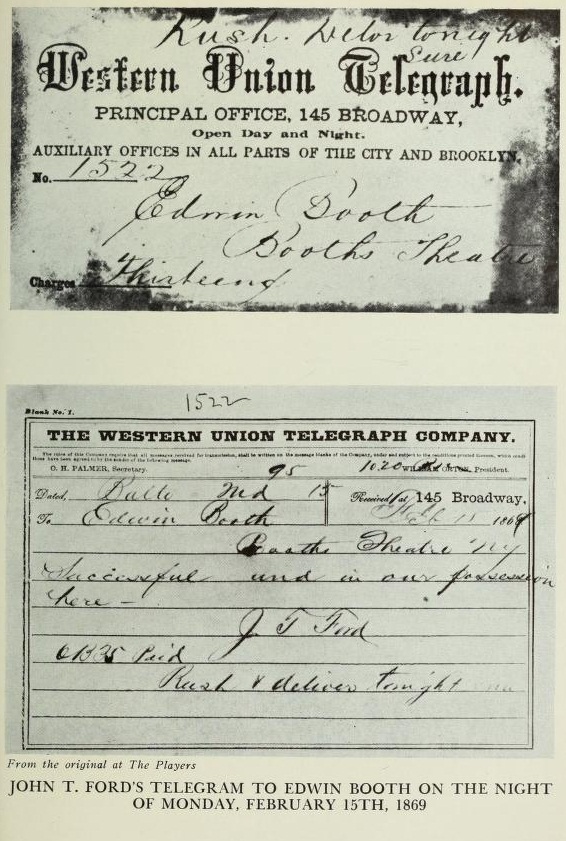
Shifted to a plain deal coffin, the body was conveyed to the train leaving Washington at seven-thirty and reaching Baltimore at nine. From the train it was removed to Weaver’s on Fayette Street, and that night John T. Ford, who had been keeping general oversight of the matter, sent a telegram marked ‘Deliver tonight sure.’ It read (as delivered):

Balto Md Feb 15 1869

Edwin Booth
Booths Theatre N Y

Successful and in our possession here —

J T Ford

Edwin saved this message in his files, and on the reverse of the blank he penciled: ‘John’s body.'”

John Ford's Telegram to Edwin

References:
The Great American Myth by George Bryan

Categories: Uncategorized | Tags: , | 3 Comments

New Gallery – Baptist Alley

After shooting President Lincoln in his box at Ford’s Theatre, John Wilkes Booth leapt onto the stage, brandished his knife red with Major Rathbone’s blood, and made his way swiftly backstage.  From there he exited the building from a small stage door.  Outside he found Peanut John, a young boy who sold peanuts at the theatre and did odd jobs like watch the stage door during performances, holding the reins of his horse.  Upon his arrival at the back theatre entrance that night, Booth had called for his friend Edman Spangler to hold the reins of his restless horse.  Spangler, busy with the job of shifting the scenery for the play outsourced the job to Peanuts.  Upon his explosion from the theatre, Booth shouted for his horse, struck Peanuts as he mounted, and galloped away down the alley.  He quickly turned left and exited out onto F street.

This alley was called Baptist Alley due to the theatre having previously been the home of the First Baptist Church of D.C.  The originally rented their building to John T. Ford before selling it to him outright.  The building caught fire and burned on December 30th, 1862 and Ford rebuilt.  The alley was a common place to John Wilkes Booth, who had Edman Spangler construct him a makeshift stables in the alley.  When his body was released to his family n the waning hours of Andrew Johnson’s presidency, Booth made a return trip to his former stables in Baptist Alley as his remains were placed there to hide them from the public.

Click on the Picture Galleries tab to see the new addition of pictures relating to Baptist Alley.

Categories: Uncategorized | Tags: , , | 1 Comment

Going the Extra Mile…and Then Some

One practically required aspect of studying the Lincoln assassination is to at one point retrace John Wilkes Booth’s route as he escaped south. Nowadays, this is generally done either by yourself in a car, or with a group in a bus and narrator.  The fact is tracing the escape route is really a necessity for all of those interested in the Lincoln assassination. The miraculous invention of the automobile allows us to complete an only slightly abridged version of Booth’s twelve day escape in a mere 12 hours.  However, retracing Booth’s footsteps is not a modern occurrence.  A mere 10 days after his death at the Garrett’s barn, the first official retracing of the route occurred when Lieut. Luther Baker traveled down Booth’s route looking for suspects and items. From that day on, countless people have retraced the escape route by a variety of means. So much of our knowledge, in fact, is based on the early accounts of individuals who retraced Booth’s escape route by foot. One such individual, from whom we get a lot of our knowledge about the escape route, was Osborn Oldroyd.  A noted Lincoln collector who lived in both Lincoln’s home in Springfield, IL and the Petersen House where Lincoln died, Oldroyd retraced Booth’s steps on foot through Maryland and Virginia. Oldroyd brought along a camera, photographing his many stops and, in 1901, published his book containing his travels and a history of the assassination called, The Assassination of Abraham Lincoln: Flight, Pursuit, Capture, and Punishment of the Conspirators.  Oldroyd’s book and walk is very useful and is still cited and read today.

Though such a pedestrian journey commencing at Ford’s Theatre and ending at the Garrett’s farm near Port Royal, VA, seems momentous, this trip was just a drop in the bucket for Mr. Oldroyd. As it turns out, Mr. Oldroyd was an enthusiastic walker as this article from 1913 shows:

Oldroyd takes a walk Evening Star Nov 5 1913

Oldroyd in Newark

For those of you who are interested, I’ve figured out a way to “one up” Osborn Oldroyd.  All you have to do is walk the distance between two of Osborn Oldroyd’s former homes, the Lincoln home in Springfield to the Petersen house in D.C.  According to Google, the walking distance is 756 miles and would only take 249 hours to complete.  Dig out those Nikes folks!

Categories: Uncategorized | Tags: , , | 1 Comment

Blog at WordPress.com.