Steven G. Miller

The Other Reward Offers for John Wilkes Booth’s Capture By Steven G. Miller

 “It is hard to get them all in court”

The Other Reward Offers for John Wilkes Booth’s Capture

By Steven G. Miller

One of the most famous broadsides in American History was the one issued by the War Department on April 20, 1865, announcing a $100,000 reward for the capture of John Wilkes Booth, David Herold, and John H. Surratt. This poster is one of the best-known features of the assassination of President Lincoln, and is easily identifiable by people who know little of the details of Booth’s deed and its aftermath.

One of the least-known aspects of the Lincoln Assassination is the existence, specifics, and disposition of other monetary offers for Booth’s capture. I’ve discovered that there were at least nine of them, and they were made by cities and states from “coast to coast.” All of these offers were repudiated, ignored, or combined with other schemes. The only one that was settled was the one made by the Secretary of War.

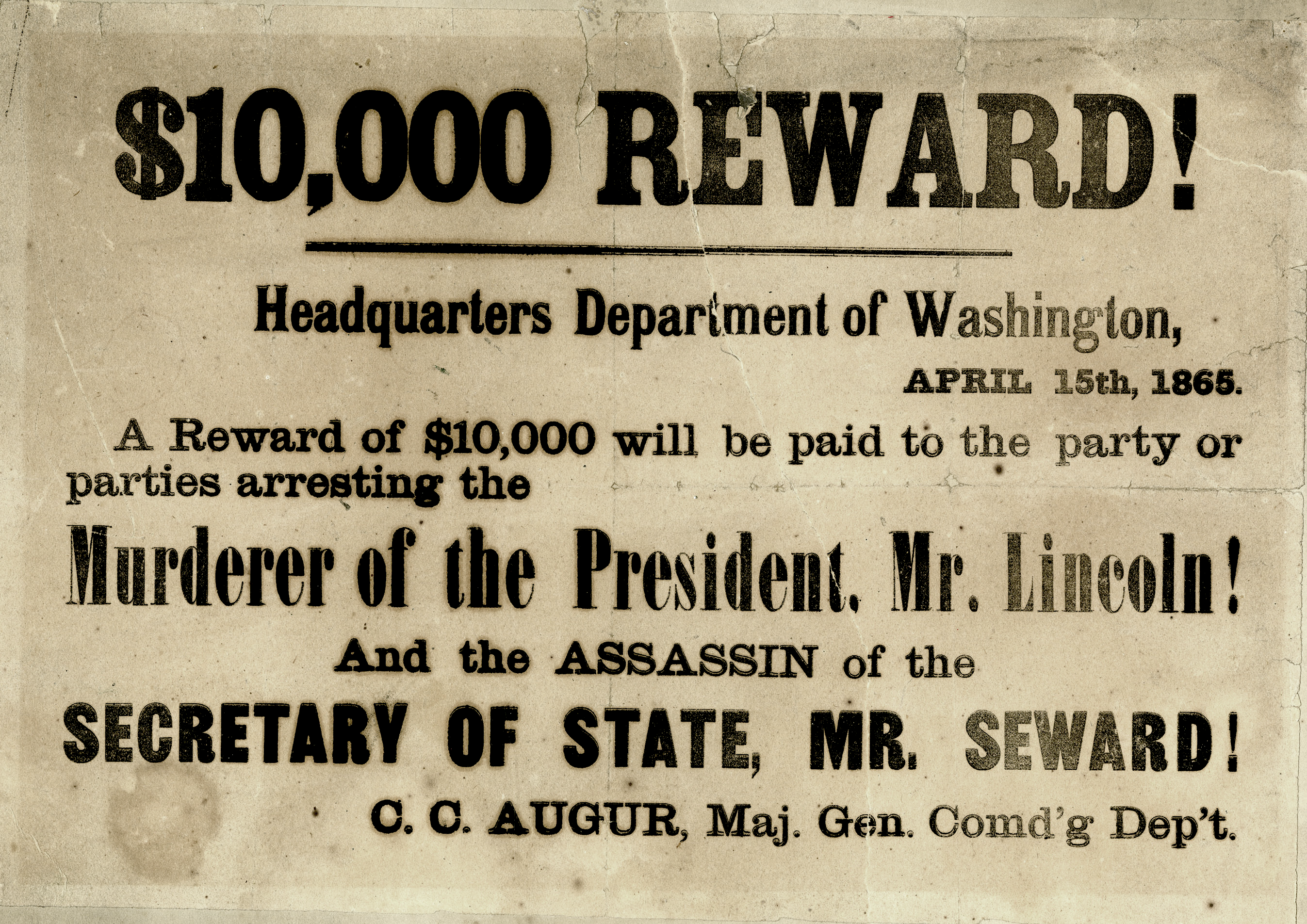
  • The first reward offer was made on the 15th of April by General Christopher Columbus Augur, the commander of the Twenty-Second Army Corps, the man in charge of the Defenses of Washington. He proclaimed that $10,000 would be given to the person or persons who aided in the arrest of the assassins.

Courtesy The Historical Society of Washington, D.C.

  • Two days later, the Mayor and Common Council of the City of Washington passed “Chapter 274 of the Special Laws of the Council of the City of Washington.” This Act stated: “Be it enacted by the Board of Aldermen and Board of Common Council of the City of Washington, that the Mayor be, and he is hereby authorized and requested to offer a reward of twenty thousand dollars for the arrest and conviction of the person or persons who were concerned in the assassination of President Lincoln, and attempted murder of Secretary Seward and family on the evening of the 14th inst. Provided that if more than one should be arrested and convicted, then said amount shall be apportioned accordingly. Approved April 17, 1865.”
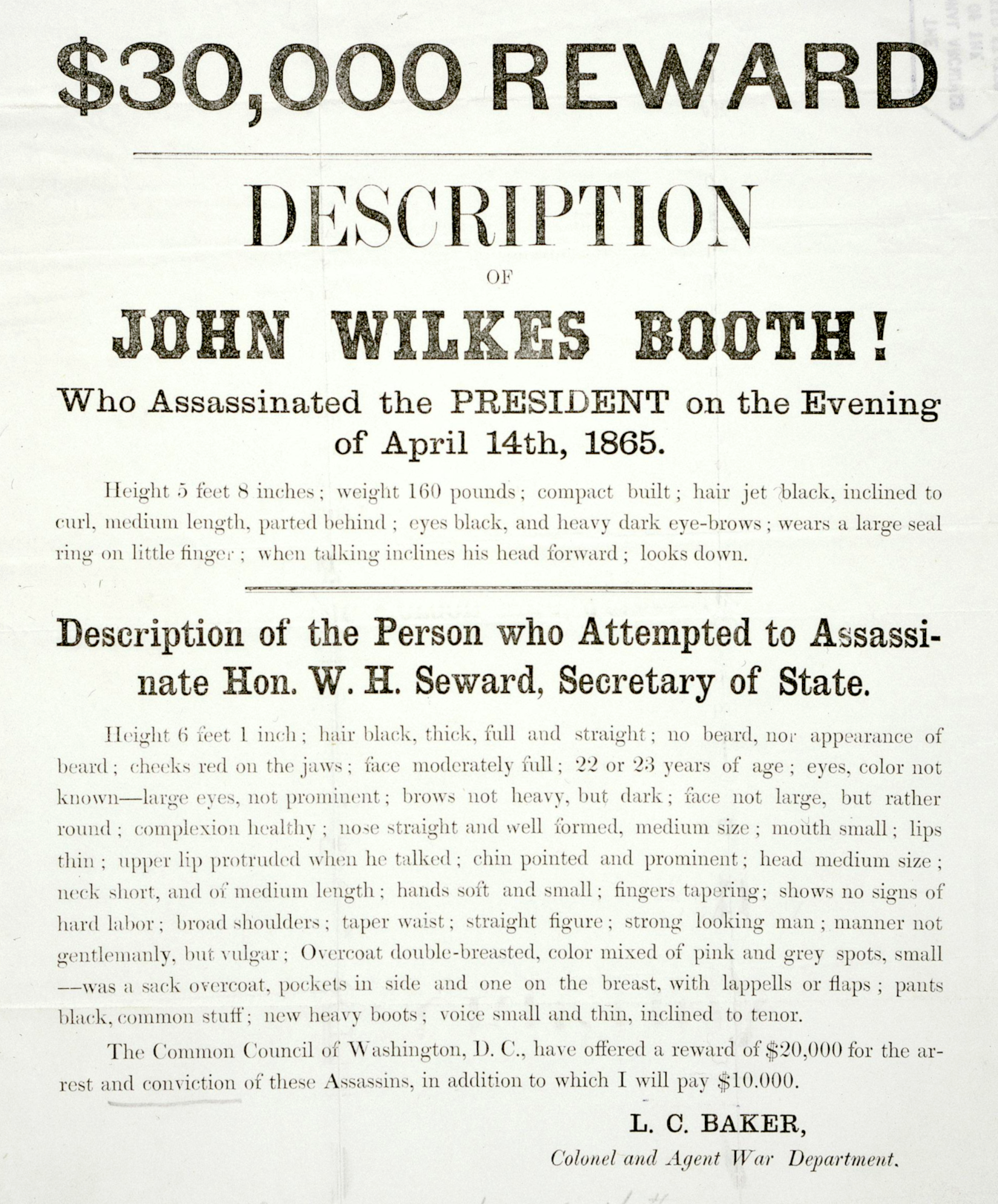
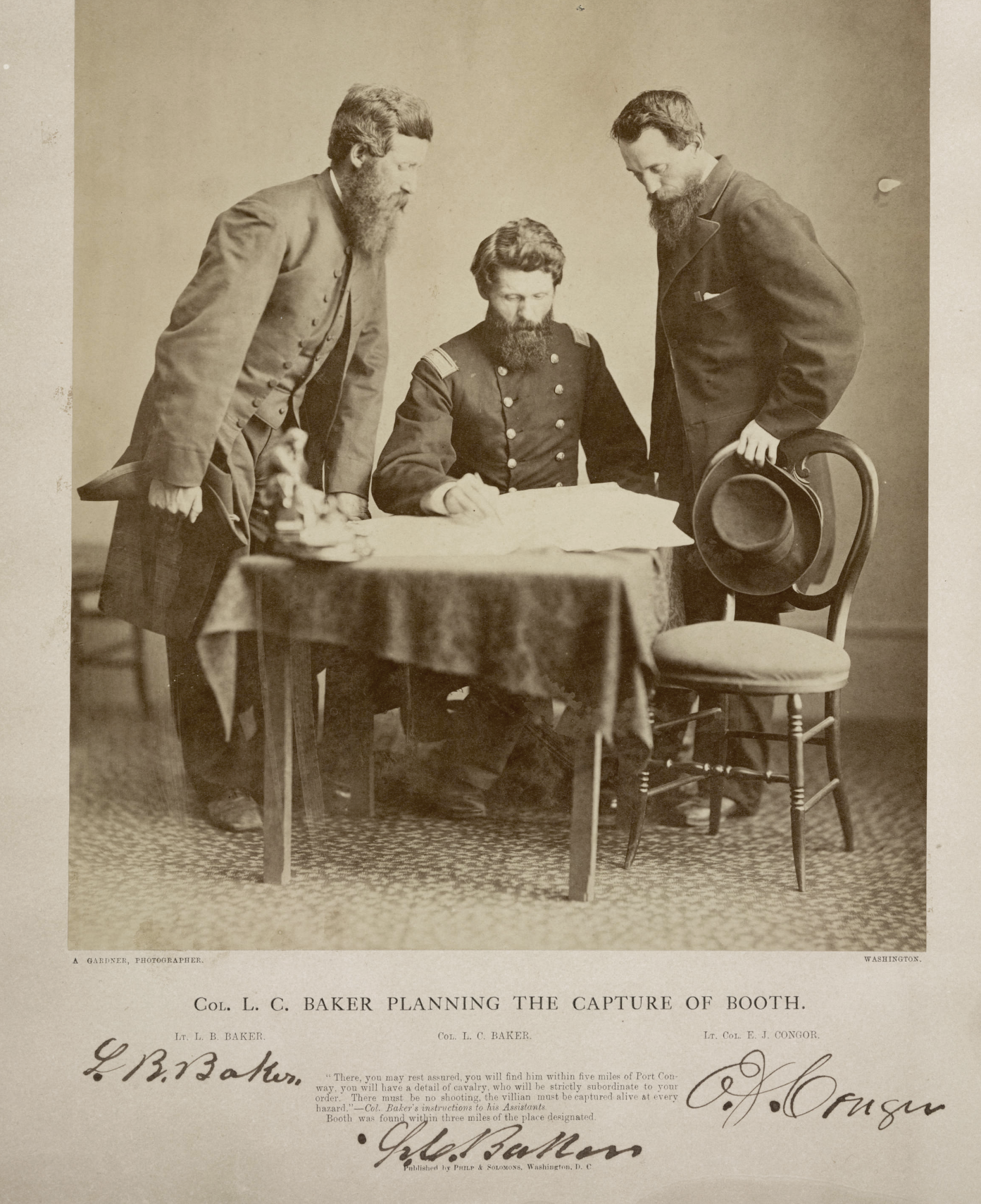
  • Later that day, Colonel L.C. Baker, the infamous War Department detective-chief, published a handbill proclaiming a $30,000 Reward. It described John Wilkes Booth and offered a description of the “Person Who Attempted to Assassinate Hon. W.H. Seward, Secretary of State.” As a matter of explanation, Baker stated, “The Common Council of Washington, D.C. have offered a reward of $20,000 for the arrest and conviction of these Assassins, in addition to which I will pay $10,000.”

  • On some date unknown—possibly April 17—a $10,000 reward was supposedly offered by the Common Council of Philadelphia.
  • The City Council of Baltimore also offered $10,000 for the arrest of the assassin, a former hometown boy. An untitled squib, in the Davenport (IA) Daily Gazette, April 19, 1865, commented on the offer saying, “The feeling here (Baltimore) against Booth is greatly intensified by the fact that he is a Baltimorean, and it is desired by the people that one who has so dishonored the family should meet with speedy justice.”
  • On April 20th, Governor A.G. Curtin of Pennsylvania announced $10,000 for the capture of the assassin. However, this offer had a catch: the assassin had to be arrested on Pennsylvania soil.

  • On April 20, Edwin Stanton published his famous $100,000 reward, offering sums of $50,000 for Booth and $25,000 each for David Herold and John Surratt. A version of Stanton’s reward poster even had photos of the three major conspirators attached. Since this was in the days before the technique of printing halftone photos was developed, photographic prints of the three suspects were actually glued onto the printed piece. This is reportedly the first time actual photographs were added to a wanted poster. Copies of this broadside were distributed throughout Maryland and carried by search parties. The poster was also “re-composed” (re-typeset, in other words) and reprinted in New York City.

  • On some unspecified date, the State of California offered $100,000 in gold to the captors. The claim agents for Private Emory Parady, one of the captors of Booth and Herold, contacted the California officials, but nothing came of it, and nothing specific is known about this offer.
  • New York State supposedly offered a reward, too. Details are sketchy, but John Millington, another of the Garrett’s Farm patrol members, mentioned this in a 1913 letter to the National Tribune.

Most of these proposals died a quiet death and were forgotten in the aftermath of the arrest, trial, and execution of the conspirators. But attorneys pursued the offers made by the City of Baltimore, and the Washington City.

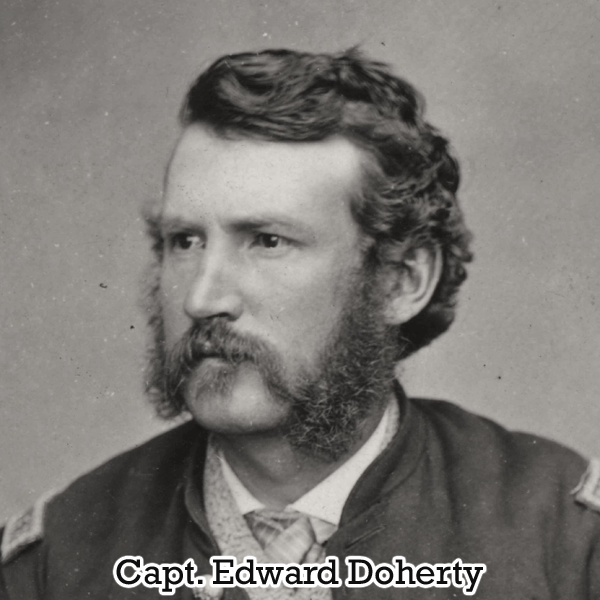
The Baltimore effort ended quickly. An article headlined “Capt. Doherty’s Story” in the August 22, 1879, New York Times explained what happened: “In the case of the claim against the City of Baltimore, which offered $30,000 {sic, should be $10,000} for the arrest of the assassin, Capt. Doherty did not sue to recover, the Mayor and Aldermen telling him point blank that they would not pay it, as the reward was offered under a previous administration. The claim has now lapsed by limitation.”

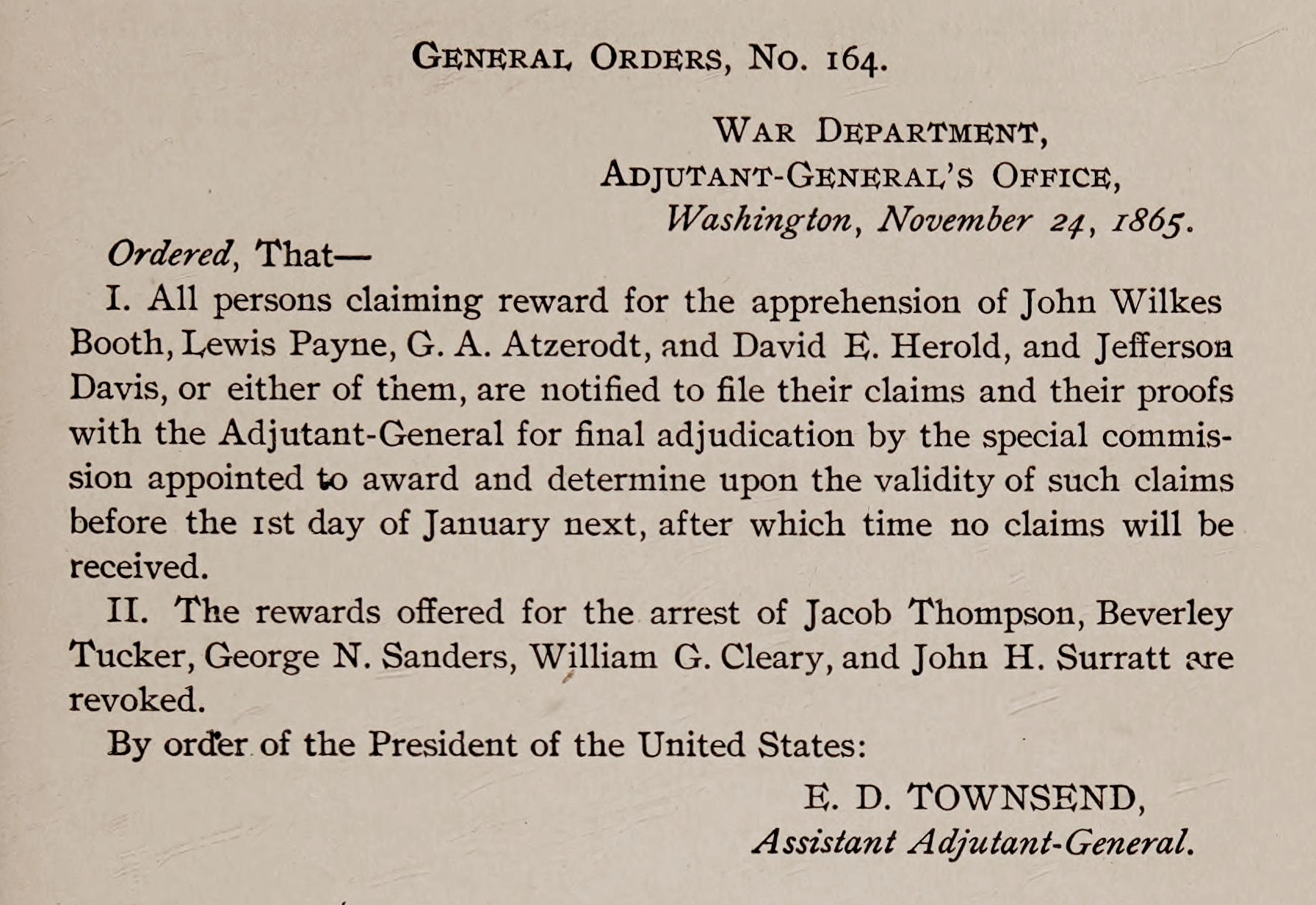
On November 24, 1865, the War Department issued “General Order No. 64”, which announced that a special commission would be set up to determine the validity of claims for the Reward and that all applications for a share had to be submitted by the end of the year.

It also announced that any other offered rewards were withdrawn. This applied to the $25,000 reward offered for John H. Surratt, who was still a fugitive, and to other amounts posted for members of the so-called Confederate “Canadian Cabinet.” When the final report of the commission was issued, the offers by General Augur and Colonel Baker had been incorporated into the Stanton offer of April 20th.

There was a great deal of wrangling involved in the settlement of the War Department $100,000 offer (as detailed in my article “Were The War Department Rewards Ever Paid?” February 1994, Surratt Courier), but that was minor as compared to the struggle over the reward offered by the officials of the City of Washington. A lawsuit was filed by the three National Detective Police officers in an effort to get the city fathers to live up to their promise. This fight involved a huge cast of characters and dragged on for over a dozen years. It took so long, in fact, that by the time it started moving through the courts, one of the major players was dead.

Here’s the story of that case:

On October 10, 1866, an equity case was filed in the Supreme Court of the District of Columbia in General Term by the three detectives and their attorneys. It was designated case “No. 790” and was known as “L.C. Baker, E.J. Conger and L.B. Baker v. The City of Washington, et al.” There were forty-six individuals involved in the suit, all of whom had gotten shares of the War Department reward for the capture of Booth, Herold, Atzerodt, and Payne. The stated purpose of the case was: “For Distribution of the Reward offered by the City of Washington for Assassins of Abraham Lincoln, President of the U.S.”

As I pointed out in my earlier article, the troopers of the Garrett’s Farm patrol monitored the progress of the suit. One of the men who captured Booth, former private Emory Parady, received periodic progress reports from his agents, attorneys Owen & Wilson of Washington. On December 26, 1866, for instance, they wrote: “The suit on the city is progressing — there are so many parties it is hard to get them all in court so we can try. Capt. Dougherty is in North Carolina & we have not got service upon him and there are several others of the same character. When they are all properly before the Court we shall call it up & have it tried.”

The filing of motions, gathering and introduction of affidavits took the rest of 1866, 1867, and all of 1868. During this process, one of the prime movers, Col. Lafayette C. Baker, died in Philadelphia on July 3, 1868. Finally, all of the papers were submitted, and the Court took the matter under consideration. On April 20, 1869, the D.C. Supreme Court announced their verdict. They dismissed the case against the City, ordering that the plaintiffs pay the court costs.

The decision was appealed. On April 25, 1870, a re-argument of the case was granted by a Special Term of the D.C. Supreme Court. On September 29, 1870, the court received an “Amended Answer of the Mayor & Board of Aldermen & Common Council – motion for leave to file made in the Court sitting in General Term.”

The New York Herald summed up the case in an article on September 30th. There were several plaintiffs, the Herald said; the three detectives, Capt. Doherty, attorneys representing the 26 soldiers of the Garrett’s Farm patrol, and three civilians involved in the planning or capture of Mrs. Surratt and Louis Powell. The Herald laid out the positions of the various parties pretty clearly: The attorney for the Corporation of Washington opined that the City had had no authority to offer the reward, and that “the parties claiming this reward did nothing more than, as good citizens, they should have done.” He also stated that they were merely following the orders of their officers.

The counsel for Prentiss M. Clark, one of the civilians involved in the Mary Surratt arrest, stated that police, detectives, and soldiers had no claim since they were only doing their normal duties. By this argument, then, only civilians who gave evidence would be entitled to a chunk of the reward. (Clark was a mere civilian at the time of the arrest, naturally.)

The attorney for the troopers responded that it was not part of their duty as soldiers to assist in the capture of offenders against the law, and, besides, they were not subject to any orders from the officials of Washington City.

In the official documents of the case, counsel for the defendants stated that “the Mayor, Board of alderman and Board of Common Council of the City of Washington did not and do not possess any legal authority to offer or to pay out of the monies of the tax payers of said city any sum whatsoever for the purposes mentioned in the (1865) ordinance.”

Edward Doherty responded with evidence that the mayor had issued a Message on June 30, 1868, indicating that he would seek permission from Congress (which then, as now, governed the District and Washington City) to raise $550,000 in bonds. These were to pay city debts. One of the debts specifically mentioned in the message by the mayor was the $20,000 reward, Doherty noted.

On October 15, 1870, the Special term of the Supreme Court of the District of Columbia dismissed the appeal. They found in favor of the City of Washington, et al, and against Stedpole (the executor of the estate of L.C. Baker, deceased), et al.

A long period of silence ensued, but on October 12, 1875, an appeal was filed with the United States Supreme Court. The two individuals who put up the $550 bond for the filing were Prentiss Clark and George F. Robinson, the attendant who helped save Secretary William Seward’s life in 1865.

The appeal was labeled Case No. 691. Which was soon changed to case number 441, and then to 200. It was placed on the docket for October Term 1877, but not called. It carried over to October Term 1878.

The High Court finally dealt with it, but not in a way that the plaintiffs hoped: on November 15, 1878, the U.S. Supreme Court ordered the appeal “dismissed with costs” and ordered that the defendants get their costs from the complainants.

In the end, only the War Department paid any reward for the capture of the assassins of President Lincoln. In 1898, former Pvt. John W. Millington summed up the situation to a reporter in Sioux City, Iowa. The journalist stated: “Other rewards had been offered by different states, but Mr. Millington never saw any part of them and long ago came to the conclusion that most of them were in the nature of ‘grand stand plays’.”

Sources:
Boston Corbett-George A. Huron Papers, Kansas State Historical Society, Topeka, Kansas
“Lafayette C. Baker, Everton J. Conger and Luther B. Baker, v. City of Washington, et al,” Equity docket, Supreme Court of the District of Columbia, Equity Case 790, National Archives, Washington.
Miller, Steven G., “Were The War Department Rewards Ever Paid?” February 1994, Surratt Courier.
The Millington-Parady Papers, Steven G. Miller Collection.
“One of Booth’s Captors,” National Tribune (Washington, DC), June 26, 1913. (John Millington “wants to know why” the rewards offered by the governors of New York and Pennsylvania were never paid.)
“The Reward for the Discovery of the Lincoln Assassins,” New York Herald, September 30, 1870.
“Thirty-Three Years Ago. Anniversary of the Assassination of Lincoln by John Wilkes Booth. A Resident of Sioux City Who Assisted in the Capture of the Murderer. Story of the Pursuit and the Final Scene When He Refused to Be Taken Alive and Was Shot,” The Sioux City (IA) Times, April 14, 1898.


I’m grateful to my friend Steve Miller for allowing me to republish this very interesting article he wrote about the rewards offered for the capture of John Wilkes Booth. This article was originally published in the September 2006 edition of the Surratt Courier.

Categories: History, Steven G. Miller | Tags: , , , , , , | 7 Comments

Campfire Tales about Old Joe Zisgen by Steven G. Miller

With the success of his post earlier this month, I’m happy to report that Steve Miller is making a return appearance. This time, Steve shares a new discovery he has just made bout the fate of one of the members of the patrol that cornered Lincoln’s assassin.


Campfire Tales about Old Joe Zisgen

By Steven G. Miller

In my portion of the Booth Exhumation reunion that was recently hosted by Dave and posted on this site, I mentioned that Joseph Zisgen had never spoken about the death of Booth so far as I was aware.

Wouldn’t you know it, just over a month after I made that statement, I stumbled onto such an account!

Who was Joseph Zisgen? A brief biography of “Old Joe” was contained in this obituary:

“The death of Joseph Zisgen occurred in the hospital here Thursday after a long illness. He was born in Germany and had been a resident of this country since boyhood. He served in Co. M, 16th. N.Y. Cav., and in Co. G, 3d N. Y. Pro. Cav. during the Civil War. He was admitted to the Branch from New York City, Dec. 14, 1871, and was one of the oldest members of the Branch. Mr. Zisgen was one of the party who captured John Wilkes Booth, the assassin of President Lincoln, and he received $2000 of the reward, it is said on good authority. He had been a member of the Branch so many years that all knew “Joe” and he had become a ‘character.’”

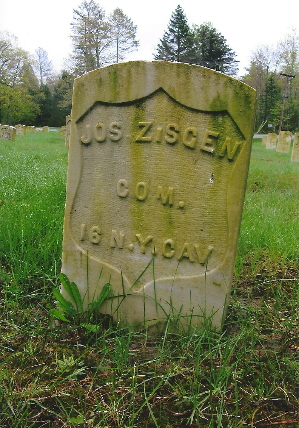
Zisgen’s grave in Maine from FindaGrave.com

His share of the Booth-Herold Reward money was actually $1,654.83, and he received it in August 1866. There has always been a minor mystery (in my mind, at least) about what became of the money. That amount was enough to set someone up with a comfortable life. Joe didn’t seem to have any health issues until old age, yet he ended up in the Soldiers and Sailors Home. It seems that the article I found solves that question.

The author of the article was Josiah Smith Maxcy (1854-1936), the son of a wealthy businessman from Gardiner, Maine. Maxcy went on to great success as a banker, railway executive, and, finally, the president of the Maine Trust Banking Company and Gardiner General Hospital. Always fond of his hometown, Maxcy also presented a speech on Gardiner’s early history for its centennial celebration in 1903.

In his article, Maxcy recounts how, when he was a teenager, he and others had gone camping on the shores of Boothbay Harbor one summer and became aware of the potential for establishing a campground on Squirrel Island in the Gulf of Maine. Eventually, the property came up for sale, and Maxcy and a group invested in the site and established a colony on the land. It became a successful summer getaway, and Maxcy was one of the officers of the organization.

He gives a history of the resort and the people involved in its creation, but digresses to tell a story which he describes as “an incident of that camping trip (in the summer of 1873), which was of much interest.”

Here’s the interesting part of Maxcy’s article:

“A Civil War Veteran

“Near our tent was another occupied by about a dozen Civil War veterans from the Government House at Togus, and one of their number, a German, was a member of the squad that captured J. Wilkes Booth, He graphically described the pursuit and capture, the burning barn and the paleness of Booth, leaning on his crutch, and of his being shot against orders by Boston Corbitt. Then he told of receiving his share of the reward, of becoming gloriously drunk, of walking thru the streets of New York and meeting an organ grinder with his monkey, of purchasing the outfit for a fabulous sum, of the monkey going up a conductor into window for a tip, of his encounter with a pet bull pup, of the soldier and the dog’s owner engaging in a free fight, of finding himself next morning locked in a cell, and nearly destitute of money. He was taken before a magistrate, and the reward was paid to the Judge, saloons, organ-grinder, jail inmates and magistrate who got it all.”

Though he does not identify the soldier by name, Maxcy was undoubtedly referring to Joseph Zisgen, of the Garrett’s Farm patrol. Now we know we apparently know what happened to his bounty money! Other troopers who received a share of the War Department Reward applied it to boring things: houses, farms, raising families, and starting a modest business or two. If this story is true, here we seem to have one who blew it on a drunken bender and a furry little critter.

Wasn’t it Billy Rose who cautioned: “Never invest in anything that eats or needs painting”? Joe should have heeded this advice.

References:
“A Historical Sketch by Josiah S. Maxcy of Gardiner. Mr. Maxcy Recalls His Own Experiences and Searches thru the Records for Matters of Fact and History,” Sun-Journal (Lewiston, ME), August 20, 1921.
“National Home. Joseph Zisgen,” Kennebec (ME) Journal, January 9, 1914.

Categories: History, Steven G. Miller | Tags: , , , | Leave a comment

Jeff. Davis’s Final Secret Mission by Steven G. Miller

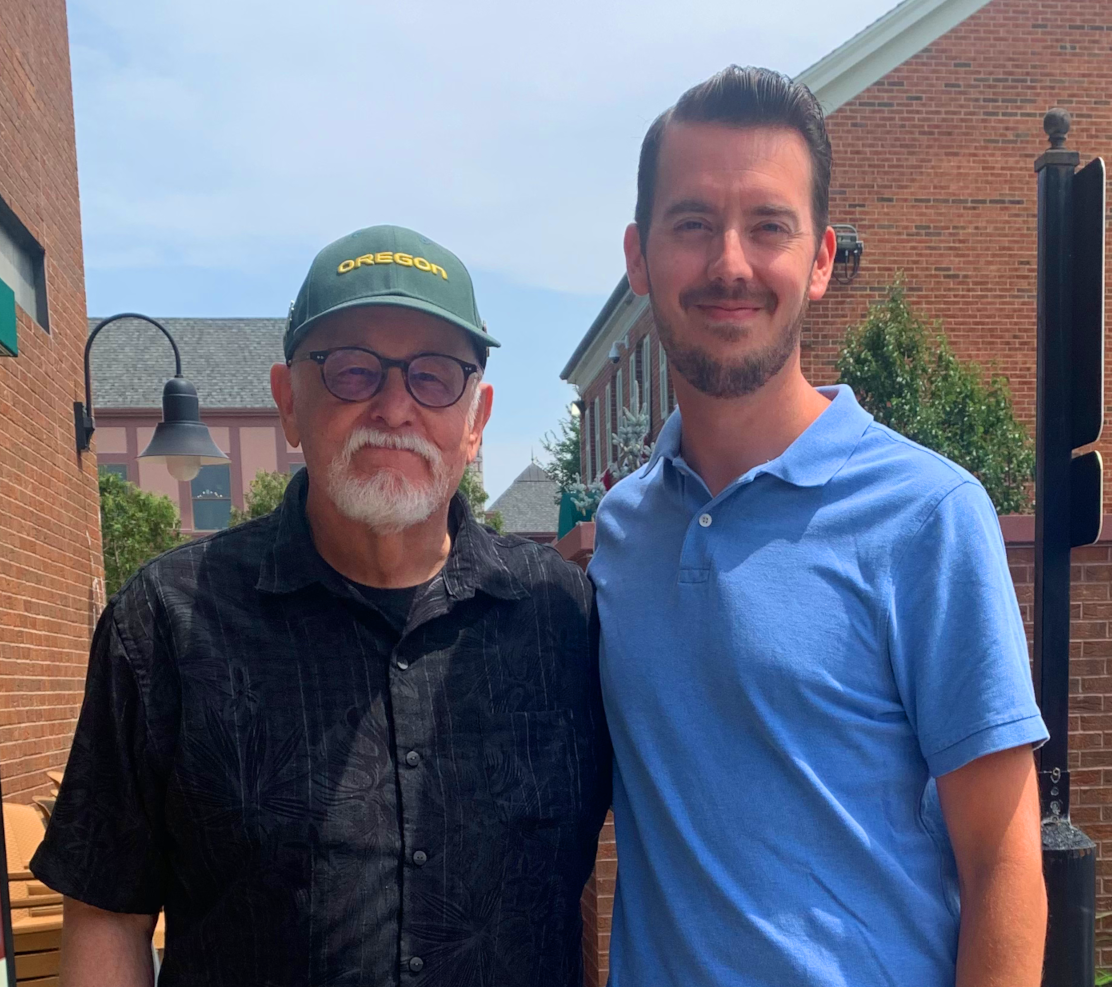
During my high school and college years, I had a growing interest in the Lincoln assassination. With the help of an online forum on the subject, I quickly found myself going deeper and deeper into this historical rabbit hole. While I had a friendly group of online acquaintances who shared this historical interest, I had never met any of them in person. At that time, I lived in Illinois and had only taken a single trip out east with my dad to visit D.C. and sites related to Lincoln’s death. Luckily for me, one of my new online friends was also a resident of Illinois and lived only about an hour and a half away. So, in November of 2010, he and I arranged to meet at a brunch place to “talk shop.”  This is how I came to become friends with Steven G. Miller.

For those of you who watched my recent Booth exhumation trial reunion videos, Steve Miller should be a familiar name and face to you. Steve is a self-proclaimed “specialist” in the Lincoln assassination field. He has an intense interest in the members of the 16th New York Cavalry who tracked down and killed John Wilkes Booth. He has been researching and writing about the life of the main Lincoln Avenger, Sgt. Boston Corbett, for decades. There is no one on this planet with greater knowledge of the hunt for Booth than Mr. Miller. And, despite his claims of only being a specialist, Steve’s knowledge about many other aspects of the Lincoln assassination story is strong. Steve actually discovered an unpublished photograph of John Wilkes Booth and regularly delves into newspaper archives looking for new and interesting tidbits in this vast story of ours.

I was incredibly fortunate to have Steve as my guide into the world of the Lincoln assassination. He has amazing stories working with past greats of the field, and he was also incredibly generous with his research and his knowledge. I was constantly peppering him with questions in those early years, and he was always willing to dig into something for me. Our communications slowed down a bit after my move to Maryland, but around the time of my divorce and the pandemic in 2020, Steve and I started talking more often. Today, I speak to Mr. Miller on a weekly basis (if not more) and consider him a dear friend.

I write this narrative introduction not only to share my appreciation for Steve, but also to butter him up in hopes I can wrangle him into becoming an occasional contributor to LincolnConspirators.com. Steve has explored many interesting side stories that I think readers of this site would love. What follows is an article that Steve wrote concerning an intriguing newspaper article he came across a few months ago. I hope you all enjoy it, and I hope it’s the first of many articles on here from my mentor, Steve Miller.


Jeff. Davis’s Final Secret Mission.

By Steven G. Miller

Lake Villa, IL

Dave Taylor from LincolnConspirators.com and I often share historical goodies, those things that we have found in our research that interest or excite us. More times than not, our collaboration helps fill in gaps and answer questions that have stymied one (or both) of us.

Such it was, recently, when I found a long two-part article in the digital archives of the Washington Evening Star. It was the account by a former Confederate officer, identified only as “T.C.C” in the article, of a secret mission entrusted to hm by Confederate President Jefferson Davis and Secretary of State Judah Benjamin. The writer claimed that he was an invalid soldier who was in Richmond in early 1865 and that he was called to a meeting of those two officials, who were busy sorting through government files in preparation for the abandonment of Richmond.

He related that he was asked if he would carry a secret message through the blockade to Confederate representatives Mason and Slidell in England. He agreed and set out, he states, from Richmond on April 2 to head overland to Canada, where he could catch a ship across the Atlantic. The message he was given was written in cypher on “silk paper” and along with it was a draft for expenses on the funds held by the rebel commissioners in Montreal. They were “sewed up in the shank of a pair of boots.”

“T.C.C.” recounts that he left Richmond by train and continued mostly on foot northward. He crossed the Potomac at night and was taken in tow by rebel operatives. He made slow progress and was only in “T.B.” on April 10th. He was, he claimed, onboard a Washington-bound stagecoach when he was scooped up by the Yankee cavalry operating out of Chapel Point.

He identified himself to the soldiers as a former rebel officer who was bound for Canada with intentions of heading for Europe. They questioned him at length and searched him, but failed to find the secret stash. He was still in the guard house when the news of Lincoln’s assassination arrived a few days later.

Fearing for his life and realizing, “I am the object of suspicion,” he spent several anxious days and nights. Luckily for him, the secret in his boot remained safe. He was ordered to be sent to Washington, where his story could be checked out. He was taken on horseback and in a wagon and had several tense moments when crowds of angry citizens spotted him and asked whether he was one of the conspirators.

General Augur’s officers questioned him and, though they didn’t punch holes in his story, they sent him on to Carroll Prison. He was first put in solitary confinement, but he had outside connections and was thus able to obtain money to make his jail stay more comfortable. He was granted access to the “open room” and could communicate with other prisoners. He recounts being “pumped” for information by prison spies, whom he outsmarted, and then having encounters with several people involved tangentially in the assassination story.

The two articles I found were:

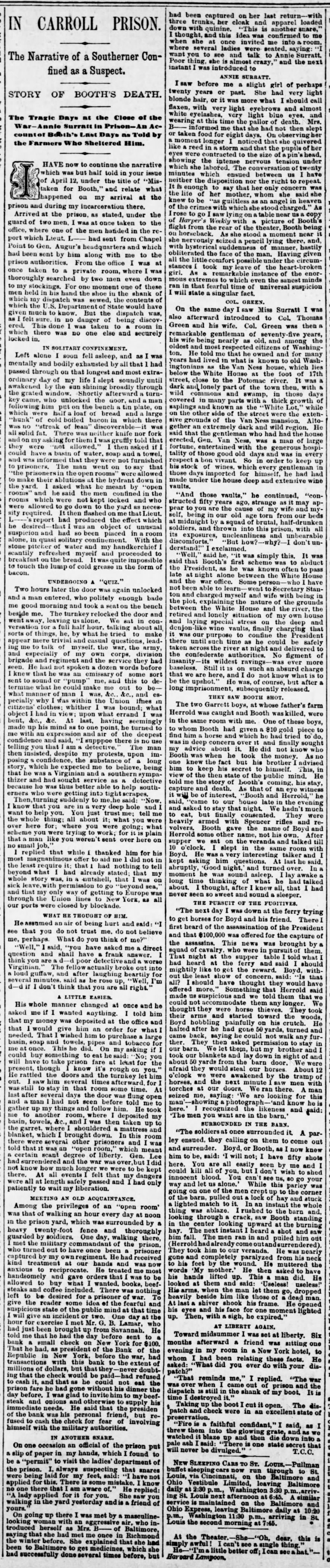
 “T.C.C.,” “Mistaken for Booth. From Richmond to Washington Just Twenty-five Years Ago. A Close Shave for Life. A Thrilling Incident of the War—Sequel to the Assassination of President Lincoln—The Evacuation of Richmond—A Secret Message,” Evening Star (Washington, DC), April 12, 1890.

“T.C.C.,” “In Carroll Prison. The Narrative of a Southerner Confined as a Suspect. Story of Booth’s Death. The Tragic Days at the Close of the War—Annie Surratt in Prison—An Account of Booth’s Last Days as Told by the Farmers Who Sheltered Him,” Evening Star (Washington, DC), May 24, 1890.

Dave and I decided to try to verify this account. What interested us especially was the story he told about meeting Annie Surratt in Carroll Prison. If true, it sheds new light on her ordeal and reactions while being held as a material witness.

My efforts to identify “T.C.C.” drew a blank, but Dave –ace researcher that he is – was able, we believe, to figure out who the author of these accounts was. He texted me saying: “Pretty sure the author of those articles is a Georgian named Theodore Cooke Cone. I found the name “T. C. Cone” in a list of Prisoners of War. It states he was arrested on April 10, 1865 in “T.B. Md” and he was released on May 9, 1865. Cone is also listed as being in the “Invalid Corps, CSA.”

As Dave said, “The service record for Theodore C. Cone shows he was retired from being a Captain with the 10th Georgia Infantry due to medical issues in Nov. of 1864 and was in Richmond at the time. While the article gives Jan. 1865, as the time of the author’s invalidity, it still seems to add up.”

Cone was the oldest son of Hon. Francis H. Cone (1797-1859), judge of the Georgia Superior Court and a state senator. The Cone family owned Ringgold, a sprawling 1,185-acre plantation which produced a variety of crops and was home to many slaves. Following in his father’s footsteps, Theodore became a lawyer and had a thriving practice. He became wealthy upon the death of the judge in 1859 and the sale of Ringgold.

When the Secession crisis flared up in 1860, T.C. Cone was an outspoken “fire-eater” who actively supported the CSA once it was established. In 1861, when the governor of Georgia failed to supply weapons for the local volunteer unit that Cone had helped raise, Cone wrote to Jefferson Davis personally asking for guns. It was granted.

The 10th Georgia was in many battles, including Gettysburg, and Cone was a popular captain of the regiment. As noted above, he was released from service in the latter part of 1864 due to unspecified medical issues. He retired to Richmond instead of returning to his home state. There, he came to the attention of a staffer in the Confederate White House and was invited to meet the chief executive and Secretary Benjamin.

Cone never made it to England, however, and his mission was scrapped after his stay in prison. In his Star articles, he recounts that he was in New York City a few months after his release from Yankee jail. As he recounted his exploits to a friend, the question arose about what happened to the message.

“That reminds me,” Cone said, “the dispatch is still in the shank of my boot. It is time I destroyed it.” He cut the boot open and saw that “the dispatch and check were in an excellent state of preservation.” He threw them onto the fire in the grate and commented as they went up in smoke: “That is one state secret that will never be divulged.”

Not only was Cone involved in this one last attempt by Davis to communicate with the agents in England, but he was also scooped up in the dragnet for the assassins of President Lincoln.

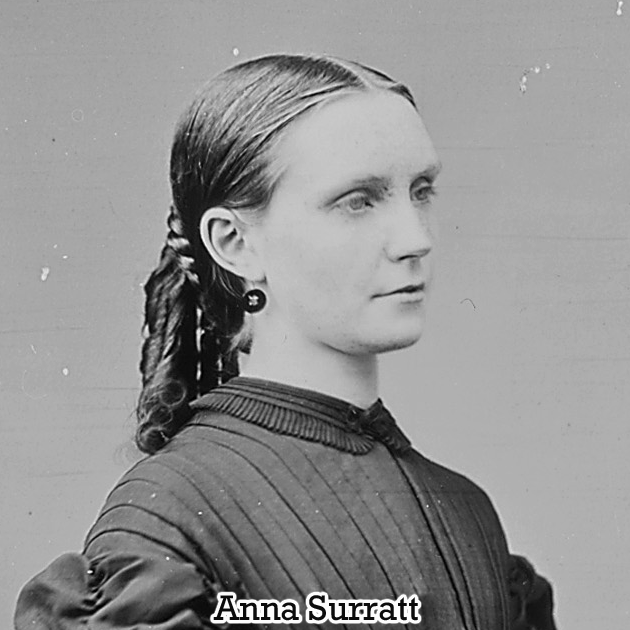
He tells of a prison meeting he had with Annie Surratt, the daughter of Mrs. Mary Surratt, who was then under arrest for conspiracy to kill President Lincoln.

Here’s what he wrote about this encounter:

“On one occasion an official of the prison put a slip of paper in my hands, which I found to be a “permit” to visit the ladies’ department of the prison. I, always suspecting that snares were being laid for my feet, said “I have not applied for this. There must be some mistake. I know no one there that I am aware of.” He replied: “A lady applied for it for you. She saw you walking in the yard yesterday and is a friend of yours.”

“On going up there I was met by a masculine-looking woman with an aggressive air, who introduced herself as Mrs. B—— of Baltimore, saying that she had met me once in Richmond the winter before. She explained that she had been to Baltimore to get medicines, which she had successfully done several times before, but had been captured on her last return—with three trunks, her cloak and apparel loaded with quinine. “This is another snare,” I thought, and this idea was confirmed to me when she at once invited me into a room, where several ladies were seated, saying: “I want you to see and talk to Annie Surratt. Poor thing, she is almost crazy,” and the next instant I was introduced to

ANNIE SURRATT

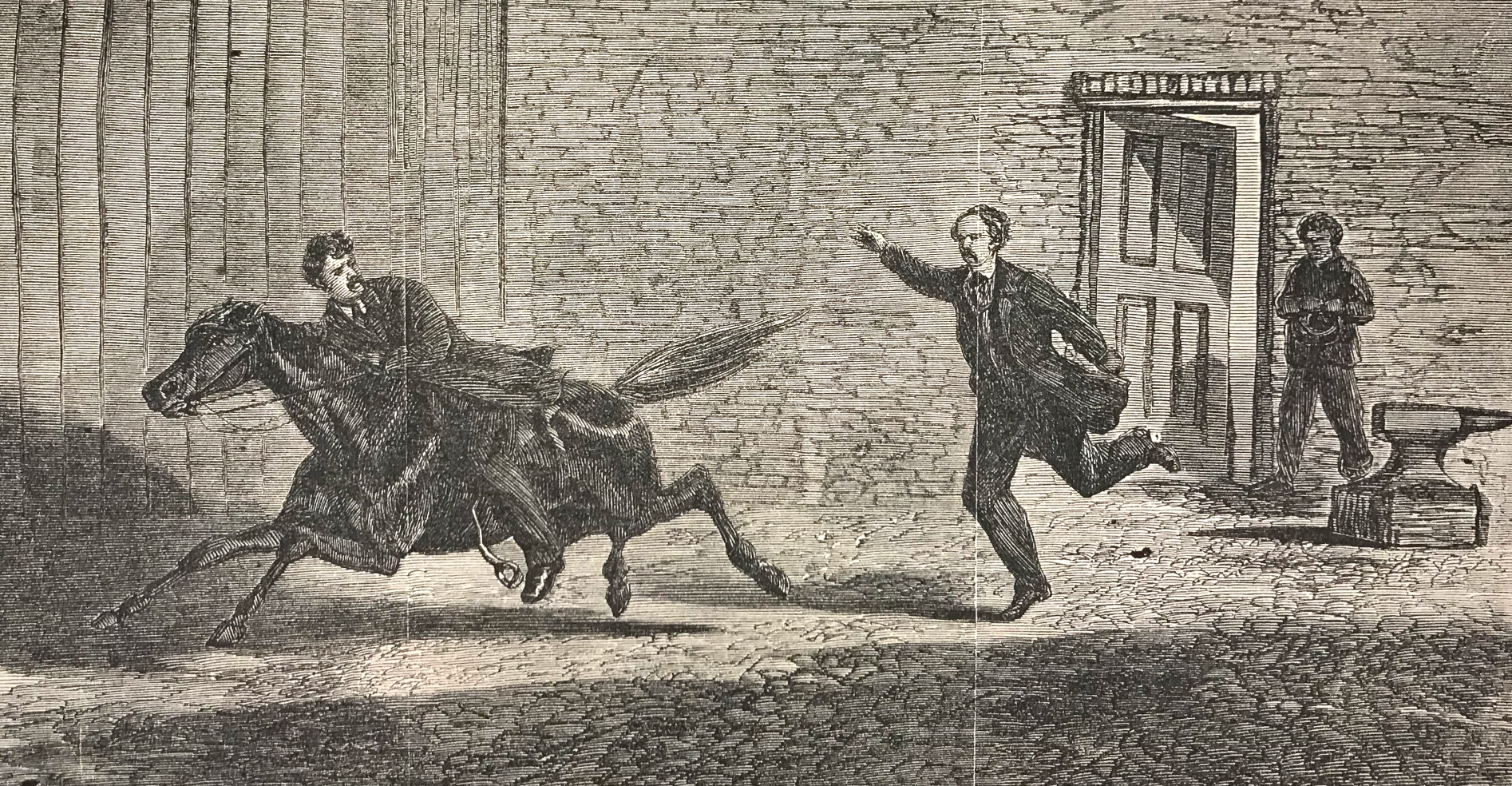
“I saw before me a slight girl of perhaps twenty years or past. She had very light blonde hair or it was more what I should call flaxen, with very light eyebrows and almost white eyelashes, very light blue eyes, and wearing at this time the pallor of death. Mrs. B— informed me that she had not then slept or taken food for eight days. On observing her a moment longer, I noticed that she quivered like a reed in a storm and that the pupils of her eyes were contracted to the size of a pin’s head, showing the intense nervous tension under which she labored. The conversation of twenty minutes which ensued between us I have neither the disposition nor the right to repeat. It is enough to say that her only concern was the life of her mother, whom she said she knew to be “as guiltless as an angel in heaven of the crimes of which she stood charged,” As I rose to go I saw lying on a table near us a copy of Harper’s Weekly with a picture of Booth’s flight from the rear of theater, Booth being on horseback. As she stood a moment near it, she nervously seized a pencil lying there, and, with hysterical suddenness of manner, hastily obliterated the face of the man. Having given all the little comfort possible under the circumstances I took my leave of the heart-broken girl. As a remarkable instance of the enormous extremes to which even the sanest minds ran in that fearful time of universal suspicion, I will state a simple fact.”

I don’t recall reading any comments about Annie Surratt in prison. And this new story about a final secret mission from Jeff Davis is new, too. The obvious take away from Cone’s story is that it was good that the Union authorities did not search him sufficiently enough to find the documents from Davis. It’s not hard to imagine what would have happened if Col. Baker had discovered that Annie Surratt – who was allowed to see her mother from time to time – was in unmonitored direct communication with an agent from the president of the CSA. It seems obvious that Cone and Annie Surratt would have been put in solitary confinement in the Old Capitol under close guard. The implication – unfounded according to Cone’s account—was that Davis was issuing orders directly to Mrs. Surratt in jail via his personal agent. This would have ended up in a charging indictment for Mrs. Surratt and for Davis. The conspiracy trial managers could never find a direct connection between Davis and any of the conspirators. It could have been argued in court that this was the smoking gun.

This apparently is the print of Booth on horseback that Annie Surratt defaced. Note: It actually comes from the May 13, 1865, issue of Frank Leslie’s Illustrated Newspaper, not Harper’s Weekly.

Categories: History, Steven G. Miller | Tags: , , | 3 Comments

Blog at WordPress.com.