
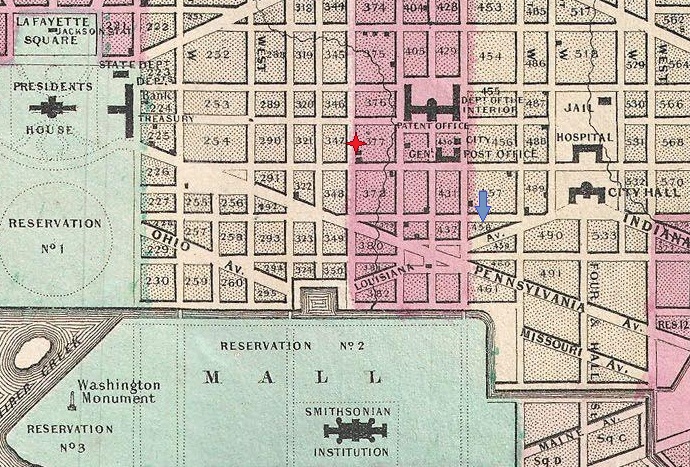
In the above map, the blue arrow points to 634 D Street NW in Washington, D.C., as it was in 1861. During the Civil War era and for many years after it, this location held the prestigious and profitable printing company of Polkinhorn and Son. Its founder was Henry Polkinhorn:
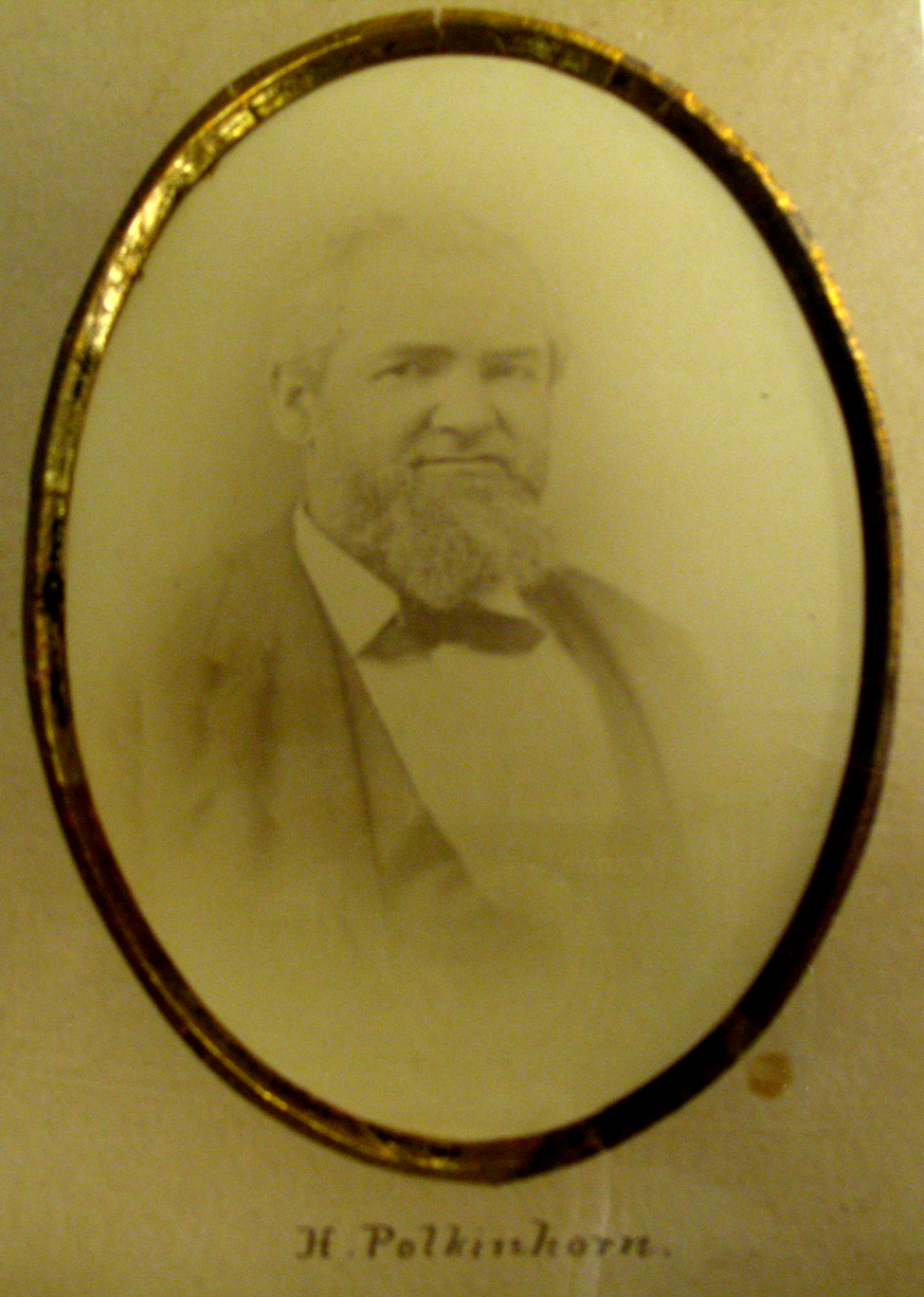
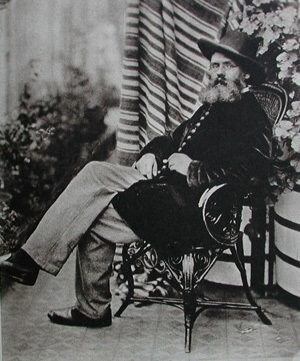
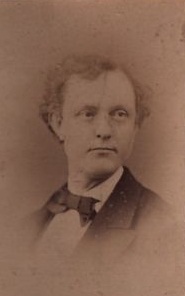
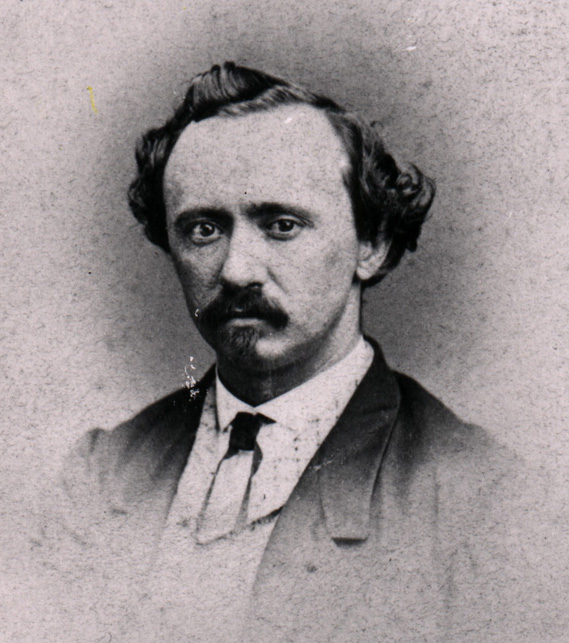
Henry Polkinhorn from the Harvard Theatre Collection
Henry Polkinhorn was born in 1813 in Baltimore. His father, Henry, Sr., was an immigrant from England and a saddler by trade. As a saddler in Baltimore, Henry Sr. was a very prosperous businessman himself:
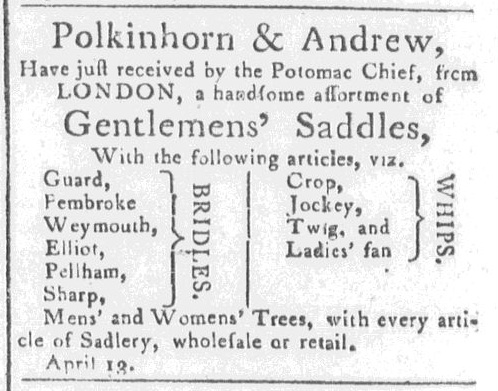
A 1797 advertisement for Polkinhorn saddles
As a young man, Henry Polkinhorn, Jr relocated to D.C. and married Marianne Brown in 1839. Together Henry and Marianne had six children. Marianne died in 1857 and Henry married Rachel Ann Barnes less than two years later. Differing from his father, Henry entered into the trade of a printer to support his growing family. In his chosen occupation, Henry Polkinhorn was extremely successful. After a few years of increasing success in his printing trade, Polkinhorn was able to erect his own building at 634 D Street NW between 6th and 7th streets.

It was a five story building in the Italianate style, which became very popular in the US after the late 1840’s. Italianate buildings are noted for their bracket cornices and arched windows. A newspaper article of the day described Polkinhorn’s building as having, “great height and [a] majestic appearance.” Of the five stories, three of the floors were committed to Polkinhorn’s printing trade. The second floor, in particular, was, “furnished with every facility for the execution for all descriptions of printing, both plain and ornamental.” For his skills in printing and self-made success, Polkinhorn was very well respected by his peers. The article honoring his building ended with, “We sincerely recommend the enterprising proprietor to the favorable notice of our citizens, as one, independent of his long established reputation, worthy of their highest consideration and esteem.”
As with all printers of the day, Polkinhorn ran a diversified printing company. In each major area of his business, he printed materials connected to the assassination of Abraham Lincoln in 1865. First, he printed newspapers. Not only did he print them for others, he even started a couple on his own like Our Newspaper and the Constitutional Union. Another newspaper he printed was the National Intelligencer. The office of the Intelligencer was right across the street from Henry Polkinhorn’s printing office. This provided steady income for Henry Polkinhorn and convenience for the Intelligencer management. The Intelligencer also relates to the assassination of Lincoln, as it was one of the best newspapers for daily coverage of the trial of the conspirators. Even to this day, issues of the National Intelligencer have been microfilmed by the National Archives and housed with the Lincoln assassination papers due to their relevance and content. Polkinhorn would have even more connection with the Intelligencer after the trial was over. By late 1868, the National Intelligencer was broke. The owners, who had taken it over in 1865, had run it into the ground and owed thousands of dollars to many people. The biggest debt they owed was to Henry Polkinhorn. For his printing of their paper, they owed him over $50,000. Fed up, he finally called to settle his tab. With no money to pay him, the owners transferred the Intelligencer completely over to Polkinhorn. Henry continued to make and print the Intelligencer until he himself was able to sell it off. Shortly thereafter, the Intelligencer merged with the Washington Express and effectively died.
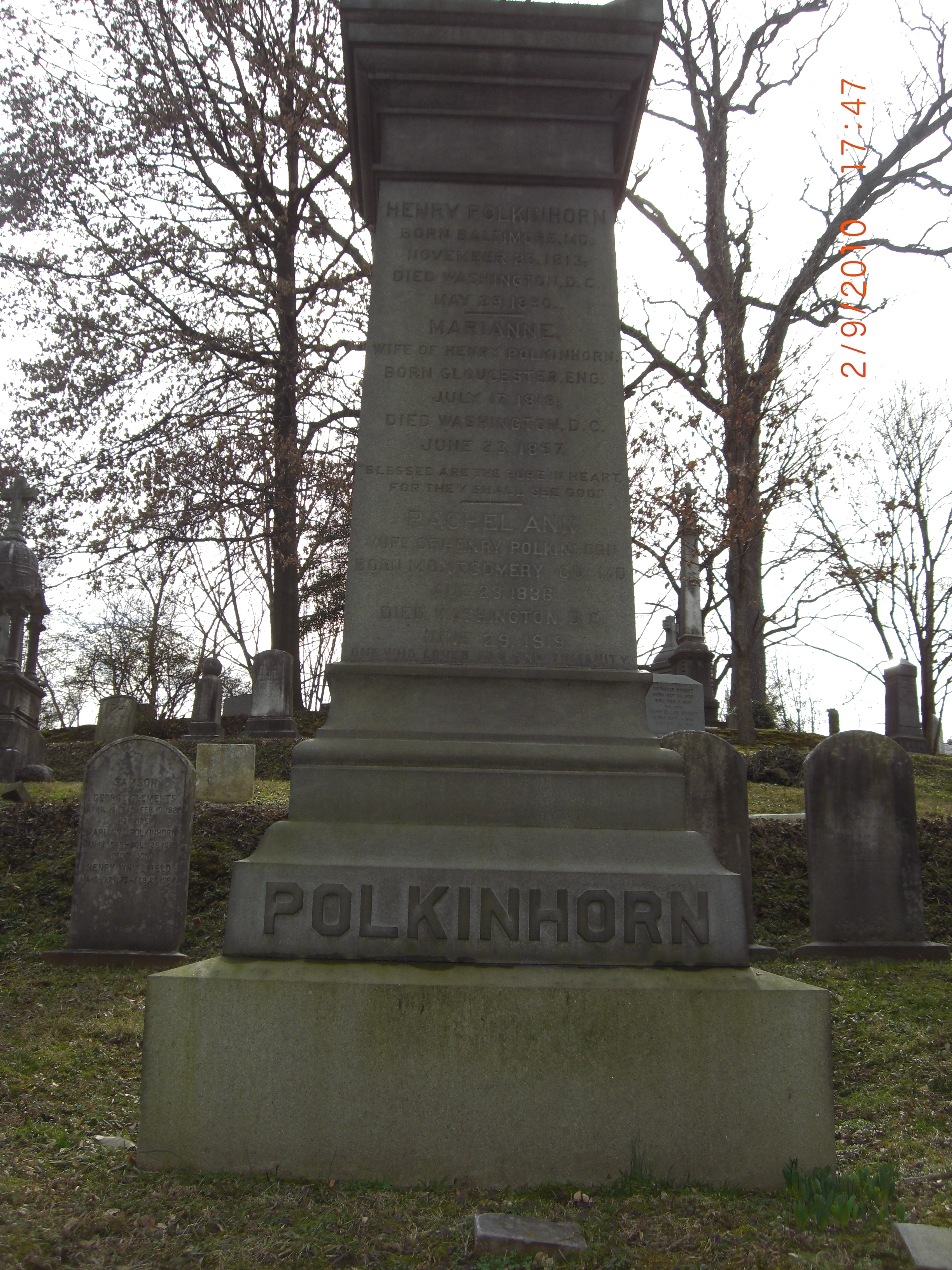
While newspapers provided daily work for Henry Polkinhorn, he was also well known for his book printing. He devoted a whole floor in his five story building for Book and Job Printing. Many famous and common citizens went to him to print their books. An online search for “Polkinhorn printer” and alike will yield numerous nineteenth century books that were printed from his D street establishment. On the brink of the Civil War, Polkinhorn printed, in book form, a letter by Joseph Holt explaining the dangers that were to come and his satisfaction that his own home state of Kentucky choose to stay with the Union. Holt would later be named the Judge Advocate General, and chief prosecutor at the trial of the Lincoln conspirators. During the trial, Polkinhorn printed many pamphlets containing the testimony of the trial pertaining to certain individuals like Dr. Mudd and Edman Spangler. Polkinhorn also published Thomas Ewing’s argument against the jurisdiction of the military tribunal that tried the conspirators. He also printed a plethora of other books on wide range of topics. One book that sticks out is a doctor’s thesis about the dangers of cemeteries in populated areas. The doctor blames many of the illnesses and sicknesses of those living in Georgetown on the nearby cemetery “Oak Hill”. He called for the immediate closing of the cemetery and for the removal of the bodies. When Henry Polkinhorn died in 1890, he was buried at Oak Hill.
While the newspaper and book printing jobs loosely connect him to the assassination of Lincoln, Henry Polkinhorn’s real relationship to the death of our 16th president is based on several individual pieces of paper, 18 inches long. On top of his already multipurpose book and newspaper printing, Polkinhorn also has the honor of printing one of the most sought after relics of Lincoln’s assassination: the playbill from Our American Cousin.
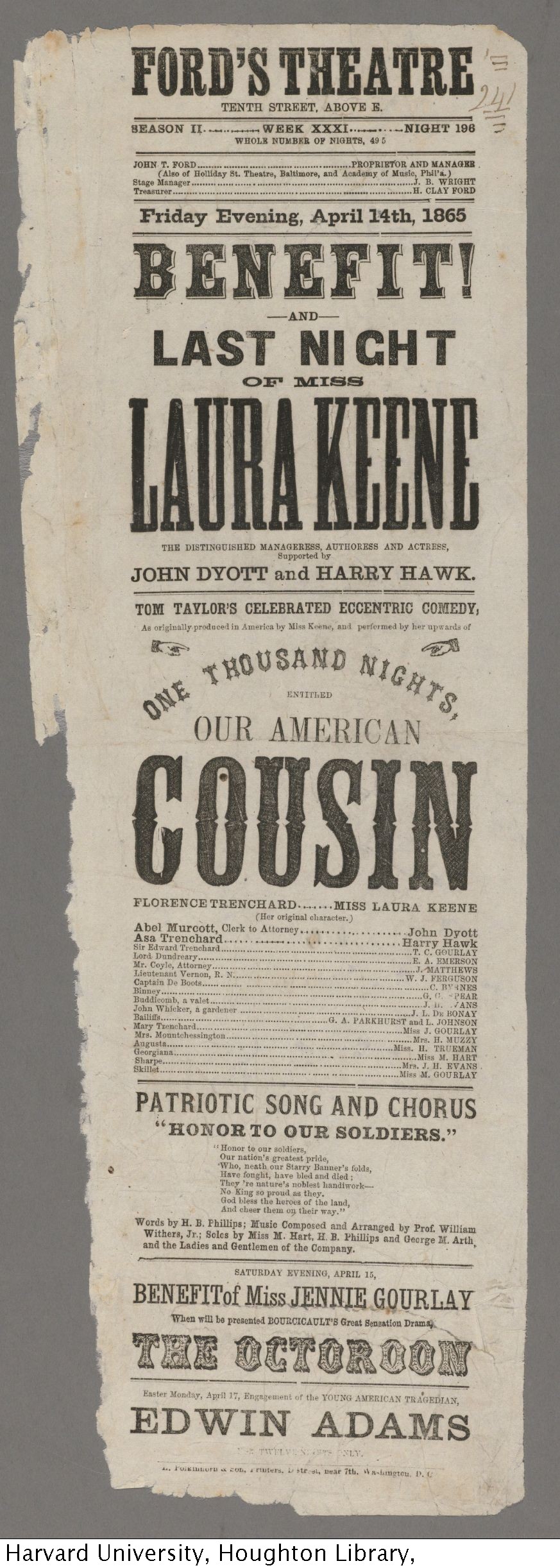
A true playbill from Ford’s Theatre on April 14th, 1865.
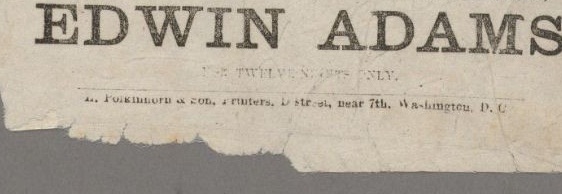
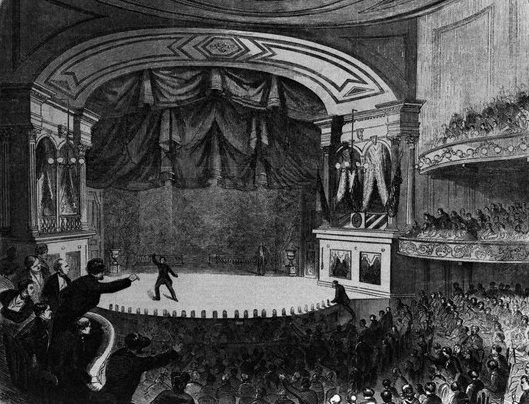
Polkinhorn’s was the “go to” establishment for Ford’s Theatre for their playbills. The map that started this post has a red star marking where Ford’s Theatre is. Polkinhorn’s office was less than a half mile away, making him a perfect place for the Ford’s to do their business. In the Harvard Theatre Collection there is a ten by twenty inch bound volume of Ford’s Theatre playbills originally belonging to John B. Wright, stage manager at Ford’s. The volume contains 193 playbills commencing from August of 1864 until the closing of the theatre after the events of April 14th, 1865. A look at this volume shows that “H. Polkinhorn & Son” was the regular printer of the Ford’s Theatre playbills. The “son” in “Polkinhorn & Son” was Henry’s son Samuel Polkinhorn. After Henry retired, Samuel would partner up with his cousin, Richard Oliver Polkinhorn, who worked in the Polkinhorn building and was a talented printer in his own right. “S & R. O. Polkinhorn, Printers” would last about a year before Samuel decided to bow out leaving his cousin as the sole owner of “R. O. Polkinhorn, Printer”. Richard would create “R. O. Polkinhorn & Son” with his son Joseph and the Polkinhorn printing legacy would go on.
For a detailed look at the assassination playbills read the follow up post here. What is important to know is that the only legitimate “Our American Cousin” playbills were printed by “H. Polkinhorn & Son”. Any playbills bearing a different printer other than Polkinhorn are reprints or souvenirs. Also, while Polkinhorn did print two different versions of the playbill, neither of them mention anything about President Lincoln. Another printer named Brown would later print his own, slightly similar looking playbills announcing that “this evening the performance will be honored by the attendance of President Lincoln” and many people are fooled today into thinking they are legitimate, when they are not.
After retiring from the printing game, Henry Polkinhorn’s success allowed him to purchase a couple buildings and houses that he rented out. In 1881, his own printing building (then being run by his nephew R. O. Polkinhorn) caught fire and the was severely damaged. The entire fifth floor burned down, and was never replaced. The rest of the building was repaired for a cost of around $20,000.
Henry Polkinhorn died on May 29th, 1890 at the age of 76. He was interred at Oak Hill cemetery in lot #821. Today, he rests there with his two wives and most of his children.
The Polkinhorn building, not far from Ford’s, survived until the late 1980’s when most of the block was torn down for redevelopment.
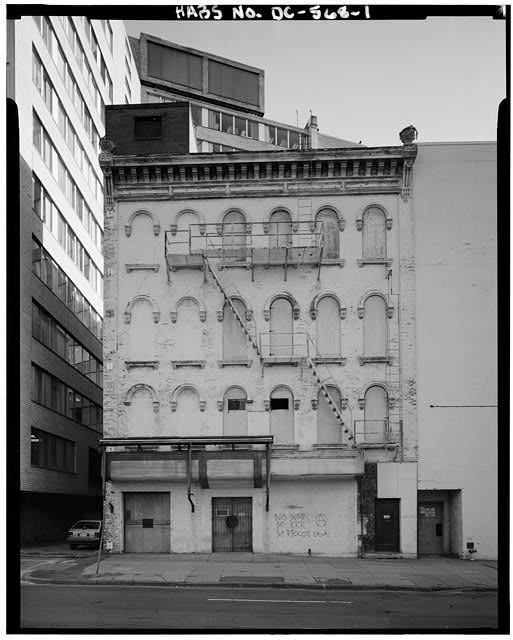
Polkinhorn Building in March of 1987 before being demolished.
At the end of it all, Henry Polkinhorn and his family represent the American dream in the best way. His father imigrated from England, found success as a saddler, and saw his own son become one of the most respected printers in Washington, DC.
In his long and fruitful career, Henry Polkinhorn made a name for himself and today, at the bottom of one of the most sought after relics of the tragedy at Ford’s Theatre, that name get the final billing.
References:
I would like to thank Dale Stinchcomb at the Harvard Theatre Collection for the image of Mr. Polkinhorn, Kia Fennell for her assistance in figuring out his genealogy, and Rich Smyth for the picture of his grave.
Polkinhorn Building – Historic American Buildings Survey
The End of the National Intelligencer Article 1868-11-25
All newspaper clippings displayed above are from GenealogyBank.com









Recent Comments